



3,992 products added recently
Page 3 - Back To School Lesson Plans
Ease your students into the new academic year with back-to-school lesson plans designed to build community and set expectations. These activities promote teamwork, establish routines, and help students feel comfortable. Implement these plans to create a positive start and foster a supportive classroom environment.

 Show filters


Recess Rules! - Back to School Reading Comprehension
ELA, Reading, Reading Comprehension, Holiday & Seasonal, Holidays, Back To School, First Day of School, Months, August, September, Kindergarten, Preschool, Grade 1, 2, Worksheets & Printables, Activities, Teacher Tools, Assessments, Lesson Plans, Worksheets
Recess Rules! is a short and simple story that helps young students understand how to play nicely and safely during recess. It follows a group of children who are excited to go outside but first learn a few important rules, like sharing, taking turns, and including others. The story is easy to read, with clear sentences and familiar words, making it just right for kids in kindergarten through second grade. How Teachers Can Use It: Read it aloud during the first week of school to start a class discussion about recess behavior. Use it in small groups to talk about friendship and problem solving. Give it as an independent reading activity or light homework. Include it in literacy centers or use it with early finishers. Pair it with a lesson about school rules or social skills. Why It’s a Great Choice: Helps students learn how to be kind and safe on the playground. Comes with five easy questions to check understanding. Encourages positive behavior in a way kids can relate to. No prep needed, just print and use. Combines reading practice with real life lessons. This story is a great way to build reading skills while helping students learn how to treat others with kindness and respect. PDF file includes 2 pages. Enjoy!
Author Ponder Palette Plazza
Rating
Tags Reading, Reading Comprehension, Back To School, Back To School Activities, Back To School Reading, First Day Of School Activities, Back To School Writing
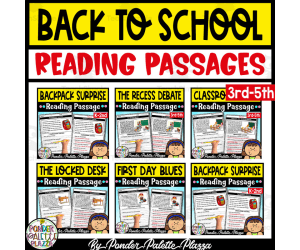
Back to School Reading Comprehension Passages
ELA, Reading, Reading Comprehension, Holiday & Seasonal, Holidays, Back To School, First Day of School, Months, August, September, Grade 3, 4, 5, Worksheets & Printables, Worksheets, Teacher Tools, Assessments, Lesson Plans, Activities
Start the new school year with stories your students will enjoy and relate to. Back to School Reading Comprehension Passages are made for grades 3–5 and include short, engaging texts about first day jitters, meeting new friends, and settling into classroom life. While reading, students practice important skills like finding the main idea, recalling details, and understanding what they read. Ways to Use: Morning work to help students settle in and start the day calmly. Small group reading to encourage conversation and teamwork. Homework to give extra practice at home. Literacy centers for independent or partner reading. Quick reading checks to see how well students understand texts early in the year. Advantages: Makes the first days of school smoother with familiar, relatable topics. Keeps students engaged with stories that feel real and age appropriate. Saves planning time with ready to print passages. Works for different reading levels so everyone can take part. Helps build reading confidence right from the start. These passages bring together fun, connection, and learning, helping you set a positive, productive tone for the rest of the year. Enjoy!
Author Ponder Palette Plazza
Rating
Tags Reading, Reading Comprehension, Back To School, Back To School Reading, Back To School Activities, First Week Of School Activities, First Week Of School Reading

Rhyming Words Practice
ELA, Language Development, ESL, Phonics, Spelling, Holiday & Seasonal, Holidays, Back To School, End Of Year, Months, Kindergarten, Preschool, Grade 1, 2, 3, Activities, Centers, Teacher Tools, Assessments, Lesson Plans
These engaging Rhyming Words Worksheets are designed to help young learners recognize and match rhyming words in a fun and interactive way. In each exercise, students look at the underlined word in a sentence or list, then circle the word that rhymes with it from multiple choices. This simple, visual activity is ideal for building phonemic awareness and supporting early literacy skills. Ways to Use: As part of a phonics or reading lesson In small group literacy centers or guided reading sessions For independent practice or morning work As homework or review assignments In intervention settings to support struggling readers Advantages: Encourages phonological awareness , a key skill in early reading Promotes word recognition through auditory and visual practice Simple format allows for easy differentiation No prep, print and go resource for busy teachers Helps reinforce sound patterns and word families Suitable for kindergarten and early elementary levels Pdf includes 4 pages. Enjoy!
Author Ponder Palette Plazza
Rating
Tags Rhyming, Rhyming Words, Back To School, Back To School Activities, Vowels, Short And Long Vowels, Rhyming Words Worksheets, Literacy Worksheets

CVC Short U Words List Posters
ELA, Language Development, ESL, Phonics, Spelling, Holiday & Seasonal, Holidays, Back To School, First Day of School, Reading, Kindergarten, Preschool, Grade 1, 2, 3, 4, Activities, Centers, Classroom Decor, Bulletin Boards, Posters, Teacher Tools, Anchor Charts, Assessments, Lesson Plans
The CVC Short U Word List Posters are a great resource to help early readers learn and practice short “u” words. Each poster features clear, easy-to-read lists of CVC (consonant-vowel-consonant) words like sun , mud , bug , and cup . These posters make it easier for young learners to recognize word patterns, improve their decoding skills, and build a strong foundation in reading and spelling. Designed with a simple layout and kid-friendly font, these posters are ideal for Kindergarten, 1st Grade, and ESL classrooms. They can be used throughout the day to support phonics lessons, writing activities, and independent learning. Whether you're introducing the short U sound or reviewing it, these posters are a handy tool to keep students focused and confident. Ways to Use: Display on your classroom wall or phonics board Use during mini-lessons or small group instruction Keep at writing centers for spelling support Refer to during reading practice and guided reading Send home to reinforce learning with families Advantages: Reinforces short U sound and CVC word recognition Supports early reading, writing, and spelling development Encourages independent learning Easy to print, laminate, and use year after year Makes phonics instruction more visual and accessible Pdf file includes 2 pages. Enjoy!
Author Ponder Palette Plazza
Rating
Tags Cvc, Cvc Activities, Cvc Posters, Cvc Short U, Back To School, Back To School Activities, Back To School Posters, Back To School Literacy, Literacy
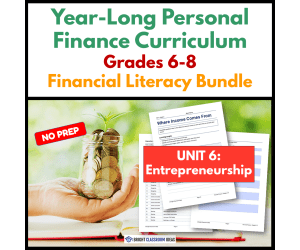
Year-Long Personal Finance Curriculum | Grades 6-8 | Unit 6
Back To School, Holidays, Holiday & Seasonal, Spring, Seasons, Finance, Life Studies, Money, Math, Grade 6, 7, 8, Lesson Plans, Teacher Tools, Worksheets & Printables
📚 Personal Finance Unit 6: Entrepreneurship | Grades 6–8 Give middle school students a realistic introduction to entrepreneurship, business, and financial decision-making with this six-week unit. Students move from identifying a viable business opportunity to calculating profit, setting prices, testing marketing channels, building a business plan, and delivering an evidence-based pitch. This entrepreneurship unit is designed to make business concepts practical. Students analyze real-world scenarios, work with financial math, interpret data, build spreadsheet models, conduct investigations, and defend their decisions with evidence. Please note: This listing includes the Unit 1 student book only . The included teacher resources and bonus materials support the complete six-unit, 30-week Personal Finance curriculum . 📦 What’s Included Student Unit 6: Entrepreneurship — 86 Pages Across Weeks 31–36, students complete: Original reading passage each week Reading comprehension and analysis Vocabulary practice 10 financial math problems per week Data graph analysis Realistic case studies Hands-on activities or simulations Spreadsheet modeling tasks Argument writing Weekly review Capstone activities and reflection 🗓️ Six Weeks of Entrepreneurship Instruction Week 31 — Business Ideas: Finding a Problem Worth Solving Students learn the difference between an interesting idea and a validated business opportunity . They explore: Opportunities Value propositions Target markets Validation Competitors Differentiation Feasibility Pivots Students conduct customer validation research and focus on actual behavior rather than stated purchase intentions . The Opportunity Validation Investigation has students create value propositions, interview potential customers, analyze what people currently do and pay, and eliminate ideas that fail the opportunity conditions. Week 32 — Profit: Costs, Margins, and the Break-Even Point Students investigate the numbers every business owner needs to understand. They learn about: Fixed costs Variable costs Contribution margin Break-even point Gross margin Net profit Markup Economies of scale Students calculate contribution margin and break-even quantities while modeling how changes in price and costs affect profitability. The Break-Even Modeling activity has students create a business model and run sensitivity scenarios for price, variable costs, and fixed costs. Week 33 — Pricing: Setting a Price That Works Students discover why choosing a price involves more than simply adding a markup. They compare: Cost-plus pricing Competitive pricing Value-based pricing Price elasticity Premium pricing Penetration pricing Price floors Perceived value Students model how price changes affect profit rather than simply revenue and justify pricing decisions using multiple forms of evidence. Week 34 — Marketing: Reaching the Customer You Defined Students learn how businesses reach customers without spending more to acquire them than those customers are worth. They calculate and analyze: Customer acquisition cost Lifetime value Conversion rate Marketing channels Retention Word of mouth Branding Calls to action The Channel Testing Investigation asks students to design a three-channel marketing test, measure results, and justify a budget allocation. The spreadsheet model calculates conversion rate and lifetime value and flags channels that fall below a 3:1 ratio. Week 35 — Business Plans: Writing a Plan Someone Would Fund Students assemble the pieces of their business idea into a complete business plan. They learn about: Business plans Executive summaries Financial projections Assumptions Cash flow Startup costs Milestones Risk factors Students build a twelve-month financial projection and examine the difference between accounting profit and actual cash available. The Business Plan Assembly produces a complete seven-section business plan with a twelve-month cash-flow projection. The spreadsheet model separately tracks cash and profit and identifies the lowest cumulative cash point to determine funding needs. Week 36 — Capstone: The Pitch and the Year in Review Students bring their entrepreneurship work together in a final business pitch and financial reflection . Students: Deliver a persuasive business pitch Defend their business case Respond to challenging questions Support claims with data Address objections Build a personal financial plan Reflect on learning across the entire course The Pitch and Portfolio Defense produces a delivered pitch, personal financial plan, and written reflection . The accompanying spreadsheet asks students to cite the source week for each financial figure and stress-test the plan using a 20% income reduction. 🎯 How It Works in the Classroom This entrepreneurship curriculum follows the same predictable structure every week, making it easy for teachers and students to know what comes next. Students: Read and annotate original passages Answer comprehension questions Practice financial vocabulary Solve financial math problems Interpret graphs Analyze realistic business cases Complete hands-on investigations Build spreadsheet models Write evidence-based arguments Review and reflect on learning The activities are designed to make entrepreneurship active rather than purely theoretical . Students don't just learn what a break-even point is—they calculate one. They don't just discuss marketing—they test channels. They don't just define cash flow—they model it. They don't just talk about business pitches—they deliver one. 🎯 Standards & Learning Goals Throughout the unit, students learn to: Distinguish an idea from a validated opportunity. Evaluate business ideas using defined viability criteria. Conduct customer validation research. Distinguish fixed and variable costs. Calculate contribution margin and break-even quantity. Model the effect of price and cost changes. Compare different pricing strategies. Analyze price elasticity and perceived value. Calculate customer acquisition cost and lifetime value. Evaluate marketing channels using measured results. Build a complete business plan. Create twelve-month financial projections. Identify assumptions and business risks. Distinguish profit from cash flow. Deliver an evidence-based business pitch. Respond to objections using data. Synthesize financial learning into a personal financial plan. Standards include CEE Earning Income 4.6–4.10 , Jump$tart 6–8 Employment and Income 6–10 , and supporting Common Core standards including CCSS.ELA.W.7.7, CCSS.MATH.7.EE.B.4, CCSS.MATH.7.RP.A.3, CCSS.ELA.W.7.2, CCSS.MATH.7.EE.B.3, and CCSS.ELA.SL.7.4/W.7.1 . ⭐ Why Teachers Love It ⭐ Real-world entrepreneurship: Students work with realistic business decisions instead of isolated vocabulary. ⭐ Financial math every week: Ten problems per week give students repeated practice with business calculations. ⭐ Hands-on learning: Students conduct interviews, test marketing channels, model break-even points, and assemble business plans. ⭐ Spreadsheet practice: Students learn to build models where changing an assumption updates dependent calculations. ⭐ Critical thinking: Students must question assumptions and use evidence rather than simply trusting optimistic projections. ⭐ Strong writing integration: Weekly argument tasks require students to take a position, use vocabulary, provide calculations, and address objections. ⭐ Authentic business planning: Students work with revenue, costs, pricing, marketing, cash flow, projections, and risk. ⭐ Built-in differentiation opportunities: The predictable weekly structure makes it easier to adjust pacing and support. ⭐ Meaningful capstone: Students finish by presenting and defending a complete business case while connecting the course to their own financial planning. 💡 Turn Business Ideas Into Financial Thinking Entrepreneurship for middle school doesn't have to mean simply asking students to invent a business. This entrepreneurship unit teaches students to question whether an idea is actually viable. They investigate customer behavior. They calculate break-even points. They test pricing decisions. They compare acquisition costs with customer lifetime value. They build financial projections and examine cash flow. Then they put everything together in a final pitch where evidence matters more than confidence . It's a complete middle school entrepreneurship unit built around financial literacy, math, data analysis, writing, problem-solving, and real-world decision-making.
Author Bright Classroom Ideas Marketplace
Rating
Tags Finance, Financial Literacy, Money, Yearlong, Curriculum, Full Year

Year-Long Personal Finance Curriculum | Grades 3-5 | Unit 3
Back To School, Holidays, Holiday & Seasonal, Spring, Seasons, Finance, Life Studies, Money, Math, Grade 3, 4, 5, Lesson Plans, Teacher Tools, Worksheets & Printables
Personal Finance Curriculum | Unit 3: Budgeting | Grades 3–5 Help students build practical financial literacy skills for grades 3–5 with this engaging Unit 3 student resource focused on budgeting. Students explore income, expenses, spending plans, financial choices, and real-world budgeting through reading, financial math, graphs, scenarios, application activities, and writing. Please note: This listing includes the Unit 3 student book only . The included teacher resources and bonus materials support the complete six-unit, 30-week Personal Finance curriculum . 📦 What’s Included Student Resource — Unit 3: Budgeting 66-page student unit 5 weeks of instruction Week 11: Income Week 12: Expenses Week 13: Spending Plans Week 14: Financial Choices Week 15: Unit 3 Project Original weekly reading passages Comprehension questions Vocabulary practice Financial math Graph reading and analysis Realistic financial scenarios Application activities Evidence-based writing Weekly reviews and essential questions Each week follows the same instructional rhythm. Students read, practice vocabulary, solve financial math problems, analyze graphs, apply concepts to scenarios, complete an activity, and write about their learning. ⭐ Teacher Resources for the Full Curriculum The Teacher Guide supports all 30 weeks and all six units , rather than Unit 3 alone. It includes: 109-page Teacher Guide Week-by-week teaching notes 50–60 minute lesson pacing Misconceptions to watch for Four-level differentiation Standards alignment Assessment guidance Family engagement Materials lists 🎁 Bonus Resources for the Full 6-Unit Curriculum The accompanying bonus resources are designed to support the entire 30-week curriculum , including: Complete Answer Key for all 30 weeks Assessment Rubrics Six Unit Tests 180 Vocabulary Definition Cards 180 Word-Wall Cards 60 Exit Tickets Parent Letters and Family Glossary Progress Monitoring Forms Six Financial Literacy Games 12 Classroom Posters Award Certificates Editable Lesson Plans for all 30 weeks 🏫 How It Works in the Classroom Use the Unit 3 student resource for approximately five weeks of focused instruction on budgeting and financial decision-making. Unit 3 Topics Include: Income Sources of income Regular versus irregular income Allowances Gift income Calculating total income Students learn why a budget should begin with income rather than wants. They also practice separating predictable income from irregular income when building a financial plan. Expenses Fixed expenses Variable expenses Expense categories Estimates Receipts Tracking actual spending Students compare estimated spending with tracked spending and use categories to identify patterns. Spending Plans Assigning every dollar a purpose Allocations Balanced budgets Surpluses Deficits Percentages Students build spending plans from real numbers and learn ways to correct an unbalanced budget. Financial Choices Opportunity cost Trade-offs Criteria Scarcity Decisions Consequences Students apply a decision-making process to situations where they cannot have every option they want. Unit 3 Project: The Class Trip Budget Building a complete group-event budget Estimating costs Calculating per-person costs Including contingency money Making trade-offs Creating and revising a proposal Presenting and defending a budget The project asks students to use math and reasoning to create a realistic budget and defend their choices to peers. 🎯 Standards & Learning Goals Students will: Identify sources of income in a budget. Distinguish regular income from irregular income. Calculate total monthly income from mixed sources. Distinguish fixed from variable expenses. Categorize expenses accurately. Compare estimated spending to tracked spending. Build a balanced spending plan from real numbers. Apply percentage-based allocations. Identify and fix an unbalanced plan. Apply opportunity cost to real financial decisions. Use criteria to evaluate options. Evaluate the consequences of financial decisions. Build a complete budget for a group event. Justify budgeting trade-offs using math and reasoning. Present and defend a budget proposal. Unit 3 includes alignment with CEE Spending 6.1–6.4, Jump$tart 3–5 Spending 1–4, and Common Core math and ELA standards across the unit. 💛 Why Teachers Love It ⭐ Low-prep instruction: The student pages provide a clear weekly learning path. ⭐ More than worksheets: Students read, calculate, analyze, discuss, apply, and write. ⭐ Real-world connections: Budgeting concepts are taught through realistic financial situations. ⭐ Financial math is built in: Students work with income, expenses, percentages, spending totals, and per-person costs. ⭐ Strong visual learning: Students interpret graphs connected directly to the week's financial concepts. ⭐ Practical application: Students track income and expenses, build spending plans, evaluate financial choices, and create a class trip budget. ⭐ Decision-making skills: Students learn that budgeting is not just about numbers. It also involves trade-offs, opportunity cost, and consequences. ⭐ Project-based learning: The final week brings the unit together through The Class Trip Budget , where students create, revise, present, and defend a complete budget. ⭐ Easy assessment: The larger curriculum includes answer keys, exit tickets, rubrics, tests, and progress-monitoring tools. ⭐ Teacher support extends across the full curriculum: The Teacher Guide and bonus resources are ready to support Units 1–6, even though this student listing provides Unit 3: Budgeting . ✨ Build Real-World Budgeting Skills Through Financial Literacy Give students an age-appropriate introduction to budgeting, income, expenses, spending plans, financial choices, and opportunity cost with a structured Unit 3 that connects financial concepts to math, reading, writing, and real-life decisions. This resource is especially useful for teachers introducing a larger 30-week personal finance curriculum or teaching Unit 3 as a standalone financial literacy unit.
Author Bright Classroom Ideas Marketplace
Rating
Tags Finance, Financial Literacy, Yearlong, Full Year, Curriculum, Money
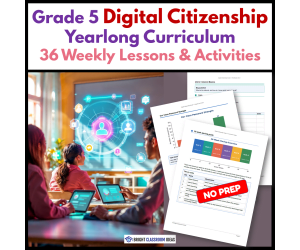
Grade 5 Digital Citizenship Yearlong Curriculum | 36 Weekly Lessons
Technology, Science, Back To School, Holidays, Holiday & Seasonal, August, Months, September, Fall, Seasons, Grade 5, Lesson Plans, Teacher Tools, Worksheets & Printables
Grade 5 Digital Citizenship Curriculum | Yearlong AI Literacy, Media Literacy, Internet Safety, Digital Citizenship Lessons, Worksheets & Slides Prepare your students to become critical digital thinkers with this comprehensive Grade 5 Digital Citizenship Curriculum ! This complete 36-week digital citizenship program helps upper elementary students confidently navigate today's digital world by exploring misinformation, AI, deepfakes, online privacy, social media, digital ethics, gaming, and responsible technology use. With engaging lessons, interactive activities, assessments, projects, presentation slides, and teacher resources, you'll have everything you need to teach digital citizenship all year long with confidence. What's Included Everything you need for an entire year of digital citizenship instruction: ⭐ 36 complete weekly digital citizenship lessons ⭐ Comprehensive teacher lesson plans with scripted instruction ⭐ Student workbook with over 340 printable pages ⭐ Weekly student reflection journal ⭐ 282 presentation slides with built-in teaching notes ⭐ 180+ printable no-prep worksheets ⭐ 36 weekly exit tickets ⭐ 20 standards-aligned quizzes , including cumulative reviews ⭐ 10 inquiry-based classroom projects with student-friendly rubrics ⭐ Complete answer keys ⭐ Teacher Planning & Assessment Pack with standards alignment, planning grids, class record sheets, and skills progression ⭐ Teacher Toolkit featuring assessment guidance, differentiation strategies, AI teaching guidance, family communication resources, substitute plans, and yearlong planning ⭐ Graphs, class charts, and progress trackers that reinforce complex digital citizenship concepts visually How It Works in the Classroom Every lesson follows the same predictable routine, making planning simple while encouraging students to think critically and independently. Each weekly lesson includes: Bell ringer Teacher mini lesson Interactive presentation slides Student reading passage Guided notes Hands-on practice activities Partner discussions Real-world digital citizenship scenarios Independent application tasks Weekly reflection journal Exit ticket Optional family connection Differentiation ideas Complete answer keys Perfect for: Classroom teachers Technology and computer teachers Library and media specialists STEM enrichment Homeschool instruction Whole-group lessons Print or digital classrooms 1:1 device programs and blended learning Standards & Learning Goals Students build advanced digital citizenship and media literacy skills through six engaging units: Unit 1 – Misinformation & Fake News Misinformation, disinformation, and malinformation How false information spreads Emotional manipulation and clickbait Identifying impostor websites Professional fact-checking routines Verifying online claims Unit 2 – AI Images & Synthetic Media How AI images are generated Recognizing AI-generated content Deepfakes and manipulated media Provenance and content credentials Ethical use of AI-generated images Media investigations Unit 3 – AI Writing & Honest Work How AI writing tools work AI hallucinations Bias in AI-generated content Responsible AI use in school Disclosure of AI assistance Comparing human and AI writing Unit 4 – Digital Ethics & Privacy Ethical decision-making online Data collection and privacy Terms of service Consent and sharing photos Location data and surveillance Ethical debates Unit 5 – Social Media & Digital Reputation Algorithms and personalized feeds Digital footprints Online reputation Metrics, followers, and engagement Responsible online participation Reputation management Unit 6 – Gaming, Ownership & Critical Thinking Digital ownership Copyright and intellectual property Online gaming safety Persuasive design in games Attention and healthy technology habits Becoming a thoughtful, critical digital citizen Why Teachers Love It ❤️ Complete yearlong curriculum with minimal prep ❤️ Addresses today's most important digital citizenship topics, including AI, misinformation, media literacy, and online privacy ❤️ Ready-to-use lessons, slides, worksheets, assessments, and answer keys ❤️ Builds critical thinking and responsible decision-making instead of memorizing internet safety rules ❤️ Engaging real-world scenarios encourage meaningful classroom discussions ❤️ Reflection journals promote student ownership and self-awareness ❤️ Built-in formative and summative assessments make progress monitoring easy ❤️ Hands-on projects help students apply learning through authentic investigations ❤️ Teacher planning tools simplify assessment, differentiation, and classroom management ❤️ Perfect for classroom teachers, technology teachers, media specialists, and homeschool educators looking for a comprehensive, future-focused digital citizenship curriculum. Empower Students to Navigate the Digital World with Confidence Today's students need more than internet safety lessons—they need the skills to question information, recognize misinformation, understand artificial intelligence, protect their privacy, evaluate online sources, make ethical digital decisions, and use technology responsibly. This Grade 5 Digital Citizenship Curriculum provides everything you need to teach those essential 21st-century skills through engaging, age-appropriate lessons that prepare students for success both inside and outside the classroom.
Author Bright Classroom Ideas Marketplace
Rating
Tags Digital, Citizenship, Technology, Yearlong, Curriculum, Full Year

Number Order Puzzles 1 to 10 - Back to School
Holiday & Seasonal, Holidays, Back To School, First Day of School, Math, Early Math, Numbers, Kindergarten, Preschool, Grade 1, 2, 3, 4, 5, Worksheets & Printables, Worksheets, Activities, Centers, Teacher Tools, Assessments, Lesson Plans, Games
Help your students get excited about numbers with this fun Number Order Puzzle set for numbers 1 to 10! Designed especially for preschool, pre-K, and kindergarten, these puzzles make early math practice feel like play. Each puzzle features a cute back-to-school picture, like a bus or a pencil, that’s cut into 10 strips. Each strip is labeled with a number from 1 to 10. Kids cut them apart, then put the numbers in order to rebuild the full picture. It’s a simple, hands-on activity that helps young learners get comfortable with number order while also working on fine motor skills. Ways to Use: Morning work or center time Early finisher task Partner or small group activity Send home for fun extra practice Why Teachers Love It: Helps kids practice number sequencing Builds confidence with counting 1–10 Great for scissors and hand-eye coordination Fun, engaging, and easy to prep (just print and go!) Perfect for the beginning of the school year This is a great way to combine math, puzzles, and back-to-school excitement in one easy activity! Pdf file includes 8 pages. Enjoy!
Author Ponder Palette Plazza
Rating
Tags Puzzles, Numbers, Number Puzzles, Back To School, Back To School Activities, Fine Motor Skills, Cutting Practice, September Activities, Agust Activities

Telling Time Practice Activity
Holiday & Seasonal, Holidays, Back To School, Seasons, Fall, Spring, Summer, Winter, Math, Time, Kindergarten, Preschool, Grade 1, 2, 3, 4, 5, Worksheets & Printables, Worksheets, Teacher Tools, Assessments, Lesson Plans
Make teaching time-telling simple, fun, and stress-free with these Telling Time Practice Worksheets ! Designed for elementary students, this resource offers a variety of engaging activities to help kids confidently read and write time on both analog and digital clocks. With clear visuals and plenty of step-by-step practice, these worksheets make it easy to build a strong foundation in time-telling while also strengthening math and problem-solving skills. How to Use: Daily math practice or warm-up work Homework for extra practice at home Math centers and independent activities Small group instruction or one-on-one tutoring Sub plans and test prep Quick skill review and assessment Why You’ll Love It: Builds confidence with analog and digital clocks Offers activities for different skill levels Encourages independent learning with simple directions Provides real-world practice to develop life skills Saves planning time with ready-to-print worksheets Perfect for classrooms, homeschool, and after-school programs This resource is great for introducing new skills, practicing elapsed time, or reviewing concepts all year long. With multiple activities to keep students engaged, your learners will master time-telling with confidence and ease. Enjoy!
Author Ponder Palette Plazza
Rating
Tags Time, Telling Time, Fall Math, Back To School Math, Spring Math, Winter Math, Back To School Activities, Back To School, Back To School Telling Time

Back-to-School Icebreakers after Winter Break (for High School)
Back To School, Holidays, Holiday & Seasonal, First Day of School, New Year's Day, January, Months, Winter, Seasons, Grade 9, 10, 11, 12, Activities, Lesson Plans, Teacher Tools, Worksheets & Printables
Back-to-School After Winter Break: High School Reflection & Reset Lesson Kick off the new semester with this authentic, no-cheese icebreaker and reflection session designed specifically for high school students . This 90-minute resource helps teens transition from break to academic life through meaningful reflection, goal-setting, and genuine conversation. Perfect for advisory, homeroom, or SEL blocks! 💡 What’s Included Full 90-minute lesson plan (editable + teacher guide) Printable & digital student reflection worksheets Letter to Future Self activity (ready-to-use template) Socratic Seminar prompts on identity, purpose, and growth Goal-Setting Framework (SMART goals + reflection prompts) Classroom culture co-creation activity Differentiation guide for freshmen through seniors Optional brain breaks & discussion strategies 🏫 How It Works in the Classroom Use this after winter break to: Rebuild classroom community and reset expectations Guide students through honest, structured reflection Encourage goal-setting and accountability Facilitate meaningful conversations that foster belonging Transition from “break mode” back to productive learning No prep needed—just print or share the digital version and go! Ideal for advisory, homeroom, or SEL-focused classes. 🎯 Standards & Learning Goals Students will: Reflect critically on personal growth and experiences Set SMART goals for academic and personal success Practice metacognition and self-awareness Strengthen communication through Socratic dialogue Reconnect with peers and re-establish classroom norms ❤️ Why Teachers Love It Teachers say this resource is: “Real, not forced—high schoolers actually engage!” “A meaningful reset that builds trust and motivation.” “Perfect balance of structure and reflection.” This session creates a safe, reflective space that respects high schoolers’ maturity while rebuilding your classroom community after break. Help your students return refreshed, grounded, and ready to thrive this semester. Use this meaningful Back-to-School After Break Reflection to spark connection and focus from day one!
Author Bright Classroom Ideas Marketplace
Rating
Tags Back-to-school, Winter, Break, Icebreaker, Worksheet, Lesson, Plan, Activities, High School

Number of the Week - Morning Work
Holiday & Seasonal, Holidays, Back To School, First Day of School, September, Months, ELA, Math, Early Math, Numbers, Kindergarten, Preschool, Grade 1, 2, 3, 4, 5, Activities, Centers, Teacher Tools, Assessments, Lesson Plans, Worksheets, Worksheets & Printables
Start each day with meaningful number practice using this Number of the Week – Morning Work resource! Perfect for preschool, pre-K, kindergarten, and early first grade, this printable pack is designed to help young learners build strong number sense, one number at a time. Each page focuses on a single number and includes a variety of engaging activities such as tracing, writing, coloring, finding, and counting. Students will explore numbers in multiple ways, which helps them understand what each number represents, how to write it, and how to recognize it in different formats. It’s a great way to introduce or review numbers as part of your daily morning routine. Ways to Use: Daily morning work or bell ringer Number of the week focus during math time Centers or independent practice Homework or take-home packet Advantages: Strengthens number recognition and writing Encourages consistent daily number practice Builds fine motor skills through tracing and coloring Reinforces counting and one-to-one correspondence No prep – just print and go (PDF format only) A simple and effective way to build number confidence in young learners! Pdf file inclides 10 pages. Enjoy!
Author Ponder Palette Plazza
Rating
Tags Morning Work, Numbers, Number Of The Week, Back To School, Back To School Activities, September Activities, First Week Activities, August Activities

Letter A Activities Pack
ELA, Language Development, ESL, Writing, Handwriting, Holiday & Seasonal, Holidays, Back To School, First Day of School, Kindergarten, Preschool, Grade 1, 2, 3, Worksheets & Printables, Activities, Centers, Teacher Tools, Assessments, Lesson Plans, Classroom Decor
Get your little learners excited about the alphabet with this Letter A Activities Pack ! It’s full of fun, engaging worksheets that help kids learn to recognize, trace, write, and say the letter A. Designed for preschool, pre-K, and kindergarten, this pack makes learning feel like play. How You Can Use It: Introduce the letter A during your alphabet lessons Add to morning work, centers, or small group time Use as part of your letter of the week routine Send home for extra practice or homework Great for both classroom and homeschool use Why You’ll Love It: Helps kids recognize uppercase and lowercase A Builds fine motor skills with tracing and coloring Reinforces beginning sound awareness No prep needed, just print and go (PDF format) Fun, simple activities kids enjoy doing This pack includes a variety of worksheets, tracing, coloring, letter hunts, flashcards, and more, all focused on the letter A. It’s a fun and easy way to support early reading and writing skills while keeping your students engaged and confident. A great start to any alphabet learning journey! PDF file includes 7 pages. Enjoy!
Author Ponder Palette Plazza
Rating
Tags Letters, Letter A, Alphabet, Back To School Activities, Letter Of The Week, Back To School, First Day Of School, Handwriting, First Day Of School Activities
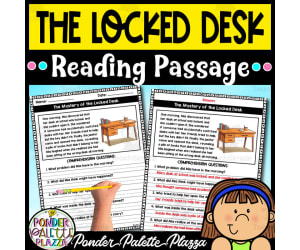
The Mystery of the Locked Desk - Reading Comprehension
ELA, Reading, Reading Comprehension, Holiday & Seasonal, Holidays, Back To School, First Day of School, Months, August, September, Grade 3, 4, 5, Worksheets & Printables, Worksheets, Activities, Teacher Tools, Assessments, Lesson Plans
Make learning about spring extra fun with this engaging reading comprehension activity! Students will read a short, kid-friendly passage about spring and then answer multiple choice questions to check their understanding. It’s perfect for keeping students thinking and practicing reading skills while enjoying a seasonal theme. Designed for grades 3-5, this resource works well for independent work, small groups, or even whole class lessons. Ways to Use: As a morning warm-up activity to get students focused For guided reading practice in small groups As part of a spring themed literacy center For extra reading practice during homework As a quick assessment to see how well students understand what they read Benefits: Makes reading comprehension more fun with a seasonal topic Encourages students to read carefully and think about details Easy to use, just print and go Helps improve reading fluency and comprehension skills Great for keeping students engaged during the spring season Enjoy!
Author Ponder Palette Plazza
Rating
Tags Reading, Reading Comprehension, Back To School, Back To School Activities, Back To School Reading, September Reading, August Reading, Reading Centers
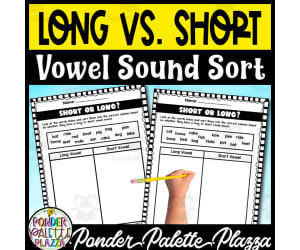
Long and Short Vowel Sound
ELA, Language Development, ESL, Phonics, Spelling, Holiday & Seasonal, Holidays, Back To School, First Day of School, Kindergarten, Preschool, Grade 1, 2, 3, Activities, Centers, Teacher Tools, Assessments, Lesson Plans
The Long and Short Vowel Sound – Word Sorting Activity is a great way to help students master the difference between long and short vowel sounds. In this engaging resource, students are provided with a list of words and are asked to read each word carefully, then sort it into the correct column based on whether it has a long or short vowel sound. This task strengthens phonemic awareness and helps build strong decoding skills for early readers. Designed for Kindergarten, 1st Grade, and ESL learners, this resource offers a simple yet effective way to practice vowel sound recognition in an independent or group setting. It’s perfect for reinforcing phonics instruction and supporting foundational reading skills. Ways to Use: Literacy or phonics centers Independent practice or morning work Small group instruction Homework or review activity Assessment of vowel sound understanding Advantages: Builds awareness of vowel patterns and sounds Encourages careful reading and analysis of words Supports visual and auditory learning styles Simple, no-prep activity that’s easy to implement Reinforces key phonics concepts in a hands-on way Pdf file includes 2 pages. Enjoy!
Author Ponder Palette Plazza
Rating
Tags Vowel, Vowels, Long Vowel, Short Vowel, Back To School, Back To School Activities, Literacy, Long And Short Vowel, Phonics, Long And Short Vowels

Writing Activities - Back to School
ELA, Writing, Creative Writing, Holiday & Seasonal, Holidays, Back To School, First Day of School, Months, August, September, Kindergarten, Preschool, Grade 1, 2, 3, 4, 5, Worksheets & Printables, Worksheets, Teacher Tools, Assessments, Lesson Plans, Activities, Writing Prompts
This Writing Activities – Back to School resource is perfect for helping students ease into the school year while practicing both their writing and creative thinking skills. Each activity includes a clear instruction for students to read, followed by a fun task where they first draw their response and then write a short paragraph about it. This combination of drawing and writing encourages students to visualize their ideas before putting them into words, making it especially engaging for reluctant writers. The activities are themed around back to school topics such as summer memories, personal goals, favorite subjects, and “getting to know you” prompts. The resource is suitable for elementary classrooms and can be used in journals, as morning work, or for quick, low prep icebreakers. It’s a great way to assess writing skills early in the year while building a positive and creative classroom atmosphere. Ways to Use: First week of school icebreakers Morning work or bell ringers Journal writing Fast finisher activities Sub plans for the first weeks Advantages: Combines art and writing for engagement Encourages creativity and self-expression Helps assess early year writing skills Easy to prep and use Suitable for multiple grade levels Enjoy!
Author Ponder Palette Plazza
Rating
Tags Writing, Back To School, Back To School Activities, Back To School Writing, September Writing Activities, Writing Prompts, First Week Of School Activities

Alphabet Flashcards - Uppercase and Lowercase Letters - ABC Cards
ELA, Holiday & Seasonal, Holidays, Back To School, First Day of School, Months, August, September, Kindergarten, Preschool, Grade 1, 2, 3, 4, 5, Activities, Centers, Classroom Decor, Bulletin Boards, Door Decor, Posters, Word Walls, Teacher Tools, Charts, Lesson Plans
Alphabet Flashcards – Uppercase and Lowercase Letters – ABC Cards are a fun and simple way to help young learners become familiar with their letters. These cards show both the uppercase and lowercase version of each letter and are perfect for preschool, kindergarten, or early elementary students who are just starting to learn the alphabet. How You Can Use Them: Practice naming letters together during circle time. Let students match uppercase and lowercase cards in pairs. Play sorting games where they put the letters in ABC order. Use them with everyday objects to connect letters with sounds (like “A” for apple). Set them up in a learning center for independent or small group practice. Why Teachers Love Them: The clean, colorful design makes it easy for kids to focus. They can be used in so many different ways – whole group, small group, or on their own. Great for all types of learners – visual, hands-on, or those who need a little extra practice. Print on cardstock or laminate them to last all year long. A great tool to build confidence as kids learn to recognize and name their letters. Simple, effective, and easy to use, these flashcards are a classroom favorite! Pdf fine inclludes 7 pages. Enjoy!
Author Ponder Palette Plazza
Rating
Tags Back To School, Back To School Activities, Back To Scrool Descor, Classroom Decor, Flashcards, Alphabet Flashcards, Alphabet Posters, Classroom Charts

Welcome Back from Christmas Break Lesson Plan (Grades 3–5)
ELA, Back To School, Holidays, Holiday & Seasonal, Christmas, New Year's Day, January, Months, Homeschool Curriculum, Grade 1, 2, 3, 4, 5, Lesson Plans, Teacher Tools, Worksheets & Printables
🎉 Welcome Back from Christmas Break Lesson Plan (Grades 3–5) Ease back into learning with this engaging, ready-to-use 90-minute lesson plan and worksheet — perfect for the first day after winter break ! Students will reconnect, reflect, and re-energize while reviewing reading, writing, and math skills in a fun, low-stress way. ✅ What’s Included Detailed 90-minute lesson plan (7 sections) Printable student worksheet with 6 interactive activities Answer key for easy grading Teacher tips for differentiation and behavior management Reflection & goal-setting prompts for the new year ❄️ How It Works Start with a community circle and welcome-back activity Guide students through holiday writing , math challenges , and reading comprehension Encourage creativity with New Year’s goal-setting End with a reflection and celebration to rebuild classroom community Ideal for whole group or small group — print & go! 🌟 Learning Goals Students will: Reconnect with classmates and routines Review addition, subtraction, and multiplication Practice reading comprehension with a winter-themed story Express themselves through creative writing and art Set meaningful academic and personal goals for 2025 💛 Why Teachers Love It Saves hours of prep during a busy week Promotes classroom connection and positive energy Blends academics and SEL seamlessly Adaptable for Grades 3–5 (and easily modified for other levels) Perfect balance of structure and fun for the first day back ⭐ Make your first day after break stress-free, engaging, and meaningful! .
Author Bright Classroom Ideas Marketplace
Rating
Tags New Year, Christmas, Back To School, Lesson, Plan, Worksheet, Activities
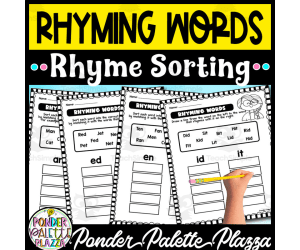
Rhyming Words - Sorting Activity
ELA, Language Development, ESL, Phonics, Spelling, Holiday & Seasonal, Holidays, Back To School, End Of Year, Kindergarten, Preschool, Grade 1, 2, 3, Activities, Centers, Teacher Tools, Assessments, Lesson Plans
Rhyming Words – Sorting Activity is a fun and hands-on way to help kids practice recognizing rhymes. Perfect for Kindergarten to 2nd grade, this activity gets students sorting words that sound alike by their endings. It’s a great way to boost their listening skills and build early reading confidence. How you can use it: In small groups or literacy centers As a whole-class activity to get everyone involved Independent work or homework practice A quick warm-up before phonics lessons Morning work or something for early finishers Works well whether you’re teaching in person or online Why teachers like it: Helps kids really tune in to sounds and rhymes Builds important phonics and vocabulary skills Keeps students engaged with a hands-on, interactive approach Easy to prep, just print and cut out the word cards Works for different skill levels, so you can adjust as needed Gives kids confidence as they practice and see the connections between words Pdf file includes 5 pages. Enjoy!
Author Ponder Palette Plazza
Rating
Tags Rhyming, Rhyming Words, Phonics, Vowels, Cvc Words, Back To School, Baack To School Activities, Short Vowels, Cvc Words Worksheets

All About Me Activity - Back to School
ELA, Language Development, ESL, Writing, Holiday & Seasonal, Holidays, Back To School, First Day of School, Months, August, Kindergarten, Preschool, Grade 1, 2, 3, 4, 5, Worksheets & Printables, Activities, Centers, Teacher Tools, Assessments, Lesson Plans, Classroom Decor, Bulletin Boards
Kick off the school year with this engaging All About Me activity, perfect for getting to know your students while fostering a fun and welcoming classroom environment. This printable resource encourages students to reflect on their personalities, interests, and goals, helping you gain insight into who they are from day one. Ways to Use: Ideal for the first day or week of school as a getting-to-know-you task Use as a bulletin board display to build classroom community Pair students up to share their responses and practice communication Great for morning work, centers, or homework Can be kept in student portfolios to track growth over the year Advantages: Encourages student self-expression and creativity Helps teachers learn about their students quickly Builds relationships and a positive classroom culture Supports writing, drawing, and communication skills Suitable for in-person and distance learning formats This low-prep resource is classroom-tested and works well for a wide range of grade levels. It sets a positive tone and helps every student feel seen and valued from the start. Start your year with connection, creativity, and confidence! PDF file includes 1 page. Enjoy! This Get to Know Me activity pack offers another way for children to introduce themselves at the start of school.
Author Ponder Palette Plazza
Rating
Tags Back To School, Bts, Back To School Activities, First Day Of School, First Day Of School Activities, First Week Of School Activities, All About Me, Bulletin Boards

Letter S Puzzles - Letter S Beginning Sound
ELA, Language Development, Phonics, Holiday & Seasonal, Holidays, Back To School, Months, August, September, Spelling, Kindergarten, Preschool, Grade 1, 2, 3, 4, 5, Worksheets & Printables, Activities, Centers, Games, Teacher Tools, Assessments, Lesson Plans
Make learning the letter S fun and simple with this Letter S Puzzle activity! This hands-on resource is great for preschool, pre-K, and kindergarten students who are learning to match letters with sounds. Each puzzle comes with two pieces, one shows the uppercase and lowercase letter S, and the other features a picture and word that starts with the letter, like “sun.” Kids get to match the pieces and say the word, helping them build letter recognition and beginning sound skills in a fun and easy way. This is a no-fuss activity, just print, cut, and you're ready to go! It works well in literacy centers, small groups, or as independent work. It’s also great for building vocabulary and improving fine motor skills through hands-on play. You can use it for: Letter of the week activities Morning work or centers Small group or one-on-one practice Early finisher bins Why teachers love it: Fun and easy for kids Reinforces early reading skills Builds confidence with letters and sounds Low prep and ready to use (PDF format only) A playful way to help students connect the letter S to its sound! Enjoy!
Author Ponder Palette Plazza
Rating
Tags Letter S, Beginning Sound, Letter Puzzles, Alphabet, Back To School, Back To School Activities, Literacy Centers, Phonics, Letter S Beginning Sound

Year-Long Personal Finance Curriculum | Grades 3-5 | Unit 4
Back To School, Holidays, Holiday & Seasonal, Spring, Seasons, Money, Math, Finance, Life Studies, Grade 3, 4, 5, Lesson Plans, Teacher Tools, Worksheets & Printables
Personal Finance Curriculum | Unit 4: Smart Consumers | Grades 3–5 Help students build practical financial literacy skills for grades 3–5 with this engaging Unit 4 student resource focused on becoming smart consumers. Students learn to recognize advertising techniques, compare products, shop safely online, evaluate reviews, and make thoughtful purchasing decisions. Please note: This listing includes the Unit 4 student book only . The included teacher resources and bonus materials support the complete six-unit, 30-week Personal Finance curriculum . 📦 What’s Included Student Resource — Unit 4: Smart Consumers 63-page student unit 5 weeks of instruction Week 16: Advertising Week 17: Comparison Shopping Week 18: Online Shopping Week 19: Product Reviews Week 20: Unit 4 Project Original weekly reading passages Comprehension questions Vocabulary practice Financial math Real-world graph analysis Realistic consumer scenarios Application activities Evidence-based writing Weekly reviews and essential questions Each week follows the same predictable instructional rhythm. Students read, practice vocabulary, solve financial math problems, analyze graphs, apply concepts, and write about their learning. ⭐ Teacher Resources for the Full Curriculum The Teacher Guide supports all 30 weeks and all six units , rather than Unit 4 alone. It includes: 109-page Teacher Guide Week-by-week teaching notes 50–60 minute lesson pacing Misconceptions to watch for Four-level differentiation Standards alignment Assessment guidance Family engagement Materials lists 🎁 Bonus Resources for the Full 6-Unit Curriculum The accompanying bonus resources are designed to support the entire 30-week curriculum , including: Complete Answer Key for all 30 weeks Assessment Rubrics Six Unit Tests 180 Vocabulary Definition Cards 180 Word-Wall Cards 60 Exit Tickets Parent Letters and Family Glossary Progress Monitoring Forms Six Financial Literacy Games 12 Classroom Posters Award Certificates Editable Lesson Plans for all 30 weeks 🏫 How It Works in the Classroom Use the Unit 4 student resource for approximately five weeks of focused instruction on smart consumer habits. Unit 4 Topics Include: Advertising Common advertising techniques Persuasive techniques Bandwagon Testimonials Influencers Emotional appeals Fine print Separating factual claims from emotional appeals Students analyze advertisements and practice identifying how marketing can influence purchasing decisions. The Ad Detective activity asks students to analyze real advertisements and rewrite one using checkable facts. Comparison Shopping Unit price Comparing products Quality Durability Warranties Bulk purchases Value Students learn that the cheapest sticker price is not always the best deal. They compare unit prices and consider quality, durability, and actual use. Online Shopping Secure websites Shipping costs Sales tax Return policies Scams Phishing True total cost Students identify signs of trustworthy online sellers and calculate the actual cost of purchases. Product Reviews Reviews Verified purchases Bias Sample size Patterns Credibility Students learn to look beyond individual ratings. They examine review patterns and consider whether reviews provide trustworthy evidence. Unit 4 Project: The Shopping Simulation Work within a fixed budget Compare purchase options Resist persuasive techniques Consider total cost Make substitutions Avoid impulse buys Justify purchasing decisions The final project gives students a simulated shopping experience. They apply the consumer skills developed throughout the unit. 🎯 Standards & Learning Goals Students will: Identify common advertising techniques. Separate factual claims from emotional appeals. Calculate and compare unit prices. Compare products using more than price alone. Explain why the cheapest option is not always the best value. Identify signs of a trustworthy online seller. Calculate totals including shipping, tax, and fees. Recognize common online shopping scams. Evaluate the credibility of product reviews. Distinguish helpful reviews from unhelpful reviews. Use review patterns instead of relying on single reviews. Make informed purchasing decisions. Justify consumer choices using evidence. Unit 4 includes alignment with CEE Spending 6.5–6.8, Jump$tart 3–5 Spending 5–8, and Common Core standards . 💛 Why Teachers Love It ⭐ Low-prep instruction: The student pages provide a clear weekly learning path. ⭐ More than worksheets: Students read, calculate, analyze, discuss, apply, and write. ⭐ Real-world connections: Students explore advertisements, products, online shopping, and reviews. ⭐ Financial math is built in: Students calculate discounts, unit prices, percentages, taxes, shipping, averages, and total costs. ⭐ Strong visual learning: Students interpret real graphs connected directly to consumer decisions. ⭐ Critical thinking: Students learn to question advertising claims and evaluate evidence. ⭐ Practical application: Activities include an Ad Detective , Price Comparison Lab , and Review Analyzer . ⭐ Project-based learning: The final Shopping Simulation challenges students to spend a fixed budget wisely under consumer pressure. ⭐ Easy assessment: The larger curriculum includes answer keys, exit tickets, rubrics, tests, and progress-monitoring tools. ⭐ Teacher support extends across the full curriculum: The Teacher Guide and bonus resources support Units 1–6. This listing provides Unit 4: Smart Consumers . ✨ Build Smart Consumer Habits Through Financial Literacy Give students an age-appropriate introduction to smart consumer skills, comparison shopping, online safety, advertising, and product reviews . Unit 4 connects financial literacy with math, reading, writing, critical thinking, and real-life decision-making. This resource works well within the larger 30-week personal finance curriculum . It can also be taught as a standalone financial literacy unit.
Author Bright Classroom Ideas Marketplace
Rating
Tags Finance, Financial, Literacy, Money, Yearlong, Curriculum, Full Year
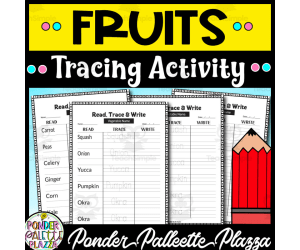
Sight Words Tracing Worksheets - Fruit Name
ELA, Language Development, ESL, Writing, Handwriting, Holiday & Seasonal, Holidays, Back To School, Seasons, Kindergarten, Preschool, Grade 1, 2, 3, Teacher Tools, Assessments, Lesson Plans
Want to make handwriting practice as sweet as a juicy watermelon on a summer day? These Sight Word Tracing Worksheets will have your students tracing their way through a fruit-filled adventure! From “apple” to “banana” to the ever-tricky “pomegranate,” kids will strengthen their handwriting skills while learning fun fruit names. No sticky fingers involved—just lots of engaging practice! Ways to Use: ✔️ Handwriting Practice – Because writing “strawberry” neatly is almost as satisfying as eating one. ✔️ Vocabulary Building – Helps kids learn fruit names beyond just “grapes” and “oranges.” ✔️ Morning Work or Early Finishers – Keeps students busy in a meaningful way (instead of doodling on their desks). ✔️ Literacy Centers – A fruity fresh way to boost spelling and reading skills. ✔️ ESL Support – Great for English learners to connect words to everyday foods. Why You’ll Love It: 🍎 Fun & Educational – Learning fruit names while practicing writing? That’s a recipe for success! 🍌 No Prep Needed – Just print and go—zero peeling required! 🍍 Perfect for All Ages – Great for little learners who are just getting a grip on their pencils. Handwriting practice has never been this fruitful—grab your set today! Pdf file includes 4 pages.
Author Ponder Palette Plazza
Tags Fruits, Vocabulary, Sight Word, Sight Words, Handwriting, Tracing, Tracing Words, Fall Activities, Esl, Spring Activities

CVC Short u - Roll and Read Activity
ELA, Language Development, ESL, Phonics, Pre-Reading, Reading, Holiday & Seasonal, Holidays, Back To School, First Day of School, Kindergarten, Preschool, Grade 1, 2, 3, Activities, Centers, Teacher Tools, Assessments, Lesson Plans
The CVC Short U – Roll and Read a Sentence Activity is a hands-on and engaging way to help young learners practice reading short “u” words in simple, decodable sentences. With familiar CVC (consonant-vowel-consonant) words like sun , mug , cup , and bug , students roll a die and read a sentence that matches the number rolled. This activity adds a playful twist to reading time while reinforcing essential phonics and fluency skills. Ideal for Kindergarten, 1st Grade, and ESL classrooms, this resource supports students as they build decoding skills, improve sentence fluency, and grow more confident in reading aloud. The repetitive structure and clear vocabulary make it accessible and effective for early readers. Ways to Use: Use in small group instruction or guided reading Place in literacy centers for independent or partner practice Include in morning tubs or early finisher stations Laminate and reuse throughout the year Send home for extra practice with families Advantages: Strengthens understanding of short U CVC words in context Builds fluency and word recognition Makes reading practice fun and interactive Encourages repeated reading with a purpose Easy to prepare, store, and use year-round Pdf file includes 5 pages. Enjoy!
Author Ponder Palette Plazza
Rating
Tags Phonics, Phonics Activities, Reading, Back To School, Back To School Activities, Cvc, Cvc Short U, Literacy, Back To School Literacy, ELA
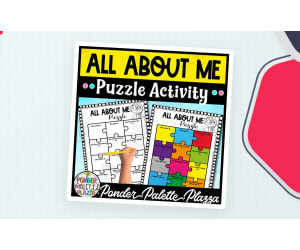
All About Me Puzzle Activity
ELA, Language Development, ESL, Holiday & Seasonal, Holidays, Back To School, First Day of School, Months, August, Writing, Kindergarten, Preschool, Grade 1, 2, 3, 4, 5, Worksheets & Printables, Activities, Centers, Classroom Decor, Bulletin Boards, Teacher Tools, Assessments, Lesson Plans
Start the school year with a fun and creative All About Me Puzzle Activity ! This engaging resource is the perfect first day of school activity that encourages students to share interesting facts about themselves while creating a unique puzzle piece that represents who they are. Each student completes their own puzzle with drawings and short responses about their hobbies, family, favorite things, and goals. Ways to Use: First day or week of school icebreaker Morning work or center activity Combine all student puzzles to create a collaborative classroom display Use in student portfolios for the beginning-of-year snapshot Pair with student introductions or presentations Great for both in-person and distance learning Advantages: Encourages creativity and self-expression Helps students feel seen and valued Builds classroom community by showing how each student is a piece of the class puzzle Supports social-emotional learning and relationship building Easy to differentiate for various grade levels and abilities Low-prep and print-ready resource Pdf file includes 2 pages. Enjoy!
Author Ponder Palette Plazza
Rating
Tags Back To School, Back To School Activities, All About Me, First Day Of School, First Day Of School Activities, Bulletin Boards