



3,992 products added recently
Page 4 - Back To School Lesson Plans
Ease your students into the new academic year with back-to-school lesson plans designed to build community and set expectations. These activities promote teamwork, establish routines, and help students feel comfortable. Implement these plans to create a positive start and foster a supportive classroom environment.

 Show filters


Yearlong Personal Finance Curriculum | Grades 9-12 | Unit 6
Back To School, Holidays, Holiday & Seasonal, Spring, Seasons, Finance, Life Studies, Money, Math, Grade 9, 10, 11, 12, Lesson Plans, Teacher Tools, Worksheets & Printables
🏠 Personal Finance Curriculum for Grades 9–12 | Unit 6 Adult Life Teach real-world adult life skills with a practical personal finance curriculum covering renting, insurance, cars, homes, consumer rights, identity theft, and fraud. Unit 6: Adult Life helps students move beyond financial theory and practice the decisions they will face as independent adults. This six-week adult life unit combines financial math, realistic case studies, data analysis, hands-on investigations, spreadsheet modeling, argument writing, and a culminating financial life-plan capstone. Important: This version includes the complete teacher resource collection for all six units , while the student component included is Unit 6 . The student book contains Weeks 7–12, while the teacher materials support the full 36-week Grades 9–12 course. 📦 What’s Included Unit 6 covers Weeks 31–36 , with six focused lessons: Week 31: Renting an Apartment — Leases, Deposits, and Tenant Rights Week 32: Insurance — How Insurance Prices Risk Week 33: Buying a Car — Total Cost of Ownership and the Negotiation Week 34: Buying a Home — Mortgages, Closing Costs, and the True Monthly Payment Week 35: Consumer Rights — Contracts, Warranties, and Getting Redress Week 36: Identity Theft & Fraud — Capstone: Protection, Detection, and the Life Plan Every week follows the same 11-part structure : Week opener Original reading passage Comprehension and analysis Vocabulary in context Financial math Data analysis Realistic case study Hands-on activity or simulation Spreadsheet modeling Argument writing Weekly review 🏢 Week 31 — Renting an Apartment Leases, Deposits, and Tenant Rights Students investigate what they are actually agreeing to when they sign a lease. They learn about: Residential leases Lease terms Joint and several liability Security deposits Normal wear and tear Habitability Notice to enter Subletting Renewal deadlines Move-in documentation The reading emphasizes five lease clauses that can create major financial consequences, including roommate liability, renewal terms, security deposits, habitability, and landlord entry. 🧮 Financial Math Students calculate: Individual roommate shares. Liability when a roommate leaves. Security-deposit limits. Late-return amounts. Deposit deductions. Total lease value. Notice deadlines. Lease-breaking penalties. Potential savings from breaking a lease. 🔎 Hands-On Activity: Lease Analysis Students obtain a real residential lease or use the provided sample. They: Locate and summarize key clauses. Flag potentially problematic provisions. Create a move-in documentation checklist. Calculate the financial value of the contract. Deliverable: A plain-language clause summary, flagged-clause list, and documentation checklist. 📊 Spreadsheet Model Students build a Lease and Deposit Tracker that tracks: Lease clauses Obligations Deadlines Documentation Photo references Notes Deposit deductions and justification 🛡️ Week 32 — Insurance How Insurance Prices Risk Students learn how insurance works as a financial risk-management tool. They explore: Premiums Deductibles Coinsurance Out-of-pocket maximums Copayments Liability coverage Underinsurance Risk pooling Students learn why premium alone is not enough when comparing insurance plans. They calculate total annual costs under different levels of healthcare use and evaluate when raising a deductible makes financial sense. 🧠 Key Concept Students examine the principle of insuring catastrophic losses rather than small inconveniences . They compare risks they could realistically absorb with losses that could overwhelm their finances. 🔬 Hands-On Activity: Coverage Optimization Students complete a three-scenario cost analysis and make a coverage adjustment recommendation . 📊 Spreadsheet Model: Insurance Cost Model Students model: Premiums Deductibles Coinsurance Major-claim costs Out-of-pocket maximums Whether a deductible is affordable from savings Liability limits compared with household assets Learning goal: Students learn to evaluate insurance based on total exposure and risk , not simply the lowest premium. 🚗 Week 33 — Buying a Car Total Cost of Ownership and the Negotiation Students move beyond the question, "Can I afford the monthly payment?" They learn to calculate the actual cost of owning a vehicle. Key concepts include: Total cost of ownership Depreciation Out-the-door price Dealer add-ons Trade-in value Leasing Residual value Money factor Students examine the four separate negotiations hidden inside a vehicle purchase: Vehicle price Trade-in value Financing Add-ons The unit specifically challenges the misconception that a lower monthly payment automatically means a better deal. 🧮 Total Cost of Ownership Students account for costs such as: Depreciation Financing interest Fuel Insurance Registration Maintenance Repairs The teacher guide emphasizes depreciation as a particularly important ownership cost. 🔎 Hands-On Activity: Vehicle Cost Investigation Students create two five-year ownership models using sourced figures. They also calculate and compare cost per mile . Deliverable: Two five-year ownership models with sourced figures and a cost-per-mile comparison. 📊 Spreadsheet Model: Total Cost of Ownership Students build a model incorporating: Depreciation Registration Insurance Fuel Maintenance Repairs Financing interest Annual mileage Cost per mile Students can then compare buying versus leasing based on total cost rather than payment size. 🏡 Week 34 — Buying a Home Mortgages, Closing Costs, and the True Monthly Payment Students investigate what homeownership actually costs each month. They learn about: Mortgages Principal and interest Escrow PMI Closing costs Points Amortization Home equity Students calculate the full housing payment , rather than relying on the principal-and-interest number shown by a basic mortgage calculator. 💰 Students Explore How down payment size affects PMI. How down payment size can affect rates and total cost. The difference between mortgage payment and true housing cost. How amortization changes the interest/principal split. Why buying is not automatically financially superior to renting. 🏠 Hands-On Activity: Rent Versus Buy Analysis Students create a seven-year rent-versus-buy model . They identify: Break-even year. Housing costs. Rent increases. Mortgage costs. Equity effects. Sensitivity to changing assumptions. Deliverable: A seven-year rent-versus-buy model with a break-even year and sensitivity note. 📊 Spreadsheet Model: Housing Cost Model Students build an amortization model that: Tracks changing interest and principal. Removes PMI when the required equity threshold is reached. Adds annual rent increases. Compares renting and owning side by side. ⚖️ Week 35 — Consumer Rights Contracts, Warranties, and Getting Redress Students learn what they can do when a purchase goes wrong. They distinguish: Express warranties Implied warranties Merchantability "As-is" sales Arbitration clauses Chargebacks Small claims court Regulatory complaints Instead of treating a seller's first refusal as the end of the process, students learn how to escalate a legitimate complaint systematically . 📋 Students Learn to Evaluate Contract terms. Warranty coverage. Unfavorable provisions. Whether a claim is actually supported. Appropriate escalation steps. When a case may be unwinnable. 🔎 Hands-On Activity: Consumer Redress Simulation Students work through realistic consumer disputes. Deliverable: Four warranty analyses. One drafted complaint. One explanation of an unwinnable case. 📊 Spreadsheet Model: Dispute Tracking Log Students record: Contact dates. Names. Reference numbers. Deadlines. Responses. Missed deadlines. The model automatically calculates deadline dates and flags unresolved steps that have passed their deadlines. 🔐 Week 36 — Identity Theft & Fraud Capstone: Protection, Detection, and the Life Plan The final week brings the entire personal finance course together. Students learn about: Identity theft Credit freezes Synthetic identities Data breaches Account takeover Identity theft reports Dark web monitoring Layered defense Students examine why identity protection cannot depend on simply keeping personal information secret. Instead, they design multiple independent layers of protection . 🛡️ Students Build a Protection System Possible layers include: Credit freeze Unique passwords Password manager Authenticator app Account alerts Monitoring A documented response process Students also learn what to do after confirmed identity theft, including documenting the incident and following a structured response sequence. 🏆 Capstone: Plan & Defense Students integrate learning from all six units into a personal financial plan. Deliverable: A six-component financial life plan. An identity-protection system. A panel defense of their decisions. 📊 Spreadsheet Model: Capstone Financial Plan Students: Include each required plan component. Cite the week and analysis supporting each figure. Stress-test the plan using a 25% income reduction . Evaluate whether the plan remains viable under changed circumstances. This makes the final project much more than a worksheet—it becomes a defensible personal financial plan . 🎯 Standards & Learning Goals Across Unit 6, students develop the ability to: Interpret residential lease clauses. Understand tenant rights and responsibilities. Analyze security deposits and documentation. Evaluate insurance based on total financial exposure. Calculate premiums, deductibles, coinsurance, and maximum exposure. Calculate the total cost of vehicle ownership. Separate vehicle purchase negotiations. Compare buying and leasing. Calculate the true cost of homeownership. Analyze mortgages, PMI, closing costs, and equity. Compare renting and buying over a defined period. Evaluate contracts and warranties. Identify consumer remedies. Draft effective complaints. Track dispute escalation. Protect personal information and accounts. Respond systematically to identity theft. Integrate financial decisions into a complete life plan. Defend financial choices using quantitative evidence. Standards Alignment The unit includes alignment to: CEE Spending 6.4–6.6 CEE Protecting 9.1–9.3 Jump$tart 9–12 Financial Decision Making 6–8 Jump$tart 9–12 Risk Management 1–3 CCSS.MATH.HSN.Q.A.2 CCSS.MATH.HSA.SSE.B.4 CCSS.MATH.HSS.MD.B.5 CCSS.ELA.RI.11-12.5 CCSS.ELA.RI.11-12.6 CCSS.ELA.W.11-12.1 ⭐ Why Teachers Love It ⭐ Prepares students for real adult decisions: Students practice situations they will actually encounter after high school. ⭐ Goes beyond basic financial literacy: Students don't simply define terms. They calculate, compare, investigate, model, and defend decisions. ⭐ Authentic financial math: Every week includes dedicated financial math with working space. ⭐ Real-world documents and scenarios: Leases, vehicle costs, mortgages, warranties, disputes, and identity-theft situations give the learning immediate relevance. ⭐ Strong spreadsheet integration: Students create practical financial models rather than treating spreadsheets as an isolated technology skill. ⭐ Builds decision-making skills: Students must weigh trade-offs, evaluate assumptions, and consider total cost. ⭐ Addresses common misconceptions: The unit challenges ideas like "the monthly car payment tells me what I can afford" and "buying is always better than renting." ⭐ Supports argument writing: Students repeatedly take positions and support them with calculations and evidence. ⭐ Excellent capstone progression: Students move from renting → insurance → cars → homes → consumer protection → identity protection . ⭐ Connects the entire course: Week 36 asks students to integrate learning from all six units into one defensible financial life plan. ✨ Give Students the Adult-Life Skills They Actually Need Give your students an adult life personal finance unit that connects financial literacy to the decisions waiting for them after graduation. Unit 6: Adult Life takes students from reading a lease and protecting a security deposit to comparing insurance plans, calculating the true cost of a car, analyzing rent versus buying, fighting unfair consumer charges, and protecting their identity. The unit finishes with an authentic financial life-plan capstone , requiring students to combine their knowledge, stress-test their assumptions, and defend their financial choices. It's a strong fit for high school personal finance, financial literacy, economics, career readiness, advisory, life skills, and independent living courses.
Author Bright Classroom Ideas Marketplace
Rating
Tags Finance, Financial Literacy, Money, Yearlong, Curriculum, Full Year
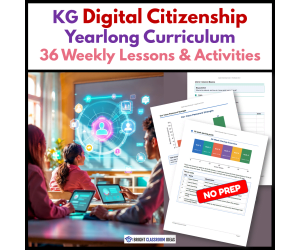
KG Digital Citizenship Yearlong Curriculum | 36 Weekly Lessons
Fall, Seasons, Holiday & Seasonal, August, Months, September, Back To School, Holidays, Technology, Science, Kindergarten, Lesson Plans, Teacher Tools, Worksheets & Printables
Kindergarten Digital Citizenship Curriculum | Yearlong Digital Citizenship Lessons, Internet Safety Activities, Technology Skills, Worksheets, Crafts, Slides & Assessments Introduce your youngest learners to the world of technology with this engaging Kindergarten Digital Citizenship Curriculum ! Designed as a complete 36-week digital citizenship program , this yearlong resource helps children build foundational technology skills while learning how to use devices safely, be kind online, protect personal information, develop healthy screen habits, and become responsible digital creators. With ready-to-teach lessons, hands-on crafts, printable activities, assessments, projects, interactive slides, and teacher resources, you'll have everything you need to teach digital citizenship with confidence all year long. What's Included This comprehensive curriculum provides everything you need for a full year of digital citizenship instruction: ⭐ 36 complete weekly digital citizenship lessons ⭐ Comprehensive teacher lesson plans with scripted instruction ⭐ Kindergarten student workbook with 120 printable pages ⭐ 180 presentation slides (5 slides per weekly lesson) ⭐ 80 no-prep printable worksheets ⭐ 20 hands-on crafts and classroom activities ⭐ 36 weekly exit tickets ⭐ 10 picture-based mini assessments (no reading required) ⭐ 6 engaging unit projects with rubrics and family notes ⭐ Complete answer keys ⭐ Graphs, class charts, and student tracking pages ⭐ Family connection activities throughout the curriculum ⭐ Print-and-go materials that work with or without classroom technology How It Works in the Classroom Every lesson follows the same predictable routine, helping young learners feel confident while making lesson planning simple for teachers. Lessons are designed for 45–60 minutes or can be divided into three 15–20 minute sessions throughout the week. The curriculum is entirely print-and-go and can be taught even if your classroom has only one shared device. Each weekly lesson includes: Bell ringer activity Teacher mini lesson Interactive presentation slides Shared reading passage Guided notes Hands-on practice activity Partner discussion Real-world technology scenario Independent activity Exit ticket Optional family connection Complete answer keys Perfect for: Kindergarten classrooms Technology and computer classes Library and media center lessons STEM enrichment Homeschool programs Whole-group instruction Print or digital classrooms Classrooms with one shared device or 1:1 technology Standards & Learning Goals Students develop essential technology and digital citizenship skills through six age-appropriate units: Unit 1 – My Technology World What technology is Devices around me Parts of a computer Using classroom technology Technology at home Technology scavenger hunt Unit 2 – Technology Rules Asking before touching devices Carrying devices safely Clean hands and device care Taking turns with technology Respecting classroom equipment Creating a class technology promise Unit 3 – Being Kind Online Kind digital communication Sharing in digital spaces Taking turns in online games Making good digital choices Recognizing feelings online Creating kindness projects Unit 4 – Staying Safe Trusted adults Private information Safe and unsafe online choices Asking for help Pop-ups and passwords Becoming a safety superhero Unit 5 – Healthy Screen Habits Taking screen breaks Moving your body Outdoor play Eye safety Healthy bedtime routines Creating a balanced day Unit 6 – Digital Creators Drawing with technology Taking photos Recording your voice Creating simple digital stories Sharing work safely Celebrating digital learning Why Teachers Love It ❤️ Complete yearlong curriculum with no-prep lessons ❤️ Developmentally appropriate for beginning technology users ❤️ Hands-on crafts and activities keep young learners engaged ❤️ Picture-based assessments require no independent reading ❤️ Consistent lesson format saves planning time ❤️ Includes slides, worksheets, crafts, projects, assessments, and answer keys in one bundle ❤️ Flexible for technology teachers, classroom teachers, media specialists, and homeschool educators ❤️ Works with or without student devices ❤️ Family connection activities encourage technology conversations at home ❤️ Builds confidence with technology while establishing safe and responsible digital habits from the very beginning. Give Your Young Learners a Strong Digital Foundation Digital citizenship starts long before students begin searching the internet independently. This Kindergarten Digital Citizenship Curriculum introduces essential technology concepts through engaging, age-appropriate lessons that help children safely explore technology, build healthy digital habits, practice kindness, and become confident digital learners. With a complete year of ready-to-use lessons, assessments, crafts, projects, and teacher resources, you'll save planning time while giving your students the skills they need for future success.
Author Bright Classroom Ideas Marketplace
Rating
Tags Digital, Citizenship, Media Literacy, Technology, Yearlong, Curriculum, Full Year
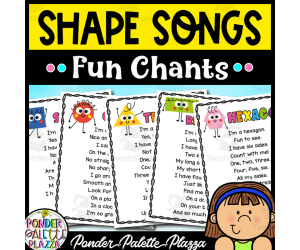
Shape Songs - Singing Shapes
Math, Early Math, Shapes, ELA, Reading, Holiday & Seasonal, Holidays, Back To School, Kindergarten, Preschool, Grade 1, 2, 3, 4, 5, Worksheets & Printables, Worksheets, Teacher Tools, Lesson Plans, Activities, Songs, Centers, Classroom Decor, Posters
Shape Songs is a playful and engaging way to help young students learn about shapes through music. Each page features a short, catchy song focused on one specific shape. These songs use simple rhymes and clear language, making it easy for children to sing along and remember the names and features of shapes like circles, squares, triangles, and more. How to use this resource: Sing a new shape song each day during circle time. Use the pages as part of your math or geometry unit. Hang them on the wall as anchor charts or create a class songbook. Include them in your literacy centers for reading and singing practice. Send copies home so families can sing along too! Why teachers love it: Makes shape learning fun, active, and memorable. Great for visual and auditory learners. Encourages participation and boosts confidence. Requires no prep, just print and go! If you’re looking for a simple, fun way to bring music into your math lessons, Shape Songs is the perfect fit for your classroom. Pdf file includes 7 pages. Enjoy! Focus the sing-along on one shape with this triangle song .
Author Ponder Palette Plazza
Rating
Tags Centers, Shapes, 2d Shapes, Back To School, Back To School Activities, Back To School Songs, Songs, Reading, Math Lessons, Shape Songs

Year-Long Personal Finance Curriculum | Grades 6-8 | Unit 1
Back To School, Holidays, Holiday & Seasonal, Spring, Seasons, Finance, Life Studies, Money, Math, Grade 6, 7, 8, Lesson Plans, Teacher Tools, Worksheets & Printables
📘 Personal Finance Unit 1: Financial Goals | Grades 6–8 Help middle school students move beyond simply wanting better financial habits. This Financial Goals unit gives students practical tools for setting SMART goals, building realistic budgets, understanding spending behavior, planning for emergencies, and defending financial decisions with evidence. Designed as a 6-week financial literacy unit , it combines reading, financial math, data analysis, case studies, hands-on activities, spreadsheet modeling, argument writing, and a culminating twelve-month financial plan. Please note: This listing includes the Unit 1 student book only . The included teacher resources and bonus materials support the complete six-unit, 30-week Personal Finance curriculum . 📦 What’s Included Student Unit 1: Financial Goals — 87 Pages Each of the six weeks includes a consistent instructional structure: Week opener with essential question and learning targets Original reading passage Comprehension questions Vocabulary in context 10 financial math problems Data graph and analysis Realistic case study Hands-on activity or simulation Spreadsheet modeling task Argument writing with evidence Weekly review and extension activities Six Weeks of Financial Literacy Instruction Week 1 — SMART Goals: Turning Intentions Into Targets Students learn how to turn vague intentions into actionable financial goals. They practice the five SMART criteria, calculate required contributions, prioritize competing goals, and use scheduled reviews to adjust their plans. Week 2 — Budgeting: Building a Budget That Survives Contact With Reality Students construct zero-based budgets and distinguish fixed, variable, and discretionary expenses. They diagnose why budgets fail and repair them using sinking funds. The hands-on activity is a Budget Repair Simulation , with a repaired zero-based budget and written diagnosis as the deliverable. Students also build a zero-based monthly budget spreadsheet. Week 3 — Spending Habits: Why Spending Feels Different Than It Looks Students investigate the psychology behind spending decisions. They identify cognitive biases such as: Impulse purchasing Anchoring Loss aversion Present bias Sunk cost Mental accounting They then analyze spending patterns and design a friction-based intervention for a spending habit. Week 4 — Spending Plans: Allocation Models and the 50/30/20 Debate Students apply the 50/30/20 rule and compare it with alternative allocation approaches. They examine: Needs versus wants Savings and debt Pay-yourself-first strategies Envelope methods Cost of living Proportions and constraints When percentage-based rules work—and when they break down Students ultimately build a personalized allocation model and justify their choices . Week 5 — Emergency Funds: The Fund That Protects Every Other Plan Students calculate an appropriate emergency fund from expense data. They distinguish genuine emergencies from predictable expenses and model how emergency savings can change financial outcomes. Students explore concepts including liquidity, essential expenses, financial shocks, high-yield savings, runway, replenishment, and volatility. Week 6 — Unit Project: The Twelve-Month Financial Plan Students bring the entire unit together by creating a financial plan that must survive unexpected events. The project asks students to: Integrate financial goals Build a budget Account for spending behavior Plan for emergencies Stress-test the plan against realistic shocks Revise the plan Defend decisions using quantitative evidence The project deliverables include a revised twelve-month plan, shock log, and two-page justification . Students also build a spreadsheet model with monthly running balances and documented assumptions. 🎯 How It Works in the Classroom This financial literacy curriculum is built for flexible middle school scheduling. The full program offers approximately 30–36 hours of instruction across 36 weekly lessons , with three pacing options: One hour weekly: 36 weeks Two periods weekly: 18 weeks Block schedule: 36 blocks of 90 minutes For Unit 1, teachers can use the lessons as a weekly financial literacy class, semester elective, advisory activity, or longer block. The materials deliberately maintain the same weekly rhythm. Students quickly learn the routine, allowing more classroom time to focus on financial reasoning rather than directions. ⭐ Built-In Interactive Practice Unit 1 also includes the Shock Year financial literacy simulation. Teams manage a twelve-month household budget while unexpected events occur. Students build a zero-based budget, include at least one sinking fund, respond to financial shocks, track what gets delayed, and compare their results. 📚 Additional Resources Included This Unit 1 resource is supported by a larger Grades 6–8 curriculum system. The complete package includes: Teacher Guide: 130 pages with three pages of notes for every week Answer Key: Complete answers for all 36 weeks Assessment Rubrics: Seven four-point rubrics Unit Tests: Six unit tests with answer keys Vocabulary Cards: 288 financial literacy terms Exit Tickets: 72 quick-check assessments Parent Letters: Welcome letter plus one letter per unit Progress Monitoring Forms Games & Simulations Printable Posters Award Certificates Editable Lesson Plans with fillable fields The 72 exit tickets provide one recall question and one reasoning question per week, giving teachers a quick signal about whether students need reteaching. The vocabulary resource contains 48 Unit 1 terms , including SMART goal, prioritization, zero-based budget, sinking fund, impulse purchase, anchoring, loss aversion, and present bias. 🎯 Standards & Learning Goals Across Unit 1, students learn to: Create and evaluate SMART financial goals. Calculate regular contributions toward financial targets. Prioritize competing financial goals. Construct and repair zero-based budgets. Classify expenses accurately. Use sinking funds for predictable future costs. Analyze psychological influences on spending. Recognize cognitive biases affecting financial decisions. Evaluate percentage-based spending models. Build personalized allocation plans. Calculate emergency fund targets. Distinguish emergencies from predictable expenses. Model the effects of financial shocks. Stress-test financial plans. Identify assumptions and trade-offs. Revise plans after testing. Defend financial decisions with quantitative evidence. Standards alignment includes CEE Saving and Spending standards, Jump$tart 6–8 Financial Decision Making and Spending & Saving standards, and Common Core mathematics and ELA standards , including CCSS.MATH.6.RP.A.3 and CCSS.MATH.7.RP.A.3. ⭐ Why Teachers Love It ⭐ Real financial reasoning: Students work with realistic numbers, scenarios, trade-offs, and financial shocks. ⭐ Beyond worksheets: Students build budgets, analyze data, model decisions, participate in simulations, and create a complete financial plan. ⭐ Math + literacy integration: Financial math is paired with reading, evidence-based writing, vocabulary, and argumentation. ⭐ Strong critical-thinking practice: Students aren't simply told what financial choice to make. They must explain why their choice works. ⭐ Built-in differentiation: The Teacher Guide provides four-tier differentiation guidance for every lesson. ⭐ Easy assessment: Exit tickets, weekly reviews, rubrics, progress-monitoring forms, and a Unit 1 test are already included. ⭐ Teacher-friendly planning: Editable lesson plans come with objectives, standards, and vocabulary already entered, plus fields for pacing, grouping, and notes. ⭐ No personal financial disclosure required: Students work with fictional households and scenarios, so they can practice meaningful financial reasoning without sharing their family's finances. 💡 Build Financial Skills Students Can Actually Use Financial literacy for middle school should do more than define vocabulary. This Financial Goals unit gives students repeated opportunities to calculate, analyze, question, revise, and defend their decisions. By the end of Unit 1, students have moved from a simple SMART goal to a twelve-month financial plan that has been stress-tested against unexpected events . The goal isn't a perfect plan. It's teaching students to recognize assumptions, respond to problems, and use evidence to make better financial decisions.
Author Bright Classroom Ideas Marketplace
Rating
Tags Finance, Financial Literacy, Money, Yearlong, Full Year, Curriculum

Rhyming Words - Complete the Poem
ELA, Language Development, ESL, Phonics, Spelling, Holiday & Seasonal, Holidays, Back To School, End Of Year, Months, Kindergarten, Preschool, Grade 1, 2, 3, Activities, Centers, Teacher Tools, Assessments, Lesson Plans
Rhyming Words – Complete the Poem is a fun, back-to-school themed activity that helps young learners practice rhyming in a creative and meaningful way. Students are given short, age-appropriate poems with missing words, and they choose the correct rhyming words from a word bank to complete each verse. This resource is ideal for Kindergarten through 2nd grade and is a great way to bring poetry and phonics together. Ways to Use: As a morning activity during the first weeks of school In literacy centers or small group work As a fun phonics review or mini poetry lesson Independent practice or homework Great for early finishers or extra enrichment Can be used in both in-person and virtual classrooms Advantages: Strengthens rhyming and phonemic awareness through poetry Encourages reading comprehension and vocabulary development Introduces poetry in a fun, approachable way Supports listening and word choice skills Easy prep, print and go! The back-to-school theme makes it relatable and timely Appeals to visual and creative learners Pdf file includes 14 pages. Enjoy!
Author Ponder Palette Plazza
Rating
Tags Rhyming, Rhyming Words, Rhyming Words Worksheets, Cvc Words, Back To School, Back To School Activities, Poem, Short Vowels, Vowels

Letters Cursive Tracing - Trace and Color
ELA, Holiday & Seasonal, Holidays, Back To School, First Day of School, Writing, Handwriting, Months, August, September, Kindergarten, Preschool, Grade 1, 2, 3, Worksheets & Printables, Worksheets, Coloring Pages, Teacher Tools, Assessments, Lesson Plans, Activities, Centers
Make cursive writing fun and approachable with this Letters Cursive Tracing – Trace and Color activity pack! These easy-to-use printables are perfect for helping young learners practice their cursive handwriting one letter at a time. Each page focuses on a single letter and gives kids the chance to trace both the uppercase and lowercase forms before coloring a picture that starts with that letter. This resource is great for students just getting started with cursive or those who need a little extra practice in a relaxed, creative way. The coloring part adds fun to the routine and helps keep students engaged while reinforcing letter sounds. Ways to Use: Daily cursive practice Morning work or early finisher activity Literacy or handwriting centers Take-home practice Why Teachers Love It: Simple, no-prep print-and-go pages (PDF only) Great for building muscle memory and fine motor skills Combines handwriting with creativity Encourages a positive attitude toward writing This pack makes learning cursive less intimidating and more enjoyable, perfect for adding a little joy to handwriting time! Pdf file includes 26 pages. Enjoy!
Author Ponder Palette Plazza
Rating
Tags Letter A, Coloring Pages, Letters, Alphabet, Handwriting, Back To School, Back To School Activities, Alphabet Handwriting, Tracing, Cursive

Letter M Puzzles - Beginning Sound
ELA, Language Development, ESL, Phonics, Holiday & Seasonal, Holidays, Back To School, Months, August, September, Preschool, Kindergarten, Grade 1, 2, 3, 4, 5, Worksheets & Printables, Activities, Centers, Games, Teacher Tools, Assessments, Lesson Plans
Make learning the letter M fun and meaningful with this Letter M Puzzle activity! This resource is perfect for preschool, pre-K, and kindergarten kids who are just starting to connect letters with sounds. Each puzzle has two pieces: one shows the uppercase and lowercase letter M, and the other has a picture and word that begins with M, like “monkey.” Kids match the pieces, helping them recognize the letter and understand the sound it makes. This activity is great for centers, morning tubs, small groups, or even quiet time. It’s hands-on, engaging, and easy to set up, just print, cut, and you’re ready to go. While kids are having fun matching the pieces, they’re also building early reading skills and practicing fine motor coordination. How to Use: Letter of the week Literacy centers Independent or partner work Early finisher or extra practice Why You’ll Love It: Helps kids connect letters and sounds Encourages hands-on learning Supports early reading and vocabulary Simple to prep and fun to use (PDF format only) A playful and effective way to introduce the letter M! Enjoy!
Author Ponder Palette Plazza
Rating
Tags Beginning Sound, Beginning Sounds, Letter Puzzles, Alphabet, Letter M, Back To School, Back To School Activities, Literacy Centers, Phonics
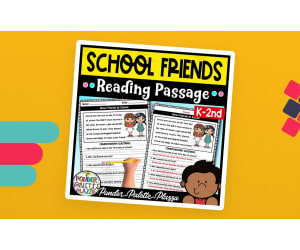
New Friends at School - Reading Comprehension
ELA, Reading, Reading Comprehension, Holiday & Seasonal, Holidays, Back To School, First Day of School, Months, August, Kindergarten, Preschool, Grade 1, 2, Worksheets & Printables, Worksheets, Activities, Teacher Tools, Assessments, Lesson Plans
New Friends at School is a warm and relatable reading passage that helps young students feel more comfortable about starting school and meeting new classmates. The story follows a student who feels a little nervous on the first day but soon learns that making friends can be simple, and fun. With short sentences and easy-to-understand words, it’s a great choice for early readers in kindergarten through second grade. How You Can Use It: Read it during the first week of school to start a conversation about friendship. Use it in small groups to support reading practice and social skills. Assign it as independent work or a take-home activity. Include it in your literacy centers or for early finishers. Pair it with a lesson on kindness, emotions, or class rules. Why It’s Helpful: Helps students connect with real feelings and situations. Encourages kindness, sharing, and making new friends. Includes five easy comprehension questions to check understanding. Uses age-appropriate language for young readers. No prep needed, just print and go. Supports both reading growth and social-emotional learning. New Friends at School is a thoughtful and easy way to help your students feel welcome, supported, and ready to learn. Compare two school experiences with this first-day-of-school reading passage .
Author Ponder Palette Plazza
Rating
Tags Reading, Reading Comprehension, Back To School, Back To School Activities, Back To School Reading, August Reading, September Reading, First Day Of School Activities
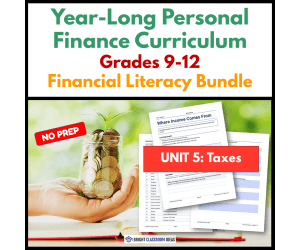
Yearlong Personal Finance Curriculum | Grades 9-12 | Unit 5
Back To School, Holidays, Holiday & Seasonal, Spring, Seasons, Finance, Life Studies, Money, Math, Grade 9, 10, 11, 12, Lesson Plans, Teacher Tools, Worksheets & Printables
💰 P ersonal Finance Curriculum for Grades 9–12 | Unit 5 Taxes Teach taxes with a practical, high school personal finance curriculum that takes students from their first paycheck to completing and defending a tax return. Unit 5: Taxes gives students repeated practice with paychecks, payroll taxes, income taxes, W-4 withholding, tax returns, financial calculations, spreadsheets, and realistic tax scenarios. This six-week taxes unit is designed to make tax concepts less intimidating by turning them into calculations, investigations, simulations, data analysis, writing tasks, and a culminating complete-return project. Important: This version includes the complete teacher resource collection for all six units , while the student component included is Unit 5 . The student book contains Weeks 7–12, while the teacher materials support the full 36-week Grades 9–12 course. 📦 What’s Included 👩🎓 Unit 5: Taxes Student Book A 102-page student resource covering Weeks 25–30. Every week follows the same consistent 11-part structure : Week opener Original reading passage Comprehension and analysis Vocabulary in context Financial math Data graph analysis Realistic case study Hands-on activity or simulation Spreadsheet modeling Argument writing Weekly review Students aren't simply memorizing tax vocabulary. They calculate, analyze, investigate, model, write, and make financial decisions. 🧾 What Students Learn in Unit 5 Week 25 — Paychecks: Pay Structures, Overtime, and Classification Students begin with a question that immediately connects to real life: What determines how much appears on a paycheck before any tax is taken? Students learn to: Calculate gross pay. Compare hourly, salaried, tipped, and commission structures. Apply overtime rules. Calculate the regular rate. Understand how bonuses can affect overtime calculations. Distinguish exempt and non-exempt employees. Examine employee versus independent-contractor classification. Understand tip credits and tipped wages. Identify potential misclassification. 🔎 Hands-On Activity: Pay Calculation Audit Students receive different pay records and: Calculate the correct regular rate. Calculate gross pay. Compare their results with the stated pay. Identify errors. Quantify the errors. The deliverable is five audited pay records with corrected calculations and quantified errors. 📊 Spreadsheet Model: Gross Pay Calculator Students build a model using: Regular hours Overtime hours Base rate Bonus Regular rate Overtime premium Gross pay They also test whether changing one input correctly updates dependent cells. 💵 Week 26 — Payroll Taxes: FICA, the Wage Base, and Self-Employment Tax Students investigate what payroll taxes actually fund and who ultimately bears the cost. They learn about: FICA Social Security Medicare The wage base Employer share Self-employment tax Additional Medicare tax Tax incidence Regressive taxation Above-the-line deductions Students calculate Social Security and Medicare taxes while examining how the wage base changes the effective tax rate at higher earnings. They also calculate self-employment tax and its deduction. 📈 Payroll Tax Investigation Students analyze six earnings profiles spanning below, at, and above the wage base. They: Calculate employee and employer payroll taxes. Calculate effective rates. Repeat calculations for self-employed workers. Graph effective rates. Describe the pattern they observe. 📊 Spreadsheet Model: Payroll Tax Model Students build a model that includes: Earnings Social Security taxable earnings Social Security tax Medicare tax Employee total Employer total Effective rate Self-employment calculations 📊 Week 27 — Income Taxes: From Gross Income to Tax Owed Students learn the five-step sequence behind the income-tax calculation: Gross income Adjustments to reach adjusted gross income Deductions to reach taxable income Tax calculated by bracket Credits subtracted from tax owed Students explore: Gross income Adjusted gross income Taxable income Standard deductions Itemized deductions Tax brackets Tax credits Refundable credits Filing status A major focus is correcting the common misconception that moving into a higher tax bracket means all income is taxed at the higher rate. Students also compare the impact of a deduction versus a credit using actual calculations. 🧪 Hands-On Activity: Tax Calculation Sequence Lab Students work through the tax calculation in order, reinforcing the idea that skipping or combining steps can produce an incorrect result. 📊 Spreadsheet Modeling Students turn the tax sequence into a repeatable calculation model, helping them see how adjustments, deductions, brackets, and credits interact. 📝 Week 28 — W-4 Basics: Withholding and Tuning What Comes Out Students learn how the Form W-4 affects paycheck withholding and why a large refund and a large balance due can both indicate poorly tuned withholding. They explore: Withholding Form W-4 Multiple jobs Extra withholding Underwithholding penalties Safe harbors Estimated tax Year-to-date withholding Students examine the four W-4 steps and investigate the common problem that occurs when someone has multiple jobs. 📌 Case Study: The Two-Job April Students analyze a realistic two-job situation and determine: Total income. Taxable income. Balance due. Why both employers could withhold correctly while the combined withholding remains insufficient. How much additional withholding is needed. Which W-4 step addresses the problem. 🔧 Hands-On Activity: Withholding Tuning Lab Students receive three taxpayer profiles and calculate adjustments designed to bring withholding close to the target while checking safe-harbor thresholds. Deliverable: Three withholding adjustments with safe-harbor verification. 📊 Spreadsheet Model: Withholding Tuning Model Students model: Pay periods Gross pay Current withholding Year-to-date withholding Target year-to-date withholding The remaining gap Extra withholding needed They also build safe-harbor checks. 📄 Week 29 — Tax Returns: Filing a Return and What Happens Next Students move from calculating taxes to understanding the actual filing process. They learn about: Form 1040 Tax schedules E-filing Extensions Amended returns Audits Substantiation Record keeping Statutes of limitations Students see how a return is constructed from source documents and how additional income types create complexity. They also examine why an extension provides additional time to file, but not additional time to pay. 🧾 Hands-On Activity: Return Preparation Simulation Students prepare a simplified return with supporting schedules and create a records-retention checklist. Deliverable: A completed simplified return, schedules, and records-retention checklist. 📊 Spreadsheet Model: Return Preparation Worksheet Students: Record the source document supporting each figure. Track substantiation. Calculate retention dates. Flag lines requiring additional schedules. 🏆 Week 30 — Unit Project: The Complete Return Simulation The unit culminates with a complete tax return simulation . Students receive a packet containing: Two W-2s A 1099 for freelance work A 1099-INT for interest A student loan interest statement Business-expense receipts A partially completed return containing four planted errors Students must: Prepare the correct return. Find the errors. Recommend a withholding change for the following year. They must follow the tax calculation sequence rather than skipping ahead. 🔍 Error Analysis Students identify four types of errors: Incorrect transcription from a source document. Incorrect application of a rule. Omitted information. Unsupported claims without documentation. They also evaluate materiality , recognizing that not every error has the same financial significance. 🧮 Self-Employment Tax Challenge Students must correctly work through the three-step self-employment calculation: Determine net business income. Apply the self-employment tax calculation. Deduct half of the resulting tax above the line. This gives students a final opportunity to apply concepts from earlier weeks. 📊 Spreadsheet Model: Return Reconciliation Model Students create a reconciliation system in which: Every reported figure has a source-document reference. Non-zero differences are flagged. Unsupported figures are identified. The return can be checked against the underlying documentation. Final deliverable: A completed return, reconciliation, classified error report, and withholding recommendation. 🎯 Standards & Learning Goals Across Unit 5, students develop the ability to: Calculate gross pay across multiple pay structures. Apply overtime calculations. Understand employee and contractor classification. Calculate Social Security and Medicare taxes. Analyze the wage-base effect. Calculate self-employment tax. Trace income from gross income through taxable income. Compare standard and itemized deductions. Distinguish refundable and non-refundable credits. Understand marginal tax brackets. Analyze W-4 withholding. Handle multiple-job withholding situations. Calculate withholding adjustments. Understand safe-harbor concepts. Navigate the basic structure of Form 1040. Understand schedules and supporting documents. Prepare a simplified tax return. Analyze tax-return errors. Evaluate documentation and substantiation. Calculate refunds and balances due. Make evidence-based withholding recommendations. Standards Alignment The six-week unit aligns with: CEE Earning Income 4.1–4.5 Jump$tart 9–12 Employment and Income 1–5 CCSS.MATH.HSA.CED.A.1 CCSS.MATH.HSA.SSE.A.1 CCSS.MATH.HSA.CED.A.2 CCSS.MATH.HSA.REI.B.3 CCSS.ELA.RI.11-12.4 ⭐ Why Teachers Love It ⭐ Makes taxes practical: Students work with the kinds of documents and decisions they'll encounter as working adults. ⭐ Financial math is built in: Every week includes ten financial math problems with dedicated working space. ⭐ Students learn by doing: Pay audits, payroll-tax investigations, withholding adjustments, return preparation, and the final return simulation keep students actively engaged. ⭐ Builds spreadsheet skills: Students don't just plug numbers into a calculator. They build models that respond when assumptions change. ⭐ Addresses common misconceptions: The unit tackles confusing concepts such as tax brackets, refunds, employer payroll taxes, multiple-job withholding, extensions, and self-employment tax. ⭐ Uses realistic scenarios: Students investigate situations involving tipped workers, contractors, freelancers, two-job households, filing decisions, and tax-return errors. ⭐ Strong critical-thinking component: Students must explain calculations, evaluate evidence, identify errors, and defend positions through argument writing. ⭐ Creates a natural progression: Students move from paycheck → payroll tax → income tax → withholding → filing → complete return . ⭐ Culminates in an authentic project: The final simulation requires students to combine nearly everything they learned throughout the unit. ✨ Give Students Tax Skills They Can Actually Use Give your students a high school personal finance taxes unit that goes far beyond defining "income tax." Unit 5: Taxes takes students through the entire tax journey—from understanding how pay is calculated to examining payroll taxes, calculating income tax, tuning W-4 withholding, preparing a return, checking supporting documentation, and making a recommendation for the year ahead. By the end of the unit, students have practiced calculating, analyzing, modeling, auditing, preparing, and defending real-world tax decisions. It's a practical fit for high school personal finance, financial literacy, economics, career readiness, advisory, life-skills, and independent personal finance courses.
Author Bright Classroom Ideas Marketplace
Rating
Tags Finance, Financial Literacy, Money, Yearlong, Curriculum, Full Year
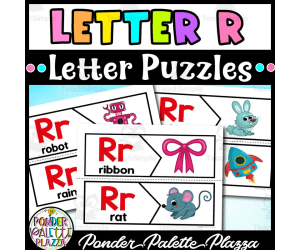
Letter R Puzzles - Letter R Beginning Sounds
ELA, Language Development, ESL, Phonics, Holiday & Seasonal, Holidays, Back To School, Months, August, September, Kindergarten, Preschool, Grade 1, 2, 3, 4, 5, Worksheets & Printables, Worksheets, Activities, Centers, Games, Teacher Tools, Assessments, Lesson Plans
Support early literacy with this fun and engaging Letter R Puzzle activity! Designed for preschool, pre-K, and kindergarten students, this hands-on resource helps children build confidence in letter recognition and beginning sounds. Each puzzle includes two pieces: one displays the uppercase and lowercase letter R, and the other features a picture and word that begin with R, like “rabbit.” Students match the two pieces together, strengthening their understanding of the letter and the sound it makes. This activity is simple to prepare, just print, cut, and use. It’s a great fit for literacy centers, small groups, morning tubs, or early finisher bins. While playing with the puzzles, children are also working on their phonics skills, vocabulary development, and fine motor coordination. Ways to Use: Letter of the week activities Literacy or phonics centers Independent or partner work Small group instruction Extra practice or homework Advantages: Reinforces letter and sound connection Encourages hands-on, interactive learning Builds early reading and vocabulary skills Supports fine motor development Quick and easy to prep (PDF format only) A simple and effective way to help kids learn the letter R with confidence! Enjoy!
Author Ponder Palette Plazza
Rating
Tags Letter R, Letter R Beginning Sound, Back To School, Back To School Coloring Pages, Beginning Sound, Phonivs, Literacy Centers, Letter Puzzles
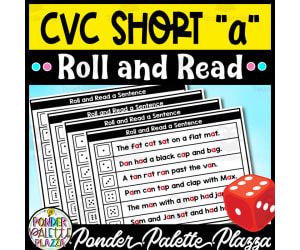
CVC Short a - Roll and Read Activity
ELA, Language Development, ESL, Phonics, Spelling, Reading, Holiday & Seasonal, Holidays, Back To School, First Day of School, Kindergarten, Preschool, Grade 1, 2, 3, Activities, Centers, Classroom Decor, Teacher Tools, Assessments, Lesson Plans
The CVC Short A – Roll and Read a Sentence Activity is a fun and interactive way to help young learners build confidence with short “a” CVC words in context. This activity combines phonics practice with sentence reading, allowing students to roll a die and read a sentence that includes short “a” words like cat , man , bag , and hat . Each sentence is simple and age-appropriate, making it perfect for early readers who are beginning to blend sounds and understand sentence structure. This resource is ideal for Kindergarten, 1st Grade, and ESL classrooms. It encourages repeated reading, builds fluency, and makes learning feel like play. Use it during literacy centers, small group instruction, or even as a partner game. Ways to Use: Use in literacy centers for independent or partner work Include in guided reading warm-ups Send home as a fun reading activity Use for fluency and decoding practice in small groups Laminate for reusable classroom use Advantages: Reinforces short A CVC word recognition in sentences Builds fluency, decoding, and reading confidence Engages students through hands-on play Easy to set up and manage Encourages repeated reading in a low-pressure setting Pdf file includes 5 pages Enjoy!
Author Ponder Palette Plazza
Rating
Tags Reading, Cvc, Cvc Short A, Cvc Activities, Back To School, Back To School Activities, Phonics, Literacy, Ela Activities, Back To School Literacy

Letter Y Puzzles - Letter Y Beginning Sound
ELA, Language Development, Phonics, Spelling, Holiday & Seasonal, Holidays, Back To School, Months, August, September, Kindergarten, Preschool, Grade 1, 2, 3, 4, 5, Worksheets & Printables, Activities, Centers, Games, Teacher Tools, Assessments, Lesson Plans
Help your students build early phonics skills with these interactive Letter Yy puzzles! Designed to reinforce the beginning sound of the letter Y, this resource uses a familiar word— yo-yo —paired with a clear, kid-friendly image. Each puzzle includes two pieces: one with the letter Yy and the other with a picture and word. Students match the two pieces to complete the puzzle and make the sound-letter connection. This activity is perfect for preschool, pre-k, and kindergarten classrooms. It's easy to prep, just print, cut, and go! Whether used in literacy centers or small groups, these puzzles add hands-on fun to your alphabet lessons. Ways to Use: Literacy centers and phonics stations Letter of the week activities Morning work or early finisher tasks Take-home practice or homework Benefits for Students and Teachers: Reinforces letter recognition and beginning sounds Builds vocabulary and word-picture associations Supports fine motor development through puzzle play Encourages independent learning and confidence Easy to prep, use, and store Make learning the letter Y meaningful and fun with this simple, effective phonics resource! Enjoy!
Author Ponder Palette Plazza
Rating
Tags Letter Y, Letter Y Puzzles, Letter Puzzles, Back To School, Back To School Activities, Beginning Sound, Phonics, Literacy Centers, Alphabet
Yearlong Personal Finance Curriculum | Grades 9-12 | Unit 1
Back To School, Holidays, Holiday & Seasonal, Spring, Seasons, Finance, Life Studies, Money, Math, Grade 9, 10, 11, 12, Lesson Plans, Teacher Tools, Worksheets & Printables
📚 Personal Finance Curriculum for Grades 9–12 | Unit 1 Student Book + Complete Teacher Resources Teach real-world personal finance to high school students with a complete, teacher-ready curriculum focused on budgeting and independent living. This high school personal finance curriculum combines structured weekly lessons, financial math, real-world case studies, data analysis, spreadsheet skills, writing, assessments, and a final independent living project. Important: This version includes the complete teacher resource collection for all six units , while the student component included is Unit 1: Budgeting . The teacher materials provide the framework and resources for the full 36-week course. 📦 What’s Included 👩🏫 Complete Teacher Resources 167-page Teacher Guide Weekly teaching notes for all 36 weeks Minute-by-minute lesson guidance Three pacing options Differentiation support Misconceptions and corrective moves Discussion prompts Standards alignment Answer notes and teaching guidance Bonus 01: Complete Answer Key Answers for all 36 weeks Comprehension Financial math Data analysis Case studies Reviews Guidance for open-ended responses Bonus 02: Assessment Rubrics Four-point rubrics for recurring task types Argument writing Financial math and reasoning Case studies Activities and investigations Spreadsheet models Unit projects and presentations Reflection journals Blank adaptable rubric Bonus 03: Unit Tests Six unit assessments Vocabulary Short answer Calculations Extended response Complete answer keys Bonus 04: Vocabulary Cards All 288 course terms Print-and-cut cards Definitions Week numbers Word-wall and review activities Bonus 05: Exit Tickets 72 total tickets Two per week Recall and reasoning questions Quick reteaching information Bonus 06: Parent Letters Course welcome letter One letter for each unit Family-friendly explanations No requests for students to disclose family finances Bonus 07: Progress Monitoring Forms Class mastery trackers Individual student records Standards tracking Small-group planning Family conference records Student goal monitoring Bonus 08: Games & Simulations Six unit-based activities Printable cards Student directions Debrief questions Classroom adaptations Unit 1 includes the First Year Out budgeting simulation Bonus 09: Printable Posters 12 classroom posters Key financial concepts Frequently used formulas and ideas Designed for color or black-and-white printing Bonus 10: Certificates Unit achievement awards General financial achievement awards Blank certificate option Bonus 11: Editable Lesson Plans Fillable PDF lesson plans Objectives, standards, and vocabulary already entered Editable pacing and grouping fields Unit planning pages Substitute plan page Reusable weekly template 👩🎓 Student Resource Included Student Unit 1: Budgeting — 100 pages Students receive the complete six-week Budgeting unit covering: Monthly budgets Living expenses Variable income Moving-out costs Emergency funds Runway Net worth Financial planning Independent living 🗓️ How It Works in the Classroom The high school personal finance curriculum uses the same eleven-part structure every week: Week opener Reading Comprehension Vocabulary in context Financial math Data analysis Case study Activity or investigation Spreadsheet skills Argument writing Review and extension This predictable structure helps students focus on the financial concepts instead of learning a new routine every week. The teacher guide also provides three pacing options for different schedules, including a one-hour weekly format, two-period format, and block schedule. 💰 Unit 1: Budgeting Week 1 — What Independence Actually Costs Students construct a complete monthly budget using researched figures. They distinguish fixed, variable, and discretionary expenses and calculate the gross income needed to support a standard of living. Week 2 — Budgeting on Income That Will Not Hold Still Students learn how to budget around variable income , using a baseline income and income floor rather than relying on an average. They also design a buffer system for irregular earnings. Week 3 — The Cost of Moving Out Students investigate the often-overlooked costs of becoming independent, including startup costs and one-time expenses. Week 4 — Runway: Surviving a Loss of Income Students explore emergency funds and calculate how long liquid savings can cover essential expenses. Week 5 — Net Worth and the Ten-Year View Students build a net worth statement and consider how assets, liabilities, and financial decisions affect their longer-term trajectory. Week 6 — The Independent Living Plan Students bring the unit together by creating a five-component independent living plan , documenting unexpected financial shocks, and defending their decisions to a panel. They also build a twelve-month spreadsheet model and stress-test the plan with a 20% income reduction. 🎯 Standards & Learning Goals Students learn to: Construct realistic monthly budgets. Research actual living expenses. Distinguish fixed, variable, and discretionary expenses. Calculate gross income from required net income. Budget using an income floor. Plan for variable or irregular income. Calculate startup and moving expenses. Calculate financial runway. Build a net worth statement. Analyze financial trade-offs. Identify assumptions and contingencies. Stress-test financial plans. Use spreadsheets to model financial scenarios. Support financial decisions with evidence. Defend a financial plan and address objections. Unit 1 aligns to CEE Spending 6.1–6.3 and Saving 5.1 , Jump$tart 9–12 Spending and Saving 1–4 , and CCSS.MATH.HSN.Q.A.1 . ⭐ Why Teachers Love It ⭐ Real-world financial literacy: Students work with realistic situations they may encounter soon after high school. ⭐ More than worksheets: Reading, math, data analysis, case studies, investigations, spreadsheets, and argument writing work together. ⭐ Built-in teacher support: The Teacher Guide provides weekly preparation, pacing, differentiation, misconceptions, and discussion guidance. ⭐ Easy assessment: Answer keys, rubrics, unit tests, exit tickets, and progress-monitoring tools are included. ⭐ Minimal guesswork: Objectives, standards, vocabulary, and lesson structures are already organized. ⭐ Strong critical thinking: Students are expected to explain their reasoning and identify the assumptions that could make their conclusions wrong. ⭐ Sensitive to student privacy: Scenarios use fictional households, and students are never required to reveal their family's financial circumstances. ⭐ Teacher resources for the full course: Even though the student book included here is Unit 1 , the teacher materials support the broader six-unit, 36-week personal finance curriculum. ✨ A Strong Start to High School Financial Literacy Give students a high school personal finance curriculum that treats them as capable financial decision-makers. Instead of simply memorizing definitions, students research costs, calculate what independence actually requires, analyze financial trade-offs, build spreadsheets, respond to unexpected events, and defend their decisions with evidence. Student Unit 1: Budgeting provides the six-week student experience, while the extensive teacher resource collection gives you the planning, assessment, differentiation, and classroom-support tools needed to teach with confidence.
Author Bright Classroom Ideas Marketplace
Rating
Tags Finance, Financial Literacy, Money, Yearlong, Curriculum, Full Year

Letter Z Puzzles - Letter Z Beginning Sound
ELA, Language Development, Phonics, Spelling, Holiday & Seasonal, Holidays, Back To School, Months, August, September, Kindergarten, Preschool, Grade 1, 2, 3, 4, 5, Worksheets & Printables, Activities, Centers, Games, Teacher Tools, Assessments, Lesson Plans
Help your little learners get excited about the letter Z with this fun and easy-to-use Letter Zz puzzle! This hands-on activity helps children connect the letter Zz to its beginning sound by matching it with the word zebra and a clear picture of the animal. Kids will love putting the pieces together and seeing how the letter and picture match, while learning without even realizing it! Perfect for preschool, Pre-K, or kindergarten classrooms, this resource is great for building early reading skills in a playful way. All you need to do is print and cut the puzzles, and you're ready to go! How You Can Use It: During letter of the week lessons In small groups or literacy centers As a quiet activity for early finishers For extra support with ESL students As a take-home learning game Why Teachers and Kids Love It: Makes learning letters and sounds fun Easy to prep and use again and again Helps kids recognize letters and their sounds Encourages independent thinking and problem-solving Builds confidence with every correct match Make the letter Z stick with this simple, engaging puzzle that turns learning into play! Enjoy!
Author Ponder Palette Plazza
Rating
Tags Letter Z Puzzles, Letter Puzzles, Beginning Sound, Back To School, Back To School Activity, Phonics, Literacy Centers, Alphabet

Weekly Lesson Plan Template | Teacher Planner | Classroom Schedule
Holiday & Seasonal, Back To School, Holidays, Resources for Teachers, Classroom Management, Not Grade Specific, Lesson Plans, Teacher Tools, Templates
Stay organized and save time with this Editable Weekly Lesson Plan Template! This Teacher Lesson Planner Template helps you easily map out your curriculum and classroom schedule to stay on track all year long. Say goodbye to overwhelm and reclaim your valuable time with a flexible visually appealing planner that adapts exactly to your individual needs when writing lesson plans. Why Teachers & Parents Love It Saves hours of formatting! The weekly layout is fully built for you so you can focus strictly on inputting your objectives activities and curriculum standards. What’s Included 2 PDF files with access to the editable template 6 US Letter size (8.5 x 11 inches) 6 A4 size (210 x 297 mm) Editable Canva Link Grades / Ages Applicable for all grade levels Implementation Format Perfect for keeping in a master teacher planner binder to track daily and weekly learning objectives Answer Key Not applicable File Type Ready To Print PDF and PNG files ( plus Canva Editable Template ) Number of Pages 6 pages (Available in 2 sizes) License Paid product for personal or single classroom use
Author screenzro
Rating
Tags Weekly Lesson Plan Template, Lesson Planner Template, Lesson Planner, Lesson Plan, Lesson Plans For Teachers, Weekly Homeschool Template, Weekly Classroom Planner, Classroom Schedule

Letter B Puzzles - Letter B Beginning Sound
ELA, Language Development, ESL, Phonics, Holiday & Seasonal, Holidays, Back To School, Months, September, October, Kindergarten, Preschool, Grade 1, 2, 3, 4, 5, Worksheets & Printables, Activities, Centers, Games, Teacher Tools, Lesson Plans
Make learning the letter B fun and hands-on with this Letter B Puzzle activity! Perfect for preschool, pre-K, and kindergarten, this resource helps young children connect the letter “B” with words and pictures that begin with the same sound, like “B is for bee.” Each puzzle has two pieces: one shows the uppercase and lowercase letter “B,” and the other shows a picture and word starting with B. Kids simply match the pieces to complete the puzzle. It’s a playful and simple way to help early learners build letter-sound knowledge while also working on matching and fine motor skills. Great for centers, small groups, or early finishers, this activity is easy to prep and keeps students engaged. Ways to Use: Literacy centers or phonics practice Small group work or partner play Morning tubs or independent tasks Why Teachers Love It: Supports letter recognition and beginning sounds Helps build confidence in early reading Easy to use, just print and cut (PDF format only) Fun, visual, and kid-friendly A great way to bring the letter B to life in your classroom!
Author Ponder Palette Plazza
Rating
Tags Letter B, Alphabet, Beginning Sound, Beginning Sounds, Back To School, Back To School Activities, Puzzles, Alphabet Puzzles, Phonics

Meet My Teacher - Reading Comprehension
ELA, Reading, Reading Comprehension, Language Development, Holiday & Seasonal, Holidays, Back To School, First Day of School, Months, August, Kindergarten, Preschool, Grade 1, 2, Worksheets & Printables, Teacher Tools, Assessments, Lesson Plans, Activities
Meet My Teacher is a warm and friendly reading passage that helps young students get excited about the new school year. Told from a student’s point of view, the story introduces a kind teacher and what to expect in the classroom. With short sentences and simple words, it’s just right for early readers in kindergarten through second grade. How You Can Use It: Read it together as a class during the first week of school. Use it in small reading groups to build confidence. Send it home as a light homework assignment. Add it to your literacy centers or use with early finishers. Use it as a gentle way to check students’ reading understanding. Why It’s Helpful: Helps students feel more comfortable about meeting a new teacher. Comes with five easy comprehension questions to spark conversation. Supports vocabulary and fluency using familiar school related language. Simple and ready to use, just print and go! Fits nicely into your back to school plans. This reading passage is a great way to start the year with a smile and support young readers as they settle into their new classroom. Enjoy!
Author Ponder Palette Plazza
Rating
Tags Reading, Reading Comprehension, Back To School, Back To School Reading, Back To School Activities, First Day Of School Activities, First Day Of School

My First Day of School – Reading Passage
ELA, Reading, Reading Comprehension, Holiday & Seasonal, Holidays, Back To School, First Day of School, Months, August, Kindergarten, Preschool, Grade 1, 2, Worksheets & Printables, Teacher Tools, Assessments, Lesson Plans, Activities
Make your students’ first day memorable and meaningful with this engaging My First Day of School, Reading Passage resource! Designed for Kindergarten to 2nd grade learners, this simple and relatable passage helps young readers build confidence while connecting with the excitement and nerves of starting school. The text uses age-appropriate vocabulary , basic sight words , and short sentences perfect for early readers. This resource includes a short reading passage followed by comprehension questions , allowing students to practice reading fluency and understanding in a fun, school-themed context. Ways to Use: First week of school reading activity Small group or guided reading lesson Independent reading and comprehension practice Morning work or early finisher task Assessment of reading level and comprehension Advantages: Helps students relate personally to the school experience Builds reading confidence with simple vocabulary and structure Encourages discussion about school routines and emotions Provides a quick and easy prep literacy activity Offers an early look into each student's comprehension skills This resource is a perfect way to kick off the school year with purposeful literacy practice while helping students feel seen, heard, and excited to read!
Author Ponder Palette Plazza
Rating
Tags Back To School, Back To School Activities, Back To School Reading, Reading Comprehension, First Day Of School Activities, First Day Of School Reading, Reading

1st Grade Morning Work | 180 Days Review | Math & ELA | 2nd Quarter
ELA, Math, Back To School, Holidays, Holiday & Seasonal, Grade 1, Centers, Activities, Lesson Plans, Teacher Tools, Worksheets & Printables
First Grade Morning Work | 2nd Quarter Student Pages + Full-Year Teacher Resources Keep your first grade mornings consistent, purposeful, and easy to manage with 45 days of daily morning work for Quarter 2 . This resource includes the complete teacher resources for all 180 days , while the student practice pages in this pack are specifically for 2nd Quarter: Days 46–90 . What’s Included ⭐ FULL-YEAR TEACHER RESOURCES This pack includes the teacher tools you need to plan and manage the entire 180-day morning work program , including: Teacher Guide Full 36-week Pacing Guide Skills Checklist for tracking student progress Fully Editable Morning Work Schedule Editable weekly planning pages Year-at-a-Glance Planner covering all 36 weeks Differentiation Notes Printing and organization guidance Complete Answer Key for Days 1–180 📚 STUDENT PAGES INCLUDED: 2ND QUARTER The student portion of this pack includes Days 46–90 , providing 45 days of ready-to-use first grade morning work . Each day includes two pages with 22 consistent sections: Page A – Literacy Phonics Sight words Handwriting Grammar Sentence writing Vocabulary Reading challenge Writing prompt Page B – Math, Calendar & Think Place value Addition Subtraction Telling time Shapes Math challenge Calendar Weather SEL question Fun fact Joke of the day Growth mindset Brain teaser Would You Rather Important: The student pages are only Days 46–90 , but the teacher resources and answer key cover the full 180-day program . How It Works in the Classroom Use this first grade morning work as your daily bell ringer or morning routine. The predictable format makes it easy for students to know what to expect each morning while giving them meaningful practice across literacy, math, writing, and social-emotional learning. The editable schedule suggests a quick routine: Page A: Literacy practice Page B: Math & Think Sections 17–22: SEL, fun facts, jokes, growth mindset, brain teasers, and Would You Rather Review and file the completed work when finished Each day's two pages can be printed two-sided to create one sheet per child per day . The resource also suggests printing one quarter at a time, making it easy to organize Days 46–90 as your second-quarter set. Standards & Learning Goals This first grade morning work resource provides ongoing spiral practice in important first grade ELA and math skills. Students work on skills such as: Phonics patterns and decoding High-frequency words Handwriting Grammar and language Sentence construction Vocabulary Reading comprehension Writing Place value Addition and subtraction Numbers to 120 Telling time Shapes Mathematical problem solving Quarter 2 continues to build on previously introduced skills while adding new phonics patterns, language skills, and increasingly challenging math concepts. For example, the Day 46 pages include long-o phonics, plural nouns, addition and subtraction within 20, place value, telling time, shapes, and a math word problem . Why Teachers Love It ✨ You get the teacher resources for the WHOLE YEAR. No need to purchase or recreate separate planning tools for each quarter. The pacing guide, skills checklist, editable schedule, and answer key support all 180 days. ✨ Students get exactly what they need for Quarter 2. This pack includes Days 46–90 , giving you a complete 45-day student set for the second quarter. ✨ Save valuable planning time. The daily work is already organized into a predictable routine with 22 recurring sections. ✨ Build student independence. The consistent format helps first graders transition into their morning routine with less teacher direction. ✨ Keep skills fresh with spiral review. Literacy, math, writing, SEL, and thinking skills are practiced throughout the quarter. ✨ Make differentiation easier. The teacher materials include space for student/group notes as well as support and challenge ideas. ✨ Stay organized all year. The editable schedule includes a 36-week planner , with Days 46–90 clearly falling within Weeks 10–18. Looking for first grade morning work for Quarter 2 that is ready to print and easy to implement? This pack gives you 45 days of student morning work (Days 46–90) PLUS the complete teacher resources for the full 180-day program . Give your students a consistent, engaging morning routine while saving yourself time on planning and preparation! Add this Quarter 2 pack to your morning routine today! 💛
Author Bright Classroom Ideas Marketplace
Rating
Tags Math, Ela, Morning Work, Back To School

Word Families - Spin and Color (at, ap, an)
ELA, Language Development, Phonics, Holiday & Seasonal, Holidays, Back To School, Last Day of School, Months, August, September, Kindergarten, Preschool, Grade 1, 2, 3, Worksheets & Printables, Activities, Centers, Teacher Tools, Assessments, Lesson Plans
Make learning word families fun and interactive with this Spin and Color activity! Designed especially for early readers, this hands-on resource helps students practice and reinforce common CVC word families: -at, -ap, and -an . Students use a paperclip and pencil to create a simple spinner. They spin, read the word family, and color a picture that belongs to that family. They keep spinning and coloring until all the pictures are colored, turning phonics practice into an exciting game! Ways to Use It: Literacy centers or phonics stations Morning work or independent seatwork Small group reinforcement Early finisher activity Homework or take-home practice Advantages: Builds word recognition and phonemic awareness Strengthens fine motor skills through coloring Encourages independence with clear, simple directions Engages visual and kinesthetic learners No prep, just print and go! This resource brings together learning and play, making it easier for students to grasp word families while enjoying the process. Great for Pre-K, Kindergarten, and 1st Grade classrooms, it’s a must-have tool for building foundational reading skills in a fun and effective way! Pdf file includes 2 pages. Enjoy!
Author Ponder Palette Plazza
Rating
Tags Word Families, Word Family, Cvc, Cvc Words, Phonics, Literacy, Literacy Centers, Back To School, Back To School Activities, September Activities

Classroom Jobs - Reading Comprehension
ELA, Reading, Reading Comprehension, Holiday & Seasonal, Holidays, Back To School, First Day of School, Months, August, September, Grade 3, 4, 5, Worksheets & Printables, Worksheets, Teacher Tools, Assessments, Lesson Plans
Classroom Jobs, Big Responsibilities is an engaging reading comprehension passage perfect for the back-to-school season. It tells the story of how students take on important classroom jobs and learn about responsibility, teamwork, and helping their school community. The passage is written for 3rd to 5th graders, making it a great fit for upper elementary reading practice. This resource can be used in many ways: As a whole class reading activity to spark discussions about roles in the classroom. In small groups to encourage teamwork while practicing comprehension skills. As an independent assignment for reading practice and assessment. For morning work or as a quick activity during transition times. Advantages of this resource: Helps students improve reading fluency and comprehension through an interesting, relatable topic. Encourages a sense of responsibility and pride in contributing to the classroom community. Offers ready-to-use comprehension questions to save teachers planning time. Fits perfectly into a back to school unit, reinforcing both academic and social skills. With its relatable theme and clear structure, Classroom Jobs, Big Responsibilities is more than just a reading passage, it’s a tool for building strong classroom culture while developing essential reading skills. Pdf file includes 2 pages. Enjoy!
Author Ponder Palette Plazza
Rating
Tags Reading, Reading Comprehension, Back To School, Back To School Reading, First Week Of School, First Week Of School Reading, September Reading

Word Sort - Real or Silly
ELA, Language Development, ESL, Phonics, Holiday & Seasonal, Holidays, Back To School, Months, August, September, Kindergarten, Preschool, Grade 1, 2, 3, 4, 5, Worksheets & Printables, Activities, Centers, Teacher Tools, Assessments, Lesson Plans
This fun and interactive Real or Silly Word Sort is a great way to help young learners practice reading and identifying CVC (consonant-vowel-consonant) words. Students will read a set of short words, then decide if each one is a real word or a made-up (silly) one. Once they've made their choices, they’ll cut out the words and paste them into the correct column. This hands-on activity makes phonics practice engaging and effective, encouraging students to sound out each word and build early decoding skills. Ways to Use: Morning work or early finisher activity Literacy centers or phonics stations Homework or take-home review Small group or one-on-one instruction Benefits: Encourages careful reading and decoding Supports word recognition and vocabulary development Easy to prep and fun to complete Adds variety to your phonics lessons Perfect for Pre-K, Kindergarten, or 1st Grade classrooms, this resource helps students build strong reading foundations while having fun sorting silly and real words! Enjoy!
Author Ponder Palette Plazza
Rating
Tags Word Sort, Phonics, Cvc Words, Real Words, Nonsense Words, Back To School, Back To School Activities, Literacy Centers, Back To School Literacy

Ryhiming Words - Find and Write
ELA, Language Development, ESL, Phonics, Spelling, Holiday & Seasonal, Holidays, Back To School, End Of Year, Kindergarten, Preschool, Grade 1, 2, 3, Activities, Centers, Teacher Tools, Assessments, Lesson Plans
Rhyming Words – Find and Write is a simple, fun resource that helps kids practice spotting and writing rhyming words. Perfect for kindergarten through second grade, it’s great for building phonics skills and boosting kids’ confidence with spelling. The activities are straightforward, so students can work on them independently or with a little guidance. How you can use it: In literacy centers or small groups As morning work or homework For quick review before phonics lessons or tests Independent practice or early finisher activities Great for in-person or online classrooms Why teachers love it: Helps kids hear and recognize rhymes, which is a key reading skill Gives extra practice with spelling and handwriting Encourages kids to think about how words sound and look Ready to use right away, just print or share digitally Works well for different skill levels in your class Keeps kids interested with clear, kid-friendly pages Pdf file includes 2 pages. Enjoy!
Author Ponder Palette Plazza
Rating
Tags Rhyimings, Ryhiming Words, Phonics, Phonics Worksheets, Back To School, Back To School Activities, Vowels, Short Vowels, Literacy

Year-Long Personal Finance Curriculum | Grades 6-8 | Unit 3
Back To School, Holidays, Holiday & Seasonal, Spring, Seasons, Finance, Life Studies, Money, Math, Grade 6, 7, 8, Lesson Plans, Teacher Tools, Worksheets & Printables
📘 Personal Finance Unit 3: Income | Grades 6–8 Help middle school students understand the real-world financial story behind income, careers, paychecks, and taxes . This Income unit moves beyond vocabulary, giving students opportunities to calculate, analyze, investigate, model, and make evidence-based financial decisions. Designed as a 6-week financial literacy unit , students explore career pathways, pay stubs, gross versus net income, taxes, tax filing, and the financial realities of comparing career offers. Please note: This listing includes the Unit 3 student book only . The included teacher resources and bonus materials support the complete six-unit, 30-week Personal Finance curriculum . 📦 What’s Included Student Unit 3: Income — 87 Pages The student resource includes six complete weekly lessons covering Weeks 13–18. Every week follows the same eleven-part structure: Week opener with essential question and learning targets Original reading passage Comprehension and analysis Vocabulary in context 10 financial math problems Data graph and analysis Realistic case study Hands-on activity or simulation Spreadsheet modeling task Argument writing Weekly review and extension activities Six Weeks of Income & Financial Literacy Instruction Week 13 — Careers: Career Pathways and the Return on Education Students learn to look beyond starting salary when evaluating career paths. They explore: Return on investment Payback period Opportunity cost Lifetime earnings Apprenticeships Credentials Labor markets Career growth over time Students complete a Career ROI Investigation , comparing three real careers and building a twenty-year earnings model. They also identify crossover points and consider non-financial factors that can affect a career decision. The spreadsheet activity reinforces the idea that financial models should use formulas rather than typed values. Students can change an assumption and see dependent calculations update. Week 14 — Paychecks: Reading a Pay Stub Line by Line Students learn how to actually read and check a paycheck. They practice: Understanding pay periods Comparing biweekly and semi-monthly pay Calculating hourly and salary income Calculating overtime Understanding commission Identifying pre-tax and post-tax deductions Understanding withholding Reading year-to-date totals Detecting payroll errors The Payroll Audit case study has students investigate a pay stub and determine whether the gross pay, FICA, net pay, and year-to-date figures are correct. Week 15 — Gross vs. Net Income: The Gap Between Earned and Received Students investigate why a salary offer is not the same as take-home pay. They learn about: Gross income Net income Taxable income Marginal tax rates Effective tax rates Standard deductions Tax brackets Take-home pay Students calculate net pay across different deduction scenarios and practice building a budget from net rather than gross income . The Gross to Net Modeling activity and spreadsheet calculator give students hands-on practice converting income into a realistic monthly picture. Week 16 — Taxes: What Taxes Fund and How They Are Structured Students explore how taxes work and how different taxes affect households. Topics include: Progressive taxes Regressive taxes Proportional taxes Sales taxes Property taxes Payroll taxes Public goods Tax incidence Students classify different taxes, examine government spending categories, and analyze who actually bears the economic burden of a tax. The Tax Incidence Investigation has students create a burden table, classify tax effects, and analyze distributional differences. Week 17 — Tax Filing: Forms, Filing, and Getting It Right Students learn what happens when income taxes are filed. They identify the purpose of: W-4 W-2 1099 Form 1040 Tax deductions Tax credits Refunds Filing status Students also determine whether withholding results in a refund or a balance due. The Return Simulation helps students understand how the pieces fit together instead of treating tax forms as disconnected paperwork. Students also compare the value of deductions and credits using actual calculations. Week 18 — Unit 3 Project: The Career and Income Analysis Students bring the entire unit together with a culminating career and income analysis. They learn to: Model gross salary through net monthly income Compare two employment offers Consider benefits and employer contributions Calculate total compensation Consider cost of living Identify break-even points State assumptions Make an evidence-based career recommendation The project asks students to look at the whole financial picture , rather than comparing salaries alone. 🎯 How It Works in the Classroom This financial literacy curriculum gives students repeated practice applying financial concepts to realistic decisions. Students don't simply memorize definitions. They calculate pay, investigate errors, analyze tax structures, build spreadsheet models, compare career paths, and defend recommendations. Activities include: Career ROI Investigation Payroll Audit Gross to Net Modeling Tax Incidence Investigation Return Simulation Career and Income Analysis / Offer Comparison Model The consistent weekly format makes the resource predictable for students and easier to implement for teachers. 📚 Additional Teacher Resources Important: The student resource in this listing is Unit 3: Income only . The companion teacher resources correspond to the complete six-unit Grades 6–8 curriculum , not just Unit 3. The full program includes Units 1–6: Financial Goals, Banking, Income, Credit, Investing, and Entrepreneurship. The teacher resources include: Teacher Guide with pacing, standards, weekly teaching notes, and differentiation Answer Key for all 36 weeks Assessment Rubrics Unit Tests Vocabulary Cards Exit Tickets Parent Letters Progress Monitoring Games & Simulations Printable Posters Certificates Editable Lesson Plans For Unit 3 specifically, the teacher materials provide week-by-week guidance for all six Income lessons, including lesson objectives, standards, vocabulary, misconceptions, activities, spreadsheet tasks, and pacing support. So teachers purchasing this listing receive the Unit 3 student book , while the companion teacher resources are designed to support the full six-unit curriculum . 🎯 Standards & Learning Goals Throughout this Income unit , students learn to: Compare career pathways using training costs and lifetime earnings. Calculate return on investment and payback periods. Understand opportunity cost. Evaluate career decisions using financial and non-financial factors. Read and analyze pay stubs. Calculate hourly, salary, overtime, and commission income. Understand pre-tax and post-tax deductions. Check year-to-date payroll information. Detect potential payroll errors. Distinguish gross income from net income. Explain marginal and effective tax rates. Build budgets using take-home pay. Classify taxes as progressive, proportional, or regressive. Analyze tax incidence and distributional effects. Explain how tax revenue supports public spending. Identify the purposes of common tax forms. Distinguish tax deductions from tax credits. Determine whether withholding produces a refund or balance due. Compare employment offers using total compensation. Consider benefits, employer matches, and cost of living. Present an evidence-based career recommendation. Standards alignment includes CEE Earning Income 4.1–4.5, Jump$tart 6–8 Employment and Income 1–5, CCSS.MATH.7.RP.A.3, CCSS.MATH.7.EE.B.3, CCSS.ELA.RI.7.3, CCSS.ELA.RI.7.9, and CCSS.ELA.W.7.1 . ⭐ Why Teachers Love It ⭐ Real-world financial literacy: Students explore income decisions they will eventually face as workers and taxpayers. ⭐ Financial math built in: Every week includes ten problems requiring students to show their work. ⭐ Authentic decision-making: Students investigate career ROI, audit paychecks, analyze taxes, and compare employment offers. ⭐ Spreadsheet practice: Students build models that use formulas and changing assumptions. ⭐ Strong critical thinking: Students analyze evidence, identify assumptions, evaluate trade-offs, and defend conclusions. ⭐ Career readiness: Students learn why starting salary alone does not tell the whole story. ⭐ Tax literacy: Students build practical understanding of withholding, tax brackets, deductions, credits, refunds, and common tax forms. ⭐ Built-in assessment: Reading, vocabulary, financial math, data analysis, case studies, writing, reviews, and a culminating project provide multiple assessment opportunities. ⭐ Consistent structure: Students know what to expect each week while the financial concepts become increasingly complex. ⭐ Part of a complete curriculum: The Unit 3 student resource can stand as its own six-week income unit while the companion teacher materials support the complete six-unit program. 💡 Help Students Understand the Real Value of a Paycheck Financial literacy for middle school should prepare students to understand more than a salary number. This Income unit helps students connect careers, paychecks, taxes, and take-home income. Students finish by comparing real financial factors and making a supported career recommendation. Instead of simply asking, “How much does this job pay?” , students learn to ask better questions: What will it cost to get there? What will I actually take home? What does the tax system do? And which offer makes the most financial sense?
Author Bright Classroom Ideas Marketplace
Rating
Tags Finance, Financial Literacy, Money, Yearlong, Curriculum, Full Year