



Page 205 - Lesson Plan Templates
Simplify your preparation with lesson plan templates designed to help you organize objectives, activities, and assessments. These templates provide a structured framework to ensure comprehensive coverage of material. Incorporate them to save time and enhance the effectiveness of your teaching.

 Show filters

I WONDER - How Was The Microwave Invented | Animated Video Lesson
History, Social Studies, History: World, History: Europe, History: British, Inventors, Basic Science, Science, Grade 4, 5, 6, 7, 8, 9, 10, Lesson Plans, Teacher Tools
Video Introduction An amazing video designed for the students to learn more about history. I WONDER - How Was The Microwave Invented | Animated Video Lesson Do you like history? Which topic do you really enjoy about history? Have you ever read an interesting fact about the Vikings? If yes, can you mention them? What do you like most about the Victorian era? Can you name all the Tudors? Have you ever wondered how people used to live in ancient Japan and ancient China? Do you know any interesting facts about ancient Egyptians and the Pharaohs? Have you ever visited South America? What do you know about Incas and Aztecs? Celtic culture was really one of a kind, can you name any of the places that Celts used to live in? Imagine yourself living during the ancient Roman empire, how your life will look like? Ancient Greece was an amazing place to live in. What do you know about ancient Greek life? I WONDER - How Was The Microwave Invented | Animated Video Lesson The video is perfect for encouraging the researching skills for the students, while learning more about history. I WONDER - How Was The Microwave Invented | Animated Video Lesson This friendly designed video is suitable for students at school, homeschooling, and as a group activity. Format Available in MP4 format.
Author Educational Voice
Tags How Was The Microwave Invented, How Was The Microwave Invented Video, The Microwave, Microwave History, Microwave History Facts, Microwave History Video, Microwave History Video For Kids

Algebra: Ordering & Grouping - Practice the Skill 3 - FLASH-MAC
Math, Algebra, Common Core, Grade 1, 2, Teacher Tools, Lesson Plans
Algebra: Ordering & Grouping - Practice the Skill 3 - FLASH-MAC This teaching aid simplifies complex algebra topics for young learners. It's specifically designed to facilitate a deeper understanding of ordering and grouping in algebra. The resource provides a series of timed drill activities that: Keep learners actively engaged Foster vital skill sets reinforcement through active learning methodology Included math tools supplement each activity , enhancing hands-on learning and conceptual understanding. It is not just focused on problem presentations but also fuels critical thinking abilities, promotes problem-solving skills and fosters an appreciation for pattern identification — crucial elements for mastering algebra at this level. Multilingual Capability – A tool for Diverse Classrooms: This resource comes equipped with both English and Spanish voice over along with corresponding text translations making it suitable for diverse classrooms where multilingual teaching mode might be a necessity. Nationally Recognized Educational Standards: The content aligns well within Common Core State Standards framework as well as STEM initiatives. Moreover, it conforms to guidelines prescribed by NCTM assuring you quality educational experience. Versatility: The material maybe implemented across various instructional setups such as large group lecturing or smaller focus groups depending on individual teacher needs. Serves effectively as supplementary homework material aiding revision outside classroom boundaries. User Friendly Packaging: This product comes neatly packaged within one software file suitable for Mac systems thus ensuring easy storage,and seamless integration into your current operation system. Test out "Algebra: Ordering & Grouping - Practice the Skill 3- FLASH-MAC" to invigorate interest towards Algebra among Grade 1 and Grade 2 learners and reward them with an enriching educational experience.
Author Classroom Complete Press
Tags Software (Mac)

I WONDER - How Do Worms Help Compost | Animated Video Lesson
Environmental Science, Earth and Environmental Sciences, Science, Earth Sciences, STEM, Insects, Life Sciences, Grade 4, 5, 6, 7, 8, 9, 10, Lesson Plans, Teacher Tools
Video Introduction An amazing video designed for the students to learn more about STEM. I WONDER - How Do Worms Help Compost | Animated Video Lesson Do you like STEM subjects? what is your favorite one? Have you ever tried to plant a seed? If yes, tell us more about it. Or have you ever tried to invent something? If yes, tell us more about it. And how do you think it will help us? Have you ever seen a microorganism under a microscope? What was it? And how it looked like? Mathematics is a marvelous subject. Let' sharpen our brains and solve some equations. Do you like timetable tricks? What is your favorite one? Do you know how to code? Have you ever created an app or a game before? If yes, how was it like? I WONDER - How Do Worms Help Compost | Animated Video Lesson The video is perfect for encouraging the researching skills for the students, while learning more about this fantastic topic. I WONDER - How Do Worms Help Compost | Animated Video Lesson This friendly designed video is suitable for students at school, homeschooling, and as a group activity. Format Available in MP4 format.
Author Educational Voice
Tags How Do Worms Help Compost, How Do Worms Help Compost Video, Worms, Worm, Worms Facts, Worms Facts For Kids, Worms Video, Worms Video For Kids, Compost
Measurement: Area & Volume - FLASH-MAC
Math, Measurements, Grade 1, 2, Teacher Tools, Lesson Plans
Measurement: Area & Volume - FLASH-MAC FLASH-MAC is an educational resource designed to fortify the understanding of area and volume, two critical skills in mathematical measurement. This resource is particularly beneficial for educators teaching math at grade 1 or grade 2 levels in both public school and homeschooled environments. The Curriculum-Based Content This chapter mini offers curriculum-based content designed to engage students while maintaining alignment with core education standards. The chapter begins with a pre- assessment , allowing teachers to gauge a base level of understanding before diving into the lesson plan. The measurement-focused lesson is then supplemented with real-world word problems that exemplify practical applications of these concepts, bridging the gap between abstract and tangible math concepts. Beyond Classroom Exercises In addition to classroom learning, FLASH-MAC also provides multiple drill activities intended as homework or additional exercises for solidifying knowledge through repetition. A Variety of Learning Tools Included: A set of math tools bundled for interactive learning and hands-on engagement during math discussions. An array of printables serving as valuable visual reminders assisting students independently as they tackle challenging problems or review learned concepts. A selection fun components including a memory match game, a board game, and spinner game help make learning enjoyable while driving home key learning objectives surrounding area measurements and volume calculations. To ensure success following this rich bundle program, assessment provision via SMART Response technology enables educators not only to seamlessly transition from teaching modules directly into the assessment phase but also to monitor progress over time based on provided metrics for each student's performance data analysis. Inclusive Education This program is accessible for diverse learner groups. It comes standard with English voice-over narration complemented by text material but includes optional Spanish voice-over narration making it an equally useful resource for ESL classes or bilingual schools thereby facilitating an inclusive learning environment where no learner feels left behind because of language barriers. Overall Measurement: Area & Volume - FLASH-MAC transforms classrooms into active learning spaces where children discover real-world connections to mathematical measurements, all while having fun.
Author Classroom Complete Press
Tags Software (Mac), Spanish, Measurement, Area And Volumen, Math Lesson Plans
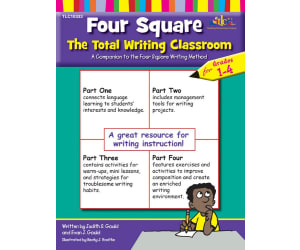
Four Square: The Total Writing Classroom for Grades 1-4:
ELA, Writing, Grade 1, 2, 3, 4, Teacher Tools, Lesson Plans
Four Square: The Total Writing Classroom for Grades 1-4 An invaluable and highly resourceful teaching tool, that provides a comprehensive range of innovative writing projects and ideas. This PDF file contains 116 pages of dynamic activities that complement the widely-favoured Four Square Writing Method. Developed with exacting standards, this refined educational asset assures educators that the content aligns meticulously with students' learning needs. A Reservoir of Creative Inspiration In addition to being a reservoir of creative inspiration for individual or group class activity planning, this teaching resource beautifully bridges the whimsical world of imagination with structured language learning. Focusing on Language Arts, specifically in writing niche, it serves as a perfect ally for teachers looking to inspire young minds from grades 1 to 4. The Array Of Age-Suitable Assignments Enclosed Within Crafted strategically not only to stimulate students’ creativity but also solidify their foundational language skills. Facilitates an effective and enjoyable learning process - taking advantage of children's existing knowledge as stepping stones towards absorbing new information. Suits all Different Schooling Settings Effortlessly 'Four Square: The Total Writing Classroom for Grades 1-4' adapts suiting all these different settings effortlessly. Efficient in various schooling environments including traditional public schools as well as homeschooled setting , blending seamlessly into each scenario./ Promotes weaving in themes related to Language Arts into their curriculum's daily fabric while ensuring constitutionally compliant lesson plans aboard. 'Four Square: The Total Writing Classroom For Grades 1-4' : A Comprehensive Guide For Educators Optimizing your classroom literary studies has never been more accommodative than through 'Four Square: The Total Writing Classroom For Grades 1-4'. An educator’s reliable companion providing thorough guidance on implementing activity -based writing strategies effectively tailored according to students’ comprehension levels corresponding uniquely between grades ranging from 1st alluring till the versatile 4th graders.
Author Classroom Complete Press
Tags Writing, Writing Instruction, Language Skills, Five Senses, Comprehension Questions

Did You Say Dinosaurs? Gr. K-1
Science, Life Sciences, Animals, Grade 1, Teacher Tools, Lesson Plans
Did You Say Dinosaurs? Gr. K-1 Did You Say Dinosaurs? Gr. K-1 is a comprehensive educational resource specifically tailored for Kindergarten and Grade 1 students, focusing predominantly on the realm of animal science, with emphasis on Zoology. This all-inclusive teaching kit is an irreplaceable aid for teachers seeking original and captivating materials to enrich their Dinosaur Learning Center. Main Features: The included work-jobs can be printed directly onto construction paper or manila tag, providing educators with convenience and ease-of-use. Each job covers unique topics such as: "Meat Eaters", "Plant Eaters", "Two Legs", "Four Legs" and "I am a Dinosaur". The center book pages encourage creative development as children construct individual booklets, titled "Dinosaur Country", comprised of their personal dinosaur studies. Inbuilt interactive games like Fossil Match games, Dinosaur Bone Hunts, catchy Dinosaur Songs along with Mega Puzzles and Activity Cards that promote teamwork during group activities. A word search activity to strengthen the newly learned vocabulary related to dinosaurs gained from practical activities. An Interactive Board Game Concept: An intriguing addition within this learning resource is an engaging board game concept designed to stimulate interschool interaction among students while fostering a spirit of sportsmanship at such tender age. They have been designed keeping ultimate simplicity in mind; hence they come with easy-to-follow instructions, relieving teachers from task planning strain. In essence,'Did You Say Dinosaurs? Gr.K-1' bundle eases out the process of delivering multifaceted lessons about dinosaurs for teachers. It is well-suited for whole-class teaching, collaborative projects or homework assignment. This product is available in an universally accessible PDF format. Did You Say Dinosaurs? Gr.K-1 seamlessly integrates interactive animal science lessons into your curriculum - a perfect choice indeed!
Author Classroom Complete Press
Tags PDF

World War II: New Weapons of War
Social Studies, History, History: World, Common Core, Grade 5, 6, 7, 8, Teacher Tools, Lesson Plans
World War II: New Weapons of War This educational resource provides an excellent source of learning for fifth to eighth-grade students, bringing forth the technological advancements and warfare tools used during World War II. The beginning elaborates on Germany's invasion of Poland on September 1, 1939, signifying the start of World War II. It delivers an extensive understanding of Germany's role in the war, coupled with deep insights into critical battles like Normandy. Following this, students delve into how this devastating war spanning over six years involved more than 200 nations causing colossal loss and destruction. The intention here is to demystify intricate social studies concepts for remedial grade-level pupils using simplified language and thorough reviews. This approach aids instructors in effortlessly elucidating complex topics, thereby enriching students' historical awareness. Educational Tools Incorporated: Reading passages nourish their learning capabilities. Lively student activities promote interactive learning experiences. Detailed color mini posters serve as visual aids encouraging further comprehension. Note: The educational resource can be flexibly applied in different instructional scenarios such as whole-class teachings or small group sessions based on pedagogic requirements or individual student needs. Additionally,it functions well as homework assignments ensuring continued learning beyond classrooms too. Bonus Points: All materials included align well with Common Core State Standards amplifying a significant correlation between active learning and set academic milestones. Furthermore,the lessons are structured using Bloom's Taxonomy that facilitates comprehensive thinking integration contributing significantly towards nurturing informed citizens set for future challenges. About the Product File: This single product file specially caters to grade five through eight Social Studies curricula zeroed in on World History, presented in an easily accessible PDF format ensuring compatibility across various devices for usage at any time or place. It is a valuable tool charged with beneficial historical wisdom promising competent facilitation.
Author Classroom Complete Press
Tags PDF

Night Flyers: A Cross-Curricular Unit on Bats
Science, Life Sciences, Animals, Grade 1, 2, Teacher Tools, Lesson Plans
Night Flyers: A Cross-Curricular Unit on Bats A comprehensive teaching and learning resource primarily designed for Grade 1 and Grade 2 students. The unit employs interactive strategy to demystify misconceptions about bats — an enrichment tool packed with supplementary worksheets! Product Attributes: Worksheets are ready-to-print Cross-curricular approach to learning – bat-themed math problems, narrative writing etc. Leverages on different pedagogical approaches – group settings or individual engagement Magnifies depth-of-knowledge by complementing classroom lessons with homework assignments Activities can be administered as whole class or small group instructions for flexible teaching strategies This product extends itself beyond conventional boundaries encouraging application of knowledge across varying disciplines – a classic example is posing math problems in the theme of bats. The resource also urges learners to expand their imaginative space by prompting them to write their own sensational stories featuring these night flyers. About the Lessons : The setup enables efficient execution in both collective scenarios or smaller focused groups, broadening possibilities into engaging homework tasks that enhance depth-of-knowledge at home.The provided activities comprise seven pages in PDF format. Night Flyers: A Cross-Curricular Unit on Bats - Enhanced Learning Perks! Digs deep into scientific facts about bats specifying under zoological aspects while bridging educational spheres like creative writing or problem-solving within a mathematical framework—seamlessly weaving robust multi-disciplinary learning ingredient. Note:Makes learning fun using tantalizing truths about exciting night flyers! This subtly intriguing product promises quality engagement while lighting up young minds towards broader understanding perspectives bridging gaps amid various subjects under consideration.
Author Classroom Complete Press
Tags Science Activity, Math Printable, Bats, Reading Passage, Science Reading
Scheme of Work 7 weeks: BASKETBALL Grade 10
P.E. & Health, Physical Education, Grade 10, Teacher Tools, Lesson Plans
SCHEME OF WORK is a resource that includes the lesson plans for 7 weeks for Physical Education of BASKETBALL FOR 10th graders. Ready-to-go plans for 7 weeks!
Author The PE Tutor
Tags Basketball, Grade 10 PE, Scheme Of Work , Physical Education Lesson Plans, Scheme Of Work For PE
I WONDER - Where Can Crystals Be Found | Animated Video Lesson
Basic Science, Science, Earth and Environmental Sciences, Earth Sciences, Grade 6, 7, 8, 9, 10, 11, 12, Lesson Plans, Teacher Tools
Video Introduction An amazing activity designed for the students to learn more about STEM. I WONDER - Where Can Crystals Be Found | Animated Video Lesson Do you like STEM subjects? what is your favorite one? Have you ever tried to plant a seed? If yes, tell us more about it. Or have you ever tried to invent something? If yes, tell us more about it. And how do you think it will help us? Have you ever seen a microorganism under a microscope? What was it? And how it looked like? Mathematics is a marvelous subject. Let' sharpen our brains and solve some equations. Do you like timetable tricks? What is your favorite one? Do you know how to code? Have you ever created an app or a game before? If yes, how was it like? I WONDER - Where Can Crystals Be Found | Animated Video Lesson The video is perfect for encouraging the researching skills for the students, while learning more about this fantastic topic. I WONDER - Where Can Crystals Be Found | Animated Video Lesson This friendly designed video is suitable for students at school, homeschooling, and as a group activity. Format Available in MP4 format.
Author Educational Voice
Tags Where Can Crystals Be Found, Where Can Crystals Be Found Video, Crystals, Crystals Facts, Crystals Facts For Kids, Crystals Video, Crystals Facts Video, Crystals Video For Kids, Science, Science Video
I WONDER - Is Rewilding Just About Plants | Animated Video Lesson
Environmental Science, Earth and Environmental Sciences, Science, Earth Sciences, Nature & Plants, Life Sciences, Insects, Animals, Biology, Grade 6, 7, 8, 9, 10, 11, 12, Lesson Plans, Teacher Tools
Video Introduction An amazing video designed for the students to learn more about STEM. I WONDER - Is Rewilding Just About Plants | Animated Video Lesson Do you like STEM subjects? what is your favorite one? Have you ever tried to plant a seed? If yes, tell us more about it. Or have you ever tried to invent something? If yes, tell us more about it. And how do you think it will help us? Have you ever seen a microorganism under a microscope? What was it? And how it looked like? Mathematics is a marvelous subject. Let' sharpen our brains and solve some equations. Do you like timetable tricks? What is your favorite one? Do you know how to code? Have you ever created an app or a game before? If yes, how was it like? I WONDER - Is Rewilding Just About Plants | Animated Video Lesson The video is perfect for encouraging the researching skills for the students, while learning more about this fantastic topic. I WONDER - Is Rewilding Just About Plants | Animated Video Lesson This friendly designed video is suitable for students at school, homeschooling, and as a group activity. Format Available in MP4 format.
Author Educational Voice
Tags Is Rewilding Just About Plants, Is Rewilding Just About Plants Video, Rewilding, Rewilding Facts, Rewilding Facts For Kids, Rewilding Video, Rewilding Video For Kids, Environmental Science, Environment

Geometry: 2-D & 3-D Shapes - FLASH-MAC
Math, Geometry, Grade 3, 4, 5, Teacher Tools, Lesson Plans
Geometry: 2-D & 3-D Shapes - FLASH-MAC FLASH-MAC is a comprehensive teaching resource designed to facilitate the effective instruction of two-dimensional and three-dimensional shapes. This outstanding geometric tool is suitable for grade 3, grade 4, and grade 5 classrooms, emphasizing concrete application through practical word problems. A crucial aspect of its design rests on its adherence to curriculum-based content, supporting educators with structured lesson planning while keeping learners engaged through a variety of activities such as timed drills. Before introducing new concepts, teachers can gauge students' existing understanding of geometry using pre-assessment materials. This educational aid is ideal for both individualized learning and larger group settings. To support various learning strategies, it provides diverse math tools like printables which can reinforce independent study or be used as homework assignments. The teaching tool enhances student engagement through interactive games. To strengthen recall and pattern recognition abilities essential in mastering geometry basics a memory match game is incorporated in the product design; A collaborative board game fosters teamwork among learners by presenting them with shared geometric challenges; A customizable spinner game further diversifies the range of engaging activities on offer depending on class size or particular learning objectives; To track progress effectively throughout these student-focused activities, this resource includes SMART Response assessment software. Teachers can therefore determine if any solutions need improvement or additional reinforcement during live activity sessions Note: Considering language diversity within classrooms; English voiceover and text are standard features within this product but it also has an option for Spanish voiceover text—is making the tool accessible to an even wider audience. In Summation: Indeed,'Geometry: 2-D & 3-D Shapes - FLASH-MAC' significantly enhances teaching efficiency while at the same time stimulating active participation among young learners by engaging them in a fun, interactive learning environment.
Author Classroom Complete Press
Tags Software (Mac)
I WONDER - What Is A Horse Gait | Animated Video Lesson
STEM, Biology, Life Sciences, Science, Animals, Grade 1, 2, 3, 4, 5, 6, 7, 8, Lesson Plans, Teacher Tools
Video Introduction Animal kingdoms are full of fascinating wonders to learn. This video is designed for the students to learn more about animals in different countries. I WONDER - What Is A Horse Gait | Animated Video Lesson Do you like animals? what is your favorite one? Do you own a pet? If yes, tell us more about it, like what its name? And what do you like most about it? What are the animal kingdoms? Can you write down the characteristics of each animal class like mammals, birds, reptiles, amphibian, fish and mollusks. Do you know that some animals can sing, can you name any of them? What is the largest and the smallest mammal in the world? What is the largest and the smallest bird in the world? What is the largest and the smallest fish in the world? I WONDER - What Is A Horse Gait | Animated Video Lesson The video is perfect for encouraging the researching skills for the students, while learning more about these fantastic animals. I WONDER - What Is A Horse Gait | Animated Video Lesson This friendly designed video is suitable for students at school, homeschooling, and as a group activity. Format Available in MP4 format.
Author Educational Voice
Tags What Is A Horse Gait, What Is A Horse Gait Video, Horse Gait, Horse Gait Facts, Horse Gait Facts For Kids, Horse Gait Video, Horse Gait Video For Kids, Horse, Horses, Horse Video
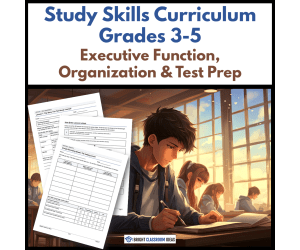
Study Skills Curriculum Grades 3-5, Executive Function & Test Prep
Life Skills, Special Resources, Grade 3, 4, 5, Lesson Plans, Teacher Tools, Assessments, Worksheets & Printables
Study Skills Curriculum Grades 3-5, Executive Function, Organization & Test Prep Study skills for grades 3–5 can be taught as simple, repeatable routines—not overwhelming techniques. This 10-unit curriculum helps students build practical habits for organization, planning, focus, reading, note-taking, studying, test preparation, and asking for help. What’s Included This comprehensive study skills resource includes: ⭐ Facilitator Guide with teaching routines and implementation guidance 📋 Scope & Sequence with three pacing options 📝 Student Self-Inventory for pre/post reflection and goal setting 🧠 10 complete study skills units 📚 How Your Brain Learns 🗂️ Get Organized 📖 Directions & Getting Started 📅 Time & Planning 🎯 Focus & Study Space 📘 Reading to Learn ✏️ Note-Taking Basics 🧠 Remembering What You Learn 📝 Getting Ready for a Test 🙋 Asking for Help ✂️ Printable Student Tools, checklists, templates, and trackers 📓 30-prompt Reflection Journal 🏠 Family Guide for supporting skills at home 📊 Assessment and Progress Tracking materials How It Works in the Classroom Each unit is designed for a 25-minute lesson with a consistent five-part structure: Hook Teacher Model Guided Practice Transfer Task Reflection Close The most important part is the transfer task. Students apply each strategy to their real, current schoolwork , helping study skills become classroom routines instead of isolated worksheet activities. Choose the pacing that fits your setting: Weekly across the school year for long-term retention Six-week intensive for intervention, electives, or summer programs As-needed tutoring or homeschool use based on current student needs The resource works well for whole-class instruction, small groups, intervention, tutoring, homeschool, resource rooms, and advisory or morning-meeting blocks. Standards & Learning Goals Students build practical executive-function and self-management skills, including: Organization and materials management Task initiation Following multi-step directions Planning and time management Sustained attention Comprehension monitoring Note-taking Retrieval practice and spaced studying Test preparation and error analysis Self-advocacy and asking specific questions Reflection and metacognition The resource also supports CCSS ELA , CASEL self-management and responsible decision-making . Why Teachers Love It ⭐ Low-prep implementation — Lessons follow the same predictable structure. ⭐ Real-world practice — Students use strategies with actual assignments and current content. ⭐ Built-in differentiation — Grade-band adjustments support grades 3, 4, and 5. ⭐ Student independence — Checklists, planners, trackers, and question-building tools make routines visible. ⭐ Family connection — Send-home guides help reinforce the same habits beyond school. ⭐ Progress monitoring — A four-point developmental rubric and observable look-fors help teachers track growth without treating study skills like academic content. ⭐ Metacognition matters — Weekly reflection prompts help students notice their habits and make intentional changes. This study skills curriculum for grades 3–5 is especially useful for helping students become more organized, independent, and prepared for the increasing demands of upper elementary school and the transition toward middle school. ✨ Give your students practical routines they can use every day—not just strategies they forget after one lesson. Download the Study Skills Resource Pack for Grades 3–5 and give students tools they can carry into real classroom work, homework, studying, and future grades.
Author Bright Classroom Ideas Marketplace
Rating
Tags Study Skills, Curriculum, Executive Function, Organization, Test Prep

Deductions & Speculations ESL TEFL Upper Intermediate Lesson Plan
ELA, Language Development, ESL, Grammar, Reading, Writing, Grade 6, 7, 8, Teacher Tools, Lesson Plans, Worksheets & Printables
Deductions & Speculations | Upper Intermediate ESL Lesson Plan This upper intermediate English lesson plan helps students learn how to make logical guesses and speculate based on available information. The deductive reasoning activities sharpen critical thinking abilities while improving English comprehension and grammar skills. After an introductory explanation of deductive reasoning concepts, students will read short texts and make inferences by logically eliminating improbable options. Additional exercises reinforce the speculative thought process through dialogues and short stories. This versatile resource works well for whole-class instruction, small group work, independent practice, homework, or assessment prep. The engaging deductive reasoning tasks help ESL learners gain confidence conversing, writing, and testing in English. Answer key included. The ESL lesson plan includes flashcards, a warmer, grammar rules, exercises, role-play, conversation, writing drill, activity, answers and an extra study that would be good to set as homework. There are 30+ pages and there are teachers notes to guide the teacher.
Author TEAM TEFL
Tags ESL Lesson, Modals, Verbs, Grammar Lesson, Language Arts Worksheet

Baseball Reading Comprehension Passage - Cored Ed Encyclopedia
ELA, Language Development, Reading Comprehension, Reading, Social Studies, Writing, Vocabulary, History, Geography, Pre-Reading, Grade 2, 3, 4, 5, Worksheets & Printables, Worksheets, Teacher Tools, Centers, Activities, Writing Prompts, Assessments, Quizzes and Tests, Quizzes, Lesson Plans
This baseball reading comprehension with lesson plan includes: Visualization (on the front cover) Start your lesson by taking a minute to think and share something about the topic. Read the script aloud (slowly), perhaps prepare some music or sound effects. Student close their eyes and let their imaginations wander. Students open their eyes, read the question aloud and give them a few minutes to complete. Ask a few students to share or keep answers until the end to compare with what they learn in the passage. COMPANION VIDEO NOW AVAILABLE (EMBEDDED AFTER PREVIEW PICTURES IN PRODUCT DESCRIPTION) Quick pause—thousands of Cored Education products are included with your TeachSimple membership. Download links and encyclopedia index available here. Pre-Reading Trivia Students will write down one thing they already know about the subject and then read five more facts and discuss. These facts are fun, and the students will enjoy learning about the subject before reading more. Give 1 minute for students to write what they already know (no pressure—best guess is fine). Read the five facts together. After each fact, do ask a student for their opinion, was it surprising? Set a purpose by asking students to highlight/underline one fact they want to learn more about during the reading. Reading Passage The text is a high-interest reading passage with set paragraphs, roughly three to four paragraphs long. It contains a variety of themes about the topic, anywhere from history to technology. The passage is between 250 and 350 words in length. First, ask students to look at the headings and see what they’ll learn about today. What do they know about the topic/heading? First read options: Teacher read-aloud (best for support). Partner reading (paragraph by paragraph). While reading, students underline important details, and vocabulary words they think may come up in the questions section. Mixed Questions The first question page contains four multiple-choice questions, each with a choice of four answers, and three written response questions that require a sentence or two from the student. Students complete the mcqs first independently, then review quickly as a class. For the 3 written responses, try to get students giving the answer with some form of evidence: “I think ___ because the text says ___.” If students get stuck, send them back to check the passage. Vocabulary Questions Practice seven key words from the text in this section across two activities. First section is scrambled words where students will unscramble three words given a clue for each. The second section is a word to meaning matching activity. Before starting, have some students read out words they underlined in the passage. Ask students to say the word and read aloud the sentence(s) around each word. Ask students to do scrambled words and the matching exercise in pairs then go through answers as a class. For the scrambled spelling task, get four pairs to come up to the board and write the words for extra practice with the other student reading out the clue. For the matching task, prompt students to give full sentences: “I matched ___ with ___ because ___.” Creative Writing In this question, the student will be required to write a five to eight sentence paragraph on a question related to the topic. Before starting, ask students write down 3 key ideas they are going to include in their piece. Ask students for ideas to share around the class to help those struggling. Pro writing expectations: 5–8 sentences At least 2 facts or details from the passage At least 2 vocabulary words from the previous page Students read their paragraphs while classmates listen for facts and vocabulary words. Extension Activities This page is optional for fast finishers or to take home. There are several activities, each one requiring a different skill. Do some, do none, do all, completely optional - but you will feel reassured knowing every possibility is planned for. Includes summary writting question and additional facts. Answer Key There are answers for the multiple-choice questions, written response questions have sample answers, vocabulary answers and if there is a summary question then a sample summary will be provided as well. Lesson Plan Included Customized lesson plan for this lesson is included. Lesson Snapshot Title: Baseball Genre: Nonfiction (informational passage) Subject: Physical Education / Social Studies (Sports history) / Reading (Informational Text) Primary Topic: How baseball works and how it spread Estimated Guided Reading Level (A–Z): S What This Lesson Teaches Best Clear explanation of how a baseball game works (bases in a diamond, two teams, innings, outs, extra innings). How shared written rules helped organize the modern game (clubs writing rules; later standards like nine innings and a 90-foot base path). A brief timeline of key turning points using dates and evidence (1845 rules, 1869 first all-professional team, 1903 World Series, 1872 introduction in Japan). How baseball changed as it grew (teams traveling, paid players, big leagues forming, some leagues using timing rules). How baseball spread beyond its early American home (popularity across parts of the Americas and East Asia). Learning Goals Identify key parts of a baseball game described in the passage (bases, teams, innings, outs, extra innings). Explain how keeping shared rules helped baseball become more organized. Describe the “safer idea” included in the 1845 rules. Describe what it meant for baseball to turn “professional,” using details from the text. Retell the passage’s key dates in order and explain what happened at each date. Describe how the passage shows baseball spreading to new places and continuing to change. Key Vocabulary From the Text inning — part of the game when teams take turns playing. outs — times when a player is put out. standards — agreed-upon rules that many people follow. professional — paid to play as a job. leagues — organized groups of teams that play each other. FULL CATALOG OF DOWNLOAD LINKS AND ENCYCLOPEDIA INDEX HERE
Author Cored Education
Rating
Tags Vocabulary, Reading Comprehension, Reading Passages, Lesson Plans, Ela Lesson Plans, Reading Comprehension Lesson Plans, Pre-reading, History, History Lesson Plans, Social Studies Lesson Plans

Animal Science Unit | All About Turkeys | Learning about Animals | Turkey
Science, Life Sciences, Animals, Kindergarten, Preschool, Grade 1, 2, Teacher Tools, Lesson Plans
Animal Science Unit | All About Turkeys Dive into learning all about turkeys with this expansive animal science unit! Budding scientists will enjoy a multi-sensory, cross-curricular turkey adventure. Over 100 pages of differentiated reading, writing, math, and hands-on activities cater to various learning styles and abilities. Studious preK-2nd graders can explore turkey classification, adaptations, habitats, life cycles, and more through vibrant images, texts, discussions, crafts, and games. Flexible resources allow for whole group, small group, or independent exploration. Watch curiosity and wonder unfold as little zoologists empathize with wildlife through imaginative stories and express knowledge through their own minibook creations! Thoughtfully designed by an experienced elementary educator, this one-of-a-kind unit transforms any classroom into a junior research center bursting with turkey discoveries!
Author Simply Schoolgirl
Tags Zoology, Farm Animals, Thanksgiving, Bird, Birds, Turkey Crafts, Turkey Lesson, Turkey Projects, Turkey Printables, Turkey Activities

Moose | Interactive Science Lesson | Micro-Learning Deck
Science, Life Sciences, Animals, Grade 5, 6, 7, Teacher Tools, Lesson Plans
Introducing an engaging moose science lesson for upper elementary and middle school students. This interactive micro-learning deck efficiently integrates video, reading, assessment, and writing into one moose-themed package. Students will watch an informative video about the physical characteristics, habitat, diet, and life cycle of moose. Next, they will read a passage with audio support to deepen comprehension. The lesson concludes by analyzing a text through close reading questions and synthesizing learning in a quick write. This versatile resource can be used for whole group instruction, small group differentiation, or independent practice. The multimedia format and informal assessments keep students focused while building science content knowledge and literacy skills.
Author Teach Me This
Tags Moose Lesson, Interactive Science, Quick Write, Exit Ticket, Reading Passage
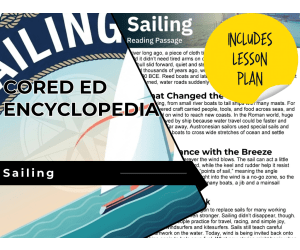
Sailing Reading Comprehension Passage - Cored Ed Encyclopedia
ELA, Language Development, Reading Comprehension, Reading, Pre-Reading, Science, Writing, Engineering, Technology, Physics, Grade 2, 3, 4, 5, Worksheets & Printables, Worksheets, Teacher Tools, Centers, Activities, Writing Prompts, Assessments, Quizzes and Tests, Quizzes, Lesson Plans
This sailing reading comprehension includes: Visualization (on the front cover) Start your lesson by taking a minute to think and share something about the topic. Read the script aloud (slowly), perhaps prepare some music or sound effects. Student close their eyes and let their imaginations wander. Students open their eyes, read the question aloud and give them a few minutes to complete. Ask a few students to share or keep answers until the end to compare with what they learn in the passage. Quick pause—thousands of Cored Education products are included with your TeachSimple membership. Download links and encyclopedia index available here. Pre-Reading Trivia Students will write down one thing they already know about the subject and then read five more facts and discuss. These facts are fun, and the students will enjoy learning about the subject before reading more. Give 1 minute for students to write what they already know (no pressure—best guess is fine). Read the five facts together. After each fact, do ask a student for their opinion, was it surprising? Set a purpose by asking students to highlight/underline one fact they want to learn more about during the reading. Reading Passage The text is a high-interest reading passage with set paragraphs, roughly three to four paragraphs long. It contains a variety of themes about the topic, anywhere from history to technology. The passage is between 250 and 350 words in length. First, ask students to look at the headings and see what they’ll learn about today. What do they know about the topic/heading? First read options: Teacher read-aloud (best for support). Partner reading (paragraph by paragraph). While reading, students underline important details, and vocabulary words they think may come up in the questions section. Mixed Questions The first question page contains four multiple-choice questions, each with a choice of four answers, and three written response questions that require a sentence or two from the student. Students complete the mcqs first independently, then review quickly as a class. For the 3 written responses, try to get students giving the answer with some form of evidence: “I think ___ because the text says ___.” If students get stuck, send them back to check the passage. Vocabulary Questions Practice seven key words from the text in this section across two activities. First section is scrambled words where students will unscramble three words given a clue for each. The second section is a word to meaning matching activity. Before starting, have some students read out words they underlined in the passage. Ask students to say the word and read aloud the sentence(s) around each word. Ask students to do scrambled words and the matching exercise in pairs then go through answers as a class. For the scrambled spelling task, get four pairs to come up to the board and write the words for extra practice with the other student reading out the clue. For the matching task, prompt students to give full sentences: “I matched ___ with ___ because ___.” Creative Writing In this question, the student will be required to write a five to eight sentence paragraph on a question related to the topic. Before starting, ask students write down 3 key ideas they are going to include in their piece. Ask students for ideas to share around the class to help those struggling. Pro writing expectations: 5–8 sentences At least 2 facts or details from the passage At least 2 vocabulary words from the previous page Students read their paragraphs while classmates listen for facts and vocabulary words. Extension Activities This page is optional for fast finishers or to take home. There are several activities, each one requiring a different skill. Do some, do none, do all, completely optional - but you will feel reassured knowing every possibility is planned for. Includes summary writting question. Answer Key There are answers for the multiple-choice questions, written response questions have sample answers, vocabulary answers and if there is a summary question then a sample summary will be provided as well. Lesson Plan Included Customized lesson plan for this lesson is included. Lesson Snapshot Title: Sailing Genre: Nonfiction (informational passage) Subject: Science (Forces & motion) / Social Studies (history of travel) Primary Topic: How wind powers boats and changed travel Estimated Guided Reading Level (A–Z): R What This Lesson Teaches Best How wind pushing on a sail can move a boat without rowing (sail as a “wind catcher” and cloth billowing). How sailing helped people travel farther and move supplies, from early boats to tall ships, including examples from Egypt, the Roman world, and Austronesian sailors. Key sailing concepts that affect movement and direction, including “points of sail,” the “no-go zone,” and zigzagging turns called tacks. How boat parts help sailing work: the sail pulling forward and the keel and rudder helping resist sliding sideways. How technology changed sailing’s role (steam engines replacing sails for many working ships) and how wind is being used again on some cargo ships to save fuel. Learning Goals Explain how wind pressing on a sail can move a boat forward. Describe how sailing grew from river boats to ships that carried people, tools, and food across seas. Identify why sailors use tacks and what the “no-go zone” means in the passage. Describe how the keel and rudder help a sailboat resist sliding sideways. Explain how sailing changed in the late 1800s and how wind is being used again today. Key Vocabulary From the Text hull — the main body of a boat. keel — a strong part that helps stop sliding sideways. rudder — a part that helps steer the boat. tacks — zigzag turns used to move into wind. cargo — goods carried on a ship. FULL CATALOG OF DOWNLOAD LINKS AND ENCYCLOPEDIA INDEX HERE
Author Cored Education
Rating
Tags Vocabulary, Reading Comprehension, Reading Passages, Reading, Creative Writing, Reading Strategies, Writing Prompts, Lesson Plans, Sailing, Engineering

Argumentative Letter on a Candidate or Mandatory Voting
Social Studies, ELA, Government, History, History: USA, Writing, Grade 7, 8, 9, Teacher Tools, Lesson Plans
The low-prep, 27-page resource, Argumentative Letter on a Candidate or Mandatory Voting has your middle and high school students take a position on either which presidential candidate to support or whether voting should be mandatory in the United States, write a 4-paragraph argumentative letter to the editor, and then send them off to online sites that accept letters to the editors, such as local, state, or national news sites. I have included links to four online articles that address the pros and cons of making voting mandatory in the United States that the students can use for their research. If your students choose to do the candidate letter, this lesson works best if students have done my lesson, Where the Candidates Stand on the Issues or something similar to that. This lesson doesn’t specifically teach how to write an argumentative essay. It builds on what students already know, assuming they have already written argumentative essays. Embedded in this lesson are a brainstorming activity for evidence and analysis, a template for writing the essay, a graphic organizer all of which provide scaffolded support to your diverse range of writers, and a rubric. Argumentative Letter on a Candidate or Mandatory Voting includes the following: a hyperlinked Table of Contents About this Resource-- an easy-to-use guide to everything you need to know about this resource a forced link copy to the Google Doc Common Core Literacy Standards for Writing in History Objectives and Learning Targets An Essential Question for Each Prompt: For the Candidate Letter to the Editor: What key qualities and policies make one presidential candidate more suitable than another? For the Mandatory Voting Letter to the Editor: Should voting be mandatory in a democratic society? 3 Guiding Questions for Each Prompt: For the Candidate Letter to the Editor: What are the major policy differences between the two candidates? How do the candidates' backgrounds and experiences shape their suitability for the presidency? Which candidate's proposed solutions do you believe are more effective in addressing current societal challenges? For the Mandatory Voting Letter to the Editor: What are the arguments for and against mandatory voting? How does mandatory voting affect voter turnout and representation? What are the potential benefits and drawbacks of implementing mandatory voting laws? Student Handouts: Evidence/Analysis Matrix for Candidates Argumentative Essay Evidence Analysis Matrix for Mandatory Voting Argumentative Essay Candidate Argumentative Essay Prompt Mandatory Voting Argumentative Essay Prompt Template for Candidate Argumentative Essay Prompt Template for Mandatory Voting Argumentative Essay Prompt Verbs and Transition Words and Phrases for Argumentative Writing Graphic Organizer for Argumentative Essay Argumentative Essay Rubric: Portrait and Landscape Format Interested in more 2024 Presidential Election Resources? Check out these: The U.S. Presidential Election: Anticipation Guide, Questions, Discussion 12 Essential Election Terms for Middle & High School- Vocabulary Strategies 12 Essential Election Terms Color by Number Vocabulary Review for Middle School What are your Political Viewpoints? A Survey for Middle and High School Students Major & Minor Political Parties in US History & Modern Times- Text and Questions A Brief History of Who Can Vote in the United States, Text, Terms, Questions United States Presidential Election Process- Primaries to the Electoral College Propaganda & Political Campaign Ads- Close Viewing Analysis & Written Reflection Where do the Candidates Stand on the Issues? Research and Analyze their Websites Argumentative Letter on a Candidate or Mandatory Voting Presidential Election Project-Collaborative, Creative, & Analytical
Author Intentional Teaching and Learning
Tags Presidential Elections, Argumentative Letter, Presidential Candidates, Cross-curricular, Critical Thinking, Claims And Counterclaims, Evidence And Analysis, Mandatory Voting, Rubric, Middle And High School;
I WONDER - What Was The First Football Made From | Animated Video
Sports, P.E. & Health, Grade 3, 4, 5, 6, 7, 8, Lesson Plans, Teacher Tools
Video Introduction An amazing video designed for the students to learn more about sports in different countries. I WONDER - What Was The First Football Made From | Animated Video Lesson What is your favorite sport? Tell us more about it. Who is your favorite athlete? Or what is your favorite team? Do you know who invented basketball? When basketball has been invented? Can you tell us where is the first time it has been played? Have you ever played soccer or football? If yes, tell us what was your position: A goal keeper, midfield player, or a defender? Do you like watching golf? If yes who is your favorite player? Can you name the differences between tennis and ping pong? Have you ever played volleyball on the beach? When it has been officially recognized by the Olympics? Do you like watching Formula 1 races? If yes, who is your favorite team or driver? Have you ever tried to play handball? If yes tell us more. Do you like watching people skiing or surfing? I WONDER - What Was The First Football Made From | Animated Video Lesson The video is perfect for encouraging the researching skills for the students, while learning more about this sport. I WONDER - What Was The First Football Made From | Animated Video Lesson This friendly designed video is suitable for students at school, homeschooling, and as a group activity. Format Available in MP4 format.
Author Educational Voice
Rating
Tags What Was The First Football Made From, What Was The First Football Made From Video, The First Football, The First Football Facts, The First Football Video, The First Football Video For Kids, The First Football Facts For Kids
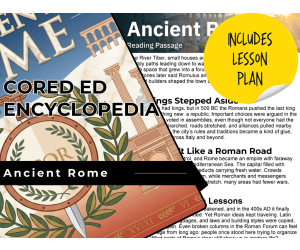
Ancient Rome Reading Comprehension Passage - Cored Ed Encyclopedia
ELA, Language Development, Reading Comprehension, Reading, Social Studies, History, History: Ancient, Writing, Pre-Reading, Vocabulary, Grade 2, 3, 4, 5, Worksheets & Printables, Worksheets, Teacher Tools, Centers, Activities, Writing Prompts, Assessments, Quizzes and Tests, Quizzes, Lesson Plans
This ancient Rome reading comprehension with lesson plan includes: Visualization (on the front cover) Start your lesson by taking a minute to think and share something about the topic. Read the script aloud (slowly), perhaps prepare some music or sound effects. Student close their eyes and let their imaginations wander. Students open their eyes, read the question aloud and give them a few minutes to complete. Ask a few students to share or keep answers until the end to compare with what they learn in the passage. Quick pause—thousands of Cored Education products are included with your TeachSimple membership. Download links and encyclopedia index available here. Pre-Reading Trivia Students will write down one thing they already know about the subject and then read five more facts and discuss. These facts are fun, and the students will enjoy learning about the subject before reading more. Give 1 minute for students to write what they already know (no pressure—best guess is fine). Read the five facts together. After each fact, do ask a student for their opinion, was it surprising? Set a purpose by asking students to highlight/underline one fact they want to learn more about during the reading. Reading Passage The text is a high-interest reading passage with set paragraphs, roughly three to four paragraphs long. It contains a variety of themes about the topic, anywhere from history to technology. The passage is between 250 and 350 words in length. First, ask students to look at the headings and see what they’ll learn about today. What do they know about the topic/heading? First read options: Teacher read-aloud (best for support). Partner reading (paragraph by paragraph). While reading, students underline important details, and vocabulary words they think may come up in the questions section. Mixed Questions The first question page contains four multiple-choice questions, each with a choice of four answers, and three written response questions that require a sentence or two from the student. Students complete the mcqs first independently, then review quickly as a class. For the 3 written responses, try to get students giving the answer with some form of evidence: “I think ___ because the text says ___.” If students get stuck, send them back to check the passage. Vocabulary Questions Practice seven key words from the text in this section across two activities. First section is scrambled words where students will unscramble three words given a clue for each. The second section is a word to meaning matching activity. Before starting, have some students read out words they underlined in the passage. Ask students to say the word and read aloud the sentence(s) around each word. Ask students to do scrambled words and the matching exercise in pairs then go through answers as a class. For the scrambled spelling task, get four pairs to come up to the board and write the words for extra practice with the other student reading out the clue. For the matching task, prompt students to give full sentences: “I matched ___ with ___ because ___.” Creative Writing In this question, the student will be required to write a five to eight sentence paragraph on a question related to the topic. Before starting, ask students write down 3 key ideas they are going to include in their piece. Ask students for ideas to share around the class to help those struggling. Pro writing expectations: 5–8 sentences At least 2 facts or details from the passage At least 2 vocabulary words from the previous page Students read their paragraphs while classmates listen for facts and vocabulary words. Extension Activities This page is optional for fast finishers or to take home. There are several activities, each one requiring a different skill. Do some, do none, do all, completely optional - but you will feel reassured knowing every possibility is planned for. Includes summary writting question and additional facts. Answer Key There are answers for the multiple-choice questions, written response questions have sample answers, vocabulary answers and if there is a summary question then a sample summary will be provided as well. Lesson Plan Included Customized lesson plan for this lesson is included. Lesson Snapshot Title: Ancient Rome Genre: Nonfiction (informational reading passage) Subject: Social Studies (Ancient Civilizations) / Reading (Informational Text) Primary Topic: From early settlement to empire and lasting influence Estimated Guided Reading Level (A–Z): S Support pages noted in the PDF: visualization prompt, pre-reading trivia, mixed questions, vocabulary activities, creative writing prompt, extension activities + “final facts,” and an answer key (some “final facts” add details not stated in the passage). What This Lesson Teaches Best How early life near the Tiber River and a busy meeting space (a forum) helped a town form and grow. How Rome changed its government from kings to a republic, including the role of the Roman Senate and citizen voting in assemblies. How roads, alliances, and shared rules/traditions helped Rome spread across Italy and beyond. How Rome became an empire connected around the Mediterranean Sea , including aqueducts for fresh water and public gathering places like the Colosseum . How Rome’s ideas continued even after the western empire fell, with laws and building styles reused and ruins like the Roman Forum reminding people of the past. Learning Goals Students will describe how the passage explains the early growth of Rome from river paths into a forum. Students will identify what happened in 509 BC and name the new form of government described. Students will explain how the passage connects roads, alliances, and shared rules/traditions to Rome’s expansion. Students will describe what changed in 27 BC when Augustus took control, using details from the text. Students will explain, using the passage, what aqueducts carried and why crowds gathered in major public places. Students will describe what happened to the western empire in the 400s AD and how Roman ideas continued afterward. Key Vocabulary From the Text republic — a government citizens vote in. Senate — a group that debates important choices. empire — many lands under one ruler. aqueducts — long channels that carry fresh water. provinces — faraway areas ruled as part of an empire. FULL CATALOG OF DOWNLOAD LINKS AND ENCYCLOPEDIA INDEX HERE
Author Cored Education
Rating
Tags Vocabulary, Reading Comprehension, Reading Passages, Lesson Plans, Ela Lesson Plans, Reading Comprehension Lesson Plans, Pre-reading, History, Ancient History Lesson Plans, History Lesson Plans

Meet the Master: Edgar Allan Poe Intro Activity
ELA, Literature, Grade 7, 8, 9, 10, 11, 12, Teacher Tools, Lesson Plans
Meet the Master: Edgar Allan Poe Intro Activity This versatile teaching resource is designed for educators to bring students into the dark and vibrant world of one of America's most celebrated authors, Edgar Allan Poe. Be it Language Arts or Literature studies, this resource serves as a key foundation. Target Audience and Learning Goals The lesson plan targets students from grade 7 to grade 12 The goal: understand Poe's unique writing style and his distinctive literary works Lesson Structure: Four Interactive Stations This activity centers around four interactive stations, each designed with specific learning outcomes in mind. Station One: A video insight into Edgar Allan Poe's life. Station Two: 'Non negotiable' steps from Poe regarding effective writing strategies distilled into a short article format. Station Three: Another video focusing on his renowned literary works and exclusive writing style. Station Four:'Sneak peeks' into some of his much loved famous works- Tangible Resources at each Station Included at each station are comprehensive materials such as; : - Instructions or 'Station Plates': - Student worksheets that provide tangible reinforcement for learned information.: In addition, supplemental materials like articles will be made available if needed ensuring an all-round learning experience. User-Friendly Resource Requirements:> All you need are basic technology tools - computers or laptops with internet connectivity for multimedia content. Teachers are provided with a detailed, step-by-step lesson plan to guide them through the delivery process in individual or group based sessions. Making your Edgar Allan Poe Lesson a Breeze Delve into the world of this literary master with your students today! The resource is easily accessible and available in PDF format.
Author Fairways and Chalkboards
Tags Edgar Allan Poe, Meet The Master, Interactive Stations, Writing Strategies, Literary Works, Edgar Allan Poe Worksheets

I WONDER - How Are Chemical Bonds Useful | Animated Video
Chemistry, Science, STEM, Grade 6, 7, 8, 9, 10, 11, 12, Lesson Plans, Teacher Tools
Video Introduction An amazing video designed for the students to learn more about STEM. I WONDER - How Are Chemical Bonds Useful | Animated Video Lesson Do you like STEM subjects? what is your favorite one? Have you ever tried to plant a seed? If yes, tell us more about it. Or have you ever tried to invent something? If yes, tell us more about it. And how do you think it will help us? Have you ever seen a microorganism under a microscope? What was it? And how it looked like? Mathematics is a marvelous subject. Let' sharpen our brains and solve some equations. Do you like timetable tricks? What is your favorite one? Do you know how to code? Have you ever created an app or a game before? If yes, how was it like? I WONDER - How Are Chemical Bonds Useful | Animated Video Lesson The video is perfect for encouraging the researching skills for the students, while learning more about this fantastic topic. I WONDER - How Are Chemical Bonds Useful | Animated Video Lesson This friendly designed video is suitable for students at school, homeschooling, and as a group activity. Format Available in MP4 format.
Author Educational Voice
Tags How Are Chemical Bonds Useful, How Are Chemical Bonds Useful Facts, Chemical Bonds, Chemical Bond, Chemical Bonds Facts, Chemical Bonds Facts For Kids, Chemical Bonds Video, Chemical Bonds Video For Kids