



3,955 products added recently
Page 34 - Lesson Plan Templates
Simplify your preparation with lesson plan templates designed to help you organize objectives, activities, and assessments. These templates provide a structured framework to ensure comprehensive coverage of material. Incorporate them to save time and enhance the effectiveness of your teaching.

 Show filters


Errorless Numbers 1-10 Math Unit
, Kindergarten, Preschool, Teacher Tools, Lesson Plans
This resource is an Errorless Numbers 1-10 Math Unit. This unit is great for your little learners who are just beginning to learn numbers or need extra review practice. There is 1 lesson for each number 1-10. With each lesson, there will be: - 1 PowerPoint with teacher lesson - 1 PowerPoint with student activity - 1 PDF with an assessment - 1 PDF with student pages There is an additional PDF that holds Google links for each lesson.
Author JoyfulToddler
Tags Errorless Numbers, Math Unit, Digital Math, Google Slides, Math Assessment
Measurement: Temperature & Currency - Practice the Skill 3 - PC Software
Math, Measurements, Common Core, Kindergarten, Preschool, Grade 1, 2, Teacher Tools, Lesson Plans
Measurement: Temperature & Currency - Practice the Skill 3 - PC Software This instructional software combines technology and education, suitable for preschool, kindergarten, grade 1 and grade 2 students. This piece focuses on core concepts related to temperature and currency measurements. Main Features: Timed drill activities: Designed to test and strengthen understanding of the subjects. Currency activity with real-life images: Helps develop familiarity with different forms of currency through interactive play. Dual-language support of English-Spanish voice-overs:This boosts inclusive learning as well as language exploration in an easy-to-understand format. The software is especially suited for individual or small group study — in classrooms or at home! Its design supports customization based on student requirements. Conveniently delivered as a zip file allowing quick download onto personal computers without any complications! Curriculum Alignment: All content aligns closely with the Common Core State Standards. It adheres to STEM initiatives, promoting integration into existing lesson plans for maths instruction particularly under sub-subjects like measurements. Also designed following principles laid out by NCTM (National Council of Teachers of Mathematics). "Measurement: Temperature & Currency - Practice the Skill 3": Enhancing skill development while integrating seamlessly into current education systems — supporting both learners and educators!
Author Classroom Complete Press
Tags Digital Math, Currency, Temperature, Measurement, Math Skills
I WONDER - Can You Do Activities At Niagara Falls | Animated Video
Geography, Social Studies, Grade 2, 3, 4, 5, 6, 7, 8, Lesson Plans, Teacher Tools
Video Introduction An amazing video designed for the students to learn more about famous places in different countries. I WONDER - Can You Do Activities At Niagara Falls | Animated Video Lesson What do you know about this place? Do you know in which part of the world it is? Have you ever visited this place? If yes, can you tell us more about your adventure, and what do you like the most about this place? Do you like reading about Geography? What is your favorite country in the whole world? If you are going on a trip where it will be? Which country? What you are going to see there? Does this country has a famous place to visit? I WONDER - Can You Do Activities At Niagara Falls | Animated Video Lesson The activity is perfect for encouraging the researching skills for the students, while learning more about this fantastic place. I WONDER - Can You Do Activities At Niagara Falls | Animated Video Lesson This friendly designed video is suitable for students at school, homeschooling, and as a group activity. Format Available in MP4 format.
Author Educational Voice
Tags Can You Do Activities At Niagara Falls, Can You Do Activities At Niagara Falls Video, Niagara Falls, Niagara Falls Facts, Niagara Falls Facts For Kids, Niagara Falls Video, Niagara Fallsvideo For Kids, Waterfalls

Geometry: Area, Volume & Surface Area - FLASH-PC
Math, Geometry, Grade 3, 4, 5, Teacher Tools, Lesson Plans
Geometry: Area, Volume & Surface Area - FLASH-PC FLASH-PC is a comprehensive teaching resource designed to enhance students' understanding of core geometrical concepts. Specifically targeted at Grade 3, Grade 4 and Grade 5 students, this product combines software and printables to help children truly comprehend the fundamentals of area, volume and surface area calculations. Educators tasked with teaching Geometry will find great value from the FLASH-PC's multi-faceted approach that includes both digital resources and hands-on tangible materials. The package contains pre-assessment tasks for gauging knowledge levels prior to instruction. A lesson plan crafted with thoughtful educational expertise. Real-world word problems for practical comprehension. Timed drills within set academic standards for focused practice. The adaptability of the Geometry Module in different settings such as whole groups in classroom, small focus groups or during dedicated one-to-one student teacher interactions adds its versatility. These resources can even be assigned as homework tasks for reinforcing learned concepts at home. Focused on Interactive Learning: Inclusion of math tools such as board games and memory match games make learning interactive while instilling key geometrical principles amongst children in an enjoyable manner. Spinner games provide a tactile way to visualize mathematical solutions are included too. In order ensure inclusivity across bilingual classrooms or homeschooled environments where Spanish language might be required the FLASH-PC comes with default English voiceover/text accompanied by Spanish substitutions. Detailed Teacher Guide: An accompanying detailed teacher guide lends pedagogical perspective while assisting seamless integration into established curricula framework leading towards solidified student learning outcomes. Innovative Assessment Tool: It concludes with access to SMART response assessment tool aiming at analytical evaluation metrics synced real-time from learner interaction driving precise future instruction. In summary, FLASH-PC module is an effective teaching aid for delivering Geometry lessons in a fun, interactive and educationally sound way to help students achieve proficiency in understanding area, volume and surface area dimensions.
Author Classroom Complete Press
Tags Software (PC)

How to Write a Paragraph: Drafting Practice
ELA, Writing, Common Core, Grade 5, 6, 7, 8, Teacher Tools, Lesson Plans
Product Overview: How to Write a Paragraph: Drafting Practice is a top-tier teaching resource designed exclusively for educators in varying contexts such as public schools or homeschools. It is tailored towards students of Grade 5, 6, 7 and Grade 8 studying Language Arts with a keen focus on Writing. The overarching aim of the product is to aid young learners in honing the core artistry of expressing concepts fluently through meticulously composed sentences and paragraphs. This educational tool makes it feasible for students to comprehend the process while providing them ample opportunities to exercise prewriting techniques. A diverse set of graphic organizers have been incorporated within this resource functioning as guiding lights throughout their writing journey. Key Features: The drafting practice tool provides systematic introductions to four primary forms paragraphs. Blends learning objectives based on Bloom's Taxonomy promoting higher-order thinking skills along with traditional learning approaches. A comprehensive PDF file accommodating supplementary enriching material for teachers aiming to boost their existing reading program or employ as individual assignments for students. A thorough implementation guide accompanies the product ensuring seamless lesson plan integration due its step-by-step instructions layout. Evaluation & Extra Material: To enable fair evaluation post-utilization, an assessment rubric has been bundled in the package. Additional elements like word puzzles and comprehension quizzes are included further enhancing critical thinking skills while keeping lessons engaging & interactive. The final touch comes in form of six vibrant graphic organizers contributed towards delineating skill focus topics leading your young learners towards successful writing explorations during organized independent work sessions. Educational Standards & Assurance: This teaching resource fulfills Common Core State Standards and incorporates components mirroring Bloom's Taxonomy validating its commitment adhering universally accepted educational best practices.
Author Classroom Complete Press
Tags PDF

Data Analysis & Probability: Probability - Practice the Skill 3 - MAC Software
Math, Patterns, Common Core, Kindergarten, Preschool, Grade 1, 2, Teacher Tools, Lesson Plans
Data Analysis & Probability: Probability - Practice the Skill 3 - MAC Software General Description: This dedicated teaching resource is designed to enrich educators' approach towards teaching data analysis and Probability. It is ideal for preschool, kindergarten, grade 1, and grade 2 levels with a heavy emphasis on mathematical themes like patterns. Alignment with educational Standards: Curriculum-aligned content in line with the Common Core State Standards and STEM initiatives. Meticulously designed following guidelines by the National Council of Teachers of Mathematics (NCTM). The primary feature revolves around practical drill exercises focusing on events with high or low probabilities. Such drills enhance students’ analytical skills regarding probability while checking their speed and retention simultaneously Bilingual Instructions: Inclusionary language policy incorporates default English voice-over instructions along with Spanish text options and voice-overs. Innovative tools integration: This software stands out due to its integrated math tools further enriching classroom experiences beyond traditional chalk-and-board methods. User-friendly Interface All these educational utilities are packed into a zip file offering easy usability for any Mac user. This resource could be adapted for whole-class discussions or small group sessions fitting individual learners' needs. This makes it an excellent addition even for independent homeschooling set-ups needing material beyond regular textbooks. Jury duty assignments can also utilize it effectively. Note: Apply Data Analysis & Probability: Probability - Practice the Skill 3 - MAC Software, an ideal blend of interactive technology embedded within robust curricular grounding catering perfectly to modern-day instructional requirements across different teaching settings.
Author Classroom Complete Press
Tags Digital Math, Digital Lesson Plan, Probability, Math Skills, Patterns

I WONDER - What Is The Largest Mammal | Animated Video Lesson
STEM, Animals, Life Sciences, Science, Biology, Grade 1, 2, 3, 4, 5, 6, 7, 8, Lesson Plans, Teacher Tools
Video Introduction Animal kingdoms are full of fascinating wonders to learn. This video is designed for the students to learn more about animals in different countries. I WONDER - What Is The Largest Mammal | Animated Video Lesson Do you like animals? what is your favorite one? Do you own a pet? If yes, tell us more about it, like what its name? And what do you like most about it? What are the animal kingdoms? Can you write down the characteristics of each animal class like mammals, birds, reptiles, amphibian, fish and mollusks. Do you know that some animals can sing, can you name any of them? What is the largest and the smallest mammal in the world? What is the largest and the smallest bird in the world? What is the largest and the smallest fish in the world? I WONDER - What Is The Largest Mammal | Animated Video Lesson The video is perfect for encouraging the researching skills for the students, while learning more about these fantastic animals. I WONDER - What Is The Largest Mammal | Animated Video Lesson This friendly designed video is suitable for students at school, homeschooling, and as a group activity. Format Available in MP4 format.
Author Educational Voice
Tags What Is The Largest Mammal, What Is The Largest Mammal Video, Largest Mammal, Largest Mammal Facts, Largest Mammal Facts For Kids, Largest Mammal Video, Largest Mammal Video For Kids

I WONDER - What Is The Surface Area Of A Cube | Animated Video Lesson
Geometry, Math, Shapes, Early Math, Grade 2, 3, 4, 5, 6, 7, 8, Lesson Plans, Teacher Tools
Video Introduction An amazing video designed for the students to learn more about STEM. I WONDER - What Is The Surface Area Of A Cube | Animated Video Lesson Shapes are all around us. What are your favourite ones? And can you give us some real life examples? Can you name the difference between the 2D shapes and 3D shapes? Have you ever tried to calculate the surface area of the square? If yes can you write the equation down? What is the perimeter of the rectangle? And can you tell the difference between radius and diameter of a circle? Can you mention what is the difference between the right angle and the acute angle? Have you ever heard about the obtuse angle? I WONDER - What Is The Surface Area Of A Cube | Animated Video Lesson The video is perfect for encouraging the researching skills for the students, while learning more about this fantastic topic. I WONDER - What Is The Surface Area Of A Cube | Animated Video Lesson This friendly designed video is suitable for students at school, homeschooling, and as a group activity. Format Available in MP4 format.
Author Educational Voice
Rating
Tags What Is The Surface Area Of A Cube, Surface Area Of A Cube, Surface Area Of A Cube Facts, Surface Area Of A Cube Video, Surface Area Of A Cube Video For Kids, Surface Area Of A Cube Facts For Kids, Cube

12 Election Terms for Middle & High School- Vocabulary Strategies
Social Studies, Government, Grade 7, 8, 9, Teacher Tools, Lesson Plans
The 17-page resource, 12 Essential Election Terms for Middle and High School-Vocabulary Strategies provides students with opportunities to explore essential vocabulary so that they can begin to build their knowledge as they delve more deeply into the election. The resource includes an inventive road signs metaphor to help students identify their level of familiarity with various election terms. It establishes a knowledge base from which they can dive into nuanced meanings of these words. The unique K.I.M Vocabulary strategy is used to explore different aspects of each word, including word families, roots, etc., further strengthening students’ understanding. The resource includes the following: About this Resource: a handy guide to orient teachers to the Essential Question, Guiding questions, standards, objectives, and learning targets, list of resources, preparation and time frame, and includes a link to a force copy for the Google Doc which makes the resource editable. Understanding Essential Election Vocabulary (Road Signs to Understanding Vocabulary) K.I.M. Vocabulary for Essential Election Terms and Key K.I.M. Vocabulary for Essential Election Terms Key Essential Election Vocabulary Quiz and Key The 12 words are: ballot, candidate, democracy, election, government, political parties, politics, propaganda, proposition, representative democracy, and vote. Once students have a clear understanding of the terms, teachers can assess their understanding through the quiz . The quiz includes 2 parts: a matching the definition with the word and answering questions about the words that will allow them to show their understanding. The Essential Question: "How do key election terms shape our understanding of democratic processes, and what strategies can we employ to navigate and utilize them effectively?" and the 3 Guiding Questions: "How do citizens engage with the democratic process through terms like "ballot," "candidate," and "vote," and what role do these terms play in ensuring representative governance?" "What strategies can individuals employ to critically evaluate the influence of "propaganda" and "political parties" in elections, and how do these terms impact the formation of informed civic choices?" "In what ways do concepts like "representative democracy" and "citizen" shape our understanding of government structures and the responsibilities of individuals within a democratic society?" encourages students to critically think about both the meaning and the impact of these words, not just on themselves, but also on our election cycle and our electoral system. Every four years, citizens of our nation get to choose our next president. Middle School and High School students are at the age where they begin to think of themselves as members of this country. Many of them witness their relatives voting, but many do not, either because their relatives are not citizens or because their relatives are disengaged from the electoral process. It is our duty as Social Studies teachers to engage our students in the electoral process so that they understand how our electoral system works and so that they see the value in participating in our democracy through voting.
Author Intentional Teaching and Learning
Tags Election Terms, Democracy, Civic Duty, Government, Election, Discussion, Reflection, Civics, U.S. History, Vocabulary Strategies
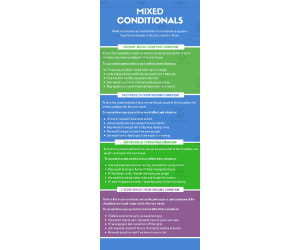
Mixed Conditionals ESL TEFL Upper Intermediate Lesson Plan Worksheet
ELA, Language Development, ESL, Grammar, Vocabulary, Reading, Writing, Resources for Teachers, Adult Education, High School, Middle School, Homeschool Resources, Teacher Tools, Lesson Plans, Worksheets & Printables
This Upper Intermediate ESL TEFL teaching lesson plan on Mixed Conditionals, is tailored to augment grammar skills comprehension and application among upper intermediate level students. Developed by seasoned educators, this plan caters to especially complex areas of language proficiency - mixed conditionals. Inclusion of 30 ready-to-print pages organised into three comprehensive PDFs. Well-structured exercises covering different aspects of mixed conditionals. Flexibly adaptable in various teaching settings - brick-and-mortar classrooms or virtual learning due to easy printability and digital access via Google Apps respectively. Suitable for diverse learners irrespective of grade level requirements – perfect for individual English language study tutoring or direct whole class lessons on mixed conditionals complexities. The ESL lesson plan includes flashcards , a warmer, grammar rules, exercises, role-play, conversation, writing drill, activity, answers and an extra study that would be good to set as homework. There are 30+ pages and there are teachers notes to guide the teacher.
Author TEAM TEFL
Tags Mixed Conditionals, Upper Intermediate, Grammar Skills, Language Arts, Lesson Plan
Algebra: Equations - Solving for a Variable - FLASH-MAC
Math, Algebra, Grade 3, 4, 5, Teacher Tools, Lesson Plans
Algebra: Equations - Solving for a Variable - FLASH-MAC This is an exceptionally useful and comprehensive tool for teaching the concept of solving mathematical equations to intermediate-level learners. Created specifically for third to fifth grade students, this resource enables teachers and homeschooling parents alike to convey difficult algebraic concepts with clarity. Created thoughtfully with educators' needs in mind, our software does not just give you one approach - it offers myriad ways to engage young minds in math learning. This software lays robust ground rules on how learners can solve equations by isolating the variable at hand. A Glance at its Features: Packed with curriculum-based content that spans from a pre- assessment feature, through detailed lesson plans, onto real-world word problems . Multitude of tools integrated cleverly within its design; useful source for homework assignments or group lessons inclusion seamlessly. Timed drills activities that encourage mathematical nimbleness further cultivating their problem-solving skills Included teacher guide offering additional help on how best to utilize this product effectively. Printables such as workbooks or worksheets readily available for tangible use in class routine. Beyond Paper Approach:Innovative game formats like memory match game, board game and even a spinner game integrated into Flash-Mac ensuring engaging way of learning. Optional SMART Response assessment tool included providing practical tracking of each student’s achievement levels. Multilingual Support:An option for Spanish voice-over & text alongside default English version maximizing accessibility inclusive classroom environment. For a fresh approach towards teaching math, Algebra: Equations - Solving for a Variable - FLASH-MAC demonstrates how engaging students with various activities structured around understanding and application of algebra breaks away from traditional textbook-based learning.
Author Classroom Complete Press
Tags Software (Mac)

I WONDER - Why Are White Blood Cells So Important | Animated Video
Human Body, Life Sciences, Science, Biology, STEM, Grade 6, 7, 8, 9, 10, 11, 12, Lesson Plans, Teacher Tools
Video Overview The human body is full of fascinating wonders to learn. This video is created to help the students recognize the anatomy and the job of the human body. I WONDER - Why Are White Blood Cells So Important | Animated Video Lesson Every part and organ in our human body is vital so let's see how important they are. Have you ever imagined how we look like if we didn't have a skeleton? Did you know that because we have our amazing muscles we can stand! Do you know how many teeth do we have? Have you ever wondered about the food journey inside our body? Can you name all the glands in our body? Why do we have skin? Our nervous system is really good at sending signals. Can you tell us more about it? Are you really good at Mathematics, painting, or any other thing? You should really thank your brain about it! The famous five senses are really doing a great work? Can you explain how every sense works? I WONDER - Why Are White Blood Cells So Important | Animated Video Lesson The video is perfect for encouraging the researching skills for the students, while learning more about our fantastic human body. I WONDER - Why Are White Blood Cells So Important | Animated Video Lesson This friendly designed video is suitable for students at school, homeschooling, and as a group activity. Format Available in MP4 format.
Author Educational Voice
Tags Why Are White Blood Cells So Important, Why Are White Blood Cells So Important Facts, White Blood Cells, White Blood Cells Facts, White Blood Cells Facts For Kids, White Blood Cells Video, White Blood Cells Video For Kids

Dear Martin Prereading Unit
ELA, Language Development, Pre-Reading, Grade 8, 9, 10, 11, 12, Teacher Tools, Lesson Plans
Set the stage for your students for Dear Martin and provide them with the knowledge and context in order to get to the heart of this powerful novel. This 2 week novel will give your students what they need to understand the novel in depth. This unit includes the following: 1. Suggested unit timeline 2. Pre reading questionnaire 3. Detailed lesson plans 4. Student worksheets, activities and suggested readings 5. Answer keys when needed 6. Associated PowerPoints 7. Project outline with a rubric 8. Digital escape room Enjoy!
Author Fairways and Chalkboards
Tags Nic Stone, Dear Martin Prereading Unit, Dear Martin

I WONDER - Can Mollusks Be Eaten | Animated Video Lesson
STEM, Animals, Life Sciences, Science, Biology, Grade 1, 2, 3, 4, 5, 6, 7, 8, Lesson Plans, Teacher Tools
Video Introduction Animal kingdoms are full of fascinating wonders to learn. This video is designed for the students to learn more about animals in different countries. I WONDER - Can Mollusks Be Eaten | Animated Video Lesson Do you like animals? what is your favorite one? Do you own a pet? If yes, tell us more about it, like what its name? And what do you like most about it? What are the animal kingdoms? Can you write down the characteristics of each animal class like mammals, birds, reptiles, amphibian, fish and mollusks. Do you know that some animals can sing, can you name any of them? What is the largest and the smallest mammal in the world? What is the largest and the smallest bird in the world? What is the largest and the smallest fish in the world? I WONDER - Can Mollusks Be Eaten | Animated Video Lesson The video is perfect for encouraging the researching skills for the students, while learning more about these fantastic animals. I WONDER - Can Mollusks Be Eaten | Animated Video Lesson This friendly designed video is suitable for students at school, homeschooling, and as a group activity. Format Available in MP4 format.
Author Educational Voice
Tags Can Mollusks Be Eaten, Can Mollusks Be Eaten Video, Mollusks, Mollusk, Mollusks Facts, Mollusks Facts Or Kids, Mollusks Video, Mollusks Video For Kids, Mollusk Facts, Mollusk Video
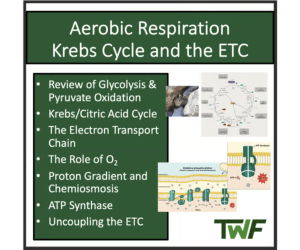
Krebs Cycle and the ETC - Aerobic Cellular Respiration- Biology lesson
Science, Life Sciences, Biology, Grade 11, 12, Teacher Tools, Lesson Plans
Krebs Cycle and the ETC - Aerobic Cellular Respiration - High School Biology lesson Your lesson covers everything from the Krebs cycle to the ETC. In order, the lesson teaches a review of Glycolysis and pyruvate oxidation, the Krebs/Citric Acid Cycle, the Electron Transport Chain, the role of O2, proton gradient and chemiosmosis, ATP Synthase, and uncoupling the ETC. Your lesson includes the teacher and student version of the presentation, four embedded videos, an auto-graded exit ticket, and a student lesson handout so the students can record the notes on a more condensed medium. This lesson is designed to be your go-to resource, whether you're in a traditional classroom or a virtual one. With both a teacher version and a student version, it seamlessly fits into your lesson plans, making learning engaging and adaptable. Assessment made easy We've included an auto-graded Exit Ticket and a quiz with an answer key because I know you don't have an excess of time. I know you don't, because I don't and I know I'll do whatever I can to reduce my grading time. Whether you use PowerPoint or Google Slides, prefer Word or Google Docs, this lesson has you covered. This lesson comes in both Office and Google formats for your convenience. The student version of the presentation has strategically placed blanks for them to fill in as you're teaching. It keeps them active and engaged, encourages discussion, and leaves more time for those "aha" moments.
Author Teach With Fergy
Tags Senior Biology, Biology Lesson, Aerobic Respiration, ETC, Krebs Cycle, Citric Acid Cycle, Pyruvate Oxidation, Proton Gradient, Chemiosmosis
I WONDER - What Jobs Did Viking Women Do | Animated Video Lesson
History: Europe, History, Social Studies, History: British, Grade 3, 4, 5, 6, 7, 8, 9, Lesson Plans, Teacher Tools
Video Introduction An amazing video designed for the students to learn more about history. I WONDER - What Jobs Did Viking Women Do | Animated Video Lesson Do you like history? Which topic do you really enjoy about history? Have you ever read an interesting fact about the Vikings? If yes, can you mention them? What do you like most about the Victorian era? Can you name all the Tudors? Have you ever wondered how people used to live in ancient Japan and ancient China? Do you know any interesting facts about ancient Egyptians and the Pharaohs? Have you ever visited South America? What do you know about Incas and Aztecs? Celtic culture was really one of a kind, can you name any of the places that Celts used to live in? Imagine yourself living during the ancient Roman empire, how your life will look like? Ancient Greece was an amazing place to live in. What do you know about ancient Greek life? I WONDER - What Jobs Did Viking Women Do | Animated Video Lesson The video is perfect for encouraging the researching skills for the students, while learning more about history. I WONDER - What Jobs Did Viking Women Do | Animated Video Lesson This friendly designed video is suitable for students at school, homeschooling, and as a group activity. Format Available in MP4 format.
Author Educational Voice
Tags What Jobs Did Viking Women Do, What Jobs Did Viking Women Do Video, Viking Women, Viking Women Facts, Viking Women Video, Viking Women Facts For Kids, Viking Women Video For Kids

I WONDER - How Long Does It Take For Plastic To Decompose
Environmental Science, Earth and Environmental Sciences, Science, Grade 6, 7, 8, 9, 10, 11, 12, Lesson Plans, Teacher Tools
Video Introduction An amazing video designed for the students to learn more about STEM. I WONDER - How Long Does It Take For Plastic To Decompose | Animated Video Lesson Do you like STEM subjects? what is your favorite one? Have you ever tried to plant a seed? If yes, tell us more about it. Or have you ever tried to invent something? If yes, tell us more about it. And how do you think it will help us? Have you ever seen a microorganism under a microscope? What was it? And how it looked like? Mathematics is a marvelous subject. Let' sharpen our brains and solve some equations. Do you like timetable tricks? What is your favorite one? Do you know how to code? Have you ever created an app or a game before? If yes, how was it like? I WONDER - How Long Does It Take For Plastic To Decompose | Animated Video Lesson The video is perfect for encouraging the researching skills for the students, while learning more about this fantastic topic. I WONDER - How Long Does It Take For Plastic To Decompose | Animated Video Lesson This friendly designed video is suitable for students at school, homeschooling, and as a group activity. Format Available in MP4 format.
Author Educational Voice
Tags How Long Does It Take For Plastic To Decompose, How Long Does It Take For Plastic To Decompose Video, Plastic Decomposition, Plastic Decomposition Facts, Plastic Decomposition Video, Plastic Decomposition Facts For Kids

World War I: Outcomes Gr. 5-8
Social Studies, History, History: World, Grade 5, 6, 7, 8, Teacher Tools, Lesson Plans
World War I: Outcomes Gr. 5-8 World War I: Outcomes Gr. 5-8 is a tailored teaching resource intended to furnish teachers with an in-depth curriculum for grades 5-8 on a crucial historical phase - World War I. This detailed study resource specifically zeroes in on the aftermath of World War I, equipping learners with deep knowledge about global history. A comprehension of this significant crossroads in contemporary history frequently forms the basis for understanding more intricate global political issues. This teaching material imparts learners with knowledge about nationalism, imperialism, and militarism – indispensable subjects requisite to comprehend the root causes behind wars and conflicts. In this lesson, students will delve into how a local incident as trivial as the killing of Archduke Franz Ferdinand snowballed into an extensive international conflict. This comprehensive guide allows students to penetrate important alliances that shaped war strategies such as Triple Alliance and Triple Entente; leading them towards unraveling complex military relationships among different nations during that era. Learners will recreate historical battles like The Somme through vibrant descriptions that transform past occurrences into discernable present understanding. America's Involvement An intriguing aspect is this module's capability to explain America's involvement in WWI - sketching out key incidents from Lusitania’s sinking to misunderstood attack plans against America’s mainland which dragged USA into war zone adding another tier of complication. This course goes beneath surface-level facts exposing President Woodrow Wilson’s Fourteen Point peace program; offering young learners insights about diplomatic endeavors aimed at reinstating peace after long industrial conflicts. The Industrial Revolution Affects Warfare The effects of the industrial evolution on warfare form an additional valuable section empowering learners to correlate technological progressions with shifts in military strategies observed during the WWI era. Global Perspective This module offers a global perspective by pondering on how post-WWI treaty negotiations changed European geography, subtly indicating at modern political borders dynamics existing today. Beyond Curriculum: Comprehensive Learning and Fun The resource integrates Bloom's Taxonomy methods aligned with your state standards ensuring wholesome delivery of education via included crossword puzzles and word searches aimed at enhancing understanding while encouraging critical thinking among students. This feature enables flexible usage as a group activity or individual homework assignment! Additionally, for student evaluation or teacher’s reference, it includes a comprehension quiz along with an answer key; invaluable tools for assessing students’ retention of the material. This PDF lesson guide presents comprehensive, engaging, and informative coverage on the outcomes of World War I. It is crucial for any educator keen to delve deeply into social studies specifically focusing on world history – making historical knowledge ‘teaching-simple'!
Author Classroom Complete Press
Tags PDF
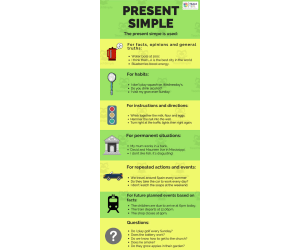
Present Simple | Beginner Lesson Plan
ELA, Grammar, Grade 2, 3, 4, 5, Teacher Tools, Lesson Plans
Present Simple ESL and EFL lesson plan for A1 beginner English students.. This TEFL resource is ready to use and includes a number of materials, such as flashcards, activities, conversation topics, and writing drills. Created to raise language proficiency, the lesson plan dives into the basic use of the present tense in a variety of situations. Covering aspects from forming positive, negative, and interrogative sentences to understanding subject-verb agreement it equips ESL students with the knowledge and confidence to use the tense accurately in every day discussions. With the inclusion of activities, exercises, and real-life examples, this lesson plan strengthens language concepts and establishes a solid foundation in the basics of English grammar. This lesson plan include: Flash cards A warm-up activity Main usage exploration Construction details Rules, along with any exceptions Illustrative examples Two closed exercises One open exercise Revision exercise Writing exercises Chatterbox, a recurring feature in our course books encouraging conversation Activity , such as a game, quiz, puzzle, etc., to conclude the class The lesson plan is available in PDF with 30 ready to print pages and one digital access file. Answer key included. A part of it is on Google Apps. The answer key is also included for reference.
Author TEAM TEFL
Tags Present Simple, Grammar Exercise, Verb Tenses, Subjects, Habits
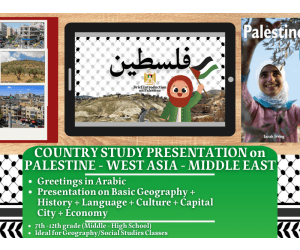
Country Study Presentation - Palestine - Geography - Middle East
Social Studies, Geography, History: Asian, History, History: World, Not Grade Specific, Middle School, High School, Adult Education, Teacher Tools, Presentations, Lesson Plans
Country Study Presentation - Palestine - Geography + Social Studies - Middle East - West Asia Bring Palestine to life in your classroom with this Introductory Teaching Resource on Palestine , designed for Geography, Asian History ( West Asia - Middle East ), and Social Studies . Ideal for students at Middle School and High School ( from 7th Grade to 12th Grade ) , this PDF digital presentation is informative, visually engaging, and requires little to no preparation . Students will explore Palestine’s geography, history, culture, language, and economy , making this resource perfect for country studies and introductory lessons in Geography and Social Studies. 📘 In this Social Studies and Geograhy Introductory Presentation Lesson, the following topics are dealt: ✅ Hello in Arabic ✅ Geography of Palestine ( West Asia - Middle East ) Bordering countries + interactive Google Maps link ✅ Basic Information of Palestine ( West Asia - Middle East ) Population, population density, capital city, currency, government, currency etc ✅ History Overview of Palestine Summary of Palestine most important historical events ( West Asia - Middle East ) ✅ Geography, Climate & Environment of Palestine Land area, regions, environment and climate zones ✅ Palestine’s Economy Major industries, exports, currency and economic strengths ✅ East Jerusalem Palestine' s capital city, including famous landmarks and cultural highlights ✅ Other Key Urban Centers A map with other important major cities in Palestine ( West Asia - Middle East ) ✅ Culture & Traditions Customs, values, and traditions of Palestine ( West Asia - Middle East ) ✅ Goodbye in Arabic 🎯 Perfect For: Geography classes Social Studies World cultures units Country study projects Substitute teacher lessons Digital learning In-class or online teaching 📂 Resource Details Format: PDF Digital Presentation Grade Levels: 7th–12th Grade ( Middle School & High School ) Prep Time: Low to no preparation required Learning with Alan is an educational resource store created to help teachers, educators, and tutors reach their teaching goals while building a fun, engaging, and stimulating learning environment . Because learning should always be meaningful—and fun! 🎓✨ If you want to browse more of my Teaching Resources, click here Learning with Alan!!
Author Learning with Alan
Rating
Tags Country Study, Social Studies, Geography, Palestine, Arabic, Middle East, West Asia, Lesson, Introduction, Presentation
Quit Copying Me! Mimicry in Nature: A Cross-Curricular Unit
Science, Life Sciences, Animals, Grade 5, 6, Teacher Tools, Lesson Plans
Quit Copying Me! Mimicry in Nature: A Cross-Curricular Unit This highly engaging teaching resource, designed specifically for 5th and 6th-grade educators, sheds light on the fascinating science of zoology. It especially focuses on how animals utilize incredible mimicry techniques and camouflage to trick other animals. An Informative Nonfiction Article The unit revolves around a factual nonfiction article that unveils the intricate details about these fascinating survival tactics. This content is perfect for whole group learning, projected onto a screen or printed out for smaller groups or individual study. Worksheets that Enhance Learning The package includes well-structured worksheets that not only reinforce subject knowledge but also enhance problem-solving skills. These can be assimilated into classroom exercises or given as homework assignments, providing the necessary flexibility for different instructional settings. Addition Activity Ideas To maintain student engagement throughout the study period, the unit has supplementary activities laid out. These serve to further enrich classroom discussions and forge a strong connection between new concepts learned about animal behaviour with previously studied topics in zoology. A Versatile Educational Resource "Quit Copying Me! Mimicry in Nature: A Cross-Curricular Unit", is ideal whether you are a public school teacher looking for innovative lesson plans or a homeschooler creating an immersive educational experience. It embodies theory aided by practical exercises creating an excellent approach to teach scientific concepts from various perspectives. Moreover, being an accessible seven-page PDF makes it exceptionally user-friendly regardless of your education environment. In Conclusion... This resource isn't limited to delivering lessons; it's designed to foster a learning atmosphere where learning naturally evolves out of the curiosity and intrigue sparked by nature's brilliant mimicry and camouflage. Embrace this unit into your curriculum plan and witness the transformation in your students' understanding of zoology.
Author Classroom Complete Press
Tags Science Lesson, Informational Text, Reading Passage, Graphic Organizer, Comprehension Questions

Hurry Up | English Conversations Video Lesson
ELA, Language Development, ESL, Not Grade Specific, Lesson Plans, Teacher Tools
Product Description: The Hurry Up | English Conversations Video Lesson is an innovative educational tool specifically designed for educators enforcing prominent teaching methods that impart thorough Language Arts competencies. Designed towards assisting ESL learners, the product's applicability ranges across numerous age groups and language competency levels. Animated Video Format Advantage: The primary draw of this resource is its riveting animation format that illuminates the learning atmosphere, fostering enthusiasm and learner engagements. In this digital age, educational tools such as video content significantly supersize the learning experience. Content Overview: A 5-minute video focusing on common English conversations related to daily routines. The dialogue context mirrors real-life situations fostering comprehension and application of conversational skills learned in class. An interactive approach making ESL acquisition a delightful process rather than just an academic pursuit. Digital Compatibility & Usage: This lesson content comes in MP4 format ensuring easy access across multiple digital platforms - be it classroom projectors or individual devices. These video lessons can be utilized during standard classroom hours or prescribed as homework resources for further practice at home.(Optimized for both group classes as well as solo study sessions) In Conclusion: If you seek an ingenious teaching approach catering to both traditional classrooms and homeschooling alike - the Hurry Up | English Conversations Video Lesson ideally matches your needs! A mix of captivating animated sequences along with practical conversation drills makes it a key part of any Language Arts curriculum emphasizing on ESL students' skill enhancement.
Author Educational Voice
Tags English Conversations, ESL Learners, Language Arts Skills, Interactive Learning, Video Lesson

8th Grade Science Diagnostic Assessment & Review System
Science, Grade 8, Assessments, Teacher Tools, Lesson Plans, Worksheets & Printables
Start the year with a clear picture of student readiness using this 8th grade beginning of year science assessment and targeted skills system. With a 50-question diagnostic worth 114 points , scoring and analysis tools, instructional grouping support, 11 targeted follow-up practice pages , scientific reading passages, CER tasks, and complete explained answer keys, this resource helps teachers move from assessment results to focused instruction. Designed as a complete Assess → Analyze → Group → Review → Reteach system, this Grade 8 science resource emphasizes the reasoning demands students need as they prepare for high school science. Students analyze multi-step problems, real-world scenarios, data tables, experimental setups, scientific models, graphs, reading passages, and Claim-Evidence-Reasoning tasks across Life Science, Physical Science, Earth & Space Science, and Scientific Practices & Reading . What’s Included This 8th grade science assessment and review system includes: ✅ 50-question beginning-of-year science diagnostic ✅ 114 total assessment points ✅ Life Science questions ✅ Physical Science questions ✅ Earth & Space Science questions ✅ Scientific Practices & Reading questions ✅ Multiple-choice questions ✅ Short-answer questions ✅ Diagram and model interpretation ✅ Data tables ✅ Graph reading ✅ Multi-step reasoning tasks ✅ Scientific scenarios ✅ Vocabulary-in-context questions ✅ Claim-Evidence-Reasoning (CER) tasks ✅ 2 short scientific reading passages ✅ Evidence-based reading questions ✅ Pedigree interpretation ✅ Natural selection and adaptation analysis ✅ Finch selection data ✅ Cladogram interpretation ✅ Predator-prey data ✅ Periodic table patterns ✅ Chemical equation reasoning ✅ Conservation of mass data ✅ Velocity-time graph analysis ✅ Wave anatomy ✅ Transverse and longitudinal wave comparison ✅ Electromagnetic spectrum interpretation ✅ Seafloor-spreading model ✅ Spreading-rate calculation ✅ Star life-cycle model ✅ Atmospheric CO₂ graph analysis ✅ Experimental design and reliability ✅ Mean and outlier analysis ✅ Two-series graph interpretation ✅ Answer recording sheet ✅ Quick-reference answer key ✅ Skill-by-skill scoring chart ✅ Strand analysis tool ✅ Secure, Developing, and Needs Support performance bands ✅ Individual Student Performance Profile ✅ Whole-class data tracker ✅ Suggested instructional groups ✅ 11 targeted follow-up science practice pages ✅ “Key Concept” refresher on every follow-up page ✅ “Extension” task for students who are Secure ✅ All-new follow-up practice with no repeated assessment questions ✅ Reading-for-evidence follow-up practice ✅ CER writing follow-up practice ✅ Complete answer keys ✅ Suggested short-answer responses ✅ Suggested reading-response answers ✅ Completed visual and diagram answers ✅ Sample CER responses ✅ Short “why” explanation for every assessment item ✅ Partial-credit guidance Part 1 contains 50 rigorous mixed-format questions worth 114 total points . The Teacher Guide recommends two 45-minute sessions and explains that the diagnostic emphasizes multi-step reasoning, evidence-based conclusions, data tables, experimental setups, model interpretation, and reading scientific text for evidence. Part 2 turns student responses into actionable data with an answer recording sheet, quick-reference key, skill-by-skill scoring chart, strand analysis, performance bands, individual student profiles, a whole-class data tracker, and suggested instructional groups. Part 3 includes 11 ready-to-assign targeted follow-up pages with all-new practice. Every page includes a concise Key Concept refresher and an Extension task, and the set includes dedicated pages for Reading Science for Evidence and CER Writing . Part 4 provides correct answers for all 50 questions, explanations of why answers are correct, suggested responses for short-answer and reading tasks, completed diagrams, sample CER responses, and partial-credit guidance. How It Works in the Classroom Use this 8th grade beginning of year science assessment during the first weeks of school to identify what students retained from prior science learning, how well they reason through multi-step problems, and where instruction should begin. The resource follows a practical five-step system: 🔎 Assess — Students complete the 50-item mixed-format science diagnostic 📊 Analyze — Score by skill and strand to identify patterns and gaps 👥 Group — Form targeted instructional groups based on shared needs 📝 Review — Assign focused follow-up practice by strand or skill 🎯 Reteach — Use complete explanations, worked visuals, and model CER responses to support next steps The Assess → Reteach System chart on page 2 of Part 1 directly connects each stage to the matching component of the four-part resource. The same page summarizes the 50 questions, 114 points, broad format range, four reporting areas, two scientific reading passages, and suggested administration time. Use this resource for: ⭐ Beginning-of-year science assessment ⭐ 8th grade science diagnostic ⭐ Middle school science pre-assessment ⭐ Back-to-school science review ⭐ High school science readiness ⭐ Science readiness check ⭐ Formative assessment ⭐ Small-group planning ⭐ Science intervention ⭐ Targeted reteaching ⭐ Data-driven instruction ⭐ Skill-based grouping ⭐ Independent follow-up practice ⭐ Science stations ⭐ CER practice ⭐ Reading in science ⭐ Text-evidence practice ⭐ Graph and data interpretation ⭐ Multi-step science reasoning The Scoring at a Glance chart on page 2 of Part 2 breaks the assessment into four strand totals: Life Science /31, Physical Science /40, Earth & Space Science /24, and Scientific Practices /19 , for 114 total points . It also defines three performance bands: Secure (80%–100%) , Developing (50%–79%) , and Needs Support (below 50%) . The Student Performance Profile on page 15 of Part 2 gives teachers a one-page strand snapshot with space for strengths, focus areas, assigned Part 3 practice pages, and group placement. The Class Data Tracker on page 16 provides a whole-class view so teachers can scan columns for class-wide gaps and rows for individual grouping needs. Standards & Learning Goals This eighth grade science diagnostic assessment reviews foundational science concepts and advanced scientific reasoning across four major areas: 🌱 Life Science — levels of biological organization, homeostasis, interacting body systems, pedigrees, mutations, natural selection, evolution, adaptations, selection pressure, inheritance, cladograms, common ancestry, predator-prey relationships, biodiversity, ecosystem resilience, and evolution CER reasoning ⚛️ Physical Science — periodic table patterns, atomic number, protons, groups and periods, valence electrons, periodic trends, balancing chemical equations, conservation of mass, open and closed systems, exothermic and endothermic reactions, velocity-time graphs, Newton’s second law, kinetic energy, potential and kinetic energy transformations, wave anatomy, transverse and longitudinal waves, wavelength and frequency, electromagnetic spectrum, and wave-energy transfer 🌎 Earth & Space Science — seafloor spreading, magnetic stripes, evidence for plate tectonics, mantle convection, spreading-rate calculations, star life cycles, gravity and orbits, light-years, tides, atmospheric CO₂ trends, and Earth-and-space CER reasoning 🔬 Scientific Practices & Reading — reliable experimental design, repeated trials, control groups, identifying experimental flaws, graph analysis, comparing data series, calculating means, identifying outliers, reading scientific texts for evidence, connecting evidence to science concepts, drawing evidence-based conclusions, and reading-based CER Students demonstrate understanding through varied science tasks rather than one question type. The diagnostic includes a pedigree , finch beak-depth data , cladogram , natural-selection sequence , predator-prey table , periodic table model , Group 1 reactivity data , open-versus-sealed reaction mass data , velocity-time graph , wave anatomy model , wave-type comparison , electromagnetic spectrum , seafloor-spreading diagram , seafloor age data , Sun-like star life cycle , atmospheric CO₂ graph , bacteria-growth comparison graph , and repeated-trial data analysis. The Skill-by-Skill Scoring Chart on pages 11–13 of Part 2 helps teachers pinpoint specific gaps instead of relying only on one overall score. Skills include homeostasis, pedigrees, mutations, natural selection, selection data, cladograms, adaptation, biodiversity, periodic patterns, valence electrons, balancing equations, conservation of mass, exothermic and endothermic reactions, motion graphs, Newton’s second law, kinetic energy, wave anatomy, wave types, electromagnetic spectrum, seafloor spreading, tectonic evidence, spreading rates, star life cycles, gravity and orbits, experimental reliability, identifying flaws, mean and outlier analysis, reading for evidence, and reading-based CER. A particularly valuable feature is the integration of science literacy . Part 1 includes two short scientific texts with evidence-based questions. Students read “Why Antibiotics Can Stop Working” to connect mutation, survival, reproduction, and antibiotic resistance to natural selection, and “Healing the Ozone Layer” to analyze evidence connected to CFC reduction and ozone recovery. Why Teachers Love It ✨ Move beyond a single test score. Results can be analyzed by strand and individual skill, helping teachers see exactly where students are secure and where review is needed. ✨ Prepare students for high school science reasoning. The Teacher Guide explicitly emphasizes multi-step problems, evidence-based conclusions, data tables, experimental setups, model interpretation, and scientific reading—the kinds of demands students increasingly encounter in advanced science coursework. ✨ Turn assessment data into an instructional plan. The scoring tools connect results to performance bands, student profiles, instructional groups, and targeted follow-up practice instead of leaving teachers with a stack of completed tests. ✨ Measure both science knowledge and reasoning. Students do more than recall vocabulary. They interpret models, calculate rates, compare data, explain mechanisms, evaluate evidence, analyze graphs, and justify conclusions. ✨ Integrate science and reading skills. Two short scientific passages ask students to cite evidence, connect text details to science concepts, interpret measured changes, and construct evidence-based responses. ✨ Use relevant scientific topics for reading practice. Students analyze antibiotic resistance and ozone-layer recovery, connecting real scientific evidence to natural selection, environmental change, and evidence-based reasoning. ✨ Strengthen evolution and natural selection understanding. Students work with finch data, beetle camouflage, selection pressure, adaptation, inheritance, cladograms, mutations, and CER reasoning. ✨ Build readiness for chemistry concepts. Students interpret periodic table patterns, atomic numbers, valence electrons, reactivity trends, balanced equations, conservation of mass, and exothermic versus endothermic reactions. ✨ Strengthen physics reasoning. Students analyze velocity-time graphs, apply F = m × a , reason about kinetic energy, explain potential-to-kinetic energy transformations, interpret wave features, compare transverse and longitudinal waves, and analyze the electromagnetic spectrum. ✨ Connect Earth science models to quantitative reasoning. Students interpret seafloor spreading, use age-and-distance data to calculate a spreading rate, analyze magnetic-stripe evidence, and connect mantle convection to plate movement. ✨ Support data-driven small groups. Part 2 includes suggested instructional groups that help teachers sort students by shared gaps and connect them to matching Part 3 practice. ✨ Differentiate with clear performance bands. Use Secure, Developing, and Needs Support ranges to guide enrichment, targeted practice, or foundational small-group reteaching. ✨ Assign only the review students need. The 11 targeted follow-up pages include: Cells & Genetics Review Evolution & Adaptation Review Ecosystems Review Atoms & Reactions Review Forces, Energy & Motion Review Waves Review Plate Tectonics & Earth Systems Review Space Science Review Experimental Design & Data Review Reading Science for Evidence Review CER Writing Review The Practice Page Menu on page 2 of Part 3 directly matches common student difficulties to specific follow-up pages, making targeted assignment faster. ✨ Refresh key concepts before practice. Every targeted page includes a concise Key Concept section. For example, the Atoms & Reactions page reviews atomic number, groups, periods, conservation of mass, and exothermic versus endothermic reactions before students begin fresh practice. ✨ Extend learning for students who are already secure. Every follow-up page includes an Extension task that pushes students into explanation, application, prediction, argument, or investigation design. ✨ Use fresh follow-up practice instead of repeating the diagnostic. Part 3 explicitly provides all-new practice so students can demonstrate understanding with new examples and situations. ✨ Teach students how to read science for evidence. The dedicated Reading Science for Evidence Review page includes a new passage about a warming mountain lake and changing trout and bass populations. Students identify evidence, explain biological relationships using the text, connect the passage to life science, and generate a testable follow-up question. ✨ Build stronger Claim-Evidence-Reasoning responses. CER appears throughout the diagnostic and receives its own targeted follow-up page. At Grade 8, students are expected to connect specific evidence to a named scientific principle rather than simply restating the data. ✨ Make grading more manageable. Part 4 provides correct answers, short explanations of why, suggested responses for open-ended and reading items, completed diagrams, sample CER responses, and partial-credit guidance. ✨ Use completed diagrams for faster checking. The Completed Diagrams Quick View on page 2 of Part 4 points teachers to fully worked versions of the pedigree, cladogram, natural-selection model, periodic table, wave anatomy, wave types, electromagnetic spectrum, seafloor spreading, and star life cycle. ✨ Score open-ended work more consistently. Part 4 explains that multi-part items can receive point-by-point partial credit and that CER and reading items should be evaluated for a reasonable claim, specific text or data evidence, and reasoning that links them. ✨ Keep the instructional loop connected. Assessment, analysis, grouping, targeted review, science literacy practice, reteaching, and answer support are designed as one coordinated system rather than disconnected activities. Start the year knowing what students understand, how well they reason through complex science tasks, and what they need next with this 8th grade beginning of year science assessment . Download this complete middle school science diagnostic and targeted review system to assess readiness, analyze results by strand and skill, create focused instructional groups, assign specific follow-up practice, strengthen science reading and CER writing, and support reteaching with complete explained answer keys. Perfect for teachers searching for an 8th grade science diagnostic assessment , beginning-of-year science review, middle school science pre-assessment, back-to-school science assessment, eighth grade science review, high school science readiness, Life Science review, Physical Science review, Earth and Space Science review, Scientific Practices assessment, genetics, pedigrees, natural selection, evolution, cladograms, ecosystems, periodic table, chemical reactions, conservation of mass, Newton’s laws, forces and motion, energy transformations, waves, electromagnetic spectrum, plate tectonics, seafloor spreading, star life cycles, experimental design, graph analysis, reading science for evidence, CER practice, science intervention, small-group science planning, data-driven instruction, or targeted science reteaching.
Author Bright Classroom Ideas Marketplace
Rating
Tags Science, Assessment, Worksheet, Back To School, Review
Global Warming CAUSES: Greenhouse Gases: Synthetic Gases - FLASH-MAC
Science, Earth and Environmental Sciences, Environmental Science, Common Core, Grade 5, 6, 7, 8, Teacher Tools, Lesson Plans
The Global Warming CAUSES: Greenhouse Gases: Synthetic Gases - FLASH-MAC This is an educational tool that enriches the understanding of synthetic greenhouse gases, a principal contributor to global warming. Designed for educators teaching grades 5 through 8 science, particularly environmental science. Critical Features: Curriculum -based content that incorporates reading passages. Before-and-after-reading questions challenge student comprehension of the material read. Potential ways to integrate this interactive tool range from whole group instruction in class, small study groups during cooperative learning sessions, or as homework exercises. Included Printables and Digital Media: Included with this educational tool are printables enhancing hands-on learning experience of synthetic greenhouse gases. Utilizing vocabulary flashcards supports scientific language acquisition vital in bridging knowledge gaps while reinforcing learned concepts. Also incorporated are video and audio clips making lessons dynamic and appealing! Pedagogical Alignment: Echoing Bloom’s Taxonomy principles, integrated activities stimulate higher-order thinking among students by requiring them to apply learned concepts—ensuring effective content assimilation. Fitted For Age Appropriateness: The Global Warming CAUSES: Greenhouse Gases: Synthetic Gases FLASH-MAC is designed at the'7th-to-8th grade reading level.' National Standards Compliance: It reflects Common Core State Standards ensuring quality education meeting nationally accepted benchmarks. Enlighten your students using The Global Warming CAUSES: Greenhouse Gases: Synthetic Gases FLASH-MAC, and witness them probe into the critical scientific foundations associated with global warming. Empower your learners to become earth-conscious!
Author Classroom Complete Press
Tags Software (Mac)