



3,942 products added recently
Page 128 - Elementary Lesson Plans
Support your elementary students with lesson plans that cover a broad range of subjects and skills. These resources are designed to promote cognitive, social, and emotional growth. Incorporate them into your teaching to provide a well-rounded education that meets the needs of all your students.

 Show filters

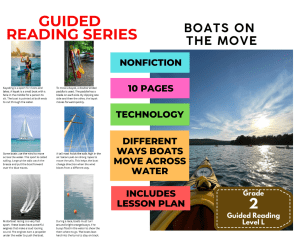
Guided Reading Level L - Boats on the Move (with Lesson Plan)
ELA, Resources for Teachers, Reading Comprehension, Reading, Science, Engineering, Technology, Physics, Sports, P.E. & Health, Grade 2, 3, 4, Worksheets & Printables, Worksheets, Teacher Tools, Centers, Activities, Literacy Readers, Quizzes, Quizzes and Tests, Assessments, Lesson Plans
This Guided Reading Book - Boats on the Move (Level L) with lesson plan includes: Guided Reading Color Label (front cover x1) This is a quick way to match the book’s demands to what students can generally handle.. The overall goal is to use the level/color to pick books for several smaller groups. To qualify for a certain level, a student is expected to read a book from that level with about 90–94% accuracy. If a student is consistently accurate and understands, move up a level. If the student is struggling at that level, drop down and add more support. Each student will improve at completely different rates, but it is generally one of the best ways to check progress across the class. DOWNLOAD THE CATALOG TO VIEW ALL GUIDED READING BOOKS AVAILABLE (SORTED LEVELS A-Z) Pre-Reading Question (x1) Teacher asks the prompt aloud, can be while showing the cover or first page. Students share what they already know, or make educated guesses from the cover. Prompt them to use the target vocabulary. Write some of their responses on the board to look back at during the reading. Vocabulary Words (x5) Introduce the five words, best doing it one at a time. Start by saying it, while students repeat and then see if anyone knows what it means before reading further. Read through the meaning and try to briefly connect each word to a picture or gesture so it’s meaningful. Ask students to flip through the book pages and point to where they see each of the vocabulary words. While reading the book pause upon coming across one of the vocab words or read the sentence twice to make sure students understand the word has appeared. Optional: Ask students to raise hands whenever they see/hear one of the new words. Guided Reading Pages (x10) Check the book snapshot (below) for: primary topic - do you need to prep extra reading or intro materials on this? what is taught best - decide on 1-2 bullets to focus on, use the prompt or words provided here for best results. learning goals - what you are checking for students to be able to do after the session, elicit answers using prompts or words provided. key vocabulary (see section above). questions overview - so you know what is coming up and if you need to prep extra materials to assist understanding. Run the lesson You may have already looked at a few of the pages together, but you can show them some of the pictures again first to set meaning. Depending on how much time you have and how familiar your students are with guided reading class, you may want to read the book aloud first with the group first. Students whisper or partner read, while you listen in. If time, do it as a group, one student reading a page each. Use the guided page’s prompts to coach: “Check the picture / does it make sense?” “Point under the words / try the first sound” “Reread the sentence smoothly”. Try to focus more on one student per session (rotating every time), so you can work out if they are ready to move up or need to move down a level. Comprehension Questions (back cover x3) This is your way to check that students didn’t just say the words, but actually understood the text. First, let students answer by pointing to the page/picture and saying a short sentence. After any answer, follow with: “Show me where you found that in the text.” In bigger groups, have partners answer first (10–20 seconds), then call on 2–3 students to share. Differentiation tips: Emerging speakers/struggling readers: oral + pointing On-level: oral in a full sentence Higher: one written sentence or draw + label Book Snapshot Title: Boats on the Move Genre: Nonfiction (informational) Subject: Science (Forces & Motion) / Reading (Informational Text) Primary Topic: Different ways boats move across water Estimated Guided Reading Level (A–Z): L What This Book Teaches Best Different ways boats move on water (wind, oars, paddles, engines). How specific boat parts help movement (sails, mast, ropes, propeller). How coordinated actions affect motion (oars dipping “at the same time” to go straight). How markers guide movement during a race (boats turn around bright orange buoys to stay on track). Comparing speed and movement styles (quiet glide vs fast roar; forward motion by alternating paddle sides). Learning Goals Students will identify several ways boats move across the water using details from the text. Students will explain how sails and wind help pull a boat forward. Students will describe how rowers use oars together to move a boat straight ahead. Students will describe how a double-ended paddle helps a kayak move forward quickly. Students will explain how an engine and propeller help push a motorboat through the water. Students will describe why boats turn around buoys during a race, based on the text. Key Vocabulary From the Text mast — a tall pole that holds sails up. rhythm — a steady pattern of movement. double-ended — having an end on both sides. propeller — a spinning part that helps push a boat. buoys — floating markers that show where to go. Discussion Prompts Pre-reading question: What are some different ways a boat could move across the water? Comprehension questions: How do large white sails help a boat move forward? What do rowers do “at the same time,” and what does that help the boat do? Why must boats turn around bright orange buoys during a race? Printing Tips 1. Best Printing Method (Recommended) “Booklet” Printing (Best if Available) If your printer or PDF viewer supports Booklet Printing , use this. Settings to use: Print mode: Booklet Paper size: Letter or A4 (either works) Orientation: Landscape Print on both sides: Yes Flip on: Short edge Scaling: Fit to printable area Booklet subset: First test: Front sides only Then: Back sides only This will automatically: Pair pages correctly Put the cover on the outside Align everything for folding After printing, fold in half and staple along the spine . 2. If “Booklet” Printing Is NOT Available You can still print this correctly with manual duplex printing . Step-by-step: Open the PDF. Choose Print . Set: Orientation: Landscape Pages per sheet: 1 Print on both sides: Yes Flip on: Short edge Print all pages . Because each PDF page already contains two facing book pages, the result will still fold cleanly into a book. Thousands of Cored Education products are included with your TeachSimple membership. Download links and encyclopedia index available here.
Author Cored Education
Rating
Tags Reading Comprehension, Reading Passages, Reading, Guided Reading, Guided Reading Lesson Plan, Guided Reading Activity, Pre-reading, Science Lesson Plans, Physics, Technology

Algebra: Ordering & Grouping - Practice the Skill 1 - FLASH-MAC
Math, Algebra, Common Core, Grade 1, 2, Teacher Tools, Lesson Plans
Algebra: Ordering & Grouping - Practice the Skill 1 - FLASH-MAC Teaching math concepts like ordering and grouping becomes an easy task with resource "Algebra: Ordering & Grouping - Practice the Skill 1 - FLASH-MAC". Designed to help educators leverage modern computer technology in their teaching process, this digital lesson plan is a versatile and valuable tool for engaging students at both grade one and grade two levels. The interactive nature of this software makes practice drills more appealing, as it transforms dull numerical exercises into colorful puzzles. This unique method of presentation makes learning algebra fun while fostering a comprehensive understanding of the topic. The Lessons The practice lessons focus on drilling students to put provided numbers in various ordering patterns such as from smallest to largest or vice versa. The essence is to train learners thus improving their comprehension of number relationships in algebra. There are also additional math tools programmed into the application that further solidify understanding. Educational Standards Alignment This resource aligns with: Common Core State Standards , STEM (Science, Technology, Engineering, Mathematics) initiatives, , ensuring consistency with general curriculum guidelines across various schools districts. It has also been written in line with the National Council of Teachers for Mathematics (NCTM), providing assurance concerning its educational content validity. Dual Language Support Feature: A stand out feature available within this resource is the presence of dual language support; English and Spanish text options coupled with voiceovers give educators flexibility when working within multicultural classrooms or bilingual education contexts. Applicability: The product can be used effectively either within group settings or for targeted individual work making it perfect both for classroom situations or home-schooling environments where personalized teaching is dominant. Summary By choosing Algebra: Ordering & Grouping - Practice the Skill 1 - FLASH-MAC you will enjoy not only a premier teaching accessory but more so an avenue towards creating meaningful math experiences tailored for your learners.
Author Classroom Complete Press
Tags Software (Mac)

Grade 5 Math Volume 6
, Grade 5, Teacher Tools, Lesson Plans
Grade 5 Math Volume 6 Grade 5 Math Volume 6 is a resource designed specifically for the education of fifth graders. It is an excellent teaching tool, perfect for use by public school teachers and homeschoolers alike. This product guides students in developing their mathematical skills in a thoughtful yet brief manner, making it comprehensible even to those who might find the subject intimidating. The workbook consists of 39 pages and includes a variety of effective learning modalities such as: Math Writing Fill-in-the-Blank Questions Multiple-Choice Questions The workbook's materials are excellent as standalone lessons but can also complement existing curriculum structures due to their adaptability. The compact size of some worksheets makes them ideal for use as exit tickets or quick assessments. Covered Topics The Grade 5 Math Volume 6 covers numerous important topics integral to the Grade 5 math curriculum which include: Exploring Symmetry, Analyzing Angle Properties and Units of Measure, Determining Area and Perimeter including these measurements within irregular figures. We understand that educational resources must be adaptable for different learning scenarios, whether it be one-on-one tutoring or collaborative group work. Our workbook integrates conveniently into any classroom setting accordingly. Its availability in ready-to-print PDF format makes this resource instantly accessible whenever you need it. Please note: Educational outcomes improve when we use adaptable tools– grade 5 Math Volume 6 encompasses this by offering materials that can incorporate into any teaching framework. It highlights the necessary mathematical concepts suitable for Grade five learners, making learning more effective and engaging.
Author Classroom Complete Press
Tags Angle Properties, Exploring Symmetry, Units Of Measure, Area, Perimeter

Space Travel & Technology: Mission to Mars Gr. 5-8
Science, Earth and Environmental Sciences, Space, Grade 5, 6, 7, 8, Teacher Tools, Lesson Plans
Space Travel & Technology: Mission to Mars for Grades 5-8 A top-notch teaching resource targeted towards both public school teachers and homeschool educators. This source brings the fascination of space exploration right into your classroom or home, intending to ignite the spark of scientific curiosity in young scholars. Key Features: An exciting chapter "Mission to Mars" that offers a view into the experiences of an International Space Station (ISS) crew member gearing up for a voyage to Mars. Educational content suitable not just for advanced learners but also beneficial for students who require remedial support. The language employed throughout the text is simple yet effective in maintaining complexity of scientific theories. Beyond merely being reading material, this package provides a plethora of engaging student projects, prep materials, and colourful mini posters that not only solidify understanding but also encourage active participation The learning materials present within this package align with State Standards enhancing curriculum coverage alongside promoting Bloom's Taxonomy and STEM inspired critical thinking abilities. Note: This package is delivered as easily manageable PDF files containing one product file thus ensuring seamless organization within classroom or at home setup In conclusion, mastering these resources allows students to explore not just outer space; it also amplifies their understanding about mankind’s role in it – stirring innovation and paving ways for them as contributors towards future exploration and unraveling cosmic mysteries.
Author Classroom Complete Press
Tags PDF
Embracing Cultural Diversity: Mexico: A Cross-Curricular Lesson Plan
Social Studies, Geography, Grade 5, 6, Teacher Tools, Lesson Plans
This lesson plan for embracing cultural diversity focuses on Mexico. Discover its history, traditions, and much more in the included informational text. Expand the exploration with the extension ideas, and reinforce students’ understanding with the cross-curricular activities.
Author Classroom Complete Press
Tags Social Studies Lesson, Geography Lesson, Cultural, Diversity, Mexico
Mapping Skills with Google Earth: Mapping Cultural Features
Social Studies, Geography, Common Core, Grade 3, 4, 5, Teacher Tools, Lesson Plans
Mapping Skills with Google Earth: Mapping Cultural Features This teaching resource has been meticulously developed for third to fifth-grade educators. It is aimed at augmenting their social studies and geography course curriculum whilst instilling crucial mapping skills in pupils. Students are introduced to cardinal elements like latitude, longitude, and time zones. Gaining Insight into Geographical and Cultural Features An in-depth exploration of geographical and cultural features through topographic maps, choropleth maps, and more. A effective way to perceive global diversity across countries. An understanding of North America's provinces and states. The added feature of Google Earth visuals makes learning an interactive process. This novel approach not only enables clear comprehension but also helps students retain the information longer—an advantageous skill set applicable beyond just geography or social studies. Diverse Teaching Methods & Student Engagement Tools The product comes as a single PDF containing 27 ready-to-print pages, facilitating educators for a varied upshot: Whole group instruction:} Extensive collaborations within classrooms garnering collective ideas. Small group activities:} Enables focused groups working on pertinent modules enhancing interaction. Solo-assignments:} Encourages home-enriched study modules catering individualistic learning trajectories. In addition, the inclusion of reading passages alongside structured map-centric exercises such as crosswords and word searches aids practical knowledge assimilation in an enjoyable manner among students. Moreover, a well-crafted comprehension quiz aligned with Bloom's Taxonomy principles and Common Core State Standards helps measure students’ progress skillfully. In summary, Mapping Skills with Google Earth: Mapping Cultural Features is an invaluable asset for educators seeking to develop robust geographical acumen among their learners, blending traditional instruction methods seamlessly with visual aid technology via Google Earth.
Author Classroom Complete Press
Tags Social Studies, Geography, Mapping Skills, Cultures, Google Earth
I WONDER - What Were The Celts Known For | Animated Video Lesson
History: Ancient, History, Social Studies, History: British, History: Europe, History: World, Grade 3, 4, 5, 6, 7, 8, 9, Lesson Plans, Teacher Tools
Video Introduction An amazing video designed for the students to learn more about history. I WONDER - What Were The Celts Known For | Animated Video Lesson Do you like history? Which topic do you really enjoy about history? Have you ever read an interesting fact about the Vikings? If yes, can you mention them? What do you like most about the Victorian era? Can you name all the Tudors? Have you ever wondered how people used to live in ancient Japan and ancient China? Do you know any interesting facts about ancient Egyptians and the Pharaohs? Have you ever visited South America? What do you know about Incas and Aztecs? Celtic culture was really one of a kind, can you name any of the places that Celts used to live in? Imagine yourself living during the ancient Roman empire, how your life will look like? Ancient Greece was an amazing place to live in. What do you know about ancient Greek life? I WONDER - What Were The Celts Known For | Animated Video Lesson The video is perfect for encouraging the researching skills for the students, while learning more about history. I WONDER - What Were The Celts Known For | Animated Video Lesson This friendly designed video is suitable for students at school, homeschooling, and as a group activity. Format Available in MP4 format.
Author Educational Voice
Tags What Were The Celts Known For, What Were The Celts Known For Video, Celts, Celts Facts, Celts Facts For Kids, Celts Video, Celts Video For Kids, History, History Facts, History Video
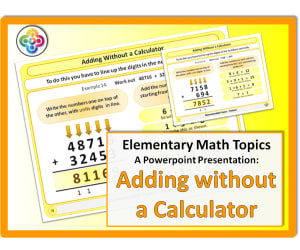
Adding without a calculator for Elementary Math
Math, Addition and Subtraction, Addition, Grade 3, 4, 5, Teacher Tools, Lesson Plans
A powerpoint to explain adding whole numbers without using a calculator. There are 15 slides, containing 15 different examples adding 3, 4 and 5 digit numbers. There is also a title slide and an end slide.
Author Brian's Math Topics
Tags Adding, Math, Number, Additions, Adding 5 Digit Numbers
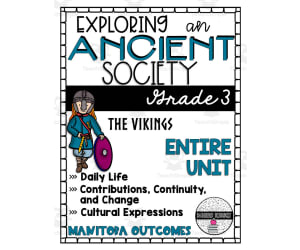
Exploring an Ancient Society Unit
Social Studies, History, History: Ancient, Grade 3, Lesson Plans, Teacher Tools
This resource is an Exploring an Ancient Society Unit . Designed for your Grade 3 students, this resource is jam-packed with so many good printables to teach students about culture, diversity, geography and so much more. Within this unit , students will learn about: - Daily Life - Contributions, Continuity, and Change - Cultural Expressions
Author Rathgeber Resources
Tags Vikings, Ancient Society, Graphic Organizers, Informational Text, Culture
I WONDER - What Do Red Pandas Eat | Animated Video Lesson
STEM, Animals, Life Sciences, Science, Biology, Grade 1, 2, 3, 4, 5, 6, 7, 8, Lesson Plans, Teacher Tools
Video Introduction Animal kingdoms are full of fascinating wonders to learn. This video is designed for the students to learn more about animals in different countries. I WONDER - What Do Red Pandas Eat | Animated Video Lesson Do you like animals? what is your favorite one? Do you own a pet? If yes, tell us more about it, like what its name? And what do you like most about it? What are the animal kingdoms? Can you write down the characteristics of each animal class like mammals, birds, reptiles, amphibian, fish and mollusks. Do you know that some animals can sing, can you name any of them? What is the largest and the smallest mammal in the world? What is the largest and the smallest bird in the world? What is the largest and the smallest fish in the world? I WONDER - What Do Red Pandas Eat | Animated Video Lesson The video is perfect for encouraging the researching skills for the students, while learning more about these fantastic animals. I WONDER - What Do Red Pandas Eat | Animated Video Lesson This friendly designed video is suitable for students at school, homeschooling, and as a group activity. Format Available in MP4 format.
Author Educational Voice
Tags What Do Red Pandas Eat, What Do Red Pandas Eat Video, Red Pandas, Red Panda, Red Pandas Food, Red Pandas Food Facts, Red Pandas Food Facts For Kids, Red Pandas Food Video, Red Pandas Food Video For Kids
I WONDER - How Do Seeds Spread | Animated Video Lesson
Nature & Plants, Life Sciences, Science, Grade 4, 5, 6, 7, 8, 9, 10, Lesson Plans, Teacher Tools
Video Introduction An amazing activity designed for the students to learn more about STEM. I WONDER - How Do Seeds Spread | Animated Video Lesson Do you like STEM subjects? what is your favorite one? Have you ever tried to plant a seed? If yes, tell us more about it. Or have you ever tried to invent something? If yes, tell us more about it. And how do you think it will help us? Have you ever seen a microorganism under a microscope? What was it? And how it looked like? Mathematics is a marvelous subject. Let' sharpen our brains and solve some equations. Do you like timetable tricks? What is your favorite one? Do you know how to code? Have you ever created an app or a game before? If yes, how was it like? I WONDER - How Do Seeds Spread | Animated Video Lesson The video is perfect for encouraging the researching skills for the students, while learning more about this fantastic topic. I WONDER - How Do Seeds Spread | Animated Video Lesson This friendly designed video is suitable for students at school, homeschooling, and as a group activity. Format Available in MP4 format.
Author Educational Voice
Tags How Do Seeds Spread, How Do Seeds Spread Video, Seeds, Seed, Seeds Facts, Seeds Facts For Kids, Seeds Video, Seeds Video For Kids, Plant, Plants
I WONDER - Why Is It Important To Recycle Glass | Animated Video
Environmental Science, Earth and Environmental Sciences, Science, Grade 4, 5, 6, 7, 8, 9, 10, Lesson Plans, Teacher Tools
Video Introduction An amazing video designed for the students to learn more about STEM. I WONDER - Why Is It Important To Recycle Glass | Animated Video Lesson Do you like STEM subjects? what is your favorite one? Have you ever tried to plant a seed? If yes, tell us more about it. Or have you ever tried to invent something? If yes, tell us more about it. And how do you think it will help us? Have you ever seen a microorganism under a microscope? What was it? And how it looked like? Mathematics is a marvelous subject. Let' sharpen our brains and solve some equations. Do you like timetable tricks? What is your favorite one? Do you know how to code? Have you ever created an app or a game before? If yes, how was it like? I WONDER - Why Is It Important To Recycle Glass | Animated Video Lesson The video is perfect for encouraging the researching skills for the students, while learning more about this fantastic topic. I WONDER - Why Is It Important To Recycle Glass | Animated Video Lesson This friendly designed video is suitable for students at school, homeschooling, and as a group activity. Format Available in MP4 format.
Author Educational Voice
Tags Why Is It Important To Recycle Glass, Why Is It Important To Recycle Glass Video, Glass Recycling, Glass Recycling Facts, Glass Recycling Facts For Kids, Glass Recycling Video, Glass Recycling Video For Kids
I WONDER - Are There Different Types Of Wind | Animated Video Lesson
Earth Sciences, Earth and Environmental Sciences, Science, Grade 4, 5, 6, 7, 8, 9, 10, Lesson Plans, Teacher Tools
Video Introduction An amazing video designed for the students to learn more about famous phenomena in different countries. I WONDER - Are There Different Types Of Wind | Animated Video Lesson What do you know about this phenomenon? Where it happens? When it happens? What are the safety measures that we should take to be safe during this phenomenon? Are there any other places in the world that experienced this phenomenon? If yes, tell us more about them. Why do you think it happens? Do you like reading about Geography? What is your favorite country in the whole world? I WONDER - Are There Different Types Of Wind | Animated Video Lesson The video is perfect for encouraging the researching skills for the students, while learning more about this fantastic phenomenon. I WONDER - Are There Different Types Of Wind | Animated Video Lesson The video is perfect for encouraging the researching skills for the students, while learning more about this fantastic phenomenon. Format Available in a PDF format.
Author Educational Voice
Rating
Tags Are There Different Types Of Wind, Are There Different Types Of Wind Video, Different Types Of Wind, Different Types Of Wind Video, Different Types Of Wind Facts, Different Types Of Wind Video For Kids
Asia: Regions Gr. 5-8
Social Studies, Geography, Grade 5, 6, 7, 8, Teacher Tools, Lesson Plans
Asia: Regions Gr. 5-8 - A Comprehensive Educational Resource An innovative teaching tool, 'Asia: Regions Gr. 5-8' is curated specifically for young learners from the fifth to the eighth-grade. Its aim? To introduce students to the rich diversity of Asia's geographical locales in a hands-on, immersive manner. Interactive Assignments The resource contains numerous assignments that not only educate but also entertain: Map Identifications: Students will identify major landmarks and regions such as the Gobi Desert, Himalayas, and Mekong Delta on maps of Asia. Mumbai Study: Learners delve deep into understanding how Mumbai's geographic location has shaped its progression as a bustling urban city. 'Regions Change Over Time': With a specially provided organizer, students are encouraged to compare ancient Asian civilizations with their modern counterparts realizing that geography isn't static but transforms over time. A Personal Connection Catering to social studies curriculum focused on geography and culture – this resource creates further engagement by asking students to examine their own family's origins via interviews with elders from their families. Connecting history with personal relevance makes lessons truly come alive for middle schoolers! Mapped To Current Academic Standards Not only does this teaching tool serve an educational purpose but it also precisely aligns itself with both State Standards and Five Themes of Geography curriculum criteria enhancing its relevancy in contemporary pedagogical environments. Diverse Features For Enriched Learning Experience An interactive map facilitating geographical comprehension on a larger scale. A crossword puzzle and word searches adding an enjoyable twist to education. A comprehension quiz for testing knowledge acquisition and retention. Adaptable Instruction Material The breadth in the format allows varied deployment whether suited for whole classes or focused individual instruction also catering to home-schooling needs. The downloadable PDF format ensures material compatibility across various digital platforms so it can be printed out making it highly convenient as well as effective. An Essential Inclusion To Your Curriculum Enjoy teaching through 'Asia: Regions Gr. 5-8' resource – an instrument that couples knowledge about Asia's geography with fun learning activities!
Author Classroom Complete Press
Tags PDF
I WONDER - Did Ancient Roman Schools Teach Sports | Animated Video
History: Ancient, History, Social Studies, History: Europe, Sports, P.E. & Health, Grade 4, 5, 6, 7, 8, 9, 10, Lesson Plans, Teacher Tools
Video Introduction An amazing video designed for the students to learn more about history. I WONDER - Did Ancient Roman Schools Teach Sports | Animated Video Lesson Do you like history? Which topic do you really enjoy about history? Have you ever read an interesting fact about the Vikings? If yes, can you mention them? What do you like most about the Victorian era? Can you name all the Tudors? Have you ever wondered how people used to live in ancient Japan and ancient China? Do you know any interesting facts about ancient Egyptians and the Pharaohs? Have you ever visited South America? What do you know about Incas and Aztecs? Celtic culture was really one of a kind, can you name any of the places that Celts used to live in? Imagine yourself living during the ancient Roman empire, how your life will look like? Ancient Greece was an amazing place to live in. What do you know about ancient Greek life? I WONDER - Did Ancient Roman Schools Teach Sports | Animated Video Lesson The video is perfect for encouraging the researching skills for the students, while learning more about history. I WONDER - Did Ancient Roman Schools Teach Sports | Animated Video Lesson This friendly designed video is suitable for students at school, homeschooling, and as a group activity. Format Available in MP4 format.
Author Educational Voice
Tags Did Ancient Roman Schools Teach Sports, Did Ancient Roman Schools Teach Sports Video, Ancient Roman Schools, Ancient Roman Schools Facts, Ancient Roman Schools Video, Ancient Roman Schools Video For Kids

I WONDER - What Is A Heat Wave | Animated Video Lesson
Environmental Science, Earth and Environmental Sciences, Science, Earth Sciences, Grade 4, 5, 6, 7, 8, 9, 10, Lesson Plans, Teacher Tools
Video Introduction An amazing video designed for the students to learn more about STEM. I WONDER - What Is A Heat Wave | Animated Video Lesson Do you like STEM subjects? what is your favorite one? Have you ever tried to plant a seed? If yes, tell us more about it. Or have you ever tried to invent something? If yes, tell us more about it. And how do you think it will help us? Have you ever seen a microorganism under a microscope? What was it? And how it looked like? Mathematics is a marvelous subject. Let' sharpen our brains and solve some equations. Do you like timetable tricks? What is your favorite one? Do you know how to code? Have you ever created an app or a game before? If yes, how was it like? I WONDER - What Is A Heat Wave | Animated Video Lesson The video is perfect for encouraging the researching skills for the students, while learning more about this fantastic topic. I WONDER - What Is A Heat Wave | Animated Video Lesson This friendly designed video is suitable for students at school, homeschooling, and as a group activity. Format Available in MP4 format.
Author Educational Voice
Tags What Is A Heat Wave, What Is A Heat Wave Video, Heat Wave, Heat Waves, Heat Wave Facts, Heat Wave Facts For Kids, Heat Wave Video, Heat Wave Video For Kids, Environment Facts For Kids

I WONDER - Who Were The Inca | Animated Video Lesson
History: Ancient, History, Social Studies, History: World, Grade 2, 3, 4, 5, 6, 7, 8, Lesson Plans, Teacher Tools
Video Introduction An amazing video designed for the students to learn more about history. I WONDER - Who Were The Inca | Animated Video Lesson Do you like history? Which topic do you really enjoy about history? Have you ever read an interesting fact about the Vikings? If yes, can you mention them? What do you like most about the Victorian era? Can you name all the Tudors? Have you ever wondered how people used to live in ancient Japan and ancient China? Do you know any interesting facts about ancient Egyptians and the Pharaohs? Have you ever visited South America? What do you know about Incas and Aztecs? Celtic culture was really one of a kind, can you name any of the places that Celts used to live in? Imagine yourself living during the ancient Roman empire, how your life will look like? Ancient Greece was an amazing place to live in. What do you know about ancient Greek life? I WONDER - Who Were The Inca | Animated Video Lesson The video is perfect for encouraging the researching skills for the students, while learning more about history. I WONDER - Who Were The Inca | Animated Video Lesson This friendly designed video is suitable for students at school, homeschooling, and as a group activity. Format Available in MP4 format.
Author Educational Voice
Tags Who Were The Inca, Who Were The Inca Video, Inca, Inca Facts, Inca Facts For Kids, Inca Video, Inca Video For Kids, History, History Of The Inca, Inca People
I WONDER - Who Was Violet Jessop | Animated Video Lesson
Biographies, Social Studies, History: British, History, History: Ancient, Grade 4, 5, 6, 7, 8, 9, 10, Lesson Plans, Teacher Tools
Video Introduction An amazing video designed for the students to learn more about history. I WONDER - Who Was Violet Jessop | Animated Video Lesson Do you like history? Which topic do you really enjoy about history? Have you ever read an interesting fact about the Vikings? If yes, can you mention them? What do you like most about the Victorian era? Can you name all the Tudors? Have you ever wondered how people used to live in ancient Japan and ancient China? Do you know any interesting facts about ancient Egyptians and the Pharaohs? Have you ever visited South America? What do you know about Incas and Aztecs? Celtic culture was really one of a kind, can you name any of the places that Celts used to live in? Imagine yourself living during the ancient Roman empire, how your life will look like? Ancient Greece was an amazing place to live in. What do you know about ancient Greek life? I WONDER - Who Was Violet Jessop | Animated Video Lesson The video is perfect for encouraging the researching skills for the students, while learning more about history. I WONDER - Who Was Violet Jessop | Animated Video Lesson This friendly designed video is suitable for students at school, homeschooling, and as a group activity. Format Available in MP4 format.
Author Educational Voice
Tags Who Was Violet Jessop, Who Was Violet Jessop Video, Violet Jessop, Violet Jessop Facts, Violet Jessop Facts For Kids, Violet Jessop Video, Violet Jessop Video For Kids, History, History Video

Reducing Your Own Carbon Footprint: A Footprint On Your Dinner Plate Gr. 5-8
Science, Earth and Environmental Sciences, Environmental Science, Grade 5, 6, 7, 8, Teacher Tools, Lesson Plans
Reducing Your Own Carbon Footprint: A Footprint On Your Dinner Plate Gr. 5-8 Reducing Your Own Carbon Footprint: A Footprint On Your Dinner Plate Gr. 5-8 is an impactful teaching resource designed for grades 5 to 8. It guides students through the global issue of climate change, illustrating the human influences and their correlated environmental impacts. Main Features: Designed in consideration of Bloom's Taxonomy and STEAM initiatives An integrative blend of scientific theory and practical application A deep dive into the carbon footprints associated with our food consumption patterns The resource primes students with extensive information about the greenhouse effect - a critical background to comprehend how typical human actions can augment global warming. It then explores domestic energy use, specifically in kitchen scenarios. Kitchen to Farm Journey: New insights are explored about each step involved in transporting food from farm fields up to your dinner plates - pointing out every step that broadens carbon footprints along this journey. Sustainable Practices Discussion: Emphasizing contrasting methods used in sustainable agricultural practices versus conventional ones. Travel & Waste Management Components: A travel footprint calculator is included for students to compute their own travel-related carbon emission situations. An elaboration on waste management dynamics post-consumption stage also forms a key part of this resource, instilling an essential sense of responsibility in students beyond just safe disposal ethics. Creative Exercise for Community Eco-friendly Practices: Exploring feasible ways of embedding eco-friendly norms into community life encourages social contract development. This offers engaging group collaboration opportunities or homework assignments. Downloadable Resource: This teaching resource comes in a convenient downloadable PDF format. Loaded with 30 pages of printable material including graphic organizers , crossword puzzles, comprehension quizzes (with answer keys), and word searches, it makes the learning process interactive yet straightforward.
Author Classroom Complete Press
Tags Carbon Footprint, Agriculture, Environment, Graphic Organizers, Electricity

Camp Time in California (Magic Tree House #35 Lesson Plan, Activities)
Social Studies, ELA, History, History: USA, Reading, Reading Comprehension, Grammar, Literature, Language Development, Vocabulary, Spelling, Writing, Grade 1, 2, 3, Lesson Plans, Teacher Tools
Camp Time in California (Magic Tree House #35 Lesson Plan, Activities) An exceptional teaching resource designed to simplify lesson planning while sparking student curiosity across a range of subjects. This all-inclusive novel study on Camp Time in California from the Magic Tree House series is ideally tailored for first to third-grade classrooms, including homeschool and cooperative education settings. This product understands the variety of teacher methods and styles and provides flexibility for tailored learning. It can be implemented through whole group sessions, small group activities or given out as homework assignments. Variety of Focus Areas: Art Appreciation: Drawing and crafts exercises Comprehension Exercises: Various tasks aiming to boost understanding English Language Arts: Exploration into language structure Historical References: Detailed 5-Day Lesson Plan Incorporates a comprehensive book study guide that systematically guides students through each chapter with vocabulary practice tools and comprehension questions. All worksheets can become part of an interactive notebook or could be used as verbal discussion points - minimizing printouts when needed. User-Friendly Format: The package comes in a comprehensive PDF file comprised of 111 pages including everything necessary for immediate implementation. -Includes pre-reading routines -During reading worksheets for real-time comprehension checks -Post reading assessments using six optional book review reports. Concluding Remarks: If you're incorporating historical US literature into your curriculum, "Camp Time in California" (Magic Tree House #35 Lesson Plan & Activities) is the perfect companion thanks to its flexibility and detailed guidance. It makes education more straightforward while shaping bright minds of today.
Author Heather Huhman
Tags Magic Tree House, Novel Study, Lesson Plan, Comprehension Activities, Research Skills, Magic Tree House 35

I WONDER - How Many Bones Are There In The Body | Animated Video
Biology, Life Sciences, Science, Human Body, Grade 2, 3, 4, 5, 6, 7, 8, Lesson Plans, Teacher Tools
Video Overview The human body is full of fascinating wonders to learn. This video is created to help the students recognize the anatomy and the job of the human body. I WONDER - How Many Bones Are There In The Body | Animated Video Lesson Every part and organ in our human body is vital so let's see how important they are. Have you ever imagined how we look like if we didn't have a skeleton? Did you know that because we have our amazing muscles we can stand! Do you know how many teeth do we have? Have you ever wondered about the food journey inside our body? Can you name all the glands in our body? Why do we have skin? Our nervous system is really good at sending signals. Can you tell us more about it? Are you really good at Mathematics, painting, or any other thing? You should really thank your brain about it! The famous five senses are really doing a great work? Can you explain how every sense works? I WONDER - How Many Bones Are There In The Body | Animated Video Lesson The video is perfect for encouraging the researching skills for the students, while learning more about our fantastic human body.. I WONDER - How Many Bones Are There In The Body | Animated Video Lesson This friendly designed video is suitable for students at school, homeschooling, and as a group activity. Format Available in MP4 format.
Author Educational Voice
Tags How Many Bones Are There In The Body, How Many Bones Are There In The Body Video, Bones, Bone, Bones Facts, Bones Facts For Kids, Bones Video, Bones Video For Kids, Human Body

In a Nutshell | Figurative Language Activity | Micro-Learning Deck
ELA, Reading, Reading Comprehension, Grade 2, 3, 4, 5, Teacher Tools, Lesson Plans
In a Nutshell | Figurative Language Learning Activity This teaching resource allows students to explore the figurative language term "in a nutshell" in an engaging way. Through close reading of a passage with audio and a short video lesson, learners will strengthen their comprehension of this common figure of speech. Educators can implement this self-paced activity in multiple settings - it works well for whole group introduction, small group practice, or even independent homework. The deck is designed to benefit a wide range of elementary students from grades 2 through 5. With focused content and clear explanations, it breaks down a challenging language arts concept into simple, understandable components.
Author Teach Me This
Tags Comprehension, Figurative, Language, Learning, Deck

Rain, Rain, Go Away: Full Lesson Plan w/ PowerPoints & Graphic Organizers
ELA, Reading, Grade 5, 6, 7, 8, Lesson Plans, Teacher Tools
This resource will give you everything you need to complete a full, comprehensive reading lesson plan for Rain, Rain, Go Away text by Isaac Asimov. Files are offered as PDFs and Word documents. Included: -Rain, Rain, Go Away Lesson Plan -Rain, Rain, Go Away Worksheet -Rain, Rain, Go Away Answer Key Graphic Organizers: Author’s Purpose Characterization Chart Figurative Language Chart Historical Analysis Chart Imagery Chart Peer Evaluation Sheet Plot Diagram Read for Detail Setting Style Chart Symbol Chart Symbolism Chart Theme Diagram Tone and Mood Diagram Universal Plot Diagram Venn Diagram PowerPoints: Characterization Imagery, Voice, and Persona Irony and Ambiguity Narrator and Voice Plot Structure Symbolism and Allegory Theme - How to Interpret Theme Thank You Bonus Stuff!
Author Quality Teaching Products
Tags Literature, Fiction Text, Lesson Plan, Reading Powerpoint, Graphic Organizer, Rain Rain Go Away Short Story
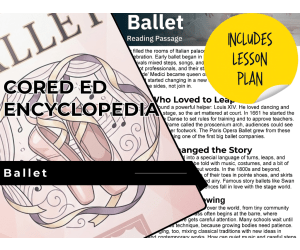
Ballet Reading Comprehension Passage - Cored Ed Encyclopedia
ELA, Language Development, Reading Comprehension, Reading, Social Studies, Writing, Vocabulary, History, Dance, Creative Arts, Grade 2, 3, 4, 5, Worksheets & Printables, Worksheets, Teacher Tools, Centers, Activities, Writing Prompts, Assessments, Quizzes and Tests, Quizzes, Lesson Plans
This ballet reading comprehension with lesson plan includes: Visualization (on the front cover) Start your lesson by taking a minute to think and share something about the topic. Read the script aloud (slowly), perhaps prepare some music or sound effects. Student close their eyes and let their imaginations wander. Students open their eyes, read the question aloud and give them a few minutes to complete. Ask a few students to share or keep answers until the end to compare with what they learn in the passage. COMPANION VIDEO NOW AVAILABLE (EMBEDDED AFTER PREVIEW PICTURES IN PRODUCT DESCRIPTION) Quick pause—thousands of Cored Education products are included with your TeachSimple membership. Download links and encyclopedia index available here. Pre-Reading Trivia Students will write down one thing they already know about the subject and then read five more facts and discuss. These facts are fun, and the students will enjoy learning about the subject before reading more. Give 1 minute for students to write what they already know (no pressure—best guess is fine). Read the five facts together. After each fact, do ask a student for their opinion, was it surprising? Set a purpose by asking students to highlight/underline one fact they want to learn more about during the reading. Reading Passage The text is a high-interest reading passage with set paragraphs, roughly three to four paragraphs long. It contains a variety of themes about the topic, anywhere from history to technology. The passage is between 250 and 350 words in length. First, ask students to look at the headings and see what they’ll learn about today. What do they know about the topic/heading? First read options: Teacher read-aloud (best for support). Partner reading (paragraph by paragraph). While reading, students underline important details, and vocabulary words they think may come up in the questions section. Mixed Questions The first question page contains four multiple-choice questions, each with a choice of four answers, and three written response questions that require a sentence or two from the student. Students complete the mcqs first independently, then review quickly as a class. For the 3 written responses, try to get students giving the answer with some form of evidence: “I think ___ because the text says ___.” If students get stuck, send them back to check the passage. Vocabulary Questions Practice seven key words from the text in this section across two activities. First section is scrambled words where students will unscramble three words given a clue for each. The second section is a word to meaning matching activity. Before starting, have some students read out words they underlined in the passage. Ask students to say the word and read aloud the sentence(s) around each word. Ask students to do scrambled words and the matching exercise in pairs then go through answers as a class. For the scrambled spelling task, get four pairs to come up to the board and write the words for extra practice with the other student reading out the clue. For the matching task, prompt students to give full sentences: “I matched ___ with ___ because ___.” Creative Writing In this question, the student will be required to write a five to eight sentence paragraph on a question related to the topic. Before starting, ask students write down 3 key ideas they are going to include in their piece. Ask students for ideas to share around the class to help those struggling. Pro writing expectations: 5–8 sentences At least 2 facts or details from the passage At least 2 vocabulary words from the previous page Students read their paragraphs while classmates listen for facts and vocabulary words. Extension Activities This page is optional for fast finishers or to take home. There are several activities, each one requiring a different skill. Do some, do none, do all, completely optional - but you will feel reassured knowing every possibility is planned for. Includes summary writting question and additional facts. Answer Key There are answers for the multiple-choice questions, written response questions have sample answers, vocabulary answers and if there is a summary question then a sample summary will be provided as well. Lesson Plan Included Customized lesson plan for this lesson is included. Lesson Snapshot Title: Ballet Genre: Nonfiction (informational passage) Subject: Arts (Dance) / Reading (Informational Text) Primary Topic: How ballet began, changed, and is practiced today Estimated Guided Reading Level (A–Z): S What This Lesson Teaches Best How ballet began in Renaissance palace courts, with dancing as part of celebrations. How ballet shifted from joining in to watching a performance “from the sides.” How ballet grew in France through royal support, including **Louis XIV starting a dance academy to set training rules and approve teachers. How stage design affected what audiences saw (the “proscenium arch” helped viewers see clearer lines and sharper footwork). How ballet tells stories without words using movement plus music, costumes, and a bit of mime, and how pointe shoes and lighter skirts changed the look. Learning Goals Describe where early ballet began and what events it was part of. Explain how ballet changed when people began watching instead of joining in. Identify what happened in 1661 and why it mattered for ballet training. Describe how the proscenium arch affected what audiences could see. Explain how ballet can show feelings and stories “without words,” using details from the text. Describe how ballet is practiced today (studios worldwide, barre work, and careful technique for growing bodies). Key Vocabulary From the Text Renaissance — a time in Europe with art, learning, and change. nobles — people from wealthy or high-ranking families. proscenium — a stage frame that shapes the audience’s view. pointe — dancing on the tips of the toes. barre — a rail dancers hold while practicing in class. FULL CATALOG OF DOWNLOAD LINKS AND ENCYCLOPEDIA INDEX HERE
Author Cored Education
Rating
Tags Vocabulary, Reading Comprehension, Reading Passages, Lesson Plans, Ela Lesson Plans, Reading Comprehension Lesson Plans, Pre-reading, History, Art, Dance Lesson Plans