



3,932 products added recently
Page 10 - Science Lesson Plan Template
Enhance your science instruction with a flexible lesson plan template designed for educators. This tool helps you structure objectives, materials, procedures, and assessments efficiently. Use it to create organized and impactful science lessons that cater to your students' needs.

 Show filters


Ocean Animal Research Writing Project on the OCTOPUS for K-2nd Grade
Life Studies, ELA, Writing, Creative Writing, Reading, Science, Life Sciences, Animals, Research, Kindergarten, Grade 1, 2, Teacher Tools, Lesson Plans, Worksheets & Printables, Worksheets, Writing Prompts
Octopus Research and Writing Project for K-2nd Graders. Engage young students in reading, writing, and science with this 19-page octopus research and writing project. Ideal for kindergarteners, 1st graders, and 2nd graders, this cross-curricular resource can be used for whole group instruction, small groups, or individual assignments. The project begins with real-life photos of the octopus to capture students' interest. Appropriately leveled informational text teaches students about the octopus' appearance, habitat, diet, and other facts. A color coding system helps students organize the information as they read. Next, students get creative by coloring their own octopus picture and drawing an underwater habitat scene. Two versions of graphic organizers allow students to sort the facts at their own level. Finally, differentiated writing templates scaffold the writing process and help all students create an informational report on the octopus. A self-checking writing page is included for the youngest writers. The end product can be compiled into an octopus book to display your students' learning. This engaging project seamlessly combines science, reading, and writing for a cross-curricular octopus unit. With grade-appropriate vocabulary and content, it is designed specifically for K-2 students. The differentiated materials ensure all students can participate and be successful as they read, research, and write about the octopus. Here are even more informational resources on report writing for OCEAN ANIMALS. Click on the links below: Animal Research Writing Project on WHALES for K-2nd Grade Animal Research Writing Project on the OCTOPUS for K-2nd Grade Animal Research Writing Project on SEA TURTLES for K-2nd Grade Animal Research Writing Project on ORCAS for K-2nd Grade Animal Research Writing Project on the SHELLFISH for K-2nd Grade Animal Research Writing Project on DOLPHINS for K-2nd Grade Animal Research Writing Project on SEALS for K-2nd Grade Want to teach your students all about Zoo Animals? Check out all these interesting facts about these favorite zoo animals. With the same great photos, facts, habitat drawings, and more. It is a great way to help students to get interested in writing. For Zoo Animal reports, click on the following links below: Animal Research Writing Project on TIGERS for K-2nd Grade Animal Research Writing Project on MONKEYS for K-2nd Grade Animal Research Writing Project on PANDAS for K-2nd Grade Animal Research Writing Project on HIPPOS for K-2nd Grade Animal Research Writing Project on ELEPHANTS for K-2nd Grade Animal Research Writing Project on GIRAFFES for K-2nd Grade
Author K-5 Treasures
Tags Informational Writing, Writing Report, Report On Animals, 1st Grade Writing, 2nd Grade Writing, Ocean Animals, Ocean Animal Research, Octopus, Report On The Octopus, Ocean Animal Report
I WONDER - Are There Physical Examples Of Animal Adaptation
STEM, Animals, Life Sciences, Science, Biology, Grade 5, 6, 7, 8, 9, 10, 11, Lesson Plans, Teacher Tools
Video Introduction Animal kingdoms are full of fascinating wonders to learn. This video is designed for the students to learn more about animals in different countries. I WONDER - Are There Physical Examples Of Animal Adaptation | Animated Video Lesson Do you like animals? what is your favorite one? Do you own a pet? If yes, tell us more about it, like what its name? And what do you like most about it? What are the animal kingdoms? Can you write down the characteristics of each animal class like mammals, birds, reptiles, amphibian, fish and mollusks. Do you know that some animals can sing, can you name any of them? What is the largest and the smallest mammal in the world? What is the largest and the smallest bird in the world? What is the largest and the smallest fish in the world? I WONDER - Are There Physical Examples Of Animal Adaptation | Animated Video Lesson The video is perfect for encouraging the researching skills for the students, while learning more about these fantastic animals. I WONDER - Are There Physical Examples Of Animal Adaptation | Animated Video Lesson This friendly designed video is suitable for students at school, homeschooling, and as a group activity. Format Available in MP4 format.
Author Educational Voice
Tags Are There Physical Examples Of Animal Adaptation, Are There Physical Examples Of Animal Adaptation Video, Animal Adaptation, Animal Adaptation Facts, Animal Adaptation Video, Animal Adaptation Facts For Kids
I WONDER - What Uses Do Fruits Have | Animated Video Lesson
Nature & Plants, Life Sciences, Science, STEM, Grade 5, 6, 7, 8, 9, 10, 11, Teacher Tools, Lesson Plans
Video Introduction An amazing video designed for the students to learn more about STEM. I WONDER - What Uses Do Fruits Have | Animated Video Lesson Do you like STEM subjects? what is your favorite one? Have you ever tried to plant a seed? If yes, tell us more about it. Or have you ever tried to invent something? If yes, tell us more about it. And how do you think it will help us? Have you ever seen a microorganism under a microscope? What was it? And how it looked like? Mathematics is a marvelous subject. Let' sharpen our brains and solve some equations. Do you like timetable tricks? What is your favorite one? Do you know how to code? Have you ever created an app or a game before? If yes, how was it like? I WONDER - What Uses Do Fruits Have | Animated Video Lesson The video is perfect for encouraging the researching skills for the students, while learning more about this fantastic topic. I WONDER - What Uses Do Fruits Have | Animated Video Lesson This friendly designed video is suitable for students at school, homeschooling, and as a group activity. Format Available in MP4 format.
Author Educational Voice
Tags What Uses Do Fruits Have, What Uses Do Fruits Have Video, Fruits, Fruits Facts, Fruits Facts For Kids, Fruits Video, Fruits Video For Kids, Fruits Facts Video For Kids, Stem, Stem Video
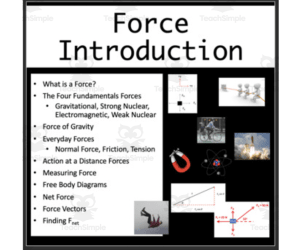
Forces Introduction - Lesson Bundle
Science, Physics, Grade 9, 10, Teacher Tools, Lesson Plans
This 3-DAY, 63 slide Force Introduction lesson package / Forces Mini Unit begins with an Overview of Force which requires students to collaboratively think about the topic and create a definition. The Four Fundamental Forces are discussed as well as the Forces all around us. It then gets more specific and talks about Normal, Friction and Tension forces as well as the difference between a Contact and an Action at a distance force. Ways of Measuring force as well as System and Free-Body Diagrams , Finding Fnet and Force vectors finish the lesson. This package includes the lesson (student and teacher versions of the presentation), an auto-graded Exit Ticket, SIX videos, and a student lesson handout as a document. The presentation is fun and applicable with many opportunities for inquiry-based learning and discussion. In order, the lesson covers: Force Overview What is a Force? The Four Fundamental Forces Forces all around us Normal, Friction and Tension force Contact vs. Action at a distance force Measuring force System and Free-Body Diagrams Finding Fnet Force vectors Included in the lesson package is: The teacher version of the presentation The student version of the presentation 6 videos embedded into the presentation An auto-graded Exit Ticket and a separate quiz with an answer key Student lesson handout -------------------------------------------- Google and Distance Learning Ready This lesson includes both Office and Google formats for ALL resources. The presentation is in PowerPoint and Google Slides while all documents contain Word and Google Doc versions. Your resource is perfect for distance learning and integrates seamlessly with Google Classroom as I've included a link that will automatically create a copy of the resources and put them directly into your Google Drive with one click. Download--> Open --> Click --> Assign to your students Having both options allows you to use either without worrying about formatting issues as all the work has already been done for you. It safeguards you in case your department or school decides to go Google 100% and allows you as well as your students to access everything no matter where you are or what kind of equipment is being used. The student version of the presentation contains multiple blanks that need to be filled in throughout the lesson. These blanks are conveniently underlined and bolded on the teacher copy. I have found this to be the most effective means of keeping my students engaged and active without having them write everything out. This also leaves more time for discussion and activities. Also, please visit my blog Teach With Fergy for my thoughts on teaching, learning, and everything in between.
Author Teach With Fergy
Tags Force Of Gravity, Free Body Diagrams, Net Force, Science Lesson, Everyday Forces

I WONDER - How Did Mars Get Its Name | Animated Video Lesson
Space, Earth and Environmental Sciences, Science, Grade 4, 5, 6, 7, 8, 9, 10, Teacher Tools, Lesson Plans
Video Introduction An amazing video designed for the students to learn more about space facts. I WONDER - How Did Mars Get Its Name | Animated Video Lesson Do you like reading about space? If yes, what is your favorite topic? What do you know about our solar system? What is the smallest planet in our solar system? What is the biggest planet in our solar system? What is the hottest planet in our solar system? And what is the coldest one? Do you think there are aliens? If yes, what do you think they look like? What do they eat and how they speak to each other? Where do they live? What is a galaxy? And what is a milky way? Have you recently saw a shooting star? If yes, tell us more about it, like when did it happen and where? What is a blackhole? Can a blackhole gets bigger by time? Do you like counting the stars? What do you think a star is made of? I WONDER - How Did Mars Get Its Name | Animated Video Lesson The video is perfect for encouraging the researching skills for the students, while learning more about the fantastic space. I WONDER - How Did Mars Get Its Name | Animated Video Lesson This friendly designed video is suitable for students at school, homeschooling, and as a group activity. Format Available in MP4 format.
Author Educational Voice
Tags How Did Mars Get Its Name, How Did Mars Get Its Name Video, Mars Name, Mars Name Facts, Mars Name Facts For Kids, Mars Name Video, Mars Name Video For Kids, Mars, Mars Video For Kids
Flutes Reading Comprehension Passage - Cored Ed Encyclopedia
ELA, Reading Comprehension, Reading, Science, Technology, Social Studies, History, Music, Creative Arts, Physics, Grade 2, 3, 4, 5, Worksheets & Printables, Worksheets, Teacher Tools, Centers, Activities, Writing Prompts, Assessments, Quizzes and Tests, Quizzes, Lesson Plans
This flutes reading comprehension with lesson plan includes: Visualization (on the front cover) Start your lesson by taking a minute to think and share something about the topic. Read the script aloud (slowly), perhaps prepare some music or sound effects. Student close their eyes and let their imaginations wander. Students open their eyes, read the question aloud and give them a few minutes to complete. Ask a few students to share or keep answers until the end to compare with what they learn in the passage. Quick pause—thousands of Cored Education products are included with your TeachSimple membership. Download links and encyclopedia index available here. Pre-Reading Trivia Students will write down one thing they already know about the subject and then read five more facts and discuss. These facts are fun, and the students will enjoy learning about the subject before reading more. Give 1 minute for students to write what they already know (no pressure—best guess is fine). Read the five facts together. After each fact, do ask a student for their opinion, was it surprising? Set a purpose by asking students to highlight/underline one fact they want to learn more about during the reading. Reading Passage The text is a high-interest reading passage with set paragraphs, roughly three to four paragraphs long. It contains a variety of themes about the topic, anywhere from history to technology. The passage is between 250 and 350 words in length. First, ask students to look at the headings and see what they’ll learn about today. What do they know about the topic/heading? First read options: Teacher read-aloud (best for support). Partner reading (paragraph by paragraph). While reading, students underline important details, and vocabulary words they think may come up in the questions section. Mixed Questions The first question page contains four multiple-choice questions, each with a choice of four answers, and three written response questions that require a sentence or two from the student. Students complete the mcqs first independently, then review quickly as a class. For the 3 written responses, try to get students giving the answer with some form of evidence: “I think ___ because the text says ___.” If students get stuck, send them back to check the passage. Vocabulary Questions Practice seven key words from the text in this section across two activities. First section is scrambled words where students will unscramble three words given a clue for each. The second section is a word to meaning matching activity. Before starting, have some students read out words they underlined in the passage. Ask students to say the word and read aloud the sentence(s) around each word. Ask students to do scrambled words and the matching exercise in pairs then go through answers as a class. For the scrambled spelling task, get four pairs to come up to the board and write the words for extra practice with the other student reading out the clue. For the matching task, prompt students to give full sentences: “I matched ___ with ___ because ___.” Creative Writing In this question, the student will be required to write a five to eight sentence paragraph on a question related to the topic. Before starting, ask students write down 3 key ideas they are going to include in their piece. Ask students for ideas to share around the class to help those struggling. Pro writing expectations: 5–8 sentences At least 2 facts or details from the passage At least 2 vocabulary words from the previous page Students read their paragraphs while classmates listen for facts and vocabulary words. Extension Activities This page is optional for fast finishers or to take home. There are several activities, each one requiring a different skill. Do some, do none, do all, completely optional - but you will feel reassured knowing every possibility is planned for. Includes summary writting question and additional facts. Answer Key There are answers for the multiple-choice questions, written response questions have sample answers, vocabulary answers and if there is a summary question then a sample summary will be provided as well. Lesson Plan Included Customized lesson plan for this lesson is included. Lesson Snapshot Title: Flutes Genre: Nonfiction (Informational Text) Subject: Music / Science (Sound) / Reading (Informational Text) Primary Topic: How flutes make sound and changed over time Estimated Guided Reading Level (A–Z): Q What This Lesson Teaches Best How very early flutes were made (carved from bird bone and mammoth ivory ) and why these finds matter as early musical instruments. How flutes make a clear note: a thin jet of air across an opening creates a wobbling column of air inside the tube. Cause and effect in instruments: covering or uncovering holes changes the tube’s length, so the pitch goes up or down. How design evolved in Europe, including added holes and keys and Theobald Boehm’s 1800s redesign with tone holes and ring keys . Key features of a modern concert flute (often metal, about 26 inches long, three sections, padded keys, range of a little more than three octaves ). Learning Goals Students will describe what materials some ancient flutes were carved from and how old they were said to be. Students will explain how a flute makes a clear note using the idea of a “column of air” in a tube. Students will explain how covering or uncovering holes changes pitch by changing the tube’s length. Students will summarize how the sideways flute changed over time in Europe, including added holes and keys. Students will identify changes Theobald Boehm made to flute design and how ring keys helped players. Students will describe at least two details of today’s concert flute mentioned in the passage. Key Vocabulary From the Text mammoth — an ancient animal related to today’s elephants. ivory — hard material used for carving. column — a long “tube” shape of air inside. pitch — how high or low a note sounds. octaves — sets of notes higher or lower. FULL CATALOG OF DOWNLOAD LINKS AND ENCYCLOPEDIA INDEX HERE
Author Cored Education
Rating
Tags Vocabulary, Reading Comprehension, Reading Passages, Lesson Plans, Ela Lesson Plans, Reading Comprehension Lesson Plans, Pre-reading, History, Music, Music Lesson Plans

I WONDER - How Many Bones Are In The Skull | Animated Video Lesson
Insects, Life Sciences, Science, Human Body, STEM, Grade 3, 4, 5, 6, 7, 8, 9, Lesson Plans, Teacher Tools
Video Overview The human body is full of fascinating wonders to learn. This video is created to help the students recognize the anatomy and the job of the human body. I WONDER - How Many Bones Are In The Skull | Animated Video Lesson Every part and organ in our human body is vital so let's see how important they are. Have you ever imagined how we look like if we didn't have a skeleton? Did you know that because we have our amazing muscles we can stand! Do you know how many teeth do we have? Have you ever wondered about the food journey inside our body? Can you name all the glands in our body? Why do we have skin? Our nervous system is really good at sending signals. Can you tell us more about it? Are you really good at Mathematics, painting, or any other thing? You should really thank your brain about it! The famous five senses are really doing a great work? Can you explain how every sense works? I WONDER - How Many Bones Are In The Skull | Animated Video Lesson The video is perfect for encouraging the researching skills for the students, while learning more about our fantastic human body. I WONDER - How Many Bones Are In The Skull | Animated Video Lesson This friendly designed video is suitable for students at school, homeschooling, and as a group activity. Format Available in MP4 format.
Author Educational Voice
Tags How Many Bones Are In The Skull, How Many Bones Are In The Skull Video, Bones In The Skull, Bones In The Skull Facts, Bones In The Skull Facts For Kids, Bones In The Skull Video, Bones In The Skull Video For Kids
I WONDER - Is Wind A Renewable Energy Source | Animated Video Lesson
Environmental Science, Earth and Environmental Sciences, Science, Earth Sciences, Grade 3, 4, 5, 6, 7, 8, 9, Lesson Plans, Teacher Tools
Video Introduction An amazing video designed for the students to learn more about STEM. I WONDER - Is Wind A Renewable Energy Source | Animated Video Lesson Do you like STEM subjects? what is your favorite one? Have you ever tried to plant a seed? If yes, tell us more about it. Or have you ever tried to invent something? If yes, tell us more about it. And how do you think it will help us? Have you ever seen a microorganism under a microscope? What was it? And how it looked like? Mathematics is a marvelous subject. Let' sharpen our brains and solve some equations. Do you like timetable tricks? What is your favorite one? Do you know how to code? Have you ever created an app or a game before? If yes, how was it like? I WONDER - Is Wind A Renewable Energy Source | Animated Video Lesson The video is perfect for encouraging the researching skills for the students, while learning more about this fantastic topic. I WONDER - Is Wind A Renewable Energy Source | Animated Video Lesson This friendly designed video is suitable for students at school, homeschooling, and as a group activity. Format Available in MP4 format.
Author Educational Voice
Tags Is Wind A Renewable Energy Source, Is Wind A Renewable Energy Source Video, Renewable Energy Source, Renewable Energy Sources, Renewable Energy Source Video, Renewable Energy Sources Facts For Kids

I WONDER - What Are The Different Types Of Cells | Animated Video
Human Body, Life Sciences, Science, Biology, Grade 5, 6, 7, 8, 9, 10, 11, Lesson Plans, Teacher Tools
Video Overview The human body is full of fascinating wonders to learn. This video is created to help the students recognize the anatomy and the job of the human body. I WONDER - What Are The Different Types Of Cells | Animated Video Lesson Every part and organ in our human body is vital so let's see how important they are. Have you ever imagined how we look like if we didn't have a skeleton? Did you know that because we have our amazing muscles we can stand! Do you know how many teeth do we have? Have you ever wondered about the food journey inside our body? Can you name all the glands in our body? Why do we have skin? Our nervous system is really good at sending signals. Can you tell us more about it? Are you really good at Mathematics, painting, or any other thing? You should really thank your brain about it! The famous five senses are really doing a great work? Can you explain how every sense works? I WONDER - What Are The Different Types Of Cells | Animated Video Lesson The video is perfect for encouraging the researching skills for the students, while learning more about our fantastic human body. I WONDER - What Are The Different Types Of Cells | Animated Video Lesson This friendly designed video is suitable for students at school, homeschooling, and as a group activity. Format Available in MP4 format.
Author Educational Voice
Tags What Are The Different Types Of Cells, What Are The Different Types Of Cells Video, Different Types Of Cells, Different Types Of Cells Facts, Different Types Of Cells Facts For Kids, Different Types Of Cells Video

All About Reptiles | Animated Animals Video Lesson
Science, Life Sciences, Animals, Grade 3, 4, 5, 6, 7, Lesson Plans, Teacher Tools
All About Reptiles | Animated Animals Video Lesson This 6-minute animated science video engages students while teaching them about the animal group - reptiles. Through vivid images and clear narration, learners explore what defines a reptile and examine their unique traits like scales, cold blood, and laying eggs. Educators can utilize this lively footage to introduce the reptile classification in a memorable way or review key characteristics. Whether presented to an entire class or smaller groups, the focused content suits various learning styles. Assign as prep work before a herpetology unit or reptile craft. Let the vivid scenes spark discussion about local species or have students journal interesting facts afterward. This lively resource suits grades 3-7.
Author Educational Voice
Tags Reptiles, Science Lesson, Science Video, Reptiles Activity, Frogs

I WONDER - How Is Nuclear Energy Measured | Animated Video Lesson
Environmental Science, Earth and Environmental Sciences, Science, Earth Sciences, Grade 6, 7, 8, 9, 10, 11, 12, Lesson Plans, Teacher Tools
Video Introduction An amazing video designed for the students to learn more about STEM. I WONDER - How Is Nuclear Energy Measured | Animated Video Lesson Do you like STEM subjects? what is your favorite one? Have you ever tried to plant a seed? If yes, tell us more about it. Or have you ever tried to invent something? If yes, tell us more about it. And how do you think it will help us? Have you ever seen a microorganism under a microscope? What was it? And how it looked like? Mathematics is a marvelous subject. Let' sharpen our brains and solve some equations. Do you like timetable tricks? What is your favorite one? Do you know how to code? Have you ever created an app or a game before? If yes, how was it like? I WONDER - How Is Nuclear Energy Measured | Animated Video Lesson The video is perfect for encouraging the researching skills for the students, while learning more about this fantastic topic. I WONDER - How Is Nuclear Energy Measured | Animated Video Lesson This friendly designed video is suitable for students at school, homeschooling, and as a group activity. Format Available in MP4 format.
Author Educational Voice
Tags How Is Nuclear Energy Measured, How Is Nuclear Energy Measured Video, Nuclear Energy, Nuclear Energy Facts, Nuclear Energy Facts For Kids, Nuclear Energy Video, Nuclear Energy Video For Kids
I WONDER - Why Do Birds Flock Together | Animated Video Lesson
STEM, Biology, Life Sciences, Science, Animals, Grade 1, 2, 3, 4, 5, 6, 7, 8, Lesson Plans, Teacher Tools
Video Introduction Animal kingdoms are full of fascinating wonders to learn. This video is designed for the students to learn more about animals in different countries. I WONDER - Why Do Birds Flock Together | Animated Video Lesson Do you like animals? what is your favorite one? Do you own a pet? If yes, tell us more about it, like what its name? And what do you like most about it? What are the animal kingdoms? Can you write down the characteristics of each animal class like mammals, birds, reptiles, amphibian, fish and mollusks. Do you know that some animals can sing, can you name any of them? What is the largest and the smallest mammal in the world? What is the largest and the smallest bird in the world? What is the largest and the smallest fish in the world? I WONDER - Why Do Birds Flock Together | Animated Video Lesson The video is perfect for encouraging the researching skills for the students, while learning more about these fantastic animals. I WONDER - Why Do Birds Flock Together | Animated Video Lesson This friendly designed video is suitable for students at school, homeschooling, and as a group activity. Format Available in MP4 format.
Author Educational Voice
Tags Why Do Birds Flock Together, Why Do Birds Flock Together Video, Birds, Bird, Birds Facts, Birds Facts For Kids, Birds Video, Birds Video For Kids, Birds Flock Together Facts, Birds Flock Together Facts For Kids
I WONDER - Where Do Poisonous Plants Grow | Animated Video Lesson
Nature & Plants, Life Sciences, Science, Grade 6, 7, 8, 9, 10, 11, 12, Lesson Plans, Teacher Tools
Video Introduction An amazing activity designed for the students to learn more about STEM. I WONDER - Where Do Poisonous Plants Grow | Animated Video Lesson Do you like STEM subjects? what is your favorite one? Have you ever tried to plant a seed? If yes, tell us more about it. Or have you ever tried to invent something? If yes, tell us more about it. And how do you think it will help us? Have you ever seen a microorganism under a microscope? What was it? And how it looked like? Mathematics is a marvelous subject. Let' sharpen our brains and solve some equations. Do you like timetable tricks? What is your favorite one? Do you know how to code? Have you ever created an app or a game before? If yes, how was it like? I WONDER - Where Do Poisonous Plants Grow | Animated Video Lesson The video is perfect for encouraging the researching skills for the students, while learning more about this fantastic topic. I WONDER - Where Do Poisonous Plants Grow | Animated Video Lesson This friendly designed video is suitable for students at school, homeschooling, and as a group activity. Format Available in MP4 format.
Author Educational Voice
Tags Where Do Poisonous Plants Grow, Where Do Poisonous Plants Grow Video, Poisonous Plants, Poisonous Plants Facts, Poisonous Plants Facts For Kids, Poisonous Plants Video, Poisonous Plants Video For Kids
I WONDER - What Is Tundra | Animated Video Lesson
Environmental Science, Earth and Environmental Sciences, Science, Grade 6, 7, 8, 9, 10, 11, 12, Lesson Plans, Teacher Tools
Video Introduction An amazing video designed for the students to learn more about STEM. I WONDER - What Is Tundra | Animated Video Lesson Do you like STEM subjects? what is your favorite one? Have you ever tried to plant a seed? If yes, tell us more about it. Or have you ever tried to invent something? If yes, tell us more about it. And how do you think it will help us? Have you ever seen a microorganism under a microscope? What was it? And how it looked like? Mathematics is a marvelous subject. Let' sharpen our brains and solve some equations. Do you like timetable tricks? What is your favorite one? Do you know how to code? Have you ever created an app or a game before? If yes, how was it like? I WONDER - What Is Tundra | Animated Video Lesson The video is perfect for encouraging the researching skills for the students, while learning more about this fantastic topic. I WONDER - What Is Tundra | Animated Video Lesson This friendly designed video is suitable for students at school, homeschooling, and as a group activity. Format Available in MP4 format.
Author Educational Voice
Tags What Is Tundra, What Is Tundra Video, Tundra, Tundra Facts, Tundra Facts For Kids, Tundra Video, Tundra Video For Kids, Educational Video, Educational Video For Kids, Science
I WONDER - How Long Have Octopi Existed | Animated Video Lesson
STEM, Biology, Life Sciences, Science, Animals, Grade 1, 2, 3, 4, 5, 6, 7, 8, Lesson Plans, Teacher Tools
Video Introduction Animal kingdoms are full of fascinating wonders to learn. This video is designed for the students to learn more about animals in different countries. I WONDER - How Long Have Octopi Existed | Animated Video Lesson Do you like animals? what is your favorite one? Do you own a pet? If yes, tell us more about it, like what its name? And what do you like most about it? What are the animal kingdoms? Can you write down the characteristics of each animal class like mammals, birds, reptiles, amphibian, fish and mollusks. Do you know that some animals can sing, can you name any of them? What is the largest and the smallest mammal in the world? What is the largest and the smallest bird in the world? What is the largest and the smallest fish in the world? I WONDER - How Long Have Octopi Existed | Animated Video Lesson The video is perfect for encouraging the researching skills for the students, while learning more about these fantastic animals. I WONDER - How Long Have Octopi Existed | Animated Video Lesson This friendly designed video is suitable for students at school, homeschooling, and as a group activity. Format Available in MP4 format.
Author Educational Voice
Tags How Long Have Octopi Existed, How Long Have Octopi Existed Video, Octopi, Octopi Facts, Octopi Facts For Kids, Octopi Video, Octopi Video For Kids, Octopus, Octopus Facts, Octopus Video
I WONDER - Where Did Velociraptors Live | Animated Video Lesson
Animals, Life Sciences, Science, History: Ancient, History, Social Studies, History: World, Grade 4, 5, 6, 7, 8, 9, 10, Lesson Plans, Teacher Tools
Video Introduction An amazing video designed for the students to learn more about dinosaurs in different countries. I WONDER - Where Did Velociraptors Live | Animated Video Lesson Do you like dinosaurs? what is your favorite one? Do you own a pet? If yes, tell us more about it, like what its name? And what do you like most about it? Do you think that your pet has been evolved from a dinosaur? Can you write down the characteristics of your favourite dinosaur like it's shape, their rivals, where did it use to live and what was their favourite food? What is the largest and the smallest dinosaur that ever found? Why is the T-rex is so famous? Have you ever read any interesting facts about it? Can you name any of the carnivores or herbivores dinosaurs? I WONDER - Where Did Velociraptors Live | Animated Video Lesson The video is perfect for encouraging the researching skills for the students, while learning more about dinosaurs. I WONDER - Where Did Velociraptors Live | Animated Video Lesson This friendly designed video is suitable for students at school, homeschooling, and as a group activity. Format Available in MP4 format.
Author Educational Voice
Rating
Tags Where Did Velociraptors Live, Where Did Velociraptors Live Video, Velociraptors, Velociraptor, Velociraptors Facts, Velociraptors Video, Velociraptors Facts For Kids, Velociraptors Video For Kids

I WONDER - What Does Debugging Mean | Animated Video Lesson
STEM, Science, Computer Science, Technology, Grade 6, 7, 8, 9, 10, 11, 12, Lesson Plans, Teacher Tools
Video Introduction An amazing video designed for the students to learn more about STEM. I WONDER - What Does Debugging Mean | Animated Video Lesson Do you like STEM subjects? what is your favorite one? Have you ever tried to plant a seed? If yes, tell us more about it. Or have you ever tried to invent something? If yes, tell us more about it. And how do you think it will help us? Have you ever seen a microorganism under a microscope? What was it? And how it looked like? Mathematics is a marvelous subject. Let' sharpen our brains and solve some equations. Do you like timetable tricks? What is your favorite one? Do you know how to code? Have you ever created an app or a game before? If yes, how was it like? I WONDER - What Does Debugging Mean | Animated Video Lesson The video is perfect for encouraging the researching skills for the students, while learning more about this fantastic topic. I WONDER - What Does Debugging Mean | Animated Video Lesson This friendly designed video is suitable for students at school, homeschooling, and as a group activity. Format Available in MP4 format.
Author Educational Voice
Tags What Does Debugging Mean, What Does Debugging Mean Video, Debugging Mean, Debugging Mean Facts, Debugging Mean Facts For Kids, Debugging Mean Video, Debugging Mean Video For Kids
I WONDER - Why Is Venus Hotter Than Mercury | Animated Video Lesson
Science, Space, Earth and Environmental Sciences, Grade 4, 5, 6, 7, 8, 9, 10, Lesson Plans, Teacher Tools
Video Introduction An amazing video designed for the students to learn more about space facts. I WONDER - Why Is Venus Hotter Than Mercury | Animated Video Lesson Do you like reading about space? If yes, what is your favorite topic? What do you know about our solar system? What is the smallest planet in our solar system? What is the biggest planet in our solar system? What is the hottest planet in our solar system? And what is the coldest one? Do you think there are aliens? If yes, what do you think they look like? What do they eat and how they speak to each other? Where do they live? What is a galaxy? And what is a milky way? Have you recently saw a shooting star? If yes, tell us more about it, like when did it happen and where? What is a blackhole? Can a blackhole gets bigger by time? Do you like counting the stars? What do you think a star is made of? I WONDER - Why Is Venus Hotter Than Mercury | Animated Video Lesson The video is perfect for encouraging the researching skills for the students, while learning more about the fantastic space. I WONDER - Why Is Venus Hotter Than Mercury | Animated Video Lesson This friendly designed video is suitable for students at school, homeschooling, and as a group activity. Format Available in MP4 format.
Author Educational Voice
Tags Why Is Venus Hotter Than Mercury, Why Is Venus Hotter Than Mercury Video, Venus, Venus Facts, Venus Video, Venus Facts For Kids, Mercury, Mercury Video, Mercury Facts, Mercury Facts For Kids

Reducing Your Own Carbon Footprint: A Footprint On Your Dinner Plate Gr. 5-8
Science, Earth and Environmental Sciences, Environmental Science, Grade 5, 6, 7, 8, Teacher Tools, Lesson Plans
Reducing Your Own Carbon Footprint: A Footprint On Your Dinner Plate Gr. 5-8 Reducing Your Own Carbon Footprint: A Footprint On Your Dinner Plate Gr. 5-8 is an impactful teaching resource designed for grades 5 to 8. It guides students through the global issue of climate change, illustrating the human influences and their correlated environmental impacts. Main Features: Designed in consideration of Bloom's Taxonomy and STEAM initiatives An integrative blend of scientific theory and practical application A deep dive into the carbon footprints associated with our food consumption patterns The resource primes students with extensive information about the greenhouse effect - a critical background to comprehend how typical human actions can augment global warming. It then explores domestic energy use, specifically in kitchen scenarios. Kitchen to Farm Journey: New insights are explored about each step involved in transporting food from farm fields up to your dinner plates - pointing out every step that broadens carbon footprints along this journey. Sustainable Practices Discussion: Emphasizing contrasting methods used in sustainable agricultural practices versus conventional ones. Travel & Waste Management Components: A travel footprint calculator is included for students to compute their own travel-related carbon emission situations. An elaboration on waste management dynamics post-consumption stage also forms a key part of this resource, instilling an essential sense of responsibility in students beyond just safe disposal ethics. Creative Exercise for Community Eco-friendly Practices: Exploring feasible ways of embedding eco-friendly norms into community life encourages social contract development. This offers engaging group collaboration opportunities or homework assignments. Downloadable Resource: This teaching resource comes in a convenient downloadable PDF format. Loaded with 30 pages of printable material including graphic organizers , crossword puzzles, comprehension quizzes (with answer keys), and word searches, it makes the learning process interactive yet straightforward.
Author Classroom Complete Press
Tags Carbon Footprint, Agriculture, Environment, Graphic Organizers, Electricity

I WONDER - How Are Sound And Water Waves Different | Animated Video
Physics, Science, STEM, Grade 6, 7, 8, 9, 10, 11, 12, Lesson Plans, Teacher Tools
Video Introduction An amazing video designed for the students to learn more about STEM. I WONDER - How Are Sound And Water Waves Different | Animated Video Lesson Do you like STEM subjects? what is your favorite one? Have you ever tried to plant a seed? If yes, tell us more about it. Or have you ever tried to invent something? If yes, tell us more about it. And how do you think it will help us? Have you ever seen a microorganism under a microscope? What was it? And how it looked like? Mathematics is a marvelous subject. Let' sharpen our brains and solve some equations. Do you like timetable tricks? What is your favorite one? Do you know how to code? Have you ever created an app or a game before? If yes, how was it like? I WONDER - How Are Sound And Water Waves Different | Animated Video Lesson The video is perfect for encouraging the researching skills for the students, while learning more about this fantastic topic. I WONDER - How Are Sound And Water Waves Different | Animated Video Lesson This friendly designed video is suitable for students at school, homeschooling, and as a group activity. Format Available in MP4 format.
Author Educational Voice
Tags How Are Sound And Water Waves Different, How Are Sound And Water Waves Different Video, Water Waves , Water Waves Facts, Water Waves Video, Sound Waves , Sound Waves Facts, Sound Waves Video
I WONDER - What Informs A Hypothesis | Animated Video Lesson
Research, Theories, Basic Science, Science, STEM, Grade 6, 7, 8, 9, 10, 11, 12, Lesson Plans, Teacher Tools
Video Introduction An amazing video designed for the students to learn more about STEM. I WONDER - What Informs A Hypothesis | Animated Video Lesson Do you like STEM subjects? what is your favorite one? Have you ever tried to plant a seed? If yes, tell us more about it. Or have you ever tried to invent something? If yes, tell us more about it. And how do you think it will help us? Have you ever seen a microorganism under a microscope? What was it? And how it looked like? Mathematics is a marvelous subject. Let' sharpen our brains and solve some equations. Do you like timetable tricks? What is your favorite one? Do you know how to code? Have you ever created an app or a game before? If yes, how was it like? I WONDER - What Informs A Hypothesis | Animated Video Lesson The video is perfect for encouraging the researching skills for the students, while learning more about this fantastic topic. I WONDER - What Informs A Hypothesis | Animated Video Lesson This friendly designed video is suitable for students at school, homeschooling, and as a group activity. Format Available in MP4 format.
Author Educational Voice
Tags What Informs A Hypothesis, What Informs A Hypothesis Video, Hypothesis, Hypothesis Facts, Hypothesis Facts For Kids, Hypothesis Video, Hypothesis Video For Kids, Science, Science Video For Kids

I WONDER - What Problems Does Soil Erosion Cause | Animated Video
Environmental Science, Earth and Environmental Sciences, Science, Earth Sciences, Nature & Plants, Life Sciences, Grade 6, 7, 8, 9, 10, 11, 12, Lesson Plans, Teacher Tools
Video Introduction An amazing video designed for the students to learn more about STEM. I WONDER - What Problems Does Soil Erosion Cause | Animated Video Lesson Do you like STEM subjects? what is your favorite one? Have you ever tried to plant a seed? If yes, tell us more about it. Or have you ever tried to invent something? If yes, tell us more about it. And how do you think it will help us? Have you ever seen a microorganism under a microscope? What was it? And how it looked like? Mathematics is a marvelous subject. Let' sharpen our brains and solve some equations. Do you like timetable tricks? What is your favorite one? Do you know how to code? Have you ever created an app or a game before? If yes, how was it like? I WONDER - What Problems Does Soil Erosion Cause | Animated Video Lesson The video is perfect for encouraging the researching skills for the students, while learning more about this fantastic topic. I WONDER - What Problems Does Soil Erosion Cause | Animated Video Lesson This friendly designed video is suitable for students at school, homeschooling, and as a group activity. Format Available in MP4 format.
Author Educational Voice
Tags What Problems Does Soil Erosion Cause, What Problems Does Soil Erosion Cause Video, Soil Erosion, Soil Erosion Facts, Soil Erosion Facts For Kids, Soil Erosion Video, Soil Erosion Video For Kids
I WONDER - Are All Bacteria Harmful | Animated Video Lesson
Biology, Life Sciences, Science, Grade 4, 5, 6, 7, 8, 9, 10, Lesson Plans, Teacher Tools
Video Introduction An amazing activity designed for the students to learn more about STEM. I WONDER - Are All Bacteria Harmful | Animated Video Lesson Do you like STEM subjects? what is your favorite one? Have you ever tried to plant a seed? If yes, tell us more about it. Or have you ever tried to invent something? If yes, tell us more about it. And how do you think it will help us? Have you ever seen a microorganism under a microscope? What was it? And how it looked like? Mathematics is a marvelous subject. Let' sharpen our brains and solve some equations. Do you like timetable tricks? What is your favorite one? Do you know how to code? Have you ever created an app or a game before? If yes, how was it like? I WONDER - Are All Bacteria Harmful | Animated Video Lesson The video is perfect for encouraging the researching skills for the students, while learning more about this fantastic topic. I WONDER - Are All Bacteria Harmful | Animated Video Lesson This friendly designed video is suitable for students at school, homeschooling, and as a group activity. Format Available in MP4 format.
Author Educational Voice
Tags Are All Bacteria Harmful, Are All Bacteria Harmful Video, Bacteria, Bacteria Facts, Bacteria Video, Bacteria Video For Kids, Harmful Bacteria, Harmful Bacteria Facts, Harmful Bacteria Video
I WONDER - How Do Lizards Escape From Their Predators | Animated Video
STEM, Animals, Life Sciences, Science, Biology, Grade 1, 2, 3, 4, 5, 6, 7, 8, Lesson Plans, Teacher Tools
Video Introduction Animal kingdoms are full of fascinating wonders to learn. This video is designed for the students to learn more about animals in different countries. I WONDER - How Do Lizards Escape From Their Predators | Animated Video Lesson Do you like animals? what is your favorite one? Do you own a pet? If yes, tell us more about it, like what its name? And what do you like most about it? What are the animal kingdoms? Can you write down the characteristics of each animal class like mammals, birds, reptiles, amphibian, fish and mollusks. Do you know that some animals can sing, can you name any of them? What is the largest and the smallest mammal in the world? What is the largest and the smallest bird in the world? What is the largest and the smallest fish in the world? I WONDER - How Do Lizards Escape From Their Predators | Animated Video Lesson The video is perfect for encouraging the researching skills for the students, while learning more about these fantastic animals. I WONDER - How Do Lizards Escape From Their Predators | Animated Video Lesson This friendly designed video is suitable for students at school, homeschooling, and as a group activity. Format Available in MP4 format.
Author Educational Voice
Tags How Do Lizards Escape From Their Predators, How Do Lizards Escape From Their Predators Video, Lizards, Lizard, Lizards Facts, Lizards Facts For Kids, Lizards Video, Lizards Video For Kids