



3,934 products added recently
Page 12 - Science Lesson Plan Template
Enhance your science instruction with a flexible lesson plan template designed for educators. This tool helps you structure objectives, materials, procedures, and assessments efficiently. Use it to create organized and impactful science lessons that cater to your students' needs.

 Show filters

I WONDER - What Sort Of Teeth Did Omnivores Have | Animated Video
History: Ancient, History, Social Studies, History: World, Animals, Life Sciences, Science, Grade 4, 5, 6, 7, 8, 9, 10, Lesson Plans, Teacher Tools
Video Introduction An amazing video designed for the students to learn more about dinosaurs in different countries. I WONDER - What Sort Of Teeth Did Omnivores Have | Animated Video Lesson Do you like dinosaurs? what is your favorite one? Do you own a pet? If yes, tell us more about it, like what its name? And what do you like most about it? Do you think that your pet has been evolved from a dinosaur? Can you write down the characteristics of your favourite dinosaur like it's shape, their rivals, where did it use to live and what was their favourite food? What is the largest and the smallest dinosaur that ever found? Why is the T-rex is so famous? Have you ever read any interesting facts about it? Can you name any of the carnivores or herbivores dinosaurs? I WONDER - What Sort Of Teeth Did Omnivores Have | Animated Video Lesson The video is perfect for encouraging the researching skills for the students, while learning more about dinosaurs. I WONDER - What Sort Of Teeth Did Omnivores Have | Animated Video Lesson This friendly designed video is suitable for students at school, homeschooling, and as a group activity. Format Available in MP4 format.
Author Educational Voice
Rating
Tags What Sort Of Teeth Did Omnivores Have, What Sort Of Teeth Did Omnivores Have Video, Omnivores Teeth, Omnivores Teeth Facts, Omnivores Teeth Video, Omnivores Teeth Video For Kids, Omnivores Teeth Facts For Kids

Galaxies & The Universe: Measuring Distance in the Universe - FLASH-PC
Science, Earth and Environmental Sciences, Space, Common Core, Grade 5, 6, 7, 8, Teacher Tools, Lesson Plans
The Galaxies & The Universe: Measuring Distance in the Universe - FLASH-PC An engaging teaching resource crafted to ignite astronomical curiosity within students. Perfect for grade levels 5 through 8, this digital tool presents a comprehensive approach towards studying galaxies and the Universe. Engaging Different Learning Styles Educators consistently strive to make science more appealing. This toolkit combines detailed reading material with practical learning activities, such as: Text Passages: Provides an in-depth explanation of complex concepts about distance measurement in astronomy. Interactive Exercises: Encourages inquiry-based learning before and after reading enhancing critical thinking skills. Beyond Traditional Teaching Tools This educational kit extends beyond traditional text-based information by incorporating dynamic elements like: Vocabulary flashcards , Interactive activities, Video clips showcasing celestial phenomena, Immersive audio segments, Educational Standards Alignment The Galaxies & The Universe: Measuring Distance in the Universe - FLASH-PC toolkit aligns impeccably with Common Core State Standards. It also embraces Bloom's Taxonomy principles of differentiated cognitive skill development. Versatile Classroom Application Suitable for diverse classroom scenarios— be it group lessons around computer screens within traditional settings or individualized comprehensive homework assignments at home. It’s your ticket into transforming your Astronomy teachings! Dare to take students' understanding beyond textbooks using this complete educational toolkit! Helping them discover our immeasurable universe—all while gaining valuable knowledge that will boost their performance in Science classes. And the best part—no additional software installation required. Perfect for modern educators desiring swift transitions between subjects or lesson plans.
Author Classroom Complete Press
Tags Software (PC)

All About Earth | Five Facts Video Lesson
Science, Earth and Environmental Sciences, Earth Sciences, Not Grade Specific, Lesson Plans, Teacher Tools
This animated video lesson will give you five facts all about Earth. Students will love this engaging and interactive video. This video serves as a great introduction or review video for your learners. This is a 3-minute video lesson.
Author Educational Voice
Tags Earth, Science Lesson, Science Video, Earth's Core, Chemicals

I WONDER - Can Spiders Live In Water | Animated Video Lesson
Animals, Life Sciences, Science, Biology, STEM, Grade 1, 2, 3, 4, 5, 6, 7, 8, Lesson Plans, Teacher Tools
Video Introduction Animal kingdoms are full of fascinating wonders to learn. This video is designed for the students to learn more about animals in different countries. I WONDER - Can Spiders Live In Water | Animated Video Lesson Do you like animals? what is your favorite one? Do you own a pet? If yes, tell us more about it, like what its name? And what do you like most about it? What are the animal kingdoms? Can you write down the characteristics of each animal class like mammals, birds, reptiles, amphibian, fish and mollusks. Do you know that some animals can sing, can you name any of them? What is the largest and the smallest mammal in the world? What is the largest and the smallest bird in the world? What is the largest and the smallest fish in the world? I WONDER - Can Spiders Live In Water | Animated Video Lesson The video is perfect for encouraging the researching skills for the students, while learning more about these fantastic animals. I WONDER - Can Spiders Live In Water | Animated Video Lesson This friendly designed video is suitable for students at school, homeschooling, and as a group activity. Format Available in MP4 format.
Author Educational Voice
Tags Can Spiders Live In Water, Can Spiders Live In Water Video, Spiders, Spider, Spiders Facts, Spiders Facts For Kids, Spiders Video, Spiders Video For Kids, Spider Facts, Spider Video

I WONDER - What Is A Baby Goat Called | Animated Video Lesson
STEM, Biology, Life Sciences, Science, Animals, Grade 1, 2, 3, 4, 5, 6, 7, 8, Lesson Plans, Teacher Tools
Video Introduction Animal kingdoms are full of fascinating wonders to learn. This video is designed for the students to learn more about animals in different countries. I WONDER - What Is A Baby Goat Called | Animated Video Lesson Do you like animals? what is your favorite one? Do you own a pet? If yes, tell us more about it, like what its name? And what do you like most about it? What are the animal kingdoms? Can you write down the characteristics of each animal class like mammals, birds, reptiles, amphibian, fish and mollusks. Do you know that some animals can sing, can you name any of them? What is the largest and the smallest mammal in the world? What is the largest and the smallest bird in the world? What is the largest and the smallest fish in the world? I WONDER - What Is A Baby Goat Called | Animated Video Lesson The video is perfect for encouraging the researching skills for the students, while learning more about these fantastic animals. I WONDER - What Is A Baby Goat Called | Animated Video Lesson This friendly designed video is suitable for students at school, homeschooling, and as a group activity. Format Available in MP4 format.
Author Educational Voice
Tags What Is A Baby Goat Called, What Is A Baby Goat Called Video, Baby Goat, Baby Goat Facts, Baby Goat Facts For Kids, Baby Goat Video, Baby Goat Video For Kids, Goat, Goat Facts, Goat Video
I WONDER - How Do Wetlands Help The Environment | Animated Video
Environmental Science, Earth and Environmental Sciences, Science, Earth Sciences, Grade 4, 5, 6, 7, 8, 9, 10, Lesson Plans, Teacher Tools
Video Introduction An amazing video designed for the students to learn more about STEM. I WONDER - How Do Wetlands Help The Environment | Animated Video Lesson Do you like STEM subjects? what is your favorite one? Have you ever tried to plant a seed? If yes, tell us more about it. Or have you ever tried to invent something? If yes, tell us more about it. And how do you think it will help us? Have you ever seen a microorganism under a microscope? What was it? And how it looked like? Mathematics is a marvelous subject. Let' sharpen our brains and solve some equations. Do you like timetable tricks? What is your favorite one? Do you know how to code? Have you ever created an app or a game before? If yes, how was it like? I WONDER - How Do Wetlands Help The Environment | Animated Video Lesson The video is perfect for encouraging the researching skills for the students, while learning more about this fantastic topic. I WONDER - How Do Wetlands Help The Environment | Animated Video Lesson This friendly designed video is suitable for students at school, homeschooling, and as a group activity. Format Available in MP4 format.
Author Educational Voice
Tags How Do Wetlands Help The Environment, How Do Wetlands Help The Environment Video, Wetlands Help The Environment, Wetlands Help The Environment Video, Wetlands Help The Environment Video For Kids

I WONDER - What Is A Brinicle | Animated Video Lesson
Earth Sciences, Earth and Environmental Sciences, Science, Grade 4, 5, 6, 7, 8, 9, 10, Lesson Plans, Teacher Tools
Video Introduction An amazing video designed for the students to learn more about famous phenomena in different countries. I WONDER - What Is A Brinicle | Animated Video Lesson Weather phenomena can affect our lives, crops and even animals! Can you name any of the weather phenomena that happened in your country? Do you know when hailstorms happen? And what is the most country who has lots of hailstorms happening per year? Do you think the all countries have four seasons? If no, can you name any? Why do some animals sleep at winter? Can you name any of these animals? I WONDER - What Is A Brinicle | Animated Video Lesson The video is perfect for encouraging the researching skills for the students, while learning more about this fantastic phenomenon. I WONDER - What Is A Brinicle | Animated Video Lesson The video is perfect for encouraging the researching skills for the students, while learning more about this fantastic phenomenon. Format Available in a PDF format.
Author Educational Voice
Rating
Tags What Is A Brinicle, Brinicle, Brinicle Video, Brinicle Facts, Brinicle Facts For Kids, Brinicle Video For Kids, Severe Weather Phenomenon, Severe Weather Phenomena, Severe Weather Phenomena Video
I WONDER - Is Rewilding Just About Plants | Animated Video Lesson
Environmental Science, Earth and Environmental Sciences, Science, Earth Sciences, Nature & Plants, Life Sciences, Insects, Animals, Biology, Grade 6, 7, 8, 9, 10, 11, 12, Lesson Plans, Teacher Tools
Video Introduction An amazing video designed for the students to learn more about STEM. I WONDER - Is Rewilding Just About Plants | Animated Video Lesson Do you like STEM subjects? what is your favorite one? Have you ever tried to plant a seed? If yes, tell us more about it. Or have you ever tried to invent something? If yes, tell us more about it. And how do you think it will help us? Have you ever seen a microorganism under a microscope? What was it? And how it looked like? Mathematics is a marvelous subject. Let' sharpen our brains and solve some equations. Do you like timetable tricks? What is your favorite one? Do you know how to code? Have you ever created an app or a game before? If yes, how was it like? I WONDER - Is Rewilding Just About Plants | Animated Video Lesson The video is perfect for encouraging the researching skills for the students, while learning more about this fantastic topic. I WONDER - Is Rewilding Just About Plants | Animated Video Lesson This friendly designed video is suitable for students at school, homeschooling, and as a group activity. Format Available in MP4 format.
Author Educational Voice
Tags Is Rewilding Just About Plants, Is Rewilding Just About Plants Video, Rewilding, Rewilding Facts, Rewilding Facts For Kids, Rewilding Video, Rewilding Video For Kids, Environmental Science, Environment
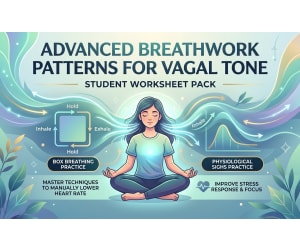
Advanced Breathwork Patterns for Vagal Tone
Science, Life Sciences, Biology, Human Body, Physics, STEM, Special Resources, Life Skills, Social Emotional Learning (SEL), Special Education Needs (SEN), Homeschool Curriculum, Homeschool Templates, Grade 8, 9, 10, 11, 12, Worksheets & Printables, Workbooks, Worksheets, Word Searches, Teacher Tools, Lesson Plans, Quizzes and Tests, Quizzes, Tests, Assessments
Transform Student Stress into Focused Success with Science-Backed Breathwork! Are your high school students struggling with test anxiety, overwhelming stress, and an inability to focus? It's not just in their heads—it's in their biology. The modern academic landscape puts the adolescent nervous system in a constant state of "fight or flight," hijacking their ability to learn and perform. Introducing the Advanced Breathwork Patterns for Vagal Tone Curriculum —a revolutionary, science-based toolkit designed to empower students to take conscious control of their own physiology. This isn't just another mindfulness exercise; it's an applied neurobiology lesson that provides tangible, immediate results. This comprehensive 44-page digital PDF package moves beyond simple "calm down" instructions. It introduces Haptic Respiratory Pacing , a powerful method combining specific breathing protocols (like Box Breathing and the Physiological Sigh) with the kinesthetic act of tracing. This dual-coding mechanism anchors a student's focus, interrupts anxiety loops, and directly stimulates the vagus nerve to manually lower heart rate and calm the nervous system. What's Inside This Complete, "Done-For-You" Curriculum? PHASE 1: Core Content & Theory (Educator/Student Guide): A deep dive into the "why" behind the techniques. This section explains the neurobiology of the stress response, the vagus nerve, and the mechanics of Box Breathing and the Physiological Sigh in clear, scientific terms. Perfect for engaging skeptical teens who want to know how it works. PHASE 2: Student Workbook (10 Rigorous Worksheets): A series of in-depth worksheets that blend academic learning with kinetic practice. Students will map neurobiological pathways, analyze data from their own heart rate, and apply these techniques to real-world scenarios like test-taking and athletic performance. PHASE 3: Visuals & Teacher Resources: High-Fidelity Tracing Diagrams: Clean, printable visual guides for Box Breathing and the Physiological Sigh that students can trace with a finger or pen. Comprehensive Answer Key: A full answer key for every question in the student workbook, including model answers for open-ended questions. Rigorous Teacher Implementation Guide: A step-by-step guide on how to frame the lesson ("Hacking the Nervous System"), run a baseline data protocol to get student buy-in, and integrate the curriculum into different subjects. Trauma-Informed Considerations: Expert guidance on how to apply these techniques safely and effectively for all students. Empower your students with a lifelong skill to manage stress, improve focus, and master their emotional state. Download this resource today and bring the power of applied neuroscience into your classroom! Keywords: Social Emotional Learning (SEL), Stress Management, Anxiety Reduction, Test Anxiety, High School, Biology, Health, PE, School Counselor, Mindfulness, Breathwork, Vagus Nerve, Box Breathing, Physiological Sigh, Self-Regulation, Coping Skills, Neurobiology, Focus, Student Workbook, Digital Download, Printable. Why Parents/Schools Love It: Empowers Students with a Real-World Skill: This isn't just theory. It gives teens a practical, discreet tool they can use anywhere—before an exam, during a stressful social situation, or on the athletic field—to manage their own anxiety and improve performance. Science-Backed & Data-Driven: The curriculum is grounded in real neurobiology, not abstract concepts. The included activities that have students measure their own heart rate provide concrete proof that the techniques work, ensuring high student engagement and buy-in. A Complete, Turnkey Solution: This 44-page PDF is a comprehensive, "plug-and-play" resource. It includes the theory, student worksheets, printable visuals, a full answer key, and a detailed implementation guide, saving teachers valuable prep time. Versatile and Easy to Integrate: The modules can be seamlessly integrated into various classes—Health, Biology, P.E., or even a 10-minute homeroom activity before a big school event. It directly supports school-wide Social-Emotional Learning (SEL) initiatives. Target Audience: Student Classes : Based on the sophisticated language, the scientific concepts, and the real-world examples (AP Calculus exams, athletic performance), target: Primary Target: Senior High School Students (Grades 10, 11, and 12). The content is perfectly matched for their cognitive level and the specific stressors they face. Secondary Target: Advanced 9th Graders in honors or gifted programs. Educators/Buyers: High School Health & P.E. Teachers High School Biology & Anatomy Teachers (excellent for a practical lab on the respiratory/nervous systems) School Counselors and Psychologists Test-Prep Coordinators and Tutors Homeroom/Advisory Teachers Copyright/Terms of Use: This Book was copyrighted by Syed Hammad Rizvi. This resource is for personal and single classroom use only. You may not alter, redistribute, or sell any part of this resource. In other words, you may not put it on the Internet where it could be publicly found and downloaded. If you want to share this resource with colleagues, please purchase additional licenses from Teachsimple. Thank you for respecting these terms of use. This product is happily brought to you by Syed Hammad Rizvi
Author Creative Book Store
Rating
Tags SEL, SocialEmotionalLearning, HighSchoolTeacher, StressManagement, AnxietyRelief, CopingSkills, VagusNerve, BoxBreathing, Neuroscience, ClassroomResources

Senses, Nervous & Respiratory Systems: Spinal Cord and Nerves Gr. 5-8
Science, Life Sciences, Human Body, Common Core, Grade 5, 6, 7, 8, Teacher Tools, Lesson Plans
The Senses, Nervous & Respiratory Systems: Spinal Cord and Nerves Gr. 5-8 Comprehensive teaching resource: This resource is carefully designed to amplify the learning experience of students in grades 5 to grade 8. Featuring a detailed exploration of human anatomy, it particularly emphasizes the intricacies of our senses, nervous system, respiratory systems along with spinal cord and nerves. Diverse applications: Suitable for educators in classroom settings and parents managing home-based education. Content is rendered engagingly stimulating curiosity while developing interest about our body's complexity. Educational Material: The guide provides detailed answers to questions like "How long is a nerve cell?" or "How are our lungs like a train station?". It encourages students to explore core scientific concepts & develop their critical thinking abilities. Multifunctional Learning: Understanding how different parts of our body work collectively - from comprehending main parts of nervous system like brain and spinal cord operation. To exploring organs associated with five sense perception. Sensational Journey:Air's journey inside when we breathe it in & out explores the amazing precision within natural processes; intriguing students immensely. Add-ons for enhanced learning experience:. Includes integrated reading passages enhancing comprehension along with hand-on activities absorbing information beyond textbooks. Mini colored posters make great visual aids while crossword puzzles add reinforcing elements making learning fun. Word Search activities add more engagement value complemented by preparatory tests ensuring mastery over learned content before moving on thus fostering academic excellence one topic at a time. Standard-aligned content: Contained within one easily accessible PDF file, lesson plans within this teaching resource align perfectly to State Standards related to science education, specifically addressing Human Body sub-themes; adhering also towards Bloom's Taxonomy & STEM initiative guidelines ensuring a complete educational experience. Compatible for all learning frameworks: Equally effective as whole group instruction, small groups, or individual assignments. An excellent choice for classroom or homeschooling sessions; providing an engaging and flexible tool for impactful learning about the wonderful complexities of human anatomy.
Author Classroom Complete Press
Tags PDF

Biodiversity & Ecosystem Protection Activity Sheets
Science, Earth and Environmental Sciences, Earth Sciences, Environmental Science, Geology, Space, Life Sciences, Nature & Plants, STEM, Basic Science, Homeschool Curriculum, Grade 3, 4, 5, 6, 7, 8, Teacher Tools, Lesson Plans, Presentations, Quizzes and Tests, Quizzes, Tests, Worksheets & Printables, Workbooks, Worksheets, Word Searches
This teaching resource is a 35-page Biodiversity & Ecosystem Protection bundle for upper elementary (3rd-5th grade) and for home school settings. It is professional and formatted for classroom distribution as well as for printing (and testing) in your classroom. Three Phases of Learning: PHASE 1 - The Educator's Guide (Chapters 1-4) contains in-depth information about the three levels of biodiversity, ecosystem architecture, the "wood wide web," keystone species, trophic cascades, habitat fragmentation, invasive species, wildlife corridors and the "Miyawaki Method," with many real-world examples. See the Tepuis in Guiana, the Brazil Nut tree, the Silent Forests of Guam, and Banff wildlife corridors. PHASE 2 - Student Workbook contains 10 worksheets of fill-in-the-blank questions, critical thinking prompts, scenario analyses, and design challenges for Ecosystem Vocabulary, Food Webs, World Biomes, Keystone Species, Habitat Fragmentation, Invasive Species, Marine Biodiversity, Pollinators, Conservation Legislation, and Citizen Science. PHASE 3 - Visual and Teacher Resources, including three classroom-ready diagrams (the Trophic Interdependence diagram, H.I.P.P.O. Threats Matrix, and Conservation Action Mind Map), an answer key for all worksheets, a guide for implementing all 14 NGSS Standards (3-LS4-3 & 5-LS2-1), differentiation strategies (ELL, SLD, gifted), and a formative assessment grading rubric. Best Suited For: Science educators, home-schoolers, nature and ecology groups, Earth Day project preparation, STEM course planning, substitute billing preparation and one-to-one tuition sessions. Type Of Item Available To Download: An easy-to-fit digital record making it possible for you to create your teaching resource as soon as you make your purchase, using copies of the files or printing directly from the completed files themselves as needed as teacher copying materials. Search Terms: biodiversity worksheets, ecosystems worksheets, NGSS aligned Science 3rd-5th grade, food web activities, keystone species lesson plan, environmental science prints, conservation worksheets, Earth Day Activities, life science curriculum, habitat Lesson plans. Overview of NGSS and Related Benefits: NGSS-aligned and Standards-based will directly meet Performance Expectations: 3 LS4-3 & 5 LS2-1, thus these resources will save teachers several hours of planning. All-in-One Resource: 3-in-1 Bundle will include: “Teacher Theory”, “Student Workbook” and “Answer Keys” including visuals. No need to purchase supplemental material. Fosters Critical Thinking Instead of Memorization: Real-life Case Studies, (Guam, Amazon, Banff) and “Constructivist Systems Thinking” approach to develop “analytical” minds. Includes Built-in Differentiation: A complete range of instructional strategies will be provided for ELL, Special Education (SLD & ADD), and Gifted & Talented students; one resource will serve all learners. Ready to Print and Use: Black and White "Ink on Paper" design saves ink; ready to print and teach in minutes with no preparation work. Solution-oriented approach: Combats "Eco-Anxiety" by providing students with clearly defined solutions to every cause/problem and offering students the ability to take: Action-Based Steps to Reduce Classroom Eco-Anxiety. The document clearly specifies that it has multiple intended uses, as follows: Primary Audience: Grades (ages) 8 to 11 (i.e., 3, 4, and 5). Secondary Audience: Grade 6 with introductory or review materials. Curriculum for students in these grades who are homeschooled. Curriculum for middle school English Language Learner (ELL) or English as a Second Language (ESL) students using simplified science concepts. Curriculum for students with special needs using the differentiation strategies provided in this document. Copyright and Terms of Use: Syed Hammad Rizvi owns the copyright to this book. It is provided for personal use and in a singular classroom. You cannot change it, sell any part of it, or redistribute any of it. In short, it cannot be provided over the Internet in such a way that others can access it and download it without your permission. If you wish to share this resource with your coworkers, you can purchase additional licenses for it through Teachsimple. Thank you for following the terms of agreement for this resource. This is a gift from Syed Hammad Rizvi.
Author Creative Book Store
Rating
Tags Biodiversity, EcosystemWorksheets, NGSSScience, ScienceWorksheets, ElementaryScience, ScienceTeachers, HomeschoolPrintables, BiodiversityWorksheets, BiodiversityActivities, EcosystemActivities

DNA: Guided Reading Level N with Lesson Plan
ELA, Resources for Teachers, Reading Comprehension, Reading, Science, Life Sciences, Language Development, Technology, Pre-Reading, Vocabulary, Grade 2, 3, 4, Worksheets & Printables, Worksheets, Teacher Tools, Centers, Activities, Literacy Readers, Quizzes, Quizzes and Tests, Assessments, Lesson Plans
This DNA (level n) guided reading book with lesson plan includes: Guided Reading Color Label (front cover x1) This is a quick way to match the book’s demands to what students can generally handle.. The overall goal is to use the level/color to pick books for several smaller groups. To qualify for a certain level, a student is expected to read a book from that level with about 90–94% accuracy. If a student is consistently accurate and understands, move up a level. If the student is struggling at that level, drop down and add more support. Each student will improve at completely different rates, but it is generally one of the best ways to check progress across the class. DOWNLOAD THE CATALOG TO VIEW ALL GUIDED READING BOOKS AVAILABLE (SORTED LEVELS A-Z) Pre-Reading Question (x1) Teacher asks the prompt aloud, can be while showing the cover or first page. Students share what they already know, or make educated guesses from the cover. Prompt them to use the target vocabulary. Write some of their responses on the board to look back at during the reading. Vocabulary Words (x5) Introduce the five words, best doing it one at a time. Start by saying it, while students repeat and then see if anyone knows what it means before reading further. Read through the meaning and try to briefly connect each word to a picture or gesture so it’s meaningful. Ask students to flip through the book pages and point to where they see each of the vocabulary words. While reading the book pause upon coming across one of the vocab words or read the sentence twice to make sure students understand the word has appeared. Optional: Ask students to raise hands whenever they see/hear one of the new words. Guided Reading Pages (x10) Check the book snapshot (below) for: primary topic - do you need to prep extra reading or intro materials on this? what is taught best - decide on 1-2 bullets to focus on, use the prompt or words provided here for best results. learning goals - what you are checking for students to be able to do after the session, elicit answers using prompts or words provided. key vocabulary (see section above). questions overview - so you know what is coming up and if you need to prep extra materials to assist understanding. Run the lesson You may have already looked at a few of the pages together, but you can show them some of the pictures again first to set meaning. Depending on how much time you have and how familiar your students are with guided reading class, you may want to read the book aloud first with the group first. Students whisper or partner read, while you listen in. If time, do it as a group, one student reading a page each. Use the guided page’s prompts to coach: “Check the picture / does it make sense?” “Point under the words / try the first sound” “Reread the sentence smoothly”. Try to focus more on one student per session (rotating every time), so you can work out if they are ready to move up or need to move down a level. Comprehension Questions (back cover x3) This is your way to check that students didn’t just say the words, but actually understood the text. First, let students answer by pointing to the page/picture and saying a short sentence. After any answer, follow with: “Show me where you found that in the text.” In bigger groups, have partners answer first (10–20 seconds), then call on 2–3 students to share. Differentiation tips: Emerging speakers/struggling readers: oral + pointing On-level: oral in a full sentence Higher: one written sentence or draw + label Book Snapshot Title: DNA Genre: Nonfiction (informational science text) Subject: Life Science Primary Topic: DNA as genetic instructions in living things Estimated Guided Reading Level (A–Z): N What This Book Teaches Best Explains DNA as a “secret code” that gives living things instructions to grow and function. Teaches where DNA is kept : DNA is in cells, and a nucleus holds DNA safely inside almost every cell. Describes DNA’s shape as a long, twisted ladder called a double helix , and connects the shape to holding genetic information. Introduces the idea of a genetic code made of four special chemicals whose order works like letters forming sentences the body can “read.” Builds understanding of similarities and differences in living things , including shared DNA across animals and small DNA differences that make individuals unique. Learning Goals Students can explain what the book says DNA does for living things (instructions to grow and function). Students can describe where DNA is found in the body (in cells, held in the nucleus). Students can describe the shape of DNA using details from the text (a long, twisted ladder/double helix). Students can explain how the book describes the genetic code (four chemicals acting like letters in an alphabet). Students can describe ways DNA relates to traits and differences (physical traits, unique codes, identical twins). Students can explain why DNA makes a copy before a cell divides (so new cells have the same instructions). Key Vocabulary From the Text molecule — a tiny thing that carries important information. microscope — a tool to see things too small to see. nucleus — a cell’s control center that holds DNA safely. helix — a twisted shape like a ladder. genetic — related to the body’s DNA code and information. Discussion Prompts Pre-reading question: What do you think a “secret code” inside living things might help them do? Comprehension questions: Where does the book say DNA is kept inside almost every cell? Comprehension questions: What does the book compare the shape of DNA to, and what do scientists call that shape? Comprehension questions: Why does the book say DNA makes an exact copy of itself before a cell divides? Printing Tips 1. Best Printing Method (Recommended) “Booklet” Printing (Best if Available) If your printer or PDF viewer supports Booklet Printing , use this. Settings to use: Print mode: Booklet Paper size: Letter or A4 (either works) Orientation: Landscape Print on both sides: Yes Flip on: Short edge Scaling: Fit to printable area Booklet subset: First test: Front sides only Then: Back sides only This will automatically: Pair pages correctly Put the cover on the outside Align everything for folding After printing, fold in half and staple along the spine . 2. If “Booklet” Printing Is NOT Available You can still print this correctly with manual duplex printing . Step-by-step: Open the PDF. Choose Print . Set: Orientation: Landscape Pages per sheet: 1 Print on both sides: Yes Flip on: Short edge Print all pages . Because each PDF page already contains two facing book pages, the result will still fold cleanly into a book. Thousands of Cored Education products are included with your TeachSimple membership. Download links and encyclopedia index available here.
Author Cored Education
Rating
Tags Reading Comprehension, Reading Passages, Reading, Guided Reading, Guided Reading Lesson Plan, Guided Reading Activity, Pre-reading, Science Lesson Plans, Life Science, Technology

I WONDER - What Food Are Carbohydrates | Animated Video Lesson
Human Body, Life Sciences, Science, Biology, STEM, Grade 1, 2, 3, 4, 5, 6, 7, 8, Lesson Plans, Teacher Tools
Video Overview The human body is full of fascinating wonders to learn. This video is created to help the students recognize the anatomy and the job of the human body. I WONDER - What Food Are Carbohydrates | Animated Video Lesson Every part and organ in our human body is vital so let's see how important they are. Have you ever imagined how we look like if we didn't have a skeleton? Did you know that because we have our amazing muscles we can stand! Do you know how many teeth do we have? Have you ever wondered about the food journey inside our body? Can you name all the glands in our body? Why do we have skin? Our nervous system is really good at sending signals. Can you tell us more about it? Are you really good at Mathematics, painting, or any other thing? You should really thank your brain about it! The famous five senses are really doing a great work? Can you explain how every sense works? I WONDER - What Food Are Carbohydrates | Animated Video Lesson The video is perfect for encouraging the researching skills for the students, while learning more about our fantastic human body. I WONDER - What Food Are Carbohydrates | Animated Video Lesson This friendly designed video is suitable for students at school, homeschooling, and as a group activity. Format Available in MP4 format.
Author Educational Voice
Tags What Food Are Carbohydrates, What Food Are Carbohydrates Video, Carbohydrates, Carbohydrate, Carbohydrates Facts, Carbohydrates Facts For Kids, Carbohydrates Video, Carbohydrates Video For Kids
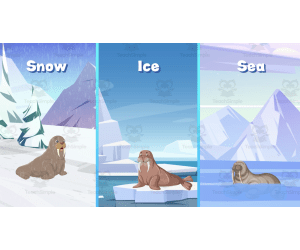
All About Walruses | Five Facts Video Lesson
Science, Life Sciences, Animals, Not Grade Specific, Lesson Plans, Teacher Tools
This animated video lesson will give you five facts all about walruses. Students will love this engaging and interactive video. This video serves as a great introduction or review video for your learners. This is a 3-minute video lesson.
Author Educational Voice
Tags Science Video, Animal Video, Sea Animals, Walruses, Artic
I WONDER - Can Anything Weird Happen During A Hurricane
Earth Sciences, Earth and Environmental Sciences, Science, Environmental Science, Geology, Grade 3, 4, 5, 6, 7, 8, 9, Lesson Plans, Teacher Tools
Video Introduction An amazing video designed for the students to learn more about natural disasters in different countries. I WONDER - Can Anything Weird Happen During A Hurricane | Animated Video Lesson Do you like summer days where the sun is shinning and you can see beautiful flowers everywhere or winter days where it is raining or snowing and where you can set by the fireplace and enjoy the scene from outside your windows? How to do you thing the blizzards and hurricanes or tornadoes got their names? Can you name a volcanic mountain? Have you ever read about earthquakes? Do you know why earthquakes happen? I WONDER - Can Anything Weird Happen During A Hurricane | Animated Video Lesson The video is perfect for encouraging the researching skills for the students, while learning more about this fantastic phenomenon. I WONDER - Can Anything Weird Happen During A Hurricane | Animated Video Lesson This friendly designed video is suitable for students at school, homeschooling, and as a group activity. Format Available in MP4 format.
Author Educational Voice
Rating
Tags Can Anything Weird Happen During A Hurricane, Hurricane, Hurricane Facts, Hurricane Video, Hurricane Video For Kids, Hurricane Facts For Kids, Natural Disasters, Natural Disasters Facts, Natural Disasters Video

Hands-On - Physical Science: Simple Machines Gr. 1-5
Science, Physics, Grade 1, 2, 3, 4, 5, Teacher Tools, Lesson Plans
Hands-On - Physical Science: Simple Machines Gr. 1-5 An engaging teaching resource designed to make physical science more accessible and exciting for students from first to fifth grade. This product integrates different subjects, including science, technology, engineering, art, and math (STEAM) into a cohesive educational package. Aligned with STEAM Initiatives and Next Generation Science Standards This resource is consistent with STEAM initiatives and Next Generation Science Standards—preparing students adequately for their future academic pursuits through sound scientific learning experiences. "Simple Machines" Chapter Slice The chapter lets students explore energy-rich concepts while discovering the intricacies of simple mechanical devices like balanced and unbalanced forces. The students measure the impact of gravity on objects through hands-on drop tests—an activity that enhances learning real-world physics principles. Natural Environmental Phenomena Study A method using thunder's sight and sound cues introduces lightning distance measurement—an interactive approach amplifying observational skills of the students. The product also promotes an understanding of wave properties by modeling water, sound, and light waves—which also fosters team building among learners. Demo: Static Electricity Experiment Learners get to experience static electricity firsthand by making a balloon stick to a wall—a demo showcasing electric forces at work!. Matter Properties Classification A section helps describe solids, liquids,& gases found in everyday life—a valuable extension linking classroom knowledge to practical applications. Taking It Further: Complex Machinery Integration Kids can collaborate by integrating two or more simple machines to create complex machinery—a task encouraging cooperative effort and teaching about object functionality—it also shows how modern-day appliances are made from basic machinery combinations! Comprehensive Teaching Aid Features The resource includes reading passages plus graphic organizers designed for effectively consolidating conceptual knowledge. 'Before-you-read' sections prepare young minds by setting expectations, reinforcing lesson plans significantly. Evaluation activities included allow for self-assessment ensuring conceptual retention over time. The resource is available as a PDF file, making it suitable for diverse teaching settings such as whole group lectures, small student groups or independent homework assignments. Conclusion Hands-On - Physical Science: Simple Machines Gr. 1-5 serves as an effective tool in promoting both immersive and practical comprehension of fundamental physical science principles among young learners.
Author Classroom Complete Press
Tags PDF

I WONDER - What Animals Live In Snowy Conditions | Animated Video
STEM, Biology, Life Sciences, Science, Animals, Grade 1, 2, 3, 4, 5, 6, 7, 8, Lesson Plans, Teacher Tools
Video Introduction Animal kingdoms are full of fascinating wonders to learn. This video is designed for the students to learn more about animals in different countries. I WONDER - What Animals Live In Snowy Conditions | Animated Video Lesson Do you like animals? what is your favorite one? Do you own a pet? If yes, tell us more about it, like what its name? And what do you like most about it? What are the animal kingdoms? Can you write down the characteristics of each animal class like mammals, birds, reptiles, amphibian, fish and mollusks. Do you know that some animals can sing, can you name any of them? What is the largest and the smallest mammal in the world? What is the largest and the smallest bird in the world? What is the largest and the smallest fish in the world? I WONDER - What Animals Live In Snowy Conditions | Animated Video Lesson The video is perfect for encouraging the researching skills for the students, while learning more about these fantastic animals. I WONDER - What Animals Live In Snowy Conditions | Animated Video Lesson This friendly designed video is suitable for students at school, homeschooling, and as a group activity. Format Available in MP4 format.
Author Educational Voice
Tags What Animals Live In Snowy Conditions, What Animals Live In Snowy Conditions Video, Animals Live In Snowy Conditions, Animals Live In Snowy Conditions Facts, Animals Live In Snowy Conditions Video For Kids

Energy: How Energy Moves and Changes Form
Science, Physics, Common Core, Grade 5, 6, 7, 8, Teacher Tools, Lesson Plans
Energy: How Energy Moves and Changes Form An outstanding teaching tool committed to demystifying the complex arena of energy for middle school pupils, spanning from grades 5 to 8. This lesson plan breaks down vital energy concepts making them easy and comprehendible. Chapter Scope This section concentrates on the movement and transformation of energy, equipping teachers with concrete methods to efficiently communicate this subject. It delves into various types of energy such as mechanical, thermal, sound waves, and light energy aiming at giving students a thorough understanding. The material does more than merely define what energy is; it also discusses potential forms. Educational Standards & Vocabulary Design Lined up with the Common Core State Standards with adherence to Blooms Taxonomy guidelines along with STEM approaches, these learning materials ensure learners attain crucial knowledge whilst fostering their analytical thinking skills. The language incorporated all through has been painstakingly picked in such a way that it's suitable for remedial pupils without undercutting the quality of information. Contents Overview The PDF file contains theory-rich reading sections that dive into varied aspects of this science subject. Theory comprehension is further encouraged by related student activities structured to enhance understanding while maintaining an enjoyable learning process. Included color mini posters can be practical visual aids during lessons or reassurances hung around the class for learner's reference points. Versatility & Use Applications: In group settings:Create vibrant discussions around readings during whole class instructions. In small clusters: Facilitate hands-on approach through problem-solving activities provided on worksheets in pdf format. As homework tasks: Extend learning continuity beyond the classroom with questions generated from these materials. This efficient teaching resource - irrespective if you're delivering Physics as part of a broader curriculum or aiming at an in-depth study of its varied areas such as Energy: How Energy Moves and Changes Form will definitely add significant value to your instructional setting or homeschool Curriculum design equally.
Author Classroom Complete Press
Tags PDF

I WONDER - What Do We Use Our Toes For | Animated Video Lesson
Human Body, Life Sciences, Science, Biology, STEM, Grade 6, 7, 8, 9, Teacher Tools, Lesson Plans
Video Overview The human body is full of fascinating wonders to learn. This video is created to help the students recognize the anatomy and the job of the human body. I WONDER - What Do We Use Our Toes For | Animated Video Lesson Every part and organ in our human body is vital so let's see how important they are. Have you ever imagined how we look like if we didn't have a skeleton? Did you know that because we have our amazing muscles we can stand! Do you know how many teeth do we have? Have you ever wondered about the food journey inside our body? Can you name all the glands in our body? Why do we have skin? Our nervous system is really good at sending signals. Can you tell us more about it? Are you really good at Mathematics, painting, or any other thing? You should really thank your brain about it! The famous five senses are really doing a great work? Can you explain how every sense works? I WONDER - What Do We Use Our Toes For | Animated Video Lesson The video is perfect for encouraging the researching skills for the students, while learning more about our fantastic human body. I WONDER - What Do We Use Our Toes For | Animated Video Lesson This friendly designed video is suitable for students at school, homeschooling, and as a group activity. Format Available in MP4 format.
Author Educational Voice
Tags What Do We Use Our Toes For, What Do We Use Our Toes For Video, Toes, Toes Facts, Toes Facts For Kids, Toes Video, Toes Video For Kids, Toe, Feet, Foot
I WONDER - What Is The World's Most Recycled Material | Animated Video
Environmental Science, Earth and Environmental Sciences, Science, Grade 6, 7, 8, 9, 10, 11, 12, Lesson Plans, Teacher Tools
Video Introduction An amazing video designed for the students to learn more about STEM. I WONDER - What Is The World's Most Recycled Material | Animated Video Lesson Do you like STEM subjects? what is your favorite one? Have you ever tried to plant a seed? If yes, tell us more about it. Or have you ever tried to invent something? If yes, tell us more about it. And how do you think it will help us? Have you ever seen a microorganism under a microscope? What was it? And how it looked like? Mathematics is a marvelous subject. Let' sharpen our brains and solve some equations. Do you like timetable tricks? What is your favorite one? Do you know how to code? Have you ever created an app or a game before? If yes, how was it like? I WONDER - What Is The World's Most Recycled Material | Animated Video Lesson The video is perfect for encouraging the researching skills for the students, while learning more about this fantastic topic. I WONDER - What Is The World's Most Recycled Material | Animated Video Lesson This friendly designed video is suitable for students at school, homeschooling, and as a group activity. Format Available in MP4 format.
Author Educational Voice
Tags What Is The World's Most Recycled Material, What Is The World's Most Recycled Material Video, Recycled Material, Recycled Materials, Recycled Materials Facts, Recycled Materials Facts For Kids, Recycled Materials Video

I WONDER - Why Do We Need Acid-base Reactions | Animated Video Lesson
Chemistry, Science, Grade 6, 7, 8, 9, 10, 11, 12, Lesson Plans, Teacher Tools
Video Introduction An amazing video designed for the students to learn more about STEM. I WONDER - Why Do We Need Acid-base Reactions | Animated Video Lesson Do you like STEM subjects? what is your favorite one? Have you ever tried to plant a seed? If yes, tell us more about it. Or have you ever tried to invent something? If yes, tell us more about it. And how do you think it will help us? Have you ever seen a microorganism under a microscope? What was it? And how it looked like? Mathematics is a marvelous subject. Let' sharpen our brains and solve some equations. Do you like timetable tricks? What is your favorite one? Do you know how to code? Have you ever created an app or a game before? If yes, how was it like? I WONDER - Why Do We Need Acid-base Reactions | Animated Video Lesson The video is perfect for encouraging the researching skills for the students, while learning more about this fantastic topic. I WONDER - Why Do We Need Acid-base Reactions | Animated Video Lesson This friendly designed video is suitable for students at school, homeschooling, and as a group activity. Format Available in MP4 format.
Author Educational Voice
Tags Why Do We Need Acid-base Reactions, Why Do We Need Acid-base Reactions Video, Acid-base Reactions, Acid-base Reactions Facts, Acid-base Reactions Facts For Kids, Acid-base Reactions Video, Acid-base Reactions Video For Kids

I WONDER - Where Did Animals Sleep In Viking Times | Animated Video
History: British, History, Social Studies, History: Europe, History: World, History: Ancient, Animals, Life Sciences, Science, Grade 2, 3, 4, 5, 6, 7, 8, Lesson Plans, Teacher Tools
Video Introduction An amazing video designed for the students to learn more about history. I WONDER - Where Did Animals Sleep In Viking Times | Animated Video Lesson Do you like history? Which topic do you really enjoy about history? Have you ever read an interesting fact about the Vikings? If yes, can you mention them? What do you like most about the Victorian era? Can you name all the Tudors? Have you ever wondered how people used to live in ancient Japan and ancient China? Do you know any interesting facts about ancient Egyptians and the Pharaohs? Have you ever visited South America? What do you know about Incas and Aztecs? Celtic culture was really one of a kind, can you name any of the places that Celts used to live in? Imagine yourself living during the ancient Roman empire, how your life will look like? Ancient Greece was an amazing place to live in. What do you know about ancient Greek life? I WONDER - Where Did Animals Sleep In Viking Times | Animated Video Lesson The video is perfect for encouraging the researching skills for the students, while learning more about history. I WONDER - Where Did Animals Sleep In Viking Times | Animated Video Lesson This friendly designed video is suitable for students at school, homeschooling, and as a group activity. Format Available in MP4 format.
Author Educational Voice
Tags Where Did Animals Sleep In Viking Times, Where Did Animals Sleep In Viking Times Video, Viking Times, Viking Times Facts, Viking Times Facts For Kids, Viking Times Video, Viking Times Video For Kids

I WONDER - What Size Is The Pygmy Lemur | Animated Video Lesson
STEM, Animals, Life Sciences, Science, Biology, Grade 1, 2, 3, 4, 5, 6, 7, 8, Lesson Plans, Teacher Tools
Video Introduction Animal kingdoms are full of fascinating wonders to learn. This video is designed for the students to learn more about animals in different countries. I WONDER - What Size Is The Pygmy Lemur | Animated Video Lesson Do you like animals? what is your favorite one? Do you own a pet? If yes, tell us more about it, like what its name? And what do you like most about it? What are the animal kingdoms? Can you write down the characteristics of each animal class like mammals, birds, reptiles, amphibian, fish and mollusks. Do you know that some animals can sing, can you name any of them? What is the largest and the smallest mammal in the world? What is the largest and the smallest bird in the world? What is the largest and the smallest fish in the world? I WONDER - What Size Is The Pygmy Lemur | Animated Video Lesson The video is perfect for encouraging the researching skills for the students, while learning more about these fantastic animals. I WONDER - What Size Is The Pygmy Lemur | Animated Video Lesson This friendly designed video is suitable for students at school, homeschooling, and as a group activity. Format Available in MP4 format.
Author Educational Voice
Tags What Size Is The Pygmy Lemur, What Size Is The Pygmy Lemur Video, Pygmy Lemur, Pygmy Lemur Video, Pygmy Lemur Facts, Pygmy Lemur Facts For Kids, Pygmy Lemur Video For Kids, Lemur
I WONDER - What Affect Does Gravity Have On Humans | Animated Video
Physics, Science, Biology, Life Sciences, Grade 4, 5, 6, 7, 8, 9, 10, Lesson Plans, Teacher Tools
Video Introduction An amazing activity designed for the students to learn more about STEM. I WONDER - What Affect Does Gravity Have On Humans | Animated Video Lesson Do you like STEM subjects? what is your favorite one? Have you ever tried to plant a seed? If yes, tell us more about it. Or have you ever tried to invent something? If yes, tell us more about it. And how do you think it will help us? Have you ever seen a microorganism under a microscope? What was it? And how it looked like? Mathematics is a marvelous subject. Let' sharpen our brains and solve some equations. Do you like timetable tricks? What is your favorite one? Do you know how to code? Have you ever created an app or a game before? If yes, how was it like? I WONDER - What Affect Does Gravity Have On Humans | Animated Video Lesson The video is perfect for encouraging the researching skills for the students, while learning more about this fantastic topic. I WONDER - What Affect Does Gravity Have On Humans | Animated Video Lesson This friendly designed video is suitable for students at school, homeschooling, and as a group activity. Format Available in MP4 format.
Author Educational Voice
Tags What Affect Does Gravity Have On Humans, What Affect Does Gravity Have On Humans Video, Gravity, Gravity Facts, Gravity Facts For Kids, Gravity Video, Gravity Video For Kids, Gravity And Human Body