



3,890 products added recently
Page 42 - Science Lesson Plan Template
Enhance your science instruction with a flexible lesson plan template designed for educators. This tool helps you structure objectives, materials, procedures, and assessments efficiently. Use it to create organized and impactful science lessons that cater to your students' needs.

 Show filters

I WONDER - What Can We Learn From Studying Solar Winds
Space, Earth and Environmental Sciences, Science, Grade 6, 7, 8, 9, 10, 11, 12, Lesson Plans, Teacher Tools
Video Introduction An amazing video designed for the students to learn more about space facts. I WONDER - What Can We Learn From Studying Solar Winds | Animated Video Lesson Do you like reading about space? If yes, what is your favorite topic? What do you know about our solar system? What is the smallest planet in our solar system? What is the biggest planet in our solar system? What is the hottest planet in our solar system? And what is the coldest one? Do you think there are aliens? If yes, what do you think they look like? What do they eat and how they speak to each other? Where do they live? What is a galaxy? And what is a milky way? Have you recently saw a shooting star? If yes, tell us more about it, like when did it happen and where? What is a blackhole? Can a blackhole gets bigger by time? Do you like counting the stars? What do you think a star is made of? I WONDER - What Can We Learn From Studying Solar Winds | Animated Video Lesson The video is perfect for encouraging the researching skills for the students, while learning more about the fantastic space. I WONDER - What Can We Learn From Studying Solar Winds | Animated Video Lesson This friendly designed video is suitable for students at school, homeschooling, and as a group activity. Format Available in MP4 format.
Author Educational Voice
Tags What Can We Learn From Studying Solar Winds, What Can We Learn From Studying Solar Winds Video, Solar Winds, Solar Wind, Solar Winds Facts, Solar Winds Facts For Kids, Solar Winds Video, Solar Winds Video For Kids

I WONDER - What Causes Forest Fires | Animated Video
Geography, Social Studies, Environmental Science, Earth and Environmental Sciences, Science, Earth Sciences, Grade 4, 5, 6, 7, 8, 9, 10, Lesson Plans, Teacher Tools
Video Introduction An amazing video designed for the students to learn more about natural disasters in different countries. I WONDER - What Causes Forest Fires | Animated Video Lesson What do you know about this natural disaster? Do you know in which part of the world this could happen? Have you ever read about the safety misusers that we could have to protect ourselves from this natural disaster? If yes, can you tell us more about them? Can you name other natural disasters? If yes, tell us more about where they are likely to happen? And how frequently? Do you like reading about Geography? What is your favorite country in the whole world? If you are going on a trip where it will be? Which country? What you are going to see there? Does this country has a famous place to visit? Do you like reading about Geology? If yes, what is your favourite topic? I WONDER - What Causes Forest Fires | Animated Video Lesson The video is perfect for encouraging the researching skills for the students, while learning more about this fantastic phenomenon. I WONDER - What Causes Forest Fires | Animated Video Lesson This friendly designed video is suitable for students at school, homeschooling, and as a group activity. Format Available in MP4 format.
Author Educational Voice
Tags What Causes Forest Fires, What Causes Forest Fires Video, Forest Fires, Forest Fires Video, Forest Fires Video For Kids, Forest Fires Facts, Forest Fires Facts For Kids, Causes Of Forest Fires, Causes Of Forest Fires Video

I WONDER - What Is Genetic Engineering | Animated Video Lesson
Human Body, Life Sciences, Science, Biology, STEM, Grade 6, 7, 8, 9, 10, 11, 12, Lesson Plans, Teacher Tools
Video Overview The human body is full of fascinating wonders to learn. This video is created to help the students recognize the anatomy and the job of the human body. I WONDER - What Is Genetic Engineering | Animated Video Lesson Every part and organ in our human body is vital so let's see how important they are. Have you ever imagined how we look like if we didn't have a skeleton? Did you know that because we have our amazing muscles we can stand! Do you know how many teeth do we have? Have you ever wondered about the food journey inside our body? Can you name all the glands in our body? Why do we have skin? Our nervous system is really good at sending signals. Can you tell us more about it? Are you really good at Mathematics, painting, or any other thing? You should really thank your brain about it! The famous five senses are really doing a great work? Can you explain how every sense works? I WONDER - What Is Genetic Engineering | Animated Video Lesson The video is perfect for encouraging the researching skills for the students, while learning more about our fantastic human body. I WONDER - What Is Genetic Engineering | Animated Video Lesson This friendly designed video is suitable for students at school, homeschooling, and as a group activity. Format Available in MP4 format.
Author Educational Voice
Tags What Is Genetic Engineering, What Is Genetic Engineering Video, Genetic Engineering, Genetic Engineering Facts, Genetic Engineering Facts For Kids, Genetic Engineering Video, Genetic Engineering Video For Kids
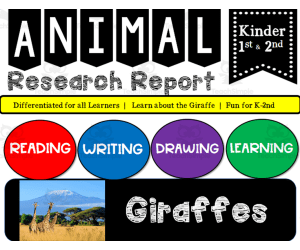
Zoo Animal Research Writing Project on GIRAFFES for K-2nd Grade
Life Studies, ELA, Reading, Writing, Science, Life Sciences, Animals, Research, Kindergarten, Grade 1, 2, Lesson Plans, Teacher Tools, Worksheets & Printables, Worksheets
Animal Research Writing Project on Giraffes for Kindergarten - 2nd Grade This engaging informational writing project teaches students key facts about giraffes while building research, reading, and writing skills. With 19 pages of activities, this unit will guide learners to read age-appropriate information on giraffe traits and habitats, collect important details, organize notes, practice writing sentences, and create a mini-book report. The materials incorporate several colorful photographs, drawing prompts, differentiated graphic organizers and writing pages to accommodate various ability levels. Students will strengthen literacy abilities as they read for understanding, summarize main points, compose organized paragraphs, and share their knowledge. Appendix includes bonus units on additional animals. The giraffe unit can be implemented in small groups or whole class to bolster research skills. Writing templates scaffold the process for emerging writers by providing sentence starters, self-checking features and festive design. Teachers appreciate the ready-to-use package covering reading, note-taking, drafting, illustrating, and publishing. Engage your class in meaningful informational writing with this standards-based project. For additional Zoo Animal reports, click on the following links below: Animal Research Writing Project on TIGERS for K-2nd Grade Animal Research Writing Project on MONKEYS for K-2nd Grade Animal Research Writing Project on PANDAS for K-2nd Grade Animal Research Writing Project on HIPPOS for K-2nd Grade Animal Research Writing Project on ELEPHANTS for K-2nd Grade Animal Research Writing Project on GIRAFFES for K-2nd Grade Here are even more informational resources on report writing for OCEAN ANIMALS. Click on the links below: Animal Research Writing Project on WHALES for K-2nd Grade Animal Research Writing Project on the OCTOPUS for K-2nd Grade Animal Research Writing Project on SEA TURTLES for K-2nd Grade Animal Research Writing Project on ORCAS for K-2nd Grade Animal Research Writing Project on the SHELLFISH for K-2nd Grade Animal Research Writing Project on DOLPHINS for K-2nd Grade Animal Research Writing Project on SEALS for K-2nd Grade
Author K-5 Treasures
Tags Animal Research, Informational Writing, Writing Report, Giraffes, Report On Giraffes, Zoo Animals, Report On Animals, Report On Zoo Animals, 1st Grade Writing, 2nd Grade Writing

Beginner AI Chatbot Safety & Prompt Practice Worksheets
Resources for Teachers, Classroom Management, Community Building, Technology, Science, Computer Science, Engineering, Research, Special Resources, Social Emotional Learning (SEL), Preschool, Grade 1, 2, 3, 4, 5, 6, Teacher Tools, Lesson Plans, Presentations, Assessments, Worksheets & Printables, Flashcards, Worksheets, Word Searches, Writing Prompts, Workbooks
This professionally designed 36-page AI Chatbot Safety and Prompt Practice Workbook provides educators and parents with the comprehensive guidance needed to help their 6–9 year-old students develop literacy skills while learning how to safely work with AI chatbots as powerful tools rather than friends, maintain safe digital boundaries, protect their personal identifiable information (PII), create clear and effective prompts using the “Three-Part Recipe”, practice digital kindness, verify the accuracy of AI-generated content, and develop strong literacy skills through the use of iterative questioning. This resource can be used in any learning environment including traditional classrooms, homeschooling, after-school programs, or family time on electronics. Key features include: - Aligned with the Piaget and Vygotsky constructivist theory and early literacy standards - Ten printable worksheets (e.g. fill-in-the-blank, matching, true/false, scenario) - Teacher/parent guide with theory, case studies, and strategies for implementation - Visual aids (e.g. mind maps, flowcharts), and the "Digital Safety Ecosystem" infographic - Complete answer key for easy assessment - No-prep, print-and-go format (PDF) - Ideal for introducing safe use of ChatGPT/AI tools, prompt engineering, and digital citizenship prior to students' access to full AI tools. Why Parents and Schools Are Interested To Use It : -Creates a lifetime of Real World safety habits around Digital use by teaching children to never share names, addresses, schools or emotions with AI preventing privacy issues before they happen. -Allows for Literacy development through AI use. Making writing Prompts fun iterative writing exercises will enhance vocabulary, specificity, sentence structure and critical thinking. -Cost effective for busy parents and teachers who can print everything out with a simple to follow directions, pictures and answer key - great for morning work, tech centers S.E.L. lessons or home school tech units. -Removes worries about AI in the classroom by providing a structured researched based blueprint for educators and families to use to introduce chat-bots without the fear of misuse or becoming overly reliant upon. -Fun and easy for children to learn about safety through stories, fun Prompts and activities, "Digital Detective" activity, so they will actually look forward to learning and following safe and responsible use of digital technology. Target Audience / Students Grades : Kindergarten & 4th/5th Grades are not targeted (English). The curriculum is developed with 1st through 3rd grade (ages 6-9) only - early elementary children who are in the concrete operational cognitive development stage; therefore, the curriculum utilizes concrete metaphors (e.g.; recipe, blueprint, vault, shield), large print for worksheets, and has scenarios appropriate for a given age, such as bats/frogs/knights/dinosaurs. This is not appropriate for kindergarten or 4th grade and beyond as the language and activity levels are too elementary for 4th and older students, and also too advanced for pre-k. Copyright/Terms and Use : The content of these pages is under copyright by Syed Hammad Rizvi, and it is for your personal use or classroom use only (meaning only one person will use it) You may not change or share any portion of these pages with anyone else or post them online for others to find and download. If you would like to share this resource with someone else or would like to share it with your colleagues, please purchase an additional license from Teachsimple. Your compliance with this Copyright/Terms of Use will greatly help us in continuing to provide content/resources. Syed Hammad Rizvi would like to express his thanks for purchasing these products.
Author Creative Book Store
Rating
Tags Ages6to9, Grades1to3, AISafetyForKids, ChatGPTForKids, AIForElementary, PromptEngineeringForKids, KidsAged6to9, AIForAges6to9, EarlyElementaryAI, DigitalLiteracyWorksheets
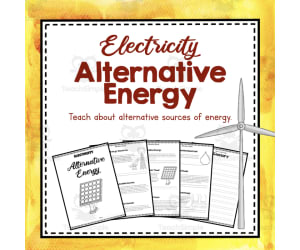
Electricity Unit Study | Alternative Energy
Science, Physics, Grade 3, 4, 5, Lesson Plans, Teacher Tools
Electricity Unit Study | Alternative Energy An engrossing and comprehensive teaching resource, the 'Electricity Unit Study | Alternative Energy' is perfect for Grade 3 to 5 educators. Tailored specifically to enhance an Electricity Unit Study, this detailed guide dives deep into the world of alternative energy - a hot topic in today's society. Its ability to provide students with ample opportunities to both learn about alternative energy as well as apply their newfound knowledge sets it apart. Booklet Content: Captivating descriptions of clean energy resources. Invaluable insights into nonrenewable and renewable sources. A look at solar and wind power. An exploration of biomass and biodiesel fuel innovations. A detailed grasp on tidal and hydro power practices. A firsthand view at geothermal power potentialities. Different Styles: This resource offers booklets in four different styles, allowing teachers full flexibility in implementation. These are ideal for whole group instruction or small group work. Promoting Hands-on Learning: This guide promotes hands-on learning experiences with engaging science experiments that relate directly to each lesson taught; stimulating exploration among young learners. Do bear in mind that planning ahead for experiment materials is crucial The booklets can be used as references when writing reports.(Encourages Critical Thinking!) -or-, between sentences. Add a bullet list item (Changed placement) . Change a sentence or two around: Find patterns or recurring phrases ? Oral presentations to foster team building skills. Final Take: The 'Electricity Unit Study | Alternative Energy' having twenty-three content-rich pages comes in an incredibly easy-to-use PDF file format. This indispensable tool for in-class instruction, homework assignments, and integrated small group activities can enhance your Physical Science teaching capacity. Start incorporating this versatile resource into your educational initiatives today!
Author Simply Schoolgirl
Tags Electricity, Alternative Energy, Renewable Sources, Science Experiments, Teaching Resource
I WONDER - What Is Special About The Moon Ganymede | Animated Video
Space, Earth and Environmental Sciences, Science, Grade 4, 5, 6, 7, 8, 9, 10, Lesson Plans, Teacher Tools
Video Introduction An amazing video designed for the students to learn more about space facts. I WONDER - What Is Special About The Moon Ganymede | Animated Video Lesson Have you ever thought about travelling to space?! Join us with this amazing video about The Moon Ganymede. Can you name any three facts about The Moon Ganymede? How amazing is space! Let's discover some amazing facts about planets and moons! Do you know that we have two kinds of planets in our solar system? Can you name the planets based upon their core type? I WONDER - What Is Special About The Moon Ganymede | Animated Video Lesson The video is perfect for encouraging the researching skills for the students, while learning more about the fantastic space. I WONDER - What Is Special About The Moon Ganymede | Animated Video Lesson This friendly designed video is suitable for students at school, homeschooling, and as a group activity. Format Available in MP4 format.
Author Educational Voice
Rating
Tags What Is Special About The Moon Ganymede, Moon Ganymede, Moon Ganymede Facts, Moon Ganymede Facts For Kids, Moon Ganymede Video, Moon Ganymede Video For Kids, Moons, Moons Facts

Force: Other Forces That Act Without Touching Gr. 5-8
Science, Physics, Grade 5, 6, 7, 8, Teacher Tools, Lesson Plans
"Force: Other Forces That Act Without Touching Gr. 5-8" This teaching tool is designed specifically to enhance the understanding of the complex world of physical forces for students in grades 5 through 8, focusing on those forces that work without touching. Main Topics Covered: Balanced and unbalanced forces Weight, gravity, magnetic, and electrostatic forces This resource helps students visualize these usually invisible phenomena. By studying it, students will understand how various forces influence an object's total force. Complex scientific principles are simplified into easily digestible chunks for young learners. Pedagogical Approaches: The product can fit into different teaching scenarios: Whole Group Instruction: during class periods Small Group Studies : after school hours Homeschooling Efforts: serves as homework assignments! Also suitable for exam prep due to its quizzes feature. Note: The product comes with visually pleasing color 'mini posters' . This comprehensive kit aligns seamlessly with STEM initiatives within your State Standards making it highly beneficial educational tool whether you're instructing science lessons at public schooling institutions or spearheading homeschooling efforts! Intrinsically rewarding - there's nothing much quite like unraveling mysteries of the universe together with your pupils!
Author Classroom Complete Press
Tags PDF

Aerobic Respiration - Glycolysis & Pyruvate Oxidation - Biology lesson
Science, Life Sciences, Biology, Grade 11, 12, Teacher Tools, Lesson Plans
Introduction to Cellular Respiration & Fermentation - High School Biology lesson Your lesson covers glycolysis and pyruvate oxidation in detail. In order, the lesson teaches; why we need Cellular Respiration, Glycolysis, the 10 Steps of Glycolysis, the Net Reaction of Glycolysis, and Pyruvate Oxidation. Your lesson includes the teacher and student version of the presentation, six embedded videos, an auto-graded exit ticket, and a student lesson handout so the students can record the notes on a more condensed medium. This lesson is designed to be your go-to resource, whether you're in a traditional classroom or a virtual one. With both a teacher version and a student version, it seamlessly fits into your lesson plans, making learning engaging and adaptable. Assessment made easy We've included an auto-graded Exit Ticket and a quiz with an answer key because I know you don't have an excess of time. I know you don't, because I don't and I know I'll do whatever I can to reduce my grading time. Whether you use PowerPoint or Google Slides, prefer Word or Google Docs, this lesson has you covered. This lesson comes in both Office and Google formats for your convenience. The student version of the presentation has strategically placed blanks for them to fill in as you're teaching. It keeps them active and engaged, encourages discussion, and leaves more time for those "aha" moments.
Author Teach With Fergy
Tags Senior Biology, Biology Lesson, Aerobic Respiration, Glycolysis, Pryuvate, ETC, Cellular Respiration, Pyruvate Oxidation

I WONDER - What Does Debugging Mean | Animated Video Lesson
STEM, Science, Computer Science, Technology, Grade 6, 7, 8, 9, 10, 11, 12, Lesson Plans, Teacher Tools
Video Introduction An amazing video designed for the students to learn more about STEM. I WONDER - What Does Debugging Mean | Animated Video Lesson Do you like STEM subjects? what is your favorite one? Have you ever tried to plant a seed? If yes, tell us more about it. Or have you ever tried to invent something? If yes, tell us more about it. And how do you think it will help us? Have you ever seen a microorganism under a microscope? What was it? And how it looked like? Mathematics is a marvelous subject. Let' sharpen our brains and solve some equations. Do you like timetable tricks? What is your favorite one? Do you know how to code? Have you ever created an app or a game before? If yes, how was it like? I WONDER - What Does Debugging Mean | Animated Video Lesson The video is perfect for encouraging the researching skills for the students, while learning more about this fantastic topic. I WONDER - What Does Debugging Mean | Animated Video Lesson This friendly designed video is suitable for students at school, homeschooling, and as a group activity. Format Available in MP4 format.
Author Educational Voice
Tags What Does Debugging Mean, What Does Debugging Mean Video, Debugging Mean, Debugging Mean Facts, Debugging Mean Facts For Kids, Debugging Mean Video, Debugging Mean Video For Kids

I WONDER - What Are Non-metals | Animated Video Lesson
Science, Chemistry, Grade 6, 7, 8, 9, 10, 11, 12, Lesson Plans, Teacher Tools
Video Introduction An amazing video designed for the students to learn more about STEM. I WONDER - What Are Non-metals | Animated Video Lesson Do you like STEM subjects? what is your favorite one? Have you ever tried to plant a seed? If yes, tell us more about it. Or have you ever tried to invent something? If yes, tell us more about it. And how do you think it will help us? Have you ever seen a microorganism under a microscope? What was it? And how it looked like? Mathematics is a marvelous subject. Let' sharpen our brains and solve some equations. Do you like timetable tricks? What is your favorite one? Do you know how to code? Have you ever created an app or a game before? If yes, how was it like? I WONDER - What Are Non-metals | Animated Video Lesson The video is perfect for encouraging the researching skills for the students, while learning more about this fantastic topic. I WONDER - What Are Non-metals | Animated Video Lesson This friendly designed video is suitable for students at school, homeschooling, and as a group activity. Format Available in MP4 format.
Author Educational Voice
Tags What Are Non-metals, What Are Non-metals Video, Non-metals, Non-metals Video, Non-metals Facts, Non-metals Facts For Kids, Non-metal, Non-metals Facts Video For Kids, Non-metals Video For Kids

I WONDER - Do All Wolf Howls Sound The Same | Animated Video Lesson
Animals, Life Sciences, Science, Grade 4, 5, 6, 7, 8, 9, 10, Lesson Plans, Teacher Tools
Video Introduction Animal kingdoms are full of fascinating wonders to learn. This video is designed for the students to learn more about animals in different countries. I WONDER - Do All Wolf Howls Sound The Same | Animated Video Lesson Do you know what are axolotls? How do they look like and what is special about them? How does the angler fish glow? Do you where does the angler fish live? Can you name any other bioluminescent animal? How does the aye-aye lemur find food? Can you name any other lemurs? and where do they live? Are wolves loyal to their mates? Do all wolf howls sound the same? What is your favourite animal? Where does it live? Can you name any of the animals kingdoms? Do you have a pet animal? If yes, tell us what its name and what kind of animal, bird or fish is it? Format Available in MP4 format.
Author Educational Voice
Rating
Tags Do All Wolf Howls Sound The Same, Wolf Howl, Wolf Howl Facts, Wolf Howl Facts For Kids, Wolf Howl Video, Wolf Howl Video For Kids, Wolf, Wolf Facts, Wolf Video, Wolf Facts For Kids
I WONDER - What Are The Different Layers Of The Earth | Animated Video
Earth Sciences, Earth and Environmental Sciences, Science, STEM, Grade 5, 6, 7, 8, 9, 10, 11, Lesson Plans, Teacher Tools
Video Introduction An amazing video designed for the students to learn more about famous places in different countries. I WONDER - What Are The Different Layers Of The Earth | Animated Video Lesson What do you know about this place? Do you know in which part of the world it is? Have you ever visited this place? If yes, can you tell us more about your adventure, and what do you like the most about this place? Do you like reading about Geography? What is your favorite country in the whole world? If you are going on a trip where it will be? Which country? What you are going to see there? Does this country has a famous place to visit? I WONDER - What Are The Different Layers Of The Earth | Animated Video Lesson The activity is perfect for encouraging the researching skills for the students, while learning more about this fantastic place. I WONDER - What Are The Different Layers Of The Earth | Animated Video Lesson This friendly designed video is suitable for students at school, homeschooling, and as a group activity. Format Available in MP4 format.
Author Educational Voice
Tags What Are The Different Layers Of The Earth, What Are The Different Layers Of The Earth Video, Different Layers Of The Earth, Different Layers Of The Earth Video, Different Layers Of The Earth Video For Kids, Different Layers Of The Earth Facts
I WONDER - How Big Are Asteroids | Animated Video Lesson
Space, Earth and Environmental Sciences, Science, Grade 2, 3, 4, 5, 6, 7, 8, Lesson Plans, Teacher Tools
Video Introduction An amazing video designed for the students to learn more about space facts. I WONDER - How Big Are Asteroids | Animated Video Lesson Have you ever thought about travelling to space?! Join us with this amazing video about asteroids. Do you think an asteroid could be a planet some day? How amazing is space! Let's discover some amazing facts about planets and asteroids! Do you know that we have two kinds of planets in our solar system? Can you name the planets based upon their core type? I WONDER - How Big Are Asteroids | Animated Video Lesson The video is perfect for encouraging the researching skills for the students, while learning more about the fantastic space. I WONDER - How Big Are Asteroids | Animated Video Lesson This friendly designed video is suitable for students at school, homeschooling, and as a group activity. Format Available in MP4 format.
Author Educational Voice
Rating
Tags How Big Are Asteroids, Asteroids, Asteroids Facts, Asteroids Video, Asteroids Video For Kids, Space, Space Facts, Space Video, Space Facts For Kids, Space Video For Kids

I WONDER - Why Can We Only See One Side Of The Moon | Animated Video
Space, Earth and Environmental Sciences, Science, Grade 6, 7, 8, 9, 10, 11, 12, Lesson Plans, Teacher Tools
Video Introduction An amazing video designed for the students to learn more about space facts. I WONDER - Why Can We Only See One Side Of The Moon | Animated Video Lesson Do you like reading about space? If yes, what is your favorite topic? What do you know about our solar system? What is the smallest planet in our solar system? What is the biggest planet in our solar system? What is the hottest planet in our solar system? And what is the coldest one? Do you think there are aliens? If yes, what do you think they look like? What do they eat and how they speak to each other? Where do they live? What is a galaxy? And what is a milky way? Have you recently saw a shooting star? If yes, tell us more about it, like when did it happen and where? What is a blackhole? Can a blackhole gets bigger by time? Do you like counting the stars? What do you think a star is made of? I WONDER - Why Can We Only See One Side Of The Moon | Animated Video Lesson The video is perfect for encouraging the researching skills for the students, while learning more about the fantastic space. I WONDER - Why Can We Only See One Side Of The Moon | Animated Video Lesson This friendly designed video is suitable for students at school, homeschooling, and as a group activity. Format Available in MP4 format.
Author Educational Voice
Tags Why Can We Only See One Side Of The Moon, Why Can We Only See One Side Of The Moon Video, The Moon, The Moon Facts, The Moon Facts For Kids, The Moon Video, The Moon Video For Kids

Guided Reading Level N - Manchester (with Lesson Plan)
ELA, Resources for Teachers, Reading Comprehension, Reading, Social Studies, Geography, Earth and Environmental Sciences, Science, History, Economics, Grade 2, 3, 4, Worksheets & Printables, Worksheets, Teacher Tools, Centers, Activities, Literacy Readers, Quizzes, Quizzes and Tests, Assessments, Lesson Plans
This Guided Reading Book - Manchester (Level N) with lesson plan includes: Guided Reading Color Label (front cover x1) This is a quick way to match the book’s demands to what students can generally handle.. The overall goal is to use the level/color to pick books for several smaller groups. To qualify for a certain level, a student is expected to read a book from that level with about 90–94% accuracy. If a student is consistently accurate and understands, move up a level. If the student is struggling at that level, drop down and add more support. Each student will improve at completely different rates, but it is generally one of the best ways to check progress across the class. DOWNLOAD THE CATALOG TO VIEW ALL GUIDED READING BOOKS AVAILABLE (SORTED LEVELS A-Z) Pre-Reading Question (x1) Teacher asks the prompt aloud, can be while showing the cover or first page. Students share what they already know, or make educated guesses from the cover. Prompt them to use the target vocabulary. Write some of their responses on the board to look back at during the reading. Vocabulary Words (x5) Introduce the five words, best doing it one at a time. Start by saying it, while students repeat and then see if anyone knows what it means before reading further. Read through the meaning and try to briefly connect each word to a picture or gesture so it’s meaningful. Ask students to flip through the book pages and point to where they see each of the vocabulary words. While reading the book pause upon coming across one of the vocab words or read the sentence twice to make sure students understand the word has appeared. Optional: Ask students to raise hands whenever they see/hear one of the new words. Guided Reading Pages (x10) Check the book snapshot (below) for: primary topic - do you need to prep extra reading or intro materials on this? what is taught best - decide on 1-2 bullets to focus on, use the prompt or words provided here for best results. learning goals - what you are checking for students to be able to do after the session, elicit answers using prompts or words provided. key vocabulary (see section above). questions overview - so you know what is coming up and if you need to prep extra materials to assist understanding. Run the lesson You may have already looked at a few of the pages together, but you can show them some of the pictures again first to set meaning. Depending on how much time you have and how familiar your students are with guided reading class, you may want to read the book aloud first with the group first. Students whisper or partner read, while you listen in. If time, do it as a group, one student reading a page each. Use the guided page’s prompts to coach: “Check the picture / does it make sense?” “Point under the words / try the first sound” “Reread the sentence smoothly”. Try to focus more on one student per session (rotating every time), so you can work out if they are ready to move up or need to move down a level. Comprehension Questions (back cover x3) This is your way to check that students didn’t just say the words, but actually understood the text. First, let students answer by pointing to the page/picture and saying a short sentence. After any answer, follow with: “Show me where you found that in the text.” In bigger groups, have partners answer first (10–20 seconds), then call on 2–3 students to share. Differentiation tips: Emerging speakers/struggling readers: oral + pointing On-level: oral in a full sentence Higher: one written sentence or draw + label Book Snapshot Title: World Cities: Manchester Genre: Nonfiction (informational text) Subject: Social Studies (Geography) Primary Topic: Manchester’s location, waterways, climate, and growth Estimated Guided Reading Level (A–Z): N What This Book Teaches Best How Manchester’s location and landform (a bowl-shaped plain) help describe where the city sits and what surrounds it. How waterways shape a city’s geography, including the River Irwell as a border and nearby rivers that join it. How people changed transportation and trade by building the Manchester Ship Canal to connect the inland city to the Irish Sea. How weather and climate connect to land features, including nearby hills trapping clouds and creating frequent grey skies and light rain. How Manchester has changed over time, from textile mills in the 1800s to a skyline with new skyscrapers in recent years. Learning Goals Students will identify where Manchester is located in England using details from the text. Students will describe how Manchester’s rivers and waterways affect the city’s geography. Students will explain why the Manchester Ship Canal was built and what it connects to. Students will describe Manchester’s temperate maritime climate using evidence from the text. Students will explain how damp air influenced textile mills in the 1800s, according to the text. Students will describe one way Manchester’s city center or skyline has changed, using text details. Key Vocabulary From the Text waterways — rivers or channels that water flows through. terrain — what the land is like. maritime — connected to the sea or ocean. municipal — belonging to a city or town. skyscrapers — very tall buildings with many floors. Discussion Prompts Pre-reading question: How might rivers, hills, and weather shape what a city becomes like? Comprehension questions: Where does the text say Manchester is located in England? Comprehension questions: What did the Manchester Ship Canal connect Manchester to? Comprehension questions: According to the text, how did damp air help cotton threads in the 1800s? Printing Tips 1. Best Printing Method (Recommended) “Booklet” Printing (Best if Available) If your printer or PDF viewer supports Booklet Printing , use this. Settings to use: Print mode: Booklet Paper size: Letter or A4 (either works) Orientation: Landscape Print on both sides: Yes Flip on: Short edge Scaling: Fit to printable area Booklet subset: First test: Front sides only Then: Back sides only This will automatically: Pair pages correctly Put the cover on the outside Align everything for folding After printing, fold in half and staple along the spine . 2. If “Booklet” Printing Is NOT Available You can still print this correctly with manual duplex printing . Step-by-step: Open the PDF. Choose Print . Set: Orientation: Landscape Pages per sheet: 1 Print on both sides: Yes Flip on: Short edge Print all pages . Because each PDF page already contains two facing book pages, the result will still fold cleanly into a book. Thousands of Cored Education products are included with your TeachSimple membership. Download links and encyclopedia index available here.
Author Cored Education
Rating
Tags Reading Comprehension, Reading Passages, Reading, Guided Reading, Guided Reading Lesson Plan, Guided Reading Activity, Pre-reading, Geography, Social Studies Lesson Plans, History
I WONDER - How Long Have Octopi Existed | Animated Video Lesson
STEM, Biology, Life Sciences, Science, Animals, Grade 1, 2, 3, 4, 5, 6, 7, 8, Lesson Plans, Teacher Tools
Video Introduction Animal kingdoms are full of fascinating wonders to learn. This video is designed for the students to learn more about animals in different countries. I WONDER - How Long Have Octopi Existed | Animated Video Lesson Do you like animals? what is your favorite one? Do you own a pet? If yes, tell us more about it, like what its name? And what do you like most about it? What are the animal kingdoms? Can you write down the characteristics of each animal class like mammals, birds, reptiles, amphibian, fish and mollusks. Do you know that some animals can sing, can you name any of them? What is the largest and the smallest mammal in the world? What is the largest and the smallest bird in the world? What is the largest and the smallest fish in the world? I WONDER - How Long Have Octopi Existed | Animated Video Lesson The video is perfect for encouraging the researching skills for the students, while learning more about these fantastic animals. I WONDER - How Long Have Octopi Existed | Animated Video Lesson This friendly designed video is suitable for students at school, homeschooling, and as a group activity. Format Available in MP4 format.
Author Educational Voice
Tags How Long Have Octopi Existed, How Long Have Octopi Existed Video, Octopi, Octopi Facts, Octopi Facts For Kids, Octopi Video, Octopi Video For Kids, Octopus, Octopus Facts, Octopus Video

Electricity Unit Study | Electricity in Nature
Science, Physics, Grade 3, 4, 5, Lesson Plans, Teacher Tools
Electricity Unit Study | Electricity in Nature Delve into the fascinating topic of electricity, specifically focusing on its occurrences in nature with this targeted teaching resource. This thoughtfully composed learning material is designed to seamlessly connect to your existing Electricity Unit Study and offers multiple avenues for your students to appreciate, understand and delve deeper into this branch of energy. This teaching resource places a keen focus on 'Electricity in Nature.' Your students will be engagingly introduced and guided through discussions about locations where we observe electricity occurring naturally. Lightning- understanding leads to safety awareness Electric fish- deep sea marvels generate their own electricity, Internal body charges- the bioelectricity present within our own bodies, Solar storms- one of universe's most powerful displays of natural electricity, Aurora borealis - a celestial canvas lit by nature’s own energy paintbrush. You can use this effective booklet tool how you see best fit; opt for full-size or half-size printouts depending on whether it's one-on-one learning or grouped reading sessions. Offering options in both color or black-and-white styles allows you an added layer to personalize the experience for your student demographic while considering economical usage of resources too! The possibilities with this unit study are practically endless! Have your students write their own comprehensive booklets as part of project work; use the content within as groundwork towards compiling detailed reports or even delivering captivating oral presentations . It also serves as an initiative kickstarter and guidepost for undertaking group projects related to these topics. A call-to-action: What are you waiting patiently for? Look ahead, gather materials along with all available resources, stitch together a comprehensive perspective taking in-depth cues from our recommendations, and start lighting up those young minds through lessons on 'Electricity in Nature'. Best wishes as you proceed forward igniting sparks while teaching about electricity!
Author Simply Schoolgirl
Tags Electricity, Nature, Lightning, Electric Fish, Bioelectricity

I WONDER - Is Python Easy To Debug | Animated Video Lesson
STEM, Computer Science, Technology, Science, Grade 6, 7, 8, 9, 10, 11, 12, Lesson Plans, Teacher Tools
Video Introduction An amazing video designed for the students to learn more about STEM. I WONDER - Is Python Easy To Debug | Animated Video Lesson Do you like STEM subjects? what is your favorite one? Have you ever tried to plant a seed? If yes, tell us more about it. Or have you ever tried to invent something? If yes, tell us more about it. And how do you think it will help us? Have you ever seen a microorganism under a microscope? What was it? And how it looked like? Mathematics is a marvelous subject. Let' sharpen our brains and solve some equations. Do you like timetable tricks? What is your favorite one? Do you know how to code? Have you ever created an app or a game before? If yes, how was it like? I WONDER - Is Python Easy To Debug | Animated Video Lesson The video is perfect for encouraging the researching skills for the students, while learning more about this fantastic topic. I WONDER - Is Python Easy To Debug | Animated Video Lesson This friendly designed video is suitable for students at school, homeschooling, and as a group activity. Format Available in MP4 format.
Author Educational Voice
Tags Is Python Easy To Debug, Is Python Easy To Debug Video, Python, Python Facts, Python Video, Python Video For Kids, Debug, Debug Facts, Debug Video, Debug Video For Kids
Hands-On - Life Science: Adaptations Gr. 1-5
Science, Life Sciences, Biology, Grade 1, 2, 3, 4, 5, Teacher Tools, Lesson Plans
Hands-On Life Science: Adaptations Gr. 1-5 A comprehensive teaching resource designed to attract and maintain the curiosity of young learners from grades 1 to 5. This tool adheres to STEAM (Science, Technology, Engineering, Art, Math) guidelines and aligns with the Next Generation Science Standards. Constructively put together for educators like public school teachers and homeschoolers alike; this product aims to provoke inquisitiveness about the magnificent tapestry that is our world. It encourages students to unravel how every organism coexists on this planet through engaging interactive activities propelling life science lessons beyond textbook theory. Main Focus Areas The core content revolves around exploring inherited traits and various adaptational dynamics at play in biology. A substantial part of understanding these concepts involves experimentation; hence various hands-on experiments are incorporated throughout the material for an immersive learning experience. Pedagogical Methods Employed: Inclusive of reading passages - perfectly suited for whole-group or individual study session forming an integral part of conceptual comprehension. The use of graphic organizers custom-built for easy visual storage and pullout of information – well-tailored during small group instruction or as a collaborative classroom activity . The integration of 'Before you read' activities within the educational product making it versatile enough for homework assignments or as stimulating classroom training promoting active learning that fosters higher order thinking skills. Note: An important element built into this teaching plan is accuarate assessment; judiciously curated evaluation activities are included in subsequent sessions paving way for formative assessments gauging iterative student’s progress . This structured resource, maintaining succinctness throughout its presentation, fitting perfectly across a range of domains including comprehensive lesson plans. Overall, this hands-on life science tool aids teachers to effectively shape future scientists by simplifying comprehension of complex biological processes. Delivered as a PDF file, this resource brings flexibility and ease of access at the fingertips of educators striving for quality instruction in contemporary science education scenery.
Author Classroom Complete Press
Tags Adaptations, Traits, Life Science, Experiments, Hands-on
I WONDER - What Does A Seed Need | Animated Video Lesson
Nature & Plants, Life Sciences, Science, Grade 4, 5, 6, 7, 8, 9, 10, Lesson Plans, Teacher Tools
Video Introduction An amazing activity designed for the students to learn more about STEM. I WONDER - What Does A Seed Need | Animated Video Lesson Do you like STEM subjects? what is your favorite one? Have you ever tried to plant a seed? If yes, tell us more about it. Or have you ever tried to invent something? If yes, tell us more about it. And how do you think it will help us? Have you ever seen a microorganism under a microscope? What was it? And how it looked like? Mathematics is a marvelous subject. Let' sharpen our brains and solve some equations. Do you like timetable tricks? What is your favorite one? Do you know how to code? Have you ever created an app or a game before? If yes, how was it like? I WONDER - What Does A Seed Need | Animated Video Lesson The video is perfect for encouraging the researching skills for the students, while learning more about this fantastic topic. I WONDER - What Does A Seed Need | Animated Video Lesson This friendly designed video is suitable for students at school, homeschooling, and as a group activity. Format Available in MP4 format.
Author Educational Voice
Tags What Does A Seed Need, What Does A Seed Need Video, Seed, Seeds, Seeds Fact, Seeds Fact For Kids, Plant, Plants, Plants Facts For Kids, Plants Facts Video
Climate Change: Reduction: Urban Planning Gr. 5-8
Science, Earth and Environmental Sciences, Environmental Science, Grade 5, 6, 7, 8, Teacher Tools, Lesson Plans
Climate Change: Reduction: Urban Planning Gr. 5-8 An exceptional teaching resource specifically designed for grades 5 through 8, aimed at integrating the complex concepts of climate change and sustainability into classroom learning. Primary Focus: Presents urban planning as a significant solution to reduce human consumption and waste production. Contrasting viewpoints are well-handled, presenting balanced perspectives for both climate change advocates and skeptics. Critical exploration of the potential future of our planet if we fail to control rising temperatures. Bloom’s Taxonomy Application: The proven framework is utilized in structuring this educational material: Creativity fostering activities: Students design an eco-friendly vehicle using alternative fuel sources. Further, they investigate other transportation methods around their area with self-designed interactive leaflets! Understanding industrial impacts on environment: Examination of product life cycles facilitates understanding on how industries can reduce emissions to protect our environment better. Sustainable city planning task: Additionally, students are tasked with creating a sustainable green city plan that incorporates clean energy practices- a grand exercise engaging their imagination to its fullest! In-depth study into green building technologies is facilitated, along with comparison studies between international efforts towards building CO2-free communities sustained by efficient waste disposal systems. Evaluation Components includes fun-filled elements like : Crossword puzzles Word searches Comprehension quizzes which comes with answer keys All designed to test understanding levels while being light-hearted Adaptability : This resource is significantly adaptable for whole-class instruction, targeted small group intervention, or homework assignments as required. User-Friendly Packaging: All the instructional resources come packaged in a single product file formatted as PDF—ensuring ease-of-use under varying learning conditions while underlining crucial environmental duties among young learners.
Author Classroom Complete Press
Tags PDF
I WONDER - Who Invented Concrete | Animated Video Lesson
History: Europe, History, Social Studies, History: Ancient, Inventors, Basic Science, Science, Grade 5, 6, 7, 8, 9, 10, 11, Lesson Plans, Teacher Tools
Video Introduction An amazing video designed for the students to learn more about history. I WONDER - Who Invented Concrete | Animated Video Lesson Do you like history? Which topic do you really enjoy about history? Have you ever read an interesting fact about the Vikings? If yes, can you mention them? What do you like most about the Victorian era? Can you name all the Tudors? Have you ever wondered how people used to live in ancient Japan and ancient China? Do you know any interesting facts about ancient Egyptians and the Pharaohs? Have you ever visited South America? What do you know about Incas and Aztecs? Celtic culture was really one of a kind, can you name any of the places that Celts used to live in? Imagine yourself living during the ancient Roman empire, how your life will look like? Ancient Greece was an amazing place to live in. What do you know about ancient Greek life? I WONDER - Who Invented Concrete | Animated Video Lesson The video is perfect for encouraging the researching skills for the students, while learning more about history. I WONDER - Who Invented Concrete | Animated Video Lesson This friendly designed video is suitable for students at school, homeschooling, and as a group activity. Format Available in MP4 format.
Author Educational Voice
Tags Who Invented Concrete, Who Invented Concrete Video, Concrete, Concrete Facts, Concrete Invention, History Of Concrete, Concrete Facts For Kids, History Of Concrete Facts, History Of Concrete Video

I WONDER - How Is Chocolate Made | Animated Video Lesson
Chemistry, Science, STEM, Grade 5, 6, 7, 8, 9, 10, 11, Lesson Plans, Teacher Tools
Video Introduction An amazing video designed for the students to learn more about STEM. I WONDER - How Is Chocolate Made | Animated Video Lesson Do you like STEM subjects? what is your favorite one? Have you ever tried to plant a seed? If yes, tell us more about it. Or have you ever tried to invent something? If yes, tell us more about it. And how do you think it will help us? Have you ever seen a microorganism under a microscope? What was it? And how it looked like? Mathematics is a marvelous subject. Let' sharpen our brains and solve some equations. Do you like timetable tricks? What is your favorite one? Do you know how to code? Have you ever created an app or a game before? If yes, how was it like? I WONDER - How Is Chocolate Made | Animated Video Lesson The video is perfect for encouraging the researching skills for the students, while learning more about this fantastic topic. I WONDER - How Is Chocolate Made | Animated Video Lesson This friendly designed video is suitable for students at school, homeschooling, and as a group activity. Format Available in MP4 format.
Author Educational Voice
Rating
Tags How Is Chocolate Made, How Is Chocolate Made Video, Chocolate, Chocolate Facts, Chocolate Video, Chocolate Facts For Kids, Chocolate Video For Kids, Chocolate Science, Chocolate Science Video