



3,890 products added recently
Page 46 - Science Lesson Plan Template
Enhance your science instruction with a flexible lesson plan template designed for educators. This tool helps you structure objectives, materials, procedures, and assessments efficiently. Use it to create organized and impactful science lessons that cater to your students' needs.

 Show filters


I WONDER - What Are The Stages In The Water Cycle | Animated Video
Science, Earth and Environmental Sciences, Earth Sciences, Geology, Grade 4, 5, 6, 7, 8, 9, 10, Lesson Plans, Teacher Tools
Video Introduction An amazing activity designed for the students to learn more about STEM. I WONDER - What Are The Stages In The Water Cycle | Animated Video Lesson Do you like STEM subjects? what is your favorite one? Have you ever tried to plant a seed? If yes, tell us more about it. Or have you ever tried to invent something? If yes, tell us more about it. And how do you think it will help us? Have you ever seen a microorganism under a microscope? What was it? And how it looked like? Mathematics is a marvelous subject. Let' sharpen our brains and solve some equations. Do you like timetable tricks? What is your favorite one? Do you know how to code? Have you ever created an app or a game before? If yes, how was it like? I WONDER - What Are The Stages In The Water Cycle | Animated Video Lesson The video is perfect for encouraging the researching skills for the students, while learning more about this fantastic topic. I WONDER - What Are The Stages In The Water Cycle | Animated Video Lesson This friendly designed video is suitable for students at school, homeschooling, and as a group activity. Format Available in MP4 format.
Author Educational Voice
Tags What Are The Stages In The Water Cycle, What Are The Stages In The Water Cycle Video, Stages In The Water Cycle, Stages In The Water Cycle Video, Water Cycle, Water Cycle Facts, Water Cycle Facts For Kids

African Elephants | Interactive Science Lesson | Micro-Learning Deck
Science, Life Sciences, Animals, Grade 5, 6, 7, 8, Teacher Tools, Lesson Plans
African Elephants | Informative Science Lesson This digital slideshow lesson helps students develop their understanding of African elephants. Educators can use this multimedia resource to support science units on animal biology and ecosystems. The slideshow allows students to explore the characteristics and behavior of elephants through multiple learning formats. A video introduces key information to provide context and spark interest. Students can further develop knowledge by reading an informative passage with audio support for developing readers. Close reading questions facilitate text comprehension and analysis skills. A quick write activity synthesizes learning and enables students to explain what they have learned in their own words. With media-rich content sequenced to scaffold understanding, this resource promotes engagement for individual, small group, and whole-class instruction. The informal assessments integrated into the lesson allow educators to check comprehension and tailor subsequent learning activities. Suitable for grades 5-8 science curriculum.
Author Teach Me This
Tags African Elephants, Interactive Lesson, Short Reading Passage, Exit Ticket, Science Lesson

I WONDER - How Do Animals Adapt Throughout Their Life Cycle
Animals, Life Sciences, Science, Biology, Grade 6, 7, 8, 9, 10, 11, 12, Lesson Plans, Teacher Tools
Video Introduction An amazing video designed for the students to learn more about STEM. I WONDER - How Do Animals Adapt Throughout Their Life Cycle | Animated Video Lesson Do you like STEM subjects? what is your favorite one? Have you ever tried to plant a seed? If yes, tell us more about it. Or have you ever tried to invent something? If yes, tell us more about it. And how do you think it will help us? Have you ever seen a microorganism under a microscope? What was it? And how it looked like? Mathematics is a marvelous subject. Let' sharpen our brains and solve some equations. Do you like timetable tricks? What is your favorite one? Do you know how to code? Have you ever created an app or a game before? If yes, how was it like? I WONDER - How Do Animals Adapt Throughout Their Life Cycle | Animated Video Lesson The video is perfect for encouraging the researching skills for the students, while learning more about this fantastic topic. I WONDER - How Do Animals Adapt Throughout Their Life Cycle | Animated Video Lesson This friendly designed video is suitable for students at school, homeschooling, and as a group activity. Format Available in MP4 format.
Author Educational Voice
Tags How Do Animals Adapt Throughout Their Life Cycle, How Do Animals Adapt Throughout Their Life Cycle Video, Animals Adaptation, Animals Adaptation Facts, Animals Adaptation Facts For Kids, Animals Adaptation Video

Zebra Unit Study (Endangered Animals Lesson Plan, Videos, Activities)
ELA, Grammar, Reading, Language Development, Spelling, Writing, Science, Life Sciences, Animals, Grade 1, 2, 3, Lesson Plans, Teacher Tools
Zebra Unit Study (Endangered Animals Lesson Plans for Elementary Students) This 5-day NO PREP cross-curricular unit study teaches students about the endangered zebra through reading passages, videos, worksheets, spelling lists, writing prompts, coloring pages, and more. It covers language arts, science, research skills, and art. Teachers can easily customize the self-contained lesson plans for various ages, reading levels, and learning styles. Use it for whole class instruction, small groups, homework, or independent learning centers . The comprehensive unit engages students while teaching them about zebra conservation. It works well for grades 1-3 classrooms, homeschools, and cooperatives studying endangered species or African wildlife.
Author Heather Huhman
Tags Zebras, Africa, Grasslands, Savanna, Endangered Animals, Science, Zoology, Unit Study, Zebra Activities, Zebra Habitat School Project
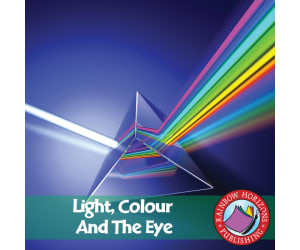
Light, Colour And The Eye Gr. 4-6
Science, Physics, Grade 4, 5, Teacher Tools, Lesson Plans
Light, Colour and the Eye Gr. 4-6 Teaching Resource Light, Colour and the Eye Gr. 4-6 is a crucial teaching resource engineered to aid in knowledge transmission across grades 4,5,and 6. This valuable tool primarily focuses on physical science uniting theories with practical experiments. Covered Topics Light/colour phenomena The visual capabilities of humans The intriguing world of luminous and illuminated objects Data on properties such as transparency, translucency, and opacity of various objects Fascinating Discoveries in Light's Properties: In this section, students get an opportunity to demystify concepts like light's ability to travel in straight lines and its refraction through prisms resulting into rainbow colours . The Human Eye Section: This section imparts knowledge about different parts of the eye via fun-filled experiments observIng pupil size changes under different situations & locating individual blind spots. Included Helpful Tools: Kid-engaging passages for reading, - Ensuring interaction between tutors & learners throughout study sessions. Crossword puzzle & Word search game/,/l> - Allowing participants to not only refresh memories but also enjoy lesson times by participation into thought-provoking activities accelerating learning process... A comprehensive assessment system combined with answer keys./,/l> This precious resource comes handy for whole class study plans or small group discussions aimed at specific lessons ensuring all-inclusive learning sessions making this knowledge disseminating process a fun-filled affair! A critical teaching aid available in an easily downloadable PDF format tailored specifically from Grade 4 to Grade 6, promising sure shot cognitive growth!
Author Classroom Complete Press
Tags PDF

Lesson Plan on Solar Eclipse
Space, Earth and Environmental Sciences, Science, Grade 3, 4, 5, Lesson Plans, Teacher Tools, Worksheets & Printables
Students in Grades 3 through 5 may learn about the amazing science underlying a solar eclipse with this entertaining and instructive worksheet. This downloadable resource, which is in line with classroom discussions and visual learning, introduces crucial words like umbra, penumbra, and antumbra while reinforcing fundamental ideas like the Sun, Moon, and Earth's alignment. A range of interactive exercises are included in the worksheet to improve understanding and critical thinking. Students will label diagrams, identify several eclipse types, match terminology to definitions, highlight safe viewing techniques, and fill in the spaces using what they have learned from the lesson. To make the eclipse experience more realistic in the classroom, a hands-on model exercise of commonplace items is also recommended. An answer key is included to support independent or guided learning. Ideal for use after watching the educational Dr. Binocs video on solar eclipses, this worksheet serves as both a fun follow-up and an effective assessment tool. Whether used in class or for homework, it helps young learners grasp this amazing celestial event in an age-appropriate and exciting way.
Author Bright Classroom Ideas Marketplace
Rating
Tags Solar, Eclipse, Lesson, Plan, Grade 3, Grade 4, Grade 5, Astronomy, Science, Worksheet

Caves and How They Form - Middle School Lesson
Science, Earth and Environmental Sciences, Environmental Science, Earth Sciences, Grade 7, 8, 9, Teacher Tools, Lesson Plans
Caves and How They Form - Middle School Earth Science lesson. Your lesson covers everything from the basics of what caves are to the fascinating world of speleology, cave formation, and the incredible features inside, like stalactites, stalagmites, and columns. Your lesson includes the teacher and student version of the presentation, five embedded videos, an auto-graded exit ticket, and a student lesson handout so the students can record the notes on a more condensed medium. This lesson is designed to be your go-to resource, whether you're in a traditional classroom or a virtual one. With both a teacher version and a student version, it seamlessly fits into your lesson plans, making learning engaging and adaptable. Assessment made easy We've included an auto-graded Exit Ticket and a quiz with an answer key – because who doesn't love saving time on grading? Whether you're a PowerPoint pro or a Google Slides user, prefer Word or Google Docs – we've got you covered. This lesson comes in both Office and Google formats for your convenience. The student version of the presentation has strategically placed blanks for them to fill in as you're teaching. It keeps them active, engaged, encourages discussion, and leaves more time for those "aha" moments.
Author Teach With Fergy
Tags Earth’s Elliptical Path , Earth’s Motion Around The Sun , The Seasons , Earth’s Tilt , Earth’s Revolution , Equinox , Perihelion , Aphelion

I WONDER - How Are Heat Waves Caused | Animated Video Lesson
Environmental Science, Earth and Environmental Sciences, Science, Earth Sciences, Grade 6, 7, 8, 9, 10, 11, 12, Lesson Plans, Teacher Tools
Video Introduction An amazing video designed for the students to learn more about STEM. I WONDER - How Are Heat Waves Caused | Animated Video Lesson Do you like STEM subjects? what is your favorite one? Have you ever tried to plant a seed? If yes, tell us more about it. Or have you ever tried to invent something? If yes, tell us more about it. And how do you think it will help us? Have you ever seen a microorganism under a microscope? What was it? And how it looked like? Mathematics is a marvelous subject. Let' sharpen our brains and solve some equations. Do you like timetable tricks? What is your favorite one? Do you know how to code? Have you ever created an app or a game before? If yes, how was it like? I WONDER - How Are Heat Waves Caused | Animated Video Lesson The video is perfect for encouraging the researching skills for the students, while learning more about this fantastic topic. I WONDER - How Are Heat Waves Caused | Animated Video Lesson This friendly designed video is suitable for students at school, homeschooling, and as a group activity. Format Available in MP4 format.
Author Educational Voice
Tags How Are Heat Waves Caused, How Are Heat Waves Caused Video, Heat Waves, Heat Waves Facts, Heat Waves Facts For Kids, Heat Waves Video, Heat Waves Video For Kids, Heat Wave, Environment
I WONDER - How Do Heat Waves Impact The Environment | Animated Video
Environmental Science, Earth and Environmental Sciences, Science, Earth Sciences, Grade 6, 7, 8, 9, 10, 11, 12, Lesson Plans, Teacher Tools
Video Introduction An amazing video designed for the students to learn more about STEM. I WONDER - How Do Heat Waves Impact The Environment | Animated Video Lesson Do you like STEM subjects? what is your favorite one? Have you ever tried to plant a seed? If yes, tell us more about it. Or have you ever tried to invent something? If yes, tell us more about it. And how do you think it will help us? Have you ever seen a microorganism under a microscope? What was it? And how it looked like? Mathematics is a marvelous subject. Let' sharpen our brains and solve some equations. Do you like timetable tricks? What is your favorite one? Do you know how to code? Have you ever created an app or a game before? If yes, how was it like? I WONDER - How Do Heat Waves Impact The Environment | Animated Video Lesson The video is perfect for encouraging the researching skills for the students, while learning more about this fantastic topic. I WONDER - How Do Heat Waves Impact The Environment | Animated Video Lesson This friendly designed video is suitable for students at school, homeschooling, and as a group activity. Format Available in MP4 format.
Author Educational Voice
Tags How Do Heat Waves Impact The Environment, How Do Heat Waves Impact The Environment Video, Heat Waves Impact The Environment, Heat Waves Impact The Environment Video, Heat Waves Impact The Environment Facts
Energy: Mechanical Energy
Science, Physics, Common Core, Grade 5, 6, 7, 8, Teacher Tools, Lesson Plans
Energy: Mechanical Energy - An Indispensable Educational Resource Made specifically for students in the middle school grades 5 through 8, this guide dives deep into the concept of mechanical energy, expanding on the simple definition of "the ability to do work". The designed content and format make it accessible and easy to grasp. Content and Activities This comprehensive PDF contains various features: Fascinating reading passages: Loaded with vital information that simplifies complex energy concepts. Energetic student activities: These tasks keeps students actively engaged, promoting effective learning. Mindfully color-coded mini posters: These visually stimulating aids reinforce knowledge acquisition. Pedagogical Compatibility A distinguishing feature of this educational tool is its compatibility with both, common core state standards as well as Bloom's Taxonomy. Moreover, it supports STEM initiatives adding to its versatility far beyond physics -based subjects within science realm. In-Depth Analysis of Energy Concepts The teaching kit provides an incisive look into various forms of potential energy while also explaining how energy moves and transforms over time. These pivotal concepts unlock the mysteries surrounding energy making science sessions more engrossing than ever before! A Compact Package Full Of Opportunities This 27-page compact package offers potentially unlimited learning opportunities regarding one quintessential topic - Energy! Careful attention is given to relevant details allowing for intricate scientific procedures to be made understandable! An invaluable asset surely appreciated by dedicated educators far and wide.
Author Classroom Complete Press
Tags Sound Energy, Physics, Science Lesson, Reading Passage, Crossword Puzzles
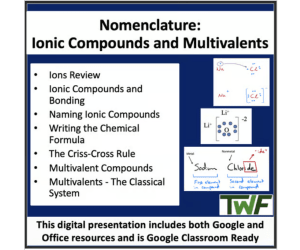
Nomenclature -Ionic Compounds & Multivalents - Senior Chemistry Lesson
Science, Chemistry, Grade 10, 11, 12, Teacher Tools, Lesson Plans
Nomenclature - Ionic Compounds & Multivalents - Senior Chemistry Lesson Your lesson covers naming ionic compounds and multivalents. In order, the lesson teaches about; Ions, Ionic Compounds and Bonding, Naming Ionic Compounds, Writing the Chemical Formula, The Criss-Cross Rule, Multivalent Compounds, and Multivalents - The Classical System. Your lesson includes the teacher and student version of the presentation, an auto-graded exit ticket, and a student lesson handout so the students can record the notes on a more condensed medium. This lesson is designed to be your go-to resource, whether you're in a traditional classroom or a virtual one. With both a teacher version and a student version, it seamlessly fits into your lesson plans, making learning engaging and adaptable. Assessment made easy We've included an auto-graded Exit Ticket and a quiz with an answer key because I know you don't have an excess of time. I know you don't, because I don't and I know I'll do whatever I can to reduce my grading time. Whether you use PowerPoint or Google Slides, prefer Word or Google Docs, this lesson has you covered. This lesson comes in both Office and Google formats for your convenience. The student version of the presentation has strategically placed blanks for them to fill in as you're teaching. It keeps them active and engaged, encourages discussion, and leaves more time for those "aha" moments.
Author Teach With Fergy
Tags Chemistry Lesson, Lewis Structures, Valence Electrons, Octet Rule, Ionic Bonding, Multivalent Ions, Ions, Naming Ionic Compounds, Bonding

I WONDER - Why Do Doctors Use X-Rays | Animated Video Lesson
Physics, Science, Grade 6, 7, 8, 9, 10, 11, 12, Lesson Plans, Teacher Tools
Video Introduction An amazing activity designed for the students to learn more about STEM. I WONDER - Why Do Doctors Use X-Rays | Animated Video Lesson Do you like STEM subjects? what is your favorite one? Have you ever tried to plant a seed? If yes, tell us more about it. Or have you ever tried to invent something? If yes, tell us more about it. And how do you think it will help us? Have you ever seen a microorganism under a microscope? What was it? And how it looked like? Mathematics is a marvelous subject. Let' sharpen our brains and solve some equations. Do you like timetable tricks? What is your favorite one? Do you know how to code? Have you ever created an app or a game before? If yes, how was it like? I WONDER - Why Do Doctors Use X-Rays | Animated Video Lesson The video is perfect for encouraging the researching skills for the students, while learning more about this fantastic topic. I WONDER - Why Do Doctors Use X-Rays | Animated Video Lesson This friendly designed video is suitable for students at school, homeschooling, and as a group activity. Format Available in MP4 format.
Author Educational Voice
Tags Why Do Doctors Use X-Rays, Why Do Doctors Use X-Rays Video, X-Rays, X-Rays Facts, X-Rays Facts For Kids, X-Rays Facts Video For Kids, Doctors Use X-Rays, Doctors, Doctors Video For Kids

I WONDER - What Is A Consumer On A Food Web | Animated Video Lesson
Environmental Science, Earth and Environmental Sciences, Science, Animals, Life Sciences, Biology, Human Body, Insects, Nature & Plants, STEM, Grade 5, 6, 7, 8, 9, 10, 11, Lesson Plans, Teacher Tools
Video Introduction An amazing video designed for the students to learn more about STEM. I WONDER - What Is A Consumer On A Food Web | Animated Video Lesson Do you like STEM subjects? what is your favorite one? Have you ever tried to plant a seed? If yes, tell us more about it. Or have you ever tried to invent something? If yes, tell us more about it. And how do you think it will help us? Have you ever seen a microorganism under a microscope? What was it? And how it looked like? Mathematics is a marvelous subject. Let' sharpen our brains and solve some equations. Do you like timetable tricks? What is your favorite one? Do you know how to code? Have you ever created an app or a game before? If yes, how was it like? I WONDER - What Is A Consumer On A Food Web | Animated Video Lesson The video is perfect for encouraging the researching skills for the students, while learning more about this fantastic topic. I WONDER - What Is A Consumer On A Food Web | Animated Video Lesson This friendly designed video is suitable for students at school, homeschooling, and as a group activity. Format Available in MP4 format.
Author Educational Voice
Tags What Is A Consumer On A Food Web, What Is A Consumer On A Food Web Video, Food Web, Food Web Facts, Food Web Facts For Kids, Food Web Video, Food Web Video For Kids, A Consumer On A Food Web
I WONDER - Were There Other Dinosaurs Like The Ankylosaurus
History: Ancient, History, Social Studies, History: World, Animals, Life Sciences, Science, Grade 4, 5, 6, 7, 8, 9, 10, Lesson Plans, Teacher Tools
Video Introduction An amazing video designed for the students to learn more about dinosaurs in different countries. I WONDER - Were There Other Dinosaurs Like The Ankylosaurus | Animated Video Lesson Do you like dinosaurs? what is your favorite one? Do you own a pet? If yes, tell us more about it, like what its name? And what do you like most about it? Do you think that your pet has been evolved from a dinosaur? Can you write down the characteristics of your favourite dinosaur like it's shape, their rivals, where did it use to live and what was their favourite food? What is the largest and the smallest dinosaur that ever found? Why is the T-rex is so famous? Have you ever read any interesting facts about it? Can you name any of the carnivores or herbivores dinosaurs? I WONDER - Were There Other Dinosaurs Like The Ankylosaurus | Animated Video Lesson The video is perfect for encouraging the researching skills for the students, while learning more about dinosaurs. I WONDER - Were There Other Dinosaurs Like The Ankylosaurus | Animated Video Lesson This friendly designed video is suitable for students at school, homeschooling, and as a group activity. Format Available in MP4 format.
Author Educational Voice
Rating
Tags Were There Other Dinosaurs Like The Ankylosaurus, Were There Other Dinosaurs Like The Ankylosaurus Video, Ankylosaurus, Ankylosaurus Facts, Ankylosaurus Video, Ankylosaurus Facts For Kids, Ankylosaurus Video For Kids

I WONDER - How Fast Can Light Travel | Animated Video Lesson
Physics, Science, STEM, Grade 6, 7, 8, 9, 10, 11, 12, Lesson Plans, Teacher Tools
Video Introduction An amazing video designed for the students to learn more about STEM. I WONDER - How Fast Can Light Travel | Animated Video Lesson Do you like STEM subjects? what is your favorite one? Have you ever tried to plant a seed? If yes, tell us more about it. Or have you ever tried to invent something? If yes, tell us more about it. And how do you think it will help us? Have you ever seen a microorganism under a microscope? What was it? And how it looked like? Mathematics is a marvelous subject. Let' sharpen our brains and solve some equations. Do you like timetable tricks? What is your favorite one? Do you know how to code? Have you ever created an app or a game before? If yes, how was it like? I WONDER - How Fast Can Light Travel | Animated Video Lesson The video is perfect for encouraging the researching skills for the students, while learning more about this fantastic topic. I WONDER - How Fast Can Light Travel | Animated Video Lesson This friendly designed video is suitable for students at school, homeschooling, and as a group activity. Format Available in MP4 format.
Author Educational Voice
Tags How Fast Can Light Travel, How Fast Can Light Travel Video, Light, Light Facts, Light Facts For Kids, Light Facts Video, Light Video, Light Video For Kids, STEM, STEM Video

DNA: Guided Reading Level N with Lesson Plan
ELA, Resources for Teachers, Reading Comprehension, Reading, Science, Life Sciences, Language Development, Technology, Pre-Reading, Vocabulary, Grade 2, 3, 4, Worksheets & Printables, Worksheets, Teacher Tools, Centers, Activities, Literacy Readers, Quizzes, Quizzes and Tests, Assessments, Lesson Plans
This DNA (level n) guided reading book with lesson plan includes: Guided Reading Color Label (front cover x1) This is a quick way to match the book’s demands to what students can generally handle.. The overall goal is to use the level/color to pick books for several smaller groups. To qualify for a certain level, a student is expected to read a book from that level with about 90–94% accuracy. If a student is consistently accurate and understands, move up a level. If the student is struggling at that level, drop down and add more support. Each student will improve at completely different rates, but it is generally one of the best ways to check progress across the class. DOWNLOAD THE CATALOG TO VIEW ALL GUIDED READING BOOKS AVAILABLE (SORTED LEVELS A-Z) Pre-Reading Question (x1) Teacher asks the prompt aloud, can be while showing the cover or first page. Students share what they already know, or make educated guesses from the cover. Prompt them to use the target vocabulary. Write some of their responses on the board to look back at during the reading. Vocabulary Words (x5) Introduce the five words, best doing it one at a time. Start by saying it, while students repeat and then see if anyone knows what it means before reading further. Read through the meaning and try to briefly connect each word to a picture or gesture so it’s meaningful. Ask students to flip through the book pages and point to where they see each of the vocabulary words. While reading the book pause upon coming across one of the vocab words or read the sentence twice to make sure students understand the word has appeared. Optional: Ask students to raise hands whenever they see/hear one of the new words. Guided Reading Pages (x10) Check the book snapshot (below) for: primary topic - do you need to prep extra reading or intro materials on this? what is taught best - decide on 1-2 bullets to focus on, use the prompt or words provided here for best results. learning goals - what you are checking for students to be able to do after the session, elicit answers using prompts or words provided. key vocabulary (see section above). questions overview - so you know what is coming up and if you need to prep extra materials to assist understanding. Run the lesson You may have already looked at a few of the pages together, but you can show them some of the pictures again first to set meaning. Depending on how much time you have and how familiar your students are with guided reading class, you may want to read the book aloud first with the group first. Students whisper or partner read, while you listen in. If time, do it as a group, one student reading a page each. Use the guided page’s prompts to coach: “Check the picture / does it make sense?” “Point under the words / try the first sound” “Reread the sentence smoothly”. Try to focus more on one student per session (rotating every time), so you can work out if they are ready to move up or need to move down a level. Comprehension Questions (back cover x3) This is your way to check that students didn’t just say the words, but actually understood the text. First, let students answer by pointing to the page/picture and saying a short sentence. After any answer, follow with: “Show me where you found that in the text.” In bigger groups, have partners answer first (10–20 seconds), then call on 2–3 students to share. Differentiation tips: Emerging speakers/struggling readers: oral + pointing On-level: oral in a full sentence Higher: one written sentence or draw + label Book Snapshot Title: DNA Genre: Nonfiction (informational science text) Subject: Life Science Primary Topic: DNA as genetic instructions in living things Estimated Guided Reading Level (A–Z): N What This Book Teaches Best Explains DNA as a “secret code” that gives living things instructions to grow and function. Teaches where DNA is kept : DNA is in cells, and a nucleus holds DNA safely inside almost every cell. Describes DNA’s shape as a long, twisted ladder called a double helix , and connects the shape to holding genetic information. Introduces the idea of a genetic code made of four special chemicals whose order works like letters forming sentences the body can “read.” Builds understanding of similarities and differences in living things , including shared DNA across animals and small DNA differences that make individuals unique. Learning Goals Students can explain what the book says DNA does for living things (instructions to grow and function). Students can describe where DNA is found in the body (in cells, held in the nucleus). Students can describe the shape of DNA using details from the text (a long, twisted ladder/double helix). Students can explain how the book describes the genetic code (four chemicals acting like letters in an alphabet). Students can describe ways DNA relates to traits and differences (physical traits, unique codes, identical twins). Students can explain why DNA makes a copy before a cell divides (so new cells have the same instructions). Key Vocabulary From the Text molecule — a tiny thing that carries important information. microscope — a tool to see things too small to see. nucleus — a cell’s control center that holds DNA safely. helix — a twisted shape like a ladder. genetic — related to the body’s DNA code and information. Discussion Prompts Pre-reading question: What do you think a “secret code” inside living things might help them do? Comprehension questions: Where does the book say DNA is kept inside almost every cell? Comprehension questions: What does the book compare the shape of DNA to, and what do scientists call that shape? Comprehension questions: Why does the book say DNA makes an exact copy of itself before a cell divides? Printing Tips 1. Best Printing Method (Recommended) “Booklet” Printing (Best if Available) If your printer or PDF viewer supports Booklet Printing , use this. Settings to use: Print mode: Booklet Paper size: Letter or A4 (either works) Orientation: Landscape Print on both sides: Yes Flip on: Short edge Scaling: Fit to printable area Booklet subset: First test: Front sides only Then: Back sides only This will automatically: Pair pages correctly Put the cover on the outside Align everything for folding After printing, fold in half and staple along the spine . 2. If “Booklet” Printing Is NOT Available You can still print this correctly with manual duplex printing . Step-by-step: Open the PDF. Choose Print . Set: Orientation: Landscape Pages per sheet: 1 Print on both sides: Yes Flip on: Short edge Print all pages . Because each PDF page already contains two facing book pages, the result will still fold cleanly into a book. Thousands of Cored Education products are included with your TeachSimple membership. Download links and encyclopedia index available here.
Author Cored Education
Rating
Tags Reading Comprehension, Reading Passages, Reading, Guided Reading, Guided Reading Lesson Plan, Guided Reading Activity, Pre-reading, Science Lesson Plans, Life Science, Technology
I WONDER - Were Pterodactyls Dinosaurs | Animated Video Lesson
History: Ancient, History, Social Studies, History: World, Animals, Life Sciences, Science, Grade 3, 4, 5, 6, 7, 8, 9, Lesson Plans, Teacher Tools
Video Introduction An amazing video designed for the students to learn more about dinosaurs in different countries. I WONDER - Were Pterodactyls Dinosaurs | Animated Video Lesson Do you like dinosaurs? what is your favorite one? Do you own a pet? If yes, tell us more about it, like what its name? And what do you like most about it? Do you think that your pet has been evolved from a dinosaur? Can you write down the characteristics of your favourite dinosaur like it's shape, their rivals, where did it use to live and what was their favourite food? What is the largest and the smallest dinosaur that ever found? Why is the T-rex is so famous? Have you ever read any interesting facts about it? Can you name any of the carnivores or herbivores dinosaurs? I WONDER - Were Pterodactyls Dinosaurs | Animated Video Lesson The video is perfect for encouraging the researching skills for the students, while learning more about dinosaurs. I WONDER - Were Pterodactyls Dinosaurs | Animated Video Lesson This friendly designed video is suitable for students at school, homeschooling, and as a group activity. Format Available in MP4 format.
Author Educational Voice
Rating
Tags Were Pterodactyls Dinosaurs, Were Pterodactyls Dinosaurs Video, Pterodactyls Dinosaurs, Pterodactyls Dinosaurs Facts, Pterodactyls Dinosaurs Video, Pterodactyls Dinosaurs Video For Kids, Pterodactyls Dinosaurs Facts For Kids

I WONDER - Can Hydro Power Be Created Without A Dam | Animated Video
Environmental Science, Earth and Environmental Sciences, Science, Grade 6, 7, 8, 9, 10, 11, 12, Lesson Plans, Teacher Tools
Video Introduction An amazing video designed for the students to learn more about STEM. I WONDER - Can Hydro Power Be Created Without A Dam | Animated Video Lesson Do you like STEM subjects? what is your favorite one? Have you ever tried to plant a seed? If yes, tell us more about it. Or have you ever tried to invent something? If yes, tell us more about it. And how do you think it will help us? Have you ever seen a microorganism under a microscope? What was it? And how it looked like? Mathematics is a marvelous subject. Let' sharpen our brains and solve some equations. Do you like timetable tricks? What is your favorite one? Do you know how to code? Have you ever created an app or a game before? If yes, how was it like? I WONDER - Can Hydro Power Be Created Without A Dam | Animated Video Lesson The video is perfect for encouraging the researching skills for the students, while learning more about this fantastic topic. I WONDER - Can Hydro Power Be Created Without A Dam | Animated Video Lesson This friendly designed video is suitable for students at school, homeschooling, and as a group activity. Format Available in MP4 format.
Author Educational Voice
Tags Can Hydro Power Be Created Without A Dam, Can Hydro Power Be Created Without A Dam Video, Hydro Power, Hydro Power Facts, Hydro Power Facts For Kids, Hydro Power Video, Hydro Power Video For Kids
Project Lesson Plans for 3D Printing - Utensil Redesign
Science, Technology, Computer Science, Grade 2, 3, 4, 5, 6, 7, 8, 9, 10, 11, 12, Lesson Plans, Teacher Tools
Project Lesson Plans for 3D Printing - Utensil Redesign The Project Lesson Plans for 3D Printing - Utensil Redesign, is a comprehensive resource that equips educators to introduce their pupils aged 8 and up to the engaging world of 3D printing. This package provides students across grades 2-12 with an exciting opportunity to design and create a utensil customised specifically for eating certain food better. Features An all-inclusive teaching resource presented in clear step-by-step details over eight lesson days. A detailed analysis of prior knowledge requirements, learning objectives and standards. Stipulated assessments designed to track the progress of learners throughout this innovative project. All necessary materials along with instructions on how technology should be integrated every step of the way are provided. Inclusion strategies have been included which ensure that no students are left behind due to differences in learning needs or capabilities. The package also includes external web links directing educators further towards more related study topics. Concluding from Day Eight onwards are helpful closure strategies coupled alongside extension activities which enhance retention while generating interest around future projects. An easily adaptable format: The product is offered in PDF segments catering flexibly with various teaching situations such as whole group instructions or smaller screen-sharing groups ensuring adaptability into individual environments including home-study settings if necessary. Ideal For: Every science existent educator especially those specialising in computer science across Grades 2-12 looking forward bringing practicality into theory by jumping aboard real-world applications using tomorrow’s groundbreaking tech.
Author WhyMaker
Tags 3D Printing, Utensil Redesign, Lesson Plans, Technology Integration, Inclusion Strategies
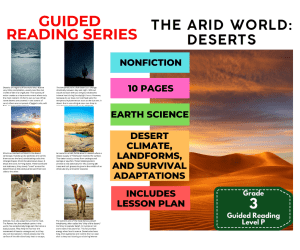
The Arid World - Deserts: Guided Reading Level P with Lesson Plan
ELA, Resources for Teachers, Reading Comprehension, Reading, Science, Language Development, Social Studies, Life Sciences, Geography, Earth and Environmental Sciences, Grade 2, 3, 4, Worksheets & Printables, Worksheets, Teacher Tools, Centers, Activities, Literacy Readers, Quizzes, Quizzes and Tests, Assessments, Lesson Plans
This The Arid World - Deserts (level p) guided reading book with lesson plan includes: Guided Reading Color Label (front cover x1) This is a quick way to match the book’s demands to what students can generally handle.. The overall goal is to use the level/color to pick books for several smaller groups. To qualify for a certain level, a student is expected to read a book from that level with about 90–94% accuracy. If a student is consistently accurate and understands, move up a level. If the student is struggling at that level, drop down and add more support. Each student will improve at completely different rates, but it is generally one of the best ways to check progress across the class. DOWNLOAD THE CATALOG TO VIEW ALL GUIDED READING BOOKS AVAILABLE (SORTED LEVELS A-Z) Pre-Reading Question (x1) Teacher asks the prompt aloud, can be while showing the cover or first page. Students share what they already know, or make educated guesses from the cover. Prompt them to use the target vocabulary. Write some of their responses on the board to look back at during the reading. Vocabulary Words (x5) Introduce the five words, best doing it one at a time. Start by saying it, while students repeat and then see if anyone knows what it means before reading further. Read through the meaning and try to briefly connect each word to a picture or gesture so it’s meaningful. Ask students to flip through the book pages and point to where they see each of the vocabulary words. While reading the book pause upon coming across one of the vocab words or read the sentence twice to make sure students understand the word has appeared. Optional: Ask students to raise hands whenever they see/hear one of the new words. Guided Reading Pages (x10) Check the book snapshot (below) for: primary topic - do you need to prep extra reading or intro materials on this? what is taught best - decide on 1-2 bullets to focus on, use the prompt or words provided here for best results. learning goals - what you are checking for students to be able to do after the session, elicit answers using prompts or words provided. key vocabulary (see section above). questions overview - so you know what is coming up and if you need to prep extra materials to assist understanding. Run the lesson You may have already looked at a few of the pages together, but you can show them some of the pictures again first to set meaning. Depending on how much time you have and how familiar your students are with guided reading class, you may want to read the book aloud first with the group first. Students whisper or partner read, while you listen in. If time, do it as a group, one student reading a page each. Use the guided page’s prompts to coach: “Check the picture / does it make sense?” “Point under the words / try the first sound” “Reread the sentence smoothly”. Try to focus more on one student per session (rotating every time), so you can work out if they are ready to move up or need to move down a level. Comprehension Questions (back cover x3) This is your way to check that students didn’t just say the words, but actually understood the text. First, let students answer by pointing to the page/picture and saying a short sentence. After any answer, follow with: “Show me where you found that in the text.” In bigger groups, have partners answer first (10–20 seconds), then call on 2–3 students to share. Differentiation tips: Emerging speakers/struggling readers: oral + pointing On-level: oral in a full sentence Higher: one written sentence or draw + label Book Snapshot Title: The Arid World: Deserts Genre: Nonfiction (informational) Subject: Earth Science Primary Topic: Desert climate, landforms, and survival adaptations Estimated Guided Reading Level (A–Z): P What This Book Teaches Best Defines deserts by very low precipitation and explains how scarce water shapes the environment. Explains extreme temperature changes in hot deserts from day to night and why they happen. Compares hot deserts and cold deserts , including why icy places can still be deserts. Shows how living things adapt to desert conditions , with examples from plants and animals (cactus, fennec fox, camel, sidewinder snake). Describes how wind shapes desert landforms , including how dunes form and move. Learning Goals Students can define a desert using the book’s description of precipitation and water scarcity. Students can explain why temperatures in a hot desert can drop quickly after sunset, based on the text. Students can describe how a cold desert can exist and name the example given in the book. Students can identify at least three desert adaptations and match them to the plant or animal described. Students can describe how wind forms dunes and what the text says dunes do over time. Students can explain what an oasis is and why it supports life in a desert. Key Vocabulary From the Text precipitation — water that falls from the sky, like rain. evaporation — when water turns to vapor and leaves. nocturnal — active at night and resting in daytime. oasis — a fertile desert area with freshwater reaching the surface. dunes — hills of sand formed when wind drops sand. Discussion Prompts Pre-reading question: What challenges do you think plants and animals face in a very dry place? Comprehension questions: How much rain do deserts usually get in a single year, according to the text? Comprehension questions: What does the book say helps the Saguaro cactus conserve water? Comprehension questions: What is an oasis, and where does its freshwater usually come from? Printing Tips 1. Best Printing Method (Recommended) “Booklet” Printing (Best if Available) If your printer or PDF viewer supports Booklet Printing , use this. Settings to use: Print mode: Booklet Paper size: Letter or A4 (either works) Orientation: Landscape Print on both sides: Yes Flip on: Short edge Scaling: Fit to printable area Booklet subset: First test: Front sides only Then: Back sides only This will automatically: Pair pages correctly Put the cover on the outside Align everything for folding After printing, fold in half and staple along the spine . 2. If “Booklet” Printing Is NOT Available You can still print this correctly with manual duplex printing . Step-by-step: Open the PDF. Choose Print . Set: Orientation: Landscape Pages per sheet: 1 Print on both sides: Yes Flip on: Short edge Print all pages . Because each PDF page already contains two facing book pages, the result will still fold cleanly into a book. Thousands of Cored Education products are included with your TeachSimple membership. Download links and encyclopedia index available here.
Author Cored Education
Rating
Tags Reading Comprehension, Reading Passages, Reading, Guided Reading, Guided Reading Lesson Plan, Guided Reading Activity, Pre-reading, Science Lesson Plans, Social Studies Lesson Plans, Earth Science

I WONDER - What Causes Droughts | Animated Video Lesson
Environmental Science, Earth and Environmental Sciences, Science, Earth Sciences, Geography, Social Studies, Grade 4, 5, 6, 7, 8, 9, 10, Lesson Plans, Teacher Tools
Video Introduction An amazing video designed for the students to learn more about natural disasters in different countries. I WONDER - What Causes Droughts | Animated Video Lesson What do you know about this natural disaster? Do you know in which part of the world this could happen? Have you ever read about the safety misusers that we could have to protect ourselves from this natural disaster? If yes, can you tell us more about them? Can you name other natural disasters? If yes, tell us more about where they are likely to happen? And how frequently? Do you like reading about Geography? What is your favorite country in the whole world? If you are going on a trip where it will be? Which country? What you are going to see there? Does this country has a famous place to visit? Do you like reading about Geology? If yes, what is your favourite topic? I WONDER - What Causes Droughts | Animated Video Lesson The video is perfect for encouraging the researching skills for the students, while learning more about this fantastic phenomenon. I WONDER - What Causes Droughts | Animated Video Lesson This friendly designed video is suitable for students at school, homeschooling, and as a group activity. Format Available in MP4 format.
Author Educational Voice
Tags What Causes Droughts, What Causes Droughts Video, Droughts, Drought, Droughts Facts, Droughts Facts For Kids, Droughts Video, Droughts Video For Kids, Drought Facts, Drought Video

Global Warming EFFECTS: Climate and Human Civilizations - FLASH-MAC
Science, Earth and Environmental Sciences, Environmental Science, Common Core, Grade 5, 6, 7, 8, Teacher Tools, Lesson Plans
Global Warming EFFECTS: Climate and Human Civilizations - FLASH-MAC This formidable teaching resource is notably designed for enhancing students' comprehension of global warming's impact on both climate and human civilizations. Intended for usage in grade 5 to grade 8 classrooms, the downloadable software comes loaded with rich curriculum-based content that aligns flawlessly with Common Core State Standards. Key Features: Detailed Reading Passages: Serves as a comprehensive source of knowledge about global warming. 'Before You Read' and 'After You Read' Questions: Enhances comprehension, useful as conversation starters or reflective prompts. Designed following Bloom's Taxonomy model which aids in building critical thinking skills. Vocabulary Flashcards : Aids in augmenting vocabulary related to this crucial environmental issue. Multimedia Tools:: Includes vibrant videos and audios offering interactive depictions of the subject matter. These can be used efficiently during small group sessions or individual self-study time, making learning educational and engaging simultaneously. In conclusion, "Global Warming EFFECTS: Climate and Human Civilizations - FLASH-MAC", efficiently combines textual information with multimedia aids into an innovative approach capable of catering to different learner types while fostering a thorough understanding of how global warming influences climate systems and human societies globally.
Author Classroom Complete Press
Tags Software (Mac)
Cells, Skeletal & Muscular Systems: What Are Organs & Organ Systems? Gr. 5-8
Science, Life Sciences, Human Body, Grade 5, 6, 7, 8, Teacher Tools, Lesson Plans
Cells, Skeletal & Muscular Systems: What Are Organs & Organ Systems? Gr. 5-8 A comprehensive teaching resource tailored for students in Grades 5 through 8. This resource dives into the fascinating world of human anatomy, with focus on cells, and the skeletal and muscular systems. Teaching Cell Structure & Function This product delves into cell structure and function with clear lessons targeting all student levels. Special attention is given to specialized cell types - helping students understand that not all cells are created equal. From here, learners can appreciate how different cells come together to form tissues and eventually organs and organ systems. An Overview of Eight Different Organ Systems Circulatory System Respiratory System Nervous System Digestive System Excretory System Reproductive System The organ systems are distinctly detailed within this course material for ease of understanding. In-depth Studies: Muscular & Skeletal Systems In-depth studies then follow on two very integral human body components: the muscular system and skeletal system. Educational Approaches: The manual can be used during classroom interactive sessions (whole-group overview or small group focused study) . The manual can also serve as homework material. Bonus Educational Features: Reading Passages Pre-reading Activities Sequential Lesson Plans Mini Posters Colorful Visually Enhances Learning Evaluation & Assessment : Test Prep Tools Bloom's Taxonomy High-quality Content that Aligns with State Standards covers STEM initiatives.
Author Classroom Complete Press
Tags PDF, The Organs In The Muscular System, Are Organs Muscles
I WONDER - Where Can I Find Insulators And Conductors | Animated Video
Physics, Science, Chemistry, Basic Science, Grade 4, 5, 6, 7, 8, 9, 10, Lesson Plans, Teacher Tools
Video Introduction An amazing activity designed for the students to learn more about STEM. I WONDER - Where Can I Find Insulators And Conductors | Animated Video Lesson Do you like STEM subjects? what is your favorite one? Have you ever tried to plant a seed? If yes, tell us more about it. Or have you ever tried to invent something? If yes, tell us more about it. And how do you think it will help us? Have you ever seen a microorganism under a microscope? What was it? And how it looked like? Mathematics is a marvelous subject. Let' sharpen our brains and solve some equations. Do you like timetable tricks? What is your favorite one? Do you know how to code? Have you ever created an app or a game before? If yes, how was it like? I WONDER - Where Can I Find Insulators And Conductors | Animated Video Lesson The video is perfect for encouraging the researching skills for the students, while learning more about this fantastic topic. I WONDER - Where Can I Find Insulators And Conductors | Animated Video Lesson This friendly designed video is suitable for students at school, homeschooling, and as a group activity. Format Available in MP4 format.
Author Educational Voice
Tags Where Can I Find Insulators And Conductors, Where Can I Find Insulators And Conductors Video, Insulators, Insulators Facts, Insulators Facts For Kids, Insulators Video For Kids, Conductors, Conductors Video For Kids