



3,890 products added recently
Page 50 - Science Lesson Plan Template
Enhance your science instruction with a flexible lesson plan template designed for educators. This tool helps you structure objectives, materials, procedures, and assessments efficiently. Use it to create organized and impactful science lessons that cater to your students' needs.

 Show filters


African Elephant Unit Study (Endangered Animals Lesson Plan, Videos, Activities)
ELA, Social Studies, Grammar, Reading, Language Development, Spelling, Writing, Science, Life Sciences, Animals, Geography, Grade 1, 2, 3, Lesson Plans, Teacher Tools
African Elephant Unit Study The African Elephant Unit Study, designed for first through third-grade students, is a 5-day lesson plan that dives into the world of the endangered African elephant. This instructional package amalgamates various subjects like Language Arts, Science, and Social Studies. Subjects Covered: Grammar Reading Comprehension Spelling Writing Skills Zoology fundamentals An introductory look at Geography Included in this unit study are videos vibrant with visuals, helping visual learners understand the life cycle of African elephants. Alongside such valuable media resources come daily worksheets and report pages brimming with crucial facts about diet and predators. Furthermore, hands-on activities are embodied via interactive notebooking pieces encouraging creativity while ensuring comprehension checks. Note:This comprehensive resource gives teachers or homeschoolers broad room for creativity in each lesson as it goes beyond textbook-based learning materials. Incorporation of Art: The unit thoughtfully combines art appreciation with core academics. Drawing exercises paired perfectly with coloring pages give wings to children's imaginations during structured lessons. Daily Project-Based Activities: To make learning personal and memorable, a set of daily project-based activities has been suggested to grace the end of each day’s rigors. Beyond The Classroom Walls: Supplementary Reading Material Voracious young scholars can continue their explorations into Africa's wildlife even after class hours thanks to optional reading supplements included within this package! In conclusion, the African Elephant Unit Study offers a fun, wholehearted educational approach that allows curious young learners to deepen their knowledge on the magnificence of biodiversity.
Author Heather Huhman
Tags Endangered Animals, African Elephants, Unit Study, Lesson Plan, Videos
How Can We Make Disposable Items More Environmentally Friendly
Environmental Science, Earth and Environmental Sciences, Science, Grade 4, 5, 6, 7, 8, 9, 10, Lesson Plans, Teacher Tools
Video Introduction An amazing video designed for the students to learn more about STEM. I WONDER - How Can We Make Disposable Items More Environmentally Friendly | Animated Video Lesson Do you like STEM subjects? what is your favorite one? Have you ever tried to plant a seed? If yes, tell us more about it. Or have you ever tried to invent something? If yes, tell us more about it. And how do you think it will help us? Have you ever seen a microorganism under a microscope? What was it? And how it looked like? Mathematics is a marvelous subject. Let' sharpen our brains and solve some equations. Do you like timetable tricks? What is your favorite one? Do you know how to code? Have you ever created an app or a game before? If yes, how was it like? I WONDER - How Can We Make Disposable Items More Environmentally Friendly | Animated Video Lesson The video is perfect for encouraging the researching skills for the students, while learning more about this fantastic topic. I WONDER - How Can We Make Disposable Items More Environmentally Friendly | Animated Video Lesson This friendly designed video is suitable for students at school, homeschooling, and as a group activity. Format Available in MP4 format.
Author Educational Voice
Tags How Can We Make Disposable Items More Environmentally Friendly, How Can We Make Disposable Items More Environmentally Friendly Video, Disposable Items, Disposable Items Video, Environmentally Friendly Products
I WONDER - Was The Giganotosaurus Clever | Animated Video Lesson
History: World, History, Social Studies, History: Ancient, Animals, Life Sciences, Science, Grade 4, 5, 6, 7, 8, 9, 10, Lesson Plans, Teacher Tools
Video Introduction An amazing video designed for the students to learn more about dinosaurs in different countries. I WONDER - Was The Giganotosaurus Clever | Animated Video Lesson Do you like dinosaurs? what is your favorite one? Do you own a pet? If yes, tell us more about it, like what its name? And what do you like most about it? Do you think that your pet has been evolved from a dinosaur? Can you write down the characteristics of your favourite dinosaur like it's shape, their rivals, where did it use to live and what was their favourite food? What is the largest and the smallest dinosaur that ever found? Why is the T-rex is so famous? Have you ever read any interesting facts about it? Can you name any of the carnivores or herbivores dinosaurs? I WONDER - Was The Giganotosaurus Clever | Animated Video Lesson The video is perfect for encouraging the researching skills for the students, while learning more about dinosaurs. I WONDER - Was The Giganotosaurus Clever | Animated Video Lesson This friendly designed video is suitable for students at school, homeschooling, and as a group activity. Format Available in MP4 format.
Author Educational Voice
Rating
Tags Was The Giganotosaurus Clever, Was The Giganotosaurus Clever Video, Giganotosaurus, Giganotosaurus Facts, Giganotosaurus Video, Giganotosaurus Video For Kids, Giganotosaurus Facts For Kids

Reporting on Rainforests: A Cross-Curricular Unit
Science, Earth and Environmental Sciences, Environmental Science, Grade 5, 6, Teacher Tools, Lesson Plans
Reporting on Rainforests: A Cross-Curricular Unit This is a comprehensive teaching resource designed to capture the attention of Grades 5 and 6 students. The primary focus is Environmental Science, specifically centering on the topic of rainforests. Narrative Engagement: The resource hinges around a captivating narrative in which four characters: Kristen, Jordan, Kate, and Ben present about rainforests to their class. As this story unfolds, it engages learners effectively while piquing their interest and promoting a sense of curiosity. Ease of Use: A notable feature of ‘Reporting on Rainforests: A Cross-Curricular Unit’ is its convenience. It comes as an accessible PDF file with seven ready-to-print pages allowing quick preparation for instructional times. Cross-curricular Worksheets & Activities: The unit includes integrated worksheets for deeper understanding and broader coverage of related topics. A variety of creative activity suggestions are also provided to enhance interactivity while ensuring comprehensive concept coverage. This educational package offers flexibility suiting varying teaching styles or learner needs — standing out as effective for whole group instructions, small group activities or even independent study-intensive homework tasks. In essence, Reporting on Rainforests: A Cross-Curricular Unit provides an engaging exploration into Environmental Science whilst fulfilling curriculums requirements thoroughly.
Author Classroom Complete Press
Tags Rainforests, Science Report, Environmental Science, Graphic Organizers, Compound Words

Journey Through South Korea: Guided Reading Level R with Lesson Plan
ELA, Resources for Teachers, Reading Comprehension, Reading, Science, Geography, Social Studies, History, Earth and Environmental Sciences, Technology, Grade 3, 4, 5, Worksheets & Printables, Worksheets, Teacher Tools, Centers, Activities, Literacy Readers, Quizzes, Quizzes and Tests, Assessments, Lesson Plans
This Journey Through South Korea (level r) guided reading book with lesson plan includes: Guided Reading Color Label (front cover x1) This is a quick way to match the book’s demands to what students can generally handle.. The overall goal is to use the level/color to pick books for several smaller groups. To qualify for a certain level, a student is expected to read a book from that level with about 90–94% accuracy. If a student is consistently accurate and understands, move up a level. If the student is struggling at that level, drop down and add more support. Each student will improve at completely different rates, but it is generally one of the best ways to check progress across the class. DOWNLOAD THE CATALOG TO VIEW ALL GUIDED READING BOOKS AVAILABLE (SORTED LEVELS A-Z) Pre-Reading Question (x1) Teacher asks the prompt aloud, can be while showing the cover or first page. Students share what they already know, or make educated guesses from the cover. Prompt them to use the target vocabulary. Write some of their responses on the board to look back at during the reading. Vocabulary Words (x5) Introduce the five words, best doing it one at a time. Start by saying it, while students repeat and then see if anyone knows what it means before reading further. Read through the meaning and try to briefly connect each word to a picture or gesture so it’s meaningful. Ask students to flip through the book pages and point to where they see each of the vocabulary words. While reading the book pause upon coming across one of the vocab words or read the sentence twice to make sure students understand the word has appeared. Optional: Ask students to raise hands whenever they see/hear one of the new words. Guided Reading Pages (x10) Check the book snapshot (below) for: primary topic - do you need to prep extra reading or intro materials on this? what is taught best - decide on 1-2 bullets to focus on, use the prompt or words provided here for best results. learning goals - what you are checking for students to be able to do after the session, elicit answers using prompts or words provided. key vocabulary (see section above). questions overview - so you know what is coming up and if you need to prep extra materials to assist understanding. Run the lesson You may have already looked at a few of the pages together, but you can show them some of the pictures again first to set meaning. Depending on how much time you have and how familiar your students are with guided reading class, you may want to read the book aloud first with the group first. Students whisper or partner read, while you listen in. If time, do it as a group, one student reading a page each. Use the guided page’s prompts to coach: “Check the picture / does it make sense?” “Point under the words / try the first sound” “Reread the sentence smoothly”. Try to focus more on one student per session (rotating every time), so you can work out if they are ready to move up or need to move down a level. Comprehension Questions (back cover x3) This is your way to check that students didn’t just say the words, but actually understood the text. First, let students answer by pointing to the page/picture and saying a short sentence. After any answer, follow with: “Show me where you found that in the text.” In bigger groups, have partners answer first (10–20 seconds), then call on 2–3 students to share. Differentiation tips: Emerging speakers/struggling readers: oral + pointing On-level: oral in a full sentence Higher: one written sentence or draw + label Book Snapshot Title: A Journey Through South Korea Genre: Nonfiction Subject: Social Studies (Geography/Culture) Primary Topic: South Korea’s geography, traditions, and modern innovation Estimated Guided Reading Level (A–Z): R What This Book Teaches Best How geography shapes a country , describing South Korea as a peninsula with seas on three sides and mountains across much of the land. City life and infrastructure , using Seoul to show population size, public transportation, and the mix of historic areas with modern skyscrapers. Cultural traditions and identity , including palaces and Joseon Dynasty heritage, traditional clothing (Hanbok), and national martial arts (Taekwondo). Food culture and processes , highlighting fermentation through kimchi and naming other dishes and ingredients. Modern technology and global influence , explaining South Korea’s role in electronics (including semiconductors) and daily-life innovation. Learning Goals Students will explain how South Korea’s location as a peninsula and its mountains are described in the text. Students will describe Seoul’s role in the nation and cite details about its transportation and city features. Students will identify examples of South Korea’s history and heritage from the text, including details about palaces and architecture. Students will describe how fermentation is connected to Korean food by using the text’s description of kimchi and storage. Students will explain how the text shows South Korea as a leader in technology and innovation. Students will describe one natural environment featured in the text (Jeju Island) using key details provided. Key Vocabulary From the Text peninsula — land with water on most sides, still connected. metropolis — a very large city with many people. fermentation — a process that changes food over time. semiconductors — tiny electronic parts that help devices work. aesthetic — the look and style that feels pleasing. Discussion Prompts Pre-reading question: How can a country honor its past while also building new technology for the future? Comprehension questions: What does the text say about South Korea being a peninsula and the seas around it? Comprehension questions: What details does the text give about Gyeongbokgung Palace and its architecture? Comprehension questions: How does the text describe the Haenyeo and what they do? Printing Tips 1. Best Printing Method (Recommended) “Booklet” Printing (Best if Available) If your printer or PDF viewer supports Booklet Printing , use this. Settings to use: Print mode: Booklet Paper size: Letter or A4 (either works) Orientation: Landscape Print on both sides: Yes Flip on: Short edge Scaling: Fit to printable area Booklet subset: First test: Front sides only Then: Back sides only This will automatically: Pair pages correctly Put the cover on the outside Align everything for folding After printing, fold in half and staple along the spine . 2. If “Booklet” Printing Is NOT Available You can still print this correctly with manual duplex printing . Step-by-step: Open the PDF. Choose Print . Set: Orientation: Landscape Pages per sheet: 1 Print on both sides: Yes Flip on: Short edge Print all pages . Because each PDF page already contains two facing book pages, the result will still fold cleanly into a book. Thousands of Cored Education products are included with your TeachSimple membership. Download links and encyclopedia index available here.
Author Cored Education
Rating
Tags Reading Comprehension, Reading Passages, Reading, Guided Reading, Guided Reading Lesson Plan, Guided Reading Activity, Pre-reading, Social Studies, Geography, History

Animal Science Unit | All About Worms | Learning about Animals
Science, Life Sciences, Animals, Kindergarten, Preschool, Grade 1, 2, Lesson Plans, Teacher Tools
All About Worms: Learning about Animals | Worm The 'All About Worms' resource is a comprehensive and meticulously curated bundle that allows educators to create a thorough and engaging Animal Science Unit focused on worms. It provides an array of versatile resources that cater to students at different learning levels, ranging from Pre-K through 2nd grade. Included Resources: Real-life worm photos Non-fiction articles catering for learners at various reading capabilities Creative worksheets Art & craft activities Opportunities for extended writing exercises An exciting aspect of this resource is its adaptability: it can be incorporated seamlessly into classroom instruction modalities such as whole group discussion or small-group activity sessions. Additionally, the worksheets are perfectly pliable for homework assignment utilization. Additional Teacher Resources: Vital teaching aids like project ideas, relevant video links, A sequenced list of compelling discussion questions - all poised to stimulate student inquiry in both cognitive and affective spectra surrounding our focus creature. Gaming Elements: Inclusive Game Elements: •Memory games centered on the worms’ behaviors & habitat considerations (a challenging macro-photo guessing game included). This package offers educators the freedom to choose parts befitting their individualized teaching preferences. The informative 97-page PDF file supporting ready-to-print needs neatly uphold the simplicity without reducing content quality or depth. Perfectly designed to expose early learners to the fascinating world of worms, this resource provides a multi-faceted approach towards enriched learning about animal science. The edifying material covers areas such as worm anatomy, habitat dynamics, life cycles and eating habits. 'All About Worms' is indeed instrumental in ensuring that learner fascination matches educational outcomes holistically!
Author Simply Schoolgirl
Tags Worms, Animal Science, Educational Resources, Interactive Learning, Zoology

Community Helpers Curriculum Pack
Creative Arts, Art, Social Studies, ELA, Math, Early Math, Science, Basic Science, Language Development, Vocabulary, Kindergarten, Lesson Plans, Teacher Tools
If your students are studying community helpers or are about to begin a careers unit, I have just the resource to provide you with everything you need and more! This is a Community Helpers Curriculum Pack complete with an abundance of printable resources and engaging activities for students to complete. This curriculum was designed for your preschool students. The curriculum goal is to expand upon the knowledge children possess about jobs, careers, and the world around them, and to promote optimism about their future and the many diverse opportunities available to them. The vocabulary that students will focus on is occupation, retail, vocation, college, training, career, paycheck, income, schedule, uniform, business and job. This curriculum will come with a color of the week (purple) and a letter of the week (W). This curriculum pack includes: --Sensory Table Ideas --Art Activities --Cooking Experience --Community Time --Math Activities --Home/School Connection Ideas --Science Table Enrichments --Science Concepts/Activities --Prop Box Ideas/Dramatic Play Enrichments --Movement and Motor --Playground/Walk Activities --Transition/Waiting Ideas --Block Area Enrichments --Flannel Board --Teacher Made Enrichment Ideas --Field Trip Ideas --Supplemental Learning Ideas/Activities At the start of this pack, you will receive a list of supplies needed for activities and projects. The worksheets, activities, and tasks included in this pack are intended to be completed in a variety of formats – whole group, small group, and independent work. I hope you enjoy!
Author Learning Foundations
Tags Learning Foundations, Community Helpers, Social Studies Curriculum, Sensory Table, Art Activities, Color Of The Week, Cross-curricular, Literacy

I WONDER - What Is The Weather Like On Saturn | Animated Video Lesson
Space, Earth and Environmental Sciences, Science, Grade 4, 5, 6, 7, 8, 9, 10, Lesson Plans, Teacher Tools
Video Introduction An amazing video designed for the students to learn more about space facts. I WONDER - What Is The Weather Like On Saturn | Animated Video Lesson Do you like reading about space? If yes, what is your favorite topic? What do you know about our solar system? What is the smallest planet in our solar system? What is the biggest planet in our solar system? What is the hottest planet in our solar system? And what is the coldest one? Do you think there are aliens? If yes, what do you think they look like? What do they eat and how they speak to each other? Where do they live? What is a galaxy? And what is a milky way? Have you recently saw a shooting star? If yes, tell us more about it, like when did it happen and where? What is a blackhole? Can a blackhole gets bigger by time? Do you like counting the stars? What do you think a star is made of? I WONDER - What Is The Weather Like On Saturn | Animated Video Lesson The video is perfect for encouraging the researching skills for the students, while learning more about the fantastic space. I WONDER - What Is The Weather Like On Saturn | Animated Video Lesson This friendly designed video is suitable for students at school, homeschooling, and as a group activity. Format Available in MP4 format.
Author Educational Voice
Tags What Is The Weather Like On Saturn, What Is The Weather Like On Saturn Video, Saturn, Saturn Facts, Saturn Facts For Kids, Saturn Video, Saturn's Weather, Saturn's Weather Video, Saturn's Weather Video For Kids

Animal Art Journal: Explore the Elements of Art through Animals
Creative Arts, Art, Science, Life Sciences, Animals, Grade 3, 4, 5, 6, 7, Teacher Tools, Lesson Plans
Discover the 7 elements of art through the 7 continents...and some of the amazing animals that live there! 🎨 This Animal Art Journal is a unique way to teach art elements to older kids (3rd-7th grade). The workbook-style adds a level of independent learning and ownership. Kids will love traveling to each continent, drawing animals from each, and journaling about their research. 🗺️ If you need an engaging, print-and-go way to teach the elements of art, THIS IS FOR YOU! 🐅 Use as a framework for your art curriculum, as supplemental worksheets, or as an independent workbook for your kids to draw through! 🎨 WHAT'S INCLUDED - 7 Units teaching the elements of art (line, texture, shape, color, value, space, form) - Exploration of 7 continents through 7 animals from around the world - In-depth explanation and practice of the 7 elements of art - Directed drawing guides of each highlighted animal (+ others!) - Hands-on activities - Journal pages filled with research-driven questions - Imagine it! Pages where kids create their own habitats - Instructions at the top of each worksheet - Example Pages with colored images for EVERY activity 🗺️ HOW TO USE -Full year art curriculum: This journal covers all elements of art with 7 activities per unit. -Supplemental Worksheets: If you're confident in teaching the elements of art but want to give some fun practice worksheets, you need to download this journal! -Independent Workbook: Need something your art students can work on when there's 5 minutes left of class? Print these journals for your students at the beginning of the year and have them ready to go whenever! -Field Trip Buddies: Heading to the zoo? This journal (especially the journal pages!) are perfect to throw onto a clipboard and explore different animals around the world with. 🐅 MY FAVORITE PART I absolutely love all the Imagine It! pages. Each page has an empty jar on it and is found at the end of the unit. Kids "fill" the jar with items that they liked learning to draw from that continent, the animal they learned to sketch, and some skills from the element of art. Check it out in the 3rd thumbnail! 🎨 Happy adventuring! -Abbey Allen ARTventurous Animals
Author ARTventurousanimals
Tags Animal Art Journal, Animal Art, Art Journal, Animal Journal

I Wonder - What Do Skunks Eat | Animated Video Lesson
Animals, Life Sciences, Science, STEM, Grade 1, 2, 3, 4, 5, 6, 7, 8, Lesson Plans, Teacher Tools
Video Introduction Animal kingdoms are full of fascinating wonders to learn. This video is designed for the students to learn more about animals in different countries. I WONDER - What Do Skunks Eat | Animated Video Lesson Do you like animals? what is your favorite one? Do you own a pet? If yes, tell us more about it, like what its name? And what do you like most about it? What are the animal kingdoms? Can you write down the characteristics of each animal class like mammals, birds, reptiles, amphibian, fish and mollusks. Do you know that some animals can sing, can you name any of them? What is the largest and the smallest mammal in the world? What is the largest and the smallest bird in the world? What is the largest and the smallest fish in the world? I WONDER - What Do Skunks Eat | Animated Video Lesson The video is perfect for encouraging the researching skills for the students, while learning more about these fantastic animals. I WONDER - What Do Skunks Eat | Animated Video Lesson This friendly designed video is suitable for students at school, homeschooling, and as a group activity. Format Available in MP4 format.
Author Educational Voice
Tags What Do Skunks Eat, What Do Skunks Eat Video, Skunks, Skunk, Skunks Facts, Skunks Facts For Kids, Skunks Video, Skunks Video For Kids, Skunks Food, Skunks Food For Kids

I WONDER - What Systems Use JAVA | Animated Video Lesson
STEM, Science, Computer Science, Technology, Grade 6, 7, 8, 9, 10, 11, 12, Lesson Plans, Teacher Tools
Video Introduction An amazing video designed for the students to learn more about STEM. I WONDER - What Systems Use JAVA | Animated Video Lesson Do you like STEM subjects? what is your favorite one? Have you ever tried to plant a seed? If yes, tell us more about it. Or have you ever tried to invent something? If yes, tell us more about it. And how do you think it will help us? Have you ever seen a microorganism under a microscope? What was it? And how it looked like? Mathematics is a marvelous subject. Let' sharpen our brains and solve some equations. Do you like timetable tricks? What is your favorite one? Do you know how to code? Have you ever created an app or a game before? If yes, how was it like? I WONDER - What Systems Use JAVA | Animated Video Lesson The video is perfect for encouraging the researching skills for the students, while learning more about this fantastic topic. I WONDER - What Systems Use JAVA | Animated Video Lesson This friendly designed video is suitable for students at school, homeschooling, and as a group activity. Format Available in MP4 format.
Author Educational Voice
Tags What Systems Use JAVA, What Systems Use JAVA Video, JAVA Systems, JAVA Systems Facts, JAVA Systems Facts For Kids, JAVA Systems Video, JAVA Systems Video For Kids, JAVA, JAVA Facts

Sound and Light
Science, Physics, Grade 5, Teacher Tools, Lesson Plans
Sound and Light: Teaching Resource for Grade 5 Science Sound and Light is a meticulously designed teaching resource, specifically tailored for Grade 5 Science teachers. This aid centers around Physics, focusing on enriching students' understanding of sound and light in an engaging manner. Understanding Sound Waves The resource starts with a comprehensive guide about sound waves, simplifying key concepts. Informs that sound is essentially a vibration that moves in waves, making this concept accessible for young learners. Covers vital elements like frequency and amplitude to help define the pitch as well as the impact of loudness or softness on audibility. Exploring The Properties Of Light Delves into properties of light, emphasizing how it travels from source to our eye. Fosters curiosity by explaining how light can be obstructed to form shadows or can bounce off reflective surfaces such as mirrors. 'Light And Color' A detailed guide about 'Light and Color', introducing color spectrum in light along with relationships between color intensities under different lighting conditions—a valuable knowledge base for budding artists! 'Movement Of Light Energy' A deep dive into 'Movement of Light Energy', providing insights on visible light spectrum while exploring various ways through which light can be reflected, refracted or absorbed. The teaching guide comes as a downloadable PDF file supporting transmission over multiple platforms thus offering diverse usage possibilities: whole class instruction; small group work; station activities; independent study sessions or homework assignments! In summary , Sound & Light aims to simplify complex scientific phenomena in cognitively appropriate ways, making learning more concrete than ever before! An all-encompassing exploration for your Grade 5 science curriculum needs.
Author Classroom Complete Press
Tags PDF
Galaxies & The Universe: Introduction to the Universe - FLASH-PC
Science, Earth and Environmental Sciences, Space, Common Core, Grade 5, 6, 7, 8, Teacher Tools, Lesson Plans
Galaxies and the Universe: Introduction to the Universe - FLASH-PC An essential teaching resource designed to simplify complex astronomy concepts for Grade 5 through Grade 8 students. It's compatible with PC software and aims at creating a comprehensive, interactive environment that fosters curiosity about cosmic entities. Tailored Educational Content This educational content is geared towards introducing students to the colossal expanse of galaxies and universe. The materials are Informed by Common Core State Standards, guaranteeing they meet designated learning outcomes. Follows Bloom's Taxonomy, which promotes varied levels of thinking skills among students. Robust Reading Passages With Galaxies & The Universe: Introduction to the Universe FLASH-PC, educators receive robust reading passages that have been carefully crafted for optimum comprehension. This approach ensures students grasp core concepts while stimulating a deep interest in studying astronomy. Also included are 'before you read' and 'after you read' questions with each passage. Sterling Features Incorporated: Appealing printables and vocabulary flash cards – promoting hands-on involvement while expanding scientific terminologies. An integration of audio-video components along with interactive activities offers immersive experiences solidifying comprehension through visualizations combined with auditory reinforcements. Apt For Various Settings: Equally suited to both public-school teachers as well as homeschoolers alike. Whether implemented in whole group classes or smaller study circles or even assigned as out-of-class assignments. In summary, the "Galaxies & The Universe: Introduction to the Universe FLASH-PC" emerges as an effective tool responding adeptly to evolving instructional methods within educational landscapes today. It provides a streamlined blend of theory information supplemented by not just active but interactive learning tools fostering holistic student growth within astronomical sciences.
Author Classroom Complete Press
Tags Software (PC)
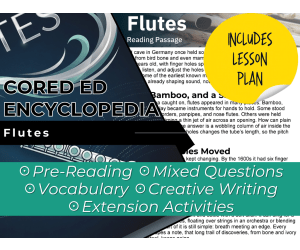
Flutes Reading Comprehension Passage - Cored Ed Encyclopedia
ELA, Reading Comprehension, Reading, Science, Technology, Social Studies, History, Music, Creative Arts, Physics, Grade 2, 3, 4, 5, Worksheets & Printables, Worksheets, Teacher Tools, Centers, Activities, Writing Prompts, Assessments, Quizzes and Tests, Quizzes, Lesson Plans
This flutes reading comprehension with lesson plan includes: Visualization (on the front cover) Start your lesson by taking a minute to think and share something about the topic. Read the script aloud (slowly), perhaps prepare some music or sound effects. Student close their eyes and let their imaginations wander. Students open their eyes, read the question aloud and give them a few minutes to complete. Ask a few students to share or keep answers until the end to compare with what they learn in the passage. Quick pause—thousands of Cored Education products are included with your TeachSimple membership. Download links and encyclopedia index available here. Pre-Reading Trivia Students will write down one thing they already know about the subject and then read five more facts and discuss. These facts are fun, and the students will enjoy learning about the subject before reading more. Give 1 minute for students to write what they already know (no pressure—best guess is fine). Read the five facts together. After each fact, do ask a student for their opinion, was it surprising? Set a purpose by asking students to highlight/underline one fact they want to learn more about during the reading. Reading Passage The text is a high-interest reading passage with set paragraphs, roughly three to four paragraphs long. It contains a variety of themes about the topic, anywhere from history to technology. The passage is between 250 and 350 words in length. First, ask students to look at the headings and see what they’ll learn about today. What do they know about the topic/heading? First read options: Teacher read-aloud (best for support). Partner reading (paragraph by paragraph). While reading, students underline important details, and vocabulary words they think may come up in the questions section. Mixed Questions The first question page contains four multiple-choice questions, each with a choice of four answers, and three written response questions that require a sentence or two from the student. Students complete the mcqs first independently, then review quickly as a class. For the 3 written responses, try to get students giving the answer with some form of evidence: “I think ___ because the text says ___.” If students get stuck, send them back to check the passage. Vocabulary Questions Practice seven key words from the text in this section across two activities. First section is scrambled words where students will unscramble three words given a clue for each. The second section is a word to meaning matching activity. Before starting, have some students read out words they underlined in the passage. Ask students to say the word and read aloud the sentence(s) around each word. Ask students to do scrambled words and the matching exercise in pairs then go through answers as a class. For the scrambled spelling task, get four pairs to come up to the board and write the words for extra practice with the other student reading out the clue. For the matching task, prompt students to give full sentences: “I matched ___ with ___ because ___.” Creative Writing In this question, the student will be required to write a five to eight sentence paragraph on a question related to the topic. Before starting, ask students write down 3 key ideas they are going to include in their piece. Ask students for ideas to share around the class to help those struggling. Pro writing expectations: 5–8 sentences At least 2 facts or details from the passage At least 2 vocabulary words from the previous page Students read their paragraphs while classmates listen for facts and vocabulary words. Extension Activities This page is optional for fast finishers or to take home. There are several activities, each one requiring a different skill. Do some, do none, do all, completely optional - but you will feel reassured knowing every possibility is planned for. Includes summary writting question and additional facts. Answer Key There are answers for the multiple-choice questions, written response questions have sample answers, vocabulary answers and if there is a summary question then a sample summary will be provided as well. Lesson Plan Included Customized lesson plan for this lesson is included. Lesson Snapshot Title: Flutes Genre: Nonfiction (Informational Text) Subject: Music / Science (Sound) / Reading (Informational Text) Primary Topic: How flutes make sound and changed over time Estimated Guided Reading Level (A–Z): Q What This Lesson Teaches Best How very early flutes were made (carved from bird bone and mammoth ivory ) and why these finds matter as early musical instruments. How flutes make a clear note: a thin jet of air across an opening creates a wobbling column of air inside the tube. Cause and effect in instruments: covering or uncovering holes changes the tube’s length, so the pitch goes up or down. How design evolved in Europe, including added holes and keys and Theobald Boehm’s 1800s redesign with tone holes and ring keys . Key features of a modern concert flute (often metal, about 26 inches long, three sections, padded keys, range of a little more than three octaves ). Learning Goals Students will describe what materials some ancient flutes were carved from and how old they were said to be. Students will explain how a flute makes a clear note using the idea of a “column of air” in a tube. Students will explain how covering or uncovering holes changes pitch by changing the tube’s length. Students will summarize how the sideways flute changed over time in Europe, including added holes and keys. Students will identify changes Theobald Boehm made to flute design and how ring keys helped players. Students will describe at least two details of today’s concert flute mentioned in the passage. Key Vocabulary From the Text mammoth — an ancient animal related to today’s elephants. ivory — hard material used for carving. column — a long “tube” shape of air inside. pitch — how high or low a note sounds. octaves — sets of notes higher or lower. FULL CATALOG OF DOWNLOAD LINKS AND ENCYCLOPEDIA INDEX HERE
Author Cored Education
Rating
Tags Vocabulary, Reading Comprehension, Reading Passages, Lesson Plans, Ela Lesson Plans, Reading Comprehension Lesson Plans, Pre-reading, History, Music, Music Lesson Plans
I WONDER - What Is In The Earth’s Core | Animated Video Lesson
Geography, Social Studies, Earth Sciences, Earth and Environmental Sciences, Science, Grade 4, 5, 6, 7, 8, 9, 10, Lesson Plans, Teacher Tools
Video Introduction An amazing video designed for the students to learn more about famous places in different countries. I WONDER - What Is In The Earth’s Core | Animated Video Lesson What do you know about this place? Do you know in which part of the world it is? Have you ever visited this place? If yes, can you tell us more about your adventure, and what do you like the most about this place? Do you like reading about Geography? What is your favorite country in the whole world? If you are going on a trip where it will be? Which country? What you are going to see there? Does this country has a famous place to visit? I WONDER - What Is In The Earth’s Core | Animated Video Lesson The activity is perfect for encouraging the researching skills for the students, while learning more about this fantastic place. I WONDER - What Is In The Earth’s Core | Animated Video Lesson This friendly designed video is suitable for students at school, homeschooling, and as a group activity. Format Available in MP4 format.
Author Educational Voice
Tags What Is In The Earth’s Core, What Is In The Earth’s Core Video, Earth’s Core, Earth’s Core Facts, Earth’s Core Facts For Kids, Earth’s Core Video, Earth’s Core Video For Kids, Earth, Earth Video

Waste Management & Product Life Cycles Gr. 4-6
Science, Earth and Environmental Sciences, Earth Sciences, Grade 4, 5, 6, Teacher Tools, Lesson Plans
Waste Management & Product Life Cycles Gr. 4-6 An essential teaching resource that is designed to benefit both public school teachers and homeschoolers alike, particularly those who teach grades 4, 5, and 6. This provides a well-rounded lesson plan on Earth Science. Natural Resources Overview With a comprehensive exploration of many pressing ecological matters, this instructional guide starts with a detail-rich overview of our nation's Natural Resources—setting the stage for subsequent sections on how these resources transform into everyday commodities. Product Lifecycle Journey Inception in Manufacturing Exploration Extraction Processing Disposal Methods at Completion Note:Learners gain clear insights at all stages. Effective Waste Management Strategies Sectiond This section offers valuable information that paves the way towards responsible global citizenship habits—resonating beyond classroom learning. Crafted thoughtfully with educators and students at heart: Detailed reading passages accompanied by practical activities for stimulating interaction or independent study sessions; A provided answer key support comprehension levels; s All components cohesively come together over seventy-one pages in ready-to-print PDF format file. This highly versatile teaching resource can be ideally implemented in diverse teaching setups: Fostering whole group lectures for creating broader discussions on natural resources; s Moderating smaller group dialogues to foster deeper understanding;p Suitability of exercises which may be assigned as homework tasks for ongoing reinforcement. Waste Management & Product Life Cycles Gr. 4-6 is a crucial tool, aiding educators to establish deeper understanding among their students about nature's wealth, product life cycles, and effective waste management strategies—knowledge that extends past academics into their daily lives.
Author Classroom Complete Press
Tags Reading Activity, Reading Lesson Plan, Waste Management, Earth Sciences, Life Cycles

Heat, Light, and Sound
Science, Physics, Grade 1, 2, 3, Teacher Tools, Lesson Plans
Heat, Light, and Sound: A Comprehensive Teaching Resource Heat, Light, and Sound is a curriculum-based teaching tool designed specifically for Grade 1 to 3 students. This engaging resource contains various worksheets focusing on primary scientific concepts such as physics. The material in the book is easy to understand and facilitates effortless learning for young students. The workbook pages are draft-designed by notable science educator Ed Ortleb. No extensive preparation is required before using these resources as each activity has been structured with easy hands-on tasks like: Coloring, Cutting, Pasting sequences, Matching pairs, Drawing diagrams/games/puzzles. All these activities foster creativity while seamlessly imparting core scientific knowledge. Inclusive Guide & Extension Activities An extensive guide accompanying Heat, Light and Sound includes extension activities that allow teachers to hold additional explorative sessions with their class or smaller groups. This flexibility provides room for individualization based on each student's learning pace or assimilation level. Homeschooling Advantage This teaching resource proves immensely helpful for homeschooling parents due its ready-to-use nature; they simply need to print out any of the 35 PDF pages available and start facilitating their child's learning directly. Saves Time & Bridges Information Gap This comprehensive material includes necessary background information which saves teachers from investing time in additional research preparations. By spanning across different ages/grades from K-3 classrooms or homeschooled settings, it democratizes knowledge acquisition about Heat propagation methodologies , Sources & Properties of light plus Differentiation between various Sounds & Vibrations etiquette . Multiple Use Cases Heat, Light and Sound can also be used as homework assignments. This affordably priced teaching tool promotes self-paced study and encourages parent-child interaction. A versatile resource, it adds invaluable benefit to any public school's science curriculum or a homeschooling education plan by simplifying the process of learning foundational scientific principles.
Author Classroom Complete Press
Tags Science Worksheet, Physics, Light Sources, Temperature, Musical Instruments
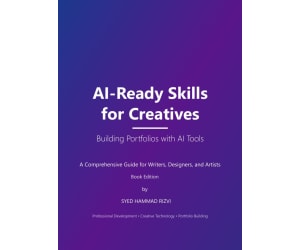
AI-Ready Skills for Creatives (writers, designers, artists) Book
Science, Technology, Computer Science, Engineering, Life Skills, Special Resources, Resources for Teachers, Classroom Management, Community Building, Research, Homeschool Curriculum, Grade 8, 9, 10, 11, 12, Teacher Tools, Assessments, Lesson Plans, Presentations, Workbooks, Worksheets & Printables, Writing Prompts, Diagrams, Projects, Activities
Explore the future of creativity with "AI Ready Skills for Creatives: Building Portfolios Using AI Tools" - the essential resource for new writers, graphic designers, visual artists, and all types of multimedia creators. Authored by Syed Hammad Rizvi, this 204-page PDF contains everything you need to know about working with AI through your projects, along with strategies, workflows, and ethical considerations to use AI as a collaborator rather than a replacement. Regardless of whether you're a freelancer, student, educator, or working professional in industry, you'll learn how to turn the overwhelming media coverage associated with emerging technologies into an easy-to-follow guide. You will learn how to use popular AI technologies such as ChatGPT, Midjourney, Adobe Firefly, DALL-E, Claude and Runway in each stage of the creative process, including idea generation, writing, and the final presentation of your portfolio. You will learn: Foundations of AI: The inner workings of large language models, diffusion models and generative applications. Workflow Instructional Materials by Discipline: Each discipline has designated chapters created specifically for writers (fiction/nonfiction/copywriters), graphic designers (logo creation, branding and photo enhancement), graphics artists (stylized transfer/generative graphics) and video/audio producers derive workflow materials designed specifically for their industry. Prompt Development: Understanding what it is to develop effective prompts; thus providing you with appropriate high end results that are based on consistency will help you gain the confidence and knowledge about the tools themselves. Portfolios and Personal Brand Development/Building your Brand/Developing Your Skills as a Creator who creates image/content based on capabilities/Abilities that Share Your Expertise with Your Clients. Monetization Strategies with AI-Enhanced Work: Value-based pricing, retaining services, productizing services, and selling subscriptions to AI as a work enhancement tool. Ethics and Copyright by Navigating the Legal Gray Area/Creatively Authentic/Building a Future Supported by Enduirng Creative Human-based Skills. Hands-On Exercises and Case Studies by Implementing Real-World Examples With More Than 15 Practical Hands-On Exercises That Allow You to Develop Your Color Compiling & Style Compiling Skills. Who is This for? Creatives seeking to increase their output by 10 times while maintaining high-quality. Educators & schools with students preparing for creative industries using AI. Freelancers & agencies looking at AI as a way to grow their businesses. Beginners going from an AI novice to an AI-confidence practitioner. Don't just adapt to the AI revolution; lead it! Your most significant asset as a creator is your unique point of view, your taste, and your judgment. This book will demonstrate how to take your creative vision beyond its boundaries through limitless capabilities afforded by artificial intelligence! PDF (Digital Download) 204 pages Professional edition Categories: Professional Development / Creative Technology / Portfolio Development / Artificial Intelligence (A.I.) in Education Reasons Parents/Teachers Appreciate It : Preparing for Future Careers: Helping Young Adults Get Ready for the Presence of AI / Artificial Intelligence (AI) in Every Creative Industry has helped students prepare for college admissions and job opportunities by creating a comprehensive portfolio of both the technical skills required and the ethical use of AI technology they will need to have after graduating from high school. Integrating Technology with Values: The book includes entire chapters on topics that relate to Creative Authenticity, Copyright and Ethical Concerns, and then teaches students how to use AI as a tool or amplifier of their individual voices and not just "stuff” that just takes the place of their own creativity, which adheres completely to the Academic Integrity policies of Schools/Colleges. Providing Ready-to-Use Curriculum: The curriculum and textbook (complete with planned out projects, case studies, and step-by-step instructional pacing) may be utilized to develop and teach an AI course over the course of a school year or through workshops, or can also be used for self-learning and independent study. Saving Time for Teachers: It saves teachers time by providing them with a single source of all the information to use when teaching their students how to effectively utilize AI tools for writing, design, visual art, video production and audio production. This includes instruction about the development of the process of creating an effective prompt, the processes associated with creating successful workflow designs, and the steps needed to build a professional digital portfolio. Intended Classes & Level of Education: Professional level (High School & College): Grades 9-12 - Graphic Design & Digital Media - Creative Writing/Journalism - Media Arts/Film & Video Production - Computer Science (Artificial Intelligence & Society Course) - Career and Technical Education (CTE) Pathway in Art, Media, & Entertainment - Yearbook/School Publication Staff College/University - Introduction to Digital Art, Interaction Design, Visual Communication - Professional Writing, Content Strategy, Technical Writing - Marketing & Advertising (Copywriting & Managing Social Media) - Closing Portfolio Development Class - Fine Art majors using technology & new media Adult Education/Professional Development: - Teacher Professional Development workshops (Integrating AI Technology Classroom) - Continuing Education for Freelance Professionals - Home School Co-Ops (Grades 8+) with a focus on Emerging Occupations Why These Classes? This book has no prerequisites for AI knowledge, but will teach all levels of professional workflow application (for career preparation and portfolio development). As such, it is very applicable for advanced high school students and for anyone pursuing any form of creative discipline in the college/university setting. Disclaimer: You can expect this book by Syed Hammad Rizvi to be under copyright. It is a single-use only resource and cannot be modified, sold, or passed on to anyone other than the purchaser without written consent. You are welcome to share your use of this resource with other teachers; please purchase additional licenses from Teachsimple so that they can also have access to it. Thank you for complying with our terms and conditions. Syed Hammad Rizvi would like you to use this product to enrich the lives of young children everywhere.
Author Creative Book Store
Rating
Tags AICreatives, AIPortfolio, CreativeAI, AIToolsForCreatives, AIReadySkills, GenerativeAI, PromptEngineering, AIWorkflow, CreativeTechnology, PortfolioBuilding

I WONDER - Why Do We Have Holes In Our Skulls | Animated Video Lesson
Human Body, Life Sciences, Science, Biology, STEM, Grade 3, 4, 5, 6, 7, 8, 9, Lesson Plans, Teacher Tools
Video Overview The human body is full of fascinating wonders to learn. This video is created to help the students recognize the anatomy and the job of the human body. I WONDER - Why Do We Have Holes In Our Skulls | Animated Video Lesson Every part and organ in our human body is vital so let's see how important they are. Have you ever imagined how we look like if we didn't have a skeleton? Did you know that because we have our amazing muscles we can stand! Do you know how many teeth do we have? Have you ever wondered about the food journey inside our body? Can you name all the glands in our body? Why do we have skin? Our nervous system is really good at sending signals. Can you tell us more about it? Are you really good at Mathematics, painting, or any other thing? You should really thank your brain about it! The famous five senses are really doing a great work? Can you explain how every sense works? I WONDER - Why Do We Have Holes In Our Skulls | Animated Video Lesson The video is perfect for encouraging the researching skills for the students, while learning more about our fantastic human body. I WONDER - Why Do We Have Holes In Our Skulls | Animated Video Lesson This friendly designed video is suitable for students at school, homeschooling, and as a group activity. Format Available in MP4 format.
Author Educational Voice
Tags Why Do We Have Holes In Our Skulls, Why Do We Have Holes In Our Skulls Video, Holes In Our Skulls, Holes In Our Skulls Facts, Holes In Our Skulls Facts For Kids, Holes In Our Skulls Video, Holes In Our Skulls Video For Kids

Classification & Adaptation: What Do We Classify? Gr. 5-8
Science, Life Sciences, Biology, Grade 5, 6, 7, 8, Teacher Tools, Lesson Plans
Classification & Adaptation: What Do We Classify? Gr. 5-8 Classification & Adaptation: What Do We Classify? Gr. 5-8 is a comprehensive teaching resource, specifically designed to assist educators in numerous settings, including public schools and homeschools. This resource, primarily focused on students from grades 5-8, provides informative content that deepens understanding of biology topics such as classification and adaptation in animals. Detailed Description of the Resource This is not just another science lesson plan; it brings together an array of activities that engage students actively as they explore concepts like vertebrates vs invertebrates and warm-blooded vs cold-blooded animals. The program dives deeper into animal adaptation through a captivating case study of the 'Koala and Its Adaptations'. Fascinates with hands-on exercises about evolution and fossil records. Incorporates activities like 'How Important Are Thumbs?', 'The Lake Habitat Thermometer' and 'A Day in the Life of a Paleontologist!' to incite curiosity while reinforcing learning. Teaching Made Easy for Educators! The material within this teaching resource is exceptionally teacher-friendly. Inside are reading passages, student activities, test preparation tools plus colorful mini posters to enhance visual comprehension. The content uses simplified language with emphasis on accessible vocabulary – making science concepts easier for students to grasp. This product can be used effectively for whole-class instruction or can be adapted for small group sessions or individual work assignments which cater better to students’ individual learning styles; thereby enhancing understanding. Ease-of-use All information found in Classification & Adaptation: What Do We Classify? Gr. 5-8 is practically packaged as one PDF file for your convenience. Alignment with State Standards The resource aligns with your state standards, ensuring seamless integration into existing lesson plans without compromising curriculum compliance. Every component has been carefully crafted according to Bloom's Taxonomy principles and aims towards STEM initiatives.
Author Classroom Complete Press
Tags PDF

Deepfake & Misinformation Detection
Science, Technology, Computer Science, Engineering, STEM, Resources for Teachers, Research, Classroom Management, Community Building, ELA, Homeschool Curriculum, Grade 7, 8, 9, 10, 11, 12, Worksheets & Printables, Workbooks, Worksheets, Word Searches, Writing Prompts, Teacher Tools, Lesson Plans, Quizzes and Tests, Quizzes, Tests
Deepfake & Misinformation Detection: A Complete High School Unit for Media Literacy & Critical Thinking Prepare your students for the complexities of the digital world with this comprehensive, no-prep curriculum unit on Deepfake and Misinformation Detection. In an age where AI-generated content can blur the lines between reality and fiction, this resource is not just relevant—it's essential. Designed for high school students (Grades 9-12), this 36-page unit transforms learners from passive media consumers into sharp, forensic analysts. Using the powerful "Detect, Deconstruct, Defend" methodology, students will gain the critical thinking skills necessary to navigate the modern information ecosystem, making it a perfect fit for Social Studies, Civics, ELA, Journalism, Psychology, and Media Literacy classes. What's Included in This Rigorous Unit? Part 1: In-Depth Instructional Text (10 pages): A detailed guide covering the core concepts, including the "anatomy of synthetic media," the psychology of viral misinformation, forensic detection techniques (visual and auditory), and the societal impact, such as the "Liar's Dividend." Each chapter includes a "Theory Assessment" comprehension check. Part 2: Student Workbook (11 pages): Ten challenging, high-level worksheets that go beyond simple recall. Students will analyze complex scenarios related to: Electoral Interference & Democratic Integrity Financial Markets & Fabricated Panics The Psychology of Belief & Cognitive Biases Geopolitical Tensions & Synthetic Escalation Voice Cloning, Metadata Forensics, and more! Part 3: Teacher Resources (15 pages): Everything you need to implement this lesson seamlessly! Visual Aids: High-resolution diagrams and flowcharts perfect for handouts or presentations, illustrating the Disinformation Ecosystem, Forensic Analysis Protocol, and the Amplification Cycle. Teacher Implementation Guide: A complete guide with pedagogical philosophy, pacing strategies, discussion prompts, and best practices for navigating sensitive topics in the classroom. Comprehensive Answer Key: A full answer key for all comprehension checks and student workbook exercises, including detailed explanations for scenario-based questions. Empower your students with the 21st-century skills they desperately need. This turnkey resource will challenge them to think critically, analyze evidence, and become responsible, informed digital citizens. Keywords: Media Literacy, Deepfake, Misinformation, Disinformation, AI, Critical Thinking, Digital Citizenship, High School, Social Studies, ELA, Civics, Journalism, Fake News, Source Verification, SIFT, No-Prep, Print-and-Go, Google Classroom, Digital Resource, Worksheets. Why Parents/Schools Love It: Prepares Students for the Real World: This curriculum directly addresses one of the most significant challenges of the 21st century, equipping students with practical, lifelong skills to navigate a world filled with AI and misinformation. Fosters Elite Critical Thinking: It goes beyond memorization, teaching a sophisticated forensic framework ("Detect, Deconstruct, Defend") that students can apply to any media they encounter, strengthening their analytical and reasoning abilities. Comprehensive & No-Prep: This is a complete, turnkey unit. It saves teachers dozens of hours of research and preparation with its ready-to-use instructional texts, worksheets, visual aids, and a full answer key. Highly Engaging & Relevant Content: The use of thrilling, real-world scenarios—from electoral crises and financial panics to geopolitical espionage—makes the content incredibly engaging and relevant to teenagers' lives. Target Audience: Which Classes/Students to Target Based on the advanced vocabulary (e.g., epistemology, specular highlights, cognitive dissonance), the complexity of the topics, and the explicit mention in the teacher resources, target: Primary Target: High School Students (Grades 10, 11, 12) . While the guide says Grades 8-12, the content is most appropriate for older, more mature high school students. Advanced/Honors Classes: This curriculum is perfect for AP (Advanced Placement) , IB (International Baccalaureate) , or Honors level courses due to its rigor and analytical depth. Specific Subject Areas: Social Studies / Civics / Government: Essential for units on elections, political polarization, modern warfare, and the role of media in democracy. Media Literacy / Digital Citizenship: This is a cornerstone resource for any such course. English Language Arts (ELA): Excellent for units on argumentation, rhetoric, non-fiction analysis, and understanding modern forms of text. Journalism: A must-have for teaching ethics, source verification, and the challenges facing modern news. Psychology: Perfect for exploring cognitive biases, confirmation bias, groupthink, and the psychology of belief. Economics: The sections on fabricated financial panics and market manipulation are directly relevant. Computer Science / Technology Ethics: Fits perfectly into discussions on the societal impact of artificial intelligence. Copyright/Terms of Use: This Book was copyrighted by Syed Hammad Rizvi. This resource is for personal and single classroom use only. You may not alter, redistribute, or sell any part of this resource. In other words, you may not put it on the Internet where it could be publicly found and downloaded. If you want to share this resource with colleagues, please purchase additional licenses from Teachsimple. Thank you for respecting these terms of use. This product is happily brought to you by Syed Hammad Rizvi
Author Creative Book Store
Rating
Tags MediaLiteracy, Deepfake, Misinformation, Disinformation, FakeNews, AIinEducation, ArtificialIntelligence, DigitalLiteracy, AIEthics, DigitalDeception

I WONDER - Do All Joints Move | Animated Video Lesson
Human Body, Life Sciences, Science, Biology, STEM, Grade 4, 5, 6, 7, 8, 9, Lesson Plans, Teacher Tools
Video Overview The human body is full of fascinating wonders to learn. This video is created to help the students recognize the anatomy and the job of the human body. I WONDER - Do All Joints Move | Animated Video Lesson Every part and organ in our human body is vital so let's see how important they are. Have you ever imagined how we look like if we didn't have a skeleton? Did you know that because we have our amazing muscles we can stand! Do you know how many teeth do we have? Have you ever wondered about the food journey inside our body? Can you name all the glands in our body? Why do we have skin? Our nervous system is really good at sending signals. Can you tell us more about it? Are you really good at Mathematics, painting, or any other thing? You should really thank your brain about it! The famous five senses are really doing a great work? Can you explain how every sense works? I WONDER - Do All Joints Move | Animated Video Lesson The video is perfect for encouraging the researching skills for the students, while learning more about our fantastic human body. I WONDER - Do All Joints Move | Animated Video Lesson This friendly designed video is suitable for students at school, homeschooling, and as a group activity. Format Available in MP4 format.
Author Educational Voice
Tags Do All Joints Move, Do All Joints Move Video, Joints, Joint, Joints Facts, Joints Facts For Kids, Joints Video, Joints Video For Kids, Bone, Bones
I WONDER - Can You See A Blackhole | Animated Video Lesson
Space, Earth and Environmental Sciences, Science, Grade 6, 7, 8, 9, 10, 11, 12, Lesson Plans, Teacher Tools
Video Introduction An amazing video designed for the students to learn more about space facts. I WONDER - Can You See A Blackhole | Animated Video Lesson Do you like reading about space? If yes, what is your favorite topic? What do you know about our solar system? What is the smallest planet in our solar system? What is the biggest planet in our solar system? What is the hottest planet in our solar system? And what is the coldest one? Do you think there are aliens? If yes, what do you think they look like? What do they eat and how they speak to each other? Where do they live? What is a galaxy? And what is a milky way? Have you recently saw a shooting star? If yes, tell us more about it, like when did it happen and where? What is a blackhole? Can a blackhole gets bigger by time? Do you like counting the stars? What do you think a star is made of? I WONDER - Can You See A Blackhole | Animated Video Lesson The video is perfect for encouraging the researching skills for the students, while learning more about the fantastic space. I WONDER - Can You See A Blackhole | Animated Video Lesson This friendly designed video is suitable for students at school, homeschooling, and as a group activity. Format Available in MP4 format.
Author Educational Voice
Tags Can You See A Blackhole, Can You See A Blackhole Video, See A Blackhole, Blackhole, Blackhole Facts, Blackhole Facts For Kids, Blackhole Video, Blackhole Video For Kids, Blackholes

I WONDER - What Is Refraction | Animated Video
Physics, Science, STEM, Grade 6, 7, 8, 9, 10, 11, 12, Lesson Plans, Teacher Tools
Video Introduction An amazing video designed for the students to learn more about STEM. I WONDER - What Is Refraction | Animated Video Lesson Do you like STEM subjects? what is your favorite one? Have you ever tried to plant a seed? If yes, tell us more about it. Or have you ever tried to invent something? If yes, tell us more about it. And how do you think it will help us? Have you ever seen a microorganism under a microscope? What was it? And how it looked like? Mathematics is a marvelous subject. Let' sharpen our brains and solve some equations. Do you like timetable tricks? What is your favorite one? Do you know how to code? Have you ever created an app or a game before? If yes, how was it like? I WONDER - What Is Refraction | Animated Video Lesson The video is perfect for encouraging the researching skills for the students, while learning more about this fantastic topic. I WONDER - What Is Refraction | Animated Video Lesson This friendly designed video is suitable for students at school, homeschooling, and as a group activity. Format Available in MP4 format.
Author Educational Voice
Tags What Is Refraction, What Is Refraction Video, Refraction, Refraction Facts, Refraction Facts For Kids, Refraction Video, Refraction Video For Kids, Refraction Facts Video For Kids, Science Video