



3,890 products added recently
Page 61 - Science Lesson Plan Template
Enhance your science instruction with a flexible lesson plan template designed for educators. This tool helps you structure objectives, materials, procedures, and assessments efficiently. Use it to create organized and impactful science lessons that cater to your students' needs.

 Show filters

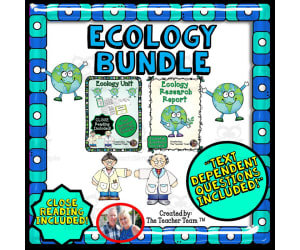
Ecology Unit
Science, Life Sciences, Biology, Grade 3, 4, 5, 6, 7, Lesson Plans, Teacher Tools
This large Ecology Bundle contains a wide variety of resources needed to teach a rigorous unit on ecology. It includes CLOSE Reading nonfiction passages to help teach your students about ecology (not familiar with CLOSE reading? It’s okay, we have instructions and anchor charts to help you incorporate it into your teaching). There are text dependent questions aligned with each passage, a set of vocabulary cards with definitions to accompany the passages, An Ecology Research Report, and much, much more. A variety of other graphic organizers and activities are included as well. We do encourage you to supplement with any other books, videos, and websites that you already use; they will blend nicely with our CLOSE reading passages. You can use this unit in its entirety, or “pick and choose” the components to meet the needs of your students.
Author The Teacher Team
Tags Ecology Unit, Conservation, Recycle, Earth Science, Bundle
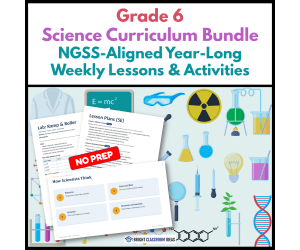
Grade 6 Science Curriculum Bundle | NGSS-Aligned Year-Long Lessons
Science, Grade 6, Lesson Plans, Teacher Tools, Worksheets & Printables
Grade 6 NGSS Science Curriculum Bundle | Full Year Middle School Science Curriculum | Print & Digital | Complete 36-Week Program Teach an entire year of Grade 6 NGSS Science with confidence using this comprehensive, standards-aligned curriculum bundle! This full-year middle school science curriculum is designed around hands-on investigations, engaging literacy activities, engineering challenges, and real-world science applications to help students build lasting understanding while saving teachers countless hours of planning. Perfect for traditional classrooms, homeschool, hybrid learning, or science departments, this curriculum provides everything needed for 36 weeks of instruction with ready-to-use lessons, labs, assessments, projects, and teacher resources. Every unit emphasizes scientific inquiry, critical thinking, and evidence-based reasoning while aligning with the Next Generation Science Standards (NGSS). ⭐ What's Included Complete 36-week Grade 6 NGSS Science Curriculum 10 comprehensive instructional units 96 complete lessons Teacher Guide & Curriculum Overview Year-at-a-Glance Planning Guide Scope & Sequence Pacing Guide Standards Alignment Daily Lesson Plans Reading Passages Guided Notes Student Worksheets Interactive Notebook Pages Vocabulary Activities Printable Vocabulary Cards Graphic Organizers 20 Full Labs 10 Quick Investigations 10 STEM Challenges Materials Lists Exit Tickets Quizzes Unit Tests Performance Tasks Major Projects Review Games End-of-Year Review Complete Answer Keys Reusable Rubrics 🔬 Units Included Cells & Levels of Organization Human Body Systems Matter Energy Earth's Interior Plate Tectonics Weather Climate Ecology Engineering Design 🏫 How It Works in the Classroom This curriculum is flexible enough for: Whole-class instruction Science block lessons Middle school labs STEM learning Independent practice Small groups Intervention Enrichment Homework Sub plans Homeschool Hybrid or digital learning Each lesson includes: Clear learning objectives NGSS alignment Science & Engineering Practices (SEP) Crosscutting Concepts (CCC) Vocabulary instruction Differentiation strategies Common misconceptions Checks for understanding Ready-to-use instructional sequence Students engage in close reading, data analysis, graphing, laboratory investigations, engineering design challenges, and CER (Claim-Evidence-Reasoning) writing throughout the year. 🎯 Standards & Learning Goals This curriculum is aligned with the Next Generation Science Standards (NGSS) for Grade 6 and helps students: Develop scientific models Plan and conduct investigations Analyze and interpret data Construct evidence-based explanations Design engineering solutions Read and evaluate scientific texts Build academic science vocabulary Apply mathematics in scientific investigations Strengthen critical thinking skills Communicate scientific reasoning using CER ❤️ Why Teachers Love It ✅ Complete year-long curriculum ✅ Fully NGSS aligned ✅ Ready-to-teach lessons ✅ Low-prep materials ✅ Print-and-go resources ✅ Hands-on investigations ✅ Built-in differentiation ✅ Daily lesson plans included ✅ Science literacy integrated throughout ✅ Performance-based assessments ✅ Complete answer keys and rubrics ✅ Saves hours of planning every week Whether you're teaching your first year of middle school science or looking for a complete curriculum that keeps students engaged through inquiry and investigation, this Grade 6 NGSS Science Curriculum Bundle provides everything you need for an entire year of meaningful science instruction. Download today and simplify your planning with a complete Grade 6 NGSS Science Curriculum that is rigorous, engaging, and classroom ready!
Author Bright Classroom Ideas Marketplace
Rating
Tags Back To School, Lesson, Science, Curriculum, Yearlong, Full Year, Weekly, Ngss
Senses, Nervous & Respiratory Systems: The Nervous System - Brain Gr. 5-8
Science, Life Sciences, Human Body, Grade 5, 6, 7, 8, Teacher Tools, Lesson Plans
Senses, Nervous & Respiratory Systems: The Nervous System - Brain Gr. 5-8 A comprehensive teaching resource designed to engage learners in an exploration of the human body. It is primarily catering to educators and students from Grades 5 through 8, covering various subjects under science with a focus on the topic of the Human Body. The Nervous System - Brain This resource originates as a chapter slice from its broader lesson plan "Senses, Nervous & Respiratory Systems." Perfect for schools aiming to diversify and sophisticate their lessons on human anatomy. Main parts:The nervous system’s main parts—brain, spinal cord, nerves—are explained in simple terms. 'How long is a nerve cell?' 'How are our lungs like a train station?' Questions like these are answered in an engaging manner. In addition, it encourages investigations on the organs related to five senses and provides virtual tours around the respiratory system. Teaching Tools Included: Reading Passages: Comprehension questions interspersed among reading passages aimed at reinforcing understanding. Cognitive Activity : Hands-on activities designed for cognitive growth while keeping learning interactive and fun-filled. Colorful Mini Posters: Ideal for classroom displays or study aids enhancing visualization process. To ensure that knowledge gained remains intact among learners post lessons, an array of assessment tools like crosswords puzzles along with word search tasks promoting vocabulary enrichment aligned with scientific terminologies discussed within these lesson plans are available perfected by test preps which eventually culminate in conducting final quizzes. This resource is available through digital access and ideal for whole group discussions during class hours, small study circles maintaining social distancing protocols, or as homework assignments for independent studies. Standards Aligned: Crafted aligning with state standards, STEM initiatives while featuring a structure conforming to Bloom's Taxonomy—this material is the go-to resource for educators dedicated to delivering easy-to-understand yet curriculum-based material on the human body.
Author Classroom Complete Press
Tags PDF, Nervous System Lesson Plans Middle School
I WONDER - How Many Games Are On Roblox | Animated Video Lesson
Science, Technology, STEM, Grade 3, 4, 5, 6, 7, 8, 9, Lesson Plans, Teacher Tools
Video Introduction An amazing video designed for the students to learn more about STEM. I WONDER - How Many Games Are On Roblox | Animated Video Lesson Plants world is really fascinating! Do you know that some flowers eat insects? Some other plants like to grow on walls can you mention any? Do you know what is the difference between fungicide and pesticide? If yes, Can you tell us more about it? What is nuclear energy? Is it safe to use it? Do you think it is a clean energy? Have you ever read about potential energy? If yes, tell us what it is? Do you think that potential energy can be converted into another form of energy? How it happens? I WONDER - How Many Games Are On Roblox | Animated Video Lesson The video is perfect for encouraging the researching skills for the students, while learning more about this fantastic topic. I WONDER - How Many Games Are On Roblox | Animated Video Lesson This friendly designed video is suitable for students at school, homeschooling, and as a group activity. Format Available in MP4 format.
Author Educational Voice
Rating
Tags How Many Games Are On Roblox, Roblox, Roblox Facts, Roblox Video, Roblox Video For Kids, Roblox Facts For Kids, Roblox Games, Roblox Games Facts, Roblox Games Video, Roblox Games For Kids

Cells: What is a Cell?
Science, Life Sciences, Biology, Common Core, Grade 5, 6, 7, 8, Teacher Tools, Lesson Plans
Cells: What is a Cell? An engaging and accessible resource designed to guide students in grades five through eight on an exploration of the fundamental building blocks of life: cells. This curriculum-aligned learning material allows teachers to deliver a comprehensive biology lesson plan that fits seamlessly into any science curriculum. The teaching resource simplifies complex cell theories with easy-to-understand language and vocabulary. It introduces learners to the essential parts of both plant and animal cells, breaking down their distinct functionalities into visual, understandable mini posters. Key Features: Introduces students to single-celled and multi-cellular organisms Covers human cell reproduction Delves into diffusion and osmosis processes A Versatile Resource for Teachers The ready-to-go reading passages come with student activities that are perfect for various classroom settings—whole-group instruction, small group learning opportunities or even individual work at home. Focusing on Differentiated Instruction: This resource caters specially towards remedial learners without compromising quality or content depth, providing exercises that encourage critical thinking—an essential component of STEM education in today's classrooms. "Cells: What is a Cell?" - More Than Just Informational Text This educational package goes beyond being just an informative PDF; it seeks to engage young minds curious about science while fostering strong foundational knowledge about cellular biology. The contents adhere closely with Common Core State Standards—providing confidence for educators as they impart valuable biological knowledge in diverse settings like public schools and homeschools. With this resource,'Understanding Cells' now becomes 'Teach Simple!'
Author Classroom Complete Press
Tags PDF
Cells: Plant and Animal Cells
Science, Life Sciences, Biology, Grade 5, 6, 7, 8, Teacher Tools, Lesson Plans
Cells: Plant and Animal Cells Educational Resource Cells: Plant and Animal Cells is a comprehensive educational resource ideal for grade 5 through 8 science educators. This resource simplifies the intricacies of cell biology, focusing on cells as life's fundamental building blocks. The product zeroes in on plant and animal cells, with its language going easy on students within said grades, enabling them understand complex concepts like cellular structures and their respective roles. A distinctive feature of this resource breaks down understanding human cell reproduction—a generally challenging topic for young learners. Diversity in Learning Engineered with academic diversity in mind, Cells: Plant and Animal Cells, includes reading passages specifically tailored with simple vocabulary fit for remedial students ensuring all students within varying comprehension levels are catered to. This product boasts rich applications—impressive not only for classroom discussions but also for smaller group discourses or independent study projects. Presents educators an opportunity to implement various teaching strategies including peer-to-peer learning fostering greater classroom engagement. The mini-posters provided enrich visual learning effectively nurturing an interactive environment favorable across diverse learner types present in typical classrooms. Educational Standards Alignment The module seamlessly aligns with the Common Core Standards complying with national curriculum requirements preferred by public educators while simultaneously incorporating Bloom's Taxonomy elements to foster higher-order thinking skills among learners—all desired by home schoolers aiming at high-standard education at home. Its content is coherent with current STEM initiatives nudging your teaching objectives towards nurturing future leaders in Science, Technology, Engineering Mathematics endeavors. The module comes as a single PDF file guaranteeing quick downloads alongside seamless integration into existing lesson plans —furthermore streamlining lesson planning processes irrespective of whether you are an experienced educator or a new homeschooling parent in search of resources that will provide comprehensive yet digestible coverage of plant and animal cells.
Author Classroom Complete Press
Tags PDF
I WONDER - How Do Camels Survive In The Desert | Animated Video Lesson
STEM, Animals, Life Sciences, Science, Biology, Grade 1, 2, 3, 4, 5, 6, 7, 8, Lesson Plans, Teacher Tools
Video Introduction Animal kingdoms are full of fascinating wonders to learn. This video is designed for the students to learn more about animals in different countries. I WONDER - How Do Camels Survive In The Desert | Animated Video Lesson Do you like animals? what is your favorite one? Do you own a pet? If yes, tell us more about it, like what its name? And what do you like most about it? What are the animal kingdoms? Can you write down the characteristics of each animal class like mammals, birds, reptiles, amphibian, fish and mollusks. Do you know that some animals can sing, can you name any of them? What is the largest and the smallest mammal in the world? What is the largest and the smallest bird in the world? What is the largest and the smallest fish in the world? I WONDER - How Do Camels Survive In The Desert | Animated Video Lesson The video is perfect for encouraging the researching skills for the students, while learning more about these fantastic animals. I WONDER - How Do Camels Survive In The Desert | Animated Video Lesson This friendly designed video is suitable for students at school, homeschooling, and as a group activity. Format Available in MP4 format.
Author Educational Voice
Tags How Do Camels Survive In The Desert, How Do Camels Survive In The Desert Video, Camels, Camel, Camels Facts, Camels Facts For Kids, Camels Video, Camels Video For Kids, Camel Video

Motion - Digital Lesson Plan Gr. 5-8 | MAC Software
Science, Physics, Grade 3, 4, 5, 6, 7, 8, Teacher Tools, Lesson Plans
Motion - Digital Lesson Plan Gr. 5-8 | MAC Software Description This educational resource is designed specifically for grades 5 through 8 educators in the public school system and homeschool environment. It simplifies the complex science topic of motion for young learners. Interactive and Comprehensive The software spans across 80 screen-pages full of dynamic information, to enhance students' comprehension skills, making learning more interactive and immersive. Educational Features and Components Reading passages integrated with interactive activities. Examination-based preparation aids. Crossword puzzles for vocabulary enhancement. Mind drills via word search exercises. Audiological-Visual association via audio-video content enrichment. Including Students Participation in Learning Process The lesson plan includes measurement tools which allow students to graph motion themselves, enabling tangible association between theory and practice. In a downloadable zip file format, this software goes beyond teaching physics; it provides a profound, enriching learning experience. Conforms to state educational standards considering Bloom's Taxonomy- further emphasizing understanding over rote memorization. This software can be used in whole group discussions as well as individual homework tasks; it's flexible to adapt as per your unique teaching style! Want an exciting platform that makes the learning experience rich? Choose the Motion !
Author Classroom Complete Press
Tags Digital Lesson Plan, Science Lesson Plan, Physics Interactive Activity, Motion Lesson Plan, Science Passage
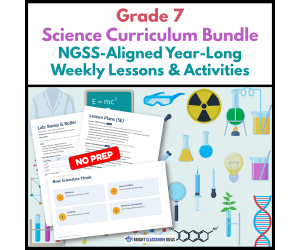
Grade 7 Science Curriculum Bundle | NGSS-Aligned Year-Long Lessons
Science, Grade 7, Lesson Plans, Teacher Tools, Worksheets & Printables
Grade 7 NGSS Science Curriculum Bundle | Full Year Middle School Science Curriculum | Complete 36-Week Program | Print & Digital Teach an entire year of Grade 7 NGSS Science with confidence using this comprehensive, standards-aligned curriculum bundle! This full-year middle school science curriculum is designed to engage students through hands-on investigations, inquiry-based learning, engineering design, scientific literacy, and real-world applications while saving teachers valuable planning time. Perfect for traditional classrooms, homeschool, hybrid instruction, or distance learning, this Grade 7 Science Curriculum includes everything needed for 36 weeks of instruction . Each unit combines engaging lessons, labs, STEM challenges, assessments, vocabulary practice, projects, and review materials to help students develop a deep understanding of life science, Earth science, physical science, and engineering concepts. ⭐ What's Included Complete 36-week Grade 7 NGSS Science Curriculum 10 comprehensive instructional units 96 complete lesson plans Teacher Guide & Curriculum Overview Year-at-a-Glance Planning Guide Scope & Sequence Pacing Guide Standards Alignment Daily Lesson Plans Reading Passages Guided Notes Student Worksheets Interactive Notebook Pages Vocabulary Activities Printable Vocabulary Cards Graphic Organizers 20 Full Labs 10 Quick Investigations 10 STEM Challenges Materials Lists Exit Tickets Quizzes Unit Tests Performance Tasks Major Projects Study Guides Review Games End-of-Year Review Complete Answer Keys Reusable Rubrics 🔬 Units Included Heredity & Genetics Evolution & Natural Selection Ecosystems Matter & Chemical Reactions Forces & Motion Energy Earth's History Earth's Resources Space Systems Engineering Design The curriculum progresses from life science topics such as heredity and evolution into physical science, Earth science, space science, and engineering design, providing students with a balanced and engaging year of instruction. 🏫 How It Works in the Classroom This curriculum is designed for flexible implementation and works well for: Whole-group instruction Science block lessons Laboratory investigations STEM learning Small-group instruction Independent practice Intervention Enrichment Homework Sub plans Homeschool Hybrid and digital learning Every lesson includes: Clear learning objectives NGSS alignment Science & Engineering Practices (SEP) Crosscutting Concepts (CCC) Academic vocabulary Guided instructional sequence Differentiation strategies Common misconceptions Checks for understanding Students participate in close reading, laboratory investigations, engineering challenges, vocabulary development, guided note-taking, collaborative discussions, data analysis, graphing, and Claim-Evidence-Reasoning (CER) writing throughout the year. 🎯 Standards & Learning Goals Aligned with the Next Generation Science Standards (NGSS) , this curriculum helps students: Develop scientific models Analyze and interpret data Plan and conduct investigations Construct evidence-based explanations Apply engineering design practices Read and evaluate scientific texts Build academic science vocabulary Strengthen problem-solving and critical thinking skills Communicate scientific reasoning using CER Connect science concepts to real-world phenomena ❤️ Why Teachers Love It ✅ Complete year-long curriculum ✅ Fully NGSS aligned ✅ Ready-to-teach lessons ✅ Low-prep materials ✅ Print-and-go resources ✅ Hands-on labs and STEM challenges ✅ Built-in differentiation ✅ Daily lesson plans included ✅ Science literacy integrated throughout ✅ Performance-based assessments ✅ Complete answer keys and reusable rubrics ✅ Saves hours of planning every week Whether you're teaching Grade 7 science for the first time or looking for a comprehensive curriculum that keeps students engaged all year, this Grade 7 NGSS Science Curriculum Bundle provides everything you need for meaningful, standards-based instruction. Download today and simplify your planning with a complete Grade 7 Science Curriculum that is engaging, organized, and classroom ready!
Author Bright Classroom Ideas Marketplace
Rating
Tags Science, Curriculum, Yearlong, Weekly, Full Year, Back To School, Lesson, Ngss
Global Warming REDUCTION: Transportation - FLASH-MAC
Science, Earth and Environmental Sciences, Environmental Science, Common Core, Grade 5, 6, 7, 8, Teacher Tools, Lesson Plans
Global Warming REDUCTION: Transportation - FLASH-MAC An interactive teaching tool equipped with multimedia components dedicated to helping educators teach the complex issue of climate change. Especially designed for Grades 5 to 8, it focuses on the role of transportation in global warming reduction. Tailored Teaching Resource The content is intended for diverse subjects, primarily Environmental Science. The methodology aligns with both Common Core State Standards and Bloom’s Taxonomy methodologies, encouraging beyond basic knowledge recall and promoting critical information processing. Apart From The Rest... This tool features vibrant vocabulary flashcards that help solidify key terms related to global warming reduction strategies within the transportation sector. In addition, there are tailored printable worksheets that reinforce learning outside regular class hours. They can be assigned as homework or used during revision sessions. The resource comes as Mac software giving educators flexibility to adjust according to classroom dynamics, from smaller digital huddle groups to large display projections for whole group sessions. A Message To Educators: This well-thought-out instructional aid has been designed with one key focus: making your lessons on climate change and global warming impact more engaging whilst instilling a thorough understanding among learners about reduction efforts within the transportation industry.”
Author Classroom Complete Press
Tags Software (Mac)

I WONDER - Where Do Avalanches Occur | Animated Video Lesson
Geography, Social Studies, Environmental Science, Earth and Environmental Sciences, Science, Earth Sciences, Grade 4, 5, 6, 7, 8, 9, 10, Teacher Tools, Lesson Plans
Video Introduction An amazing video designed for the students to learn more about natural disasters in different countries. I WONDER - Where Do Avalanches Occur | Animated Video Lesson What do you know about this natural disaster? Do you know in which part of the world this could happen? Have you ever read about the safety misusers that we could have to protect ourselves from this natural disaster? If yes, can you tell us more about them? Can you name other natural disasters? If yes, tell us more about where they are likely to happen? And how frequently? Do you like reading about Geography? What is your favorite country in the whole world? If you are going on a trip where it will be? Which country? What you are going to see there? Does this country has a famous place to visit? Do you like reading about Geology? If yes, what is your favourite topic? I WONDER - Where Do Avalanches Occur | Animated Video Lesson The video is perfect for encouraging the researching skills for the students, while learning more about this fantastic phenomenon. I WONDER - Where Do Avalanches Occur | Animated Video Lesson This friendly designed video is suitable for students at school, homeschooling, and as a group activity. Format Available in MP4 format.
Author Educational Voice
Tags Where Do Avalanches Occur, Where Do Avalanches Occur Video, Avalanches, Avalanche, Avalanches Facts, Avalanches Facts For Kids, Avalanches Video, Avalanches Video For Kids

I WONDER - Why Do Farmers Grow Different Crops | Animated Video Lesson
Environmental Science, Earth and Environmental Sciences, Science, Earth Sciences, Grade 6, 7, 8, Lesson Plans, Teacher Tools
Video Introduction An amazing video designed for the students to learn more about STEM. I WONDER - Why Do Farmers Grow Different Crops | Animated Video Lesson Do you like STEM subjects? what is your favorite one? Have you ever tried to plant a seed? If yes, tell us more about it. Or have you ever tried to invent something? If yes, tell us more about it. And how do you think it will help us? Have you ever seen a microorganism under a microscope? What was it? And how it looked like? Mathematics is a marvelous subject. Let' sharpen our brains and solve some equations. Do you like timetable tricks? What is your favorite one? Do you know how to code? Have you ever created an app or a game before? If yes, how was it like? I WONDER - Why Do Farmers Grow Different Crops | Animated Video Lesson The video is perfect for encouraging the researching skills for the students, while learning more about this fantastic topic. I WONDER - Why Do Farmers Grow Different Crops | Animated Video Lesson This friendly designed video is suitable for students at school, homeschooling, and as a group activity. Format Available in MP4 format.
Author Educational Voice
Tags Why Do Farmers Grow Different Crops, Why Do Farmers Grow Different Crops Video, Crops, Crops Facts, Crops Facts For Kids, Crops Video, Crops Video For Kids, Farmers, Farmers Facts
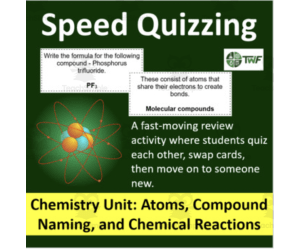
Speed Quizzing – Chemistry Unit – Atoms, Compound Naming, and Chemical Reactions
Science, Chemistry, Grade 10, 11, 12, Lesson Plans, Teacher Tools
Speed Quizzing – Chemistry Unit – Atoms, Compound Naming, and Chemical Reactions This educational resource provides a platform for teachers to conduct engaging and effective reviews for students. It utilizes active learning techniques through movement and interpersonal communication which aids in understanding critical chemistry concepts. Covered Topics Physical and Chemical Changes Periodic Table and Bohr Diagrams Lewis Structures, Ions Chemistry Ionic Compounds specifics Polyatomic Ions & Compounds essentials Molecular Compounds details An overview on Chemical Reactions including Balancing Chemical Equations with detailed coverage of Types of Chemical Reactions like Acid-Base interactions and Neutralization Reaction. The resource requires minimal preparation: simply print the 32 flashcards included in this downloadable editable zip file containing two Microsoft Word documents spanning over four pages. These relevant questions cover the above listed topics ensuring comprehensive yet concise revision. In-class Usage: Distribute one flashcard to each participant then guide them through pairing up via suitable methods. This promotes discussion promoting understanding amongst individuals having multiple opportunities to explain their answers. This teaching tool is ideal for grades 10 through 12 studying Science particularly Chemistry but can be adapted accordingly to suit comprehension levels across various student sets including homeschoolers aiming at mastery-based education. With Speed Quizzing – Chemistry Unit resources not only do you promote collaborative learning during small group activities but also its perfect in large class scenarios during review sessions or homework assignments. The interactive element ensures material retention and nurtures necessary interpersonal skills in and beyond the academic setting.
Author Teach With Fergy
Tags Atoms, Compound Naming, Chemical Reactions, Periodic Table, Balancing Equations

I WONDER - How Did Pluto Get So Many Moons | Animated Video Lesson
Space, Earth and Environmental Sciences, Science, Grade 4, 5, 6, 7, 8, 9, 10, Lesson Plans, Teacher Tools
Video Introduction An amazing video designed for the students to learn more about space facts. I WONDER - How Did Pluto Get So Many Moons | Animated Video Lesson Do you like reading about space? If yes, what is your favorite topic? What do you know about our solar system? What is the smallest planet in our solar system? What is the biggest planet in our solar system? What is the hottest planet in our solar system? And what is the coldest one? Do you think there are aliens? If yes, what do you think they look like? What do they eat and how they speak to each other? Where do they live? What is a galaxy? And what is a milky way? Have you recently saw a shooting star? If yes, tell us more about it, like when did it happen and where? What is a blackhole? Can a blackhole gets bigger by time? Do you like counting the stars? What do you think a star is made of? I WONDER - How Did Pluto Get So Many Moons | Animated Video Lesson The video is perfect for encouraging the researching skills for the students, while learning more about the fantastic space. I WONDER - How Did Pluto Get So Many Moons | Animated Video Lesson This friendly designed video is suitable for students at school, homeschooling, and as a group activity. Format Available in MP4 format.
Author Educational Voice
Tags How Did Pluto Get So Many Moons, How Did Pluto Get So Many Moons Video, Pluto's Moons, Pluto's Moons Facts, Pluto's Moons Facts For Kids, Pluto's Moons Video, Pluto's Moons Video For Kids, Pluto
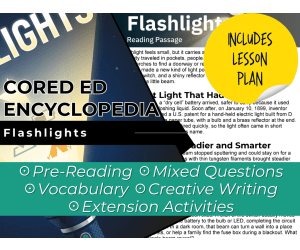
Flashlights Reading Comprehension Passage - Cored Ed Encyclopedia
ELA, Reading Comprehension, Reading, Science, Technology, Language Development, Social Studies, History, Pre-Reading, Physics, Grade 2, 3, 4, 5, Worksheets & Printables, Worksheets, Teacher Tools, Centers, Activities, Writing Prompts, Assessments, Quizzes and Tests, Quizzes, Lesson Plans
This Flashlights reading comprehension with lesson plan includes: Visualization (on the front cover) Start your lesson by taking a minute to think and share something about the topic. Read the script aloud (slowly), perhaps prepare some music or sound effects. Student close their eyes and let their imaginations wander. Students open their eyes, read the question aloud and give them a few minutes to complete. Ask a few students to share or keep answers until the end to compare with what they learn in the passage. Quick pause—thousands of Cored Education products are included with your TeachSimple membership. Download links and encyclopedia index available here. Pre-Reading Trivia Students will write down one thing they already know about the subject and then read five more facts and discuss. These facts are fun, and the students will enjoy learning about the subject before reading more. Give 1 minute for students to write what they already know (no pressure—best guess is fine). Read the five facts together. After each fact, do ask a student for their opinion, was it surprising? Set a purpose by asking students to highlight/underline one fact they want to learn more about during the reading. Reading Passage The text is a high-interest reading passage with set paragraphs, roughly three to four paragraphs long. It contains a variety of themes about the topic, anywhere from history to technology. The passage is between 250 and 350 words in length. First, ask students to look at the headings and see what they’ll learn about today. What do they know about the topic/heading? First read options: Teacher read-aloud (best for support). Partner reading (paragraph by paragraph). While reading, students underline important details, and vocabulary words they think may come up in the questions section. Mixed Questions The first question page contains four multiple-choice questions, each with a choice of four answers, and three written response questions that require a sentence or two from the student. Students complete the mcqs first independently, then review quickly as a class. For the 3 written responses, try to get students giving the answer with some form of evidence: “I think ___ because the text says ___.” If students get stuck, send them back to check the passage. Vocabulary Questions Practice seven key words from the text in this section across two activities. First section is scrambled words where students will unscramble three words given a clue for each. The second section is a word to meaning matching activity. Before starting, have some students read out words they underlined in the passage. Ask students to say the word and read aloud the sentence(s) around each word. Ask students to do scrambled words and the matching exercise in pairs then go through answers as a class. For the scrambled spelling task, get four pairs to come up to the board and write the words for extra practice with the other student reading out the clue. For the matching task, prompt students to give full sentences: “I matched ___ with ___ because ___.” Creative Writing In this question, the student will be required to write a five to eight sentence paragraph on a question related to the topic. Before starting, ask students write down 3 key ideas they are going to include in their piece. Ask students for ideas to share around the class to help those struggling. Pro writing expectations: 5–8 sentences At least 2 facts or details from the passage At least 2 vocabulary words from the previous page Students read their paragraphs while classmates listen for facts and vocabulary words. Extension Activities This page is optional for fast finishers or to take home. There are several activities, each one requiring a different skill. Do some, do none, do all, completely optional - but you will feel reassured knowing every possibility is planned for. Includes summary writting question and additional facts. Answer Key There are answers for the multiple-choice questions, written response questions have sample answers, vocabulary answers and if there is a summary question then a sample summary will be provided as well. Lesson Plan Included Customized lesson plan for this lesson is included. Lesson Snapshot Title: Flashlights Genre: Nonfiction (Informational Text) Subject: Science (Technology/Physical Science) / Reading (Informational Text) Primary Topic: Flashlight parts, history, and how it works Estimated Guided Reading Level (A–Z): P What This Lesson Teaches Best Explains the main parts inside a flashlight (a power source, a switch, and a reflector) and what they do. Teaches a short history of flashlights , including the “dry cell” battery and an 1899 U.S. patent for a hand-held electric light. Shows cause and effect : early zinc-carbon batteries tired quickly, so the light came in short flashes—leading to the name “flashlight.” Compares how flashlight beams improved over time, from sputtering light to steadier beams, including incandescent bulbs and later LEDs. Connects electricity to a real object by describing how a click of the switch completes a circuit so electricity can flow. Learning Goals Students will describe what a flashlight carries “in one hand” and what it helps people do in the dark. Students will identify three parts inside a flashlight case and explain each part’s job using the passage. Students will explain why the flashlight got its name, using evidence about early batteries and short flashes. Students will describe how flashlight lighting changed over time (dry cell batteries, incandescent bulbs, LEDs). Students will explain what happens when a flashlight switch is clicked, based on how the circuit is completed. Key Vocabulary From the Text reflector — shiny part that gathers glow and pushes it forward. patent — legal protection for an invention. incandescent — a kind of bulb that makes light using heat. LEDs — bright lights that can shine longer on same power. circuit — complete path that lets electricity flow. FULL CATALOG OF DOWNLOAD LINKS AND ENCYCLOPEDIA INDEX HERE
Author Cored Education
Rating
Tags Vocabulary, Reading Comprehension, Reading Passages, Lesson Plans, Ela Lesson Plans, Reading Comprehension Lesson Plans, Pre-reading, Science Lesson Plans, History, Technology
I WONDER - Why Is Protein Important | Animated Video Lesson
Human Body, Life Sciences, Science, Biology, STEM, Grade 3, 4, 5, 6, 7, 8, 9, Lesson Plans, Teacher Tools
Video Overview The human body is full of fascinating wonders to learn. This video is created to help the students recognize the anatomy and the job of the human body. I WONDER - Why Is Protein Important | Animated Video Lesson Every part and organ in our human body is vital so let's see how important they are. Have you ever imagined how we look like if we didn't have a skeleton? Did you know that because we have our amazing muscles we can stand! Do you know how many teeth do we have? Have you ever wondered about the food journey inside our body? Can you name all the glands in our body? Why do we have skin? Our nervous system is really good at sending signals. Can you tell us more about it? Are you really good at Mathematics, painting, or any other thing? You should really thank your brain about it! The famous five senses are really doing a great work? Can you explain how every sense works? I WONDER - Why Is Protein Important | Animated Video Lesson The video is perfect for encouraging the researching skills for the students, while learning more about our fantastic human body. I WONDER - Why Is Protein Important | Animated Video Lesson This friendly designed video is suitable for students at school, homeschooling, and as a group activity. Format Available in MP4 format.
Author Educational Voice
Tags Why Is Protein Important, Why Is Protein Important Facts, Protein, Protein Facts, Protein Facts For Kids, Protein Video, Protein Video For Kids, Healthy Eating, Healthy Eating Tips For Kids

Circulatory,Digestive & Reproductive Systems: The Reproductive System - FLASH-PC
Science, Life Sciences, Human Body, Common Core, Grade 5, 6, 7, 8, Teacher Tools, Lesson Plans
The Circulatory, Digestive & Reproductive Systems: The Reproductive System - FLASH-PC FLASH-PC is a comprehensive teaching resource developed for teachers of grades 5 to 8. It supplements the educator's efforts to impart knowledge about the human body's reproductive system, strictly aligning with the Common Core State Standards. A peek into what you'll find: A mini module elucidating information on the reproductive system. It also incorporates before and after reading questions that foster conceptual understanding. Printable resources that encourage hands-on learning experiences. Vocabulary flashcards for boosting students' biological terminology knowledge. Digital tools like videos and audios promoting interactive learning efficiently among varying types of learners. This resource can blend seamlessly into group lessons or break-out discussion formats, treading teacher-specific classroom requirements. Its versatility even permits usage as take-home assignments, facilitating flexibility on student comprehension outside classrooms too. The FLASH-PC program concerning The Reproductive System offers an in-depth yet nuanced walkthrough one of human body’s most complex systems; syncing educational rigour and accessibility prerequisite in middle school science classes. Note: Worth highlighting is this software-based lesson plan's compatibility with PC file systems that streamlines access for educators, endorsing smooth instructional planning which effortlessly integrates within their routine pedagogical structures. Finally, coupling engaging multimedia elements with curriculum-centric textual resources; this product efficiently binds different facets imperative for potent science education intended to augment understanding about our bodies’ inner functional mechanisms.
Author Classroom Complete Press
Tags Software (PC)

Circulatory, Digestive & Reproductive Systems: Mouth to Stomach Gr. 5-8
Science, Life Sciences, Human Body, Grade 5, 6, 7, 8, Teacher Tools, Lesson Plans
Circulatory, Digestive & Reproductive Systems: Mouth to Stomach Gr. 5-8 A comprehensive teaching resource for educators teaching grade 5 to grade 8, offering an in-depth study of the human body's Circulatory, Digestive and Reproductive systems. The package provides students with a deeper understanding of these essential biological systems. The content begins with a focus on blood vessels and the heart, detailing their structure and function in such a way that students can easily understand. It includes real-world examples to help distinguish arteries from veins. This resource then escorts learners through the digestive system, taking them from mouth to large intestine, while explaining how food is converted into energy that our bodies use. Engaging activities are included To maintain student interest throughout the lesson plan, detoxifying organs such as the liver, lungs and skin are added into classroom discussions. About kidneys; their integral role in waste management within our body is explained using clear language appropriate for student comprehension. Reproductive System Teaching Resource The material dealing with reproductive elements starts by simply yet effectively explaining conception - the point where life begins. This segment underscores what exactly happens when sperm meets egg through enlightening activities engendering an appreciation for how human life is created among students. In terms of format this product comes packaged as one file in PDF form,. It contains user-friendly reading passages supplemented by visually appealing color mini posters alongside engaging activities aligned with State Standards. In compliance with Bloom's Taxonomy and STEM initiatives it provides comprehensive learning experience not only perfectly suited as full-classroom study guides but also ideal resources during small group sessions or individual homework assignments as well.
Author Classroom Complete Press
Tags PDF
I WONDER - How Often Do Heat Waves Occur | Animated Video Lesson
Earth Sciences, Earth and Environmental Sciences, Science, Environmental Science, Grade 6, 7, 8, 9, 10, 11, 12, Lesson Plans, Teacher Tools
Video Introduction An amazing video designed for the students to learn more about STEM. I WONDER - How Often Do Heat Waves Occur | Animated Video Lesson Do you like STEM subjects? what is your favorite one? Have you ever tried to plant a seed? If yes, tell us more about it. Or have you ever tried to invent something? If yes, tell us more about it. And how do you think it will help us? Have you ever seen a microorganism under a microscope? What was it? And how it looked like? Mathematics is a marvelous subject. Let' sharpen our brains and solve some equations. Do you like timetable tricks? What is your favorite one? Do you know how to code? Have you ever created an app or a game before? If yes, how was it like? I WONDER - How Often Do Heat Waves Occur | Animated Video Lesson The video is perfect for encouraging the researching skills for the students, while learning more about this fantastic topic. I WONDER - How Often Do Heat Waves Occur | Animated Video Lesson This friendly designed video is suitable for students at school, homeschooling, and as a group activity. Format Available in MP4 format.
Author Educational Voice
Tags How Often Do Heat Waves Occur, How Often Do Heat Waves Occur Video, Heat Waves, Heat Wave, Heat Waves Facts, Heat Waves Facts For Kids, Heat Waves Video, Heat Waves Video For Kids

I WONDER - Why Do Giraffes Have Patterns | Animated Video Lesson
STEM, Biology, Life Sciences, Science, Animals, Grade 1, 2, 3, 4, 5, 6, 7, 8, Lesson Plans, Teacher Tools
Video Introduction Animal kingdoms are full of fascinating wonders to learn. This video is designed for the students to learn more about animals in different countries. I WONDER - Why Do Giraffes Have Patterns | Animated Video Lesson Do you like animals? what is your favorite one? Do you own a pet? If yes, tell us more about it, like what its name? And what do you like most about it? What are the animal kingdoms? Can you write down the characteristics of each animal class like mammals, birds, reptiles, amphibian, fish and mollusks. Do you know that some animals can sing, can you name any of them? What is the largest and the smallest mammal in the world? What is the largest and the smallest bird in the world? What is the largest and the smallest fish in the world? I WONDER - Why Do Giraffes Have Patterns | Animated Video Lesson The video is perfect for encouraging the researching skills for the students, while learning more about these fantastic animals. I WONDER - Why Do Giraffes Have Patterns | Animated Video Lesson This friendly designed video is suitable for students at school, homeschooling, and as a group activity. Format Available in MP4 format.
Author Educational Voice
Tags Why Do Giraffes Have Patterns, Why Do Giraffes Have Patterns Video, Giraffes Patterns, Giraffes Patterns Facts, Giraffes Patterns Facts For Kids, Giraffes Patterns Video, Giraffes Patterns Video For Kids
Thin Lens Equation and Magnification - Lesson
Science, Physics, Grade 9, 10, 11, Teacher Tools, Lesson Plans
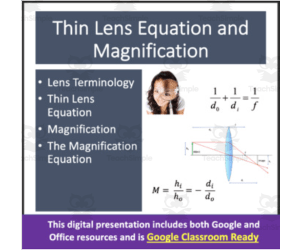
Thin Lens Equation and Magnification Teaching Resource Overview: This resource is an all-in-one package dedicated to teaching the concepts of the Thin Lens Equation and Magnification. Designed to be both interactive and engaging, this package will keep students' attention from start to finish. Lesson Topics: Lens Terminology Thin Lens Equation Magnification The Magnification Equation Digital Integration: This product integrates flawlessly with Google Classroom, making it a prime choice for in-class instruction, distance learning, or even as an unplanned substitute lesson. With just one click, the entire resource set can be copied directly into your Google Drive, simplifying the process from purchase to classroom use. The resource has been optimized for both Google and Office tools. Both Google Slides and PowerPoint presentations are provided, and all documents come in Word and Google Doc formats. This dual compatibility ensures that you and your students can access the materials regardless of location or device type. Features: Google and Office Compatibilities: No need to fret about format conversions or incompatibility issues. This package is ready to use, whether you're a fan of Google apps or the Microsoft Office suite. Engaging Content: The student version of the lesson is designed with fill-in-the-blank sections, highlighted in bold and underlined in the teacher's version. This format promotes active participation without overwhelming students with extensive note-taking, leaving ample time for discussions and hands-on activities. Exit Ticket: Conclude your lesson with a four-question Exit Ticket, accessible directly from the last Google Slide . This digital ticket serves as an effective tool to gauge student understanding. Plus, the Exit Ticket is editable via Google Form, allowing for customization based on class needs. Easy Access and Distribution: With the digital-first approach, you can effortlessly share the resources directly into students' Google Drive accounts. Conclusion: Education is evolving, and so should our tools. This teaching resource on the Thin Lens Equation and Magnification is a testament to that evolution. While it's loaded with features, its primary focus remains clear - facilitating effective and engaging learning experiences for students. And if you're curious about more teaching insights or wish to delve deeper into the educational realm, consider dropping by the blog, Teach With Fergy.
Author Teach With Fergy
Tags Snell’s Law , Lenses, Magnification, Optics

I WONDER - What Is A Group Of Tortoises Called | Animated Video Lesson
STEM, Animals, Life Sciences, Science, Biology, Grade 3, 4, 5, 6, 7, 8, 9, Lesson Plans, Teacher Tools
Video Introduction Animal kingdoms are full of fascinating wonders to learn. This video is designed for the students to learn more about animals in different countries. I WONDER - What Is A Group Of Tortoises Called | Animated Video Lesson Do you like animals? what is your favorite one? Do you own a pet? If yes, tell us more about it, like what its name? And what do you like most about it? What are the animal kingdoms? Can you write down the characteristics of each animal class like mammals, birds, reptiles, amphibian, fish and mollusks. Do you know that some animals can sing, can you name any of them? What is the largest and the smallest mammal in the world? What is the largest and the smallest bird in the world? What is the largest and the smallest fish in the world? I WONDER - What Is A Group Of Tortoises Called | Animated Video Lesson The video is perfect for encouraging the researching skills for the students, while learning more about these fantastic animals. I WONDER - What Is A Group Of Tortoises Called | Animated Video Lesson This friendly designed video is suitable for students at school, homeschooling, and as a group activity. Format Available in MP4 format.
Author Educational Voice
Tags What Is A Group Of Tortoises Called, What Is A Group Of Tortoises Called Video, Group Of Tortoises, Group Of Tortoises Facts, Group Of Tortoises Facts For Kids, Group Of Tortoises Video, Group Of Tortoises Video For Kids

I WONDER - Are There Different Types Of Carbohydrate | Animated Video
Biology, Life Sciences, Science, Human Body, STEM, Grade 2, 3, 4, 5, 6, 7, 8, Lesson Plans, Teacher Tools
Video Overview The human body is full of fascinating wonders to learn. This video is created to help the students recognize the anatomy and the job of the human body. I WONDER - Are There Different Types Of Carbohydrate | Animated Video Lesson Every part and organ in our human body is vital so let's see how important they are. Have you ever imagined how we look like if we didn't have a skeleton? Did you know that because we have our amazing muscles we can stand! Do you know how many teeth do we have? Have you ever wondered about the food journey inside our body? Can you name all the glands in our body? Why do we have skin? Our nervous system is really good at sending signals. Can you tell us more about it? Are you really good at Mathematics, painting, or any other thing? You should really thank your brain about it! The famous five senses are really doing a great work? Can you explain how every sense works? I WONDER - Are There Different Types Of Carbohydrate | Animated Video Lesson The video is perfect for encouraging the researching skills for the students, while learning more about our fantastic human body. I WONDER - Are There Different Types Of Carbohydrate | Animated Video Lesson This friendly designed video is suitable for students at school, homeschooling, and as a group activity. Format Available in MP4 format.
Author Educational Voice
Tags Are There Different Types Of Carbohydrate, Are There Different Types Of Carbohydrate Video, Different Types Of Carbohydrate, Different Types Of Carbohydrate Facts, Different Types Of Carbohydrate Facts For Kids
Earth's Layers - Middle School Earth Science Lesson
Science, Earth and Environmental Sciences, Earth Sciences, Environmental Science, Grade 6, 7, 8, 9, Teacher Tools, Lesson Plans
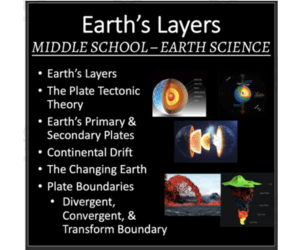
Earth's Layers - Middle School Earth Science Lesson Your lesson covers the different layers of Earth. In order, the lesson teaches about; Earth’s Layers, the Inner Core, the Outer Core, Planet Formation, Earth’s Magnetic Field, the Mantle, the Asthenosphere and Lithosphere, the Crust, and an introduction to Tectonic Plates. Your lesson includes the teacher and student version of the presentation, SIX embedded videos, an auto-graded exit ticket, and a student lesson handout so the students can record the notes on a more condensed medium. This lesson is designed to be your go-to resource, whether you're in a traditional classroom or a virtual one. With both a teacher version and a student version, it seamlessly fits into your lesson plans, making learning engaging and adaptable. Assessment made easy We've included an auto-graded Exit Ticket and a quiz with an answer key because I know you don't have an excess of time. I know you don't, because I don't and I know I'll do whatever I can to reduce my grading time. Whether you use PowerPoint or Google Slides, prefer Word or Google Docs, this lesson has you covered. This lesson comes in both Office and Google formats for your convenience. The student version of the presentation has strategically placed blanks for them to fill in as you're teaching. It keeps them active and engaged, encourages discussion, and leaves more time for those "aha" moments.
Author Teach With Fergy
Tags Earth’s Elliptical Path , Earth’s Motion Around The Sun , The Seasons , Earth’s Tilt , Earth’s Revolution , Equinox , Perihelion , Aphelion