



3,886 products added recently
Page 65 - Science Lesson Plan Template
Enhance your science instruction with a flexible lesson plan template designed for educators. This tool helps you structure objectives, materials, procedures, and assessments efficiently. Use it to create organized and impactful science lessons that cater to your students' needs.

 Show filters


Prompt Engineering Game Kits: Seasonal & Holiday Challenge for Future
Life Studies, Business, Technology, Science, Computer Science, STEM, Special Resources, Life Skills, Social Emotional Learning (SEL), Social Skills, Homeschool Curriculum, Homeschool Templates, Grade 9, 10, 11, 12, Worksheets & Printables, Parts of and Anatomy of, Workbooks, Worksheets, Word Searches, Writing Prompts, Teacher Tools, Assessments, Lesson Plans, Presentations
Take your classroom to the next level with the most powerful AI tool for education: "AI Prompt Engineering Game Kits: Seasonal & Holiday Challenges for Future-Ready Classrooms!" – a 43-page printable PDF toolkit with an interactive digital companion to bring generative AI to Grades 6-12 classrooms. This professionally developed digital tool makes prompt engineering accessible to all, transforming it from an esoteric idea into an artistic skill for budding students. From basic principles involving role assignment, task definition, context delivery, constraints, to output format, to more expert strategies involving chain-of-thought prompts, few-shot prompts, deconstructing complex prompts, to constraint prompts, this tool is an unrivaled aid for educators. Organized in three levels: Phase 1: Core Content & Theory (encompassing topics of foundation, advanced procedures, ethics in AI, bias reduction, challenge development); Phase 2: Student Workbook (consisting of gamified tasks); and Phase 3: Visuals & Teacher Resources (incorporating keys, implementation handouts, graphics), this resource set equips teachers with strategies for encouraging AI teamwork through interactive challenges related to seasons/holidays. Some of these challenges encompass: creating biographies for Thanksgiving, making scavenger hunt riddles for Halloween, conceptualizing a Winter Solstice poetic sequence or an Enchanted Ice Garden Festival, celebrating the Lunar New Year. Why Parents/Schools Love It: Future-Proof Skills Development: Provides the skills that students need to have as AI system designers and as responsible digital citizens, helping them succeed in an AI-enhanced future. Engaging Learning: Thematic challenges based on seasonal activities like Halloween puzzles and Thanksgiving tales make abstract concepts like AI fun and applicative for students. Ethical Emphasis and Safety: Weaves together information on bias in AI systems,accuracy,privacy,and responsible integration to assist in creating an excellent moral foundation for appropriate technology use in a safe and suitable environment for Easy Implementation and Differentiation: Also includes teacher keys, visuals, and frameworks, making easy integration possible without prep, and providing support for all levels of learners. Established Pedagogic Effectiveness: Founded upon the tenets of constructivism, project learning, and design, it moves the evaluation point from outcome to process and teamwork. Target Classes/Students : The resource explicitly targets students in Grades 6 through 12, based on a complete analysis of the PDF, its theoretical underpinnings, methodological framework, chapter breakdowns, student workbook challenges, teacher resources, and implementation guide. It also differentiates by age group to optimize engagement: Grades 6-8: Outlines structured, foundational challenges to build basic understanding of prompt engineering, with simpler tasks such as brainstorming themes or generating short narratives, emphasizing engagement through familiar holiday contexts and guided iteration. Grades 9-12: High School Students - Assigns more open-ended and complex problems to higher-order techniques, including ethical dilemmas, bias analysis, and sophisticated outputs, such as multi-stage event planning or nuanced creative writing, in order to afford the opportunity for deepened critical thinking and real-world application. This targeting allows for appropriate rigor at each age group, where younger students receive concrete and gamified activities, while older students take the work into the realms of ethical and interdisciplinary extensions. Copyright/Terms of Use : This Book is copyrighted by Syed Hammad Rizvi. This material is for a single classroom use only. It may not be copied or altered in any way. In other words, it may not be placed on the Internet where it will be generally accessible for download. If you are interested in sharing the resource with other colleagues, you can purchase additional licenses through TpT. Thank you for honoring the terms of use. "This product is happily brought to you by Syed Hammad Rizvi"
Author Creative Book Store
Rating
Tags AIPromptEngineering, AIinEducation, PromptEngineeringGuide, EducationalAI, ClassroomAIActivities, FutureReadyClassrooms, SeasonalAIChallenges, HolidayAIProjects, EthicalAI, DigitalCitizenship

I WONDER - What Is A Pangolin | Animated Video Lesson
STEM, Biology, Life Sciences, Science, Animals, Grade 1, 2, 3, 4, 5, 6, 7, 8, Lesson Plans, Teacher Tools
Video Introduction Animal kingdoms are full of fascinating wonders to learn. This video is designed for the students to learn more about animals in different countries. I WONDER - What Is A Pangolin | Animated Video Lesson Do you like animals? what is your favorite one? Do you own a pet? If yes, tell us more about it, like what its name? And what do you like most about it? What are the animal kingdoms? Can you write down the characteristics of each animal class like mammals, birds, reptiles, amphibian, fish and mollusks. Do you know that some animals can sing, can you name any of them? What is the largest and the smallest mammal in the world? What is the largest and the smallest bird in the world? What is the largest and the smallest fish in the world? I WONDER - What Is A Pangolin | Animated Video Lesson The video is perfect for encouraging the researching skills for the students, while learning more about these fantastic animals. I WONDER - What Is A Pangolin | Animated Video Lesson This friendly designed video is suitable for students at school, homeschooling, and as a group activity. Format Available in MP4 format.
Author Educational Voice
Tags What Is A Pangolin, What Is A Pangolin Video, Pangolin, Pangolins, Pangolin Facts, Pangolin Facts For Kids, Pangolin Video, Pangolin Video For Kids, Pangolins Facts, Pangolins Video
I WONDER - How Do Humans Affect Climate Change | Animated Video Lesson
Environmental Science, Earth and Environmental Sciences, Science, Earth Sciences, Biology, Life Sciences, Human Body, Grade 4, 5, 6, 7, 8, 9, 10, Lesson Plans, Teacher Tools
Video Introduction An amazing video designed for the students to learn more about STEM. I WONDER - How Do Humans Affect Climate Change | Animated Video Lesson Do you like STEM subjects? what is your favorite one? Have you ever tried to plant a seed? If yes, tell us more about it. Or have you ever tried to invent something? If yes, tell us more about it. And how do you think it will help us? Have you ever seen a microorganism under a microscope? What was it? And how it looked like? Mathematics is a marvelous subject. Let' sharpen our brains and solve some equations. Do you like timetable tricks? What is your favorite one? Do you know how to code? Have you ever created an app or a game before? If yes, how was it like? I WONDER - How Do Humans Affect Climate Change | Animated Video Lesson The video is perfect for encouraging the researching skills for the students, while learning more about this fantastic topic. I WONDER - How Do Humans Affect Climate Change | Animated Video Lesson This friendly designed video is suitable for students at school, homeschooling, and as a group activity. Format Available in MP4 format.
Author Educational Voice
Tags How Do Humans Affect Climate Change, How Do Humans Affect Climate Change Video, Climate Change, Climate Change Facts, Climate Change Facts For Kids, Climate Change Video, Climate Change Video For Kids

The Environment Gr. 5-7
Science, Earth and Environmental Sciences, Environmental Science, Grade 5, 6, Teacher Tools, Lesson Plans
Sure, here is the text formatted using HTML tags: The Environment Gr. 5-7 The Environment Gr. 5-7 is an engaging teaching resource designed specifically for students in grade levels five to seven, focusing on the important subject of our environment. This product is a comprehensive tool meant to ignite curiosity and encourage earth-conscious thinking among students. This expansive resource splits learning into three meaningful parts: Initial knowledge building Self- assessment Hands-on experience The initiation begins with "Environment: A Need to Know", filled with assignments and demonstrations that connect directly with young learners' experiences. In the second phase called "Test Construction", students create their examinations based on what they've learned previously, promoting peer collaboration—a unique way of reinforcing comprehension. "Environment Day" This versatile resource can be used as a complete lesson plan or broken down into individual activities for smaller group sessions or homework assignments. To add value it also includes an answer key making evaluation convenient thereby saving valuable time teachers can utilize effectively elsewhere. Presentation & Accessibility Packed within a PDF file format, The Environment Gr 5-7 conveniently integrates within broader science curriculums ready to use across multiple digital devices. In conclusion,, The Environment Gr. 5-7 wonderfully merges information presentation, self- assessment , and hands-on learning for a well-rounded educational tool that's both enjoyable and thought-provoking for students learning about the environment.
Author Classroom Complete Press
Tags PDF
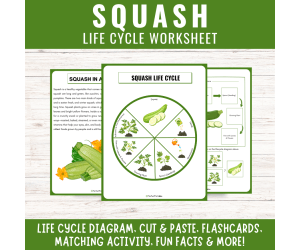
Squash Life Cycle Fall Plant Harvest Science unit study fun facts
Life Sciences, Science, Biology, Nature & Plants, Kindergarten, Preschool, Grade 1, 2, 3, Coloring Pages, Worksheets, Worksheets & Printables, Parts of and Anatomy of, Flashcards, Diagrams, Teacher Tools, Lesson Plans
Make learning about the squash life cycle fun and engaging with this printable plant science activity! Students will explore how a squash plant grows from seed to mature plant while learning about germination, plant growth, flowering, pollination, fruit development, and harvest. I like using this resource during fall science units, autumn classroom activities, harvest lessons, gardening studies, botany units, and seasonal learning. It's a low-prep activity that combines plant science with an engaging fall harvest theme. What You Will Get This printable Squash Life Cycle activity helps students understand the stages of squash plant growth while building science vocabulary and learning interesting facts about this popular fall crop. What's Included in this Resource? • Squash life cycle activity • Seed germination and growth stages • Plant parts and development activities • Flowering and pollination information • Fruit development and harvest stages • Fun facts about squash • Student-friendly science activities • Easy-to-use printable pages This resource is perfect for: • Fall science lessons • Autumn classroom activities • Harvest-themed lessons • Plant life cycle units • Botany and gardening studies • Science centers • Homeschool learning • Early finisher activities Why you will love this? • Easy to print and use • Connects science learning with a seasonal fall theme • Reinforces plant life cycle vocabulary • Encourages observation and scientific thinking • Introduces how crops grow from seed to harvest • Great for seasonal science centers and independent work This Squash Life Cycle activity is a fun way for students to discover how squash plants grow from seed to harvest while exploring plant development, pollination, fruit production, and fascinating fall harvest facts.
Author Perfect_Printables
Rating
Tags Plant Science, Life Cycle, Plant Life Cycle, Plants Diagram, Fall Activities, Squash Life Cycle, Squash, Fall Plants, Fall Science, Autumn Activities

Animal Science Unit | All About Sea Lions | Learning about Animals
Science, Life Sciences, Animals, Kindergarten, Preschool, Grade 1, 2, Lesson Plans, Teacher Tools
Animal Science Unit - All About Sea Lions Dive into learning about sea lions with this expansive collection of over 60 ocean animal resources for educators. Created for preK-2nd grade students, this science unit includes real photos, nonfiction reading passages, arts and crafts , worksheets, and diverse writing activities tailored for various ability levels. Use the extensive teacher materials like discussion questions and a sea lion video list to guide engaging whole or small group learning. Students can complete projects like articulated paper sea lions or sea lion masks for hands-on fun. Challenge them with the included sea lion photo guessing game. From life cycles to habitats, anatomy to adaptations, this thoughtfully designed unit helps build an in-depth understanding of these marine mammals.
Author Simply Schoolgirl
Tags Zoology, Marine Mammals, Marine Mammal, Ocean Predators, Sea Lion Worksheets, Sea Lion Activities, Sea Lion Lessons, Sea Lion Crafts, Learning About Sea Lions
Slugs | Interactive Science Lesson | Micro-Learning Deck
Science, Life Sciences, Animals, Grade 6, 7, 8, 9, Teacher Tools, Lesson Plans
Slugs | An Engaging Science Lesson Transport your middle school science students into the fascinating world of slugs! This interactive Microsoft PowerPoint deck makes an excellent addition to any life science or biology curriculum covering mollusks. Through informative video, reading passages, comprehension activities, and quick write prompts, students will learn key details about slug anatomy, reproduction, and behavior. Educators can utilize this self-contained lesson in a variety of instructional settings such as whole class, small groups, independent learning stations, or even assigned as enriched homework. The multi-modal components will captivate visual, auditory, and kinesthetic learners alike. Providing just the right balance of entertainment and education, this complete lesson promises to keep your 6th-9th graders actively engaged from start to finish!
Author Teach Me This
Tags Slugs, Interactive, Science, Learning Deck, Zoology

I WONDER - Why Is Uranus Special | Animated Video Lesson
Space, Earth and Environmental Sciences, Science, Grade 6, 7, 8, 9, 10, 11, 12, Teacher Tools, Lesson Plans
Video Introduction An amazing video designed for the students to learn more about space facts. I WONDER - Why Is Uranus Special | Animated Video Lesson Do you like reading about space? If yes, what is your favorite topic? What do you know about our solar system? What is the smallest planet in our solar system? What is the biggest planet in our solar system? What is the hottest planet in our solar system? And what is the coldest one? Do you think there are aliens? If yes, what do you think they look like? What do they eat and how they speak to each other? Where do they live? What is a galaxy? And what is a milky way? Have you recently saw a shooting star? If yes, tell us more about it, like when did it happen and where? What is a blackhole? Can a blackhole gets bigger by time? Do you like counting the stars? What do you think a star is made of? I WONDER - Why Is Uranus Special | Animated Video Lesson The video is perfect for encouraging the researching skills for the students, while learning more about the fantastic space. I WONDER - Why Is Uranus Special | Animated Video Lesson This friendly designed video is suitable for students at school, homeschooling, and as a group activity. Format Available in MP4 format.
Author Educational Voice
Tags Why Is Uranus Special, Why Is Uranus Special Video, Uranus, Uranus Facts, Uranus Facts For Kids, Uranus Video, Uranus Video For Kids, Planet, Planets, Planets Video

Animal Science Unit | All About Ladybugs | Learning about Animals
Science, Life Sciences, Animals, Kindergarten, Preschool, Grade 1, 2, Teacher Tools, Lesson Plans
Animal Science Unit | All About Ladybugs Dive into the exciting world of ladybugs with this expansive animal science unit! Budding entomologists will enjoy building knowledge on ladybug adaptations, habitats, life cycles, anatomy, and more. Educators receive a treasure trove of engaging ladybug resources including: 12 high-resolution images, reading passages (leveled), comprehension questions, vocabulary strips, animal classification/diet/life cycle posters, writing templates (varying abilities), bookmarks, paper crafts, coloring pages, a macro photo guessing game, and other science activities. Whether for whole-class, small-group, or independent exploration, this comprehensive unit has something for every PreK-2nd grade student. Carefully curated ladybug content guarantees high educational quality for public or home settings. Let your students’ curiosity and passion bloom by implementing this ladybug-themed, interdisciplinary life science resource in your classroom today!
Author Simply Schoolgirl
Tags Zoology, Insect, Insects, Animal Lessons, Entomology, Ladybug Crafts, Ladybug Lesson, Ladybug Printables, Ladybug Worksheets, Ladybug Projects
I WONDER - Can Biofuels Be Recycled | Animated Video Lesson
Earth Sciences, Earth and Environmental Sciences, Science, Environmental Science, Grade 4, 5, 6, 7, 8, 9, 10, Lesson Plans, Teacher Tools
Video Introduction An amazing video designed for the students to learn more about STEM. I WONDER - Can Biofuels Be Recycled | Animated Video Lesson Do you like STEM subjects? what is your favorite one? Have you ever tried to plant a seed? If yes, tell us more about it. Or have you ever tried to invent something? If yes, tell us more about it. And how do you think it will help us? Have you ever seen a microorganism under a microscope? What was it? And how it looked like? Mathematics is a marvelous subject. Let' sharpen our brains and solve some equations. Do you like timetable tricks? What is your favorite one? Do you know how to code? Have you ever created an app or a game before? If yes, how was it like? I WONDER - Can Biofuels Be Recycled | Animated Video Lesson The video is perfect for encouraging the researching skills for the students, while learning more about this fantastic topic. I WONDER - Can Biofuels Be Recycled | Animated Video Lesson This friendly designed video is suitable for students at school, homeschooling, and as a group activity. Format Available in MP4 format.
Author Educational Voice
Tags Can Biofuels Be Recycled, Can Biofuels Be Recycled Video, Biofuels, Biofuel, Biofuels Video, Biofuels Facts, Biofuels Facts For Kids, Biofuels Video For Kids, Recycling, Recycling Video For Kids
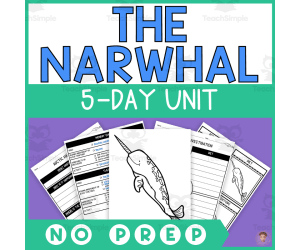
Narwhal Unit Study (Arctic Animals Lesson Plan, Videos, Activities)
Science, Life Sciences, Animals, Grade 1, 2, 3, Lesson Plans, Teacher Tools
Narwhal Unit Study (Arctic Animals Lesson Plan, Videos, Activities) The Narwhal Unit Study is a comprehensive educational resource developed to foster learning in students from first to third grade. This versatile five-day unit study shedding light on one of the Arctic's thrilling creatures - the narwhal requires no preparation from your side. This meticulously structured study material brilliantly combines diverse subjects. It integrates engaging videos into the lesson for a multimedia learning experience. Ideal For Various Settings Winter or arctic animals unit studies General science classes Writing centers Unique Features: Versatility: Adaptable based on age and comprehension level of students. Daily Worksheets: Physical representation for understanding key facts about narwhals.' (Diet, habitat life cycles etc.)' Creativity and Interaction An interactive notebook component fosters creativity while challenging students with tasks that promote hands-on discovery. Eco-friendly Approach If you advocate paper-saving in your classrooms this resource caters to that by encouraging verbal discussion focussed on worksheet topics thereby reducing print needs. Add-Ons: In-depth Reading Material: User-friendly optional reading materials for additional research. Incentive Bookmarks:: A breed apart keeping everyone motivated! Fun Coloring Pages: Triggering budding artistic talents. Project-Based Activities: Making each lesson a joy yet rooted in substance! In Conclusion, The Narwhal Unit Study aims to make complex subjects easily digestible without compromising educational rigour. This is geared towards holistic development within every student!
Author Heather Huhman
Tags Narwhal, Arctic Animals, Unit Study, Zoology, Interactive Notebook, Narwhal Videos

I WONDER How Are The Different Colours Created In The Aurora Borealis
Geography, Social Studies, Environmental Science, Earth and Environmental Sciences, Science, Grade 1, 2, 3, 4, 5, 6, 7, 8, Lesson Plans, Teacher Tools
Video Introduction An amazing video designed for the students to learn more about famous places in different countries. I WONDER - How Are The Different Colours Created In The Aurora Borealis | Animated Video Lesson What do you know about this place? Do you know in which part of the world it is? Have you ever visited this place? If yes, can you tell us more about your adventure, and what do you like the most about this place? Do you like reading about Geography? What is your favorite country in the whole world? If you are going on a trip where it will be? Which country? What you are going to see there? Does this country has a famous place to visit? I WONDER - How Are The Different Colours Created In The Aurora Borealis | Animated Video Lesson The activity is perfect for encouraging the researching skills for the students, while learning more about this fantastic place. I WONDER - How Are The Different Colours Created In The Aurora Borealis | Animated Video Lesson This friendly designed video is suitable for students at school, homeschooling, and as a group activity. Format Available in MP4 format.
Author Educational Voice
Tags How Are The Different Colours Created In The Aurora Borealis, How Are The Different Colours Created In The Aurora Borealis Video, Aurora Borealis, Aurora Borealis Facts, Aurora Borealis Video, Aurora Borealis Video For Kids

I WONDER - Why Did The Microraptor Have Feathers | Animated Video
Animals, Life Sciences, Science, History: Ancient, History, Social Studies, History: World, Grade 4, 5, 6, 7, 8, 9, 10, Lesson Plans, Teacher Tools
Video Introduction An amazing video designed for the students to learn more about dinosaurs in different countries. I WONDER - Why Did The Microraptor Have Feathers | Animated Video Lesson Do you like dinosaurs? what is your favorite one? Do you own a pet? If yes, tell us more about it, like what its name? And what do you like most about it? Do you think that your pet has been evolved from a dinosaur? Can you write down the characteristics of your favourite dinosaur like it's shape, their rivals, where did it use to live and what was their favourite food? What is the largest and the smallest dinosaur that ever found? Why is the T-rex is so famous? Have you ever read any interesting facts about it? Can you name any of the carnivores or herbivores dinosaurs? I WONDER - Why Did The Microraptor Have Feathers | Animated Video Lesson The video is perfect for encouraging the researching skills for the students, while learning more about dinosaurs. I WONDER - Why Did The Microraptor Have Feathers | Animated Video Lesson This friendly designed video is suitable for students at school, homeschooling, and as a group activity. Format Available in MP4 format.
Author Educational Voice
Rating
Tags Why Did The Microraptor Have Feathers, Why Did The Microraptor Have Feathers Video, Microraptor, Microraptor Facts, Microraptor Video, Microraptor Video For Kids, Microraptor Facts For Kids
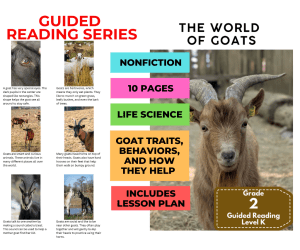
Guided Reading Level K - The World of Goats (with Lesson Plan)
ELA, Resources for Teachers, Reading Comprehension, Reading, Science, Language Development, Life Sciences, Animals, Pre-Reading, Vocabulary, Grade 2, 3, 4, Worksheets & Printables, Worksheets, Teacher Tools, Centers, Activities, Literacy Readers, Quizzes, Quizzes and Tests, Assessments, Lesson Plans
This Guided Reading Book - The World of Goats (Level K) with lesson plan includes: Guided Reading Color Label (front cover x1) This is a quick way to match the book’s demands to what students can generally handle.. The overall goal is to use the level/color to pick books for several smaller groups. To qualify for a certain level, a student is expected to read a book from that level with about 90–94% accuracy. If a student is consistently accurate and understands, move up a level. If the student is struggling at that level, drop down and add more support. Each student will improve at completely different rates, but it is generally one of the best ways to check progress across the class. DOWNLOAD THE CATALOG TO VIEW ALL GUIDED READING BOOKS AVAILABLE (SORTED LEVELS A-Z) Pre-Reading Question (x1) Teacher asks the prompt aloud, can be while showing the cover or first page. Students share what they already know, or make educated guesses from the cover. Prompt them to use the target vocabulary. Write some of their responses on the board to look back at during the reading. Vocabulary Words (x5) Introduce the five words, best doing it one at a time. Start by saying it, while students repeat and then see if anyone knows what it means before reading further. Read through the meaning and try to briefly connect each word to a picture or gesture so it’s meaningful. Ask students to flip through the book pages and point to where they see each of the vocabulary words. While reading the book pause upon coming across one of the vocab words or read the sentence twice to make sure students understand the word has appeared. Optional: Ask students to raise hands whenever they see/hear one of the new words. Guided Reading Pages (x10) Check the book snapshot (below) for: primary topic - do you need to prep extra reading or intro materials on this? what is taught best - decide on 1-2 bullets to focus on, use the prompt or words provided here for best results. learning goals - what you are checking for students to be able to do after the session, elicit answers using prompts or words provided. key vocabulary (see section above). questions overview - so you know what is coming up and if you need to prep extra materials to assist understanding. Run the lesson You may have already looked at a few of the pages together, but you can show them some of the pictures again first to set meaning. Depending on how much time you have and how familiar your students are with guided reading class, you may want to read the book aloud first with the group first. Students whisper or partner read, while you listen in. If time, do it as a group, one student reading a page each. Use the guided page’s prompts to coach: “Check the picture / does it make sense?” “Point under the words / try the first sound” “Reread the sentence smoothly”. Try to focus more on one student per session (rotating every time), so you can work out if they are ready to move up or need to move down a level. Comprehension Questions (back cover x3) This is your way to check that students didn’t just say the words, but actually understood the text. First, let students answer by pointing to the page/picture and saying a short sentence. After any answer, follow with: “Show me where you found that in the text.” In bigger groups, have partners answer first (10–20 seconds), then call on 2–3 students to share. Differentiation tips: Emerging speakers/struggling readers: oral + pointing On-level: oral in a full sentence Higher: one written sentence or draw + label Book Snapshot Title: The World of Goats Genre: Nonfiction (informational text) Subject: Life Science + Reading (Informational Text) Primary Topic: Goat traits, behaviors, and how they help Estimated Guided Reading Level (A–Z): K What This Book Teaches Best Describes goats as “smart and curious” animals that live in many places around the world. Explains body parts that help goats move and stay safe (horns, hooves, and special eyes that help them “see all around”). Teaches what goats eat by defining them as “herbivores” and naming plants they munch on (grass, leafy bushes, bark). Highlights goat abilities and behaviors (climbing steep, rocky cliffs; kids running and jumping; goats playing and gently bumping heads). Connects goats to farm life by stating they provide milk and wool. Learning Goals Students will identify key goat traits and behaviors described in the text. Students will explain how horns and hooves help goats, using details from the text. Students will describe how a goat’s special eyes help it stay safe. Students will explain what herbivores eat and list plants goats munch on from the text. Students will describe how goats communicate and what a “bleat” can help a mother goat do. Students will describe how goats can be helpful to people on a farm, according to the text. Key Vocabulary From the Text curious — wanting to learn more by exploring. hooves — hard feet that help goats walk. rectangles — shapes with four sides and four corners. herbivores — animals that eat only plants. bleat — the sound a goat makes. Discussion Prompts Pre-reading question: What features might help goats live in different places? Comprehension questions: How do a goat’s special eyes help it stay safe? Comprehension questions: What kinds of plants does the book say goats like to munch on? Comprehension questions: Why do goats gently bump their heads when they play together? Printing Tips 1. Best Printing Method (Recommended) “Booklet” Printing (Best if Available) If your printer or PDF viewer supports Booklet Printing , use this. Settings to use: Print mode: Booklet Paper size: Letter or A4 (either works) Orientation: Landscape Print on both sides: Yes Flip on: Short edge Scaling: Fit to printable area Booklet subset: First test: Front sides only Then: Back sides only This will automatically: Pair pages correctly Put the cover on the outside Align everything for folding After printing, fold in half and staple along the spine . 2. If “Booklet” Printing Is NOT Available You can still print this correctly with manual duplex printing . Step-by-step: Open the PDF. Choose Print . Set: Orientation: Landscape Pages per sheet: 1 Print on both sides: Yes Flip on: Short edge Print all pages . Because each PDF page already contains two facing book pages, the result will still fold cleanly into a book. Thousands of Cored Education products are included with your TeachSimple membership. Download links and encyclopedia index available here.
Author Cored Education
Rating
Tags Reading Comprehension, Reading Passages, Reading, Guided Reading, Guided Reading Lesson Plan, Guided Reading Activity, Pre-reading, Science Lesson Plans, Life Science, Animals

Ecosystems: Microorganisms
Science, Life Sciences, Biology, Common Core, Grade 5, 6, 7, 8, Teacher Tools, Lesson Plans
Ecosystems: Microorganisms Introducing students in grades 5 to 8 to the intriguing world of ecosystems with a special focus on microorganisms. An educational resource that makes complex ecosystem concepts graspable for young learners. Key Learning Areas The distinctive roles of Producers, Consumers, and Decomposers within an ecosystem. Evolution and change within ecosystems over time. The interconnected nature of food chains and food webs. An understanding of Photosynthesis, one of the most critical processes driving life on Earth; explained in student-friendly terms. The interaction between the water cycle , manmade environments, and tiny microorganisms - highlighting its importance across diverse habitats. This resource recognises that each organism (from humans to tiny bacteria) contributes towards creating a functioning ecosystem. Each component plays essential roles affecting others around them in captivating ways. A Comprehensive Teaching Tool Ecosystems: Microorganisms is designed as a comprehensive teaching tool for educators working with science-related subjects such as Biology, making it also suitable for homeschooling parents engaging in STEM-based education practices. Activities are versatile enough for both whole-class instruction or group and individual assignments at home. The use of simplified language along with ready-to-use reading passages, engaging activities and colourful mini posters makes digesting these scientific concepts easier! Note:This resource is particularly helpful for remedial students struggling with grasping scientific concepts. It aligns well with Common Core State Standards while incorporating Bloom's Taxonomy viewpoints along with STEM initiatives – ensuring learners develop not just knowledge but analytical thinking skills too! Now available as a PDF file download for your teaching needs.
Author Classroom Complete Press
Tags PDF
I WONDER - How Long Do Orangutans Live | Animated Video Lesson
STEM, Animals, Life Sciences, Science, Biology, Grade 1, 2, 3, 4, 5, 6, 7, 8, Lesson Plans, Teacher Tools
Video Introduction Animal kingdoms are full of fascinating wonders to learn. This video is designed for the students to learn more about animals in different countries. I WONDER - How Long Do Orangutans Live | Animated Video Lesson Do you like animals? what is your favorite one? Do you own a pet? If yes, tell us more about it, like what its name? And what do you like most about it? What are the animal kingdoms? Can you write down the characteristics of each animal class like mammals, birds, reptiles, amphibian, fish and mollusks. Do you know that some animals can sing, can you name any of them? What is the largest and the smallest mammal in the world? What is the largest and the smallest bird in the world? What is the largest and the smallest fish in the world? I WONDER - How Long Do Orangutans Live | Animated Video Lesson The video is perfect for encouraging the researching skills for the students, while learning more about these fantastic animals. I WONDER - How Long Do Orangutans Live | Animated Video Lesson This friendly designed video is suitable for students at school, homeschooling, and as a group activity. Format Available in MP4 format.
Author Educational Voice
Tags How Long Do Orangutans Live, How Long Do Orangutans Live Video, Orangutans, Orangutan, Orangutans Facts, Orangutans Facts For Kids, Orangutans Video, Orangutans Video For Kids, Orangutan Video

I WONDER - Where Did The Apatosaurus Live | Animated Video Lesson
History: Ancient, History, Social Studies, History: World, Animals, Life Sciences, Science, Grade 3, 4, 5, 6, 7, 8, 9, Lesson Plans, Teacher Tools
Video Introduction An amazing video designed for the students to learn more about dinosaurs in different countries. I WONDER - Where Did The Apatosaurus Live | Animated Video Lesson Do you like dinosaurs? what is your favorite one? Do you own a pet? If yes, tell us more about it, like what its name? And what do you like most about it? Do you think that your pet has been evolved from a dinosaur? Can you write down the characteristics of your favourite dinosaur like it's shape, their rivals, where did it use to live and what was their favourite food? What is the largest and the smallest dinosaur that ever found? Why is the T-rex is so famous? Have you ever read any interesting facts about it? Can you name any of the carnivores or herbivores dinosaurs? I WONDER - Where Did The Apatosaurus Live | Animated Video Lesson The video is perfect for encouraging the researching skills for the students, while learning more about dinosaurs. I WONDER - Where Did The Apatosaurus Live | Animated Video Lesson This friendly designed video is suitable for students at school, homeschooling, and as a group activity. Format Available in MP4 format.
Author Educational Voice
Rating
Tags Where Did The Apatosaurus Live, Where Did The Apatosaurus Live Video, Apatosaurus, Apatosaurus Video, Apatosaurus Facts, Apatosaurus Facts For Kids, Apatosaurus Video For Kids, Dinosaur

Bugs Of Summer Gr. 1-2
Science, Life Sciences, Animals, Grade 1, 2, Teacher Tools, Lesson Plans
Bugs Of Summer Gr. 1-2 Bugs Of Summer Gr. 1-2 is a resource that offers an engaging curriculum for both teachers and homeschooling parents. It introduces first and second grade students to the fascinating world of insects, combining elements of science and language arts, thus fostering a deeper appreciation of nature within core academic learning. Species Covered: Ants Butterflies Bees Ladybugs Beetles Dragonflies Grasshoppers Mosquitoes, etc. This unit also includes spiders as part of its study, despite not technically being insects. Reproducible Pages: Prepared for direct student use, they ensure consistency in material presentation. Each page presents questions based on insect fact cards read by students—encouraging attentive reading comprehension habits while reinforcing learned scientific details. Parent Pages: To foster home-school communication or parental involvement in children's education journey where applicable. Possibilities of Use This comprehensive study can be adapted across various contexts such as whole-group instruction within traditional classrooms; small group setups for collaborative learning; independent learning experiences used as homework tasks—all at the teachers' discretion. Product Details The resource comes as a single product file in PDF format—compatible with multiple devices for easy access by both students and educators alike—and is most suitable for those studying subjects under Science (specifically Zoology) within grades one and two categories. In conclusion, with Bugs Of Summer Gr. 1-2 package at hand—an enlightening exploration into the fascinating realm of some summer's smallest inhabitants awaits each young inquisitive learner.
Author Classroom Complete Press
Tags PDF

Classification & Adaptation: Animal Adaptations Gr. 5-8
Science, Life Sciences, Biology, Grade 5, 6, 7, 8, Teacher Tools, Lesson Plans
Classification & Adaptation: Animal Adaptations Gr. 5-8 This resource forms an integral part of the interactive science curriculum for students studying in grades 5 to 8. It aims to provide a clear understanding of scientific concepts by displaying animal classifications and adaptations using common examples, such as discerning between warm-blooded and cold-blooded animals or comprehending vertebrates versus invertebrates. Highlight The prominent feature of this resource is a detailed case study on the adorable native Australian creature - the Koala. This case study equips students with a substantial understanding of how adaptation aids survival and furthers their comprehension of evolution. Hands-On Learning 'How Important Are Thumbs?' 'The Lake Habitat Thermometer' 'A Day in the Life of a Paleontologist!' Versatility & Ease-of-Use This learning material can be used for whole-group instruction, small group sessions, or independent studies. Furthermore, it serves as an excellent homework assignment due to its self-explanatory nature. Additional Features: Simplified language reading passages catering to diverse reading abilities Critical thinking stimulating student activities Test prep materials for comprehensive revision before assessments Vibrant mini posters that lend visual appeal to topics . Bonus Point: State Standards Alignment : The compatibility with state standards including Bloom's Taxonomy and STEM initiatives offers performance reliable guidance for both public schools teachers and homeschooling parents alike. The Classification & Adaptation: Animal Adaptations Gr. 5-8 package comes in an easy-to-use PDF format to ensure smooth integration into existing lesson plans for Science-Biology topics covering Grade 5 through 8.
Author Classroom Complete Press
Tags PDF, Lesson Plan Adaptations, Animal Adaptations Lesson Plans, Adaptations Lesson Plan, Lesson Plans Adaptations, Adaptation Lesson Plan

I WONDER - What Is The Roblox Oof | Animated Video Lesson
Computer Science, Technology, Science, Grade 4, 5, 6, 7, 8, 9, 10, Lesson Plans, Teacher Tools
Video Introduction An amazing video designed for the students to learn more about STEM. I WONDER - What Is The Roblox Oof | Animated Video Lesson Plants world is really fascinating! Do you know that some flowers eat insects? Some other plants like to grow on walls can you mention any? Do you know what is the difference between fungicide and pesticide? If yes, Can you tell us more about it? What is nuclear energy? Is it safe to use it? Do you think it is a clean energy? Have you ever read about potential energy? If yes, tell us what it is? Do you think that potential energy can be converted into another form of energy? How it happens? I WONDER - What Is The Roblox Oof | Animated Video Lesson The video is perfect for encouraging the researching skills for the students, while learning more about this fantastic topic. I WONDER - What Is The Roblox Oof | Animated Video Lesson This friendly designed video is suitable for students at school, homeschooling, and as a group activity. Format Available in MP4 format.
Author Educational Voice
Rating
Tags What Is The Roblox Oof, Roblox Oof, Roblox Oof Facts, Roblox Oof Video, Roblox Oof Facts For Kids, Roblox Oof Video For Kids, Roblox, Roblox Facts, Roblox Video, Roblox Video For Kids

Hands-On STEM Challenges – Simple Machine Building Worksheets
STEM, Science, Basic Science, Inventors, Theories, Technology, Engineering, Special Resources, Social Emotional Learning (SEL), Special Education Needs (SEN), Homeschool Curriculum, Homeschool Templates, Grade 3, 4, 5, 6, 7, Worksheets & Printables, Workbooks, Worksheets, Word Searches, Teacher Tools, Lesson Plans, Quizzes and Tests, Quizzes, Tests, Assessments
Incorporate Real World Engineering & Discovery into Your Science Classroom with a Comprehensive Simple Machines STEM Unit. Tired of trying to teach students about abstract concepts like force, work, and mechanical advantage in physics without providing a tangible and exciting way to understand them? This complete 5-Week STEM Unit is the all-in-one solution that you've been searching for! It includes everything you need to take your 3rd, 4th & 5th grade students from the theory of physics to creating their very own projects! This product is NOT just a bunch of worksheets, it is an entire educational experience! The resource contains 3 parts: a theoretical guide for teachers, an interactive student workbook & a complete teacher resource pack. The unit provides students with hands-on experiences as they explore 6 classical simple machines (levers, pulleys, inclined planes, wedges, wheels and axles, screws) by examining real-world case studies such as the pyramids of Giza through modern skyscrapers, & then participating in a series of hands-on, challenging activities. Constructivist approaches promote "productive struggle" within the context of providing students with a true understanding of the concepts in this unit, using low-cost, readily available, recycled materials. No more expensive kits, use real-world, authentic inquiry-based learning that develops a true engineering mindset! What This 38-Page Resource Includes: In-depth explanation of Simple Machines: Each of the 6 Simple Machines is explained to teachers in easy-to-understand language. Helpful historical case studies and concept reinforcement questions are included to aid understanding. Worksheets: 10 challenging worksheets designed for students, allow students to demonstrate an understanding of Simple Machines in real-world contexts. These worksheets include activities such as identifying simple machines in everyday objects, analyzing compound machines, calculating mechanical advantage, and working on a design project similar to a Rube Goldberg. Visuals & Helpful Teacher Tools: Three High Contrast Anchor Charts: Vector illustrations of the 6 Simple Machines, a Class 1 Lever (Mechanical Advantage) and the Engineering Design Cycle (STEM). For use in display and projection. Detailed Answer Key: Complete answer key for all 10 worksheets. Complete Teacher Implementation Guide: The Ultimate Resource Guide - Contains teaching reasoning, recommended 5 week pacing guide, list of readily available recycled materials for use in the "Maker Station" and how to facilitate hands on activities and productive struggles in the classroom, as written by seasoned pros. Simple machines, STEM activities, processes used in the design of mechanical systems (engineering design), the learning of physics, the learning of physics from the perspective of children, third grade, fourth grade, fifth-grade science, hands-on learning, project-based learning (PBL), the use of levers and pulleys, worksheets, STEM units or courses together with lesson plans requiring little or no preparation and low-cost preparation; utilizing mechanical advantages using acceleration. The Reasons Parents/Schools Value: Comprehensive & Ready to Use: This isn't just one thing to do; it is a full 5-week unit plan which includes theory, worksheets, visuals, and a detailed teacher's guide. This prepares the teacher for doing the lesson in dozens of hours less than would normally be required. Cost Effective & Easily Accessible: This unit plan was designed to be completed with items that are readily available to you such as cardboard, bottle caps, or string. There is no need to purchase expensive robotic kits that are specialized. Provides Deeper Conceptual Understanding: When students work through building challenges (e.g., utilizing force) they have a hands-on experience they will remember long after the activity is completed. Encourages Developing an Engineering Mindset: In addition to using the Engineering Design Cycle and creating "productive struggle", there is an emphasis on teaching students how to think like an engineer and to use real-world skills to solve problems, be resilient, implement multiple iterations of their solution, and critically think. Target group analysis : The text has an explicit statement of the target audience ("For students in grades 3-5"), so it's clear that the cognitive level of this audience is in the appropriate range. Because of these two factors, we have identified: 1. Primary audience Members consisting of 3rd through 5th Grade Teachers (from public, private and charter schools). 2. Secondary audience members of Homeschooling Families looking for a complete, structured STEM Curriculum. 3. Tertiary audience members will be STEM/STEAM Coordinators, After School Program Directors and Science Club Leaders or Facilitators. Copyright and Terms of Use : Syed Hammad Rizvi is the copyright holder of this resource. This resource is intended for personal and single classroom use only. You cannot modify, distribute or sell this resource. In other words, you cannot post on the Internet for the public to access and download. If you wish to share this resource with other teachers, please consider purchasing a separate license through Teachsimple. Thank you for understanding and following these terms of use. This product has been developed in partnership with Syed Hammad Rizvi
Author Creative Book Store
Rating
Tags SimpleMachines, STEM, STEMeducation, HandsOnLearning, ProjectBasedLearning, ScienceTeacher, TeachersOfInstagram, ITeachScience, ITeachSTEM, EngineeringForKids
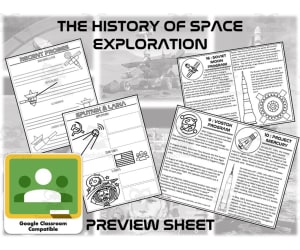
The History of Space Exploration - Complete Unit
Social Studies, Science, Technology, Engineering, Earth and Environmental Sciences, Space, Not Grade Specific, Lesson Plans, Teacher Tools
The History of Space Exploration - Complete Unit A comprehensive teaching resource designed to immerse students in the world of space exploration. This course traces the roots of rocket science and space travel from early stages to future plans for the 21st century, making it an ideal tool for educators planning semester-long courses or even year-round elective studies. This complete unit comprises: 27 carefully planned lessons that cover a range of themes Exploration into basic physics principles behind rockets and spaceflight Detailed biographies on key figures like Robert H. Goddard and Wernher Von Braun An analysis on leaps made by USSR and USA in launching their first satellites Case studies about significant milestones like Sergei Korolev's efforts with the R-7 Rocket, Sputnik's historic launch, Laika’s journey etc, An insight into more recent achievements such as Space Shuttles history or Mars rovers discoveries etc, Each lesson is thoughtfully arranged; along with reading material, question sheets to reinforce understanding. It also guides on how PowerPoint can be used effectively are provided making teaching tech-savvy. Suitable across varied grades, this package could be used in subjects such as Social Studies & Science focusing on Technology Engineering & Astronomy as well..It could be applied in whole group exercises, one-on-one sessions or even homework assignments to cater all educational needs In conclusion The History of Space Exploration - Complete Unit promotes:/p In-depth learning while keeping students engaged, Adventure through cosmos' mysteries, Alliances & rivalries created during this exploration, Strides we as humankind have made towards mapping the stars.
Author Mr Gray History
Tags Space Exploration, Rockets, History, Astronauts, Future Plans
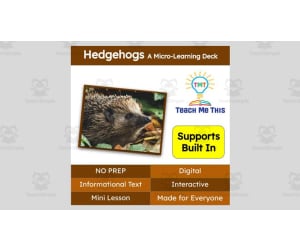
Hedgehog | Interactive Science Lesson | Micro-Learning Deck
Science, Life Sciences, Animals, Grade 6, 7, 8, Teacher Tools, Lesson Plans
Hedgehog | Interactive Science Lesson | Micro-Learning Deck This science resource efficiently supplements a middle school classroom's zoology curriculum through an engaging slideshow on hedgehogs. Students analyze a video lesson, reading passage with audio, close reading activity , and quick write assignment to strengthen comprehension and writing skills. Educators can implement the self-paced activities in various settings like whole group instruction, small group work, or individual assignments. The informational texts and informal assessments keep learners focused while allowing them to progress at their own pace. This versatile resource saves teachers preparation time while aligning to grade 6-8 science standards on mammals.
Author Teach Me This
Tags Hedgehogs, Animal Habitats, Interactive Science, Raising Young, Informational Text

The Solar System Formation | Interactive Science Lesson | Micro-Learning Deck
Science, Earth and Environmental Sciences, Space, Grade 7, 8, 9, 10, Teacher Tools, Lesson Plans
The Solar System Formation Micro-Learning Science Lesson engages 7th-10th grade students with an informative video and reading passage explaining how our solar system developed billions of years ago. Students strengthen literacy skills through close reading and quick write activities. Educators can implement this versatile digital slideshow in whole group instruction, small groups, independent learning stations, or as a homework supplement. The bundled informal assessments keep middle schoolers focused while learning key details about solar system formation stages like star formation, protoplanetary disk development, and final planet assembly. By blending multiple formats like video, audio recordings, and writing prompts, this interactive lesson suits various learning styles.
Author Teach Me This
Tags Close Reading, Science Lesson, Solar System, Interactive Science, Astronomy