



3,890 products added recently
Page 68 - Science Lesson Plan Template
Enhance your science instruction with a flexible lesson plan template designed for educators. This tool helps you structure objectives, materials, procedures, and assessments efficiently. Use it to create organized and impactful science lessons that cater to your students' needs.

 Show filters

I WONDER - What Did Dinosaurs Eat | Animated Video Lesson
Animals, Life Sciences, Science, Grade 1, 2, 3, 4, 5, 6, 7, 8, Lesson Plans, Teacher Tools
Video Introduction An amazing video designed for the students to learn more about dinosaurs in different countries. I WONDER - What Did Dinosaurs Eat | Animated Video Lesson Do you like dinosaurs? what is your favorite one? Do you own a pet? If yes, tell us more about it, like what its name? And what do you like most about it? Do you think that your pet has been evolved from a dinosaur? Can you write down the characteristics of your favourite dinosaur like it's shape, their rivals, where did it use to live and what was their favourite food? What is the largest and the smallest dinosaur that ever found? Why is the T-rex is so famous? Have you ever read any interesting facts about it? Can you name any of the carnivores or herbivores dinosaurs? I WONDER - What Did Dinosaurs Eat | Animated Video Lesson The video is perfect for encouraging the researching skills for the students, while learning more about dinosaurs. I WONDER - What Did Dinosaurs Eat | Animated Video Lesson This friendly designed video is suitable for students at school, homeschooling, and as a group activity. Format Available in MP4 format.
Author Educational Voice
Rating
Tags What Did Dinosaurs Eat, What Did Dinosaurs Eat Video, Dinosaurs, Dinosaurs Facts, Dinosaur, Dinosaurs Video, Dinosaurs Facts For Kids, Dinosaurs Video For Kids, Dinosaur Video, Dinosaur Facts

Spiders and Bats Curriculum Pack
Creative Arts, Art, ELA, Math, Early Math, Measurements, Language Development, Pre-Reading, Science, Life Sciences, Animals, Kindergarten, Lesson Plans, Teacher Tools
If your students are studying spiders and bats or are about to begin an insects unit, I have just the resource to provide you with everything you need and more! This is a Spiders and Bats Curriculum Pack complete with an abundance of printable resources and engaging activities for students to complete. This curriculum was designed for your preschool students. The curriculum goal is to assist children in differentiating between facts and misconceptions related to spiders and bats – commonly associated with Halloween – in a way in which encourages fear and is often not scientifically based. The vocabulary that students will focus on is nocturnal, mammals, abdomen, thorax, arachnid, web, spin, echo, and cave. This curriculum will come with a letter of the week (B) and color of the week (black). This curriculum pack includes: --Sensory Table Ideas --Art Activities --Cooking Experience --Community Time --Math Activities --Home/School Connection Ideas --Science Table Enrichments --Science Concepts/Activities --Prop Box Ideas/Dramatic Play Enrichments --Movement and Motor --Playground/Walk Activities --Transition/Waiting Ideas --Block Area Enrichments --Flannel Board --Teacher Made Enrichment Ideas --Field Trip Ideas --Supplemental Learning Ideas/Activities At the start of this pack, you will receive a list of supplies needed for activities and projects. The worksheets, activities, and tasks included in this pack are intended to be completed in a variety of formats – whole group, small group, and independent work. I hope you enjoy! You can find more resources at my storefront here: https://teachsimple.com/contributor/learning-foundations Here are other similar resources for you to enjoy: https://teachsimple.com/product/dental-health-curriculum-pack https://teachsimple.com/product/earth-day-curriculum-pack https://teachsimple.com/product/discovering-dinosaurs-curriculum-pack https://teachsimple.com/product/lazy-crazy-days-of-summer-curriculum-pack https://teachsimple.com/product/chinese-new-year-curriculum-pack https://teachsimple.com/product/animals-in-winter-curriculum-pack
Author Learning Foundations
Tags Preschool Curriculum, Spiders, Bats, Math Activity, Measurement, Counting, Halloween, Color Of The Week, Letter Of The Week, Vocabulary
I WONDER - How Do Fish Float | Animated Video Lesson
STEM, Animals, Life Sciences, Science, Biology, Grade 1, 2, 3, 4, 5, 6, 7, 8, Lesson Plans, Teacher Tools
Video Introduction Animal kingdoms are full of fascinating wonders to learn. This video is designed for the students to learn more about animals in different countries. I WONDER - How Do Fish Float | Animated Video Lesson Do you like animals? what is your favorite one? Do you own a pet? If yes, tell us more about it, like what its name? And what do you like most about it? What are the animal kingdoms? Can you write down the characteristics of each animal class like mammals, birds, reptiles, amphibian, fish and mollusks. Do you know that some animals can sing, can you name any of them? What is the largest and the smallest mammal in the world? What is the largest and the smallest bird in the world? What is the largest and the smallest fish in the world? I WONDER - How Do Fish Float | Animated Video Lesson The video is perfect for encouraging the researching skills for the students, while learning more about these fantastic animals. I WONDER - How Do Fish Float | Animated Video Lesson This friendly designed video is suitable for students at school, homeschooling, and as a group activity. Format Available in MP4 format.
Author Educational Voice
Tags How Do Fish Float, How Do Fish Float Video, Fish, Fish Facts, Fish Facts For Kids, Fish Video, Fish Video For Kids, Floating Fish, Floating Fish Facts, Floating Fish Facts For Kids

I WONDER - What Jobs Do Rabbits Ears Do | Animated Video Lesson
STEM, Life Sciences, Science, Biology, Animals, Grade 1, 2, 3, 4, 5, 6, 7, 8, Lesson Plans, Teacher Tools
Video Introduction Animal kingdoms are full of fascinating wonders to learn. This video is designed for the students to learn more about animals in different countries. I WONDER - What Jobs Do Rabbits Ears Do | Animated Video Lesson Do you like animals? what is your favorite one? Do you own a pet? If yes, tell us more about it, like what its name? And what do you like most about it? What are the animal kingdoms? Can you write down the characteristics of each animal class like mammals, birds, reptiles, amphibian, fish and mollusks. Do you know that some animals can sing, can you name any of them? What is the largest and the smallest mammal in the world? What is the largest and the smallest bird in the world? What is the largest and the smallest fish in the world? I WONDER - What Jobs Do Rabbits Ears Do | Animated Video Lesson The video is perfect for encouraging the researching skills for the students, while learning more about these fantastic animals. I WONDER - What Jobs Do Rabbits Ears Do | Animated Video Lesson This friendly designed video is suitable for students at school, homeschooling, and as a group activity. Format Available in MP4 format.
Author Educational Voice
Tags What Jobs Do Rabbits Ears Do, What Jobs Do Rabbits Ears Do Video, Rabbits Ears, Rabbits Ears Facts, Rabbits Ears Facts For Kids, Rabbits Ears Video, Rabbits Ears Video For Kids, Rabbits, Rabbit

Lesson 5.2 - Phase Changes
Science, Chemistry, Physics, Grade 6, 7, 8, 9, 10, 11, 12, Lesson Plans, Teacher Tools
Lesson 5.2 - Phase Changes: Primarily designed for students ranging from the sixth to twelfth grade. The main focus is on the six most common phase changes and accurately interpreting phase change diagrams. It proves highly beneficial in introducing these fundamental scientific concepts to educators, be it public school teachers or homeschoolers. Included resources: Phase Changes Notes: Exists in two versions; encouraging active participation through fill-in-the-blank spaces (version A) and a complete version (version B) for students needing extra help or missing class. Phase Changes Practice: Includes a shorter practice sheet (Version B), ensuring all learner levels are catered for. Phase Changes Research: Encourages learners to study examples of phase changes and labelling corresponding charts . PowerPoint Notes: Facilitates smooth presentation delivery with relevant learning objectives and starter questions related to topic enhancement. Note: This resource pack meets specific 2016 Indiana State Standards . Files are available in both .docx format (for word processors like Microsoft Word) as well as .pptx format (supported by Microsoft PowerPoint). Inclusion of non-editable.pdf files accessible via PDF viewing software such as Adobe Reader is also noted. In conclusion, Lesson 5.2 - Phase Changes, its wide range of features caters not only for small group activities but also whole-class teaching aids or homework assignments. It fosters student understanding while playing an essential role in empowering educators.
Author Integrated Chemistry and Physics
Tags Phase Changes, Phase Change Diagrams, Teaching Resource, Science Education, Troubleshooting

Guided Reading Level M - Shanghai (with Lesson Plan)
ELA, Resources for Teachers, Reading Comprehension, Reading, Science, Earth and Environmental Sciences, Economics, Social Studies, Geography, Language Development, Grade 2, 3, 4, Worksheets & Printables, Worksheets, Teacher Tools, Centers, Activities, Literacy Readers, Quizzes, Quizzes and Tests, Assessments, Lesson Plans
This Guided Reading Book - Shanghai (Level M) with lesson plan includes: Guided Reading Color Label (front cover x1) This is a quick way to match the book’s demands to what students can generally handle.. The overall goal is to use the level/color to pick books for several smaller groups. To qualify for a certain level, a student is expected to read a book from that level with about 90–94% accuracy. If a student is consistently accurate and understands, move up a level. If the student is struggling at that level, drop down and add more support. Each student will improve at completely different rates, but it is generally one of the best ways to check progress across the class. DOWNLOAD THE CATALOG TO VIEW ALL GUIDED READING BOOKS AVAILABLE (SORTED LEVELS A-Z) Pre-Reading Question (x1) Teacher asks the prompt aloud, can be while showing the cover or first page. Students share what they already know, or make educated guesses from the cover. Prompt them to use the target vocabulary. Write some of their responses on the board to look back at during the reading. Vocabulary Words (x5) Introduce the five words, best doing it one at a time. Start by saying it, while students repeat and then see if anyone knows what it means before reading further. Read through the meaning and try to briefly connect each word to a picture or gesture so it’s meaningful. Ask students to flip through the book pages and point to where they see each of the vocabulary words. While reading the book pause upon coming across one of the vocab words or read the sentence twice to make sure students understand the word has appeared. Optional: Ask students to raise hands whenever they see/hear one of the new words. Guided Reading Pages (x10) Check the book snapshot (below) for: primary topic - do you need to prep extra reading or intro materials on this? what is taught best - decide on 1-2 bullets to focus on, use the prompt or words provided here for best results. learning goals - what you are checking for students to be able to do after the session, elicit answers using prompts or words provided. key vocabulary (see section above). questions overview - so you know what is coming up and if you need to prep extra materials to assist understanding. Run the lesson You may have already looked at a few of the pages together, but you can show them some of the pictures again first to set meaning. Depending on how much time you have and how familiar your students are with guided reading class, you may want to read the book aloud first with the group first. Students whisper or partner read, while you listen in. If time, do it as a group, one student reading a page each. Use the guided page’s prompts to coach: “Check the picture / does it make sense?” “Point under the words / try the first sound” “Reread the sentence smoothly”. Try to focus more on one student per session (rotating every time), so you can work out if they are ready to move up or need to move down a level. Comprehension Questions (back cover x3) This is your way to check that students didn’t just say the words, but actually understood the text. First, let students answer by pointing to the page/picture and saying a short sentence. After any answer, follow with: “Show me where you found that in the text.” In bigger groups, have partners answer first (10–20 seconds), then call on 2–3 students to share. Differentiation tips: Emerging speakers/struggling readers: oral + pointing On-level: oral in a full sentence Higher: one written sentence or draw + label Book Snapshot Title: World Cities: Shanghai Genre: Nonfiction (informational text) Subject: Social Studies (Geography) Primary Topic: Shanghai’s location, waterways, and key city features Estimated Guided Reading Level (A–Z): M What This Book Teaches Best Explains where Shanghai is located and why its place near the Yangtze River Delta and the East China Sea matters. Describes how the Huangpu River functions as a major waterway and supports large ships year-round because the water never freezes. Compares two parts of the city along the river—Pudong’s modern skyline and Puxi’s historic area, including the Bund. Connects landforms to city development by explaining Shanghai’s flat, alluvial plain and limited land. Highlights how waterways and islands shape life and trade, including Suzhou Creek, Chongming Island habitats, and a deep-water port for global shipping. Learning Goals Identify Shanghai’s location on the eastern coast of China using details from the text. Explain why the Huangpu River is important for ships, based on the book’s description. Describe how Pudong and Puxi are different, using evidence from the text. Describe Shanghai’s landform (an alluvial plain) and tell what that means for mountains or hills in the main city area. Explain how islands and waterways support wildlife, neighborhoods, and trade in and around Shanghai. Describe Shanghai’s climate and seasons as stated in the book. Key Vocabulary From the Text vital — very important. waterway — a river or channel ships can travel on. district — a part of a city. alluvial — made from soil rivers leave behind over time. tributary — a smaller river or stream that flows into a larger river. Discussion Prompts Pre-reading question: What places in a city might be built near water, and why? Comprehension questions: Where does the text say Shanghai is located? Comprehension questions: What does the text say makes the Huangpu River important for large ships? Comprehension questions: What details does the book give about Shanghai’s climate and seasons? Printing Tips 1. Best Printing Method (Recommended) “Booklet” Printing (Best if Available) If your printer or PDF viewer supports Booklet Printing , use this. Settings to use: Print mode: Booklet Paper size: Letter or A4 (either works) Orientation: Landscape Print on both sides: Yes Flip on: Short edge Scaling: Fit to printable area Booklet subset: First test: Front sides only Then: Back sides only This will automatically: Pair pages correctly Put the cover on the outside Align everything for folding After printing, fold in half and staple along the spine . 2. If “Booklet” Printing Is NOT Available You can still print this correctly with manual duplex printing . Step-by-step: Open the PDF. Choose Print . Set: Orientation: Landscape Pages per sheet: 1 Print on both sides: Yes Flip on: Short edge Print all pages . Because each PDF page already contains two facing book pages, the result will still fold cleanly into a book. Thousands of Cored Education products are included with your TeachSimple membership. Download links and encyclopedia index available here.
Author Cored Education
Rating
Tags Reading Comprehension, Reading Passages, Reading, Guided Reading, Guided Reading Lesson Plan, Guided Reading Activity, Pre-reading, Social Studies Lesson Plans, Geography, Economics

I WONDER - What Are Wetlands | Animated Video Lesson
Environmental Science, Earth and Environmental Sciences, Science, Earth Sciences, Grade 1, 2, 3, 4, 5, 6, 7, 8, Lesson Plans, Teacher Tools
Video Introduction An amazing video designed for the students to learn more about STEM. I WONDER - What Are Wetlands | Animated Video Lesson Do you like STEM subjects? what is your favorite one? Have you ever tried to plant a seed? If yes, tell us more about it. Or have you ever tried to invent something? If yes, tell us more about it. And how do you think it will help us? Have you ever seen a microorganism under a microscope? What was it? And how it looked like? Mathematics is a marvelous subject. Let' sharpen our brains and solve some equations. Do you like timetable tricks? What is your favorite one? Do you know how to code? Have you ever created an app or a game before? If yes, how was it like? I WONDER - What Are Wetlands | Animated Video Lesson The video is perfect for encouraging the researching skills for the students, while learning more about this fantastic topic. I WONDER - What Are Wetlands | Animated Video Lesson This friendly designed video is suitable for students at school, homeschooling, and as a group activity. Format Available in MP4 format.
Author Educational Voice
Tags What Are Wetlands, What Are Wetlands Video, Wetlands, Wetland, Wetlands Facts, Wetlands Facts For Kids, Wetlands Video, Wetlands Video For Kids, Wetland Facts For Kids

Cheetahs | Interactive Science Lesson | Micro-Learning Deck
Science, Life Sciences, Animals, Grade 5, 6, 7, 8, Teacher Tools, Lesson Plans
Engaging Cheetahs Micro-Learning Science Lesson for Upper Elementary Students This informative digital slideshow lesson helps teach upper elementary students about the world's fastest land mammal - the cheetah. Ideal for grades 5-8 science classes, it can be used in whole group instruction or for individual student learning. The deck immerses students in learning with a short video, reading passage with audio, close reading activity, and quick write assignment. As the captivating content unfolds, young learners will build knowledge on cheetah characteristics like their speed, habitat, hunting techniques, and more through multiple modalities. This stand-alone resource provokes curiosity about animal classification while aligning to science standards. Implement as a supplemental science lesson or homework for engaged inquiry-based learning.
Author Teach Me This
Tags Cheetahs, Fastest Living Animals, Interactive Science Lesson, Comprehension, Vocabulary
I WONDER - Are There Different Types Of Rocks | Animated Video Lesson
Earth Sciences, Earth and Environmental Sciences, Science, Grade 4, 5, 6, 7, 8, 9, 10, Lesson Plans, Teacher Tools
Video Introduction An amazing video designed for the students to learn more about famous places in different countries. I WONDER - Are There Different Types Of Rocks | Animated Video Lesson What do you know about this place? Do you know in which part of the world it is? Have you ever visited this place? If yes, can you tell us more about your adventure, and what do you like the most about this place? Do you like reading about Geography? What is your favorite country in the whole world? If you are going on a trip where it will be? Which country? What you are going to see there? Does this country has a famous place to visit? I WONDER - Are There Different Types Of Rocks | Animated Video Lesson The activity is perfect for encouraging the researching skills for the students, while learning more about this fantastic place. I WONDER - Are There Different Types Of Rocks | Animated Video Lesson This friendly designed video is suitable for students at school, homeschooling, and as a group activity. Format Available in MP4 format.
Author Educational Voice
Tags Are There Different Types Of Rocks, Are There Different Types Of Rocks Video, Different Types Of Rocks, Different Types Of Rocks Facts, Different Types Of Rocks Facts For Kids, Different Types Of Rocks Video

All About Elephants | Five Facts Video Lesson
Science, Life Sciences, Animals, Not Grade Specific, Lesson Plans, Teacher Tools
This animated video lesson will give you five facts all about elephants. Students will love this engaging and interactive video. This video serves as a great introduction or review video for your learners. This is a 3-minute video lesson.
Author Educational Voice
Tags Elephants, Animal Habitats, Animal Communication, Habitats, Science Video
I WONDER - How Hot Is Lava | Animated Video Lesson
Earth Sciences, Earth and Environmental Sciences, Science, Environmental Science, Geography, Social Studies, Grade 6, 7, 8, 9, 10, 11, 12, Lesson Plans, Teacher Tools
Video Introduction An amazing video designed for the students to learn more about natural disasters in different countries. I WONDER - How Hot Is Lava | Animated Video Lesson What do you know about this natural disaster? Do you know in which part of the world this could happen? Have you ever read about the safety misusers that we could have to protect ourselves from this natural disaster? If yes, can you tell us more about them? Can you name other natural disasters? If yes, tell us more about where they are likely to happen? And how frequently? Do you like reading about Geography? What is your favorite country in the whole world? If you are going on a trip where it will be? Which country? What you are going to see there? Does this country has a famous place to visit? Do you like reading about Geology? If yes, what is your favourite topic? I WONDER - How Hot Is Lava | Animated Video Lesson The video is perfect for encouraging the researching skills for the students, while learning more about this fantastic phenomenon. I WONDER - How Hot Is Lava | Animated Video Lesson This friendly designed video is suitable for students at school, homeschooling, and as a group activity. Format Available in MP4 format.
Author Educational Voice
Tags How Hot Is Lava, How Hot Is Lava Video, Lava, Lava Facts, Lava Facts For Kids, Lava Video, Lava Video For Kids, Volcano, Volcanoes, Volcanoes Video
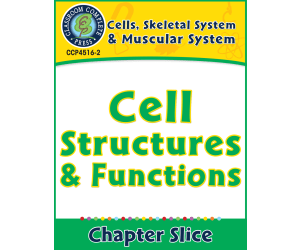
Cells, Skeletal & Muscular Systems: Cell Structures & Functions Gr. 5-8
Science, Life Sciences, Human Body, Grade 5, 6, 7, 8, Teacher Tools, Lesson Plans
Cells, Skeletal & Muscular Systems: Cell Structures & Functions Gr. 5-8 A prime teaching resource meticulously designed for grades 5 to 8 giving a detailed understanding about the human body and its intricate workings. It vividly illustrates how cells, bones, and muscles form a highly interconnected network responsible for our day-to-day functions. Highlights: Designed as per grade-level standards and advanced teaching methodologies including Bloom's Taxonomy and STEM initiatives. Begins with basics of cell structures and functions serving as a stepping stone towards more complex topics such as tissue formation, organ configuration, etc. In-depth study of major bodily systems including respiratory, nervous among others with special attention on skeletal and muscular systems that aid movement or action in daily life. Pedagogical Approach: It includes reading passages paired up with activities both pre-read (engagement) and post-read (evaluation). Hands-on practical activities are woven into the guidebook ensuring tangible connection between theoretical study vs real-world applications. The structure of this resource is ideal for: \ Whole group instruction sessions in school settings \ Homeschooling groups that prefer intuitive experiences making learning enjoyable while grasping complexities at ease \ Add-on Features:\ The product pack comes along with color mini posters included as visually stimulating resources fostering better retention rates among learners. All these materials are available in downloadable PDF format ensuring easy access anywhere anytime. In Summary,\ This comprehensive teaching resource promises to drive home deep-seated understanding around human body's wondrous functioning - striking an optimal balance between necessary scientific rigor imparted all the while fostering natural curiosity within learners.
Author Classroom Complete Press
Tags PDF

Thermoregulation - Senior Biology lesson
Science, Life Sciences, Biology, Grade 11, 12, Teacher Tools, Lesson Plans
Thermoregulation - Senior High School Biology lesson Your lesson discusses how animals regulate their internal body temperatures. In order, the lesson teaches; the importance of regulating body temperature, ectotherms, endotherms, metabolic responses to external temperatures, responses to cold and heat, Hypothalamus, Torpor, Hibernation, and Estivation. Your lesson includes the teacher and student version of the presentation, two embedded videos, an auto-graded exit ticket, and a student lesson handout so the students can record the notes on a more condensed medium. This lesson is designed to be your go-to resource, whether you're in a traditional classroom or a virtual one. With both a teacher version and a student version, it seamlessly fits into your lesson plans, making learning engaging and adaptable. Assessment made easy We've included an auto-graded Exit Ticket and a quiz with an answer key because I know you don't have an excess of time. I know you don't, because I don't and I know I'll do whatever I can to reduce my grading time. Whether you use PowerPoint or Google Slides, prefer Word or Google Docs, this lesson has you covered. This lesson comes in both Office and Google formats for your convenience. The student version of the presentation has strategically placed blanks for them to fill in as you're teaching. It keeps them active and engaged, encourages discussion, and leaves more time for those "aha" moments.
Author Teach With Fergy
Tags Senior Biology, Biology Lesson, Thermoregulation, Homeostasis, Ectotherms, Endotherms, Metabolic, Hypothalamus

Nikola Tesla - Close Reading Comprehension Worksheet & Lesson Plan
Science, Physics, Grade 8, 9, 10, 11, 12, Lesson Plans, Teacher Tools
This resource is wonderful for students to increase vocabulary, improve reading comprehension, and also English fluency! The reading itself is of Nikola Telsa and the lesson plan & worksheet includes the following items: - pre-reading warm-up & discussion - 350-word article - True/false reading comprehension questions - Open-ended reading comprehension questions - Discussion questions & debate starters - Timeline writing exercise - Additional activities for homework/differentiation Example of English level: "Who was Nikola Tesla? If there was more justice in the world, as many people today would be familiar with the name of Nikola Tesla as they are with the name of his bitter rival, Thomas Edison. In the 1880s Tesla and Edison carried out the famous “War of the Currents”, as they each tried to establish their own versions of electric currents as the preeminent standard for widespread use. Edison may now be better known, but this doesn’t diminish Tesla’s incredible accomplishments in advancing modern technology."
Author The Laughing Linguist
Tags Einstein, Albert Einstein, Scientist, Reading Comprehension, Close Reading
I WONDER - What Are The Different Parts Of A Comet | Animated Video
Space, Earth and Environmental Sciences, Science, STEM, Grade 4, 5, 6, 7, 8, 9, 10, Lesson Plans, Teacher Tools
Video Introduction An amazing video designed for the students to learn more about space facts. I WONDER - What Are The Different Parts Of A Comet | Animated Video Lesson Do you like reading about space? If yes, what is your favorite topic? What do you know about our solar system? What is the smallest planet in our solar system? What is the biggest planet in our solar system? What is the hottest planet in our solar system? And what is the coldest one? Do you think there are aliens? If yes, what do you think they look like? What do they eat and how they speak to each other? Where do they live? What is a galaxy? And what is a milky way? Have you recently saw a shooting star? If yes, tell us more about it, like when did it happen and where? What is a blackhole? Can a blackhole gets bigger by time? Do you like counting the stars? What do you think a star is made of? I WONDER - What Are The Different Parts Of A Comet | Animated Video Lesson The video is perfect for encouraging the researching skills for the students, while learning more about the fantastic space. I WONDER - What Are The Different Parts Of A Comet | Animated Video Lesson This friendly designed video is suitable for students at school, homeschooling, and as a group activity. Format Available in MP4 format.
Author Educational Voice
Tags What Are The Different Parts Of A Comet, What Are The Different Parts Of A Comet Video, Different Parts Of A Comet, Different Parts Of A Comet Video, Comet, Comets, Comets Facts, Space
I WONDER - How Does A Water Wheel Work | Animated Video Lesson
Environmental Science, Earth and Environmental Sciences, Science, Grade 6, 7, 8, 9, 10, 11, 12, Lesson Plans, Teacher Tools
Video Introduction An amazing video designed for the students to learn more about STEM. I WONDER - How Does A Water Wheel Work | Animated Video Lesson Do you like STEM subjects? what is your favorite one? Have you ever tried to plant a seed? If yes, tell us more about it. Or have you ever tried to invent something? If yes, tell us more about it. And how do you think it will help us? Have you ever seen a microorganism under a microscope? What was it? And how it looked like? Mathematics is a marvelous subject. Let' sharpen our brains and solve some equations. Do you like timetable tricks? What is your favorite one? Do you know how to code? Have you ever created an app or a game before? If yes, how was it like? I WONDER - How Does A Water Wheel Work | Animated Video Lesson The video is perfect for encouraging the researching skills for the students, while learning more about this fantastic topic. I WONDER - How Does A Water Wheel Work | Animated Video Lesson This friendly designed video is suitable for students at school, homeschooling, and as a group activity. Format Available in MP4 format.
Author Educational Voice
Tags How Does A Water Wheel Work, How Does A Water Wheel Work Video, Water Wheel, Water Wheel Facts, Water Wheel Facts For Kids, Water Wheel Video, Water Wheel Video For Kids, Water
I WONDER - How Much Did A T-Rex Weigh | Animated Video Lesson
History: Ancient, History, Social Studies, History: World, Animals, Life Sciences, Science, Grade 2, 3, 4, 5, 6, 7, 8, Lesson Plans, Teacher Tools
Video Introduction An amazing video designed for the students to learn more about dinosaurs in different countries. I WONDER - How Much Did A T-Rex Weigh | Animated Video Lesson Do you like dinosaurs? what is your favorite one? Do you own a pet? If yes, tell us more about it, like what its name? And what do you like most about it? Do you think that your pet has been evolved from a dinosaur? Can you write down the characteristics of your favourite dinosaur like it's shape, their rivals, where did it use to live and what was their favourite food? What is the largest and the smallest dinosaur that ever found? Why is the T-rex is so famous? Have you ever read any interesting facts about it? Can you name any of the carnivores or herbivores dinosaurs? I WONDER - How Much Did A T-Rex Weigh | Animated Video Lesson The video is perfect for encouraging the researching skills for the students, while learning more about dinosaurs. I WONDER - How Much Did A T-Rex Weigh | Animated Video Lesson This friendly designed video is suitable for students at school, homeschooling, and as a group activity. Format Available in MP4 format.
Author Educational Voice
Rating
Tags How Much Did A T-Rex Weigh, How Much Did A T-Rex Weigh Video, T-Rex, T-Rex Facts, T-Rex Video, T-Rex Facts For Kids, T-Rex Video For Kids, T-Rex Weight, T-Rex Weight Facts, T-Rex Weight Video

I WONDER - Is Pluto A Dwarf Planet | Animated Video Lesson
Space, Earth and Environmental Sciences, Science, Grade 6, 7, 8, 9, 10, 11, 12, Lesson Plans, Teacher Tools
Video Introduction An amazing video designed for the students to learn more about space facts. I WONDER - Is Pluto A Dwarf Planet | Animated Video Lesson Do you like reading about space? If yes, what is your favorite topic? What do you know about our solar system? What is the smallest planet in our solar system? What is the biggest planet in our solar system? What is the hottest planet in our solar system? And what is the coldest one? Do you think there are aliens? If yes, what do you think they look like? What do they eat and how they speak to each other? Where do they live? What is a galaxy? And what is a milky way? Have you recently saw a shooting star? If yes, tell us more about it, like when did it happen and where? What is a blackhole? Can a blackhole gets bigger by time? Do you like counting the stars? What do you think a star is made of? I WONDER - Is Pluto A Dwarf Planet | Animated Video Lesson The video is perfect for encouraging the researching skills for the students, while learning more about the fantastic space. I WONDER - Is Pluto A Dwarf Planet | Animated Video Lesson This friendly designed video is suitable for students at school, homeschooling, and as a group activity. Format Available in MP4 format.
Author Educational Voice
Tags Is Pluto A Dwarf Planet, Is Pluto A Dwarf Planet Video, Pluto, Pluto Facts, Pluto Facts For Kids, Pluto Video, Pluto Video For Kids, Dwarf Planet, Dwarf Planet Video, Dwarf Planet Facts

I WONDER - How Much Bacteria Is On My Mobile Phone | Animated Video
Chemistry, Science, Physics, Biology, Life Sciences, Grade 6, 7, 8, 9, 10, 11, 12, Lesson Plans, Teacher Tools
Video Introduction An amazing activity designed for the students to learn more about STEM. I WONDER - How Much Bacteria Is On My Mobile Phone | Animated Video Lesson Do you like STEM subjects? what is your favorite one? Have you ever tried to plant a seed? If yes, tell us more about it. Or have you ever tried to invent something? If yes, tell us more about it. And how do you think it will help us? Have you ever seen a microorganism under a microscope? What was it? And how it looked like? Mathematics is a marvelous subject. Let' sharpen our brains and solve some equations. Do you like timetable tricks? What is your favorite one? Do you know how to code? Have you ever created an app or a game before? If yes, how was it like? I WONDER - How Much Bacteria Is On My Mobile Phone | Animated Video Lesson The video is perfect for encouraging the researching skills for the students, while learning more about this fantastic topic. I WONDER - How Much Bacteria Is On My Mobile Phone | Animated Video Lesson This friendly designed video is suitable for students at school, homeschooling, and as a group activity. Format Available in MP4 format.
Author Educational Voice
Tags How Much Bacteria Is On My Mobile Phone, How Much Bacteria Is On My Mobile Phone Video, Mobile Phone, Mobile Phone Facts, Mobile Phone Facts For Kids, Mobile Phone Facts Video, Bacteria
I WONDER - What Is A Loop In Coding | Animated Video Lesson
STEM, Computer Science, Technology, Science, Grade 6, 7, 8, 9, 10, 11, 12, Lesson Plans, Teacher Tools
Video Introduction An amazing video designed for the students to learn more about STEM. I WONDER - What Is A Loop In Coding | Animated Video Lesson Do you like STEM subjects? what is your favorite one? Have you ever tried to plant a seed? If yes, tell us more about it. Or have you ever tried to invent something? If yes, tell us more about it. And how do you think it will help us? Have you ever seen a microorganism under a microscope? What was it? And how it looked like? Mathematics is a marvelous subject. Let' sharpen our brains and solve some equations. Do you like timetable tricks? What is your favorite one? Do you know how to code? Have you ever created an app or a game before? If yes, how was it like? I WONDER - What Is A Loop In Coding | Animated Video Lesson The video is perfect for encouraging the researching skills for the students, while learning more about this fantastic topic. I WONDER - What Is A Loop In Coding | Animated Video Lesson This friendly designed video is suitable for students at school, homeschooling, and as a group activity. Format Available in MP4 format.
Author Educational Voice
Tags What Is A Loop In Coding, What Is A Loop In Coding Video, Loop In Coding, Loop, Loop Facts, Loop Facts For Kids, Loop Video, Loop Video For Kids, Loop In Coding Video, Loop In Coding Facts
I WONDER - What Is A Landfill | Animated Video Lesson
Environmental Science, Earth and Environmental Sciences, Science, Grade 1, 2, 3, 4, 5, 6, 7, 8, Lesson Plans, Teacher Tools
Video Introduction An amazing video designed for the students to learn more about STEM. I WONDER - What Is A Landfill | Animated Video Lesson Do you like STEM subjects? what is your favorite one? Have you ever tried to plant a seed? If yes, tell us more about it. Or have you ever tried to invent something? If yes, tell us more about it. And how do you think it will help us? Have you ever seen a microorganism under a microscope? What was it? And how it looked like? Mathematics is a marvelous subject. Let' sharpen our brains and solve some equations. Do you like timetable tricks? What is your favorite one? Do you know how to code? Have you ever created an app or a game before? If yes, how was it like? I WONDER - What Is A Landfill | Animated Video Lesson The video is perfect for encouraging the researching skills for the students, while learning more about this fantastic topic. I WONDER - What Is A Landfill | Animated Video Lesson This friendly designed video is suitable for students at school, homeschooling, and as a group activity. Format Available in MP4 format.
Author Educational Voice
Tags What Is A Landfill, What Is A Landfill Video, Landfill, Landfills, Landfill Facts, Landfill Facts For Kids, Landfill Video, Landfill Video For Kids, Environment, Environment Facts

I WONDER - How Can Geothermal Energy Be Used | Animated Video Lesson
Environmental Science, Earth and Environmental Sciences, Science, Earth Sciences, Grade 5, 6, 7, 8, 9, 10, 11, Lesson Plans, Teacher Tools
Video Introduction An amazing video designed for the students to learn more about STEM. I WONDER - How Can Geothermal Energy Be Used | Animated Video Lesson Do you like STEM subjects? what is your favorite one? Have you ever tried to plant a seed? If yes, tell us more about it. Or have you ever tried to invent something? If yes, tell us more about it. And how do you think it will help us? Have you ever seen a microorganism under a microscope? What was it? And how it looked like? Mathematics is a marvelous subject. Let' sharpen our brains and solve some equations. Do you like timetable tricks? What is your favorite one? Do you know how to code? Have you ever created an app or a game before? If yes, how was it like? I WONDER - How Can Geothermal Energy Be Used | Animated Video Lesson The video is perfect for encouraging the researching skills for the students, while learning more about this fantastic topic. I WONDER - How Can Geothermal Energy Be Used | Animated Video Lesson This friendly designed video is suitable for students at school, homeschooling, and as a group activity. Format Available in MP4 format.
Author Educational Voice
Tags How Can Geothermal Energy Be Used, How Can Geothermal Energy Be Used Video, Geothermal Energy, Geothermal Energy Facts, Geothermal Energy Facts For Kids, Geothermal Energy Video, Geothermal Energy Video For Kids

Waste: The Global View: Radioactive Waste Gr. 5-8
Science, Earth and Environmental Sciences, Environmental Science, Grade 5, 6, 7, 8, Teacher Tools, Lesson Plans
Waste: The Global View: Radioactive Waste Gr. 5-8 An uncomplicated and comprehensive teaching resource designed for educators working with students in grades 5 through 8. This specific product deals with the "Radioactive Waste" chapter slice from the full lesson plan, "Waste: The Global View". Aim and Scope: A necessary educational tool that addresses different types of global waste management issues caused by natural disasters, oil spills, agricultural and mining operations. The teaching resource covers a broad spectrum of waste-related topics including the management of space junk, agricultural pesticides, radioactive waste from nuclear power plants etc. Usefulness: Suitable for whole group learning or small group discussions in class. Can also be sent as homework assignments for individual understanding checks. In addition to solid reading sections, there are student activities pre- and post-reading that keep students engaged while simplifying knowledge absorption effectively. Incorporates interactive tools like crossword puzzles and word searches to maintain interest levels among younger learners while enhancing their grasp of complex environmental science terms. Evaluation & Revision: The package includes materials to aid revision efforts as well as a final quiz to accurately evaluate student performance. An answer key is provided for fast marking or self- assessment making it simpler on teachers' end. Note: Add-on perks comprise color mini posters that can supplement classroom environments or digital platforms aiding visual engagement while boosting concept retention in students’ memory longer-term. Aligned With State Standards: This meticulously aligned content ensures seamless inclusion into your curriculum without being overwhelming on students dealing with complex subjects such as radioactive waste management. Furthermore compliance with Bloom's Taxonomy objectives ensures all requisite learning needs are met. Easy Sharing: The resource, available in PDF format promotes hassle-free sharing via email or compatible online teaching platforms without any loss in quality – a key benefit particularly for those managing virtual classrooms or guiding homeschoolers. Final Thoughts "Waste: The Global View: Radioactive Waste Gr. 5-8" is not only an educational resource but also an indispensable tool that equips students with crucial knowledge on global waste issues - enlightening young minds one at a time towards environmental consciousness and responsible citizenship.
Author Classroom Complete Press
Tags PDF
I WONDER - What Are The Stages In A Butterfly's Life Cycle
STEM, Insects, Life Sciences, Science, Animals, Biology, Grade 1, 2, 3, 4, 5, 6, 7, 8, Lesson Plans, Teacher Tools
Video Introduction Animal kingdoms are full of fascinating wonders to learn. This video is designed for the students to learn more about animals in different countries. I WONDER - What Are The Stages In A Butterfly's Life Cycle | Animated Video Lesson Do you like animals? what is your favorite one? Do you own a pet? If yes, tell us more about it, like what its name? And what do you like most about it? What are the animal kingdoms? Can you write down the characteristics of each animal class like mammals, birds, reptiles, amphibian, fish and mollusks. Do you know that some animals can sing, can you name any of them? What is the largest and the smallest mammal in the world? What is the largest and the smallest bird in the world? What is the largest and the smallest fish in the world? I WONDER - What Are The Stages In A Butterfly's Life Cycle | Animated Video Lesson The video is perfect for encouraging the researching skills for the students, while learning more about these fantastic animals. I WONDER - What Are The Stages In A Butterfly's Life Cycle | Animated Video Lesson This friendly designed video is suitable for students at school, homeschooling, and as a group activity. Format Available in MP4 format.
Author Educational Voice
Tags What Are The Stages In A Butterfly's Life Cycle, What Are The Stages In A Butterfly's Life Cycle Video, Butterfly's Life Cycle, Butterfly's Life Cycle Facts, Butterfly's Life Cycle Facts For Kids, Butterfly's Life Cycle Video