



3,906 products added recently
Page 71 - Science Lesson Plan Template
Enhance your science instruction with a flexible lesson plan template designed for educators. This tool helps you structure objectives, materials, procedures, and assessments efficiently. Use it to create organized and impactful science lessons that cater to your students' needs.

 Show filters

Reducing Your Own Carbon Footprint: How To Make Your Footprint Smaller And Why You Should Gr. 5-8
Science, Earth and Environmental Sciences, Environmental Science, Grade 5, 6, 7, 8, Teacher Tools, Lesson Plans
Reducing Your Own Carbon Footprint: How To Make Your Own Footprint Smaller and Why You Should Gr. 5-8 A comprehensive educational digital resource aimed at teaching students of grades 5 to 8 about climate change, its causes and their own environmental impact. The Greenhouse Effect This tool assists in teaching students about the greenhouse effect, exposing them to its causes and outcomes. It encourages critical thinking by identifying energy consumption in a common household space – such as the kitchen. Farm to Table Carbon Output An overview of all steps involved in farm-to-table food production—building connections between everyday actions and global carbon output. Travel-Evoked Carbon Footprint Understand how modes of travel contribute heavily to one's carbon footprint. A provision for tools that calculate learners' travel footprints with suggestions on reducing the impact.. Waste Management vs Recycling > "Recycling isn't always enough", hence, this resource provides practical ways learners can manage their waste footprints. Moulding Environmentally-Conscious Communities > Influencial materials equipping educators to help students understand their place within an environmentally oriented society encouraging them towards contributing actively. Bonus Resource: This digital guide challenges students problem-solving skills via examples showing how 'green' rules can be part of social contracts effectively reducing a shared carbon footprint. Pdf based format convenient for use on any device. Bloom's Taxonomy framed graphic organizers along with STEAM focused materials – Underlining environmental science. An interactive carbon footprint calculator Puzzles and games like a word search game and crossword puzzle. A comprehension quiz with an answer key to assess understanding. Note: This resource is curated specifically for science teachers, homeschooling educators. It can be used flexibly in full-classroom sessions or assigned as smaller group activities such as homework projects. You need the right tool for teaching students their relationship with the environment? Look no further because "Reducing Your Own Carbon Footprint: How To Make Your Own Footprint Smaller" is available just for you!
Author Classroom Complete Press
Tags Science Workbook, Reading Passage, Environmental, Carbon Footprint, Science Assessment
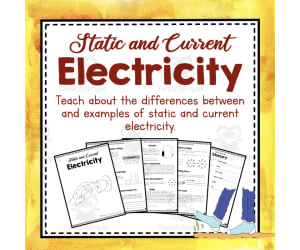
Electricity Unit Study | Static and Current Electricity
Science, Physics, Grade 3, 4, 5, Lesson Plans, Teacher Tools
The Electricity Unit Study | Static and Current Electricity This is a premium teaching resource tailored to teachers and homeschoolers for primarily grades 3-5. In this comprehensive unit, the focus is on the subject of electricity with an emphasis on static and current electricity. About the Study Unit The study unit makes understanding physical science a captivating activity. It delves into differentiating between static and current electricity and other complex concepts like Coulomb's Law, essential for understanding electrostatics. Inspiring Examples & Historical Context Your learners can truly immerse themselves in the absolutely engaging examples provided like how lightning is formed or what comprises an electric circuit. Furthermore, historical contexts relating to Benjamin Franklin add depth to their learning experience. Glossary Support: The inclusion of glossaries inside each booklet enhances word comprehension across various literacy levels. Four Layout Styles: We offer four distinct styles for booklet layout—black/white or color—and two size options—full-size or half-size—to cater to students' preferences, group sizes, or paper-saving objectives. Lively Experiments : Taking theory into practice are two well-outlined experiments that make scientific principles feel manageable and fun. Suitable For Classroom Discussions Or Homework Assignments In addition to being perfect for classroom discussions, these versatile teaching aids may also be used as homework assignments or small group readings. Stimulate individual students to compose their own books using this comprehensive guide thereby fostering creativity! Note For The Teachers To ensure maximum usage of these resources alongside your pre-existing materials preparation methods offered herein do require some preplanning—for instance, when rolling out more extensive projects on physical science. Digital Storing For Convenience The study unit is housed in a convenient 50-page printable PDF format which simplifies storage needs as compared to traditional booklets. This saves time and allows educators efficient access anytime they need without having to carry bulky material around. In conclusion, with little preplanning and resourceful integration, the Electricity Unit Study ensures an interactive and practical learning experience focused on the intriguing world of static and current electricity. It's a comprehensive teaching tool that fosters both educator and student appreciation for the subject matter!
Author Simply Schoolgirl
Tags Electricity, Static Electricity, Current Electricity, Interactive Learning, Hands-on Experiments
I WONDER - What Is A Circuit | Animated Video Lesson
Physics, Science, Grade 4, 5, 6, 7, 8, 9, 10, Lesson Plans, Teacher Tools
Video Introduction An amazing activity designed for the students to learn more about STEM. I WONDER - What Is A Circuit | Animated Video Lesson Do you like STEM subjects? what is your favorite one? Have you ever tried to plant a seed? If yes, tell us more about it. Or have you ever tried to invent something? If yes, tell us more about it. And how do you think it will help us? Have you ever seen a microorganism under a microscope? What was it? And how it looked like? Mathematics is a marvelous subject. Let' sharpen our brains and solve some equations. Do you like timetable tricks? What is your favorite one? Do you know how to code? Have you ever created an app or a game before? If yes, how was it like? I WONDER - What Is A Circuit | Animated Video Lesson The video is perfect for encouraging the researching skills for the students, while learning more about this fantastic topic. I WONDER - What Is A Circuit | Animated Video Lesson This friendly designed video is suitable for students at school, homeschooling, and as a group activity. Format Available in MP4 format.
Author Educational Voice
Tags What Is A Circuit, What Is A Circuit Video, Circuit, Circuit Facts, Circuit Facts For Kids, Circuits, Circuit Video, Circuit Video For Kids, Science, Science Facts

Proteins and Nucleic Acids - Senior High School Biology lesson
Science, Life Sciences, Biology, Grade 11, 12, Teacher Tools, Lesson Plans
Proteins and Nucleic Acids - Senior High School Biology lesson The lesson covers the following topics; Function of Proteins, Amino Acids Structure, Essential Amino Acids, Polypeptides, Protein structure, Denaturing Proteins, DNA vs RNA, DNA structure, Nitrogenous bases, Phosphate groups. Your lesson includes the teacher and student version of the presentation, three embedded videos, an auto-graded exit ticket, and a student lesson handout so the students can record the notes on a more condensed medium. The lesson is entertaining, engaging, and classroom-tested. This lesson is designed to be your go-to resource, whether you're in a traditional classroom or a virtual one. With both a teacher version and a student version, it seamlessly fits into your lesson plans, making learning engaging and adaptable. Assessment made easy We've included an auto-graded Exit Ticket and a quiz with an answer key – because who doesn't love saving time on grading? Whether you're a PowerPoint pro or a Google Slides user, prefer Word or Google Docs – we've got you covered. This lesson comes in both Office and Google formats for your convenience. The student version of the presentation has strategically placed blanks for them to fill in as you're teaching. It keeps them active and engaged, encourages discussion, and leaves more time for those "aha" moments.
Author Teach With Fergy
Tags Biochemistry, Senior Biology Lesson, Biology Lesson, Senior Biology, Proteins, Amino Acids, Polypeptides, Protein Structure, DNA, RNA
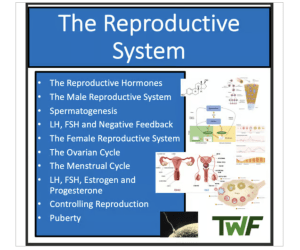
Male and Female Reproductive Systems - Senior Biology lesson
Science, Life Sciences, Biology, Grade 11, 12, Teacher Tools, Lesson Plans
The Reproductive Systems -Male & Female - Senior High School Biology lesson Your lesson covers the male and female reproductive systems. In order, the lesson teaches; the Reproductive Hormones, the Male Reproductive System, Spermatogenesis, LH, FSH, and Negative Feedback, the Female Reproductive System, the Ovarian Cycle, the Menstrual Cycle, LH, FSH, Estrogen, and Progesterone, Controlling Reproduction, and Puberty. Your lesson includes the teacher and student version of the presentation, FOUR embedded videos, an auto-graded exit ticket, and a student lesson handout so the students can record the notes on a more condensed medium. This lesson is designed to be your go-to resource, whether you're in a traditional classroom or a virtual one. With both a teacher version and a student version, it seamlessly fits into your lesson plans, making learning engaging and adaptable. Assessment made easy We've included an auto-graded Exit Ticket and a quiz with an answer key because I know you don't have an excess of time. I know you don't, because I don't and I know I'll do whatever I can to reduce my grading time. Whether you use PowerPoint or Google Slides, prefer Word or Google Docs, this lesson has you covered. This lesson comes in both Office and Google formats for your convenience. The student version of the presentation has strategically placed blanks for them to fill in as you're teaching. It keeps them active and engaged, encourages discussion, and leaves more time for those "aha" moments.
Author Teach With Fergy
Tags Senior Biology, Biology Lesson, Reproduction, Hormones, Spermatogenesis, Ovarian Cycle, Menstrual Cycle, Estrogen, Progesterone, Puberty

Discover! Simple Chemistry
Science, Chemistry, Grade 4, 5, 6, Teacher Tools, Lesson Plans
Discover! Simple Chemistry - A Comprehensive Teaching Resource Discover! Simple Chemistry is an invaluable asset for educators seeking a profound, yet easy-to-understand base to teach elementary chemistry concepts to Grade 4, 5, and 6 students. Serving as an all-encompassing guide, this resource is equally beneficial for public school teachers and homeschoolers. The book drastically simplifies complex topics such as: Atomic symbols and structure Compounds and mixtures Matter Acids/Bases Solvents/Solutions Oxidation processes Gases. The product includes a PDF document with 37 printable pages. The sheets not only detail the theoretical aspects but also suggest practical activities to reinforce learning outcomes. Ranging from whole group instructions to individual assignments, suggested discussions stimulate critical thinking in learners. One distinguishing feature of this bundle is the provision of accurate solution keys,, saving educators time in answer preparation while allowing seamless evaluation of students' understanding level. In conclusion, "Discover! Simple Chemistry", with its effective pedagogical strategies offers young learners an appealing method to foster their curiosity about chemistry while simultaneously easing workload off educator's shoulders.
Author Classroom Complete Press
Tags Science Worksheet, Chemistry, Science Review, Periodic Table, Chemistry Test

Conservation: Ocean Water Resources: What Is Salt Water? Gr. 5-8
Science, Earth and Environmental Sciences, Environmental Science, Grade 5, 6, 7, 8, Teacher Tools, Lesson Plans
The Conservation: Ocean Water Resources: What Is Salt Water? Gr. 5-8 A comprehensive teaching resource stirring the interest of grades five through eight students in environmental science—particularly ocean conservation. With a focus on sea-life and water as the ecosystem's major player, this product provides a vibrant, hands-on learning experience that appeals to visual learners. The unit not only emphasizes theoretical retention but also fosters critical thinking by assigning an innovative board game designing task. This task aims to outline climate change’s impact on oceans - an issue of current global relevance, making the lesson stimulating and pertinent. The package covers aspects such as: The water cycle Influence over seawater concentration Evidence how climate change affects ocean currents Fallouts of these effects on traditional trades like farming and fishing etc. This invaluable lesson enlightens our future generations about day-to-day scientific phenomena they may encounter but rarely ponder upon. Moreover, it broaches crucial topics about human practices' environmental implications—making reference to actual incidents involving ecological concerns provoked by human activities. Nub of the Product: Intriguing questions provoking thought around environmental issues induced due to human interventions. Inclusion of practical experiments allowing children a first-hand experience with Earth's largest bio-reserve while subtly instilling STEAM principles in their learning journey. This digital pack is complete with 30 printable worksheets suitable for various teaching formats—whole class discussions, small group exercises or individual homework assignments—catering flexibly to teachers' needs. The unit is peppered with supporting tools like crossword puzzles & word searches, intended to supplement learning through play while reinforcing the newly acquired knowledge. Most importantly, it goes beyond imparting information. It encourages young minds by furnishing them with effective strategies that they can adopt personally towards protecting our oceans; consequently nurturing individual responsibility at an early stage. "The Conservation: Ocean Water Resources: What Is Salt Water? Gr. 5-8" is a harmonious amalgamation of oceanography and trending environmental issues that not only promises an engaging study environment, but also assists educators in their efforts.
Author Classroom Complete Press
Tags Environmental Science, Conservation, Salt Water, Ocean Water, Comprehension
I WONDER - How Much Clothing Is Made Every Year | Animated Video
Earth Sciences, Earth and Environmental Sciences, Science, Environmental Science, Grade 6, 7, 8, 9, 10, Lesson Plans, Teacher Tools
Video Introduction An amazing video designed for the students to learn more about STEM. I WONDER - How Much Clothing Is Made Every Year | Animated Video Lesson Do you like STEM subjects? what is your favorite one? Have you ever tried to plant a seed? If yes, tell us more about it. Or have you ever tried to invent something? If yes, tell us more about it. And how do you think it will help us? Have you ever seen a microorganism under a microscope? What was it? And how it looked like? Mathematics is a marvelous subject. Let' sharpen our brains and solve some equations. Do you like timetable tricks? What is your favorite one? Do you know how to code? Have you ever created an app or a game before? If yes, how was it like? I WONDER - How Much Clothing Is Made Every Year | Animated Video Lesson The video is perfect for encouraging the researching skills for the students, while learning more about this fantastic topic. I WONDER - How Much Clothing Is Made Every Year | Animated Video Lesson This friendly designed video is suitable for students at school, homeschooling, and as a group activity. Format Available in MP4 format.
Author Educational Voice
Tags How Much Clothing Is Made Every Year, How Much Clothing Is Made Every Year Video, Clothing, Clothing Facts, Clothing Facts For Kids, Clothing Video, Clothing Video For Kids, Environment
I WONDER - What Is A Wheel And Axel | Animated Video Lesson
Physics, Science, STEM, Grade 6, 7, 8, 9, 10, 11, 12, Lesson Plans, Teacher Tools
Video Introduction An amazing video designed for the students to learn more about STEM. I WONDER - What Is A Wheel And Axel | Animated Video Lesson Do you like STEM subjects? what is your favorite one? Have you ever tried to plant a seed? If yes, tell us more about it. Or have you ever tried to invent something? If yes, tell us more about it. And how do you think it will help us? Have you ever seen a microorganism under a microscope? What was it? And how it looked like? Mathematics is a marvelous subject. Let' sharpen our brains and solve some equations. Do you like timetable tricks? What is your favorite one? Do you know how to code? Have you ever created an app or a game before? If yes, how was it like? I WONDER - What Is A Wheel And Axel | Animated Video Lesson The video is perfect for encouraging the researching skills for the students, while learning more about this fantastic topic. I WONDER - What Is A Wheel And Axel | Animated Video Lesson This friendly designed video is suitable for students at school, homeschooling, and as a group activity. Format Available in MP4 format.
Author Educational Voice
Tags What Is A Wheel And Axel, What Is A Wheel And Axel Video, Wheel And Axel, Wheel And Axel Facts, Wheel And Axel Facts For Kids, Wheel And Axel Video, Wheel And Axel Video For Kids, Wheel And Axel Facts Video For Kids
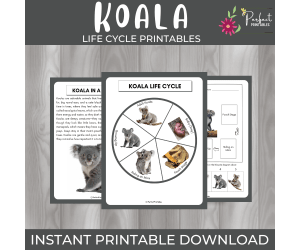
Life Cycle of a Koala, Australian Wildlife Unit Study fun facts
Animals, Life Sciences, Science, Biology, Kindergarten, Preschool, Grade 1, 2, 3, Parts of and Anatomy of, Worksheets & Printables, Flashcards, Diagrams, Teacher Tools, Lesson Plans
Bring Australian wildlife into your classroom with this Life Cycle of a Koala worksheet . Students will explore each stage of a koala’s development, from joey to adulthood, while learning fascinating facts about their diet, habitat, and unique adaptations. Perfect for science centers, unit studies, or literacy integration. What’s Included In This Kola life cycle pack? • A short Koala overiview • Life cycle diagram • Cut-and-paste sequencing activity • Flashcards for review and games • Matching activity for reinforcement • Fun facts about koalas • Coloring page Why Teachers Love It • Supports life science and animal studies • Engaging, hands-on activities for elementary learners • Easy to use – no prep required • Combines science, reading, and creativity • Helps students connect with real-world wildlife Great For • Australian animal unit studies • Science centers and small group work • Independent practice or homework • Early finishers • Cross-curricular learning with geography and literacy This koala life cycle activity helps students build science knowledge while having fun exploring one of Australia’s most iconic animals.
Author Perfect_Printables
Rating
Tags Life Cycle Of A Koala, Koala Life Cycle Worksheet, Australian Wildlife Unit Study, Marsupial Life Cycle Printable, Koala Science Activity, Australian Animals Worksheet, Life Cycle Of Animals Printable, Koala Facts For Kids, Australian Unit Study Worksheet, Koala Classroom Activity

Water Purification Filter Engineering Specs
Science, Earth and Environmental Sciences, Earth Sciences, Environmental Science, Geology, Life Sciences, Human Body, Nature & Plants, Technology, Engineering, Grade 6, 7, 8, 9, 10, 11, 12, Worksheets & Printables, Workbooks, Worksheets, Word Searches, Writing Prompts, Teacher Tools, Lesson Plans, Quizzes and Tests, Quizzes, Tests
Transform your science class into a real-world engineering challenge with this comprehensive, hands-on STEM project! This all-inclusive resource guides students through the process of designing, blueprinting, building, and testing a functional DIY survival water filter using sand, charcoal, and gravel. Perfect for engaging middle school and high school students in Physics, Chemistry, Earth Science, and Environmental Science, this project-based learning (PBL) unit makes abstract scientific principles tangible and exciting. Students will move beyond theory to apply concepts like mechanical filtration, chemical adsorption, fluid dynamics, and the engineering design process to solve a critical survival problem. This No-Prep/Low-Prep Resource is Packed with Value and Includes: Part 1: The Engineering Guide (10 Pages): A detailed, student-facing "textbook" that professionally explains the core science. Topics include the physics of macroscopic filtration (sand/gravel), the chemistry of purification (activated charcoal), pyrolysis, adsorption vs. absorption, and iterative design principles. Part 2: The Student Workbook (19 Pages): Ten distinct, ready-to-print worksheets that reinforce key concepts. These worksheets cover everything from material properties and volumetric calculations to flow-rate dynamics and blueprinting schematics. Questions include fill-in-the-blanks, calculations, and critical thinking short answers. Part 3: Visuals & Teacher Resources (13 Pages): Everything you need to guide students and assess their work with ease! High-Quality Schematics: Clear diagrams illustrating filter stratification, the adsorption process, and the iterative engineering design loop. Perfect for anchor charts! Comprehensive Answer Key: A complete, detailed answer key for all 10 worksheets, including ideal responses for short-answer questions. Advanced Assessment Guides: Includes model calculations and analytical short answer benchmarks to help you grade with confidence. This isn't just a craft; it's a rigorous academic exercise that challenges students to think like engineers. Watch their engagement soar as they create a life-saving device from scratch. Ideal for your next STEM unit, Earth Day activity, or as an unforgettable sub-plan. Download today and bring the engineering of survival to your classroom! Keywords: STEM, STEAM, Project-Based Learning (PBL), Water Filter Project, Engineering Design Process, DIY Survival, Environmental Science, Earth Science, Chemistry, Physics, High School Science, Middle School Science, Hands-On Lab, Workbook, Worksheets, Answer Key, Homeschool, No Prep. Why Parents/Schools Love It: Truly Multi-Disciplinary (STEM/STEAM): This single project masterfully integrates core principles from Physics (flow rate), Chemistry (adsorption), Earth Science (sedimentation), and Engineering (design, testing, iteration), providing immense educational value. Promotes Critical Thinking & Problem Solving: Students don't just follow instructions; they must calculate ratios, troubleshoot failures like "channeling," analyze data, and iterate on their designs, just like real engineers. Makes Abstract Science Concrete: Concepts like "surface area" and "molecular bonding" can be hard to grasp. This project makes them tangible as students see how a larger surface area of charcoal leads to cleaner water. Comprehensive & Teacher-Friendly: This is a "business in a box." With a student guide, 10 worksheets, diagrams, and a full, detailed answer key, it saves teachers dozens of hours of preparation time. Target Student Classes : After analyzing the vocabulary (e.g., tortuosity, pyrolysis, van der Waals forces, effluent ), the mathematical calculations (volume of a cylinder, ratios), and the depth of the scientific concepts, targeting the following students: Primary Target: Grades 9-12 (High School). This resource is perfectly suited for courses in: Environmental Science Earth Science Chemistry (concepts of adsorption, chemical properties) Physics (fluid dynamics, pressure) Engineering or STEM Elective courses. Secondary Target: Grades 7-8 (Advanced/Gifted) . An advanced or honors middle school science class could absolutely handle and benefit from this challenge. It would be an excellent capstone project for a physical or earth science unit. Copyright/Terms of Use: This Book was copyrighted by Syed Hammad Rizvi. This resource is for personal and single classroom use only. You may not alter, redistribute, or sell any part of this resource. In other words, you may not put it on the Internet where it could be publicly found and downloaded. If you want to share this resource with colleagues, please purchase additional licenses from Teachsimple. Thank you for respecting these terms of use. This product is happily brought to you by Syed Hammad Rizvi
Author Creative Book Store
Rating
Tags STEM, STEAM, Engineering, Science, WaterFilter, WaterPurification, DIYWaterFilter, SurvivalSkills, EnvironmentalScience, EarthScience
I WONDER - What Bioluminescent Sea Creatures Exist In The Oceans
STEM, Animals, Life Sciences, Science, Biology, Grade 1, 2, 3, 4, 5, 6, 7, 8, Lesson Plans, Teacher Tools
Video Introduction Animal kingdoms are full of fascinating wonders to learn. This video is designed for the students to learn more about animals in different countries. I WONDER - What Bioluminescent Sea Creatures Exist In The Oceans | Animated Video Lesson Do you like animals? what is your favorite one? Do you own a pet? If yes, tell us more about it, like what its name? And what do you like most about it? What are the animal kingdoms? Can you write down the characteristics of each animal class like mammals, birds, reptiles, amphibian, fish and mollusks. Do you know that some animals can sing, can you name any of them? What is the largest and the smallest mammal in the world? What is the largest and the smallest bird in the world? What is the largest and the smallest fish in the world? I WONDER - What Bioluminescent Sea Creatures Exist In The Oceans | Animated Video Lesson The video is perfect for encouraging the researching skills for the students, while learning more about these fantastic animals. I WONDER - What Bioluminescent Sea Creatures Exist In The Oceans | Animated Video Lesson This friendly designed video is suitable for students at school, homeschooling, and as a group activity. Format Available in MP4 format.
Author Educational Voice
Tags What Bioluminescent Sea Creatures Exist In The Oceans, What Bioluminescent Sea Creatures Exist In The Oceans Video, Bioluminescent Sea Creatures, Bioluminescent Sea Creature, Bioluminescent Sea Creatures Video
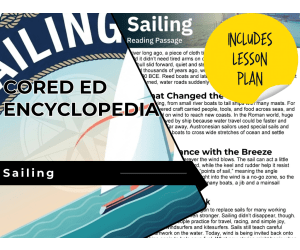
Sailing Reading Comprehension Passage - Cored Ed Encyclopedia
ELA, Language Development, Reading Comprehension, Reading, Pre-Reading, Science, Writing, Engineering, Technology, Physics, Grade 2, 3, 4, 5, Worksheets & Printables, Worksheets, Teacher Tools, Centers, Activities, Writing Prompts, Assessments, Quizzes and Tests, Quizzes, Lesson Plans
This sailing reading comprehension includes: Visualization (on the front cover) Start your lesson by taking a minute to think and share something about the topic. Read the script aloud (slowly), perhaps prepare some music or sound effects. Student close their eyes and let their imaginations wander. Students open their eyes, read the question aloud and give them a few minutes to complete. Ask a few students to share or keep answers until the end to compare with what they learn in the passage. Quick pause—thousands of Cored Education products are included with your TeachSimple membership. Download links and encyclopedia index available here. Pre-Reading Trivia Students will write down one thing they already know about the subject and then read five more facts and discuss. These facts are fun, and the students will enjoy learning about the subject before reading more. Give 1 minute for students to write what they already know (no pressure—best guess is fine). Read the five facts together. After each fact, do ask a student for their opinion, was it surprising? Set a purpose by asking students to highlight/underline one fact they want to learn more about during the reading. Reading Passage The text is a high-interest reading passage with set paragraphs, roughly three to four paragraphs long. It contains a variety of themes about the topic, anywhere from history to technology. The passage is between 250 and 350 words in length. First, ask students to look at the headings and see what they’ll learn about today. What do they know about the topic/heading? First read options: Teacher read-aloud (best for support). Partner reading (paragraph by paragraph). While reading, students underline important details, and vocabulary words they think may come up in the questions section. Mixed Questions The first question page contains four multiple-choice questions, each with a choice of four answers, and three written response questions that require a sentence or two from the student. Students complete the mcqs first independently, then review quickly as a class. For the 3 written responses, try to get students giving the answer with some form of evidence: “I think ___ because the text says ___.” If students get stuck, send them back to check the passage. Vocabulary Questions Practice seven key words from the text in this section across two activities. First section is scrambled words where students will unscramble three words given a clue for each. The second section is a word to meaning matching activity. Before starting, have some students read out words they underlined in the passage. Ask students to say the word and read aloud the sentence(s) around each word. Ask students to do scrambled words and the matching exercise in pairs then go through answers as a class. For the scrambled spelling task, get four pairs to come up to the board and write the words for extra practice with the other student reading out the clue. For the matching task, prompt students to give full sentences: “I matched ___ with ___ because ___.” Creative Writing In this question, the student will be required to write a five to eight sentence paragraph on a question related to the topic. Before starting, ask students write down 3 key ideas they are going to include in their piece. Ask students for ideas to share around the class to help those struggling. Pro writing expectations: 5–8 sentences At least 2 facts or details from the passage At least 2 vocabulary words from the previous page Students read their paragraphs while classmates listen for facts and vocabulary words. Extension Activities This page is optional for fast finishers or to take home. There are several activities, each one requiring a different skill. Do some, do none, do all, completely optional - but you will feel reassured knowing every possibility is planned for. Includes summary writting question. Answer Key There are answers for the multiple-choice questions, written response questions have sample answers, vocabulary answers and if there is a summary question then a sample summary will be provided as well. Lesson Plan Included Customized lesson plan for this lesson is included. Lesson Snapshot Title: Sailing Genre: Nonfiction (informational passage) Subject: Science (Forces & motion) / Social Studies (history of travel) Primary Topic: How wind powers boats and changed travel Estimated Guided Reading Level (A–Z): R What This Lesson Teaches Best How wind pushing on a sail can move a boat without rowing (sail as a “wind catcher” and cloth billowing). How sailing helped people travel farther and move supplies, from early boats to tall ships, including examples from Egypt, the Roman world, and Austronesian sailors. Key sailing concepts that affect movement and direction, including “points of sail,” the “no-go zone,” and zigzagging turns called tacks. How boat parts help sailing work: the sail pulling forward and the keel and rudder helping resist sliding sideways. How technology changed sailing’s role (steam engines replacing sails for many working ships) and how wind is being used again on some cargo ships to save fuel. Learning Goals Explain how wind pressing on a sail can move a boat forward. Describe how sailing grew from river boats to ships that carried people, tools, and food across seas. Identify why sailors use tacks and what the “no-go zone” means in the passage. Describe how the keel and rudder help a sailboat resist sliding sideways. Explain how sailing changed in the late 1800s and how wind is being used again today. Key Vocabulary From the Text hull — the main body of a boat. keel — a strong part that helps stop sliding sideways. rudder — a part that helps steer the boat. tacks — zigzag turns used to move into wind. cargo — goods carried on a ship. FULL CATALOG OF DOWNLOAD LINKS AND ENCYCLOPEDIA INDEX HERE
Author Cored Education
Rating
Tags Vocabulary, Reading Comprehension, Reading Passages, Reading, Creative Writing, Reading Strategies, Writing Prompts, Lesson Plans, Sailing, Engineering

Senses,Nervous & Respiratory Systems: The Nervous System - Brain - FLASH-PC
Science, Life Sciences, Human Body, Common Core, Grade 5, 6, 7, 8, Teacher Tools, Lesson Plans
Senses, Nervous & Respiratory Systems: The Nervous System - Brain - FLASH-PC This is a comprehensive teaching resource, tailor-made to simplify the understanding of the complex areas involved in learning about the brain and its role in our Senses, Nervous and Respiratory Systems. It connects students directly to fundamental concepts while serving to meet educators' needs on multiple levels. Tailored Content: Contains rich reading passages that illuminate intricate aspects of the subject matter. Eases difficult concepts and boosts comprehension by presenting information in an engaging manner. "Before you Read" questions for priming students' thought processes on new topics. "After you Read" queries designed to reinforce learning and solidify knowledge retention. Dynamic Printables: Oodles of dynamic printable material for educators' use. These printables offer flexibility for handouts or visual tools essential for illustrating key points during lessons. Vocabulary flashcards with pertinent terminology further enhance language fluency and understanding within this topic area. Innovative Learning Materials: Interactive activities promote experiential learning. Multimedia content such as videos cater towards diverse learner types and pedagogical methods. This educational resource is also aligned with Common Core State Standards through thoughtful design aligning standards relevant sections across lessons. Suitable Audiences: This teaching resource is best suited for Grade 5-8 students focusing on Science. Note: Peculiarly beneficial when incorporating Human Body specifics into lesson plans utilizing PC Software Resources. In conclusion, Senses,Nervous & Respiratory Systems: The Nervous System - Brain - FLASH-PC marries science education's challenges with innovative digital resources creating an excellently balanced instructional aid. Usage: Whole groups instruction, small groups, flipped-classrooms model or as enriching homework assignments. Simplify and enjoy the teaching experience with this comprehensive tool!
Author Classroom Complete Press
Tags Software (PC)

I WONDER - What Is The Smallest Vertebrate In The World Video
STEM, Animals, Life Sciences, Science, Biology, Grade 1, 2, 3, 4, 5, 6, 7, 8, Lesson Plans, Teacher Tools
Video Introduction Animal kingdoms are full of fascinating wonders to learn. This video is designed for the students to learn more about animals in different countries. I WONDER - What Is The Smallest Vertebrate In The World | Animated Video Lesson Do you like animals? what is your favorite one? Do you own a pet? If yes, tell us more about it, like what its name? And what do you like most about it? What are the animal kingdoms? Can you write down the characteristics of each animal class like mammals, birds, reptiles, amphibian, fish and mollusks. Do you know that some animals can sing, can you name any of them? What is the largest and the smallest mammal in the world? What is the largest and the smallest bird in the world? What is the largest and the smallest fish in the world? I WONDER - What Is The Smallest Vertebrate In The World | Animated Video Lesson The video is perfect for encouraging the researching skills for the students, while learning more about these fantastic animals. I WONDER - What Is The Smallest Vertebrate In The World | Animated Video Lesson This friendly designed video is suitable for students at school, homeschooling, and as a group activity. Format Available in MP4 format.
Author Educational Voice
Tags What Is The Smallest Vertebrate In The World, What Is The Smallest Vertebrate In The World Video, Smallest Vertebrate In The World, Smallest Vertebrate In The World Video, Smallest Vertebrate In The World Facts

I WONDER - What Is An Ice Formation | Animated Video Lesson
Chemistry, Science, STEM, Grade 6, 7, 8, 9, 10, 11, 12, Lesson Plans, Teacher Tools
Video Introduction An amazing video designed for the students to learn more about STEM. I WONDER - What Is An Ice Formation | Animated Video Lesson Do you like STEM subjects? what is your favorite one? Have you ever tried to plant a seed? If yes, tell us more about it. Or have you ever tried to invent something? If yes, tell us more about it. And how do you think it will help us? Have you ever seen a microorganism under a microscope? What was it? And how it looked like? Mathematics is a marvelous subject. Let' sharpen our brains and solve some equations. Do you like timetable tricks? What is your favorite one? Do you know how to code? Have you ever created an app or a game before? If yes, how was it like? I WONDER - What Is An Ice Formation | Animated Video Lesson The video is perfect for encouraging the researching skills for the students, while learning more about this fantastic topic. I WONDER - What Is An Ice Formation | Animated Video Lesson This friendly designed video is suitable for students at school, homeschooling, and as a group activity. Format Available in MP4 format.
Author Educational Voice
Tags What Is An Ice Formation, What Is An Ice Formation Video, Ice Formation, Ice Formation Facts, Ice Formation Facts For Kids, Ice Formation Video, Ice Formation Video For Kids, Ice, Ice Facts
I WONDER - Are Solar Winds Harmful To Planet Earth | Animated Video
Environmental Science, Earth and Environmental Sciences, Science, Space, Earth Sciences, Grade 4, 5, 6, 7, 8, 9, 10, Lesson Plans, Teacher Tools
Video Introduction An amazing video designed for the students to learn more about STEM. I WONDER - Are Solar Winds Harmful To Planet Earth | Animated Video Lesson Do you like STEM subjects? what is your favorite one? Have you ever tried to plant a seed? If yes, tell us more about it. Or have you ever tried to invent something? If yes, tell us more about it. And how do you think it will help us? Have you ever seen a microorganism under a microscope? What was it? And how it looked like? Mathematics is a marvelous subject. Let' sharpen our brains and solve some equations. Do you like timetable tricks? What is your favorite one? Do you know how to code? Have you ever created an app or a game before? If yes, how was it like? I WONDER - Are Solar Winds Harmful To Planet Earth | Animated Video Lesson The video is perfect for encouraging the researching skills for the students, while learning more about this fantastic topic. I WONDER - Are Solar Winds Harmful To Planet Earth | Animated Video Lesson This friendly designed video is suitable for students at school, homeschooling, and as a group activity. Format Available in MP4 format.
Author Educational Voice
Tags Are Solar Winds Harmful To Planet Earth, Are Solar Winds Harmful To Planet Earth Video, Solar Winds, Solar Winds Facts, Solar Winds Video, Solar Winds Facts For Kids, Planet Earth, Planet Earth Video

I WONDER - Can Vegetables Grow In Space | Animated Video Lesson
Nature & Plants, Life Sciences, Science, Space, Earth and Environmental Sciences, Grade 6, 7, 8, 9, 10, 11, 12, Lesson Plans, Teacher Tools
Video Introduction An amazing video designed for the students to learn more about space facts. I WONDER - Can Vegetables Grow In Space | Animated Video Lesson Do you like reading about space? If yes, what is your favorite topic? What do you know about our solar system? What is the smallest planet in our solar system? What is the biggest planet in our solar system? What is the hottest planet in our solar system? And what is the coldest one? Do you think there are aliens? If yes, what do you think they look like? What do they eat and how they speak to each other? Where do they live? What is a galaxy? And what is a milky way? Have you recently saw a shooting star? If yes, tell us more about it, like when did it happen and where? What is a blackhole? Can a blackhole gets bigger by time? Do you like counting the stars? What do you think a star is made of? I WONDER - Can Vegetables Grow In Space | Animated Video Lesson The video is perfect for encouraging the researching skills for the students, while learning more about the fantastic space. I WONDER - Can Vegetables Grow In Space | Animated Video Lesson This friendly designed video is suitable for students at school, homeschooling, and as a group activity. Format Available in MP4 format.
Author Educational Voice
Tags Can Vegetables Grow In Space, Can Vegetables Grow In Space Video, Space Vegetables, Space Vegetables Facts, Space Vegetables Facts For Kids, Space Vegetables Video, Space Vegetables Video For Kids
I WONDER - What is The Smallest Vertebrate In The World
STEM, Animals, Life Sciences, Science, Biology, Grade 1, 2, 3, 4, 5, 6, 7, 8, Lesson Plans, Teacher Tools
Video Introduction Animal kingdoms are full of fascinating wonders to learn. This video is designed for the students to learn more about animals in different countries. I WONDER - What is The Smallest Vertebrate In The World | Animated Video Lesson Do you like animals? what is your favorite one? Do you own a pet? If yes, tell us more about it, like what its name? And what do you like most about it? What are the animal kingdoms? Can you write down the characteristics of each animal class like mammals, birds, reptiles, amphibian, fish and mollusks. Do you know that some animals can sing, can you name any of them? What is the largest and the smallest mammal in the world? What is the largest and the smallest bird in the world? What is the largest and the smallest fish in the world? I WONDER - What is The Smallest Vertebrate In The World | Animated Video Lesson The video is perfect for encouraging the researching skills for the students, while learning more about these fantastic animals. I WONDER - What is The Smallest Vertebrate In The World | Animated Video Lesson This friendly designed video is suitable for students at school, homeschooling, and as a group activity. Format Available in MP4 format.
Author Educational Voice
Tags What Is The Smallest Vertebrate In The World, What Is The Smallest Vertebrate In The World Video, Smallest Vertebrate In The World, Smallest Vertebrate In The World Facts, Smallest Vertebrate In The World Video
I WONDER - How Many Games Are On Roblox | Animated Video for Kids
Computer Science, Technology, Science, Grade 4, 5, 6, 7, 8, 9, 10, Lesson Plans, Teacher Tools
Video Introduction An amazing video designed for the students to learn more about STEM. I WONDER - How Many Games Are On Roblox | Animated Video Lesson Plants world is really fascinating! Do you know that some flowers eat insects? Some other plants like to grow on walls can you mention any? Do you know what is the difference between fungicide and pesticide? If yes, Can you tell us more about it? What is nuclear energy? Is it safe to use it? Do you think it is a clean energy? Have you ever read about potential energy? If yes, tell us what it is? Do you think that potential energy can be converted into another form of energy? How it happens? I WONDER - How Many Games Are On Roblox | Animated Video Lesson The video is perfect for encouraging the researching skills for the students, while learning more about this fantastic topic. I WONDER - How Many Games Are On Roblox | Animated Video Lesson This friendly designed video is suitable for students at school, homeschooling, and as a group activity. Format Available in MP4 format.
Author Educational Voice
Rating
Tags How Many Games Are On Roblox, Roblox, Roblox Facts, Roblox Video, Roblox Facts For Kids, Roblox Video For Kids, Roblox Games, Roblox Games Facts, Roblox Games Video, Roblox Games Video For Kids
I WONDER - How Are Smell And Taste Linked | Animated Video Lesson
STEM, Biology, Life Sciences, Science, Human Body, Grade 2, 3, 4, 5, 6, 7, 8, Lesson Plans, Teacher Tools
Video Overview The human body is full of fascinating wonders to learn. This video is created to help the students recognize the anatomy and the job of the human body. I WONDER - How Are Smell And Taste Linked | Animated Video Lesson Every part and organ in our human body is vital so let's see how important they are. Have you ever imagined how we look like if we didn't have a skeleton? Did you know that because we have our amazing muscles we can stand! Do you know how many teeth do we have? Have you ever wondered about the food journey inside our body? Can you name all the glands in our body? Why do we have skin? Our nervous system is really good at sending signals. Can you tell us more about it? Are you really good at Mathematics, painting, or any other thing? You should really thank your brain about it! The famous five senses are really doing a great work? Can you explain how every sense works? I WONDER - How Are Smell And Taste Linked | Animated Video Lesson The video is perfect for encouraging the researching skills for the students, while learning more about our fantastic human body. I WONDER - How Are Smell And Taste Linked | Animated Video Lesson This friendly designed video is suitable for students at school, homeschooling, and as a group activity. Format Available in MP4 format.
Author Educational Voice
Tags How Are Smell And Taste Linked, How Are Smell And Taste Linked Video, Smell And Taste, Smell And Taste Facts, Smell And Taste Facts For Kids, Smell And Taste Video, Smell And Taste Video For Kids

I WONDER - Can The Colugo Actually Fly | Animated Video Lesson
STEM, Animals, Life Sciences, Science, Biology, Grade 3, 4, 5, 6, 7, 8, 9, Lesson Plans, Teacher Tools
Video Introduction Animal kingdoms are full of fascinating wonders to learn. This video is designed for the students to learn more about animals in different countries. I WONDER - Can The Colugo Actually Fly | Animated Video Lesson Do you like animals? what is your favorite one? Do you own a pet? If yes, tell us more about it, like what its name? And what do you like most about it? What are the animal kingdoms? Can you write down the characteristics of each animal class like mammals, birds, reptiles, amphibian, fish and mollusks. Do you know that some animals can sing, can you name any of them? What is the largest and the smallest mammal in the world? What is the largest and the smallest bird in the world? What is the largest and the smallest fish in the world? I WONDER - Can The Colugo Actually Fly | Animated Video Lesson The video is perfect for encouraging the researching skills for the students, while learning more about these fantastic animals. I WONDER - Can The Colugo Actually Fly | Animated Video Lesson This friendly designed video is suitable for students at school, homeschooling, and as a group activity. Format Available in MP4 format.
Author Educational Voice
Tags Can The Colugo Actually Fly, Can The Colugo Actually Fly Video, Colugo, Colugo Facts, Colugo Facts For Kids, Colugo Video, Colugo Video For Kids, Flying Colugo, Flying Colugo Video
I WONDER - Can You Take A Photo Of The Milky Way | Animated Video
Space, Earth and Environmental Sciences, Science, Grade 6, 7, 8, 9, 11, 12, Lesson Plans, Teacher Tools
Video Introduction An amazing video designed for the students to learn more about space facts. I WONDER - Can You Take A Photo Of The Milky Way | Animated Video Lesson Do you like reading about space? If yes, what is your favorite topic? What do you know about our solar system? What is the smallest planet in our solar system? What is the biggest planet in our solar system? What is the hottest planet in our solar system? And what is the coldest one? Do you think there are aliens? If yes, what do you think they look like? What do they eat and how they speak to each other? Where do they live? What is a galaxy? And what is a milky way? Have you recently saw a shooting star? If yes, tell us more about it, like when did it happen and where? What is a blackhole? Can a blackhole gets bigger by time? Do you like counting the stars? What do you think a star is made of? I WONDER - Can You Take A Photo Of The Milky Way | Animated Video Lesson The video is perfect for encouraging the researching skills for the students, while learning more about the fantastic space. I WONDER - Can You Take A Photo Of The Milky Way | Animated Video Lesson This friendly designed video is suitable for students at school, homeschooling, and as a group activity. Format Available in MP4 format.
Author Educational Voice
Tags Can You Take A Photo Of The Milky Way, Can You Take A Photo Of The Milky Way Video, Milky Way, Milky Way Facts, Milky Way Facts For Kids, Milky Way Video, Milky Way Video For Kids, Space

I WONDER - Can Rocks Float | Animated Video Lesson
Geology, Earth and Environmental Sciences, Science, Earth Sciences, Grade 4, 5, 6, 7, 8, 9, 10, Lesson Plans, Teacher Tools
Video Introduction An amazing activity designed for the students to learn more about STEM. I WONDER - Can Rocks Float | Animated Video Lesson Do you like STEM subjects? what is your favorite one? Have you ever tried to plant a seed? If yes, tell us more about it. Or have you ever tried to invent something? If yes, tell us more about it. And how do you think it will help us? Have you ever seen a microorganism under a microscope? What was it? And how it looked like? Mathematics is a marvelous subject. Let' sharpen our brains and solve some equations. Do you like timetable tricks? What is your favorite one? Do you know how to code? Have you ever created an app or a game before? If yes, how was it like? I WONDER - Can Rocks Float | Animated Video Lesson The video is perfect for encouraging the researching skills for the students, while learning more about this fantastic topic. I WONDER - Can Rocks Float | Animated Video Lesson This friendly designed video is suitable for students at school, homeschooling, and as a group activity. Format Available in MP4 format.
Author Educational Voice
Tags Can Rocks Float, Can Rocks Float Video, Rocks, Rock, Rocks Facts, Rocks Facts For Kids, Rocks Video, Rocks Video For Kids, Floating, Floating Facts