



3,906 products added recently
Page 74 - Science Lesson Plan Template
Enhance your science instruction with a flexible lesson plan template designed for educators. This tool helps you structure objectives, materials, procedures, and assessments efficiently. Use it to create organized and impactful science lessons that cater to your students' needs.

 Show filters


I WONDER - Does Climate Change Affect Endangered Animals
STEM, Animals, Life Sciences, Science, Biology, Geography, Social Studies, Grade 1, 2, 3, 4, 5, 6, 7, 8, Lesson Plans, Teacher Tools
Video Introduction Animal kingdoms are full of fascinating wonders to learn. This video is designed for the students to learn more about animals in different countries. I WONDER - Does Climate Change Affect Endangered Animals | Animated Video Lesson Do you like animals? what is your favorite one? Do you own a pet? If yes, tell us more about it, like what its name? And what do you like most about it? What are the animal kingdoms? Can you write down the characteristics of each animal class like mammals, birds, reptiles, amphibian, fish and mollusks. Do you know that some animals can sing, can you name any of them? What is the largest and the smallest mammal in the world? What is the largest and the smallest bird in the world? What is the largest and the smallest fish in the world? I WONDER - Does Climate Change Affect Endangered Animals | Animated Video Lesson The video is perfect for encouraging the researching skills for the students, while learning more about these fantastic animals. I WONDER - Does Climate Change Affect Endangered Animals | Animated Video Lesson This friendly designed video is suitable for students at school, homeschooling, and as a group activity. Format Available in MP4 format.
Author Educational Voice
Tags Does Climate Change Affect Endangered Animals, Does Climate Change Affect Endangered Animals Video, Endangered Animals, Endangered Animals Video, Climate Change, Climate Change Video

I WONDER - How Does Our Environment Affect Designs | Animated Video
Theories, Basic Science, Science, Environmental Science, Earth and Environmental Sciences, STEM, Research, Grade 6, 7, 8, 9, 10, 11, 12, Lesson Plans, Teacher Tools
Video Introduction An amazing video designed for the students to learn more about STEM. I WONDER - How Does Our Environment Affect Designs | Animated Video Lesson Do you like STEM subjects? what is your favorite one? Have you ever tried to plant a seed? If yes, tell us more about it. Or have you ever tried to invent something? If yes, tell us more about it. And how do you think it will help us? Have you ever seen a microorganism under a microscope? What was it? And how it looked like? Mathematics is a marvelous subject. Let' sharpen our brains and solve some equations. Do you like timetable tricks? What is your favorite one? Do you know how to code? Have you ever created an app or a game before? If yes, how was it like? I WONDER - How Does Our Environment Affect Designs | Animated Video Lesson The video is perfect for encouraging the researching skills for the students, while learning more about this fantastic topic. I WONDER - How Does Our Environment Affect Designs | Animated Video Lesson This friendly designed video is suitable for students at school, homeschooling, and as a group activity. Format Available in MP4 format.
Author Educational Voice
Tags How Does Our Environment Affect Designs, How Does Our Environment Affect Designs Video, Designs, Designs Facts, Environment, Designs Facts For Kids, Designs Video, Environment Video

Force - Digital Lesson Plan Gr. 5-8 - FLASH-PC
Science, Physics, Grade 3, 4, 5, 6, 7, 8, Teacher Tools, Lesson Plans
The Force - Digital Lesson Plan Gr. 5-8 - FLASH-PC A comprehensive, engaging teaching resource designed to simplify the concept of forces for students in grade 5 to 8. Main Features: An assortment of 80 interactive screen-pages encouraging a deep dive into Physics. Incorporates varying instructional techniques for an effective learning experience. Includes theoretical content backed with practical application-based activities. 'Before' & 'after you read' interactives for reinforced understanding. Test preparation materials to stimulate learners analytical thinking power. Joyful learning: achieved through memory match game, crossword puzzles and word searches. This tool supports video & audio synchronized with the textual content – promoting multisensory learning approaches. The detailed lesson plan aligns well within standard state curriculums and encompasses Bloom's Taxonomy levels within its structure – proving its immersive, high-value educational approach. Suitable for implementation in wide-ranging academic environments like whole class instruction, smaller group sessions or even as homework assignments - creating sustained scholastic advancement outside classrooms too! Ease Of Use: This product comes as a PC Software file type ensuring easy usage across standard computer setups irrespective of users’ tech-savviness level — guaranteeing seamless incorporation into daily Physical Science lessons without any added complications recycldimgfhgrlffkkkkkk! Educational Benefits: An exquisite resource adapting physical science education into an intriguing exploration avenue aiding evolvement of young students' transient curiosity into substantial scientific knowledge acquisition! +
Author Classroom Complete Press
Tags Software (PC)

I WONDER - What Job Does The Thyroid Gland Do | Animated Video Lesson
Human Body, Life Sciences, Science, Biology, STEM, Grade 6, 7, 8, 9, 10, 11, 12, Lesson Plans, Teacher Tools
Video Overview The human body is full of fascinating wonders to learn. This video is created to help the students recognize the anatomy and the job of the human body. I WONDER - What Job Does The Thyroid Gland Do | Animated Video Lesson Every part and organ in our human body is vital so let's see how important they are. Have you ever imagined how we look like if we didn't have a skeleton? Did you know that because we have our amazing muscles we can stand! Do you know how many teeth do we have? Have you ever wondered about the food journey inside our body? Can you name all the glands in our body? Why do we have skin? Our nervous system is really good at sending signals. Can you tell us more about it? Are you really good at Mathematics, painting, or any other thing? You should really thank your brain about it! The famous five senses are really doing a great work? Can you explain how every sense works? I WONDER - What Job Does The Thyroid Gland Do | Animated Video Lesson The video is perfect for encouraging the researching skills for the students, while learning more about our fantastic human body. I WONDER - What Job Does The Thyroid Gland Do | Animated Video Lesson This friendly designed video is suitable for students at school, homeschooling, and as a group activity. Format Available in MP4 format.
Author Educational Voice
Tags What Job Does The Thyroid Gland Do, What Job Does The Thyroid Gland Do Video, Thyroid Gland, Thyroid Gland Facts, Thyroid Gland Facts For Kids, Thyroid Gland Video, Thyroid Gland Video For Kids
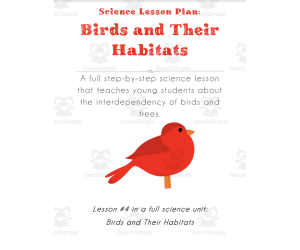
Science Lesson Plan: How Birds and Trees Work Together
Science, Life Sciences, Animals, Grade 3, 4, 5, 6, Teacher Tools, Lesson Plans
This resource is a Science Lesson Plan: How Birds and Trees Work Together. This is Lesson #4 in a full science unit - Birds and Their Habitats. You will receive a full step-by-step science lesson that teaches young students about the interdependency of birds and trees.
Author The Language of Learning
Tags Birds, Trees, Animal Lesson Plan, Science Lesson, Science Worksheets
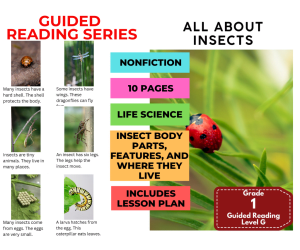
All About Insects: Guided Reading Level G with Lesson Plan
ELA, Resources for Teachers, Reading Comprehension, Reading, Science, Language Development, Vocabulary, Pre-Reading, Insects, Life Sciences, Kindergarten, Grade 1, 2, Worksheets & Printables, Worksheets, Teacher Tools, Centers, Activities, Literacy Readers, Quizzes, Quizzes and Tests, Assessments, Lesson Plans
This All About Insects (level g) guided reading book with lesson plan includes: Guided Reading Color Label (front cover x1) This is a quick way to match the book’s demands to what students can generally handle.. The overall goal is to use the level/color to pick books for several smaller groups. To qualify for a certain level, a student is expected to read a book from that level with about 90–94% accuracy. If a student is consistently accurate and understands, move up a level. If the student is struggling at that level, drop down and add more support. Each student will improve at completely different rates, but it is generally one of the best ways to check progress across the class. DOWNLOAD THE CATALOG TO VIEW ALL GUIDED READING BOOKS AVAILABLE (SORTED LEVELS A-Z) Pre-Reading Question (x1) Teacher asks the prompt aloud, can be while showing the cover or first page. Students share what they already know, or make educated guesses from the cover. Prompt them to use the target vocabulary. Write some of their responses on the board to look back at during the reading. Vocabulary Words (x5) Introduce the five words, best doing it one at a time. Start by saying it, while students repeat and then see if anyone knows what it means before reading further. Read through the meaning and try to briefly connect each word to a picture or gesture so it’s meaningful. Ask students to flip through the book pages and point to where they see each of the vocabulary words. While reading the book pause upon coming across one of the vocab words or read the sentence twice to make sure students understand the word has appeared. Optional: Ask students to raise hands whenever they see/hear one of the new words. Guided Reading Pages (x10) Check the book snapshot (below) for: primary topic - do you need to prep extra reading or intro materials on this? what is taught best - decide on 1-2 bullets to focus on, use the prompt or words provided here for best results. learning goals - what you are checking for students to be able to do after the session, elicit answers using prompts or words provided. key vocabulary (see section above). questions overview - so you know what is coming up and if you need to prep extra materials to assist understanding. Run the lesson You may have already looked at a few of the pages together, but you can show them some of the pictures again first to set meaning. Depending on how much time you have and how familiar your students are with guided reading class, you may want to read the book aloud first with the group first. Students whisper or partner read, while you listen in. If time, do it as a group, one student reading a page each. Use the guided page’s prompts to coach: “Check the picture / does it make sense?” “Point under the words / try the first sound” “Reread the sentence smoothly”. Try to focus more on one student per session (rotating every time), so you can work out if they are ready to move up or need to move down a level. Comprehension Questions (back cover x3) This is your way to check that students didn’t just say the words, but actually understood the text. First, let students answer by pointing to the page/picture and saying a short sentence. After any answer, follow with: “Show me where you found that in the text.” In bigger groups, have partners answer first (10–20 seconds), then call on 2–3 students to share. Differentiation tips: Emerging speakers/struggling readers: oral + pointing On-level: oral in a full sentence Higher: one written sentence or draw + label Book Snapshot Title: All About Insects Genre: Nonfiction (informational) Subject: Science (Life Science) Primary Topic: Insect body parts, features, and where they live Estimated Guided Reading Level (A–Z): G What This Book Teaches Best Explains what insects are by stating they are tiny animals that live in many places . Teaches basic insect anatomy: insects have six legs and three body parts (head, thorax, abdomen). Connects structures to functions: legs help the insect move and antennae are used to smell things . Describes common insect features: some have a hard shell that protects the body , and some have wings (dragonflies can fly fast ). Introduces early life stages: many insects come from eggs , and a larva hatches from an egg. Learning Goals Students will describe insects as tiny animals that live in many places. Students will identify that an insect has six legs that help it move. Students will name the three body parts of an insect: head, thorax, and abdomen. Students will explain that most insects have two antennae used to smell things. Students will describe details from the text about insect features (shells, wings) and how insects begin life (eggs, larva). Key Vocabulary From the Text thorax — the middle part of an insect’s body. abdomen — the back part of an insect’s body. antennae — body parts insects use to smell things. larva — a young insect that hatches from an egg. dragonflies — insects that can fly fast. Discussion Prompts Pre-reading question: Where have you seen insects living before? Comprehension questions: What does the book say insects are? Comprehension questions: How many legs does an insect have? Comprehension questions: Where does the book tell you to look to find an insect? Printing Tips 1. Best Printing Method (Recommended) “Booklet” Printing (Best if Available) If your printer or PDF viewer supports Booklet Printing , use this. Settings to use: Print mode: Booklet Paper size: Letter or A4 (either works) Orientation: Landscape Print on both sides: Yes Flip on: Short edge Scaling: Fit to printable area Booklet subset: First test: Front sides only Then: Back sides only This will automatically: Pair pages correctly Put the cover on the outside Align everything for folding After printing, fold in half and staple along the spine . 2. If “Booklet” Printing Is NOT Available You can still print this correctly with manual duplex printing . Step-by-step: Open the PDF. Choose Print . Set: Orientation: Landscape Pages per sheet: 1 Print on both sides: Yes Flip on: Short edge Print all pages . Because each PDF page already contains two facing book pages, the result will still fold cleanly into a book. Thousands of Cored Education products are included with your TeachSimple membership. Download links and encyclopedia index available here.
Author Cored Education
Rating
Tags Reading Comprehension, Reading Passages, Reading, Guided Reading, Guided Reading Lesson Plan, Guided Reading Activity, Pre-reading, Science Lesson Plans, Life Science, Insects
I WONDER - Can We Still Hear In Our Sleep | Animated Video Lesson
Biology, Life Sciences, Science, Human Body, Grade 3, 4, 5, 6, 7, 8, 9, Lesson Plans, Teacher Tools
Video Overview The human body is full of fascinating wonders to learn. This video is created to help the students recognize the anatomy and the job of the human body. I WONDER - Can We Still Hear In Our Sleep | Animated Video Lesson Our brain is a marvelous organ inside our bodies! Can you mention five facts about the brain? Can you mention 5 organs that are controlled by the brain? How do our senses work? Have you ever wondered why the muscles are important for our body? Do you think we can sit down or stand up with using our muscles? I WONDER - Can We Still Hear In Our Sleep | Animated Video Lesson The video is perfect for encouraging the researching skills for the students, while learning more about our fantastic human body. I WONDER - Can We Still Hear In Our Sleep | Animated Video Lesson This friendly designed video is suitable for students at school, homeschooling, and as a group activity. Format Available in MP4 format.
Author Educational Voice
Rating
Tags Can We Still Hear In Our Sleep, Ears, Ears Facts, Ears Facts For Kids, Ears Video, Brain, Brain Facts, Brain Video, Brain Video For Kids, Brain Facts For Kids
I WONDER - How Big Are Hippos | Animated Video Lesson
STEM, Biology, Life Sciences, Science, Animals, Grade 1, 2, 3, 4, 5, 6, 7, 8, Lesson Plans, Teacher Tools
Video Introduction Animal kingdoms are full of fascinating wonders to learn. This video is designed for the students to learn more about animals in different countries. I WONDER - How Big Are Hippos | Animated Video Lesson Do you like animals? what is your favorite one? Do you own a pet? If yes, tell us more about it, like what its name? And what do you like most about it? What are the animal kingdoms? Can you write down the characteristics of each animal class like mammals, birds, reptiles, amphibian, fish and mollusks. Do you know that some animals can sing, can you name any of them? What is the largest and the smallest mammal in the world? What is the largest and the smallest bird in the world? What is the largest and the smallest fish in the world? I WONDER - How Big Are Hippos | Animated Video Lesson The video is perfect for encouraging the researching skills for the students, while learning more about these fantastic animals. I WONDER - How Big Are Hippos | Animated Video Lesson This friendly designed video is suitable for students at school, homeschooling, and as a group activity. Format Available in MP4 format.
Author Educational Voice
Tags How Big Are Hippos, How Big Are Hippos Video, Hippos, Hippo, Hippos Facts, Hippos Facts For Kids, Hippos Video, Hippos Video For Kids, Animals, Animal

Cellular Hydration & Electrolyte Balances
Math, Money, Measurements, Science, Physics, Life Sciences, Biology, Human Body, Statistics, Percentages, Grade 6, 7, 8, 9, 10, 11, 12, Worksheets & Printables, Workbooks, Worksheets, Word Searches, Teacher Tools, Quizzes and Tests, Quizzes, Tests, Assessments, Lesson Plans
Transform your math and science classroom into a high-stakes sports science lab! Ever have students ask, "When will I ever use this in real life?" This comprehensive, cross-curricular unit is the definitive answer, bridging the gap between abstract mathematical concepts and the tangible, high-interest world of athletic performance. This no-prep resource, "The Mathematics of Athletic Recovery," challenges students to step into the role of a sports scientist. They will learn the critical biology behind hydration and electrolyte balance and then apply mathematical skills to solve real-world problems for student-athletes. This isn't just another worksheet; it's a deep dive into the practical application of math and science. WHAT'S INCLUDED (45 Pages): Phase 1: The Foundational Text (11 pages): An engaging, textbook-style introduction to the science of sweat, electrolytes (Sodium, Potassium, Magnesium), and the dangers of improper hydration. It introduces the core formulas and the "Golden Ratio" of recovery. Phase 2: Student Workbook (21 pages): Ten progressively challenging math worksheets that guide students from basic conversions to complex, multi-step word problems. Students will calculate sweat rates, electrolyte deficits, replenishment ratios, and formulate custom recovery plans for various athletes and scenarios. Phase 3: Visuals & Teacher Resources (13 pages): High-Quality Visual Aids: Three professional SVG diagrams perfect for projection or as anchor charts, illustrating electrolyte depletion, the 40:8:1 recovery ratio, and the Sodium-Potassium pump. Comprehensive Answer Key: Complete solutions for all 10 worksheets. Full Teacher Implementation Guide: Includes core objectives, a suggested 3-day pacing guide, discussion points, differentiation strategies (for scaffolding and rigor), and guidance on addressing common student misconceptions. KEY MATH & SCIENCE CONCEPTS COVERED: Mathematics: Ratios, Proportions, Unit Conversions (Metric & Customary), Percentages, Multi-step Word Problems, Basic Algebra, Data Analysis. Health & Science: Cellular Hydration, Homeostasis, Osmosis, Key Electrolytes (Na+, K+, Mg2+), Muscular Function, and the science of athletic recovery. PERFECT FOR: Middle School Math Classes (Grades 7-9) High School Health, Biology, or Physical Education Classes Applied Mathematics Courses Homeschooling Curriculum Engaging Project for Student-Athletes Emergency Sub Plans Empower your students to see math and science in action! This unit not only builds critical thinking and calculation skills but also teaches valuable lessons about health and physiology. Download now and show your students how math powers champions! Why Parents/Schools Love It: Real-World Application: It directly answers the age-old student question, "Why do we need to learn this?" by connecting math to the high-interest topic of sports, making learning relevant and memorable. Promotes Critical Thinking: Instead of simple plug-and-chug problems, this unit requires students to analyze complex scenarios, select the correct formulas, and execute multi-step calculations, just like a real scientist. Truly Cross-Curricular: It seamlessly integrates core Math standards with essential Health and Life Science concepts (biology, physiology), reinforcing learning across multiple subjects. Comprehensive and Teacher-Friendly: This is a complete, "no-prep" unit. With a detailed lesson, 10 worksheets, professional visuals, an answer key, and a full implementation guide, it saves teachers valuable planning time. Engages All Learners: The theme of athletic performance is highly motivating for student-athletes and sports fans, providing a powerful hook to capture the interest of students who might otherwise be disengaged from math. Target Student Classes : Based on the content and the explicit mention in the Teacher's Guide, target: Primary Target: Middle School (Grades 7, 8, and 9) . The mathematical concepts (ratios, percentages, multi-step problems) are a perfect fit for the 8th-grade curriculum and are excellent for enrichment in 7th grade or review in 9th grade. Secondary Target: High School (Grades 9-11) . This resource is exceptionally well-suited for: General or Applied Math courses. Biology classes studying homeostasis and cellular transport. Health and Physical Education (PE) classes. Introductory Sports Medicine or Kinesiology electives. Copyright/Terms of Use: This Book was copyrighted by Syed Hammad Rizvi. This resource is for personal and single classroom use only. You may not alter, redistribute, or sell any part of this resource. In other words, you may not put it on the Internet where it could be publicly found and downloaded. If you want to share this resource with colleagues, please purchase additional licenses from Teachsimple. Thank you for respecting these terms of use. This product is happily brought to you by Syed Hammad Rizvi
Author Creative Book Store
Rating
Tags Math, Science, Health, Biology, STEM, STEAM, PhysicalEducation, RealWorldMath, AppliedMath, SportsScience

I WONDER - How Does A Pulley Work | Animated Video Lesson
Physics, Science, STEM, Grade 6, 7, 8, 9, 10, 11, 12, Lesson Plans, Teacher Tools
Video Introduction An amazing video designed for the students to learn more about STEM. I WONDER - How Does A Pulley Work | Animated Video Lesson Do you like STEM subjects? what is your favorite one? Have you ever tried to plant a seed? If yes, tell us more about it. Or have you ever tried to invent something? If yes, tell us more about it. And how do you think it will help us? Have you ever seen a microorganism under a microscope? What was it? And how it looked like? Mathematics is a marvelous subject. Let' sharpen our brains and solve some equations. Do you like timetable tricks? What is your favorite one? Do you know how to code? Have you ever created an app or a game before? If yes, how was it like? I WONDER - How Does A Pulley Work | Animated Video Lesson The video is perfect for encouraging the researching skills for the students, while learning more about this fantastic topic. I WONDER - How Does A Pulley Work | Animated Video Lesson This friendly designed video is suitable for students at school, homeschooling, and as a group activity. Format Available in MP4 format.
Author Educational Voice
Tags How Does A Pulley Work, How Does A Pulley Work Video, Pulley, Pulley Facts, Pulley Facts For Kids, Pulley Video, Pulley Facts Video, Pulley Video For Kids, Science Video For Kids, Physics Video For Kids
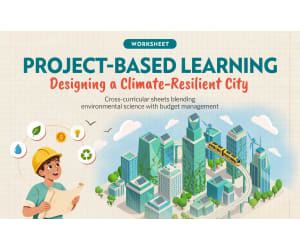
Project-Based Learning Designing a Climate-Resilient City
Science, Earth and Environmental Sciences, Life Sciences, Earth Sciences, Environmental Science, Geology, Space, Nature & Plants, STEM, Special Resources, Grade 6, 7, 8, 9, 10, 11, 12, Teacher Tools, Lesson Plans, Quizzes and Tests, Quizzes, Tests, Worksheets & Printables, Workbooks, Worksheets, Word Searches, Assessments
Transform your classroom into a hub of real-world problem-solving with this comprehensive Project-Based Learning (PBL) module: Designing a Climate-Resilient City! Are you looking for a rigorous, engaging, and cross-curricular project that prepares students for the challenges of the 21st century? This turnkey resource is the perfect solution. It masterfully blends Environmental Science, Earth Science, Mathematics, Economics, and Civics into one high-impact simulation. Students step into the dual role of a city's Chief Sustainability Officer and Chief Financial Officer. Tasked with a $500,000,000 budget , they must make critical decisions to protect their fictional municipality, "Nova Civitas," from the escalating impacts of climate change. From urban heat islands and flood defense to renewable energy transitions and waste management, every choice has both ecological and financial consequences. This isn't just a worksheet packet; it's a complete, three-phase educational experience: Phase 1: Core Content & Theory (Student Field Manual): A detailed guide that teaches the foundational scientific and economic principles, including concepts like CapEx vs. OpEx, Return on Investment (ROI), green vs. grey infrastructure, and the circular economy. Phase 2: The Student Workbook: Ten detailed, scaffolded worksheets guide students through the entire city-planning process. They will perform calculations, analyze data, and justify their budgetary decisions, tackling everything from energy grids and public transit to disaster insurance and sustainable housing. Phase 3: Visuals & Teacher Resources: This package is ready to go with printable/projectable visual aids (flowcharts, graphs, mind maps) and a comprehensive, step-by-step answer key with exemplar responses and crucial teacher notes. Perfect for in-class, hybrid, or homeschool environments, this project fosters critical thinking, financial literacy, data analysis, and collaborative problem-solving. Empower your students to grapple with relevant, real-world issues and discover that the most sustainable solutions are often the most economically sound. Download today and empower your students to build a better, more resilient future! Keywords: Project-Based Learning (PBL), STEM, STEAM, Climate Change, Environmental Science, AP Environmental Science (APES), Earth Science, Economics, Civics, Sustainability, Urban Planning, City Design, Budgeting, Financial Literacy, Math, Critical Thinking, Real-World Application, Cross-Curricular, Middle School, High School, Digital Resource, Printable Worksheets. Why Parents/Schools Love It: Teaches Real-World Skills: This project moves beyond theory. It teaches critical 21st-century skills like financial literacy, data-driven decision-making, and long-term strategic planning that students will use their entire lives. Deeply Engaging & Relevant: The role-playing simulation is highly engaging. Students are not just learning about climate change; they are actively working to solve its challenges, making the topic personal and urgent. Truly Cross-Curricular: In an era of siloed subjects, this resource beautifully demonstrates how science, math, and social studies are interconnected in the real world, promoting holistic understanding. Complete Turnkey Solution: It is a massive time-saver for educators. The package includes all student-facing materials, teacher visuals, and a comprehensive answer key with detailed calculations, saving hours of prep work. Target Audience: Student Classes : Based on the complexity of the concepts (e.g., municipal finance, payback periods, ROI) and the level of mathematics, target the following: High School (Grades 9-12): This is the primary target. It is perfect for: Environmental Science / AP Environmental Science (APES): This is a perfect fit, covering numerous topics from the APES curriculum. Earth Science: Excellent for units on human impact and climate systems. Economics / Government / Civics: Provides a practical, tangible application of public finance, policy-making, and resource allocation. General Math / Financial Algebra: A fantastic real-world application for math concepts. STEM or PBL Elective Courses: An ideal capstone or unit-long project. Advanced Middle School (Grades 7-8): This resource would be highly effective for gifted and talented programs, advanced science or math classes, or a school with a strong PBL focus. The concepts are challenging but achievable with the right guidance. Copyright/Terms of Use: This Book was copyrighted by Syed Hammad Rizvi. This resource is for personal and single classroom use only. You may not alter, redistribute, or sell any part of this resource. In other words, you may not put it on the Internet where it could be publicly found and downloaded. If you want to share this resource with colleagues, please purchase additional licenses from Teachsimple. Thank you for respecting these terms of use. This product is happily brought to you by Syed Hammad Rizvi
Author Creative Book Store
Rating
Tags EnvironmentalScience, EarthScience, STEM, STEAM, Economics, ClimateChange, Sustainability, Civics, UrbanPlanning, Ecology
I WONDER - Are There Any Mammals That Lay Eggs | Animated Video Lesson
STEM, Animals, Life Sciences, Science, Biology, Grade 1, 2, 3, 4, 5, 6, 7, 8, Lesson Plans, Teacher Tools
Video Introduction Animal kingdoms are full of fascinating wonders to learn. This video is designed for the students to learn more about animals in different countries. I WONDER - Are There Any Mammals That Lay Eggs | Animated Video Lesson Do you like animals? what is your favorite one? Do you own a pet? If yes, tell us more about it, like what its name? And what do you like most about it? What are the animal kingdoms? Can you write down the characteristics of each animal class like mammals, birds, reptiles, amphibian, fish and mollusks. Do you know that some animals can sing, can you name any of them? What is the largest and the smallest mammal in the world? What is the largest and the smallest bird in the world? What is the largest and the smallest fish in the world? I WONDER - Are There Any Mammals That Lay Eggs | Animated Video Lesson The video is perfect for encouraging the researching skills for the students, while learning more about these fantastic animals. I WONDER - Are There Any Mammals That Lay Eggs | Animated Video Lesson This friendly designed video is suitable for students at school, homeschooling, and as a group activity. Format Available in MP4 format.
Author Educational Voice
Tags Are There Any Mammals That Lay Eggs, Are There Any Mammals That Lay Eggs Video, Mammals That Lay Eggs, Mammals That Lay Eggs Facts, Mammals That Lay Eggs Facts For Kids, Mammals That Lay Eggs Video

Conservation: Ocean Water Resources: How the Purity of Salt Water Could Change Gr. 5-8
Science, Earth and Environmental Sciences, Environmental Science, Grade 5, 6, 7, 8, Teacher Tools, Lesson Plans
Conservation: Ocean Water Resources: How the Purity of Salt Water Could Change Gr. 5-8 An engaging and informative teaching tool designed to provide educational insight into the importance of preserving our oceans. This resource focuses on a critical aspect - how fluctuations in saltwater purity may bring about changes that directly affect earth's climate, farming and fishing industries, human population growth and more. Targeted Grade Levels This resource is designed for Grade levels 5 through 8, weaving factual content related to Environmental Science studies. It aligns perfectly with Bloom's Taxonomy methodologies and STEAM initiatives, fostering in-depth understanding while kindling creativity. Versatility Across Educational Roles The highlight of this instructional aid is its adaptability across various learning roles – it is suitable for whole group classroom discussions as well as small learning groups. Even homeschoolers pursuing self-paced learning will find its structured format extremely beneficial. What Does The Resource Include? A comprehensive range of activities that help learners delve deeper into the topic. Innovative exercises like creating their own board game illustrating climate change impacts on Earth's oceans. Inclusion of graphic organizers to enhance data graspability along with fun yet challenging word searches and crosswords for recreational learning. Group Activities For Hands-on Learning: Learners are motivated through hands-on Group activities like recreating saltwater conditions or conducting detailed case studies depicting real-life events. All these further cement their understanding on the pivotal environmental influence impacting our oceans' waters today. Tangible Insights: Besides academic exposure, students are also provided insights on what they can do to contribute towards ocean water protection, which not only makes them scientifically aware but consciously responsible too. Comprehension Quiz: An integrated comprehension quiz underlines this educational resource. The provision of neatly compiled answer keys allows both learners and educators to effectively track progress. In Summary: Conservation: Ocean Water Resources The teaching tool presents an intelligently balanced fusion of deeply explorative content, creative activities, and environmental stewardship nurturing in younger learners - while making the teaching process easy, fun, engaging and most importantly – impactful.
Author Classroom Complete Press
Tags Science Activity, Pre-assessment, Comprehension Questions, Environmental Science, Reading Passage

I WONDER - Are Fingerprints Unique | Animated Video Lesson
STEM, Human Body, Life Sciences, Science, Biology, Grade 1, 2, 3, 4, 5, 6, 7, 8, Lesson Plans, Teacher Tools
Video Overview The human body is full of fascinating wonders to learn. This video is created to help the students recognize the anatomy and the job of the human body. I WONDER - Are Fingerprints Unique | Animated Video Lesson Every part and organ in our human body is vital so let's see how important they are. Have you ever imagined how we look like if we didn't have a skeleton? Did you know that because we have our amazing muscles we can stand! Do you know how many teeth do we have? Have you ever wondered about the food journey inside our body? Can you name all the glands in our body? Why do we have skin? Our nervous system is really good at sending signals. Can you tell us more about it? Are you really good at Mathematics, painting, or any other thing? You should really thank your brain about it! The famous five senses are really doing a great work? Can you explain how every sense works? I WONDER - Are Fingerprints Unique | Animated Video Lesson The video is perfect for encouraging the researching skills for the students, while learning more about our fantastic human body. I WONDER - Are Fingerprints Unique | Animated Video Lesson This friendly designed video is suitable for students at school, homeschooling, and as a group activity. Format Available in MP4 format.
Author Educational Voice
Tags Are Fingerprints Unique, Are Fingerprints Unique Video, Fingerprints, Fingerprint, Fingerprints Facts, Fingerprints Facts For Kids, Fingerprints Video, Fingerprints Video For Kids, Finger

I WONDER - What Would Earth Be Like Without The Ozone Layer
Environmental Science, Earth and Environmental Sciences, Science, Earth Sciences, Grade 4, 5, 6, 7, 8, 9, 10, Lesson Plans, Teacher Tools
Video Introduction An amazing video designed for the students to learn more about STEM. I WONDER - What Would Earth Be Like Without The Ozone Layer | Animated Video Lesson Do you like STEM subjects? what is your favorite one? Have you ever tried to plant a seed? If yes, tell us more about it. Or have you ever tried to invent something? If yes, tell us more about it. And how do you think it will help us? Have you ever seen a microorganism under a microscope? What was it? And how it looked like? Mathematics is a marvelous subject. Let' sharpen our brains and solve some equations. Do you like timetable tricks? What is your favorite one? Do you know how to code? Have you ever created an app or a game before? If yes, how was it like? I WONDER - What Would Earth Be Like Without The Ozone Layer | Animated Video Lesson The video is perfect for encouraging the researching skills for the students, while learning more about this fantastic topic. I WONDER - What Would Earth Be Like Without The Ozone Layer | Animated Video Lesson This friendly designed video is suitable for students at school, homeschooling, and as a group activity. Format Available in MP4 format.
Author Educational Voice
Tags What Would Earth Be Like Without The Ozone Layer, What Would Earth Be Like Without The Ozone Layer Video, The Ozone Layer, The Ozone Layer Facts, The Ozone Layer Facts For Kids, The Ozone Layer Video

I WONDER - How Do Giraffes Drink | Animated Video Lesson
Animals, Life Sciences, Science, Biology, STEM, Grade 1, 2, 3, 4, 5, 6, 7, 8, Lesson Plans, Teacher Tools
Video Introduction Animal kingdoms are full of fascinating wonders to learn. This video is designed for the students to learn more about animals in different countries. I WONDER - How Do Giraffes Drink | Animated Video Lesson Do you like animals? what is your favorite one? Do you own a pet? If yes, tell us more about it, like what its name? And what do you like most about it? What are the animal kingdoms? Can you write down the characteristics of each animal class like mammals, birds, reptiles, amphibian, fish and mollusks. Do you know that some animals can sing, can you name any of them? What is the largest and the smallest mammal in the world? What is the largest and the smallest bird in the world? What is the largest and the smallest fish in the world? I WONDER - How Do Giraffes Drink | Animated Video Lesson The video is perfect for encouraging the researching skills for the students, while learning more about these fantastic animals. I WONDER - How Do Giraffes Drink | Animated Video Lesson This friendly designed video is suitable for students at school, homeschooling, and as a group activity. Format Available in MP4 format.
Author Educational Voice
Tags How Do Giraffes Drink, How Do Giraffes Drink Video, Giraffes, Giraffe, Giraffes Facts, Giraffes Facts For Kids, Giraffes Video, Giraffes Video For Kids, Animal, Animals
I WONDER - What Made Omnivores Different To Other Dinosaurs
Animals, Life Sciences, Science, History, Social Studies, History: Ancient, History: World, Grade 3, 4, 5, 6, 7, 8, 9, Lesson Plans, Teacher Tools
Video Introduction An amazing video designed for the students to learn more about dinosaurs in different countries. I WONDER - What Made Omnivores Different To Other Dinosaurs | Animated Video Lesson Do you like dinosaurs? what is your favorite one? Do you own a pet? If yes, tell us more about it, like what its name? And what do you like most about it? Do you think that your pet has been evolved from a dinosaur? Can you write down the characteristics of your favourite dinosaur like it's shape, their rivals, where did it use to live and what was their favourite food? What is the largest and the smallest dinosaur that ever found? Why is the T-rex is so famous? Have you ever read any interesting facts about it? Can you name any of the carnivores or herbivores dinosaurs? I WONDER - What Made Omnivores Different To Other Dinosaurs | Animated Video Lesson The video is perfect for encouraging the researching skills for the students, while learning more about dinosaurs. I WONDER - What Made Omnivores Different To Other Dinosaurs | Animated Video Lesson This friendly designed video is suitable for students at school, homeschooling, and as a group activity. Format Available in MP4 format.
Author Educational Voice
Rating
Tags What Made Omnivores Different To Other Dinosaurs, What Made Omnivores Different To Other Dinosaurs Video, Omnivores, Omnivores Facts, Omnivores Video, Omnivores Facts For Kids, Omnivores Video For Kids
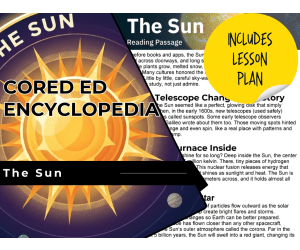
The Sun Reading Comprehension Passage - Cored Ed Encyclopedia
ELA, Language Development, Reading Comprehension, Reading, Pre-Reading, Writing, Science, Earth Sciences, Earth and Environmental Sciences, Space, Grade 2, 3, 4, 5, Worksheets & Printables, Worksheets, Teacher Tools, Centers, Activities, Writing Prompts, Assessments, Quizzes and Tests, Quizzes, Lesson Plans
This Sun reading comprehension includes: Visualization (on the front cover) Start your lesson by taking a minute to think and share something about the topic. Read the script aloud (slowly), perhaps prepare some music or sound effects. Student close their eyes and let their imaginations wander. Students open their eyes, read the question aloud and give them a few minutes to complete. Ask a few students to share or keep answers until the end to compare with what they learn in the passage. Quick pause—thousands of Cored Education products are included with your TeachSimple membership. Download links and encyclopedia index available here. Pre-Reading Trivia Students will write down one thing they already know about the subject and then read five more facts and discuss. These facts are fun, and the students will enjoy learning about the subject before reading more. Give 1 minute for students to write what they already know (no pressure—best guess is fine). Read the five facts together. After each fact, do ask a student for their opinion, was it surprising? Set a purpose by asking students to highlight/underline one fact they want to learn more about during the reading. Reading Passage The text is a high-interest reading passage with set paragraphs, roughly three to four paragraphs long. It contains a variety of themes about the topic, anywhere from history to technology. The passage is between 250 and 350 words in length. First, ask students to look at the headings and see what they’ll learn about today. What do they know about the topic/heading? First read options: Teacher read-aloud (best for support). Partner reading (paragraph by paragraph). While reading, students underline important details, and vocabulary words they think may come up in the questions section. Mixed Questions The first question page contains four multiple-choice questions, each with a choice of four answers, and three written response questions that require a sentence or two from the student. Students complete the mcqs first independently, then review quickly as a class. For the 3 written responses, try to get students giving the answer with some form of evidence: “I think ___ because the text says ___.” If students get stuck, send them back to check the passage. Vocabulary Questions Practice seven key words from the text in this section across two activities. First section is scrambled words where students will unscramble three words given a clue for each. The second section is a word to meaning matching activity. Before starting, have some students read out words they underlined in the passage. Ask students to say the word and read aloud the sentence(s) around each word. Ask students to do scrambled words and the matching exercise in pairs then go through answers as a class. For the scrambled spelling task, get four pairs to come up to the board and write the words for extra practice with the other student reading out the clue. For the matching task, prompt students to give full sentences: “I matched ___ with ___ because ___.” Creative Writing In this question, the student will be required to write a five to eight sentence paragraph on a question related to the topic. Before starting, ask students write down 3 key ideas they are going to include in their piece. Ask students for ideas to share around the class to help those struggling. Pro writing expectations: 5–8 sentences At least 2 facts or details from the passage At least 2 vocabulary words from the previous page Students read their paragraphs while classmates listen for facts and vocabulary words. Extension Activities This page is optional for fast finishers or to take home. There are several activities, each one requiring a different skill. Do some, do none, do all, completely optional - but you will feel reassured knowing every possibility is planned for. Includes summary writting question. Answer Key There are answers for the multiple-choice questions, written response questions have sample answers, vocabulary answers and if there is a summary question then a sample summary will be provided as well. Lesson Plan Included Customized lesson plan for this lesson is included. Lesson Snapshot Title: The Sun Genre: Nonfiction (informational text with support pages) Subject: Science (Space Science) Primary Topic: How the Sun affects Earth and works Estimated Guided Reading Level (A–Z): S What This Lesson Teaches Best How people used the Sun and changing shadows to notice time long before clocks, phones, and apps. How telescopes in the early 1600s revealed sunspots and helped people realize the Sun can change and even spin. How the Sun shines for so long because nuclear fusion joins hydrogen to make helium and releases energy as sunlight and heat. Key facts about the Sun’s size and importance in the solar system (about 1.39 million kilometres across; holds almost all the mass in the solar system). How the Sun can be active (solar wind, flares, storms) and how spacecraft like NASA’s Parker Solar Probe study the Sun’s outer atmosphere, the corona . Learning Goals Describe how changing shadows helped people notice time long ago. Explain what sunspots are and what they helped early observers realize about the Sun. Explain, using details from the text, how nuclear fusion makes energy inside the Sun. Identify what the corona is and why the Parker Solar Probe flew close to the Sun. Describe two ways the Sun is “not always calm,” based on the passage. Key Vocabulary From the Text telescopes — tools used to see faraway objects in the sky. sunspots — dark freckles seen on the Sun. hydrogen — a gas that joins together deep inside the Sun. helium — what hydrogen becomes when it joins together. corona — the Sun’s outer atmosphere. FULL CATALOG OF DOWNLOAD LINKS AND ENCYCLOPEDIA INDEX HERE
Author Cored Education
Rating
Tags Vocabulary, Reading Comprehension, Reading Passages, Lesson Plans, Ela Lesson Plans, Reading Comprehension Lesson Plans, Reading, Pre-reading, The Sun, Earth Science

I WONDER - What Can We Learn From Sedimentary Rocks | Animated Video
Geography, Social Studies, Earth Sciences, Earth and Environmental Sciences, Science, Grade 4, 5, 6, 7, 8, 9, 10, Lesson Plans, Teacher Tools
Video Introduction An amazing video designed for the students to learn more about famous places in different countries. I WONDER - What Can We Learn From Sedimentary Rocks | Animated Video Lesson What do you know about this place? Do you know in which part of the world it is? Have you ever visited this place? If yes, can you tell us more about your adventure, and what do you like the most about this place? Do you like reading about Geography? What is your favorite country in the whole world? If you are going on a trip where it will be? Which country? What you are going to see there? Does this country has a famous place to visit? I WONDER - What Can We Learn From Sedimentary Rocks | Animated Video Lesson The activity is perfect for encouraging the researching skills for the students, while learning more about this fantastic place. I WONDER - What Can We Learn From Sedimentary Rocks | Animated Video Lesson This friendly designed video is suitable for students at school, homeschooling, and as a group activity. Format Available in MP4 format.
Author Educational Voice
Tags What Can We Learn From Sedimentary Rocks, What Can We Learn From Sedimentary Rocks Video, Sedimentary Rocks, Sedimentary Rock, Sedimentary Rocks Facts, Sedimentary Rocks Facts For Kids, Sedimentary Rocks Video

I WONDER - How Do Horses Communicate | Animated Video Lesson
STEM, Biology, Life Sciences, Science, Animals, Grade 1, 2, 3, 4, 5, 6, 7, 8, Lesson Plans, Teacher Tools
Video Introduction Animal kingdoms are full of fascinating wonders to learn. This video is designed for the students to learn more about animals in different countries. I WONDER - How Do Horses Communicate | Animated Video Lesson Do you like animals? what is your favorite one? Do you own a pet? If yes, tell us more about it, like what its name? And what do you like most about it? What are the animal kingdoms? Can you write down the characteristics of each animal class like mammals, birds, reptiles, amphibian, fish and mollusks. Do you know that some animals can sing, can you name any of them? What is the largest and the smallest mammal in the world? What is the largest and the smallest bird in the world? What is the largest and the smallest fish in the world? I WONDER - How Do Horses Communicate | Animated Video Lesson The video is perfect for encouraging the researching skills for the students, while learning more about these fantastic animals. I WONDER - How Do Horses Communicate | Animated Video Lesson This friendly designed video is suitable for students at school, homeschooling, and as a group activity. Format Available in MP4 format.
Author Educational Voice
Tags How Do Horses Communicate, How Do Horses Communicate Video, Horses, Horse, Horses Facts, Horses Facts For Kids, Horses Video, Horses Video For Kids, Horse Facts, Horse Video

Electricity Unit: Surviving Chernobyl
Science, Technology, Engineering, Grade 8, 9, 10, 11, Lesson Plans, Teacher Tools
With this resource, your students will engage in an inquiry-based project to learn about the concepts involved in electricity as a new engineer at the nuclear power plant known as Chernobyl, in Pripyat Russia. This resource includes: - Detailed information about Pripyat, Russia - Information about electrical power and how it is used - Understanding how generators work - Understanding how nuclear power plants work - Understanding how electricity works - Understanding how to measure the flow of electrons in a circuit - Follow up activities
Author Mitchell Zuvela
Tags Energy, Electricity, Chernobyl, Inquiry-based Activity

Chemical Reactions and Balancing - Senior Chemistry Lesson
Science, Chemistry, Grade 10, 11, 12, Teacher Tools, Lesson Plans
Chemical Reactions and Balancing - Senior Chemistry Lesson Your lesson covers chemical reactions and balancing. In order, the lesson teaches about; Chemical Reactions, Energy in Reactions, Chemical Change Clues, Writing Chemical Formulas, the Law of Conservation of Mass, and Balancing Chemical Reactions. Your lesson includes the teacher and student version of the presentation, TWO worksheets, an auto-graded exit ticket, and a student lesson handout so the students can record the notes on a more condensed medium. This lesson is designed to be your go-to resource, whether you're in a traditional classroom or a virtual one. With both a teacher version and a student version, it seamlessly fits into your lesson plans, making learning engaging and adaptable. Assessment made easy We've included an auto-graded Exit Ticket and a quiz with an answer key because I know you don't have an excess of time. I know you don't, because I don't and I know I'll do whatever I can to reduce my grading time. Whether you use PowerPoint or Google Slides, prefer Word or Google Docs, this lesson has you covered. This lesson comes in both Office and Google formats for your convenience. The student version of the presentation has strategically placed blanks for them to fill in as you're teaching. It keeps them active and engaged, encourages discussion, and leaves more time for those "aha" moments.
Author Teach With Fergy
Tags Chemistry Lesson, Writing Reactions, Synthesis Reactions, Combustion Reactions

More Young Americans Farming | Interactive Science Lesson | Micro-Learning Deck
Science, Earth and Environmental Sciences, Life Sciences, Nature & Plants, Grade 6, 7, 8, 9, Teacher Tools, Lesson Plans
This micro-learning deck is the perfect accessory to your Science instruction! This digital slideshow presents More Young Americans Plant Themselves in Farming. Within this slideshow, you will receive: -Video Lesson -Reading Passage w/ Audio -Close Reading -Quick Write The informational texts included in this resource alongside the informal assessments will keep your students engaged from beginning to end.
Author Teach Me This
Tags Farming, Agriculture, Young Americans, Science Lesson, Interactive

I WONDER - Is Rewilding Good For Humans | Animated Video Lesson
Environmental Science, Earth and Environmental Sciences, Science, Earth Sciences, Nature & Plants, Life Sciences, Human Body, Biology, Animals, Insects, Grade 6, 7, 8, 9, 10, 11, 12, Lesson Plans, Teacher Tools
Video Introduction An amazing video designed for the students to learn more about STEM. I WONDER - Is Rewilding Good For Humans | Animated Video Lesson Do you like STEM subjects? what is your favorite one? Have you ever tried to plant a seed? If yes, tell us more about it. Or have you ever tried to invent something? If yes, tell us more about it. And how do you think it will help us? Have you ever seen a microorganism under a microscope? What was it? And how it looked like? Mathematics is a marvelous subject. Let' sharpen our brains and solve some equations. Do you like timetable tricks? What is your favorite one? Do you know how to code? Have you ever created an app or a game before? If yes, how was it like? I WONDER - Is Rewilding Good For Humans | Animated Video Lesson The video is perfect for encouraging the researching skills for the students, while learning more about this fantastic topic. I WONDER - Is Rewilding Good For Humans | Animated Video Lesson This friendly designed video is suitable for students at school, homeschooling, and as a group activity. Format Available in MP4 format.
Author Educational Voice
Tags Is Rewilding Good For Humans, Is Rewilding Good For Humans Video, Rewilding, Rewilding Facts, Rewilding Facts For Kids, Rewilding Video, Rewilding Video For Kids, Rewilding Tips, Rewilding Tips For Kids