



3,923 products added recently
Page 93 - Science Lesson Plan Template
Enhance your science instruction with a flexible lesson plan template designed for educators. This tool helps you structure objectives, materials, procedures, and assessments efficiently. Use it to create organized and impactful science lessons that cater to your students' needs.

 Show filters

I WONDER - What Do Scientists Think Is On Uranus | Animated Video
Space, Earth and Environmental Sciences, Science, Grade 3, 4, 5, 6, 7, 8, 9, Lesson Plans, Teacher Tools
Video Introduction An amazing video designed for the students to learn more about space facts. I WONDER - What Do Scientists Think Is On Uranus | Animated Video Lesson Have you ever thought about travelling to space?! Join us with this amazing video about The Moon Ganymede. Can you name any three facts about The Moon Ganymede? How amazing is space! Let's discover some amazing facts about planets and moons! Do you know that we have two kinds of planets in our solar system? Can you name the planets based upon their core type? I WONDER - What Do Scientists Think Is On Uranus | Animated Video Lesson The video is perfect for encouraging the researching skills for the students, while learning more about the fantastic space. I WONDER - What Do Scientists Think Is On Uranus | Animated Video Lesson This friendly designed video is suitable for students at school, homeschooling, and as a group activity. Format Available in MP4 format.
Author Educational Voice
Rating
Tags What Do Scientists Think Is On Uranus, Uranus, Uranus Facts, Uranus Video, Uranus Facts For Kids, Uranus Video For Kids, Planet, Planets, Solar System, Solar System Facts

I WONDER - Do Animals See Differently From Humans | Animated Video
STEM, Animals, Life Sciences, Science, Biology, Human Body, Grade 1, 2, 3, 4, 5, 6, 7, 8, Lesson Plans, Teacher Tools
Video Introduction Animal kingdoms are full of fascinating wonders to learn. This video is designed for the students to learn more about animals in different countries. I WONDER - Do Animals See Differently From Humans | Animated Video Lesson Do you like animals? what is your favorite one? Do you own a pet? If yes, tell us more about it, like what its name? And what do you like most about it? What are the animal kingdoms? Can you write down the characteristics of each animal class like mammals, birds, reptiles, amphibian, fish and mollusks. Do you know that some animals can sing, can you name any of them? What is the largest and the smallest mammal in the world? What is the largest and the smallest bird in the world? What is the largest and the smallest fish in the world? I WONDER - Do Animals See Differently From Humans | Animated Video Lesson The video is perfect for encouraging the researching skills for the students, while learning more about these fantastic animals. I WONDER - Do Animals See Differently From Humans | Animated Video Lesson This friendly designed video is suitable for students at school, homeschooling, and as a group activity. Format Available in MP4 format.
Author Educational Voice
Tags Do Animals See Differently From Humans, Do Animals See Differently From Humans Video, Animals, Animal, Animals Facts, Animals Facts For Kids, Animals Video, Animals Video For Kids

Turkey life cycle diagram fall thanksgiving bird science unit study
Life Sciences, Science, Biology, Nature & Plants, Kindergarten, Preschool, Grade 1, 2, 3, Coloring Pages, Worksheets, Worksheets & Printables, Parts of and Anatomy of, Flashcards, Diagrams, Teacher Tools, Lesson Plans
Make learning about the turkey life cycle fun and engaging with this printable bird science activity! Students will explore how turkeys grow from eggs into adult birds while learning about the major stages of development, turkey anatomy, habitat, behavior, and interesting facts. I like using this resource during fall science units, Thanksgiving activities, bird studies, animal life cycle lessons, classroom centers, and homeschool learning. It's a low-prep activity that combines animal science with a popular seasonal theme. What You Will Get This printable Turkey Life Cycle resource helps students identify and sequence the major stages of a turkey's growth while building animal science vocabulary and learning fascinating turkey facts. What's Included in this Resource? • Turkey life cycle diagram • Life cycle sequencing activity • Egg, embryo, poult, juvenile, and adult turkey stages • Bird science vocabulary • Turkey habitat and behavior facts • Fun facts about turkeys • Student-friendly printable science activities This resource is perfect for: • Fall science lessons • Thanksgiving classroom activities • Bird life cycle studies • Animal science units • Turkey-themed learning • Science centers • Homeschool learning • Early finisher activities Why you will love this? • Easy to print and use • Connects animal science with a seasonal fall theme • Reinforces life cycle sequencing skills • Builds bird and animal vocabulary • Encourages observation and scientific thinking • Great for Thanksgiving and fall science centers This Turkey Life Cycle activity is a fun way for students to discover how turkeys develop from eggs into adult birds while exploring animal growth, bird science, and fascinating facts about this iconic North American bird.
Author Perfect_Printables
Rating
Tags Life Cycle, Fall Activities, Fall Science, Fall Science Worksheet, Turkey, Turkey Life Cycle, Thanksgiving Activities , Bird Life Cycle, Birds Activities, Bird Body Parts
I WONDER - What Is Plasma | Animated Video Lesson
Science, STEM, Grade 6, 7, 8, 9, 10, 11, 12, Lesson Plans, Teacher Tools
Video Introduction An amazing video designed for the students to learn more about STEM. I WONDER - What Is Plasma | Animated Video Lesson Do you like STEM subjects? what is your favorite one? Have you ever tried to plant a seed? If yes, tell us more about it. Or have you ever tried to invent something? If yes, tell us more about it. And how do you think it will help us? Have you ever seen a microorganism under a microscope? What was it? And how it looked like? Mathematics is a marvelous subject. Let' sharpen our brains and solve some equations. Do you like timetable tricks? What is your favorite one? Do you know how to code? Have you ever created an app or a game before? If yes, how was it like? I WONDER - What Is Plasma | Animated Video Lesson The video is perfect for encouraging the researching skills for the students, while learning more about this fantastic topic. I WONDER - What Is Plasma | Animated Video Lesson This friendly designed video is suitable for students at school, homeschooling, and as a group activity. Format Available in MP4 format.
Author Educational Voice
Tags What Is Plasma, What Is Plasma Video, Plasma, Plasma Facts, Plasma Facts For Kids, Plasma Facts Video, Plasma Video, Plasma Video For Kids, Science, Science Video
I WONDER - How Does Gravity Work | Animated Video Lesson
Physics, Science, Grade 6, 7, 8, 9, 10, 11, 12, Lesson Plans, Teacher Tools
Video Introduction An amazing video designed for the students to learn more about STEM. I WONDER - How Does Gravity Work | Animated Video Lesson Do you like STEM subjects? what is your favorite one? Have you ever tried to plant a seed? If yes, tell us more about it. Or have you ever tried to invent something? If yes, tell us more about it. And how do you think it will help us? Have you ever seen a microorganism under a microscope? What was it? And how it looked like? Mathematics is a marvelous subject. Let' sharpen our brains and solve some equations. Do you like timetable tricks? What is your favorite one? Do you know how to code? Have you ever created an app or a game before? If yes, how was it like? I WONDER - How Does Gravity Work | Animated Video Lesson The video is perfect for encouraging the researching skills for the students, while learning more about this fantastic topic. I WONDER - How Does Gravity Work | Animated Video Lesson This friendly designed video is suitable for students at school, homeschooling, and as a group activity. Format Available in MP4 format.
Author Educational Voice
Tags How Does Gravity Work, How Does Gravity Work Video, Gravity, Gravity Facts, Gravity Facts For Kids, Gravity Video, Gravity Video For Kids, Science, Stem, Science Video
I WONDER - Why Do Birds Flock Together | Animated Video Lesson
STEM, Biology, Life Sciences, Science, Animals, Grade 1, 2, 3, 4, 5, 6, 7, 8, Lesson Plans, Teacher Tools
Video Introduction Animal kingdoms are full of fascinating wonders to learn. This video is designed for the students to learn more about animals in different countries. I WONDER - Why Do Birds Flock Together | Animated Video Lesson Do you like animals? what is your favorite one? Do you own a pet? If yes, tell us more about it, like what its name? And what do you like most about it? What are the animal kingdoms? Can you write down the characteristics of each animal class like mammals, birds, reptiles, amphibian, fish and mollusks. Do you know that some animals can sing, can you name any of them? What is the largest and the smallest mammal in the world? What is the largest and the smallest bird in the world? What is the largest and the smallest fish in the world? I WONDER - Why Do Birds Flock Together | Animated Video Lesson The video is perfect for encouraging the researching skills for the students, while learning more about these fantastic animals. I WONDER - Why Do Birds Flock Together | Animated Video Lesson This friendly designed video is suitable for students at school, homeschooling, and as a group activity. Format Available in MP4 format.
Author Educational Voice
Tags Why Do Birds Flock Together, Why Do Birds Flock Together Video, Birds, Bird, Birds Facts, Birds Facts For Kids, Birds Video, Birds Video For Kids, Birds Flock Together Facts, Birds Flock Together Facts For Kids

All About Oceanography | Earth Science Unit
Science, Earth and Environmental Sciences, Earth Sciences, Grade 1, 2, 3, 4, Lesson Plans, Teacher Tools
Dive into the mysteries of Earth's watery realms with this expansive oceanography teaching toolkit. Through vivid visuals, interactive worksheets and hands-on projects, core science concepts are broken down on topics like marine biology, seafloor topology and the physics of waves. Begin by charting the contours of tide pools, trenches and basins on illustrated ocean zone posters. Then trace the flow of energy up food chains while coloring mesmerizing sea creatures. Craft 3D models of whales navigating vertical layers harboring everything from tiny plankton to luminous deep-sea jellyfish. Discover how currents circulate heat and nutrients by analyzing articles written at two reading levels. Assess knowledge on branches of oceanography, tides and more using assembling activities, diagramming tasks and competitive memory games. Writing templates allow students to reflect on learnings through imaginative stories and expository passages on topics like tsunamis, pollution and conservation. This resource contains suggested teacher pacing, plus differentiation ideas for learners of all abilities. Easily incorporate modules into existing earth science, biology and physics units or facilitate an entire stand-alone oceanography study. Through activities tapping interdisciplinary skills, unlock the code to reading the blue planet! I hope you love how well-rounded and fun this unit is! Dive in and enjoy!
Author Simply Schoolgirl
Tags Earth Science Lesson, Marine Life, Oceanography Unit, Ocean, Oceans, Sea, Marine, Tides, Waves, Currents, Oceanography Earth Science

Motion: Vibrating Motion - FLASH-PC
Science, Physics, Common Core, Grade 5, 6, 7, 8, Teacher Tools, Lesson Plans
Motion: Vibrating Motion - FLASH-PC An enlightening, curriculum-based teaching resource, designed to elucidate the principles behind vibrating motion. This tool is paramount in the field of Physics for Grade 5 to Grade 8. This comprehensive software delivers engaging content right at your fingertips, starting off with enlightening reading passages that inform learners about the core concepts entailing vibrating motion. It encourages critical thinking by offering interactive questions both before and after each reading section. Different Learning Styles Catered Understanding Physics goes beyond text-based materials. With Motion: Vibrating Motion - FLASH-PC, students can leverage captivating audio and video resources for an immersive learning experience*. Activities: Engaging physical activities that make learning fun and stimulating. Vocabulary Flashcards: Reinforce key terminologies with easy-to-understand definitions for future application or assessments . Printables: Assists teachers as they facilitate instruction, almost like having an additional professional in class! Fulfilling Common Core State Standards Pedagogy And Bloom’s Taxonomy Framework The contents of this product are on pace with Common Core State Standards ensuring credibility. Attention is also given to nurture higher-order thinking skills via Bloom’s Taxonomy lens from introduction till mastery stages. An interactive teaching resource – it's applicable during "whole group lessons", "small group instructions" , or as homework assignments! Unlock a more nuanced understanding of Vibrating Motion for your learners today!
Author Classroom Complete Press
Tags Software (PC)

Galaxies & The Universe: Measuring Distance in the Universe Gr. 5-8
Science, Earth and Environmental Sciences, Space, Grade 5, 6, 7, 8, Teacher Tools, Lesson Plans
Galaxies & The Universe: Measuring Distance in the Universe Gr. 5-8 A teaching resource designed to ignite the curiosity of elementary and middle school students about the expanse of our universe. This comprehensive guide explores fascinating subjects such as: Galaxies Black holes The concept of gravity Nebulae and light sources along with their speed, Quasars; currently, the most distant objects in space known to us. This resourceful material includes reading passages composed using language suitable for grade 5-8 learners. Bloom’s Taxonomy policies and STEM initiatives fuel our lesson plans making it relevant to your State Standards. Diverse Student Activities Included: Incorporated into these sections, are engaging student activities that encourage both pre-reading thought process and post-reading reflection. Easily Comprendible Instructions: The learning material is complemented by hands-on tasks that promote active pupil participation. With easy-to-digest instructions, we transform theoretical concepts into palpable understanding. Versatile Teaching Resource Offering Multiple Approaches: This exceptional teaching aid can be implemented easily, whether it is whole-group classroom sessions or small group discussions or individual assignments taken home."Tailored to suit various educational settings!" An Investment Towards a Stellar Education Plan: You may include this astronomy package as part of your annual lesson cycle or utilize it strategically for test preparation techniques – offering an innovative way forward towards scientific literacy beyond mere rote learning! Inspire curiosity among future astronomers! Learn More: The package comes in a ready-to-use PDF file targeted towards Grade 5 through to Grade 8 classrooms across disciplines of Science and Astronomy. Inspire Learning with Galaxies & The Universe: Measuring Distance in the Universe Gr. 5 -8
Author Classroom Complete Press
Tags PDF

I WONDER - How Can The Rainforest Help Fight Diseases | Animated Video
Human Body, Life Sciences, Science, Nature & Plants, Biology, Geography, Social Studies, Grade 3, 4, 5, 6, 7, 8, 9, Lesson Plans, Teacher Tools
Video Introduction An amazing video designed for the students to learn more about famous places in different countries. I WONDER - How Can The Rainforest Help Fight Diseases | Animated Video Lesson Do you like geography?! Let's discover this amazing place and know more about its unique stories. Have you ever visited a unique place or a different country than yours? If yes, tell us about it! If no, tell us what kind of places you would like to visit in the future? Every country has it's own story tell us the story about your country: Where it is located? And when it has been established? I WONDER - How Can The Rainforest Help Fight Diseases | Animated Video Lesson The activity is perfect for encouraging the researching skills for the students, while learning more about this fantastic place. I WONDER - How Can The Rainforest Help Fight Diseases | Animated Video Lesson This friendly designed video is suitable for students at school, homeschooling, and as a group activity. Format Available in MP4 format.
Author Educational Voice
Rating
Tags How Can The Rainforest Help Fight Diseases, Rainforest, Rainforests, Rainforests Facts, Rainforest Video, Rainforest Video For Kids, Rainforest Facts For Kids, Fight Diseases, Fighting Diseases
Senses, Nervous & Respiratory Systems: The Nervous System - Brain Gr. 5-8
Science, Life Sciences, Human Body, Grade 5, 6, 7, 8, Teacher Tools, Lesson Plans
Senses, Nervous & Respiratory Systems: The Nervous System - Brain Gr. 5-8 A comprehensive teaching resource designed to engage learners in an exploration of the human body. It is primarily catering to educators and students from Grades 5 through 8, covering various subjects under science with a focus on the topic of the Human Body. The Nervous System - Brain This resource originates as a chapter slice from its broader lesson plan "Senses, Nervous & Respiratory Systems." Perfect for schools aiming to diversify and sophisticate their lessons on human anatomy. Main parts:The nervous system’s main parts—brain, spinal cord, nerves—are explained in simple terms. 'How long is a nerve cell?' 'How are our lungs like a train station?' Questions like these are answered in an engaging manner. In addition, it encourages investigations on the organs related to five senses and provides virtual tours around the respiratory system. Teaching Tools Included: Reading Passages: Comprehension questions interspersed among reading passages aimed at reinforcing understanding. Cognitive Activity : Hands-on activities designed for cognitive growth while keeping learning interactive and fun-filled. Colorful Mini Posters: Ideal for classroom displays or study aids enhancing visualization process. To ensure that knowledge gained remains intact among learners post lessons, an array of assessment tools like crosswords puzzles along with word search tasks promoting vocabulary enrichment aligned with scientific terminologies discussed within these lesson plans are available perfected by test preps which eventually culminate in conducting final quizzes. This resource is available through digital access and ideal for whole group discussions during class hours, small study circles maintaining social distancing protocols, or as homework assignments for independent studies. Standards Aligned: Crafted aligning with state standards, STEM initiatives while featuring a structure conforming to Bloom's Taxonomy—this material is the go-to resource for educators dedicated to delivering easy-to-understand yet curriculum-based material on the human body.
Author Classroom Complete Press
Tags PDF, Nervous System Lesson Plans Middle School
I WONDER - What Is A Digital Footprint | Animated Video Lesson
Computer Science, Technology, Science, STEM, Grade 4, 5, 6, 7, 8, 9, 10, Lesson Plans, Teacher Tools
Video Introduction An amazing video designed for the students to learn more about STEM. I WONDER - What Is A Digital Footprint | Animated Video Lesson Do you like STEM subjects? what is your favorite one? Have you ever tried to plant a seed? If yes, tell us more about it. Or have you ever tried to invent something? If yes, tell us more about it. And how do you think it will help us? Have you ever seen a microorganism under a microscope? What was it? And how it looked like? Mathematics is a marvelous subject. Let' sharpen our brains and solve some equations. Do you like timetable tricks? What is your favorite one? Do you know how to code? Have you ever created an app or a game before? If yes, how was it like? I WONDER - What Is A Digital Footprint | Animated Video Lesson The video is perfect for encouraging the researching skills for the students, while learning more about this fantastic topic. I WONDER - What Is A Digital Footprint | Animated Video Lesson This friendly designed video is suitable for students at school, homeschooling, and as a group activity. Format Available in MP4 format.
Author Educational Voice
Tags What Is A Digital Footprint, What Is A Digital Footprint Video, Digital Footprint, Digital Footprint Facts, Digital Footprint Video, Digital Footprint Facts For Kids, Digital Footprint Video For Kids

Grade 3 Science Curriculum Bundle | NGSS-Aligned Year-Long Lessons
Science, Grade 3, Lesson Plans, Teacher Tools, Worksheets & Printables
Grade 3 NGSS Science Curriculum | Year-Long Science Bundle | 36 Weeks | Print & Digital Looking for a complete Grade 3 NGSS Science curriculum that is engaging, low-prep, and truly aligned to the Next Generation Science Standards? This Grade 3 NGSS Science Curriculum provides everything you need for an entire school year with hands-on investigations, differentiated activities, editable planning tools, assessments, and interactive lessons designed around the 5E instructional model . Whether you're planning your first year teaching Grade 3 science or simply want a curriculum that saves time while keeping students engaged, this comprehensive science bundle has every lesson organized and ready to teach. ⭐ What's Included Complete 36-week Grade 3 NGSS Science Curriculum 10 standards-aligned science units Teacher Guide Year-at-a-Glance Overview Scope & Sequence Editable Pacing Guide NGSS Standards Alignment Guide Teacher Lesson Plans Student Reading Passages Guided Notes Interactive Notebook Activities Hands-on Science Labs STEM Challenges Graphic Organizers Exit Tickets Quizzes Unit Tests Performance Tasks Assessment Rubrics Vocabulary Cards Multi-Version Differentiated Worksheets Full-Color Teaching Slides for every unit Print and digital resources 🔬 How It Works in the Classroom This Grade 3 NGSS Science curriculum follows the research-based 5E instructional model : Engage with real-world science phenomena Explore through hands-on investigations Explain using reading passages and guided instruction Elaborate with STEM challenges and meaningful practice Evaluate through exit tickets, quizzes, unit assessments, and performance tasks Perfect for: Whole-group instruction Small groups Science centers Interactive notebooks Independent practice STEM blocks Substitute plans Print or digital classrooms 🌎 Standards & Learning Goals Students investigate concepts across all Grade 3 NGSS domains, including: Forces & Motion Weather & Climate Life Cycles Ecosystems Traits & Inheritance Engineering Design Earth Systems Habitats Natural Hazards Review & Capstone Projects Students develop understanding through the three dimensions of NGSS by integrating: Science & Engineering Practices Disciplinary Core Ideas Crosscutting Concepts ❤️ Why Teachers Love It ✅ Low-prep lessons ready to teach ✅ Complete year-long curriculum ✅ Fully aligned to Grade 3 NGSS ✅ Print and digital flexibility ✅ Built-in differentiation ✅ Hands-on investigations and STEM activities ✅ Consistent assessment system ✅ Interactive notebook activities included ✅ Vocabulary, labs, slides, worksheets, and assessments all in one purchase ✅ Organized pacing that makes long-term planning simple If you're looking for a Grade 3 NGSS Science Curriculum that combines rigorous standards alignment with engaging, student-centered instruction, this complete bundle is designed to make science planning easier while helping students build lasting scientific understanding.
Author Bright Classroom Ideas Marketplace
Rating
Tags Science, Back To School, Yearlong, Full Year, Curriculum, Lesson, Weekly

I WONDER - How Can We Stop Rubbish Getting Into The Ocean
Environmental Science, Earth and Environmental Sciences, Science, Grade 4, 5, 6, 7, 8, 9, 10, Lesson Plans, Teacher Tools
Video Introduction An amazing video designed for the students to learn more about STEM. I WONDER - How Can We Stop Rubbish Getting Into The Ocean | Animated Video Lesson Do you like STEM subjects? what is your favorite one? Have you ever tried to plant a seed? If yes, tell us more about it. Or have you ever tried to invent something? If yes, tell us more about it. And how do you think it will help us? Have you ever seen a microorganism under a microscope? What was it? And how it looked like? Mathematics is a marvelous subject. Let' sharpen our brains and solve some equations. Do you like timetable tricks? What is your favorite one? Do you know how to code? Have you ever created an app or a game before? If yes, how was it like? I WONDER - How Can We Stop Rubbish Getting Into The Ocean | Animated Video Lesson The video is perfect for encouraging the researching skills for the students, while learning more about this fantastic topic. I WONDER - How Can We Stop Rubbish Getting Into The Ocean | Animated Video Lesson This friendly designed video is suitable for students at school, homeschooling, and as a group activity. Format Available in MP4 format.
Author Educational Voice
Tags How Can We Stop Rubbish Getting Into The Ocean, How Can We Stop Rubbish Getting Into The Ocean Video, Ocean Pollution, Ocean Pollution Facts, Ocean Pollution Fats For Kids, Ocean Pollution Video
I WONDER - What Is Genetic Variation | Animated Video Lesson
Human Body, Life Sciences, Science, STEM, Biology, Grade 6, 7, 8, 9, 10, 11, 12, Teacher Tools, Lesson Plans
Video Overview The human body is full of fascinating wonders to learn. This video is created to help the students recognize the anatomy and the job of the human body. I WONDER - What Is Genetic Variation | Animated Video Lesson Every part and organ in our human body is vital so let's see how important they are. Have you ever imagined how we look like if we didn't have a skeleton? Did you know that because we have our amazing muscles we can stand! Do you know how many teeth do we have? Have you ever wondered about the food journey inside our body? Can you name all the glands in our body? Why do we have skin? Our nervous system is really good at sending signals. Can you tell us more about it? Are you really good at Mathematics, painting, or any other thing? You should really thank your brain about it! The famous five senses are really doing a great work? Can you explain how every sense works? I WONDER - What Is Genetic Variation | Animated Video Lesson The video is perfect for encouraging the researching skills for the students, while learning more about our fantastic human body. I WONDER - What Is Genetic Variation | Animated Video Lesson This friendly designed video is suitable for students at school, homeschooling, and as a group activity. Format Available in MP4 format.
Author Educational Voice
Tags What Is Genetic Variation, What Is Genetic Variation Video, Genetic Variation, Genetic Variation Facts, Genetic Variation Facts For Kids, Genetic Variation Video, Genetic Variation Video For Kids, DNA
I WONDER - Is A Tree A Plant | Animated Video Lesson
Environmental Science, Earth and Environmental Sciences, Science, Earth Sciences, Life Sciences, Nature & Plants, Grade 1, 2, 3, 4, 5, 6, 7, 8, Lesson Plans, Teacher Tools
Video Introduction An amazing video designed for the students to learn more about STEM. I WONDER - Is A Tree A Plant | Animated Video Lesson Do you like STEM subjects? what is your favorite one? Have you ever tried to plant a seed? If yes, tell us more about it. Or have you ever tried to invent something? If yes, tell us more about it. And how do you think it will help us? Have you ever seen a microorganism under a microscope? What was it? And how it looked like? Mathematics is a marvelous subject. Let' sharpen our brains and solve some equations. Do you like timetable tricks? What is your favorite one? Do you know how to code? Have you ever created an app or a game before? If yes, how was it like? I WONDER - Is A Tree A Plant | Animated Video Lesson The video is perfect for encouraging the researching skills for the students, while learning more about this fantastic topic. I WONDER - Is A Tree A Plant | Animated Video Lesson This friendly designed video is suitable for students at school, homeschooling, and as a group activity. Format Available in MP4 format.
Author Educational Voice
Tags Is A Tree A Plant, Is A Tree A Plant Video, Tree, Tree Facts, Tree Facts For Kids, Tree Video, Tree Video For Kids, Plant, Plant Facts, Plant Facts For Kids

7th Grade Science Diagnostic Assessment & Review System
Science, Grade 7, Assessments, Teacher Tools, Lesson Plans, Worksheets & Printables
Start the year with a clear picture of student readiness using this 7th grade beginning of year science assessment and targeted skills system. With a 50-question diagnostic worth 114 points , scoring and analysis tools, instructional grouping support, 11 targeted follow-up practice pages , scientific reading passages, CER tasks, and complete explained answer keys, this resource helps teachers move from assessment results to focused instruction. Designed as a complete Assess → Analyze → Group → Review → Reteach system, this Grade 7 science resource measures both content knowledge and students’ ability to reason with evidence . Students analyze scientific models, data tables, multi-series graphs, short science texts, experimental scenarios, and Claim-Evidence-Reasoning tasks across Life Science, Physical Science, Earth Science, and Scientific Practices & Reading . What’s Included This 7th grade science assessment and review system includes: ✅ 50-question beginning-of-year science diagnostic ✅ 114 total assessment points ✅ Life Science questions ✅ Physical Science questions ✅ Earth Science questions ✅ Scientific Practices & Reading questions ✅ Multiple-choice questions ✅ Short-answer questions ✅ Labeling activities ✅ Matching questions ✅ Diagram and model interpretation ✅ Data tables ✅ Graph reading ✅ Multi-series graph analysis ✅ Scientific scenarios ✅ Vocabulary-in-context questions ✅ Claim-Evidence-Reasoning (CER) tasks ✅ 2 short scientific reading passages ✅ 5 evidence-based reading questions ✅ Photosynthesis model ✅ Cellular respiration model ✅ DNA and gene hierarchy ✅ Punnett square practice ✅ Genetics and heredity analysis ✅ Ecosystem data interpretation ✅ Chemical reaction model ✅ Conservation of mass ✅ Heat transfer diagrams ✅ Velocity-time graph analysis ✅ Earth systems and natural resources ✅ Experimental design and variables ✅ Mean and repeated-trial analysis ✅ Answer recording sheet ✅ Quick-reference answer key ✅ Skill-by-skill scoring chart ✅ Strand analysis tool ✅ Secure, Developing, and Needs Support performance bands ✅ Individual Student Performance Profile ✅ Whole-class data tracker ✅ Suggested instructional groups ✅ Group planning sheet ✅ 11 targeted follow-up science practice pages ✅ “Key Concept” refresher on every follow-up page ✅ “Extension” task for students who are Secure ✅ All-new follow-up practice with no repeated assessment questions ✅ Reading-for-evidence follow-up practice ✅ CER writing follow-up practice ✅ Complete answer keys ✅ Suggested short-answer responses ✅ Suggested reading-response answers ✅ Completed visual and diagram answers ✅ Sample CER responses ✅ Short “why” explanation for every assessment item ✅ Partial-credit guidance ✅ CER scoring guidance Part 1 contains 50 mixed-format questions worth 114 total points . The Teacher Guide recommends two 45-minute sessions and explains that the diagnostic measures both retained science knowledge and students’ ability to reason with evidence. The At-a-Glance chart on page 2 identifies four reporting areas: Life Science, Physical Science, Earth Science, and Scientific Practices & Reading . Part 2 turns student responses into actionable data with an answer recording sheet, quick-reference key, skill-by-skill scoring chart, strand analysis, performance bands, student profiles, a class data tracker, suggested instructional groups, and group planning support. Part 3 includes 11 ready-to-assign targeted follow-up pages with all-new practice. Every page includes a concise Key Concept refresher and an Extension task, and the set includes dedicated pages for both Reading Science for Evidence and CER Writing . Part 4 provides correct answers for all 50 questions, explanations of why answers are correct, suggested responses for short-answer and reading items, completed diagrams, sample CER responses, and partial-credit guidance. How It Works in the Classroom Use this 7th grade beginning of year science assessment during the first weeks of school to identify what students retained from earlier science learning, how well they interpret scientific information, and where instruction should begin. The resource follows a practical five-step system: 🔎 Assess — Students complete the 50-item mixed-format science diagnostic 📊 Analyze — Score by skill and strand to identify patterns and gaps 👥 Group — Form targeted instructional groups based on shared needs 📝 Review — Assign focused follow-up practice by strand or skill 🎯 Reteach — Use complete explanations, worked visuals, and model CER responses to support next steps The Assess → Reteach System chart on page 2 of Part 1 directly connects each stage to the matching component of the four-part resource. The same page shows the broad format range, strand organization, two scientific reading passages, and suggested two-session administration plan. Use this resource for: ⭐ Beginning-of-year science assessment ⭐ 7th grade science diagnostic ⭐ Middle school science pre-assessment ⭐ Back-to-school science review ⭐ Science readiness check ⭐ Formative assessment ⭐ Small-group planning ⭐ Science intervention ⭐ Targeted reteaching ⭐ Data-driven instruction ⭐ Skill-based grouping ⭐ Independent follow-up practice ⭐ Science stations ⭐ CER practice ⭐ Reading in science ⭐ Text-evidence practice ⭐ Graph and data interpretation ⭐ Middle school science reasoning The Scoring at a Glance chart on page 2 of Part 2 breaks the assessment into four totals: Life Science /41, Physical Science /31, Earth Science /20, and Scientific Practices /22 , for 114 total points . It also defines three performance bands: Secure (80%–100%) , Developing (50%–79%) , and Needs Support (below 50%) . The Student Performance Profile on page 15 of Part 2 provides a one-page strand snapshot with space for strengths, focus areas, assigned Part 3 practice pages, and group placement. The Class Data Tracker on page 16 gives teachers a whole-class view of strand percentages, while the Suggested Instructional Groups on page 17 connect shared student needs to specific follow-up practice. Standards & Learning Goals This seventh grade science diagnostic assessment reviews foundational science concepts, evidence-based reading, and scientific reasoning across four major areas: 🌱 Life Science — cell structure and function, photosynthesis, cellular respiration, matter cycling, traits, DNA and gene hierarchy, Punnett squares, dominant and recessive alleles, probability of traits, sexual reproduction, genetic ratios, ecosystem energy flow, organism roles, limiting factors, population data, and ecosystem CER reasoning ⚛️ Physical Science — atoms and elements, chemical reactions, conservation of mass, signs of chemical reactions, heat transfer, conduction, convection, radiation, thermal energy flow, forces and motion, velocity-time graphs, acceleration, force and mass relationships, and chemical-reaction CER reasoning 🌎 Earth Science — Earth’s four interacting systems, system components, system interactions, renewable and nonrenewable resources, energy-source graphs, human impact, sustainability, and resource-use CER reasoning 🔬 Scientific Practices & Reading — experimental design, independent and dependent variables, controlled variables, inference, repeated trials, averages, graph analysis, reading scientific texts for evidence, citing text details, interpreting passage data, drawing conclusions, and reading-based CER Students demonstrate understanding through varied science tasks rather than one question type. The assessment includes a photosynthesis diagram , cellular respiration diagram , DNA hierarchy , Bb × Bb Punnett square , genetics data, ecosystem population data, a chemical reaction model, sealed-container mass data, heat-transfer scenes, a velocity-time graph, Earth-system interactions, an energy-source graph, experimental variables, repeated-trial averages, and a two-series plant-growth graph. The Skill-by-Skill Scoring Chart on pages 11–13 of Part 2 helps teachers pinpoint specific gaps rather than relying only on one overall score. Skills include photosynthesis, respiration, DNA and genes, Punnett squares, heredity, ecosystem energy, chemical reactions, conservation of mass, heat transfer, forces, acceleration, Earth systems, natural resources, experimental design, variables, averages, graph analysis, reading for evidence, text evidence, passage-data interpretation, and reading-based CER. A particularly valuable feature is the integration of science literacy . Part 1 includes two short scientific texts— “The Hand-Washing Study” and “Coral Reefs and Warming Oceans” —followed by evidence-based questions that ask students to identify variables, cite controlled-test details, explain relationships, interpret numerical trends, and construct a CER response from text evidence. Why Teachers Love It ✨ Move beyond a single test score. Results can be analyzed by strand and individual skill, helping teachers see exactly where students are secure and where review is needed. ✨ Measure both science knowledge and evidence-based reasoning. The diagnostic checks content while also asking students to interpret models, analyze data, read scientific texts, cite evidence, and explain reasoning. ✨ Turn assessment data into an instructional plan. The scoring tools connect results to performance bands, student profiles, instructional groups, and targeted follow-up practice instead of leaving teachers with a stack of completed tests. ✨ Integrate science and reading skills. Two short scientific passages are followed by five evidence-based questions, giving teachers insight into how well students extract and use information from science texts. ✨ Use authentic scientific topics for reading practice. Students analyze a hand-washing investigation and a passage about coral reefs and warming oceans, then answer questions using specific evidence from the texts. ✨ Build genetics readiness. Students work with traits, DNA and gene hierarchy, dominant and recessive alleles, Punnett squares, predicted ratios, and observed offspring data. ✨ Connect photosynthesis and cellular respiration. Students interpret both processes through diagrams, equations, inputs, outputs, organelles, energy relationships, and matter cycling. ✨ Assess chemical reactions through models and evidence. Students analyze atom rearrangement, conservation of mass, reaction signs, sealed-container data, and CER evidence from temperature change and gas formation. ✨ Strengthen graph and data analysis. Students interpret ecosystem tables, genetic ratios, reaction mass data, velocity-time graphs, energy-source graphs, repeated trials, multi-series plant-growth graphs, and numerical trends in scientific passages. ✨ Support data-driven small groups. The Suggested Instructional Groups on page 17 of Part 2 organize students around shared gaps in Life Science, Physical Science, Earth Science, or Scientific Practices and connect those groups to matching Part 3 pages. ✨ Differentiate with clear performance bands. Use Secure, Developing, and Needs Support ranges to guide enrichment, targeted practice, or foundational small-group reteaching. ✨ Assign only the review students need. The 11 targeted follow-up pages include: Cells & Energy Review Genetics & Heredity Review Ecosystems Review Chemical Reactions & Matter Review Heat Transfer Review Forces & Motion Review Earth’s Systems Review Natural Resources Review Experimental Design & Data Review Reading Science for Evidence Review CER Writing Review The Practice Page Menu on page 2 of Part 3 directly matches common student difficulties to specific follow-up pages, making targeted assignment faster. ✨ Refresh key concepts before practice. Every targeted page includes a concise Key Concept section. Students review essential ideas before completing fresh practice, reducing the need to create separate reteaching notes. ✨ Extend learning for students who are already secure. Every follow-up page includes an Extension task that pushes students into explanation, application, prediction, argument, or investigation design. ✨ Use fresh follow-up practice instead of repeating the diagnostic. Part 3 explicitly provides all-new practice so students can demonstrate understanding with new examples and situations. ✨ Teach students how to read science for evidence. The dedicated Reading Science for Evidence Review page includes a new earthworm investigation passage and asks students to cite evidence, explain repeated trials, connect biological information to results, and generate a testable follow-up question. ✨ Build stronger Claim-Evidence-Reasoning responses. CER appears throughout the diagnostic and also receives its own targeted follow-up page. Students practice distinguishing claim, evidence, and reasoning and constructing a complete response from data. ✨ Make grading more manageable. Part 4 provides correct answers, short explanations of why, suggested responses for open-ended and reading items, completed diagrams, sample CER responses, and partial-credit guidance. ✨ Use completed diagrams for faster checking. The Completed Diagrams Quick View on page 2 of Part 4 points teachers to fully worked versions of photosynthesis, cellular respiration, DNA hierarchy, the Punnett square, the chemical reaction model, and heat-transfer scenes. ✨ Score open-ended work more consistently. Part 4 explains that multi-part items can receive point-by-point partial credit and that CER and reading items should be evaluated for a reasonable claim, specific evidence, and reasoning that connects them. ✨ Keep the instructional loop connected. Assessment, analysis, grouping, targeted review, science literacy practice, reteaching, and answer support are designed as one coordinated system rather than disconnected activities. Start the year knowing what students understand, how well they reason with evidence, and what they need next with this 7th grade beginning of year science assessment . Download this complete middle school science diagnostic and targeted review system to assess readiness, analyze results by strand and skill, create focused instructional groups, assign specific follow-up practice, strengthen science reading and CER writing, and support reteaching with complete explained answer keys. Perfect for teachers searching for a 7th grade science diagnostic assessment , beginning-of-year science review, middle school science pre-assessment, back-to-school science assessment, seventh grade science review, Life Science review, Physical Science review, Earth Science review, Scientific Practices assessment, photosynthesis and cellular respiration, genetics and heredity, Punnett squares, ecosystems, chemical reactions, conservation of mass, heat transfer, forces and motion, Earth systems, natural resources, experimental design, variables, graph analysis, reading science for evidence, CER practice, science intervention, small-group science planning, data-driven instruction, or targeted science reteaching.
Author Bright Classroom Ideas Marketplace
Rating
Tags Science, Worksheet, Back To School, Assessment, Lesson, Review

Global Warming CAUSES: Global Warming - FLASH-PC
Science, Earth and Environmental Sciences, Environmental Science, Common Core, Grade 5, 6, 7, 8, Teacher Tools, Lesson Plans
Global Warming CAUSES: Global Warming - FLASH-PC An advanced teaching resource designed to facilitate understanding of global warming and its causes especially for students in grades 5 through 8 studying environmental science. Comprehensive Resource Core Component: Curriculum -aligned reading passages that provide structured information on the underlying causes of global warming. Includes 'before you read' and 'after you read' questions to encourage student engagement and foster critical thinking skills. Diverse Features Printables: Useful for off-screen learning activities or reinforcement exercises, perfect for homework or independent study time. Vocabulary Flash Cards: Incorporated into the package allowing enhancement of environmental science lexicon. Beyond traditional written materials, our tool integrates digital mediums like video and audio pieces that cater to group discussions or smaller breakout sessions, catering to all learners' needs. Educational Standards Alignment The platform adheres to contemporary pedagogical standards aligning with Common Core State Standards . The content is developed following Bloom's Taxonomy principles aiding teachers in fostering higher-order thinking skills among students. Versatile & High-Quality Content Delivery Tool All these resources are offered within one product file accessible through a PC software making it ideal during lesson planning or instruction times. Despite this convenience, there's no compromise on depth and quality of information imparted making 'Global Warming CAUSES: Global Warming - FLASH-PC', a vital tool for educators aiming to instill an in-depth understanding about causes of global warming among their students.
Author Classroom Complete Press
Tags Software (PC)
I WONDER - Does Changing Lightbulbs Affect Energy Usage
Earth and Environmental Sciences, Science, Environmental Science, Grade 4, 5, 6, 7, 8, 9, 10, Lesson Plans, Teacher Tools
Video Introduction An amazing video designed for the students to learn more about STEM. I WONDER - Does Changing Lightbulbs Affect Energy Usage | Animated Video Lesson Do you like STEM subjects? what is your favorite one? Have you ever tried to plant a seed? If yes, tell us more about it. Or have you ever tried to invent something? If yes, tell us more about it. And how do you think it will help us? Have you ever seen a microorganism under a microscope? What was it? And how it looked like? Mathematics is a marvelous subject. Let' sharpen our brains and solve some equations. Do you like timetable tricks? What is your favorite one? Do you know how to code? Have you ever created an app or a game before? If yes, how was it like? I WONDER - Does Changing Lightbulbs Affect Energy Usage | Animated Video Lesson The video is perfect for encouraging the researching skills for the students, while learning more about this fantastic topic. I WONDER - Does Changing Lightbulbs Affect Energy Usage | Animated Video Lesson This friendly designed video is suitable for students at school, homeschooling, and as a group activity. Format Available in MP4 format.
Author Educational Voice
Tags Does Changing Lightbulbs Affect Energy Usage, Does Changing Lightbulbs Affect Energy Usage Video, Lightbulbs, Lightbulbs Facts, Lightbulbs Facts For Kids, Lightbulbs Video, Energy Usage, Energy Usage Facts For Kids
I WONDER - Why Do Kangaroos Have A Pouch | Animated Video Lesson
STEM, Biology, Life Sciences, Science, Animals, Grade 1, 2, 3, 4, 5, 6, 7, 8, Lesson Plans, Teacher Tools
Video Introduction Animal kingdoms are full of fascinating wonders to learn. This video is designed for the students to learn more about animals in different countries. I WONDER - Why Do Kangaroos Have A Pouch | Animated Video Lesson Do you like animals? what is your favorite one? Do you own a pet? If yes, tell us more about it, like what its name? And what do you like most about it? What are the animal kingdoms? Can you write down the characteristics of each animal class like mammals, birds, reptiles, amphibian, fish and mollusks. Do you know that some animals can sing, can you name any of them? What is the largest and the smallest mammal in the world? What is the largest and the smallest bird in the world? What is the largest and the smallest fish in the world? I WONDER - Why Do Kangaroos Have A Pouch | Animated Video Lesson The video is perfect for encouraging the researching skills for the students, while learning more about these fantastic animals. I WONDER - Why Do Kangaroos Have A Pouch | Animated Video Lesson This friendly designed video is suitable for students at school, homeschooling, and as a group activity. Format Available in MP4 format.
Author Educational Voice
Tags Why Do Kangaroos Have A Pouch, Why Do Kangaroos Have A Pouch Video, Kangaroos Pouch, Kangaroos Pouch Video, Kangaroos Pouch Facts, Kangaroos Pouch Facts For Kids, Kangaroos Pouch Video For Kids

Space Travel & Technology: Mission to Mars Gr. 5-8
Science, Earth and Environmental Sciences, Space, Grade 5, 6, 7, 8, Teacher Tools, Lesson Plans
Space Travel & Technology: Mission to Mars for Grades 5-8 A top-notch teaching resource targeted towards both public school teachers and homeschool educators. This source brings the fascination of space exploration right into your classroom or home, intending to ignite the spark of scientific curiosity in young scholars. Key Features: An exciting chapter "Mission to Mars" that offers a view into the experiences of an International Space Station (ISS) crew member gearing up for a voyage to Mars. Educational content suitable not just for advanced learners but also beneficial for students who require remedial support. The language employed throughout the text is simple yet effective in maintaining complexity of scientific theories. Beyond merely being reading material, this package provides a plethora of engaging student projects, prep materials, and colourful mini posters that not only solidify understanding but also encourage active participation The learning materials present within this package align with State Standards enhancing curriculum coverage alongside promoting Bloom's Taxonomy and STEM inspired critical thinking abilities. Note: This package is delivered as easily manageable PDF files containing one product file thus ensuring seamless organization within classroom or at home setup In conclusion, mastering these resources allows students to explore not just outer space; it also amplifies their understanding about mankind’s role in it – stirring innovation and paving ways for them as contributors towards future exploration and unraveling cosmic mysteries.
Author Classroom Complete Press
Tags PDF

Matter Properties: Liquids & Solids Gr. 2-3
Science, Physics, Grade 2, 3, Teacher Tools, Lesson Plans
Matter Properties: Liquids & Solids for Gr. 2-3 An educational resource designed specifically for second and third grade classrooms, this product is a great tool for homeschooling communities as well. Rooted in physical science curricula, it has immense value. Understanding the various properties of materials and their similarities and differences is key to this resource. It even expands on these concepts by demonstrating how certain materials can exist as both solids or liquids - enhancing observational skills considerably. Definition of Matter Function of Molecules Three States of Matter Understanding The Interactions between certain Solids & Liquids This product finds application in multiple teaching scenarios with ease. Its effectiveness shines during whole-group instruction time introducing new concepts or as a guide during small group instructions helping target specific learning needs better. Furthermore, it can be conveniently assigned as homework material enabling active reinforcement at home giving you wider flexibility! Read! Act! Learn! Packed within are numerous reading passages and constructed activities to help ensure new learnings get ingrained effectively while enjoying the process too. Activities like crosswords or word searches only add to practice opportunities making learning ever exciting! Matter Properties: Liquids & Solids Gr 2-3 : As easy and straightforward it gets, comes in PDF format aiding effortless accessibility on any digital device used these days. Ethical Considerations: We place high priority on transparency thus ensuring each information piece encountered through our content is factual and precise serving educators worldwide efficiently.
Author Classroom Complete Press
Tags PDF

Caves and How They Form - Middle School Lesson
Science, Earth and Environmental Sciences, Environmental Science, Earth Sciences, Grade 7, 8, 9, Teacher Tools, Lesson Plans
Caves and How They Form - Middle School Earth Science lesson. Your lesson covers everything from the basics of what caves are to the fascinating world of speleology, cave formation, and the incredible features inside, like stalactites, stalagmites, and columns. Your lesson includes the teacher and student version of the presentation, five embedded videos, an auto-graded exit ticket, and a student lesson handout so the students can record the notes on a more condensed medium. This lesson is designed to be your go-to resource, whether you're in a traditional classroom or a virtual one. With both a teacher version and a student version, it seamlessly fits into your lesson plans, making learning engaging and adaptable. Assessment made easy We've included an auto-graded Exit Ticket and a quiz with an answer key – because who doesn't love saving time on grading? Whether you're a PowerPoint pro or a Google Slides user, prefer Word or Google Docs – we've got you covered. This lesson comes in both Office and Google formats for your convenience. The student version of the presentation has strategically placed blanks for them to fill in as you're teaching. It keeps them active, engaged, encourages discussion, and leaves more time for those "aha" moments.
Author Teach With Fergy
Tags Earth’s Elliptical Path , Earth’s Motion Around The Sun , The Seasons , Earth’s Tilt , Earth’s Revolution , Equinox , Perihelion , Aphelion
Nutrigenomics & DNA-Based Diet Planning
Science, Chemistry, Life Sciences, Biology, Human Body, Research, Resources for Teachers, Classroom Management, Community Building, STEM, Grade 6, 7, 8, 9, 10, 11, 12, Worksheets & Printables, Worksheets, Workbooks, Word Searches, Teacher Tools, Assessments, Lesson Plans, Quizzes and Tests, Quizzes, Tests
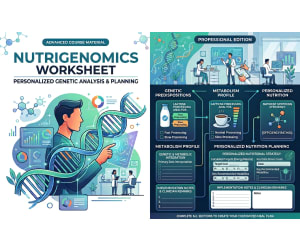
Unlock the future of personalized nutrition with this comprehensive, 42-page curriculum on Nutrigenomics and DNA-Based Diet Planning . Are your students or clients tired of one-size-fits-all health advice? This digital resource is the perfect tool to bridge the gap between complex genetic data and real-world, actionable meal planning. Designed for advanced learners, this unit moves beyond basic nutrition and dives into the cutting-edge science of how our unique genetic makeup dictates our response to foods. Students will learn to translate raw genetic data (SNPs) from common variants like MTHFR, APOE, TCF7L2, CYP1A2 (caffeine metabolism), and MCM6 (lactose intolerance) into highly personalized dietary protocols. This is not just a lecture—it's a complete, turnkey educational package perfect for AP Biology, IB Biology, university-level nutrition or genetics courses, and professional development for health coaches and dietitians. What's Included in This 42-Page All-in-One Resource: Part 1: Core Content & Theory (11 pages): A robust introduction to the molecular paradigm of nutrition, covering the genetics of macronutrient metabolism, enzymatic pathways (caffeine & lactose), and a hierarchical approach to building a DNA-based meal plan. Includes two detailed case studies (Elena & Marcus) that demonstrate how to synthesize multiple genetic factors into a cohesive plan. Part 2: Student Workbook (20 pages): Ten in-depth, high-level worksheets that guide students through an analytical process. They will map their own (or a case study's) genetic predispositions related to: Caffeine Metabolism (CYP1A2) Lactose Persistence (MCM6/LCT) Folate Metabolism (MTHFR) Lipid Transport & Saturated Fat (APOE/APOA2) Starch Digestion (AMY1) Vitamin D Receptor (VDR) Sodium Sensitivity (ACE/AGT) Histamine Degradation (DAO) And a final, integrated "Master Meal Plan" worksheet. Part 3: Visuals & Teacher Resources (11 pages): Includes high-resolution diagrams perfect for presentations and handouts, plus a complete Teacher Answer Key for the case study worksheets, providing detailed, expert-level answers and rationale. Learning Outcomes: Upon completion, students will be able to: Analyze and interpret key single nucleotide polymorphisms (SNPs) related to diet. Understand the biochemical impact of genetic variants on metabolism. Develop a prioritized, evidence-based dietary plan from genetic data. Critically evaluate how diet can be used to mitigate genetic risk and optimize health. Move from abstract theory to practical, real-world application. Keywords: Nutrigenomics, Personalized Nutrition, DNA Diet, Genetics, Biology Curriculum, AP Biology, IB Biology, University Nutrition, Dietetics, Health Coach Resource, SNP, MTHFR, APOE, CYP1A2, Caffeine Metabolism, Lactose Intolerance, Printable, Digital Workbook, Science, Project-Based Learning. Why Parents/Schools Love It: Bridges Theory and Real-World Application: This isn't just memorizing facts. It teaches students critical thinking by applying complex genetic science to a practical, everyday subject: food. Prepares Students for Future-Focused Careers: It provides a strong foundation in the rapidly growing fields of personalized medicine and wellness, giving students a significant advantage in college applications and future careers. Turnkey, Comprehensive Curriculum: It's an all-in-one resource with theory, worksheets, visuals, and a complete answer key, saving teachers valuable preparation time while providing a rigorous, high-quality lesson. Makes Science Personal and Engaging: By focusing on how DNA affects an individual's own body (or compelling case studies), it transforms an abstract topic into a deeply personal and engaging investigation. Target Audience (Student Classes) : Based on the advanced vocabulary ("phenotypic risk stratification," "cytochrome P450," "thermolabile enzyme") and the complexity of the tasks, target the following groups: University/College Students: This is the primary audience. It's perfectly suited for undergraduate and graduate courses in: Nutrition and Dietetics Human Biology and Kinesiology Genetics and Molecular Biology Naturopathic or Functional Medicine Programs Advanced High School Students: This is an excellent resource for accelerated programs, providing a significant competitive edge. AP Biology (especially for units on genetics and gene expression) IB Biology (Higher Level) Advanced Health Science Electives Professional Development: This workbook is a valuable upskilling tool for practicing or training: Health Coaches Nutritionists Personal Trainers with an interest in advanced nutrition. Copyright/Terms of Use: This Book was copyrighted by Syed Hammad Rizvi. This resource is for personal and single classroom use only. You may not alter, redistribute, or sell any part of this resource. In other words, you may not put it on the Internet where it could be publicly found and downloaded. If you want to share this resource with colleagues, please purchase additional licenses from Teachsimple. Thank you for respecting these terms of use. This product is happily brought to you by Syed Hammad Rizvi
Author Creative Book Store
Rating
Tags Nutrigenomics, PersonalizedNutrition, DNADiet, NutritionalGenomics, PrecisionNutrition, FunctionalNutrition, GeneticTesting, Biohacking, HealthScience, MolecularBiology