



3,952 products added recently
Page 8 - Space Lesson Plans
Ignite your students' imagination with lesson plans that delve into astronomy and space exploration. Covering topics from the solar system to deep space phenomena, these resources include engaging activities and multimedia elements. Use them to inspire awe and curiosity about the cosmos.

 Show filters

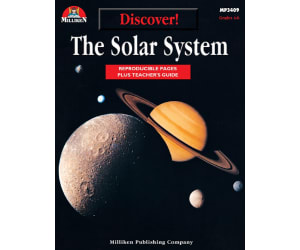
Discover! Solar System
Science, Earth and Environmental Sciences, Space, Grade 4, 5, 6, Teacher Tools, Lesson Plans
Discover! Solar System Teaching Resource The Discover! Solar System is an engaging resource designed to bring the wonders of our cosmic neighborhood into tangible focus. It's aimed at educators teaching Grade 4-6 and targets the subjects of Science, specifically Astronomy. The chief format for this material is lesson plans hosted in a single, easy-to-access PDF file. This teaching tool sets its sights on drifting through the solar system in such a way that feels both accessible and stimulating for young learners. The core focus points include elementary facts structured around our eight planets, not excluding Pluto’s status as a dwarf planet, the sun and moon dynamics along with their relationship to Earth's seasons and day/night cycles. That foundational information might be used as starting blocks to broach these topics within your lessons; making it suitable for whole group teaching sessions or smaller break out groups to encourage more focused discussions or debates around these captivating celestial themes. Future endeavors can utilize this resource as homework assignments or supplemental distance learning material too. By providing fun-filled activities aligned with worksheets containing questions – students will be encouraged not just to learn but also apply their newfound knowledge across different mediums. In turn, promoting critical thinking skills while fostering an amplified engagement with astronomy. You can also find answers associated within this file meant exclusively for teachers' use that allow real time monitoring of student progression throughout this module - simplifying grading while molding each lesson structure according to class performance levels over time. In summary - when it comes leveraging all-inclusive tools anchored in efficient learning procedures for memorable class experiences; Discover! Solar System serves such significant educational advancements by constructing thoughtfully laid out processes towards understanding rather intricate aspects about various aspects featured in our massive solar system space exploration has yet uncovered till date.
Author Classroom Complete Press
Tags PDF

The Sun | Interactive Science Lesson | Micro-Learning Deck
Science, Earth and Environmental Sciences, Space, Grade 6, 7, 8, 9, Teacher Tools, Lesson Plans
This micro-learning deck is the perfect accessory to your Science instruction! This digital slideshow presents The Sun, A Real Star. Within this slideshow, you will receive: -Video Lesson -Reading Passage w/ Audio -Close Reading -Quick Write The informational texts included in this resource alongside the informal assessments will keep your students engaged from beginning to end.
Author Teach Me This
Tags The Sun, Interactive, Science, Astronomy, Reading Passage

Global Climate Policy Debates & Solution Brainstorm Worksheets
Science, Earth and Environmental Sciences, Life Sciences, Earth Sciences, Environmental Science, Geology, Space, Nature & Plants, Biology, STEM, Homeschool Curriculum, Homeschool Templates, Grade 8, 9, 10, 11, 12, Worksheets & Printables, Worksheets, Workbooks, Word Searches, Teacher Tools, Assessments, Lesson Plans, Quizzes and Tests, Quizzes, Tests
Provide your advanced high school students with this 42-page climate policy curriculum that focuses on advanced dialectical analysis rather than simplified activism. This curriculum will encourage active learning for your students by transforming passive learning into a deep intellectual engagement through multi-perspective debate, policy creation, and ethical reasoning. Students will explore: The transition from the Kyoto Protocol to the Paris Agreement and the principle of Common But Differentiated Responsibilities (CBDR) Carbon pricing mechanisms (Carbon Tax vs. Cap and Trade), as well as the Social Cost of Carbon The ethics of geoengineering (Stratospheric Aerosol Injection [SAI], moral hazard, risks associated with unilateral use of SAI) Environmental justice, climate debt, and the Cobalt Paradox in developing countries Youth climate lawsuits, climate refugees and international law, methane agricultural policies, financing urban adaptation, and accountability for greenwashing Includes 10 high-level student worksheets with conceptual fill-in-the-blank (using a unique 7-underscore system), real-world case studies and hypothetical case studies, critical debate prompts, and challenging policy creation assignments for students. Teacher answer keys, implementation guides, visual diagrams (Climate Policy Trilemma, Stakeholder Matrix, and Carbon Pricing Mind Map), and differentiation strategies are also included. Ideal for AP Environmental Science, AP Government, AP Economics, IB Global Politics, Honors Humanities, and Model UN/debate programs. Encourages real critical thinking, systems analysis, and nuanced understanding of the trade-offs between enhancing developing countries. The Key Reasons Why Parents and Schools Appreciate It: Facilitates unbiased critical thinking instead of dogmatic, ideologically-based, practical-thinking-by-proxy students making arguments for and against competing choices (e.g., Growth vs. Fossil-Fuel Abolition; Independent Sovereign Nation vs. World Government; Technology as Hope or as a Curse). Extensive preparation for taking Advanced Placement tests; writing college level essays, debating other humans, as well as the development of well-thought-out arguments using established policies, and ethical reasoning based on sound ethical reasoning standards. A balanced view of the world; an honest consideration of the challenges facing developing nations, "Just Transition", climate liabilities, and the risk of neo-colonial influence in creating green supply chains. Teacher support that is broad in scope and purpose; includes teacher-oriented teacher guides, "look-for" answers for the teachers, pacing guides and strategies for differentiating instruction, visual aids to illustrate concepts, and techniques for managing classroom conversations. An exceedingly entertaining way to teach about Climate Change, as well as Science, by creating opportunities for students to compete with each other on an intellectual level, as opposed to being preached at. Primary Audience & Classes: 9-12 (Secondary School) Advanced Students Advanced Placement Environmental Science Advanced Placement U.S. Government/Comparative Government Advanced Placement Macroeconomics/Microeconomics (on Carbon Pricing) IB Diploma Programme: Global Politics, Environmental Systems/Societies (ESS), and Economics Advanced Placement/honors world/history/contemporary issues Model United Nations, Debate and Mock Trial Teams Future Advanced 10-graders: Gifted/Track 11/12 grades -- Advanced Placement courses. Copyright/Use Policy: This book, written by "Syed Hammad Rizvi," is one-of-a-kind. You cannot change, give away or sell this product so long as you are using it as personal and for one classroom only. Therefore, you may NOT post any portion of this book/presentation on the internet for public access and download. Additional copies of this work may be purchased if you want to share with your colleagues, so please consider purchasing additional license(s) through Teachsimple. Your cooperation is greatly appreciated! A very special "thank you" from "Syed Hammad Rizvi".
Author Creative Book Store
Rating
Tags ClimatePolicy, APEnvironmentalScience, ClimateJustice, ClimateChangeEducation, EnvironmentalScience, Geoengineering, ClimatePolicyWorksheets, APEnvSci, JustTransition, CarbonPricing
I WONDER - Can Vegetables Be Grown In Space | Animated Video Lesson
Nature & Plants, Life Sciences, Science, Biology, Space, Earth and Environmental Sciences, Grade 4, 5, 6, 7, 8, 9, 10, Lesson Plans, Teacher Tools
Video Introduction An amazing video designed for the students to learn more about STEM. I WONDER - Can Vegetables Be Grown In Space | Animated Video Lesson Plants world is really fascinating! Do you know that some flowers eat insects? Some other plants like to grow on walls can you mention any? Do you know what is the difference between fungicide and pesticide? If yes, Can you tell us more about it? What is nuclear energy? Is it safe to use it? Do you think it is a clean energy? Have you ever read about potential energy? If yes, tell us what it is? Do you think that potential energy can be converted into another form of energy? How it happens? I WONDER - Can Vegetables Be Grown In Space | Animated Video Lesson The video is perfect for encouraging the researching skills for the students, while learning more about this fantastic topic. I WONDER - Can Vegetables Be Grown In Space | Animated Video Lesson This friendly designed video is suitable for students at school, homeschooling, and as a group activity. Format Available in MP4 format.
Author Educational Voice
Rating
Tags Can Vegetables Be Grown In Space, Vegetables, Space Vegetables, Grow Vegetables In Space, Vegetables Facts, Vegetables Video, Vegetables Video For Kids, Space Food, Space, Growing Vegetables In Space

Solar Eclipse | Interactive Science Lesson | Micro-Learning Deck
Science, Earth and Environmental Sciences, Space, Grade 6, 7, 8, 9, Teacher Tools, Lesson Plans
This micro-learning deck is the perfect accessory to your Science instruction! This digital slideshow presents What is a Solar Eclipse? Within this slideshow, you will receive: -Video Lesson -Reading Passage w/ Audio -Close Reading -Quick Write The informational texts included in this resource alongside the informal assessments will keep your students engaged from beginning to end.
Author Teach Me This
Tags Solar Eclipse, Science Lesson, Interactive, Digital Lesson, Comprehension

I WONDER - Does The Moon Have An Atmosphere | Animated Video Lesson
Space, Earth and Environmental Sciences, Science, Grade 6, 7, 8, 9, 10, 11, 12, Lesson Plans, Teacher Tools
Video Introduction An amazing video designed for the students to learn more about space facts. I WONDER - Does The Moon Have An Atmosphere | Animated Video Lesson Do you like reading about space? If yes, what is your favorite topic? What do you know about our solar system? What is the smallest planet in our solar system? What is the biggest planet in our solar system? What is the hottest planet in our solar system? And what is the coldest one? Do you think there are aliens? If yes, what do you think they look like? What do they eat and how they speak to each other? Where do they live? What is a galaxy? And what is a milky way? Have you recently saw a shooting star? If yes, tell us more about it, like when did it happen and where? What is a blackhole? Can a blackhole gets bigger by time? Do you like counting the stars? What do you think a star is made of? I WONDER - Does The Moon Have An Atmosphere | Animated Video Lesson The video is perfect for encouraging the researching skills for the students, while learning more about the fantastic space. I WONDER - Does The Moon Have An Atmosphere | Animated Video Lesson This friendly designed video is suitable for students at school, homeschooling, and as a group activity. Format Available in MP4 format.
Author Educational Voice
Tags Does The Moon Have An Atmosphere, Does The Moon Have An Atmosphere Video, The Moon's Atmosphere, The Moon's Atmosphere Facts, The Moon's Atmosphere Facts For Kids, The Moon's Atmosphere Video
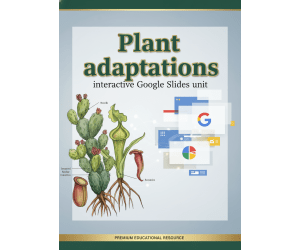
Plant Adaptations Interactive Google Slides Unit
Science, Earth and Environmental Sciences, Earth Sciences, Environmental Science, Geology, Space, Life Sciences, Animals, Nature & Plants, Biology, Grade 3, 4, 5, 9, 10, 11, 12, Experiments, Activities, Labs, Projects, Assessments, Teacher Tools, Diagrams, Lesson Plans, Outlines, Presentations
Find the best 4th Grade Plant Adaptations Interactive Google Slides Unit – a complete no-prep digital science resource that is perfectly correlated to NGSS 4-LS1-1! This teacher edition is a game-changer for teaching plant biology as an interactive adventure for students! With this resource, students will enjoy a hands-on approach to learning about plant adaptations as they explore interactive slides featuring desert succulents/cacti, rainforest drip tips/epiphytes, water plants floating leaves/stretching stems, structural vs. behavioral adaptations, roots, stem/leaf adaptations, defense structures, carnivorous plants Venus flytrap/pitcher plant, seed dispersal, mystery plant analysis, and a final knowledge check with answer keys! Students will actively engage in classifying adaptations, creating their own extremophiles, analyzing scenarios using Claim Evidence Reasoning, and connecting science to ELA, math, engineering, and technology using cross-curricular activities. It includes a teacher guide, standard alignment, steps to integrate into Google Classroom, instructional tips, interactive slide ideas, image credits, and ideas for self-grading. It can be used in a variety of learning environments, such as in-class learning, distance learning, homeschooling, etc. It saves automatically in Google Slides. Keywords: plant adaptation 4th grade, NGSS 4-LS1-1, Google Slides, interactive science unit, desert rainforest aquatic plants, carnivorous plants, seed dispersal activities, digital science resource, structure and function NGSS, no prep plant biology. Why Parents/Schools Love It : NGSS-Aligned & Standards-Ready: No planning required – lesson plans, objectives, and assessments are provided and align perfectly with 4th grade requirements. Truly Interactive & Engaging: Drag and drop sorting, CER plant mysteries, and biome builders ensure all students (including reluctant ones) are actively engaged and motivated to learn for hours. Cross-Curricular Powerhouse: Perfectly blends ELA (informative writing, vocabulary), math (data analysis, volume calculation), and engineering (biomimicry design challenges). Google Classroom Perfection: One-click “make a copy for each student,” auto-saving, and self-grading features save teachers 10+ hours per unit. Differentiation Built-In: Visual aids, scaffolding, and differentiation in activity levels and types meet the needs of diverse learners and challenge advanced students. Target Student Classes : This lesson is designed for 4th grade science (ages 9-10), specifically targeting the 4-LS1-1 standard for Structure and Function in plants/animals, as well as the cross cutting concepts of Systems and System Models + the Science and Engineering Practices of Engaging in Argument from Evidence. This lesson is suitable as the main resource for: Standard 4th grade life science curriculum for 4th grade students in public/private schools Homeschool 4th grade science curriculum (allows for fast or slow pacing for gifted or remedial students) Advanced 3rd grade science for 3rd grade students or 5th grade review for 5th grade students Special education or ESL students (visual learning tool of drag and drop CERs) Not recommended as the main resource for middle school students (6th+). Copyright/Terms of Use: This Book is copyrighted by Syed Hammad Rizvi. This is for your personal and single classroom use only. You may not change, reproduce, redistribute, or sell this in any way. This means you may not put it on the Internet in a way that it can be located and downloaded by others. If you wish to share this resource with others, please consider purchasing additional licenses from Teachsimple. Thank you for respecting these copyright laws! This product is happily brought to you by Syed Hammad Rizvi
Author Creative Book Store
Rating
Tags PlantAdaptations, 4thGradeScience, NGSS4LS11, GoogleSlidesScience, InteractiveScience, ScienceTeachers, ElementaryScience, NGSSScience, PlantAdaptationsUnit, DigitalScienceResource
I WONDER - How Are Mars And The Earth Different | Animated Video
Space, Earth and Environmental Sciences, Science, Grade 3, 4, 5, 6, 7, 8, 9, Lesson Plans, Teacher Tools
Video Introduction An amazing video designed for the students to learn more about space facts. I WONDER - How Are Mars And The Earth Different | Animated Video Lesson Have you ever thought about travelling to space?! Join us with this amazing video about planets in our solar system. Do you think we can live on planet Mars some day? How amazing is space! Let's discover some amazing facts about Earth and Mars! Do you know that we have two kinds of planets in our solar system? Can you name the planets based upon their core type? I WONDER - How Are Mars And The Earth Different | Animated Video Lesson The video is perfect for encouraging the researching skills for the students, while learning more about the fantastic space. I WONDER - How Are Mars And The Earth Different | Animated Video Lesson This friendly designed video is suitable for students at school, homeschooling, and as a group activity. Format Available in MP4 format.
Author Educational Voice
Rating
Tags How Are Mars And The Earth Different, Mars, Mars Facts, Mars Facts For Kids, Mars Video, Mars Video For Kids, Earth, Earth Facts, Earth Facts For Kids, Earth Video
I WONDER - What Is The Tallest Mountain In The Solar System
Space, Earth and Environmental Sciences, Science, Grade 6, 7, 8, 9, 10, 11, 12, Lesson Plans, Teacher Tools
Video Introduction An amazing video designed for the students to learn more about space facts. I WONDER - What Is The Tallest Mountain In The Solar System | Animated Video Lesson Do you like reading about space? If yes, what is your favorite topic? What do you know about our solar system? What is the smallest planet in our solar system? What is the biggest planet in our solar system? What is the hottest planet in our solar system? And what is the coldest one? Do you think there are aliens? If yes, what do you think they look like? What do they eat and how they speak to each other? Where do they live? What is a galaxy? And what is a milky way? Have you recently saw a shooting star? If yes, tell us more about it, like when did it happen and where? What is a blackhole? Can a blackhole gets bigger by time? Do you like counting the stars? What do you think a star is made of? I WONDER - What Is The Tallest Mountain In The Solar System | Animated Video Lesson The video is perfect for encouraging the researching skills for the students, while learning more about the fantastic space. I WONDER - What Is The Tallest Mountain In The Solar System | Animated Video Lesson This friendly designed video is suitable for students at school, homeschooling, and as a group activity. Format Available in MP4 format.
Author Educational Voice
Tags What Is The Tallest Mountain In The Solar System, What Is The Tallest Mountain In The Solar System Video, Tallest Mountain In The Solar System, Tallest Mountain In The Solar System Video, Tallest Mountain In The Solar System Facts

I WONDER - Where Have Space Probes Travelled | Animated Video Lesson
Space, Earth and Environmental Sciences, Science, Grade 6, 7, 8, 9, 10, 11, 12, Lesson Plans, Teacher Tools
Video Introduction An amazing video designed for the students to learn more about space facts. I WONDER - Where Have Space Probes Travelled | Animated Video Lesson Do you like reading about space? If yes, what is your favorite topic? What do you know about our solar system? What is the smallest planet in our solar system? What is the biggest planet in our solar system? What is the hottest planet in our solar system? And what is the coldest one? Do you think there are aliens? If yes, what do you think they look like? What do they eat and how they speak to each other? Where do they live? What is a galaxy? And what is a milky way? Have you recently saw a shooting star? If yes, tell us more about it, like when did it happen and where? What is a blackhole? Can a blackhole gets bigger by time? Do you like counting the stars? What do you think a star is made of? I WONDER - Where Have Space Probes Travelled | Animated Video Lesson The video is perfect for encouraging the researching skills for the students, while learning more about the fantastic space. I WONDER - Where Have Space Probes Travelled | Animated Video Lesson This friendly designed video is suitable for students at school, homeschooling, and as a group activity. Format Available in MP4 format.
Author Educational Voice
Tags Where Have Space Probes Travelled, Where Have Space Probes Travelled Video, Space Probes, Space Probe, Space Probes Facts, Space Probes Facts For Kids, Space Probes Video, Space Probes Video For Kids

I WONDER - Can Vegetables Grow In Space | Animated Video Lesson
Nature & Plants, Life Sciences, Science, Space, Earth and Environmental Sciences, Grade 6, 7, 8, 9, 10, 11, 12, Lesson Plans, Teacher Tools
Video Introduction An amazing video designed for the students to learn more about space facts. I WONDER - Can Vegetables Grow In Space | Animated Video Lesson Do you like reading about space? If yes, what is your favorite topic? What do you know about our solar system? What is the smallest planet in our solar system? What is the biggest planet in our solar system? What is the hottest planet in our solar system? And what is the coldest one? Do you think there are aliens? If yes, what do you think they look like? What do they eat and how they speak to each other? Where do they live? What is a galaxy? And what is a milky way? Have you recently saw a shooting star? If yes, tell us more about it, like when did it happen and where? What is a blackhole? Can a blackhole gets bigger by time? Do you like counting the stars? What do you think a star is made of? I WONDER - Can Vegetables Grow In Space | Animated Video Lesson The video is perfect for encouraging the researching skills for the students, while learning more about the fantastic space. I WONDER - Can Vegetables Grow In Space | Animated Video Lesson This friendly designed video is suitable for students at school, homeschooling, and as a group activity. Format Available in MP4 format.
Author Educational Voice
Tags Can Vegetables Grow In Space, Can Vegetables Grow In Space Video, Space Vegetables, Space Vegetables Facts, Space Vegetables Facts For Kids, Space Vegetables Video, Space Vegetables Video For Kids
I WONDER - What Are Solar Winds | Animated Video Lesson
Space, Earth and Environmental Sciences, Science, Grade 6, 7, 8, 9, 10, 11, 12, Lesson Plans, Teacher Tools
Video Introduction An amazing video designed for the students to learn more about space facts. I WONDER - What Are Solar Winds | Animated Video Lesson Do you like reading about space? If yes, what is your favorite topic? What do you know about our solar system? What is the smallest planet in our solar system? What is the biggest planet in our solar system? What is the hottest planet in our solar system? And what is the coldest one? Do you think there are aliens? If yes, what do you think they look like? What do they eat and how they speak to each other? Where do they live? What is a galaxy? And what is a milky way? Have you recently saw a shooting star? If yes, tell us more about it, like when did it happen and where? What is a blackhole? Can a blackhole gets bigger by time? Do you like counting the stars? What do you think a star is made of? I WONDER - What Are Solar Winds | Animated Video Lesson The video is perfect for encouraging the researching skills for the students, while learning more about the fantastic space. I WONDER - What Are Solar Winds | Animated Video Lesson This friendly designed video is suitable for students at school, homeschooling, and as a group activity. Format Available in MP4 format.
Author Educational Voice
Tags What Are Solar Winds, What Are Solar Winds Video, Solar Winds, Solar Winds Facts, Solar Wind, Solar Winds Facts For Kids, Solar Winds Video, Solar Winds Video For Kids, Space, Space Video
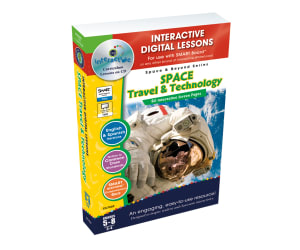
Space Travel & Technology - Digital Lesson Plan Gr. 5-8 | MAC Software
Science, Earth and Environmental Sciences, Space, Grade 5, 6, 7, 8, Teacher Tools, Lesson Plans
Space Travel & Technology - Digital Lesson Plan Gr. 5-8 | MAC Software Embark on an interstellar educational journey with your students using the Space Travel & Technology Digital Lesson Plan for grades 5 to 8. This comprehensive teaching resource is designed to stimulate imaginations and harness a future-focused mindset, with a central theme of a shuttle mission to the International Space Station. The highly interactive software offers eighty screen-pages packed with intriguing information and engrossing activities that will help students envisage themselves as scientists, engineers, astronauts or leaders in the field of space exploration. The lessons envision mankind's expeditions back to Moon and onwards to Mars while also prepping today's generation for those looming space adventures. Key Features: An abundant reading passages followed by interactive tasks such as before-and-after comprehension questionnaires, test preparations, memory match games among others. Crossword puzzles, word search activities along with printable pages promoting active student participation throughout the learning process. Videos that consolidate anticipated learning outcomes from each session. Multicultural inclusion via English and Spanish Text-To-Speech options enhancing language skills while learning science. This MAC compatible teaching software (delivered as one zip file) ensures thorough understanding of every unit learned within this interactive digital module by integrating a Comprehension Quiz at end of each lesson. This aligns perfectly with State Standards following Bloom's Taxonomy formulae for pedagogical success. The digital lesson plan can be utilized completely by itself or complement existing curricula either in group classes or individual assignments scenarios depending upon educators choice making Astronomy classes distinctively fascinating for both homeschooling or conventional school settings environments
Author Classroom Complete Press
Tags Digital Lesson Plan, Science Reading Passage, Astronomy Lesson, Space Travel, Technology Activity

Moons in Our Solar System | Interactive Science Lesson | Micro-Learning Deck
Science, Earth and Environmental Sciences, Space, Grade 6, 7, 8, Teacher Tools, Lesson Plans
This micro-learning deck is the perfect accessory to your Science instruction! This digital slideshow presents Moons in Our Solar System. Within this slideshow, you will receive: -Video Lesson -Reading Passage w/ Audio -Close Reading -Quick Write The informational texts included in this resource alongside the informal assessments will keep your students engaged from beginning to end.
Author Teach Me This
Tags Moons, Solar System, Science, Astronomy, Interactive Lesson
I WONDER - What Is The Largest Artificial Satellite Called
Space, Earth and Environmental Sciences, Science, Grade 4, 5, 6, 7, 8, 9, 10, Lesson Plans, Teacher Tools
Video Introduction An amazing video designed for the students to learn more about space facts. I WONDER - What Is The Largest Artificial Satellite Called | Animated Video Lesson Do you like reading about space? If yes, what is your favorite topic? What do you know about our solar system? What is the smallest planet in our solar system? What is the biggest planet in our solar system? What is the hottest planet in our solar system? And what is the coldest one? Do you think there are aliens? If yes, what do you think they look like? What do they eat and how they speak to each other? Where do they live? What is a galaxy? And what is a milky way? Have you recently saw a shooting star? If yes, tell us more about it, like when did it happen and where? What is a blackhole? Can a blackhole gets bigger by time? Do you like counting the stars? What do you think a star is made of? I WONDER - What Is The Largest Artificial Satellite Called | Animated Video Lesson The video is perfect for encouraging the researching skills for the students, while learning more about the fantastic space. I WONDER - What Is The Largest Artificial Satellite Called | Animated Video Lesson This friendly designed video is suitable for students at school, homeschooling, and as a group activity. Format Available in MP4 format.
Author Educational Voice
Tags What Is The Largest Artificial Satellite Called, What Is The Largest Artificial Satellite Called Video, Largest Artificial Satellite, Largest Artificial Satellite Video, Largest Artificial Satellite Facts, Largest Artificial Satellite Video For Kids
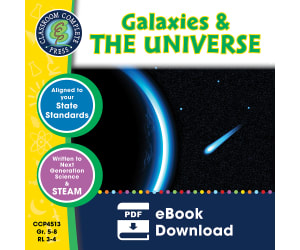
Galaxies & The Universe Gr. 5-8
Science, Earth and Environmental Sciences, Space, Grade 5, 6, 7, 8, Teacher Tools, Lesson Plans
Galaxies & The Universe Gr. 5-8 is an engaging and educational tool designed to enhance your students' understanding of space and our immense universe. Targeted towards grades 5 to 8, this valuable teaching aid deeply explores essential astronomy topics such as the formation of the Milky Way galaxy, distance measurement in light years, specifics about various galaxies to quasars. Embracing science within young minds, it elaborates on exciting aspects like investigating the Big Bang theory and understanding nebulae constructions. Teachers will find value in these lessons that spur active learning; students can fabricate their own nebula using everyday materials like construction paper, newspaper, and water. An additional activity includes constructing pinhole models representing four distinct types of galaxies—barred, elliptical, spiral and irregular—that foster active engagement while absorbing relevant aspects related to universal events. The lesson takes a measurable turn by venturing into real-world applications; kids learn how weight differs on different celestial bodies, such as the sun or other planets. This feature underscores gravity's role in planetary orbits—an indispensable part that links everyday physics concepts with expansive cosmic narratives. The intrigue escalates with a section devoted entirely to black holes - one of space's most mysterious phenomena. As part of this all-inclusive study module students gain a chance not only understand black hole phenomena but also engage creatively by drafting their own unique science fiction story centered around them . This holistic interdisciplinary approach aligns perfectly with Next Generation State Standards besides being crafted following Bloom's Taxonomy and STEAM initiatives ensures effortless integration during classroom instruction be it group discussion or focused study circles. It includes crossword puzzles, word searches along with comprehension quizzes heightens its interactive appeal while providing an effective academic reinforcement tool for teachers or homeschoolers alike. The inclusion of multiple file formats provides tech-friendly versatility making it easily adaptable across various teaching settings. An answer key enhances its practical utility serving as a time-effective tool for teachers or homeschoolers during evaluations. To summarize, Galaxies & The Universe Gr. 5-8 offers an unparalleled pedagogical journey by merging theoretical aspects with imagination and creativity to provide a cosmic world of learning within your classrooms!
Author Classroom Complete Press
Tags PDF

I WONDER - When Does A Meteor Shower Occur | Animated Video Lesson
Space, Earth and Environmental Sciences, Science, Grade 4, 5, 6, 7, 8, 9, 10, Lesson Plans, Teacher Tools
Video Introduction An amazing video designed for the students to learn more about space facts. I WONDER - When Does A Meteor Shower Occur | Animated Video Lesson Do you like reading about space? If yes, what is your favorite topic? What do you know about our solar system? What is the smallest planet in our solar system? What is the biggest planet in our solar system? What is the hottest planet in our solar system? And what is the coldest one? Do you think there are aliens? If yes, what do you think they look like? What do they eat and how they speak to each other? Where do they live? What is a galaxy? And what is a milky way? Have you recently saw a shooting star? If yes, tell us more about it, like when did it happen and where? What is a blackhole? Can a blackhole gets bigger by time? Do you like counting the stars? What do you think a star is made of? I WONDER - When Does A Meteor Shower Occur | Animated Video Lesson The video is perfect for encouraging the researching skills for the students, while learning more about the fantastic space. I WONDER - When Does A Meteor Shower Occur | Animated Video Lesson This friendly designed video is suitable for students at school, homeschooling, and as a group activity. Format Available in MP4 format.
Author Educational Voice
Tags When Does A Meteor Shower Occur, When Does A Meteor Shower Occur Video, Meteor Shower, Meteor Shower Facts, Meteor Shower Facts For Kids, Meteor Shower Video, Meteor Shower Video For Kids

I WONDER - What Was The First Man-Made Satellite | Animated Video
Space, Earth and Environmental Sciences, Science, Grade 4, 5, 6, 7, 8, 9, 10, Lesson Plans, Teacher Tools
Video Introduction An amazing video designed for the students to learn more about space facts. I WONDER - What Was The First Man-Made Satellite | Animated Video Lesson Do you like reading about space? If yes, what is your favorite topic? What do you know about our solar system? What is the smallest planet in our solar system? What is the biggest planet in our solar system? What is the hottest planet in our solar system? And what is the coldest one? Do you think there are aliens? If yes, what do you think they look like? What do they eat and how they speak to each other? Where do they live? What is a galaxy? And what is a milky way? Have you recently saw a shooting star? If yes, tell us more about it, like when did it happen and where? What is a blackhole? Can a blackhole gets bigger by time? Do you like counting the stars? What do you think a star is made of? I WONDER - What Was The First Man-Made Satellite | Animated Video Lesson The video is perfect for encouraging the researching skills for the students, while learning more about the fantastic space. I WONDER - What Was The First Man-Made Satellite | Animated Video Lesson This friendly designed video is suitable for students at school, homeschooling, and as a group activity. Format Available in MP4 format.
Author Educational Voice
Tags What Was The First Man-Made Satellite, What Was The First Man-Made Satellite Video, First Man-Made Satellite, First Man-Made Satellite Video, First Man-Made Satellite Facts, First Man-Made Satellite Facts For Kids
Vocabulary Building Through Environmental Themes
Science, Basic Science, Inventors, Theories, Earth and Environmental Sciences, Earth Sciences, Environmental Science, Geology, Space, STEM, Homeschool Curriculum, Homeschool Templates, Grade 3, 4, 5, 6, 7, Teacher Tools, Assessments, Lesson Plans, Quizzes and Tests, Quizzes, Tests, Worksheets & Printables, Workbooks, Worksheets, Word Searches
Are you tired of boring vocabulary lists? Do students forget the words by Monday? Try transforming how you teach Science and ELA with this comprehensive, research-based resource to help your students develop and retain a rich vocabulary through the study of environmental science! This is not just another short, single-use worksheet. The Eco-Lexicon Framework has been designed to help you and your student move beyond rote memorization, to create a deep conceptual understanding of vocabulary. The complete 45-page resource provides educators with a theoretical framework and 10 modules that will provide engaging, no-prep student worksheets, seamlessly integrating Science, Reading and Critical Thinking. What can I find in this much-needed resource? A Professional Teacher's Guide (11 Pages): This is a comprehensive guide to the "Eco-Lexicon Framework" which thoroughly goes through the science of cognitive processes and their connection to Vygotsky (schema theory, dual-coding theory, and ZPD). A great professional development experience that will increase your teaching skills! 10 Thematic Student Workbooks (20 pages): Each workbook consists of a small set of worksheets focusing on a theme within the environment. Worksheets include a variety of activities that promote multiple forms of engagement (e.g., filling in an answer at the top of the water, completing the word, etc.) Visually Appealing Teacher Resource Materials (6 pages): The visual scaffolding teacher resource materials are projectable representations of morphological maps (eco/biological root words), semantic gradations, and conceptual matrices that support dual-coding theory and provide anchor points for student learning. Step-By-Step Implementation Guide: A straightforward, easy, step-by-step method for teaching the vocabulary in each module, along with an answer key. The themes of the worksheets are: Forests as eco-systems (Earth's lungs) The ocean as a space for conservation (Under the Surface) Waste and recycling (Cycle of Renewal) Renewable energy (Powering the Future) Biodiversity and symbiotic relationships (The Web of Life) Fresh water systems (Rivers, Lakes, and Aquifers) Climate and Weather (Blanket Above) Sustainable Agriculture (Growing with Care) Urban Ecology (Nature in our Cities) Conservation Actions (Guardians of our Planet) The ideal resource for science classes, ELA instruction, integrated curriculum, substitute teacher plans, and homeschooling will allow students to develop their understanding of scientific terms in meaningful ways that can be used to help them A) learn about their world, B) discuss it with others, and C) advocate on behalf of their planet. Some key terms related to the worksheets are: Science vocabulary words; Environmental science; Ecoliteracy; STEM education; Integrated ELA; Cross curricular education; Grades 3-6 (upper elementary and middle school); Vocabulary worksheet activities; No prep; Printable; Digital resource; Google Classroom compatible; Teacher's Guide; Earth Day; Conservation; Ecosystems; Climate Change; Recycling. Reasons why Parents/School's Love It: Builds Deep, Sustainable Knowledge: Goes beyond memorization. The unique research-based design helps students learn to use vocabulary in a real-world context so that they can build and utilize the complex language of science. Cross-curricular Compatibility: Combines the essential skills in ELA (vocabulary, reading comprehension, writing) with the essential concepts from STEM (environmental sciences) saving teachers the time of planning and reinforcing student learning across the curriculum. Completely Developmentally-Appropriate for Grades 3-6: This resource has been carefully constructed to support students as they grow by providing enough information for teachers to modify their instructional approach depending on the age (3rd/4th vs. 5th/6th graders) of students using the resource for learning, and thus justify its purchase as a long-term resource. Builds Real-World Ecoliteracy: Provides the precise language needed for students to understand and discuss current global environmental issues, allowing exposure to the limited vocabulary needed to become aware, articulate, and social advocates for their planet. Comprehensive & Teacher-Friendly: It's a complete package – a professional textbook, no-prep students' worksheets, and visual aids – giving teachers a new way to teach and support immediate implementation of improved methodology. Target Audience : Informed by an extensive investigation into content, difficulty, and express text found in the PDF: Target Upper Elementary and early Middle School educators, specifically for Grades 3 through 6 again. Highlighted here is this express statement in the PDF: The introduction (Page 1) names "upper elementary years (Grades 3 through 6)". The content is scaffolded professionally. Developmental Scaffolding provides a clear rationale for this age range. It articulates the approach for Grades 3 and 4 (concrete, observable concepts like habitats and recycling) and grades 5 and 6 (abstract systems like climate change and biodiversity). Copyright/Terms of Use: Copyright by Syed Hammad Rizvi. This resource is for personal and single classroom use only. There is to be no altering, redistributing, or, in any other manner, selling part of this resource. In other words, do not put it up on the Internet for public access and download. If you want to share this resource with colleagues, you need to purchase additional licenses from Teachsimple. Thank you for your respect for these terms of use. This product is brought to you with joy by Syed Hammad Rizvi.
Author Creative Book Store
Rating
Tags Sciencevocabulary, Environmentalscience, Ecoliteracy, Crosscurricular, Stemeducation, Elaintegration, Scienceworksheets, Vocabularybuilding, Upperelementaryscience, Middleschoolscience

I WONDER - Can Earthquakes Only Happen On Earth | Animated Video
Earth Sciences, Earth and Environmental Sciences, Science, Geology, Space, Grade 3, 4, 5, 6, 7, 8, 9, Lesson Plans, Teacher Tools
Video Introduction An amazing video designed for the students to learn more about natural disasters in different countries. I WONDER - Can Earthquakes Only Happen On Earth | Animated Video Lesson Do you like summer days where the sun is shinning and you can see beautiful flowers everywhere or winter days where it is raining or snowing and where you can set by the fireplace and enjoy the scene from outside your windows? How to do you thing the blizzards and hurricanes or tornadoes got their names? Can you name a volcanic mountain? Have you ever read about earthquakes? Do you know why earthquakes happen? I WONDER - Can Earthquakes Only Happen On Earth | Animated Video Lesson The video is perfect for encouraging the researching skills for the students, while learning more about this fantastic phenomenon. I WONDER - Can Earthquakes Only Happen On Earth | Animated Video Lesson This friendly designed video is suitable for students at school, homeschooling, and as a group activity. Format Available in MP4 format.
Author Educational Voice
Rating
Tags Can Earthquakes Only Happen On Earth, Earthquakes, Earthquake, Earthquakes Facts, Earthquakes Video, Earthquakes Video For Kids, Earthquakes Facts For Kids, Earthquakes On Planets, Space

I WONDER - What Are Zonal Jets | Animated Video Lesson
Space, Earth and Environmental Sciences, Science, Grade 6, 7, 8, 9, 10, 11, 12, Lesson Plans, Teacher Tools
Video Introduction An amazing video designed for the students to learn more about space facts. I WONDER - What Are Zonal Jets | Animated Video Lesson Do you like reading about space? If yes, what is your favorite topic? What do you know about our solar system? What is the smallest planet in our solar system? What is the biggest planet in our solar system? What is the hottest planet in our solar system? And what is the coldest one? Do you think there are aliens? If yes, what do you think they look like? What do they eat and how they speak to each other? Where do they live? What is a galaxy? And what is a milky way? Have you recently saw a shooting star? If yes, tell us more about it, like when did it happen and where? What is a blackhole? Can a blackhole gets bigger by time? Do you like counting the stars? What do you think a star is made of? I WONDER - What Are Zonal Jets | Animated Video Lesson The video is perfect for encouraging the researching skills for the students, while learning more about the fantastic space. I WONDER - What Are Zonal Jets | Animated Video Lesson This friendly designed video is suitable for students at school, homeschooling, and as a group activity. Format Available in MP4 format.
Author Educational Voice
Tags What Are Zonal Jets, What Are Zonal Jets Video, Zonal Jets, Zonal Jet, Zonal Jets Facts, Zonal Jets Facts For Kids, Zonal Jets Video, Zonal Jets Video For Kids, Zonal Jet Facts, Zonal Jet Video
I WONDER - How Do Comets Get Their Name | Animated Video Lesson
Earth and Environmental Sciences, Science, Space, Grade 4, 5, 6, 7, 8, 9, 10, Lesson Plans, Teacher Tools
Video Introduction An amazing video designed for the students to learn more about space facts. I WONDER - How Do Comets Get Their Name | Animated Video Lesson Do you like reading about space? If yes, what is your favorite topic? What do you know about our solar system? What is the smallest planet in our solar system? What is the biggest planet in our solar system? What is the hottest planet in our solar system? And what is the coldest one? Do you think there are aliens? If yes, what do you think they look like? What do they eat and how they speak to each other? Where do they live? What is a galaxy? And what is a milky way? Have you recently saw a shooting star? If yes, tell us more about it, like when did it happen and where? What is a blackhole? Can a blackhole gets bigger by time? Do you like counting the stars? What do you think a star is made of? I WONDER - How Do Comets Get Their Name | Animated Video Lesson The video is perfect for encouraging the researching skills for the students, while learning more about the fantastic space. I WONDER - How Do Comets Get Their Name | Animated Video Lesson This friendly designed video is suitable for students at school, homeschooling, and as a group activity. Format Available in MP4 format.
Author Educational Voice
Tags How Do Comets Get Their Name, How Do Comets Get Their Name Video, Comets, Comets Facts, Comets Facts For Kids, Comets Video, Comets Video For Kids, Space, Space Video

I WONDER - Can We Live Without The Sun | Animated Video Lesson
Space, Earth and Environmental Sciences, Science, Earth Sciences, Grade 6, 7, 8, 9, 10, 11, 12, Lesson Plans, Teacher Tools
Video Introduction An amazing video designed for the students to learn more about space facts. I WONDER - Can We Live Without The Sun | Animated Video Lesson Do you like reading about space? If yes, what is your favorite topic? What do you know about our solar system? What is the smallest planet in our solar system? What is the biggest planet in our solar system? What is the hottest planet in our solar system? And what is the coldest one? Do you think there are aliens? If yes, what do you think they look like? What do they eat and how they speak to each other? Where do they live? What is a galaxy? And what is a milky way? Have you recently saw a shooting star? If yes, tell us more about it, like when did it happen and where? What is a blackhole? Can a blackhole gets bigger by time? Do you like counting the stars? What do you think a star is made of? I WONDER - Can We Live Without The Sun | Animated Video Lesson The video is perfect for encouraging the researching skills for the students, while learning more about the fantastic space. I WONDER - Can We Live Without The Sun | Animated Video Lesson This friendly designed video is suitable for students at school, homeschooling, and as a group activity. Format Available in MP4 format.
Author Educational Voice
Tags Can We Live Without The Sun, Can We Live Without The Sun Video, The Sun, The Sun Facts, The Sun Facts For Kids, The Sun Video, Sun, Earth, Sun Facts, Sun Video

I WONDER - What Is A Total Eclipse | Animated Video Lesson
Space, Earth and Environmental Sciences, Science, Grade 4, 5, 6, 7, 8, 9, 10, Lesson Plans, Teacher Tools
Video Introduction An amazing video designed for the students to learn more about space facts. I WONDER - What Is A Total Eclipse | Animated Video Lesson Do you like reading about space? If yes, what is your favorite topic? What do you know about our solar system? What is the smallest planet in our solar system? What is the biggest planet in our solar system? What is the hottest planet in our solar system? And what is the coldest one? Do you think there are aliens? If yes, what do you think they look like? What do they eat and how they speak to each other? Where do they live? What is a galaxy? And what is a milky way? Have you recently saw a shooting star? If yes, tell us more about it, like when did it happen and where? What is a blackhole? Can a blackhole gets bigger by time? Do you like counting the stars? What do you think a star is made of? I WONDER - What Is A Total Eclipse | Animated Video Lesson The video is perfect for encouraging the researching skills for the students, while learning more about the fantastic space. I WONDER - What Is A Total Eclipse | Animated Video Lesson This friendly designed video is suitable for students at school, homeschooling, and as a group activity. Format Available in MP4 format.
Author Educational Voice
Tags What Is A Total Eclipse, What Is A Total Eclipse Video, Total Eclipse, Total Eclipse Facts, Total Eclipse Facts For Kids, Total Eclipse Video, Total Eclipse Video For Kids, Eclipse, Eclipse Video