



3,941 products added recently
Page 28 - Popular Lesson Plans
Explore a curated selection of popular lesson plans that have proven successful in classrooms. Covering various subjects and topics, these resources provide innovative ideas and activities. Use them to refresh your curriculum and engage your students with tried-and-true methods.

 Show filters


A Secret for Two: Full Lesson Plan w/ PowerPoints & Graphic Organizers
ELA, Reading, Grade 8, 9, 10, Lesson Plans, Teacher Tools
A Secret for Two: Full Lesson Plan w/ PowerPoints & Graphic Organizers This is an extensive teaching resource offering educators a bundle of tools to facilitate engaging reading lessons. It caters to grades 8, 9, and 10 Language Arts Lessons focusing on the Reading subject area. About The Text This resource revolves around A Secret for Two by Quentin Reynolds. It's a charming story celebrated in educational settings. Inclusions: Detailed Full Lesson Plan: Guides teachers step-by-step in facilitating the lesson. Worksheets: To reinforce understanding; complete with answer keys for checking work or guiding discussions. Variety of Graphic Organizers: Tailored to accommodate diverse learning styles these tackle aspects like author’s purpose chart, characterization chart, figurative language charts amongst others. 'Thank You' Bonus Stuff: The lesson plan tops off with ready-to-print PDFs and Word documents aiding quick preparation whilst ensuring insightful sessions reflecting versatility good pedagogical practice requires! Data Visualization Tools : The inclusion of numerous graphic organizers assists visualization of information which betters grasping complex concepts exampleizes symbolism or plot structure. Educational PowerPoint Presentations (8): : Covers various literary elements such as imagery voice & persona; narrator & voice; plot structure etc., facilitating comprehension in more enjoyable ways. The adaptability that this lesson plan provides allows educators autonomy over delivery styling making it a suitable addition to any educator's repertoire - regardless their teaching environment – traditional classrooms or home schooling setups alike.
Author Quality Teaching Products
Tags Lesson Plan, Reading Comprehension, Teaching Resource, Graphic Organizers, PowerPoints

I WONDER - How Do Electric Car Batteries Store Energy | Animated Video
Physics, Science, STEM, Grade 6, 7, 8, 9, 10, 11, 12, Lesson Plans, Teacher Tools
Video Introduction An amazing video designed for the students to learn more about STEM. I WONDER - How Do Electric Car Batteries Store Energy | Animated Video Lesson Do you like STEM subjects? what is your favorite one? Have you ever tried to plant a seed? If yes, tell us more about it. Or have you ever tried to invent something? If yes, tell us more about it. And how do you think it will help us? Have you ever seen a microorganism under a microscope? What was it? And how it looked like? Mathematics is a marvelous subject. Let' sharpen our brains and solve some equations. Do you like timetable tricks? What is your favorite one? Do you know how to code? Have you ever created an app or a game before? If yes, how was it like? I WONDER - How Do Electric Car Batteries Store Energy | Animated Video Lesson The video is perfect for encouraging the researching skills for the students, while learning more about this fantastic topic. I WONDER - How Do Electric Car Batteries Store Energy | Animated Video Lesson This friendly designed video is suitable for students at school, homeschooling, and as a group activity. Format Available in MP4 format.
Author Educational Voice
Tags How Do Electric Car Batteries Store Energy, How Do Electric Car Batteries Store Energy Video, Electric Car Batteries, Electric Car Batteries Facts, Electric Car Batteries Facts For Kids, Electric Car Batteries Video

The Urinary System - Senior Biology lesson
Science, Life Sciences, Biology, Grade 11, 12, Teacher Tools, Lesson Plans
The Urinary System - Senior High School Biology Lesson Your lesson covers the structure and function of the urinary system. In order, the lesson teaches about; the Kidney, Bladder, Nephrons, the formation of urine, the reabsorption of urine, secretion of urine via the Distal Tubule, maintaining water balance, ADH, blood pressure and pH Balance, and kidney disease Your lesson includes the teacher and student version of the presentation, FIVE embedded videos, an auto-graded exit ticket, and a student lesson handout so the students can record the notes on a more condensed medium. This lesson is designed to be your go-to resource, whether you're in a traditional classroom or a virtual one. With both a teacher version and a student version, it seamlessly fits into your lesson plans, making learning engaging and adaptable. Assessment made easy We've included an auto-graded Exit Ticket and a quiz with an answer key because I know you don't have an excess of time. I know you don't, because I don't and I know I'll do whatever I can to reduce my grading time. Whether you use PowerPoint or Google Slides, prefer Word or Google Docs, this lesson has you covered. This lesson comes in both Office and Google formats for your convenience. The student version of the presentation has strategically placed blanks for them to fill in as you're teaching. It keeps them active and engaged, encourages discussion, and leaves more time for those "aha" moments.
Author Teach With Fergy
Tags Senior Biology, Biology Lesson, Hormones
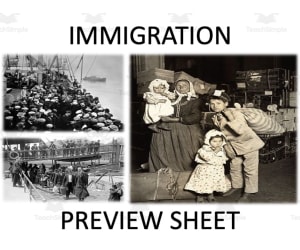
Immigration & Immigrants : Mini Unit
Social Studies, History, History: USA, Grade 8, 9, 10, 11, 12, Lesson Plans, Teacher Tools
Immigration & Immigrants: Mini Unit A comprehensive teaching resource aimed at Grade 8-12 students that provides valuable insights into immigration in the United States. Historical Materials Focusing on America's expansion over the past 250 years, including experiences of Native American and African-American communities during the same period. Vocabulary and Essential Phrases about Immigration Included are illustrative examples of push and pull factors to help learners understand causes of immigration and allow them to articulate these ideas effectively. Tales from Major Immigrant Groups The unit comprises reading materials featuring stories from ten major immigrant groups: Chinese, Jewish, Irish, Japanese, Arab, Italian, German, Vietnamese Norwegian and Indian immigrant communities. Narrative Approach in Reading Materials The narratives provided delve into individual accounts without losing sight of the broader picture. They illustrate successive waves of immigration while highlighting their experiences or discrimination they faced post-arrival in the United States. Worksheets and Multimedia Content Incorporated worksheets are available in both pdf format as well as editable pptx., providing flexibility for teachers delivering lessons or assigning tasks based on student progress. An introductory PowerPoint Presentation serves as an efficient aid for instructors initiating first lessons or facilitating discussions about chosen immigrant group presentations by students based upon their researches inclusive of images data graphs etcetera for balanced comprehension. This mini-unit is particularly relevant within a Social Studies curriculum especially USA History due to its focus on key narrative threads related to immigration - presented through a variety of formats suitable for different teaching styles (group work, small student clusters, individual assignments etcetera). It thus serves as a staple choice supplementing conventional course material providing students with a profound understanding of the central role of immigration in shaping American society.
Author Mr Gray History
Tags Immigration, Immigrants, US History, Push And Pull Factors, Cultural Diversity
I WONDER - Where Can We Rewild | Animated Video Lesson
Environmental Science, Earth and Environmental Sciences, Science, STEM, Nature & Plants, Life Sciences, Insects, Animals, Grade 4, 5, 6, 7, 8, 9, 10, Lesson Plans, Teacher Tools
Video Introduction An amazing video designed for the students to learn more about STEM. I WONDER - Where Can We Rewild | Animated Video Lesson Do you like STEM subjects? what is your favorite one? Have you ever tried to plant a seed? If yes, tell us more about it. Or have you ever tried to invent something? If yes, tell us more about it. And how do you think it will help us? Have you ever seen a microorganism under a microscope? What was it? And how it looked like? Mathematics is a marvelous subject. Let' sharpen our brains and solve some equations. Do you like timetable tricks? What is your favorite one? Do you know how to code? Have you ever created an app or a game before? If yes, how was it like? I WONDER - Where Can We Rewild | Animated Video Lesson The video is perfect for encouraging the researching skills for the students, while learning more about this fantastic topic. I WONDER - Where Can We Rewild | Animated Video Lesson This friendly designed video is suitable for students at school, homeschooling, and as a group activity. Format Available in MP4 format.
Author Educational Voice
Tags Where Can We Rewild, Where Can We Rewild Video, Rewild, Rewilding, Rewilding Facts, Rewilding Facts For Kids, Rewilding Video, Rewilding Video For Kids, Stem, Stem Video

Guided Reading Activities with Lesson Plans: Fiction Set 2 - Animals
ELA, Reading, Reading Comprehension, Common Core, ESL, Language Development, Pre-Reading, Vocabulary, Resources for Teachers, Grade 2, 3, Worksheets & Printables, Worksheets, Teacher Tools, Lesson Plans, Activities
Guided Reading Activities with Lesson Plans Fiction Set 2 Note: This download DOES NOT include the passages themselves. If you have not already done so, download in a format of your choice in the "reading links" section below. Overview The perfect companion materials for Cored Education reading comprehension downloads. This collection of guided reading lessons includes a wide array of engaging themes that aim to foster comprehension, vocabulary development, and creative thinking. Each lesson is crafted to be interactive and immersive, making learning enjoyable while promoting essential literacy skills. The lessons are designed for students to actively engage with both the material and the world around them, creating connections to their personal experiences while developing key skills. Includes Guided Reading Materials For: 1.Unexpected Visitors 2.Feeding Time 3.New Pup Next Door 4.Stargazing 5.On the Search 6.Tadpoles 7.Lucky Caterpillar 8.Karl the Photographer 9.Chasing Pheasants 10.Part of the Family Reading Links: This is the guided reading materials version and DOES NOT include the passages themselves. The passages related to this download are available here in GOOGLE Docs, GOOGLE Forms, GOOGLE Slides. PDF, PPT, WORD. Google Docs Google Forms Google Slides PDF PPT Word Details Pre-reading Discussions Each lesson begins with pre-reading questions that help activate prior knowledge and engage students in the theme of the lesson. This allows students to make personal connections with the content before diving into the reading material. Vocabulary Development Every lesson includes vocabulary exploration that introduces key terms students will encounter in the reading. These words are essential for understanding the passage, and activities encourage students to apply the new vocabulary in context. Comprehension Check After the reading, the lessons provide comprehension questions (typically multiple-choice) that assess students’ understanding of the story. These questions help students reflect on key events, characters, and concepts within the text, reinforcing their comprehension. Creative Writing Prompts To foster creativity, the lessons include writing activities that challenge students to apply what they've learned in imaginative ways. These prompts allow students to practice creative expression while reinforcing the lesson’s theme. Discussion Topics Each lesson ends with wrap-up discussion questions that encourage students to think critically and engage in group conversations. These discussions can enhance social learning and deepen understanding by connecting the lesson's content to broader real-world applications. Theme-Based Learning The themes (e.g., winter, nature walks, photography, flowers) are universally appealing and offer opportunities for cross-curricular connections with science, art, and environmental studies. This makes the lessons versatile for a wide range of teaching contexts. Student-Centered Approach The activities are designed to be interactive and student-driven, allowing them to explore the content through discussions, hands-on vocabulary practice, and personal reflections. This promotes active learning and keeps students engaged. FULL CATALOG OF DOWNLOAD LINKS HERE Grade 2/3 Links Fiction Set 1 - Nature Google Docs Google Forms Google Slides PDF PPT Word Guided Reading Materials Fiction Set 2 - Animals Google Docs Google Forms Google Slides PDF PPT Word Guided Reading Materials Fiction Set 3 - Food Google Docs Google Forms Google Slides PDF PPT Word Guided Reading Materials Fiction Set 4 - School Google Docs Google Forms Google Slides PDF PPT Word Guided Reading Materials Fiction Set 5 - Friends Google Docs Google Forms Google Slides PDF PPT Word Guided Reading Materials Fiction Set 6 - Family Google Docs Google Forms Google Slides PDF PPT Word Guided Reading Materials Fiction Set 7 - Sports Google Docs Google Forms Google Slides PDF PPT Word Guided Reading Materials Nonfiction Set 1 - Technology Google Docs Google Forms Google Slides PDF PPT Word Guided Reading Materials Nonfiction Set 2 - Nutrition Google Docs Google Forms Google Slides PDF PPT Word Guided Reading Materials Nonfiction Set 3 - Animals Google Docs Google Forms Google Slides PDF PPT Word Guided Reading Materials Reading Passages Overview Each passage is especially written for Grade 2-3 students, including key vocabulary required for this age group. Topics are varied and are accompanied by colorful graphics. Topics are meant to educate, yet entertain the modern student. These passages are perfect for the modern classroom. Whereas textbooks can become outdated in no time, any changes to technology or the world will result in updates to this product. Mixed Questions The mixed questions section of each lesson includes a variation of fivecomprehension, vocabulary and math questions. In addition, key reading strategies are frequently covered including cause & effect, summarizing, compare & contrast and making conclusions. Three of the questions will be MCQs and two will require a written response of some kind. Full answers and example responses appear at the end of the lesson. Spelling & Vocab Each reading passage contains a variety of words and phrases designed for Grade 2-3 students. Spelling and vocab activities provide the opportunity to build fluency with these words. As it can become quite mundane doing the same activities over and over, each lesson in a set will contain a different spelling and vocab activity . Writing Prompts Writing prompts are designed to continue the theme or lessons learned in the story. Students are persuaded to write in a variety of ways and each prompt includes several cues to help. As with the spelling/vocab section, writing prompts will vary. This includes research pieces, reading responses, poetry and creative writing prompts. Full Answer Keys Full answer keys and sample responses are provided so no matter how busy you are, you know you're covered! Mixed question answers provide evidence from the text, math questions contain the relevant workings. Answers are designed for use by the teacher, but also suitable as a handout to the student. Additional File One lesson will have an additional file. This is something fun to extend the lesson with. For similar downloads and other frees, do check out Cored Group on TeachSimple.
Author Cored Education
Tags Elementary, Reading, Comprehension, Vocabulary, Answers, Common Core, Guided Reading, Guided Reading Activity, Guided Reading Lesson Plans, Guided Reading Lesson Plan

Number & Operations: Addition & Subtraction - Practice the Skill 2 - FLASH-MAC
Math, Addition and Subtraction, Addition, Common Core, Grade 1, 2, Teacher Tools, Lesson Plans
The Number & Operations: Addition & Subtraction - Practice the Skill 2 - FLASH-MAC: A Comprehensive Teaching Resource This resource aims to develop an understanding of basic arithmetic focusing on addition and subtraction in students. It is primarily suitable for Grade 1 and Grade 2 pupils, perfectly in line with Common Core State Standards. Moreover, it embodies principles spearheaded by STEM initiatives and The National Council of Teachers of Mathematics (NCTM). Key Features: Curriculum -based content: Its critical feature provides timed drill activities that challenge the students' proficiency in fast and accurate subtraction. Inclusive Language Support: The software is built with English voice overs and text, with added options for Spanish voice over along with corresponding Spanish text. Versatile Application:This tool excels whether utilized for whole group instruction or small group workshops, also effective when incorporated into homeschooling programs. The Number & Operations: Addition & Subtraction - Practice the Skill 2 - FLASH-MAC, fostering a positive attitude towards math while developing numerical skills. An ideal companion on your student's journey in understanding mathematics; enriching their knowledge through practical skills exploration while encouraging a fun learning environment.
Author Classroom Complete Press
Tags Software (Mac)
Tennis Reading Comprehension Passage - Cored Ed Encyclopedia
ELA, Language Development, Reading Comprehension, Reading, Pre-Reading, Science, Technology, Engineering, History, Social Studies, Grade 2, 3, 4, 5, Worksheets & Printables, Worksheets, Teacher Tools, Centers, Activities, Writing Prompts, Assessments, Quizzes and Tests, Quizzes, Lesson Plans
This tennis reading comprehension includes: Visualization (on the front cover) Start your lesson by taking a minute to think and share something about the topic. Read the script aloud (slowly), perhaps prepare some music or sound effects. Student close their eyes and let their imaginations wander. Students open their eyes, read the question aloud and give them a few minutes to complete. Ask a few students to share or keep answers until the end to compare with what they learn in the passage. Quick pause—thousands of Cored Education products are included with your TeachSimple membership. Download links and encyclopedia index available here. Pre-Reading Trivia Students will write down one thing they already know about the subject and then read five more facts and discuss. These facts are fun, and the students will enjoy learning about the subject before reading more. Give 1 minute for students to write what they already know (no pressure—best guess is fine). Read the five facts together. After each fact, do ask a student for their opinion, was it surprising? Set a purpose by asking students to highlight/underline one fact they want to learn more about during the reading. Reading Passage The text is a high-interest reading passage with set paragraphs, roughly three to four paragraphs long. It contains a variety of themes about the topic, anywhere from history to technology. The passage is between 250 and 350 words in length. First, ask students to look at the headings and see what they’ll learn about today. What do they know about the topic/heading? First read options: Teacher read-aloud (best for support). Partner reading (paragraph by paragraph). While reading, students underline important details, and vocabulary words they think may come up in the questions section. Mixed Questions The first question page contains four multiple-choice questions, each with a choice of four answers, and three written response questions that require a sentence or two from the student. Students complete the mcqs first independently, then review quickly as a class. For the 3 written responses, try to get students giving the answer with some form of evidence: “I think ___ because the text says ___.” If students get stuck, send them back to check the passage. Vocabulary Questions Practice seven key words from the text in this section across two activities. First section is scrambled words where students will unscramble three words given a clue for each. The second section is a word to meaning matching activity. Before starting, have some students read out words they underlined in the passage. Ask students to say the word and read aloud the sentence(s) around each word. Ask students to do scrambled words and the matching exercise in pairs then go through answers as a class. For the scrambled spelling task, get four pairs to come up to the board and write the words for extra practice with the other student reading out the clue. For the matching task, prompt students to give full sentences: “I matched ___ with ___ because ___.” Creative Writing In this question, the student will be required to write a five to eight sentence paragraph on a question related to the topic. Before starting, ask students write down 3 key ideas they are going to include in their piece. Ask students for ideas to share around the class to help those struggling. Pro writing expectations: 5–8 sentences At least 2 facts or details from the passage At least 2 vocabulary words from the previous page Students read their paragraphs while classmates listen for facts and vocabulary words. Extension Activities This page is optional for fast finishers or to take home. There are several activities, each one requiring a different skill. Do some, do none, do all, completely optional - but you will feel reassured knowing every possibility is planned for. Includes summary writting question. Answer Key There are answers for the multiple-choice questions, written response questions have sample answers, vocabulary answers and if there is a summary question then a sample summary will be provided as well. Lesson Plan Included Customized lesson plan for this lesson is included. Lesson Snapshot Title: Tennis Genre: Nonfiction (informational text) Subject: Social Studies (History of Sports) Primary Topic: How tennis changed over time Estimated Guided Reading Level (A–Z): Q What This Lesson Teaches Best How tennis began as jeu de paume (“game of the palm”) and shifted from hands to gloves and then rackets. How indoor courts with hard walls and slanted roofs changed play by creating surprising angles. How tennis moved outdoors in the 1800s when rubber balls bounced well outside and lawns made smooth courts. Key moments that helped standardize and spread the sport (1873 rules book, 1877 Wimbledon). How tournaments changed when the Open Era began in 1968, allowing professionals and amateurs to compete together. Learning Goals Students will explain why the early game was called jeu de paume using details from the text. Students will describe how playing spaces changed from courtyards to enclosed indoor courts. Students will identify how walls and slanted roofs affected play in real tennis. Students will summarize two changes in the 1800s that helped tennis move outdoors. Students will describe why the 1873 rulebook and the 1877 Wimbledon championship mattered for tennis. Students will explain what changed in 1968 when the Open Era began. Key Vocabulary From the Text monastery — a place where monks live and work. cloisters — covered walkways around a courtyard. boundary — a line that shows where play must stay. enclosed — closed in by walls; not open outside. amateurs — people who play for fun, not as paid work. FULL CATALOG OF DOWNLOAD LINKS AND ENCYCLOPEDIA INDEX HERE
Author Cored Education
Rating
Tags Vocabulary, Reading Comprehension, Reading Passages, Lesson Plans, Ela Lesson Plans, Reading Comprehension Lesson Plans, Pre-reading, History, History Lesson Plans, Sports
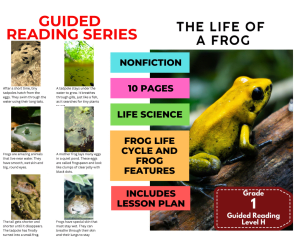
Guided Reading Level H - The Life of a Frog (with Lesson Plan)
ELA, Resources for Teachers, Reading Comprehension, Reading, Science, Animals, Life Sciences, Pre-Reading, Language Development, Vocabulary, Grade 1, 2, 3, Worksheets & Printables, Worksheets, Teacher Tools, Centers, Activities, Literacy Readers, Quizzes, Quizzes and Tests, Assessments, Lesson Plans
This Guided Reading Book - The Life of a Frog (Level H) with lesson plan includes: Guided Reading Color Label (front cover x1) This is a quick way to match the book’s demands to what students can generally handle.. The overall goal is to use the level/color to pick books for several smaller groups. To qualify for a certain level, a student is expected to read a book from that level with about 90–94% accuracy. If a student is consistently accurate and understands, move up a level. If the student is struggling at that level, drop down and add more support. Each student will improve at completely different rates, but it is generally one of the best ways to check progress across the class. DOWNLOAD THE CATALOG TO VIEW ALL GUIDED READING BOOKS AVAILABLE (SORTED LEVELS A-Z) Pre-Reading Question (x1) Teacher asks the prompt aloud, can be while showing the cover or first page. Students share what they already know, or make educated guesses from the cover. Prompt them to use the target vocabulary. Write some of their responses on the board to look back at during the reading. Vocabulary Words (x5) Introduce the five words, best doing it one at a time. Start by saying it, while students repeat and then see if anyone knows what it means before reading further. Read through the meaning and try to briefly connect each word to a picture or gesture so it’s meaningful. Ask students to flip through the book pages and point to where they see each of the vocabulary words. While reading the book pause upon coming across one of the vocab words or read the sentence twice to make sure students understand the word has appeared. Optional: Ask students to raise hands whenever they see/hear one of the new words. Guided Reading Pages (x10) Check the book snapshot (below) for: primary topic - do you need to prep extra reading or intro materials on this? what is taught best - decide on 1-2 bullets to focus on, use the prompt or words provided here for best results. learning goals - what you are checking for students to be able to do after the session, elicit answers using prompts or words provided. key vocabulary (see section above). questions overview - so you know what is coming up and if you need to prep extra materials to assist understanding. Run the lesson You may have already looked at a few of the pages together, but you can show them some of the pictures again first to set meaning. Depending on how much time you have and how familiar your students are with guided reading class, you may want to read the book aloud first with the group first. Students whisper or partner read, while you listen in. If time, do it as a group, one student reading a page each. Use the guided page’s prompts to coach: “Check the picture / does it make sense?” “Point under the words / try the first sound” “Reread the sentence smoothly”. Try to focus more on one student per session (rotating every time), so you can work out if they are ready to move up or need to move down a level. Comprehension Questions (back cover x3) This is your way to check that students didn’t just say the words, but actually understood the text. First, let students answer by pointing to the page/picture and saying a short sentence. After any answer, follow with: “Show me where you found that in the text.” In bigger groups, have partners answer first (10–20 seconds), then call on 2–3 students to share. Differentiation tips: Emerging speakers/struggling readers: oral + pointing On-level: oral in a full sentence Higher: one written sentence or draw + label Book Snapshot Title: The Life of a Frog Genre: Nonfiction (informational life cycle) Subject: Life Science + Reading (Informational Text) Primary Topic: Frog life cycle and frog features Estimated Guided Reading Level (A–Z): H What This Book Teaches Best Explains where frogs live and describes basic frog traits (smooth, wet skin; big, round eyes; living near water). Teaches the frog life cycle in clear steps: eggs (frogspawn) → tadpoles → legs grow → tail disappears → small frog. Shows how a tadpole lives and grows in water, including breathing through gills and eating tiny plants. Describes how frogs breathe (through skin and lungs) and how they get food (long, sticky tongue catching insects). Connects body parts to movement (strong back legs help frogs hop and jump high). Learning Goals Students will describe where frogs live and name physical traits the text mentions. Students will explain what frog eggs are called and describe what they look like. Students will retell the main stages of a frog’s life from eggs to a small frog. Students will describe how tadpoles move, breathe, and find food in the water. Students will explain how the frog’s body changes as legs grow and the tail disappears. Students will use text details to describe how a frog hunts and how it jumps. Key Vocabulary From the Text frogspawn — frog eggs that look like jelly. tadpoles — baby frogs that live in water and have tails. gills — body parts that help an animal breathe underwater. lungs — body parts used for breathing air. insects — small animals a frog can catch and eat. Discussion Prompts Pre-reading question: What changes do you think happen as a tadpole grows into a frog? Comprehension questions: Where does a mother frog lay many eggs, according to the text? Comprehension questions: What do tiny tadpoles use to swim through the water? Comprehension questions: What happens to the tadpole’s tail as it turns into a small frog? Printing Tips 1. Best Printing Method (Recommended) “Booklet” Printing (Best if Available) If your printer or PDF viewer supports Booklet Printing , use this. Settings to use: Print mode: Booklet Paper size: Letter or A4 (either works) Orientation: Landscape Print on both sides: Yes Flip on: Short edge Scaling: Fit to printable area Booklet subset: First test: Front sides only Then: Back sides only This will automatically: Pair pages correctly Put the cover on the outside Align everything for folding After printing, fold in half and staple along the spine . 2. If “Booklet” Printing Is NOT Available You can still print this correctly with manual duplex printing . Step-by-step: Open the PDF. Choose Print . Set: Orientation: Landscape Pages per sheet: 1 Print on both sides: Yes Flip on: Short edge Print all pages . Because each PDF page already contains two facing book pages, the result will still fold cleanly into a book. Thousands of Cored Education products are included with your TeachSimple membership. Download links and encyclopedia index available here.
Author Cored Education
Rating
Tags Reading Comprehension, Reading Passages, Reading, Guided Reading, Guided Reading Lesson Plan, Guided Reading Activity, Pre-reading, Science Lesson Plans, Animals, Frog Life Cycle

Second Grade Reading Comprehension - Don't Let the Pigeon Stay up Late
ELA, Children’s Literature, Literature, Language Development, Reading Comprehension, Reading, Creative Writing, Writing, Community Building, Resources for Teachers, Kindergarten, Preschool, Grade 1, 2, Centers, Activities, Read Alouds, Lesson Plans, Teacher Tools, Writing Prompts, Worksheets & Printables, Novel Studies
Mo Willems is the author of the Pigeon book series. The books contain large amounts of vocabulary designed for k-2nd graders. However, the pictures are so simple and adorable, they can be enjoyed by people of all ages. I adore this series so much that i have collected all of them despite that my son is almost 20 years old. As a result, I created the first of what I hope to be a series of reading comprehension and guided reading activity packs to make learning more fun for early elementary students as well as special education students and those with special needs in the areas of speech and communication. The book, "Don't Let the Pigeon Stay up Late," is required reading in order for students to complete all of the activities. It is available for purchase at Amazon and at Mo Willems own website. You can also find it at your local library to check out. Students will practice reading and learn about grammar, spelling, and increase vocabulary. Activities include: Open-ended questions, writing prompts, based on the text in the book. Sight word recognition activities 32 Spelling Words 32 Vocabulary Words Alphabetization Fill-in-the-Blank Drawing And More Students will be given the opportunity to search for: 14 CVC words found in the book 14 nouns found in the book 18 sight words found in the book Great for: Reading Centers Literature Centers Guided Reading Read aloud activities Practicing Social and Emotional Skills Pigeon books are written so that the reader is directly being spoken to by the Pigeon. Such fun books! Answer key is included, pdf downloadable, printable file. 15 pages Table of contents is included. Links for further activities beyond this guided reading project are also included.
Author Homeschooling Dietitian Mom
Tags Guided Reading, Reading Comprehension, Early Reading, Second Grade Reading Comprehension, 2nd Grade Reading Comprehension, Reading Strategies

How to Write a Book Report: Nonfiction Book Reports - FLASH-PC
ELA, Writing, Common Core, Grade 5, 6, 7, 8, Teacher Tools, Lesson Plans
FLASH-PC: Enhancing Comprehension Skills for Middle School Students How to Write a Book Report: Nonfiction Book Reports - FLASH-PC is an effective and versatile resource designed to enhance the comprehension skills of students in grades 5 through 8. The toolkit serves as a complement to traditional Language Arts curriculum , instructing students on nonfiction book report writing. Main Features: An engaging chapter-style format, incorporating reading passages that boost both student engagement and conceptual understanding. The inclusion of before and after reading questions, fostering improved analytical thinking among students. A seamless alignment with the Common Core State Standards, assuring lessons maintain recognized methodologies. The provision of a range of resources including not only theory-based materials such as printables and vocabulary flashcards but also thoughtfully crafted interactive activities that make learning dynamic while reinforcing learned concepts. An additional feature educators would find beneficial is the use of graphic organizers . These tools are useful in visually representing information which aids overall comprehension amongst visual learners. This multifaceted approach ensures that How to Write a Book Report: Nonfiction Book Reports - FLASH-PC can be successfully applied across different settings – whether in whole-group classroom sessions, small group training, or individual homework assignments. The product file has been structured for convenient access further enhancing usability parameters. To Summarize: How to Write a Book Report: Nonfiction Book Reports - FLASH-PC, serves as an immersive writing lesson plan-bundle for teachers seeking unique ways to introduce their Grade 5-8 pupils into nuanced non-fiction book report writing realms. Imbibe this excellent resource into your teaching routines and witness how seamlessly students will be able to tackle non-fiction book reports hereafter!
Author Classroom Complete Press
Tags Software (PC)
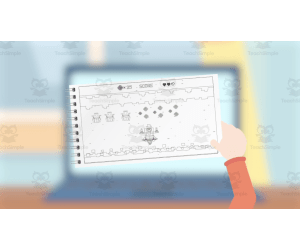
All About Game Based Coding | Animated Coding Video Lesson
Science, Technology, Computer Science, Grade 9, 10, 11, 12, Lesson Plans, Teacher Tools
All About Game Based Coding is a 3-minute animated video lesson that teaches high school students the fundamentals of coding games. This engaging and interactive video serves as an introduction or review of key computer science concepts related to game development. In an upbeat and student-friendly manner, the video covers topics like algorithms, conditionals, loops, variables, and data structures. It explains how these building blocks of code work together to create the interactivity and logic in video games. Game snippets are shown to demonstrate real-world applications. All About Game Based Coding can be utilized in a variety of instructional settings such as whole class instruction, small group work, or as an at-home assignment. The vivid visuals and clear narration make core coding ideas accessible for all learners. This is a perfect resource for any teacher looking to get students excited about the creativity of coding their own games.
Author Educational Voice
Tags Computer Science, Science Video, Computer Games, Coding, Coding Videos

Writing Grade 3
ELA, Writing, Grade 3, Teacher Tools, Lesson Plans
Writing Grade 3: Essential Skill Building Resource Writing Grade 3 is a dedicated teaching tool with a core focus on fostering fundamental writing abilities for our third-grade scholars. The resource serves as a crucial aspect of the foundational layers of imparting education. Skill Focus Areas: A wide array of activities to solidify basic writing mechanics, including: Precise use of capitalization and punctuation. Coherent sentence construction techniques. The exercises aim to help children build efficient communication skills, vital keys for unlocking future academic success. Variety In Activities : The beautifully curated activities promise no dearth of variance; young learners get their hands onto different facets of writing such as: Varying sentence structures and types. Capitalization and punctuation exercises crafted for easy comprehension ad repeated practice. Note:This resource equally emphasizes neat penmanship, providing kids with practice lines to achieve legibility in writing. It’s designed with the independent learner in mind - diligently structured so that it can be effectively implemented without constant adult supervision." Educational Settings Suitability: The flexibility of this tool extends beyond classroom-based learning; it can also be used efficiently in home study sessions, group learning scenarios or even small focused group instructions. It's adaptable enough to double up as homework assignments too! In terms of convenience– an answer key is provided with this set eliminating the need for external assistance or solutions." Product File: This comprehensive content is neatly packed into a simple PDF format, ready for immediate use by educators – be it public school teachers or homeschooling parents. We've got you covered!."
Author Classroom Complete Press
Tags PDF
Blackout Poetry Unit
ELA, Literature, Poetry, Grade 9, 10, 11, 12, Lesson Plans, Teacher Tools
Download and discover the ultimate no-prep resource for blackout poetry, also known as found poetry, that will teach your students the art of word choice, literary techniques, and poetic language through a fun and hands-on approach. In six captivating unit lessons, students will embark on an engaging journey of crossing out found text to create their own unique and personal poems, an experience they'll find far more enjoyable than traditional writing methods. Without even realizing it, your students will immerse themselves in a world of learning while working on their blackout poetry. This all-inclusive module delves deeper than the creation of blackout poems, incorporating literary analysis exercises that investigate five renowned poems and explore five central literary ideas. The module also wraps up with a personal blackout poem project as the summative assessment , designed to engage even the most reluctant creative writers. Witness as your pupils become fully engrossed and stimulated through the enchanting world of blackout poetry! This lesson plan on poetry teaching comes complete with everything needed to run a blackout poetry unit. It is ideal for substitute lesson plans, a brief creative unit, or as a supplement to a poetry or literary analysis unit. Your download comprises: Five blackout poetry exercises centered on literary analysis. Each activity comprises a famous poem, a defined literary concept, discussion questions, and a blackout activity (an answer key and a Common Core-aligned rubric are included). A blackout personal poem "writing" project. This requires students to find a newspaper or magazine article of personal significance and apply the blackout poetry technique to craft their unique piece of poetic art (A 40-point rubric, connected to three Common Core ELA standards, is included in both a printable format and as a link to an editable rubric. This allows for customization of grading and effortless integration into Google Classroom and numerous other Learning Management Systems) LITERARY CONCEPTS AND FAMOUS POEMS INCLUDED IN THIS RESOURCE: Metaphor and “O Captain! My Captain” (1865), by Walt Whitman Imagery and “To S.M., a Young African Painter…” (1773), by Phillis Wheatley Personification and “The Wind — tapped like a tired Man —” (1863), by Emily Dickinson Plot Structure and “The Man He Killed” (1902), by Thomas Hardy Theme and “Here I Love You” (1924), by Pablo Neruda Although this resource can be fitted for any secondary Language Arts classroom, it has been carefully designed to work best in grades 9, 10, 11, and 12. The included rubrics are subtly but specifically tied to Common Core ELA Standards for Writing (3 and 4) and Reading Literature (2). This resource is provided in print-ready, bookmarked, and adjustable PDF files and PowerPoint Show files. This resource contains 8 Pages and 1 Google Sheet.
Author The Language of Educational Art, LLC
Tags Poetry, Creative Writing, Worksheets, Blackout Poetry Art Ideas, Black Out Poem Ideas, Poetry Packet High School, Blackout Poem Ideas, Best Texts For Blackout Poetry, Blackout Poems Ideas

American Revolutionary War: The Road to War Gr. 5-8
Social Studies, History, History: USA, Grade 5, 6, 7, 8, Teacher Tools, Lesson Plans
American Revolutionary War: The Road to War Gr. 5-8 A comprehensive teaching resource meticulously designed for students in grades 5-8. This material covers pivotal entities on 'The Road to War,' with detailed information regarding seminal events that lead up to the American Revolutionary War. Content Overview Starts with a segment regarding the settlement of America and British colonization efforts, leading to thirteen colonies on North America's eastern coast. The effect of the Navigation Acts on these colonies and influence in cause-effect relationships is discussed. Emotional narratives cover incidents like Boston Massacre and Boston Tea Party, marking increasing tensions between colonial settlers and the British Regime. Mentions noteworthy figures such as George Washington and Thomas Jefferson. An engaging account of Paul Revere's midnight ride is included along with sequences surrounding battles of Lexington And Concord. Bold scenes like George Washington masterminding crossing Delaware River brings captivating perspectives into play. Pedagogical Approach & Additional Materials This resource aligns with state standards while being structured according to Bloom's Taxonomy approach (encouraging higher-order thinking skills), serving as valuable reading material alongside stimulating exercises: Crossword puzzles, word searches ensure knowledge retention while offering an engaging learning experience. Comprehension quizzes (with answer keys) are valuable tools for gauging understanding levels around topics effectively. All lessons are delivered as a downloadable PDF file - favouring flexibility for both classroom settings and home-based learning scenarios.</p
Author Classroom Complete Press
Tags PDF

Taking Time for Teamwork
, Grade 4, 5, 6, 7, 8, 9, Teacher Tools, Lesson Plans
Taking Time for Teamwork: A Comprehensive Digital Resource Taking Time for Teamwork is an exemplary digital resource crafted with the objective of encouraging teamwork, bolstering critical thinking, and enhancing problem-solving capabilities among students across varied age groups. This comprehensive guide features a plethora of diverse activities suitable for multiple subjects, specifically designed for educators instructing grades 4 through 9. Converting Classrooms into Arenas of Inspiration The guide transforms your classroom or homeschooling setup into a stimulating space where collaboration and communication take center stage. It introduces exciting challenge-based tasks that inspire creativity and interaction amongst students. These include: Constructing Hanging Contraptions, Designing creative Slides, Crafting Items to Span a Distance, Building specific structures like Towers or Vehicles, Experimentation with Projectiles, Focusing on Cooperation Learning & Cognitive Growth Taking Time for Teamwork puts great emphasis on cooperative learning through its challenges – each task aimed at fostering essential communication skills while promoting teamwork amongst students. It pays attention to the nurturing of higher-level cognitive faculties - skills that prove critical in academic progression and future career endeavours. Moving Beyond Traditional Learning Paradigms This digital teaching resource paves pathways towards interactive classrooms rather than being confined within textbook parameters alone. The inventive assignment sets urge children to broaden their horizons by collectively working on engaging educational projects. Note:This product comes in PDF form making it accessible across various types of devices without compatibility issues providing ease for educators not merely for effective course planning but impactful delivery too! Benefits of Using Taking Time for Teamwork Academic Encourages teamwork and communication skills while nurturing higher-level cognitive faculties. Flexibility Suitable for group activities in schools as well as homeschooling settings. Can even be assigned as homework tasks encouraging family participation. Start your team-building journey today with Taking Time for Teamwork! </p
Author Classroom Complete Press
Tags PDF
I WONDER - How Are Elves Portrayed | Animated Video Lesson
History, Social Studies, Common Core, Grade 4, 5, 6, 7, 8, 9, 10, Lesson Plans, Teacher Tools
Video Introduction An amazing video designed for the students to learn more about mythological creatures in different cultures. I WONDER - How Are Elves Portrayed | Animated Video Lesson Mythology is full of wonders and spectacular stories. Ancient civilizations were trying to explore every aspect of life, while they search for new technologies, they wanted to believe in something big and can change the world, so they created mythical creatures and mythical stories. Let's hear about them! What do you know about these creatures? Cyclops, Centaurs, Selkies, Phoenix, Gnomes, Dragons, Gorgons, Orcs, Cerberus, Trolls, Minotaur, Griffins, Mermaids, Elves, Polyphemus, Pegasus, and Ogres. I WONDER - How Are Elves Portrayed | Animated Video Lesson The video is perfect for encouraging the creativity skills for the students, while learning more about this fantastic mythical creature. I WONDER - How Are Elves Portrayed | Animated Video Lesson This friendly designed video is suitable for students at school, homeschooling, and as a group activity. Format Available in MP4 format.
Author Educational Voice
Rating
Tags How Are Elves Portrayed, How Are Elves Portrayed Video, Elves, Elves Facts, Elves Video, Elves Video For Kids, Elves Facts For Kids, Mythology, Mythology Video, Mythology Facts

I WONDER - How Do Zebras Defend Themselves | Animated Video Lesson
STEM, Biology, Life Sciences, Science, Animals, Grade 1, 2, 3, 4, 5, 6, 7, 8, Lesson Plans, Teacher Tools
Video Introduction Animal kingdoms are full of fascinating wonders to learn. This video is designed for the students to learn more about animals in different countries. I WONDER - How Do Zebras Defend Themselves | Animated Video Lesson Do you like animals? what is your favorite one? Do you own a pet? If yes, tell us more about it, like what its name? And what do you like most about it? What are the animal kingdoms? Can you write down the characteristics of each animal class like mammals, birds, reptiles, amphibian, fish and mollusks. Do you know that some animals can sing, can you name any of them? What is the largest and the smallest mammal in the world? What is the largest and the smallest bird in the world? What is the largest and the smallest fish in the world? I WONDER - How Do Zebras Defend Themselves | Animated Video Lesson The video is perfect for encouraging the researching skills for the students, while learning more about these fantastic animals. I WONDER - How Do Zebras Defend Themselves | Animated Video Lesson This friendly designed video is suitable for students at school, homeschooling, and as a group activity. Format Available in MP4 format.
Author Educational Voice
Tags How Do Zebras Defend Themselves, How Do Zebras Defend Themselves Video, Zebras Defend Themselves, Zebras, Zebra, Zebras Facts, Zebras Facts For Kids, Zebras Video, Zebras Video For Kids

Measurement: Measuring Length - FLASH-PC
Math, Measurements, Grade 1, 2, Teacher Tools, Lesson Plans
Measurement: Measuring Length - FLASH-PC The Measurement: Measuring Length - FLASH-PC is an engaging, educational resource that offers comprehensive insight into the concept of measuring length in Measurement. This tool is specially constructed for educators who are looking to instill a robust understanding of measurements in their students, particularly those studying in grades 1 and 2. A resourceful teaching tool This teaching software primarily targets Mathematics instruction but also serves as a dynamic asset for various measurement-related lesson plans. Pre- assessment materials: These elements are essential for establishing a base-level understanding before proceeding to complex topics. Educative lesson plans: Each plan is carefully designed with an intent to fulfill curriculum-based needs while emphasizing student comprehension. Real-world word problems: This aids enlightening students with practical problem-solving techniques intrinsic to measurements. Timed drill activities: Regular engagement with these drills improvises speed and accuracy among learners. Diverse instructional methods The software accommodates both group work and focus group activities catering to diverse pedagogical needs. It also includes printable worksheets making it adaptable for various instructional environments such as classrooms or homeschooling setups. Fostering active participation and critical thinking skills Learners can engage in memory match games, interactive board games, and spinner games promoting active participation while learning Math topics such as Measurements. Bilingual focus & Technological alignment Inclusive of Spanish voice over text options alongside standard English thus enabling language versatility for ESL learners' learning needs. Corresponding with rapid technology advancements, the product includes SMART Response assessments which offer teachers a progressive way to track student progress. To conclude, Measurement: Measuring Length - FLASH-PC proves to be an invaluable addition to all educators striving for a dynamic instructional approach blended nicely with retention of pedagogical fundamentals.
Author Classroom Complete Press
Tags Pre-assessment, Money Activity, Measuring, Length, Measurement

Number & Operations: Base-Ten & Place Value for 3rd-5th - Practice the Skill 3 - MAC Software
Math, Place Value, Common Core, Grade 3, 4, 5, Teacher Tools, Lesson Plans
Number & Operations: Base-Ten & Place Value for 3rd-5th - Practice the Skill 3 - MAC Software This cutting-edge educational tool is designed as guided practice for students in the 3rd, 4th, and 5th grades . Nested within an easy-to-use MAC software interface, it focuses on strengthening understanding of Base-Ten and Place Value concepts in Number and Operations. The objective of this software is to fortify foundational math skills through engaging timed drills . It challenges students to add or subtract base-ten blocks, thus boosting their confidence when manipulating numbers. The package contains a user-friendly software specifically tailored for MAC users. Apart from skill drill activities, the resource also offers handy Math tools integrated into its curriculum -based content. Its aim is not just to assist problem-solving but also to encourage autonomous learning among students. In order to meet the needs of a diverse student body, English voice over and text have been included alongside Spanish language options demonstrating its inclusive approach. It adheres strictly to Common Core State Standards, STEM initiatives, and NCTM recommendations—reflecting its wide academic applicability which can benefit both public school classrooms or homeschooling modules alike. Uses: • Employed as a whole group instruction setting—ideal for fostering collective comprehension during collaborative sessions in classrooms • As homework assignments enhancing confident solo problem solving abilities of learners. All benefits considered, choosing Number & Operations: Base-Ten & Place Value teaching resource affords faculty access to quality lesson plans equipped with effective tactics focusing primarily on subtraction and addition tasks concerning place values—a perfect aid ensuring smooth navigation through intricate math lessons!
Author Classroom Complete Press
Tags Digital Math, Base-ten Blocks, Place Value Lesson, Math Lesson, Math Skills
I WONDER - How Do Lizards Travel Across The Desert Sand
STEM, Animals, Life Sciences, Science, Biology, Grade 1, 2, 3, 4, 5, 6, 7, 8, Lesson Plans, Teacher Tools
Video Introduction Animal kingdoms are full of fascinating wonders to learn. This video is designed for the students to learn more about animals in different countries. I WONDER - How Do Lizards Travel Across The Desert Sand | Animated Video Lesson Do you like animals? what is your favorite one? Do you own a pet? If yes, tell us more about it, like what its name? And what do you like most about it? What are the animal kingdoms? Can you write down the characteristics of each animal class like mammals, birds, reptiles, amphibian, fish and mollusks. Do you know that some animals can sing, can you name any of them? What is the largest and the smallest mammal in the world? What is the largest and the smallest bird in the world? What is the largest and the smallest fish in the world? I WONDER - How Do Lizards Travel Across The Desert Sand | Animated Video Lesson The video is perfect for encouraging the researching skills for the students, while learning more about these fantastic animals. I WONDER - How Do Lizards Travel Across The Desert Sand | Animated Video Lesson This friendly designed video is suitable for students at school, homeschooling, and as a group activity. Format Available in MP4 format.
Author Educational Voice
Tags How Do Lizards Travel Across The Desert Sand, How Do Lizards Travel Across The Desert Sand Video, Lizards, Lizard, Lizards Facts, Lizards Facts For Kids, Lizards Video, Lizards Video For Kids
I WONDER - What Causes Forest Fires | Animated Video Lesson
Environmental Science, Earth and Environmental Sciences, Science, Grade 4, 5, 6, 7, 8, 9, 10, Lesson Plans, Teacher Tools
Video Introduction An amazing video designed for the students to learn more about STEM. I WONDER - What Causes Forest Fires | Animated Video Lesson Do you like STEM subjects? what is your favorite one? Have you ever tried to plant a seed? If yes, tell us more about it. Or have you ever tried to invent something? If yes, tell us more about it. And how do you think it will help us? Have you ever seen a microorganism under a microscope? What was it? And how it looked like? Mathematics is a marvelous subject. Let' sharpen our brains and solve some equations. Do you like timetable tricks? What is your favorite one? Do you know how to code? Have you ever created an app or a game before? If yes, how was it like? I WONDER - What Causes Forest Fires | Animated Video Lesson The video is perfect for encouraging the researching skills for the students, while learning more about this fantastic topic. I WONDER - What Causes Forest Fires | Animated Video Lesson This friendly designed video is suitable for students at school, homeschooling, and as a group activity. Format Available in MP4 format.
Author Educational Voice
Tags What Causes Forest Fires, What Causes Forest Fires Video, Forest Fires, Forest Fires Facts, Forest Fires Facts For Kids, Forest Fires Video, Forest Fires Video For Kids, Forest Fire, Forest Fire Facts

Displaying Data and Probability
Math, Statistics, Grade 5, Teacher Tools, Lesson Plans
Displaying Data and Probability This resource is primarily meant for Grade 5 students studying Statistics as part of their Math curriculum. It contains various activities and lessons, simplified to aid understanding of complex mathematic concepts. Focus areas include: Displaying Data Circle Graphs Bar Graphs Probability About each section: The Displaying Data Section: In this activity -rich section, students are guided on how to efficiently collect, systematically organize, skillfully analyze, and neatly display data. The Circle Graphs Section: A hands-on approach is employed in teaching students how to accurately draw out pie charts using the provided data as well as elucidating the degrees represented by each slice. The Bar Graph Section: The bar graph toolkit encourages logical collection and organization of data into easy-to-understand graphs that include both single bar graphs as well double bar graphs. The Probability Section : This section simplifies probability with relevant vocabulary and varied ways of expression thereby laying a solid foundation into understanding this fundamental mathematics model. The resource also includes an exclusive guide on teaching complicated topics like computing sample space through tree diagrams. Finally delivered in a convenient PDF format suitable for both print outs or digital viewing- The Displaying Data and Probability guide is an all-encompassing methodology that aids educators whether they operate within traditional classroom settings or homeschool their pupils.
Author Classroom Complete Press
Tags PDF

I WONDER - How Did Blizzards Get Their Name | Animated Video Lesson
Environmental Science, Earth and Environmental Sciences, Science, Earth Sciences, Grade 3, 4, 5, 6, 7, 8, 9, Lesson Plans, Teacher Tools
Video Introduction An amazing video designed for the students to learn more about natural disasters in different countries. I WONDER - How Did Blizzards Get Their Name | Animated Video Lesson Do you like summer days where the sun is shinning and you can see beautiful flowers everywhere or winter days where it is raining or snowing and where you can set by the fireplace and enjoy the scene from outside your windows? How to do you thing the blizzards and hurricanes or tornadoes got their names? Can you name a volcanic mountain? Have you ever read about earthquakes? Do you know why earthquakes happen? I WONDER - How Did Blizzards Get Their Name | Animated Video Lesson The video is perfect for encouraging the researching skills for the students, while learning more about this fantastic phenomenon. I WONDER - How Did Blizzards Get Their Name | Animated Video Lesson This friendly designed video is suitable for students at school, homeschooling, and as a group activity. Format Available in MP4 format.
Author Educational Voice
Rating
Tags How Did Blizzards Get Their Name, Blizzards, Blizzards Facts, Blizzards Video, Blizzards Facts For Kids, Blizzards Video For Kids, Blizzards Name, Blizzards Names, Blizzards Names Facts