



3,952 products added recently
Page 49 - Popular Lesson Plans
Explore a curated selection of popular lesson plans that have proven successful in classrooms. Covering various subjects and topics, these resources provide innovative ideas and activities. Use them to refresh your curriculum and engage your students with tried-and-true methods.

 Show filters

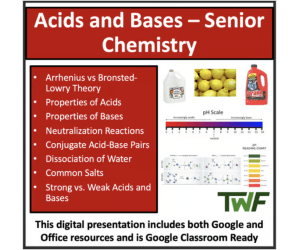
Acids and Bases - Senior Chemistry lesson
Science, Chemistry, Grade 10, 11, 12, Teacher Tools, Lesson Plans
Acids and Bases - Senior Chemistry Lesson Your lesson covers acids and bases at a senior chemistry level. In order, the lesson teaches about; Arrhenius vs Bronsted-Lowry Theory, properties of Acids, properties of Bases, Neutralization Reactions, Conjugate Acid-Base Pairs, Dissociation of Water, Common Salts, and Strong vs. Weak Acids and Bases. Your lesson includes the teacher and student version of the presentation, THREE embedded videos, an auto-graded exit ticket, and a student lesson handout so the students can record the notes on a more condensed medium. This lesson is designed to be your go-to resource, whether you're in a traditional classroom or a virtual one. With both a teacher version and a student version, it seamlessly fits into your lesson plans, making learning engaging and adaptable. Assessment made easy We've included an auto-graded Exit Ticket and a quiz with an answer key because I know you don't have an excess of time. I know you don't, because I don't and I know I'll do whatever I can to reduce my grading time. Whether you use PowerPoint or Google Slides, prefer Word or Google Docs, this lesson has you covered. This lesson comes in both Office and Google formats for your convenience. The student version of the presentation has strategically placed blanks for them to fill in as you're teaching. It keeps them active and engaged, encourages discussion, and leaves more time for those "aha" moments.
Author Teach With Fergy
Tags Chemistry Lesson, Acids, Bases, Arrhenius Vs Bronsted-Lowry, Neutralization, Acid-base Pairs, Salts, Strong Vs Weak Acids, Strong And Weak Bases
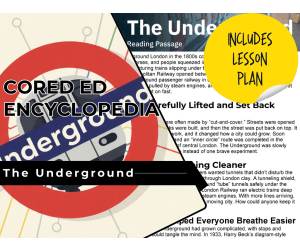
The Underground Reading Comprehension Passage - Cored Ed Encyclopedia
ELA, Language Development, Reading Comprehension, Reading, Science, Technology, Engineering, History, Social Studies, Geography, Grade 2, 3, 4, 5, Worksheets & Printables, Worksheets, Teacher Tools, Centers, Activities, Writing Prompts, Assessments, Quizzes and Tests, Quizzes, Lesson Plans
This Underground reading comprehension with lesson plan includes: Visualization (on the front cover) Start your lesson by taking a minute to think and share something about the topic. Read the script aloud (slowly), perhaps prepare some music or sound effects. Student close their eyes and let their imaginations wander. Students open their eyes, read the question aloud and give them a few minutes to complete. Ask a few students to share or keep answers until the end to compare with what they learn in the passage. Quick pause—thousands of Cored Education products are included with your TeachSimple membership. Download links and encyclopedia index available here. Pre-Reading Trivia Students will write down one thing they already know about the subject and then read five more facts and discuss. These facts are fun, and the students will enjoy learning about the subject before reading more. Give 1 minute for students to write what they already know (no pressure—best guess is fine). Read the five facts together. After each fact, do ask a student for their opinion, was it surprising? Set a purpose by asking students to highlight/underline one fact they want to learn more about during the reading. Reading Passage The text is a high-interest reading passage with set paragraphs, roughly three to four paragraphs long. It contains a variety of themes about the topic, anywhere from history to technology. The passage is between 250 and 350 words in length. First, ask students to look at the headings and see what they’ll learn about today. What do they know about the topic/heading? First read options: Teacher read-aloud (best for support). Partner reading (paragraph by paragraph). While reading, students underline important details, and vocabulary words they think may come up in the questions section. Mixed Questions The first question page contains four multiple-choice questions, each with a choice of four answers, and three written response questions that require a sentence or two from the student. Students complete the mcqs first independently, then review quickly as a class. For the 3 written responses, try to get students giving the answer with some form of evidence: “I think ___ because the text says ___.” If students get stuck, send them back to check the passage. Vocabulary Questions Practice seven key words from the text in this section across two activities. First section is scrambled words where students will unscramble three words given a clue for each. The second section is a word to meaning matching activity. Before starting, have some students read out words they underlined in the passage. Ask students to say the word and read aloud the sentence(s) around each word. Ask students to do scrambled words and the matching exercise in pairs then go through answers as a class. For the scrambled spelling task, get four pairs to come up to the board and write the words for extra practice with the other student reading out the clue. For the matching task, prompt students to give full sentences: “I matched ___ with ___ because ___.” Creative Writing In this question, the student will be required to write a five to eight sentence paragraph on a question related to the topic. Before starting, ask students write down 3 key ideas they are going to include in their piece. Ask students for ideas to share around the class to help those struggling. Pro writing expectations: 5–8 sentences At least 2 facts or details from the passage At least 2 vocabulary words from the previous page Students read their paragraphs while classmates listen for facts and vocabulary words. Extension Activities This page is optional for fast finishers or to take home. There are several activities, each one requiring a different skill. Do some, do none, do all, completely optional - but you will feel reassured knowing every possibility is planned for. Includes summary writting question. Answer Key There are answers for the multiple-choice questions, written response questions have sample answers, vocabulary answers and if there is a summary question then a sample summary will be provided as well. Lesson Plan Included Customized lesson plan for this lesson is included. Lesson Snapshot Title: The Underground Genre: Nonfiction (informational text) Subject: Social Studies (History) Primary Topic: How London built and improved the Underground Estimated Guided Reading Level (A–Z): R What This Lesson Teaches Best Explains why planners wanted trains under crowded London streets in the 1800s. Teaches key early-history facts, including the Metropolitan Railway opening on January 10, 1863, between Paddington and Farringdon. Describes the “cut-and-cover” method (opening streets like a trench, building tracks, then putting the street back). Shows how deeper “tube” tunnels and electric trains reduced street disruption and avoided steam smoke. Demonstrates how a clearer diagram-style map (Harry Beck, 1933) helped riders understand a complicated system. Learning Goals Students will explain why some planners imagined trains going under London in the 1800s. Students will identify what opened on January 10, 1863, and name the two stations connected in the text. Students will describe the steps of “cut-and-cover” tunnel building using details from the passage. Students will explain how digging deeper “tube” tunnels changed building the Underground and affected smoke underground. Students will explain how Harry Beck’s 1933 diagram-style map made the system easier to follow. Key Vocabulary From the Text Metropolitan — the name of an early London railway line. cut-and-cover — open a street, build tracks, rebuild street on top. tunneling — digging a passage underground. shield — a strong ring that helps bore tunnels safely. complicated — hard to understand because there are many parts. FULL CATALOG OF DOWNLOAD LINKS AND ENCYCLOPEDIA INDEX HERE
Author Cored Education
Rating
Tags Vocabulary, Reading Comprehension, Reading Passages, Lesson Plans, Ela Lesson Plans, Reading Comprehension Lesson Plans, Pre-reading, History, History Lesson Plans, Geography
All About Coding Courses | Animated Coding Video Lesson
Science, Technology, Computer Science, Grade 9, 10, 11, 12, Lesson Plans, Teacher Tools
All About Coding Courses: An Engaging Animated Video Lesson This 3-minute animated video serves as an interactive and engaging introduction to coding courses for high school computer science students. Students will enjoy learning more about the world of coding through this entertaining video format that brings the topic to life. Educators can utilize this resource in a variety of settings - play it for the whole class to spur discussion, assign it to small groups for collaborative learning, or provide it as supplemental material for students to watch independently. The video explores what coding entails in an accessible way that resonates with teens. By sparking students' curiosity, this resource can motivate them to further pursue computer science education and careers. Its lively tone and brisk pace keep viewers interested as they pick up foundational knowledge about the coding field.
Author Educational Voice
Tags Coding, Science Course, Science Lesson, Computer Science, Coding Videos
I Wonder - Why Are Ocean Plants Important | Animated Video Lesson
Earth Sciences, Earth and Environmental Sciences, Science, Environmental Science, Grade 4, 5, 6, 7, 8, 9, 10, Lesson Plans, Teacher Tools
Video Introduction An amazing video designed for the students to learn more about STEM. I WONDER - Why Are Ocean Plants Important | Animated Video Lesson Do you like STEM subjects? what is your favorite one? Have you ever tried to plant a seed? If yes, tell us more about it. Or have you ever tried to invent something? If yes, tell us more about it. And how do you think it will help us? Have you ever seen a microorganism under a microscope? What was it? And how it looked like? Mathematics is a marvelous subject. Let' sharpen our brains and solve some equations. Do you like timetable tricks? What is your favorite one? Do you know how to code? Have you ever created an app or a game before? If yes, how was it like? I WONDER - Why Are Ocean Plants Important | Animated Video Lesson The video is perfect for encouraging the researching skills for the students, while learning more about this fantastic topic. I WONDER - Why Are Ocean Plants Important | Animated Video Lesson This friendly designed video is suitable for students at school, homeschooling, and as a group activity. Format Available in MP4 format.
Author Educational Voice
Tags Why Are Ocean Plants Important, Why Are Ocean Plants Important Video, Ocean Plants, Ocean Plant, Ocean Plants Facts, Ocean Plants Facts For Kids, Ocean Plants Video, Ocean Plants Video For Kids

Adjectives Supplementary Materials - Grade 3-4 Grammar (PDF)
ELA, Language Development, ESL, Grammar, Common Core, Resources for Teachers, Grade 3, 4, Worksheets & Printables, Worksheets, Quizzes and Tests, Teacher Tools, Tests, Assessments, Activities, Lesson Plans
Adjectives Supplementary Materials Note: This download DOES NOT include the tests themselves. You can still make use of these materials without them but they are recommended. Download in a format of your choice in the "Links" section below. Outline Ice Breaker (5-10 minutes) Engaging, interactive activity to introduce the lesson’s theme. Examples: Matching games, sentence races, charades, or storytelling challenges. Guided Practice (10-15 minutes) Teacher-led exercises to reinforce the concept. Examples: Sorting sentences by tense, sentence transformations, or fill-in-the-gap exercises. Group or Partner Task (15 minutes) Collaborative activity to practice the lesson’s focus in a fun and engaging way. Examples: Role-play, storytelling, sentence-building games, or small-group discussions. Independent Worksheet (15 minutes) Individual written activity to solidify understanding. Examples: Sentence corrections, verb conjugation drills, or tense identification exercises. Exit Task (5 minutes) Quick reflective activity to assess understanding before students leave. Examples: Writing a sentence using the target concept, identifying a tense, or explaining a rule. Links: Includes: Identifying Adjectives Gap Filling Comparatives Superlatives Additional Practice Google Docs Google Forms Google Slides PDF PPT Word FULL CATALOG OF DOWNLOAD LINKS HERE Grade 3/4 Links: Adjectives Google Docs Google Forms Google Slides PDF PPT Word Free Supplementary Materials Pack Adverbs Google Docs Google Forms Google Slides PDF PPT Word Free Supplementary Materials Pack Conjunctions Google Docs Google Forms Google Slides PDF PPT Word Free Supplementary Materials Pack Nouns Google Docs Google Forms Google Slides PDF PPT Word Free Supplementary Materials Pack Pronouns Google Docs Google Forms Google Slides PDF PPT Word Free Supplementary Materials Pack Verbs Google Docs Google Forms Google Slides PDF PPT Word Free Supplementary Materials Pack Sentence Structure Google Docs Google Forms Google Slides PDF PPT Word Free Supplementary Materials Pack Present Tense Google Docs Google Forms Google Slides PDF PPT Word Free Supplementary Materials Pack Past Tense Google Docs Google Forms Google Slides PDF PPT Word Free Supplementary Materials Pack Future Tense Google Docs Google Forms Google Slides PDF PPT Word Free Supplementary Materials Pack Context Clues Google Docs Google Forms Google Slides PDF PPT Word Free Supplementary Materials Pack Defining Words Google Docs Google Forms Google Slides PDF PPT Word Free Supplementary Materials Pack Fill the Blanks Google Docs Google Forms Google Slides PDF PPT Word Free Supplementary Materials Pack Homophones Google Docs Google Forms Google Slides PDF PPT Word Free Supplementary Materials Pack Synonyms Google Docs Google Forms Google Slides PDF PPT Word Free Supplementary Materials Pack ELA Review Questions Overview Questions have three answer choices. There are a handful of pictures on each test for aesthetic purposes, as well as a review sheet covering most of the topics covered in the product. Introduction or Example Sheet Each topic will include an introduction or example sheet to go through first with your students. Full Answer Keys Full answer keys and sample responses are provided so no matter how busy you are, you know you're covered! In the Supplementary Pack Interactive Ice Breakers: Fun, hands-on activities that get students thinking about adjectives right from the start. Guided Practice: Teacher-led exercises that reinforce the day’s lesson, ensuring students can confidently identify and use adjectives. Group and Partner Tasks: Collaborative activities that allow students to work together to solve problems, categorize adjectives, and create descriptive sentences. Independent Worksheets: Structured worksheets that provide individual practice and help solidify understanding of key concepts. Exit Tasks: Quick, reflective activities at the end of each lesson that assess understanding and encourage students to apply what they’ve learned. For similar downloads and other frees, do check out Cored Group on TeachSimple.
Author Cored Education
Tags Elementary, Answers, Ccss, Common Core, Grammar, Tests, Test Prep, Grade 3, Grade 4, Lesson Plan

DIGGING FOR DINOSAURS Gr. 1-3
Science, Life Sciences, Animals, Grade 1, 2, Teacher Tools, Lesson Plans
DIGGING FOR DINOSAURS Gr. 1-3 An engaging teaching resource designed for first through third-grade students. Packed with captivating facts about dinosaurs, this material provides a detailed exploration into life approximately 160 million years ago when these incredible creatures inhabited our planet. Learning Content The resources integrate information about different types of dinosaurs- both carnivorous and herbivorous – with an in-depth approach to their reproduction habits and the amazing process in which their bones and eggs fossilized over time. This blend of content makes it ideal for cultivating fundamental reading, research, math, writing, phonics,and creativity skills among young learners. Flexible Application across Teaching Formats This resource can be utilized during whole-class instruction or within smaller study groups to foster peer-to-peer learning interaction. It also proves beneficial for homework assignments or individual study sessions at home or inside the classroom. Inclusive Activities Dinosaur riddles & rhymes that stimulate critical thinking. Rebus stories fostering enthusiasm for learning science subjects. Creative use of art through constructing plasticine models and pipe cleaner skeletons. The instructional material is accompanied by printed facts sheets& interactive tasks like book-making projects intertwining theory knowledge with concrete application. Easy Access Material Format (Downloadable PDF|91 pages| Engaging Graphics) This resource is delivered as a downloadable PDF featuring 91 pages full of eye-catching graphics - stirring visuals which ignite children’s inherent curiosity towards understanding themselves in relation to the world around them,and their sense of wonder about the biomysteries of life forms that dominated Earth millions of years before us. Methodology The methodologies utilized in DIGGING FOR DINOSAURS Gr.1-3 have been meticulously tested and found effective across varied schooling patterns. They are flexible enough to be concurrently used across subjects, thus forging a broad range of cross-disciplinary links while reinforcing fundamental topic-specific skills in every lesson plan. So embark on a captivating journey into the age of dinosaurs with this unique teaching resource, conducive for fostering your students' curiosity and love for science."Happy digging!"
Author Classroom Complete Press
Tags Reading Passages, Interview, Science Facts, Reading Comprehension, Riddles

Employment & Volunteering: Volunteering Gr. 9-12+
Life Studies, Career, Grade 9, 10, 11, 12, Teacher Tools, Lesson Plans
Title: "Employment & Volunteering: Volunteering Gr. 9-12+" This comprehensive teaching resource is designed to elevate your classroom curriculum by focusing on practical life skills in the realm of employment and volunteering. Tailored for students from grade 9 to 12, it aligns seamlessly with State Standards and is rooted in Bloom's Taxonomy. Key Features Aims: Imparts critical skills needed for students stepping into work. Covers Key Topics: Resume Writing, effective Job Applications, Interview Preparation. Includes Soft Skills: Promotes open communication skills needed at workplaces. The standout aspect of this resource is its focus on Volunteering. It educates about the benefits of pro bono service while considering career paths along with making students aware of their rights as employees – an integral aspect as they step into professional environments. Fosters Skill Development With Engaging Content Apart from fostering low vocabulary comprehension strategies, interactive activities inspired by real-world scenarios like crossword puzzles or word searches alongside reading passages and graphic organizers featured in every chapter make learning an enjoyable journey! Reproducible Nature: Add convenience to your teaching process! these resources can be printed for use as group activity materials or homework assignments - adaptability makes it useful for homeschooling parents too! Digital Availability: , Navigate to Life Studies category . Select Career subject. , You will find these downloadable PDF lesson plans packed within one product file offering seamless access! .
Author Classroom Complete Press
Tags PDF
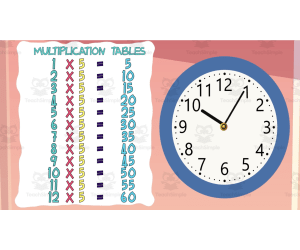
All About Using Timetables | Animated Math Video Lesson
Math, Multiplication and Division, Division, Grade 3, 4, 5, Lesson Plans, Teacher Tools
All About Using Timetables Animated Math Video Lesson The All About Using Timetables Animated Math Video Lesson is a tool uniquely designed for simplifying the learning process for Grade 3, Grade 4, and Grade 5 students. This invaluable resource is exclusively crafted for math educators seeking an engaging approach in teaching multiplication and timetable concepts. Product Features An animated math video approximately 11 minutes long. Serves as both an introductory tool and a review material. To support learning effectively, it provides step-by-step guidance on how to proficiently handle timetables Lively animations and colorful visuals make learning interactive and engaging more than traditional methods. The flexibility of the All About Using Timetables Animated Math Video Lesson allows it to be utilized in various educational settings be it a full classroom lecture or smaller settings like tutoring sessions or even homeschooling situations. Ease of Access Bundled as a single MP4 file, this resource is easily accessible across different digital platforms without requiring additional software or applications. Teachers can conveniently integrate into their lessons whether they are conducting classes remotely or at school. They even have the option to assign this dynamic video lesson as homework if it best suits their teaching strategy. In summary,the All About Using Timetables Animated Math Video Lesson , with its versatile approach towards making multiplication concepts easier through timetable analysis, will prove enormously useful for teachers who aim to enhance student's grasp using engaging resources.<footer
Author Educational Voice
Tags Timetable Usage, Multiplication Problems, Animated Math Video, Interactive Learning, Flexible Teaching

I WONDER - What Problems Can We Have With The Pancreas
Biology, Life Sciences, Science, Human Body, STEM, Grade 6, 7, 8, 9, 10, 11, 12, Lesson Plans, Teacher Tools
Video Overview The human body is full of fascinating wonders to learn. This video is created to help the students recognize the anatomy and the job of the human body. I WONDER - What Problems Can We Have With The Pancreas | Animated Video Lesson Every part and organ in our human body is vital so let's see how important they are. Have you ever imagined how we look like if we didn't have a skeleton? Did you know that because we have our amazing muscles we can stand! Do you know how many teeth do we have? Have you ever wondered about the food journey inside our body? Can you name all the glands in our body? Why do we have skin? Our nervous system is really good at sending signals. Can you tell us more about it? Are you really good at Mathematics, painting, or any other thing? You should really thank your brain about it! The famous five senses are really doing a great work? Can you explain how every sense works? I WONDER - What Problems Can We Have With The Pancreas | Animated Video Lesson The video is perfect for encouraging the researching skills for the students, while learning more about our fantastic human body. I WONDER - What Problems Can We Have With The Pancreas | Animated Video Lesson This friendly designed video is suitable for students at school, homeschooling, and as a group activity. Format Available in MP4 format.
Author Educational Voice
Tags What Problems Can We Have With The Pancreas, What Problems Can We Have With The Pancreas Video, Pancreas Problems, Pancreas Problems Facts, Pancreas Problems Facts For Kids, Pancreas Problems Video

Don't Stir The Drama Pot-An SEL Presentation Plus SEL Coloring Page
Special Resources, Social Emotional Learning (SEL), Social Skills, Creative Arts, Art, Special Education Needs (SEN), Life Skills, Grade 4, 5, 6, 7, 8, 9, Teacher Tools, Lesson Plans, Worksheets & Printables, Worksheets, Coloring Pages, Writing Prompts
In this product, you will get a Google Slides lesson with SEL coloring pages and Writing prompts discussing what causes drama among friends, what makes things worse (heats it & stirs it up) and what makes things better (what cools it down). There are 10 situations to discuss as a class. You can have students use fingers (1-5) or move to stations around the room to choose what they would do in different situations. Finally, there is a reflection and a coloring activity to reinforce the importance of being drama-free. This lesson will address friendship skills, relationship skills as well as social awareness. You can use this for whole-classroom guidance lessons, small groups, and even one on one counseling. There are descriptions of what heats up (fuels) drama among friends as well as what de-escalates friendship problems. There is a 19-slide presentation using Google Slides. In the PDF, you just need to click on the image of the main cover image. This is the image of a collection of the slide presentation, the reflection sheet, as well as the mindfulness coloring activity sheet. There are slide notes on every page. Please read each slide note for each slide. This will help you have a seamless lesson with very little prep and no need to prepare for your SEL lesson. The heat-up reasons are; involving other people as messengers, bringing up past situations, gossiping, using mean words, and blaming others. The cooldown strategies are; owning your stuff (taking responsibility for your own actions), sharing your own feelings, sticking to the current situation, listening to the other person's perspective, and calming down before you react. This is a great lesson to use if you are finding students have difficulty solving their own problems among their friendship groups, small groups for girls (in particular), or hosting lunch bunch groups for girls. This is not gender specific so you can use it for both genders if needed.
Author Jennifer Moyer Taylor
Tags Friendship Skills, Google Slides, School Counseling, SEL, Special Education, SEL Presentations, SEL Coloring Pages, Worksheet Writing Prompts, Social Emotional Learning
I WONDER - Did Viking Women Fight In Battle | Animated Video Lesson
History: British, History, Social Studies, History: Europe, History: Ancient, History: Canada, History: USA, Grade 4, 5, 6, 7, 8, 9, 10, Lesson Plans, Teacher Tools
Video Introduction An amazing video designed for the students to learn more about history. I WONDER - Did Viking Women Fight In Battle | Animated Video Lesson Do you like history? Which topic do you really enjoy about history? Have you ever read an interesting fact about the Vikings? If yes, can you mention them? What do you like most about the Victorian era? Can you name all the Tudors? Have you ever wondered how people used to live in ancient Japan and ancient China? Do you know any interesting facts about ancient Egyptians and the Pharaohs? Have you ever visited South America? What do you know about Incas and Aztecs? Celtic culture was really one of a kind, can you name any of the places that Celts used to live in? Imagine yourself living during the ancient Roman empire, how your life will look like? Ancient Greece was an amazing place to live in. What do you know about ancient Greek life? I WONDER - Did Viking Women Fight In Battle | Animated Video Lesson The video is perfect for encouraging the researching skills for the students, while learning more about history. I WONDER - Did Viking Women Fight In Battle | Animated Video Lesson This friendly designed video is suitable for students at school, homeschooling, and as a group activity. Format Available in MP4 format.
Author Educational Voice
Tags Did Viking Women Fight In Battle, Did Viking Women Fight In Battle Video, Viking Women, Viking Women Facts, Viking Women Facts For Kids, Viking Women Video, Viking Women Video For Kids

Algebra: Expressions - Multiplication & Division - Practice the Skill 2 - FLASH-MAC
Math, Algebra, Common Core, Grade 3, 4, 5, Teacher Tools, Lesson Plans
FLASH-MAC: Multiplying and Dividing Expressions in Algebra Algebra: Expressions - Multiplication & Division - Practice the Skill 2 - FLASH-MAC is an outstanding educational resource. It is intended for grades 3, 4, and 5 to enhance their understanding of Multiplying and Dividing Expressions in Algebra . The material includes a series of timed drill activities. These: Prompt students to assess provided expressions. Foster skill sharpening through careful utilization of order of operations. Incorporate additional math tools for a comprehensive learning experience. Suitable Learning Environments: The product can be used effectively in various learning settings like: Whole-group classroom activity Individual study sessions Homeschool Curriculum --and even as-- engrossing homework tasks. Note:We have been careful to adhere to both Common Core State Standards and STEM initiatives along with NCTM standards guidelines while creating this versatile teaching tool. Special feature: Includes English and Spanish voice overs with corresponding text options, making it appropriate for bilingual classrooms too. The Verdict: A unique feature is that not only does this product include English voice overs but Spanish ones too along with corresponding text options catering linguistically diverse classrooms and aiding bilingual students seamlessly engage without feeling left out from learning experience thereby making subject matter accessible for everyone. Algebra: Expressions- Multiplication & Division- Practice the Skill 2- FLASH-MAC proves notably versatile extending beyond typical restrictions every educator faces in teaching today's multicultural classrooms proving itself arguably imperative to fulfilling and exceeding desired educational needs!
Author Classroom Complete Press
Tags Software (Mac)

I WONDER - What Did Ancient People Think Of The Aurora Borealis
Geography, Social Studies, Earth Sciences, Earth and Environmental Sciences, Science, Grade 4, 5, 6, 7, 8, 9, 10, Lesson Plans, Teacher Tools
Video Introduction An amazing video designed for the students to learn more about famous places in different countries. I WONDER - What Did Ancient People Think Of The Aurora Borealis | Animated Video Lesson What do you know about this place? Do you know in which part of the world it is? Have you ever visited this place? If yes, can you tell us more about your adventure, and what do you like the most about this place? Do you like reading about Geography? What is your favorite country in the whole world? If you are going on a trip where it will be? Which country? What you are going to see there? Does this country has a famous place to visit? I WONDER - What Did Ancient People Think Of The Aurora Borealis | Animated Video Lesson The activity is perfect for encouraging the researching skills for the students, while learning more about this fantastic place. I WONDER - What Did Ancient People Think Of The Aurora Borealis | Animated Video Lesson This friendly designed video is suitable for students at school, homeschooling, and as a group activity. Format Available in MP4 format.
Author Educational Voice
Tags What Did Ancient People Think Of The Aurora Borealis, What Did Ancient People Think Of The Aurora Borealis Video, Aurora Borealis, Aurora Borealis Facts, Aurora Borealis Video, Aurora Borealis Video For Kids

I WONDER - What Is An Iceberg | Animated Video Lesson
Geography, Social Studies, Grade 1, 2, 3, 4, 5, 6, 7, 8, Lesson Plans, Teacher Tools
Video Introduction An amazing video designed for the students to learn more about famous places in different countries. I WONDER - What Is An Iceberg | Animated Video Lesson What do you know about this place? Do you know in which part of the world it is? Have you ever visited this place? If yes, can you tell us more about your adventure, and what do you like the most about this place? Do you like reading about Geography? What is your favorite country in the whole world? If you are going on a trip where it will be? Which country? What you are going to see there? Does this country has a famous place to visit? I WONDER - What Is An Iceberg | Animated Video Lesson The activity is perfect for encouraging the researching skills for the students, while learning more about this fantastic place. I WONDER - What Is An Iceberg | Animated Video Lesson This friendly designed video is suitable for students at school, homeschooling, and as a group activity. Format Available in MP4 format.
Author Educational Voice
Tags What Is An Iceberg, What Is An Iceberg Video, Iceberg, Iceberg Video, Iceberg Facts, Iceberg Facts For Kids, Iceberg Video For Kids, Polar Regions, Polar Regions Facts, Polar Regions Video
I WONDER - What Animals Live In The River Nile | Animated Video Lesson
Biology, Life Sciences, Science, Animals, STEM, Grade 1, 2, 3, 4, 5, 6, 7, 8, Lesson Plans, Teacher Tools
Video Introduction Animal kingdoms are full of fascinating wonders to learn. This video is designed for the students to learn more about animals in different countries. I WONDER - What Animals Live In The River Nile | Animated Video Lesson Do you like animals? what is your favorite one? Do you own a pet? If yes, tell us more about it, like what its name? And what do you like most about it? What are the animal kingdoms? Can you write down the characteristics of each animal class like mammals, birds, reptiles, amphibian, fish and mollusks. Do you know that some animals can sing, can you name any of them? What is the largest and the smallest mammal in the world? What is the largest and the smallest bird in the world? What is the largest and the smallest fish in the world? I WONDER - What Animals Live In The River Nile | Animated Video Lesson The video is perfect for encouraging the researching skills for the students, while learning more about these fantastic animals. I WONDER - What Animals Live In The River Nile | Animated Video Lesson This friendly designed video is suitable for students at school, homeschooling, and as a group activity. Format Available in MP4 format.
Author Educational Voice
Tags What Animals Live In The River Nile, What Animals Live In The River Nile Video, Animals That Live In The River Nile, Animals That Live In The River Nile Facts, Animals That Live In The River Nile Facts For Kids, Animals That Live In The River Nile Video

I WONDER - How Many Stars Are In Galaxy | Animated Video Lesson
Space, Earth and Environmental Sciences, Science, Grade 5, 6, 7, 8, 9, 10, 11, Lesson Plans, Teacher Tools
Video Introduction An amazing video designed for the students to learn more about space facts. I WONDER - How Many Stars Are In Galaxy | Animated Video Lesson Do you like reading about space? If yes, what is your favorite topic? What do you know about our solar system? What is the smallest planet in our solar system? What is the biggest planet in our solar system? What is the hottest planet in our solar system? And what is the coldest one? Do you think there are aliens? If yes, what do you think they look like? What do they eat and how they speak to each other? Where do they live? What is a galaxy? And what is a milky way? Have you recently saw a shooting star? If yes, tell us more about it, like when did it happen and where? What is a blackhole? Can a blackhole gets bigger by time? Do you like counting the stars? What do you think a star is made of? I WONDER - How Many Stars Are In Galaxy | Animated Video Lesson The video is perfect for encouraging the researching skills for the students, while learning more about the fantastic space. I WONDER - How Many Stars Are In Galaxy | Animated Video Lesson This friendly designed video is suitable for students at school, homeschooling, and as a group activity. Format Available in MP4 format.
Author Educational Voice
Tags How Many Stars Are In Galaxy, How Many Stars Are In Galaxy Video, Stars, Stars Facts, Stars Facts For Kids, Stars Video, Galaxy, Galaxy Facts, Galaxy Video, Galaxy Facts For Kids

Real World Life Skills - Self-Sustainability Skills Gr. 6-12+ - Canadian Content
Special Resources, Life Skills, Grade 6, 7, 8, 9, 10, 11, 12, Teacher Tools, Lesson Plans
Real-World Life Skills - Self-Sustainability Skills Gr. 6-12+ An all-encompassing teaching resource exclusively for Canadian educators, designed to cater from Grade 6 through to Grade 12 learners. With a core focus on self-sufficiency and building independence, this product is structured around four central themes: Acceptance of personal responsibility Maintaining mental and physical health awareness Nurturing healthy relationships Effective stress management techniques. Suitable for any educational setting, the package is conveniently available as a PDF file ready for use in classroom instruction, small group discussions or homework activities. Coping Mechanisms & Stress Management The course guides students about coping mechanisms that enable them to adapt better during life's inevitable changes and maintain positivity during setbacks while understanding various stress factors affecting their day-to-day lives. It provides strategies aimed at reducing those triggers with real-life application well supported with comprehension quizzes ensuring result-oriented learning outcomes. Mental & Physical Health focused The comprehensive lessons deep dive into the essential topics: understanding consent within interpersonal relationships; navigating family life using conflict resolution tools such as compromise; mental and physical health awareness emphasizing local resources availability regarding mental health services. Promoting Survival Skills A noteworthy inclusion: demonstrating steps necessary for dealing with medical emergencies, including CPR techniques—thus equipping learners' survival skills empathy by imparting first aid procedures knowledge. This product also does well in tackling societal issues—a challenging feat per se! Utilize graphic organizers provided within the bundles transforming a traditional classroom environment fostering learning in an engaging way. Fun Learning with Crossword Puzzles & Word Searches Fun-filled activities likc crossword puzzles and word searches well align with our mission of effortless learning by incorporating subtle reminders about life skills awareness caring to tick boxes set according to Bloom's Taxonomy ensuring an overall enhanced learning experience. You will find this vivid blend of care, engagement and quality rendering invaluable skills besides regular curriculum—an ideal choice for today's progressive Canadian educators.
Author Classroom Complete Press
Tags PDF

I WONDER - What Is Blood Made Of | Animated Video
Human Body, Life Sciences, Science, Biology, STEM, Grade 6, 7, 8, 9, 10, 11, 12, Lesson Plans, Teacher Tools
Video Overview The human body is full of fascinating wonders to learn. This video is created to help the students recognize the anatomy and the job of the human body. I WONDER - What Is Blood Made Of | Animated Video Lesson Every part and organ in our human body is vital so let's see how important they are. Have you ever imagined how we look like if we didn't have a skeleton? Did you know that because we have our amazing muscles we can stand! Do you know how many teeth do we have? Have you ever wondered about the food journey inside our body? Can you name all the glands in our body? Why do we have skin? Our nervous system is really good at sending signals. Can you tell us more about it? Are you really good at Mathematics, painting, or any other thing? You should really thank your brain about it! The famous five senses are really doing a great work? Can you explain how every sense works? I WONDER - What Is Blood Made Of | Animated Video Lesson The video is perfect for encouraging the researching skills for the students, while learning more about our fantastic human body. I WONDER - What Is Blood Made Of | Animated Video Lesson This friendly designed video is suitable for students at school, homeschooling, and as a group activity. Format Available in MP4 format.
Author Educational Voice
Tags What Is Blood Made Of, What Is Blood Made Of Video, Blood, Blood Facts, Blood Facts For Kids, Blood Video, Blood Video For Kids, Circulatory System, Circulatory System Facts, Circulatory System Facts For Kids
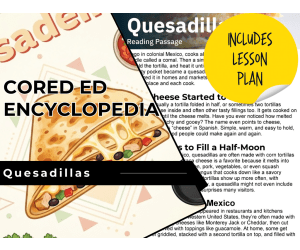
Quesadillas Reading Comprehension Passage - Cored Ed Encyclopedia
ELA, Language Development, Reading Comprehension, Reading, Pre-Reading, Social Studies, Writing, Strategies, Geography, Vocabulary, Grade 2, 3, 4, 5, Worksheets & Printables, Worksheets, Teacher Tools, Centers, Activities, Writing Prompts, Assessments, Quizzes and Tests, Quizzes, Lesson Plans
This quesadillas reading comprehension includes: Visualization (on the front cover) Start your lesson by taking a minute to think and share something about the topic. Read the script aloud (slowly), perhaps prepare some music or sound effects. Student close their eyes and let their imaginations wander. Students open their eyes, read the question aloud and give them a few minutes to complete. Ask a few students to share or keep answers until the end to compare with what they learn in the passage. Quick pause—thousands of Cored Education products are included with your TeachSimple membership. Download links and encyclopedia index available here. Pre-Reading Trivia Students will write down one thing they already know about the subject and then read five more facts and discuss. These facts are fun, and the students will enjoy learning about the subject before reading more. Give 1 minute for students to write what they already know (no pressure—best guess is fine). Read the five facts together. After each fact, do ask a student for their opinion, was it surprising? Set a purpose by asking students to highlight/underline one fact they want to learn more about during the reading. Reading Passage The text is a high-interest reading passage with set paragraphs, roughly three to four paragraphs long. It contains a variety of themes about the topic, anywhere from history to technology. The passage is between 250 and 350 words in length. First, ask students to look at the headings and see what they’ll learn about today. What do they know about the topic/heading? First read options: Teacher read-aloud (best for support). Partner reading (paragraph by paragraph). While reading, students underline important details, and vocabulary words they think may come up in the questions section. Mixed Questions The first question page contains four multiple-choice questions, each with a choice of four answers, and three written response questions that require a sentence or two from the student. Students complete the mcqs first independently, then review quickly as a class. For the 3 written responses, try to get students giving the answer with some form of evidence: “I think ___ because the text says ___.” If students get stuck, send them back to check the passage. Vocabulary Questions Practice seven key words from the text in this section across two activities. First section is scrambled words where students will unscramble three words given a clue for each. The second section is a word to meaning matching activity. Before starting, have some students read out words they underlined in the passage. Ask students to say the word and read aloud the sentence(s) around each word. Ask students to do scrambled words and the matching exercise in pairs then go through answers as a class. For the scrambled spelling task, get four pairs to come up to the board and write the words for extra practice with the other student reading out the clue. For the matching task, prompt students to give full sentences: “I matched ___ with ___ because ___.” Creative Writing In this question, the student will be required to write a five to eight sentence paragraph on a question related to the topic. Before starting, ask students write down 3 key ideas they are going to include in their piece. Ask students for ideas to share around the class to help those struggling. Pro writing expectations: 5–8 sentences At least 2 facts or details from the passage At least 2 vocabulary words from the previous page Students read their paragraphs while classmates listen for facts and vocabulary words. Extension Activities This page is optional for fast finishers or to take home. There are several activities, each one requiring a different skill. Do some, do none, do all, completely optional - but you will feel reassured knowing every possibility is planned for. Includes summary writting question. Answer Key There are answers for the multiple-choice questions, written response questions have sample answers, vocabulary answers and if there is a summary question then a sample summary will be provided as well. Lesson Plan Included Customized lesson plan for this lesson is included. Lesson Snapshot Title: Quesadillas Genre: Nonfiction (informational passage with support pages) Subject: Reading (Informational Text) / Social Studies (Culture & Food Traditions) Primary Topic: How quesadillas began and changed by place Estimated Guided Reading Level (A–Z): Q What This Lesson Teaches Best How foods and traditions change as people share them in different places (homes, markets, restaurants, and around the world). Comparing regional variations (corn vs. flour tortillas; different cheeses and fillings in different parts of Mexico and the U.S.). Building vocabulary and background knowledge about cooking tools and ingredients (comal, Oaxaca cheese, huitlacoche, guacamole). Identifying main ideas and key details across sections with headings (history/origin, filling choices, spreading beyond Mexico). Learning Goals Students can explain how the passage says a quesadilla is made (tortilla, filling, folded, heated). Students can describe how quesadillas changed in different places using details from the text. Students can compare quesadillas in different regions mentioned (central/southern Mexico, northern Mexico, Mexico City, Southwestern United States). Students can identify the main idea of each section heading and support it with one detail. Students can use key vocabulary from the passage when discussing the topic. Key Vocabulary From the Text colonial — from the time when a country was ruled by another comal — a flat griddle for heating and cooking tortillas Oaxaca — a place in Mexico named in the passage huitlacoche — a corn fungus used as a savory filling guacamole — a topping served with some quesadillas Discussion Prompts Pre-reading question: What foods have you seen change in different places or families? Comprehension questions: According to the passage, what is a quesadilla and how is it cooked? Comprehension questions: What are two different fillings or cheeses the passage says people use? Comprehension questions: How does the passage explain quesadillas changing as they spread beyond Mexico? FULL CATALOG OF DOWNLOAD LINKS AND ENCYCLOPEDIA INDEX HERE
Author Cored Education
Rating
Tags Vocabulary, Reading Comprehension, Reading Passages, Reading, Creative Writing, Reading Strategies, Writing Prompts, Lesson Plans, Quesadillas, Social Studies

Measurement: Angles - Practice the Skill 2 - FLASH-MAC
Math, Measurements, Common Core, Grade 3, 4, 5, Teacher Tools, Lesson Plans
Measurement: Angles - Practice the Skill 2 - FLASH-MAC An ideal supplement for a teacher's math curriculum in grades 3, 4, and 5 is the "Measurement: Angles - Practice the Skill" tool provided as a Mac-based software resource. Key Features: Focusing on understanding angle measurements, this teaching resource combines targeted drill activities designed to improve vital skills progressively. It caters to whole-group instruction sessions or altered small-group work effectively. The software includes a protractor tool for students to calculate given angles' measurements. This feature promotes hands-on practice, active engagement, independent problem-solving competencies and self-learning among children. This tool effectively caters to bilingual or Spanish-speaking classrooms. Along with English voice-over and text options, it includes Spanish equivalents seamlessly for diverse learner needs . The content aligns perfectly with Common Core State Standards serving practical applications while harnessing STEM-driven initiatives among learners. Educational Alignment: All content adheres closely to guidelines set forth by the National Council of Teachers Mathematics (NCTM). Educators can thus be assured that using this product complements their overall pedagogical approach matching their classroom objectives seamlessly. Moreover, teachers can leverage this powerful resource beyond class hours; they can assign selected drill exercises as homework – conveniently enabling continuous student progress tracking between intervals without compromising curricular coverage or learning outcomes. Any progressive classroom could benefit enormously from this versatile teaching resource which perfectly blends innovation with standard pedagogical methodologies aimed at mastering angle measurement skilfully created and correctly targeted at school-grade education levels.
Author Classroom Complete Press
Tags Software (Mac)

Addictions ESL TEFL Upper Intermediate Lesson Plan Worksheet
ELA, Resources for Teachers, Grade 6, 7, 8, Teacher Tools, Lesson Plans, Worksheets & Printables
Addictions Upper Intermediate English Lesson Plan This upper intermediate English lesson plan helps students learn about addictions. Educators can use it in various settings like whole class instruction, small groups, or as a homework assignment. Students will read informative texts about addictions to build background knowledge. Next, they will answer reading comprehension questions and complete grammar exercises that reinforce the content. An audio component provides additional listening practice. Answer keys are included for educators. This practical lesson plan resource works well for 6th-8th grade public school teachers and homeschoolers looking to engage students with an interesting real-world topic. The ESL lesson plan includes flashcards , a warmer, grammar rules, exercises, role-play, conversation, writing drill, activity, answers and an extra study that would be good to set as homework. There are 30+ pages and there are teachers notes to guide the teacher. There are 30 plus pages and teachers notes to guide the teacher through the lesson.
Author TEAM TEFL
Tags Addictions, Short Story, Language Arts, Reading Passage, Vocabulary

I WONDER - When Was The Taj Mahal Built | Animated Video Lesson
History, Social Studies, Geography, History: Asian, Grade 4, 5, 6, 7, 8, 9, 10, Lesson Plans, Teacher Tools
Video Introduction An amazing video designed for the students to learn more about famous places in different countries. I WONDER - When Was The Taj Mahal Built | Animated Video Lesson What do you know about this place? Do you know in which part of the world it is? Have you ever visited this place? If yes, can you tell us more about your adventure, and what do you like the most about this place? Do you like reading about Geography? What is your favorite country in the whole world? If you are going on a trip where it will be? Which country? What you are going to see there? Does this country has a famous place to visit? I WONDER - When Was The Taj Mahal Built | Animated Video Lesson The activity is perfect for encouraging the researching skills for the students, while learning more about this fantastic place. I WONDER - When Was The Taj Mahal Built | Animated Video Lesson This friendly designed video is suitable for students at school, homeschooling, and as a group activity. Format Available in MP4 format.
Author Educational Voice
Rating
Tags When Was The Taj Mahal Built, When Was The Taj Mahal Built Video, Taj Mahal, Taj Mahal Facts, Taj Mahal Video, Taj Mahal Video For Kids, Taj Mahal Facts For Kids, India, Geography

I Can't Sleep Alone | English Conversations Video Lesson
ELA, Language Development, ESL, Not Grade Specific, Lesson Plans, Teacher Tools
I Can't Sleep Alone | English Conversations Video Lesson This educational resource offers an innovative approach to improving language arts skills, with a focus on ESL (English as a Second Language) students. Using entertaining animation as an engagement tool, it takes the teaching and learning of English conversations to another level for learners across various grade levels. Tool Specifications: Type: 6-minute MP4 video file Theme: 'Sleeping alone' Purpose: Enhances direct instruction through fun and interactive learning experiences Vital Features: Rich visual and auditory elements designed to capture and retain student interest throughout the session This unique tool serves multiple purposes: An engrossing introduction material, A comprehensive review guide, A flexible instrument that can be integrated into both whole-group instruction or small-group activities seamlessly, or even utilized properly as homework. . Note: Its usage isn't confined only to conventional classroom settings; homeschoolers will find this video lesson equally valuable. The utmost goal of the I Can't Sleep Alone | English Conversations Video Lesson is crystal clear - To empower the communication abilities of students while simultaneously nurturing their appreciation for language arts education which could extend beyond any classroom setting.
Author Educational Voice
Tags English Conversations, ESL, Sleep, Language Arts, Interactive Experience
Mapping Skills with Google Earth: How to Read a Map
Social Studies, Geography, Common Core, Grade 1, 2, Teacher Tools, Lesson Plans
Mapping Skills with Google Earth: How to Read a Map Mapping Skills with Google Earth: How to Read a Map is an innovative educational tool for first and second graders. This resource offers a captivating insight into basic map reading, engaging young learners in the fascinating world of geography. It combines practical lessons with interactive technology, introducing students to fundamental map concepts such as symbols, legends, and compass roses. In their learning journey, students begin by mapping their immediate surroundings like the classroom or the route they take to school. This hands-on exercise boosts involvement while reinforcing key concepts through real-life applications. Students then progress to explore global geographical features including North America's Great Lakes along with seven continents and four oceans. The product integrates seamlessly with Google Earth™ enhancing visual learning while keeping studies dynamic. Learners can link theoretical knowledge from explanatory passages about various map characteristics with actual use cases viewed on Google Earth™. Mapping Skills with Google Earth: How to Read a Map also includes entertaining educational tools such as crossword puzzles, word searches and comprehension quizzes that simultaneously reinforce learnt topics and introduce new ones in an interesting way. Teaching strategies using this remarkable tool can be diverse - ranging from whole class instruction directed by teachers or small group exploration led by students; even individual homework assignments are made simple and effective due to the easy-to-understand content within this resource file. This curriculum aligns perfectly with Common Core State Standards while referencing Bloom's Taxonomy - educators can be confident that lessons taught using Mapping Skills With Google Earth: How To Read A Map, meet approved academic criteria ensuring optimal instructional time utility at primary grades 1 or grade 2 level specially focused on social studies – specifically geography subtopics. The resource, downloadable as a PDF file, proves to be both simple to access and highly convenient for educators globally.
Author Classroom Complete Press
Tags PDF