



3,952 products added recently
Page 52 - Popular Lesson Plans
Explore a curated selection of popular lesson plans that have proven successful in classrooms. Covering various subjects and topics, these resources provide innovative ideas and activities. Use them to refresh your curriculum and engage your students with tried-and-true methods.

 Show filters

I WONDER - How Long Can Humans Survive Without Water | Animated Video
Biology, Life Sciences, Science, Human Body, STEM, Grade 1, 2, 3, 4, 5, 6, 7, 8, Lesson Plans, Teacher Tools
Video Overview The human body is full of fascinating wonders to learn. This video is created to help the students recognize the anatomy and the job of the human body. I WONDER - How Long Can Humans Survive Without Water | Animated Video Lesson Every part and organ in our human body is vital so let's see how important they are. Have you ever imagined how we look like if we didn't have a skeleton? Did you know that because we have our amazing muscles we can stand! Do you know how many teeth do we have? Have you ever wondered about the food journey inside our body? Can you name all the glands in our body? Why do we have skin? Our nervous system is really good at sending signals. Can you tell us more about it? Are you really good at Mathematics, painting, or any other thing? You should really thank your brain about it! The famous five senses are really doing a great work? Can you explain how every sense works? I WONDER - How Long Can Humans Survive Without Water | Animated Video Lesson The video is perfect for encouraging the researching skills for the students, while learning more about our fantastic human body. I WONDER - How Long Can Humans Survive Without Water | Animated Video Lesson This friendly designed video is suitable for students at school, homeschooling, and as a group activity. Format Available in MP4 format.
Author Educational Voice
Tags How Long Can Humans Survive Without Water, How Long Can Humans Survive Without Water Facts, Humans, Humans Facts, Human, Humans Facts For Kids, Humans Video, Water, Water Facts For Kids

I WONDER - How Big Is The Southern Elephant Seal | Animated Video
STEM, Biology, Life Sciences, Science, Animals, Grade 1, 2, 3, 4, 5, 6, 7, 8, Lesson Plans, Teacher Tools
Video Introduction Animal kingdoms are full of fascinating wonders to learn. This video is designed for the students to learn more about animals in different countries. I WONDER - How Big Is The Southern Elephant Seal | Animated Video Lesson Do you like animals? what is your favorite one? Do you own a pet? If yes, tell us more about it, like what its name? And what do you like most about it? What are the animal kingdoms? Can you write down the characteristics of each animal class like mammals, birds, reptiles, amphibian, fish and mollusks. Do you know that some animals can sing, can you name any of them? What is the largest and the smallest mammal in the world? What is the largest and the smallest bird in the world? What is the largest and the smallest fish in the world? I WONDER - How Big Is The Southern Elephant Seal | Animated Video Lesson The video is perfect for encouraging the researching skills for the students, while learning more about these fantastic animals. I WONDER - How Big Is The Southern Elephant Seal | Animated Video Lesson This friendly designed video is suitable for students at school, homeschooling, and as a group activity. Format Available in MP4 format.
Author Educational Voice
Tags How Big Is The Southern Elephant Seal, How Big Is The Southern Elephant Seal Video, Southern Elephant Seal, Southern Elephant Seal Facts, Southern Elephant Seal Facts For Kids, Southern Elephant Seal Video

'We Can Be Heroes' Lesson Plan & Worksheets | Grades 2 - 7
ELA, Social Emotional Learning (SEL), Special Resources, Grade 2, 3, 4, 5, 6, 7, Lesson Plans, Teacher Tools, Worksheets & Printables
We Can Be Heroes Movie Study | Superheroes, Teamwork, Leadership, SEL & Critical Thinking Activities | Grades 2–7 Save movie day with an action-packed learning experience using this engaging We Can Be Heroes Movie Study ! Based on the exciting Netflix superhero adventure, this resource helps students explore themes of teamwork, leadership, courage, problem-solving, and perseverance while strengthening reading comprehension, vocabulary, writing, math, critical thinking, and social-emotional learning skills. Through 30 interactive activities, students discover that true heroes are defined by character, determination, and working together—not just superpowers. What's Included 30 student activities Printable student workbook Comprehensive teacher guide Complete answer key Vocabulary-building activities Hero-themed crossword puzzle Word search activities Reading comprehension questions Story sequencing and mission map activities Character analysis tasks Leadership and teamwork discussions Critical-thinking questions Real-life hero reflection activities Creative writing prompts Hero trading card project Superhero design challenges Movie poster creation activity Motto and slogan writing News headline writing activity Tally chart and survey activities Coordinate grid practice Superhero-themed math word problems Students will explore: Leadership and responsibility Teamwork and collaboration Courage and perseverance Problem-solving skills Friendship and trust Real-life heroism Helping others Confidence and self-belief Working toward a common goal The idea that anyone can be a hero How It Works in the Classroom This We Can Be Heroes movie guide is designed for flexible classroom use and works well for: English Language Arts lessons Social-Emotional Learning (SEL) Character education units Independent work Homeschool learning Substitute plans Small-group discussions Movie day enrichment Cross-curricular learning STEM and math connections Students complete activities before, during, and after viewing the film. Lessons include vocabulary practice, comprehension checks, character studies, leadership discussions, teamwork reflections, math challenges, creative projects, and real-world hero connections. The included teacher guide provides a complete 90-minute lesson plan with differentiation strategies and extension opportunities. Standards & Learning Goals Students will: Build superhero-themed vocabulary and language skills Recall and sequence key events from the story Analyze characters and their unique strengths Explore leadership and teamwork through discussion Examine how Missy leads despite having no superpowers Reflect on what makes someone a real-life hero Strengthen critical-thinking and problem-solving abilities Solve math problems and interpret data Create original heroes and imaginative writing pieces Express opinions and support ideas with examples Supports instruction in: English Language Arts Social-Emotional Learning (SEL) Character Education Mathematics Critical Thinking Speaking and Listening Creative Writing Vocabulary Development Why Teachers Love It ✅ No-prep printable resource ✅ Includes teacher guide and complete answer key ✅ Strong focus on teamwork and leadership ✅ Encourages positive character development ✅ Integrates literacy, math, and SEL learning ✅ Appeals to superhero fans and reluctant learners ✅ Includes engaging creative and hands-on activities ✅ Flexible for classroom, homeschool, and enrichment settings ✅ Promotes meaningful discussions about courage and responsibility ✅ Reinforces the message that everyone can make a difference Teachers love how this resource transforms a fun superhero movie into a meaningful educational experience. Students build literacy, math, and social-emotional skills while learning that leadership, kindness, and teamwork are often more powerful than superpowers. Add this We Can Be Heroes Movie Study to your classroom today and help students explore leadership, teamwork, courage, and real-life heroism through engaging activities that turn movie day into an unforgettable learning adventure.
Author Bright Classroom Ideas Marketplace
Rating
Tags We Can Be Heroes, Film, Movie, Guide, Worksheet, Ela, Sel, Lesson, Plan

I WONDER - Why Did The Viking Use Longships | Animated Video Lesson
History: Ancient, History, Social Studies, History: British, History: Canada, History: Europe, History: USA, History: World, Grade 4, 5, 6, 7, 8, 9, 10, Lesson Plans, Teacher Tools
Video Introduction An amazing video designed for the students to learn more about history. I WONDER - Why Did The Viking Use Longships | Animated Video Lesson Do you like history? Which topic do you really enjoy about history? Have you ever read an interesting fact about the Vikings? If yes, can you mention them? What do you like most about the Victorian era? Can you name all the Tudors? Have you ever wondered how people used to live in ancient Japan and ancient China? Do you know any interesting facts about ancient Egyptians and the Pharaohs? Have you ever visited South America? What do you know about Incas and Aztecs? Celtic culture was really one of a kind, can you name any of the places that Celts used to live in? Imagine yourself living during the ancient Roman empire, how your life will look like? Ancient Greece was an amazing place to live in. What do you know about ancient Greek life? I WONDER - Why Did The Viking Use Longships | Animated Video Lesson The video is perfect for encouraging the researching skills for the students, while learning more about history. I WONDER - Why Did The Viking Use Longships | Animated Video Lesson This friendly designed video is suitable for students at school, homeschooling, and as a group activity. Format Available in MP4 format.
Author Educational Voice
Tags Why Did The Viking Use Longships, Why Did The Viking Use Longships Video, Viking Longships, Viking Longships Facts, Viking Longships Video, Viking Longships Facts For Kids, Viking Longships Video For Kids
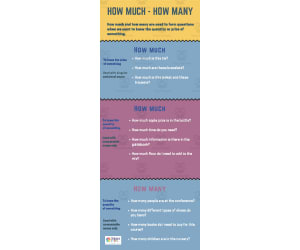
How Much? How Many? | Beginner Lesson Plan
ELA, Language Development, ESL, Grade 2, 3, 4, 5, 8, 9, 10, 11, 12, Teacher Tools, Lesson Plans
How much How many ESL and EFL lesson plan for A1 beginner English students with countable and uncountable nouns. This TEFL resource is ready to go and comprises a range of teaching materials, such as flashcards, activities, conversation topics, and writing drills. Created to raise language proficiency for early English students, the lesson dives into the present continuous in a variety of situations. Describing the difference between using how much with uncountable nouns and how many with countable nouns, it empowers ESL students with the knowledge and confidence to use the how much and how many accurately in every day conversation and writing. With the inclusion of activities, exercises, and real-life examples, this lesson plan strengthens language concepts and establishes a solid foundation in the basics of English grammar. This lesson plan includes: Cover page Flash cards A warm-up activity Main use Construction details Rules, along with any exceptions Illustrative examples Two closed exercises One open exercise Revision exercise Writing exercises Chatterbox, a recurring feature in our course books encouraging conversation Activity , such as a game, quiz, puzzle, etc., to conclude the class The lesson plan is available in PDF with 25 ready to print pages and one digital access file. A part of it is on Google Apps. The answer key is also included for reference.
Author TEAM TEFL
Tags Reading Passage, ESL Lesson, Money, Nouns, Expressions
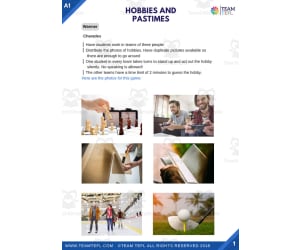
Hobbies and Pastimes | Beginner Lesson Plan
ELA, Language Development, ESL, Grade 2, 3, 4, 5, 8, 9, 10, 11, 12, Teacher Tools, Lesson Plans
Beginner A1 ESL EFL TEFL lesson plan worksheet set for Hobbies and Pastimes. Lesson plan for A1 Beginner ELL and ELA learners focusing on hobbies and pastimes for beginner English students. This TEFL resource is ready-to-go with minimal prep necessary, encompassing a variety of materials ranging from flashcards to activities, along with conversation topics and writing drills. Formulated to enhance language proficiency, this engaging lesson plan addresses fundamental concepts and offers practical exercises to facilitate discussions about work and jobs in everyday scenarios. Covering areas such as expressing preferences, discussing hobbies and what we like to do in our free time, our lesson plan empowers ESL learners with the knowledge and confidence to communicate effectively in discussing fun experiences. Components of this lesson plan include: Flash cards A warm-up activity Main usage exploration Construction details Rules, along with any exceptions Illustrative examples Two closed exercises One open exercise Listening exercise Revision exercise Writing exercises Chatterbox, a recurring feature in our course books encouraging conversation Activity , such as a game, quiz, puzzle, etc., to conclude the class The lesson plan is available in PDF with 27 ready to print pages and one digital access file. One MP3 file included. A part of it is on Google Apps. The answer key is also included for reference.
Author TEAM TEFL
Tags Hobbies, Language Arts, ESL, Lesson Plan, Fill In The Blank, Beginner Hobbies

I WONDER - How Fast Could The Giganotosaurus Run | Animated Video
History: Ancient, History, Social Studies, History: World, Life Sciences, Science, Animals, Grade 4, 5, 6, 7, 8, 9, 10, Lesson Plans, Teacher Tools
Video Introduction An amazing video designed for the students to learn more about dinosaurs in different countries. I WONDER - How Fast Could The Giganotosaurus Run | Animated Video Lesson Do you like dinosaurs? what is your favorite one? Do you own a pet? If yes, tell us more about it, like what its name? And what do you like most about it? Do you think that your pet has been evolved from a dinosaur? Can you write down the characteristics of your favourite dinosaur like it's shape, their rivals, where did it use to live and what was their favourite food? What is the largest and the smallest dinosaur that ever found? Why is the T-rex is so famous? Have you ever read any interesting facts about it? Can you name any of the carnivores or herbivores dinosaurs? I WONDER - How Fast Could The Giganotosaurus Run | Animated Video Lesson The video is perfect for encouraging the researching skills for the students, while learning more about dinosaurs. I WONDER - How Fast Could The Giganotosaurus Run | Animated Video Lesson This friendly designed video is suitable for students at school, homeschooling, and as a group activity. Format Available in MP4 format.
Author Educational Voice
Rating
Tags How Fast Could The Giganotosaurus Run, How Fast Could The Giganotosaurus Run Video, Giganotosaurus, Giganotosaurus Facts, Giganotosaurus Video, Giganotosaurus Video For Kids, Giganotosaurus Facts For Kids
I WONDER - When Was The First Football World Cup | Animated Video
Sports, P.E. & Health, Grade 3, 4, 5, 6, 7, 8, 9, Lesson Plans, Teacher Tools
Video Introduction An amazing video designed for the students to learn more about sports in different countries. I WONDER - When Was The First Football World Cup | Animated Video Lesson What is your favorite sport? Tell us more about it. Who is your favorite athlete? Or what is your favorite team? Do you know who invented basketball? When basketball has been invented? Can you tell us where is the first time it has been played? Have you ever played soccer or football? If yes, tell us what was your position: A goal keeper, midfield player, or a defender? Do you like watching golf? If yes who is your favorite player? Can you name the differences between tennis and ping pong? Have you ever played volleyball on the beach? When it has been officially recognized by the Olympics? Do you like watching Formula 1 races? If yes, who is your favorite team or driver? Have you ever tried to play handball? If yes tell us more. Do you like watching people skiing or surfing? I WONDER - When Was The First Football World Cup | Animated Video Lesson The video is perfect for encouraging the researching skills for the students, while learning more about this sport. I WONDER - When Was The First Football World Cup | Animated Video Lesson This friendly designed video is suitable for students at school, homeschooling, and as a group activity. Format Available in MP4 format.
Author Educational Voice
Rating
Tags When Was The First Football World Cup, When Was The First Football World Cup Video, The First Football World Cup, The First Football World Cup Video, The First Football World Cup Facts, The First Football World Cup Video For Kids

I WONDER - How Do Red Pandas Keep Warm | Animated Video Lesson
STEM, Animals, Life Sciences, Science, Biology, Grade 1, 2, 3, 4, 5, 6, 7, 8, Lesson Plans, Teacher Tools
Video Introduction Animal kingdoms are full of fascinating wonders to learn. This video is designed for the students to learn more about animals in different countries. I WONDER - How Do Red Pandas Keep Warm | Animated Video Lesson Do you like animals? what is your favorite one? Do you own a pet? If yes, tell us more about it, like what its name? And what do you like most about it? What are the animal kingdoms? Can you write down the characteristics of each animal class like mammals, birds, reptiles, amphibian, fish and mollusks. Do you know that some animals can sing, can you name any of them? What is the largest and the smallest mammal in the world? What is the largest and the smallest bird in the world? What is the largest and the smallest fish in the world? I WONDER - How Do Red Pandas Keep Warm | Animated Video Lesson The video is perfect for encouraging the researching skills for the students, while learning more about these fantastic animals. I WONDER - How Do Red Pandas Keep Warm | Animated Video Lesson This friendly designed video is suitable for students at school, homeschooling, and as a group activity. Format Available in MP4 format.
Author Educational Voice
Tags How Do Red Pandas Keep Warm, How Do Red Pandas Keep Warm Video, Red Pandas, Red Panda, Red Pandas Facts, Red Pandas Facts For Kids, Red Pandas Video, Red Pandas Video For Kids
I WONDER - How Did Vikings Stay Clean | Animated Video Lesson
History: Ancient, History, Social Studies, History: British, History: Europe, History: USA, History: Canada, History: World, Grade 4, 5, 6, 7, 8, 9, 10, Lesson Plans, Teacher Tools
Video Introduction An amazing video designed for the students to learn more about history. I WONDER - How Did Vikings Stay Clean | Animated Video Lesson Do you like history? Which topic do you really enjoy about history? Have you ever read an interesting fact about the Vikings? If yes, can you mention them? What do you like most about the Victorian era? Can you name all the Tudors? Have you ever wondered how people used to live in ancient Japan and ancient China? Do you know any interesting facts about ancient Egyptians and the Pharaohs? Have you ever visited South America? What do you know about Incas and Aztecs? Celtic culture was really one of a kind, can you name any of the places that Celts used to live in? Imagine yourself living during the ancient Roman empire, how your life will look like? Ancient Greece was an amazing place to live in. What do you know about ancient Greek life? I WONDER - How Did Vikings Stay Clean | Animated Video Lesson The video is perfect for encouraging the researching skills for the students, while learning more about history. I WONDER - How Did Vikings Stay Clean | Animated Video Lesson This friendly designed video is suitable for students at school, homeschooling, and as a group activity. Format Available in MP4 format.
Author Educational Voice
Tags How Did Vikings Stay Clean, How Did Vikings Stay Clean Video, Vikings, Vikings Facts, Vikings Facts For Kids, Vikings Video, Vikings Video For Kids, Viking, Viking Facts, Viking Video
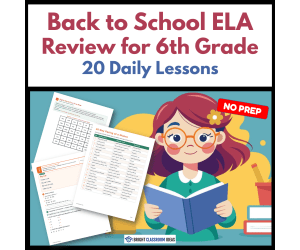
Back to School ELA Review for 6th Grade | 20 Daily Lessons
ELA, Grade 6, Assessments, Teacher Tools, Lesson Plans, Worksheets & Printables
Start the school year with a rigorous yet manageable 6th grade back to school ELA review designed to revisit essential Grade 5 reading, grammar, vocabulary, word study, and writing skills. With 20 daily lessons plus 16 print-and-play literacy games , this resource helps sixth graders refresh key skills, build confidence, and transition into middle school ELA routines. Each lesson follows a predictable four-part rhythm— Read & Think, Language & Grammar, Word Work, and Write About It —with a full lesson designed for approximately 15–25 minutes . Skills spiral across the 20 days, moving from focused review into more complex analysis, evidence, argument, editing, vocabulary, and reflection. What’s Included This 6th grade ELA review includes: ✅ 20 daily ELA review lessons ✅ 40 pages of daily student lessons ✅ Short fiction and nonfiction passages ✅ Reading comprehension questions ✅ Central idea and summary practice ✅ Theme and character development ✅ Inference and text evidence practice ✅ Claim and evidence activities ✅ Evaluating evidence practice ✅ Grammar and language review ✅ Vocabulary and word study ✅ Greek and Latin roots ✅ Advanced prefixes and suffixes ✅ Academic vocabulary ✅ Daily writing prompts ✅ 16 print-and-play literacy games and activities ✅ Partner and small-group activities ✅ Literacy center options ✅ Complete answer key for all 20 days ✅ Teacher Guide ✅ 20-day pacing overview ✅ Four-week planning guide ✅ Differentiation suggestions ✅ Game preparation directions ✅ Game-to-skill quick-reference map ✅ Class progress record sheet ✅ Family letter ✅ Student reflection ✅ Reading Star Award The 68-page Student Workbook contains 20 daily lessons plus 16 print-and-play games for centers, partners, small groups, and independent practice. The separate Answer Key provides complete responses for all 20 daily lessons, organized by section for faster checking, with reasonable student wording accepted for open writing and reflection tasks. How It Works in the Classroom Use this 6th grade back to school ELA review for morning work, bell ringers, whole-group warm-ups, independent practice, literacy centers, small groups, intervention, homework, early finishers, or beginning-of-year formative assessment. Each daily lesson follows the same student-friendly structure: 📖 Read & Think — Students read a short fiction, nonfiction, or persuasive passage and answer four comprehension questions, including inference and text-evidence items ✏️ Language & Grammar — Students revisit a focused Grade 5 language skill 🔤 Word Work — Students practice Greek and Latin roots, advanced affixes, context clues, connotation and denotation, figurative language, analogies, shades of meaning, and academic vocabulary 📝 Write About It — Students complete a short writing task connected to the day’s passage and thinking The Teacher Guide recommends previewing the genre, asking students to identify evidence behind their answers, modeling the first grammar item, and then releasing students to work independently or with a partner. The 20-Day Pacing at a Glance chart on page 6 of the Teacher Guide visually maps the full progression across reading, language, and word work. Students move from central idea and summary, theme development, character development, tone and mood, and plot and conflict into inference and evidence, cause and effect, compare and contrast, author’s purpose and perspective, point of view, text structure, claim and evidence, evaluating evidence, citing evidence, drawing conclusions, comparing across texts, mixed review, and final reflection. For a four-week routine, teachers can assign workbook lessons Monday through Thursday and use Friday for a game, literacy center rotation, or catch-up. The suggested planning guide pairs each week with targeted games based on the skills being reviewed. Standards & Learning Goals This Grade 5 skills review for 6th grade revisits key learning across five major ELA strands: 📚 Reading Comprehension — central idea and summary, theme development, character development, tone and mood, plot and conflict, inference and evidence, cause and effect, compare and contrast, author’s purpose and perspective, point of view, text structure, claim and evidence, evaluating evidence, citing evidence, drawing conclusions, making inferences, comparing across texts, and mixed reading review ✏️ Grammar & Language — independent and dependent clauses, simple/compound/complex sentences, pronoun case, active and passive voice, subject-verb agreement, phrases and clauses, commas and semicolons, colons and lists, punctuating titles and dialogue, apostrophes and possessives, parallel structure, misplaced modifiers, capitalization, consistent tense and voice, transitions, comprehensive editing, commonly confused words, concise language, and mixed grammar review 🔤 Word Study — Greek and Latin roots, roots and affixes, advanced prefixes, suffixes, affix meanings, and root review 💬 Vocabulary — context clues, connotation and denotation, homographs, homophones, figurative language, idioms, analogies, shades of meaning, academic vocabulary, word relationships, and mixed vocabulary review 📝 Writing — summary writing, argument writing, claim and evidence, character analysis, mood and setting description, cause-and-effect explanation, compare-and-contrast writing, persuasive writing, problem-solution writing, text-based responses, concise language, inference-based writing, narrative continuation, and reflection The daily workbook intentionally pairs skills across strands. For example, Day 1 combines central idea and summary with independent and dependent clauses plus roots and affixes ; Day 8 combines compare and contrast with colons and lists plus homophones ; Day 12 combines claim and evidence with misplaced modifiers and connotation ; and Day 18 combines comparing across texts with concise language and root review . Why Teachers Love It ✨ Build a consistent first-month routine. The same four-part structure repeats across all 20 days, helping students know what to expect while building independence. ✨ Review multiple ELA strands in one resource. Reading comprehension, grammar, vocabulary, word study, and writing are integrated into manageable daily practice. ✨ Get 20 days of ready-to-use review. The pacing is already mapped, and the visual chart on page 6 of the Teacher Guide shows exactly how reading, language, and word-work skills spiral across the month. ✨ Strengthen middle school reading readiness. Students practice central idea, theme development, tone and mood, inference, evidence, author’s perspective, point of view, text structure, argument, evaluating evidence, citing evidence, drawing conclusions, and comparing across texts. ✨ Revisit rigorous Grade 5 grammar skills. Practice includes clauses, sentence structure, pronoun case, active and passive voice, subject-verb agreement, semicolons, colons, parallel structure, modifiers, dialogue punctuation, apostrophes, transitions, concise language, and comprehensive editing. ✨ Build stronger vocabulary and morphology skills. Students work with Greek and Latin roots, advanced prefixes and suffixes, context clues, connotation and denotation, homographs, homophones, idioms, figurative language, analogies, shades of meaning, and academic vocabulary. ✨ Include meaningful writing every day. Students summarize, argue, compare, explain, cite details, describe mood, evaluate claims, continue narratives, write inference-based scenes, and reflect on growth. ✨ Add hands-on practice with 16 literacy games and activities , including: Clause Sort Root Word Match Synonym Match Roll-a-Root Word Academic Vocabulary BINGO Multisyllable Roll & Read Prefix Sort Antonym Match Reading Road Race Central Idea Baskets Claim or Evidence Sort Sentence Building Tiles Fix-It Cards Sequence Cards Homophone Match Figurative Language Sort The Game → Skill Quick Map on page 9 of the Teacher Guide pairs each activity with its target skill, including independent and dependent clauses, Greek and Latin roots, academic vocabulary, reading fluency, advanced prefixes, central idea and details, claim versus evidence, compound-complex sentences, editing, text structure, commonly confused words, and figurative language. ✨ Prep once and reuse throughout the year. The Teacher Guide recommends printing game pages on cardstock, laminating boards and cards, cutting pieces apart, and storing each game in a labeled bag for repeated use. ✨ Differentiate without creating entirely separate lessons. The Teacher Guide includes support ideas for below-level students, on-level learners, above-level students, and multilingual learners. ✨ Use daily work as low-stakes formative assessment. The Class Record Sheet on page 10 of the Teacher Guide provides Week 1 through Week 4 tracking columns plus a notes section, making it easier to identify skills that may need reteaching. ✨ Save time checking student work. The included Answer Key covers all 20 days and organizes responses by day and section for quick reference. ✨ Support home-school communication. A ready-to-send family letter explains the daily ELA review routine and offers simple ideas for supporting reading and language practice at home. Give students a confident, structured start to sixth grade with this 6th grade back to school ELA review . Download it for 20 days of Grade 5 skills review, daily reading and writing practice, focused grammar and vocabulary work, plus 16 print-and-play literacy games that extend learning into centers, partner work, small groups, bell ringers, and early-finisher routines. Perfect for teachers searching for 6th grade morning work , sixth grade bell ringers, Grade 5 skills review, beginning-of-year ELA activities, middle school ELA review, sixth grade literacy centers, reading comprehension practice, grammar review, academic vocabulary, Greek and Latin roots, claim and evidence practice, first month of school activities, formative assessment, or a complete back-to-school literacy review.
Author Bright Classroom Ideas Marketplace
Rating
Tags Back To School, Assessment, Daily, Ela, Lesson, Reading, Writing, Grammar

Hurricanes and Tornadoes: A Comprehensive Hands-On Science Unit
Science, Earth and Environmental Sciences, Earth Sciences, Grade 4, 5, 6, 7, 8, Teacher Tools, Lesson Plans
Hurricanes and Tornadoes: A Comprehensive Hands-On Science Unit An extremely valuable teaching resource tailored towards students in grades 4 through 8. This enriching unit offers a hands-on approach to study weather phenomena, building fundamental knowledge in Earth Sciences. Interactive Educational Tool This science unit makes weather-related topics come alive in classroom learning activities, fostering robust understanding of crucial scientific concepts related to hurricanes and tornadoes. Hands-On Experience for Students Create their barometer, Fabricate a cyclone from household items, Draft a newspaper article from the storm's eye. Engaging Learning Tools The product promises an immersive science journey unraveling nature's powerful storms through simple diagrams and charts . Reproducible experiments allow learners to interact directly with what they're studying. Data recording pages cater to those visual learners who thrive on tangible materials. Versatile Learning Pace Invest your time into comprehensive investigations provided within this unit, let students explore both hurricanes' and tornadoes' workings at their pace. It is versatile enough for whole classrooms or small groups; furthermore, teachers may assign individual sections for homework practice allowing reinforcing key principles beyond school hours . Linguistic Aptitude Development Research activities accompanied by writing projects encourage students to articulate about these extreme forces coherently while simultaneously reinforcing scientific understanding. Hassle-Free Ready-to-Print Format: An accessible PDF file consisting of 32 pages brimming over with knowledge about hurricanes and tornadoes vocabulary plus engaging exercises designed by educators just wait for you! Embrace Hurricanes And Tornadoes: A Comprehensive Hands-On Science Unit today to stimulate students' interest in Earth Sciences unmatched.
Author Classroom Complete Press
Tags Earth Sciences, Hurricanes, Tornadoes, Science Unit, Comprehensive Science

Number & Operations: Addition & Subtraction - Learn the Skill - FLASH-MAC
Math, Addition and Subtraction, Addition, Common Core, Grade 1, 2, Teacher Tools, Lesson Plans
FLASH-MAC: A Comprehensive Teaching Tool for Addition and Subtraction The Number & Operations: Addition & Subtraction - Learn the Skill - FLASH-MAC is a meticulously devised teaching module aimed at offering comprehensive, curriculum-oriented content for teachers. Specifically created to foster an understanding of number operations with key emphasis on addition and subtraction skills amongst Grade 1 and Grade 2 learners, this tool proves indispensable in enriching the educator toolkit. This interactive teaching resource offers value by creating a vivid learning environment that addresses real-world word problems. It's equally effective whether you are a public school teacher wanting to enhance entire class proficiency in these math essentials or a homeschooling parent seeking to augment your child's individual skill set. Unique Features: Multilingual Capability: Apart from English voice-over and text options, FLASH-MAC allows teachers to switch effortlessly to Spanish voice-overs elucidating numerical concepts for learners comfortable in multiple languages. Aligns with Modern Education Standards: This product aligns perfectly with STEM initiatives and Common Core State Standards (CCSS), aiding in making lesson plans more impactful. Furthermore, compatibility with National Council of Teachers of Mathematics (NCTM) standards signifies stringent quality control in mathematics education resources. Ideal as Homework Assignment Tool: The user-friendly interface coupled with engaging content format makes FLASH-MAC an excellent assignment tool that ensures students remain interested while dealing with number operations outside the classroom. If you aim to enliven your math lessons while accommodating diverse learning abilities within classroom or homeschool scenarios , FLASH-MAC proves itself as an ideal aid working cohesively with varied instructional methods ensuring highly productive engagement time around number operations. Note: A unit of product file is provided once this software is purchased, allowing easy and quick integration of the resource into existing educational plans. Don't miss out on the chance to take your mathematical instruction a notch higher. Transform learning one sum at a time with FLASH-MAC.
Author Classroom Complete Press
Tags Software (Mac)
I WONDER - What Is A Monsoon | Animated Video Lesson
Geography, Social Studies, Earth Sciences, Earth and Environmental Sciences, Science, Environmental Science, Grade 4, 5, 6, 7, 8, 9, 10, Lesson Plans, Teacher Tools
Video Introduction An amazing video designed for the students to learn more about natural disasters in different countries. I WONDER - What Is A Monsoon | Animated Video Lesson What do you know about this natural disaster? Do you know in which part of the world this could happen? Have you ever read about the safety misusers that we could have to protect ourselves from this natural disaster? If yes, can you tell us more about them? Can you name other natural disasters? If yes, tell us more about where they are likely to happen? And how frequently? Do you like reading about Geography? What is your favorite country in the whole world? If you are going on a trip where it will be? Which country? What you are going to see there? Does this country has a famous place to visit? Do you like reading about Geology? If yes, what is your favourite topic? I WONDER - What Is A Monsoon | Animated Video Lesson The video is perfect for encouraging the researching skills for the students, while learning more about this fantastic phenomenon. I WONDER - What Is A Monsoon | Animated Video Lesson This friendly designed video is suitable for students at school, homeschooling, and as a group activity. Format Available in MP4 format.
Author Educational Voice
Tags What Is A Monsoon, What Is A Monsoon Video, Monsoon, Monsoon Facts, Monsoon Facts For Kids, Monsoon Video, Monsoon Video For Kids, Monsoon Season, Weather, Weather Video
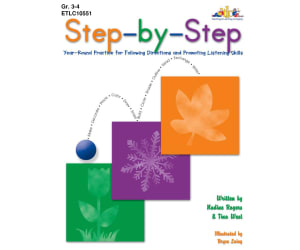
Step-by-Step - Grades 3-4: Year-Round Practice for Following Directions and Promoting Listening Skills
, Grade 3, 4, Teacher Tools, Lesson Plans
Step-by-Step - Grades 3-4: Year-Round Practice for Following Directions and Promoting Listening Skills This exceptional resource is designed for 3rd and 4th grade teachers, aiming to enhance two crucial skills in students—'Following Directions' and 'Attentive Listening'. The book contains step-by-step instructions, ideal for both independent reading by students or collectively listening as read aloud by the teacher. This unique setup promotes inclusive learning across various skill levels within one classroom setting. Students are equipped with drawing paper, pencil, crayons, and an activity sheet from this versatile guidebook. Besides improving adherence to directions, these interactive activities additionally nurture children's creativity through fun tasks. Touted as an invaluable tool by teachers, this resource can seamlessly become part of existing lesson plans. It also serves as a straightforward aid for parents opting for homeschooling. The format allows flexibility—instruction can be delivered in a whole group setting or smaller groups; it even doubles up as enjoyable homework assignment encouraging responsibility. The digital PDF format caters explicitly to 'Grade 3' and 'Grade 4'. This offers the advantage of convenience—you can print what you need when you need it! Incorporate Step-by-Step - Grades 3-4: Year-Round Practice into your teaching plan With the integration of this educational aid to your teaching tools, facilitate honing cognitive abilities among your young learners while making learning enjoyable!
Author Classroom Complete Press
Tags PDF

I WONDER - Why Were Cats Important To Egyptians | Animated Video
History: African, History, Social Studies, History: Ancient, Animals, Life Sciences, Science, Grade 4, 5, 6, 7, 8, 9, 10, Lesson Plans, Teacher Tools
Video Introduction An amazing video designed for the students to learn more about history. I WONDER - Why Were Cats Important To Egyptians | Animated Video Lesson Do you like history? Which topic do you really enjoy about history? Have you ever read an interesting fact about the Vikings? If yes, can you mention them? What do you like most about the Victorian era? Can you name all the Tudors? Have you ever wondered how people used to live in ancient Japan and ancient China? Do you know any interesting facts about ancient Egyptians and the Pharaohs? Have you ever visited South America? What do you know about Incas and Aztecs? Celtic culture was really one of a kind, can you name any of the places that Celts used to live in? Imagine yourself living during the ancient Roman empire, how your life will look like? Ancient Greece was an amazing place to live in. What do you know about ancient Greek life? I WONDER - Why Were Cats Important To Egyptians | Animated Video Lesson The video is perfect for encouraging the researching skills for the students, while learning more about history. I WONDER - Why Were Cats Important To Egyptians | Animated Video Lesson This friendly designed video is suitable for students at school, homeschooling, and as a group activity. Format Available in MP4 format.
Author Educational Voice
Tags Why Were Cats Important To Egyptians, Why Were Cats Important To Egyptians Video, Ancient Egyptians, Ancient Egyptians Facts, Ancient Egyptians Facts For Kids, Ancient Egyptians Video, Ancient Egyptians Video For Kids

Prefixes and Suffixes Supplementary Materials Grade 5-6 (PDF)
ELA, Language Development, ESL, Grammar, Common Core, Resources for Teachers, Grade 5, 6, 7, Worksheets & Printables, Worksheets, Quizzes and Tests, Teacher Tools, Tests, Assessments, Lesson Plans
Prefixes and Suffixes Supplementary Materials Note: This download DOES NOT include the tests themselves. You can still make use of these materials without them but they are recommended. Download in a format of your choice in the "Links" section below. In the Supplementary Pack Interactive Ice Breakers: Engaging warm-up activities that introduce students to key ELA concepts, such as quick capitalization corrections and punctuation challenges. Guided Practice: Structured teacher-led exercises that reinforce grammar and punctuation rules, helping students identify and apply them correctly in sentences. Group and Partner Tasks: Collaborative activities where students work together to edit sentences, correct capitalization, and improve punctuation through peer discussion and teamwork. Independent Worksheets: Carefully designed worksheets that provide focused practice, allowing students to apply learned concepts and refine their skills independently. Exit Tasks: Quick assessments at the end of each lesson, prompting students to reflect on what they’ve learned and apply their knowledge in writing and editing tasks. Links Match Affix to Meaning Match Meaning to Affix Forming Affixes Fill the Gaps Additional Affix Practice Google Docs Google Forms Google Slides PDF PPT Word FULL CATALOG OF DOWNLOAD LINKS HERE Grade 5/6 Links: Capitalization & Punctuation Google Docs Google Forms Google Slides PDF PPT Word Free Supplementary Materials Pack Adjectives Google Docs Google Forms Google Slides PDF PPT Word Free Supplementary Materials Pack Nouns Google Docs Google Forms Google Slides PDF PPT Word Free Supplementary Materials Pack Pronouns Google Docs Google Forms Google Slides PDF PPT Word Free Supplementary Materials Pack Verbs Google Docs Google Forms Google Slides PDF PPT Word Free Supplementary Materials Pack Prefixes & Suffixes Google Docs Google Forms Google Slides PDF PPT Word Free Supplementary Materials Pack Sentence Structure Google Docs Google Forms Google Slides PDF PPT Word Free Supplementary Materials Pack Subject Verb Agreement Google Docs Google Forms Google Slides PDF PPT Word Free Supplementary Materials Pack Tenses Google Docs Google Forms Google Slides PDF PPT Word Free Supplementary Materials Pack Context Clues Google Docs Google Forms Google Slides PDF PPT Word Free Supplementary Materials Pack Defining Words Google Docs Google Forms Google Slides PDF PPT Word Free Supplementary Materials Pack Fill in the Blanks Google Docs Google Forms Google Slides PDF PPT Word Free Supplementary Materials Pack Homophones Google Docs Google Forms Google Slides PDF PPT Word Free Supplementary Materials Pack Synonyms Google Docs Google Forms Google Slides PDF PPT Word Free Supplementary Materials Pack ELA Review Questions Overview Questions have three answer choices. There are a handful of pictures on each test for aesthetic purposes, as well as a review sheet covering most of the topics covered in the product. Introduction or Example Sheet Each topic will include an introduction or example sheet to go through first with your students. Full Answer Keys Full answer keys and sample responses are provided so no matter how busy you are, you know you're covered! For More Like This For similar downloads and other frees, do check out Cored Group on TeachSimple.
Author Cored Education
Tags Elementary, Answers, Ccss, Common Core, Grammar, Tests, Test Prep, Assessment, Grade 5, Grade 6
I WONDER - When Was The Great Wall Of China Built | Animated Video
Government, Social Studies, History: Asian, History, History: Ancient, Grade 4, 5, 6, 7, 8, 9, 10, Lesson Plans, Teacher Tools
Video Introduction An amazing video designed for the students to learn more about famous places in different countries. I WONDER - When Was The Great Wall Of China Built | Animated Video Lesson What do you know about this place? Do you know in which part of the world it is? Have you ever visited this place? If yes, can you tell us more about your adventure, and what do you like the most about this place? Do you like reading about Geography? What is your favorite country in the whole world? If you are going on a trip where it will be? Which country? What you are going to see there? Does this country has a famous place to visit? I WONDER - When Was The Great Wall Of China Built | Animated Video Lesson The activity is perfect for encouraging the researching skills for the students, while learning more about this fantastic place. I WONDER - When Was The Great Wall Of China Built | Animated Video Lesson This friendly designed video is suitable for students at school, homeschooling, and as a group activity. Format Available in MP4 format.
Author Educational Voice
Rating
Tags When Was The Great Wall Of China Built, When Was The Great Wall Of China Built Video, Great Wall Of China, Great Wall Of China Video, Great Wall Of China Facts, Great Wall Of China Video For Kids, Great Wall Of China Facts For Kids

Writing Well Grade 3: A Guide for Proper Writing Technique
ELA, Writing, Grade 3, Teacher Tools, Lesson Plans
Writing Well Grade 3: A Guide for Proper Writing Technique Writing Well Grade 3: A Guide for Proper Writing Technique is a well-crafted, comprehensive language arts toolkit explicitly developed for third-grade educators. Its focus on writing skills such as punctuation, sentence structuring, paragraph building and story crafting helps increase students' proficiency in articulating their thoughts in an eloquent manner. The guide simplifies complex writing concepts into easy-to-understand lessons that are easily digestible by young learners. The thoughtful organization of the book allows new concepts to be introduced at a manageable pace. Displayed on top of every page are clear definitions or rules associated with the concept being taught- promoting memory retention and facilitating clearer learning experiences. Sparkling Features An in-depth exploration into parts of speech such as nouns, verbs etc. Comprehending these linguistic building blocks grants children insightful views into the workings of sentence formation- aka grammar! Mastering these key components not only instills confidence among young writers but also substantially improves their language usage skill. An included answer key providing an efficient means for educators to determine student comprehension levels and promptly address areas requiring improvement. Distributed as a PDF file type making it accessible across various platforms without any specific software requirements. The versatility provided by Writing Well Grade 3: A Guide for Proper Writing Technique, extends beyond individual pupil studies or homeschooling applications; it seamlessly integrates with small group activities where peer discussions magnify understanding levels; including whole group instruction permitting lesson navigation point by point fostering an inclusive learning environment. The final objective being whether you aim at bolstering language arts literacy within your classroom domain or seek to amplify homeschooling efficiencies- this resource meets assorted lesson planning requisites robustly while aligning comprehensively with grade 3 English Language Arts recommendations.
Author Classroom Complete Press
Tags PDF

Reducing Your School's Carbon Footprint: Your School and Climate Change Gr. 5-8
Science, Earth and Environmental Sciences, Environmental Science, Grade 5, 6, 7, 8, Teacher Tools, Lesson Plans
Reducing Your School's Carbon Footprint: Your School and Climate Change Gr. 5-8 This ideal teaching resource is for educators who are passionate about instilling an awareness of climate change and environmental conservation in students from grade 5 to grade 8. This chapter slice , taken from the full lesson plan Reducing Your School's Carbon Footprint, focuses specifically on how your school relates to climate change. Making Complex Subjects Accessible And Engaging This teaching resource has been designed to make complex subjects like climate science accessible and engaging for mid-level students. The learning content helps pupils understand their school's carbon footprint, identifying the contribution made by fossil fuel consumption on campus. Taking Action On Climate Change Within The Classroom The real-life context of this tool fosters a deep understanding of what these concepts mean but also their pertinence in everyday existence. Goes beyond theory, encouraging students to brainstorm practical ways they can reduce their own energy usage within school. Consideration is given as to why schools should consider idle-zone designation, linking back seamlessly into classroom discussions around carbon emissions reduction. In further exploring tangible actions for fighting climate change, this product shows how tree planting can help capture CO2 emissions too. An integrated project challenge inspires learners towards enhancing environmental sustainability at their school – injecting them with a hands-on approach to addressing global challenges. A Deeper Understanding Of Greenhouse Gas Emissions And Carbon Offsets This plan delves into the concept pathways that lead up to causing greenhouse gas emissions such as the life cycle of bread slices along with carbon offsets and how they are an option for reducing overall emission figures at schools promptly & effectively before slower methods such as tree planting reach maturity and start absorbing CO2. Resourceful Features Aligned With Educational Best Practices Aligned with Bloom’s Taxonomy and STEAM initiatives, this file comes equipped with additional materials including: Graphic organizers assist learners visually navigate through multiple concepts. Comprehension quizzes, designed according to educational best practices. Carbon footprint calculators, encouraging practical applications. Puzzles (crossword & word search). An answer key ensures that educators can verify student responses accurately. Bridging Science Instruction And Environmental Awareness This resource primarily focuses on environmental science within science instruction. This PDF file is adaptable to different teaching strategies such as whole group discussions, small groups, or individual homework assignments. All in all, it's truly a comprehensive tool for understanding climate change starting from your classroom.
Author Classroom Complete Press
Tags PDF

Classical Music & Cool Composers Gr. 6-8
Creative Arts, Art, Music, Grade 6, 7, Teacher Tools, Lesson Plans
Classical Music & Cool Composers Gr. 6-8 This is a dynamic and informative teaching resource designed to introduce middle school students to the world of classical music. It focuses on the fascinating lives and works of five major composers: Bach, Mozart, Beethoven, Chopin, and Tchaikovsky. Composer Biographies: Bach: Not only known for his extraordinary musical contributions but also as father to 20 children. Mozart: An intriguing aspect of his life history is that he fainted at the sound of brass instruments as a youth! The Classical Music & Cool Composers Gr. 6-8 teaching resource features engaging activities such as crosswords and word searches that link back to lessons learned about each composer's life and music. It stimulates critical thinking while fostering an appreciation for classical music's enduring art form. Ideal for public school educators or homeschooling families, this tool can be utilized in various contexts - from whole group lessons in classroom settings to small group breakout discussions or even independent assignments at home. Suitability: Initially designed for middle school Art & Music classes that enjoy playing renowned classical pieces from different eras. However, its adaptability extends across multiple grades (from Grade 6 to Grade 8). The package includes: An answer key indicating pre-determined benchmarks - allowing learners immediate insight into their mastery levels whilst helping teachers accurately evaluate student understanding A flexible format accessible as a downloadable PDF file ensuring easy use without sacrificing educational quality Concluding Thoughts, This exceptional resource strives not only building future musically enriched mavens but sensitizing them about historical insights in sync with captivating classical tunes.
Author Classroom Complete Press
Tags PDF
I WONDER - How Many Warriors Could Fit In A Viking Longship
History: Ancient, History, Social Studies, History: British, History: Canada, History: Europe, History: USA, History: World, Grade 4, 5, 6, 7, 8, 9, 10, Lesson Plans, Teacher Tools
Video Introduction An amazing video designed for the students to learn more about history. I WONDER - How Many Warriors Could Fit In A Viking Longship | Animated Video Lesson Do you like history? Which topic do you really enjoy about history? Have you ever read an interesting fact about the Vikings? If yes, can you mention them? What do you like most about the Victorian era? Can you name all the Tudors? Have you ever wondered how people used to live in ancient Japan and ancient China? Do you know any interesting facts about ancient Egyptians and the Pharaohs? Have you ever visited South America? What do you know about Incas and Aztecs? Celtic culture was really one of a kind, can you name any of the places that Celts used to live in? Imagine yourself living during the ancient Roman empire, how your life will look like? Ancient Greece was an amazing place to live in. What do you know about ancient Greek life? I WONDER - How Many Warriors Could Fit In A Viking Longship | Animated Video Lesson The video is perfect for encouraging the researching skills for the students, while learning more about history. I WONDER - How Many Warriors Could Fit In A Viking Longship | Animated Video Lesson This friendly designed video is suitable for students at school, homeschooling, and as a group activity. Format Available in MP4 format.
Author Educational Voice
Tags How Many Warriors Could Fit In A Viking Longship, How Many Warriors Could Fit In A Viking Longship Video, Viking Longship, Viking Longship Facts, Viking Longship Video, Viking Longship Facts For Kids
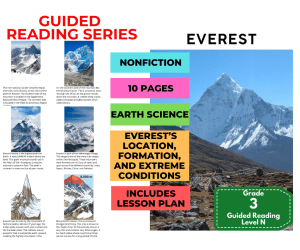
Guided Reading Level N - Everest (with Lesson Plan)
ELA, Resources for Teachers, Reading Comprehension, Reading, Science, Earth and Environmental Sciences, Social Studies, Geography, Life Sciences, Physics, Grade 2, 3, 4, Worksheets & Printables, Worksheets, Teacher Tools, Centers, Activities, Literacy Readers, Quizzes, Quizzes and Tests, Assessments, Lesson Plans
This Guided Reading Book - Everest (Level N) with lesson plan includes: Guided Reading Color Label (front cover x1) This is a quick way to match the book’s demands to what students can generally handle.. The overall goal is to use the level/color to pick books for several smaller groups. To qualify for a certain level, a student is expected to read a book from that level with about 90–94% accuracy. If a student is consistently accurate and understands, move up a level. If the student is struggling at that level, drop down and add more support. Each student will improve at completely different rates, but it is generally one of the best ways to check progress across the class. DOWNLOAD THE CATALOG TO VIEW ALL GUIDED READING BOOKS AVAILABLE (SORTED LEVELS A-Z) Pre-Reading Question (x1) Teacher asks the prompt aloud, can be while showing the cover or first page. Students share what they already know, or make educated guesses from the cover. Prompt them to use the target vocabulary. Write some of their responses on the board to look back at during the reading. Vocabulary Words (x5) Introduce the five words, best doing it one at a time. Start by saying it, while students repeat and then see if anyone knows what it means before reading further. Read through the meaning and try to briefly connect each word to a picture or gesture so it’s meaningful. Ask students to flip through the book pages and point to where they see each of the vocabulary words. While reading the book pause upon coming across one of the vocab words or read the sentence twice to make sure students understand the word has appeared. Optional: Ask students to raise hands whenever they see/hear one of the new words. Guided Reading Pages (x10) Check the book snapshot (below) for: primary topic - do you need to prep extra reading or intro materials on this? what is taught best - decide on 1-2 bullets to focus on, use the prompt or words provided here for best results. learning goals - what you are checking for students to be able to do after the session, elicit answers using prompts or words provided. key vocabulary (see section above). questions overview - so you know what is coming up and if you need to prep extra materials to assist understanding. Run the lesson You may have already looked at a few of the pages together, but you can show them some of the pictures again first to set meaning. Depending on how much time you have and how familiar your students are with guided reading class, you may want to read the book aloud first with the group first. Students whisper or partner read, while you listen in. If time, do it as a group, one student reading a page each. Use the guided page’s prompts to coach: “Check the picture / does it make sense?” “Point under the words / try the first sound” “Reread the sentence smoothly”. Try to focus more on one student per session (rotating every time), so you can work out if they are ready to move up or need to move down a level. Comprehension Questions (back cover x3) This is your way to check that students didn’t just say the words, but actually understood the text. First, let students answer by pointing to the page/picture and saying a short sentence. After any answer, follow with: “Show me where you found that in the text.” In bigger groups, have partners answer first (10–20 seconds), then call on 2–3 students to share. Differentiation tips: Emerging speakers/struggling readers: oral + pointing On-level: oral in a full sentence Higher: one written sentence or draw + label Book Snapshot Title: Everest Genre: Nonfiction (informational text) Subject: Science (Earth Science/Geography) Primary Topic: Mount Everest’s location, formation, and extreme conditions Estimated Guided Reading Level (A–Z): N What This Book Teaches Best Key facts about Mount Everest’s height and setting in the Himalayas in Asia. How mountain ranges form over long periods of time, including tectonic plate movement. How borders and regions connect to physical geography (Nepal/China border across the summit). How extreme environments change with altitude, including the “Death Zone” and low oxygen. How glaciers, weather, earthquakes, and erosion shape Everest and keep it changing. Learning Goals Describe where Mount Everest is located and what mountain system it is part of. Identify what the text says about the border between Nepal and China on Everest. Explain how Everest was formed using the book’s description of tectonic plates. Describe what the “Death Zone” is and why most living things cannot survive there long. Describe how glaciers create features on the mountain, including crevasses. Explain one way Everest is still changing today, using details from the text. Key Vocabulary From the Text summit — the very top point of a mountain. glacier — a huge, slow-moving river of ice. tectonic — related to Earth’s moving crust plates. crevasses — deep cracks in ice. erosion — wind, water, or ice wearing rock away. Discussion Prompts Pre-reading question: Where does the book say Mount Everest stands? Comprehension questions: What does the text say about where the Nepal–China border is on Everest? Comprehension questions: How does the text explain that Everest was formed long ago? Comprehension questions: What is one way the text says Mount Everest is still changing today? Printing Tips 1. Best Printing Method (Recommended) “Booklet” Printing (Best if Available) If your printer or PDF viewer supports Booklet Printing , use this. Settings to use: Print mode: Booklet Paper size: Letter or A4 (either works) Orientation: Landscape Print on both sides: Yes Flip on: Short edge Scaling: Fit to printable area Booklet subset: First test: Front sides only Then: Back sides only This will automatically: Pair pages correctly Put the cover on the outside Align everything for folding After printing, fold in half and staple along the spine . 2. If “Booklet” Printing Is NOT Available You can still print this correctly with manual duplex printing . Step-by-step: Open the PDF. Choose Print . Set: Orientation: Landscape Pages per sheet: 1 Print on both sides: Yes Flip on: Short edge Print all pages . Because each PDF page already contains two facing book pages, the result will still fold cleanly into a book. Thousands of Cored Education products are included with your TeachSimple membership. Download links and encyclopedia index available here.
Author Cored Education
Rating
Tags Reading Comprehension, Reading Passages, Reading, Guided Reading, Guided Reading Lesson Plan, Guided Reading Activity, Pre-reading, Social Studies Lesson Plans, Science Lesson Plans, Geography

I WONDER - What Is An LED Lightbulb | Animated Video Lesson
Physics, Science, Grade 6, 7, 8, 9, 10, 11, 12, Lesson Plans, Teacher Tools
Video Introduction An amazing activity designed for the students to learn more about STEM. I WONDER - What Is An LED Lightbulb | Animated Video Lesson Do you like STEM subjects? what is your favorite one? Have you ever tried to plant a seed? If yes, tell us more about it. Or have you ever tried to invent something? If yes, tell us more about it. And how do you think it will help us? Have you ever seen a microorganism under a microscope? What was it? And how it looked like? Mathematics is a marvelous subject. Let' sharpen our brains and solve some equations. Do you like timetable tricks? What is your favorite one? Do you know how to code? Have you ever created an app or a game before? If yes, how was it like? I WONDER - What Is An LED Lightbulb | Animated Video Lesson The video is perfect for encouraging the researching skills for the students, while learning more about this fantastic topic. I WONDER - What Is An LED Lightbulb | Animated Video Lesson This friendly designed video is suitable for students at school, homeschooling, and as a group activity. Format Available in MP4 format.
Author Educational Voice
Tags What Is An LED Lightbulb, What Is An LED Lightbulb Video, LED Lightbulb, LED Lightbulb Facts, LED Lightbulb Facts For Kids, LED Lightbulb Video, LED Lightbulb Facts Video, LED Lightbulb Facts Video For Kids