



3,950 products added recently
Page 65 - Popular Lesson Plans
Explore a curated selection of popular lesson plans that have proven successful in classrooms. Covering various subjects and topics, these resources provide innovative ideas and activities. Use them to refresh your curriculum and engage your students with tried-and-true methods.

 Show filters


I WONDER - What Job Does Our Mouth Do | Animated Video Lesson
STEM, Biology, Life Sciences, Science, Human Body, Grade 1, 2, 3, 4, 5, 6, 7, 8, Lesson Plans, Teacher Tools
Video Overview The human body is full of fascinating wonders to learn. This video is created to help the students recognize the anatomy and the job of the human body. I WONDER - What Job Does Our Mouth Do | Animated Video Lesson Every part and organ in our human body is vital so let's see how important they are. Have you ever imagined how we look like if we didn't have a skeleton? Did you know that because we have our amazing muscles we can stand! Do you know how many teeth do we have? Have you ever wondered about the food journey inside our body? Can you name all the glands in our body? Why do we have skin? Our nervous system is really good at sending signals. Can you tell us more about it? Are you really good at Mathematics, painting, or any other thing? You should really thank your brain about it! The famous five senses are really doing a great work? Can you explain how every sense works? I WONDER - What Job Does Our Mouth Do | Animated Video Lesson The video is perfect for encouraging the researching skills for the students, while learning more about our fantastic human body. I WONDER - What Job Does Our Mouth Do | Animated Video Lesson This friendly designed video is suitable for students at school, homeschooling, and as a group activity. Format Available in MP4 format.
Author Educational Voice
Tags What Job Does Our Mouth Do, What Job Does Our Mouth Do Video, Mouth, Mouth Facts, Mouth Facts For Kids, Mouth Video, Mouth Video For Kids, Science, Science Facts, Science Facts For Kids

I WONDER - How Fast Can Bears Run | Animated Video Lesson
Animals, Life Sciences, Science, STEM, Grade 1, 2, 3, 4, 5, 6, 7, 8, Lesson Plans, Teacher Tools
Video Introduction Animal kingdoms are full of fascinating wonders to learn. This video is designed for the students to learn more about animals in different countries. I WONDER - How Fast Can Bears Run | Animated Video Lesson Do you like animals? what is your favorite one? Do you own a pet? If yes, tell us more about it, like what its name? And what do you like most about it? What are the animal kingdoms? Can you write down the characteristics of each animal class like mammals, birds, reptiles, amphibian, fish and mollusks. Do you know that some animals can sing, can you name any of them? What is the largest and the smallest mammal in the world? What is the largest and the smallest bird in the world? What is the largest and the smallest fish in the world? I WONDER - How Fast Can Bears Run | Animated Video Lesson The video is perfect for encouraging the researching skills for the students, while learning more about these fantastic animals. I WONDER - How Fast Can Bears Run | Animated Video Lesson This friendly designed video is suitable for students at school, homeschooling, and as a group activity. Format Available in MP4 format.
Author Educational Voice
Tags How Fast Can Bears Run, How Fast Can Bears Run Video, Bears, Bear, Bears Facts, Bears Facts For Kids, Bears Video, Bears Video For Kids, Animals, Animals Fact

I WONDER - Did Girls Go To School In Ancient Rome | Animated Video
History: Ancient, History, Social Studies, History: Europe, Grade 2, 3, 4, 5, 6, 7, 8, Lesson Plans, Teacher Tools
Video Introduction An amazing video designed for the students to learn more about history. I WONDER - Did Girls Go To School In Ancient Rome | Animated Video Lesson Do you like history? Which topic do you really enjoy about history? Have you ever read an interesting fact about the Vikings? If yes, can you mention them? What do you like most about the Victorian era? Can you name all the Tudors? Have you ever wondered how people used to live in ancient Japan and ancient China? Do you know any interesting facts about ancient Egyptians and the Pharaohs? Have you ever visited South America? What do you know about Incas and Aztecs? Celtic culture was really one of a kind, can you name any of the places that Celts used to live in? Imagine yourself living during the ancient Roman empire, how your life will look like? Ancient Greece was an amazing place to live in. What do you know about ancient Greek life? I WONDER - Did Girls Go To School In Ancient Rome | Animated Video Lesson The video is perfect for encouraging the researching skills for the students, while learning more about history. I WONDER - Did Girls Go To School In Ancient Rome | Animated Video Lesson This friendly designed video is suitable for students at school, homeschooling, and as a group activity. Format Available in MP4 format.
Author Educational Voice
Tags Did Girls Go To School In Ancient Rome, Did Girls Go To School In Ancient Rome Video, School In Ancient Rome, Ancient Roman Schools, Ancient Roman Schools Video, Ancient Roman Schools Facts, Ancient Roman Schools Video For Kids

Capitol Reef National Park Geography Unit
Social Studies, Geography, Grade 6, 7, 8, 9, Teacher Tools, Lesson Plans
Capitol Reef National Park Geography Unit: An Engaging Teaching Resource This comprehensive unit offers an in-depth exploration starting from the inception of the park, moving through its geography, showcasing its wildlife and zooming onto its climate. As educators, you'll appreciate how smoothly this module integrates into your existing lesson plan. Included in The Package: A presentation; Preview Sheets in both PDF and JPEG formats; Worksheets; Poster and booklet instructions. Incorporates Interactive Learning: To add an element of interactive learning, QR codes are embedded on each sheet linking students to relevant videos about the park. Additional materials such as large image sets for project completion are included alongside smaller ones for booklet creation. A PowerPoint Guide For Teachers: We've enclosed a PowerPoint presentation serving as guide rails through this geography unit course material delivery journey while exploring Capitol Reef National Park in careful detail. Promotes Creative Exploration: Incorporated materials inspire creative exploration allowing learners to create individual presentations or booklets about their virtual visitations at Capital Reef National Park capturing lessons learned through this unique educational voyage. Learner Needs Accounting Strategy: We have included reading material choice between extended 2-sheet set or a modified single sheet format to meet diverse learner needs within one classroom setting. Notes on Classroom Implementation Strategies: Diverse Utilization Makes it A Great Resource: The whole group learning sessions turning classrooms into lively discourse platforms around geography topics, Small group discussions diving deep into specific aspects related subjects, Serve as homework assignments. The Capitol Reef National Park Geography Unit breaks down complex geographical concepts into bite-sized understanding nuggets for Grade 6 to 9 students under the Social Studies umbrella with emphasis on geography. With such classroom versatility and comprehensive coverage of the topic, it promises to be a valuable addition to any middle school teacher's educational resources.
Author Mr Gray History
Tags Capitol Reef National Park, Geography Unit, Middle School, Educational Resources, Interactive Learning

I WONDER - Why Is It Important Not To Waste Water | Animated Video
Environmental Science, Earth and Environmental Sciences, Science, Grade 1, 2, 3, 4, 5, 6, 7, 8, Lesson Plans, Teacher Tools
Video Introduction An amazing video designed for the students to learn more about STEM. I WONDER - Why Is It Important Not To Waste Water | Animated Video Lesson Do you like STEM subjects? what is your favorite one? Have you ever tried to plant a seed? If yes, tell us more about it. Or have you ever tried to invent something? If yes, tell us more about it. And how do you think it will help us? Have you ever seen a microorganism under a microscope? What was it? And how it looked like? Mathematics is a marvelous subject. Let' sharpen our brains and solve some equations. Do you like timetable tricks? What is your favorite one? Do you know how to code? Have you ever created an app or a game before? If yes, how was it like? I WONDER - Why Is It Important Not To Waste Water | Animated Video Lesson The video is perfect for encouraging the researching skills for the students, while learning more about this fantastic topic. I WONDER - Why Is It Important Not To Waste Water | Animated Video Lesson This friendly designed video is suitable for students at school, homeschooling, and as a group activity. Format Available in MP4 format.
Author Educational Voice
Tags Why Is It Important Not To Waste Water, Why Is It Important Not To Waste Water Video, Water Waste, Water Waste Facts, Water Waste Facts For Kids, Water Waste Video, Water Waste Video For Kids
I Wonder - How Are Our Senses Connected To The Brain | Animated Video
Human Body, Life Sciences, Science, Biology, STEM, Grade 3, 4, 5, 6, 7, 8, 9, Lesson Plans, Teacher Tools
Video Overview The human body is full of fascinating wonders to learn. This video is created to help the students recognize the anatomy and the job of the human body. I WONDER - How Are Our Senses Connected To The Brain | Animated Video Lesson Every part and organ in our human body is vital so let's see how important they are. Have you ever imagined how we look like if we didn't have a skeleton? Did you know that because we have our amazing muscles we can stand! Do you know how many teeth do we have? Have you ever wondered about the food journey inside our body? Can you name all the glands in our body? Why do we have skin? Our nervous system is really good at sending signals. Can you tell us more about it? Are you really good at Mathematics, painting, or any other thing? You should really thank your brain about it! The famous five senses are really doing a great work? Can you explain how every sense works? I WONDER - How Are Our Senses Connected To The Brain | Animated Video Lesson The video is perfect for encouraging the researching skills for the students, while learning more about our fantastic human body. I WONDER - How Are Our Senses Connected To The Brain | Animated Video Lesson This friendly designed video is suitable for students at school, homeschooling, and as a group activity. Format Available in MP4 format.
Author Educational Voice
Tags How Are Our Senses Connected To The Brain, How Are Our Senses Connected To The Brain Video, Our Sense, Our Five Sense, Our Five Sense Facts, Our Five Sense Facts For Kids, Our Five Sense Video
I WONDER - Can Anything Weird Happen During A Hurricane
Earth Sciences, Earth and Environmental Sciences, Science, Environmental Science, Geology, Grade 3, 4, 5, 6, 7, 8, 9, Lesson Plans, Teacher Tools
Video Introduction An amazing video designed for the students to learn more about natural disasters in different countries. I WONDER - Can Anything Weird Happen During A Hurricane | Animated Video Lesson Do you like summer days where the sun is shinning and you can see beautiful flowers everywhere or winter days where it is raining or snowing and where you can set by the fireplace and enjoy the scene from outside your windows? How to do you thing the blizzards and hurricanes or tornadoes got their names? Can you name a volcanic mountain? Have you ever read about earthquakes? Do you know why earthquakes happen? I WONDER - Can Anything Weird Happen During A Hurricane | Animated Video Lesson The video is perfect for encouraging the researching skills for the students, while learning more about this fantastic phenomenon. I WONDER - Can Anything Weird Happen During A Hurricane | Animated Video Lesson This friendly designed video is suitable for students at school, homeschooling, and as a group activity. Format Available in MP4 format.
Author Educational Voice
Rating
Tags Can Anything Weird Happen During A Hurricane, Hurricane, Hurricane Facts, Hurricane Video, Hurricane Video For Kids, Hurricane Facts For Kids, Natural Disasters, Natural Disasters Facts, Natural Disasters Video
Algebra: Simple Patterns - FLASH-PC
Math, Algebra, Grade 1, 2, Teacher Tools, Lesson Plans
The Algebra: Simple Patterns - FLASH-PC A unique teaching resource designed for elementary educators and homeschoolers. Focusing on the beginner aspects of Algebra, this tool dives into understanding simple patterns. An indispensable aid, it combines curriculum-based content with exciting activities for a more interactive learning experience. Structure The FLASH-PC program comes as a single zip file equipped with PC software. It begins with a pre- assessment segment that provides an initial understanding of learners' existing algebra knowledge. A comprehensive lesson plan follows to systematically build upon students' mathematical foundations, addressing real-world word problems incorporating math scenarios into everyday situations. Timed drill activities: Designed to enhance speed and accuracy in algebraic calculations. Printable worksheets: Facilitating a smooth transition from digital to traditional paper-based practice if required. Fun Games: The software also includes engaging games (memory match game, board game, spinner game) meant for group sessions or homework assignments aimed at reinforcing learned concepts subtly. An Aid For Teachers And Diverse Classrooms This package assists teachers by supplying guidelines on using these resources effectively considering classroom needs including: Detailed guide: Containing useful math tools assisting in delivering efficient instruction. Multilingual Support: Both English voice-over and text along with Spanish voice-over and text options are available ensuring comprehension by all students regardless of their primary language. Incorporation Of Technology And Assessment Methods A distinct feature is the SMART Response assessment within this program. This supports teachers in tracking learner progression effortlessly. Target Audience Suitable for Grade 1 and Grade 2 students studying Math with particular focus on Algebra, FLASH-PC teaching resource signifies an inventive tool steering towards mathematics proficiency!
Author Classroom Complete Press
Tags Algebra, Patterns, Algebra Lesson Plan, Word Problems, Memory Game

7th Grade Science Diagnostic Assessment & Review System
Science, Grade 7, Assessments, Teacher Tools, Lesson Plans, Worksheets & Printables
Start the year with a clear picture of student readiness using this 7th grade beginning of year science assessment and targeted skills system. With a 50-question diagnostic worth 114 points , scoring and analysis tools, instructional grouping support, 11 targeted follow-up practice pages , scientific reading passages, CER tasks, and complete explained answer keys, this resource helps teachers move from assessment results to focused instruction. Designed as a complete Assess → Analyze → Group → Review → Reteach system, this Grade 7 science resource measures both content knowledge and students’ ability to reason with evidence . Students analyze scientific models, data tables, multi-series graphs, short science texts, experimental scenarios, and Claim-Evidence-Reasoning tasks across Life Science, Physical Science, Earth Science, and Scientific Practices & Reading . What’s Included This 7th grade science assessment and review system includes: ✅ 50-question beginning-of-year science diagnostic ✅ 114 total assessment points ✅ Life Science questions ✅ Physical Science questions ✅ Earth Science questions ✅ Scientific Practices & Reading questions ✅ Multiple-choice questions ✅ Short-answer questions ✅ Labeling activities ✅ Matching questions ✅ Diagram and model interpretation ✅ Data tables ✅ Graph reading ✅ Multi-series graph analysis ✅ Scientific scenarios ✅ Vocabulary-in-context questions ✅ Claim-Evidence-Reasoning (CER) tasks ✅ 2 short scientific reading passages ✅ 5 evidence-based reading questions ✅ Photosynthesis model ✅ Cellular respiration model ✅ DNA and gene hierarchy ✅ Punnett square practice ✅ Genetics and heredity analysis ✅ Ecosystem data interpretation ✅ Chemical reaction model ✅ Conservation of mass ✅ Heat transfer diagrams ✅ Velocity-time graph analysis ✅ Earth systems and natural resources ✅ Experimental design and variables ✅ Mean and repeated-trial analysis ✅ Answer recording sheet ✅ Quick-reference answer key ✅ Skill-by-skill scoring chart ✅ Strand analysis tool ✅ Secure, Developing, and Needs Support performance bands ✅ Individual Student Performance Profile ✅ Whole-class data tracker ✅ Suggested instructional groups ✅ Group planning sheet ✅ 11 targeted follow-up science practice pages ✅ “Key Concept” refresher on every follow-up page ✅ “Extension” task for students who are Secure ✅ All-new follow-up practice with no repeated assessment questions ✅ Reading-for-evidence follow-up practice ✅ CER writing follow-up practice ✅ Complete answer keys ✅ Suggested short-answer responses ✅ Suggested reading-response answers ✅ Completed visual and diagram answers ✅ Sample CER responses ✅ Short “why” explanation for every assessment item ✅ Partial-credit guidance ✅ CER scoring guidance Part 1 contains 50 mixed-format questions worth 114 total points . The Teacher Guide recommends two 45-minute sessions and explains that the diagnostic measures both retained science knowledge and students’ ability to reason with evidence. The At-a-Glance chart on page 2 identifies four reporting areas: Life Science, Physical Science, Earth Science, and Scientific Practices & Reading . Part 2 turns student responses into actionable data with an answer recording sheet, quick-reference key, skill-by-skill scoring chart, strand analysis, performance bands, student profiles, a class data tracker, suggested instructional groups, and group planning support. Part 3 includes 11 ready-to-assign targeted follow-up pages with all-new practice. Every page includes a concise Key Concept refresher and an Extension task, and the set includes dedicated pages for both Reading Science for Evidence and CER Writing . Part 4 provides correct answers for all 50 questions, explanations of why answers are correct, suggested responses for short-answer and reading items, completed diagrams, sample CER responses, and partial-credit guidance. How It Works in the Classroom Use this 7th grade beginning of year science assessment during the first weeks of school to identify what students retained from earlier science learning, how well they interpret scientific information, and where instruction should begin. The resource follows a practical five-step system: 🔎 Assess — Students complete the 50-item mixed-format science diagnostic 📊 Analyze — Score by skill and strand to identify patterns and gaps 👥 Group — Form targeted instructional groups based on shared needs 📝 Review — Assign focused follow-up practice by strand or skill 🎯 Reteach — Use complete explanations, worked visuals, and model CER responses to support next steps The Assess → Reteach System chart on page 2 of Part 1 directly connects each stage to the matching component of the four-part resource. The same page shows the broad format range, strand organization, two scientific reading passages, and suggested two-session administration plan. Use this resource for: ⭐ Beginning-of-year science assessment ⭐ 7th grade science diagnostic ⭐ Middle school science pre-assessment ⭐ Back-to-school science review ⭐ Science readiness check ⭐ Formative assessment ⭐ Small-group planning ⭐ Science intervention ⭐ Targeted reteaching ⭐ Data-driven instruction ⭐ Skill-based grouping ⭐ Independent follow-up practice ⭐ Science stations ⭐ CER practice ⭐ Reading in science ⭐ Text-evidence practice ⭐ Graph and data interpretation ⭐ Middle school science reasoning The Scoring at a Glance chart on page 2 of Part 2 breaks the assessment into four totals: Life Science /41, Physical Science /31, Earth Science /20, and Scientific Practices /22 , for 114 total points . It also defines three performance bands: Secure (80%–100%) , Developing (50%–79%) , and Needs Support (below 50%) . The Student Performance Profile on page 15 of Part 2 provides a one-page strand snapshot with space for strengths, focus areas, assigned Part 3 practice pages, and group placement. The Class Data Tracker on page 16 gives teachers a whole-class view of strand percentages, while the Suggested Instructional Groups on page 17 connect shared student needs to specific follow-up practice. Standards & Learning Goals This seventh grade science diagnostic assessment reviews foundational science concepts, evidence-based reading, and scientific reasoning across four major areas: 🌱 Life Science — cell structure and function, photosynthesis, cellular respiration, matter cycling, traits, DNA and gene hierarchy, Punnett squares, dominant and recessive alleles, probability of traits, sexual reproduction, genetic ratios, ecosystem energy flow, organism roles, limiting factors, population data, and ecosystem CER reasoning ⚛️ Physical Science — atoms and elements, chemical reactions, conservation of mass, signs of chemical reactions, heat transfer, conduction, convection, radiation, thermal energy flow, forces and motion, velocity-time graphs, acceleration, force and mass relationships, and chemical-reaction CER reasoning 🌎 Earth Science — Earth’s four interacting systems, system components, system interactions, renewable and nonrenewable resources, energy-source graphs, human impact, sustainability, and resource-use CER reasoning 🔬 Scientific Practices & Reading — experimental design, independent and dependent variables, controlled variables, inference, repeated trials, averages, graph analysis, reading scientific texts for evidence, citing text details, interpreting passage data, drawing conclusions, and reading-based CER Students demonstrate understanding through varied science tasks rather than one question type. The assessment includes a photosynthesis diagram , cellular respiration diagram , DNA hierarchy , Bb × Bb Punnett square , genetics data, ecosystem population data, a chemical reaction model, sealed-container mass data, heat-transfer scenes, a velocity-time graph, Earth-system interactions, an energy-source graph, experimental variables, repeated-trial averages, and a two-series plant-growth graph. The Skill-by-Skill Scoring Chart on pages 11–13 of Part 2 helps teachers pinpoint specific gaps rather than relying only on one overall score. Skills include photosynthesis, respiration, DNA and genes, Punnett squares, heredity, ecosystem energy, chemical reactions, conservation of mass, heat transfer, forces, acceleration, Earth systems, natural resources, experimental design, variables, averages, graph analysis, reading for evidence, text evidence, passage-data interpretation, and reading-based CER. A particularly valuable feature is the integration of science literacy . Part 1 includes two short scientific texts— “The Hand-Washing Study” and “Coral Reefs and Warming Oceans” —followed by evidence-based questions that ask students to identify variables, cite controlled-test details, explain relationships, interpret numerical trends, and construct a CER response from text evidence. Why Teachers Love It ✨ Move beyond a single test score. Results can be analyzed by strand and individual skill, helping teachers see exactly where students are secure and where review is needed. ✨ Measure both science knowledge and evidence-based reasoning. The diagnostic checks content while also asking students to interpret models, analyze data, read scientific texts, cite evidence, and explain reasoning. ✨ Turn assessment data into an instructional plan. The scoring tools connect results to performance bands, student profiles, instructional groups, and targeted follow-up practice instead of leaving teachers with a stack of completed tests. ✨ Integrate science and reading skills. Two short scientific passages are followed by five evidence-based questions, giving teachers insight into how well students extract and use information from science texts. ✨ Use authentic scientific topics for reading practice. Students analyze a hand-washing investigation and a passage about coral reefs and warming oceans, then answer questions using specific evidence from the texts. ✨ Build genetics readiness. Students work with traits, DNA and gene hierarchy, dominant and recessive alleles, Punnett squares, predicted ratios, and observed offspring data. ✨ Connect photosynthesis and cellular respiration. Students interpret both processes through diagrams, equations, inputs, outputs, organelles, energy relationships, and matter cycling. ✨ Assess chemical reactions through models and evidence. Students analyze atom rearrangement, conservation of mass, reaction signs, sealed-container data, and CER evidence from temperature change and gas formation. ✨ Strengthen graph and data analysis. Students interpret ecosystem tables, genetic ratios, reaction mass data, velocity-time graphs, energy-source graphs, repeated trials, multi-series plant-growth graphs, and numerical trends in scientific passages. ✨ Support data-driven small groups. The Suggested Instructional Groups on page 17 of Part 2 organize students around shared gaps in Life Science, Physical Science, Earth Science, or Scientific Practices and connect those groups to matching Part 3 pages. ✨ Differentiate with clear performance bands. Use Secure, Developing, and Needs Support ranges to guide enrichment, targeted practice, or foundational small-group reteaching. ✨ Assign only the review students need. The 11 targeted follow-up pages include: Cells & Energy Review Genetics & Heredity Review Ecosystems Review Chemical Reactions & Matter Review Heat Transfer Review Forces & Motion Review Earth’s Systems Review Natural Resources Review Experimental Design & Data Review Reading Science for Evidence Review CER Writing Review The Practice Page Menu on page 2 of Part 3 directly matches common student difficulties to specific follow-up pages, making targeted assignment faster. ✨ Refresh key concepts before practice. Every targeted page includes a concise Key Concept section. Students review essential ideas before completing fresh practice, reducing the need to create separate reteaching notes. ✨ Extend learning for students who are already secure. Every follow-up page includes an Extension task that pushes students into explanation, application, prediction, argument, or investigation design. ✨ Use fresh follow-up practice instead of repeating the diagnostic. Part 3 explicitly provides all-new practice so students can demonstrate understanding with new examples and situations. ✨ Teach students how to read science for evidence. The dedicated Reading Science for Evidence Review page includes a new earthworm investigation passage and asks students to cite evidence, explain repeated trials, connect biological information to results, and generate a testable follow-up question. ✨ Build stronger Claim-Evidence-Reasoning responses. CER appears throughout the diagnostic and also receives its own targeted follow-up page. Students practice distinguishing claim, evidence, and reasoning and constructing a complete response from data. ✨ Make grading more manageable. Part 4 provides correct answers, short explanations of why, suggested responses for open-ended and reading items, completed diagrams, sample CER responses, and partial-credit guidance. ✨ Use completed diagrams for faster checking. The Completed Diagrams Quick View on page 2 of Part 4 points teachers to fully worked versions of photosynthesis, cellular respiration, DNA hierarchy, the Punnett square, the chemical reaction model, and heat-transfer scenes. ✨ Score open-ended work more consistently. Part 4 explains that multi-part items can receive point-by-point partial credit and that CER and reading items should be evaluated for a reasonable claim, specific evidence, and reasoning that connects them. ✨ Keep the instructional loop connected. Assessment, analysis, grouping, targeted review, science literacy practice, reteaching, and answer support are designed as one coordinated system rather than disconnected activities. Start the year knowing what students understand, how well they reason with evidence, and what they need next with this 7th grade beginning of year science assessment . Download this complete middle school science diagnostic and targeted review system to assess readiness, analyze results by strand and skill, create focused instructional groups, assign specific follow-up practice, strengthen science reading and CER writing, and support reteaching with complete explained answer keys. Perfect for teachers searching for a 7th grade science diagnostic assessment , beginning-of-year science review, middle school science pre-assessment, back-to-school science assessment, seventh grade science review, Life Science review, Physical Science review, Earth Science review, Scientific Practices assessment, photosynthesis and cellular respiration, genetics and heredity, Punnett squares, ecosystems, chemical reactions, conservation of mass, heat transfer, forces and motion, Earth systems, natural resources, experimental design, variables, graph analysis, reading science for evidence, CER practice, science intervention, small-group science planning, data-driven instruction, or targeted science reteaching.
Author Bright Classroom Ideas Marketplace
Rating
Tags Science, Worksheet, Back To School, Assessment, Lesson, Review

I WONDER - Why Is The Grand Canyon's Rock Coloured | Animated Video
Geography, Social Studies, Grade 3, 4, 5, 6, 7, 8, 9, Lesson Plans, Teacher Tools
Video Introduction An amazing video designed for the students to learn more about famous places in different countries. I WONDER - Why Is The Grand Canyon's Rock Coloured | Animated Video Lesson What do you know about this place? Do you know in which part of the world it is? Have you ever visited this place? If yes, can you tell us more about your adventure, and what do you like the most about this place? Do you like reading about Geography? What is your favorite country in the whole world? If you are going on a trip where it will be? Which country? What you are going to see there? Does this country has a famous place to visit? I WONDER - Why Is The Grand Canyon's Rock Coloured | Animated Video Lesson The activity is perfect for encouraging the researching skills for the students, while learning more about this fantastic place. I WONDER - Why Is The Grand Canyon's Rock Coloured | Animated Video Lesson This friendly designed video is suitable for students at school, homeschooling, and as a group activity. Format Available in MP4 format.
Author Educational Voice
Tags Why Is The Grand Canyon's Rock Coloured, Why Is The Grand Canyon's Rock Coloured Video, The Grand Canyon, The Grand Canyon Facts, The Grand Canyon Facts For Kids, The Grand Canyon Video, The Grand Canyon Video For Kids

Entrepreneurship Basics – Business Plan Outline Worksheets
Math, Money, Resources for Teachers, Classroom Management, Community Building, Economics, Social Studies, Business, Life Studies, Finance, Homeschool Curriculum, Homeschool Templates, Grade 9, 10, 11, 12, Worksheets & Printables, Workbooks, Worksheets, Word Searches, Teacher Tools, Assessments, Lesson Plans, Quizzes and Tests, Quizzes, Tests
Looking for ways to turn your students into successful entrepreneur and not just someone who learns about entrepreneurship? This four-week entrepreneurship unit is full and does not require any prep time, but will give you everything that you need to take your Ninth to Twelfth grade students through the complete stages of creating a professional, investor-ready business plan. Most of these lessons are inspired by television programs such as "Shark Tank." The project-based teaching approach encourages students to go beyond just theory to be more involved with critical thinking, financial literacy, and strategic planning to fully realize their opportunity to create a new business. Since we have worked hard to develop a professional and academic tone, students will be ready to continue in their education with college level courses or to start their career in business. What's Included in This Comprehensive Resource? 32-pages of essential material and 7 modules on: Module 1: Foundational Content & Theory (10 Pages) includes 4 chapters breaking down large quantities of complex business information into smaller parts; taught through theoretical framework, real-world business case studies, and self-reflective prompts. Chapter Titles: - Anatomy of a Value Proposition - Market Analysis and Target Demographics (TAM, SAM, SOM) - Operational Mechanics of Revenue Model - Executive Summary and Pitch Module 2: The Student Workbook (11 Pages) is composed of 10 worksheets laid out sequentially to build the business plan. After the students have studied foundation content and developed new understanding of business concepts/foundational content, the students can use each module/workbook page as a way to apply the theory to their new business idea. The student workbooks will cover the following topics: - Executive Summary & Vision Casting - Identification of Problem and Value Proposition - Market Research and Target Audience Profile - Competitive Analysis and Differentiation - Product & Service Offering & Pricing Models - Marketing Strategy & Sales Channel - Operational Plans, Logistics, - Management Team & Strategic Partnerships - Financial Projections & Startup Costs - Risk Management & Contingency Planning Complete Teacher Resources (Phase 3 - 11 Pages): You've bought yourself the ultimate tool for easy implementation and grading! 3 Projectable Visual Aids: 3 clean projectable visuals explaining Business Plan Architecture, SWOT Analysis and the Break-Even Graph. Answer Key: Comprehensive answer key with example responses for each of the worksheets to support your grading. 4 Week Pacing Guide: Step-by-step implementation of the semester broken down into weeks, with detailed teacher strategies, classroom activities (such as the "60 Second Elevator Pitch"), and scaffolding suggestions. Differentiated Instruction: Detailed protocols on supporting your struggling learners and your advanced/gifted learners. Summative Assessment Rubric: A complete and detailed rubric for grading the final business plan and pitch so that you can save yourself hours of preparation time. This isn't just a pile of worksheets; it's a complete integrated curriculum to ignite the entrepreneurial spirit in your students. Download it now and give your students the skills they need to be successful! Keywords: Entrepreneurship, Business Plan, High School Business, CTE, Project-Based Learning, Shark Tank Project, Financial Literacy, Market Research, Student Workbook, Teacher Guide, Rubric, Differentiated Instruction, No Prep, DECA, FBLA. Why Do Parents/Schools Appreciate It? Real World Skill Development; The curriculum focuses not only on theoretical knowledge but also emphasizes developing real-world skills that students will use throughout their future career paths (Financial, Critical Thinking and Problem Solving, Professional Communication). Students will also develop hands-on skills through the completion of projects and activities within the curriculum. Engagement And Project Based Learning; Rather than memorizing words and definitions, students will create projects that allow them to connect theory to practice. The "Shark Tank" format allows students to be creative and take responsibility for their own learning. All-Inclusive And Easy To Use; The curriculum includes: lesson plans, worksheets, visual aids, answer keys, pacing guides and rubrics. This saves teachers an enormous amount of time when they begin implementing the curriculum. Preparation For Future College And Career Paths; The use of professional terminology and the curriculum content aligns with the expectations of colleges and universities, and prepares students for their future career path. All Learning Styles Are Accommodated; All students have a chance to get engaged in learning activities using differentiated strategies that provide support for all learners (struggling and advanced) to be engaged in meaningful learning and challenged at their appropriate level. The target audience for the Student Classes is Urban youth (ages 11-21) who are predominantly from lower-income households, and may possess limited life experience with regards to words. These individuals also have a higher likelihood of becoming entrepreneurs as a result of participating in activities that support entrepreneurship, such as an Entrepreneurship Program, or other business education opportunities. This presents a great opportunity for students enrolled in high school and post-secondary to gain knowledge about entrepreneurship as well as develop the skills necessary to become successful entrepreneurs through exposure, exposure to real-world applications and experiences, and actively participating in entrepreneurial-related programs. Our ultimate goal is to create a pathway for students to learn and implement their own ideas in order to become successful entrepreneurs; therefore, we believe there is a need for these target audiences. Creating and expanding these audiences will provide access to unique learning experiences, real-life situations and provide valuable business and entrepreneurship information to them (which can positively impact the economic condition of the community). Use of this Resource/Copyright: This book was published by Syed Hammad Rizvi. As an individual user and single classroom only, you do not have permission to change or distribute any portion of this Resource or sell any part for profit. In general, you cannot put this resource on the Internet so that others could find and download it for free. If you would want your colleagues to use this resource, you must buy extra licenses for them through Teachsimple. Thank you for following these Terms of Use. Thank you for using this resource created by Syed Hammad Rizvi
Author Creative Book Store
Rating
Tags Businessplanproject, Entrepreneurshipproject, Sharktankproject, Studententrepreneur, Highschoolbusiness, Businesscurriculum, Ctebusiness, Noprepbusiness, Decaproject, Fblaproject
Number & Operations: Ratios & Rate of Multiplication & Division - FLASH-PC
Math, Multiplication and Division, Division, Grade 6, 7, 8, Teacher Tools, Lesson Plans
The Number & Operations: Ratios & Rate of Multiplication & Division - FLASH-PC A valuable teaching resource designed specifically for 6th to 8th grade math educators, this product delves into the distinct concepts of ratios and rate of multiplication and division. This forms a critical part of the number and operations curriculum. Key Features: An informative pre- assessment to gauge current understanding levels. A detailed lesson plan to guide effective instruction Real-world word problems that nurture practical applications skills Timed drill activities aimed at honing learners' speed and accuracy Multiple Learning Tools: Printables: Serve as ready-to-use materials. Memory Match Games: Stimulate cognizance. Board Games: Incorporate fun into learning process. Spiener Games: Add randomness while testing knowledge simultaneously, making learning more exciting. A Handy Teacher Guide: This offers insights on how best to utilize these resources within various settings such as whole group lessons or small group sessions. The material also extends homework assignment possibilities. The product comes with default voice over and text in English, but has an alternative option in Spanish too to cater for diverse language needs within different classrooms today. In conclusion, this product brings all vital elements required for effective teaching together – being equipped with assessment tools, lesson plan guides among stimulating interactive activities making it more than just another math teaching resource. Hence 'The Number & Operations: Ratios & Rate of Multiplication & Division - FLASH-PC' becomes a real necessity for any math educator aiming for better student engagement and improved mathematical proficiency.
Author Classroom Complete Press
Tags Software (PC)

I WONDER - Do All Mollusks Live On Land | Animated Video Lesson
STEM, Animals, Life Sciences, Science, Biology, Grade 1, 2, 3, 4, 5, 6, 7, 8, Lesson Plans, Teacher Tools
Video Introduction Animal kingdoms are full of fascinating wonders to learn. This video is designed for the students to learn more about animals in different countries. I WONDER - Do All Mollusks Live On Land | Animated Video Lesson Do you like animals? what is your favorite one? Do you own a pet? If yes, tell us more about it, like what its name? And what do you like most about it? What are the animal kingdoms? Can you write down the characteristics of each animal class like mammals, birds, reptiles, amphibian, fish and mollusks. Do you know that some animals can sing, can you name any of them? What is the largest and the smallest mammal in the world? What is the largest and the smallest bird in the world? What is the largest and the smallest fish in the world? I WONDER - Do All Mollusks Live On Land | Animated Video Lesson The video is perfect for encouraging the researching skills for the students, while learning more about these fantastic animals. I WONDER - Do All Mollusks Live On Land | Animated Video Lesson This friendly designed video is suitable for students at school, homeschooling, and as a group activity. Format Available in MP4 format.
Author Educational Voice
Tags Do All Mollusks Live On Land, Do All Mollusks Live On Land Video, Mollusks, Mollusk, Mollusks Facts, Mollusks Facts For Kids, Mollusks Video, Mollusks Video For Kids, Mollusk Facts, Mollusk Video

I WONDER - Are Hippos Dangerous | Animated Video Lesson
STEM, Biology, Life Sciences, Science, Animals, Grade 1, 2, 3, 4, 5, 6, 7, 8, Lesson Plans, Teacher Tools
Video Introduction Animal kingdoms are full of fascinating wonders to learn. This video is designed for the students to learn more about animals in different countries. I WONDER - Are Hippos Dangerous | Animated Video Lesson Do you like animals? what is your favorite one? Do you own a pet? If yes, tell us more about it, like what its name? And what do you like most about it? What are the animal kingdoms? Can you write down the characteristics of each animal class like mammals, birds, reptiles, amphibian, fish and mollusks. Do you know that some animals can sing, can you name any of them? What is the largest and the smallest mammal in the world? What is the largest and the smallest bird in the world? What is the largest and the smallest fish in the world? I WONDER - Are Hippos Dangerous | Animated Video Lesson The video is perfect for encouraging the researching skills for the students, while learning more about these fantastic animals. I WONDER - Are Hippos Dangerous | Animated Video Lesson This friendly designed video is suitable for students at school, homeschooling, and as a group activity. Format Available in MP4 format.
Author Educational Voice
Tags Are Hippos Dangerous, Are Hippos Dangerous Video, Hippos, Hippo, Hippos Facts, Hippos Facts For Kids, Hippos Video, Hippos Video For Kids, Hippo Facts, Hippo Video

High School Science Weather and the Seasons Reading Passage
ELA, Reading, Writing, Research, Resources for Teachers, Science, Earth and Environmental Sciences, High School, Homeschool Resources, Teacher Tools, Worksheets & Printables, Writing Prompts, Assessments, Lesson Plans, Quizzes and Tests
As a homeschool mom with a 9th grader, I completely get it. Because of my daughter's frustrations with science curriculum that was not rigorous enough, I poured my experience into creating this complete High School Science Weather and the Seasons Reading Passage, Q & A, and Note-Taking Sheets unit. We move way past simple definitions here; your homeschooler will explore the intricate systems that truly govern our planet's climate, from the subtle astronomical forces like Earth’s tilt to the complex impacts of modern human activity. When creating this unit, my goal is simple: to build real critical thinking and analytical muscles, ensuring your student/homeschooler is not just memorizing facts, but truly mastering the dynamic science behind our world. INCLUDED IN THIS RESOURCE: Comprehensive reading passage 20 analytical, question prompts. Full answer key with detailed model responses for all questions. Ten (10) note-taking templates for active learning. TOPICS COVERED: The astronomical foundation (Axial Tilt and Orbit). Distinguishing weather vs. climate. Seasonal weather patterns and atmospheric circulation. Ecosystem reesponses and human adaptation to seasonal change. Beyond just ticking off a high school science credit, my deepest goal with this unit is to equip our kids with the critical scientific literacy they absolutely need for whatever the future holds. When your student/homeschooler digs into the fundamental connections between astronomical physics, atmospheric dynamics, and how our ecosystems respond, they will no't just be learning facts—they will genuinely see the profound, often delicate, interconnectedness of all Earth's systems. As a fellow homeschool mom and resource creator, I truly believe this material provides a strong foundation not just in essential Earth science, but in essential, informed global citizenship. If you and your students/homeschoolers enjoyed this resource, please leave a review. Thank you for your support! Tina - Big Easy Homeschooling Mom
Author Homeschool with Big Easy Homeschooling Mom
Rating
Tags Climate Change Adaptation, Ecosystem Stability, High School Earth Science, Difference Between Weather And Climate, Homeschool Earth Science, Homeschool Science Curriculum, High School Meteorology, Extreme Weather Events Analysis, Seasonal Ecosystem Adaptation, Axial Tilt

Lesson Plan on Mental Health Awareness Week
Mental Health, P.E. & Health, Psychology, Social Studies, Not Grade Specific, Lesson Plans, Teacher Tools, Activities, Worksheets & Printables
The goal of this 90-minute workshop is to help students understand the value of mental health in a way that is age-appropriate, interesting, and safe. Together, the students will investigate what mental health really means, how important it is, and how taking care of our emotions is just as important as taking care of our bodies. After a friendly group discussion to get everyone thinking, the session moves on to vocabulary development, seeing and discussing a short film, and idea sharing in smaller groups. By making a poster, students can also reflect on their personal experiences and showcase their creativity. Students will examine stress, emotions, and the value of support throughout the session. They will think about how different life experiences might affect our emotions, talk about coping mechanisms for challenging emotions, and come up with suggestions for helping friends and classmates. Activities like matching, fill-in-the-blanks, true/false questions, and sections for creativity and introspection abound in this printable worksheet. The goals of this lesson are to increase empathy, encourage candid conversations, and help everyone feel more comfortable talking about mental health. It is perfect for students in upper elementary or lower secondary school and fits in well with general goals related to social-emotional growth and well-being. To make things easier for teachers, all the answers are also supplied. Joining your class in commemorating World Mental Health Awareness Week is an important and engaging experience!
Author Bright Classroom Ideas Marketplace
Rating
Tags Mental, Health, Awareness, Week, Lesson, Plan, Wellbeing, Psychology

Acids, Bases, and Neutralization - Lesson Bundle
Science, Chemistry, Grade 6, 7, Teacher Tools, Lesson Plans
Acids, Bases, and Neutralization - Lesson Bundle An invaluable resource for educators seeking to introduce middle school and lower-level high school students to the concepts of acids, bases, and neutralization reactions. This bundle caters specifically to science instructors and fits perfectly within a chemistry curriculum. The lesson bundle combines educational efficiency with digital convenience. Each pack includes a student and teacher version available in PowerPoint and PDF formats. Vibrant colored diagrams simplifying complex subjects. The teacher's copy emphasizing parts that require the students' attention during the lesson. A methodology that keeps students engaged through active participation rather than passive note-taking saving time by removing lengthy writing exercises while providing more opportunities for classroom discussions or group activities. In addition, three embedded videos within the PowerPoint presentation act as valuable supplements supporting comprehension of these science concepts. In terms of practical application, there is also a basic lab activity included where students get hands-on experience testing pH levels of everyday substances – an engaging practice complimenting theoretical learnings. The unique approach includes: A real-world scenario with academic lessons using Acid Spill Case Study as part of its content coverage. A bonus feature enables it to stand out from standard resources - The section on Indicators which simplifies information effectively maintaining interest amongst young learners. }
Author Teach With Fergy
Tags Acids, Bases, Neutralization Reactions, Chemistry Curriculum, Hands-on Learning
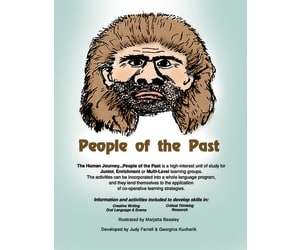
PEOPLE OF THE PAST Gr. 4-6
ELA, Reading, Grade 4, 5, Teacher Tools, Lesson Plans
The People of the Past Gr. 4-6 This engaging teaching resource is primarily designed for students in grades 4 to 6. The easy-to-use PDF unit comprises various activities and themes centered on human history, complete with 62 ready-to-print pages. Features: Multi-faceted: This tool enhances lessons across diverse areas such as creative writing, oral language, drama abilities or critical thinking skills. Inquisitive Nature : It provides opportunities for independent research, fostering students' curiosity and their knowledge-seeking abilities. The People of the Past Gr. 4-6 adapts well to different learning strategies and environments: Ways to Use: In-class discussions: Elevate interactive discussions by examining historical cases together as a class. Small group sessions: Foster cooperative learning experiences as students challenge each other's thoughts on historical events. Homework tasks: An excellent choice for independent study material that allows students to explore human history from home. Bridging Language Arts and Reading curricula topics together through high-interest content revolving around our shared past, this tool is ideal for junior level or Multi-Level learning groups while also serving advanced learners' needs. In Closing... The People of the Past Gr. 4-6 offers an enriching way for teachers to widen their student's perspectives about history—fostering not only interest but also appreciation towards those who have played significant roles in shaping society as we know it today.
Author Classroom Complete Press
Tags Critical Thinking, Large Group Activities, Animals, Reading Passage, Cave Painting

All About The Mouth | Human Body Video Lesson
Science, Life Sciences, Human Body, Not Grade Specific, Lesson Plans, Teacher Tools
All About The Mouth | Human Body Video Lesson This video lesson resource is scientifically designed to offer an engaging explanation of the human mouth's intricate structure and function. This 12-minute video breaks down complex biology into easily digestible information, making learning fun and memorable. Teaching Versatility No matter your grade level - every teacher can benefit from this resource. Its lack of a grade-specific curriculum makes it suitable to numerous age groups. It is ideal for public schools educators as well as homeschooling parents. About the Lesson The lesson incorporates clear animations detailing diverse parts of our mouth anatomy - from teeth to tongue! You can use it for group learning in an interactive classroom or individuals studying at home as per your preference. Promotes independent learning Extensive knowledge presented concisely A ready-to-download single MP4 file format 'All About The Mouth | Human Body Video Lesson': Don't just teach - invoke curiosity and passion towards gaining knowledge! Experience real excitement among learners by letting them journey through their own mouths' mysteries. So why wait? Enhance your science lessons with this resource now!
Author Educational Voice
Tags Human Mouth, Anatomy, Teeth, Tongue, Video Lesson
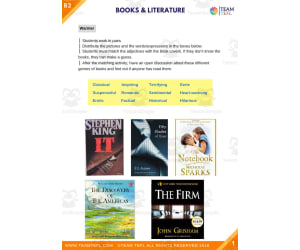
Books & Literature ESL TEFL Upper Intermediate Lesson Plan
ELA, Literature, Reading, Writing, Resources for Teachers, Grade 6, 7, 8, Teacher Tools, Lesson Plans, Worksheets & Printables
This is an upper intermediate lesson plan worksheet set for Books & Literature. Enhance your students knowledge of books and literature with this ESL TEFL resource. They will learn about different book genres, how to understand storyline plots and describe characters. They will discuss their favorite books and make recommendations and reviews for their classmates. There is a listening exercise and a short story with important vocabulary also included. Students will learn more about these topics and then complete the exercises to follow, which will assess their comprehension and implement language skills suitable for upper intermediate ESL students. This resource can also be accessed through Google Apps. Answer key included. An audio file is included. The ESL lesson plan includes flashcards, a warmer, listening, exercises, role-play, conversation, writing drill, activity, answers and an extra study that would be good to set as homework. There are 30+ pages and there are teachers notes to guide the teacher.
Author TEAM TEFL
Tags Books, Literature, Language Arts Lesson Plan, Summarizing , Fill In The Blank
I WONDER - What Age Did You Marry In Ancient Rome | Animated Video
History: Ancient, History, Social Studies, History: Europe, Grade 4, 5, 6, 7, 8, 9, 10, Lesson Plans, Teacher Tools
Video Introduction An amazing video designed for the students to learn more about history. I WONDER - What Age Did You Marry In Ancient Rome | Animated Video Lesson Do you like history? Which topic do you really enjoy about history? Have you ever read an interesting fact about the Vikings? If yes, can you mention them? What do you like most about the Victorian era? Can you name all the Tudors? Have you ever wondered how people used to live in ancient Japan and ancient China? Do you know any interesting facts about ancient Egyptians and the Pharaohs? Have you ever visited South America? What do you know about Incas and Aztecs? Celtic culture was really one of a kind, can you name any of the places that Celts used to live in? Imagine yourself living during the ancient Roman empire, how your life will look like? Ancient Greece was an amazing place to live in. What do you know about ancient Greek life? I WONDER - What Age Did You Marry In Ancient Rome | Animated Video Lesson The video is perfect for encouraging the researching skills for the students, while learning more about history. I WONDER - What Age Did You Marry In Ancient Rome | Animated Video Lesson This friendly designed video is suitable for students at school, homeschooling, and as a group activity. Format Available in MP4 format.
Author Educational Voice
Tags What Age Did You Marry In Ancient Rome, What Age Did You Marry In Ancient Rome Video, Ancient Rome, Ancient Rome Facts, Ancient Rome Facts For Kids, Ancient Rome Video, Ancient Rome Video For Kids

Simply Spring Gr. K-1
ELA, Reading, Grade 1, Teacher Tools, Lesson Plans
Simply Spring Gr. K-1 Simply Spring Gr. K-1 is an enriching teaching resource tailored to support kindergarten and first-grade educators in delivering engaging and unforgettable lessons revolving around the vibrant essence of Spring. With a focus on Language Arts, - specifically reading, this material offers a comprehensive guide for educators wishing to color their classrooms with the lively hues of the changing seasons. Versatility of Teaching Tools This resource provides versatility in your teaching approach by offering multiple learning tools catering to various classroom dynamics. A Big Book story suitable for group readings – enhance fine motor skills & art appreciation through coloring, cutting out text / illustrations before consolidating into a laminated book. A range of extended activities crafted specifically within Simply Spring Gr.K-1 including an Experience Chart, Journal Word Book etc., ensuring engagement even outside primary instruction times. Inclusion of Chants alongside rebus stories promote interactive reinforcement while tasks involving Visual Discriminations challenge cognitive thinking; Sets-to-Numerals Abilities exercises serve well as an introduction to mathematical concepts at a manageable level. Easily Accessible Format All these valuable resources are presented within Simply Spring Gr.K-1 as neatly compiled activity cards easing your formative assessments planning and execution process across different lessons segments. Furthermore, its contents come conveniently stored as a PDF file making it more accessible during technology aided lessons presentation or for swiftly printing off tangible materials for hands-on class environments. Note: This extensive resource opens doors not only towards creating relatable content but also in facilitating stimulating environment relevant to varied learning styles whether during whole-group instruction, small-group workshops or individual homework assignments across public, private or homeschool setups.
Author Classroom Complete Press
Tags Spring Theme, Lesson Plan, Word Bank, Writing, Spring Patterns

SUMMER ADVENTURES Gr. 2
ELA, Reading, Grade 2, Teacher Tools, Lesson Plans
SUMMER ADVENTURES Gr. 2 - Phenomenal Teaching Resource SUMMER ADVENTURES Gr. 2 is a phenomenal teaching resource composed for educators, whether they are public school teachers or those who homeschool their children. This resource offers a unique way to help Grade 2 students transition after the summer break by leveraging their real-life experiences in gaining both academic achievements and personal growth. Alternatively, it can also serve as an exciting prelude to the summer vacation when used in May or June. Features: Strategically packed with 50 engaging activities 56 pages housed within a convenient PDF format that's ready to print Activities emphasize word study, art projects , creative writing exercises, phonics enhancements and printing - all under the theme of 'summer adventures' The primary focus of SUMMER ADVENTURES Gr. 2 lies within Language Arts and Subsubjects: Reading realms which forms an integral part of the curriculum for Grade 2 learners making this kit relevant in any educational setting. Versatility: Easily integrated into your current curriculum providing scope for flexibility depending on student needs and pacing required. The structured yet engaging nature allows for implementation across multiple setups including whole class instruction, small group work or even as individual homework assignments ensuring each student gets maximum exposure irrespective of their learning style. The beauty about SUMMER ADVENTURES Gr. 2 lies not just in its academic appeal but also on its ability to connect life outside school walls with the classroom teachings making learning more relatable hence retaining interest levels throughout thereby aiding overall cognitive development beyond textbooks. Remember though that while there may be many long sun-filled days full of sandcastles and ice cream cones tucked away within these pages waiting to sprout stories from eager minds onto eager pages. They require a well-prepared guide like you standing ready with pens at dawn (well, at least after that first cup of coffee) to turn them into adventures worth remembering - one SUMMER ADVENTURE lesson pack at a time.
Author Classroom Complete Press
Tags Summer Activities, Scavenger Hunt, Fill In The Blank, Vowel Sounds, Suffixes

I WONDER - Is Rewilding Good For Humans | Animated Video Lesson
Environmental Science, Earth and Environmental Sciences, Science, Earth Sciences, Nature & Plants, Life Sciences, Human Body, Biology, Animals, Insects, Grade 6, 7, 8, 9, 10, 11, 12, Lesson Plans, Teacher Tools
Video Introduction An amazing video designed for the students to learn more about STEM. I WONDER - Is Rewilding Good For Humans | Animated Video Lesson Do you like STEM subjects? what is your favorite one? Have you ever tried to plant a seed? If yes, tell us more about it. Or have you ever tried to invent something? If yes, tell us more about it. And how do you think it will help us? Have you ever seen a microorganism under a microscope? What was it? And how it looked like? Mathematics is a marvelous subject. Let' sharpen our brains and solve some equations. Do you like timetable tricks? What is your favorite one? Do you know how to code? Have you ever created an app or a game before? If yes, how was it like? I WONDER - Is Rewilding Good For Humans | Animated Video Lesson The video is perfect for encouraging the researching skills for the students, while learning more about this fantastic topic. I WONDER - Is Rewilding Good For Humans | Animated Video Lesson This friendly designed video is suitable for students at school, homeschooling, and as a group activity. Format Available in MP4 format.
Author Educational Voice
Tags Is Rewilding Good For Humans, Is Rewilding Good For Humans Video, Rewilding, Rewilding Facts, Rewilding Facts For Kids, Rewilding Video, Rewilding Video For Kids, Rewilding Tips, Rewilding Tips For Kids