



3,943 products added recently
Page 48 - Quizzes
Quizzes are essential tools for measuring student understanding and retention of material. Our extensive collection offers assessments across multiple subjects, including math, science, language arts, and social studies. These quizzes range from multiple-choice and true/false questions to short answer and essay prompts. They can be used for formative assessments to guide instruction or summative evaluations at the end of a unit. Incorporating quizzes into your teaching strategy provides insights into student progress and helps identify areas that may need reinforcement.

 Show filters


Science Reading Passage: The Truth About Drinks (Fillable PDF)
Science, ELA, Reading, Reading Comprehension, Strategies, Resources for Teachers, Grade 6, 7, 8, 9, Writing Prompts, Worksheets & Printables, Centers, Activities, Teacher Tools, Assessments, Quizzes and Tests, Quizzes, Tests
Science Reading Comprehension Passage and Questions: The Truth About Drinks (Fillable PDF) This very engaging science reading passage about how common drinks affect health, focus, and sleep. It explains the differences between regular soda, diet soda, and energy drinks . The passage warns that regular soda often contains a lot of added sugar, diet soda uses artificial sweeteners that may affect taste habits, and energy drinks can contain high caffeine levels that may cause headaches, anxiety, racing heartbeat, and poor sleep in teenagers. It also teaches students how to read beverage labels by checking added sugar, caffeine, ingredients, and serving size . This passage is designed to bridge the gap between science and literacy through strengthening reading comprehension and sparking scientific curiosity in middle school students. The passage blends English Language Arts skills with accurate science content that supports NGSS classroom practice. Ideal for interdisciplinary learning in ELA and Science. Suitable for Grade 9 review, too! This passage is designed as a fillable PDF , which means students can type their answers directly into the document on any computer or tablet . Each page includes highlighted text fields that show them exactly where to type! Student Tasks for The Passage: 5 multiple-choice questions targeting main idea, key details, inference, vocabulary in context, and use of evidence 5 vocabulary matching items with clear, student-friendly definitions 5 text-based questions that require citing specific lines or facts 1 summary prompt that asks students to condense central ideas accurately Full answer key for every section Available Formats for this Resource PDF Word Docs Google Docs FULL CATALOG OF DOWNLOADING LINKS HERE Product Details Length: 5 pages total Grades: 6–8, also suitable for Grade 9 review Use cases: close reading, stations, homework, intervention, test prep, and sub plans Standards support: reinforces informational-text skills and supports NGSS-style sense making through observation, modeling, and clear use of claim, evidence, and reasoning Why Teachers Choose This Set Authentic science content paired with rigorous literacy practice Consistent task structure across all passages for easier planning and smoother student routines Clear, age-appropriate writing that builds confidence without oversimplifying Other Science Reading Collections you May find in the store: 1. Astronomy & Space Science 2. Volcanoes, Rocks, & Mountains 3. Rock Cycle, Soil, & Sinkholes 4. Mars, Glaciers, & Antarctica 5. Water Cycle, Acid Rain, & Wastewater 6. Insects, Animals, & Ecosystems 7. Bioluminescence & Insects 8. Animal Skin, Cats, & T. Rex 9. Human Body and Senses 10. Health & Applied Bioscience 11. Waves, Light, & Imaging 12. Electricity & Energy 13. Motion & Materials 14. Chemistry and Materials Science Use this set to reinforce ELA skills in science, to add literacy to your lessons, and to support independent work. The passages strengthen main idea, evidence use, vocabulary in context, inference, cause and effect, and summary writing. With ready-to-use assessments and complete answer keys, you can provide focused practice that is simple to run and fast to review.
Author Middle & High School - CORED Education
Rating
Tags Middle School, Reading Comprehension, Reading Strategies, ELA, Centers, Reading Passage, Assessments, Vocabulary, Bioscience

Life Science Reading Comprehension Passage: Microevolution (Word)
Science, ELA, Reading, Reading Comprehension, Strategies, Resources for Teachers, Life Sciences, Biology, Grade 6, 7, 8, 9, 10, Writing Prompts, Worksheets & Printables, Centers, Activities, Teacher Tools, Assessments, Quizzes and Tests, Quizzes, Tests
Life Science Reading Comprehension Passage and Questions: Microevolution (Word) This very engaging science reading passage is about microevolution and the small inherited changes that occur within populations over many generations . It explains how traits and alleles can become more or less common through natural selection, mutation, genetic drift, the bottleneck and founder effects, gene flow, and non-random mating. Students explore clear examples such as insect camouflage, antibiotic-resistant bacteria, changing bird beaks, animal movement, pollen transfer, and mate-attracting traits. This passage is designed to bridge the gap between science and literacy by strengthening reading comprehension while sparking scientific curiosity in middle school students. It blends English Language Arts skills with accurate science content, helping students build background knowledge, understand key concepts, use evidence from the text, and explain scientific ideas clearly. This resource supports science classroom practice while also reinforcing important literacy skills such as main idea, vocabulary, comprehension, and summarizing. Ideal for interdisciplinary learning in ELA and Science. Suitable for Grade 9 review, too! Student Tasks for The Passage: 10 multiple-choice questions targeting main idea, key details, science concepts, comparison, and real-world applications 10 True/False statements to check understanding and address common misconceptions 5 text-based short-answer questions that require students to explain important ideas from the passage 5 vocabulary matching items with clear, student-friendly definitions 1 summary prompt that asks students to condense the central ideas accurately Full answer key for every section Available Formats for this Resource PDF Fillable PDF Google Docs FULL CATALOG OF DOWNLOADING LINKS HERE Product Details Length: 7 pages total Grades: 6–8, also suitable for Grade 9 review Use cases: close reading, stations, homework, intervention, test prep, and sub plans Standards support: Reinforces informational-text skills and supports NGSS-style sense-making by helping students read scientific explanations, connect evidence to key concepts, interpret real-world examples, and explain cause-and-effect relationships in science. Why Teachers Choose This Set Authentic science content paired with rigorous literacy practice Consistent task structure across all passages for easier planning and smoother student routines Clear, age-appropriate writing that builds confidence without oversimplifying Other Science Reading Collections and Topics You May Find in the Store: 1. Astronomy & Space Science 2. Volcanoes, Rocks, & Mountains 3. Rock Cycle, Soil, & Sinkholes 4. Mars, Glaciers, & Antarctica 5. Water Cycle, Acid Rain, & Wastewater 6. Insects, Animals, & Ecosystems 7. Bioluminescence & Insects 8. Animal Skin, Cats, & T. Rex 9. Human Body and Senses 10. Health & Applied Bioscience 11. Waves, Light, & Imaging 12. Electricity & Energy 13. Motion & Materials 14. Chemistry and Materials Science 15. Electromagnetism 16. Acids and Bases 17. Gas Laws 18. Biotechnology 19. Periodic Trends 20. Protists and Fungi 21. Microevolution 22. Blood 23. Chemical Bonding 24. Magnets 25. Muscles 26. Nuclear Chemistry 27. Electromagnetic Devices 28. Epigenetics 29. The Law of Conservation of Mass 30. Atomic Models 31. Isotopes and Ions 32. Light 33. Human-Environment Interaction 34. Theory of Evolution 35. Photosynthesis 36. Origins of Life and Early Earth 37. Gene Expression and Regulation 38. Thermochemistry 39. Allergies 40. Coevolution 41. Birth to Adulthood 42. Cells 43. Entropy and Free Energy 44. The Human Brain 45. Mixtures and Solutions 46. Invertebrates 47. Zoo Animals 48. Biochemistry 49. Animal Behavior 50. Population Ecology ...and many more engaging science reading passages that cover intriguing and important topics designed to spark curiosity and support student learning. Use this passage to reinforce ELA skills in science, to add literacy to your lessons, and to support independent work. The passages strengthen main idea, evidence use, vocabulary in context, inference, cause and effect, and summary writing. With ready-to-use assessments and complete answer keys, you can provide focused practice that is simple to run and fast to review.
Author Middle & High School - CORED Education
Rating
Tags Middle School, Reading Comprehension, Reading Strategies, ELA, Centers, Reading Passage, Assessments, Vocabulary, Biology, Life Science

Compare Functions Quiz - Multiple Versions
Math, Algebra, Grade 8, Quizzes, Quizzes and Tests, Teacher Tools
The Compare Functions Quiz - Multiple Versions: A Unique Solution for Educators Designed specifically for Grade 8 Algebra, this resource focuses on standard 8.NS.A.2. It provides support for educators using standards-based grading in their curriculum . Main Features: Four unique quiz versions designed to help gauge students' understanding before and after instruction. Critically thought-out questions that provoke deep thinking. A user-friendly layout with room for student explanations where necessary. An estimated completion time of about fifteen minutes, making the quizzes highly gradable and accessible. You can incorporate these quizzes into your teaching plan as you see fit. Either apply a traditional point system or personalised rubric, or designate letters such as 'M' (meets) or 'E' (exceeds) - the choice is yours. Versatile Applications: In addition to using them as pre-tests and final exams, these quizzes can be: Rivitalising Material: - as refreshers on previously taught concepts in your class to ensure knowledge stays fresh and relevant. Precise Reteaching Indicators:- In identifying areas needing reteaching, they serve as an excellent tool during review sessions or intervention support phase among fellow educators. 'Test Out' Tools For Early Birds:- You can use them as previews hinting at question styles – ideal if some learners master a concept ahead of others. This approach helps bolster student-confidence in future assessments! In Conclusion... The Compare Functions Quiz – Multiple Versions is a handy tool that enhances your capacity to effectively focus on individual learning standards. It offers an easy-to-grade and organize standards-based grade book format. Whether used for gauging growth, understanding student needs or refreshing past teachings, it's a must-have resource for every Grade 8 Algebra classroom!
Author Sheltered Language Resources
Tags Math Quizzes, Standards-based Grading, Algebra Assessment, Critical Thinking, Individual Learning

Reading Comprehension Quizzes for Grade 5
Reading Comprehension, Reading, ELA, Grade 5, Assessments, Teacher Tools, Quizzes, Quizzes and Tests
Reading Comprehension Quizzes for Grade 5: A Collection of Reading Passages with Comprehension Quizzes and Answer Keys for 5th Grade and Up This essential resource is designed to actively engage students, boost comprehension skills, and provide effective ELA test preparation and practice. Reading Comprehension Quizzes is a no-prep, user-friendly resource that includes 4 unique reading passages targeted to a 5th grade reading level. Each reading passage is followed by a quiz comprised of multiple choice questions requiring students to refer back to the text to find evidence that supports their answers, boosting their critical thinking and analytical reading skills. The quizzes can also be used as an assessment tool for students' reading comprehension skill levels. Reading comprehension is an essential skill for academic success and this resource will provide easy-to-use comprehension quizzes to help master that skill. Features • 4 non-fiction informational text reading passages • Quizzes containing multiple choice questions to reinforce comprehension and close reading skills • Answer Keys for easy assessment • No-prep, 16 pages in easily printable PDF format Although the reading passages and quizzes are targeted to a 5h grade reading level, this resource can also benefit older students. The printable PDF format makes it easy to incorporate these comprehension quizzes into classroom lesson plans, individualized reading programs, homework assignments, assessments and test prep. The Reading Passages 1. The Legend of the Zodiac 2. Did Columbus Know the Earth Was Round? 3. The Story Behind the Poem In Flanders Fields 4. What Is a Suffragette? This resource addresses the following 5th Grade Common Core ELA Reading standards. RI.5.1 RI.5.2 RI.5.10
Author WorksheetsPlus
Tags Reading Comprehension Quizzes, Comprehension Quizzes, ELA Test Prep, Test Prep, 5th Grade, Reading Quiz, Close Reading, Reading Comprehension, Comprehension Tests
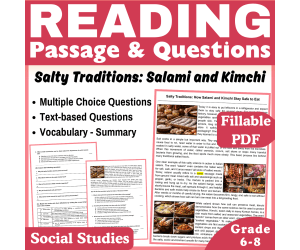
Salami and Kimchi: Social Studies Reading Passage (Fillable PDF)
ELA, Reading, Reading Comprehension, Strategies, Resources for Teachers, Social Studies, Sociology, Grade 6, 7, 8, 9, Writing Prompts, Worksheets & Printables, Centers, Activities, Teacher Tools, Assessments, Quizzes and Tests, Quizzes, Tests
Salami and Kimchi: Social Studies Reading Comprehension Passage (Fillable PDF) This resource introduces a unique Social Studies reading comprehension passage with questions about Salami and Kimchi: Salty Traditions. The passage is carefully designed to bridge the gap between social studies and literacy through strengthening reading comprehension and sparking knowledge curiosity in middle school students. Each passage blends English Language Arts skills with accurate social studies content . Ideal for interdisciplinary learning in ELA and Social Studies. Suitable for Grade 9 review, too! This resource is designed as a fillable PDF , which means students can type their answers directly into the document on any computer or tablet . Each page includes highlighted text fields that show them exactly where to type! Student Tasks throughout the passage: 5 multiple-choice questions targeting the following skills: main idea, key details, inference, vocabulary in context, and use of evidence 5 vocabulary matching items with clear, student-friendly definitions 5 text-based questions that require citing specific lines or facts 1 summary prompt that asks students to condense central ideas accurately Full answer key for every section Available Formats for this Resource: PDF Word Docs Google Docs FULL CATALOG OF DOWNLOADING LINKS HERE Social Studies Reading Comprehension Collection Links: 1. Ancient Civilizations PDF Fillable PDF Word Docs Google Docs 2. Early Empires and Trade Networks PDF Fillable PDF Word Docs Google Docs 3. The Founding of the United States PDF Fillable PDF Word Docs Google Docs 4. Language, Culture, and Meaning PDF Fillable PDF Word Docs Google Docs 5. Psychology and Society PDF Fillable PDF Word Docs Google Docs 6. Global Festivals and Traditions PDF Fillable PDF Word Docs Google Docs 7. Extreme Environments and People PDF Fillable PDF Word Docs Google Docs 8. Food, Culture, and Preservation PDF Fillable PDF Word Docs Google Docs 9. Global Food Customs PDF Fillable PDF Word Docs Google Docs 10. Media, Communication, and Popular Culture PDF Fillable PDF Word Docs Google Docs 11. Human Impact on the Environment PDF Fillable PDF Word Docs Google Docs 12. Civic Action and Social Change PDF Fillable PDF Word Docs Google Docs 13. Fashion, Society, and Power PDF Fillable PDF Word Docs Google Docs 14. People, Places, and Unusual Histories PDF Fillable PDF Word Docs Google Docs Product Details: Length: 5 pages Grades: 6–8, also suitable for Grade 9 review Use cases: close reading, stations, homework, intervention, test prep, and sub plans Why Teachers Choose This Passage: Authentic social studies content paired with rigorous literacy practice Consistent task structure for easier planning and smoother student routines Clear, age-appropriate writing that builds confidence without oversimplifying Use this passage to reinforce ELA skills in social studies, to add literacy to your lessons, and to support independent work. The passage strengthens main idea, evidence use, vocabulary in context, inference, cause and effect, and summary writing. With ready-to-use assessments and complete answer keys, you can provide focused practice that is simple to run and fast to review.
Author Middle & High School - CORED Education
Rating
Tags Middle School, Reading Comprehension, Reading Strategies, ELA, Centers, Reading Passage, Assessments, Vocabulary, Social Studies, Sociology

UK/Aus Spelling Synonyms Practice Questions - Year 4-5 (PDF)
ELA, Language Development, ESL, Common Core, Resources for Teachers, Vocabulary, Grade 3, 4, Worksheets & Printables, Worksheets, Quizzes and Tests, Teacher Tools, Tests, Assessments, Quizzes
THIS IS THE UK/AUS ENGLISH SPELLING VERSION. CHECK THE CATALOG FOR THE ORIGINAL AMERICAN ENGLISH VERSION. Synonyms Vocabulary Practice MCQS ELA MCQS Overview: In this series of lessons, students will embark on an engaging journey to explore the grammar skills that make our language vibrant and expressive. These lessons are crafted to help students identify, comprehend, and effectively apply language arts skills in both writing and speech. This UK/Aus English version is especially useful for schools, teachers, and families working with British-based spelling and language conventions. It is a helpful option for classrooms using UK curriculum expectations, international programmes influenced by British English, or any setting where learners need to practise the correct capitalisation and punctuation forms for that version of English. Synonyms Overview: Nouns Synonyms Verbs Synonyms Adjectives Synonyms Synonyms in a Sentence PDF Version This is the PDF uneditable version. This download is available in GOOGLE Docs, GOOGLE Forms, GOOGLE Slides. PDF, PPT, WORD, check the links below for more details. FULL CATALOG OF DOWNLOAD LINKS HERE ELA Review Questions Overview Each review test includes three answer choices for every question. The format is clear and easy for students to follow. A small number of pictures are included on each test to make the pages feel more welcoming and less plain. A review sheet is also included to help students go back over many of the main skills covered in the product. Introduction or Example Sheet Each topic includes an introduction or example sheet to look at before students begin. It gives them a clear starting point and helps them understand what to expect. It is also a helpful way to quickly review the main ideas before moving into the practice. Full Answer Keys Full answer keys are included to make checking work quick and easy. Sample responses are also provided where needed, especially for open-ended tasks. This helps save time and makes the resource simpler to use on busy days. For similar downloads and other frees, do check out Cored Group on TeachSimple.
Author Cored Education
Rating
Tags Elementary, Answers, Ccss, Common Core, Tests, Test Prep, Assessment, Grade 3, Grade 4, Vocabulary
Compare Numbers Using Scientific Notation Quiz - Multiple Versions
Math, Numbers, Grade 8, Quizzes, Quizzes and Tests, Teacher Tools
Compare Numbers Using Scientific Notation Quiz - Multiple Versions About the Resource: This tool is designed for educators teaching 8th grade math, particularly those focusing on numbers. It aims to help them implement standards-based grading methods in their classrooms. What it Offers: It consists of four versions of mini quizzes to assess understanding on comparing numbers using scientific notation. The quizzes contain carefully crafted questions that trigger students' critical thinking and encourage them to justify their answers. Main Features: Included are thoroughly compiled answer keys, allowing teachers to grade a class set within just 15 minutes! Meticulously bridges instruction and testing by encompassing strategies some of which includes pre-tests, actual tests, and retakes if needed. Scoring Flexibility: You can lean into your comfortable approach or adhere to your school’s set rubric strategy – be it a traditional points system or assigning multiple points for each question or opting standards-based descriptions such as 'Meets', 'Exceeds', etc. Efficacious Use of this Tool: Apart from regular post-instruction evaluations, The tool could serve as model tests hinting students about potential assessments ahead. Tutors can use these creatively throughout course reviews. You can also utilize these when re-teaching lessons after analyzing evaluations prove necessary. The Versatility Continues... Potential uses could extend to allowing proficient students an opportunity to “test out” from certain sections if they exhibit deep understanding; the resource could also aid in refreshing students' memories about past lessons during class discussions. Teachers will know precise areas needing reteaching efforts after closely examining quiz results, enabling timely intervention for struggling students. The product comes in a simple, user-friendly PDF format, proving Compare Numbers Using Scientific Notation Quiz - Multiple Versions as a veritable educational companion viable in managing assessments effectively and promoting superior learning experiences.
Author Sheltered Language Resources
Tags Scientific Notation, Number Comparison, Math Assessment, Standards-based Grading, Differentiation

Yoga Reading Comprehension Passage - Cored Ed Encyclopedia
ELA, Language Development, Reading Comprehension, Reading, History, Social Studies, Pre-Reading, P.E. & Health, Yoga, Geography, Grade 2, 3, 4, 5, Worksheets & Printables, Worksheets, Teacher Tools, Centers, Activities, Writing Prompts, Assessments, Quizzes and Tests, Quizzes, Lesson Plans
This yoga reading comprehension with lesson plan includes: Visualization (on the front cover) Start your lesson by taking a minute to think and share something about the topic. Read the script aloud (slowly), perhaps prepare some music or sound effects. Student close their eyes and let their imaginations wander. Students open their eyes, read the question aloud and give them a few minutes to complete. Ask a few students to share or keep answers until the end to compare with what they learn in the passage. Quick pause—thousands of Cored Education products are included with your TeachSimple membership. Download links and encyclopedia index available here. Pre-Reading Trivia Students will write down one thing they already know about the subject and then read five more facts and discuss. These facts are fun, and the students will enjoy learning about the subject before reading more. Give 1 minute for students to write what they already know (no pressure—best guess is fine). Read the five facts together. After each fact, do ask a student for their opinion, was it surprising? Set a purpose by asking students to highlight/underline one fact they want to learn more about during the reading. Reading Passage The text is a high-interest reading passage with set paragraphs, roughly three to four paragraphs long. It contains a variety of themes about the topic, anywhere from history to technology. The passage is between 250 and 350 words in length. First, ask students to look at the headings and see what they’ll learn about today. What do they know about the topic/heading? First read options: Teacher read-aloud (best for support). Partner reading (paragraph by paragraph). While reading, students underline important details, and vocabulary words they think may come up in the questions section. Mixed Questions The first question page contains four multiple-choice questions, each with a choice of four answers, and three written response questions that require a sentence or two from the student. Students complete the mcqs first independently, then review quickly as a class. For the 3 written responses, try to get students giving the answer with some form of evidence: “I think ___ because the text says ___.” If students get stuck, send them back to check the passage. Vocabulary Questions Practice seven key words from the text in this section across two activities. First section is scrambled words where students will unscramble three words given a clue for each. The second section is a word to meaning matching activity. Before starting, have some students read out words they underlined in the passage. Ask students to say the word and read aloud the sentence(s) around each word. Ask students to do scrambled words and the matching exercise in pairs then go through answers as a class. For the scrambled spelling task, get four pairs to come up to the board and write the words for extra practice with the other student reading out the clue. For the matching task, prompt students to give full sentences: “I matched ___ with ___ because ___.” Creative Writing In this question, the student will be required to write a five to eight sentence paragraph on a question related to the topic. Before starting, ask students write down 3 key ideas they are going to include in their piece. Ask students for ideas to share around the class to help those struggling. Pro writing expectations: 5–8 sentences At least 2 facts or details from the passage At least 2 vocabulary words from the previous page Students read their paragraphs while classmates listen for facts and vocabulary words. Extension Activities This page is optional for fast finishers or to take home. There are several activities, each one requiring a different skill. Do some, do none, do all, completely optional - but you will feel reassured knowing every possibility is planned for. Includes summary writting question. Answer Key There are answers for the multiple-choice questions, written response questions have sample answers, vocabulary answers and if there is a summary question then a sample summary will be provided as well. Lesson Plan Included Customized lesson plan for this lesson is included. Lesson Snapshot Title: Yoga Genre: Nonfiction (informational text) Subject: Social Studies & Health/SEL (culture and well-being) / Informational Reading Primary Topic: Yoga’s origins, key ideas, and modern practice Estimated Guided Reading Level (A–Z): Q Support pages present: pre-reading trivia, mixed questions, vocabulary activities, creative writing, extension activities, and an answer key. What This Lesson Teaches Best Explains yoga as an old practice that began in India and grew over time. Defines what the word “yoga” can mean in the passage (“yoke” or “union,” like two things working as one). Describes key tools in yoga: body positions, steady breathing, and quiet attention (and how breathing can steady the mind). Introduces “sutras” and explains that Patanjali gathered yoga ideas into short lines meant to be remembered, including a description of yoga as a path with eight “limbs.” Traces how yoga changed in the 1900s, noting that teachers such as Tirumalai Krishnamacharya helped create modern postural yoga with flowing sequences taught in classes. Learning Goals Students will describe what the passage says the word “yoga” can mean. Students will identify tools the passage says yoga uses (body positions, steady breathing, quiet attention). Students will explain why careful breathing matters in some yoga traditions, using details from the text. Students will describe what sutras are and why they were written, according to the passage. Students will summarize how yoga changed in the 1900s based on the passage’s timeline. Key Vocabulary From the Text Sanskrit — a very old language from India. traditions — ways people practice and pass ideas over time. sutras — short lines of teaching meant to be remembered. meditation — a quiet practice to help the mind rest. asana — a steady seat for meditation, not a gym pose. FULL CATALOG OF DOWNLOAD LINKS AND ENCYCLOPEDIA INDEX HERE
Author Cored Education
Rating
Tags Vocabulary, Reading Comprehension, Reading Passages, Lesson Plans, Ela Lesson Plans, Reading Comprehension Lesson Plans, Pre-reading, Social Studies Lesson Plans, Yoga, History
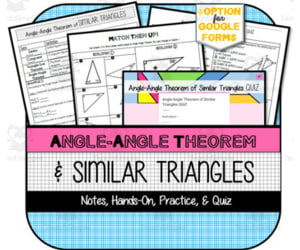
Angle-Angle Theorem of Similar Triangles NOTES, PRACTICE, QUIZ
Math, Geometry, Grade 8, Quizzes, Quizzes and Tests, Teacher Tools
This resource was developed to partially meet the requirements of the 8th Grade Geometry standard below: CCSS.MATH.CONTENT.8.G.A.5 Use informal arguments to establish facts about the angle sum and exterior angle of triangles, about the angles created when parallel lines are cut by a transversal, and the angle-angle criterion for similarity of triangles* *This resource does NOT explore the proportional side relationship of similar triangles in depth.
Author The Math Cafe
Tags Angle Angle Theorem, Similar Triangles, Notes, Practice, Angle-angle Similarity Theorem, Angle Angle Angle Theorem, Angle Angle Similarity Worksheet, Similar Triangles Practice, Angle Angle Similarity Theorem
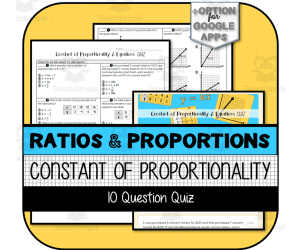
Constant of Proportionality and Equations QUIZ
Math, Algebra, Grade 7, Quizzes, Quizzes and Tests, Teacher Tools
This quiz is meant to assess students' ability to master the following concepts: 1) Recognize and represent proportional relationships between quantities. 2) Identify the constant of proportionality ( unit rate) in tables, graphs, equations, diagrams , and verbal descriptions of proportional relationships. 3) Represent proportional relationships by equations.
Author The Math Cafe
Tags Constant Of Proportionality, Quiz, Google Forms

Lemonade Reading Comprehension Passage - Cored Ed Encyclopedia
ELA, Language Development, Resources for Teachers, Reading Comprehension, Reading, Pre-Reading, Writing, Strategies, Science, Physics, Grade 2, 3, 4, 5, Worksheets & Printables, Worksheets, Teacher Tools, Centers, Activities, Writing Prompts, Assessments, Tests, Quizzes and Tests, Quizzes
This lemonade reading comprehension contains the following: Visualize on the Cover (Teacher Read Aloud Script) Start your lesson by taking a few moments to visualize the topic and share thoughts or feelings about it. Pre-Reading Trivia Students will write down one thing they already know about the subject and then read five more facts and discuss. These facts are fun, and the students will enjoy learning about the subject before reading more. Reading Passage The text is a high-interest reading passage with set paragraphs, roughly three to four paragraphs long. It contains a variety of themes about the topic, anywhere from history to technology. The passage is between 250 and 350 words in length. Mixed Questions The first question page contains four multiple-choice questions, each with a choice of four answers, and three written response questions that require a sentence or two from the student. Vocabulary Questions Practice seven key words from the text in this section across two activities. First section is scrambled words where students will unscramble three words given a clue for each. The second section is a word to meaning matching activity. Creative Writing In this question, the student will be required to write a five to eight sentence paragraph on a question related to the topic. Extension Activities This page is optional for fast finishers or to take home. There are several activities, each one requiring a different skill. Do some, do none, do all, completely optional - but you will feel reassured knowing every possibility is planned for. Includes summary writting question. Answer Key There are answers for the multiple-choice questions, written response questions have sample answers, vocabulary answers and if there is a summary question then a sample summary will be provided as well. FULL CATALOG OF DOWNLOAD LINKS AND ENCYCLOPEDIA INDEX HERE Lesson Snapshot Title: Lemonade Genre: Nonfiction (informational text) Subject: Reading (Informational Text) / Social Studies (Food history & culture) / Science (mixtures) Primary Topic: What lemonade is, and how it varies by place Estimated Guided Reading Level (A–Z): O What This Lesson Teaches Best What lemonade is usually made from and how flavors can be adjusted (more lemon = sharper; more sugar = softer). Science-connected ideas in everyday life (citric acid, vitamin C, and sugar dissolving with stirring). A brief history of lemon drinks across time and places (12th-century Egypt; 1600s England; 1676 Paris sellers). How the same word can mean different things in different regions (cloudy still drink vs. bubbly lemon soda). Cultural connection: lemonade stands as a summer way for kids to earn money and a “symbol” of warm-weather fun. Learning Goals Describe the typical ingredients in lemonade named in the passage. Explain why lemons taste tart, using the text’s reason. Summarize the historical examples of lemon drinks given (Egypt, England, Paris). Compare what “lemonade” can mean in different places using details from the passage. Describe what happens when sugar dissolves and why stirring helps, according to the text. Key Vocabulary From the Text sweetener — something added to make a drink taste sweet. citric — related to the sour acid found in citrus fruits. zest — tiny bits of the outer lemon peel. dissolves — mixes into liquid and seems to disappear. bubbly — full of bubbles, like soda. Cored Ed Encyclopedia Overview The Cored Ed Encyclopedia is a weekly series of lessons that you can pick up and use right away. These short readings fit into whatever time you have available. Each one includes a warm-up, a reading, and a set of questions, but it’s flexible — you can do just the reading, the full lesson, or skip the writing section if you need to. Each lesson focuses on a single topic so students don’t get lost. The writing is clear but never childish, making it perfect for grades two through five. Topics range from animals and science to history, inventions, and everyday things. No matter the level of the student, everyone should take away at least one new idea or fact from each lesson. The materials are easy to print, easy to explain, and require no setup. They work well for whole-class teaching, partner work, or independent study.
Author Cored Education
Rating
Tags Vocabulary, Spelling, Reading Comprehension, Reading Passages, Reading, Creative Writing, Reading Strategies, Writing Prompts, Lemonade, Physics
Taxes & Paychecks – Real-World Simulation Sheets
Social Skills, Special Resources, Life Skills, Social Emotional Learning (SEL), Social Studies, Economics, Math, Money, Measurements, STEM, Grade 6, 7, 8, 9, 10, 11, 12, Workbooks, Worksheets & Printables, Worksheets, Teacher Tools, Quizzes and Tests, Quizzes, Tests, Literacy Readers, Lesson Plans, Word Searches
Get Ready To Unlock Real Life Know How In Finance By Teaching Students About Taxes Made Simple, Paychecks, And Managerial.Learn and Use Your Skills In The Real World Without Hosting A Class In Your Community With This All-Encompassing Feature Rich Tax And Paycheck Unit. Do you ever just wish to bring in Real Life Math, teach students valuable life long skills, make it relatable, and teach students about the relationship between abstract developement of numbers versus actual application of numbers in the real world? If you do; THIS IS the complete all-inclusive, no prep repititive unit that you needed to discover to teach your middle schoolers all about taxes, paychecks; found out that you CAN earn money with this comprehensive written unit. How can we make something that seems overwhelming and complicated, easier, and more enjoyable? By using an engaging and student centered material to inform and educate your students about understanding their actual earnings (Net Pay) before they get their first paycheck. This will help your middle school students view their paychecks as an indication of successful involvement within the work force against societal standards of financial obligation by then being empowered after having deliuered when they felt more discouraged previously. This is the ultimate teaching plan; a tried and true, 5-day-lesson plan that is intended to sufficiently prepare your students for their future by creating an opportunity for them to be able to view themselves as successful in the world of finance and less anxious about obtaining those same values. This product will benefit students in grades 6-9 who are studying math (especially for applying percentages/real-world scenarios), financial literacy, life skills and/or career exploration, civics and economics (to comprehend how tax money works within society), and in cooperative homeschool environments. Including the 34-page (pdf only) detailed phase one: core content and theory guide which explains the differences and similarities between gross and net, overtime, FICA, federal and state taxes and voluntary deductions. You’ll want to use this as part of teacher preparation materials or to supplement any students who are classified as advanced readers. Phase 2: Workbook for Students (10 Workbooks) Workbooks from 1 to 10 will provide instructions and examples for answering the following: 1. Understanding the structure of a paycheck (Worksheet #1). 2. Finding gross pay for various given situations (Worksheet #2). 3. All about FICA (the intergenerational contractual agreement) (Worksheet #3). 4. What to expect on your federal and state income tax return (Worksheet #4). 5. What the deduction from your paycheck is, to whom you can give it, and the effect of giving (Worksheet #5). 6. Bringing everything together to calculate the net pay for the paycheck (Worksheet #6). 7. What effect sales tax has on the consumer (Worksheet #7). 8. The basics of how property taxes impact local communities (Worksheet #8). 9. Understanding Form W-4 and Form W-2 (Worksheet #9). 10. Understanding the basics of the consumer and their role in the economy (Worksheet 10). Phase 3: Teaching Resources & Visuals High contrast visuals in black and white that can be printed and used are; diagrams of the paycheck pipeline, the anatomy of a paycheck, and where the taxes are sent. Also, a complete answer key will give the teacher all of the answers and how to create them from the 10 workbooks. Lastly, there will be a full guide for implementation by the teacher that includes the pacing guide (5 days), daily lesson objectives, daily lesson activities, weekly lesson discussion prompts, and how to differentiate lessons for children needing scaffolding or extensions. Allow your students to have the knowledge necessary to make a successful transition into their adult lives at home and in the community. Download this print and go unit today to help your students become knowledgeable, confident participants in the economy! Why Schools/Parents Especially Like It : Building Real-Life Skills - This program teaches students a real-world, practical skill that they will use starting the day they receive their first paycheck, laying the groundwork for a lifetime of future financial success. Connecting Civics & Math - This project successfully connects important math concepts (percentages) with key civics lessons that teach students how taxes are used to support the communities they live in, making learning much more effective and relevant to students. Comprehensive & No Preparation - This program is a complete unit that is ready to use; including the lesson plan, student worksheets, visuals, answer keys and 5-day lesson plans teachers will have more time to plan for other subjects. Empowering & Reducing Students’ Anxiety - The confusion caused by the amount of information presented on pay stubs and issues related to deductions is replaced by clarity and control over their finances with an understanding of what many of those deductions mean, allowing them to view themselves as part of and contributing to our economy. Promoting Critical Thinking - Students will build critical thinking skills through discussions about capstone simulations and ethics (i.e., considering progressive taxation), as well as developing the ability to analyze and evaluate many complex financial situations beyond basic computation. Mainly: - Middle School Math: Excellent resource for %'s and decimals; includes real-life problems. - Pre-Algebra or Consumer Math in HS (9th grade): Great introduction or summary. - Financial Literacy in HS or MS: Core unit of any financial literacy curriculum. - Life Skills/Career Readiness: Essential info for every student getting ready to work. - Civics/Economics: Excellent connection between personal finance and how government/public services are funded. Terms of Service/Copyright: Copyright is with Syed Hammad Rizvi. All rights reserved. If used in the classroom, this resource can only be used once per teacher. There is no sharing, alteration, distribution or selling of any portion of this resource. For example, you may not post this resource on the internet for others to view and download. If you wish to share this resource with colleagues, please order additional licenses at Teachsimple. Thank you for adhering to the above terms of use. This product is proudly created by Syed Hammad Rizvi.
Author Creative Book Store
Rating
Tags FinancialLiteracy, RealWorldMath, LifeSkills, UnderstandingTaxes, Paycheck, ConsumerMath, PersonalFinance, Economics, MathLesson, Civics

Valid Samples & Inferences QUIZ
Math, Statistics, Grade 7, Quizzes, Quizzes and Tests, Teacher Tools
Valid Samples & Inferences QUIZ The Valid Samples & Inferences QUIZ is designed to adhere to the 7th Grade Statistics & Probability Standards. The objective of this resource is to anchor student comprehension about how statistics can be leveraged to extract information about a larger population group by studying that population's sample size. The secondary aim is to emphasize that creating accurate generalizations about a targeted audience can only be achieved if derived from representative samples. This understanding is pivotal towards grasping that random sampling contributes towards generating these representative samples and accordingly fortify valid inferences. Intended Users Public school educators searching for classroom exercises or homework tasks. Homeschooling parents seeking sequential methods of introducing fundamental concepts. The scope for implementation spreads across various teaching scenarios like: In-class whole-group lessons Small-group projects Solo assignments Or even within flipped classrooms. This intuitive education tool comprises of a 10-question quiz distributed in two different formats: printable (PDF) and digital (Google Forms). Educators have the option to download it for offline use or utilize it online on Google Drive as per the step-by-step instructions offered on an introductory page . Another attribute featured here includes an 'answer key' embedded right within in its content, ensuring ease-of-use! Potential Applications: It's specifically aimed at supporting grade-7 Mathematics students under the category of Statistics. This makes it beneficial for focused evaluations, initiating new chapters or revisiting crucial notions during end-of-unit reviews. Bring the Valid Samples & Inferences QUIZ into your instructional plans today!
Author The Math Cafe
Tags Statistics, Probability, Valid Samples, Random Sampling, Inferences
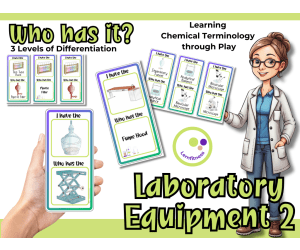
Who Has the Lab Equipment 2 ? – Interactive Science + Chemistry Game
STEM, Science, Chemistry, Physics, Life Sciences, Special Education Needs (SEN), Special Resources, Research, Biology, Homeschool Templates, Grade 6, 7, 8, 9, 10, 11, Activities, Games, Worksheets & Printables, Task Cards, Quizzes and Tests, Teacher Tools, Quizzes, Word Problems, Word Searches, Worksheets
Who Has the Lab Equipment 2 ? – A Fun & Engaging Science Game for the Classroom 🔬 Turn Science Learning into an Interactive Adventure! Helping students learn laboratory equipment doesn’t have to be tedious. With "Who Has the Lab Equipment?", you can bring hands-on engagement and excitement into your chemistry, physics, or biology classroom! This fast-paced call-and-response game is perfect for reinforcing lab tools and key scientific terminology while encouraging active participation and teamwork. 🎯 Why Teachers Love This Game ✅ Boosts Student Engagement – Keeps students actively involved instead of passively memorizing vocabulary. ✅ Encourages Collaboration – Supports teamwork, communication, and critical thinking. ✅ Differentiated Learning – Includes three levels to accommodate students of all abilities. ✅ Perfect for Science Lessons – A great addition to chemistry, physics, and biology classes. ✅ Low-Prep & Classroom-Friendly – Just print, cut, and play! 🧪 What’s Included? 🃏 90 Total Cards – 3 differentiated sets of 30 cards each: ✔ Level 1: Terms with visual aids – perfect for beginners. ✔ Level 2: A mix of terms and images – great for building recognition. ✔ Level 3: Visuals only – students must recall and name the equipment independently. 📌 How to Play 1️⃣ Distribute the Cards – Each student gets one or more cards. 2️⃣ Start the Game – The student with the first card reads aloud: "I have the test tube. Who has the test tube rack?" 3️⃣ Find the Answer – The student with the correct response answers and then reads the next prompt. 4️⃣ Keep Going! – Play continues until all cards have been matched. 💡 Bonus Challenge: Encourage students to use complete sentences when responding to reinforce scientific communication skills. 🌟 Why This Game is a Must-Have for Science Teachers ✔ Versatile Use – Works as a lesson starter, review activity, or quick filler for substitute plans. ✔ Supports Multiple Learning Styles – Helps visual, auditory, and kinesthetic learners grasp key concepts. ✔ Perfect for Science Centers – Ideal for small groups or whole-class activities. ✔ Durable & Reusable – Laminate the cards for long-lasting classroom use. 🔬 Make Science Learning Engaging and Memorable! If you're looking for a fun, effective, and interactive way to teach students about laboratory equipment, this game is the perfect resource for your science classroom. 🚀 Download now and bring interactive learning into your chemistry, physics, or biology lessons! 📍 Best wishes, Heike from Lernfitness Did You Know? I teach with a certified therapy dog, and together we create a positive and inspiring learning environment. 🐶✨
Author Lernfitness
Tags Game, Educational Card Games, Chemistry, Lab, Biology, Laboratory Equipment, Lab Tools, Physics, STEM Science Matching Game, Who Has It?
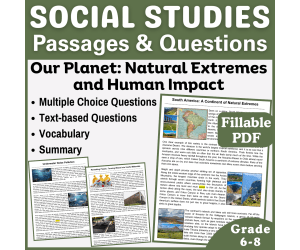
Reading Passages: Our Planet and Human Impact (Fillable PDF)
ELA, Reading, Reading Comprehension, Strategies, Resources for Teachers, Social Studies, Geography, Grade 6, 7, 8, 9, Writing Prompts, Worksheets & Printables, Centers, Activities, Teacher Tools, Assessments, Quizzes and Tests, Quizzes, Tests
Social Studies Reading Comprehension Passages and Questions: Our Planet: Natural Extremes and Human Impact (Fillable PDF) This resource introduces a collection of Social Studies reading comprehension passages with questions about Our Planet: Natural Extremes and Human Impact. The passages are carefully designed to bridge the gap between social studies and literacy through strengthening reading comprehension and sparking knowledge curiosity in middle school students. Each passage blends English Language Arts skills with accurate social studies content . Ideal for interdisciplinary learning in ELA and Social Studies. Suitable for Grade 9 review, too! These worksheets are designed as fillable PDFs , which means students can type their answers directly into the document on any computer or tablet . Each page includes highlighted text fields that show them exactly where to type! What Is Included in this Collection? There are three informational passages (with full answer keys): Remaking Plastic: Turning Waste into Useful Materials Underwater Noise Pollution South America: A Continent of Natural Extremes For Each Passage, students will have multiple tasks to complete as follow: 5 multiple-choice questions targeting main idea, key details, inference, vocabulary in context, and use of evidence 5 vocabulary matching items with clear, student-friendly definitions 5 text-based questions that require citing specific lines or facts 1 summary prompt that asks students to condense central ideas accurately Available Formats for this Resource PDF Word Docs Google Docs FULL CATALOG OF DOWNLOADING LINKS HERE For more Social Studies Reading Passages, check the following Links: Ancient Civilizations PDF Fillable PDF Word Docs Google Docs Early Empires and Trade Networks PDF Fillable PDF Word Docs Google Docs The Founding of the United States PDF Fillable PDF Word Docs Google Docs Language, Culture, and Meaning PDF Fillable PDF Word Docs Google Docs Psychology and Society PDF Fillable PDF Word Docs Google Docs Global Festivals and Traditions PDF Fillable PDF Word Docs Google Docs Extreme Environments and People PDF Fillable PDF Word Docs Google Docs Food, Culture, and Preservation PDF Fillable PDF Word Docs Google Docs Global Food Customs PDF Fillable PDF Word Docs Google Docs Media, Communication, and Popular Culture PDF Fillable PDF Word Docs Google Docs Human Impact on the Environment PDF Fillable PDF Word Docs Google Docs Civic Action and Social Change PDF Fillable PDF Word Docs Google Docs Fashion, Society, and Power PDF Fillable PDF Word Docs Google Docs People, Places, and Unusual Histories PDF Fillable PDF Word Docs Google Docs How to Use These PDFs Click on the highlighted area to start typing your answer. Move to the next question by clicking in the next highlighted box. When you are finished, close the document and select SAVE so your answers stay recorded. If you want to keep a blank copy for later, choose Save As and give your completed version a new name. Product Details Length: 15 pages total Grades: 6–8, also suitable for Grade 9 review Use cases: close reading, stations, homework, intervention, test prep, and sub plans Why Teachers Choose This Set Authentic social studies content paired with rigorous literacy practice Consistent task structure across all passages for easier planning and smoother student routines Clear, age-appropriate writing that builds confidence without oversimplifying Use this set to reinforce ELA skills in social studies, to add literacy to your lessons, and to support independent work. The passages strengthen main idea, evidence use, vocabulary in context, inference, cause and effect, and summary writing. With ready-to-use assessments and complete answer keys, you can provide focused practice that is simple to run and fast to review.
Author Middle & High School - CORED Education
Rating
Tags Middle School, Reading Comprehension, Reading Strategies, ELA, Centers, Reading Passage, Assessments, Vocabulary, Social Studies, Geography
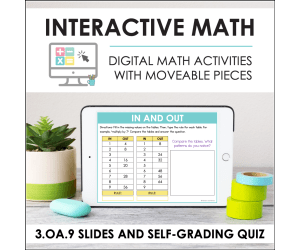
Digital Math for 3.OA.9 - Number Patterns (Slides + Self-Grading Quiz)
Math, Patterns, Grade 3, Quizzes, Quizzes and Tests, Teacher Tools
Digital Math for 3.OA.9 - Number Patterns (Slides + Self-Grading Quiz) An ingenious tool providing a comprehensive understanding of number patterns for Grade 3 scholars. This teaching resource banks on interactive elements, making it beneficial for educators. Interactive Visual Aids One of the promising features is the employment of visual aids such as images that students can drag, sort, and drop. The tool encourages active participation and grasp the concept in an engaging manner. Versatile Formats This resource bundles up slides pertinent to standard 3.OA.9 in practical PowerPoint and Google Slides formats ensuring compatibility with a physical classroom or digital ones operated via Google Classroom. Flexible Teaching Strategies The resource can be modified according to specific learning objectives. Making it adaptable for whole group instruction or small group interactions on online platforms. Inclusive Contents and Self-Grading Feature Included in this resource are ten interactive student slides along with ten answer key slides with a self-grading feature providing quick insights through instant assessments; facilitating swift feedback instances thus optimising each learning affair. Apart from efficient virtual classrooms assignments, its utility extends to small group sessions reinforcing cooperative learning strategies while equally fitting into math centres operating distinctively under guided math rotations. The tool aims towards no-preparation requirements making Digital Math an invaluable addition marking substantial contribution towards third-grade mathematics curriculum relating specifically with pattern recognition.
Author Markers and Minions
Tags Number Patterns, Interactive Learning, Visual Aids, Self-grading Quiz, Adaptable Resource
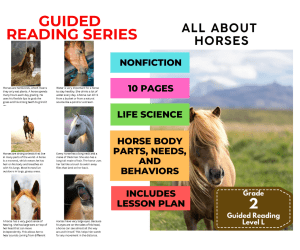
Guided Reading Level L - All About Horses (with Lesson Plan)
ELA, Resources for Teachers, Reading Comprehension, Reading, Science, Language Development, Life Sciences, Animals, Pre-Reading, Vocabulary, Grade 2, 3, 4, Worksheets & Printables, Worksheets, Teacher Tools, Centers, Activities, Literacy Readers, Quizzes, Quizzes and Tests, Assessments, Lesson Plans
This Guided Reading Book - All About Horses (Level L) with lesson plan includes: Guided Reading Color Label (front cover x1) This is a quick way to match the book’s demands to what students can generally handle.. The overall goal is to use the level/color to pick books for several smaller groups. To qualify for a certain level, a student is expected to read a book from that level with about 90–94% accuracy. If a student is consistently accurate and understands, move up a level. If the student is struggling at that level, drop down and add more support. Each student will improve at completely different rates, but it is generally one of the best ways to check progress across the class. DOWNLOAD THE CATALOG TO VIEW ALL GUIDED READING BOOKS AVAILABLE (SORTED LEVELS A-Z) Pre-Reading Question (x1) Teacher asks the prompt aloud, can be while showing the cover or first page. Students share what they already know, or make educated guesses from the cover. Prompt them to use the target vocabulary. Write some of their responses on the board to look back at during the reading. Vocabulary Words (x5) Introduce the five words, best doing it one at a time. Start by saying it, while students repeat and then see if anyone knows what it means before reading further. Read through the meaning and try to briefly connect each word to a picture or gesture so it’s meaningful. Ask students to flip through the book pages and point to where they see each of the vocabulary words. While reading the book pause upon coming across one of the vocab words or read the sentence twice to make sure students understand the word has appeared. Optional: Ask students to raise hands whenever they see/hear one of the new words. Guided Reading Pages (x10) Check the book snapshot (below) for: primary topic - do you need to prep extra reading or intro materials on this? what is taught best - decide on 1-2 bullets to focus on, use the prompt or words provided here for best results. learning goals - what you are checking for students to be able to do after the session, elicit answers using prompts or words provided. key vocabulary (see section above). questions overview - so you know what is coming up and if you need to prep extra materials to assist understanding. Run the lesson You may have already looked at a few of the pages together, but you can show them some of the pictures again first to set meaning. Depending on how much time you have and how familiar your students are with guided reading class, you may want to read the book aloud first with the group first. Students whisper or partner read, while you listen in. If time, do it as a group, one student reading a page each. Use the guided page’s prompts to coach: “Check the picture / does it make sense?” “Point under the words / try the first sound” “Reread the sentence smoothly”. Try to focus more on one student per session (rotating every time), so you can work out if they are ready to move up or need to move down a level. Comprehension Questions (back cover x3) This is your way to check that students didn’t just say the words, but actually understood the text. First, let students answer by pointing to the page/picture and saying a short sentence. After any answer, follow with: “Show me where you found that in the text.” In bigger groups, have partners answer first (10–20 seconds), then call on 2–3 students to share. Differentiation tips: Emerging speakers/struggling readers: oral + pointing On-level: oral in a full sentence Higher: one written sentence or draw + label Book Snapshot Title: All About Horses Genre: Nonfiction (informational) Subject: Life Science / Reading (Informational Text) Primary Topic: Horse body parts, needs, and behaviors Estimated Guided Reading Level (A–Z): L What This Book Teaches Best Key animal facts about horses (they are strong animals, mammals, and live outdoors in grassy areas). How horse body parts help them (mane and tail; tail swishes away flies). What horses need to stay healthy (they eat plants and drink a lot of water). How horses move (trot with “diagonal pairs,” and gallop as the fastest way to move with hooves off the ground). Special horse behaviors and life stages (sleeping while standing; a baby horse is a foal). Learning Goals Students will identify key facts about horses (habitat, body traits, and needs) from the text. Students will explain how a horse uses its tail based on details in the book. Students will describe what horses eat and how they graze using evidence from the text. Students will compare two horse movements (trot and gallop) using information from the book. Students will explain how a horse can sleep while standing without falling over. Students will describe what a foal is and what it can do soon after being born. Key Vocabulary From the Text mammal — an animal that breathes air with lungs. herbivores — animals that eat only plants. grazing — eating grass little by little over time. diagonal — slanted, from one corner to the opposite corner. hooves — the hard feet of a horse. Discussion Prompts Pre-reading question: What do you think a horse needs to stay healthy outdoors? Comprehension questions: What does the text say a horse uses its tail for? How does the text describe a trot? What is a foal, and what can it do within an hour of being born? Printing Tips 1. Best Printing Method (Recommended) “Booklet” Printing (Best if Available) If your printer or PDF viewer supports Booklet Printing , use this. Settings to use: Print mode: Booklet Paper size: Letter or A4 (either works) Orientation: Landscape Print on both sides: Yes Flip on: Short edge Scaling: Fit to printable area Booklet subset: First test: Front sides only Then: Back sides only This will automatically: Pair pages correctly Put the cover on the outside Align everything for folding After printing, fold in half and staple along the spine . 2. If “Booklet” Printing Is NOT Available You can still print this correctly with manual duplex printing . Step-by-step: Open the PDF. Choose Print . Set: Orientation: Landscape Pages per sheet: 1 Print on both sides: Yes Flip on: Short edge Print all pages . Because each PDF page already contains two facing book pages, the result will still fold cleanly into a book. Thousands of Cored Education products are included with your TeachSimple membership. Download links and encyclopedia index available here.
Author Cored Education
Rating
Tags Reading Comprehension, Reading Passages, Reading, Guided Reading, Guided Reading Lesson Plan, Guided Reading Activity, Pre-reading, Science Lesson Plans, Life Science, Animals
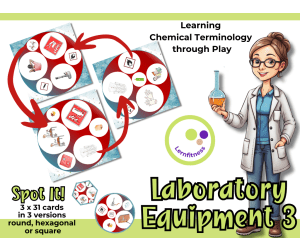
Spot It! – Laboratory Equipment 3 Fun & Engaging Game for Science Lab
STEM, Science, Chemistry, Physics, Life Sciences, Special Education Needs (SEN), Special Resources, Research, Biology, Homeschool Templates, Grade 6, 7, 8, 9, 10, Activities, Games, Worksheets & Printables, Task Cards, Quizzes and Tests, Teacher Tools, Quizzes, Word Problems, Word Searches, Worksheets
Spot It! Laboratory Equipment 3 A Fun & Engaging Game for Science Classrooms 🔬 Make Learning Lab Equipment Fun and Interactive! Teaching students about laboratory equipment doesn’t have to be dull or overwhelming. With Spot It! – Laboratory Equipment, you can turn learning into a fun and engaging experience! This fast-paced matching game is perfect for chemistry, physics, and biology teachers who want to reinforce lab tool recognition in a way that students will love. 🎲 Why This Game Works for Science Teachers ✅ Boosts Visual Memory – Matching images of lab equipment helps students quickly recognize and remember key tools used in science labs. ✅ Encourages Active Participation – Gets students involved instead of passively memorizing lists. ✅ Improves Classroom Engagement – The fast-paced nature of the game keeps students motivated and focused. ✅ Perfect for Any Science Class – Whether you're teaching chemistry, physics, or biology, this game makes learning lab equipment easy and fun. ✅ Promotes Social Interaction – Encourages teamwork, communication, and collaborative learning. 🧪 What’s Included? 🃏 93 Total Cards – You’ll receive three different versions of the game, each with 31 cards: ✔ Round cards – Traditional Spot It! design. ✔ Square cards – Easy to cut and prepare. ✔ Hexagonal cards – Unique design for an extra challenge. 📖 Game Instructions: 1️⃣ Print the cards. 2️⃣ Laminate them for durability (optional). 3️⃣ Cut out the cards in your preferred shape: round, square, or hexagonal. 🎯 How to Play 🃏 Each player receives one card. 🔬 Turn over a card from the stack in the middle. 👀 Find a matching image between your card and the revealed card as quickly as possible. 🏆 If you find a match first, you win the revealed card. 🎉 The player with the most cards at the end wins! This game turns science learning into a competitive, fast-paced, and enjoyable classroom activity that will keep students engaged while reinforcing important lab vocabulary. 📌 Why Teachers Love It ✔ Saves Prep Time – Ready-to-print, simple setup, and no extra materials required. ✔ Great for Small Groups & Whole Class – Use it in science centers, team challenges, or as a warm-up activity. ✔ Adaptable for Different Learning Levels – Suitable for middle school, high school, and even introductory university-level science classes. 🔬 Make Science Learning More Engaging! If you’re looking for a fun, effective, and interactive way to help students learn and remember laboratory equipment, this Spot It! game is the perfect addition to your science classroom. 🚀 Download now and bring hands-on science learning into your classroom today! 📍 Best wishes, Heike from Lernfitness Did You Know? I teach with a certified therapy dog, and together we focus on creating a positive and inspiring learning environment. 🐶✨
Author Lernfitness
Tags Game, Spot It, Educational Card Games, Picture Match, Chemistry, Lab, Biology, Laboratory Equipment, Lab Tools, Physics
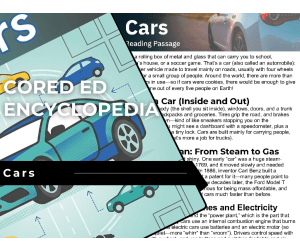
Cars Reading Comprehension Passage - Cored Ed Encyclopedia
ELA, Language Development, Resources for Teachers, Reading Comprehension, Reading, Pre-Reading, Writing, Science, Physics, Strategies, Grade 2, 3, 4, 5, Worksheets & Printables, Worksheets, Teacher Tools, Centers, Activities, Writing Prompts, Assessments, Tests, Quizzes and Tests, Quizzes
This cars reading comprehension contains the following: Pre-Reading Trivia Students will write down one thing they already know about the subject and then read five more facts and discuss. These facts are fun, and the students will enjoy learning about the subject before reading more. Reading Passage The text is a high-interest reading passage with set paragraphs, roughly three to four paragraphs long. It contains a variety of themes about the topic, anywhere from history to technology. The passage is between 250 and 350 words in length. Mixed Questions The first question page contains four multiple-choice questions, each with a choice of four answers, and three written response questions that require a sentence or two from the student. Creative Writing In this question, the student will be required to write a five to eight sentence paragraph on a question related to the topic. Extension Activities This page is optional for fast finishers. If there are five to ten minutes left at the end of the lesson, the student can choose one of three activities, each one requiring a different skill. Answer Key There are answers for the multiple-choice questions and three written response questions have sample answers. FULL CATALOG OF DOWNLOAD LINKS AND ENCYCLOPEDIA INDEX HERE Cored Ed Encyclopedia Overview The Cored Ed Encyclopedia is a weekly series of lessons that you can pick up and use right away. These short readings fit into whatever time you have available. Each one includes a warm-up, a reading, and a set of questions, but it’s flexible — you can do just the reading, the full lesson, or skip the writing section if you need to. Each lesson focuses on a single topic so students don’t get lost. The writing is clear but never childish, making it perfect for grades two through five. Topics range from animals and science to history, inventions, and everyday things. No matter the level of the student, everyone should take away at least one new idea or fact from each lesson. The materials are easy to print, easy to explain, and require no setup. They work well for whole-class teaching, partner work, or independent study.
Author Cored Education
Rating
Tags Vocabulary, Spelling, Reading Comprehension, Reading Passages, Cored Encyclopedia, Facts, Reading, Creative Writing, Physical Science, Cars

Slope-Intercept Form QUIZ
Math, Algebra, Grade 8, Quizzes, Quizzes and Tests, Teacher Tools
Slope-Intercept Form QUIZ offers educators a concise assessment to gauge students' comprehension of slope-intercept form across tables, graphs, and equations. Teachers can utilize this 8th grade math resource as a quiz , homework, or end-of-year review focused on algebra concepts. The questionnaire comprises thoughtfully designed questions that analyze whether learners can appropriately apply slope-intercept form knowledge. Educators receive flexibility in implementation, with the ability to provide immediate feedback or delay results. Overall, this practical and focused assessment supports teachers in determining gaps for further reteaching while consolidating student mastery of this essential algebraic skill.
Author The Math Cafe
Tags Quiz, Google Forms, Slope-intercept Form, Functions, Algebra Assessment

Social Studies Passages The Founding of the United States Fillable PDF
ELA, Reading, Reading Comprehension, Strategies, Resources for Teachers, Social Studies, Biographies, Government, History: USA, History, Grade 6, 7, 8, 9, Writing Prompts, Worksheets & Printables, Centers, Activities, Teacher Tools, Assessments, Quizzes and Tests, Quizzes, Tests
Social Studies Reading Comprehension Passages: The Founding of the United States (Fillable PDF) This resource introduces a collection of Social Studies reading comprehension passages about Benjamin Franklin and Writing the constitution (Founding the United States). The passages are carefully designed to bridge the gap between social studies and literacy through strengthening reading comprehension and sparking knowledge curiosity in middle school students. Each passage blends English Language Arts skills with accurate social studies content. Ideal for interdisciplinary learning in ELA and Social Studies. Suitable for Grade 9 review, too! What Is Included in this Collection? There are three informational passages (with full answer keys): Franklin’s Notebook of Virtues Benjamin Franklin: Man of Ideas Writing the Constitution: Three Branches, One Nation For Each Passage, students will have multiple tasks to complete as follow: 5 multiple-choice questions targeting main idea, key details, inference, vocabulary in context, and use of evidence 5 vocabulary matching items with clear, student-friendly definitions 5 text-based questions that require citing specific lines or facts 1 summary prompt that asks students to condense central ideas accurately Available Formats for this Resource Fillable PDF Word Docs Google Docs FULL CATALOG OF DOWNLOADING LINKS HERE For more Social Studies Reading Passages, check the following Links: Ancient Civilizations PDF Fillable PDF Word Docs Google Docs Early Empires and Trade Networks PDF Fillable PDF Word Docs Google Docs The Founding of the United States PDF Fillable PDF Word Docs Google Docs Language, Culture, and Meaning PDF Fillable PDF Word Docs Google Docs Psychology and Society PDF Fillable PDF Word Docs Google Docs Global Festivals and Traditions PDF Fillable PDF Word Docs Google Docs Extreme Environments and People PDF Fillable PDF Word Docs Google Docs Food, Culture, and Preservation PDF Fillable PDF Word Docs Google Docs Global Food Customs PDF Fillable PDF Word Docs Google Docs Media, Communication, and Popular Culture PDF Fillable PDF Word Docs Google Docs Human Impact on the Environment PDF Fillable PDF Word Docs Google Docs Civic Action and Social Change PDF Fillable PDF Word Docs Google Docs Fashion, Society, and Power PDF Fillable PDF Word Docs Google Docs People, Places, and Unusual Histories PDF Fillable PDF Word Docs Google Docs Product Details Length: 13 pages total Grades: 6–8, also suitable for Grade 9 review Use cases: close reading, stations, homework, intervention, test prep, and sub plans Why Teachers Choose This Set Authentic social studies content paired with rigorous literacy practice Consistent task structure across all passages for easier planning and smoother student routines Clear, age-appropriate writing that builds confidence without oversimplifying Use this set to reinforce ELA skills in social studies, to add literacy to your lessons, and to support independent work. The passages strengthen main idea, evidence use, vocabulary in context, inference, cause and effect, and summary writing. With ready-to-use assessments and complete answer keys, you can provide focused practice that is simple to run and fast to review.
Author Middle & High School - CORED Education
Rating
Tags Middle School, Reading Comprehension, Reading Strategies, ELA, Centers, Reading Passage, Assessments, Vocabulary, Social Studies, U.S Government

Electricity & Energy: SAMPLE Physical Science Reading Passage (PDF)
Science, ELA, Reading, Reading Comprehension, Strategies, Resources for Teachers, Physics, Grade 6, 7, 8, 9, Writing Prompts, Worksheets & Printables, Centers, Activities, Teacher Tools, Assessments, Quizzes and Tests, Quizzes, Tests
This is a ONE PASSAGE SAMPLE. The following is the description of the FULL resource and the downloading links: Electricity and Energy: Physical Science Reading Comprehension Passages and Questions (PDF) This very engaging collection of physical science reading passages about electricity and energy is designed to bridge the gap between science and literacy through strengthening reading comprehension and sparking scientific curiosity in middle school students. Each passage blends English Language Arts skills with accurate science content that supports NGSS classroom practice. Ideal for interdisciplinary learning in ELA and Science. Suitable for Grade 9 review, too! What Is Included? There are (3) informational passages: The Lightning Rod: Turning Fear into Safety Eel Power: A Holiday Surprise Electricity: From Source to Socket Student Tasks for Each Passage: 5 multiple-choice questions targeting main idea, key details, inference, vocabulary in context, and use of evidence 5 vocabulary matching items with clear, student-friendly definitions 5 text-based questions that require citing specific lines or facts 1 summary prompt that asks students to condense central ideas accurately Full answer key for every section Available Formats for this Resource Word Docs Google Docs FULL CATALOG OF DOWNLOADING LINKS HERE Other Science Reading Collections and Topics You May Find in the Store: 1. Astronomy & Space Science 2. Volcanoes, Rocks, & Mountains 3. Rock Cycle, Soil, & Sinkholes 4. Mars, Glaciers, & Antarctica 5. Water Cycle, Acid Rain, & Wastewater 6. Insects, Animals, & Ecosystems 7. Bioluminescence & Insects 8. Animal Skin, Cats, & T. Rex 9. Human Body and Senses 10. Health & Applied Bioscience 11. Waves, Light, & Imaging 12. Electricity & Energy 13. Motion & Materials 14. Chemistry and Materials Science 15. Electromagnetism 16. Acids and Bases 17. Gas Laws 18. Biotechnology 19. Periodic Trends 20. Protists and Fungi 21. Microevolution 22. Blood 23. Chemical Bonding 24. Magnets 25. Muscles 26. Nuclear Chemistry 27. Electromagnetic Devices 28. Epigenetics 29. The Law of Conservation of Mass 30. Atomic Models 31. Isotopes and Ions 32. Light 33. Human-Environment Interaction 34. Theory of Evolution 35. Photosynthesis 36. Origins of Life and Early Earth 37. Gene Expression and Regulation 38. Thermochemistry 39. Allergies 40. Coevolution 41. Birth to Adulthood 42. Cells 43. Entropy and Free Energy 44. The Human Brain 45. Mixtures and Solutions 46. Invertebrates 47. Zoo Animals 48. Biochemistry 49. Animal Behavior 50. Population Ecology ...and many more engaging science reading passages that cover intriguing and important topics designed to spark curiosity and support student learning. . Product Details Length: 14 pages total Grades: 6–8, also suitable for Grade 9 review Use cases: close reading, stations, homework, intervention, test prep, and sub plans Standards support: reinforces informational-text skills and supports NGSS-style sense making through observation, modeling, and clear use of claim, evidence, and reasoning Why Teachers Choose This Set Authentic science content paired with rigorous literacy practice Consistent task structure across all passages for easier planning and smoother student routines Clear, age-appropriate writing that builds confidence without oversimplifying Use this set to reinforce ELA skills in science, to add literacy to your lessons, or to support independent work. The passages strengthen main idea, evidence use, vocabulary in context, inference, cause and effect, and summary writing. With ready-to-use assessments and complete answer keys, you can provide focused practice that is simple to run and fast to review.
Author Middle & High School - CORED Education
Rating 5
Tags Middle School, Reading Comprehension, Reading Strategies, ELA, Centers, Reading Passage, Assessments, Vocabulary, Physical Science, Physics
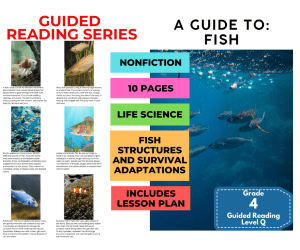
A Guide to Fish: Guided Reading Level Q with Lesson Plan
ELA, Resources for Teachers, Reading Comprehension, Reading, Science, Language Development, Life Sciences, Earth and Environmental Sciences, Pre-Reading, Vocabulary, Grade 3, 4, 5, Worksheets & Printables, Worksheets, Teacher Tools, Centers, Activities, Literacy Readers, Quizzes, Quizzes and Tests, Assessments, Lesson Plans
This A Guide to Fish (level q) guided reading book with lesson plan includes: Guided Reading Color Label (front cover x1) This is a quick way to match the book’s demands to what students can generally handle.. The overall goal is to use the level/color to pick books for several smaller groups. To qualify for a certain level, a student is expected to read a book from that level with about 90–94% accuracy. If a student is consistently accurate and understands, move up a level. If the student is struggling at that level, drop down and add more support. Each student will improve at completely different rates, but it is generally one of the best ways to check progress across the class. DOWNLOAD THE CATALOG TO VIEW ALL GUIDED READING BOOKS AVAILABLE (SORTED LEVELS A-Z) Pre-Reading Question (x1) Teacher asks the prompt aloud, can be while showing the cover or first page. Students share what they already know, or make educated guesses from the cover. Prompt them to use the target vocabulary. Write some of their responses on the board to look back at during the reading. Vocabulary Words (x5) Introduce the five words, best doing it one at a time. Start by saying it, while students repeat and then see if anyone knows what it means before reading further. Read through the meaning and try to briefly connect each word to a picture or gesture so it’s meaningful. Ask students to flip through the book pages and point to where they see each of the vocabulary words. While reading the book pause upon coming across one of the vocab words or read the sentence twice to make sure students understand the word has appeared. Optional: Ask students to raise hands whenever they see/hear one of the new words. Guided Reading Pages (x10) Check the book snapshot (below) for: primary topic - do you need to prep extra reading or intro materials on this? what is taught best - decide on 1-2 bullets to focus on, use the prompt or words provided here for best results. learning goals - what you are checking for students to be able to do after the session, elicit answers using prompts or words provided. key vocabulary (see section above). questions overview - so you know what is coming up and if you need to prep extra materials to assist understanding. Run the lesson You may have already looked at a few of the pages together, but you can show them some of the pictures again first to set meaning. Depending on how much time you have and how familiar your students are with guided reading class, you may want to read the book aloud first with the group first. Students whisper or partner read, while you listen in. If time, do it as a group, one student reading a page each. Use the guided page’s prompts to coach: “Check the picture / does it make sense?” “Point under the words / try the first sound” “Reread the sentence smoothly”. Try to focus more on one student per session (rotating every time), so you can work out if they are ready to move up or need to move down a level. Comprehension Questions (back cover x3) This is your way to check that students didn’t just say the words, but actually understood the text. First, let students answer by pointing to the page/picture and saying a short sentence. After any answer, follow with: “Show me where you found that in the text.” In bigger groups, have partners answer first (10–20 seconds), then call on 2–3 students to share. Differentiation tips: Emerging speakers/struggling readers: oral + pointing On-level: oral in a full sentence Higher: one written sentence or draw + label Book Snapshot Title: A Guide to: Fish Genre: Nonfiction (informational) Subject: Life Science Primary Topic: Fish structures and survival adaptations Estimated Guided Reading Level (A–Z): Q What This Book Teaches Best Explains how gills help fish breathe by extracting oxygen from water and releasing carbon dioxide. Describes how a fish’s streamlined shape and fins support efficient movement, stability, steering, and turning. Introduces the lateral line as a sensory system that detects vibrations and pressure changes to help fish navigate and find prey. Compares freshwater and saltwater habitats and explains how fish maintain the right internal balance of salt and water. Shows multiple survival strategies such as bioluminescence, camouflage, cartilaginous skeletons, and schooling (“safety in numbers”). Learning Goals Explain how fish breathe using gills and what happens as water passes over gill filaments. Describe how fins and a streamlined body shape help fish move, steer, and turn in water. Identify what the lateral line does and how it helps fish survive (navigation and finding prey). Compare how freshwater fish and saltwater fish manage water and salt in their bodies. Explain at least two survival adaptations described in the text (camouflage, bioluminescence, schooling). Describe what “cartilaginous fish” are and what the text says cartilage allows them to do. Key Vocabulary From the Text vertebrates — animals that have a backbone. specialized — made for a specific job or purpose. filaments — thin, threadlike parts of the gills. bioluminescence — the ability to make your own light. cartilaginous — having a skeleton made of cartilage, not hard bone. Discussion Prompts Pre-reading question: What body parts or behaviors might help fish survive in different kinds of water? Comprehension questions: What does the text explain that gills do for a fish? Comprehension questions: How does the lateral line help fish, according to the text? Comprehension questions: Why does the text say swimming in a school can help fish survive? Printing Tips 1. Best Printing Method (Recommended) “Booklet” Printing (Best if Available) If your printer or PDF viewer supports Booklet Printing , use this. Settings to use: Print mode: Booklet Paper size: Letter or A4 (either works) Orientation: Landscape Print on both sides: Yes Flip on: Short edge Scaling: Fit to printable area Booklet subset: First test: Front sides only Then: Back sides only This will automatically: Pair pages correctly Put the cover on the outside Align everything for folding After printing, fold in half and staple along the spine . 2. If “Booklet” Printing Is NOT Available You can still print this correctly with manual duplex printing . Step-by-step: Open the PDF. Choose Print . Set: Orientation: Landscape Pages per sheet: 1 Print on both sides: Yes Flip on: Short edge Print all pages . Because each PDF page already contains two facing book pages, the result will still fold cleanly into a book. Thousands of Cored Education products are included with your TeachSimple membership. Download links and encyclopedia index available here.
Author Cored Education
Rating
Tags Reading Comprehension, Reading Passages, Reading, Guided Reading, Guided Reading Lesson Plan, Guided Reading Activity, Pre-reading, Science Lesson Plans, Life Science, Earth Science
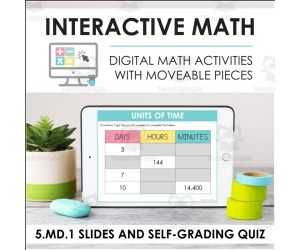
Digital Math for 5.MD.1 - Convert Like Measurement Units (Slides + Self-Grading Quiz)
Math, Measurements, Grade 5, Quizzes, Quizzes and Tests, Teacher Tools
Digital Math for 5.MD.1 provides an interactive review of converting like measurement units. Students actively engage with the math concepts as they drag, drop, and sort images representing different units of measurement. This paperless resource works well for whole-class instruction, small groups, or independent practice. Both PowerPoint and Google Slides formats are included that are easy to assign digitally. A complementary self-grading Google Forms quiz provides valuable assessment data and checks students' understanding. This versatile 5th grade math resource allows students to meaningfully review converting measurement units standards in an engaging digital format.
Author Markers and Minions
Tags Exponent Conversions, Metric Length, Liquid Volume, Units Of Time, Math Quiz, 5.md.1