



3,984 products added recently
Page 31 - Horror Writing Prompts

 Show filters

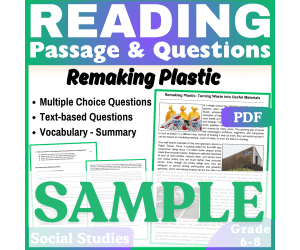
Remaking Plastic: SAMPLE Social Studies Reading Comprehension Passage
ELA, Reading, Reading Comprehension, Strategies, Resources for Teachers, Social Studies, Sociology, Grade 6, 7, 8, 9, Writing Prompts, Worksheets & Printables, Centers, Activities, Teacher Tools, Assessments, Quizzes and Tests, Quizzes, Tests
This is a free passage sample from the complete resource. The full version includes everything needed for a complete reading comprehension activity: the passage, multiple-choice questions, short-answer questions, vocabulary matching, a summary-writing task, and a detailed answer key. Download the complete passage resource by clicking on the following links: PDF Fillable PDF Word Docs Google Docs Remaking Plastic: Social Studies Reading Comprehension Passage (PDF) This resource introduces a unique Social Studies reading comprehension passage with questions about Recycling and Remaking Plastic. The passage is carefully designed to bridge the gap between social studies and literacy through strengthening reading comprehension and sparking knowledge curiosity in middle school students. Each passage blends English Language Arts skills with accurate social studies content . Ideal for interdisciplinary learning in ELA and Social Studies. Suitable for Grade 9 review, too! Student Tasks throughout the passage: 5 multiple-choice questions targeting the following skills: main idea, key details, inference, vocabulary in context, and use of evidence 5 vocabulary matching items with clear, student-friendly definitions 5 text-based questions that require citing specific lines or facts 1 summary prompt that asks students to condense central ideas accurately Full answer key for every section FULL CATALOG OF DOWNLOADING LINKS HERE Other Social Studies Reading Comprehension Collections You May Find in the Store: 1. Ancient Civilizations 2. Early Empires and Trade Networks 3. The Founding of the United States 4. Language, Culture, and Meaning 5. Psychology and Society 6. Global Festivals and Traditions 7. Extreme Environments and People 8. Food, Culture, and Preservation 9. Global Food Customs 10. Media, Communication, and Popular Culture 11. Human Impact on the Environment 12. Civic Action and Social Change 13. Fashion, Society, and Power 14. People, Places, and Unusual Histories Product Details: Length: 5 pages Grades: 6–8, also suitable for Grade 9 review Use cases: close reading, stations, homework, intervention, test prep, and sub plans Why Teachers Choose This Passage: Authentic social studies content paired with rigorous literacy practice Consistent task structure for easier planning and smoother student routines Clear, age-appropriate writing that builds confidence without oversimplifying Use this passage to reinforce ELA skills in social studies, to add literacy to your lessons, and to support independent work. The passage strengthens main idea, evidence use, vocabulary in context, inference, cause and effect, and summary writing. With ready-to-use assessments and complete answer keys, you can provide focused practice that is simple to run and fast to review.
Author Middle & High School - CORED Education
Rating
Tags Middle School, Reading Comprehension, Reading Strategies, ELA, Centers, Reading Passage, Assessments, Vocabulary, Social Studies, Sociology

Reading Comprehension Passages Fiction Set 2 - Family (Fillable PDF)
ELA, Reading, Reading Comprehension, Common Core, Writing, Children’s Literature, Literature, Language Development, Spelling, Vocabulary, Grade 4, 5, Worksheets & Printables, Worksheets, Writing Prompts, Assessments, Teacher Tools, Quizzes and Tests, Tests, Centers, Activities
Reading Comprehension Passages Fiction Set 2 Snapshot Title: Title not stated Genre: Fiction anthology (family-themed short stories, plus a few informational-style passages) Subject: Reading (ELA) Primary Topic: Family relationships, traditions, and everyday challenges Estimated Guided Reading Level (A–Z): Q What This Teaches Best Family relationships and empathy (siblings, cousins, parents, grandparents, and an aunt: disappointment, jealousy, pride, teasing, and appreciation are shown through dialogue and actions). Accepting differences and changing your mind (a character worries about being embarrassed by a cousin, then learns others see her as “awesome”). Problem/solution thinking in realistic situations (money limits, fear of bugs, conflicts with an older kid, and handling busy family plans). Reading for information inside a narrative (dates and customs for Mother’s Day, Father’s Day, and Children’s Day; health terms and “healthy lifestyle” rules explained in dialogue). Skill practice with support pages (mixed questions, vocabulary tasks, sequencing, and short writes; QA note: some “Secret Trails” words don’t appear in the “Healthier Lifestyle” story text). Learning Goals Retell key events from a story in correct order using details from the text. Describe a character’s feelings or traits and point to evidence in the story. Explain how a problem starts and how it is solved in a passage. Use context clues to figure out the meaning of unfamiliar words in the text. Identify important facts presented in an informational-style passage and explain them in your own words. Passages Include 1.Birthday Lessons: Lois wanted a horse for her birthday. What did he get instead? 2.Funny Cousin: Britney's cousin can be a little much. Read about their day. 3.Favorite Aunt: Raquel is helping her aunt get ready for a new arrival. 4.Grandma Can Dance: Tracie learns something new about her grandma. 5.Sisterly Love: Kyle did want a big brother. How does he feel after today though? 6.A Not So Relaxing Hike: Jordan's scared of bugs. Read how he gets over his fear. 7.On the Coaster: Sid talks about his experience on a roller coaster. 8.Grandma's Tulips: Read about Grandma's passion of tulips in this story. 9.Father's Day: Maria learns about Father's Day and other holidays in this passage. 10.Healthier Lifestyle: The twins' doctor teaches them how to live a healthier lifestyle. FILLABLE PDF VERSION Worksheet-style pages, but with type-in answer boxes so students can complete and save their work digitally. Other versions are available in the links list below or in the full catalog. FULL CATALOG OF DOWNLOAD LINKS HERE For similar downloads and other frees, do check out Cored Group on TeachSimple.
Author Cored Education
Rating
Tags Elementary, Reading, Comprehension, Vocabulary, Answers, Spelling, Writing, Passages, Reading Centers, Reading Comprehension Assessments

2025 March ELA Bell Ringers
ELA, Writing, High School, Homeschool Resources, Middle School, Worksheets & Printables, Worksheets, Writing Prompts
Enhance your teaching with the 2025 March ELA Bell Ringers! This interactive tool consists of 21 daily questions that are intended to improve students' language arts proficiency while maintaining their motivation and focus. These bell ringers offer a vibrant approach to begin each class, with vocabulary drills, creative writing, and reflective activities. The exercises are ideal for middle and high school students since they are brief but impactful, lasting only 5-10 minutes in class. INCLUDED IN THIS RESOURCE: 21 daily ELA bell ringer activities for March. A mix of vocabulary challenges, creative writing, and reflection prompts. Seasonal themes such as spring, St. Patrick’s Day, and seasonal transitions. By the end of March, students will have honed key ELA skills and gained confidence in their abilities. These bell ringers are more than just warm-up exercises; they're a meaningful approach to promote creativity, critical thinking, and personal development. the 2025 March ELA Bell Ringers, you can give your children a fresh start every day! Tina - Big Easy Homeschooling Mom
Author Homeschool with Big Easy Homeschooling Mom
Tags Creating Writing Prompts, Grammar Practice Activities, Middle & High School ELA Resources, Daily ELA Writing Prompts, Spring-Themes ELA Activities

Writing Prompt + Discussion Flashcards: Swimming Pack
P.E. & Health, Special Resources, ELA, Sports, Health, Speech Therapy, Life Skills, Language Development, ESL, Vocabulary, Writing, Not Grade Specific, Writing Prompts, Worksheets & Printables
Writing Prompt + Discussion Flashcards: Swimming Pack The Writing Prompt + Discussion Flashcards: Swimming Pack is an exceptional educational tool designed to augment and enrich traditional teaching methods . This multifaceted resource not only transcends one or two subjects, but also extends to language arts, physical education, health, ESL classes, life skills training, vocabulary building sessions and writing exercises . Included within the pack is a 20 -page PDF of real colored photos sized for A4 ( 6 per page ) that showcase diverse swimming activities . These image prompts engage students' creativity through open- ended writing tasks and group discussions by offering avenues for deep diving into subject matter while enhancing their vocabulary prowess and writing practice . Versatile Application . Teachers have the flexibility to modify these flashcards based on individual needs or classroom dynamics - they can be projected as screen viewed prompts for whole- class instructions, printed as mini cards for interactive small- group sessions or assigned as take-home activity cards . The cross- curricular potential of these flashcards allows conversations in science about the physics behind swimming movements; regular physical activity 's impact on health; water safety measures tied in with life skills and more ! No Textual Prompts = No Language Barriers ! Purposely made devoid of textual cues to broaden room for interpretation eliminates language barriers making it perfect even when teaching foreign languages ! Finding More Packs In Our Series : If you’d like more than just this pack – our series includes other everyday living concepts such as animals, clothes, profession & communities ! . Add Value To Your Teaching Collection! Elevate your teaching resources by integrating the all-inclusive Writing Prompt + Discussion Flashcards: Swimming Pack ! Witness your students' language proficiency burgeoning while promoting critical thinking through engaging discussions .
Author WORDS ASIDE
Tags Discussion Prompts, Flashcards, Thematic Language Development, Pool, Sea, Swimming, Writing Cues, Semantics, Esl, Words Aside

Life Science Reading Comprehension Passage: Goosebumps (Docs)
Science, ELA, Reading, Reading Comprehension, Strategies, Resources for Teachers, Life Sciences, Biology, Grade 6, 7, 8, 9, Writing Prompts, Worksheets & Printables, Centers, Activities, Teacher Tools, Assessments, Quizzes and Tests, Quizzes, Tests
Life Science Reading Comprehension Passage and Questions: Goosebumps (Docs) This very engaging life science reading passage about goosebumps and why humans still get them. It explains that goosebumps happen when tiny muscles attached to hair follicles tighten and pull hairs upright. In furry animals, this reaction helps trap heat and can make the animal look larger when threatened. In humans, the reflex is mostly vestigial , meaning it is a leftover from ancestors who had more body hair. The passage also explains how goosebumps connect to the sympathetic nervous system , adrenaline , strong emotions, music, fear, cold, and even scientific research on stress and feelings. This passage is designed to bridge the gap between science and literacy through strengthening reading comprehension and sparking scientific curiosity in middle school students. The passage blends English Language Arts skills with accurate science content that supports NGSS classroom practice. Ideal for interdisciplinary learning in ELA and Science. Suitable for Grade 9 review, too! Student Tasks for The Passage: 5 multiple-choice questions targeting main idea, key details, inference, vocabulary in context, and use of evidence 5 vocabulary matching items with clear, student-friendly definitions 5 text-based questions that require citing specific lines or facts 1 summary prompt that asks students to condense central ideas accurately Full answer key for every section Available Formats for this Resource PDF Fillable PDF Word Docs FULL CATALOG OF DOWNLOADING LINKS HERE Product Details Length: 5 pages total Grades: 6–8, also suitable for Grade 9 review Use cases: close reading, stations, homework, intervention, test prep, and sub plans Standards support: reinforces informational-text skills and supports NGSS-style sense making through observation, modeling, and clear use of claim, evidence, and reasoning Why Teachers Choose This Set Authentic science content paired with rigorous literacy practice Consistent task structure across all passages for easier planning and smoother student routines Clear, age-appropriate writing that builds confidence without oversimplifying Other Science Reading Collections you May find in the store: 1. Astronomy & Space Science 2. Volcanoes, Rocks, & Mountains 3. Rock Cycle, Soil, & Sinkholes 4. Mars, Glaciers, & Antarctica 5. Water Cycle, Acid Rain, & Wastewater 6. Insects, Animals, & Ecosystems 7. Bioluminescence & Insects 8. Animal Skin, Cats, & T. Rex 9. Human Body and Senses 10. Health & Applied Bioscience 11. Waves, Light, & Imaging 12. Electricity & Energy 13. Motion & Materials 14. Chemistry and Materials Science Use this set to reinforce ELA skills in science, to add literacy to your lessons, and to support independent work. The passages strengthen main idea, evidence use, vocabulary in context, inference, cause and effect, and summary writing. With ready-to-use assessments and complete answer keys, you can provide focused practice that is simple to run and fast to review.
Author Middle & High School - CORED Education
Rating
Tags Middle School, Reading Comprehension, Reading Strategies, ELA, Centers, Reading Passage, Assessments, Vocabulary, Life Science, Biology
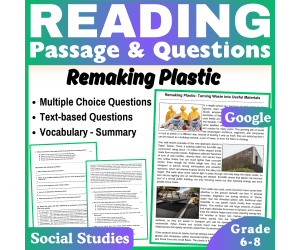
Remaking Plastic: Social Studies Reading Comprehension Passage (Docs)
ELA, Reading, Reading Comprehension, Strategies, Resources for Teachers, Social Studies, Sociology, Grade 6, 7, 8, 9, Writing Prompts, Worksheets & Printables, Centers, Activities, Teacher Tools, Assessments, Quizzes and Tests, Quizzes, Tests
Remaking Plastic: Social Studies Reading Comprehension Passage (Word) This resource introduces a unique Social Studies reading comprehension passage with questions about Recycling and Remaking Plastic. The passage is carefully designed to bridge the gap between social studies and literacy through strengthening reading comprehension and sparking knowledge curiosity in middle school students. Each passage blends English Language Arts skills with accurate social studies content . Ideal for interdisciplinary learning in ELA and Social Studies. Suitable for Grade 9 review, too! Student Tasks throughout the passage: 5 multiple-choice questions targeting the following skills: main idea, key details, inference, vocabulary in context, and use of evidence 5 vocabulary matching items with clear, student-friendly definitions 5 text-based questions that require citing specific lines or facts 1 summary prompt that asks students to condense central ideas accurately Full answer key for every section Available Formats for this Resource: PDF Fillable PDF Word Docs FULL CATALOG OF DOWNLOADING LINKS HERE Social Studies Reading Comprehension Collection Links: 1. Ancient Civilizations PDF Fillable PDF Word Docs Google Docs 2. Early Empires and Trade Networks PDF Fillable PDF Word Docs Google Docs 3. The Founding of the United States PDF Fillable PDF Word Docs Google Docs 4. Language, Culture, and Meaning PDF Fillable PDF Word Docs Google Docs 5. Psychology and Society PDF Fillable PDF Word Docs Google Docs 6. Global Festivals and Traditions PDF Fillable PDF Word Docs Google Docs 7. Extreme Environments and People PDF Fillable PDF Word Docs Google Docs 8. Food, Culture, and Preservation PDF Fillable PDF Word Docs Google Docs 9. Global Food Customs PDF Fillable PDF Word Docs Google Docs 10. Media, Communication, and Popular Culture PDF Fillable PDF Word Docs Google Docs 11. Human Impact on the Environment PDF Fillable PDF Word Docs Google Docs 12. Civic Action and Social Change PDF Fillable PDF Word Docs Google Docs 13. Fashion, Society, and Power PDF Fillable PDF Word Docs Google Docs 14. People, Places, and Unusual Histories PDF Fillable PDF Word Docs Google Docs Product Details: Length: 5 pages Grades: 6–8, also suitable for Grade 9 review Use cases: close reading, stations, homework, intervention, test prep, and sub plans Why Teachers Choose This Passage: Authentic social studies content paired with rigorous literacy practice Consistent task structure for easier planning and smoother student routines Clear, age-appropriate writing that builds confidence without oversimplifying Use this passage to reinforce ELA skills in social studies, to add literacy to your lessons, and to support independent work. The passage strengthens main idea, evidence use, vocabulary in context, inference, cause and effect, and summary writing. With ready-to-use assessments and complete answer keys, you can provide focused practice that is simple to run and fast to review.
Author Middle & High School - CORED Education
Rating
Tags Middle School, Reading Comprehension, Reading Strategies, ELA, Centers, Reading Passage, Assessments, Vocabulary, Social Studies, Sociology
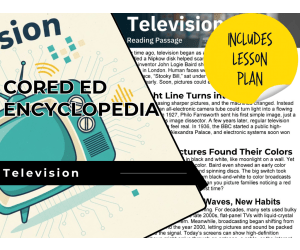
Television Reading Comprehension Passage - Cored Ed Encyclopedia
ELA, Language Development, Reading Comprehension, Reading, Pre-Reading, Science, Technology, Engineering, History, Social Studies, Grade 2, 3, 4, 5, Worksheets & Printables, Worksheets, Teacher Tools, Centers, Activities, Writing Prompts, Assessments, Quizzes and Tests, Quizzes, Lesson Plans
This television reading comprehension includes: Visualization (on the front cover) Start your lesson by taking a minute to think and share something about the topic. Read the script aloud (slowly), perhaps prepare some music or sound effects. Student close their eyes and let their imaginations wander. Students open their eyes, read the question aloud and give them a few minutes to complete. Ask a few students to share or keep answers until the end to compare with what they learn in the passage. Quick pause—thousands of Cored Education products are included with your TeachSimple membership. Download links and encyclopedia index available here. Pre-Reading Trivia Students will write down one thing they already know about the subject and then read five more facts and discuss. These facts are fun, and the students will enjoy learning about the subject before reading more. Give 1 minute for students to write what they already know (no pressure—best guess is fine). Read the five facts together. After each fact, do ask a student for their opinion, was it surprising? Set a purpose by asking students to highlight/underline one fact they want to learn more about during the reading. Reading Passage The text is a high-interest reading passage with set paragraphs, roughly three to four paragraphs long. It contains a variety of themes about the topic, anywhere from history to technology. The passage is between 250 and 350 words in length. First, ask students to look at the headings and see what they’ll learn about today. What do they know about the topic/heading? First read options: Teacher read-aloud (best for support). Partner reading (paragraph by paragraph). While reading, students underline important details, and vocabulary words they think may come up in the questions section. Mixed Questions The first question page contains four multiple-choice questions, each with a choice of four answers, and three written response questions that require a sentence or two from the student. Students complete the mcqs first independently, then review quickly as a class. For the 3 written responses, try to get students giving the answer with some form of evidence: “I think ___ because the text says ___.” If students get stuck, send them back to check the passage. Vocabulary Questions Practice seven key words from the text in this section across two activities. First section is scrambled words where students will unscramble three words given a clue for each. The second section is a word to meaning matching activity. Before starting, have some students read out words they underlined in the passage. Ask students to say the word and read aloud the sentence(s) around each word. Ask students to do scrambled words and the matching exercise in pairs then go through answers as a class. For the scrambled spelling task, get four pairs to come up to the board and write the words for extra practice with the other student reading out the clue. For the matching task, prompt students to give full sentences: “I matched ___ with ___ because ___.” Creative Writing In this question, the student will be required to write a five to eight sentence paragraph on a question related to the topic. Before starting, ask students write down 3 key ideas they are going to include in their piece. Ask students for ideas to share around the class to help those struggling. Pro writing expectations: 5–8 sentences At least 2 facts or details from the passage At least 2 vocabulary words from the previous page Students read their paragraphs while classmates listen for facts and vocabulary words. Extension Activities This page is optional for fast finishers or to take home. There are several activities, each one requiring a different skill. Do some, do none, do all, completely optional - but you will feel reassured knowing every possibility is planned for. Includes summary writting question. Answer Key There are answers for the multiple-choice questions, written response questions have sample answers, vocabulary answers and if there is a summary question then a sample summary will be provided as well. Lesson Plan Included Customized lesson plan for this lesson is included. Lesson Snapshot Title: Television Genre: Nonfiction (informational text) Subject: Science (Technology) Primary Topic: How television changed from mechanical to digital Estimated Guided Reading Level (A–Z): S What This Lesson Teaches Best How an invention changed over time, from a “spinning disk” experiment to modern screens and signals. Key milestones in television’s development (1925 Selfridges demo, 1927 Farnsworth, 1936 BBC service, late 2000s flat-panels). How pictures can be broken into lines/signals and sent by wire, radio, antenna, cable, or internet. The shift from black-and-white to color broadcasts and how viewers experienced that change over decades. Comparing analog and digital signals as two different ways information travels. Learning Goals Students will describe how early television used a spinning Nipkow disk to scan pictures into lines. Students will identify key people, places, and dates from the passage (Baird, Farnsworth, Selfridges, Alexandra Palace). Students will explain how television changed from mechanical parts to all-electronic systems that made clearer pictures. Students will summarize how TV viewing changed from bulky cathode-ray tubes to flat-panel screens and high-definition images. Students will compare analog and digital signals using details from the text. Key Vocabulary From the Text scan — break a picture into lines to send it. signals — messages that carry picture or sound information. broadcasting — sending TV so many people can receive it. analog — a smooth, continuous wave way of sending. digital — coded bits that travel more cleanly. FULL CATALOG OF DOWNLOAD LINKS AND ENCYCLOPEDIA INDEX HERE
Author Cored Education
Rating
Tags Vocabulary, Reading Comprehension, Reading Passages, Lesson Plans, Ela Lesson Plans, Reading Comprehension Lesson Plans, Pre-reading, History, Social Studies, Social Studies Lesson Plans

Year Long Weekly Writing Prompt Journal
ELA, Writing, Grade 6, 7, 8, 9, Writing Prompts, Worksheets & Printables
The Year Long Weekly Writing Prompt Journal Updated in 2020, the journal offers a format that is compatible with Microsoft and Google platforms. It's available both digitally and for print. This resource aids students from grades 6 to grade 9 in enhancing their writing skills through ongoing practice throughout the academic year. Range of Writing Categories Argument Writing Narrative Writing Explanatory Writing Current Events/Research Critical Thinking. Fostering diverse styles of expression, each week introduces new prompts designed to encourage articulate thought expression in students while emphasizing different styles of writing. Inclusions & Features Fifty engaging weekly prompts each featuring grading areas and inspirational quotes about written expression. Teachers can use these resources as complete journals for annual work or introduce individual prompts weekly according to lesson plans. Versatile selection option allowing choice among any month's five prompt based on curriculum relevance at different times heightening student engagement with varied activities rather than routine school work. Mainly designed for Language Arts subject teaching but not restricted solely to it – it blends seamlessly into all contexts where written communication is pivotal. Apart from being used for classroom activities, this tool also serves well as a means to give assignments and set homework practices due to its flexible nature! To sum up,, this Year Long Weekly Writing Prompt Journal acts as an ideal asset for educators seeking the enhancement of writing skills among students while nurturing critical thinking through varied interactive exercises articulated within its carefully assembled content.
Author Fairways and Chalkboards
Tags Journal, Writing Prompts, Academic Writing, Critical Thinking, Language Arts
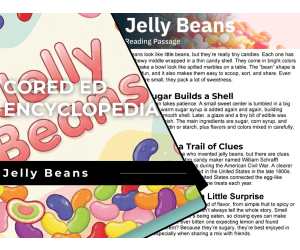
Jelly Beans Reading Comprehension Passage - Cored Ed Encyclopedia
ELA, Language Development, Resources for Teachers, Reading Comprehension, Reading, Pre-Reading, Writing, Science, Strategies, Physics, Grade 2, 3, 4, 5, Worksheets & Printables, Worksheets, Teacher Tools, Centers, Activities, Writing Prompts, Assessments, Tests, Quizzes and Tests, Quizzes
This jelly beans reading comprehension contains the following: Visualize on the Cover Start your lesson by taking a few moments to visualize the topic and share thoughts or feelings about it. Pre-Reading Trivia Students will write down one thing they already know about the subject and then read five more facts and discuss. These facts are fun, and the students will enjoy learning about the subject before reading more. Reading Passage The text is a high-interest reading passage with set paragraphs, roughly three to four paragraphs long. It contains a variety of themes about the topic, anywhere from history to technology. The passage is between 250 and 350 words in length. Mixed Questions The first question page contains four multiple-choice questions, each with a choice of four answers, and three written response questions that require a sentence or two from the student. Vocabulary Questions Practice seven key words from the text in this section across two activities. First section is scrambled words where students will unscramble three words given a clue for each. The second section is a word to meaning matching activity. Creative Writing In this question, the student will be required to write a five to eight sentence paragraph on a question related to the topic. Extension Activities This page is optional for fast finishers or to take home. There are several activities, each one requiring a different skill. Do some, do none, do all, completely optional - but you will feel reassured knowing every possibility is planned for. Answer Key There are answers for the multiple-choice questions, written response questions have sample answers, vocabulary answers and if there is a summary question then a sample summary will be provided as well. FULL CATALOG OF DOWNLOAD LINKS AND ENCYCLOPEDIA INDEX HERE Lesson Snapshot Title: Jelly Beans Genre: Nonfiction (Informational Text) Subject: Reading (Informational Text) Primary Topic: How jelly beans look, are made, and enjoyed Estimated Guided Reading Level (A–Z): P What This Lesson Teaches Best Explains what jelly beans are like (a chewy center with a thin candy shell and bright colors). Describes a step-by-step process for how the hard shell is built by adding warm sugar syrup in layers. Shares history clues about jelly beans (possible early story, late 1800s testing, and a 1930s Easter connection in the United States). Teaches how senses affect flavor (smell helps the tongue recognize what’s being eaten, and color can be misleading). Uses headings to organize information in an informational passage (making, history, flavors). Learning Goals Identify the main idea of the passage and support it with details. Describe what jelly beans look like and what is inside them. Explain how warm sugar syrup is added in layers to build a smooth shell. Describe at least one clue from the text about jelly beans’ history in the United States. Explain how smell can change how someone guesses a jelly bean flavor. Use the headings to locate information about making, history, and flavors. Key Vocabulary From the Text syrup — sweet, sticky liquid used to build layers. glaze — a coating that can make candy shiny. pectin — a thickener used to help candy set. thickeners — ingredients that help a mixture become thicker. invented — made for the first time; created. Cored Ed Encyclopedia Overview The Cored Ed Encyclopedia is a weekly series of lessons that you can pick up and use right away. These short readings fit into whatever time you have available. Each one includes a warm-up, a reading, and a set of questions, but it’s flexible — you can do just the reading, the full lesson, or skip the writing section if you need to. Each lesson focuses on a single topic so students don’t get lost. The writing is clear but never childish, making it perfect for grades two through five. Topics range from animals and science to history, inventions, and everyday things. No matter the level of the student, everyone should take away at least one new idea or fact from each lesson. The materials are easy to print, easy to explain, and require no setup. They work well for whole-class teaching, partner work, or independent study.
Author Cored Education
Rating
Tags Vocabulary, Spelling, Reading Comprehension, Reading Passages, Reading, Creative Writing, Reading Strategies, Writing Prompts, Jelly Beans, Physics

Zebras Free Reading Comprehension Passage
ELA, Reading Comprehension, Reading, Language Development, ESL, Strategies, Library, Resources for Teachers, Science, Life Sciences, Grade 2, 3, 4, 5, Worksheets & Printables, Worksheets, Teacher Tools, Centers, Activities, Writing Prompts, Assessments, Quizzes and Tests, Quizzes, Tests
Zebras reading comprehension: Snapshot Title: Why Zebras Have Stripes Genre: Nonfiction Subject: Life Science Primary Topic: How zebra stripes help zebras survive Estimated Guided Reading Level (A–Z): R What This Teaches Best Explains possible survival purposes for zebra stripes. Teaches animal adaptation through predator confusion, fly avoidance, and cooling. Uses cause and effect to connect stripes with survival advantages. Introduces scientific investigation through research on striped coats and flies. Shows that scientists may still study and test ideas about animal features. Learning Goals Students will identify reasons zebras may have stripes. Students will explain how stripes can confuse predators. Students will describe how stripes may help keep biting flies away. Students will explain how stripes might help zebras stay cool. Students will use text evidence to support an explanation about zebra survival. Key Vocabulary From the Text Predators — animals that hunt other animals. Herd — group of animals living or moving together. Optical illusion — something that tricks the eyes. Repellent — something that keeps pests away. Currents — moving streams of air or water. Did you know there are thousands of Cored Education products included with a TeachSimple membership? Click here for the free catalog. This product includes: Reading Passage The text is a high-interest reading passage with set paragraphs, roughly three to four paragraphs long. It contains a variety of themes about the topic, anywhere from history to technology. The passage is between 250 and 350 words in length. First, ask students to look at the headings and see what they’ll learn about today. What do they know about the topic/heading? First read options: Teacher read-aloud (best for support). Partner reading (paragraph by paragraph). While reading, students underline important details, and vocabulary words they think may come up in the questions section. Mixed Questions The first question page contains four multiple-choice questions, each with a choice of four answers, and three written response questions that require a sentence or two from the student. Students complete the mcqs first independently, then review quickly as a class. For the 3 written responses, try to get students giving the answer with some form of evidence: “I think ___ because the text says ___.” If students get stuck, send them back to check the passage. Creative Writing In this question, the student will be required to write a five to eight sentence paragraph on a question related to the topic. Before starting, ask students write down 3 key ideas they are going to include in their piece. Ask students for ideas to share around the class to help those struggling. Pro writing expectations: 5–8 sentences At least 2 facts or details from the passage At least 2 vocabulary words from the previous page Students read their paragraphs while classmates listen for facts and vocabulary words. Answer Key There are answers for the multiple-choice questions, written response questions have sample answers, vocabulary answers and if there is a summary question then a sample summary will be provided as well.
Author Cored Education
Rating
Tags Reading Comprehension, Reading Passages, Reading, Ela Mcqs, Creative Writing, Comprehension, Free, Free Reading, Science, Life Science

Reading Comprehension Nonfiction Set 2 - Insects (Presentable PDF)
ELA, Reading, Reading Comprehension, Common Core, ESL, Language Development, Spelling, Vocabulary, Creative Writing, Writing, Grade 4, 5, Worksheets & Printables, Worksheets, Assessments, Teacher Tools, Tests, Quizzes and Tests, Writing Prompts
Reading Comprehension Passages Nonfiction Set 2 Snapshot Title: Reading Comprehension: Nonfiction Grade 4–5 Insects Genre: Nonfiction (informational articles with practice pages) Subject: Reading (Informational Text) / Life Science Primary Topic: Insect and spider traits, behaviors, and survival Estimated Guided Reading Level (A–Z): S What This Teaches Best Comparing animal groups using key traits (e.g., spiders vs. insects: legs, eyes, antennae, exoskeleton). Animal defenses and survival behaviors (tarantula defenses; stink bug “stink blob”; ostrich-like comparisons are not present—this book stays on insects/spiders). Life cycles and roles in colonies (firefly stages; queen/worker/drone roles in ants and bees). Cause/effect and how parts help animals function (grasshoppers hearing through the tympanum; bees turning nectar into honey through evaporation and enzymes). Nonfiction comprehension routines (mixed questions, vocabulary tasks, sequencing/reordering text, and short written responses tied to each article). Learning Goals Explain how spiders and insects are different using details from the text. Describe how an insect or spider protects itself and why the defense helps. Identify the role of a queen, worker, and drone in a colony using text evidence. Describe stages in a life cycle (such as fireflies) using the article’s information. Determine the meaning of science words by using context clues in the passages. Passages Include 1.We Are Not Insects: Spiders ARE NOT insects! Read more in this article. 2.What a Smell: How does the stink bug protect its children? Find out in this lesson. 3.Queen: The ant queen. Sounds elegant. In fact, it isn't! It's a tough job. 4.Summer Singer: How do grasshoppers make noise and why? Read this passage to find out. 5.Fireflies: Why do fireflies flash? Read to learn about this, and more. 6.Bees: Worker bees, house bees. Collecting nectar, storing nectar. What exactly goes on in a bee hive? FULL CATALOG OF DOWNLOAD LINKS HERE PRESENTABLE PDF VERSION Run it like a slide show straight from a PDF, with no PowerPoint or extra software needed, just open, project, and teach. Other versions are available in the links list below or in the full catalog. For similar downloads and other frees, do check out Cored Group on TeachSimple.
Author Cored Education
Rating
Tags Elementary, Reading, Comprehension, Vocabulary, Answers, Common Core, Spelling, Writing, Passages, Reading Comprehension Assessments

Creative Writing Prompts Grade 3 | My Pet
Creative Writing, Writing, ELA, Grade 2, 3, 4, Writing Prompts, Worksheets & Printables
Creative Writing Prompts Grade 3 | My Pet Get a creative writing prompt resource for 3rd grade on the topic of pets. What does this resource include? This resource contains 8 creative writing prompts on pet-related topics, each with sentence starters for each task, guiding questions to support ideas, word banks with helpful vocabulary, separate writing pages with plenty of space, “How to Write a Story” guide (beginning, middle, end), 3 example stories. Each reading passage is unique. The pet topics were carefully selected and each passage is accompanied by appropriate graphics. What is it suitable for? The material is suitable for English language arts classes. It is ideally suited for 3rd grade. This material is also suitable for weaker 4th-grade classes or particularly strong 2nd-grade classes. It is suitable for teachers looking for teaching materials that can be used immediately. No tedious adapting or formatting required. Simply print it out and use it directly in class. It is suitable for various teaching formats: - writing workshop - literacy centers - independent work - early finishers - homework What topics does the reading comprehension cover? 1 My Pet’s Busy Day 2 My Pet Does Something Funny 3 My Pet’s Big Adventure 4 A Visitor Comes to My Pet 5 My Pet Has a Problem 6 My Pet’s Dream 7 My Pet Has an Argument 8 A Very Special Day In addition, there are two advanced-level problems (easy and hard). The material is provided as a PDF file to make it easy to print and use in class. It is part of a larger series. If you like this material, you can explore creative writing prompt resources on a variety of other topics in my shop that will enrich your lessons. In addition to creative writing prompts, I also offer reading comprehension, math word problems, informational texts, and reading tests.
Author Smart Learning Classroom
Rating
Tags Creative Writing, Writing, Pet, Animal, Writing Prompts, Grade 3, Writing Workshop, Story Writing, Grade 4

Science Reading Comprehension Passage: The Lightning Rod (PDF)
Science, ELA, Reading, Reading Comprehension, Strategies, Resources for Teachers, Physics, Grade 6, 7, 8, 9, Writing Prompts, Worksheets & Printables, Centers, Activities, Teacher Tools, Assessments, Quizzes and Tests, Quizzes, Tests
Physical Science Reading Comprehension Passage and Questions: The Lightning Rod (PDF) This very engaging science reading passage is about Benjamin Franklin’s lightning rod and how scientific understanding turned lightning from something people feared into a danger that could be managed. It explains that Franklin suspected lightning was a form of electricity, tested the idea with his kite experiment, and then developed the lightning rod as a practical way to protect buildings. The passage shows how a metal rod and grounding wire give lightning a low-resistance path into the ground , helping prevent fires in houses, barns, churches, ships, and modern buildings. This passage is designed to bridge the gap between science and literacy through strengthening reading comprehension and sparking scientific curiosity in middle school students. The passage blends English Language Arts skills with accurate science content that supports NGSS classroom practice. Ideal for interdisciplinary learning in ELA and Science. Suitable for Grade 9 review, too! Student Tasks for The Passage: 5 multiple-choice questions targeting main idea, key details, inference, vocabulary in context, and use of evidence 5 vocabulary matching items with clear, student-friendly definitions 5 text-based questions that require citing specific lines or facts 1 summary prompt that asks students to condense central ideas accurately Full answer key for every section Available Formats for this Resource Fillable PDF Word Docs Google Docs FULL CATALOG OF DOWNLOADING LINKS HERE Product Details Length: 4 pages total Grades: 6–8, also suitable for Grade 9 review Use cases: close reading, stations, homework, intervention, test prep, and sub plans Standards support: reinforces informational-text skills and supports NGSS-style sense making through observation, modeling, and clear use of claim, evidence, and reasoning Why Teachers Choose This Set Authentic science content paired with rigorous literacy practice Consistent task structure across all passages for easier planning and smoother student routines Clear, age-appropriate writing that builds confidence without oversimplifying Other Science Reading Collections you May find in the store: 1. Astronomy & Space Science 2. Volcanoes, Rocks, & Mountains 3. Rock Cycle, Soil, & Sinkholes 4. Mars, Glaciers, & Antarctica 5. Water Cycle, Acid Rain, & Wastewater 6. Insects, Animals, & Ecosystems 7. Bioluminescence & Insects 8. Animal Skin, Cats, & T. Rex 9. Human Body and Senses 10. Health & Applied Bioscience 11. Waves, Light, & Imaging 12. Electricity & Energy 13. Motion & Materials 14. Chemistry and Materials Science Use this set to reinforce ELA skills in science, to add literacy to your lessons, and to support independent work. The passages strengthen main idea, evidence use, vocabulary in context, inference, cause and effect, and summary writing. With ready-to-use assessments and complete answer keys, you can provide focused practice that is simple to run and fast to review.
Author Middle & High School - CORED Education
Rating
Tags Middle School, Reading Comprehension, Reading Strategies, ELA, Centers, Reading Passage, Assessments, Vocabulary, Physics, Physical Science And Electricity

Ninjas Reading Comprehension Passage - Cored Ed Encyclopedia
ELA, Language Development, Resources for Teachers, Reading Comprehension, Reading, Pre-Reading, Writing, History, Social Studies, Strategies, Grade 2, 3, 4, 5, Worksheets & Printables, Worksheets, Teacher Tools, Centers, Activities, Writing Prompts, Assessments, Tests, Quizzes and Tests, Quizzes
This ninjas reading comprehension contains the following: Visualize on the Cover (Teacher Read Aloud Script) Start your lesson by taking a few moments to visualize the topic and share thoughts or feelings about it. Pre-Reading Trivia Students will write down one thing they already know about the subject and then read five more facts and discuss. These facts are fun, and the students will enjoy learning about the subject before reading more. Reading Passage The text is a high-interest reading passage with set paragraphs, roughly three to four paragraphs long. It contains a variety of themes about the topic, anywhere from history to technology. The passage is between 250 and 350 words in length. Mixed Questions The first question page contains four multiple-choice questions, each with a choice of four answers, and three written response questions that require a sentence or two from the student. Vocabulary Questions Practice seven key words from the text in this section across two activities. First section is scrambled words where students will unscramble three words given a clue for each. The second section is a word to meaning matching activity. Creative Writing In this question, the student will be required to write a five to eight sentence paragraph on a question related to the topic. Extension Activities This page is optional for fast finishers or to take home. There are several activities, each one requiring a different skill. Do some, do none, do all, completely optional - but you will feel reassured knowing every possibility is planned for. Includes summary writting question. Answer Key There are answers for the multiple-choice questions, written response questions have sample answers, vocabulary answers and if there is a summary question then a sample summary will be provided as well. FULL CATALOG OF DOWNLOAD LINKS AND ENCYCLOPEDIA INDEX HERE Lesson Snapshot Title: Ninjas Genre: Nonfiction Subject: Social Studies (World History) Primary Topic: Ninjas in Japan: spying, training, legends Estimated Guided Reading Level (A–Z): N What This Lesson Teaches Best Explains what a ninja (also called a shinobi ) did in pre modern Japan: move unnoticed and gather information. Shows why ninjas were useful during the Sengoku period , when warlords fought for power and secret information mattered. Describes key parts of training connected to ninjutsu , including disguise, hiding, escaping, and careful attention to the world around them. Compares legends to history by noting stories made ninjas seem magical, while historical evidence points toward spying, scouting, and sneaky missions. Connects place and community to history by describing ninja traditions linked to Iga Province and the nearby Kōka district , including teamwork and shared knowledge. Learning Goals Explain what the passage says a ninja (shinobi) was trained to do. Describe why ninjas became especially useful during the Sengoku period, using details from the text. Identify skills named in the passage that helped ninjas stay unnoticed (such as disguise, hiding, escaping, and patience). Describe how ninja work could involve watching, listening, and bringing back clues from enemy areas. Explain how the passage says ninja stories changed over time under the Tokugawa shogunate and during the Edo period. Key Vocabulary From the Text Shinobi — another name for a ninja. Warlords — powerful leaders who fought for control. Evidence — facts that help show what was true. Disguise — a way to look like someone else. Shogunate — government led by a shogun in Japan. Cored Ed Encyclopedia Overview The Cored Ed Encyclopedia is a weekly series of lessons that you can pick up and use right away. These short readings fit into whatever time you have available. Each one includes a warm-up, a reading, and a set of questions, but it’s flexible — you can do just the reading, the full lesson, or skip the writing section if you need to. Each lesson focuses on a single topic so students don’t get lost. The writing is clear but never childish, making it perfect for grades two through five. Topics range from animals and science to history, inventions, and everyday things. No matter the level of the student, everyone should take away at least one new idea or fact from each lesson. The materials are easy to print, easy to explain, and require no setup. They work well for whole-class teaching, partner work, or independent study.
Author Cored Education
Rating
Tags Vocabulary, Spelling, Reading Comprehension, Reading Passages, Reading, Creative Writing, Reading Strategies, Writing Prompts, History, Ninjas

Overcoming Temptation Bible Lesson
Resources for Teachers, Research, Life Studies, Reading, ELA, Writing, High School, Homeschool Resources, Middle School, Teacher Tools, Worksheets & Printables, Writing Prompts, Graphic Organizers, Literacy Readers
Let's face it—being a teenager today is tough. That's why I created this Overcoming Temptation Bible Lesson with your students/homeschoolers in mind. I have packed 46 pages with real-talk strategies that are both deeply rooted in Scripture and actually useful in their everyday lives. No stuffy language here—just honest conversation that meets teens where they are while pointing them toward God's truth. As they work through each lesson, they will go from just understanding what temptation is to walking away with their own spiritual game plan they have created themselves. I have worked hard to connect the timeless wisdom of the Bible with what teens actually deal with: the constant pull of social media, complicated friendships and dating relationships, pressures around substances, and those moments when cheating on that test seems like the only option. INCLUDED IN THIS RESOURCE: 46 pages with teen-friendly language and formatting Scripture references from both Old and New Testaments with context explanations Personal reflection questions to promote deeper engagement Practical application strategies students can implement immediately Real-world examples addressing modern temptations teens actually face A customizable personal action plan template for lasting change TOPICS INCLUDED: Defining temptation and its universal nature across all believers Identifying common sources and triggers of temptation for teenagers Examining Jesus' wilderness temptation as a practical example Understanding the progressive nature and dangers of giving in to temptation Implementing Scripture memorization and prayer as spiritual weapons Developing healthy community and accountability relationships When you invest in this Bible study, you are giving teenagers something that goes far beyond a few weeks of lessons—you are helping them build spiritual muscles they will use for life. In a world where teens are bombarded with mixed messages, this resource does not just teach them to say "no" to the wrong things; it helps them embrace a vibrant "yes" to God's best for them. I have carefully crafted both the opening welcome and final send-off to bookend the experience with encouragement that sticks. My goal is that your students/homeschoolers will still be drawing on these biblical principles years from now as they navigate college decisions, workplace ethics, and relationships. There is something powerful about seeing a teenager connect with God's Word in a way that actually makes sense to them—and that is exactly what this resource helps make happen. If you and your homeschoolers enjoyed this resource, please leave a review. Tina - Big Easy Homeschooling Mom
Author Homeschool with Big Easy Homeschooling Mom
Rating
Tags Teen Devotional, Character Development, Spiritual Growth For Teens, Biblical Strategies For Temptation, Biblical Decision-Making, Teenage Spiritual Formation, Bible Lessons For High School Students/Homeschoolers, Christian Character Development, Faith-based Decision Making For Teens, Teen Discipleship Material

Science Reading Comprehension Passage: How Sound Travels. Fillable PDF
Science, ELA, Reading, Reading Comprehension, Strategies, Resources for Teachers, Physics, Grade 6, 7, 8, 9, Writing Prompts, Worksheets & Printables, Centers, Activities, Teacher Tools, Assessments, Quizzes and Tests, Quizzes, Tests
Physical Science Reading Comprehension Passage and Questions: How Sound Travels (Fillable PDF) This very engaging Physical science reading passage is about how sound travels . More specifically, it explains that sound begins with vibrations , moves as a longitudinal wave through a medium such as air, liquid, or solid, and then reaches the ear. It also explains how the eardrum, ossicles, cochlea, auditory nerve, and brain work together so we can recognize pitch and loudness. The passage also corrects the misconception that sound travels fastest in air by explaining that sound often travels faster in solids because their particles are packed closer together. This passage is designed to bridge the gap between science and literacy through strengthening reading comprehension and sparking scientific curiosity in middle school students. The passage blends English Language Arts skills with accurate science content that supports NGSS classroom practice. Ideal for interdisciplinary learning in ELA and Science. Suitable for Grade 9 review, too! These worksheets are designed as fillable PDFs , which means students can type their answers directly into the document on any computer or tablet . Each page includes highlighted text fields that show them exactly where to type! Student Tasks for The Passage: 5 multiple-choice questions targeting main idea, key details, inference, vocabulary in context, and use of evidence 5 vocabulary matching items with clear, student-friendly definitions 5 text-based questions that require citing specific lines or facts 1 summary prompt that asks students to condense central ideas accurately Full answer key for every section Available Formats for this Resource PDF Word Docs Google Docs FULL CATALOG OF DOWNLOADING LINKS HERE Product Details Length: 5 pages total Grades: 6–8, also suitable for Grade 9 review Use cases: close reading, stations, homework, intervention, test prep, and sub plans Standards support: reinforces informational-text skills and supports NGSS-style sense making through observation, modeling, and clear use of claim, evidence, and reasoning Why Teachers Choose This Set Authentic science content paired with rigorous literacy practice Consistent task structure across all passages for easier planning and smoother student routines Clear, age-appropriate writing that builds confidence without oversimplifying Other Science Reading Collections you May find in the store: 1. Astronomy & Space Science 2. Volcanoes, Rocks, & Mountains 3. Rock Cycle, Soil, & Sinkholes 4. Mars, Glaciers, & Antarctica 5. Water Cycle, Acid Rain, & Wastewater 6. Insects, Animals, & Ecosystems 7. Bioluminescence & Insects 8. Animal Skin, Cats, & T. Rex 9. Human Body and Senses 10. Health & Applied Bioscience 11. Waves, Light, & Imaging 12. Electricity & Energy 13. Motion & Materials 14. Chemistry and Materials Science Use this set to reinforce ELA skills in science, to add literacy to your lessons, and to support independent work. The passages strengthen main idea, evidence use, vocabulary in context, inference, cause and effect, and summary writing. With ready-to-use assessments and complete answer keys, you can provide focused practice that is simple to run and fast to review.
Author Middle & High School - CORED Education
Rating
Tags Middle School, Reading Comprehension, Reading Strategies, ELA, Centers, Reading Passage, Assessments, Vocabulary, Physical Science, Physics

Social Studies Reading Passages: Fashion, Society, and Power (Word)
ELA, Reading, Reading Comprehension, Strategies, Resources for Teachers, Social Studies, Sociology, Grade 6, 7, 8, 9, Writing Prompts, Worksheets & Printables, Centers, Activities, Teacher Tools, Assessments, Quizzes and Tests, Quizzes, Tests
Social Studies Reading Comprehension Passages and Questions: Fashion, Society, and Power (Word) This resource introduces a collection of Social Studies reading comprehension passages with questions about Fashion, Society, and Power. The passages are carefully designed to bridge the gap between social studies and literacy through strengthening reading comprehension and sparking knowledge curiosity in middle school students. Each passage blends English Language Arts skills with accurate social studies content . Ideal for interdisciplinary learning in ELA and Social Studies. Suitable for Grade 9 review, too! What Is Included in this Collection? There are three informational passages (with full answer keys): Beyond the Price Tag: How Fast Fashion Affects the World The Fur Debate: Ethics, Fashion, and Survival Designing Change: Chanel, Dior, and Women’s Lives For Each Passage, students will have multiple tasks to complete as follow: 5 multiple-choice questions targeting main idea, key details, inference, vocabulary in context, and use of evidence 5 vocabulary matching items with clear, student-friendly definitions 5 text-based questions that require citing specific lines or facts 1 summary prompt that asks students to condense central ideas accurately Available Formats for this Resource PDF Fillable PDF Google Docs FULL CATALOG OF DOWNLOADING LINKS HERE For more Social Studies Reading Passages, check the following Links: Ancient Civilizations PDF Fillable PDF Word Docs Google Docs Early Empires and Trade Networks PDF Fillable PDF Word Docs Google Docs The Founding of the United States PDF Fillable PDF Word Docs Google Docs Language, Culture, and Meaning PDF Fillable PDF Word Docs Google Docs Psychology and Society PDF Fillable PDF Word Docs Google Docs Global Festivals and Traditions PDF Fillable PDF Word Docs Google Docs Extreme Environments and People PDF Fillable PDF Word Docs Google Docs Food, Culture, and Preservation PDF Fillable PDF Word Docs Google Docs Global Food Customs PDF Fillable PDF Word Docs Google Docs Media, Communication, and Popular Culture PDF Fillable PDF Word Docs Google Docs Human Impact on the Environment PDF Fillable PDF Word Docs Google Docs Civic Action and Social Change PDF Fillable PDF Word Docs Google Docs Fashion, Society, and Power PDF Fillable PDF Word Docs Google Docs People, Places, and Unusual Histories PDF Fillable PDF Word Docs Google Docs Product Details Length: 15 pages total Grades: 6–8, also suitable for Grade 9 review Use cases: close reading, stations, homework, intervention, test prep, and sub plans Why Teachers Choose This Set Authentic social studies content paired with rigorous literacy practice Consistent task structure across all passages for easier planning and smoother student routines Clear, age-appropriate writing that builds confidence without oversimplifying Use this set to reinforce ELA skills in social studies, to add literacy to your lessons, and to support independent work. The passages strengthen main idea, evidence use, vocabulary in context, inference, cause and effect, and summary writing. With ready-to-use assessments and complete answer keys, you can provide focused practice that is simple to run and fast to review.
Author Middle & High School - CORED Education
Rating
Tags Middle School, Reading Comprehension, Reading Strategies, ELA, Centers, Reading Passage, Assessments, Vocabulary, Social Studies, Fashion
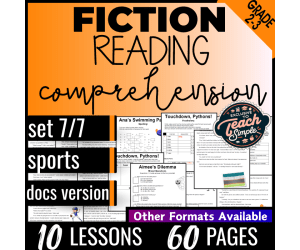
Reading Comprehension Passages Fiction Set 7 - Sports (Google Docs)
ELA, Reading, Common Core, Reading Comprehension, Spelling, Language Development, Vocabulary, Children’s Literature, Literature, Writing, Grade 2, 3, Worksheets & Printables, Worksheets, Centers, Activities, Assessments, Teacher Tools, Tests, Quizzes and Tests, Writing Prompts
Reading Comprehension Passages Fiction Set 7 Overview Fascinating reading comprehension passages, each with an array of activities included. Stories are written for the modern classroom and topics are designed to promote enthusiasm from each student. Each lesson contains a mixed questions section to check understanding, a vocabulary or spelling activity to help remember key language introduced, and a writing exercise. Full answer keys are provided. For a more detailed overview, check the section under the links at the bottom of this description. Passages Include 1.Catch It, Dan: Dan is at the ball game and wants to catch a foul ball. 2.Feeling Left Out: Polly isn't invited bowling by her friends and wants to knowwhy. 3.Ian's Friday Nights: Ian wants to be anywhere but the bleachers on Friday nights. 4.Aimee's Dilemma: Soccer or cheerleading? That is the question. 5.A Great Team: Adam & Justin both want to play first base. How will they sortit? 6.Ana's Swimming Party: Jodie can't swim and doesn't want her friends to find out. 7.Touchdown Pythons: Serena loves her first football game. 8.Sam's Passion: Sam talks about his passion for Karate in this passage. 9.Where's My Board: Kerry spends all the story looking for her skateboard. 10.Lacey the Runner: Lacey has dreams to run in the Olympics. Read to find out more. Additional File: Ana's Swimming Party: Invitation Templates Google Docs Version This is the Google Docs editable and fillable version. This download is available in GOOGLE Docs, GOOGLE Forms, GOOGLE Slides. PDF, PPT, WORD. FULL CATALOG OF DOWNLOAD LINKS HERE Grade 2/3 Links Fiction Set 1 - Nature Google Docs Google Forms Google Slides PDF PPT Word Guided Reading Materials Fiction Set 2 - Animals Google Docs Google Forms Google Slides PDF PPT Word Guided Reading Materials Fiction Set 3 - Food Google Docs Google Forms Google Slides PDF PPT Word Guided Reading Materials Fiction Set 4 - School Google Docs Google Forms Google Slides PDF PPT Word Guided Reading Materials Fiction Set 5 - Friends Google Docs Google Forms Google Slides PDF PPT Word Guided Reading Materials Fiction Set 6 - Family Google Docs Google Forms Google Slides PDF PPT Word Guided Reading Materials Fiction Set 7 - Sports Google Docs Google Forms Google Slides PDF PPT Word Guided Reading Materials Nonfiction Set 1 - Technology Google Docs Google Forms Google Slides PDF PPT Word Guided Reading Materials Nonfiction Set 2 - Nutrition Google Docs Google Forms Google Slides PDF PPT Word Guided Reading Materials Nonfiction Set 3 - Animals Google Docs Google Forms Google Slides PDF PPT Word Guided Reading Materials Reading Passages Overview Each passage is especially written for Grade 2-3 students, including key vocabulary required for this age group. Topics are varied and are accompanied by colorful graphics. Topics are meant to educate, yet entertain the modern student. These passages are perfect for the modern classroom. Whereas textbooks can become outdated in no time, any changes to technology or the world will result in updates to this product. Mixed Questions The mixed questions section of each lesson includes a variation of fivecomprehension, vocabulary and math questions. In addition, key reading strategies are frequently covered including cause & effect, summarizing, compare & contrast and making conclusions. Three of the questions will be MCQs and two will require a written response of some kind. Full answers and example responses appear at the end of the lesson. Spelling & Vocab Each reading passage contains a variety of words and phrases designed for Grade 2-3 students. Spelling and vocab activities provide the opportunity to build fluency with these words. As it can become quite mundane doing the same activities over and over, each lesson in a set will contain a different spelling and vocab activity . Writing Prompts Writing prompts are designed to continue the theme or lessons learned in the story. Students are persuaded to write in a variety of ways and each prompt includes several cues to help. As with the spelling/vocab section, writing prompts will vary. This includes research pieces, reading responses, poetry and creative writing prompts. Full Answer Keys Full answer keys and sample responses are provided so no matter how busy you are, you know you're covered! Mixed question answers provide evidence from the text, math questions contain the relevant workings. Answers are designed for use by the teacher, but also suitable as a handout to the student. Additional File One lesson will have an additional file. This is something fun to extend the lesson with. For similar downloads and other frees, do check out Cored Group on TeachSimple.
Author Cored Education
Rating
Tags Elementary, Reading, Comprehension, Vocabulary, Answers, Common Core, Spelling, Writing, Digital Centers, Vocabulary Assessments
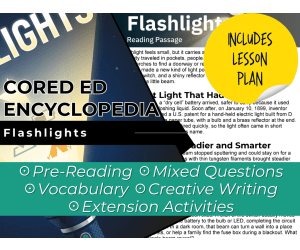
Flashlights Reading Comprehension Passage - Cored Ed Encyclopedia
ELA, Reading Comprehension, Reading, Science, Technology, Language Development, Social Studies, History, Pre-Reading, Physics, Grade 2, 3, 4, 5, Worksheets & Printables, Worksheets, Teacher Tools, Centers, Activities, Writing Prompts, Assessments, Quizzes and Tests, Quizzes, Lesson Plans
This Flashlights reading comprehension with lesson plan includes: Visualization (on the front cover) Start your lesson by taking a minute to think and share something about the topic. Read the script aloud (slowly), perhaps prepare some music or sound effects. Student close their eyes and let their imaginations wander. Students open their eyes, read the question aloud and give them a few minutes to complete. Ask a few students to share or keep answers until the end to compare with what they learn in the passage. Quick pause—thousands of Cored Education products are included with your TeachSimple membership. Download links and encyclopedia index available here. Pre-Reading Trivia Students will write down one thing they already know about the subject and then read five more facts and discuss. These facts are fun, and the students will enjoy learning about the subject before reading more. Give 1 minute for students to write what they already know (no pressure—best guess is fine). Read the five facts together. After each fact, do ask a student for their opinion, was it surprising? Set a purpose by asking students to highlight/underline one fact they want to learn more about during the reading. Reading Passage The text is a high-interest reading passage with set paragraphs, roughly three to four paragraphs long. It contains a variety of themes about the topic, anywhere from history to technology. The passage is between 250 and 350 words in length. First, ask students to look at the headings and see what they’ll learn about today. What do they know about the topic/heading? First read options: Teacher read-aloud (best for support). Partner reading (paragraph by paragraph). While reading, students underline important details, and vocabulary words they think may come up in the questions section. Mixed Questions The first question page contains four multiple-choice questions, each with a choice of four answers, and three written response questions that require a sentence or two from the student. Students complete the mcqs first independently, then review quickly as a class. For the 3 written responses, try to get students giving the answer with some form of evidence: “I think ___ because the text says ___.” If students get stuck, send them back to check the passage. Vocabulary Questions Practice seven key words from the text in this section across two activities. First section is scrambled words where students will unscramble three words given a clue for each. The second section is a word to meaning matching activity. Before starting, have some students read out words they underlined in the passage. Ask students to say the word and read aloud the sentence(s) around each word. Ask students to do scrambled words and the matching exercise in pairs then go through answers as a class. For the scrambled spelling task, get four pairs to come up to the board and write the words for extra practice with the other student reading out the clue. For the matching task, prompt students to give full sentences: “I matched ___ with ___ because ___.” Creative Writing In this question, the student will be required to write a five to eight sentence paragraph on a question related to the topic. Before starting, ask students write down 3 key ideas they are going to include in their piece. Ask students for ideas to share around the class to help those struggling. Pro writing expectations: 5–8 sentences At least 2 facts or details from the passage At least 2 vocabulary words from the previous page Students read their paragraphs while classmates listen for facts and vocabulary words. Extension Activities This page is optional for fast finishers or to take home. There are several activities, each one requiring a different skill. Do some, do none, do all, completely optional - but you will feel reassured knowing every possibility is planned for. Includes summary writting question and additional facts. Answer Key There are answers for the multiple-choice questions, written response questions have sample answers, vocabulary answers and if there is a summary question then a sample summary will be provided as well. Lesson Plan Included Customized lesson plan for this lesson is included. Lesson Snapshot Title: Flashlights Genre: Nonfiction (Informational Text) Subject: Science (Technology/Physical Science) / Reading (Informational Text) Primary Topic: Flashlight parts, history, and how it works Estimated Guided Reading Level (A–Z): P What This Lesson Teaches Best Explains the main parts inside a flashlight (a power source, a switch, and a reflector) and what they do. Teaches a short history of flashlights , including the “dry cell” battery and an 1899 U.S. patent for a hand-held electric light. Shows cause and effect : early zinc-carbon batteries tired quickly, so the light came in short flashes—leading to the name “flashlight.” Compares how flashlight beams improved over time, from sputtering light to steadier beams, including incandescent bulbs and later LEDs. Connects electricity to a real object by describing how a click of the switch completes a circuit so electricity can flow. Learning Goals Students will describe what a flashlight carries “in one hand” and what it helps people do in the dark. Students will identify three parts inside a flashlight case and explain each part’s job using the passage. Students will explain why the flashlight got its name, using evidence about early batteries and short flashes. Students will describe how flashlight lighting changed over time (dry cell batteries, incandescent bulbs, LEDs). Students will explain what happens when a flashlight switch is clicked, based on how the circuit is completed. Key Vocabulary From the Text reflector — shiny part that gathers glow and pushes it forward. patent — legal protection for an invention. incandescent — a kind of bulb that makes light using heat. LEDs — bright lights that can shine longer on same power. circuit — complete path that lets electricity flow. FULL CATALOG OF DOWNLOAD LINKS AND ENCYCLOPEDIA INDEX HERE
Author Cored Education
Rating
Tags Vocabulary, Reading Comprehension, Reading Passages, Lesson Plans, Ela Lesson Plans, Reading Comprehension Lesson Plans, Pre-reading, Science Lesson Plans, History, Technology

ESL Novel Study - Murder on the Orient Express - Agatha Christie
ELA, Language Development, ESL, Vocabulary, Writing, Creative Writing, Formal Writing, Grade 7, 8, 9, 10, 11, 12, Worksheets & Printables, Worksheets, Writing Prompts, Novel Studies
ESL Novel Study Worksheets - Murder on the Orient Express - Agatha Christie This ESL EFL TESOL (English Second or Foreign Language) teaching resource is a comprehensive novel study worksheet activity (2 printable PDF pages; Worksheets) focused on the novel "Murder on the Orient Express" (Novel by British author Agatha Christie). This Novel Study worksheets on "Murder on the Orient Express" (Novel by British author Agatha Christie) is tailored for middle and high school ESL students (7th–12th grade) and provide a variety of thought-provoking and language-building activities. Whether you're teaching English as a Second Language (ESL), English as a Foreign Language (EFL), or in a TESOL context, this resource is classroom-ready and easy to use. Within this ESL Novel Study on "Murder on the Orient Express" (2 printable PDF worksheets pages), English Second or Foreign Language (ESL EFL TESOL) teachers can find the following activities: General information activity (author, genre, publishing date) Vocabulary building section – new words from the novel 1 Story timeline Personal reflection on a favorite chapter Student novel review and rating Creative writing task : pretending being a character you personally liked and writing 3 diary pages for 3 scenes as if you were this character This English Second or Foreign Language (ESL EFL) Novel Study Activity Worksheets on the "Murder on the Orient Express" (Novel by British author Agatha Christie) can be ideal for learners from 7th grade to 12th grade to study this Novel (middle school and High School Students) ESL with Alan is a high-quality ESL teaching resources that inspire both teachers and students. Our goal is to make learning English fun, interactive, and meaningful. Discover more English Second or Foreign Language activities by visiting our store – because learning English should always be fun! If you want to browse more of my English Language and Literature Novel Study Activity Teaching Resources, click here ESL with Alan!
Author Learning with Alan
Rating
Tags ESL, English, English Second Language, Novel Study, Literature, Agatha Christie, Murder On The Orient Express, Activity, Worksheets, Detective
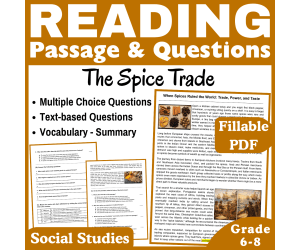
The Spice Trade: Social Studies Reading Passage (Fillable PDF)
ELA, Reading, Reading Comprehension, Strategies, Resources for Teachers, Social Studies, History, History: World, Grade 6, 7, 8, 9, Writing Prompts, Worksheets & Printables, Centers, Activities, Teacher Tools, Assessments, Quizzes and Tests, Quizzes, Tests
The Spice Trade: Social Studies Reading Comprehension Passage (Fillable PDF) This resource introduces a unique Social Studies reading comprehension passage with questions about The Spice Trade: When Spices Ruled the World: Trade, Power, and Taste. The passage is carefully designed to bridge the gap between social studies and literacy through strengthening reading comprehension and sparking knowledge curiosity in middle school students. Each passage blends English Language Arts skills with accurate social studies content . Ideal for interdisciplinary learning in ELA and Social Studies. Suitable for Grade 9 review, too! This resource is designed as a fillable PDF , which means students can type their answers directly into the document on any computer or tablet . Each page includes highlighted text fields that show them exactly where to type! Student Tasks throughout the passage: 5 multiple-choice questions targeting the following skills: main idea, key details, inference, vocabulary in context, and use of evidence 5 vocabulary matching items with clear, student-friendly definitions 5 text-based questions that require citing specific lines or facts 1 summary prompt that asks students to condense central ideas accurately Full answer key for every section Available Formats for this Resource: PDF Word Docs Google Docs FULL CATALOG OF DOWNLOADING LINKS HERE Social Studies Reading Comprehension Collection Links: 1. Ancient Civilizations PDF Fillable PDF Word Docs Google Docs 2. Early Empires and Trade Networks PDF Fillable PDF Word Docs Google Docs 3. The Founding of the United States PDF Fillable PDF Word Docs Google Docs 4. Language, Culture, and Meaning PDF Fillable PDF Word Docs Google Docs 5. Psychology and Society PDF Fillable PDF Word Docs Google Docs 6. Global Festivals and Traditions PDF Fillable PDF Word Docs Google Docs 7. Extreme Environments and People PDF Fillable PDF Word Docs Google Docs 8. Food, Culture, and Preservation PDF Fillable PDF Word Docs Google Docs 9. Global Food Customs PDF Fillable PDF Word Docs Google Docs 10. Media, Communication, and Popular Culture PDF Fillable PDF Word Docs Google Docs 11. Human Impact on the Environment PDF Fillable PDF Word Docs Google Docs 12. Civic Action and Social Change PDF Fillable PDF Word Docs Google Docs 13. Fashion, Society, and Power PDF Fillable PDF Word Docs Google Docs 14. People, Places, and Unusual Histories PDF Fillable PDF Word Docs Google Docs Product Details: Length: 5 pages Grades: 6–8, also suitable for Grade 9 review Use cases: close reading, stations, homework, intervention, test prep, and sub plans Why Teachers Choose This Passage: Authentic social studies content paired with rigorous literacy practice Consistent task structure for easier planning and smoother student routines Clear, age-appropriate writing that builds confidence without oversimplifying Use this passage to reinforce ELA skills in social studies, to add literacy to your lessons, and to support independent work. The passage strengthens main idea, evidence use, vocabulary in context, inference, cause and effect, and summary writing. With ready-to-use assessments and complete answer keys, you can provide focused practice that is simple to run and fast to review.
Author Middle & High School - CORED Education
Rating
Tags Middle School, Reading Comprehension, Reading Strategies, ELA, Centers, Reading Passage, Assessments, Vocabulary, Social Studies, Ancient Civilization
SAMPLE Social Studies Reading Comprehension Passage: Tea Customs
ELA, Reading, Reading Comprehension, Strategies, Resources for Teachers, Social Studies, Sociology, Grade 6, 7, 8, 9, Writing Prompts, Worksheets & Printables, Centers, Activities, Teacher Tools, Assessments, Quizzes and Tests, Quizzes, Tests
This is a free passage sample from the complete resource. The full version includes everything needed for a complete reading comprehension activity: the passage, multiple-choice questions, short-answer questions, vocabulary matching, a summary-writing task, and a detailed answer key. Download the complete passage resource by clicking on the following links: PDF Fillable PDF Word Docs Google Docs Tea Customs: Social Studies Reading Comprehension Passage (PDF) This resource introduces a unique Social Studies reading comprehension passage with questions about Tea Drinking Customs The passage is carefully designed to bridge the gap between social studies and literacy through strengthening reading comprehension and sparking knowledge curiosity in middle school students. Each passage blends English Language Arts skills with accurate social studies content . Ideal for interdisciplinary learning in ELA and Social Studies. Suitable for Grade 9 review, too! Student Tasks throughout the passage: 5 multiple-choice questions targeting the following skills: main idea, key details, inference, vocabulary in context, and use of evidence 5 vocabulary matching items with clear, student-friendly definitions 5 text-based questions that require citing specific lines or facts 1 summary prompt that asks students to condense central ideas accurately Full answer key for every section FULL CATALOG OF DOWNLOADING LINKS HERE Other Social Studies Reading Comprehension Collections You May Find in the Store: 1. Ancient Civilizations 2. Early Empires and Trade Networks 3. The Founding of the United States 4. Language, Culture, and Meaning 5. Psychology and Society 6. Global Festivals and Traditions 7. Extreme Environments and People 8. Food, Culture, and Preservation 9. Global Food Customs 10. Media, Communication, and Popular Culture 11. Human Impact on the Environment 12. Civic Action and Social Change 13. Fashion, Society, and Power 14. People, Places, and Unusual Histories Product Details: Length: 4 pages Grades: 6–8, also suitable for Grade 9 review Use cases: close reading, stations, homework, intervention, test prep, and sub plans Why Teachers Choose This Passage: Authentic social studies content paired with rigorous literacy practice Consistent task structure for easier planning and smoother student routines Clear, age-appropriate writing that builds confidence without oversimplifying Use this passage to reinforce ELA skills in social studies, to add literacy to your lessons, and to support independent work. The passage strengthens main idea, evidence use, vocabulary in context, inference, cause and effect, and summary writing. With ready-to-use assessments and complete answer keys, you can provide focused practice that is simple to run and fast to review.
Author Middle & High School - CORED Education
Rating
Tags Middle School, Reading Comprehension, Reading Strategies, ELA, Centers, Reading Passage, Assessments, Vocabulary, Social Studies, Sociology

Eating Insects: Social Studies Reading Comprehension Passage (PDF)
ELA, Reading, Reading Comprehension, Strategies, Resources for Teachers, Social Studies, Sociology, Grade 6, 7, 8, 9, Writing Prompts, Worksheets & Printables, Centers, Activities, Teacher Tools, Assessments, Quizzes and Tests, Quizzes, Tests
Eating Insects: Social Studies Reading Comprehension Passage (PDF) This resource introduces a unique Social Studies reading comprehension passage with questions about Eating Insects in some cultures and possible future eating trends. The passage is carefully designed to bridge the gap between social studies and literacy through strengthening reading comprehension and sparking knowledge curiosity in middle school students. Each passage blends English Language Arts skills with accurate social studies content . Ideal for interdisciplinary learning in ELA and Social Studies. Suitable for Grade 9 review, too! Student Tasks throughout the passage: 5 multiple-choice questions targeting the following skills: main idea, key details, inference, vocabulary in context, and use of evidence 5 vocabulary matching items with clear, student-friendly definitions 5 text-based questions that require citing specific lines or facts 1 summary prompt that asks students to condense central ideas accurately Full answer key for every section Available Formats for this Resource: Fillable PDF Word Docs Google Docs FULL CATALOG OF DOWNLOADING LINKS HERE Social Studies Reading Comprehension Collection Links: 1. Ancient Civilizations PDF Fillable PDF Word Docs Google Docs 2. Early Empires and Trade Networks PDF Fillable PDF Word Docs Google Docs 3. The Founding of the United States PDF Fillable PDF Word Docs Google Docs 4. Language, Culture, and Meaning PDF Fillable PDF Word Docs Google Docs 5. Psychology and Society PDF Fillable PDF Word Docs Google Docs 6. Global Festivals and Traditions PDF Fillable PDF Word Docs Google Docs 7. Extreme Environments and People PDF Fillable PDF Word Docs Google Docs 8. Food, Culture, and Preservation PDF Fillable PDF Word Docs Google Docs 9. Global Food Customs PDF Fillable PDF Word Docs Google Docs 10. Media, Communication, and Popular Culture PDF Fillable PDF Word Docs Google Docs 11. Human Impact on the Environment PDF Fillable PDF Word Docs Google Docs 12. Civic Action and Social Change PDF Fillable PDF Word Docs Google Docs 13. Fashion, Society, and Power PDF Fillable PDF Word Docs Google Docs 14. People, Places, and Unusual Histories PDF Fillable PDF Word Docs Google Docs Product Details: Length: 4 pages Grades: 6–8, also suitable for Grade 9 review Use cases: close reading, stations, homework, intervention, test prep, and sub plans Why Teachers Choose This Passage: Authentic social studies content paired with rigorous literacy practice Consistent task structure for easier planning and smoother student routines Clear, age-appropriate writing that builds confidence without oversimplifying Use this passage to reinforce ELA skills in social studies, to add literacy to your lessons, and to support independent work. The passage strengthens main idea, evidence use, vocabulary in context, inference, cause and effect, and summary writing. With ready-to-use assessments and complete answer keys, you can provide focused practice that is simple to run and fast to review.
Author Middle & High School - CORED Education
Rating
Tags Middle School, Reading Comprehension, Reading Strategies, ELA, Centers, Reading Passage, Assessments, Vocabulary, Social Studies, Sociology

Character Trait Writing Prompts | Positive Personal Qualities
ELA, Writing, Grade 3, 4, 5, Writing Prompts, Worksheets & Printables
Character Trait Writing Prompts | Positive Personal Qualities | Writing Project Character Trait Writing Prompts | Positive Personal Qualities | Writing Project is an instructive tool crafted to ignite discussion, generate creative writing ideas, and facilitate self-exploration among 3rd to 5th-grade students. This distinctive resource catalyzes character trait interaction mixed with writing cues to help pupils understand and convey their character traits more abstractly. The product comes packed with over 30 personalized character prompt traits. Each trait, including kindness, bravery, wisdom, sensitivity among others selected for its educational prowess is designed for students to examine these awe-inspiring characteristics through the school year. How it works? The process is straightforward - educators choose a personality trait for classroom discourse or homework. They then distribute the corresponding writing prompt that encourages pupils to think about what this quality means in their lives; how they interpret its application in real-life scenarios Broad Application Within Education: Aimed at enhancing language arts curriculums via enjoyable yet insightful worksheets. Ideal for whole-class sessions or small-group discussions. Craft long-term study projects focusing on various virtues across the academic calendar. Detailed Package Contents: This pack is delivered as a single PDF containing 30 printable pages brimming with rich conversational material about positive personality traits paired with intricate writing assignments inspired by them. Suitability: Mainly suitable for teachers in need of teaching resources that engagingly merge human virtues conversation and exploratory writing tasks leading towards better decision-making skills after understanding one's strengths..
Author Simply Schoolgirl
Tags Character Traits, Writing Prompts, Personal Qualities, Positive Qualities, Creative Thinking