



3,877 products added recently
Page 9 - 3rd Grade Writing Prompts

 Show filters

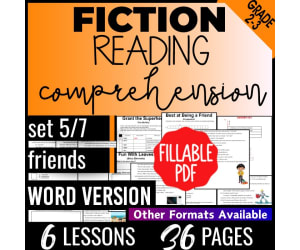
Reading Comprehension Passages Fiction Set 5 - Friends (Fillable PDF)
ELA, Reading, Reading Comprehension, Common Core, Children’s Literature, Literature, Spelling, Language Development, Vocabulary, Writing, Grade 2, 3, Worksheets & Printables, Worksheets, Assessments, Teacher Tools, Tests, Quizzes and Tests, Writing Prompts
Reading Comprehension Passages Fiction Set 5 Snapshot Title: Title not stated Genre: Fiction (short story collection) Subject: Reading (ELA) Primary Topic: Friendship, everyday problems, and solutions Estimated Guided Reading Level (A–Z): P What This Teaches Best Friendship across different situations: Friends stay connected even when apart (“Friends in Different Places”) and practice being happy for each other (“Best at Being a Friend”). Problem/solution thinking in realistic stories: Characters face small problems (boredom, chores, weather ruining plans, a cat stuck in a tree) and adjust to solve them. Character feelings and motivations: Students can track emotions like boredom, nervousness, frustration, and fear, and connect them to choices and outcomes. Cause and effect: Clear “because” links appear throughout (e.g., why no campfire is allowed; why the cat won’t come down; why Tara feels second-best). Strong built-in practice routine: Each story includes support pages (mixed questions, vocabulary/spelling, writing/response) tied to story details, with a few wording/answer-key inconsistencies noted below. Learning Goals Students will recount key events from a story in order using text details. Students will describe a character’s feelings and motivations and explain how they influence actions. Students will identify a problem and solution and explain how the solution changes the ending. Students will explain cause-and-effect relationships using evidence from the story. Students will use context clues to determine the meaning of unfamiliar words in the stories. Students will respond to a prompt by connecting the story’s events to their own experiences (where the support pages ask for it). Passages Include 1.Friends in Different Places: Molly is sad as her best friend is out of town. 2.Perfect Birthday: Everyone knows what Matt wants for his birthday! 3.Fun With Leaves: Can doing chores also be fun? Find out in this story. 4.Backyard Camp: Kelly and Brandy camp out in the backyard. But how does it go? 5.Best at Being a Friend: Second place again, but there is one thing Tara is best at. 6.Grant the Superhero: Join Grant and his dreams of being a superhero. Additional File: Grant the Superhero: Comic Template FILLABLE PDF VERSION Worksheet-style pages, but with type-in answer boxes so students can complete and save their work digitally. Other versions are available in the links list below or in the full catalog. FULL CATALOG OF DOWNLOAD LINKS HERE For similar downloads and other frees, do check out Cored Group on TeachSimple.
Author Cored Education
Rating
Tags Elementary, Reading, Comprehension, Vocabulary, Answers, Common Core, Spelling, Writing, Passages, Reading Comprehension Assessment
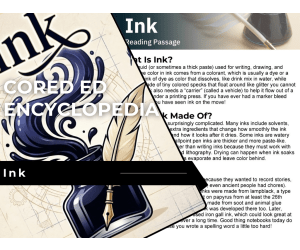
Ink Reading Comprehension Passage - Cored Ed Encyclopedia
ELA, Language Development, Resources for Teachers, Reading Comprehension, Reading, Pre-Reading, Writing, Physics, Science, Grade 2, 3, 4, 5, Worksheets & Printables, Worksheets, Teacher Tools, Centers, Activities, Writing Prompts, Assessments, Tests, Quizzes and Tests, Quizzes
This ink reading comprehension contains the following: Pre-Reading Trivia Students will write down one thing they already know about the subject and then read five more facts and discuss. These facts are fun, and the students will enjoy learning about the subject before reading more. Reading Passage The text is a high-interest reading passage with set paragraphs, roughly three to four paragraphs long. It contains a variety of themes about the topic, anywhere from history to technology. The passage is between 250 and 350 words in length. Mixed Questions The first question page contains four multiple-choice questions, each with a choice of four answers, and three written response questions that require a sentence or two from the student. Vocabulary Questions Practice seven key words from the text in this section across two activities. First section is scrambled words where students will unscramble three words given a clue for each. The second section is a word to meaning matching activity. Creative Writing In this question, the student will be required to write a five to eight sentence paragraph on a question related to the topic. Extension Activities This page is optional for fast finishers or to take home. There are several activities, each one requiring a different skill. Do some, do none, do all, completely optional - but you will feel reassured knowing every possibility is planned for. Answer Key There are answers for the multiple-choice questions, written response questions have sample answers, vocabulary answers and if there is a summary question then a sample summary will be provided as well. FULL CATALOG OF DOWNLOAD LINKS AND ENCYCLOPEDIA INDEX HERE Lesson Snapshot Title: Ink Genre: Nonfiction (informational text with headings) Subject: Reading (Informational Text) / Science & Technology Primary Topic: What ink is, what it’s made of, and its history Estimated Guided Reading Level (A–Z): P What This Lesson Teaches Best Defines ink and explains its main uses: writing, drawing, and printing. Teaches how ink gets color by introducing colorant (dye or pigment) and comparing dye vs. pigment in kid-friendly language. Explains that inks need a “carrier” (also called a vehicle) to help ink flow from a pen or under a printing press. Describes how different inks are made for different purposes (watery for fountain pens, thicker for ballpoint pens, thicker printing inks for machines like letterpress and lithography). Builds historical knowledge by giving examples of early inks and where/when they were used (Ancient Egypt on papyrus; China evidence around 256 BCE; medieval Europe iron gall ink). Learning Goals Identify what ink is and list at least two things it is used for. Explain how ink gets its color by describing what a colorant is. Describe one difference between dye and pigment using details from the text. Describe why some inks are thicker than others based on how they are used. Explain one way ink can dry on paper, according to the passage. Summarize one historical example of ink use (place and time) from “Ink Through Time.” Key Vocabulary From the Text colorant — something that adds color, like dye or pigment. dye — color that dissolves in liquid. pigment — tiny colored specks that float in liquid. carrier — liquid that helps ink flow. evaporate — liquid changes and leaves, with color left behind. Cored Ed Encyclopedia Overview The Cored Ed Encyclopedia is a weekly series of lessons that you can pick up and use right away. These short readings fit into whatever time you have available. Each one includes a warm-up, a reading, and a set of questions, but it’s flexible — you can do just the reading, the full lesson, or skip the writing section if you need to. Each lesson focuses on a single topic so students don’t get lost. The writing is clear but never childish, making it perfect for grades two through five. Topics range from animals and science to history, inventions, and everyday things. No matter the level of the student, everyone should take away at least one new idea or fact from each lesson. The materials are easy to print, easy to explain, and require no setup. They work well for whole-class teaching, partner work, or independent study.
Author Cored Education
Rating
Tags Vocabulary, Spelling, Reading Comprehension, Reading Passages, Reading, Creative Writing, Reading Strategies, Writing Prompts, Ink, Physics

Detectives Reading Comprehension Passage - Cored Ed Encyclopedia
ELA, Language Development, Resources for Teachers, Reading Comprehension, Reading, Pre-Reading, Writing, Strategies, Vocabulary, Common Core, Grade 2, 3, 4, 5, Worksheets & Printables, Worksheets, Teacher Tools, Centers, Activities, Writing Prompts, Assessments, Tests, Quizzes and Tests, Quizzes
This detectives reading comprehension contains the following: Pre-Reading Trivia Students will write down one thing they already know about the subject and then read five more facts and discuss. These facts are fun, and the students will enjoy learning about the subject before reading more. Reading Passage The text is a high-interest reading passage with set paragraphs, roughly three to four paragraphs long. It contains a variety of themes about the topic, anywhere from history to technology. The passage is between 250 and 350 words in length. Mixed Questions The first question page contains four multiple-choice questions, each with a choice of four answers, and three written response questions that require a sentence or two from the student. Creative Writing In this question, the student will be required to write a five to eight sentence paragraph on a question related to the topic. Extension Activities This page is optional for fast finishers. If there are five to ten minutes left at the end of the lesson, the student can choose one of three activities, each one requiring a different skill. Answer Key There are answers for the multiple-choice questions and three written response questions have sample answers. FULL CATALOG OF DOWNLOAD LINKS AND ENCYCLOPEDIA INDEX HERE Cored Ed Encyclopedia Overview The Cored Ed Encyclopedia is a weekly series of lessons that you can pick up and use right away. These short readings fit into whatever time you have available. Each one includes a warm-up, a reading, and a set of questions, but it’s flexible — you can do just the reading, the full lesson, or skip the writing section if you need to. Each lesson focuses on a single topic so students don’t get lost. The writing is clear but never childish, making it perfect for grades two through five. Topics range from animals and science to history, inventions, and everyday things. No matter the level of the student, everyone should take away at least one new idea or fact from each lesson. The materials are easy to print, easy to explain, and require no setup. They work well for whole-class teaching, partner work, or independent study.
Author Cored Education
Rating
Tags Vocabulary, Spelling, Reading Comprehension, Reading Passages, Cored Encyclopedia, Facts, Reading, Creative Writing, Detectives, Ela
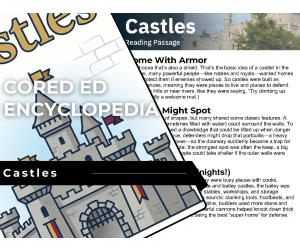
Castles Reading Comprehension Passage - Cored Ed Encyclopedia
ELA, Language Development, Resources for Teachers, Reading Comprehension, Reading, Pre-Reading, Writing, Strategies, History, Social Studies, Grade 2, 3, 4, 5, Worksheets & Printables, Worksheets, Teacher Tools, Centers, Activities, Writing Prompts, Assessments, Tests, Quizzes and Tests, Quizzes
This castles reading comprehension contains the following: Pre-Reading Trivia Students will write down one thing they already know about the subject and then read five more facts and discuss. These facts are fun, and the students will enjoy learning about the subject before reading more. COMPANION VIDEO NOW AVAILABLE (EMBEDDED AFTER PREVIEW PICTURES IN PRODUCT DESCRIPTION) Reading Passage The text is a high-interest reading passage with set paragraphs, roughly three to four paragraphs long. It contains a variety of themes about the topic, anywhere from history to technology. The passage is between 250 and 350 words in length. Mixed Questions The first question page contains four multiple-choice questions, each with a choice of four answers, and three written response questions that require a sentence or two from the student. Creative Writing In this question, the student will be required to write a five to eight sentence paragraph on a question related to the topic. Extension Activities This page is optional for fast finishers. If there are five to ten minutes left at the end of the lesson, the student can choose one of three activities, each one requiring a different skill. Answer Key There are answers for the multiple-choice questions and three written response questions have sample answers. FULL CATALOG OF DOWNLOAD LINKS AND ENCYCLOPEDIA INDEX HERE Cored Ed Encyclopedia Overview The Cored Ed Encyclopedia is a weekly series of lessons that you can pick up and use right away. These short readings fit into whatever time you have available. Each one includes a warm-up, a reading, and a set of questions, but it’s flexible — you can do just the reading, the full lesson, or skip the writing section if you need to. Each lesson focuses on a single topic so students don’t get lost. The writing is clear but never childish, making it perfect for grades two through five. Topics range from animals and science to history, inventions, and everyday things. No matter the level of the student, everyone should take away at least one new idea or fact from each lesson. The materials are easy to print, easy to explain, and require no setup. They work well for whole-class teaching, partner work, or independent study.
Author Cored Education
Rating
Tags Vocabulary, Spelling, Reading Comprehension, Reading Passages, Cored Encyclopedia, Facts, Reading, Creative Writing, Castles, History

Winter or Spring ? Writing Prompt - Groundhog Day
ELA, Creative Arts, Graphic Arts, Writing, Creative Writing, Holiday & Seasonal, Months, February, Kindergarten, Preschool, Grade 1, 2, 3, 4, 5, Worksheets & Printables, Writing Prompts, Worksheets, Coloring Pages
Can’t decide between the cozy chill of winter and the fresh blooms of spring? Neither can your students, and that's exactly why they need Winter or Spring? My Favorite and Why. In this humorous writing prompt, students will declare their allegiance to one season or the other—and they’ll need to back it up with convincing (and probably funny) arguments. Whether they’re dreaming of snowball fights or already planning their spring wardrobe, this prompt will spark lively debates and plenty of laughs. Plus, it’s a great way to practice persuasive writing while keeping things light and fun. Ways to Use: Classroom Activity: Have students share their opinions in pairs or small groups, then write their persuasive pieces. Creative Writing: Use this prompt as a playful way to practice persuasive writing and storytelling skills. Groundhog Day Tie-in: Perfect for Groundhog Day activities—because who else but the groundhog could decide between winter and spring? Homework or Extra Credit: Let students take the debate home and write the ultimate seasonal argument. Advantages: Encourages Humor: Students can add a humorous twist to their arguments, making persuasive writing more fun. Boosts Creativity: Gets students thinking about seasons in fresh, quirky ways. Engaging: A fun way to engage even the most reluctant writers. Easy to Use: Simple to implement, with minimal prep and maximum fun.
Author Ponder Palette Plazza
Tags Groundhog Day, Groundhog, Groundhog Day Writing Prompts, Groundhog Day Writing, Groundhog Day Activities, Writing Prompts, Weather, February Activities

September Writing Prompts - Learning Passport
ELA, Writing, Creative Writing, Grade 2, 3, 4, Writing Prompts, Worksheets & Printables
September Writing Prompts - Learning Passport The Learning Passport is a highly effective and interactive educational resource. It provides engaging writing exercises for students in grades 2 to 4. This innovative teaching tool consolidates four double-sided pages into an exciting 32-page activity , elevating the student's educational journey by offering a unique blend of fun, learning, and creativity. Versatility & Motivation The Learning Passport can be used in multiple ways such as additional challenges for quick learners during morning routines or creative writing periods, individual activities, small groups tasks or whole class exercises. And it also serves as a meaningful homework assignment. Thematic Prompts Incorporates September-oriented themes into its makeup ensuring timely and current material. A wide variety of prompts like 'Positive Thinking Day', 'National Video Game Day', 'National Make Your Bed Day' to ‘Teddy Bear Day’ etc., help progressively build cognitive abilities. Accountability System This resource innovatively incorporates accountability in learning wherein upon completion of each topic students get rewarded with a passport stamp which fuels their motivation towards achieving new milestones. Each sheet contains space for twenty such stamps making printing an efficient task for both teachers and students alike. Setup Procedure & Environmental Friendly Design: The setup is straightforward; print on both sides of the paper, cut out sections as prescribed, fold according to instructions given before stapling together resulting in assembled passports working efficiently overall reducing stress levels on educators with an emphasis on maximizing student engagement ability via its design. This resource is eco-friendly utilizing only four papers per passport significantly minimizing paper wastage without any negative impact on work productivity or the fun quotient. Importance of Language Arts This product is heavily focused on language arts with a special emphasis on aiding development in creative writing skills. It becomes an indispensable tool for classrooms striving for multi-dimensional developmental goals and invigorating instruction methodology blending creativity with knowledge.
Author Knowledge Mobile
Tags Interactive Resource, Engaging Exercises, Writing Prompts, Creative Learning, Themed Activities

Creative Journal Prompts for Daily Writing Fun.
ELA, Writing, Grade 1, 2, 3, Worksheets & Printables, Worksheets, Writing Prompts
Nurture creativity and strengthen essential writing skills with these Journal Writing Prompts! This resource helps educators foster creativity, enhance writing and language development, build student confidence, and engage learners with fun, seasonal themes. It also provides opportunities for self-reflection, emotional expression, and easy writing assessments. This resource includes: ✅ General Daily Writing Prompts. ✅ Seasonal and Holiday Prompts. ✅ Imaginative and Creative Prompts. ✅ Reflection and Emotional Expression Prompts. You will get: ✅ 26 writing prompts designed to inspire thoughtful and creative responses. ✅ 8.5 x 11" printable pages — easy to use for classroom or homeschool settings. ✅ PDF printable file — simple to download and print. These prompts are perfect for morning work, writing centers, independent journaling, early finishers, and even homework assignments! ⭐ I would really appreciate to know about your experience using my product by leaving a review. Your feedback supports my work and helps other educators determine if this resource is the right fit for their needs. Thank you so much for your support!
Author Nena Creations
Rating
Tags Journal Writing Prompts Daily Writing Prompts Creative Writing For Kids Elementary Writing Activities Printable Writing Journal Seasonal Writing Prompts Holiday Writing Prompts Writing Reflection Activities Language Arts Journal Student Journals For Writing Morning Work Writing Prompts Homeschool Writing Ideas Emotional Expression Prompts Writing Skills Practice Fun Writing Worksheets Imaginative Writing Prompts Writing Confidence Building PDF Writing Activities Printable Writing Resources 4th Grade Writing Journal
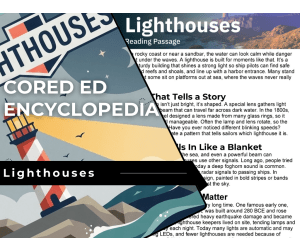
Lighthouses Reading Comprehension Passage - Cored Ed Encyclopedia
ELA, Language Development, Resources for Teachers, Reading Comprehension, Reading, Pre-Reading, Writing, Strategies, Science, Physics, Grade 2, 3, 4, 5, Worksheets & Printables, Worksheets, Teacher Tools, Centers, Activities, Writing Prompts, Assessments, Tests, Quizzes and Tests, Quizzes
This lighthouses reading comprehension contains the following: Visualize on the Cover (Teacher Read Aloud Script) Start your lesson by taking a few moments to visualize the topic and share thoughts or feelings about it. Pre-Reading Trivia Students will write down one thing they already know about the subject and then read five more facts and discuss. These facts are fun, and the students will enjoy learning about the subject before reading more. Reading Passage The text is a high-interest reading passage with set paragraphs, roughly three to four paragraphs long. It contains a variety of themes about the topic, anywhere from history to technology. The passage is between 250 and 350 words in length. Mixed Questions The first question page contains four multiple-choice questions, each with a choice of four answers, and three written response questions that require a sentence or two from the student. Vocabulary Questions Practice seven key words from the text in this section across two activities. First section is scrambled words where students will unscramble three words given a clue for each. The second section is a word to meaning matching activity. Creative Writing In this question, the student will be required to write a five to eight sentence paragraph on a question related to the topic. Extension Activities This page is optional for fast finishers or to take home. There are several activities, each one requiring a different skill. Do some, do none, do all, completely optional - but you will feel reassured knowing every possibility is planned for. Includes summary writting question. Answer Key There are answers for the multiple-choice questions, written response questions have sample answers, vocabulary answers and if there is a summary question then a sample summary will be provided as well. FULL CATALOG OF DOWNLOAD LINKS AND ENCYCLOPEDIA INDEX HERE Lesson Snapshot Title: Lighthouses Genre: Nonfiction (informational text) Subject: Science & Technology / Social Studies (navigation and safety) Primary Topic: Lighthouse signals, fog warnings, and why lighthouses matter Estimated Guided Reading Level (A–Z): P What This Lesson Teaches Best What lighthouses do for ships: help pilots find safe water, avoid reefs and shoals, and line up with a harbor entrance. How lighthouse lights communicate: a strong beam can sweep as the lamp and lens rotate, and timed flashes form patterns that identify a lighthouse. Why special tools are needed in fog: thick fog can hide light, so lighthouses use other signals like foghorns and sometimes radio or radar signals. How lighthouses connect to history and change: the Lighthouse of Alexandria (built around 280 BCE) became ruins after earthquakes, and many modern lights are now automatic and may use LEDs. Learning Goals Students will explain the main job of a lighthouse using details from the passage. Students will describe how a lighthouse lens helps shape and send light into a strong beam. Students will explain how blinking patterns help sailors know which lighthouse they are seeing. Students will identify at least two signals lighthouses can use when fog makes the light hard to see. Students will summarize one way lighthouses have changed from the past to today (keepers, automation, LEDs, navigation). Key Vocabulary From the Text sandbar — a shallow pile of sand near/under water. shoals — shallow water areas that can be dangerous. beam — a strong line of light shining outward. rotate — to turn around in a circle. daymark — bold paint patterns that help in daylight. Cored Ed Encyclopedia Overview The Cored Ed Encyclopedia is a weekly series of lessons that you can pick up and use right away. These short readings fit into whatever time you have available. Each one includes a warm-up, a reading, and a set of questions, but it’s flexible — you can do just the reading, the full lesson, or skip the writing section if you need to. Each lesson focuses on a single topic so students don’t get lost. The writing is clear but never childish, making it perfect for grades two through five. Topics range from animals and science to history, inventions, and everyday things. No matter the level of the student, everyone should take away at least one new idea or fact from each lesson. The materials are easy to print, easy to explain, and require no setup. They work well for whole-class teaching, partner work, or independent study.
Author Cored Education
Rating
Tags Vocabulary, Spelling, Reading Comprehension, Reading Passages, Reading, Creative Writing, Reading Strategies, Writing Prompts, Lighthouses, Physics
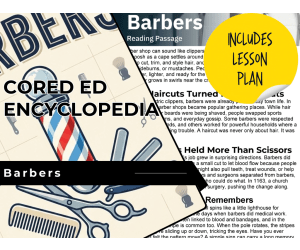
Barbers Reading Comprehension Passage - Cored Ed Encyclopedia
ELA, Language Development, Reading Comprehension, Reading, Social Studies, Writing, Vocabulary, History, Pre-Reading, Spelling, Grade 2, 3, 4, 5, Worksheets & Printables, Worksheets, Teacher Tools, Centers, Activities, Writing Prompts, Assessments, Quizzes and Tests, Quizzes, Lesson Plans
This barbers reading comprehension with lesson plan includes: Visualization (on the front cover) Start your lesson by taking a minute to think and share something about the topic. Read the script aloud (slowly), perhaps prepare some music or sound effects. Student close their eyes and let their imaginations wander. Students open their eyes, read the question aloud and give them a few minutes to complete. Ask a few students to share or keep answers until the end to compare with what they learn in the passage. Quick pause—thousands of Cored Education products are included with your TeachSimple membership. Download links and encyclopedia index available here. Pre-Reading Trivia Students will write down one thing they already know about the subject and then read five more facts and discuss. These facts are fun, and the students will enjoy learning about the subject before reading more. Give 1 minute for students to write what they already know (no pressure—best guess is fine). Read the five facts together. After each fact, do ask a student for their opinion, was it surprising? Set a purpose by asking students to highlight/underline one fact they want to learn more about during the reading. Reading Passage The text is a high-interest reading passage with set paragraphs, roughly three to four paragraphs long. It contains a variety of themes about the topic, anywhere from history to technology. The passage is between 250 and 350 words in length. First, ask students to look at the headings and see what they’ll learn about today. What do they know about the topic/heading? First read options: Teacher read-aloud (best for support). Partner reading (paragraph by paragraph). While reading, students underline important details, and vocabulary words they think may come up in the questions section. Mixed Questions The first question page contains four multiple-choice questions, each with a choice of four answers, and three written response questions that require a sentence or two from the student. Students complete the mcqs first independently, then review quickly as a class. For the 3 written responses, try to get students giving the answer with some form of evidence: “I think ___ because the text says ___.” If students get stuck, send them back to check the passage. Vocabulary Questions Practice seven key words from the text in this section across two activities. First section is scrambled words where students will unscramble three words given a clue for each. The second section is a word to meaning matching activity. Before starting, have some students read out words they underlined in the passage. Ask students to say the word and read aloud the sentence(s) around each word. Ask students to do scrambled words and the matching exercise in pairs then go through answers as a class. For the scrambled spelling task, get four pairs to come up to the board and write the words for extra practice with the other student reading out the clue. For the matching task, prompt students to give full sentences: “I matched ___ with ___ because ___.” Creative Writing In this question, the student will be required to write a five to eight sentence paragraph on a question related to the topic. Before starting, ask students write down 3 key ideas they are going to include in their piece. Ask students for ideas to share around the class to help those struggling. Pro writing expectations: 5–8 sentences At least 2 facts or details from the passage At least 2 vocabulary words from the previous page Students read their paragraphs while classmates listen for facts and vocabulary words. Extension Activities This page is optional for fast finishers or to take home. There are several activities, each one requiring a different skill. Do some, do none, do all, completely optional - but you will feel reassured knowing every possibility is planned for. Includes summary writting question and additional facts. Answer Key There are answers for the multiple-choice questions, written response questions have sample answers, vocabulary answers and if there is a summary question then a sample summary will be provided as well. Lesson Plan Included Customized lesson plan for this lesson is included. Lesson Snapshot Title: Barbers Genre: Nonfiction (informational passage) Subject: Social Studies / Careers & Community Primary Topic: What barbers do and how barbering changed over time Estimated Guided Reading Level (A–Z): S Support pages noted in the PDF: visualize prompt, pre-reading trivia, mixed questions, vocabulary activity, creative writing prompt, extension activities + “final facts,” and an answer key. What This Lesson Teaches Best What barbers do: cut, trim, and style hair, and often shave or shape facial hair. How places like barber shops can be about community (talking and sharing news) as well as haircuts. How a job can change over time, including barbers doing medical tasks in the Middle Ages and later separating from doctors and surgeons. How symbols communicate meaning: the spinning striped barber pole connects to earlier work (red/white linked to blood and bandages; a blue stripe is common in the United States). Reading for precise details (e.g., hair “swirls” near the crown; how rotating stripes create an illusion). Learning Goals Students will identify at least two services the passage says many barbers provide. Students will explain why barber shops became popular gathering places in Greece, using details from the text. Students will describe how the barber’s job “grew in surprising directions” during the Middle Ages, based on the passage. Students will describe what “bloodletting” means in the passage. Students will explain what the red and white stripes on a barber pole are often linked to and how the spinning pole can trick the eyes. Students will describe how the passage connects a simple shop sign to a long history (“a simple sign can carry a long memory”). Key Vocabulary From the Text clippers — electric tools that cut hair. mustaches — hair above the upper lip. swirls — curved patterns that twist around. bloodletting — making a small cut to let blood flow. bandages — cloth used to cover a wound. FULL CATALOG OF DOWNLOAD LINKS AND ENCYCLOPEDIA INDEX HERE
Author Cored Education
Rating
Tags Vocabulary, Reading Comprehension, Reading Passages, Lesson Plans, Ela Lesson Plans, Reading Comprehension Lesson Plans, Pre-reading, History, History Lesson Plans, Social Studies Lesson Plans
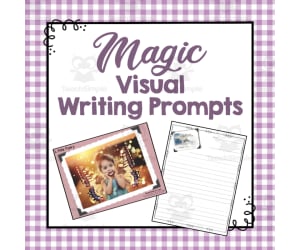
Writing Project: Magical Visual Writing Prompts - Photo Ideas
ELA, Writing, Creative Writing, Grade 2, 3, 4, 5, Writing Prompts, Worksheets & Printables
Magical Visual Writing Prompts encourage students to let their imaginations run wild. This resource includes 26 magical photo prompt cards showing images like unicorns and magical forests. Students study an intriguing photo then write a story, description, or caption based on what they see. Use for individual, small group, or whole class creative writing. Differentiate by allowing students to select a photo to spark ideas. Challenge advanced writers to pen multi-paragraph stories while early writers add simple captions. Extend learning using included writing templates tailored to developing writers. Whimsical visuals coupled with open-ended prompts stretch young imaginations while building essential narrative writing skills. Check out other writing resources like summer nonfiction articles, sequencing projects , and seasonal displays from Simply Schoolgirl.
Author Simply Schoolgirl
Tags Writing Prompts, Writing Projects, Visual Writing, Writing Pages, Creative Writing, Photo Templates, Small Group, Early Finisher, Photo Ideas

Internet Reading Comprehension Passage - Cored Ed Encyclopedia
ELA, Language Development, Resources for Teachers, Reading Comprehension, Reading, Pre-Reading, Writing, Science, Technology, Strategies, Grade 2, 3, 4, 5, Worksheets & Printables, Worksheets, Teacher Tools, Centers, Activities, Writing Prompts, Assessments, Tests, Quizzes and Tests, Quizzes
This Internet reading comprehension contains the following: Pre-Reading Trivia Students will write down one thing they already know about the subject and then read five more facts and discuss. These facts are fun, and the students will enjoy learning about the subject before reading more. Reading Passage The text is a high-interest reading passage with set paragraphs, roughly three to four paragraphs long. It contains a variety of themes about the topic, anywhere from history to technology. The passage is between 250 and 350 words in length. Mixed Questions The first question page contains four multiple-choice questions, each with a choice of four answers, and three written response questions that require a sentence or two from the student. Vocabulary Questions Practice seven key words from the text in this section across two activities. First section is scrambled words where students will unscramble three words given a clue for each. The second section is a word to meaning matching activity. Creative Writing In this question, the student will be required to write a five to eight sentence paragraph on a question related to the topic. Extension Activities This page is optional for fast finishers or to take home. There are several activities, each one requiring a different skill. Do some, do none, do all, completely optional - but you will feel reassured knowing every possibility is planned for. Answer Key There are answers for the multiple-choice questions, written response questions have sample answers, vocabulary answers and if there is a summary question then a sample summary will be provided as well. FULL CATALOG OF DOWNLOAD LINKS AND ENCYCLOPEDIA INDEX HERE Lesson Snapshot Title: Internet Genre: Nonfiction (informational text) Subject: Reading (Informational Text) / Technology Primary Topic: How the Internet works and how it began Estimated Guided Reading Level (A–Z): Q What This Lesson Teaches Best Defines the Internet as a worldwide system of connected computer networks that use shared rules (TCP/IP) to communicate. Explains how messages travel by being split into small chunks called packets that can take different routes and arrive out of order. Describes what routers do: forward packets between networks by choosing paths toward the right destination. Builds background knowledge about early Internet history (ARPANET, the 1969 “lo” message, and the 1983 switch to TCP/IP). Clarifies the difference between the Internet and the World Wide Web, introducing hypertext and using a browser to view linked pages. Learning Goals Students can explain what the Internet is using details from the passage. Students can describe how a message is broken into packets and why packets can arrive out of order. Students can identify what a router does when packets travel between networks. Students can summarize key early-history facts about ARPANET, including the 1969 message and the 1983 switch to TCP/IP. Students can describe one difference between the Internet and the World Wide Web based on the passage. Key Vocabulary From the Text TCP/IP — shared rules networks use to communicate. packets — small chunks of a message that travel separately. routers — devices that forward packets between networks. ARPANET — an early packet-switched network before today’s Internet. hypertext — linked pages you view with a browser. Cored Ed Encyclopedia Overview The Cored Ed Encyclopedia is a weekly series of lessons that you can pick up and use right away. These short readings fit into whatever time you have available. Each one includes a warm-up, a reading, and a set of questions, but it’s flexible — you can do just the reading, the full lesson, or skip the writing section if you need to. Each lesson focuses on a single topic so students don’t get lost. The writing is clear but never childish, making it perfect for grades two through five. Topics range from animals and science to history, inventions, and everyday things. No matter the level of the student, everyone should take away at least one new idea or fact from each lesson. The materials are easy to print, easy to explain, and require no setup. They work well for whole-class teaching, partner work, or independent study.
Author Cored Education
Rating
Tags Vocabulary, Spelling, Reading Comprehension, Reading Passages, Reading, Creative Writing, Reading Strategies, Writing Prompts, Internet, Technology

Inventions Writing Prompt Bundle
ELA, Social Studies, Writing, Creative Writing, History, History: USA, Grade 3, 4, 5, 6, Writing Prompts, Worksheets & Printables
If you’re ready to take back the love for writing in your classroom, my writing prompt bundles can do just that! These unique bundles combine creativity, writing tips, and variety that is certain to engage your students! What is this? This is an Inventions Writing Prompt Bundle that is a 34-page printable accessible as a PDF file. Within this bundle, you will receive “writing hacks” that are filled with the do’s and don’ts of writing as well as proofreading tips. Each writing page will present students with a real invention tow rite about it. There is also a blank page at the end. How do I implement the Inventions Informative Writing Prompt Bundle? Whether you have just introduced informative writing, or you are reviewing this writing skill, there is an opportunity to utilize this bundle. You should print off the writing tips page for each student. For the writing pages included in the bundle, you can: -Print off all the pages, -Print off select pages if you can only implement a few at a time, or -Have students pick pages that interest them. When students have the writing pages they are going to complete, students can work with a partner or small group to brainstorm and come up with ideas. Being able to work with classmates can often take the intimidation out of the writing process. Give students time to write down their ideas, which my brainstorming sheets can help with. When students are ready, they can begin their writing piece! I hope you enjoy! Here are more of my resources for you to enjoy: “A New Kind of Wild” Book Companion Misty Copeland No Prep Packet 2nd Grade CKLA Color by Code Unit 3 ABC Countdown Calendar and Reflection Book Chadwick Boseman No Prep Packet “Jabari Jumps” Book Companion You can find more resources at my storefront here: Learn Teach Create
Author Learn Teach Create
Tags Inventions, History Timeline, Historical Events, History Writing, Writing Prompts, Informative Writing, Expository Writing, Graphic Organizers

February Weekly Interactive Writing Prompts
ELA, Writing, Creative Writing, Grade 3, 4, 5, 6, Writing Prompts, Worksheets & Printables
Introducing February Weekly Interactive Writing Prompts, a resource designed to inspire young writers all month long. This PowerPoint file contains writing prompts tailored for grades 3-6 that aim to spark students' creativity in fun ways. With 4 sets of writing prompts, learners will be fully engaged each week of February. Every set has 3 unique prompts for students to choose from. Learners can type their responses directly onto the prompt slides. These prompts can be easily customized or replaced to align with specific curriculum goals. This versatile resource works for whole group, small group, or independent practice. Assign to Google Classroom for seamless digital distribution and collection of student work. Students will love flexing their writing skills with these imaginative prompts!
Author The Language of Learning
Tags Creative Writing, February, Writing Prompts, Winter, Groundhog Day

Jets Reading Comprehension Passage - Cored Ed Encyclopedia
ELA, Language Development, Resources for Teachers, Reading Comprehension, Reading, Pre-Reading, Science, Technology, Writing, Strategies, Grade 2, 3, 4, 5, Worksheets & Printables, Worksheets, Teacher Tools, Centers, Activities, Writing Prompts, Assessments, Tests, Quizzes and Tests, Quizzes
This jets reading comprehension contains the following: Visualize on the Cover (Teacher Read Aloud Script) Start your lesson by taking a few moments to visualize the topic and share thoughts or feelings about it. Pre-Reading Trivia Students will write down one thing they already know about the subject and then read five more facts and discuss. These facts are fun, and the students will enjoy learning about the subject before reading more. Reading Passage The text is a high-interest reading passage with set paragraphs, roughly three to four paragraphs long. It contains a variety of themes about the topic, anywhere from history to technology. The passage is between 250 and 350 words in length. Mixed Questions The first question page contains four multiple-choice questions, each with a choice of four answers, and three written response questions that require a sentence or two from the student. Vocabulary Questions Practice seven key words from the text in this section across two activities. First section is scrambled words where students will unscramble three words given a clue for each. The second section is a word to meaning matching activity. Creative Writing In this question, the student will be required to write a five to eight sentence paragraph on a question related to the topic. Extension Activities This page is optional for fast finishers or to take home. There are several activities, each one requiring a different skill. Do some, do none, do all, completely optional - but you will feel reassured knowing every possibility is planned for. Answer Key There are answers for the multiple-choice questions, written response questions have sample answers, vocabulary answers and if there is a summary question then a sample summary will be provided as well. FULL CATALOG OF DOWNLOAD LINKS AND ENCYCLOPEDIA INDEX HERE Lesson Snapshot Title: Jets Genre: Nonfiction (Informational Text) Subject: Science & Technology / Reading (Informational Text) Primary Topic: How jets move, engine parts, and high flight Estimated Guided Reading Level (A–Z): Q What This Lesson Teaches Best Explains the big idea behind jets using an action-and-reaction example (like a blown-up balloon zipping across a room). Describes how a jet engine makes thrust by pulling air in, squeezing it, heating it, and blasting it out the back. Builds technical understanding of engine parts and jobs (inlet, compressor, turbine, exhaust nozzle). Connects jet flight to conditions in the sky (air is thinner and smoother high above clouds; contrails can form when water vapour freezes). Adds brief history context about early jet-engine work and the first turbojet-powered flight date and plane name. Learning Goals Explain how a jet airplane is pushed forward when air or hot gas rushes out the back. Describe what happens inside a jet engine from the inlet to the exhaust nozzle. Identify the jobs of the compressor and turbine using details from the passage. Retell key history details about early jet designs and the first turbojet-powered flight mentioned. Describe what the air is like high above clouds and how that relates to jet travel. Explain how contrails can form according to the text. Key Vocabulary From the Text inlet — the front opening where air is pulled in. compressor — a part that squeezes air so it is packed tight. turbine — a wheel that takes energy from rushing gas. thrust — the push that moves an airplane forward. contrails — white lines that can form when water vapour freezes. Cored Ed Encyclopedia Overview The Cored Ed Encyclopedia is a weekly series of lessons that you can pick up and use right away. These short readings fit into whatever time you have available. Each one includes a warm-up, a reading, and a set of questions, but it’s flexible — you can do just the reading, the full lesson, or skip the writing section if you need to. Each lesson focuses on a single topic so students don’t get lost. The writing is clear but never childish, making it perfect for grades two through five. Topics range from animals and science to history, inventions, and everyday things. No matter the level of the student, everyone should take away at least one new idea or fact from each lesson. The materials are easy to print, easy to explain, and require no setup. They work well for whole-class teaching, partner work, or independent study.
Author Cored Education
Rating
Tags Vocabulary, Spelling, Reading Comprehension, Reading Passages, Reading, Creative Writing, Reading Strategies, Writing Prompts, Technology, Jets
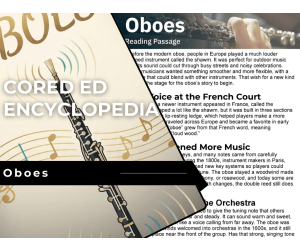
Oboes Reading Comprehension Passage - Cored Ed Encyclopedia
ELA, Language Development, Resources for Teachers, Reading Comprehension, Reading, Pre-Reading, Writing, Strategies, Music, Creative Arts, Grade 2, 3, 4, 5, Worksheets & Printables, Worksheets, Teacher Tools, Centers, Activities, Writing Prompts, Assessments, Tests, Quizzes and Tests, Quizzes
This oboes reading comprehension contains the following: Visualize on the Cover (Teacher Read Aloud Script) Start your lesson by taking a few moments to visualize the topic and share thoughts or feelings about it. Pre-Reading Trivia Students will write down one thing they already know about the subject and then read five more facts and discuss. These facts are fun, and the students will enjoy learning about the subject before reading more. Reading Passage The text is a high-interest reading passage with set paragraphs, roughly three to four paragraphs long. It contains a variety of themes about the topic, anywhere from history to technology. The passage is between 250 and 350 words in length. Mixed Questions The first question page contains four multiple-choice questions, each with a choice of four answers, and three written response questions that require a sentence or two from the student. Vocabulary Questions Practice seven key words from the text in this section across two activities. First section is scrambled words where students will unscramble three words given a clue for each. The second section is a word to meaning matching activity. Creative Writing In this question, the student will be required to write a five to eight sentence paragraph on a question related to the topic. Extension Activities This page is optional for fast finishers or to take home. There are several activities, each one requiring a different skill. Do some, do none, do all, completely optional - but you will feel reassured knowing every possibility is planned for. Includes summary writting question. Answer Key There are answers for the multiple-choice questions, written response questions have sample answers, vocabulary answers and if there is a summary question then a sample summary will be provided as well. FULL CATALOG OF DOWNLOAD LINKS AND ENCYCLOPEDIA INDEX HERE Lesson Snapshot Title: Oboes Genre: Nonfiction (informational text) Subject: Music (Performing Arts) / Reading Informational Text Primary Topic: How the oboe developed and works Estimated Guided Reading Level (A–Z): S Support pages included: Pre-reading trivia, mixed questions, vocabulary activities, creative writing, extension activities, and an answer key. Support-page QA note: The support page uses “orchestra” (singular) in a scrambled-word item, while the passage uses “orchestras” (plural). What This Lesson Teaches Best How the modern oboe developed from earlier instruments, including the shawm and hautbois , across time in Europe. How a double reed starts the oboe’s sound through vibrating and buzzing. How adding more keys helped players move faster and play more notes in tune. Why the oboe often gives the tuning note in an orchestra (clear, steady sound). Using section headings to organize and locate key facts in an informational passage. Learning Goals Students will be able to describe how the shawm relates to the modern oboe. Students will be able to explain what the double reed does to start the oboe’s sound. Students will be able to identify how the hautbois was different from the shawm. Students will be able to explain why new key systems were designed in the 1800s. Students will be able to describe why the oboe often gives the tuning note in orchestras. Students will be able to use the passage’s headings to find information quickly. Key Vocabulary From the Text shawm — a loud older double-reed instrument played long ago. hautbois — an early French version of the oboe. double reed — two reeds that vibrate to start the sound. tuning — matching the same pitch before playing together. blend — mix smoothly with other instruments. Cored Ed Encyclopedia Overview The Cored Ed Encyclopedia is a weekly series of lessons that you can pick up and use right away. These short readings fit into whatever time you have available. Each one includes a warm-up, a reading, and a set of questions, but it’s flexible — you can do just the reading, the full lesson, or skip the writing section if you need to. Each lesson focuses on a single topic so students don’t get lost. The writing is clear but never childish, making it perfect for grades two through five. Topics range from animals and science to history, inventions, and everyday things. No matter the level of the student, everyone should take away at least one new idea or fact from each lesson. The materials are easy to print, easy to explain, and require no setup. They work well for whole-class teaching, partner work, or independent study.
Author Cored Education
Rating 5
Tags Vocabulary, Spelling, Reading Comprehension, Reading Passages, Reading, Creative Writing, Reading Strategies, Writing Prompts, Oboes, Music

Owls Reading Comprehension Passage - Cored Ed Encyclopedia
ELA, Language Development, Resources for Teachers, Reading Comprehension, Reading, Pre-Reading, Writing, Science, Animals, Life Sciences, Grade 2, 3, 4, 5, Worksheets & Printables, Worksheets, Teacher Tools, Centers, Activities, Writing Prompts, Assessments, Tests, Quizzes and Tests, Quizzes
This owls reading comprehension contains the following: Visualize on the Cover (Teacher Read Aloud Script) Start your lesson by taking a few moments to visualize the topic and share thoughts or feelings about it. COMPANION VIDEO NOW AVAILABLE (EMBEDDED AFTER PREVIEW PICTURES IN PRODUCT DESCRIPTION) Pre-Reading Trivia Students will write down one thing they already know about the subject and then read five more facts and discuss. These facts are fun, and the students will enjoy learning about the subject before reading more. Reading Passage The text is a high-interest reading passage with set paragraphs, roughly three to four paragraphs long. It contains a variety of themes about the topic, anywhere from history to technology. The passage is between 250 and 350 words in length. Mixed Questions The first question page contains four multiple-choice questions, each with a choice of four answers, and three written response questions that require a sentence or two from the student. Vocabulary Questions Practice seven key words from the text in this section across two activities. First section is scrambled words where students will unscramble three words given a clue for each. The second section is a word to meaning matching activity. Creative Writing In this question, the student will be required to write a five to eight sentence paragraph on a question related to the topic. Extension Activities This page is optional for fast finishers or to take home. There are several activities, each one requiring a different skill. Do some, do none, do all, completely optional - but you will feel reassured knowing every possibility is planned for. Includes summary writting question. Answer Key There are answers for the multiple-choice questions, written response questions have sample answers, vocabulary answers and if there is a summary question then a sample summary will be provided as well. FULL CATALOG OF DOWNLOAD LINKS AND ENCYCLOPEDIA INDEX HERE Lesson Snapshot Title: Owls Genre: Nonfiction (informational text) Subject: Life Science (animals) / Reading Informational Text Primary Topic: How owls hunt, live, and help ecosystems Estimated Guided Reading Level (A–Z): S What This Lesson Teaches Best How owls are birds of prey in a group called Strigiformes , with more than 200 kinds , and most hunt alone and mostly at night. How an owl’s facial disc works “like a satellite dish” to gather tiny sounds and guide them toward its ears. How owl bodies help hunting: wing feathers let air pass quietly, and owls turn their heads (nearly 270 degrees ) because their eyes stay fixed. How scientists sort owls into two main families— Tytonidae and Strigidae —and how owls live in many habitats worldwide (with a few exceptions). How pellets and nest boxes connect owls to people today (learning what was eaten, helping keep mouse numbers down, and supporting safe nesting). Learning Goals Students will describe what the text says about how many kinds of owls there are and when most owls hunt. Students will explain how a facial disc helps an owl find prey using details from the passage. Students will describe two body features that help owls hunt quietly and accurately. Students will identify the two main owl families named in the text and one detail about each. Students will explain what an owl pellet is and how it helps students and scientists learn. Students will name habitats where owls can live and describe one way people can help owls near fields and barns. Key Vocabulary From the Text Strigiformes — a group name for owls. facial — related to the face. parliament — a name for a group of owls. Tytonidae — the barn owl family. pellets — dry bundles of fur and bones owls cough up. Cored Ed Encyclopedia Overview The Cored Ed Encyclopedia is a weekly series of lessons that you can pick up and use right away. These short readings fit into whatever time you have available. Each one includes a warm-up, a reading, and a set of questions, but it’s flexible — you can do just the reading, the full lesson, or skip the writing section if you need to. Each lesson focuses on a single topic so students don’t get lost. The writing is clear but never childish, making it perfect for grades two through five. Topics range from animals and science to history, inventions, and everyday things. No matter the level of the student, everyone should take away at least one new idea or fact from each lesson. The materials are easy to print, easy to explain, and require no setup. They work well for whole-class teaching, partner work, or independent study.
Author Cored Education
Rating
Tags Vocabulary, Spelling, Reading Comprehension, Reading Passages, Reading, Creative Writing, Reading Strategies, Writing Prompts, Owls, Life Science
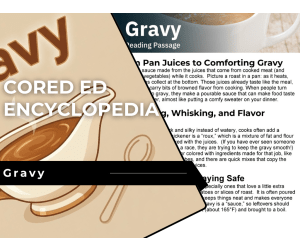
Gravy Reading Comprehension Passage - Cored Ed Encyclopedia
ELA, Language Development, Resources for Teachers, Reading Comprehension, Reading, Pre-Reading, Writing, Strategies, Common Core, ESL, Grade 2, 3, 4, 5, Worksheets & Printables, Worksheets, Teacher Tools, Centers, Activities, Writing Prompts, Assessments, Tests, Quizzes and Tests, Quizzes
This gravy reading comprehension contains the following: Pre-Reading Trivia Students will write down one thing they already know about the subject and then read five more facts and discuss. These facts are fun, and the students will enjoy learning about the subject before reading more. Reading Passage The text is a high-interest reading passage with set paragraphs, roughly three to four paragraphs long. It contains a variety of themes about the topic, anywhere from history to technology. The passage is between 250 and 350 words in length. Mixed Questions The first question page contains four multiple-choice questions, each with a choice of four answers, and three written response questions that require a sentence or two from the student. Creative Writing In this question, the student will be required to write a five to eight sentence paragraph on a question related to the topic. Extension Activities This page is optional for fast finishers. If there are five to ten minutes left at the end of the lesson, the student can choose one of three activities, each one requiring a different skill. Answer Key There are answers for the multiple-choice questions and three written response questions have sample answers. FULL CATALOG OF DOWNLOAD LINKS AND ENCYCLOPEDIA INDEX HERE Cored Ed Encyclopedia Overview The Cored Ed Encyclopedia is a weekly series of lessons that you can pick up and use right away. These short readings fit into whatever time you have available. Each one includes a warm-up, a reading, and a set of questions, but it’s flexible — you can do just the reading, the full lesson, or skip the writing section if you need to. Each lesson focuses on a single topic so students don’t get lost. The writing is clear but never childish, making it perfect for grades two through five. Topics range from animals and science to history, inventions, and everyday things. No matter the level of the student, everyone should take away at least one new idea or fact from each lesson. The materials are easy to print, easy to explain, and require no setup. They work well for whole-class teaching, partner work, or independent study.
Author Cored Education
Rating
Tags Vocabulary, Spelling, Reading Comprehension, Reading Passages, Cored Encyclopedia, Facts, Reading, Creative Writing, Gravy, Food
Pumpkins Reading Comprehension Passage - Cored Ed Encyclopedia
ELA, Language Development, Resources for Teachers, Reading Comprehension, Reading, Pre-Reading, Writing, Nature & Plants, Life Sciences, Science, Grade 2, 3, 4, 5, Worksheets & Printables, Worksheets, Teacher Tools, Centers, Activities, Writing Prompts, Assessments, Tests, Quizzes and Tests, Quizzes
This pumpkins reading comprehension includes: Visualization (on the front cover) Start your lesson by taking a minute to think and share something about the topic. Read the script aloud (slowly), perhaps prepare some music or sound effects. Student close their eyes and let their imaginations wander. Students open their eyes, read the question aloud and give them a few minutes to complete. Ask a few students to share or keep answers until the end to compare with what they learn in the passage. Quick pause—thousands of Cored Education products are included with your TeachSimple membership. Download links and encyclopedia index available here. Pre-Reading Trivia Students will write down one thing they already know about the subject and then read five more facts and discuss. These facts are fun, and the students will enjoy learning about the subject before reading more. Give 1 minute for students to write what they already know (no pressure—best guess is fine). Read the five facts together. After each fact, do ask a student for their opinion, was it surprising? Set a purpose by asking students to highlight/underline one fact they want to learn more about during the reading. Reading Passage The text is a high-interest reading passage with set paragraphs, roughly three to four paragraphs long. It contains a variety of themes about the topic, anywhere from history to technology. The passage is between 250 and 350 words in length. First, ask students to look at the headings and see what they’ll learn about today. What do they know about the topic/heading? First read options: Teacher read-aloud (best for support). Partner reading (paragraph by paragraph). While reading, students underline important details, and vocabulary words they think may come up in the questions section. Mixed Questions The first question page contains four multiple-choice questions, each with a choice of four answers, and three written response questions that require a sentence or two from the student. Students complete the mcqs first independently, then review quickly as a class. For the 3 written responses, try to get students giving the answer with some form of evidence: “I think ___ because the text says ___.” If students get stuck, send them back to check the passage. Vocabulary Questions Practice seven key words from the text in this section across two activities. First section is scrambled words where students will unscramble three words given a clue for each. The second section is a word to meaning matching activity. Before starting, have some students read out words they underlined in the passage. Ask students to say the word and read aloud the sentence(s) around each word. Ask students to do scrambled words and the matching exercise in pairs then go through answers as a class. For the scrambled spelling task, get four pairs to come up to the board and write the words for extra practice with the other student reading out the clue. For the matching task, prompt students to give full sentences: “I matched ___ with ___ because ___.” Creative Writing In this question, the student will be required to write a five to eight sentence paragraph on a question related to the topic. Before starting, ask students write down 3 key ideas they are going to include in their piece. Ask students for ideas to share around the class to help those struggling. Pro writing expectations: 5–8 sentences At least 2 facts or details from the passage At least 2 vocabulary words from the previous page Students read their paragraphs while classmates listen for facts and vocabulary words. Extension Activities This page is optional for fast finishers or to take home. There are several activities, each one requiring a different skill. Do some, do none, do all, completely optional - but you will feel reassured knowing every possibility is planned for. Includes summary writting question. Answer Key There are answers for the multiple-choice questions, written response questions have sample answers, vocabulary answers and if there is a summary question then a sample summary will be provided as well. This lesson is also great for independent work , assessments , or sub plans as students can complete the it with minimal support. Lesson Snapshot Title: Pumpkins Genre: Nonfiction (informational text) Subject: Life Science (plants) / Social Studies (culture & traditions) / Reading Informational Text Primary Topic: How pumpkins changed, spread, and are used Estimated Guided Reading Level (A–Z): Q What This Lesson Teaches Best How pumpkins became larger and tougher over many seasons when people saved the best seeds . How pumpkin seeds spread to new places as Indigenous farmers carried seeds and later pumpkins traveled across oceans . How pumpkin flowers and bees connect to pumpkin growth (bees move pollen ; then pumpkins can begin to swell). How pumpkins connect to fall traditions and food, including jack-o’-lanterns , pies , roasted seeds , and soups . How headings help organize information (seed change, travel, pollination/growth, and uses). Learning Goals Students will explain how saving the best seeds changed pumpkins over many seasons. Students will describe how pumpkin seeds traveled to new places and who carried them. Students will describe what a pumpkin patch looks like in summer using details from the passage. Students will explain how bees help a pumpkin begin to grow, based on the passage. Students will identify two ways people use pumpkins today that are named in the text. Key Vocabulary From the Text cultivated — grown by people with care, not wild. genus — a science group name for related plants. pollen — powder bees move from flower to flower. immigrants — people who move to a new country to live. rinds — thick outer skins of pumpkins. FULL CATALOG OF DOWNLOAD LINKS AND ENCYCLOPEDIA INDEX HERE
Author Cored Education
Rating
Tags Vocabulary, Spelling, Reading Comprehension, Reading Passages, Reading, Creative Writing, Reading Strategies, Writing Prompts, Pumpkins, Life Science

The Groundhog's Secret Writing Prompt - Groundhog Day
Creative Arts, Graphic Arts, ELA, Writing, Creative Writing, Holiday & Seasonal, Months, February, Kindergarten, Preschool, Grade 1, 2, 3, 4, 5, Worksheets & Printables, Writing Prompts, Worksheets, Coloring Pages
Ready to have your students laugh while they write? The Groundhog's Secret Adventure Writing Prompt is here to save the day! Forget about the usual "spring is coming" routine—this prompt has students team up with a groundhog on a top-secret mission. Their mission? To keep the world from being trapped in an eternal winter. It's a humorous twist on Groundhog Day that gets the creative juices flowing and the funny bones shaking. Ways to Use: Classroom Fun: Have students write solo or in pairs to create their own hilarious adventure. Creative Writing Practice: Perfect for a no-pressure, fun assignment that allows students to stretch their writing muscles. Groundhog Day Fiasco: Great for classroom celebrations or as part of your Groundhog Day activities—because who doesn’t love a secretive, heroic groundhog? Bonus Points: Hand this prompt out for homework or as extra credit for students who like a good laugh and a challenge. Advantages: Boosts Creativity: Your students will invent worlds where groundhogs save the day, which is a lot more exciting than learning about weather patterns. Teaches Humor: Students get to write funny stories and discover how humor makes any adventure more enjoyable. Easy to Use: Just print it out and watch the groundhog magic unfold. Endless Fun: Who knew Groundhog Day could be this entertaining?
Author Ponder Palette Plazza
Tags Groundhog, Groundhog Day, Groundhog Day Writing, Groundhog Day Writing Prompts, Writing Worksheets, Writing Activities, Winter Activities

Creative Writing Prompts Grade 3 | The Mysterious Castle
Creative Writing, Writing, ELA, Grade 2, 3, 4, Writing Prompts, Worksheets & Printables
Creative Writing Prompts Grade 3 | The Mysterious Castle Get a creative writing prompt resource for 3rd grade on the topic of planets. What does this resource include? This resource contains 8 creative writing prompts on planets-related topics, each with sentence starters for each task, guiding questions to support ideas, word banks with helpful vocabulary, separate writing pages with plenty of space, “How to Write a Story” guide (beginning, middle, end), 3 example stories. Each reading passage is unique. The invention topics were carefully selected and each passage is accompanied by appropriate graphics. What is it suitable for? The material is suitable for English language arts classes. It is ideally suited for 3rd grade. This material is also suitable for weaker 4th-grade classes or particularly strong 2nd-grade classes. It is suitable for teachers looking for teaching materials that can be used immediately. No tedious adapting or formatting required. Simply print it out and use it directly in class. It is suitable for various teaching formats: - writing workshop - literacy centers - independent work - early finishers - homework What topics does the reading comprehension cover? 1 The Castle on the Hill 2 The Locked Door 3 The Search Through the Castle 4 Behind the Old Wall 5 The Unexpected Resident 6 Books Full of Magic 7 The Clock with a Secret 8 The Hidden Room In addition, there are two advanced-level problems (easy and hard). The material is provided as a PDF file to make it easy to print and use in class. It is part of a larger series. If you like this material, you can explore creative writing prompt resources on a variety of other topics in my shop that will enrich your lessons. In addition to creative writing prompts, I also offer reading comprehension, math word problems, informational texts, and reading tests.
Author Smart Learning Classroom
Rating
Tags Creative Writing, Writing, Pet, Animal, Writing Prompts, Grade 3, Writing Workshop, Story Writing, Castle, Mysterious
Quiz Shows Reading Comprehension Passage - Cored Ed Encyclopedia
ELA, Language Development, Reading Comprehension, Reading, Pre-Reading, Writing, Strategies, Vocabulary, History, Social Studies, Grade 2, 3, 4, 5, Worksheets & Printables, Worksheets, Teacher Tools, Centers, Activities, Writing Prompts, Assessments, Quizzes and Tests, Quizzes, Lesson Plans
This quiz shows reading comprehension includes: Visualization (on the front cover) Start your lesson by taking a minute to think and share something about the topic. Read the script aloud (slowly), perhaps prepare some music or sound effects. Student close their eyes and let their imaginations wander. Students open their eyes, read the question aloud and give them a few minutes to complete. Ask a few students to share or keep answers until the end to compare with what they learn in the passage. Quick pause—thousands of Cored Education products are included with your TeachSimple membership. Download links and encyclopedia index available here. Pre-Reading Trivia Students will write down one thing they already know about the subject and then read five more facts and discuss. These facts are fun, and the students will enjoy learning about the subject before reading more. Give 1 minute for students to write what they already know (no pressure—best guess is fine). Read the five facts together. After each fact, do ask a student for their opinion, was it surprising? Set a purpose by asking students to highlight/underline one fact they want to learn more about during the reading. Reading Passage The text is a high-interest reading passage with set paragraphs, roughly three to four paragraphs long. It contains a variety of themes about the topic, anywhere from history to technology. The passage is between 250 and 350 words in length. First, ask students to look at the headings and see what they’ll learn about today. What do they know about the topic/heading? First read options: Teacher read-aloud (best for support). Partner reading (paragraph by paragraph). While reading, students underline important details, and vocabulary words they think may come up in the questions section. Mixed Questions The first question page contains four multiple-choice questions, each with a choice of four answers, and three written response questions that require a sentence or two from the student. Students complete the mcqs first independently, then review quickly as a class. For the 3 written responses, try to get students giving the answer with some form of evidence: “I think ___ because the text says ___.” If students get stuck, send them back to check the passage. Vocabulary Questions Practice seven key words from the text in this section across two activities. First section is scrambled words where students will unscramble three words given a clue for each. The second section is a word to meaning matching activity. Before starting, have some students read out words they underlined in the passage. Ask students to say the word and read aloud the sentence(s) around each word. Ask students to do scrambled words and the matching exercise in pairs then go through answers as a class. For the scrambled spelling task, get four pairs to come up to the board and write the words for extra practice with the other student reading out the clue. For the matching task, prompt students to give full sentences: “I matched ___ with ___ because ___.” Creative Writing In this question, the student will be required to write a five to eight sentence paragraph on a question related to the topic. Before starting, ask students write down 3 key ideas they are going to include in their piece. Ask students for ideas to share around the class to help those struggling. Pro writing expectations: 5–8 sentences At least 2 facts or details from the passage At least 2 vocabulary words from the previous page Students read their paragraphs while classmates listen for facts and vocabulary words. Extension Activities This page is optional for fast finishers or to take home. There are several activities, each one requiring a different skill. Do some, do none, do all, completely optional - but you will feel reassured knowing every possibility is planned for. Includes summary writting question. Answer Key There are answers for the multiple-choice questions, written response questions have sample answers, vocabulary answers and if there is a summary question then a sample summary will be provided as well. Lesson Plan Included Customized lesson plan for this lesson is included. Lesson Snapshot Title: Quiz Shows Genre: Nonfiction (informational reading passage) Subject: Reading (Informational Text) / Social Studies (media history) Primary Topic: Quiz shows from radio to TV to podcasts Estimated Guided Reading Level (A–Z): R What This Lesson Teaches Best How quiz shows changed over time, from radio “question games” to television and modern podcasts. Key historical milestones and examples (late 1930s radio programs; 1938 BBC spelling quiz on TV; 1950s U.S. daytime quiz/game shows). Understanding fairness and trust in media (some shows were “rigged,” followed by investigations, hearings, and stronger rules). Text structure practice using section headings to track ideas (early radio → TV era → fairness tested → today). Strong built-in supports that match the passage (questions, vocabulary work, writing prompt, and extensions align to passage details). Learning Goals Students will describe how people participated in quiz shows before TVs were common, using details from the passage. Students will explain how television changed quiz shows, including what it was like for contestants under cameras and lights. Students will explain what “rigged” means in the passage and why quiz shows had to “rebuild trust.” Students will identify ways quiz shows appear today (board, screen at home, or podcast), based on the passage. Students will use the section headings to state the main idea of each section and support it with one detail. Key Vocabulary From the Text contestants — people who compete in a game rigged — secretly fixed so it is not fair producers — people who run and plan a show investigations — careful searches to find out what happened genre — a type or category of show FULL CATALOG OF DOWNLOAD LINKS AND ENCYCLOPEDIA INDEX HERE
Author Cored Education
Rating
Tags Vocabulary, Reading Comprehension, Reading Passages, Reading, Creative Writing, Reading Strategies, Writing Prompts, Lesson Plans, Quiz Shows, History
Ancient Egypt Reading Comprehension Passage - Cored Ed Encyclopedia
ELA, Language Development, Reading Comprehension, Reading, Social Studies, History, History: Ancient, Writing, Pre-Reading, Vocabulary, Grade 2, 3, 4, 5, Worksheets & Printables, Worksheets, Teacher Tools, Centers, Activities, Writing Prompts, Assessments, Quizzes and Tests, Quizzes, Lesson Plans
This ancient Egypt reading comprehension with lesson plan includes: Visualization (on the front cover) Start your lesson by taking a minute to think and share something about the topic. Read the script aloud (slowly), perhaps prepare some music or sound effects. Student close their eyes and let their imaginations wander. Students open their eyes, read the question aloud and give them a few minutes to complete. Ask a few students to share or keep answers until the end to compare with what they learn in the passage. Quick pause—thousands of Cored Education products are included with your TeachSimple membership. Download links and encyclopedia index available here. Pre-Reading Trivia Students will write down one thing they already know about the subject and then read five more facts and discuss. These facts are fun, and the students will enjoy learning about the subject before reading more. Give 1 minute for students to write what they already know (no pressure—best guess is fine). Read the five facts together. After each fact, do ask a student for their opinion, was it surprising? Set a purpose by asking students to highlight/underline one fact they want to learn more about during the reading. Reading Passage The text is a high-interest reading passage with set paragraphs, roughly three to four paragraphs long. It contains a variety of themes about the topic, anywhere from history to technology. The passage is between 250 and 350 words in length. First, ask students to look at the headings and see what they’ll learn about today. What do they know about the topic/heading? First read options: Teacher read-aloud (best for support). Partner reading (paragraph by paragraph). While reading, students underline important details, and vocabulary words they think may come up in the questions section. Mixed Questions The first question page contains four multiple-choice questions, each with a choice of four answers, and three written response questions that require a sentence or two from the student. Students complete the mcqs first independently, then review quickly as a class. For the 3 written responses, try to get students giving the answer with some form of evidence: “I think ___ because the text says ___.” If students get stuck, send them back to check the passage. Vocabulary Questions Practice seven key words from the text in this section across two activities. First section is scrambled words where students will unscramble three words given a clue for each. The second section is a word to meaning matching activity. Before starting, have some students read out words they underlined in the passage. Ask students to say the word and read aloud the sentence(s) around each word. Ask students to do scrambled words and the matching exercise in pairs then go through answers as a class. For the scrambled spelling task, get four pairs to come up to the board and write the words for extra practice with the other student reading out the clue. For the matching task, prompt students to give full sentences: “I matched ___ with ___ because ___.” Creative Writing In this question, the student will be required to write a five to eight sentence paragraph on a question related to the topic. Before starting, ask students write down 3 key ideas they are going to include in their piece. Ask students for ideas to share around the class to help those struggling. Pro writing expectations: 5–8 sentences At least 2 facts or details from the passage At least 2 vocabulary words from the previous page Students read their paragraphs while classmates listen for facts and vocabulary words. Extension Activities This page is optional for fast finishers or to take home. There are several activities, each one requiring a different skill. Do some, do none, do all, completely optional - but you will feel reassured knowing every possibility is planned for. Includes summary writting question and additional facts. Answer Key There are answers for the multiple-choice questions, written response questions have sample answers, vocabulary answers and if there is a summary question then a sample summary will be provided as well. Lesson Plan Included Customized lesson plan for this lesson is included. Lesson Snapshot Title: Ancient Egypt Genre: Nonfiction (informational passage) Subject: Social Studies Primary Topic: Nile flooding, kingdoms, pyramids, and writing Estimated Guided Reading Level (A–Z): T What This Lesson Teaches Best How the Nile River flooding left dark mud that helped farming and food growth. The meaning of Kemet (“black land”) and why it described the fertile farming strip. How leaders joined Upper Egypt and Lower Egypt into one kingdom, with the pharaoh as a symbol of unity. Key achievements in building and record-keeping (pyramids, scribes, hieroglyphs, papyrus, grain and taxes). How the Rosetta Stone helped scholars decode hieroglyphs by showing the same text in three kinds of writing. Learning Goals Explain how the Nile River’s yearly flooding helped people grow food. Describe why people called the fertile farm area Kemet, or “black land.” Identify ways ancient Egyptians organized and strengthened their kingdom (sharing water, one ruler, a capital). Describe how pyramids changed over time (step pyramid for Djoser and later pyramids at Giza). Explain how scribes used hieroglyphs and papyrus to keep records of grain and taxes. Describe how the Rosetta Stone led to reading hieroglyphs again. Key Vocabulary From the Text fertile — able to grow lots of plants. pharaoh — ruler of ancient Egypt. hieroglyphs — picture symbols used for writing. papyrus — plant paper used for writing. decree — an official order from leaders. FULL CATALOG OF DOWNLOAD LINKS AND ENCYCLOPEDIA INDEX HERE
Author Cored Education
Rating
Tags Vocabulary, Reading Comprehension, Reading Passages, Lesson Plans, Ela Lesson Plans, Reading Comprehension Lesson Plans, Pre-reading, History, Ancient History Lesson Plans, History Lesson Plans

Creative Writing Prompts Grade 3 | A Strange Discovery
Creative Writing, Writing, ELA, Grade 2, 3, 4, Writing Prompts, Worksheets & Printables
Creative Writing Prompts Grade 3 | A Strange Discovery Get a creative writing prompt resource for 3rd grade on the topic of fantasy. What does this resource include? This resource contains 8 creative writing prompts on fantasy-related topics, each with sentence starters for each task, guiding questions to support ideas, word banks with helpful vocabulary, separate writing pages with plenty of space, “How to Write a Story” guide (beginning, middle, end), 3 example stories. Each reading passage is unique. The invention topics were carefully selected and each passage is accompanied by appropriate graphics. What is it suitable for? The material is suitable for English language arts classes. It is ideally suited for 3rd grade. This material is also suitable for weaker 4th-grade classes or particularly strong 2nd-grade classes. It is suitable for teachers looking for teaching materials that can be used immediately. No tedious adapting or formatting required. Simply print it out and use it directly in class. It is suitable for various teaching formats: - writing workshop - literacy centers - independent work - early finishers - homework What topics does the reading comprehension cover? 1 The Box in the Garden 2 The Mysterious Light 3 The Map with the X 4 The Coin with a Secret 5 The Watch Without Hands 6 A Discovery in the Forest 7 Voices from the Bookshelf 8 The Key Without a Lock In addition, there are two advanced-level problems (easy and hard). The material is provided as a PDF file to make it easy to print and use in class. It is part of a larger series. If you like this material, you can explore creative writing prompt resources on a variety of other topics in my shop that will enrich your lessons. In addition to creative writing prompts, I also offer reading comprehension, math word problems, informational texts, and reading tests.
Author Smart Learning Classroom
Rating
Tags Creative Writing, Writing, Pet, Animal, Writing Prompts, Grade 3, Writing Workshop, Story Writing, Mysterious, Discovery

Reading Comprehension Nonfiction Set 3 - Animals Presentable PDF
ELA, Reading, Reading Comprehension, Common Core, ESL, Language Development, Spelling, Vocabulary, Writing, Creative Writing, Grade 2, 3, Worksheets & Printables, Worksheets, Writing Prompts, Assessments, Teacher Tools, Tests, Quizzes and Tests
Reading Comprehension Passages Nonfiction Set 3 Snapshot Title: Title not stated (collection that includes “A Look at Three Bears”) Genre: Nonfiction (informational articles + comprehension practice) Subject: Reading (Informational Text) / Life Science Primary Topic: Comparing bear species, habitats, and adaptations Estimated Guided Reading Level (A–Z): N What This Teaches Best Comparing three animals using text details (polar bears, brown bears, Giant Pandas). Connecting physical traits to survival (blubber and fur for warmth; claws for snow and ice). Reading for habitat and diet information (Arctic Circle; Asia/Europe/North America; bamboo). Understanding conservation language (endangered species; forests destroyed; people protect Giant Pandas). Learning Goals Students will identify the three bear types discussed and describe one key fact about each. Students will compare habitats and diets of the bears using details from the text. Students will explain how a body feature helps an animal survive in its environment. Students will define science vocabulary from the article using context. Students will summarize the article by restating the most important information. Key Vocabulary From the Text Arctic — a very cold region near the North Pole. blubber — a thick layer of fat that keeps warm. reside — live in a place. bamboo — a plant Giant Pandas eat. endangered — at risk of disappearing forever. Passages Include Three Bears to Compare: Learn about brown bears, pandas, and polar bears in one passage. Giraffe Facts: Discover surprising giraffe features—like a heart that can be about two feet long. Camel Humps: Find out what humps are really for and how camels handle extreme heat. Skunk Smarts: What should you do if a skunk starts hissing? This passage explains. Mountain Animals: Explore mountain habitats and the animals and behaviors found there. Piggy Bank History: Ever wonder why piggy banks exist? This passage shares the story. Dogs That Help: Dogs do more than play—they support people in many important ways. Winter Sleep: Learn how animals survive cold weather through winter sleep and similar strategies. The World’s Smallest Penguin: Meet the tiniest penguin species and what makes it special. The Long Journey: Migration: A clear guide to what migration is, why it happens, and how it works. Additional File: History of Piggy Banks: Design Templates PRESENTABLE PDF VERSION Run it like a slide show straight from a PDF, with no PowerPoint or extra software needed, just open, project, and teach. Other versions are available in the links list below or in the full catalog. FULL CATALOG OF DOWNLOAD LINKS HERE For similar downloads and other frees, do check out Cored Group on TeachSimple.
Author Cored Education
Rating
Tags Elementary, Reading, Comprehension, Vocabulary, Answers, Common Core, Spelling, Writing, Passages, Reading Comprehension Assessment