Major and Minor Political Parties in U.S. History and Modern Times




About This Product
Your students might have questions about our 2-party system, the differences between the Democratic and Republican parties, and what it means to be an Independent or a member of a third party. Major and Minor Political Parties in U.S. History and Modern Times-- Text and Questions is a 27-page interactive lesson plan which will answer your 7th through 9th grade students questions. (This lesson could also be used for 10th to 12th graders.) After doing a class K-W-L chart on our political party system, teachers can choose to give their students a two-column formatted text for annotation or "talking to the text" (to practice reading strategies, such as clarifying, questioning, connecting, and inferring), or as a single column copy of the text. This is then followed by critical thinking discussion questions. Finally, students revisit the K-W-L by identifying what they learned from this. Generally, I have introduced this lesson after students have explored what it means to have political viewpoints and what their political beliefs are.
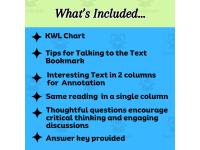
The Resource includes the following:
a hyperlinked Table of Contents
About this Resource which orients teachers to everything the resource contains
link to Forced Copy of Google Doc
Standards, Objectives, and Learning Targets (including goals related to the reading strategies--clarifying, questions, connecting, and inferring
Essential Question: How do the dynamics between major and minor political parties shape the American political landscape?
3 Guiding Questions:
What are the fundamental ideological differences between the Democratic and Republican parties, and how do these differences influence political decision-making and policy formation in the United States?
What factors might lead an individual to choose independence or align with a third party instead of the Democratic or Republican parties? How do these choices impact the political system?
What are the implications of a divided government in the United States? How does the balance of power between branches of government affect governance, policymaking, and the functioning of the political system.
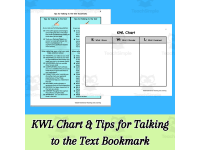
KWL Chart
Tips for Talking to the Text Bookmark
2 versions of the text: single column and double column for annotating
Discussion Questions and Key
Resource Tags
0 Reviews
Check out these other great products