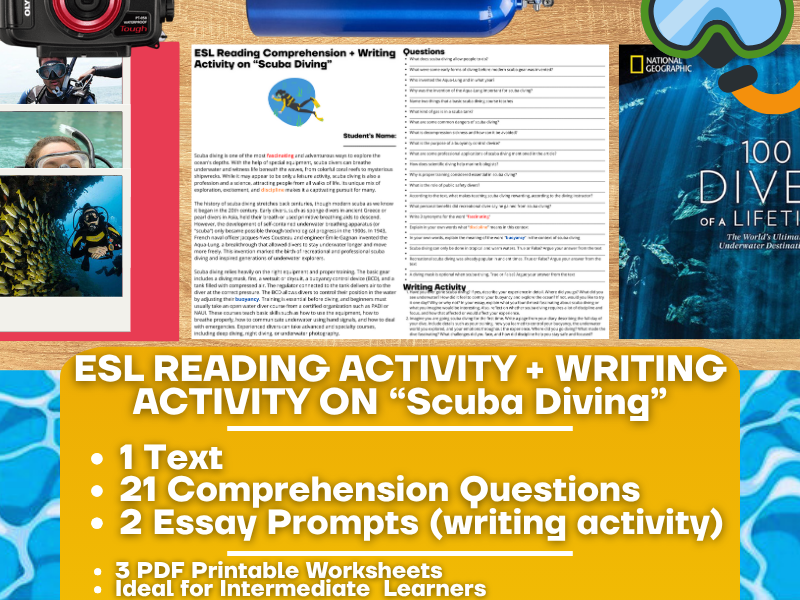
ESL Reading Comprehension + Writing Activity Worksheets - Scuba Diving
Give ESL/EFL students reading-comprehension, vocabulary, and opinion/comparison-writing practice using a nonfiction passage on the history and practice of scuba diving.
8,334 resources
Explore sub-categories
14 sub-categories · 8,334 resources
Give ESL/EFL students reading-comprehension, vocabulary, and opinion/comparison-writing practice using a nonfiction passage on the history and practice of scuba diving.
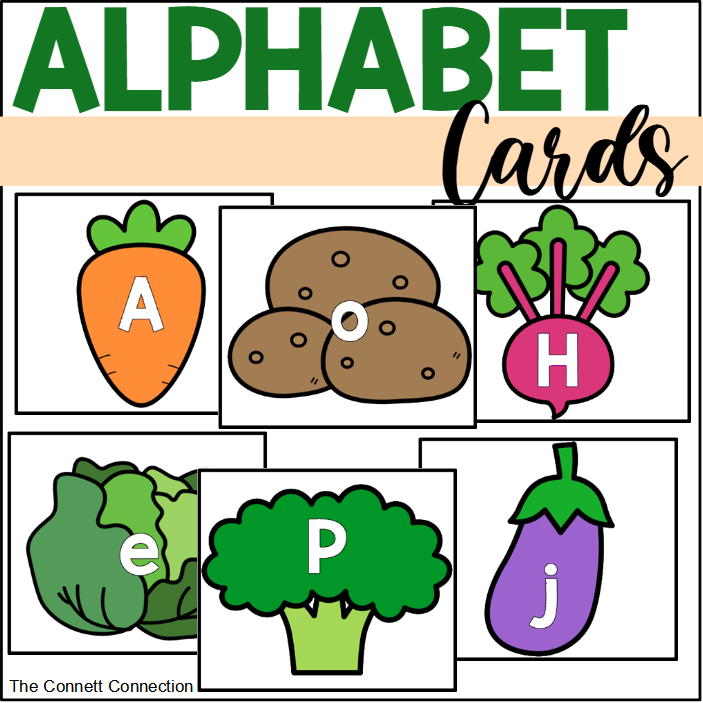
Students use a set of alphabet cards (one uppercase and one lowercase card per letter, A-Z) for activities such as matching capital letters to their lowercase counterparts.
For 4 graphed quadratic functions and 4 quadratic equations, determine domain, range, x- and y-intercepts, vertex, increasing/decreasing intervals, and end behavior, showing scratch work as needed.
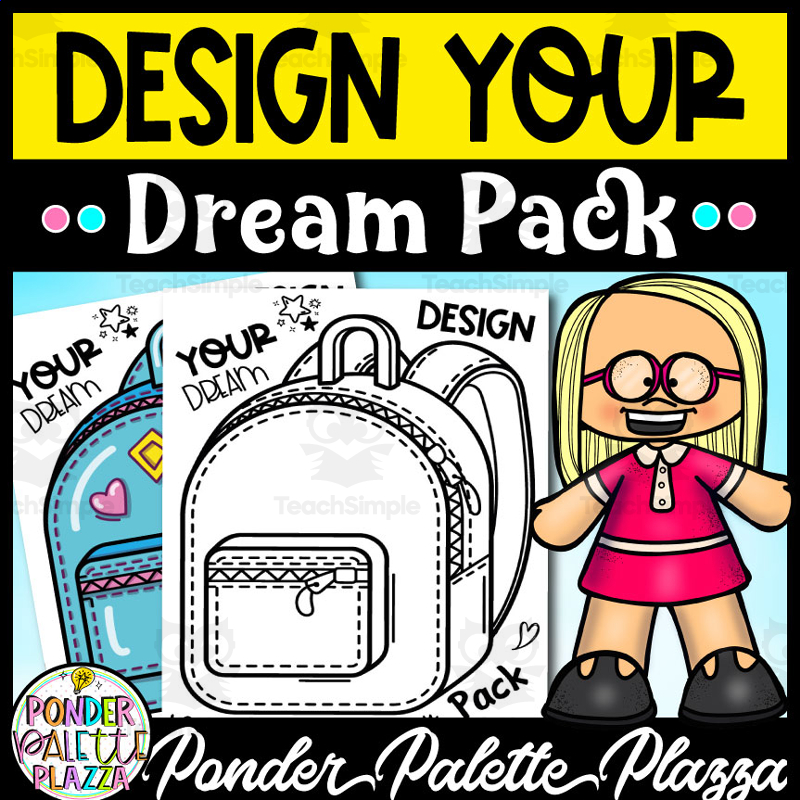
Start the school year with creativity and excitement using the Design Your Dream Pack – a fun and imaginative back-to-school resource that sparks student engagement from day one. This activity invites students to think outside the box as they design their “dream” backpack filled with items that represent their personality…
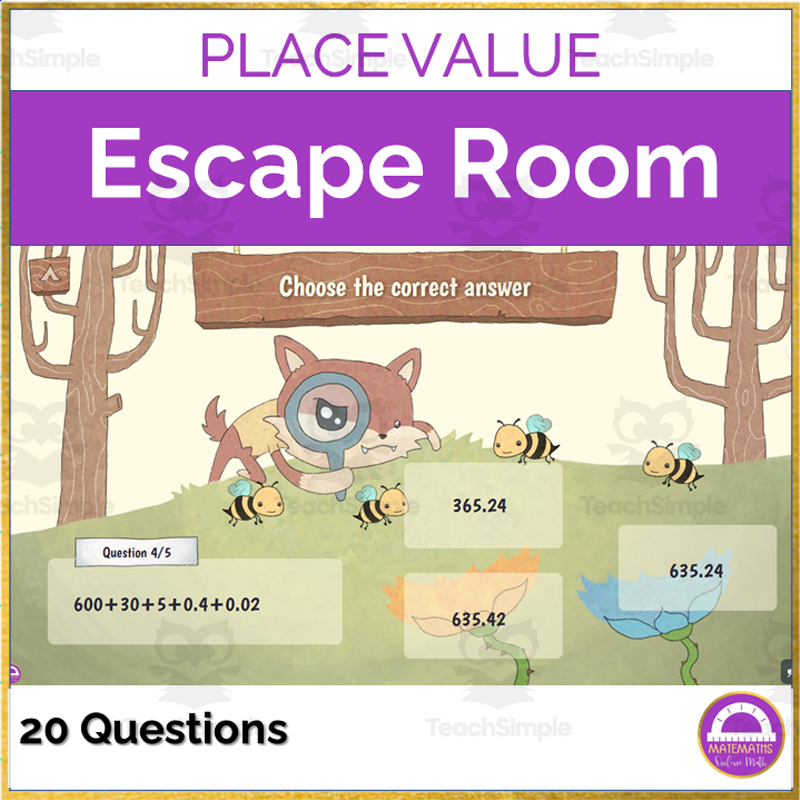
Students click a shared link to access an external digital escape room activity (content not included in this PDF), and/or complete printed quizzes converting expanded-form sums (e.g. 40+8+0.5+0.02+0.003) into standard decimal numbers.
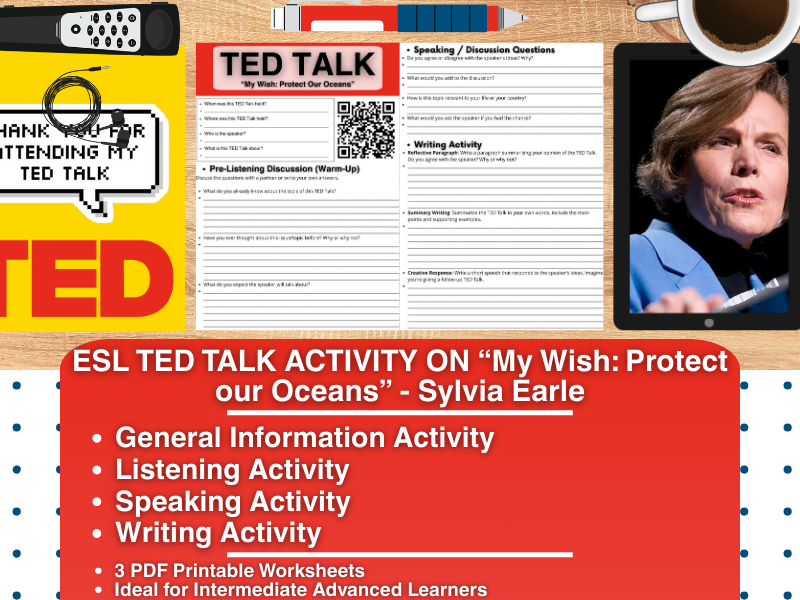
ESL/ELA worksheet activity built around the TED Talk "My Wish: Protect our Oceans - Sylvia Earle", used to build listening comprehension, vocabulary, and writing skills.
Students evaluate 10 limit problems (as x approaches positive or negative infinity) involving polynomial, rational, and radical functions, including determining horizontal asymptotes where applicable.
Blank printable coordinate plane grids at multiple scales for student graphing practice.
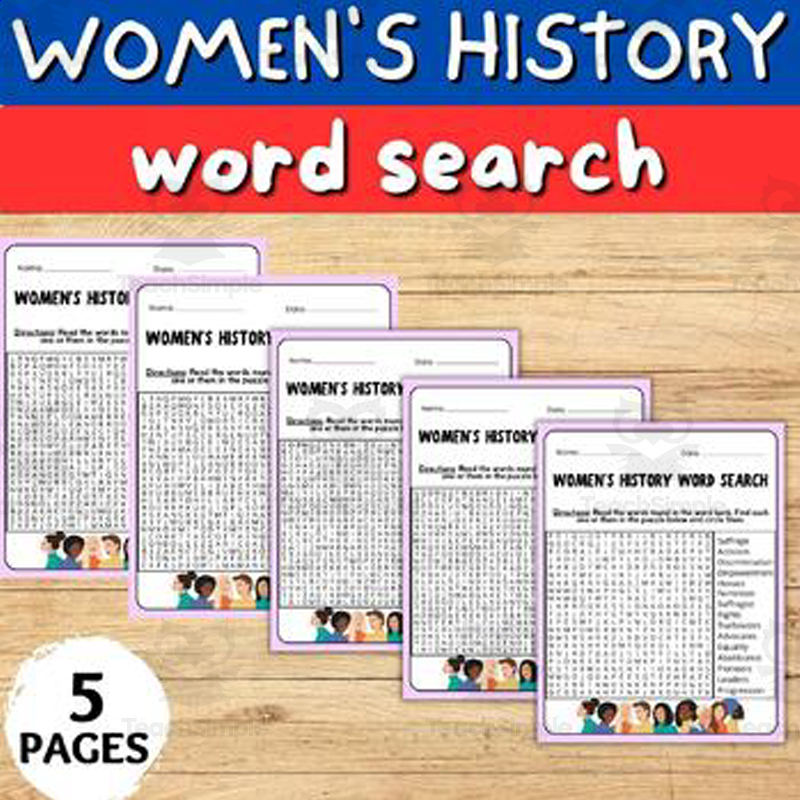
Find and circle words related to Women's History hidden in word-search grids; self-check using the provided answer keys.
A notated piano/vocal sheet-music arrangement (with lyrics) of the contemporary Christian worship song 'Lifter of My Head', for classroom music performance, singing practice, or instrumental sight-reading.
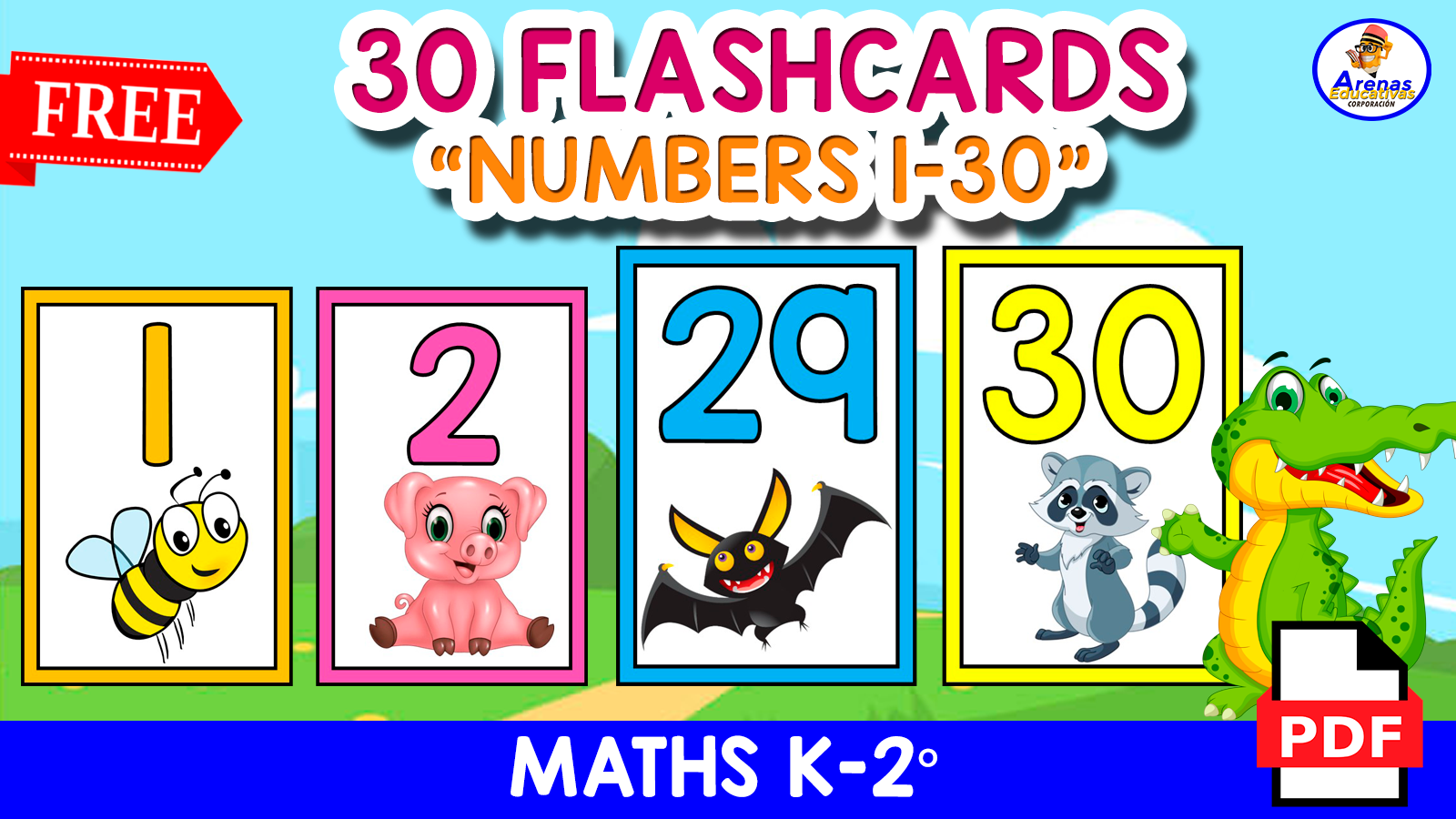
Recognize/identify numbers 1 through 30 shown on individual flashcards.
A short GCSE worksheet giving students practice analysing what stage directions in Act 1 of An Inspector Calls reveal about character and setting.
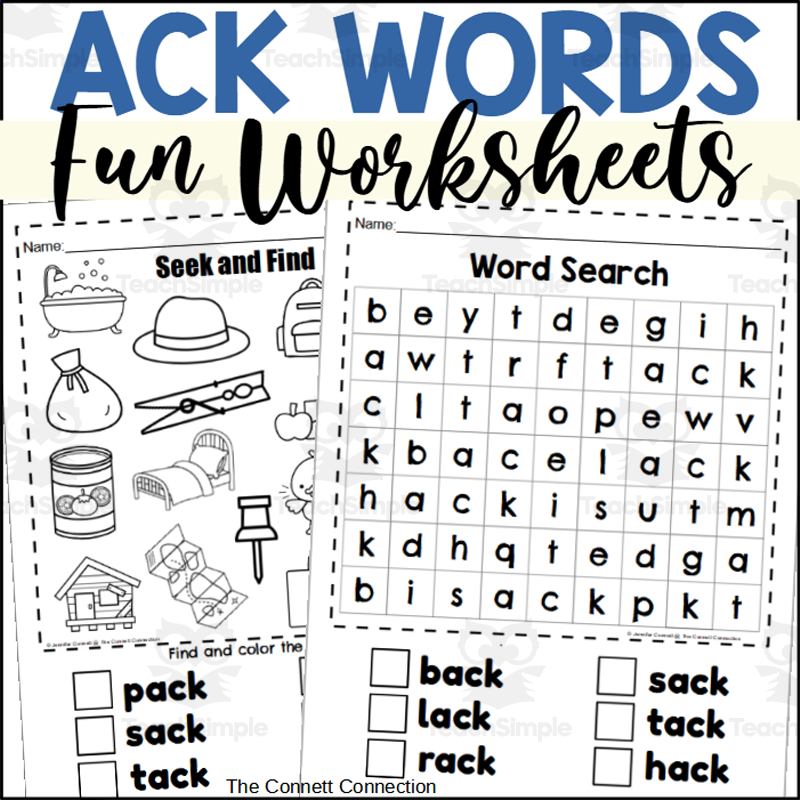
Give Kindergarten and Grade 1 students engaging, game-style practice with ACK-family words.
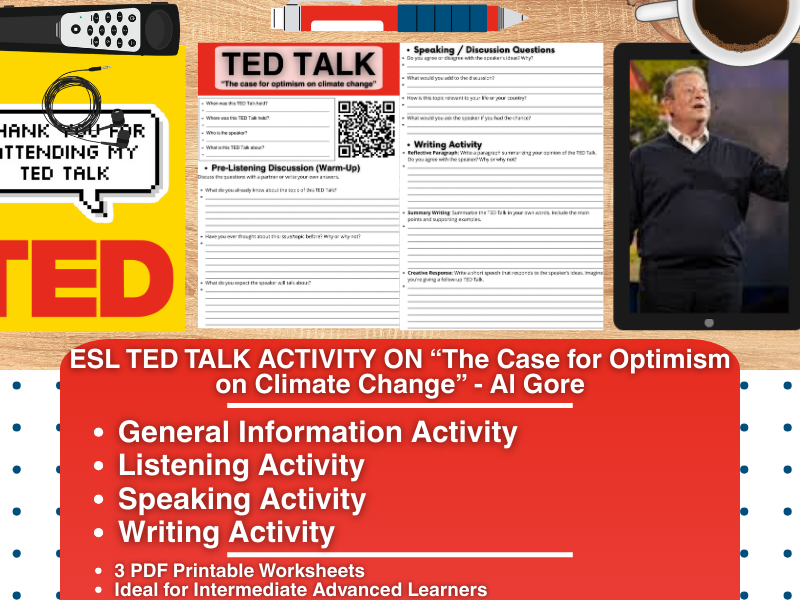
ESL/ELA worksheet activity built around the TED Talk "The Case for Optimism on Climate Change", used to build listening comprehension, vocabulary, and writing skills.
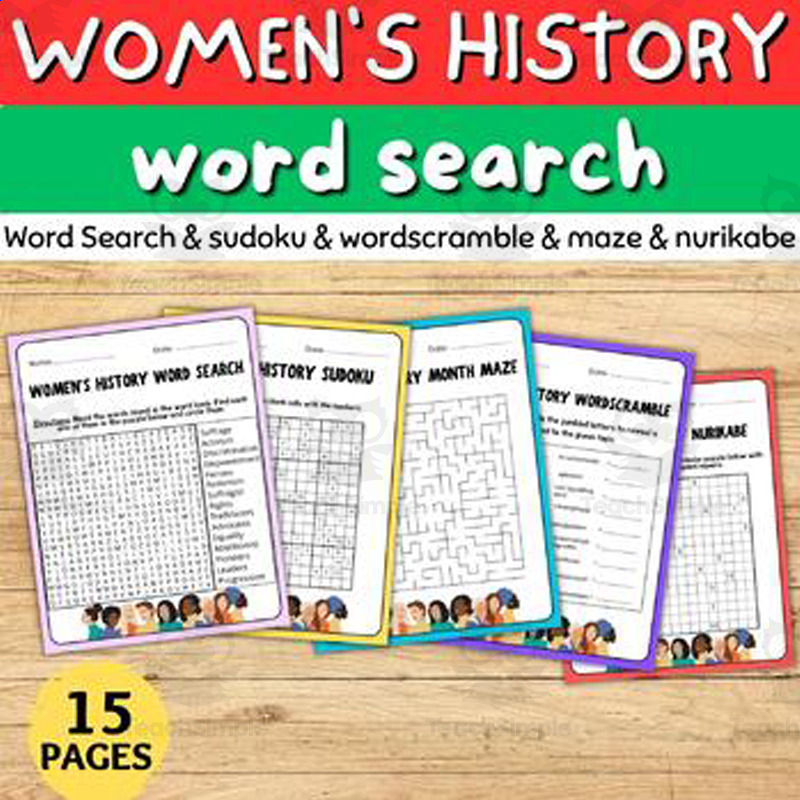
Solve a series of puzzles: find words in a word search, complete a maze, fill in a nurikabe logic puzzle, unscramble words, and complete number sudoku grids, using the provided answer keys to self-check.
An SEL lesson using a roller-coaster analogy to help students reflect on the normal ups and downs of friendship (feeling safe/connected versus upset/disconnected) and how to manage conflict.
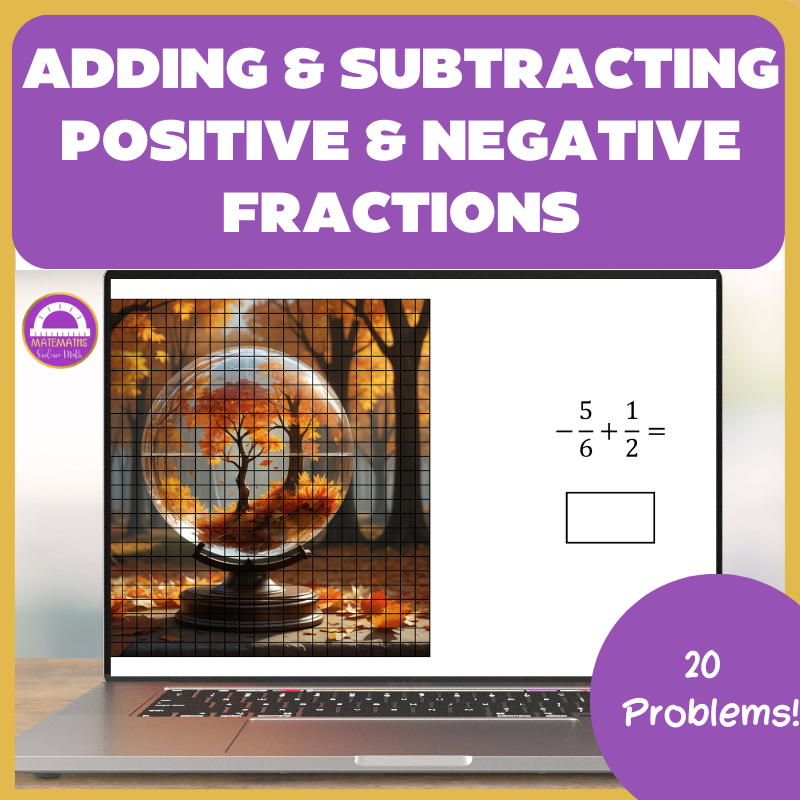
Digital pixel-art and printable practice for adding and subtracting positive and negative fractions.
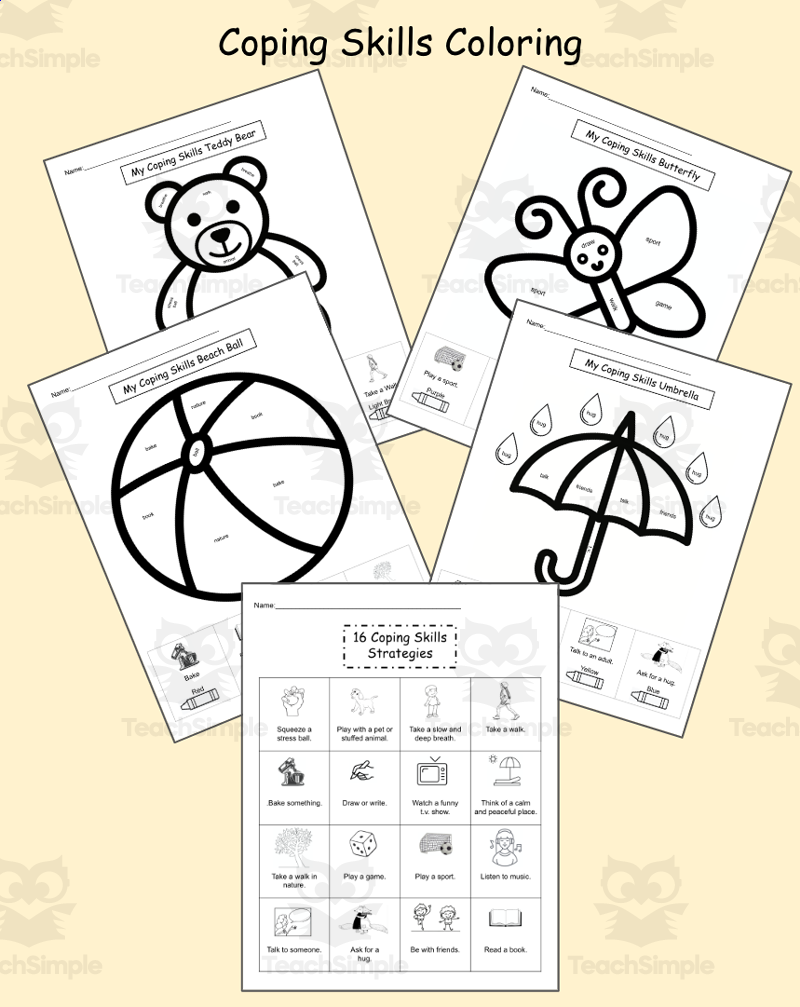
Four shape-outline coloring pages — a teddy bear, a butterfly, an umbrella, and a beach ball — each spell out four coping strategies in words that trace the outline of the shape, and students color each section using the color assigned to that strategy (for example, the teddy bear's stress-ball section is colored dark brown, its breathing section pink). A fifth page, titled ‘16 Coping Skills Strategies,’ lists all sixteen strategies used across the four shapes as a single grid, functioning as a stand-alone reference chart independent of the coloring pages. Strategies range from physical actions like taking a walk or squeezing a stress ball to social ones like talking to an adult or asking for a hug, giving students a visual menu of self-regulation options rather than a single fixed routine. Each page opens with a blank name line, suggesting the set is meant to be completed and kept by an individual student.

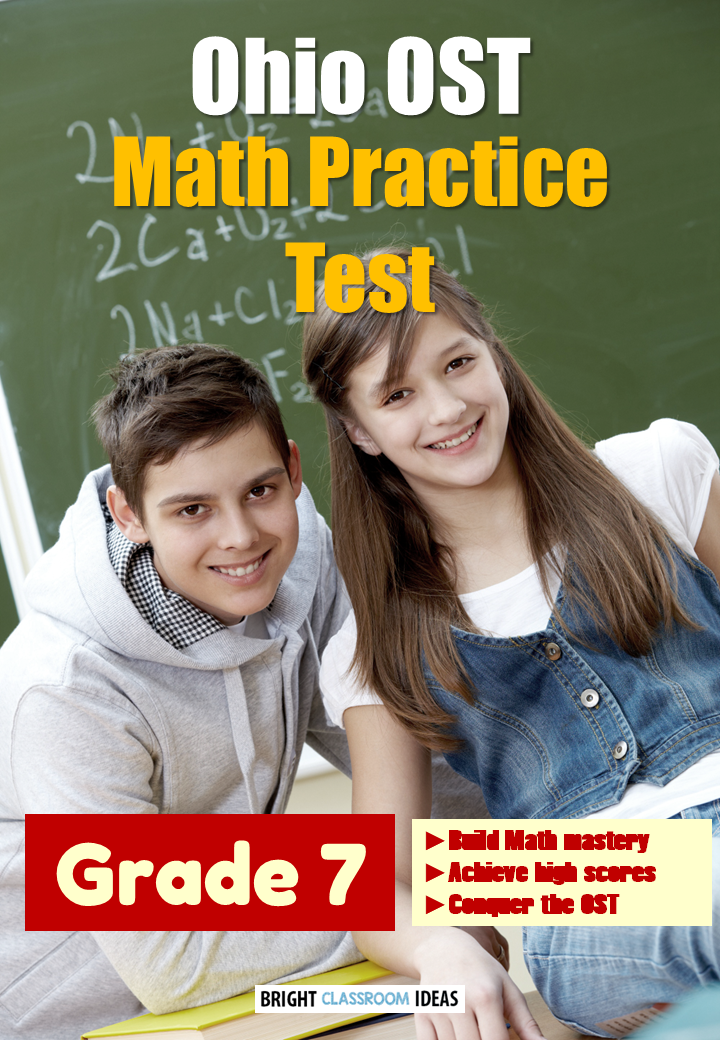
Read passages/prompts and answer 54 test-style questions (multiple choice, multi-select, numeric entry, and short/constructed response), following printed test directions and helpful test-taking tips.
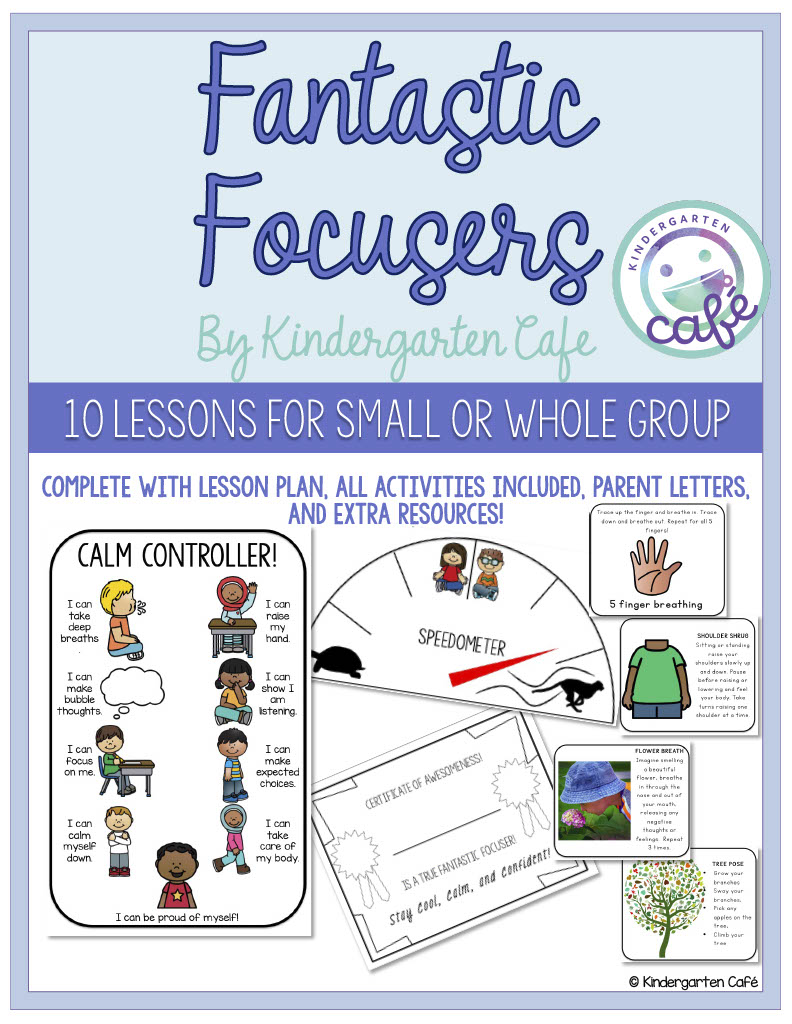
Participate in weekly small-group sessions using classroom tools/routines (talking stick, calm controller, speedometer check-in, mindful minute, breathing techniques) to build self-control skills such as following directions, taking turns, delaying gratification, and controlling impulses.
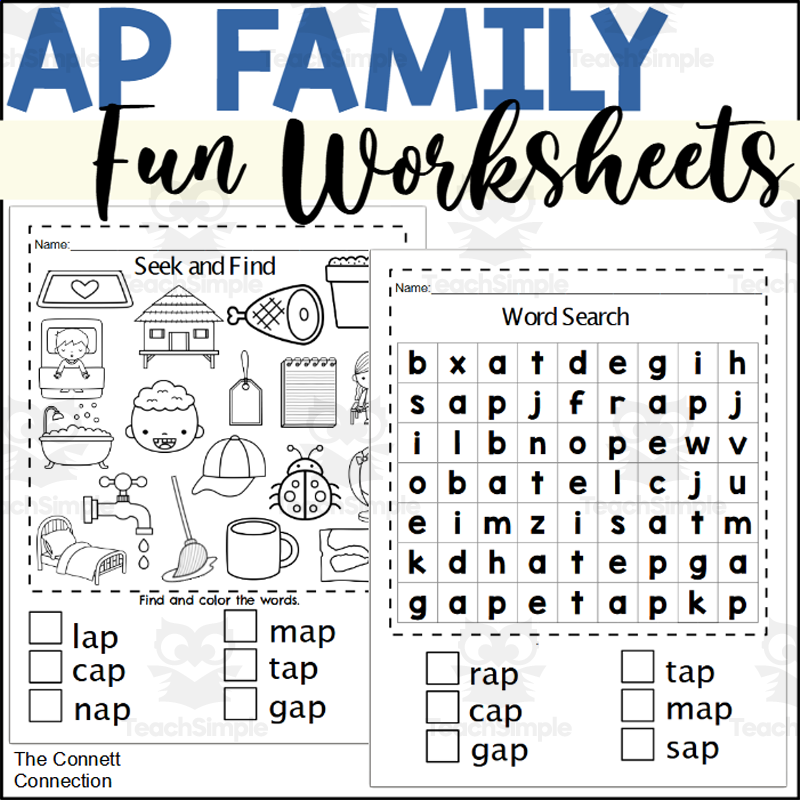
Game-style worksheets for practicing recognition of '-ap' word-family words.
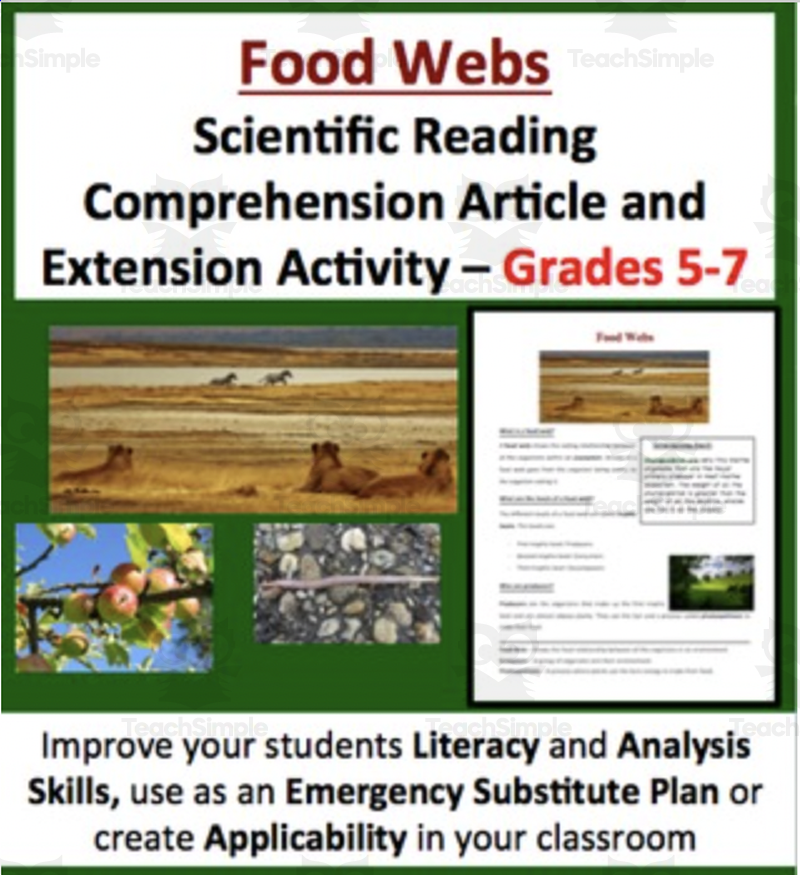
Read the article defining food webs, trophic levels, producers, consumers (primary/secondary/tertiary), and decomposers; answer reading comprehension questions; complete an extension activity building a food web diagram from a list of organisms (drawing a box/circle/triangle around producers/consumers/decomposers)
Practice setting up and solving linear equations and systems of linear equations through age-related word problems, at a high-school algebra level.
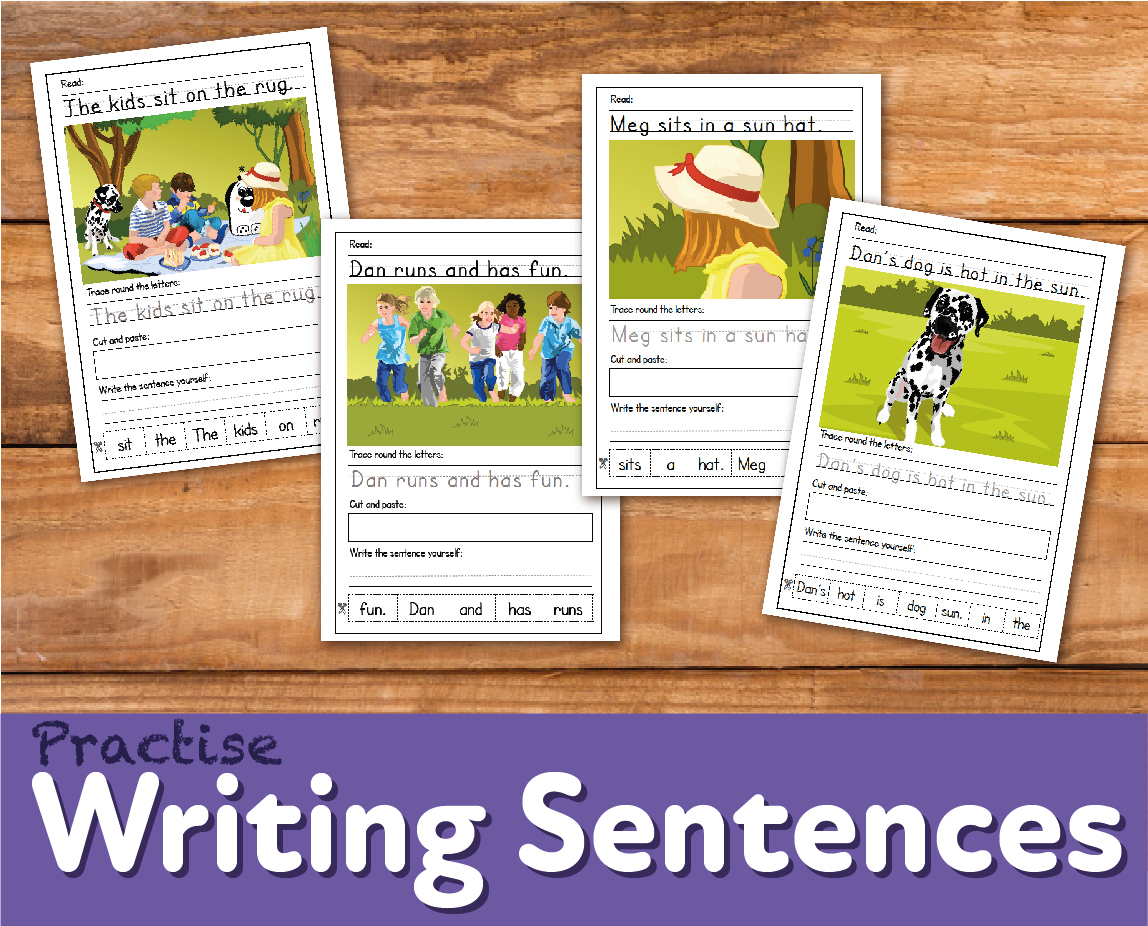
Read a printed sentence about Zoggy, trace over the letters of the sentence, cut out individual word pieces and paste them in order to reconstruct the sentence, then write the sentence independently on blank lines.