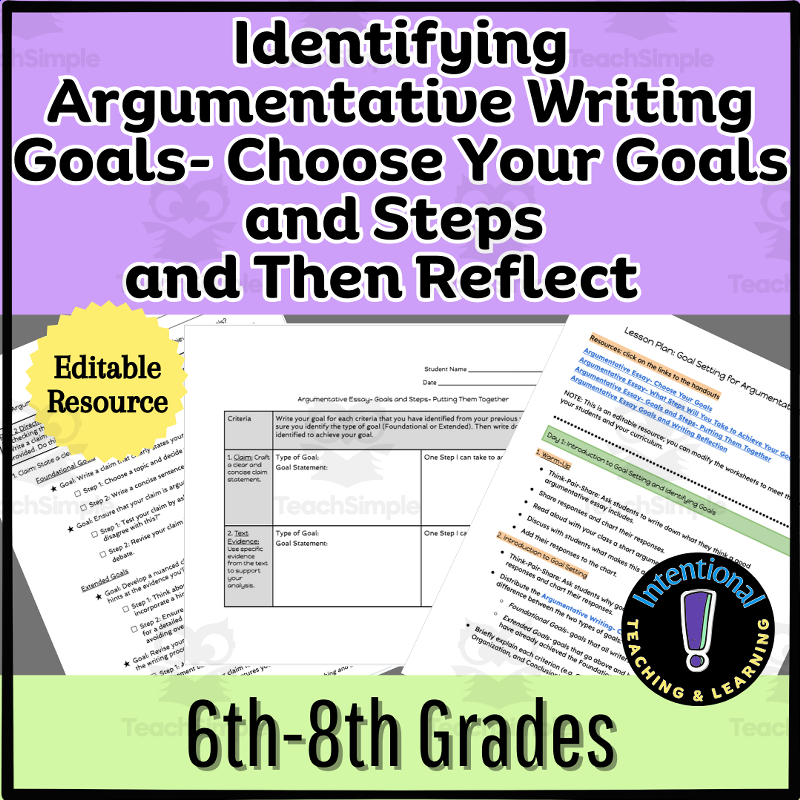
Identify Argumentative Essay Goals- Choose Goals, Steps. & Reflect
An editable lesson that helps middle school students set personalized goals for argumentative essay writing, plan steps to achieve them, and reflect on their progress.
Classroom resources
Browse by lesson focus
Choose the topic or kind of practice you need.
An editable lesson that helps middle school students set personalized goals for argumentative essay writing, plan steps to achieve them, and reflect on their progress.
An interactive PowerPoint micro-learning deck teaching the concept of humanism and an overview of the Renaissance through a reading passage, vocabulary, and comprehension activities.
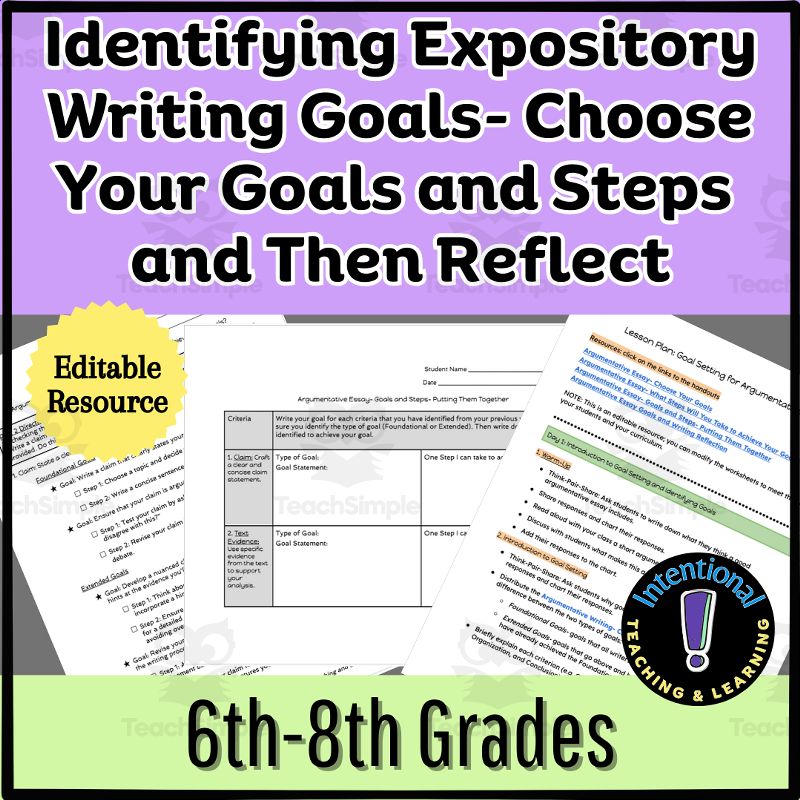
An editable lesson that helps middle school students set personalized goals for expository essay writing, plan steps to achieve them, and reflect on their progress before and after writing.
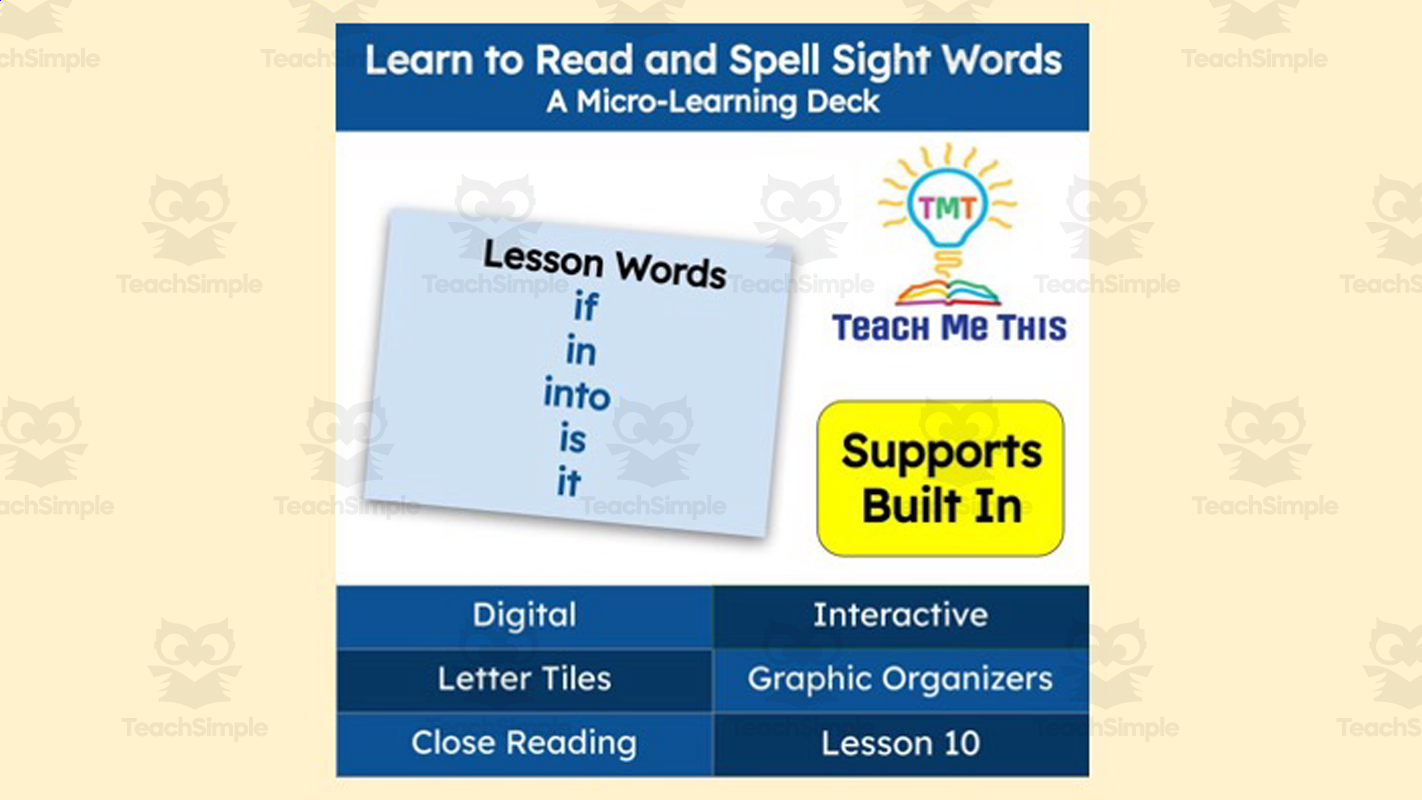
For each target word (if, in, into, is, it), the learner writes the word in the air and on a whiteboard, spells it with letter tiles, types or writes it, reads it in a short sentence, plays a memory-match game with word pairs, and fills in missing words in sentences from a word bank.
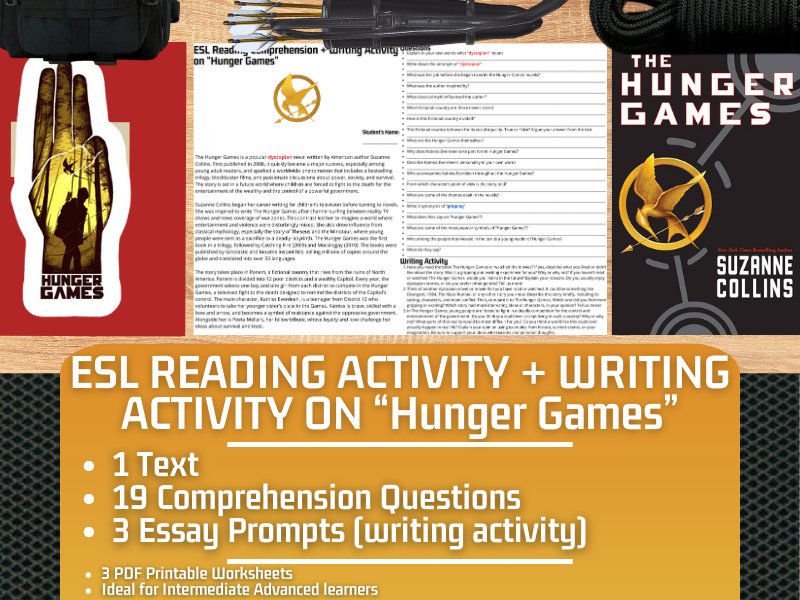
ESL/EFL reading comprehension and writing practice built around a nonfiction literary-analysis passage about Suzanne Collins's novel The Hunger Games (its origins, dystopian setting, themes, and film adaptations), paired with comprehension questions, vocabulary/antonym work, a true/false reasoning item, and…
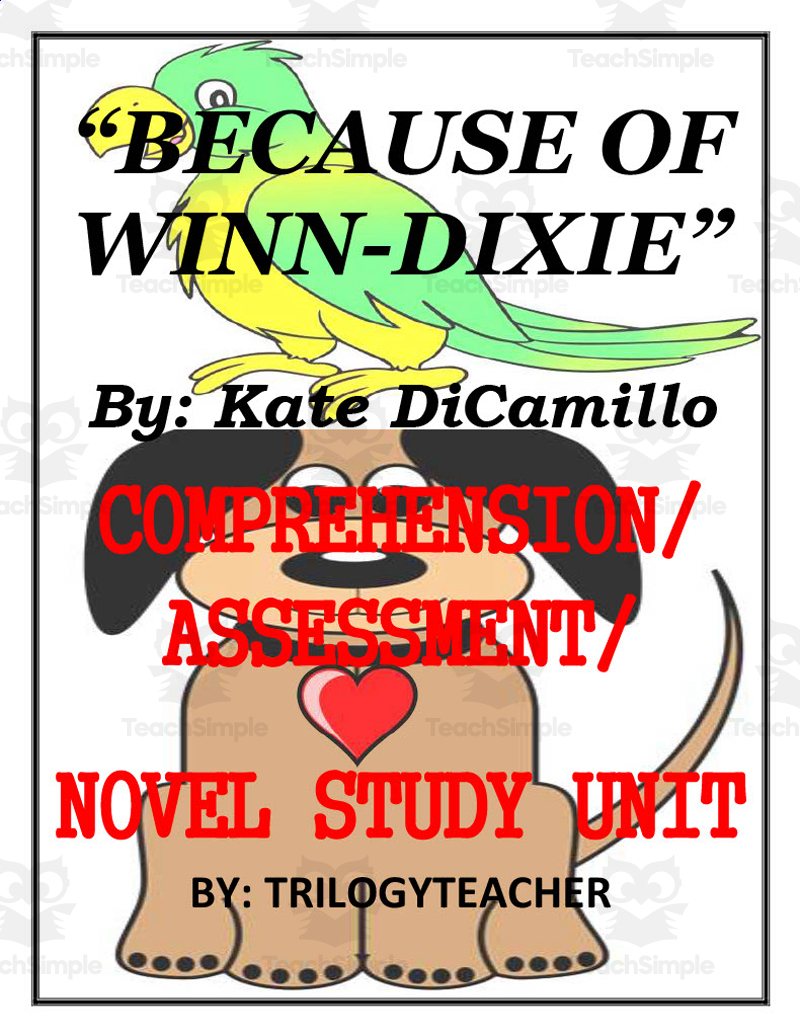
Provide a comprehensive 26-chapter comprehension, vocabulary, and assessment unit for the novel 'Because of Winn-Dixie' by Kate DiCamillo, including daily worksheets, exit quizzes, a summative test, vocabulary games, and writing/poster prompts.
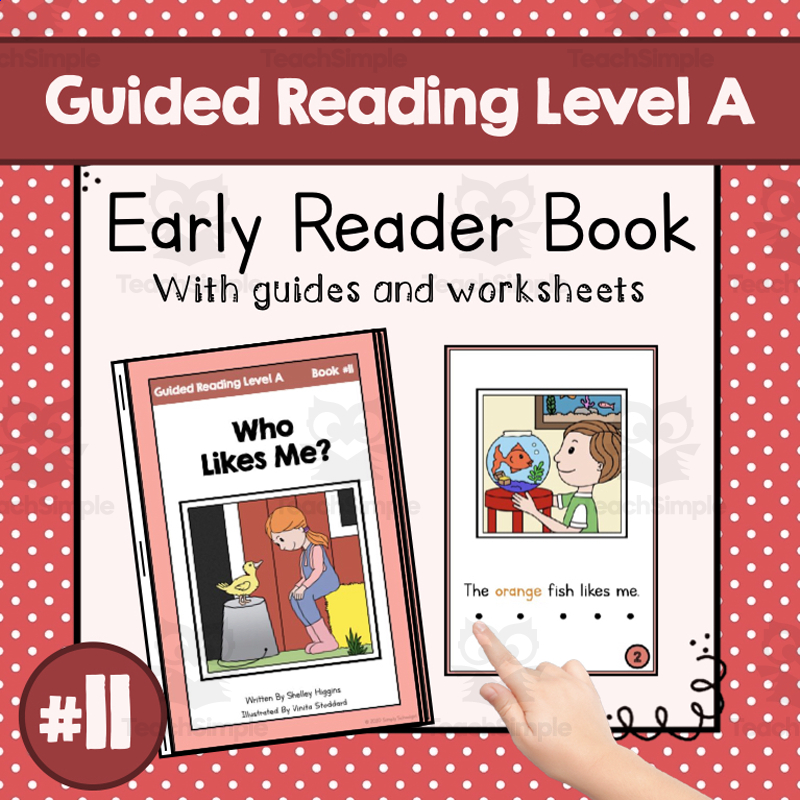
Students read a short repeated-pattern story ('The [color] [animal] likes me.') pointing at each word, tracking sight words (am, at, can, go, is, like, me, see, the, to, I) with the help of colored text and finger-tracking dots; a companion Guided Reading Level A word-tracking chart lets them check off and write the…
Students complete a sequence of activities for the word "a": color a cover page, find-and-color the word among distractors in a word search grid, trace and write the word, spell it using letter tiles/stamps, cut and paste examples of the word, then read/write/draw and complete fluency-reading and fill-in-the-blank…
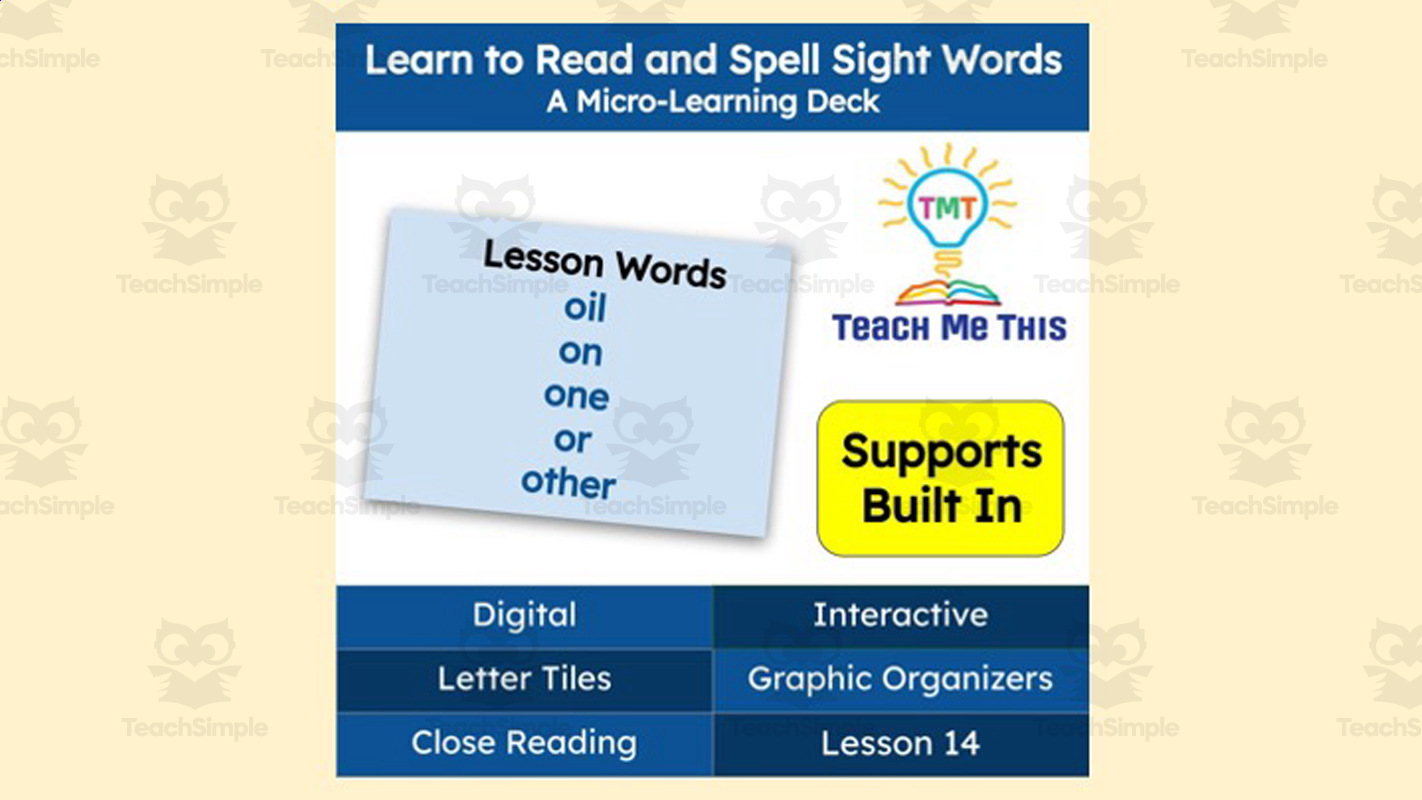
For each target word (oil, on, one, or, other), the learner writes the word in the air and on a whiteboard, spells it with letter tiles, types or writes it, reads it in a short sentence, plays a memory-match game with word pairs, and fills in missing words in sentences from a word bank.
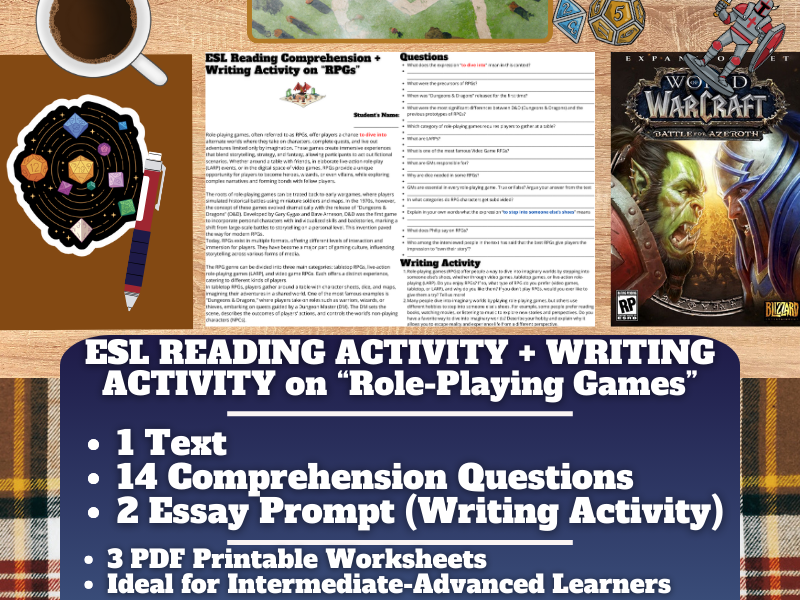
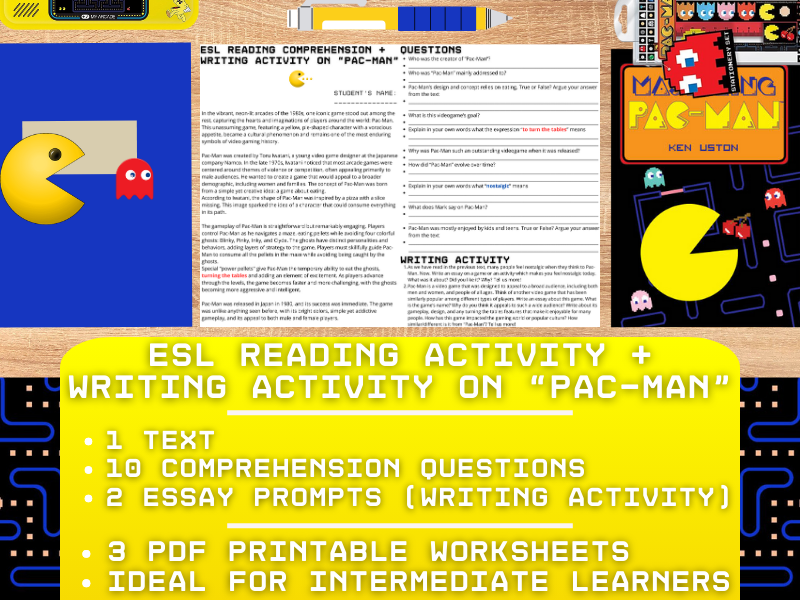
Students read a multi-paragraph nonfiction passage, answer open-response reading comprehension questions (including short-answer, vocabulary/synonym, and a true-or-false-with-textual-justification item), then write a personal-opinion or comparison essay responding to a set of guided writing prompts about the topic.
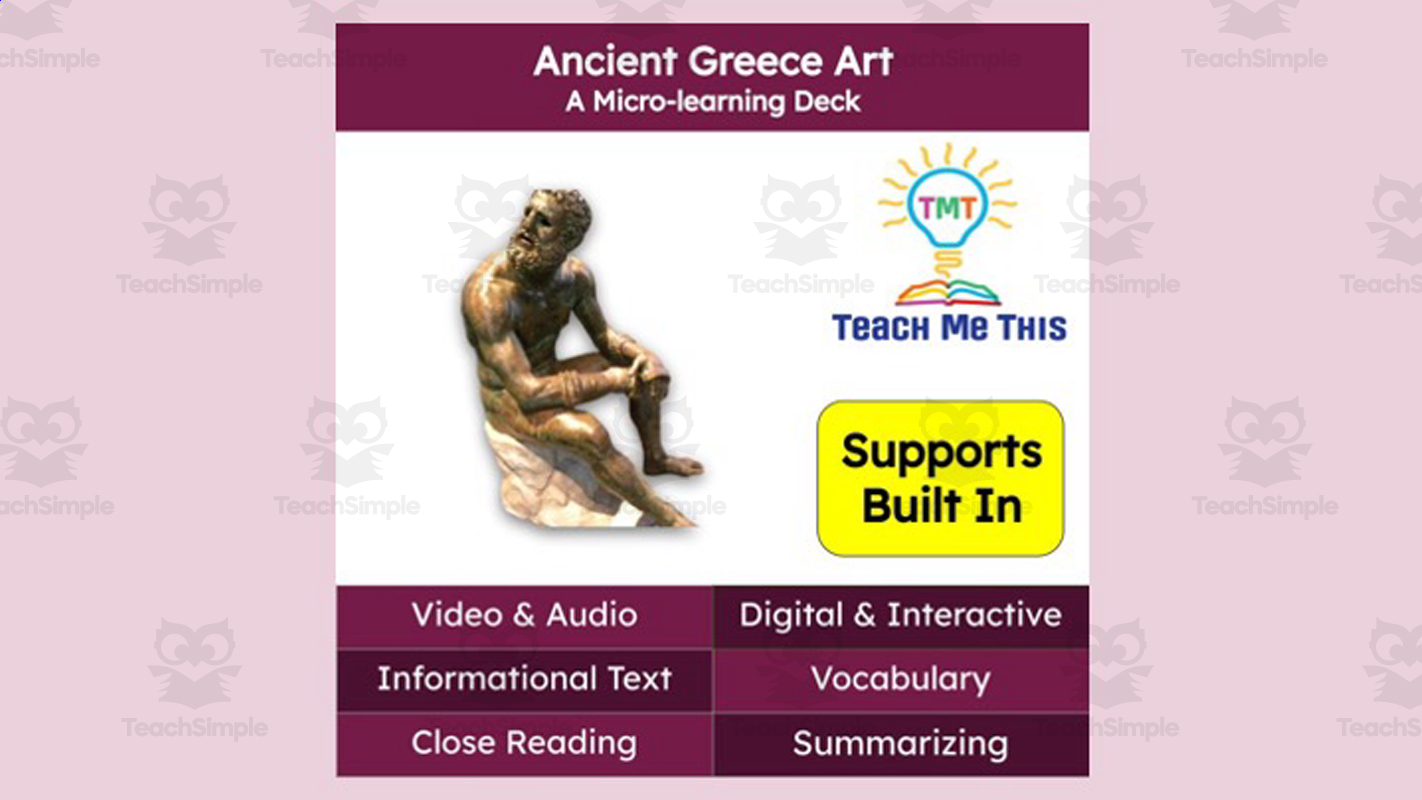
A digital, interactive micro-learning slide deck teaching ancient Greek art and architecture (sculpture, pottery/vase painting styles, and temple architecture) through a reading passage, vocabulary, and comprehension/writing activities.
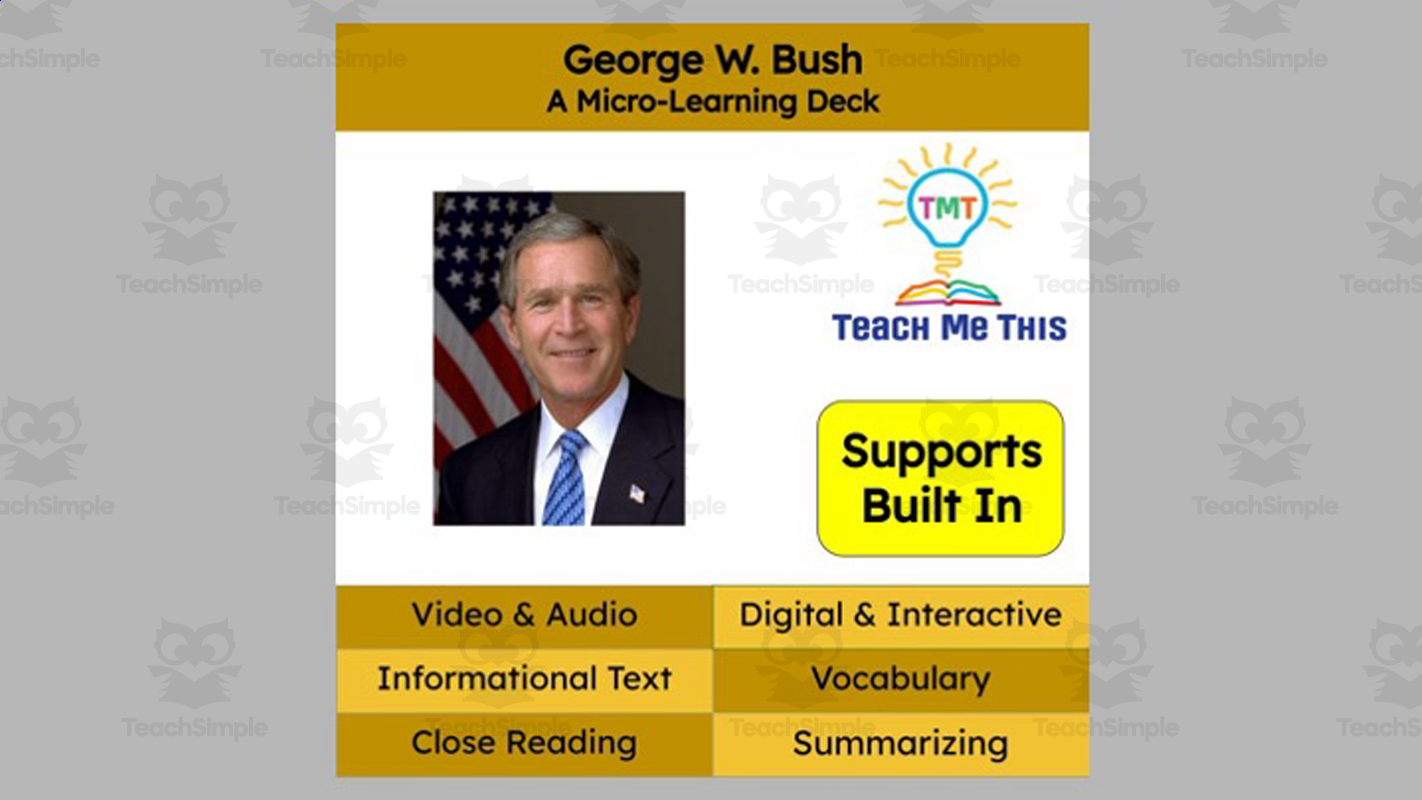
A digital micro-learning slide deck teaching informational-text reading, vocabulary, and comprehension skills through a biography of George W. Bush.
A comprehensive novel study unit for Where the Red Fern Grows covering chapter-by-chapter comprehension, vocabulary, writing, and summative assessment.
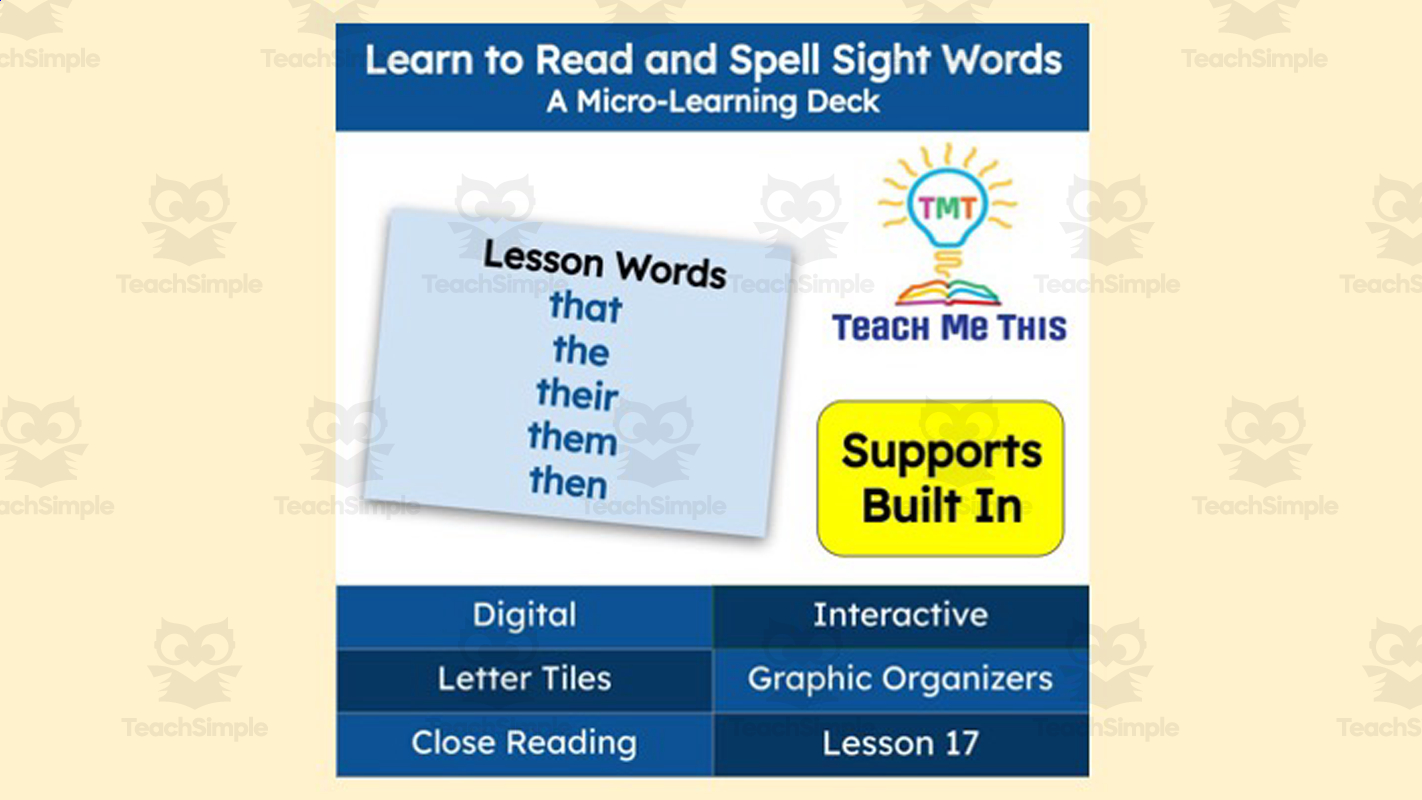
For each target word (that, the, their, them, then), the learner writes the word in the air and on a whiteboard, spells it with letter tiles, types or writes it, reads it in a short sentence, plays a memory-match game with word pairs, and fills in missing words in sentences from a word bank.
Students read a multi-paragraph nonfiction passage, answer open-response reading comprehension questions (including short-answer, vocabulary/synonym, and a true-or-false-with-textual-justification item), then write a personal-opinion or comparison essay responding to a set of guided writing prompts about the topic.
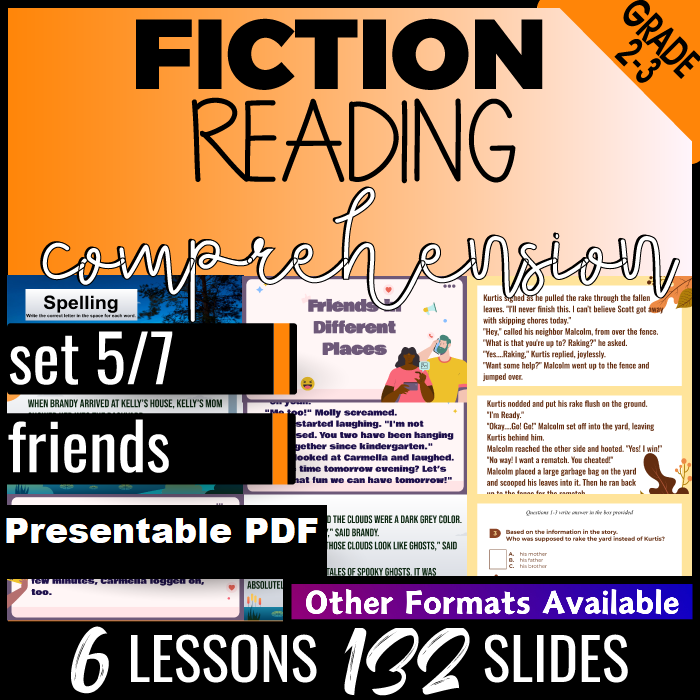
No-prep fiction reading comprehension resource for Grade 2-3, delivered as one slide-deck style file per lesson (short-fiction story on a 'Friends' theme followed by comprehension, vocabulary/spelling, and writing activities) for display or independent use.
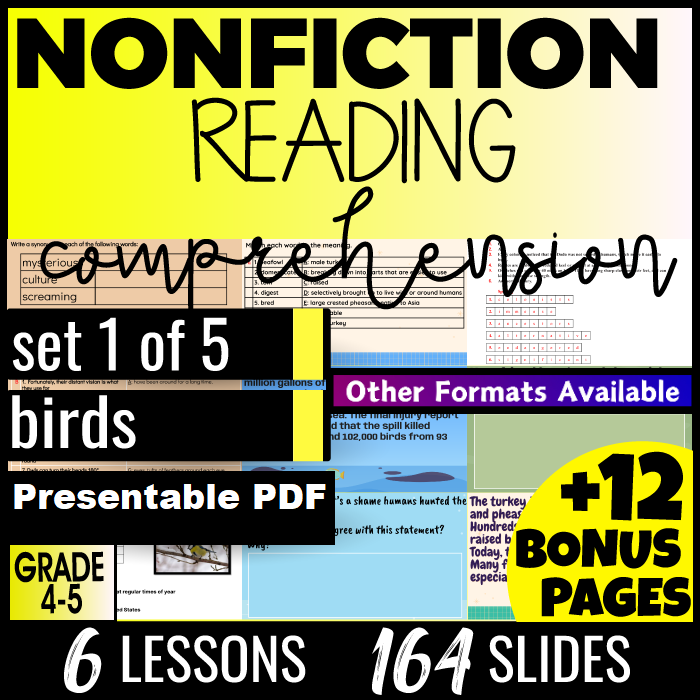
A set of six nonfiction reading-comprehension lessons (No Fly Zone, Ostrich, Chickadees, The Owl, Turkeys, Oil Spill) that pair an informational passage about birds with post-reading activities.
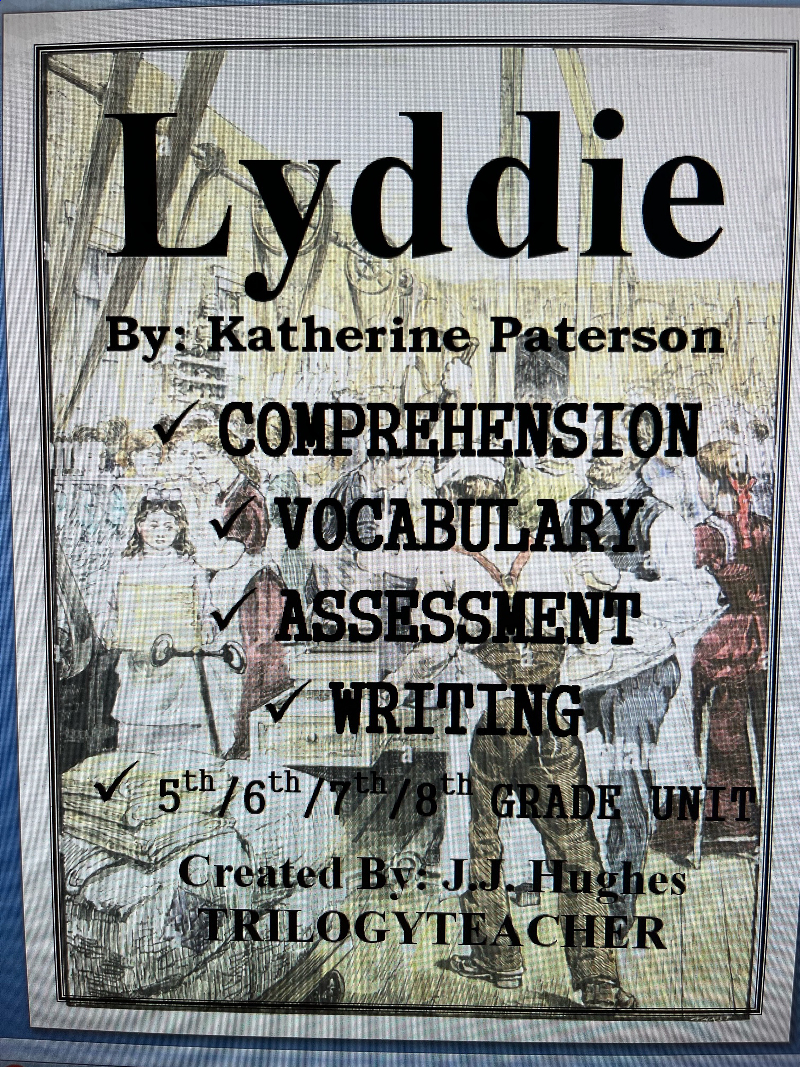
A full multi-lesson novel study unit for Katherine Paterson's Lyddie, covering comprehension, vocabulary, figurative language, assessment and writing across all 23 chapters.
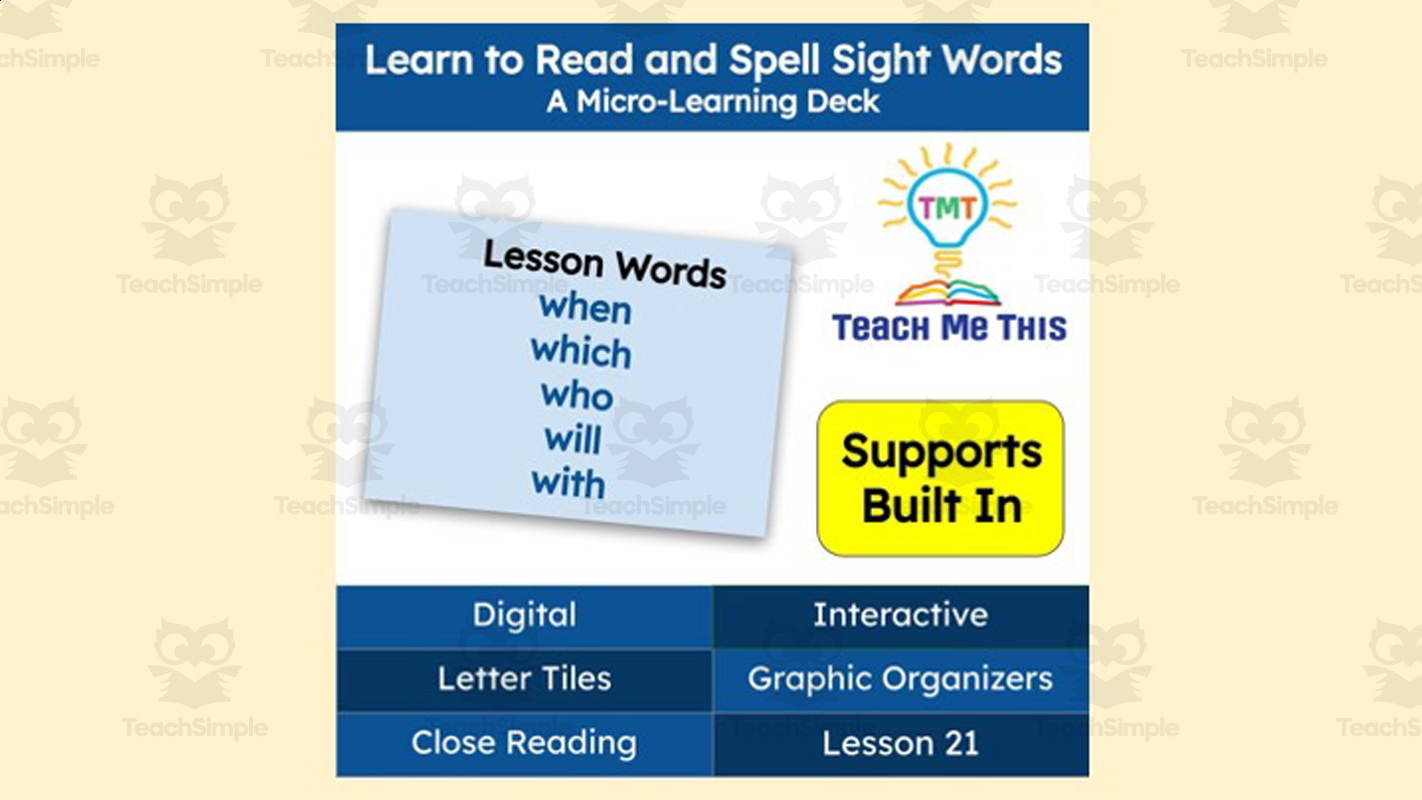
For each target word (when, which, who, will, with), the learner writes the word in the air and on a whiteboard, spells it with letter tiles, types or writes it, reads it in a short sentence, plays a memory-match game with word pairs, and fills in missing words in sentences from a word bank.
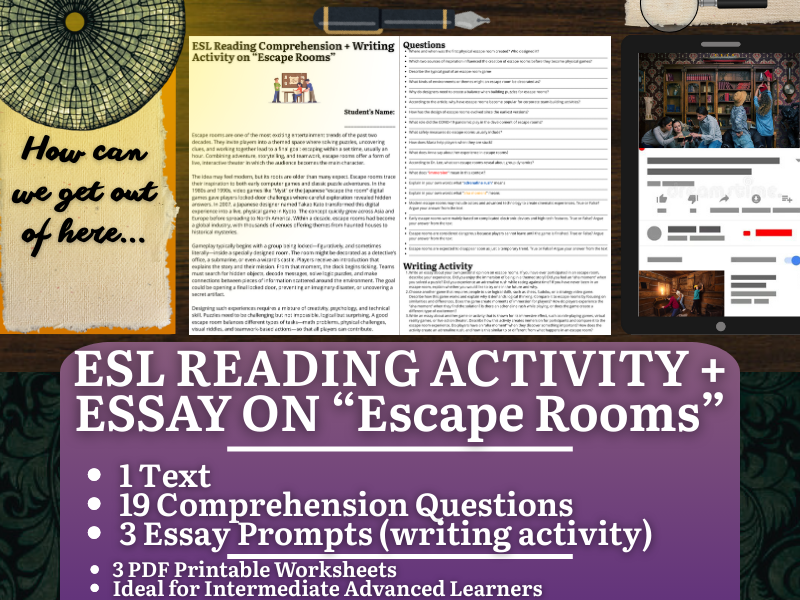
ESL/EFL reading comprehension and writing practice built around a nonfiction passage about the history, design, and psychology of escape rooms, paired with comprehension questions, vocabulary/definition work, true/false reasoning, and personal-opinion/comparison essay prompts.
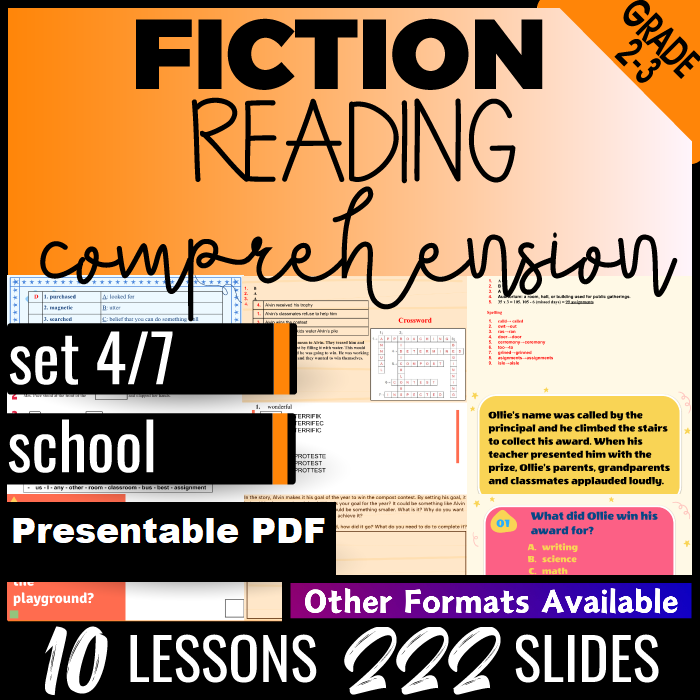
No-prep fiction reading comprehension resource for Grade 2-3, delivered as one slide-deck style file per lesson (short-fiction story on a 'School' theme followed by comprehension, vocabulary/spelling, and writing activities) for display or independent use.
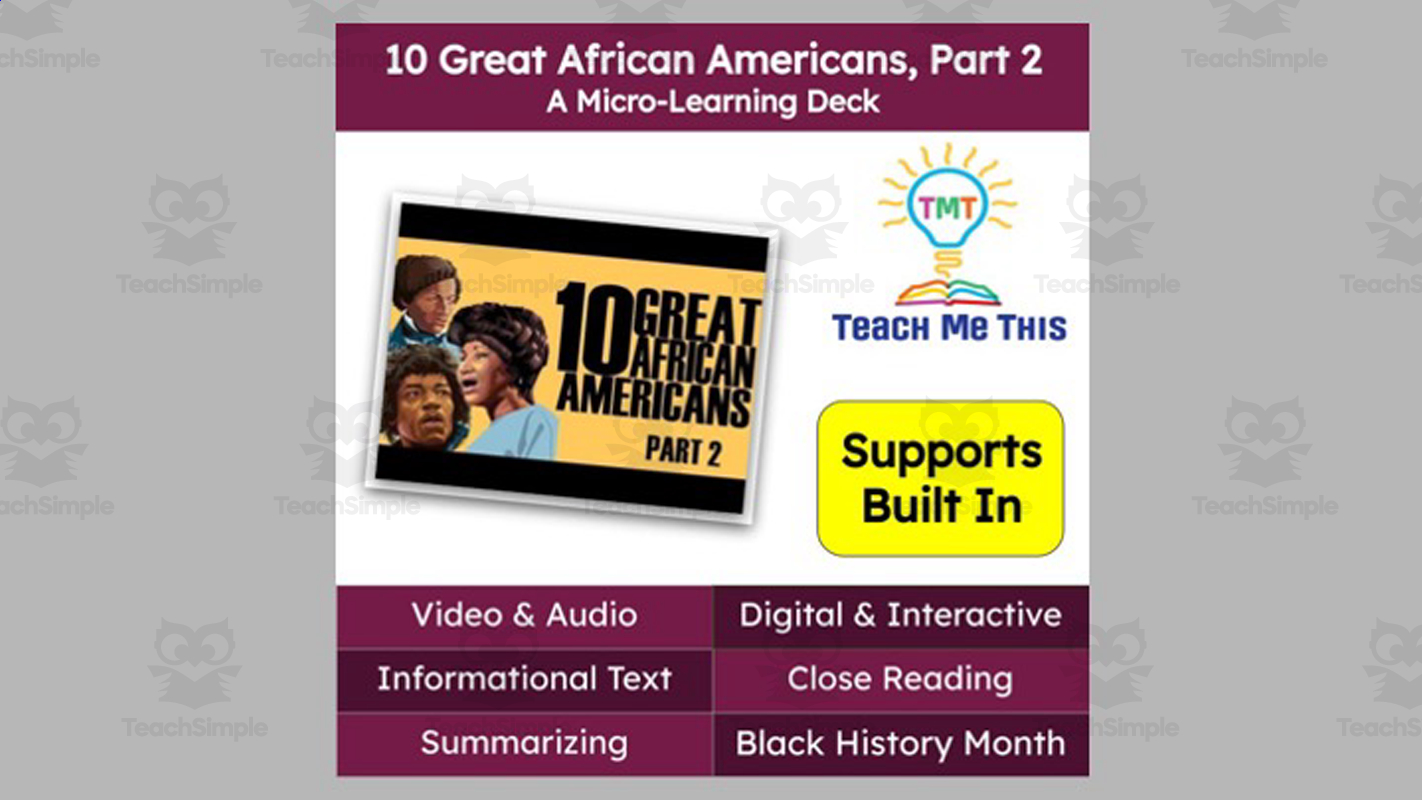
Teach middle/high school students about influential African Americans (Part 2 of a 3-part interactive reading-comprehension slide deck series) using biographical informational text.
A novel study workbook (Rainbow Horizons Publishing) for The Egypt Game, with chapter-based vocabulary, comprehension, and creative/writing activities and a full answer key.
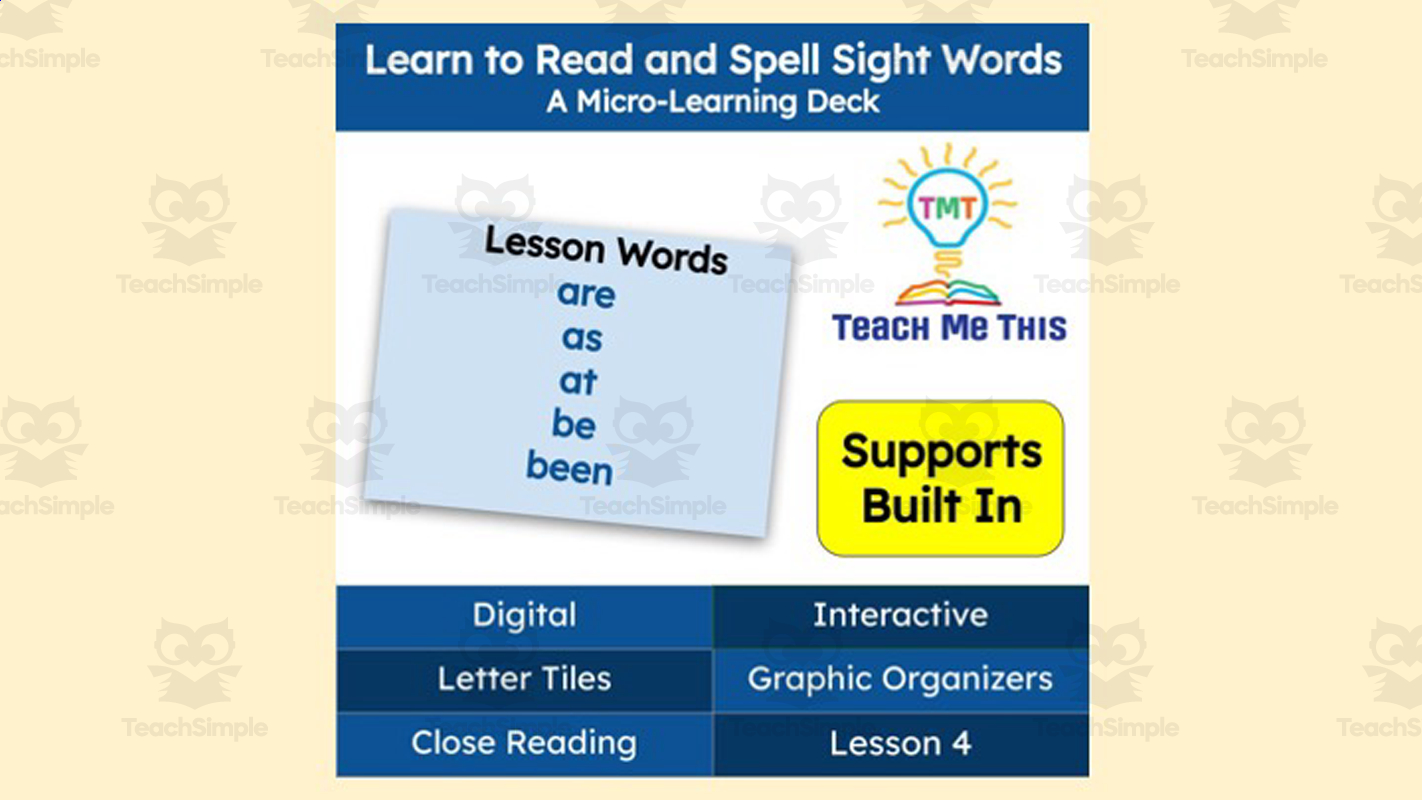
For each target word (are, as, at, be, been), the learner writes the word in the air and on a whiteboard, spells it with letter tiles, types or writes it, reads it in a short sentence, plays a memory-match game with word pairs, and fills in missing words in sentences from a word bank.