



3,945 products added recently
Page 47 - Reading Comprehension Activitites
Support your students in developing strong reading comprehension skills with a variety of engaging activities. This collection includes worksheets, graphic organizers, and discussion questions designed to help students understand and analyze texts. By integrating these resources into your teaching, you can enhance students' ability to interpret information and draw meaningful conclusions.

 Show filters


Social Studies Reading Passages: Extreme Environment and People (PDF)
ELA, Reading, Reading Comprehension, Strategies, Resources for Teachers, Social Studies, Geography, Grade 6, 7, 8, 9, Writing Prompts, Worksheets & Printables, Centers, Activities, Teacher Tools, Assessments, Quizzes and Tests, Quizzes, Tests
Social Studies Reading Comprehension Passages and Questions: Extreme Environment and People (PDF) This resource introduces a collection of Social Studies reading comprehension passages with questions about Extreme Environment and People. The passages are carefully designed to bridge the gap between social studies and literacy through strengthening reading comprehension and sparking knowledge curiosity in middle school students. Each passage blends English Language Arts skills with accurate social studies content . Ideal for interdisciplinary learning in ELA and Social Studies. Suitable for Grade 9 review, too! What Is Included in this Collection? There are three informational passages (with full answer keys): Salar de Uyuni: Bolivia’s Shining Salt Flat Above the Alps: The Story of the Eiger’s North Face Sherpas: Guardians of the High Mountains For Each Passage, students will have multiple tasks to complete as follow: 5 multiple-choice questions targeting main idea, key details, inference, vocabulary in context, and use of evidence 5 vocabulary matching items with clear, student-friendly definitions 5 text-based questions that require citing specific lines or facts 1 summary prompt that asks students to condense central ideas accurately Available Formats for this Resource Fillable PDF Word Docs Google Docs FULL CATALOG OF DOWNLOADING LINKS HERE For more Social Studies Reading Passages, check the following Links: Ancient Civilizations PDF Fillable PDF Word Docs Google Docs Early Empires and Trade Networks PDF Fillable PDF Word Docs Google Docs The Founding of the United States PDF Fillable PDF Word Docs Google Docs Language, Culture, and Meaning PDF Fillable PDF Word Docs Google Docs Psychology and Society PDF Fillable PDF Word Docs Google Docs Global Festivals and Traditions PDF Fillable PDF Word Docs Google Docs Extreme Environments and People PDF Fillable PDF Word Docs Google Docs Food, Culture, and Preservation PDF Fillable PDF Word Docs Google Docs Global Food Customs PDF Fillable PDF Word Docs Google Docs Media, Communication, and Popular Culture PDF Fillable PDF Word Docs Google Docs Human Impact on the Environment PDF Fillable PDF Word Docs Google Docs Civic Action and Social Change PDF Fillable PDF Word Docs Google Docs Fashion, Society, and Power PDF Fillable PDF Word Docs Google Docs People, Places, and Unusual Histories PDF Fillable PDF Word Docs Google Docs Product Details Length: 14 pages total Grades: 6–8, also suitable for Grade 9 review Use cases: close reading, stations, homework, intervention, test prep, and sub plans Why Teachers Choose This Set Authentic social studies content paired with rigorous literacy practice Consistent task structure across all passages for easier planning and smoother student routines Clear, age-appropriate writing that builds confidence without oversimplifying Use this set to reinforce ELA skills in social studies, to add literacy to your lessons, and to support independent work. The passages strengthen main idea, evidence use, vocabulary in context, inference, cause and effect, and summary writing. With ready-to-use assessments and complete answer keys, you can provide focused practice that is simple to run and fast to review.
Author Middle & High School - CORED Education
Rating
Tags Middle School, Reading Comprehension, Reading Strategies, ELA, Centers, Reading Passage, Assessments, Vocabulary, Social Studies, Geography
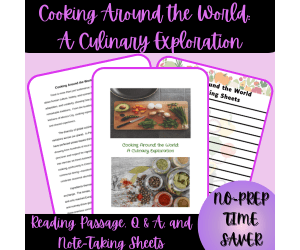
Cooking Around the World Reading Passage, Q & A, Note-Taking Sheets
ELA, Reading Comprehension, Reading, Research, Resources for Teachers, Social Studies, History, History: World, High School, Homeschool Resources, Middle School, Worksheets & Printables, Activities, Crosswords Puzzles, Worksheets, Teacher Tools, Assessments
Take your students on a mouthwatering journey around the globe with this resource - Cooking Around The World: A Culinary Exploration . I created this resource because I believe food isn't just about eating—it's about stories, heritage, and the beautiful ways people connect across cultures. Your students/homeschoolers will dive into rich descriptions of cooking traditions from Peru to Japan, discovering how each recipe tells a story of human creativity and adaptation. Through an engaging reading passage, thoughtful questions, and hands-on activities, they'll explore how something as everyday as cooking reveals our shared humanity. These materials do double duty: building essential reading skills while opening students'/homeschoolers' eyes to the diverse and delicious ways people around the world express their cultural identity through food. INCLUDED IN THIS RESOURCE: ✓High-quality reading passage about global cooking traditions and cultural significance ✓20 in-depth comprehension questions with complete answer key ✓Engaging crossword puzzle with solution key ✓10 versatile note-taking sheets for structured learning ✓Professionally formatted materials ready for immediate classroom use ✓Complete references list in MLA format for academic integrity TOPICS COVERED: ✓Cultural significance of food beyond basic nutrition ✓Unique cooking techniques from around the world ✓Historical food migrations and culinary exchanges ✓Indigenous food preparation methods ✓Mediterranean, Japanese, Indian, Chinese, and Peruvian culinary traditions ✓Relationship between geography and food development ✓Evolution of fusion cuisine in modern cooking ✓Cross-cultural food preservation techniques ✓Connection between cooking and human creativity What I love most about this Cooking Around The World: A Culinary Exploration resource is how it helps students/homeschoolers see beyond the classroom/homeschool walls. When kids discover why tandoor ovens create those distinctive smoky flavors in Indian breads or how Chinese wok cooking developed to conserve precious fuel, they're gaining insights that stick with them for life. The way food connects to geography, history, and cultural values becomes wonderfully clear. I have included a full set of academic references because I have found students/homeschoolers often want to dive deeper into specific cuisines that capture their imagination. fAt its heart, this resource turns something as familiar as food into a window through which students can better understand themselves and their place in our beautifully diverse world. If you and your students/homeschoolers enjoyed this resource, please leave a review. Thank you for your support! Tina - Big Easy Homeschooling Mom
Author Homeschool with Big Easy Homeschooling Mom
Rating
Tags Global Cooking Traditions, Cultural Food Significance, Culinary Exploration Teaching Resource, Cooking Techniques Around The World, Culinary History Lesson Plans, Culinary Diversity Lesson, Cultural Identity Through Food, Global Food Heritage Lesson, Food Cultural Reading Passage, Cultural Cooking Practices

Health & Applied Bioscience: Reading Comprehension Passages (PDF)
Science, ELA, Reading, Reading Comprehension, Strategies, Resources for Teachers, Health, P.E. & Health, Life Sciences, Grade 6, 7, 8, 9, Writing Prompts, Worksheets & Printables, Centers, Activities, Teacher Tools, Assessments, Quizzes and Tests, Quizzes, Tests
Health & Applied Bioscience: Reading Comprehension Passages and Questions (PDF) This very engaging collection of science reading passages about The Truth about Drinks, Green Tea, and Plastic in Medicine is designed to bridge the gap between science and literacy through strengthening reading comprehension and sparking scientific curiosity in middle school students. Each passage blends English Language Arts skills with accurate science content that supports NGSS classroom practice. Ideal for interdisciplinary learning in ELA and Science. Suitable for Grade 9 review, too! What Is Included? There are (3) informational passages: The Truth About Drinks: Many popular drinks add a lot of sugar, caffeine, or artificial sweeteners without people noticing. Knowing what is in sports drinks, sodas, and energy drinks helps you choose water or low-sugar options more often. Green Tea: Ancient Drink, Modern Science: Green tea comes from an old tradition, but today it is studied for its helpful plant chemicals. It can support alertness and health, but it works best as part of overall good habits, not as a magic drink. Plastic in Medicine: From Everyday Uses to Life-Saving Care: Plastics made it easier to keep hospitals clean, since items like gloves, syringes, and IV tubes can be used once and thrown away. They also make medical tools lighter and safer, though all that single-use plastic has to be handled carefully. Student Tasks for Each Passage: 5 multiple-choice questions targeting main idea, key details, inference, vocabulary in context, and use of evidence 5 vocabulary matching items with clear, student-friendly definitions 5 text-based questions that require citing specific lines or facts 1 summary prompt that asks students to condense central ideas accurately Full answer key for every section Available Formats for this Resource Word Docs Google Docs FULL CATALOG OF DOWNLOADING LINKS HERE Other Science Reading Collections and Topics You May Find in the Store: 1. Astronomy & Space Science 2. Volcanoes, Rocks, & Mountains 3. Rock Cycle, Soil, & Sinkholes 4. Mars, Glaciers, & Antarctica 5. Water Cycle, Acid Rain, & Wastewater 6. Insects, Animals, & Ecosystems 7. Bioluminescence & Insects 8. Animal Skin, Cats, & T. Rex 9. Human Body and Senses 10. Health & Applied Bioscience 11. Waves, Light, & Imaging 12. Electricity & Energy 13. Motion & Materials 14. Chemistry and Materials Science 15. Electromagnetism 16. Acids and Bases 17. Gas Laws 18. Biotechnology 19. Periodic Trends 20. Protists and Fungi 21. Microevolution 22. Blood 23. Chemical Bonding 24. Magnets 25. Muscles 26. Nuclear Chemistry 27. Electromagnetic Devices 28. Epigenetics 29. The Law of Conservation of Mass 30. Atomic Models 31. Isotopes and Ions 32. Light 33. Human-Environment Interaction 34. Theory of Evolution 35. Photosynthesis 36. Origins of Life and Early Earth 37. Gene Expression and Regulation 38. Thermochemistry 39. Allergies 40. Coevolution 41. Birth to Adulthood 42. Cells 43. Entropy and Free Energy 44. The Human Brain 45. Mixtures and Solutions 46. Invertebrates 47. Zoo Animals 48. Biochemistry 49. Animal Behavior 50. Population Ecology ...and many more engaging science reading passages that cover intriguing and important topics designed to spark curiosity and support student learning. Product Details Length: 14 pages total Grades: 6–8, also suitable for Grade 9 review Use cases: close reading, stations, homework, intervention, test prep, and sub plans Standards support: reinforces informational-text skills and supports NGSS-style sense making through observation, modeling, and clear use of claim, evidence, and reasoning Why Teachers Choose This Set Authentic science content paired with rigorous literacy practice Consistent task structure across all passages for easier planning and smoother student routines Clear, age-appropriate writing that builds confidence without oversimplifying Use this set to reinforce ELA skills in science, to add literacy to your lessons, or to support independent work. The passages strengthen main idea, evidence use, vocabulary in context, inference, cause and effect, and summary writing. With ready-to-use assessments and complete answer keys, you can provide focused practice that is simple to run and fast to review.
Author Middle & High School - CORED Education
Rating
Tags Middle School, Reading Comprehension, Reading Strategies, ELA, Centers, Reading Passage, Assessments, Vocabulary, Life Science, Health

Reading Comprehension Passages Fiction Set 1 (PDF)
ELA, Reading, Reading Comprehension, Common Core, Resources for Teachers, ESL, Language Development, Spelling, Vocabulary, Grade 6, 7, Worksheets & Printables, Worksheets, Assessments, Teacher Tools, Tests, Quizzes and Tests, Writing Prompts, Centers, Activities
Reading Comprehension Passages Fiction Set 1 Overview Six reading comprehension lessons, especially written for Grade 6-7, providing the chance to read interesting and engaging passages. Each lesson has a mix of questions to check understanding, a vocabulary or spelling activity to help remember key language introduced, and a writing exercise. Full answer keys are provided. Passages Include 1.Champion: Martyn and a field day competition. 2.Basketball: Evie shows her newfound basketball skills. 3.The Coaster: Angelica is afraid of the new roller coaster. 4.Sister Sister: Dora and Kathie can't stop arguing with each other. 5.New Surroundings: Lisa is upset about the move to a new city. 6.In the Pool: The story behind a 13 year love of swimming. PDF Version This is the PDF uneditable version. This download is available in GOOGLE Docs, GOOGLE Forms, GOOGLE Slides. PDF, PPT, WORD. FULL CATALOG OF DOWNLOAD LINKS HERE Grade 6/7 Links Fiction Set 1 Google Docs Google Forms Google Slides PDF PPT Word Guided Reading Materials Fiction Set 2 Google Docs Google Forms Google Slides PDF PPT Word Guided Reading Materials Nonfiction Set 1 Google Docs Google Forms Google Slides PDF PPT Word Guided Reading Materials Nonfiction Set 2 Google Docs Google Forms Google Slides PDF PPT Word Guided Reading Materials Reading Passages Overview Each passage is especially written for Grade 6/7 students, including key vocabulary required for this age group. Topics are varied and are accompanied by colorful graphics. Topics are meant to educate, yet entertain the modern student. The majority of these short stories contain an important message - a way of developing these young learners further. Mixed Questions The mixed questions section of each lesson includes a variation of five to six comprehension, vocabulary and Math questions. In addition, key reading strategies are frequently covered including cause & effect, summarizing, compare & contrast and making conclusions. Mixed questions require a written response (no MCQ's), full answers and example responses appear at the end of the lesson. Spelling & Vocab Each reading passage contains a variety of words and phrases designed for Grade 6/7 students. Spelling and vocab activities provide the opportunity to build fluency with these words. Activities provide clues to help assist students. Vocabulary activities include extra questions where students must write a synonym, an antonym or a sentence using a certain word. Writing Prompts Writing prompts are designed to continue the theme or lessons learned in the story. Students are persuaded to write in a variety of ways and each prompt includes several cues to help. The main focus in this product, is the student. Prompts will require the student to relate to past experiences and encourage them to discuss feelings and ways to improve. Full Answer Keys Full answer keys and sample responses are provided so no matter how busy you are, you know you're covered! Mixed question answers provide evidence from the text, Math questions contain the relevant workings. Answers are designed for use by the teacher, but also suitable as a handout to the student. For similar downloads and other frees, do check out Cored Group on TeachSimple.
Author Cored Education
Rating
Tags Elementary, Reading, Comprehension, Vocabulary, Answers, Spelling, Writing, Passages, Reading Centers, Reading Comprehension Assessment
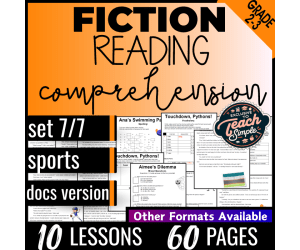
Reading Comprehension Passages Fiction Set 7 - Sports (Google Docs)
ELA, Reading, Common Core, Reading Comprehension, Spelling, Language Development, Vocabulary, Children’s Literature, Literature, Writing, Grade 2, 3, Worksheets & Printables, Worksheets, Centers, Activities, Assessments, Teacher Tools, Tests, Quizzes and Tests, Writing Prompts
Reading Comprehension Passages Fiction Set 7 Overview Fascinating reading comprehension passages, each with an array of activities included. Stories are written for the modern classroom and topics are designed to promote enthusiasm from each student. Each lesson contains a mixed questions section to check understanding, a vocabulary or spelling activity to help remember key language introduced, and a writing exercise. Full answer keys are provided. For a more detailed overview, check the section under the links at the bottom of this description. Passages Include 1.Catch It, Dan: Dan is at the ball game and wants to catch a foul ball. 2.Feeling Left Out: Polly isn't invited bowling by her friends and wants to knowwhy. 3.Ian's Friday Nights: Ian wants to be anywhere but the bleachers on Friday nights. 4.Aimee's Dilemma: Soccer or cheerleading? That is the question. 5.A Great Team: Adam & Justin both want to play first base. How will they sortit? 6.Ana's Swimming Party: Jodie can't swim and doesn't want her friends to find out. 7.Touchdown Pythons: Serena loves her first football game. 8.Sam's Passion: Sam talks about his passion for Karate in this passage. 9.Where's My Board: Kerry spends all the story looking for her skateboard. 10.Lacey the Runner: Lacey has dreams to run in the Olympics. Read to find out more. Additional File: Ana's Swimming Party: Invitation Templates Google Docs Version This is the Google Docs editable and fillable version. This download is available in GOOGLE Docs, GOOGLE Forms, GOOGLE Slides. PDF, PPT, WORD. FULL CATALOG OF DOWNLOAD LINKS HERE Grade 2/3 Links Fiction Set 1 - Nature Google Docs Google Forms Google Slides PDF PPT Word Guided Reading Materials Fiction Set 2 - Animals Google Docs Google Forms Google Slides PDF PPT Word Guided Reading Materials Fiction Set 3 - Food Google Docs Google Forms Google Slides PDF PPT Word Guided Reading Materials Fiction Set 4 - School Google Docs Google Forms Google Slides PDF PPT Word Guided Reading Materials Fiction Set 5 - Friends Google Docs Google Forms Google Slides PDF PPT Word Guided Reading Materials Fiction Set 6 - Family Google Docs Google Forms Google Slides PDF PPT Word Guided Reading Materials Fiction Set 7 - Sports Google Docs Google Forms Google Slides PDF PPT Word Guided Reading Materials Nonfiction Set 1 - Technology Google Docs Google Forms Google Slides PDF PPT Word Guided Reading Materials Nonfiction Set 2 - Nutrition Google Docs Google Forms Google Slides PDF PPT Word Guided Reading Materials Nonfiction Set 3 - Animals Google Docs Google Forms Google Slides PDF PPT Word Guided Reading Materials Reading Passages Overview Each passage is especially written for Grade 2-3 students, including key vocabulary required for this age group. Topics are varied and are accompanied by colorful graphics. Topics are meant to educate, yet entertain the modern student. These passages are perfect for the modern classroom. Whereas textbooks can become outdated in no time, any changes to technology or the world will result in updates to this product. Mixed Questions The mixed questions section of each lesson includes a variation of fivecomprehension, vocabulary and math questions. In addition, key reading strategies are frequently covered including cause & effect, summarizing, compare & contrast and making conclusions. Three of the questions will be MCQs and two will require a written response of some kind. Full answers and example responses appear at the end of the lesson. Spelling & Vocab Each reading passage contains a variety of words and phrases designed for Grade 2-3 students. Spelling and vocab activities provide the opportunity to build fluency with these words. As it can become quite mundane doing the same activities over and over, each lesson in a set will contain a different spelling and vocab activity . Writing Prompts Writing prompts are designed to continue the theme or lessons learned in the story. Students are persuaded to write in a variety of ways and each prompt includes several cues to help. As with the spelling/vocab section, writing prompts will vary. This includes research pieces, reading responses, poetry and creative writing prompts. Full Answer Keys Full answer keys and sample responses are provided so no matter how busy you are, you know you're covered! Mixed question answers provide evidence from the text, math questions contain the relevant workings. Answers are designed for use by the teacher, but also suitable as a handout to the student. Additional File One lesson will have an additional file. This is something fun to extend the lesson with. For similar downloads and other frees, do check out Cored Group on TeachSimple.
Author Cored Education
Rating
Tags Elementary, Reading, Comprehension, Vocabulary, Answers, Common Core, Spelling, Writing, Digital Centers, Vocabulary Assessments

Create Your Own Song Analysis Activities
ELA, Reading, Reading Comprehension, Grade 9, 10, 11, 12, Songs, Activities
Empower your students with the skills to analyze literature through engaging song analysis discussions, student activities, and presentations! With this comprehensive resource, all you need to do is select a song and let my template, tasks, and teacher resources pages handle the rest! Drawing inspiration from Nancy Dean's acclaimed work, " Voice Lessons ," these Song Lessons activities leverage the power of popular music genres such as country, rock, pop, and folk to illuminate the impact of literary devices in literature. This resource effectively employs 5 key literary devices—Details, Diction, Imagery, Point of View, and Tone—to facilitate insightful discussions and in-depth analysis. Immerse your students in a dynamic learning experience where they explore the synergy between music and literature. This resource equips you with the tools and frameworks to seamlessly integrate these activities into your curriculum. Foster critical thinking and literary analysis while tapping into the universal language of music. Included with this resource download: - An introduction with lesson planning advice and the definitions of 5 literary devices (Detail, Diction, Imagery, Point of View, and Tone) - A song lessons template file. This file includes a fill-in-the-blank song lesson activity and 4 teacher resources pages that include "template-ready" literary devices terms and 50 (!) sample analysis questions. You'll be able to create a song analysis lesson for any song in minutes! - 5 Create Your Own Song Lesson Assignments that allows students to share their favorite music while also demonstrating their understanding of 5 different literary devices. Each assignment worksheet includes a rubric tied to 2 ELA Common Core standards - A Song Analysis Presentation assignment that invites students to share their favorite music with their classmates while keeping an academic focus. This presentation project is tied to 3 ELA Common Core standards Although this resource can be fitted for any secondary Language Arts classroom, it has been carefully designed to work best in grades 9, 10, 11, and 12. The included resources are subtly but specifically tied to Common Core ELA Standards for Speaking and Listening (2, 4, and 5), Reading Literature (1, 2, 4, and 6), and Writing (4). This resource is provided in print-ready, bookmarked, and adjustable PDF files and a PowerPoint template file. This resource contains 22 pages and 1 editable template tile
Author The Language of Educational Art, LLC
Tags Music, Rubric, Student Choice, Literary Analysis
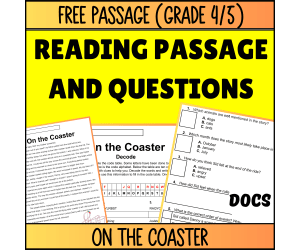
Reading Comprehension Fiction Set 2 Sample: On the Coaster (Docs)
ELA, Reading, Common Core, Reading Comprehension, Spelling, Language Development, ESL, Children’s Literature, Literature, Writing, Grade 4, 5, Worksheets & Printables, Worksheets, Writing Prompts, Assessments, Teacher Tools, Tests, Quizzes and Tests, Centers, Activities
Reading Comprehension Passages Fiction Set 2 Sample Overview No prep reading comprehension lessons, with enjoyable stories and topics. Each lesson has a blend of post-reading activities. Mixed questions to check overall understanding. Vocabulary activities, plus a writing section. Lessons also contain a bonus extension exercise at the end. Some you may like, some you may not, either way they are there if you wish to use them. Full answer keys are provided. Passage Included 7.On the Coaster: Sid talks about his experience on a roller coaster. Docs Version This is the Docs editable and fillable version. This download is available in GOOGLE Docs, GOOGLE Forms, GOOGLE Slides. PDF, PPT, WORD. FULL CATALOG OF DOWNLOAD LINKS HERE Grade 4/5 Links Fiction Set 1 - Animals Google Docs Google Forms Google Slides PDF PPT Word Guided Reading Materials Fiction Set 2 - Family Google Docs Google Forms Google Slides PDF PPT Word Guided Reading Materials Fiction Set 3 - Friends Google Docs Google Forms Google Slides PDF PPT Word Guided Reading Materials Fiction Set 4 - School Google Docs Google Forms Google Slides PDF PPT Word Guided Reading Materials Fiction Set 5 - Sports Google Docs Google Forms Google Slides PDF PPT Word Guided Reading Materials Nonfiction Set 1 - Birds Google Docs Google Forms Google Slides PDF PPT Word Guided Reading Materials Nonfiction Set 2 - Insects Google Docs Google Forms Google Slides PDF PPT Word Guided Reading Materials Nonfiction Set 3 - Mammals Google Docs Google Forms Google Slides PDF PPT Word Guided Reading Materials Nonfiction Set 4 - Nature Google Docs Google Forms Google Slides PDF PPT Word Guided Reading Materials Nonfiction Set 5 - Sea Animals Google Docs Google Forms Google Slides PDF PPT Word Guided Reading Materials Reading Passages Overview Each passage is especially written for Grade 4-5 students, including key vocabulary required for this age group. Topics are varied and are accompanied by colorful graphics. Topics are meant to educate, yet entertain the modern student. These passages are perfect for the modern classroom. Whereas textbooks can become outdated in no time, any changes to technology or the world will result in updates to this product. Mixed Questions The mixed questions section of each lesson includes a variation of five comprehension, vocabulary and math questions. In addition, key reading strategies are frequently covered including cause & effect, summarizing, compare & contrast and making conclusions. Two or three of the questions will be MCQs and other questions will require a written response of some kind. Full answers and example responses appear at the end of the lesson. Spelling & Vocab Each reading passage contains a variety of words and phrases designed for Grade 4-5 students. Spelling and vocab activities provide the opportunity to build fluency with these words. As it can become quite mundane doing the same activities over and over, each lesson in a set will contain a different spelling and vocab activity . Activities include: spelling games, sentence match-ups, mixed-up text and decoding words from the lesson. Writing Prompts Writing prompts are designed to continue the theme or lessons learned in the story. Students are persuaded to write in a variety of ways and each prompt includes several cues to help. As with the spelling/vocab section, writing prompts will vary. This includes research pieces, reading responses, poetry and creative writing prompts. Full Answer Keys Full answer keys and sample responses are provided so no matter how busy you are, you know you're covered! Mixed question answers provide evidence from the text, math questions contain the relevant workings. Answers are designed for use by the teacher, but also suitable as a handout to the student. Just for Fun Each lesson will have a bonus extension exercise. This is something fun to extend the lesson with. You can find these at the end of each lesson, titled Just for Fun. Just for Funs are optional. Some you may like, some you may not. Either way, they are there to do with as you wish. For similar downloads and other frees, do check out Cored Group on TeachSimple.
Author Cored Education
Tags Elementary, Reading, Comprehension, Vocabulary, Answers, Ccss, Common Core, Spelling, Writing, Digital Centers

Reading Comprehension Fiction Set 2 Sample: Graduation (Google Forms)
ELA, Reading, Language Development, Common Core, ESL, Vocabulary, Reading Comprehension, Writing, Creative Writing, Resources for Teachers, Grade 6, 7, Assessments, Teacher Tools, Quizzes, Quizzes and Tests, Activities
Reading Comprehension Passages Fiction Set 2 Overview Reading comprehension lessons, especially written for Grade 6-7, providing the chance to read interesting and engaging passages. Each lesson has a mix of questions to check understanding, a vocabulary or spelling activity to help remember key language introduced, and a writing exercise. Full answer keys are provided. Passage Included 2.Graduation: Matt helps prepare for his brother's graduation party. Google Forms Version This is the Forms editable and fillable/self grading version. This download is available in GOOGLE Docs, GOOGLE Forms, GOOGLE Slides. PDF, PPT, WORD. FULL CATALOG OF DOWNLOAD LINKS HERE Grade 6/7 Links Fiction Set 1 Google Docs Google Forms Google Slides PDF PPT Word Guided Reading Materials Fiction Set 2 Google Docs Google Forms Google Slides PDF PPT Word Guided Reading Materials Nonfiction Set 1 Google Docs Google Forms Google Slides PDF PPT Word Guided Reading Materials Nonfiction Set 2 Google Docs Google Forms Google Slides PDF PPT Word Guided Reading Materials Reading Passages Overview Each passage is especially written for Grade 6/7 students, including key vocabulary required for this age group. Topics are varied and are accompanied by colorful graphics. Topics are meant to educate, yet entertain the modern student. The majority of these short stories contain an important message - a way of developing these young learners further. Mixed Questions The mixed questions section of each lesson includes a variation of five to six comprehension, vocabulary and Math questions. In addition, key reading strategies are frequently covered including cause & effect, summarizing, compare & contrast and making conclusions. Mixed questions require a written response (no MCQ's), full answers and example responses appear at the end of the lesson. Spelling & Vocab Each reading passage contains a variety of words and phrases designed for Grade 6/7 students. Spelling and vocab activities provide the opportunity to build fluency with these words. Activities provide clues to help assist students. Vocabulary activities include extra questions where students must write a synonym, an antonym or a sentence using a certain word. Writing Prompts Writing prompts are designed to continue the theme or lessons learned in the story. Students are persuaded to write in a variety of ways and each prompt includes several cues to help. The main focus in this product, is the student. Prompts will require the student to relate to past experiences and encourage them to discuss feelings and ways to improve. Full Answer Keys Full answer keys and sample responses are provided so no matter how busy you are, you know you're covered! Mixed question answers provide evidence from the text, Math questions contain the relevant workings. Answers are designed for use by the teacher, but also suitable as a handout to the student. For similar downloads and other frees, do check out Cored Group on TeachSimple.
Author Cored Education
Tags Elementary, Reading, Comprehension, Vocabulary, Answers, Ccss, Common Core, Spelling, Writing, Passages
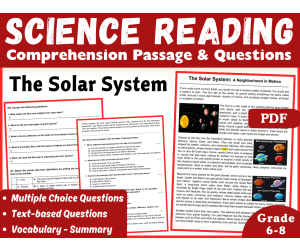
Science Reading Comprehension Passage. The Solar System (PDF)
Science, ELA, Reading, Reading Comprehension, Strategies, Resources for Teachers, Space, Earth and Environmental Sciences, Grade 6, 7, 8, 9, Writing Prompts, Worksheets & Printables, Centers, Activities, Teacher Tools, Assessments, Quizzes and Tests, Quizzes, Tests
Science Reading Comprehension Passages and Questions: The Solar System (PDF) This very engaging science reading passage about The Solar System is designed to bridge the gap between science and literacy through strengthening reading comprehension and sparking scientific curiosity in middle school students. The passage blends English Language Arts skills with accurate science content that supports NGSS classroom practice. Ideal for interdisciplinary learning in ELA and Science. Suitable for Grade 9 review, too! Student Tasks for The Passage: 5 multiple-choice questions targeting main idea, key details, inference, vocabulary in context, and use of evidence 5 vocabulary matching items with clear, student-friendly definitions 5 text-based questions that require citing specific lines or facts 1 summary prompt that asks students to condense central ideas accurately Full answer key for every section Available Formats for this Resource Fillable PDF Word Docs Google Docs FULL CATALOG OF DOWNLOADING LINKS HERE Product Details Length: 5 pages total Grades: 6–8, also suitable for Grade 9 review Use cases: close reading, stations, homework, intervention, test prep, and sub plans Standards support: reinforces informational-text skills and supports NGSS-style sense making through observation, modeling, and clear use of claim, evidence, and reasoning Why Teachers Choose This Set Authentic science content paired with rigorous literacy practice Consistent task structure across all passages for easier planning and smoother student routines Clear, age-appropriate writing that builds confidence without oversimplifying Other Science Reading Collections you May find in the store: 1. Astronomy & Space Science 2. Volcanoes, Rocks, & Mountains 3. Rock Cycle, Soil, & Sinkholes 4. Mars, Glaciers, & Antarctica 5. Water Cycle, Acid Rain, & Wastewater 6. Insects, Animals, & Ecosystems 7. Bioluminescence & Insects 8. Animal Skin, Cats, & T. Rex 9. Human Body and Senses 10. Health & Applied Bioscience 11. Waves, Light, & Imaging 12. Electricity & Energy 13. Motion & Materials 14. Chemistry and Materials Science Use this set to reinforce ELA skills in science, to add literacy to your lessons, and to support independent work. The passages strengthen main idea, evidence use, vocabulary in context, inference, cause and effect, and summary writing. With ready-to-use assessments and complete answer keys, you can provide focused practice that is simple to run and fast to review.
Author Middle & High School - CORED Education
Rating
Tags Middle School, Reading Comprehension, Reading Strategies, ELA, Centers, Reading Passage, Assessments, Vocabulary, Environmental Science, The Solar System

Cats in Ancient Egypt: SAMPLE Social Studies Reading Passage (PDF)
ELA, Reading, Reading Comprehension, Strategies, Resources for Teachers, Social Studies, History: Ancient, History, Grade 6, 7, 8, 9, Writing Prompts, Worksheets & Printables, Centers, Activities, Teacher Tools, Assessments, Quizzes and Tests, Quizzes, Tests
This is a ONE PASSAGE SAMPLE. The following is the description of the FULL resource and the downloading links: Ancient Civilizations: Social Studies Reading Passages (PDF) This very engaging collection of Social Studies reading passages about Ancient Civilizations is designed to bridge the gap between social studies and literacy through strengthening reading comprehension and sparking knowledge curiosity in middle school students. Each passage blends English Language Arts skills with accurate social studies content. Ideal for interdisciplinary learning in ELA and Social Studies. Suitable for Grade 9 review, too! What Is Included? There are - (3) - informational passages: Sacred Whiskers: Cats in Ancient Egypt Mesopotamia: The First Urban World The Inca: Empire in the Clouds Student Tasks for Each Passage: 5 multiple-choice questions targeting main idea, key details, inference, vocabulary in context, and use of evidence 5 vocabulary matching items with clear, student-friendly definitions 5 text-based questions that require citing specific lines or facts 1 summary prompt that asks students to condense central ideas accurately Full answer key for every section Available Formats for this Resource Fillable PDF Word Docs Google Docs FULL CATALOG OF DOWNLOADING LINKS HERE Reading Passage Links: Ancient Civilizations PDF Fillable PDF Word Docs Google Docs Early Empires and Trade Networks PDF Fillable PDF Word Docs Google Docs The Founding of the United States PDF Fillable PDF Word Docs Google Docs Language, Culture, and Meaning PDF Fillable PDF Word Docs Google Docs Psychology and Society PDF Fillable PDF Word Docs Google Docs Global Festivals and Traditions PDF Fillable PDF Word Docs Google Docs Extreme Environments and People PDF Fillable PDF Word Docs Google Docs Food, Culture, and Preservation PDF Fillable PDF Word Docs Google Docs Global Food Customs PDF Fillable PDF Word Docs Google Docs Media, Communication, and Popular Culture PDF Fillable PDF Word Docs Google Docs Human Impact on the Environment PDF Fillable PDF Word Docs Google Docs Civic Action and Social Change PDF Fillable PDF Word Docs Google Docs Fashion, Society, and Power PDF Fillable PDF Word Docs Google Docs People, Places, and Unusual Histories PDF Fillable PDF Word Docs Google Docs Product Details Length: 15 pages total Grades: 6–8, also suitable for Grade 9 review Use cases: close reading, stations, homework, intervention, test prep, and sub plans Why Teachers Choose This Set Authentic social studies content paired with rigorous literacy practice Consistent task structure across all passages for easier planning and smoother student routines Clear, age-appropriate writing that builds confidence without oversimplifying Use this set to reinforce ELA skills in social studies, to add literacy to your lessons, and to support independent work. The passages strengthen main idea, evidence use, vocabulary in context, inference, cause and effect, and summary writing. With ready-to-use assessments and complete answer keys, you can provide focused practice that is simple to run and fast to review.
Author Middle & High School - CORED Education
Rating
Tags Middle School, Reading Comprehension, Reading Strategies, ELA, Centers, Reading Passage, Assessments, Vocabulary, Social Studies, Ancient Civilization
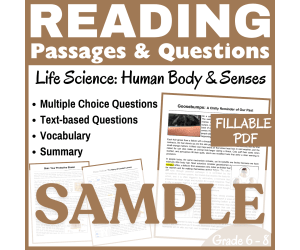
Life Science Reading Passage SAMPLE: SKIN & Human Body (FILLABLE PDF)
Science, ELA, Reading, Reading Comprehension, Strategies, Resources for Teachers, Life Sciences, Human Body, Grade 6, 7, 8, 9, Writing Prompts, Worksheets & Printables, Centers, Activities, Teacher Tools, Assessments, Quizzes and Tests, Quizzes, Tests
This is a ONE PASSAGE SAMPLE. The following is the description of the FULL resource and the downloading links: Human Body and Senses: Life Science Reading Comprehension Passages and Questions (FILLABLE PDF) This very engaging and fillable collection of life science reading passages about Contact Lenses, Goosebumps, and Skin is designed to bridge the gap between science and literacy through strengthening reading comprehension and sparking scientific curiosity in middle school students. Each passage blends English Language Arts skills with accurate science content that supports NGSS classroom practice. Ideal for interdisciplinary learning in ELA and Science. Suitable for Grade 9 review, too! These worksheets are designed as fillable PDFs , which means students can type their answers directly into the document on any computer or tablet . Each page includes highlighted text fields that show them exactly where to type! What Is Included? There are (3) informational passages: Clear Vision: The Story of Contact Lenses Goosebumps: A Chilly Reminder of Our Past Skin: Your Protective Shield Student Tasks for Each Passage: 5 multiple-choice questions targeting main idea, key details, inference, vocabulary in context, and use of evidence 5 vocabulary matching items with clear, student-friendly definitions 5 text-based questions that require citing specific lines or facts 1 summary prompt that asks students to condense central ideas accurately Full answer key for every section Available Formats for this Resource Word Docs Google Docs FULL CATALOG OF DOWNLOADING LINKS HERE Other Science Reading Collections and Topics You May Find in the Store: 1. Astronomy & Space Science 2. Volcanoes, Rocks, & Mountains 3. Rock Cycle, Soil, & Sinkholes 4. Mars, Glaciers, & Antarctica 5. Water Cycle, Acid Rain, & Wastewater 6. Insects, Animals, & Ecosystems 7. Bioluminescence & Insects 8. Animal Skin, Cats, & T. Rex 9. Human Body and Senses 10. Health & Applied Bioscience 11. Waves, Light, & Imaging 12. Electricity & Energy 13. Motion & Materials 14. Chemistry and Materials Science 15. Electromagnetism 16. Acids and Bases 17. Gas Laws 18. Biotechnology 19. Periodic Trends 20. Protists and Fungi 21. Microevolution 22. Blood 23. Chemical Bonding 24. Magnets 25. Muscles 26. Nuclear Chemistry 27. Electromagnetic Devices 28. Epigenetics 29. The Law of Conservation of Mass 30. Atomic Models 31. Isotopes and Ions 32. Light 33. Human-Environment Interaction 34. Theory of Evolution 35. Photosynthesis 36. Origins of Life and Early Earth 37. Gene Expression and Regulation 38. Thermochemistry 39. Allergies 40. Coevolution 41. Birth to Adulthood 42. Cells 43. Entropy and Free Energy 44. The Human Brain 45. Mixtures and Solutions 46. Invertebrates 47. Zoo Animals 48. Biochemistry 49. Animal Behavior 50. Population Ecology ...and many more engaging science reading passages that cover intriguing and important topics designed to spark curiosity and support student learning. How to Use These PDFs Click on the highlighted area to start typing your answer. Move to the next question by clicking in the next highlighted box. When you are finished, close the document and select SAVE so your answers stay recorded. If you want to keep a blank copy for later, choose Save As and give your completed version a new name. Product Details Length: 14 pages total Grades: 6–8, also suitable for Grade 9 review Use cases: close reading, stations, homework, intervention, test prep, and sub plans Standards support: reinforces informational-text skills and supports NGSS-style sense making through observation, modeling, and clear use of claim, evidence, and reasoning Why Teachers Choose This Set Authentic science content paired with rigorous literacy practice Consistent task structure across all passages for easier planning and smoother student routines Clear, age-appropriate writing that builds confidence without oversimplifying Use this set to reinforce ELA skills in science, to add literacy to your lessons, or to support independent work. The passages strengthen main idea, evidence use, vocabulary in context, inference, cause and effect, and summary writing. With ready-to-use assessments and complete answer keys, you can provide focused practice that is simple to run and fast to review.
Author Middle & High School - CORED Education
Rating
Tags Middle School, Reading Comprehension, Reading Strategies, ELA, Centers, Reading Passage, Assessments, Vocabulary, Life Science, Human Body
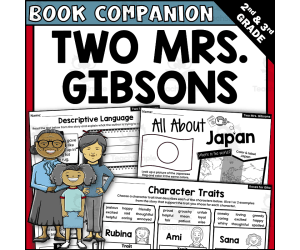
Two Mrs. Gibsons Read Aloud Book Companion Activities for IRA
ELA, Reading, Reading Comprehension, Literature, Grade 2, 3, 4, Read Alouds, Activities
This picture book companion is a complete supplemental resource for the book Two Mrs. Gibsons, by Toyomi Igus. With 35 print-and-go reading activities to choose from, this resource is ideal for customizing learning to your student's specific needs and academic abilities. Students will investigate characters, identify story elements, determine the theme, practice plotting story events, compare & contrast, make predictions, inferences, & connections, answer questions that require them to think beyond the text, and much more! Students will love the engaging and fun activities, and you will appreciate the time saved hunting for high-level resources to teach reading concepts that students frequently struggle with. The activities provided are designed to enable students to apply higher-level thinking skills, encourage them to provide text evidence to support their thinking, and challenge them to express their own thoughts and/or perspectives. ⭐️This Resource Includes:⭐️ ◾ Making Predictions: Before reading the book, students will make predictions about the text. ◾ Story Elements: Students fill in the boxes with words & pictures to represent the story elements. ◾ Sequencing: Students will retell & illustrate the important parts of the story. ◾ Summary: Students complete the Somebody, Wanted, Because, But, So graphic organizer and write a summary of the story. ◾ Story Event Sort: Students will describe a scene or event from the story that fits into each of the categories & explain how the event made them feel & how it relates to the category. ◾ Making Inferences: Students use clues & schema to make inferences while reading the story. ◾ Descriptive Language: Students read the text below from the story and explain what the author is trying to communicate. ◾ Recalling Events in Chronological Order (Viola): Students will describe and illustrate four memories of the narrator's time with Mrs. Gibson, her grandmother. ◾ Recalling Events in Chronological Order (Kazumi): Students will describe and illustrate four memories of the narrator's time with Mrs. Gibson, her mother. ◾ Making Connections: Students make connections to events in the story. ◾ Character Traits: Students will choose a character trait that describes each of the characters and provide evidence from the text to support those character traits. ◾ Character Inside & Out (Narrator): Students include details from the story to describe what the character says, thinks, does, and feels. ◾ Character Inside & Out (Viola): Students include details from the story to describe what the character says, thinks, does, and feels. ◾ Character Inside & Out (Kazumi): Students include details from the story to describe what the character says, thinks, does, and feels. ◾ Character Feelings (Narrator): Students describe the character's feelings throughout the story & give examples. ◾ Character Feelings (Viola): Students describe the character's feelings throughout the story & give examples. ◾ Character Feelings (Kazumi): Students describe the character's feelings throughout the story & give examples. ◾ Character Change (Narrator): Students will explain how the character changed from the beginning to the end of the story and describe the events that caused the change to happen. ◾ Character Change (Viola): Students will explain how the character changed from the beginning to the end of the story and describe the events that caused the change to happen. ◾ Character Change (Kazumi): Students will explain how the character changed from the beginning to the end of the story and describe the events that caused the change to happen. ◾ Character Summary: Students summarize the main character of the story. ◾ Compare & Contrast: Students will compare & contrast the two Mrs. Gibsons in the story. ◾ Character Acrostic Poem (Viola): Students will write an acrostic poem to describe Viola Gibson's character. ◾ Character Acrostic Poem (Kazumi): Students will write an acrostic poem to describe Kazumi Gibson's character. ◾ Sketch a Scene From the Story: Students will draw a scene from the story and explain why it's important to the plot. ◾ Setting Influences the Plot: Students will draw a scene from the story that takes place in one of the settings and write about what happened there and why it was important to the plot. ◾ Theme: Students answer the questions to determine which theme best fits the story and provide text evidence to support their choice. ◾ Thinking About the Text: Students will answer the questions about the story & include examples from the text to support their answers. ◾ Wait... There's More!: Students will write about what happens next in the story. ◾ Vocabulary Crossword Puzzle: Students use the clues to fill in the puzzle. Words can go across or down. Letters are shared when the words intersect (ANSWER KEY included). ◾ All About Japan: Students will research to learn more about the country of Japan. ◾ Weekend With Mrs. Gibson: Students think about what they would do if they could spend the weekend with one of the two Mrs. Gibsons and share what they did during their time together with pictures and captions. ◾ Someone Special: Students will write a paragraph about either their mother, grandma, or a mother figure in their life and include an illustration to go with their writing. ◾ Book Review: Students will color in the stars to rate how much they enjoyed the book and draw a new cover & their favorite character from the story. Then, they will explain why other kids should or should not read it. ◾ My Family Tree: Students fill in the family tree with names and illustrations and then share them with the class (in COLOR and B&W). 💡Need ideas for different ways you can implement these activities? ◾ Focus on different reading skills each day for targeted instruction, and have students complete a corresponding printable to check for understanding. ◾ During centers, students can independently read the story again and complete an activity that reviews a previously taught concept. ◾ Work with students on a reading concept they struggle with during guided reading or strategy groups. ◾ Students work with a partner or in literature circles to complete additional reading activities. This resource is for extension read-aloud activities only. The book is not included. ⭐️You may also like: ⭐ TEXT SET #1: "The Importance of Friendship" ◾ A Weekend With Wendell Read Aloud Book Companion Activities for IRA ◾ First Come the Zebra Read Aloud Book Companion Activities for IRA ◾ This is Our House Read Aloud Book Companion Activities for IRA ◾ Horace and Morris But Mostly Dolores Read Aloud Book Companion Activities for IRA ◾ The Old Woman Who Named Things Read Aloud Book Companion Activities for IRA TEXT SET #3: "Finding Your Way in a New Place" ◾ Grandfather Counts Read Aloud Book Companion Activities for IRA ◾ The Have a Good Day Cafe, Read Aloud Book Companion Activities for IRA ◾ Roses for Gita Read Aloud Book Companion Activities for IRA ◾ Mango, Abuela, and Me, Read Aloud Book Companion Activities for IRA ◾ Home at Last Read Aloud Book Companion Activities for IRA TEXT SET #7: "Exploring Narrative Nonfiction" ◾ Cactus Hotel Read Aloud Book Companion Activities for IRA ◾ A Log's Life Read Aloud Book Companion Activities for IRA ◾ Salmon Stream Read Aloud Book Companion Activities for IRA ◾ Think of an Eel Read Aloud Book Companion Activities for IRA ✨Be sure to check out my storefront here: https://teachsimple.com/contributor/creatively-gifted
Author Creatively Gifted
Tags IRA, Picture Book Activities, Read Aloud Lessons, Interactive Read Aloud Activities, Elementary Reading, Reading Comprehension, Fountas And Pinnell IRA, Family, Second Grade, Two Mrs. Gibsons, Two Mrs Gibsons, Two Mrs. Gibsons

Ovens Reading Comprehension Passage - Cored Ed Encyclopedia
ELA, Language Development, Resources for Teachers, Reading Comprehension, Reading, Pre-Reading, Writing, Science, Physics, Strategies, Grade 2, 3, 4, 5, Worksheets & Printables, Worksheets, Teacher Tools, Centers, Activities, Writing Prompts, Assessments, Tests, Quizzes and Tests, Quizzes
This ovens reading comprehension contains the following: Visualize on the Cover (Teacher Read Aloud Script) Start your lesson by taking a few moments to visualize the topic and share thoughts or feelings about it. Pre-Reading Trivia Students will write down one thing they already know about the subject and then read five more facts and discuss. These facts are fun, and the students will enjoy learning about the subject before reading more. Reading Passage The text is a high-interest reading passage with set paragraphs, roughly three to four paragraphs long. It contains a variety of themes about the topic, anywhere from history to technology. The passage is between 250 and 350 words in length. Mixed Questions The first question page contains four multiple-choice questions, each with a choice of four answers, and three written response questions that require a sentence or two from the student. Vocabulary Questions Practice seven key words from the text in this section across two activities. First section is scrambled words where students will unscramble three words given a clue for each. The second section is a word to meaning matching activity. Creative Writing In this question, the student will be required to write a five to eight sentence paragraph on a question related to the topic. Extension Activities This page is optional for fast finishers or to take home. There are several activities, each one requiring a different skill. Do some, do none, do all, completely optional - but you will feel reassured knowing every possibility is planned for. Includes summary writting question. Answer Key There are answers for the multiple-choice questions, written response questions have sample answers, vocabulary answers and if there is a summary question then a sample summary will be provided as well. FULL CATALOG OF DOWNLOAD LINKS AND ENCYCLOPEDIA INDEX HERE Lesson Snapshot Title: Ovens Genre: Nonfiction (informational text) Subject: Science & Technology / Reading Informational Text Primary Topic: How ovens work and changed over time Estimated Guided Reading Level (A–Z): R What This Lesson Teaches Best How early ovens began as cooking pits with hot coals underneath and food covered to cook slowly. How clay ovens with thick walls held heat and were used for baking, including flatbread pressed onto the inner wall. How modern ovens can use different heat sources and methods, including gas/electric heat , broiling , and convection (a fan moving hot air). How the first microwave oven grew from an accident involving radar equipment and how microwaves heat food by moving water molecules . How headings organize information in an informational passage (history → features → invention story). Learning Goals Students will describe how some of the earliest ovens cooked food using hot coals and covered pits. Students will explain how clay ovens held heat and how bread could bake on the inner wall. Students will compare ways ovens heat food (baking, broiling, and convection) using details from the text. Students will explain what accident helped lead to the first microwave oven. Students will describe how microwaves heat food quickly based on the passage. Key Vocabulary From the Text insulated — kept heat in, like a protected box. convection — a fan circulates hot air for even heating. microwaves — waves that heat food fast without a fire. molecules — tiny pieces of matter that can move. radar — equipment mentioned that led to a discovery. Cored Ed Encyclopedia Overview The Cored Ed Encyclopedia is a weekly series of lessons that you can pick up and use right away. These short readings fit into whatever time you have available. Each one includes a warm-up, a reading, and a set of questions, but it’s flexible — you can do just the reading, the full lesson, or skip the writing section if you need to. Each lesson focuses on a single topic so students don’t get lost. The writing is clear but never childish, making it perfect for grades two through five. Topics range from animals and science to history, inventions, and everyday things. No matter the level of the student, everyone should take away at least one new idea or fact from each lesson. The materials are easy to print, easy to explain, and require no setup. They work well for whole-class teaching, partner work, or independent study.
Author Cored Education
Rating
Tags Vocabulary, Spelling, Reading Comprehension, Reading Passages, Reading, Creative Writing, Reading Strategies, Writing Prompts, Ovens, Physics
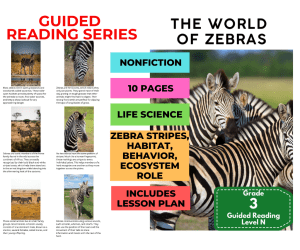
Guided Reading Level N - World of Zebras (with Lesson Plan)
ELA, Resources for Teachers, Reading Comprehension, Reading, Pre-Reading, Language Development, Animals, Life Sciences, Science, Vocabulary, Grade 2, 3, 4, Worksheets & Printables, Worksheets, Teacher Tools, Centers, Activities, Literacy Readers, Quizzes, Quizzes and Tests, Assessments
This Guided Reading Book - World of Zebras (Level N) with lesson plan includes: Guided Reading Color Label (front cover x1) This is a quick way to match the book’s demands to what students can generally handle.. The overall goal is to use the level/color to pick books for several smaller groups. To qualify for a certain level, a student is expected to read a book from that level with about 90–94% accuracy. If a student is consistently accurate and understands, move up a level. If the student is struggling at that level, drop down and add more support. Each student will improve at completely different rates, but it is generally one of the best ways to check progress across the class. DOWNLOAD THE CATALOG TO VIEW ALL GUIDED READING BOOKS AVAILABLE (SORTED LEVELS A-Z) Pre-Reading Question (x1) Teacher asks the prompt aloud, can be while showing the cover or first page. Students share what they already know, or make educated guesses from the cover. Prompt them to use the target vocabulary. Write some of their responses on the board to look back at during the reading. Vocabulary Words (x5) Introduce the five words, best doing it one at a time. Start by saying it, while students repeat and then see if anyone knows what it means before reading further. Read through the meaning and try to briefly connect each word to a picture or gesture so it’s meaningful. Ask students to flip through the book pages and point to where they see each of the vocabulary words. While reading the book pause upon coming across one of the vocab words or read the sentence twice to make sure students understand the word has appeared. Optional: Ask students to raise hands whenever they see/hear one of the new words. Guided Reading Pages (x10) Check the book snapshot (below) for: primary topic - do you need to prep extra reading or intro materials on this? what is taught best - decide on 1-2 bullets to focus on, use the prompt or words provided here for best results. learning goals - what you are checking for students to be able to do after the session, elicit answers using prompts or words provided. key vocabulary (see section above). questions overview - so you know what is coming up and if you need to prep extra materials to assist understanding. Run the lesson You may have already looked at a few of the pages together, but you can show them some of the pictures again first to set meaning. Depending on how much time you have and how familiar your students are with guided reading class, you may want to read the book aloud first with the group first. Students whisper or partner read, while you listen in. If time, do it as a group, one student reading a page each. Use the guided page’s prompts to coach: “Check the picture / does it make sense?” “Point under the words / try the first sound” “Reread the sentence smoothly”. Try to focus more on one student per session (rotating every time), so you can work out if they are ready to move up or need to move down a level. Comprehension Questions (back cover x3) This is your way to check that students didn’t just say the words, but actually understood the text. First, let students answer by pointing to the page/picture and saying a short sentence. After any answer, follow with: “Show me where you found that in the text.” In bigger groups, have partners answer first (10–20 seconds), then call on 2–3 students to share. Differentiation tips: Emerging speakers/struggling readers: oral + pointing On-level: oral in a full sentence Higher: one written sentence or draw + label Book Snapshot Title: The World of Zebras Genre: Nonfiction (informational text) Subject: Life Science / Reading (Informational Text) Primary Topic: Zebra stripes, habitat, behavior, and ecosystem role Estimated Guided Reading Level (A–Z): N What This Book Teaches Best Animal adaptations for survival: Zebras’ black-and-white stripes help them blend into the “shimmering heat” and can create a “visual blur” when predators are near. Animal identification and social behavior: Each zebra’s stripe pattern is unique “like a human fingerprint,” helping herd members recognize one another. Habitats and needs: Zebras live in open grasslands and woodlands called savannas, where they can roam, find water, and watch for danger. Ecosystems and food chains: As plant-eaters, zebras graze tough grasses and help keep grasslands healthy, supporting other species. Life cycles and migration: The text explains foals (baby zebras) and describes the Great Migration in search of water and green pastures. Learning Goals Students will describe where zebras live and what that habitat provides for them. Students will explain how zebra stripes can help zebras in different situations described in the text. Students will identify what zebras eat and describe how their teeth help them graze. Students will describe how zebras live in groups and name the members of a harem listed in the book. Students will retell how zebras respond when a predator is nearby, using details from the text. Students will explain why zebras are important to grasslands, based on the ecosystem details provided. Key Vocabulary From the Text iconic — well-known and easy to recognize. savanna — open grassland with a few trees. herbivores — animals that eat only plants. stallion — an adult male in the zebra family group. ecosystem — living things in a place and how they relate. Discussion Prompts Pre-reading question: How do you think a zebra’s stripes could help it stay safe? Comprehension questions: What does the text say is special about each zebra’s pattern of stripes? Comprehension questions: According to the text, what might zebras do when a predator like a lion or hyena is nearby? Comprehension questions: Why does the text say zebras are important for keeping grasslands healthy? Printing Tips 1. Best Printing Method (Recommended) “Booklet” Printing (Best if Available) If your printer or PDF viewer supports Booklet Printing , use this. Settings to use: Print mode: Booklet Paper size: Letter or A4 (either works) Orientation: Landscape Print on both sides: Yes Flip on: Short edge Scaling: Fit to printable area Booklet subset: First test: Front sides only Then: Back sides only This will automatically: Pair pages correctly Put the cover on the outside Align everything for folding After printing, fold in half and staple along the spine . 2. If “Booklet” Printing Is NOT Available You can still print this correctly with manual duplex printing . Step-by-step: Open the PDF. Choose Print . Set: Orientation: Landscape Pages per sheet: 1 Print on both sides: Yes Flip on: Short edge Print all pages . Because each PDF page already contains two facing book pages, the result will still fold cleanly into a book. Thousands of Cored Education products are included with your TeachSimple membership. Download links and encyclopedia index available here.
Author Cored Education
Rating
Tags Reading Comprehension, Reading Passages, Reading, Guided Reading, Guided Reading Lesson Plan, Guided Reading Activity, Pre-reading, Science Lesson Plans, Life Science, Animals

Reading Comprehension Fiction Set 2 Sample: Chasing Pheasants (Forms)
ELA, Reading, Language Development, Common Core, ESL, Reading Comprehension, Creative Writing, Writing, Resources for Teachers, Grade 2, 3, Centers, Activities, Assessments, Teacher Tools, Tests, Quizzes and Tests
Reading Comprehension Passages Fiction Set 2 Sample Overview Fascinating reading comprehension passages, each with an array of activities included. Stories are written for the modern classroom and topics are designed to promote enthusiasm from each student. Each lesson contains a mixed questions section to check understanding, a vocabulary or spelling activity to help remember key language introduced, and a writing exercise. Full answer keys are provided. For a more detailed overview, check the section under the links at the bottom of this description. Passages Include 9.Chasing Pheasants: Tony and his father have a great idea...or so they think! Forms Version This is the Forms editable and fillable/self grading version. This download is available in GOOGLE Docs, GOOGLE Forms, GOOGLE Slides. PDF, PPT, WORD. FULL CATALOG OF DOWNLOAD LINKS HERE Grade 2/3 Links Fiction Set 1 - Nature Google Docs Google Forms Google Slides PDF PPT Word Guided Reading Materials Fiction Set 2 - Animals Google Docs Google Forms Google Slides PDF PPT Word Guided Reading Materials Fiction Set 3 - Food Google Docs Google Forms Google Slides PDF PPT Word Guided Reading Materials Fiction Set 4 - School Google Docs Google Forms Google Slides PDF PPT Word Guided Reading Materials Fiction Set 5 - Friends Google Docs Google Forms Google Slides PDF PPT Word Guided Reading Materials Fiction Set 6 - Family Google Docs Google Forms Google Slides PDF PPT Word Guided Reading Materials Fiction Set 7 - Sports Google Docs Google Forms Google Slides PDF PPT Word Guided Reading Materials Nonfiction Set 1 - Technology Google Docs Google Forms Google Slides PDF PPT Word Guided Reading Materials Nonfiction Set 2 - Nutrition Google Docs Google Forms Google Slides PDF PPT Word Guided Reading Materials Nonfiction Set 3 - Animals Google Docs Google Forms Google Slides PDF PPT Word Guided Reading Materials Reading Passages Overview Each passage is especially written for Grade 2-3 students, including key vocabulary required for this age group. Topics are varied and are accompanied by colorful graphics. Topics are meant to educate, yet entertain the modern student. These passages are perfect for the modern classroom. Whereas textbooks can become outdated in no time, any changes to technology or the world will result in updates to this product. Mixed Questions The mixed questions section of each lesson includes a variation of fivecomprehension, vocabulary and math questions. In addition, key reading strategies are frequently covered including cause & effect, summarizing, compare & contrast and making conclusions. Three of the questions will be MCQs and two will require a written response of some kind. Full answers and example responses appear at the end of the lesson. Spelling & Vocab Each reading passage contains a variety of words and phrases designed for Grade 2-3 students. Spelling and vocab activities provide the opportunity to build fluency with these words. As it can become quite mundane doing the same activities over and over, each lesson in a set will contain a different spelling and vocab activity . Writing Prompts Writing prompts are designed to continue the theme or lessons learned in the story. Students are persuaded to write in a variety of ways and each prompt includes several cues to help. As with the spelling/vocab section, writing prompts will vary. This includes research pieces, reading responses, poetry and creative writing prompts. Full Answer Keys Full answer keys and sample responses are provided so no matter how busy you are, you know you're covered! Mixed question answers provide evidence from the text, math questions contain the relevant workings. Answers are designed for use by the teacher, but also suitable as a handout to the student. Additional File One lesson will have an additional file. This is something fun to extend the lesson with. For similar downloads and other frees, do check out Cored Group on TeachSimple.
Author Cored Education
Tags Elementary, Reading, Comprehension, Vocabulary, Answers, Ccss, Common Core, Spelling, Writing, Digital Centers

Reading Comprehension Fiction Set 6 Sample Tom's Canadian Mom (Forms)
ELA, Reading, Language Development, Common Core, Spelling, ESL, Children’s Literature, Literature, Writing, Reading Comprehension, Grade 2, 3, Centers, Activities, Assessments, Teacher Tools, Tests, Quizzes and Tests
Reading Comprehension Passages Fiction Set 6 Sample Overview Fascinating reading comprehension passages, each with an array of activities included. Stories are written for the modern classroom and topics are designed to promote enthusiasm from each student. Each lesson contains a mixed questions section to check understanding, a vocabulary or spelling activity to help remember key language introduced, and a writing exercise. Full answer keys are provided. For a more detailed overview, check the section under the links at the bottom of this description. Passage Included 5.Tom's Canadian Mom: The most important person from Canada is...Tom's mom! Forms Version This is the Forms editable and fillable/self grading version. This download is available in GOOGLE Docs, GOOGLE Forms, GOOGLE Slides. PDF, PPT, WORD. FULL CATALOG OF DOWNLOAD LINKS HERE Grade 2/3 Links Fiction Set 1 - Nature Google Docs Google Forms Google Slides PDF PPT Word Guided Reading Materials Fiction Set 2 - Animals Google Docs Google Forms Google Slides PDF PPT Word Guided Reading Materials Fiction Set 3 - Food Google Docs Google Forms Google Slides PDF PPT Word Guided Reading Materials Fiction Set 4 - School Google Docs Google Forms Google Slides PDF PPT Word Guided Reading Materials Fiction Set 5 - Friends Google Docs Google Forms Google Slides PDF PPT Word Guided Reading Materials Fiction Set 6 - Family Google Docs Google Forms Google Slides PDF PPT Word Guided Reading Materials Fiction Set 7 - Sports Google Docs Google Forms Google Slides PDF PPT Word Guided Reading Materials Nonfiction Set 1 - Technology Google Docs Google Forms Google Slides PDF PPT Word Guided Reading Materials Nonfiction Set 2 - Nutrition Google Docs Google Forms Google Slides PDF PPT Word Guided Reading Materials Nonfiction Set 3 - Animals Google Docs Google Forms Google Slides PDF PPT Word Guided Reading Materials Reading Passages Overview Each passage is especially written for Grade 2-3 students, including key vocabulary required for this age group. Topics are varied and are accompanied by colorful graphics. Topics are meant to educate, yet entertain the modern student. These passages are perfect for the modern classroom. Whereas textbooks can become outdated in no time, any changes to technology or the world will result in updates to this product. Mixed Questions The mixed questions section of each lesson includes a variation of fivecomprehension, vocabulary and math questions. In addition, key reading strategies are frequently covered including cause & effect, summarizing, compare & contrast and making conclusions. Three of the questions will be MCQs and two will require a written response of some kind. Full answers and example responses appear at the end of the lesson. Spelling & Vocab Each reading passage contains a variety of words and phrases designed for Grade 2-3 students. Spelling and vocab activities provide the opportunity to build fluency with these words. As it can become quite mundane doing the same activities over and over, each lesson in a set will contain a different spelling and vocab activity . Writing Prompts Writing prompts are designed to continue the theme or lessons learned in the story. Students are persuaded to write in a variety of ways and each prompt includes several cues to help. As with the spelling/vocab section, writing prompts will vary. This includes research pieces, reading responses, poetry and creative writing prompts. Full Answer Keys Full answer keys and sample responses are provided so no matter how busy you are, you know you're covered! Mixed question answers provide evidence from the text, math questions contain the relevant workings. Answers are designed for use by the teacher, but also suitable as a handout to the student. Additional File One lesson will have an additional file. This is something fun to extend the lesson with. For similar downloads and other frees, do check out Cored Group on TeachSimple.
Author Cored Education
Tags Elementary, Reading, Comprehension, Vocabulary, Answers, Ccss, Common Core, Spelling, Writing, Passages
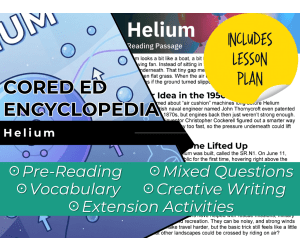
Helium Reading Comprehension Passage - Cored Ed Encyclopedia
ELA, Reading Comprehension, Reading, Science, Technology, Pre-Reading, Language Development, Physics, Earth and Environmental Sciences, Chemistry, Grade 2, 3, 4, 5, Worksheets & Printables, Worksheets, Teacher Tools, Centers, Activities, Writing Prompts, Assessments, Quizzes and Tests, Quizzes, Lesson Plans
This helium reading comprehension with lesson plan includes: Visualization (on the front cover) Start your lesson by taking a minute to think and share something about the topic. Read the script aloud (slowly), perhaps prepare some music or sound effects. Student close their eyes and let their imaginations wander. Students open their eyes, read the question aloud and give them a few minutes to complete. Ask a few students to share or keep answers until the end to compare with what they learn in the passage. Quick pause—thousands of Cored Education products are included with your TeachSimple membership. Download links and encyclopedia index available here. Pre-Reading Trivia Students will write down one thing they already know about the subject and then read five more facts and discuss. These facts are fun, and the students will enjoy learning about the subject before reading more. Give 1 minute for students to write what they already know (no pressure—best guess is fine). Read the five facts together. After each fact, do ask a student for their opinion, was it surprising? Set a purpose by asking students to highlight/underline one fact they want to learn more about during the reading. Reading Passage The text is a high-interest reading passage with set paragraphs, roughly three to four paragraphs long. It contains a variety of themes about the topic, anywhere from history to technology. The passage is between 250 and 350 words in length. First, ask students to look at the headings and see what they’ll learn about today. What do they know about the topic/heading? First read options: Teacher read-aloud (best for support). Partner reading (paragraph by paragraph). While reading, students underline important details, and vocabulary words they think may come up in the questions section. Mixed Questions The first question page contains four multiple-choice questions, each with a choice of four answers, and three written response questions that require a sentence or two from the student. Students complete the mcqs first independently, then review quickly as a class. For the 3 written responses, try to get students giving the answer with some form of evidence: “I think ___ because the text says ___.” If students get stuck, send them back to check the passage. Vocabulary Questions Practice seven key words from the text in this section across two activities. First section is scrambled words where students will unscramble three words given a clue for each. The second section is a word to meaning matching activity. Before starting, have some students read out words they underlined in the passage. Ask students to say the word and read aloud the sentence(s) around each word. Ask students to do scrambled words and the matching exercise in pairs then go through answers as a class. For the scrambled spelling task, get four pairs to come up to the board and write the words for extra practice with the other student reading out the clue. For the matching task, prompt students to give full sentences: “I matched ___ with ___ because ___.” Creative Writing In this question, the student will be required to write a five to eight sentence paragraph on a question related to the topic. Before starting, ask students write down 3 key ideas they are going to include in their piece. Ask students for ideas to share around the class to help those struggling. Pro writing expectations: 5–8 sentences At least 2 facts or details from the passage At least 2 vocabulary words from the previous page Students read their paragraphs while classmates listen for facts and vocabulary words. Extension Activities This page is optional for fast finishers or to take home. There are several activities, each one requiring a different skill. Do some, do none, do all, completely optional - but you will feel reassured knowing every possibility is planned for. Includes summary writting question and additional facts. Answer Key There are answers for the multiple-choice questions, written response questions have sample answers, vocabulary answers and if there is a summary question then a sample summary will be provided as well. Lesson Plan Included Customized lesson plan for this lesson is included. Lesson Snapshot Title: Helium Genre: Nonfiction (informational text) Subject: Science / Engineering (transportation technology) Primary Topic: How an air-cushion craft hovers and is used Estimated Guided Reading Level (A–Z): Q What This Lesson Teaches Best Explains how a “Helium” craft rides on a cushion of air trapped underneath instead of sitting in water. Describes why an air cushion reduces rubbing so the craft can “slide along” over surfaces like water, sand, or flat grass. Connects invention history to technology improvements (early ideas, a patented concept, then a smarter way to prevent air leaking). Shows how design changes solved problems (the flexible “skirt” helped hold the air cushion and climb over obstacles). Shares real-world uses and limitations (ferries, rescue missions, military landings, racing/recreation; noise and wind/waves). Learning Goals Students will describe how the craft moves differently from a regular boat, using details from the passage. Students will explain what an “air cushion” does and why it helps the craft slide over different surfaces. Students will identify one inventor or engineer named in the text and describe what problem they helped solve. Students will explain how the flexible “skirt” improved the craft’s ability to hover and travel. Students will list at least two jobs the craft can do (such as ferries or rescue missions) using evidence from the text. Students will describe one challenge mentioned in the passage that can make travel harder (winds or rough waves). Key Vocabulary From the Text cushion — a pocket of air that holds something up. patented — officially claimed an invention idea by law. pressure — pushing force under the craft that can lift it. hovering — staying just above a surface, not touching it. skirt — flexible part that helps hold air underneath. FULL CATALOG OF DOWNLOAD LINKS AND ENCYCLOPEDIA INDEX HERE
Author Cored Education
Rating
Tags Vocabulary, Reading Comprehension, Reading Passages, Lesson Plans, Ela Lesson Plans, Reading Comprehension Lesson Plans, Pre-reading, Science Lesson Plans, Physics, Chemistry
Guided Reading Level M - Air Pollution (with Lesson Plan)
ELA, Resources for Teachers, Reading Comprehension, Reading, Science, Technology, Physics, Life Sciences, Earth and Environmental Sciences, Environmental Science, Grade 2, 3, 4, Worksheets & Printables, Worksheets, Teacher Tools, Centers, Activities, Literacy Readers, Quizzes, Quizzes and Tests, Assessments, Lesson Plans
This Guided Reading Book - Understanding Air Pollution (Level M) with lesson plan includes: Guided Reading Color Label (front cover x1) This is a quick way to match the book’s demands to what students can generally handle.. The overall goal is to use the level/color to pick books for several smaller groups. To qualify for a certain level, a student is expected to read a book from that level with about 90–94% accuracy. If a student is consistently accurate and understands, move up a level. If the student is struggling at that level, drop down and add more support. Each student will improve at completely different rates, but it is generally one of the best ways to check progress across the class. DOWNLOAD THE CATALOG TO VIEW ALL GUIDED READING BOOKS AVAILABLE (SORTED LEVELS A-Z) Pre-Reading Question (x1) Teacher asks the prompt aloud, can be while showing the cover or first page. Students share what they already know, or make educated guesses from the cover. Prompt them to use the target vocabulary. Write some of their responses on the board to look back at during the reading. Vocabulary Words (x5) Introduce the five words, best doing it one at a time. Start by saying it, while students repeat and then see if anyone knows what it means before reading further. Read through the meaning and try to briefly connect each word to a picture or gesture so it’s meaningful. Ask students to flip through the book pages and point to where they see each of the vocabulary words. While reading the book pause upon coming across one of the vocab words or read the sentence twice to make sure students understand the word has appeared. Optional: Ask students to raise hands whenever they see/hear one of the new words. Guided Reading Pages (x10) Check the book snapshot (below) for: primary topic - do you need to prep extra reading or intro materials on this? what is taught best - decide on 1-2 bullets to focus on, use the prompt or words provided here for best results. learning goals - what you are checking for students to be able to do after the session, elicit answers using prompts or words provided. key vocabulary (see section above). questions overview - so you know what is coming up and if you need to prep extra materials to assist understanding. Run the lesson You may have already looked at a few of the pages together, but you can show them some of the pictures again first to set meaning. Depending on how much time you have and how familiar your students are with guided reading class, you may want to read the book aloud first with the group first. Students whisper or partner read, while you listen in. If time, do it as a group, one student reading a page each. Use the guided page’s prompts to coach: “Check the picture / does it make sense?” “Point under the words / try the first sound” “Reread the sentence smoothly”. Try to focus more on one student per session (rotating every time), so you can work out if they are ready to move up or need to move down a level. Comprehension Questions (back cover x3) This is your way to check that students didn’t just say the words, but actually understood the text. First, let students answer by pointing to the page/picture and saying a short sentence. After any answer, follow with: “Show me where you found that in the text.” In bigger groups, have partners answer first (10–20 seconds), then call on 2–3 students to share. Differentiation tips: Emerging speakers/struggling readers: oral + pointing On-level: oral in a full sentence Higher: one written sentence or draw + label Book Snapshot Title: Understanding Air Pollution Genre: Nonfiction (informational science text) Subject: Science (Earth & Environmental Science) Primary Topic: What air pollution is and how it happens Estimated Guided Reading Level (A–Z): M What This Book Teaches Best Introduces the atmosphere as an “invisible blanket” of air around Earth that living things need. Explains what clean air is mostly made of (nitrogen and oxygen) and why transparent air matters for sunlight and plant growth. Defines air pollution and shows that it can be visible (dust, soot) or hidden (invisible gases). Describes major sources of air pollution from transportation and from factories/power plants that burn fuels. Connects air pollution to real effects, including smog , health problems from particulate matter, and damage to plants through acid rain. Learning Goals Describe what the atmosphere is and why it is important for living things. Identify what clean air is mostly made of and describe characteristics of clean air from the text. Explain what air pollution is and name examples of pollutants described in the book. Describe how transportation and factories/power plants contribute to air pollution. Explain what smog is and how it forms, using details from the text. Describe one way technology can reduce air pollution based on the book’s examples. Key Vocabulary From the Text atmosphere — blanket of air around Earth. nitrogen — a gas that makes up much of clean air. oxygen — a gas living things need to survive. particulate — made of tiny pieces or specks. turbines — machines with blades that spin to make electricity. Discussion Prompts Pre-reading question: What are some things you think can make the air around us less clean? Comprehension questions: What two gases is clean air mostly made of? Comprehension questions: What is smog, according to the text? Comprehension questions: How do wind turbines and solar panels help reduce air pollution in the book? Printing Tips 1. Best Printing Method (Recommended) “Booklet” Printing (Best if Available) If your printer or PDF viewer supports Booklet Printing , use this. Settings to use: Print mode: Booklet Paper size: Letter or A4 (either works) Orientation: Landscape Print on both sides: Yes Flip on: Short edge Scaling: Fit to printable area Booklet subset: First test: Front sides only Then: Back sides only This will automatically: Pair pages correctly Put the cover on the outside Align everything for folding After printing, fold in half and staple along the spine . 2. If “Booklet” Printing Is NOT Available You can still print this correctly with manual duplex printing . Step-by-step: Open the PDF. Choose Print . Set: Orientation: Landscape Pages per sheet: 1 Print on both sides: Yes Flip on: Short edge Print all pages . Because each PDF page already contains two facing book pages, the result will still fold cleanly into a book. Thousands of Cored Education products are included with your TeachSimple membership. Download links and encyclopedia index available here.
Author Cored Education
Rating
Tags Reading Comprehension, Reading Passages, Reading, Guided Reading, Guided Reading Lesson Plan, Guided Reading Activity, Pre-reading, Science Lesson Plans, Earth Science, Physics
Novel Study on "The Kite Runner" by Khaled Hosseini - Research Project
ELA, Reading, Reading Comprehension, Writing, Literature, Library, Research, Grade 7, 8, 9, 10, 11, 12, Activities
Novel Study on "The Kite Runner" by Khaled Hosseini - Research Project This English Language and Arts Research Project on "The Kite Runner" by Khaled Hosseini ( Novel Study ) aims to make learners discover this Coming of Age Novel set in Afghanistan on a deeper level (Character's Description, Chapter Reading Comprehension Questions, Novel Analysis + Writing Activity to engage with the novel read) Within this Novel Study Research on "The Kite Runner" by Khaled Hosseini, it is offered: 2 worksheets to write research outcomes 32 Cards to fish for this Novel Study Project on "The Kite Runner" How does this Novel Study on "The Kite Runner" Teaching Resource work? learners (or groups) fish a Research Topic card of each color (black for characters, green for chapters comprehension questions, purple for novel analysis and orange for writing activity prompts) each student or group makes their personalized Research Project on "The Kite Runner", by focusing on their fished topic cards (ex. fished black card on Characters on "Amir", green card on chapters on "Chapters 1-3", purple Cards on Novel analysis on the themes and a orange card on Book Review Writing Prompt) Learners stick their fished cards on their research worksheet and write their Novel Study Project's outcomes Learners make a presentation on their personalized rersearch on "The Kite Runner" by Khaled Hosseini teacher evaluates research given learner or group's research outcomes written on worksheets Why is this Teaching Resource worth using? By fishing topic cards, students have a chance to: make unique randomized research projects focus on specific topics only and discover more the research Novel in "non-superficial" ways Connect their own Research outcomes with their peers' This Novel Study on "The Kite Runner" PDF Printable Research Project Teaching (6 slides) can be great for learners from 7th grade to 12th grade (high school) to study this Novel by the Afghan-American novelist Khaled Hosseini. Learning with Alan is a Brand New Teaching Resource/Educational Material Store whose aim is to help Teachers, Educators and Tutors to achieve their teaching objectives while creating a fun and stimulating environment. Never Forget! If you want to browse more of my Teaching Resources, click here Learning with Alan!
Author Learning with Alan
Tags Kite Runner, Afghanistan, Novel Study, Project, Research, Worksheet, Cards, Printable, Comprehension, Reading
Reading Comprehension Nonfiction Set 3 Sample: All About Horses Forms
ELA, Reading, Language Development, Common Core, ESL, Spelling, Reading Comprehension, Creative Writing, Writing, Resources for Teachers, Grade 4, 5, Centers, Activities, Assessments, Teacher Tools, Tests, Quizzes and Tests
Reading Comprehension Passages Nonfiction Set 3 Sample Overview No prep reading comprehension lessons, with enjoyable articles and topics. Each lesson has a blend of post-reading activities. Mixed questions to check overall understanding. Vocabulary activities, plus a writing section. Lessons also contain a bonus extension exercise at the end. Some you may like, some you may not, either way they are there if you wish to use them. Full answer keys are provided. Passage Included 3.All About Horses: How is the author preparing to become a vet when she gets older? Forms Version This is the Forms editable and fillable/self grading version. This download is available in GOOGLE Docs, GOOGLE Forms, GOOGLE Slides. PDF, PPT, WORD. FULL CATALOG OF DOWNLOAD LINKS HERE Grade 4/5 Links Fiction Set 1 - Animals Google Docs Google Forms Google Slides PDF PPT Word Guided Reading Materials Fiction Set 2 - Family Google Docs Google Forms Google Slides PDF PPT Word Guided Reading Materials Fiction Set 3 - Friends Google Docs Google Forms Google Slides PDF PPT Word Guided Reading Materials Fiction Set 4 - School Google Docs Google Forms Google Slides PDF PPT Word Guided Reading Materials Fiction Set 5 - Sports Google Docs Google Forms Google Slides PDF PPT Word Guided Reading Materials Nonfiction Set 1 - Birds Google Docs Google Forms Google Slides PDF PPT Word Guided Reading Materials Nonfiction Set 2 - Insects Google Docs Google Forms Google Slides PDF PPT Word Guided Reading Materials Nonfiction Set 3 - Mammals Google Docs Google Forms Google Slides PDF PPT Word Guided Reading Materials Nonfiction Set 4 - Nature Google Docs Google Forms Google Slides PDF PPT Word Guided Reading Materials Nonfiction Set 5 - Sea Animals Google Docs Google Forms Google Slides PDF PPT Word Guided Reading Materials Reading Passages Overview Each passage is especially written for Grade 4-5 students, including key vocabulary required for this age group. Topics are varied and are accompanied by colorful graphics. Topics are meant to educate, yet entertain the modern student. These passages are perfect for the modern classroom. Whereas textbooks can become outdated in no time, any changes to technology or the world will result in updates to this product. Mixed Questions The mixed questions section of each lesson includes a variation of five comprehension, vocabulary and math questions. In addition, key reading strategies are frequently covered including cause & effect, summarizing, compare & contrast and making conclusions. Two or three of the questions will be MCQs and other questions will require a written response of some kind. Full answers and example responses appear at the end of the lesson. Spelling & Vocab Each reading passage contains a variety of words and phrases designed for Grade 4-5 students. Spelling and vocab activities provide the opportunity to build fluency with these words. As it can become quite mundane doing the same activities over and over, each lesson in a set will contain a different spelling and vocab activity . Activities include: spelling games, sentence match-ups, mixed-up text and decoding words from the lesson. Writing Prompts Writing prompts are designed to continue the theme or lessons learned in the story. Students are persuaded to write in a variety of ways and each prompt includes several cues to help. As with the spelling/vocab section, writing prompts will vary. This includes research pieces, reading responses, poetry and creative writing prompts. Full Answer Keys Full answer keys and sample responses are provided so no matter how busy you are, you know you're covered! Mixed question answers provide evidence from the text, math questions contain the relevant workings. Answers are designed for use by the teacher, but also suitable as a handout to the student. Just for Fun Each lesson will have a bonus extension exercise. This is something fun to extend the lesson with. You can find these at the end of each lesson, titled Just for Fun. Just for Funs are optional. Some you may like, some you may not. Either way, they are there to do with as you wish. For similar downloads and other frees, do check out Cored Group on TeachSimple.
Author Cored Education
Tags Elementary, Reading, Comprehension, Vocabulary, Answers, Ccss, Common Core, Spelling, Writing, Digital Centers

The Secret Shortcut, by Mark Teague Read-Aloud Activities
ELA, Reading, Reading Comprehension, Grade 2, 3, 4, Read Alouds, Activities
Enhance your students' reading experience with this comprehensive companion for The Secret Shortcut, by Mark Teague. Featuring 39 ready-to-use activities, this resource is perfect for customizing learning to meet your students' needs and academic abilities. Designed to save you time and engage students effectively, these activities foster higher-level thinking skills and encourage textual evidence-based responses. Students will enjoy interactive and educational activities, while you appreciate having high-quality resources at your fingertips. INCLUDED IN THIS RESOURCE: Making Predictions Judging by the Cover Story Elements Sequencing Recalling Events in Chronological Order The Secret Shortcut Map Secret Shortcut to School Summary Story Event Sort Problem & Solution Minor Problems & Solutions Realistic or Fantasy Making Connections Making Inferences Character Traits (Floyd) Character Traits (Wendell) Character Traits (Floyd & Wendell) Character Inside & Out (Floyd) Character Inside & Out (Wendell) Character Feelings (Floyd) Character Feelings (Wendell) Overcoming Obstacles Acrostic Poem Sketch a Scene From the Story Setting the Scene Thinking About the Text Thinking Beyond the Text 3-2-1 Theme Author's Message Crossword Puzzle Word Search Puzzle Wait... There's More! Excuses for Being Late to School Compound Words Caught on Social Media Book Review This resource is for extension read-aloud activities only. The book is not included.
Author Creatively Gifted
Tags Reading Comprehension, Reading, Upper Elementary Reading, Picture Book , Read-aloud Activities, Interactive Read-aloud Activities, Book Companion, ELAR

Make Your Own Sight Word Poem Booklets: K - 1 Reading Comprehension
ELA, Reading, Reading Comprehension, Writing, Handwriting, Literature, Poetry, Kindergarten, Preschool, Grade 1, Activities
Make Your Own Sight Word Rhyming Story Booklets: Fun PreK, K, 1 Reading Comprehension Worksheets to Trace and Fold Contents: Printable, ready-to-use worksheets that your students can fold into quarters to make their own sight word booklets with simple rhyming stories to read. For each short poem there is a set of pictures to color that students can cut and paste to illustrate the booklet and demonstrate reading comprehension. These quick, fun activities are made up of worksheets with dotted letters to trace and spaces for your kids to fill in their own words or pictures. Students can then fold them to create their very own sight word poem booklets. Included are five sight word poem booklets for your students to make: - "Hop to It!" with a "Jump" variation extension - "Pets" with a student directions handout - "Red or Blue" with words to trace - "Three Yellow Ducks", a number story, with words to trace and a "Three ____" variation extension - "At the Farm" with letters to trace and a different animals variation In addition, there are: - 2 "Trace and Print the Pictured Words" extra printing practice worksheets for prep or reinforcement - Teacher notes and suggestions for use Get your kids started on their own collections of sight word poem booklets that they can add to with their own creative projects. They'll love to read and share them with others. Format: 24-page PDF in black and white for easy, economical printing and copying Curriculum standards addressed: RF.K.1 Demonstrate understanding of the organization and basic features of print. RF.K.2.A Recognize and produce rhyming words. RF.K.3.C Read common high-frequency words by sight (e.g., the, of, to, you, she, my, is, are, do, does). RL.K.7 With prompting and support, describe the relationship between illustrations and the story in which they appear L.1.1.A Print all upper- and lowercase letters.
Author WorksheetsPlus
Tags Worksheets, Activities, Printable, Print, Sight Word, Poem, Rhyme, Rhymes, Trace
Guided Reading Level H - How Animals Stay Warm (with Lesson Plan)
ELA, Resources for Teachers, Reading Comprehension, Reading, Animals, Life Sciences, Science, Pre-Reading, Language Development, Vocabulary, Kindergarten, Grade 1, 2, Worksheets & Printables, Worksheets, Teacher Tools, Centers, Activities, Literacy Readers, Quizzes, Quizzes and Tests, Assessments
This Guided Reading Book - How Animals Stay Warm (Level H) with lesson plan includes: Guided Reading Color Label (front cover x1) This is a quick way to match the book’s demands to what students can generally handle.. The overall goal is to use the level/color to pick books for several smaller groups. To qualify for a certain level, a student is expected to read a book from that level with about 90–94% accuracy. If a student is consistently accurate and understands, move up a level. If the student is struggling at that level, drop down and add more support. Each student will improve at completely different rates, but it is generally one of the best ways to check progress across the class. DOWNLOAD THE CATALOG TO VIEW ALL GUIDED READING BOOKS AVAILABLE (SORTED LEVELS A-Z) Pre-Reading Question (x1) Teacher asks the prompt aloud, can be while showing the cover or first page. Students share what they already know, or make educated guesses from the cover. Prompt them to use the target vocabulary. Write some of their responses on the board to look back at during the reading. Vocabulary Words (x5) Introduce the five words, best doing it one at a time. Start by saying it, while students repeat and then see if anyone knows what it means before reading further. Read through the meaning and try to briefly connect each word to a picture or gesture so it’s meaningful. Ask students to flip through the book pages and point to where they see each of the vocabulary words. While reading the book pause upon coming across one of the vocab words or read the sentence twice to make sure students understand the word has appeared. Optional: Ask students to raise hands whenever they see/hear one of the new words. Guided Reading Pages (x10) Check the book snapshot (below) for: primary topic - do you need to prep extra reading or intro materials on this? what is taught best - decide on 1-2 bullets to focus on, use the prompt or words provided here for best results. learning goals - what you are checking for students to be able to do after the session, elicit answers using prompts or words provided. key vocabulary (see section above). questions overview - so you know what is coming up and if you need to prep extra materials to assist understanding. Run the lesson You may have already looked at a few of the pages together, but you can show them some of the pictures again first to set meaning. Depending on how much time you have and how familiar your students are with guided reading class, you may want to read the book aloud first with the group first. Students whisper or partner read, while you listen in. If time, do it as a group, one student reading a page each. Use the guided page’s prompts to coach: “Check the picture / does it make sense?” “Point under the words / try the first sound” “Reread the sentence smoothly”. Try to focus more on one student per session (rotating every time), so you can work out if they are ready to move up or need to move down a level. Comprehension Questions (back cover x3) This is your way to check that students didn’t just say the words, but actually understood the text. First, let students answer by pointing to the page/picture and saying a short sentence. After any answer, follow with: “Show me where you found that in the text.” In bigger groups, have partners answer first (10–20 seconds), then call on 2–3 students to share. Differentiation tips: Emerging speakers/struggling readers: oral + pointing On-level: oral in a full sentence Higher: one written sentence or draw + label Book Snapshot Title: How Animals Stay Warm Genre: Nonfiction (informational) Subject: Life Science Primary Topic: Animal ways to stay warm in cold places Estimated Guided Reading Level (A–Z): H What This Book Teaches Best Animals must stay warm to live in places with snow and ice. Body coverings can help animals stay warm (thick fur and feathers that trap heat). Some animals use body fat for warmth (blubber acts like a “warm blanket” and keeps cold water from reaching the body). Animals can use behaviors to stay warm (penguins huddle close and share body heat; some animals go underground; some sit in the sun). Learning Goals Explain why animals must stay warm to live in snow and ice. Describe how thick fur helps keep warm air near an animal’s skin. Describe how blubber helps animals stay warm, including in icy water. Describe how feathers help birds stay warm by trapping heat. Identify actions animals take to stay warm (huddling, going into a burrow, sitting in the sun). Key Vocabulary From the Text arctic — very cold, snowy place. blubber — thick fat under skin that helps keep warm. feathers — soft bird covering that helps trap heat. huddle — stand very close together in a group. burrow — a deep hole an animal digs to go underground. Discussion Prompts Pre-reading question: What are some ways animals might stay warm when it is very cold? Comprehension questions: Why must animals stay warm to live in snow and ice? Comprehension questions: How does blubber help a seal swim in the icy ocean? Comprehension questions: What do penguins do in a group to stay warm? Printing Tips 1. Best Printing Method (Recommended) “Booklet” Printing (Best if Available) If your printer or PDF viewer supports Booklet Printing , use this. Settings to use: Print mode: Booklet Paper size: Letter or A4 (either works) Orientation: Landscape Print on both sides: Yes Flip on: Short edge Scaling: Fit to printable area Booklet subset: First test: Front sides only Then: Back sides only This will automatically: Pair pages correctly Put the cover on the outside Align everything for folding After printing, fold in half and staple along the spine . 2. If “Booklet” Printing Is NOT Available You can still print this correctly with manual duplex printing . Step-by-step: Open the PDF. Choose Print . Set: Orientation: Landscape Pages per sheet: 1 Print on both sides: Yes Flip on: Short edge Print all pages . Because each PDF page already contains two facing book pages, the result will still fold cleanly into a book. Thousands of Cored Education products are included with your TeachSimple membership. Download links and encyclopedia index available here.
Author Cored Education
Rating
Tags Reading Comprehension, Reading Passages, Reading, Guided Reading, Guided Reading Lesson Plan, Guided Reading Activity, Pre-reading, Vocabulary, Animals, Life Science
Social Studies Reading Passages: Our Planet and Human Impact (Docs)
ELA, Reading, Reading Comprehension, Strategies, Resources for Teachers, Social Studies, Geography, Grade 6, 7, 8, 9, Writing Prompts, Worksheets & Printables, Centers, Activities, Teacher Tools, Assessments, Quizzes and Tests, Quizzes, Tests
Social Studies Reading Comprehension Passages and Questions: Our Planet: Natural Extremes and Human Impact (Word) This resource introduces a collection of Social Studies reading comprehension passages with questions about Our Planet: Natural Extremes and Human Impact. The passages are carefully designed to bridge the gap between social studies and literacy through strengthening reading comprehension and sparking knowledge curiosity in middle school students. Each passage blends English Language Arts skills with accurate social studies content . Ideal for interdisciplinary learning in ELA and Social Studies. Suitable for Grade 9 review, too! What Is Included in this Collection? There are three informational passages (with full answer keys): Remaking Plastic: Turning Waste into Useful Materials Underwater Noise Pollution South America: A Continent of Natural Extremes For Each Passage, students will have multiple tasks to complete as follow: 5 multiple-choice questions targeting main idea, key details, inference, vocabulary in context, and use of evidence 5 vocabulary matching items with clear, student-friendly definitions 5 text-based questions that require citing specific lines or facts 1 summary prompt that asks students to condense central ideas accurately Available Formats for this Resource PDF Fillable PDF Word Docs FULL CATALOG OF DOWNLOADING LINKS HERE For more Social Studies Reading Passages, check the following Links: Ancient Civilizations PDF Fillable PDF Word Docs Google Docs Early Empires and Trade Networks PDF Fillable PDF Word Docs Google Docs The Founding of the United States PDF Fillable PDF Word Docs Google Docs Language, Culture, and Meaning PDF Fillable PDF Word Docs Google Docs Psychology and Society PDF Fillable PDF Word Docs Google Docs Global Festivals and Traditions PDF Fillable PDF Word Docs Google Docs Extreme Environments and People PDF Fillable PDF Word Docs Google Docs Food, Culture, and Preservation PDF Fillable PDF Word Docs Google Docs Global Food Customs PDF Fillable PDF Word Docs Google Docs Media, Communication, and Popular Culture PDF Fillable PDF Word Docs Google Docs Human Impact on the Environment PDF Fillable PDF Word Docs Google Docs Civic Action and Social Change PDF Fillable PDF Word Docs Google Docs Fashion, Society, and Power PDF Fillable PDF Word Docs Google Docs People, Places, and Unusual Histories PDF Fillable PDF Word Docs Google Docs Product Details Length: 15 pages total Grades: 6–8, also suitable for Grade 9 review Use cases: close reading, stations, homework, intervention, test prep, and sub plans Why Teachers Choose This Set Authentic social studies content paired with rigorous literacy practice Consistent task structure across all passages for easier planning and smoother student routines Clear, age-appropriate writing that builds confidence without oversimplifying Use this set to reinforce ELA skills in social studies, to add literacy to your lessons, and to support independent work. The passages strengthen main idea, evidence use, vocabulary in context, inference, cause and effect, and summary writing. With ready-to-use assessments and complete answer keys, you can provide focused practice that is simple to run and fast to review.
Author Middle & High School - CORED Education
Rating
Tags Middle School, Reading Comprehension, Reading Strategies, ELA, Centers, Reading Passage, Assessments, Vocabulary, Social Studies, Geography