



3,926 products added recently
Page 8 - Holiday and Seasonal Experiments
Combine the joy of holidays with the wonder of science through seasonal experiments. This collection offers activities aligned with various celebrations, such as creating crystal ornaments, exploring thermal reactions on winter days, or making colorful eggs for spring. By integrating these holiday experiments into your classroom, you can make learning festive and fun.

 Show filters

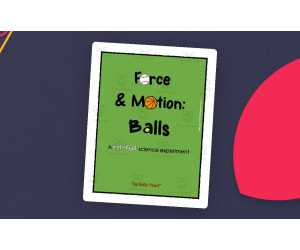
Force and Motion Science Experiment
Physics, Grade 3, 4, 5, Experiments, Activities
We all know that science is learned best with our hands! When we have the opportunity to really explore scientific concepts with an interactive approach, the learning just sticks! More than that, students love the chance to do experiments . This is a Force and Motion Science Experiment for your students to take part in. It may be used best with 3rd – 5th grade students. Students will work with a set of balls to apply what they know about force and motion. Students will complete the 2 page printable along the way. They will begin by making a hypothesis, as scientists do, before engaging in the experiment. Students will hypothesize which ball they believe will need the most wind-force for motion and which ball will need the least wind-force. You may choose to have your students decide on this hypothesis individually or in small groups. When students have wrapped up their hypothesis, they will move forward into the experiment portion. Students will follow the directions on page 1 to test out the force and motion of each ball. There is space for them to test out 6 balls. Your class may love completing this in small groups or with a partner. On page 2, they will reflect on the experiment by writing their particular outcome and formulating a conclusion about the wind-force needed to put balls in motion. I hope you enjoy! Here are links to similar resources in my store: https://teachsimple.com/product/area-and-perimeter-mini-tasks https://teachsimple.com/product/animal-report-packet Here is a link to my store to enjoy other resources from me: https://teachsimple.com/contributor/at-the-core I can be contacted for questions and concerns at sallyplant12@hotmail.com .
Author At the Core
Tags Science Experiment, Force, Motion, Wind-force, Hypothesis, Hands-on Science, Experiments, Activities, Force And Motion

Gummy Bear Investigation Lab
, Not Grade Specific, Activities, Experiments
In this lab, students will go through the steps of the scientific method in order to predict what will happen to a gummy bear if it is left for 24 hours in a liquid. Set up several liquids for students to test and ask students to experiment with and ask students to make a prediction of what will happen to the gummy bear if left in the liquid for 24 hours. Students will measure the length of their gummy bear before the experiment and after 24 hours submerged in a liquid. Students will then complete a table that compares their gummy bear's measurement before and after the experiment and answer conclusion questions.
Author Rodriguez's Resources
Tags Gummy Bear, Investigation, Lab, Scientific Method, Predictions, Gummy And The Scientist, Gummy Bear Scientific Method, Gummy Bear Experiment Worksheet, Gummy Bear Lab Scientific Method, Gummy Bear Lab Experiment, Gummy Bear Dissection, Gummy Bear Science Experiment Worksheet
Hypothesis Questions Activity
, Grade 3, 4, 5, 6, 7, 8, 9, 10, Activities, Experiments
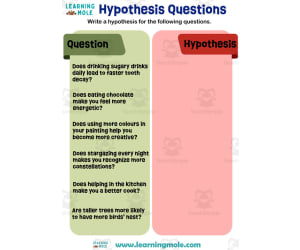
Activity Introduction An amazing activity designed for the students to learn more about STEM subjects. Hypothesis Questions Do you like STEM subjects? what is your favorite one? Have you ever tried to plant a seed? If yes, tell us more about it. Or have you ever tried to invent something? If yes, tell us more about it. And how do you think it will help us? Have you ever seen a microorganism under a microscope? What was it? And how it looked like? Mathematics is a marvelous subject. Let' sharpen our brains and solve some equations. Do you like timetable tricks? What is your favorite one? Do you know how to code? Have you ever created an app or a game before? If yes, how was it like? Hypothesis Questions Activity The activity is perfect for encouraging the researching skills for the students, while learning more about this topic. Hypothesis Questions This friendly designed worksheet is suitable for students at school, homeschooling, and as a group activity. Instructions Write a hypothesis for the following questions Does drinking sugary drinks daily lead to faster tooth decay? Does eating chocolate make you feel more energetic? Does using more colours in your painting help you become more creative? Does stargazing every night makes you recognize more constellations? Does helping in the kitchen make you a better cook? Are taller trees more likely to have more birds' nest? Format Available in a PDF format.
Author Educational Voice
Tags Hypothesis Questions Activity, Hypothesis Questions, Hypothesis Questions Facts, Hypothesis Questions Facts For Kids, STEM, STEM Facts, STEM Facts For Kids, Science Activity

Conducting Electricity Sorting Activity
Science, Inventors, Technology, Engineering, Grade 5, 6, 7, Activities, Experiments, Worksheets & Printables, Flashcards, Teacher Tools, Assessments
Conducting Electricity Sorting Activity Unravel the magic of electricity with the Conducting Electricity Sorting Activity . True to its name, it's an interactive educational tool designed to enhance students' understanding and intrigue in electrical conductance. Ideal for 5th to 7th grade science lessons, especially those centered around technology and engineering, this activity seamlessly fits into diverse curriculums. The main aim of this enlightening resource is helping students answer important questions such as: 'What is a conductor? 'What is an insulator? To achieve this, learners will explore 19 illustrated flashcards. Each represents different materials acting as prompts that encourage essential critical thinking. Students must then decide whether each item is a conductor or insulator of electricity. Benefits Galore! The massive benefits stemming from using the Conducting Electricity Sorting Activity include triggering scientific inquiry processes and promoting problem-solving skills — all while fostering teamwork wherever possible. Fitting perfectly for group works in class or individual activities at home, these sorting exercises offer flexible implementation options suited for various teaching styles — from group discussions to self-paced independent research projects. Even formative assessments are easy! A Colorful Learning Arena Cast in PDF Maintaining student interest has never been easier! The visually appealing combination of bright colors with clear instructions not only aids comprehension but also sustains attention levels. This package includes: Definition posters about conductors and insulators, Vibrant flashcards illustrating various materials, Dedicated sorting mats for item segregation according to electrical properties, A convenient answer key for quick self-assessments. Coming in a downloadable PDF format, this ready-to-roll Conducting Electricity Sorting Activity indeed gives you just what you need — Fun-enriched knowledge to stoke scientific curiosity! It's time not just to have your classrooms powered by electricity but also understand how it conducts!
Author Soumara Siddiqui
Tags Electricity, Conductors, Insulators, Sorting Activity
Cell Lab Activity
Science, Life Sciences, Human Body, Grade 9, 10, 11, 12, Labs, Experiments, Activities
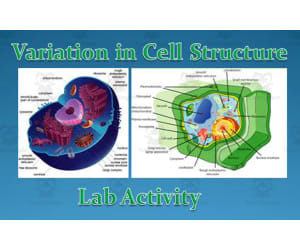
Cell Lab Activity: An Engaging Teaching Resource for Science Educators Enhance your science curriculum with the interactive Cell Lab Activity focused on differentiating between animal and plant cells. This adaptable lab suits a wide demographic of students, emphasizing a hands-on learning approach. The Activity Process In this hands-on experiment, students: Observe cells from sources such as tomato pulp and skin, potato, and human cheek cells. Analyze biological material under scientific scrutiny. Gain insightful knowledge about the functions of various cell parts. Depending upon your classroom's pace, this activity spans approximately 1½ to 2 days—optimizing time towards understanding complex concepts. What Else is Included? The kit includes: A Variation in Cell Structure Lab worksheet with an answer key for students to verify their findings- reinforcing self-evaluation techniques. A helpful materials list and general guidelines that assist educators in organizing resources smoothly. Inclusive sample pictures which support descriptions of cellular concepts accessible to all learners—including visual-learners—for better comprehension! The inclusion of practical thinking into teaching methodologies widens horizons: Leveraging education beyond textbooks boundaries preparing our future scientific pioneers—to drive societal goals—from just simple thinkers to thought leaders! Note: It’s important teachers know that every lab activity must always be performed under supervision!
Author The Teacher Team
Tags Cell Structure, Lab Activity, Plant Cells, Animal Cells, Hands-on Learning

Reflection or Refraction Activity
Science, Basic Science, Physics, Grade 3, 4, 5, 6, 7, 8, 9, 10, Activities, Experiments
Activity Introduction An amazing activity designed for the students to learn more about STEM subjects. Reflection or Refraction Do you like STEM subjects? what is your favorite one? Have you ever tried to plant a seed? If yes, tell us more about it. Or have you ever tried to invent something? If yes, tell us more about it. And how do you think it will help us? Have you ever seen a microorganism under a microscope? What was it? And how it looked like? Mathematics is a marvelous subject. Let' sharpen our brains and solve some equations. Do you like timetable tricks? What is your favorite one? Do you know how to code? Have you ever created an app or a game before? If yes, how was it like? Reflection or Refraction Activity The activity is perfect for encouraging the researching skills for the students, while learning more about this topic. Reflection or Refraction This friendly designed worksheet is suitable for students at school, homeschooling, and as a group activity. Instructions Cut the items out below and sort them into the correct column. Format Available in a PDF format.
Author Educational Voice
Tags Reflection Or Refraction Activity, Reflection Or Refraction, Reflection, Reflection Activity, Reflection Facts, Reflection Facts For Kids, Refraction, Refraction Activity, Refraction Facts, Refraction Facts For Kids

Scientific Method Hypothesis Activity
Science, Basic Science, Grade 3, 4, 5, 6, 7, 8, 9, Activities, Experiments
Activity Introduction An amazing activity designed for the students to learn more about STEM subjects. Scientific Method Hypothesis Do you like STEM subjects? what is your favorite one? Have you ever tried to plant a seed? If yes, tell us more about it. Or have you ever tried to invent something? If yes, tell us more about it. And how do you think it will help us? Have you ever seen a microorganism under a microscope? What was it? And how it looked like? Mathematics is a marvelous subject. Let' sharpen our brains and solve some equations. Do you like timetable tricks? What is your favorite one? Do you know how to code? Have you ever created an app or a game before? If yes, how was it like? Scientific Method Hypothesis Activity The activity is perfect for encouraging the researching skills for the students, while learning more about this topic. Scientific Method Hypothesis This friendly designed worksheet is suitable for students at school, homeschooling, and as a group activity. Instructions Your are doing a scientific research/ experiment . Tell us what was your: Observation Main question Hypothesis and tell us more about the research/ experiment . Format Available in a PDF format.
Author Educational Voice
Tags Scientific Method Hypothesis Activity, Scientific Method Hypothesis, Scientific Method, Scientific Methods For Kids, Hypothesis, Hypothesis Facts, Hypothesis For Kids, STEM, STEM Facts For Kids

"Water Bottle Rockets" eBook Excerpt
, Grade 6, 7, 8, Activities, Experiments
This is an excerpt that comes from the eBook titled “Middle Schoolin: 50 Stories about the Challenges, Humor, and Rewards of Teaching” written by Paul Rallion. This is from Chapter 33 titled Water Bottle Rockets. In science class, it is important to incorporate hands-on activities because students learn better by doing, according to John Dewey, considered by many the father of modern education. I remember when I was in second grade and my teacher talked about erosion. We went on a field trip to see an arid field with poor or no irrigation, and I was able to see what erosion was and what a field looked like when it occurred. I am sure it would have taken longer for me to learn what erosion was without that field trip. Now I found myself teaching Newton’s laws of motion. These three laws deal with how objects behave at rest and in motion. They are difficult concepts for some students to absorb at the middle school level. Doing this experiment helped my students grab the concept of Newton’s laws of motion better than if I had just talked about them. Students enjoy a hands-on experiment more than a lecture or reading a book. The bottom line is, if you teach science, do hands-on activities and experiments whenever possible. I hope you enjoy! Take A Look at My Best Sellers: ”Classes Re-Zoomed” eBook “10 Tips to Become a National Board Certified Teacher” eBook 15 Computer Tips eBook Visiting London eBook Spanish: Middle School Parents eBook “Growing Modern Obesity” eBook You can find more resources at my storefront here: https://teachsimple.com/contributor/paul-rallion
Author Paul Rallion
Tags Middle School Tips, Middle School Parents, Newton's Law Of Motions, Science Experiment, Science EBook, Science Lecture, Science Lab
Quick + Easy Science Experiments
, Preschool, Grade 1, 2, Activities, Experiments, Worksheets & Printables, Worksheets
This is a packet of Quick + Easy Science Experiments . There are 4 experiments included for your little learners. Print these pages, gather your supplies needed and you're all set. Students will love making predictions and reporting their data.
Author Katie Maurice
Tags Science Experiments, Science Worksheet, Small Group, STEM Activity, Magnets, Making Predictions, Cross Curricular

Observation or Inference Worksheet
, Grade 5, 6, 7, Activities, Experiments, Worksheets & Printables, Worksheets
This resource is an Observation or Inference Worksheet. Students will identify each statement as an observation or a reference. Students can add text boxes in PowerPoint to the blank sheet and type in their own definitions. Answer key included.
Author Maude in the Middle
Tags Making Infereences, Science Worksheet, Observation, Predictions, Inferences Worksheet 6, Observation Vs Inference Powerpoint, Inferences Worksheet 6 Answer Key, Observation Vs Inference Worksheet, Observations And Inferences Ppt

Make Your Own Parachute Activity
, Grade 2, 3, 4, 5, Activities, Experiments
Teaching science to our elementary students opens them up to a whole new world of interests, but with a whole new take! They get to learn about the weather and its changes. They get to learn about animals and their offspring. They get to learn about natural wonders, such as volcanoes! There are so many engaging things for students to learn during science. What You Get: This is a Make Your Own Parachute Activity that is ideal for elementary students! The objective is to design a parachute that can carry an egg to the ground without it cracking. How To Implement This Resource: This is a great experiment that your students will love and learn a lot from. You can decide if you want this to be an in-class experiment or an experiment done at home. If students complete this activity at home, encourage them to document pictures of their experiment . If they are unable to document with pictures, encourage students to make notes about what all their experiment entails. If students complete this activity in the classroom, you will gather all the materials you know you’ll need for this experiment . The main material will be lots of eggs! From there, you will gather materials that you believe students will need to make a great parachute for their eggs. The amount of support you provide students will depend on their age and understanding of the task. I hope you enjoy! Here are links to similar resources in my store: Candle Experiment Missing Verbs Worksheet Writing to Recount Template Electrical Words and Symbols Worksheet Place Value Loop Cards Factors Worksheet for Beginners Check Out More Resources from My Store: Elementary Resources 4 U
Author Elementary Resources 4 U
Tags Science Experiment, Science Activity, At Home Science, In-Class Experiments, Parachute Activity, Whole Group Science, Parachute Activities Elementary, Parachute Lesson Plans Elementary