



3,890 products added recently
Page 5 - High School Experiments
Provide your high school students with experiments that offer in-depth exploration of complex scientific concepts. This collection includes lab investigations in chemistry, physics, and biology. By integrating these high school experiments into your teaching, you can prepare students for college-level science and inspire future careers in STEM fields.

 Show filters

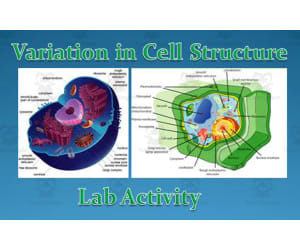
Cell Lab Activity
Science, Life Sciences, Human Body, Grade 9, 10, 11, 12, Labs, Experiments, Activities
Cell Lab Activity: An Engaging Teaching Resource for Science Educators Enhance your science curriculum with the interactive Cell Lab Activity focused on differentiating between animal and plant cells. This adaptable lab suits a wide demographic of students, emphasizing a hands-on learning approach. The Activity Process In this hands-on experiment, students: Observe cells from sources such as tomato pulp and skin, potato, and human cheek cells. Analyze biological material under scientific scrutiny. Gain insightful knowledge about the functions of various cell parts. Depending upon your classroom's pace, this activity spans approximately 1½ to 2 days—optimizing time towards understanding complex concepts. What Else is Included? The kit includes: A Variation in Cell Structure Lab worksheet with an answer key for students to verify their findings- reinforcing self-evaluation techniques. A helpful materials list and general guidelines that assist educators in organizing resources smoothly. Inclusive sample pictures which support descriptions of cellular concepts accessible to all learners—including visual-learners—for better comprehension! The inclusion of practical thinking into teaching methodologies widens horizons: Leveraging education beyond textbooks boundaries preparing our future scientific pioneers—to drive societal goals—from just simple thinkers to thought leaders! Note: It’s important teachers know that every lab activity must always be performed under supervision!
Author The Teacher Team
Tags Cell Structure, Lab Activity, Plant Cells, Animal Cells, Hands-on Learning

Density and Buoyancy – Lab Station Activity
Science, Chemistry, Grade 7, 8, 9, 10, Labs, Experiments, Activities
Density and Buoyancy – Lab Station Activity An instructional resource crafted for grade 7-10 classrooms, this activity provides an explorable environment where learners can understand and apply principles of density and buoyancy. Mass, volume, density calculations, measurements, and the behaviors of different dense objects are key topics reinforced. A versatile tool suitable for homeschoolers as well. Promotes active interaction within student groups through hands-on tasks and multimedia components. The Unique Lab Station Arrangement Each of the seven stations offers a different task: "Get Hands-On"" station - introduces drawing or building exercises. "Research station" - equips students with a computer or device for online research. "Explain Yourself" station - encourages critical thinking as students express their opinions in paragraph form based on researched facts. Bonus Activities Included! A word scramble and word search keep mind active without heavy academic rigor reliance alone. These stimulate continual learning while helping manage pacing across activities. Incorporation into Conventional Educational Scenarios: This lab station activity fits effortlessly into school-based instruction scenarios or home-bound instruction settings – be it group sessions in classrooms small-group settings amongst peers or homework assignments. This remarkable tool nurtures scientific minds by fostering a deeper understanding of density and buoyancy further.
Author Teach With Fergy
Tags Density, Buoyancy, Lab Station, Hands-on Activity, Scientific Experiments

Physical and Behavioral Adaptations – Lab Station Activity
Science, Physics, Grade 8, 9, 10, Labs, Experiments, Activities
Physical and Behavioral Adaptations – Lab Station Activity The Physical and Behavioral Adaptations - Lab Station Activity is a student-oriented learning resource meant for Grade 8, Grade 9, and Grade 10 Science classrooms. It enhances the understanding of physical and behavioral adaptations in plants and animals using dynamic learning techniques. This product diverges from traditional resources by offering multiplex testing methods. In one station, students might need to voice opinions or answer queries stemming from a video or passage. Another station may involve creating diagrams or models related to physical/behavioral adaptations. The package comprises fully customizable station cards that can be printed out and arranged around the classroom. These facilitate an engaging learning environment. Each card comes with comprehensive instructions which aid smooth movement across activities for learners individually, in small groups or full class setups - without wasting any time. A log sheet (passport) is included for students' input along with an answer key where required easing monitoring of progress. A distinguishing component that elevates this product's value are exciting additionals: word scrambles & searches aimed at cementing concepts during transitions between stations thus minimizing idle time amongst learners. Beyond serving as a practical lab task, this could be used as review material before evaluations too. Requiring minimal preparation on part of educators (only card printing), this proves highly efficient without negotiating on quality education. In summary, The Physical and Behavioral Adaptations - Lab Station Activity provides interactive educational experiences centered around pivotal science themes catering to diverse learner types promoting advanced levels understanding.
Author Teach With Fergy
Tags Physical Adaptations, Behavioral Adaptations, Plants, Animals, Lab Activity

Cellular Respiration and Photosynthesis – Lab Station Activity
Science, Life Sciences, Biology, Grade 7, 8, 9, 10, Labs, Experiments, Activities
This fully editable Lab Station Activity on Cellular Respiration and Photosynthesis is meant to get your students out of their seats and engaged in the content. Each station not only offers a unique opportunity to test your students' knowledge (offer an opinion, answer questions based on a video or reading, draw, etc.), but also provides a fantastic learning opportunity where your kids are learning through assessment. Each station comes with a description card while some also contain more detailed instructions, a reading, questions to answer, etc. Students are equipped with a recording sheet (passport) to write their answers. There is almost no prep for you. Simply print the cards, lay them out around the room and you're all set. An answer key is also provided where applicable. These station cards are meant to be used as a lab activity but can also be utilized in a review task before a test or a quiz. Used either way, your students will love it! I know mine do and I'm telling you from first-hand experience as I've used this activity in my own class, This lab activity covers: - Photosynthesis - Cellular Respiration ---------------------------------------------- Bonus Activities: To ensure your students don’t have any downtime between stations, your lab also includes a 10-word word scramble and word search, both with an answer key. You can use them as part of their mark, as a bonus so it’s not mandatory, etc. However you choose to use it, it will ensure that your students are always busy and never idle. Note: For stronger classes, I give the word scramble and for weaker ones, the word search. ----------------------------------------------- How do the Lab Stations work? Each station is specially designed to be a unique complement to the material while at the same time, providing a valuable learning experience. Below is an overview of how each station works. In your activity , each will be tailored to the specific content. Station 1: Get Hands-On – using their creative skills, students are required to draw or build. Station 2: Research - using a classroom computer or their own device, students must research a specific question/issue surrounding the topic. Station 3: Explain yourself – students write down an opinion to a question in paragraph form. Station 4: Rest Station - students can use this time to catch up on work they didn't have time to complete at a previous station or prepare themselves for an upcoming one. Station 5 - Applicability reading – students read a short passage from an article, website, etc. which directly connects the classroom content to a real-life application. Station 6: Test your knowledge – students answer 5 multiple choice questions then provide a written explanation for how/why they came to their conclusions. Station 7: Learn from the expert – using a classroom computer or their own device, students must watch a short video clip and answer the associated questions. They may stop, rewind and restart as often as they like during the time frame. Station 8 - Rest Station. Station 9: Become the question master – Students must create 2 multiple-choice questions, 2 true/false questions, and 1 short answer question. Students must also supply the answers. These station cards are meant to be used as a lab activity but can also be utilized in a review task before a test or a quiz. Used either way, your students will love it! I know mine do and I'm telling you from first-hand experience as I've used this activity in my own class. Thank you for your interest in my products. If you have any questions, please send me an email - devon@teachwithfergy.com
Author Teach With Fergy
Tags Cells, Plants, Photosynthesis, Respiration, Lab Activity, Photosynthesis And Cellular Respiration Lab, Photosynthesis And Respiration Lab Answer Key, Hands On Photosynthesis Activity, Photosynthesis Lab Middle School

Ecosystems – Lab Station Activity
Science, Life Sciences, Biology, Grade 7, 8, 9, 10, Labs, Experiments, Activities
Engage students in learning about ecosystems with this interactive lab station activity . Students rotate through 9 stations, each offering a unique hands-on opportunity to demonstrate knowledge. Activities range from drawing and building models to conducting research, watching videos, answering multiple choice questions, and more. Recording sheets provided for students to document their work. Covers topics like ecosystems, populations, communities, sustainability, abiotic and biotic factors. Easily implemented for individual, small group, or whole class learning. Requires almost no prep - just print cards and you're ready. Answer keys included. Check out other science lab station activities on various biology, physics, chemistry, and space science topics.
Author Teach With Fergy
Tags Biotic, Factors, Ecosystem, Change, Lab Stations

Acid-Base Neutralization – 9-Station Lab Activity
Science, Chemistry, Grade 9, 10, 11, Labs, Experiments, Activities
Acid-Base Neutralization Chemistry Lab Station Activity This interactive chemistry resource engages students in learning about acid-base reactions through a unique lab station format. Learners rotate between 9 stations, each offering a hands-on way to explore neutralization concepts. Activities range from drawing models to analyzing real-life videos and answering knowledge checks. The multiple learning formats reinforce comprehension while keeping students actively learning. This versatile resource works for whole class, small groups, or independent work. The engaging lab station approach promotes enjoyment of chemistry. An answer key provides guidance. Editable files allow customization for any high school grade level.
Author Teach With Fergy
Rating
Tags Acid, Base, Chemistry, Lab Station, Activity, Chemistry Lab Station, Station In Chemistry Lab, Acid And Bases Activities, Acid Base Labs Middle School, Acid Base Chemistry Labs, Acid And Base Activities, Acid Base Reactions Lab, Acid Base Lab Middle School

Biodiversity and Invasive Species – Lab Station Activity
Science, Life Sciences, Biology, Grade 7, 8, 9, 10, Labs, Experiments, Activities
Biodiversity and Invasive Species Lab Station Activity Students will be engaged with this editable lab station activity on biodiversity and invasive species. The hands-on stations allow students to test their knowledge through drawing, researching, explaining their viewpoint, reading applicability passages, answering questions, watching videos, and creating their own questions. Recording sheets are provided for students to document their learning. This activity covers topics like biodiversity and invasive species. Bonus activities like word scrambles and word searches are also included to reinforce learning and keep students productive. This lab station activity can be used alongside instruction on biodiversity and invasive species or as a review before assessments. With minimal prep work for teachers and engaging, student-driven activities, this resource offers a valuable learning experience for middle school life science classrooms.
Author Teach With Fergy
Tags Biology, Biodiversity, Invasive, Species, Lab Station, Invasive Species Activity

Potential Energy Experiment Activity
Science, Physics, Grade 4, 5, 6, 7, 8, 9, 10, Activities, Experiments
Activity Introduction An amazing activity designed for the students to learn more about STEM subjects. Potential Energy Experiment Do you like STEM subjects? what is your favorite one? Have you ever tried to plant a seed? If yes, tell us more about it. Or have you ever tried to invent something? If yes, tell us more about it. And how do you think it will help us? Have you ever seen a microorganism under a microscope? What was it? And how it looked like? Mathematics is a marvelous subject. Let' sharpen our brains and solve some equations. Do you like timetable tricks? What is your favorite one? Do you know how to code? Have you ever created an app or a game before? If yes, how was it like? Potential Energy Experiment Activity The activity is perfect for encouraging the researching skills for the students, while learning more about this topic. Potential Energy Experiment This friendly designed worksheet is suitable for students at school, homeschooling, and as a group activity. Instructions Do the following experiment to test the speed of various objects rolling down an inclined plane. Format Available in a PDF format.
Author Educational Voice
Tags Potential Energy Experiment Activity, Potential Energy Experiment, Potential Energy, Potential Energy Facts, Potential Energy Facts For Kids, STEM, Physics, Physics Facts, Physics Facts For Kids

Sheep Heart Dissection Lab ~ Anatomy and Physiology
Science, Life Sciences, Human Body, Grade 9, 10, 11, 12, Activities, Experiments
This lab will cover 15 anatomical structures in the heart as well as 20 other discussion questions. This lab is very flexible as it will work for any level student from English Learner - EL - to more advanced students.
Author The Teacher Team
Tags Science Lab, Anatomy, Physiology, Biology, ELL, Labeled Sheep Heart Dissection, Heart Dissection Lab, Sheep Heart Dissection Guide, Sheep Heart Dissection Lab, Sheep Dissection Lab, Heart
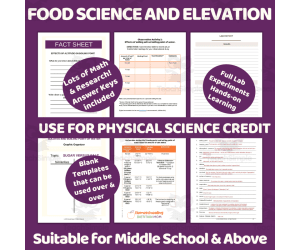
Food Science and Elevation eBook
, Grade 7, 8, 9, 10, Activities, Experiments
Food Science and Elevation eBook This thoughtfully created teaching resource is targeted for educators seeking materials that encourage hands-on learning particularly suitable for grade 7-10 students interested in science and math. Main Features: An exciting avenue to explore food science experiments involving salt, sugar, and boiling water among others. Improve students' research abilities, math skills, and writing competence through practical tasks. The extensive 40-page PDF file introduces learners to various scientific concepts such as atmospheric pressure with real-life examples of how solutes affect the boiling point. Additionally, it covers complex topics including the effects of sugar and salt on freezing points. Navigational Guide: Tailored background information on each scientific phenomenon. A structured guide for experimental work provided by blank lab templates. Data gathering encouraged through the measuring observations via thermometers. A Practical Approach to Learning: Through integral practical exercises within this comprehensive resource, students are enabled to: Determine how elevation changes affect common attributes like pressure or temperatures; This teaching material goes beyond theory by allowing pupils to record methods such converting units used commonly in science like psi into inches Hg or Celsius into Fahrenheit etc., This promotes an active learning environment surrounding mathematical calculations from simple addition/subtraction processes up towards more complex ones such as decimals rounding techniques. This aids overall academic progression effectively across multiple disciplines combined throughout its entirety preparing them for future endeavors irrespective of settings whether it be homeschool public school-based sessions gaining experiences crucial fostering academia holistically.
Author Homeschooling Dietitian Mom
Tags Food Science, Elevation, Atmospheric Pressure, Boiling Point, Freezing Point

Light Bulb Experiment
Science, Basic Science, Physics, Grade 4, 5, 6, 7, 8, 9, 10, Experiments, Activities
Activity Introduction An amazing activity designed for the students to learn more about famous places in different countries. The Light Bulb Do you like STEM subjects? what is your favorite one? Have you ever tried to plant a seed? If yes, tell us more about it. Or have you ever tried to invent something? If yes, tell us more about it. And how do you think it will help us? Have you ever seen a microorganism under a microscope? What was it? And how it looked like? Mathematics is a marvelous subject. Let' sharpen our brains and solve some equations. Do you like timetable tricks? What is your favorite one? Do you know how to code? Have you ever created an app or a game before? If yes, how was it like? Light Bulb Experiment The activity is perfect for encouraging the researching skills for the students, while learning more about this fantastic place. Light Bulb This friendly designed worksheet is suitable for students at school, homeschooling, and as a group activity. Instructions Make a rectangle using copper tape along the illustration. Now tape the LED pins to each side of the upper gap, making sure they don't touch so the light won't be short-circuited. Place the battery in its place in the illustration and allow it to touch one end of the tape. The LED should light up now, if it doesn't, then flip the battery over. Cut the light bulb out and glue on top of the LED pins to watch it light up! Materials Needed Copper tape 2.5mm LEDs Scissors Button Battery Format Available in a PDF format.
Author Educational Voice
Tags Light Bulb Experiment, Light Bulb, Light Bulbs, Light Bulb Facts, Light Bulb Facts For Kids, Physics, Physics For Kids, Physics Facts For Kids

Reflection or Refraction Activity
Science, Basic Science, Physics, Grade 3, 4, 5, 6, 7, 8, 9, 10, Activities, Experiments
Activity Introduction An amazing activity designed for the students to learn more about STEM subjects. Reflection or Refraction Do you like STEM subjects? what is your favorite one? Have you ever tried to plant a seed? If yes, tell us more about it. Or have you ever tried to invent something? If yes, tell us more about it. And how do you think it will help us? Have you ever seen a microorganism under a microscope? What was it? And how it looked like? Mathematics is a marvelous subject. Let' sharpen our brains and solve some equations. Do you like timetable tricks? What is your favorite one? Do you know how to code? Have you ever created an app or a game before? If yes, how was it like? Reflection or Refraction Activity The activity is perfect for encouraging the researching skills for the students, while learning more about this topic. Reflection or Refraction This friendly designed worksheet is suitable for students at school, homeschooling, and as a group activity. Instructions Cut the items out below and sort them into the correct column. Format Available in a PDF format.
Author Educational Voice
Tags Reflection Or Refraction Activity, Reflection Or Refraction, Reflection, Reflection Activity, Reflection Facts, Reflection Facts For Kids, Refraction, Refraction Activity, Refraction Facts, Refraction Facts For Kids