



3,955 products added recently
Page 249 - Activities
Explore a wide array of educational activities designed to enrich your teaching and captivate students' interest. From hands-on projects to interactive games, these resources span various subjects and grade levels. Incorporate these activities into your lesson plans to foster an engaging and dynamic learning environment for all students.

 Show filters


Engaging Business Case Study: Branding and Marketing
Life Studies, Social Studies, Finance, Business, Career, Economics, Grade 8, 9, 10, 11, 12, Activities, Projects
This case study, centered on an environmentally conscious t-shirt company is a great look at a young brand ready to forge their image, and their foothold in the community. This case study follows the a new fashion company and a young entrepreneur-- Sarah Mercer. Her passion for sustainable clothing materials, along with being embedded in her community, has shaped the young brand so far. The company is ripe for a re-brand, though! Students take on the role of branding and marketing consultants as they seek to re-make the image and strategy of the company. The case study follows this general outline : Get familiar with the case Form consulting teams Design a brand Create a marketing plan Present your plan Ultimately, your students will use the case study data to create: A logo & slogan A brand identity (when customers think about your brand, what will they think of?) A marketing plan (How will you raise brand awareness?) If you are looking to get students out of their textbooks and into real business scenarios, case studies like these are perfect! Your students will appreciate the opportunity to get real life scenarios and "on the ground" experience that can translate to their future experiences.
Author Ed Dynamic
Rating 5
Tags Business, Marketing, Case Study, Branding, Target Market, Market, Entrepreneurship

It's Spring! Kindergarten Math & Literacy Center: Correct the Sentences
ELA, Language Development, Spelling, Kindergarten, Preschool, Grade 1, Centers, Activities
"It's Spring! Kindergarten Math & Literacy Center: Correct the Sentences" An interactive and delightful teaching resource designed with the intention of meeting Common Core standards. Not just a product, it's filled with numerous learning opportunities for children from preschool to Grade 1. A Math & Literacy Center Primary Targeting Kindergarten Students Has 4 pages of exercises meticulously designed to promote attention to detail, enhance reading abilities, and develop sentence construction skills. Included are challenging exercises where students have to identify spelling, punctuation, or capitalization errors in simple sentences. After mistakes are identified, learners have to rewrite the sentence correctly - a method that drives improvement in grammar understanding. Flexibility and Variety in Teaching Educators know well that variety piques interest among students. This tool can be used as morning work or homework assignments flexibly. It also performs effectively during group sessions or as part of centers fostering language arts skills while delighting in the beautiful spring season. Convenient Format Ready For Immediate Use The "It's Spring! Kindergarten Math & Literacy Center: Correct the Sentences" downloadable eBook comes in PDF form that requires no additional prep - making educators’ tasks easier without sacrificing quality teaching. All Round approach Towards Improving Foundational Proficiencies Inculcating essential skills including language arts concentration on spelling proficiency plus math-related topics— all enjoyable within a spring-themed context resonant for kids' developmental stage. Discover how education can be turned into fun learning adventures with “It’s Spring!” Translating every colorfulness detail of spring onto each bit of knowledge we impart to our young learners!
Author Knowledge Box Central
Tags Spring Theme, Literacy Center, Sentence Correction, Spelling Practice, Interactive Learning

DIY Star Projector Activity
Space, Earth and Environmental Sciences, Science, Grade 1, 2, 3, 4, 5, 6, 7, 8, 9, 10, 11, 12, Activities
Activity Introduction An amazing activity designed for the students to learn more about space facts. DIY Star Projector Do you like reading about space? If yes, what is your favorite topic? What do you know about our solar system? What is the smallest planet in our solar system? What is the biggest planet in our solar system? What is the hottest planet in our solar system? And what is the coldest one? Do you think there are aliens? If yes, what do you think they look like? What do they eat and how they speak to each other? Where do they live? What is a galaxy? And what is a milky way? Have you recently saw a shooting star? If yes, tell us more about it, like when did it happen and where? What is a blackhole? Can a blackhole gets bigger by time? Do you like counting the stars? What do you think a star is made of? DIY Star Projector Activity The activity is perfect for encouraging the researching skills for the students, while learning more about the fantastic space. DIY Star Projector This friendly designed worksheet is suitable for students at school, homeschooling, and as a group activity. Instructions Choose one of the constellations from below, cut it out, and glue it to black construction paper. Glue the flashlight inside the cup. Use the push pin to punch holes along the shiny circles of the constellation. Glue the circle on top of the cup. Direct your cup at the ceiling of a dark room, and watch your constellation come to life! Format Available in a PDF format.
Author Educational Voice
Tags DIY Star Projector, DIY Star, Star Projector, Star, Stars, Stars Facts, Stars Facts For Kids, Space, Space Facts, Space Facts For Kids
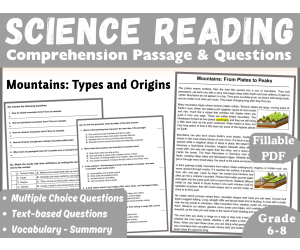
Earth Science Reading Passage: Types of Mountains (Fillable PDF)
Science, ELA, Reading, Reading Comprehension, Strategies, Resources for Teachers, Earth and Environmental Sciences, Earth Sciences, Grade 6, 7, 8, 9, Writing Prompts, Worksheets & Printables, Centers, Activities, Teacher Tools, Assessments, Quizzes and Tests, Quizzes, Tests
Science Reading Comprehension Passages and Questions: Types of Mountains (Fillable PDF) This very engaging earth science reading passage about Types of Mountains is designed to bridge the gap between science and literacy through strengthening reading comprehension and sparking scientific curiosity in middle school students. The passage blends English Language Arts skills with accurate science content that supports NGSS classroom practice. Ideal for interdisciplinary learning in ELA and Science. Suitable for Grade 9 review, too! These worksheets are designed as fillable PDFs , which means students can type their answers directly into the document on any computer or tablet . Each page includes highlighted text fields that show them exactly where to type! Student Tasks for The Passage: 5 multiple-choice questions targeting main idea, key details, inference, vocabulary in context, and use of evidence 5 vocabulary matching items with clear, student-friendly definitions 5 text-based questions that require citing specific lines or facts 1 summary prompt that asks students to condense central ideas accurately Full answer key for every section Available Formats for this Resource PDF Word Docs Google Docs FULL CATALOG OF DOWNLOADING LINKS HERE Product Details Length: 4 pages total Grades: 6–8, also suitable for Grade 9 review Use cases: close reading, stations, homework, intervention, test prep, and sub plans Standards support: reinforces informational-text skills and supports NGSS-style sense making through observation, modeling, and clear use of claim, evidence, and reasoning Why Teachers Choose This Set Authentic science content paired with rigorous literacy practice Consistent task structure across all passages for easier planning and smoother student routines Clear, age-appropriate writing that builds confidence without oversimplifying Other Science Reading Collections you May find in the store: 1. Astronomy & Space Science 2. Volcanoes, Rocks, & Mountains 3. Rock Cycle, Soil, & Sinkholes 4. Mars, Glaciers, & Antarctica 5. Water Cycle, Acid Rain, & Wastewater 6. Insects, Animals, & Ecosystems 7. Bioluminescence & Insects 8. Animal Skin, Cats, & T. Rex 9. Human Body and Senses 10. Health & Applied Bioscience 11. Waves, Light, & Imaging 12. Electricity & Energy 13. Motion & Materials 14. Chemistry and Materials Science Use this set to reinforce ELA skills in science, to add literacy to your lessons, and to support independent work. The passages strengthen main idea, evidence use, vocabulary in context, inference, cause and effect, and summary writing. With ready-to-use assessments and complete answer keys, you can provide focused practice that is simple to run and fast to review.
Author Middle & High School - CORED Education
Rating
Tags Middle School, Reading Comprehension, Reading Strategies, ELA, Centers, Reading Passage, Assessments, Vocabulary, Environmental Science, Earth Science
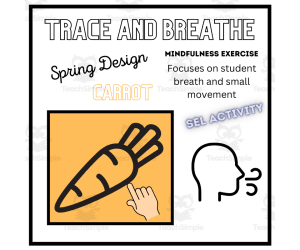
SEL: CARROT Mindfulness Breathing Calming Activity
Special Resources, Life Skills, Not Grade Specific, Activities
SEL: CARROT Mindfulness Breathing Calming Activity Students take a mindful moment to breathe and trace different objects with their fingertips. This activity teaches students how to calm down emotionally while focusing on their breathing. Help your students relax by teaching them the Trace and Breathe technique, which is a part of social emotional learning (SEL). This technique helps students feel calmer by focusing on their breath and making small movements. When they feel upset or overly excited, they can use this technique to calm themselves down. Lots of cute and colorful designs to choose from! Black and White also provided! This SEL: CARROT Mindfulness Breathing Calming Activity comes with: A Description of the Trace and Breathe skill A Poster with Trace and Breathe A Colored Copy of the resource A Copy that is Black and White Ideas for Teachers to use this resource: With individual students Print out pictures based on student interest! To teach the Trace and Breathe Technique To help students to calm down as needed Ideas for Whole Class SEL: Use the technique after recess, after and assembly, etc... Address the needs of Individual Student: Allow student to use when they need a moment to calm down Create a calm down station in the classroom, have several of these printed and laminated for students to choose from and use as needed Steps to engage in this SEL: CARROT Mindfulness Breathing Calming Activity: Take a deep breathe in Begin to trace the picture with your finger Breathe out as you trace Breathe out as long as you can Pause and repeat Other Designs Available here! Animal Bundle- Cat Dog Elephant Monkey Sloth Snake Food Bundle- Pizza Watermelon Popsicle Grapes French Fries Hotdog Transportation Bundle- Airplane Car Bicycle Motorcycle Scooter Train Spring Bundle- Bunny Carrot Chick Flowers Lamb Watering Can Need some inspiration on how to use the Trace and Breathe activity in your classroom? READ BELOW! Do your students come in from recess/specials/an assembly/any activity out of the norm all sorts of hyped out and out of control? This is the PERFECT activity to get them to calm-down and transition productively! With TONS of different designs to choose from- each student can pick out a picture that speaks to them! You can laminate each student's page or place them in a protective sheet so that they can stay nicely in their desks. Display the directions on the board or have them printed-out on large poster paper. Teaching the "Trace and Breathe" skill is essential to providing your students a structured way to practice mindfulness, control their heart rate and breathing, and transition from a high to a low-energy activity. The Trace and Breathe series can also be used as an essential piece to a calming corner in your classroom! Create a comfortable, calm space where your students can go when they need to cool down. Teach expectations around when it is appropriate for students to use this corner in the beginning of the year. Then, create a binder with lots of different designs the students can choose from. Place the directions to the Trace and Breathe activity on the wall near the calming corner. Then, as needed, students can visit the calming corner, pull-out the Trace and Breathe binder, pick a design that speaks to them, and engage in a moment of meaningful mindfulness!
Author Mrs Bonie Just Teach
Tags Mindfulness, Calm, Calming Activity , Breathing , Breathing Activity , Breathe , SEL Lesson
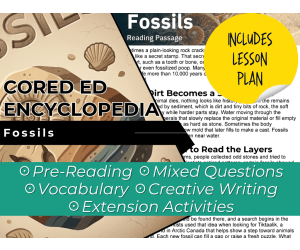
Fossils Reading Comprehension Passage - Cored Ed Encyclopedia
ELA, Reading Comprehension, Reading, Science, Technology, Earth and Environmental Sciences, Life Sciences, Pre-Reading, Language Development, Vocabulary, Grade 2, 3, 4, 5, Worksheets & Printables, Worksheets, Teacher Tools, Centers, Activities, Writing Prompts, Assessments, Quizzes and Tests, Quizzes, Lesson Plans
This fossils reading comprehension with lesson plan includes: Visualization (on the front cover) Start your lesson by taking a minute to think and share something about the topic. Read the script aloud (slowly), perhaps prepare some music or sound effects. Student close their eyes and let their imaginations wander. Students open their eyes, read the question aloud and give them a few minutes to complete. Ask a few students to share or keep answers until the end to compare with what they learn in the passage. Quick pause—thousands of Cored Education products are included with your TeachSimple membership. Download links and encyclopedia index available here. Pre-Reading Trivia Students will write down one thing they already know about the subject and then read five more facts and discuss. These facts are fun, and the students will enjoy learning about the subject before reading more. Give 1 minute for students to write what they already know (no pressure—best guess is fine). Read the five facts together. After each fact, do ask a student for their opinion, was it surprising? Set a purpose by asking students to highlight/underline one fact they want to learn more about during the reading. Reading Passage The text is a high-interest reading passage with set paragraphs, roughly three to four paragraphs long. It contains a variety of themes about the topic, anywhere from history to technology. The passage is between 250 and 350 words in length. First, ask students to look at the headings and see what they’ll learn about today. What do they know about the topic/heading? First read options: Teacher read-aloud (best for support). Partner reading (paragraph by paragraph). While reading, students underline important details, and vocabulary words they think may come up in the questions section. Mixed Questions The first question page contains four multiple-choice questions, each with a choice of four answers, and three written response questions that require a sentence or two from the student. Students complete the mcqs first independently, then review quickly as a class. For the 3 written responses, try to get students giving the answer with some form of evidence: “I think ___ because the text says ___.” If students get stuck, send them back to check the passage. Vocabulary Questions Practice seven key words from the text in this section across two activities. First section is scrambled words where students will unscramble three words given a clue for each. The second section is a word to meaning matching activity. Before starting, have some students read out words they underlined in the passage. Ask students to say the word and read aloud the sentence(s) around each word. Ask students to do scrambled words and the matching exercise in pairs then go through answers as a class. For the scrambled spelling task, get four pairs to come up to the board and write the words for extra practice with the other student reading out the clue. For the matching task, prompt students to give full sentences: “I matched ___ with ___ because ___.” Creative Writing In this question, the student will be required to write a five to eight sentence paragraph on a question related to the topic. Before starting, ask students write down 3 key ideas they are going to include in their piece. Ask students for ideas to share around the class to help those struggling. Pro writing expectations: 5–8 sentences At least 2 facts or details from the passage At least 2 vocabulary words from the previous page Students read their paragraphs while classmates listen for facts and vocabulary words. Extension Activities This page is optional for fast finishers or to take home. There are several activities, each one requiring a different skill. Do some, do none, do all, completely optional - but you will feel reassured knowing every possibility is planned for. Includes summary writting question and additional facts. Answer Key There are answers for the multiple-choice questions, written response questions have sample answers, vocabulary answers and if there is a summary question then a sample summary will be provided as well. Lesson Plan Included Customized lesson plan for this lesson is included. Lesson Snapshot Title: Fossils Genre: Nonfiction (Informational Text) Subject: Science (Earth Science/Life Science) / Reading (Informational Text) Primary Topic: Fossils, how they form, and what they reveal Estimated Guided Reading Level (A–Z): Q What This Lesson Teaches Best Defines a fossil and explains that fossils can be body parts (tooth, bone) or traces (footprint, burrow, fossilized poop) that become clues in the “fossil record.” Explains how fossils form when remains are quickly covered by sediment , and minerals in water replace material or fill empty spaces until remains harden like stone. Teaches mold and cast formation: a body can disappear, leaving a hollow mold that later fills to make a cast. Introduces paleontology and shows how scientists “read” patterns in sedimentary rock layers to learn how life has changed over time. Shows how fossils can guide new discoveries , including using rock layers to search for missing kinds of creatures (Tiktaalik example). Learning Goals Students will identify two kinds of fossils named in the text and give an example of each. Students will explain how sediment and minerals help remains become hard “as stone.” Students will describe how a mold and a cast can form, using the text’s explanation. Students will explain how scientists use patterns in sedimentary rock layers to learn which fossils are older. Students will describe why the fossil record is “not complete,” based on the passage. Students will describe how fossils can help scientists decide where to search for new discoveries. Key Vocabulary From the Text sediment — dirt and tiny bits of rock. minerals — materials in water that can harden remains. mold — a hollow shape left after a body is gone. cast — a filled-in copy of a hollow shape. paleontology — the study of ancient life using fossils. FULL CATALOG OF DOWNLOAD LINKS AND ENCYCLOPEDIA INDEX HERE
Author Cored Education
Rating
Tags Vocabulary, Reading Comprehension, Reading Passages, Lesson Plans, Ela Lesson Plans, Reading Comprehension Lesson Plans, Pre-reading, Science Lesson Plans, Earth Science, Life Science

Round A Factor & Adjust (Decimals) Spin To Win Game
Math, Multiplication and Division, Division, Not Grade Specific, Activities, Games
Do you integrate daily Number Talks into your math lessons? In search of a dynamic, zero-prep way to refine your students' mental math prowess? Introduce them to theSpin To Win - ROUND A FACTOR & ADJUST - Decimal Mental Math Multiplication Gamethrough this interactive PowerPoint game. Suitable for up to four players on a single device, or can be showcased for the whole class from a teacher's PC. With24 diverse questions, it's an effective platform for mastering the Break A Factor Into Addends Strategy. The game not only sharpens mental math abilities but also promotes teamwork and mutual encouragement among peers. An unpredictable twist awaits as players spin to unveil their points for a correct answer, making the outcome thrillingly unpredictable! HOW TO PLAY: Students choose their question then solve it mentally. When done, they say the answer out loud, then check it by clicking the “check answer” button. If their answer is correct they then get to spin the wheel to be awarded their points! Some questions give a reward or a punishment! Where are they hidden? Who knows!? Winner is the player with the most points when your time is up! More Multiplication Strategies with Decimals SPIN TO WIN Games : Doubling & Halving Factor A Factor Break A Factor Into Addends
Author Made 4 The Middle
Tags Math, Mental Math, Multiplication, Game, Activity, Fun, Engaging, No Prep, Self Checking, Centres
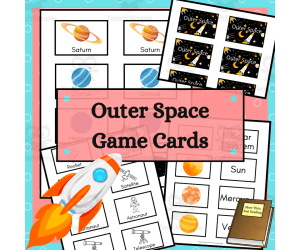
Outer Space Game Cards
ELA, Language Development, Pre-Reading, Kindergarten, Preschool, Grade 1, 2, Activities, Games
This resource is a set of Outer Space Game Cards. You can use these game cards to implement a variety of activities for students to practice vocabulary and learn about outer space. You may wish to use these cards as a Memory game , Go Fish, etc. Instructions are included if you want to play either of these ways.
Author More Than Just Reading
Tags Flash Cards, Outer Space, Vocabulary, Literacy, Reading Games

Earth Science Reading Passage: Cleaning Wasterwater. SAMPLE
Science, ELA, Reading, Reading Comprehension, Strategies, Resources for Teachers, Earth and Environmental Sciences, Earth Sciences, Environmental Science, Grade 6, 7, 8, 9, Writing Prompts, Worksheets & Printables, Centers, Activities, Teacher Tools, Assessments, Quizzes and Tests, Quizzes, Tests
This is a free passage sample from the complete resource. The full version includes everything needed for a complete reading comprehension activity: the passage, multiple-choice questions, short-answer questions, vocabulary matching, a summary-writing task, and a detailed answer key. Download the complete passage resource by clicking on the following links: PDF Fillable PDF Word Docs Google Docs Science Reading Comprehension Passages and Questions: Cleaning Wastewater (PDF) This very engaging earth science reading passage about Cleaning Wastewater . It is designed to bridge the gap between science and literacy through strengthening reading comprehension and sparking scientific curiosity in middle school students. The passage blends English Language Arts skills with accurate science content that supports NGSS classroom practice. Ideal for interdisciplinary learning in ELA and Science. Suitable for Grade 9 review, too! Student Tasks for The Passage: 5 multiple-choice questions targeting main idea, key details, inference, vocabulary in context, and use of evidence 5 vocabulary matching items with clear, student-friendly definitions 5 text-based questions that require citing specific lines or facts 1 summary prompt that asks students to condense central ideas accurately Full answer key for every section FULL CATALOG OF DOWNLOADING LINKS HERE Product Details Length: 4 pages total Grades: 6–8, also suitable for Grade 9 review Use cases: close reading, stations, homework, intervention, test prep, and sub plans Standards support: reinforces informational-text skills and supports NGSS-style sense making through observation, modeling, and clear use of claim, evidence, and reasoning Why Teachers Choose This Set Authentic science content paired with rigorous literacy practice Consistent task structure across all passages for easier planning and smoother student routines Clear, age-appropriate writing that builds confidence without oversimplifying Other Science Reading Collections you May find in the store: 1. Astronomy & Space Science 2. Volcanoes, Rocks, & Mountains 3. Rock Cycle, Soil, & Sinkholes 4. Mars, Glaciers, & Antarctica 5. Water Cycle, Acid Rain, & Wastewater 6. Insects, Animals, & Ecosystems 7. Bioluminescence & Insects 8. Animal Skin, Cats, & T. Rex 9. Human Body and Senses 10. Health & Applied Bioscience 11. Waves, Light, & Imaging 12. Electricity & Energy 13. Motion & Materials 14. Chemistry and Materials Science Use this set to reinforce ELA skills in science, to add literacy to your lessons, and to support independent work. The passages strengthen main idea, evidence use, vocabulary in context, inference, cause and effect, and summary writing. With ready-to-use assessments and complete answer keys, you can provide focused practice that is simple to run and fast to review.
Author Middle & High School - CORED Education
Rating
Tags Middle School, Reading Comprehension, Reading Strategies, ELA, Centers, Reading Passage, Assessments, Vocabulary, Environmental Science
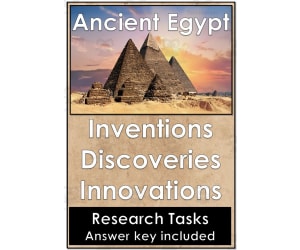
Ancient Egypt - Inventions, Innovations, and Discoveries, - NO PREP - Research Project
Social Studies, History, History: Ancient, Research, Grade 5, 6, 7, 8, 9, Activities
Ancient Egyptian Inventions, Innovations, and Discoveries - NO PREP - Research Tasks What did the Ancient Egyptians invent? Do we still use some of their innovations today? What did they discover? Students research and report in these questions, by investigating the following aspects of Ancient Egypt: - Agriculture and Animal Husbandry - Technology and Tools - Clothing and Cosmetics - Medical Innovations - Government - Food Students have to research examples of inventions, discoveries, and innovations in the field of: - mathematics - astronomy - music - arhcitecture How to use: - Introduction to Ancient Egypt - Research Task on the Nile – in class / homework - Students could complete the tasks as a part of their Ancient Egypt studies. - Use it as a sub plan – no prep involved! An ANSWER KEY is included. Good to know: Students will need access to the internet to complete the tasks and they have to cite their sources. They can use whatever website or print source they want to complete the tasks – but not Wikipedia. They also have to include a list of the sources they used to complete the task. Have fun!
Author Mr Smith's Stuff
Tags Ancient Egypt, Egypt, Egypt Worksheets, Ancient Egypt Worksheets, Research, No Prep, Answer Key, World History, Ancient History, Egypt Technology Inventions, Egyptian Inventions, Ancient Egypt Inventions, Egypt Inventions, Ancient Egyptian Inventions List, Ancient Egyptian Inventions Still Used Today, Egyptian Inventions That We Use Today, Ancient Egyptian Inventions, What Inventions Did Ancient Egypt Make, Egyptian Technology Inventions, Inventions Of Egypt, Ancient Egypt Technology And Inventions, What Are Some Egyptian Inventions, Innovations In Ancient Egypt, Inventions From Egypt, Inventions In Ancient Egypt, 10 Amazing Ancient Egyptian Inventions, Ancient Egypt Innovations, Ancient Egyptians Inventions, Inventions Of Egyptians, Egyptian Invetions, Egyption Inventions, Inventions Egypt, Inventions Of Ancient Egypt, Egyptian Inventions Word Search, Inventions In Egypt

Cut & Glue: Pets
ELA, Reading, Not Grade Specific, Activities
Cut & Glue: Pets is an engaging language arts resource that helps young readers build early literacy skills. Students will cut out pictures of common household pets like dogs, cats, hamsters and fish. Then they will match the picture to the corresponding word, reinforcing sight word recognition and beginning phonics skills. This multisensory activity is perfect for introducing pets or reviewing animal vocabulary. Use it for small group instruction, individual practice or as a take-home assignment to involve parents. With just a few simple materials like scissors, glue and crayons, Cut & Glue: Pets makes learning about pets paws-itively fun!
Author Better Teaching Resources
Tags Pets, Cut, Glue, Animals, Matching

Electromagnetic Devices: Physical Science Reading Comprehension (Word)
Science, ELA, Reading, Reading Comprehension, Strategies, Resources for Teachers, Physics, Grade 6, 7, 8, 9, 10, Writing Prompts, Worksheets & Printables, Centers, Activities, Teacher Tools, Assessments, Quizzes and Tests, Quizzes, Tests
Physical Science Reading Comprehension Passage and Questions for Middle School: Electromagnetic Devices (Word Document) This engaging middle school science resource explores electromagnetic devices and shows students how electricity and magnetism work together in real-world technology. Students learn how electric current creates magnetic fields, why coils and iron cores can strengthen electromagnets, and how controlling electric current allows magnetic force to be turned on, changed, or switched off. This passage is designed to bridge the gap between science and literacy by strengthening reading comprehension while sparking scientific curiosity in middle school students. It blends English Language Arts skills with accurate science content, helping students build background knowledge, understand key concepts, use evidence from the text, and explain scientific ideas clearly. This resource supports science classroom practice while also reinforcing important literacy skills such as main idea, vocabulary, comprehension, and summarizing. Ideal for interdisciplinary learning in ELA and Science. Suitable for Grade 9 review, too! Student Tasks for The Passage: 10 multiple-choice questions targeting main idea, key details, science concepts, comparison, and real-world applications 10 True/False statements to check understanding and address common misconceptions 5 text-based short-answer questions that require students to explain important ideas from the passage 5 vocabulary matching items with clear, student-friendly definitions 1 summary prompt that asks students to condense the central ideas accurately Full answer key for every section Available Formats for this Resource PDF Fillable PDF Google Docs Product Details Length: 7 pages total Grades: 6–8, also suitable for Grade 9 review Use cases: close reading, stations, homework, intervention, test prep, and sub plans Standards support: Reinforces informational-text skills and supports NGSS-style sense-making by helping students read scientific explanations, connect evidence to key concepts, interpret real-world examples, and explain cause-and-effect relationships in science. FULL CATALOG OF DOWNLOADING LINKS HERE Other Science Reading Collections and Topics You May Find in the Store: 1. Astronomy & Space Science 2. Volcanoes, Rocks, & Mountains 3. Rock Cycle, Soil, & Sinkholes 4. Mars, Glaciers, & Antarctica 5. Water Cycle, Acid Rain, & Wastewater 6. Insects, Animals, & Ecosystems 7. Bioluminescence & Insects 8. Animal Skin, Cats, & T. Rex 9. Human Body and Senses 10. Health & Applied Bioscience 11. Waves, Light, & Imaging 12. Electricity & Energy 13. Motion & Materials 14. Chemistry and Materials Science 15. Electromagnetism 16. Acids and Bases 17. Gas Laws 18. Biotechnology 19. Periodic Trends 20. Protists and Fungi 21. Microevolution 22. Blood 23. Chemical Bonding 24. Magnets 25. Muscles 26. Nuclear Chemistry 27. Electromagnetic Devices 28. Epigenetics 29. The Law of Conservation of Mass 30. Atomic Models 31. Isotopes and Ions 32. Light 33. Human-Environment Interaction 34. Theory of Evolution 35. Photosynthesis 36. Origins of Life and Early Earth 37. Gene Expression and Regulation 38. Thermochemistry 39. Allergies 40. Coevolution 41. Birth to Adulthood 42. Cells 43. Entropy and Free Energy 44. The Human Brain 45. Mixtures and Solutions 46. Invertebrates 47. Zoo Animals 48. Biochemistry 49. Animal Behavior 50. Population Ecology ...and many more engaging science reading passages that cover intriguing and important topics designed to spark curiosity and support student learning. Use this passage to reinforce ELA skills in science, to add literacy to your lessons, and to support independent work. The passages strengthen main idea, evidence use, vocabulary in context, inference, cause and effect, and summary writing. With ready-to-use assessments and complete answer keys, you can provide focused practice that is simple to run and fast to review.
Author Middle & High School - CORED Education
Rating
Tags Middle School, Reading Comprehension, Reading Strategies, ELA, Centers, Reading Passage, Assessments, Vocabulary, Physical Science, Electromagnetism
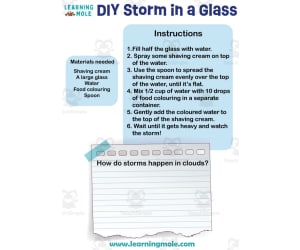
DIY Storm in a Glass Activity
Science, Earth Sciences, Earth and Environmental Sciences, Grade 2, 3, 4, 5, 6, 7, 8, 9, 10, Activities
Activity Introduction An amazing activity designed for the students to learn more about STEM. DIY Storm in a Glass Do you like STEM subjects? what is your favorite one? Have you ever tried to plant a seed? If yes, tell us more about it. Or have you ever tried to invent something? If yes, tell us more about it. And how do you think it will help us? Have you ever seen a microorganism under a microscope? What was it? And how it looked like? Mathematics is a marvelous subject. Let' sharpen our brains and solve some equations. Do you like timetable tricks? What is your favorite one? Do you know how to code? Have you ever created an app or a game before? If yes, how was it like? DIY Storm in a Glass Activity The activity is perfect for encouraging the researching skills for the students, while learning more about this fantastic topic. DIY Storm in a Glass This friendly designed worksheet is suitable for students at school, homeschooling, and as a group activity. Instructions Fill half the glass with water. Spray some shaving cream on top of water. Use the spoon to spread the shaving cream evenly over the top of the water, until it's flat. Mix 1/2 cup of water with 10 drops of food colouring in a separate container. Gently add the coloured water to the top of the shaving cream. Wait until it gets heavy and watch the storm! Format Available in a PDF format.
Author Educational Voice
Tags DIY Storm In A Glass Activity, Storm In A Glass Activity, DIY Storm In A Glass, Storm In A Glass, Storm, Storms, Storms Facts, Storms Facts For Kids, Weather, Weather Facts

Central America Song
Social Studies, Geography, Grade 7, 8, 9, 10, Songs, Activities
Central America Song: A Teaching Resource Central America Song is a highly engaging teaching aid designed to cater to different learning styles of students, with a focus on visual and auditory learners. This resource streamlines the teaching process by making geography more appealing and comprehensible for middle to high school students. The effectiveness of the Central America Song in aiding knowledge retention through its use of tunes and visuals cannot be overstated. Music-induced learning proves durable for young minds as it creates an engaging atmosphere in class or wherever the video can be played. The use of this resource could not only enhance student participation, attention span, comprehension but most importantly inject joy into their learning experience. An Informative Video Material This educational tool consists of an interesting MP4 video file that encapsulates the geographical essence of Central America within a duration of about 2 minutes. This classroom instruction material can introduce basic geographical concepts or assist with revision sessions later in the academic year. The Central America Song supports flexible use - during group discussions or individual study periods - depending on your pedagogical approach or student needs. Incorporating this educational video into your lesson plan ensures easy access at any point; you're just a click away from creating an active-learning platform where each student learns at their own pace. Cross-Curricular Benefits Apart from catering precisely to Grade 7-10 Social Studies curricula (under Geography), this tool also contributes towards knowledge acquisition related themes tied around cultures, history, or environment associated with geographical locations within Central America. In Summary: Adopting interactive resources like 'Central American Song' helps overcome conventional teaching challenges by enhancing content delivery mechanisms. This resonates with new-age learner preferences that center around multi-sensory stimuli including digital media forms such as this video song-based teaching tool.
Author Audio Memory
Tags Geography, Interactive Learning, Visual And Auditory, Central America

Geometry: 3Ds Polyhedrons
Math, Geometry, Grade 4, 5, 6, Activities
Geometry: 3D's Polyhedrons Geometry: 3Ds Polyhedrons provides an excellent teaching aid for introducing your middle and elementary school students to the dynamic world of polyhedrons. Our resources simplify complex geometry concepts, making them easy to understand for beginners learning about prisms, pyramids, and other 3D shapes. Poster-centered Learning: A wide range of posters for every prism and pyramid shape covered in middle school geometry curriculum . Detailed explanation of unique attributes such as faces, sides, vertices. In-depth visual understanding assisting learners in comprehending why each shape is distinguished by its particular name. Rhymes & Practice: An array of catchy rhymes designed specifically to aid in remembering each prism & pyramid. A multitude of practice pages & worksheets supplementing classroom teaching efforts. Focused activities ensuring consolidation gained knowledge and skills. The 'Geometry: 3Ds Polyhedron' package includes reference pages together with cheat sheets that work as compact summaries ensuring no lesson gets lost during the learning process. As a teacher or educator, feel free to utilize these materials in whatever way suits your method best. This could mean shaping a vibrant classroom demo space by draping those colorful posters around your room or assigning them individually for personal study at home or during break time at school. The same applies to practice worksheets which can function either as homework assignments or coordinated classwork exercises. Usage: This resource was designed primarily with Grades 4-6 Math classes focusing on the Geometry subunits in mind. It spreads over forty-two PDF pages full of activities centered around classifying polyhedrons. Note: Geometry: 3Ds Polyhedron translates complex geometry subjects into much simpler concepts and processes, making it easy for learners to tackle challenging topics.
Author Big Apple Teaching
Tags Geometry, Polyhedrons, 3D Shapes, Posters, Practice Pages
Pink Characters Activity
Art, Creative Arts, Toddler, Kindergarten, Preschool, Grade 1, 2, 3, 4, 5, Activities
Activity Introduction An amazing activity/craft designed for the students to have fun learning about our daily activities or even to have fun doing some DIY crafts. Pink Characters Do you like group activities or crafts that you can enjoy with your friends and family? Or do you like individua activities and crafts that you can do on your own then show the world how creative you are? Have you ever tried to do a do it yourself craft? If yes tell us more about it, like has any one helped you, what was it about, what materials dd you use to create it and how much time did you suspend creating it? Do you like colouring? What is your favourite colour? Pink Characters Activity The activity is perfect for encouraging the creativity skills for the students, while having fun with our cool activities and crafts. Pink Characters This friendly designed worksheet is suitable for students at school, homeschooling, and as a group activity. Instructions Can you think of four famous pink characters, draw them below then write down what they represent? Example: Piglet from Winnie the Pooh. Format Available in a PDF format.
Author Educational Voice
Tags Pink Characters Activity, Pink Characters, Pink Activity, Characters Activity, Pink, Pink Colour, Pink Colour Activity, Pink Color, Pink Color Activity, Colour
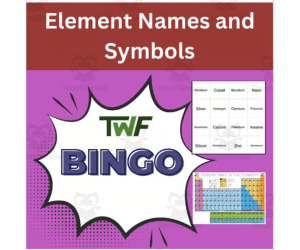
Element Names and Symbols Science BINGO Activity
Science, Chemistry, Grade 8, 9, 10, 11, 12, Activities
Your students will love this engaging science review activity. Everyone loves BINGO and it makes for a great review activity that is fun and competitive. This interactive game reinforces key scientific concepts and theories, ensuring curriculum relevance and accuracy. The game package includes 36 unique 4x4 bingo cards featuring essential terms and concepts from Element Names and Symbols, a set of call-out cards with clear and concise definitions tailored to the students' level, and detailed gameplay instructions. To play, simply distribute the bingo cards to your students along with markers or chips. Read out the definitions from the call-out cards in a random order, and have students place a marker on the corresponding term on their card. The first student to complete a row or column exclaims "Bingo!" and emerges victorious. Following the game, engage in a discussion of the terms to reinforce understanding and clarify any misconceptions. The beauty of this game is that it allows for multiple rounds of learning and review. Here is a sample from the instructions. BINGO – Instructions, Terms, and Descriptions Cut out and distribute the BINGO cards to your students. Each student will get a unique card. Students can use markers or chips to cover squares that have been called. Print out and cut out each term/description below – these are the call-out cards. Fold each call-out card and place in a hat or box and remove one at a time. After you’ve read the call-out card description, your students are to place a marker on the term associated with the description located on their card. The first student to get 4 in a row horizontally or vertically, wins. Ensure accuracy by checking marked terms on student card to the called-out descriptions.
Author Teach With Fergy
Tags Science Bingo, Bingo Activity, Element Names And Symbols, Element Names, Element Symbols, Periodic Table

Oral Blending Picture Cards and Activities
Special Resources, ELA, Special Education Needs (SEN), Language Development, Phonics, Reading, Kindergarten, Preschool, Grade 1, Activities
Here are three simple activities with supporting picture cards to help a child to learn to blend orally. Blending sounds orally can be a helpful pre-step to sounding out words in text, for some children who have difficulty hearing sounds in words. Introduction: I wrote them for an 8 yr old child whom I tutor. He has a smattering of phonic knowledge, but having not learned to blend properly is now guessing and unable to read fluently. This is a common problem, but it must not be allowed to persist or the child will not learn to read fluently or will take a very long time to do so. If you are asking the question: "Why can't my child read accurately?" or "Why does my child guess words?" the answer is: because s/he had not learned to blend. The ability to blend is a vital foundation for all further phonic work. without it, a child will struggle to learn to read. Objectives: These activities will help a child to both oral segment words to separate the sounds in each word and blend them to put them back together to me a word. The words chosen for these activities are not written down, so no actual reading is required, for we are training the child to hear sounds in words, and we do not want the child to memorise the patterns of letters in words before she/he is able to understand the relationship between letters and sounds as we hear them in words. What is included? 3 suggested activities 48 large picture cards in colour: 24 mixed sounds, 24 CVC words 48 small picture cards in colour and black and white: 24 mixed sounds, 24 CVC words Various baseboards Although these activities are most useful when a child is first beginning to blend CVC words, the words themselves contain other sounds that will most probably/may not yet have been taught. This is not a problem as the child will not see the word written down and will not be required to sound out any actual written words. These activities are listening activities. This is a deliberate act to limit the amount of exposure a child has to seeing CVC words, before working on blending with him/her, further limiting the possibility that a child will memorise the words before learning to blend. More You can use the material to make games of your own. Grades/ages Although these activities can be used with young children who are just beginning to blend they are most suited to reading intervention work with older children.
Author Lilibette's Resources
Tags Blending, My Child Can't Blend, How To Help A Hcild To Blend, When Will My Child Learn To Blend?, Phonics, Reading Intervention, Why Does My Child Guess Words When Reading, Oral Blending, Orally Blending, Blending Cards

Addition Worksheets with True or False Equations
Math, Early Math, Addition and Subtraction, Addition, Preschool, Grade 1, Activities, Worksheets & Printables, Worksheets
Practice addition fact fluency with these addition worksheets with true or false addition equations for addition within 10. These worksheets allow kindergartners and first graders to look at a variety of addition problems and determine if they are true or false.. Activities Included This product contains two worksheet for addition with a number of addition problems for students to determine if the addition equations are true or false. Students will color the addition problems where the equation is true. When to Use: Independent Practice - Teachers can the worksheets to the students to complete at their seats independently. Small Group Activities - Teachers can use these worksheets in small group settings to help target areas where students need more practice. Morning Work - These pages can be given to students to complete in the morning while waiting for other students to arrive to class. Homework - These worksheets can be sent home with students to practice determining which equations are true at home with parents. Math Centers - These pages can be put in a math center for students to practice adding by providing manipulatives for students to practice addition. Emergency Sub Plans - These worksheets have easy to understand instructions to allow subs to easily assign these sheets to students. These worksheets are easy to diversity for students by adding counting manipulatives for students who need a more hands on approach to solving addition problems. The worksheets can be laminated and used with dry erase markers to create a write and wipe activity for a math center. Skills Assessed: Addition up to 10 Determining if addition equations are true or false All of the worksheets are no prep. Teachers just need to print the pages and hand them to students to complete. Laminating the pages and providing counting manipulatives is optional.
Author The Connett Connection
Tags Addition Facts, Addition Within 10, Addition Up To Ten, Sums Up To 10, Sums Within Ten, Kindergarten Math, Kindergarten Addition, Addition Math Center, Addition Worksheets, True Or False Addition

Rainbows Reading Comprehension Passage - Cored Ed Encyclopedia
ELA, Language Development, Reading Comprehension, Reading, Pre-Reading, Science, Earth Sciences, Earth and Environmental Sciences, Writing, Strategies, Grade 2, 3, 4, 5, Worksheets & Printables, Worksheets, Teacher Tools, Centers, Activities, Writing Prompts, Assessments, Quizzes and Tests, Quizzes, Lesson Plans
This rainbows reading comprehension includes: Visualization (on the front cover) Start your lesson by taking a minute to think and share something about the topic. Read the script aloud (slowly), perhaps prepare some music or sound effects. Student close their eyes and let their imaginations wander. Students open their eyes, read the question aloud and give them a few minutes to complete. Ask a few students to share or keep answers until the end to compare with what they learn in the passage. Quick pause—thousands of Cored Education products are included with your TeachSimple membership. Download links and encyclopedia index available here. Pre-Reading Trivia Students will write down one thing they already know about the subject and then read five more facts and discuss. These facts are fun, and the students will enjoy learning about the subject before reading more. Give 1 minute for students to write what they already know (no pressure—best guess is fine). Read the five facts together. After each fact, do ask a student for their opinion, was it surprising? Set a purpose by asking students to highlight/underline one fact they want to learn more about during the reading. Reading Passage The text is a high-interest reading passage with set paragraphs, roughly three to four paragraphs long. It contains a variety of themes about the topic, anywhere from history to technology. The passage is between 250 and 350 words in length. First, ask students to look at the headings and see what they’ll learn about today. What do they know about the topic/heading? First read options: Teacher read-aloud (best for support). Partner reading (paragraph by paragraph). While reading, students underline important details, and vocabulary words they think may come up in the questions section. Mixed Questions The first question page contains four multiple-choice questions, each with a choice of four answers, and three written response questions that require a sentence or two from the student. Students complete the mcqs first independently, then review quickly as a class. For the 3 written responses, try to get students giving the answer with some form of evidence: “I think ___ because the text says ___.” If students get stuck, send them back to check the passage. Vocabulary Questions Practice seven key words from the text in this section across two activities. First section is scrambled words where students will unscramble three words given a clue for each. The second section is a word to meaning matching activity. Before starting, have some students read out words they underlined in the passage. Ask students to say the word and read aloud the sentence(s) around each word. Ask students to do scrambled words and the matching exercise in pairs then go through answers as a class. For the scrambled spelling task, get four pairs to come up to the board and write the words for extra practice with the other student reading out the clue. For the matching task, prompt students to give full sentences: “I matched ___ with ___ because ___.” Creative Writing In this question, the student will be required to write a five to eight sentence paragraph on a question related to the topic. Before starting, ask students write down 3 key ideas they are going to include in their piece. Ask students for ideas to share around the class to help those struggling. Pro writing expectations: 5–8 sentences At least 2 facts or details from the passage At least 2 vocabulary words from the previous page Students read their paragraphs while classmates listen for facts and vocabulary words. Extension Activities This page is optional for fast finishers or to take home. There are several activities, each one requiring a different skill. Do some, do none, do all, completely optional - but you will feel reassured knowing every possibility is planned for. Includes summary writting question. Answer Key There are answers for the multiple-choice questions, written response questions have sample answers, vocabulary answers and if there is a summary question then a sample summary will be provided as well. Lesson Plan Included Customized lesson plan for this lesson is included. Lesson Snapshot Title: Rainbows Genre: Nonfiction (informational text with support pages) Subject: Science (Light & Weather) Primary Topic: How sunlight and raindrops make rainbows Estimated Guided Reading Level (A–Z): R What This Lesson Teaches Best Explains the conditions for seeing a rainbow (Sun behind you; rain or mist in front; rainbow appears opposite the Sun). Builds a clear scientific model of how rainbows form (sunlight enters a raindrop, bends, bounces inside, and bends again as it leaves). Teaches that a rainbow is part of a circle and why it can “disappear” when the Sun is higher (the circle drops below the horizon). Connects science ideas to history of discovery (scholars testing with water-filled glass spheres; Descartes and Newton using a prism to explain white light and colors). Extends learning with aligned practice pages (questions, writing, and activities); vocabulary is mostly aligned, but “Refraction” appears on a vocab page while the passage describes “bending” without using that word. Learning Goals Students will describe where the Sun and rain/mist need to be to see a rainbow. Students will explain the “twisty trip” sunlight takes inside a raindrop using key details from the passage. Students will describe why a rainbow is part of a circle and what happens when the Sun is higher. Students will explain how two bounces inside droplets create a fainter outer bow and flip the color order. Students will identify how people helped solve the rainbow mystery (examples from the Middle Ages, Descartes, and Newton). Key Vocabulary From the Text horizon — where the sky seems to meet the land. raindrop — a tiny drop of water from rain. prism — clear object that spreads white light into colors. scholars — people who study and test ideas carefully. droplets — very small drops of water in the air. FULL CATALOG OF DOWNLOAD LINKS AND ENCYCLOPEDIA INDEX HERE
Author Cored Education
Rating
Tags Vocabulary, Reading Comprehension, Reading Passages, Reading, Creative Writing, Reading Strategies, Writing Prompts, Lesson Plans, Earth Science, Rainbows
Guided Reading Level H - Gravity Made Simple
ELA, Resources for Teachers, Reading Comprehension, Reading, Science, Pre-Reading, Language Development, Vocabulary, Physics, Earth and Environmental Sciences, Kindergarten, Grade 1, 2, Worksheets & Printables, Worksheets, Teacher Tools, Centers, Activities, Literacy Readers, Quizzes, Quizzes and Tests, Assessments
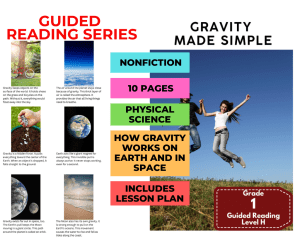
This Guided Reading Book - Gravity Made Simple (Level H) includes: Guided Reading Color Label (front cover x1) This is a quick way to match the book’s demands to what students can generally handle.. The overall goal is to use the level/color to pick books for several smaller groups. To qualify for a certain level, a student is expected to read a book from that level with about 90–94% accuracy. If a student is consistently accurate and understands, move up a level. If the student is struggling at that level, drop down and add more support. Each student will improve at completely different rates, but it is generally one of the best ways to check progress across the class. DOWNLOAD THE CATALOG TO VIEW ALL GUIDED READING BOOKS AVAILABLE (SORTED LEVELS A-Z) Pre-Reading Question (x1) Teacher asks the prompt aloud, can be while showing the cover or first page. Students share what they already know, or make educated guesses from the cover. Prompt them to use the target vocabulary. Write some of their responses on the board to look back at during the reading. Vocabulary Words (x5) Introduce the five words, best doing it one at a time. Start by saying it, while students repeat and then see if anyone knows what it means before reading further. Read through the meaning and try to briefly connect each word to a picture or gesture so it’s meaningful. Ask students to flip through the book pages and point to where they see each of the vocabulary words. While reading the book pause upon coming across one of the vocab words or read the sentence twice to make sure students understand the word has appeared. Optional: Ask students to raise hands whenever they see/hear one of the new words. Guided Reading Pages (x10) Check the book snapshot (below) for: primary topic - do you need to prep extra reading or intro materials on this? what is taught best - decide on 1-2 bullets to focus on, use the prompt or words provided here for best results. learning goals - what you are checking for students to be able to do after the session, elicit answers using prompts or words provided. key vocabulary (see section above). questions overview - so you know what is coming up and if you need to prep extra materials to assist understanding. Run the lesson You may have already looked at a few of the pages together, but you can show them some of the pictures again first to set meaning. Depending on how much time you have and how familiar your students are with guided reading class, you may want to read the book aloud first with the group first. Students whisper or partner read, while you listen in. If time, do it as a group, one student reading a page each. Use the guided page’s prompts to coach: “Check the picture / does it make sense?” “Point under the words / try the first sound” “Reread the sentence smoothly”. Try to focus more on one student per session (rotating every time), so you can work out if they are ready to move up or need to move down a level. Comprehension Questions (back cover x3) This is your way to check that students didn’t just say the words, but actually understood the text. First, let students answer by pointing to the page/picture and saying a short sentence. After any answer, follow with: “Show me where you found that in the text.” In bigger groups, have partners answer first (10–20 seconds), then call on 2–3 students to share. Differentiation tips: Emerging speakers/struggling readers: oral + pointing On-level: oral in a full sentence Higher: one written sentence or draw + label Book Snapshot Title: Gravity Made Simple Genre: Nonfiction (informational) Subject: Science (Physical Science / Earth & Space Science) Primary Topic: How gravity works on Earth and in space Estimated Guided Reading Level (A–Z): H What This Book Teaches Best Gravity is a hidden, always-active force that pulls things toward Earth’s center. Gravity keeps objects on Earth’s surface—without it, things would float away. Gravity keeps the air close to Earth, forming the atmosphere that living things need to breathe. Gravity works in space too: Earth’s pull keeps the Moon in an orbit, and the Moon’s gravity affects ocean tides. Mass and gravity connect: more mass means a stronger gravitational pull, and weight measures gravity’s pull. Learning Goals Explain what gravity is and what it does to objects on Earth. Describe what happens when an object is dropped, according to the text. Tell how gravity helps keep objects (and air) close to Earth. Describe how Earth’s gravity affects the Moon’s orbit. Explain how the Moon’s gravity is connected to tides along the coast. Use the text to explain how mass relates to gravitational pull. Key Vocabulary From the Text gravity — a force that pulls things toward Earth. atmosphere — the thick layer of air around Earth. orbit — the path something takes around a planet. mass — how much matter is inside an object. tides — ocean water rising and falling along the coast. Discussion Prompts Pre-reading question: What do you think happens when you drop an object? Comprehension questions: What does the book say happens when an object is dropped? Comprehension questions: What does Earth’s pull do for the Moon’s path around Earth? Comprehension questions: What does the book say causes tides along the coast? Printing Tips 1. Best Printing Method (Recommended) “Booklet” Printing (Best if Available) If your printer or PDF viewer supports Booklet Printing , use this. Settings to use: Print mode: Booklet Paper size: Letter or A4 (either works) Orientation: Landscape Print on both sides: Yes Flip on: Short edge Scaling: Fit to printable area Booklet subset: First test: Front sides only Then: Back sides only This will automatically: Pair pages correctly Put the cover on the outside Align everything for folding After printing, fold in half and staple along the spine . 2. If “Booklet” Printing Is NOT Available You can still print this correctly with manual duplex printing . Step-by-step: Open the PDF. Choose Print . Set: Orientation: Landscape Pages per sheet: 1 Print on both sides: Yes Flip on: Short edge Print all pages . Because each PDF page already contains two facing book pages, the result will still fold cleanly into a book. Thousands of Cored Education products are included with your TeachSimple membership. Download links and encyclopedia index available here.
Author Cored Education
Rating
Tags Vocabulary, Reading Comprehension, Reading Passages, Leveled Reading, Nonfiction, Reading, Guided Reading, Gravity, Physics, Earth Science
MAKING PUPPETS | 52 FUNNY MODELS
Creative Arts, Art, Early Learning, Elementary, Homeschool Resources, Not Grade Specific, Pre-K, Crafts, Activities
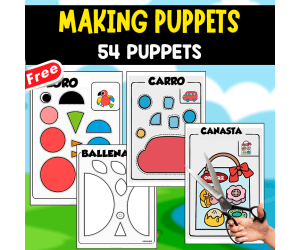
MAKING PUPPETS | 52 FUNNY MODELS ABOUT THE AUTHOR: At EDITORIAL LAURA EDUCA, we work every day to create educational materials that turn learning into a fun game. Our mission is for every child to enjoy the process of learning. Visit my educational store and discover all the resources we have ready for you. MAIN DESCRIPTION: What is the name of the product? Hello! Thank you so much for being interested in this beautiful and fabulous product that you can use with your children, both at school and at home. The name of this fabulous product is: MAKING PUPPETS | 52 FUNNY MODELS How many pages does it include? This educational document, carefully created and in some cases compiled, has the following number of pages: 52 What format is it in (A4, letter, digital, printable)? This educational resource is designed in A4 format and PDF, so you will have no difficulties printing it and it will also stay well-protected. PDF Is it in black and white or in color? This document is available in black and white as well as in color. Actually, it combines both, making it more attractive for your students. COLOR SECONDARY AND COMPLEMENTARY DESCRIPTION: For what age, grade, or school level is it ideal? I usually create resources for early grades (children ages 3–5), but I also design for primary students (ages 7–12). My priority is to make children’s learning creative. What learning area does it focus on? This and all my resources focus on children’s essential learning, such as math and literacy. Occasionally, I also create resources for Spanish. What will students learn or practice with it? With this educational resource, children will be able to practice basic skills in math and literacy. Teachers can also adapt it to other learning areas, since learning is multidisciplinary. Who will benefit the most from this resource (teachers, families, students, therapists)? I strongly believe education involves many people—teachers, parents, and even therapists. That’s why this resource is open to anyone involved in the learning process.
Author EDITORIAL LAURA EDUCA
Rating
Tags FREE, FREE RESOURCES, CRAFT, CRAFTS, ART, PPT

Research Organizer & Essay Assignment: Cesar Chavez
Social Studies, Biographies, Science, Earth and Environmental Sciences, Life Sciences, Nature & Plants, Grade 8, 9, 10, 11, Activities, Projects, Worksheets & Printables, Worksheets
Research Organizer & Essay Assignment: Cesar Chavez Use this 6-page resource to teach middle and high school students about Cesar Chavez's impact on civil rights and labor movements in the U.S. through independent research. Students will gather facts about Chavez's life using a structured 2-page handout, then outline and write a 5-paragraph essay on his historical significance. The resource provides step-by-step scaffolding including an essay prompt, requirements checklist, research and outlining worksheets, peer review checklist, and rubric aligned to Common Core standards. Whether assigned in full or partially, it can drive a complete research lesson or support other instruction on Chavez. Editable files make tailoring grade 8-11 ELA, social studies, or science activities easy. Guidance ensures students practice informative writing while teacher prep and assessment efficiency is maximized.
Author The Language of Educational Art, LLC
Tags Essay, Rubric, Notetaking, Research, Hispanic Heritage Month, Cesar Chavez

Short O: Sample Phonics Games and Activities - Hidden Pictures 1
ELA, Language Development, ESL, Resources for Teachers, Vocabulary, Phonics, Pre-Reading, Spelling, Kindergarten, Preschool, Grade 1, Teacher Tools, Games, Activities
Short O: Hidden Pictures 1 Sample Game Note: This download is in PowerPoint show mode to protect the rights of the image creator(s), and is thus UNEDITABLE. Playing the Game Click on the colored bar on the right side and the squares will begin to disappear. Clicking this bar again will reveal the whole picture and the word. Press the arrow to move onto the next slide. About the Full Game (available in the ppt game links section below) A simple yet effective way to practice saying key long I vocabulary. There is a variety of ways to get all students involved either in a team format, one-by-one or just a classroom free-for-all! There is real focus on each word as students wait patiently for more squares to disappear. 17 Slides. Practice Short O Words: pot, rock, sock, dog, hot, clock, mop, stop, cog, rod, lock, block, dot, fox, fog, box Picture style: Photos Includes sound effects for added entertainment Helps to Build Letter recognition – Identifying letters in different fonts or contexts. Letter-sound association – Connecting letters to its sounds. Vocabulary building – Introducing words that start with each letter. Phonemic awareness – Listening for letter sounds in words, rhyming, or segmenting sounds. FULL CATALOG OF DOWNLOAD LINKS HERE Letter PPT Game Links: Letter A Hidden Pictures 1 MemWord Hidden Pictures 2 Hidden Pictures 3 The Short Question Riddle Time Review Games Follow the Vocab Letter B Letter C Letter D Letter E Hidden Pictures 1 The Grand Circle 8 Pictures 1 Clue Behind the Garage Doors Outside the Submarine Two Review Games Say What You See Quiz Game Letter F Letter G Letter H Letter I Hidden Pictures 1 MemWord Three Review Games Three Quiz Show Style Games Find the Ball Bowling Four Mini Games Outside the Train Window Letter J Letter K Letter L Letter M Letter N Letter O Hidden Pictures 1 MemWord Yes or No Game Six Pictures Game Hidden Pictures 2 6 Stars One Question MCQS Game The Grid Letter P Letter Q Letter R Letter S Letter T Letter U Letter V Letter W Letter X Letter Y Letter Z Overview These interactive PowerPoint games make early phonics practice fun and engaging for young learners. With a mix of exciting activities, kids stay motivated while strengthening key phonetic patterns. Each game offers plenty of opportunities for participation—whether playing in teams, one-on-one, or independently. The variety of game styles, from disappearing squares to timed challenges, ensures that every student can learn in a way that works best for them. Bright visuals, sound effects, and gradually increasing difficulty keep students engaged and support different skill levels. Teachers have full control over the pacing and difficulty, making it easy to adjust the experience based on their students' needs. Whether guessing hidden images, recalling sequences, or solving riddles, each activity reinforces phonics in a fun, interactive way. These games turn traditional phonics drills into an exciting, hands-on learning adventure, building confidence and essential literacy skills in young learners. For More Like This For similar downloads and other frees, do check out Cored Group on TeachSimple.
Author Cored Education
Rating 5
Tags Esl, Powerpoint, Ppt, Powerpoint Games, Esl Games, Vocabulary Games, Phonics Games, Letter O Games, Letter O Activities, Cvc Games