



3,890 products added recently
Page 66 - Activities
Explore a wide array of educational activities designed to enrich your teaching and captivate students' interest. From hands-on projects to interactive games, these resources span various subjects and grade levels. Incorporate these activities into your lesson plans to foster an engaging and dynamic learning environment for all students.

 Show filters

Hopping Skipping Song (Original Music Video)
P.E. & Health, Physical Education, Health, Preschool, Kindergarten, Grade 1, 2, Songs, Activities
This Hopping Skipping Song is a great way to get your students moving and exercising. The catchy music and easy to follow movements make it a great choice for any classroom.
Author Have Fun Teaching
Tags Health And Nutrition, Skipping Song

Arctic vs Antarctic Wildlife – Sorting Activity
Science, Life Sciences, Animals, Grade 2, 3, 4, 5, 6, 7, Activities
This activity features a Venn diagram depicting the Arctic and Antarctic and multiple discs depicting wild animals. Children can spend time researching the species described and sorting them into those living in the arctic/antarctic/both. This set now includes an answer key to make checking your choices quicker.
Author Fiddleticks Education
Rating
Tags Printable, Watercolor, Arctic, Antarctic, Wildlife

LEGO ALPHABET MINIBOOK | FREE RESOURCE
Creative Arts, Writing, ELA, Handwriting, Language Development, Grammar, Phonics, Pre-Reading, Early Learning, Elementary, Homeschool Resources, Not Grade Specific, Pre-K, Worksheets & Printables, Activities
LEGO ALPHABET MINIBOOK | FREE RESOURCE With this resource, your students will be able to learn the letters using lego blocks. FREE RESOURCES ON MY STORE: I have a lot of free resources for you, on my store, please visit it, for example: NUMBERS PUZZLE: https://teachsimple.com/product/numbers-puzzles-1-to-10-cut-and-paste-activity IDENTIFY THE BALLOON: https://teachsimple.com/product/identify-the-balloon-visual-exercises GENERAL DESCRIPTION OR INFORMATION OF THIS PRODUCT: 1) How can this material support children's learning or development? This material will help our students learn in an educational way. It will support your students by guiding them in a much more playful way to achieve easy and rapid learning. 2) What specific skills are developed using this resource? Students will be able to develop their attention, concentration, creativity, and imagination skills. It will also allow students to develop their cognitive skills such as comprehension, analysis, and others. 3) Who is the ideal audience for this document? This document and/or teaching resource is primarily intended for young students, meaning those between the ages of 5 and 12, in other words, students in early childhood and/or primary education. However, it can also be used by the general public if required. SECONDARY AND COMPLEMENTARY INFORMATION OF THIS LITERACY RESOURCE: 1) Does this material allow for custom editing? This educational document is available in PDF format, so you cannot edit it. You simply need to download and then print it. 2) What main topic does the resource cover? This document has been developed to address a basic topic that children in kindergarten through elementary school should master. This document will also be helpful to the general public who want to learn. 3) What version does this document correspond to? This educational resource is designed in PDF format, which will make your download experience much simpler and easier to use. 4) Is the material designed in color or black and white? This document has been designed in color (if required) or is sometimes created in black and white to make your learning experience easier.
Author EDITORIAL LAURA EDUCA
Rating
Tags FREE, FREE RESOURCES, ALPHABET, ABC, ABECEDARY, MINIBOOK, LEGO, LEGO RESOURCES

Water Cycle, Acid Rain, & Wastewater: Reading Passages (FILLABLE PDF)
Science, Earth and Environmental Sciences, ELA, Reading, Reading Comprehension, Strategies, Resources for Teachers, Environmental Science, Grade 6, 7, 8, 9, Writing Prompts, Worksheets & Printables, Centers, Activities, Teacher Tools, Assessments, Quizzes and Tests, Quizzes, Tests
Water Cycle, Acid Rain, and Wastewater: Reading Comprehension Passages and Questions (FILLABLE PDF) This very engaging and fillable collection of environmental science reading passages about Water Cycle, Acid Rain, and Wastewater is designed to bridge the gap between science and literacy through strengthening reading comprehension and sparking scientific curiosity in middle school students. Each passage blends English Language Arts skills with accurate science content that supports NGSS classroom practice. Ideal for interdisciplinary learning in ELA and Science. Suitable for Grade 9 review, too! These worksheets are designed as fillable PDFs , which means students can type their answers directly into the document on any computer or tablet . Each page includes highlighted text fields that show them exactly where to type! What Is Included? There are (3) informational passages: Wastewater: From Drain to Clean The Water Cycle: The Engine of Our Planet Acid Rain: Causes, Impacts, and Solutions Student Tasks for Each Passage: 5 multiple-choice questions targeting main idea, key details, inference, vocabulary in context, and use of evidence 5 vocabulary matching items with clear, student-friendly definitions 5 text-based questions that require citing specific lines or facts 1 summary prompt that asks students to condense central ideas accurately Full answer key for every section Available Formats for this Resource Word Docs Google Docs FULL CATALOG OF DOWNLOADING LINKS HERE Other Science Reading Collections and Topics You May Find in the Store: 1. Astronomy & Space Science 2. Volcanoes, Rocks, & Mountains 3. Rock Cycle, Soil, & Sinkholes 4. Mars, Glaciers, & Antarctica 5. Water Cycle, Acid Rain, & Wastewater 6. Insects, Animals, & Ecosystems 7. Bioluminescence & Insects 8. Animal Skin, Cats, & T. Rex 9. Human Body and Senses 10. Health & Applied Bioscience 11. Waves, Light, & Imaging 12. Electricity & Energy 13. Motion & Materials 14. Chemistry and Materials Science 15. Electromagnetism 16. Acids and Bases 17. Gas Laws 18. Biotechnology 19. Periodic Trends 20. Protists and Fungi 21. Microevolution 22. Blood 23. Chemical Bonding 24. Magnets 25. Muscles 26. Nuclear Chemistry 27. Electromagnetic Devices 28. Epigenetics 29. The Law of Conservation of Mass 30. Atomic Models 31. Isotopes and Ions 32. Light 33. Human-Environment Interaction 34. Theory of Evolution 35. Photosynthesis 36. Origins of Life and Early Earth 37. Gene Expression and Regulation 38. Thermochemistry 39. Allergies 40. Coevolution 41. Birth to Adulthood 42. Cells 43. Entropy and Free Energy 44. The Human Brain 45. Mixtures and Solutions 46. Invertebrates 47. Zoo Animals 48. Biochemistry 49. Animal Behavior 50. Population Ecology ...and many more engaging science reading passages that cover intriguing and important topics designed to spark curiosity and support student learning. How to Use These PDFs Click on the highlighted area to start typing your answer. Move to the next question by clicking in the next highlighted box. When you are finished, close the document and select SAVE so your answers stay recorded. If you want to keep a blank copy for later, choose Save As and give your completed version a new name. Product Details Length: 15 pages total Grades: 6–8, also suitable for Grade 9 review Use cases: close reading, stations, homework, intervention, test prep, and sub plans Standards support: reinforces informational-text skills and supports NGSS-style sense making through observation, modeling, and clear use of claim, evidence, and reasoning Why Teachers Choose This Set Authentic science content paired with rigorous literacy practice Consistent task structure across all passages for easier planning and smoother student routines Clear, age-appropriate writing that builds confidence without oversimplifying Use this set to reinforce ELA skills in science, to add literacy to your lessons, or to support independent work. The passages strengthen main idea, evidence use, vocabulary in context, inference, cause and effect, and summary writing. With ready-to-use assessments and complete answer keys, you can provide focused practice that is simple to run and fast to review.
Author Middle & High School - CORED Education
Rating
Tags Middle School, Reading Comprehension, Reading Strategies, Reading Passages, ELA, Centers, Reading Passage, Assessments, Vocabulary, Environmental Science

Congress Simulation Activity
Social Studies, Government, Grade 8, 9, 10, 11, Activities
Hello and thank you so much for purchasing my Congressional Simulation Activity! I have used this activity to supplement instruction on the nature of congress and lawmaking in the United States. I have found students find this activity fun and engaging, but it also serves as a great touch point to explain concepts like deal-making, political strategy, party politics, and party whips. I hope you, the teacher, enjoy it, too! For the activity, each student will represent the Senator of a state. For simplicity, I loosely correlated each state to their politics today, and tried to make just as many “red” states as “blue” states. There are 8 issues, 4 that are supposed to represent issues that are traditionally Republican stances, and 4 that typically represent Democrat stances. You can elect how much you wish to wade into the issues themselves. This isn’t designed to be a “debate” activity, but could easily be adapted. First, I recommend running through the instructions slides and taking questions. Explain that the object of the game is to get re-elected, and to do that, students will need to work to pass or defeat these 8 bills (depending on the preferences of their citizens)
Author Ed Dynamic
Rating 5
Tags Congress Activity, Simulation Activity, Government Lesson, Voting Rights, Team Activity, Partner Work, Social Studies, Senators
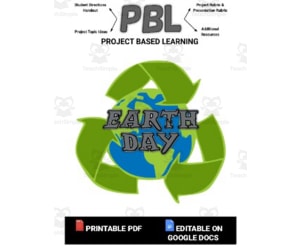
PBL: Earth Day (Editable in Google Docs)
ELA, Writing, Creative Writing, Grade 5, 6, 7, 8, 9, 10, Activities, Projects
PBL: Earth Day Teaching Resource This is a teaching tool designed for students in grades 5 to 10. This instruction promotes hands-on engagement through project-based learning and is editable via Google Docs. Research Element In the heart of this resource, students select topics associated with Earth Day like Animals, Pollution, Physical Geography, and Fuel to Support. These themes inspire them to craft their own questions and project proposals. Highlighting The Learning Process And Versatility The process is open-ended with both creativity limit and student ownership criteria. Includes templates serving as graphic organizers that guide all five project steps. The resource encompasses crucial factors such as time management and communication clarity. Evaluation Criteria in PBL: Earth Day Built-in evaluation criteria presented via rubrics for general assessment & presentation. Aims at measuring student comprehension ensuring learning objectives are met within language arts classes or creative writing exploration thereof. An Accessible Instructional Tool With Extensive Functionality For Educators Included guides on using Google Docs ,  "Slides" and creating a webpage makes PBL: Earth an easy-to-integrate educational tool. Ideal for public school teachers or homeschoolers adapting remote learning options. Suitable across multiple learning dynamics & settings including group classroom activities ,small group assignments ,individual projects rotation or homework cycles.
Author Roombop
Tags Environmental Conservation, Project-based Learning, Earth Day, Critical Thinking, Digital Resources

Guided Reading Activity The Lemonade War Trifold Book Report
ELA, Reading, Grade 3, 4, 5, Activities, Projects, Teacher Tools, Graphic Organizers, Novel Studies, Worksheets & Printables
The Lemonade War by Jacqueline Davies follows a brother and sister pair, Evan and Jessie, as they compete to see who can earn the most money selling lemonade. While the contest starts as a fun challenge, it brings underlying feelings between the two to the surface, highlighting themes of sibling rivalry and miscommunication. The story emphasizes the importance of family, forgiveness, and understanding one another's strengths and feelings. This trifold resource is created to help students practice reading comprehension skills while providing differentiation for various reading levels. This tool can easily be utilized during guided reading, independent seat work, or literature circles. The included writing wrap-up allows for assessing multiple skills in one project, making it perfect for teachers looking for projects that can cover multiple subjects - reading comprehension, reading skills, and writing. What’s Included in This Resource: Each trifold is broken down by chapters or pages and allows chunking of information for easy teacher planning and appropriate student use. In each trifold, the following skills are assessed: Making Connections: Encourage students to relate the story to their own lives, other texts, and the wider world. Making Inferences: Help students combine text evidence with prior knowledge to draw logical conclusions. Using Context Clues: Teach students to deduce the meaning of unfamiliar words using hints from the text. Visualization: Support students in creating mental images of characters, events, and settings. Evaluation: Develop critical thinking by analyzing characters, themes, and the author’s message. Writing Wrap-Up: A writing assessment tool for reflection and deeper understanding. How This Resource Benefits Teachers: ✔ Provides differentiated instruction for diverse learners. ✔ Fosters text engagement and critical thinking with content. ✔ Offers flexibility for grades, seat work, or group discussions. What Teachers Are Saying: ⭐ "This resource made my guided reading groups more organized and productive!" - Rebecca T. ⭐ "Perfect for differentiation and keeping all students engaged at their level." - Larraine C. ⭐ "My students loved the activities, and it worked seamlessly in our literature circles!" - Celia N.
Author Kel's Klass
Tags Reading Strategies, Trifold Project, Guided Reading, Making Connections, Making Inferences, Context Clues, Evaluating, Visualization, The Lemonade War, Guided Reading Activity

Pronouns Practice Questions - Grade 3-4 Grammar (Presentable PDF)
ELA, Language Development, ESL, Grammar, Common Core, Resources for Teachers, Grade 3, 4, Worksheets & Printables, Worksheets, Quizzes and Tests, Teacher Tools, Tests, Assessments, Activities
Pronouns Grammar Practice Multiple Choice Questions Pronouns Snapshot Title: Parts of Speech: Pronouns Genre: Instructional Nonfiction Subject: Language Arts Primary Topic: identifying and using pronouns correctly What This Practice Pack Teaches Best Identifying pronouns in sentence context. Distinguishing subject, object, possessive, and reflexive pronouns through direct review and practice. Choosing correct pronouns in sentence-completion tasks. Correcting common pronoun errors in edited sentences and replacement tasks. Learning Goals from this pack Students will identify pronouns in complete sentences. Students will distinguish subject, object, possessive, and reflexive pronouns. Students will choose pronouns that correctly complete a sentence. Students will replace named nouns with the correct pronouns. Students will correct common pronoun errors in written sentences. Key Vocabulary From the Pack (teach these before starting tests) subject — the doer in a sentence. possessive — showing ownership. object — receiving the action. reflexive — referring back to the subject. ownership — having something belong to someone. Common Core Alignment CCSS.ELA-LITERACY.L.2.1.C — Use reflexive pronouns. Pronouns Overview: This pack includes: Subject Pronouns Possessive Pronouns Object Pronouns Reflexive Pronouns PRESENTABLE PDF VERSION Run it like a slide show straight from a PDF, with no PowerPoint or extra software needed, just open, project, and teach. Other versions are available in the links list below or in the full catalog. FULL CATALOG OF DOWNLOAD LINKS HERE Final Overview of this product This product helps students understand pronouns and how they replace nouns in a sentence. It shows them how pronouns make writing sound smoother and less repetitive. Students learn about subject, object, possessive, and reflexive pronouns. They will practice choosing the right pronoun and fixing common mistakes. The activities are simple, clear, and useful. Overall, this workbook helps build grammar skills, improve sentence flow, and support stronger reading and writing. For similar downloads and other frees, do check out Cored Group on TeachSimple.
Author Cored Education
Rating
Tags Elementary, Answers, Ccss, Common Core, Grammar, Tests, Test Prep, Assessment, Grade 3, Grade 4

Space - Bell Ringers, Class Warm-Ups, and Exit Tickets
Science, Earth and Environmental Sciences, Space, Grade 9, 10, Activities
This Space unit comes with 23 days’ worth of materials that relate directly to your unit. This activity bundle is geared towards a grade 7-9 science class but will also work well for an advanced grade 5-6 or a lower-level grade 10-11 class. They can be used at the start of a class in the form of a bell ringer/class warm-up or at the end of class as an exit ticket This resource is set up for a space class and includes the topics listed below. Please have a look at the list of topics This resource covers the following topics - Space - An Introduction - Our Solar System - The Life and Death of Stars - The Seasons and Earth's Tilt - The Moon - Eclipse - Solar and Lunar - Galaxies, Other Objects and the Universe - The Immensity of the Universe - Life in outer space - how humans meet their needs These are meant to be used each day, however, the question periods are directly associated with topic lessons, so they are done on days that follow the completion of a lesson. For example, after you finish your lesson, you’d give your students the questions associated with the ecosystems lesson. Additional days will utilize the Quotes and Videos sections. There are two key reasons why this daily activity works: 1) It encourages your students to review their notes on a nightly basis so they’re ready for class. 2) It creates a routine in your classroom that encourages your student to arrive and get settled for class quickly and quietly. Once we’re done, the students are ready for class and have already gotten their brains working and thinking science. The Activities 1) Questions: Question types - Fill in the blanks - Short answer - Opinion - Drawing - Mix of above ● Everything will be included in your PowerPoint ● All questions relate directly to the previous lesson and work to test your students’ understanding ● If students are absent, they know they need to get caught up while away ● This process encourages students to keep up with the material and review their notes nightly 2) Quotes The quotes come from individuals and relate directly to the overarching topic. On these days, I have students read the quote and write down what they feel it means and/or the underlying message. 3) Videos The videos are an excellent way to settle your class down quickly and easily. Each video is selected specifically because it's interesting and relevant to students. Each video can be accessed directly from the slide. Simply click the video image while in slideshow mode and the video will automatically open in your browser. Process ● Each week, I hand out the week’s [Topic Name] - Student Worksheet ○ You can make this activity completely digital by making the sheet available online and have them submit it there as well ● As soon as the bell rings to start class, I hand the sheets out to my students. Once the sheets are out, I start the 4-minute timer. If students are late, they miss out on their time. ● Once the timer finishes, the students flip over their papers and pass them to the front. Structure Each day’s activities, unless otherwise stated, are to be done individually and without notes. However, depending on the ability level of your students, you may want to have them work in pairs and/or use their notes. Marking We all have enough marking already and the last thing we want to do is add to our pile. However, I’ve found that this process is so streamlined and efficient that I’m easily able to mark these while my students are working in class or copying down notes. Typically, I mark only the Questions section. However, if I’m busy or don’t have time in class, I won’t and that’s OK. The point of this isn’t to make your job harder but to help your students stay on track and keep focused. Additionally, I’ll mark one of the other sections (Quote or Video) at least every other week. Each day’s mark is out of 5 but since there aren’t always 5 questions (usually it’s somewhere between 1-3), I base my mark on their understanding of what I’ve asked them to complete. This can come across as subjective, but I’ve found it gives me an excellent indication of their knowledge and keeping it consistent makes things better for everyone. Keep in mind that the outline above describes how I use them in my class. Feel free to change it up however you like (including the questions as the entire thing is completely editable). Other teachers I’ve spoken to only utilize the questions following a lesson or only mark the questions following a lesson and for the other days, show the relevant videos but don’t require their students to submit anything. A few people only mark one submission per week while others mark everything. It’s completely up to you. Whether you use Questions, Quotes, or Videos in any given lesson, your goal is to create a routine, promote understanding, and get your students thinking about science as soon as they enter your class. If you have any questions, please send me an email - devon@teachwithfergy.com
Author Teach With Fergy
Tags Astronomy Bell Ringer, Science Exit Tickets, Our Solar System, Lunar Eclipses, Phases Of The Moon, Science Bell Ringers For Middle School, Bell Ringers For Middle School Science, Science Bell Ringers, Physical Science Bell Ringers, Science Warm Up Questions
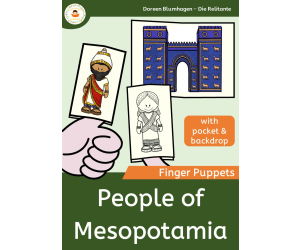
Finger puppets - People of Mesopotamia- People of the Past
Social Studies, First Peoples (Native), Grade 3, 4, 5, 6, Activities
Finger Puppets: People of Mesopotamia – Bringing History to Life Immerse yourself in the exciting world of the People of Mesopotamia with these creative finger puppet templates! This interactive material brings history lessons to life in a fun and vivid way, while encouraging students' creativity. What's included? The set contains finger puppet templates in two variants: Colorful templates: Ready to cut out and use immediately. Black and white templates: These can be designed and colored by the students themselves. In addition, there are suitable backdrops for finger puppet theater as well as instructions on how the pupils can make a storage bag for their puppets, which they can place in their folder. Who is the material suitable for? The finger puppets are ideal for science and history lessons in grades 3 to 6. They offer an exciting opportunity to discover historical content in a playful and creative way. A wide range of possible applications in the classroom. Here are some ideas on how the finger puppets can be used in the classroom: Role-play: Students can re-enact scenes from Incas history to deepen what they have learned. Dialogues: The students let characters talk to each other and thus develop a more profound understanding of historical contexts. Inventing stories: The students create their own stories based on the People of Mesopotamia themes. Presentations: With the finger puppets as a visual aid, students can create lectures about the People of Mesopotamia. Group work: Developing scenes or stories together promotes teamwork and social learning. Why finger puppets? Finger puppets are a creative way to bring historical content to life and tangible. They support action-oriented learning, encourage collaboration, and provide students with a playful approach to complex topics. You can find many more finger puppet sets in my TeachSimple shop - e.g. on biblical stories, fairy tales or epochs of history. Best wishes, Die Relitante - Doreen Blumhagen
Author Die Relitante
Tags Finger Puppets, ElementarySchool, MiddleSchool, CreativeLearning, HistoryClass, SocialStudies, InteractiveLearning, Crafts, Mesopotamia
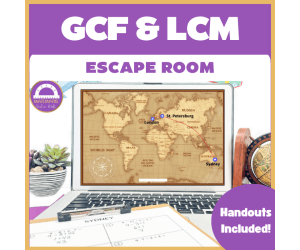
GCF and LCM Digital Escape Room
Math, Early Math, Grade 6, 7, 8, Worksheets & Printables, Activities, Task Cards, Escape Room
Need an interactive and fun way to get your middle school students drilling Greatest Common Factor (GCF) and Least Common Multiple (LCM)? This interactive math escape room is perfect for keeping your students engaged while reviewing these vital skills! No prep time required—just download, share, and sit back and relax as your students drill math skills while "travelling around the world." How It Works Students embark on an international adventure by traveling to four of the globe's most famous cities. To "get on the plane" to where they're heading, they must answer a set of correctly GCF or LCM problems. The city problem keeps them continuously working and getting immediate feedback and interactive math problem-solving. Cities Traveled to: ✈ Sydney ✈ St. Petersburg ✈ London ✈ San Francisco What's Included: 40 Total Problems 20 GCF problems 20 LCM problems All multiple choice for easy student access Digital Escape Room Adventure Interactive links open up each new city when students finish the challenges. Printable Version Task cards and worksheets included for extra practice, differentiation, or device-free children. Complete Answer Key Grade and review saving is easy. Why Students Love It: Game-based and interactive format is engaging Real-world "travel" theme is enjoyable and pertinent Instant feedback encourages persistence and achievement Why Teachers Love It: ✅ No Prep Needed – Ready to distribute in under one minute ✅ Multi-Purpose – Ideal for homework, classwork, math centers, sub days, or review days ✅ Device Friendly – Compatible with laptops, tablets, or smartphones ✅ Differentiation Built-In – Print it out as a supplement or practice Concepts Covered: Determining the Greatest Common Factor (GCF) Determining the Least Common Multiple (LCM) Applying factors and multiples to real-world problems Becoming fluent with challenging, game-like practice It's ideal for middle school mathematics teachers who want review time to be fun, enjoyable, and relaxing. In the classroom, at home, or in a virtual learning environment, your students will be drilling math happily while discovering the world! ??? Download now and put GCF and LCM review at the top of your math class!
Author Matemaths
Rating
Tags Matemaths, Escape Room, Printable, Worksheets, Task Cards, Digital, Gcf, Lacm

Astronomy & Space Science: SAMPLE Reading Comprehension Passage (Word)
Science, Space, Earth and Environmental Sciences, ELA, Reading, Reading Comprehension, Strategies, Resources for Teachers, Grade 6, 7, 8, 9, Writing Prompts, Worksheets & Printables, Centers, Activities, Teacher Tools, Assessments, Quizzes and Tests, Quizzes, Tests
This is a ONE PASSAGE SAMPLE. The following is the description of the FULL resource and the downloading links: Astronomy & Space Science: Reading Comprehension Passages & Questions (Word) - Editable and Fillable This very engaging collection of science reading passages about Astronomy and Space Science is designed to bridge the gap between science and literacy through strengthening reading comprehension and sparking scientific curiosity in middle school students. Each passage blends English Language Arts skills with accurate science content that supports NGSS classroom practice. Ideal for interdisciplinary learning in ELA and Science. Suitable for Grade 9 review, too! What Is Included? There are (3) informational passages: The Solar System: A Neighborhood in Motion Understand orbits, the Sun’s role, the differences between inner and outer planets, and where asteroids and comets fit in the system. The Story of Space Science Trace the path from early skywatching to telescopes, satellites, exploration missions, and the ISS, with practical links to GPS, communications, and weather forecasting. Stars of Many Sizes: Dwarfs, Giants, and Neutrons Explore stellar types and life cycles, including our Sun, red giants, supernovas, neutron stars, and pulsars. Student Tasks for Each Passage 5 multiple-choice questions targeting main idea, key details, inference, vocabulary in context, and use of evidence 5 vocabulary matching items with clear, student-friendly definitions 5 text-based questions that require citing specific lines or facts 1 summary prompt that asks students to condense central ideas accurately Full answer key for every section Available Formats for this Resource: PDF Google Docs FULL CATALOG OF DOWNLOADING LINKS HERE Other Science Reading Collections and Topics You May Find in the Store: 1. Astronomy & Space Science 2. Volcanoes, Rocks, & Mountains 3. Rock Cycle, Soil, & Sinkholes 4. Mars, Glaciers, & Antarctica 5. Water Cycle, Acid Rain, & Wastewater 6. Insects, Animals, & Ecosystems 7. Bioluminescence & Insects 8. Animal Skin, Cats, & T. Rex 9. Human Body and Senses 10. Health & Applied Bioscience 11. Waves, Light, & Imaging 12. Electricity & Energy 13. Motion & Materials 14. Chemistry and Materials Science 15. Electromagnetism 16. Acids and Bases 17. Gas Laws 18. Biotechnology 19. Periodic Trends 20. Protists and Fungi 21. Microevolution 22. Blood 23. Chemical Bonding 24. Magnets 25. Muscles 26. Nuclear Chemistry 27. Electromagnetic Devices 28. Epigenetics 29. The Law of Conservation of Mass 30. Atomic Models 31. Isotopes and Ions 32. Light 33. Human-Environment Interaction 34. Theory of Evolution 35. Photosynthesis 36. Origins of Life and Early Earth 37. Gene Expression and Regulation 38. Thermochemistry 39. Allergies 40. Coevolution 41. Birth to Adulthood 42. Cells 43. Entropy and Free Energy 44. The Human Brain 45. Mixtures and Solutions 46. Invertebrates 47. Zoo Animals 48. Biochemistry 49. Animal Behavior 50. Population Ecology ...and many more engaging science reading passages that cover intriguing and important topics designed to spark curiosity and support student learning. Product Details Length: 14 pages total Grades: 6–8, also suitable for Grade 9 review Use cases: close reading, stations, homework, intervention, test prep, and sub plans Standards support: reinforces informational-text skills and supports NGSS-style sense making through observation, modeling, and clear use of claim, evidence, and reasoning Why Teachers Choose This Set Authentic science content paired with rigorous literacy practice Consistent task structure across all passages for easier planning and smoother student routines Clear, age-appropriate writing that builds confidence without oversimplifying Use this set to reinforce ELA skills in science, to add literacy to your lessons, or to support independent work. The passages strengthen main idea, evidence use, vocabulary in context, inference, cause and effect, and summary writing. With ready-to-use assessments and complete answer keys, you can provide focused practice that is simple to run and fast to review.
Author Middle & High School - CORED Education
Rating
Tags Middle School, Reading Comprehension, Reading Strategies, Reading Passages, ELA, Centers, Reading Passage, Assessments, Vocabulary, Earth Science

Life Science Reading Comprehension Passage: Protists and Fungi (Docs)
Science, ELA, Reading, Reading Comprehension, Strategies, Resources for Teachers, Life Sciences, Biology, Grade 6, 7, 8, 9, 10, Writing Prompts, Worksheets & Printables, Centers, Activities, Teacher Tools, Assessments, Quizzes and Tests, Quizzes, Tests
Life Science Reading Comprehension Passage and Questions: Protists and Fungi (Docs) This very engaging science reading passage is about protists and fungi , two groups of small but highly important organisms that affect ecosystems in major ways. It explains how protists can live in water, soil, or hosts; how some protists, such as algae, make food through photosynthesis and support aquatic food chains; and how others, such as Plasmodium , can cause disease. It also explains how fungi absorb nutrients, break down dead material, recycle nutrients, form helpful partnerships with plant roots, and contribute to foods and medicines such as bread and penicillin. This passage is designed to bridge the gap between science and literacy by strengthening reading comprehension while sparking scientific curiosity in middle school students. It blends English Language Arts skills with accurate science content, helping students build background knowledge, understand key concepts, use evidence from the text, and explain scientific ideas clearly. This resource supports science classroom practice while also reinforcing important literacy skills such as main idea, vocabulary, comprehension, and summarizing. Ideal for interdisciplinary learning in ELA and Science. Suitable for Grade 9 review, too! Student Tasks for The Passage: 10 multiple-choice questions targeting main idea, key details, science concepts, comparison, and real-world applications 10 True/False statements to check understanding and address common misconceptions 5 text-based short-answer questions that require students to explain important ideas from the passage 5 vocabulary matching items with clear, student-friendly definitions 1 summary prompt that asks students to condense the central ideas accurately Full answer key for every section Available Formats for this Resource PDF Fillable PDF Word Docs FULL CATALOG OF DOWNLOADING LINKS HERE Product Details Length: 7 pages total Grades: 6–8, also suitable for Grade 9 review Use cases: close reading, stations, homework, intervention, test prep, and sub plans Standards support: Reinforces informational-text skills and supports NGSS-style sense-making by helping students read scientific explanations, connect evidence to key concepts, interpret real-world examples, and explain cause-and-effect relationships in science. Why Teachers Choose This Set Authentic science content paired with rigorous literacy practice Consistent task structure across all passages for easier planning and smoother student routines Clear, age-appropriate writing that builds confidence without oversimplifying Other Science Reading Collections and Topics You May Find in the Store: 1. Astronomy & Space Science 2. Volcanoes, Rocks, & Mountains 3. Rock Cycle, Soil, & Sinkholes 4. Mars, Glaciers, & Antarctica 5. Water Cycle, Acid Rain, & Wastewater 6. Insects, Animals, & Ecosystems 7. Bioluminescence & Insects 8. Animal Skin, Cats, & T. Rex 9. Human Body and Senses 10. Health & Applied Bioscience 11. Waves, Light, & Imaging 12. Electricity & Energy 13. Motion & Materials 14. Chemistry and Materials Science 15. Electromagnetism 16. Acids and Bases 17. Gas Laws 18. Biotechnology 19. Periodic Trends 20. Protists and Fungi 21. Microevolution 22. Blood 23. Chemical Bonding 24. Magnets 25. Muscles 26. Nuclear Chemistry 27. Electromagnetic Devices 28. Epigenetics 29. The Law of Conservation of Mass 30. Atomic Models 31. Isotopes and Ions 32. Light 33. Human-Environment Interaction 34. Theory of Evolution 35. Photosynthesis 36. Origins of Life and Early Earth 37. Gene Expression and Regulation 38. Thermochemistry 39. Allergies 40. Coevolution 41. Birth to Adulthood 42. Cells 43. Entropy and Free Energy 44. The Human Brain 45. Mixtures and Solutions 46. Invertebrates 47. Zoo Animals 48. Biochemistry 49. Animal Behavior 50. Population Ecology ...and many more engaging science reading passages that cover intriguing and important topics designed to spark curiosity and support student learning. Use this passage to reinforce ELA skills in science, to add literacy to your lessons, and to support independent work. The passages strengthen main idea, evidence use, vocabulary in context, inference, cause and effect, and summary writing. With ready-to-use assessments and complete answer keys, you can provide focused practice that is simple to run and fast to review.
Author Middle & High School - CORED Education
Rating
Tags Middle School, Reading Comprehension, Reading Strategies, ELA, Centers, Reading Passage, Assessments, Vocabulary, Biology, Life Science
Walking Walking | Animated Song Videos
Creative Arts, Art, Music, Early Learning, Pre-K, Songs, Activities
Walking Walking | Animated Song Videos provides early learners with a fun and engaging 1-minute animated video to help teach the song "Walking Walking." Students will love singing and moving along to the catchy tune as they learn about action words and rhyming. This colorful video can be used as a quick brain break,transition between activities, or as the focus of a music lesson on patterns and repetition. Implement it whole group on the smartboard for a lively activity students will request again and again. Small groups can view it independently and mimic the motions. Individual learners can sing the simple lyrics and dance to the beat as they build early literacy skills in a playful way. This delightful resource offers flexible opportunities to incorporate movement and song into diverse early childhood curriculum.
Author Educational Voice
Tags Early Learning, Preschool, Music, Videos, Nursery Rhymes
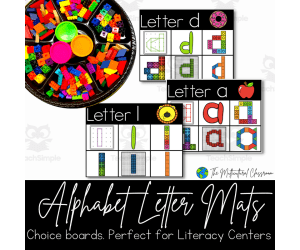
Alphabet Letter Mats | Choice Boards
ELA, Language Development, Spelling, Kindergarten, Preschool, Grade 1, Activities
This resource is a set of Choice Board Alphabet Letter Mats. Your students will love getting to choose from 6 different options as they build each letter. This is ideal for morning work, early finishers, intervention and so much more. You will need: -pattern blocks -Legos -unifix cubes -play dough -rubber bands -Lego baseplates (optional) -Geoboards Students can choose how they want to build the letter. When students get choice and centers are more play based, students are more engaged and intrinsically motivated to do the center. Directions for how to print these letter mats are included.
Author The Multicultural Classroom
Tags Spelling Words, Letter Mats, Alphabet Letter Mats, Choice Boards, Unifix Cubes

10 FREE IMAGES FOR PAINTING | RELAXING TIME FOR KIDS
Special Resources, Speech Therapy, Creative Arts, Early Learning, Elementary, Pre-K, Activities, Worksheets & Printables
10 FREE IMAGES FOR PAINTING | RELAXING TIME FOR KIDS INTRODUCTION: Hello! I thank you infinitely for your interest in my educational store! I am a teacher who strives every day to produce these great educational resources for children, so I thank you because with your downloads you are helping a lot to promote my personal and professional work. MAIN INFORMATION: 1. Product name: You can use this educational resource in the primary education classroom. 2. Number of pages: This document contains the following number of pages. 3. Is it editable or not? This educational document is not editable, because this way you can use it better and you will not have any problem with the composition or design undergoing any variation. 4. Theme: This educational resource contains a topic for the primary education of children. 5. Document version: This educational document is available in PDF version, size A4. 6. Color or black/white: This educational product is designed in color because we believe that this will be much more attractive for your children. 7. Aimed at children of ages: This educational document is specifically aimed at children in primary education. 8. Area: This educational document may be used in some area of primary education for children. 9. Keywords: children, primary education, resources for children, free resources, primary resources, resources for primary education. SECONDARY INFORMATION: 10. Tags or keywords that describe the content: didactic material, teaching sheets, material for children, printable educational material, printable material. 11. Ways to print: I suggest you print this document in A4 format, and check if your printer has enough ink for the printout to be of quality and so that your students can complete their worksheet without any problem. 12. Ways to apply it in class: You can apply this document both individually and as a group, it all depends on your criteria. 13. Will they need extra items to use this worksheet? Yes, perhaps your students will need a pencil, markers, etc., it all depends on the creativity of the teacher. This file is for personal use only. It is not allowed to be resold or shared with others.
Author EDITORIAL LAURA EDUCA
Tags PAINTING, PAINT, COLOR, COLORING, FREE RESOURCES, ART, ART FOR KIDS, PRINTABLES

5-in-1 Alphabet Cards for Letter of the Week, Phonics, Literacy Centers, and More!
ELA, Language Development, Pre-Reading, Phonics, Kindergarten, Preschool, Centers, Activities
5-in-1 Alphabet Cards for Letter of the Week, Phonics, Literacy Centers and More! These 5-in-1 cards are a helpful addition to any preschool or kindergarten phonics program and can be used all year long! There are six images for every letter of the alphabet (even X and Z!). The name of each image is typed below it with the initial consonant left as a blank. The images are cute, colourful, and fun. Lots of numbers, animals, and transportation words are provided. Also, some more challenging and unique words are included. How to Use: These cards can be used in a variety of ways in your classroom. Here are a few ideas: 1) To use the cards as a mystery book: print all the pages for one letter and staple them together as a book. “Read” the book to the class, and ask them to guess the letter of the week. 2) To save paper, you could show the slides on a projector or interactive whiteboard instead of printing a paper book. 3) When printed in colour, they make great posters for your classroom. Choose your favourite from each letter and hang them as your alphabet! 4) Print some images from each letter (4 or 6 per page) to use as flashcards to help reinforce sounds. If you laminate them, they could be a centre in your classroom. 5) Finally, if you print two cards from each letter, you can use them for a challenging memory matching game! Grades to Use With: These cards are designed for students in preschool through kindergarten who are learning early phonics letter sounds. These cards focus on initial sounds only. What's Included: 159 Pages in ready-to-print PDF Format: Title Page Instructions Mystery Book Title Page 6 pages for each of the 26 letters of the alphabet
Author Grace Under Pressure
Tags Alphabet Cards, Phonics, Language Arts, Letter Of The Week, Flashcards, Memory Game, Alphabet, Literacy Center, Kindergarten, Early Literacy
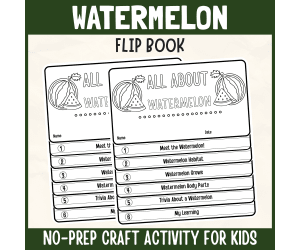
Watermelon Fruit plant Flipbook Craft Science Study Writing Activity
Life Sciences, Science, Biology, Nature & Plants, Grade 1, 2, 3, 4, Crafts, Activities, Parts of and Anatomy of, Worksheets & Printables, Writing Prompts
Make learning about watermelon plants fun and interactive with this printable DIY flipbook craft! Students will explore the fascinating world of watermelon plants by learning about their habitat, plant parts, life cycle, growth stages, adaptations, and importance while strengthening reading comprehension and writing skills through engaging science activities. I like using this resource during summer science units, fruit plant studies, botany lessons, gardening activities, classroom centers, independent work, and homeschool learning. It's a low-prep activity that combines science, reading, writing, and creativity into one meaningful project. What You Will Get This resource includes a printable Watermelon Plant DIY flipbook that helps students organize and record what they learn about this popular fruit-bearing vine through reading, writing, and hands-on learning. What's Included in this Flipbook? • Watermelon Plant DIY flipbook craft templates • Reading and writing activities • Plant facts and science research pages • Habitat, life cycle, and growth stages sections • Plant parts and adaptations pages • Writing prompts and reflection activities • Easy-to-follow assembly instructions This resource is perfect for: • Summer science lessons • Fruit plant studies • Botany units • Gardening activities • Classroom science centers • Homeschool learning • Independent work and early finishers Why you will love this? • Easy to print and assemble • Encourages reading, writing, and scientific thinking • Builds nonfiction reading comprehension skills • Supports research and observation skills • Connects science learning with seasonal summer themes • Creates a meaningful keepsake students can share This Watermelon Plant DIY Flipbook Craft is a fun and interactive way for students to discover the life cycle, structure, adaptations, and importance of watermelon plants while developing reading, writing, and science skills through creative, hands-on learning.
Author Perfect_Printables
Rating
Tags Plant Science, Botany, Science Activities, Writing Activities, Craft Activities, Plant Flipbook, Plant Research, Fruit Plant, Watermelon Activities, Summer Plant

As Song (Animated Music Video)
ELA, Language Development, Vocabulary, Kindergarten, Preschool, Grade 1, Songs, Activities
This fun and engaging music video will help students quickly learn and recognize the sight word AS. By watching this video, students will be able to build their reading speed and fluency.
Author Have Fun Teaching
Tags Sight Words, Language Arts, Vocabulary, Spelling, Songs
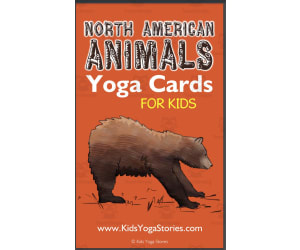
Kids Yoga Stories: Yoga Cards for Kids - North American Animals Alphabet
P.E. & Health, Yoga, Kindergarten, Preschool, Grade 1, 2, Activities
Kids Yoga Stories: Yoga Cards for Kids - North American Animals Alphabet Use yoga poses to teach students about North American animals while learning the alphabet. This set of 26 yoga pose cards can help children learn through movement. The deck includes: - Tips for teaching yoga - 26 illustrated yoga pose cards - 26 matching North American animal alphabet cards - Instructions for all poses The index indicates the order for flowing smoothly between poses. Kids of diverse backgrounds are featured doing yoga. Recommended for ages 3+. These versatile cards can be used: - During transitions - For morning routines - As brain breaks - In P.E. class - In therapy sessions - With individuals or groups Benefits of kids yoga: - Increased strength and flexibility - Better sleep - Self-confidence - Body awareness - Healthy lifestyle
Author Kids Yoga Stories
Tags Kids Yoga Stories, North American Animals , Alphabet Yoga, Yoga Cards, Kids Yoga

My Green World Word Find Activities
ELA, Reading, Preschool, Grade 1, 2, 3, Activities
My Green World Word Find Activities The My Green World Word Find Activities includes a vibrant selection of 18 activity pages. Promising an engaging and informative approach to central themes based on children's daily life, this resource focuses predominantly on language arts. Young minds are stimulated with challenging word search puzzles combined with fascinating facts linked directly to each puzzle’s topic. Appropriate Grade Levels Catering primarily to students from Kindergarten through Grade 3, these captivating activities present topics such as school environments, living spaces, dietary foods, the human body, and more in an intriguing manner. School Environments Living Spaces Dietary Foods The Human Body ...etc In each exercise, child-friendly facts about the subject interweave with puzzlers that not only spike curiosity but deepen comprehension about the world they reside in. The Advantage of Reusability A unique aspect of The My Green World Word Find Activities is reusability. Educators may revisit these exercises by printing these pages once again for continued use; providing ample opportunities for practice and revision. This flexibility enhances teaching methodologies while offering learners multiple chances for reinforcement. Versatile Integration into Learning Scenarios This resource adapts effortlessly into various learning scenarios - home-based individual study or classroom group sessions. It can be incorporated into small-group learning centers where students collectively enhance their word-finding skills or distributed as intriguing yet educational leisure tasks during breaks. These alluring activities come packaged as a handy digital PDF file format ready to be integrated immediately into any lesson plans. Note: With its well-sequenced content structure that aids easy classroom mediation, this potent teaching resource stands as an invaluable aid to facilitate reading skills while fostering awareness and understanding about real-world elements amongst fledgling learners.
Author Twin Sisters Digital Media
Tags Language Arts, Word Search, Educational Activities, Elementary Education, Environmental Awareness
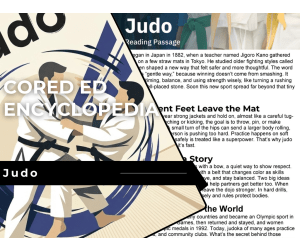
Judo Reading Comprehension Passage - Cored Ed Encyclopedia
ELA, Language Development, Resources for Teachers, Reading Comprehension, Reading, Pre-Reading, Writing, Strategies, Sports, P.E. & Health, Grade 2, 3, 4, 5, Worksheets & Printables, Worksheets, Teacher Tools, Centers, Activities, Writing Prompts, Assessments, Tests, Quizzes and Tests, Quizzes
This judo reading comprehension contains the following: Visualize on the Cover (Teacher Read Aloud Script) Start your lesson by taking a few moments to visualize the topic and share thoughts or feelings about it. Pre-Reading Trivia Students will write down one thing they already know about the subject and then read five more facts and discuss. These facts are fun, and the students will enjoy learning about the subject before reading more. Reading Passage The text is a high-interest reading passage with set paragraphs, roughly three to four paragraphs long. It contains a variety of themes about the topic, anywhere from history to technology. The passage is between 250 and 350 words in length. Mixed Questions The first question page contains four multiple-choice questions, each with a choice of four answers, and three written response questions that require a sentence or two from the student. Vocabulary Questions Practice seven key words from the text in this section across two activities. First section is scrambled words where students will unscramble three words given a clue for each. The second section is a word to meaning matching activity. Creative Writing In this question, the student will be required to write a five to eight sentence paragraph on a question related to the topic. Extension Activities This page is optional for fast finishers or to take home. There are several activities, each one requiring a different skill. Do some, do none, do all, completely optional - but you will feel reassured knowing every possibility is planned for. Answer Key There are answers for the multiple-choice questions, written response questions have sample answers, vocabulary answers and if there is a summary question then a sample summary will be provided as well. FULL CATALOG OF DOWNLOAD LINKS AND ENCYCLOPEDIA INDEX HERE Lesson Snapshot Title: Judo Genre: Nonfiction (Informational Text) Subject: Life Skills / PE & Health / Reading (Informational Text) Primary Topic: Judo’s origins, practices, values, and global sport Estimated Guided Reading Level (A–Z): P Learning Goals Explain how the book describes judo as the “gentle way,” using text details. Describe the main goals of a judo match and what actions are not the focus. Identify routines and behaviors in judo that show respect and help keep people safe. Describe how belts and the uniform connect to skill growth in judo. Summarize key milestones in judo’s history and spread around the world. Key Vocabulary From the Text jujutsu — older fighting styles Jigoro Kano studied. judogi — uniform worn in judo class. dojo — place where people train judo. pin — hold someone still on the mat. judoka — a person who practices judo. Cored Ed Encyclopedia Overview The Cored Ed Encyclopedia is a weekly series of lessons that you can pick up and use right away. These short readings fit into whatever time you have available. Each one includes a warm-up, a reading, and a set of questions, but it’s flexible — you can do just the reading, the full lesson, or skip the writing section if you need to. Each lesson focuses on a single topic so students don’t get lost. The writing is clear but never childish, making it perfect for grades two through five. Topics range from animals and science to history, inventions, and everyday things. No matter the level of the student, everyone should take away at least one new idea or fact from each lesson. The materials are easy to print, easy to explain, and require no setup. They work well for whole-class teaching, partner work, or independent study.
Author Cored Education
Rating
Tags Vocabulary, Spelling, Reading Comprehension, Reading Passages, Reading, Creative Writing, Reading Strategies, Writing Prompts, Judo, Sports
Running Song (MP3)
P.E. & Health, Physical Education, Health, Preschool, Kindergarten, Grade 1, 2, 3, Songs, Activities
This song is perfect to get your students up and moving while they learn! The catchy beat and easy to follow lyrics will have them running in place with perfect form in no time. This is a great way to get them up and moving while they learn and have some fun!
Author Have Fun Teaching
Tags Health And Nutrition

Spring Two Step Equation Maze March Activity
Math, Algebra, Grade 6, 7, 8, Activities, Centers, Games, Worksheets & Printables
This spring-themed maze is one of those activities students actually enjoy while practicing two-step equations. Instead of just solving problems on a worksheet, they move through a path by finding the correct answers, which keeps them focused much longer than usual. I created this to give middle school students extra practice with solving linear equations without it feeling repetitive. They’ll work with addition, subtraction, multiplication, and division as they go from one step to the next. The setup is simple. Students solve an equation, look for their answer, and follow the maze to the next problem. If they make a mistake, they usually notice it quickly because they end up stuck, which helps them self-correct. It works well for grades 6–9, especially for review lessons, early finishers, or even as a quick activity before a test. I’ve also used it in small groups and turned it into a timed challenge, which students tend to like. There are two versions included, so you can choose an easier or slightly more challenging option depending on your class. This makes it easier to use with mixed ability levels. Answer keys are included with the full solutions, so students can check their work or you can go over it together. The file is a printable PDF (9 pages), ready to use with no prep.
Author NoPrepFunWorsheets
Rating
Tags Spring, Math Equations, 2 Step Equations, Equation Maze, Spring Activity, Spring Math, Math Maze, Printable, No Prep