



3,984 products added recently
Page 19 - 3rd Grade Assessments
Ensure your third-grade students are mastering essential skills with assessments designed for their level. This collection includes vocabulary quizzes, math concept evaluations, and science understanding checks. By integrating these assessments, you can inform your teaching strategies and support student achievement.

 Show filters


Reading Comprehension Nonfiction Set 2 - Nutrition (Forms)
ELA, Reading, Language Development, Vocabulary, Common Core, ESL, Spelling, Reading Comprehension, Creative Writing, Writing, Grade 2, 3, Activities, Centers, Assessments, Teacher Tools, Tests, Quizzes and Tests
Reading Comprehension Passages Nonfiction Set 2 Overview Engaging nonfiction articles, each with a collection of different activities included. Articles are written for the modern classroom and topics are designed to promote enthusiasm from each student. Each lesson contains a mixed questions section to check understanding, a vocabulary or spelling activity to help remember key language introduced, and a writing exercise. Full answer keys are provided. Passages Include 1.Proteins: After water, protein makes up most of the weight in our bodies. 2.Carbohydrates: Carbohydrates are the principal source of energy for the body. 3.Fats: What are trans fats? Learn all about them in this lesson. 4.Milk: There are many kinds of milk, each has its own advantages. 5.Potatoes: Did you know potatoes originate from South America? 6.Composting: Read how to make your very own compost heap in this article. Additional File: Milk: Nutritional Values Printable Forms Version This is the Forms editable and fillable/self grading version. This download is available in GOOGLE Docs, GOOGLE Forms, GOOGLE Slides. PDF, PPT, WORD. FULL CATALOG OF DOWNLOAD LINKS HERE Grade 2/3 Links Fiction Set 1 - Nature Google Docs Google Forms Google Slides PDF PPT Word Guided Reading Materials Fiction Set 2 - Animals Google Docs Google Forms Google Slides PDF PPT Word Guided Reading Materials Fiction Set 3 - Food Google Docs Google Forms Google Slides PDF PPT Word Guided Reading Materials Fiction Set 4 - School Google Docs Google Forms Google Slides PDF PPT Word Guided Reading Materials Fiction Set 5 - Friends Google Docs Google Forms Google Slides PDF PPT Word Guided Reading Materials Fiction Set 6 - Family Google Docs Google Forms Google Slides PDF PPT Word Guided Reading Materials Fiction Set 7 - Sports Google Docs Google Forms Google Slides PDF PPT Word Guided Reading Materials Nonfiction Set 1 - Technology Google Docs Google Forms Google Slides PDF PPT Word Guided Reading Materials Nonfiction Set 2 - Nutrition Google Docs Google Forms Google Slides PDF PPT Word Guided Reading Materials Nonfiction Set 3 - Animals Google Docs Google Forms Google Slides PDF PPT Word Guided Reading Materials Reading Passages Overview Each passage is especially written for Grade 2-3 students, including key vocabulary required for this age group. Topics are varied and are accompanied by colorful graphics. Topics are meant to educate, yet entertain the modern student. These passages are perfect for the modern classroom. Whereas textbooks can become outdated in no time, any changes to technology or the world will result in updates to this product. Mixed Questions The mixed questions section of each lesson includes a variation of fivecomprehension, vocabulary and math questions. In addition, key reading strategies are frequently covered including cause & effect, summarizing, compare & contrast and making conclusions. Three of the questions will be MCQs and two will require a written response of some kind. Full answers and example responses appear at the end of the lesson. Spelling & Vocab Each reading passage contains a variety of words and phrases designed for Grade 2-3 students. Spelling and vocab activities provide the opportunity to build fluency with these words. As it can become quite mundane doing the same activities over and over, each lesson in a set will contain a different spelling and vocab activity . Writing Prompts Writing prompts are designed to continue the theme or lessons learned in the story. Students are persuaded to write in a variety of ways and each prompt includes several cues to help. As with the spelling/vocab section, writing prompts will vary. This includes research pieces, reading responses, poetry and creative writing prompts. Full Answer Keys Full answer keys and sample responses are provided so no matter how busy you are, you know you're covered! Mixed question answers provide evidence from the text, math questions contain the relevant workings. Answers are designed for use by the teacher, but also suitable as a handout to the student. Additional File One lesson will have an additional file. This is something fun to extend the lesson with. For similar downloads and other frees, do check out Cored Group on TeachSimple.
Author Cored Education
Rating
Tags Elementary, Reading, Comprehension, Vocabulary, Answers, Common Core, Spelling, Writing, Digital Centers, Self Assessment

Talk It Up: Discussion Points for Students
ELA, Reading, Reading Comprehension, Grade 3, 4, 5, Teacher Tools, Assessments
The Talk It Up: Discussion Points for Students is a 50-page download. It has 4 sections: scenarios, discussions, debate topics, and role plays. With these discussion points, children will grow their confidence and the ability to use their voice in the classroom while they practice with formulating their own ideas. The discussions can take place in small groups and this download includes a group role information page and badge templates to ensure students know which role they play while they are talking.
Author Ready-Ed Publications
Tags Classroom Dialogue, Student Dialogue, Student Conversation, Discussion Points, Opinion Writing

The 'Sick Day' Savior: K-5 Emergency Sub Plans Bundle
Science, Special Resources, Social Emotional Learning (SEL), Life Skills, Social Skills, Special Education Needs (SEN), Basic Science, Life Studies, Career, Leadership, Kindergarten, Preschool, Grade 1, 2, 3, 4, 5, Teacher Tools, Anchor Charts, Assessments, Charts, Diagrams, Graphic Organizers, Lesson Plans, Literacy Readers, Outlines, Presentations
Find out what is considered the ultimate "Sick Day" Savior – K-5 Emergency Sub Plans Bundle Professional Edition – your one-stop-shop for No Prep Substitute Teacher Lesson Plans specifically created for Elementary Teachers and School Administrators. This 49-page PDF bundle is designed to alleviate the pressure of unplanned teacher absences with its ready-to-deploy, standards-based independent work packets for English Language Arts, Mathematics, Science, Social Studies, and Integrated Studies for Kindergarten through 5th Grade students. This bundle includes detailed overviews, quick-start deployment instructions, substitute teacher welcome packets, grade-level activities (phonics and tracing for Kindergarten, analysis and decimals for 5th Grade), differentiated math drills, early finisher activities such as word searches and logic puzzles, behavior management tools, complete answer keys, and editable instruction templates – all designed for a seamless classroom deployment. Reusable for multiple years, this bundle is perfect for teachers looking for peace of mind – protect your students' learning journey against unplanned sick days with this essential emergency sub plans bundle for Elementary Teachers and School Administrators. Why Parents/Schools Love It: Peace of Mind During Absences: The absence of "lost days" is ensured with ready-to-use and independent activities that will keep students productively engaged and allow teachers to concentrate on recovery without worrying about classroom disruptions. Standards-Aligned and Versatile: The material covers basic subjects like ELA, math, science, and social studies with age-appropriate and differentiated content that is aligned with elementary school curricula and meets the needs of diverse learners from pre-readers to advanced students. Easy Implementation for Subs: The material is equipped with instructions and behavior tools and provides answer keys, enabling substitute teachers to easily maintain classroom routines and high expectations without prior knowledge of classroom operations. Reusable and Cost-Effective: The digital/print-optimized material is reusable and saves administrative hassles and money on last-minute planning. Promotes Student Growth: The material develops students' fine motor skills, critical thinking skills, and independence through fun extensions like puzzles and color-by-code, and provides stability and structure for young students. Target Classes/Students : After a thorough analysis of the PDF, which has different sections for different grades with appropriate material for each grade, such as tracing and pattern activities for pre-readers in Kindergarten, CVC words and single-digit math for Grade 1, reading comprehension and double-digit math for Grade 2, grammar and multiplication for Grade 3, writing and fractions for Grade 4, and scientific analysis with decimals for Grade 5, it can be deduced that the target classes would be from Kindergarten to 5th grade. This would include elementary school classes and would be appropriate for the different developmental phases from literacy and numerical basics for 5-6-year-olds to more critical thinking and multi-step problems for 10-11-year-olds. Copyright/Terms of Use: This Book was copyrighted by Syed Hammad Rizvi. This resource is only for personal and single classroom use. You are not allowed to change, redistribute, and/or sell this resource. In other words, you are not allowed to put this resource on the Internet where it can be publicly found and/or downloaded. If you want to share this resource with your fellow teachers, please buy additional licenses from Teachsimple. Thank you very much for respecting these terms of use. This product is happily brought to you by Syed Hammad Rizvi
Author Creative Book Store
Rating
Tags EmergencySubPlans, K5LessonPlans, SubstituteTeacherResources, NoPrepSubPlans, ElementaryEducation, TeacherSickDay, SubPlansBundle, StandardsAlignedActivities, KindergartenWorksheets, FirstGradeActivities

Nouns Practice Questions - Grade 3-4 Grammar (Fillable PDF)
ELA, Language Development, ESL, Grammar, Common Core, Resources for Teachers, Grade 3, 4, Worksheets & Printables, Worksheets, Quizzes and Tests, Teacher Tools, Tests, Assessments
Nouns Grammar Practice MCQS Snapshot Title: Parts of Speech: Nouns Genre: Instructional Nonfiction Subject: Language Arts Primary Topic: identifying noun types and plural forms What This Teaches Best Identifying nouns in sentence context through short, accessible examples. Distinguishing noun categories such as concrete, abstract, collective, common, proper, and compound nouns. Applying plural spelling patterns through regular and irregular noun forms. Extending noun knowledge through sentence completion and noun-type identification tasks. Learning Goals Students will identify nouns in complete sentences. Students will distinguish concrete, abstract, collective, common, proper, and compound nouns. Students will choose nouns that correctly complete a sentence. Students will form regular and irregular plural nouns correctly. Students will classify nouns by type in sentence and word-level practice. Key Vocabulary From the Text concrete — something you can sense directly. abstract — an idea or feeling. collective — naming a group as one. proper — naming a specific person or place. compound — made from two joined words. Nouns Overview: Includes: Abstract Nouns Concrete Nouns Compound Nouns Collective Nouns Irregular Plural Nouns FILLABLE PDF VERSION Worksheet-style pages, but with type-in answer boxes so students can complete and save their work digitally. Other versions are available in the links list below or in the full catalog. FULL CATALOG OF DOWNLOAD LINKS HERE This workbook helps students build a strong understanding of nouns by showing how they name people, places, things, and ideas. As students work through the activities, they learn to spot nouns in sentences and sort them into types like common, proper, concrete, abstract, collective, and compound nouns. They also get practice with regular and irregular plurals. Overall, it’s a helpful resource for growing grammar skills, improving sentence understanding, and supporting clearer, more confident reading and writing. For similar downloads and other frees, do check out Cored Group on TeachSimple.
Author Cored Education
Rating
Tags Elementary, Answers, Ccss, Common Core, Grammar, Tests, Test Prep, Assessment, Grade 3, Grade 4
Science Reading Comprehension on Objects in the Sky (Presentable PDF)
ELA, Reading, Reading Comprehension, Common Core, Earth and Environmental Sciences, Science, Earth Sciences, Space, Grade 2, 3, 4, Worksheets & Printables, Worksheets, Assessments, Teacher Tools, Tests, Quizzes and Tests
Science Reading Comprehension on Objects in the Sky Snapshot Genre: Nonfiction Subject: Science (Earth and Space Science) Primary Topic: Objects in the sky and the sun Estimated Guided Reading Level (A–Z): P What This Teaches Best It introduces the universe as a very large space containing many objects in the sky. It teaches relationships among stars, planets, moons, asteroids, solar systems, and galaxies. It explains that objects can seem to move at different speeds depending on distance. It builds understanding of orbit and scale by comparing distances to the moon and sun. It teaches key facts about the sun, including its heat and light, composition, age, and connection to planetary temperature. Learning Goals Students will identify several kinds of objects that can be seen in the sky. Students will explain the meanings of universe, solar system, galaxy, and orbit. Students will describe how distance affects how fast an object appears to move. Students will explain how the sun helps keep Earth warm. Students will describe how a planet’s distance from the sun relates to its temperature. Part 3 - Objects in the Sky Reading Passage 1: Objects in the Sky Reading Passage 2: The Sun PRESENTABLE PDF VERSION Run it like a slide show straight from a PDF, with no PowerPoint or extra software needed, just open, project, and teach. Other versions are available in the links list below or in the full catalog. FULL CATALOG OF DOWNLOAD LINKS HERE Grade 3/4 Links: Physical Science Part 1 - Properties of Objects and Materials Google Docs/Slides/Forms PDF PPT Word Free Supplementary Pack Accompanying Videos Physical Science Part 2 - Position and Motion of Objects Google Docs/Slides/Forms PDF PPT Word Free Supplementary Pack Accompanying Videos Physical Science Part 3 - Light, Heat, Electricity, Magnetism Google Docs/Slides/Forms PDF PPT Word Free Supplementary Pack Accompanying Videos Life Science Part 1 - Characteristics of Organisms Google Docs/Slides/Forms PDF PPT Word Free Supplementary Pack Accompanying Videos Life Science Part 2 - Life Cycles of Organisms Google Docs/Slides/Forms PDF PPT Word Free Supplementary Pack Accompanying Videos Life Science Part 3 - Organisms and Environments Google Docs/Slides/Forms PDF PPT Word Free Supplementary Pack Accompanying Videos Earth Science Part 1 - Properties of Earth Materials Google Docs/Slides/Forms PDF PPT Word Free Supplementary Pack Accompanying Videos Earth Science Part 2 - Changes in the Earth and Sky Google Docs/Slides/Forms PDF PPT Word Free Supplementary Pack Accompanying Videos Earth Science Part 3 - Objects in the Sky Google Docs/Slides/Forms PDF PPT Word Free Supplementary Pack Accompanying Videos For similar products and other frees, do check out Cored Group on TeachSimple .
Author Cored Education
Rating
Tags Science, Elementary, Reading, Comprehension, Vocabulary, Science Assessments, Reading Comprehension Assessments, Vocabulary Assessments, Earth Science

UK/Aus Spelling Adverbs Practice Questions - Year 4-5 Grammar (PDF)
ELA, Language Development, ESL, Grammar, Common Core, Resources for Teachers, Grade 3, 4, Worksheets & Printables, Worksheets, Quizzes and Tests, Teacher Tools, Tests, Assessments
THIS IS THE UK/AUS ENGLISH SPELLING VERSION. CHECK THE CATALOG FOR THE ORIGINAL AMERICAN ENGLISH VERSION. Adverbs Grammar Practice MCQS ELA MCQS Overview: In this series of lessons, students will embark on an engaging journey to explore the grammar skills that make our language vibrant and expressive. These lessons are crafted to help students identify, comprehend, and effectively apply language arts skills in both writing and speech. This UK/Aus English version is especially useful for schools, teachers, and families working with British-based spelling and language conventions. It is a helpful option for classrooms using UK curriculum expectations, international programmes influenced by British English, or any setting where learners need to practise the correct capitalisation and punctuation forms for that version of English. Adverbs Overview: Includes: When Adverbs Where Adverbs How Adverbs Mistake Finding PDF Version This is the PDF uneditable version. This download is available in GOOGLE Docs, GOOGLE Forms, GOOGLE Slides. PDF, PPT, WORD, check the links below for more details. FULL CATALOG OF DOWNLOAD LINKS HERE ELA Review Questions Overview Each review test includes three answer choices for every question. The format is clear and easy for students to follow. A small number of pictures are included on each test to make the pages feel more welcoming and less plain. A review sheet is also included to help students go back over many of the main skills covered in the product. Introduction or Example Sheet Each topic includes an introduction or example sheet to use before students begin. This gives students a clear starting point. It also helps refresh key ideas before they move into the practice. Full Answer Keys Full answer keys are included for easy checking. Sample responses are also provided where needed. This helps save time and makes the resource easier to use, even on busy days.
Author Cored Education
Rating
Tags Elementary, Answers, Ccss, Common Core, Grammar, Tests, Test Prep, Assessment, Grade 3, Grade 4
Adverbs Practice Questions - Grades 3-4 Grammar (PDF)
ELA, Language Development, ESL, Grammar, Common Core, Resources for Teachers, Grade 3, 4, Worksheets & Printables, Worksheets, Quizzes and Tests, Teacher Tools, Tests, Assessments
Adverbs Grammar Practice MCQS ELA MCQS Overview: In this series of lessons, students will embark on an engaging journey to explore the grammar skills that make our language vibrant and expressive. These lessons are crafted to help students identify, comprehend, and effectively apply language arts skills in both writing and speech. Accompanied by free supplementary materials available for all topics, each lesson builds on the previous one, offering a balanced mix of direct instruction, interactive group activities, and independent practice. Through fun and creative tasks, students will learn to recognize grammar within sentences, understand their function, and use them to enrich their own writing and speech. Adverbs Overview: Includes: When Adverbs Where Adverbs How Adverbs Mistake Finding PDF Version This is the PDF uneditable version. This download is available in GOOGLE Docs, GOOGLE Forms, GOOGLE Slides. PDF, PPT, WORD, check the links below for more details. FULL CATALOG OF DOWNLOAD LINKS HERE Grade 3/4 Links: Adjectives Google Docs Google Forms Google Slides PDF PPT Word Free Supplementary Materials Pack Adverbs Google Docs Google Forms Google Slides PDF PPT Word Free Supplementary Materials Pack Conjunctions Google Docs Google Forms Google Slides PDF PPT Word Free Supplementary Materials Pack Nouns Google Docs Google Forms Google Slides PDF PPT Word Free Supplementary Materials Pack Pronouns Google Docs Google Forms Google Slides PDF PPT Word Free Supplementary Materials Pack Verbs Google Docs Google Forms Google Slides PDF PPT Word Free Supplementary Materials Pack Sentence Structure Google Docs Google Forms Google Slides PDF PPT Word Free Supplementary Materials Pack Present Tense Google Docs Google Forms Google Slides PDF PPT Word Free Supplementary Materials Pack Past Tense Google Docs Google Forms Google Slides PDF PPT Word Free Supplementary Materials Pack Future Tense Google Docs Google Forms Google Slides PDF PPT Word Free Supplementary Materials Pack Context Clues Google Docs Google Forms Google Slides PDF PPT Word Free Supplementary Materials Pack Defining Words Google Docs Google Forms Google Slides PDF PPT Word Free Supplementary Materials Pack Fill the Blanks Google Docs Google Forms Google Slides PDF PPT Word Free Supplementary Materials Pack Homophones Google Docs Google Forms Google Slides PDF PPT Word Free Supplementary Materials Pack Synonyms Google Docs Google Forms Google Slides PDF PPT Word Free Supplementary Materials Pack ELA Review Questions Overview Questions have three answer choices. There are a handful of pictures on each test for aesthetic purposes, as well as a review sheet covering most of the topics covered in the product. Introduction or Example Sheet Each topic will include an introduction or example sheet to go through first with your students. Full Answer Keys Full answer keys and sample responses are provided so no matter how busy you are, you know you're covered! In the Supplementary Pack Interactive Ice Breakers: Fun, hands-on activities that get students thinking about adjectives right from the start. Guided Practice: Teacher-led exercises that reinforce the day’s lesson, ensuring students can confidently identify and use adjectives. Group and Partner Tasks: Collaborative activities that allow students to work together to solve problems, categorize adjectives, and create descriptive sentences. Independent Worksheets: Structured worksheets that provide individual practice and help solidify understanding of key concepts. Exit Tasks: Quick, reflective activities at the end of each lesson that assess understanding and encourage students to apply what they’ve learned. For similar downloads and other frees, do check out Cored Group on TeachSimple.
Author Cored Education
Tags Elementary, Answers, Ccss, Common Core, Grammar, Tests, Test Prep, Assessment, Grade 3, Grade 4
Growth Vs. Fixed Mindset Reframing
Life Skills, Special Resources, Social Emotional Learning (SEL), Social Skills, Special Education Needs (SEN), Speech Therapy, Resources for Teachers, Classroom Management, Community Building, STEM, Grade 2, 3, 4, 5, 6, 7, 8, Worksheets, Worksheets & Printables, Workbooks, Word Searches, Teacher Tools, Lesson Plans, Quizzes and Tests, Quizzes, Tests, Assessments
Instead of offering vague advice about “positive thinking,” give your students real tools to solve their issues with frustration, decision paralysis, and negative self-talk! The 36-page, neuro-developmental curriculum, “Growth Vs. Fixed Mindset Reframing: Action-Oriented Problem-Solving,” is specifically designed for 2nd through 5th graders, at a time when many kids experience the hurdles outlined above. This resource doesn't simply tell children to "keep trying"; it gives them the skills to understand how their cognitive reframing systems work so they can start to use them. Students will be exposed to real-life situations they encounter in school today. As a result, they will learn how to identify and change their "Stuck Voices" and create or develop a plan of action to tackle their individual problem. What is included in this resource: - Educator's Methodology Guide: A comprehensive understanding of the neuroscience behind self-talk and how to teach cognitive restructuring. - 8 Additional Student Worksheets: 8 highly relatable worksheets that target common youth problems like "Homework Heroes," "Recess Resolutions," "Creative Catastrophes," "Friendship Fixes," and "Chore Challenges." - Classroom Visuals and Anchor Charts: 3 classroom visuals, “The Metacognitive Reframing Cycle,” “The Cognitive Fork in the Road,” and “The Action-Strategy Matrix,” to visually reinforce the lessons taught in this curriculum. - Step-by-Step Implementation Guide: A three-phase implementation plan for parents and teachers. - Detailed Answer Keys: Subjective answer keys with examples of strategies for assessing student understanding and for generating discussion. Suitable for educators in classrooms, guidance counselors, home schooling parents all interested in developing their child’s ability to use resilience/foster self-advocacy/foster emotional self-regulation over the course of his/her life! The following are the keywords associated with this product: growth mindset, social emotional learning (SEL), cognitive behavior therapy for children, self-talk, elementary worksheets, classroom management tips, school counseling resources, character education supplies. Why Parents / Schools Love It : This program focuses on Giving Kids Specific Examples of How to Solve Problems instead of vague and meaningless quotes like "believe in yourself." In addition, the program is Based on Mechanism of the Brain; It teaches kids through simple examples how to deal with psychological issues (such as changing how you feel about something or making yourself not care about something). The worksheets used in this program are identical to those used in the children's daily life such as when you mess up your drawing, get into an argument on the playground, have no chores left to do, do not understand how to solve a math problem, etc... The ultimate goal of this program is to create self-sufficient children by Teaching Them to Become Adults. The program also has the Highest Degree of Ease-of-Use: Everything needed to start right away (theory, worksheets, visuals, etc.) is included in the package when received. Intended Audience (Classes/Students to Target): Looking at the direct text from the PDF file (i.e., Pages 1, 2, 5, 7, 8, &12) and applying the developmental psychology presented in the document the following classes/students will be targeted. Class/Grade: 2nd Grade, 3rd Grade, 4th Grade, 5th Grade Age: 7 to 11 years old Will also appeal to homeschooling families, Special Education teachers and School Counselors that work with students in the elementary school age. Copyright/Terms of Use: This Book belongs to Syed Hammad Rizvi. You are only allowed to use this material for your personal use and to utilize it in only one classroom. You are not allowed to edit, distribute or sell this book, meaning you may not upload this book anywhere on the internet for public access or download. If you wish to share this book with others, you must buy more licenses through Teachsimple. Thank you for understanding the terms of use for this item. This product was created by Syed Hammad Rizvi
Author Creative Book Store
Rating
Tags GrowthMindset, FixedMindset, SocialEmotionalLearning, SEL, SELactivities, MindsetMatters , EmotionalRegulation, GrowthMindsetForKids, ResilienceBuilding, Metacognition
Past Tense Practice Questions - Grammar Grade 3-4 (Docs)
ELA, Language Development, ESL, Grammar, Common Core, Resources for Teachers, Grade 3, 4, Worksheets & Printables, Worksheets, Quizzes and Tests, Teacher Tools, Tests, Assessments, Centers, Activities
Past Tense Grammar Practice MCQS ELA MCQS Overview: In this series of lessons, students will embark on an engaging journey to explore the grammar skills that make our language vibrant and expressive. These lessons are crafted to help students identify, comprehend, and effectively apply language arts skills in both writing and speech. Accompanied by free supplementary materials available for all topics, each lesson builds on the previous one, offering a balanced mix of direct instruction, interactive group activities, and independent practice. Through fun and creative tasks, students will learn to recognize grammar within sentences, understand their function, and use them to enrich their own writing and speech. Past Tense Overview: Includes: Past Simple Past Continuous Past Perfect Mistake Finding Docs Version This is the Docs editable and fillable version. This download is available in GOOGLE Docs, GOOGLE Forms, GOOGLE Slides. PDF, PPT, WORD, check the links below for more details. FULL CATALOG OF DOWNLOAD LINKS HERE Grade 3/4 Links: Adjectives Google Docs Google Forms Google Slides PDF PPT Word Free Supplementary Materials Pack Adverbs Google Docs Google Forms Google Slides PDF PPT Word Free Supplementary Materials Pack Conjunctions Google Docs Google Forms Google Slides PDF PPT Word Free Supplementary Materials Pack Nouns Google Docs Google Forms Google Slides PDF PPT Word Free Supplementary Materials Pack Pronouns Google Docs Google Forms Google Slides PDF PPT Word Free Supplementary Materials Pack Verbs Google Docs Google Forms Google Slides PDF PPT Word Free Supplementary Materials Pack Sentence Structure Google Docs Google Forms Google Slides PDF PPT Word Free Supplementary Materials Pack Present Tense Google Docs Google Forms Google Slides PDF PPT Word Free Supplementary Materials Pack Past Tense Google Docs Google Forms Google Slides PDF PPT Word Free Supplementary Materials Pack Future Tense Google Docs Google Forms Google Slides PDF PPT Word Free Supplementary Materials Pack Context Clues Google Docs Google Forms Google Slides PDF PPT Word Free Supplementary Materials Pack Defining Words Google Docs Google Forms Google Slides PDF PPT Word Free Supplementary Materials Pack Fill the Blanks Google Docs Google Forms Google Slides PDF PPT Word Free Supplementary Materials Pack Homophones Google Docs Google Forms Google Slides PDF PPT Word Free Supplementary Materials Pack Synonyms Google Docs Google Forms Google Slides PDF PPT Word Free Supplementary Materials Pack ELA Review Questions Overview Questions have three answer choices. There are a handful of pictures on each test for aesthetic purposes, as well as a review sheet covering most of the topics covered in the product. Introduction or Example Sheet Each topic will include an introduction or example sheet to go through first with your students. Full Answer Keys Full answer keys and sample responses are provided so no matter how busy you are, you know you're covered! In the Supplementary Pack Interactive Ice Breakers: Fun, hands-on activities that get students thinking about adjectives right from the start. Guided Practice: Teacher-led exercises that reinforce the day’s lesson, ensuring students can confidently identify and use adjectives. Group and Partner Tasks: Collaborative activities that allow students to work together to solve problems, categorize adjectives, and create descriptive sentences. Independent Worksheets: Structured worksheets that provide individual practice and help solidify understanding of key concepts. Exit Tasks: Quick, reflective activities at the end of each lesson that assess understanding and encourage students to apply what they’ve learned. For similar downloads and other frees, do check out Cored Group on TeachSimple.
Author Cored Education
Tags Elementary, Answers, Ccss, Common Core, Grammar, Tests, Test Prep, Grade 3, Grade 4, Digital Centers
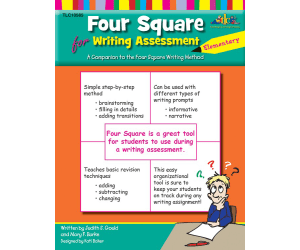
Four Square for Writing Assessment - Elementary: A Companion to the Four Square Writing Method
ELA, Writing, Grade 1, 2, 3, 4, 5, Assessments, Teacher Tools
Four Square for Writing Assessment - Elementary: A Companion to the Four Square Writing Method This comprehensive teaching resource is designed specifically for elementary educators and homeschoolers. It's main focus is on improving the writing capabilities of students in grades 1 through 5, with its main focus being Language Arts, especially writing. Key Features Use of a four-square approach for brainstorming ideas: This promotes a clear, structured thinking process benefiting both visual and logical thinkers. A straightforward three-step revision process: This encourages self-editing skills by enabling students to apply it on their initial drafts. Unique Benefits A distinctive feature of this educational tool is its preparatory function necessary before launching into the assessment day. Considering teachers cannot confer with students nor can they assist each other on these days; all preparation has to be done beforehand. The tool therefore equips learners with methods that allow them direct access towards focused writing without requiring in-the-moment assistance. Efficacy And Adaptability The teaching aid ensures that student's writings are organized and captivating while maintaining negligible redundancy - an essential trait expected from matured writers shaping from a tender age itself! Another major advantage offered by Four Square for Writing Assessment - Elementary: A Companion to the Four Square Writing Method is adaptability; it offers an equally rich learning experience whether used as whole-class instruction or small-group work or assigned as homework. Ease-of-use Consideration In development of this product, ease-of-use was considered paramount - you get only one PDF file implying freedom from any potential file-related concerns! If you have been seeking holistic material aiding in ingraining fundamental yet strong writing foundation within your young pupils then Four Square for Writing Assessment - Elementary: A Companion to the Four Squares Writing Method might be worth consideration.
Author Classroom Complete Press
Tags PDF, Writing Assessment For Elementary Students

Fill in the Blanks Sample - Vocabulary Grade 3-4 (Word)
ELA, Language Development, ESL, Common Core, Resources for Teachers, Vocabulary, Grade 3, 4, Worksheets & Printables, Worksheets, Quizzes and Tests, Teacher Tools, Tests, Assessments
Fill in the Blanks Sample Lesson ELA MCQS Overview: In this series of lessons, students will embark on an engaging journey to explore the grammar skills that make our language vibrant and expressive. These lessons are crafted to help students identify, comprehend, and effectively apply language arts skills in both writing and speech. Accompanied by free supplementary materials available for all topics, each lesson builds on the previous one, offering a balanced mix of direct instruction, interactive group activities, and independent practice. Through fun and creative tasks, students will learn to recognize grammar within sentences, understand their function, and use them to enrich their own writing and speech. Fill in the Blanks Overview: Includes: Adjectives in Sentences Nouns in Sentences Verbs in Sentences Frequently Mistaken Words Word Version This is the Word editable and version. This download is available in GOOGLE Docs, GOOGLE Forms, GOOGLE Slides. PDF, PPT, WORD, check the links below for more details. FULL CATALOG OF DOWNLOAD LINKS HERE Grade 3/4 Links: Adjectives Google Docs Google Forms Google Slides PDF PPT Word Free Supplementary Materials Pack Adverbs Google Docs Google Forms Google Slides PDF PPT Word Free Supplementary Materials Pack Conjunctions Google Docs Google Forms Google Slides PDF PPT Word Free Supplementary Materials Pack Nouns Google Docs Google Forms Google Slides PDF PPT Word Free Supplementary Materials Pack Pronouns Google Docs Google Forms Google Slides PDF PPT Word Free Supplementary Materials Pack Verbs Google Docs Google Forms Google Slides PDF PPT Word Free Supplementary Materials Pack Sentence Structure Google Docs Google Forms Google Slides PDF PPT Word Free Supplementary Materials Pack Present Tense Google Docs Google Forms Google Slides PDF PPT Word Free Supplementary Materials Pack Past Tense Google Docs Google Forms Google Slides PDF PPT Word Free Supplementary Materials Pack Future Tense Google Docs Google Forms Google Slides PDF PPT Word Free Supplementary Materials Pack Context Clues Google Docs Google Forms Google Slides PDF PPT Word Free Supplementary Materials Pack Defining Words Google Docs Google Forms Google Slides PDF PPT Word Free Supplementary Materials Pack Fill the Blanks Google Docs Google Forms Google Slides PDF PPT Word Free Supplementary Materials Pack Homophones Google Docs Google Forms Google Slides PDF PPT Word Free Supplementary Materials Pack Synonyms Google Docs Google Forms Google Slides PDF PPT Word Free Supplementary Materials Pack ELA Review Questions Overview Questions have three answer choices. There are a handful of pictures on each test for aesthetic purposes, as well as a review sheet covering most of the topics covered in the product. Introduction or Example Sheet Each topic will include an introduction or example sheet to go through first with your students. Full Answer Keys Full answer keys and sample responses are provided so no matter how busy you are, you know you're covered! In the Supplementary Pack Interactive Ice Breakers: Fun, hands-on activities that get students thinking about adjectives right from the start. Guided Practice: Teacher-led exercises that reinforce the day’s lesson, ensuring students can confidently identify and use adjectives. Group and Partner Tasks: Collaborative activities that allow students to work together to solve problems, categorize adjectives, and create descriptive sentences. Independent Worksheets: Structured worksheets that provide individual practice and help solidify understanding of key concepts. Exit Tasks: Quick, reflective activities at the end of each lesson that assess understanding and encourage students to apply what they’ve learned. For similar downloads and other frees, do check out Cored Group on TeachSimple.
Author Cored Education
Tags Elementary, Answers, Ccss, Common Core, Tests, Test Prep, Assessment, Grade 3, Grade 4, Vocabulary
Science Revision for Grade 3
Science, Grade 3, Activities, Worksheets & Printables, Assessments, Teacher Tools
This Grade 3 Science worksheet is perfect for reviewing key science topics in a fun and easy way. It includes 30 activities that students can complete directly on the page. There is no need for extra materials or prep. The activities cover plants, animals, the sun, water, solids, and more. Students answer multiple choice questions, write true or false, fill in blanks, match words, label a plant, and write short answers. Each activity helps students think, read carefully, and remember science facts. The worksheet uses simple language and clear instructions. It is great for classroom use, homework, or revision before a test. You can also use it for group work or as a science center task. An answer key is included to save you time. Teachers love this worksheet because it keeps students focused and learning. It works well in all kinds of classrooms. Print and use it today to help your students enjoy science and succeed!
Author Bright Classroom Ideas Marketplace
Rating
Tags Science, Grade 3, Revision

Hansel and Gretel Fairy Tale Foldable Mini Book Grade 1 2 3 ELA
ESL, Language Development, ELA, Children’s Literature, Literature, Reading Comprehension, Reading, Handwriting, Writing, Grade 1, 2, 3, Centers, Activities, Crafts, Projects, Assessments, Teacher Tools
Make learning fun and exciting through this Hansel and Gretel Mini Book Set especially designed for Grades 1, 2 and 3 students, homeschoolers, and ESL/EFL learners. This mini book bundle set is packed with meaningful activities for your reading classes, reading comprehension exercises, ELA project, fairy tale unit, reading centers, literacy center, morning work, exercise for early finishers and so much more! What’s Included: •Colored Hansel and Gretel Story Mini Book– for story retelling, reading and reading comprehension practice •Hansel and Gretel Story Mini BookTrace & Read Pages– handwriting practice and motor skills exercise •Hansel and Gretel Story Mini BookSequencing Booklet– sequencing and sorting exercise, story retelling and reading practice •Hansel and Gretel Story Mini BookRetell & Reflect Pages– retell practice, creativity and imagination development •Hansel and Gretel Story Mini BookBlank Create-a-Story Templates– story telling, supporting creative and imaginative thinking skills •Hansel and Gretel Story Mini BookTeacher Guide + Sample Lesson Plan
Author It's Teacher L
Rating
Tags Mini Books, Reading Comprehension, Fairy Tale, Reading Center, Literacy Centers
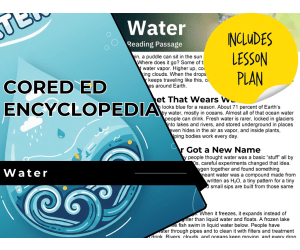
Water Reading Comprehension Passage - Cored Ed Encyclopedia
ELA, Language Development, Reading Comprehension, Reading, Pre-Reading, Science, Technology, Physics, Earth and Environmental Sciences, Earth Sciences, Grade 2, 3, 4, 5, Worksheets & Printables, Worksheets, Teacher Tools, Centers, Activities, Writing Prompts, Assessments, Quizzes and Tests, Quizzes, Lesson Plans
This water reading comprehension with lesson plan includes: Visualization (on the front cover) Start your lesson by taking a minute to think and share something about the topic. Read the script aloud (slowly), perhaps prepare some music or sound effects. Student close their eyes and let their imaginations wander. Students open their eyes, read the question aloud and give them a few minutes to complete. Ask a few students to share or keep answers until the end to compare with what they learn in the passage. Quick pause—thousands of Cored Education products are included with your TeachSimple membership. Download links and encyclopedia index available here. Pre-Reading Trivia Students will write down one thing they already know about the subject and then read five more facts and discuss. These facts are fun, and the students will enjoy learning about the subject before reading more. Give 1 minute for students to write what they already know (no pressure—best guess is fine). Read the five facts together. After each fact, do ask a student for their opinion, was it surprising? Set a purpose by asking students to highlight/underline one fact they want to learn more about during the reading. Reading Passage The text is a high-interest reading passage with set paragraphs, roughly three to four paragraphs long. It contains a variety of themes about the topic, anywhere from history to technology. The passage is between 250 and 350 words in length. First, ask students to look at the headings and see what they’ll learn about today. What do they know about the topic/heading? First read options: Teacher read-aloud (best for support). Partner reading (paragraph by paragraph). While reading, students underline important details, and vocabulary words they think may come up in the questions section. Mixed Questions The first question page contains four multiple-choice questions, each with a choice of four answers, and three written response questions that require a sentence or two from the student. Students complete the mcqs first independently, then review quickly as a class. For the 3 written responses, try to get students giving the answer with some form of evidence: “I think ___ because the text says ___.” If students get stuck, send them back to check the passage. Vocabulary Questions Practice seven key words from the text in this section across two activities. First section is scrambled words where students will unscramble three words given a clue for each. The second section is a word to meaning matching activity. Before starting, have some students read out words they underlined in the passage. Ask students to say the word and read aloud the sentence(s) around each word. Ask students to do scrambled words and the matching exercise in pairs then go through answers as a class. For the scrambled spelling task, get four pairs to come up to the board and write the words for extra practice with the other student reading out the clue. For the matching task, prompt students to give full sentences: “I matched ___ with ___ because ___.” Creative Writing In this question, the student will be required to write a five to eight sentence paragraph on a question related to the topic. Before starting, ask students write down 3 key ideas they are going to include in their piece. Ask students for ideas to share around the class to help those struggling. Pro writing expectations: 5–8 sentences At least 2 facts or details from the passage At least 2 vocabulary words from the previous page Students read their paragraphs while classmates listen for facts and vocabulary words. Extension Activities This page is optional for fast finishers or to take home. There are several activities, each one requiring a different skill. Do some, do none, do all, completely optional - but you will feel reassured knowing every possibility is planned for. Includes summary writting question. Answer Key There are answers for the multiple-choice questions, written response questions have sample answers, vocabulary answers and if there is a summary question then a sample summary will be provided as well. Lesson Plan Included Customized lesson plan for this lesson is included. Lesson Snapshot Title: Water Genre: Nonfiction (informational text) Subject: Science (Earth & Physical Science) / Informational Reading Primary Topic: Water cycle, where water is found, and H₂O Estimated Guided Reading Level (A–Z): R What This Lesson Teaches Best Explains how water changes state and moves around Earth (puddle → vapor → clouds → rain/snow). Builds background knowledge about where Earth’s water is found (oceans, glaciers/ice caps, lakes/rivers, underground aquifers, air as vapor). Introduces key science ideas about what water is made of (hydrogen + oxygen; water as a compound; H₂O; molecule). Highlights an important property of water: when it freezes, it expands and floats , allowing fish to swim below lake ice. Connects science to real life by describing how people move and clean water (pipes, filters, treatment) and why keeping water clean matters. Learning Goals Students will explain what happens to some puddle water when it shrinks in the sun. Students will describe at least three places water is found on Earth or in living things, using details from the text. Students will identify what scientists learned in the late 1700s about what water is made from. Students will explain why ice can float on liquid water, based on the passage. Students will describe one way people make water safer to drink that is stated in the text. Key Vocabulary From the Text vapor — water as an invisible gas in the air. glaciers — large masses of ice that store fresh water. aquifers — underground places where water is stored. compound — something made from two different gases joined together. molecule — a tiny particle that makes up water (H₂O). FULL CATALOG OF DOWNLOAD LINKS AND ENCYCLOPEDIA INDEX HERE
Author Cored Education
Rating
Tags Vocabulary, Reading Comprehension, Reading Passages, Lesson Plans, Ela Lesson Plans, Reading Comprehension Lesson Plans, Pre-reading, Science Lesson Plans, Technology, Earth Science

Addition to 10 Worksheets - Mental Math
Math, Addition and Subtraction, Addition, Early Math, Basic Operations, Numbers, Grade 1, 2, 3, 4, Teacher Tools, Assessments, Lesson Plans, Activities, Centers, Worksheets & Printables, Quizzes and Tests, Tests, Workbooks
Turn your classroom into a mental math gym with these Addition to 10 Math Worksheets! Packed with 30 no-fuss, fun-to-solve worksheets, this resource is designed to help your students flex their brain muscles while mastering addition up to 10. Whether they’re mathletes-in-training or just warming up, these sheets make mental math less intimidating and more engaging. Ways to Use Daily Warm-Ups: Kick off your math lesson with these quick, brain-boosting exercises. Homework Hero: Send these home to keep the practice going (and parents cheering). Fast Finisher Fun: Got early finishers? These worksheets will keep them happily occupied. Math Centers: Add to your rotation for an independent or small-group activity. Review and Assess: Use as a quick way to gauge progress or prep for a quiz. Advantages Builds Fluency: Helps students add quickly and confidently without counting fingers! Engaging Layouts: Designed to keep young learners focused and motivated. Time-Saving: Ready-to-print and stress-free for teachers. Scalable Difficulty: Great for beginners or as reinforcement for more experienced learners. These worksheets bring the “add it up” fun to math class. Perfect for building foundational skills while keeping students smiling—because math really can be that awesome!
Author Ponder Palette Plazza
Tags Addition, Addition To 10, Addition Worksheets, Mental Math, Math Test, Addition Test, Math Exam, Numbers, Mental Math Worksheets
Reading Passage 25: Heredity (Google Slides)
ELA, Reading, Reading Comprehension, Science, Life Sciences, Biology, Common Core, ESL, Language Development, Resources for Teachers, Grade 2, 3, 4, Presentations, Teacher Tools, Activities, Tests, Quizzes and Tests, Assessments
Free Reading Passage on Heredity for Life Science What's inside this free product? Science Reading Comprehension Passage25 : Heredity Independent Google Slides Version: This is the independent Google Slides version containingone lesson with full answer keys. There are fillable boxes that work when not in full screen mode. For a better fillable option, check out the slides version. Product Info: 29 SLIDES (US English with Answers) Google Slides Version Teaching Duration: Approximately 90 Minutes Science Reading Comprehension Outline: Targeted for students in 3rd and 4th grades, these reading passages are enhanced with illustrations and graphs to elucidate critical points. Each lesson aligns with the Common Core State Standards, allowing you to integrate science reading practice effortlessly, knowing that minimal preparation is needed on your part. Each passage comes with a variety of questions in different formats, including multiple-choice formats, data analysis, and fill-in-the-blanks. The topics covered strike a balance between engaging content and core curriculum-based science subjects. Versatile in application, these lessons are suitable for a variety of settings such as whole-class instruction, morning activities, independent desk work, small group discussions, contingency plans for substitute teachers, homework assignments, or even special holiday-themed tasks. FULL CATALOG OF DOWNLOAD LINKS HERE Grade 3/4 Links: Physical Science Part 1 - Properties of Objects and Materials Google Docs/Slides/Forms PDF PPT Word Free Supplementary Pack Accompanying Videos Physical Science Part 2 - Position and Motion of Objects Google Docs/Slides/Forms PDF PPT Word Free Supplementary Pack Accompanying Videos Physical Science Part 3 - Light, Heat, Electricity, Magnetism Google Docs/Slides/Forms PDF PPT Word Free Supplementary Pack Accompanying Videos Life Science Part 1 - Characteristics of Organisms Google Docs/Slides/Forms PDF PPT Word Free Supplementary Pack Accompanying Videos Life Science Part 2 - Life Cycles of Organisms Google Docs/Slides/Forms PDF PPT Word Free Supplementary Pack Accompanying Videos Life Science Part 3 - Organisms and Environments Google Docs/Slides/Forms PDF PPT Word Free Supplementary Pack Accompanying Videos Earth Science Part 1 - Properties of Earth Materials Google Docs/Slides/Forms PDF PPT Word Free Supplementary Pack Accompanying Videos Earth Science Part 2 - Changes in the Earth and Sky Google Docs/Slides/Forms PDF PPT Word Free Supplementary Pack Accompanying Videos Earth Science Part 3 - Objects in the Sky Google Docs/Slides/Forms PDF PPT Word Free Supplementary Pack Accompanying Videos For similar products and other frees, do check out Cored Group on TeachSimple .
Author Cored Education
Tags Science, Elementary, Reading, Comprehension, Vocabulary, Answers, Physics, Physical Science, Ccss, Common Core

Pencils Reading Comprehension Passage - Cored Ed Encyclopedia
ELA, Language Development, Resources for Teachers, Reading Comprehension, Reading, Pre-Reading, Writing, Science, Chemistry, Physics, Grade 2, 3, 4, 5, Worksheets & Printables, Worksheets, Teacher Tools, Centers, Activities, Writing Prompts, Assessments, Tests, Quizzes and Tests, Quizzes
This pencils reading comprehension contains the following: Visualize on the Cover (Teacher Read Aloud Script) Start your lesson by taking a few moments to visualize the topic and share thoughts or feelings about it. Pre-Reading Trivia Students will write down one thing they already know about the subject and then read five more facts and discuss. These facts are fun, and the students will enjoy learning about the subject before reading more. Reading Passage The text is a high-interest reading passage with set paragraphs, roughly three to four paragraphs long. It contains a variety of themes about the topic, anywhere from history to technology. The passage is between 250 and 350 words in length. Mixed Questions The first question page contains four multiple-choice questions, each with a choice of four answers, and three written response questions that require a sentence or two from the student. Vocabulary Questions Practice seven key words from the text in this section across two activities. First section is scrambled words where students will unscramble three words given a clue for each. The second section is a word to meaning matching activity. Creative Writing In this question, the student will be required to write a five to eight sentence paragraph on a question related to the topic. Extension Activities This page is optional for fast finishers or to take home. There are several activities, each one requiring a different skill. Do some, do none, do all, completely optional - but you will feel reassured knowing every possibility is planned for. Includes summary writting question. Answer Key There are answers for the multiple-choice questions, written response questions have sample answers, vocabulary answers and if there is a summary question then a sample summary will be provided as well. FULL CATALOG OF DOWNLOAD LINKS AND ENCYCLOPEDIA INDEX HERE Lesson Snapshot Title: Pencils Genre: Nonfiction (informational text) Subject: Science & Technology (materials/manufacturing) / Reading Informational Text Primary Topic: How pencils were invented and made Estimated Guided Reading Level (A–Z): S What This Lesson Teaches Best How early pencil “lead” was actually graphite , discovered in 1564 in northern England, and why the nickname “lead” stuck. How soft graphite needed a protective holder, leading to wooden casings and shapes that are easier to grip and don’t roll away. How mixing powdered graphite with clay (and other binders ) helped control how dark or light a pencil writes (H, HB, B). How a factory process turns materials into pencils (mixing, pressing into rods, firing, adding wax, grooving cedar slats, painting). How inventions changed pencils over time, including an eraser patented on the end and the later appearance of mechanical pencils. Learning Goals Students will explain why pencils are called “lead” pencils even though they are not made of lead. Students will describe how people first used graphite before modern wooden pencils existed. Students will explain how adding different amounts of clay changes how a pencil writes. Students will identify at least two steps from the passage that happen in a pencil factory. Students will describe one improvement to pencils mentioned in the passage (eraser or mechanical pencil). Key Vocabulary From the Text graphite — a soft black rock that makes marks. plumbago — an old name people used for graphite. casing — the outer cover that holds the core. binders — materials that help hold ingredients together. ferrule — a metal band that holds an eraser. Cored Ed Encyclopedia Overview The Cored Ed Encyclopedia is a weekly series of lessons that you can pick up and use right away. These short readings fit into whatever time you have available. Each one includes a warm-up, a reading, and a set of questions, but it’s flexible — you can do just the reading, the full lesson, or skip the writing section if you need to. Each lesson focuses on a single topic so students don’t get lost. The writing is clear but never childish, making it perfect for grades two through five. Topics range from animals and science to history, inventions, and everyday things. No matter the level of the student, everyone should take away at least one new idea or fact from each lesson. The materials are easy to print, easy to explain, and require no setup. They work well for whole-class teaching, partner work, or independent study.
Author Cored Education
Rating
Tags Vocabulary, Spelling, Reading Comprehension, Reading Passages, Reading, Creative Writing, Reading Strategies, Writing Prompts, Pencils, Chemistry

Defining Words Practice Questions - Vocabulary Grade 3-4 (Slides)
ELA, Language Development, ESL, Common Core, Resources for Teachers, Vocabulary, Grade 3, 4, Quizzes and Tests, Teacher Tools, Tests, Assessments, Activities, Presentations
Defining Words Vocabulary Practice MCQS ELA MCQS Overview: In this series of lessons, students will embark on an engaging journey to explore the grammar skills that make our language vibrant and expressive. These lessons are crafted to help students identify, comprehend, and effectively apply language arts skills in both writing and speech. Accompanied by free supplementary materials available for all topics, each lesson builds on the previous one, offering a balanced mix of direct instruction, interactive group activities, and independent practice. Through fun and creative tasks, students will learn to recognize grammar within sentences, understand their function, and use them to enrich their own writing and speech. Defining Words Overview: Includes: Match Words to Definition Match Definition to Words Accurately Define Meanings Defining Word Practice Slides Version This is the Slides editable and interactive version. There is a fillable answer sheet at the end. This download is available in GOOGLE Docs, GOOGLE Forms, GOOGLE Slides. PDF, PPT, WORD, check the links below for more details. FULL CATALOG OF DOWNLOAD LINKS HERE Grade 3/4 Links: Adjectives Google Docs Google Forms Google Slides PDF PPT Word Free Supplementary Materials Pack Adverbs Google Docs Google Forms Google Slides PDF PPT Word Free Supplementary Materials Pack Conjunctions Google Docs Google Forms Google Slides PDF PPT Word Free Supplementary Materials Pack Nouns Google Docs Google Forms Google Slides PDF PPT Word Free Supplementary Materials Pack Pronouns Google Docs Google Forms Google Slides PDF PPT Word Free Supplementary Materials Pack Verbs Google Docs Google Forms Google Slides PDF PPT Word Free Supplementary Materials Pack Sentence Structure Google Docs Google Forms Google Slides PDF PPT Word Free Supplementary Materials Pack Present Tense Google Docs Google Forms Google Slides PDF PPT Word Free Supplementary Materials Pack Past Tense Google Docs Google Forms Google Slides PDF PPT Word Free Supplementary Materials Pack Future Tense Google Docs Google Forms Google Slides PDF PPT Word Free Supplementary Materials Pack Context Clues Google Docs Google Forms Google Slides PDF PPT Word Free Supplementary Materials Pack Defining Words Google Docs Google Forms Google Slides PDF PPT Word Free Supplementary Materials Pack Fill the Blanks Google Docs Google Forms Google Slides PDF PPT Word Free Supplementary Materials Pack Homophones Google Docs Google Forms Google Slides PDF PPT Word Free Supplementary Materials Pack Synonyms Google Docs Google Forms Google Slides PDF PPT Word Free Supplementary Materials Pack ELA Review Questions Overview Questions have three answer choices. There are a handful of pictures on each test for aesthetic purposes, as well as a review sheet covering most of the topics covered in the product. Introduction or Example Sheet Each topic will include an introduction or example sheet to go through first with your students. Full Answer Keys Full answer keys and sample responses are provided so no matter how busy you are, you know you're covered! In the Supplementary Pack Interactive Ice Breakers: Fun, hands-on activities that get students thinking about adjectives right from the start. Guided Practice: Teacher-led exercises that reinforce the day’s lesson, ensuring students can confidently identify and use adjectives. Group and Partner Tasks: Collaborative activities that allow students to work together to solve problems, categorize adjectives, and create descriptive sentences. Independent Worksheets: Structured worksheets that provide individual practice and help solidify understanding of key concepts. Exit Tasks: Quick, reflective activities at the end of each lesson that assess understanding and encourage students to apply what they’ve learned. For similar downloads and other frees, do check out Cored Group on TeachSimple.
Author Cored Education
Tags Elementary, Answers, Ccss, Common Core, Tests, Test Prep, Assessment, Grade 3, Grade 4, Vocabulary

Pennsylvania (PSSA) Math Practice Test for Grade 3
Math, Grade 3, Assessments, Teacher Tools, Tests, Quizzes and Tests, Worksheets & Printables
📊 Grade 3 PSSA Math Practice Test | Test Prep + Answer Key + Teacher Guide Help your students build confidence and master key math skills with this Grade 3 PSSA Math practice test ! Designed to mirror the format, rigor, and standards of the real exam, this resource gives students meaningful practice across all major math domains. With 43 questions covering operations, fractions, measurement, and geometry , this PSSA Math test prep is perfect for review, intervention, and assessment. 📦 What’s Included ✅ Full-length Grade 3 PSSA Math practice test (43 questions) ✅ 32 multiple choice + 4 multi-part open-ended questions ✅ Complete answer key with detailed explanations ✅ Teacher’s guide with pacing, differentiation & data tracking tools ✅ Standards alignment across all domains ✅ Printable, student-friendly format 🏫 How It Works in the Classroom This PSSA Math practice test is flexible and easy to use: Use as a full-length mock test (60–80 minutes) Split into two sessions for easier pacing Assign by domain for targeted skill practice Use for small group intervention or review Perfect for independent work or homework 🎯 Standards & Learning Goals Students will practice: Multiplication, division, and problem-solving strategies Place value, rounding, and multi-digit operations Fractions and number line understanding Measurement, time, and data interpretation Area, perimeter, and geometry concepts Aligned to: Pennsylvania Core Standards (Grade 3 Math) Common Core (3.OA, 3.NBT, 3.NF, 3.MD, 3.G domains) 💛 Why Teachers Love It ⭐ Mirrors the real PSSA format and expectations ⭐ Includes test + answer key + teacher guide in one resource ⭐ Saves time with print-and-go materials ⭐ Covers all major Grade 3 math domains ⭐ Helps students build confidence and test stamina ⭐ Easy to use for data-driven instruction and intervention 📥 Ready to Boost Math Scores? Support your students with this Grade 3 PSSA Math practice test bundle —a simple, effective way to build math mastery and prepare for state testing success!
Author Bright Classroom Ideas Marketplace
Rating
Tags Pennsylvania, State Test, Pssa, Math
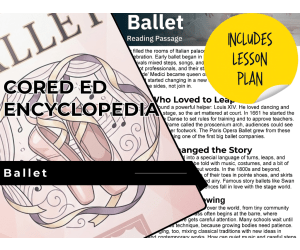
Ballet Reading Comprehension Passage - Cored Ed Encyclopedia
ELA, Language Development, Reading Comprehension, Reading, Social Studies, Writing, Vocabulary, History, Dance, Creative Arts, Grade 2, 3, 4, 5, Worksheets & Printables, Worksheets, Teacher Tools, Centers, Activities, Writing Prompts, Assessments, Quizzes and Tests, Quizzes, Lesson Plans
This ballet reading comprehension with lesson plan includes: Visualization (on the front cover) Start your lesson by taking a minute to think and share something about the topic. Read the script aloud (slowly), perhaps prepare some music or sound effects. Student close their eyes and let their imaginations wander. Students open their eyes, read the question aloud and give them a few minutes to complete. Ask a few students to share or keep answers until the end to compare with what they learn in the passage. COMPANION VIDEO NOW AVAILABLE (EMBEDDED AFTER PREVIEW PICTURES IN PRODUCT DESCRIPTION) Quick pause—thousands of Cored Education products are included with your TeachSimple membership. Download links and encyclopedia index available here. Pre-Reading Trivia Students will write down one thing they already know about the subject and then read five more facts and discuss. These facts are fun, and the students will enjoy learning about the subject before reading more. Give 1 minute for students to write what they already know (no pressure—best guess is fine). Read the five facts together. After each fact, do ask a student for their opinion, was it surprising? Set a purpose by asking students to highlight/underline one fact they want to learn more about during the reading. Reading Passage The text is a high-interest reading passage with set paragraphs, roughly three to four paragraphs long. It contains a variety of themes about the topic, anywhere from history to technology. The passage is between 250 and 350 words in length. First, ask students to look at the headings and see what they’ll learn about today. What do they know about the topic/heading? First read options: Teacher read-aloud (best for support). Partner reading (paragraph by paragraph). While reading, students underline important details, and vocabulary words they think may come up in the questions section. Mixed Questions The first question page contains four multiple-choice questions, each with a choice of four answers, and three written response questions that require a sentence or two from the student. Students complete the mcqs first independently, then review quickly as a class. For the 3 written responses, try to get students giving the answer with some form of evidence: “I think ___ because the text says ___.” If students get stuck, send them back to check the passage. Vocabulary Questions Practice seven key words from the text in this section across two activities. First section is scrambled words where students will unscramble three words given a clue for each. The second section is a word to meaning matching activity. Before starting, have some students read out words they underlined in the passage. Ask students to say the word and read aloud the sentence(s) around each word. Ask students to do scrambled words and the matching exercise in pairs then go through answers as a class. For the scrambled spelling task, get four pairs to come up to the board and write the words for extra practice with the other student reading out the clue. For the matching task, prompt students to give full sentences: “I matched ___ with ___ because ___.” Creative Writing In this question, the student will be required to write a five to eight sentence paragraph on a question related to the topic. Before starting, ask students write down 3 key ideas they are going to include in their piece. Ask students for ideas to share around the class to help those struggling. Pro writing expectations: 5–8 sentences At least 2 facts or details from the passage At least 2 vocabulary words from the previous page Students read their paragraphs while classmates listen for facts and vocabulary words. Extension Activities This page is optional for fast finishers or to take home. There are several activities, each one requiring a different skill. Do some, do none, do all, completely optional - but you will feel reassured knowing every possibility is planned for. Includes summary writting question and additional facts. Answer Key There are answers for the multiple-choice questions, written response questions have sample answers, vocabulary answers and if there is a summary question then a sample summary will be provided as well. Lesson Plan Included Customized lesson plan for this lesson is included. Lesson Snapshot Title: Ballet Genre: Nonfiction (informational passage) Subject: Arts (Dance) / Reading (Informational Text) Primary Topic: How ballet began, changed, and is practiced today Estimated Guided Reading Level (A–Z): S What This Lesson Teaches Best How ballet began in Renaissance palace courts, with dancing as part of celebrations. How ballet shifted from joining in to watching a performance “from the sides.” How ballet grew in France through royal support, including **Louis XIV starting a dance academy to set training rules and approve teachers. How stage design affected what audiences saw (the “proscenium arch” helped viewers see clearer lines and sharper footwork). How ballet tells stories without words using movement plus music, costumes, and a bit of mime, and how pointe shoes and lighter skirts changed the look. Learning Goals Describe where early ballet began and what events it was part of. Explain how ballet changed when people began watching instead of joining in. Identify what happened in 1661 and why it mattered for ballet training. Describe how the proscenium arch affected what audiences could see. Explain how ballet can show feelings and stories “without words,” using details from the text. Describe how ballet is practiced today (studios worldwide, barre work, and careful technique for growing bodies). Key Vocabulary From the Text Renaissance — a time in Europe with art, learning, and change. nobles — people from wealthy or high-ranking families. proscenium — a stage frame that shapes the audience’s view. pointe — dancing on the tips of the toes. barre — a rail dancers hold while practicing in class. FULL CATALOG OF DOWNLOAD LINKS AND ENCYCLOPEDIA INDEX HERE
Author Cored Education
Rating
Tags Vocabulary, Reading Comprehension, Reading Passages, Lesson Plans, Ela Lesson Plans, Reading Comprehension Lesson Plans, Pre-reading, History, Art, Dance Lesson Plans

Reading Comprehension Fiction Set 5 Sample Best at Being a Friend PPT
ELA, Reading, Writing, Common Core, ESL, Language Development, Vocabulary, Children’s Literature, Literature, Reading Comprehension, Grade 2, 3, Teacher Tools, Presentations, Tests, Quizzes and Tests, Assessments, Activities
Reading Comprehension Passages Fiction Set 5 Sample Overview Fascinating reading comprehension passages, each with an array of activities included. Stories are written for the modern classroom and topics are designed to promote enthusiasm from each student. Each lesson contains a mixed questions section to check understanding, a vocabulary or spelling activity to help remember key language introduced, and a writing exercise. Full answer keys are provided. For a more detailed overview, check the section under the links at the bottom of this description. Passage Included 5.Best at Being a Friend: Second place again, but there is one thing Tara is best at. PPT Version This is the PPT editable and fillable (when not in presentation mode) version. This download is available in GOOGLE Docs, GOOGLE Forms, GOOGLE Slides. PDF, PPT, WORD. FULL CATALOG OF DOWNLOAD LINKS HERE Grade 2/3 Links Fiction Set 1 - Nature Google Docs Google Forms Google Slides PDF PPT Word Guided Reading Materials Fiction Set 2 - Animals Google Docs Google Forms Google Slides PDF PPT Word Guided Reading Materials Fiction Set 3 - Food Google Docs Google Forms Google Slides PDF PPT Word Guided Reading Materials Fiction Set 4 - School Google Docs Google Forms Google Slides PDF PPT Word Guided Reading Materials Fiction Set 5 - Friends Google Docs Google Forms Google Slides PDF PPT Word Guided Reading Materials Fiction Set 6 - Family Google Docs Google Forms Google Slides PDF PPT Word Guided Reading Materials Fiction Set 7 - Sports Google Docs Google Forms Google Slides PDF PPT Word Guided Reading Materials Nonfiction Set 1 - Technology Google Docs Google Forms Google Slides PDF PPT Word Guided Reading Materials Nonfiction Set 2 - Nutrition Google Docs Google Forms Google Slides PDF PPT Word Guided Reading Materials Nonfiction Set 3 - Animals Google Docs Google Forms Google Slides PDF PPT Word Guided Reading Materials Reading Passages Overview Each passage is especially written for Grade 2-3 students, including key vocabulary required for this age group. Topics are varied and are accompanied by colorful graphics. Topics are meant to educate, yet entertain the modern student. These passages are perfect for the modern classroom. Whereas textbooks can become outdated in no time, any changes to technology or the world will result in updates to this product. Mixed Questions The mixed questions section of each lesson includes a variation of fivecomprehension, vocabulary and math questions. In addition, key reading strategies are frequently covered including cause & effect, summarizing, compare & contrast and making conclusions. Three of the questions will be MCQs and two will require a written response of some kind. Full answers and example responses appear at the end of the lesson. Spelling & Vocab Each reading passage contains a variety of words and phrases designed for Grade 2-3 students. Spelling and vocab activities provide the opportunity to build fluency with these words. As it can become quite mundane doing the same activities over and over, each lesson in a set will contain a different spelling and vocab activity . Writing Prompts Writing prompts are designed to continue the theme or lessons learned in the story. Students are persuaded to write in a variety of ways and each prompt includes several cues to help. As with the spelling/vocab section, writing prompts will vary. This includes research pieces, reading responses, poetry and creative writing prompts. Full Answer Keys Full answer keys and sample responses are provided so no matter how busy you are, you know you're covered! Mixed question answers provide evidence from the text, math questions contain the relevant workings. Answers are designed for use by the teacher, but also suitable as a handout to the student. Additional File One lesson will have an additional file. This is something fun to extend the lesson with. For similar downloads and other frees, do check out Cored Group on TeachSimple.
Author Cored Education
Tags Elementary, Reading, Comprehension, Vocabulary, Answers, Ccss, Common Core, Spelling, Writing, Passages
Reading Comprehension Nonfiction Set 1 - Technology (Slides)
ELA, Reading, Language Development, Spelling, Common Core, Vocabulary, ESL, Reading Comprehension, Writing, Resources for Teachers, Grade 2, 3, Teacher Tools, Presentations, Activities, Tests, Quizzes and Tests, Assessments
Reading Comprehension Passages Nonfiction Set 1 Overview Engaging nonfiction articles, each with a collection of different activities included. Articles are written for the modern classroom and topics are designed to promote enthusiasm from each student. Each lesson contains a mixed questions section to check understanding, a vocabulary or spelling activity to help remember key language introduced, and a writing exercise. Full answer keys are provided. Passages Include 1.Talking in Code: How the Navajo code talkers helped during WWII. 2.Power From the Sun: How does solar power work? 3.Roller Coasters: The science behind roller coasters. 4.The History of Cars: Who invented the car? Find out in this article. 5.The History of Ferries: Where is the oldest ferry service in the world? 6.The History of Helicopters: The advantages and disadvantages of helicopters. Additional File: History of Cars: Design a Car Printable Slides Version This is the Slides editable and fillable version. This download is available in GOOGLE Docs, GOOGLE Forms, GOOGLE Slides. PDF, PPT, WORD. FULL CATALOG OF DOWNLOAD LINKS HERE Grade 2/3 Links Fiction Set 1 - Nature Google Docs Google Forms Google Slides PDF PPT Word Guided Reading Materials Fiction Set 2 - Animals Google Docs Google Forms Google Slides PDF PPT Word Guided Reading Materials Fiction Set 3 - Food Google Docs Google Forms Google Slides PDF PPT Word Guided Reading Materials Fiction Set 4 - School Google Docs Google Forms Google Slides PDF PPT Word Guided Reading Materials Fiction Set 5 - Friends Google Docs Google Forms Google Slides PDF PPT Word Guided Reading Materials Fiction Set 6 - Family Google Docs Google Forms Google Slides PDF PPT Word Guided Reading Materials Fiction Set 7 - Sports Google Docs Google Forms Google Slides PDF PPT Word Guided Reading Materials Nonfiction Set 1 - Technology Google Docs Google Forms Google Slides PDF PPT Word Guided Reading Materials Nonfiction Set 2 - Nutrition Google Docs Google Forms Google Slides PDF PPT Word Guided Reading Materials Nonfiction Set 3 - Animals Google Docs Google Forms Google Slides PDF PPT Word Guided Reading Materials Reading Passages Overview Each passage is especially written for Grade 2-3 students, including key vocabulary required for this age group. Topics are varied and are accompanied by colorful graphics. Topics are meant to educate, yet entertain the modern student. These passages are perfect for the modern classroom. Whereas textbooks can become outdated in no time, any changes to technology or the world will result in updates to this product. Mixed Questions The mixed questions section of each lesson includes a variation of fivecomprehension, vocabulary and math questions. In addition, key reading strategies are frequently covered including cause & effect, summarizing, compare & contrast and making conclusions. Three of the questions will be MCQs and two will require a written response of some kind. Full answers and example responses appear at the end of the lesson. Spelling & Vocab Each reading passage contains a variety of words and phrases designed for Grade 2-3 students. Spelling and vocab activities provide the opportunity to build fluency with these words. As it can become quite mundane doing the same activities over and over, each lesson in a set will contain a different spelling and vocab activity . Writing Prompts Writing prompts are designed to continue the theme or lessons learned in the story. Students are persuaded to write in a variety of ways and each prompt includes several cues to help. As with the spelling/vocab section, writing prompts will vary. This includes research pieces, reading responses, poetry and creative writing prompts. Full Answer Keys Full answer keys and sample responses are provided so no matter how busy you are, you know you're covered! Mixed question answers provide evidence from the text, math questions contain the relevant workings. Answers are designed for use by the teacher, but also suitable as a handout to the student. Additional File One lesson will have an additional file. This is something fun to extend the lesson with. For similar downloads and other frees, do check out Cored Group on TeachSimple.
Author Cored Education
Tags Elementary, Reading, Comprehension, Vocabulary, Answers, Ccss, Common Core, Spelling, Writing, Passages
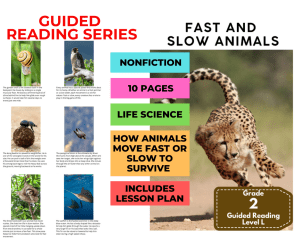
Guided Reading Level L - Fast and Slow Animals (with Lesson Plan)
ELA, Resources for Teachers, Reading Comprehension, Reading, Pre-Reading, Language Development, Life Sciences, Science, Vocabulary, Animals, Grade 1, 2, 3, Worksheets & Printables, Worksheets, Teacher Tools, Centers, Activities, Literacy Readers, Quizzes, Quizzes and Tests, Assessments
This Guided Reading Book - Fast and Slow Animals (Level L) with lesson plan includes: Guided Reading Color Label (front cover x1) This is a quick way to match the book’s demands to what students can generally handle.. The overall goal is to use the level/color to pick books for several smaller groups. To qualify for a certain level, a student is expected to read a book from that level with about 90–94% accuracy. If a student is consistently accurate and understands, move up a level. If the student is struggling at that level, drop down and add more support. Each student will improve at completely different rates, but it is generally one of the best ways to check progress across the class. DOWNLOAD THE CATALOG TO VIEW ALL GUIDED READING BOOKS AVAILABLE (SORTED LEVELS A-Z) Pre-Reading Question (x1) Teacher asks the prompt aloud, can be while showing the cover or first page. Students share what they already know, or make educated guesses from the cover. Prompt them to use the target vocabulary. Write some of their responses on the board to look back at during the reading. Vocabulary Words (x5) Introduce the five words, best doing it one at a time. Start by saying it, while students repeat and then see if anyone knows what it means before reading further. Read through the meaning and try to briefly connect each word to a picture or gesture so it’s meaningful. Ask students to flip through the book pages and point to where they see each of the vocabulary words. While reading the book pause upon coming across one of the vocab words or read the sentence twice to make sure students understand the word has appeared. Optional: Ask students to raise hands whenever they see/hear one of the new words. Guided Reading Pages (x10) Check the book snapshot (below) for: primary topic - do you need to prep extra reading or intro materials on this? what is taught best - decide on 1-2 bullets to focus on, use the prompt or words provided here for best results. learning goals - what you are checking for students to be able to do after the session, elicit answers using prompts or words provided. key vocabulary (see section above). questions overview - so you know what is coming up and if you need to prep extra materials to assist understanding. Run the lesson You may have already looked at a few of the pages together, but you can show them some of the pictures again first to set meaning. Depending on how much time you have and how familiar your students are with guided reading class, you may want to read the book aloud first with the group first. Students whisper or partner read, while you listen in. If time, do it as a group, one student reading a page each. Use the guided page’s prompts to coach: “Check the picture / does it make sense?” “Point under the words / try the first sound” “Reread the sentence smoothly”. Try to focus more on one student per session (rotating every time), so you can work out if they are ready to move up or need to move down a level. Comprehension Questions (back cover x3) This is your way to check that students didn’t just say the words, but actually understood the text. First, let students answer by pointing to the page/picture and saying a short sentence. After any answer, follow with: “Show me where you found that in the text.” In bigger groups, have partners answer first (10–20 seconds), then call on 2–3 students to share. Differentiation tips: Emerging speakers/struggling readers: oral + pointing On-level: oral in a full sentence Higher: one written sentence or draw + label Book Snapshot Title: Fast and Slow Animals Genre: Nonfiction (informational) Subject: Science (Animals) / Reading Primary Topic: How animals move fast or slow to survive Estimated Guided Reading Level (A–Z): L What This Book Teaches Best Fast and slow movement are both important for survival in the wild. Animals have body parts that help them move in special ways (like a cheetah’s tail helping with balance on sharp turns). Animals move fast or slow depending on what works best in their homes and habitats. Readers learn examples of different kinds of movement (running, jumping, swimming, flying/diving, sliding). The text uses comparisons to help readers understand animal abilities (like jumping “over a whole house”). Learning Goals Students will explain why both fast and slow movement can help animals survive. Students will describe how the cheetah uses its tail while running and turning. Students will identify how different animals move (run, jump, swim, dive, slide) using details from the text. Students will explain how an animal’s body parts support its movement (legs, feet, fin, wings, foot). Students will compare two animals from the book and tell how their movement helps them. Key Vocabulary From the Text participate — take part in something. record-breaking — faster or better than before. muscular — having strong muscles. predators — animals that hunt other animals for food. shimmering — shining with a soft, flickering light. Discussion Prompts Pre-reading question: How could moving fast or moving slowly help an animal survive where it lives? Comprehension questions: Why does the book say both fast and slow ways of moving are important in the wild? What helps the garden snail glide over rough surfaces? Which animal in the book is “the fastest swimmer,” and what helps it glide through the water? Printing Tips 1. Best Printing Method (Recommended) “Booklet” Printing (Best if Available) If your printer or PDF viewer supports Booklet Printing , use this. Settings to use: Print mode: Booklet Paper size: Letter or A4 (either works) Orientation: Landscape Print on both sides: Yes Flip on: Short edge Scaling: Fit to printable area Booklet subset: First test: Front sides only Then: Back sides only This will automatically: Pair pages correctly Put the cover on the outside Align everything for folding After printing, fold in half and staple along the spine . 2. If “Booklet” Printing Is NOT Available You can still print this correctly with manual duplex printing . Step-by-step: Open the PDF. Choose Print . Set: Orientation: Landscape Pages per sheet: 1 Print on both sides: Yes Flip on: Short edge Print all pages . Because each PDF page already contains two facing book pages, the result will still fold cleanly into a book. Thousands of Cored Education products are included with your TeachSimple membership. Download links and encyclopedia index available here.
Author Cored Education
Rating
Tags Reading Comprehension, Reading Passages, Reading, Guided Reading, Guided Reading Lesson Plan, Guided Reading Activity, Pre-reading, Vocabulary, Life Science, Animals
Dyscalculia Visual Fraction Manipulatives
Math, Fractions, Addition and Subtraction, Addition, Subtraction, Graphing, Money, Number Lines, Order Of Operations, Time, Homeschool Curriculum, Homeschool Templates, Grade 3, 4, 5, 6, 7, Worksheets & Printables, Workbooks, Worksheets, Word Searches, Teacher Tools, Assessments, Lesson Plans, Quizzes and Tests, Quizzes, Tests
Change the nature of instruction for fractions, and help all students by using this complete, evidence-based guide for teaching fractions to students who may have any or all of the following: Dyscalculia, Learning Disabilities in Mathematics, or Anxiety with regard to mathematics. Are you an educator or parent looking for an effective way to teach your students with prior difficulties with abstract mathematic concepts? If so, this is the resource for which you have been searching. This is NOT just another worksheet packet. This is a complete neuro-informed intervention system built to circumvent all cognitive barriers common to the students you teach, and create true and lasting understanding of fractions that will be retained for the remainder of the student's educational career. By following the Concrete-Pictorial-Abstract (CPA) framework along with the principles of cognitive science, this guide provides students with a means for teaching fractions in a way that they will finally be able to process and master from their neurodivergent brain perspective. Your students will no longer suffer from mathematics anxiety or the "Whole Number Bias", which results in students believing that 1/8 is greater than 1/3. We use Linear Fraction Bars as a visual aid and High Contrast Visual Mapping to make fractions tangible and explainable to students through the use of their neural systems, thus enabling students to understand fractions as Predictable and Intuitive. We deliberately avoid all of the Circular Fraction Models (i.e., Pizza) that confuse students with poor or absent spatial perception. THIS 37-PAGE COMPREHENSIVE GUIDELINE CONSISTS OF: The Educators Guide: This document consists of an in-depth look at the "why" behind the method in phase one. It will include definitions of the cognitive make-up behind dyscalculia, the incorrectness of standard methods, and the architectural guidelines for creating educational tools, including manipulatives that are compatible with how the brain works. This phase will also include case studies based on individual students that can be utilized in grade-level math classes. The Student Workbook: Phase Two will consist of a sequential ten part set of worksheets that will serve as step-by-step guides for students in grades three through five. In other words, the first page of the ten page guide will help students learn what a numerator and a denominator are before they then will be a part of the worksheet on determining whether two fractions are equal or comparable. The remainder of the pages will continue to follow the same sequence, with the last page covering mixed numbers. The Teacher Resources and Visual Aids Section: This section contains all the resources necessary for teacher's to correctly implement the above two guides. In addition to possessing high-resolution diagnostic diagrams that can be utilized in the classroom, this section also contains an answer key that has been developed with pedagogical notes included, and a clinical implementation guide that contains scripted interventions for how to address common errors made by students. PLEASE NOTE THE FOLLOWING Group: Individuals who provide direct instructional support to students with disabilities and other struggles in mathematics, such as: SE Teachers/Specialists Math Interventionists/ Specialists (Tier 2 & 3) Resource Room/Co-Teach Models Tutor and Educational Therapists Homeschool Parents General Ed Teachers who want to use effective differentiation strategies. Break the cycle of poor math performance. Get your students the tools they need to develop confidence and obtain true mastery of fractions through this master guide through the Math Anxiety. Key Terms: Dyscalculia, Math Intervention, Special Education Math, Fractions, Visual Math, Manipulatives, Math Anxiety, Learning Disabilities, Third, Fourth, Fifth, Grade, Homeschooling, RTI, Math Support, Number Sense, *CPA Framework (Concrete, Picture, Abstract) Teacher’s Guide. Reasons Why Parents/Schools Are Enthusiastic About This Resource: Evidence Based and Neuro-informed: This is truly not just a collection of activities but rather a structured program based on cognitive science; designed specifically to help students whom have dyscalculia. Eliminates Math Anxiety: The clear, visual, step-by-step approach removes uncertainty and abstract confusion which builds student confidence and creates a positive attitude ("I can do math") about math. Comprehensive All-In-One System: The complete package allows educators to save a tremendous amount of time in planning. It contains the theoretical document, the workbook (student-facing) as well as the full answer key that contains additional clinical cues. This resource is ready for immediate use as an intervention resource. Promotes True Understanding, Not Just Rote Memorization: By making fractions physical and visual, this program goes beyond mere memorization of rules and fosters true, deep conceptual understanding, which can be applied to future concepts. Highly Targeted for Intervention: This resource is an excellent Tier 2/3 resource for intervention, special education resource rooms, tutoring, and homeschooling. It provides very powerful and focused support, right where struggling learners require it most. An in-depth analysis of the content, research, and worksheets indicates the primary target audiences are: Special Education Teachers: This is a critical instructional support for teachers within this specialty since the resource was designed specifically for students diagnosed with learning disabilities. Math Interventionists: This resource meets the needs of small groups of students (Tier 2 and Tier 3) who are considerably below grade level in mathematics. Educational Therapists and Tutors: Qualified professionals who provide one-on-one support to students with dyscalculia. Homeschooling Parents: Especially for those children who have a diagnosis or possibly math deficits. Targeted Grade Levels: The component will specifically target grades three, four and five because all of the fractions address fundamental fractions through to adding fractions and mixed numbers, which are all taught at these grade levels. Rewriting Terms: All rights reserved. The author has copyright (Copyrighted by Syed Hammad Rizvi) on this work. A teacher may use this resource for his/her classroom and for private individual use. You may not modify this resource, distribute it, or sell it. You may not publish or make it available on the internet. If you would like to share this resource with your colleagues, please buy additional licenses from Teachsimple. Thank you for being honest and following my copyright terms. This product is made with love by Syed Hammad Rizvi.
Author Creative Book Store
Rating
Tags Dyscalculia, Dyscalculiaresources, Dyscalculiasupport, Mathintervention, Visualmath, Mathmanipulatives, Mathlearningdisability, Specialneedsmath, Neurodivergentlearning, Cpaframework