



3,992 products added recently
Page 2 - Back To School Lesson Plans
Ease your students into the new academic year with back-to-school lesson plans designed to build community and set expectations. These activities promote teamwork, establish routines, and help students feel comfortable. Implement these plans to create a positive start and foster a supportive classroom environment.

 Show filters


CVC Words Worksheets - Cut and Glue
ELA, Language Development, ESL, Phonics, Spelling, Vocabulary, Holiday & Seasonal, Holidays, Seasons, Back To School, Kindergarten, Preschool, Grade 1, 2, 3, 4, Activities, Centers, Games, Teacher Tools, Assessments, Lesson Plans, Bulletin Boards, Classroom Decor, Posters
Let’s be honest, teaching CVC words can sometimes feel like trying to herd cats, adorable, distracted cats who’d rather talk about dinosaurs. That’s where these CVC Words Worksheets – Cut and Glue Edition come in. They’re fun, hands-on, and sneak in serious phonics practice while your students are busy cutting and gluing like it’s their job. In this activity, students complete each CVC word by choosing the correct missing vowel, cutting it out, and gluing it into place. It’s like a literacy puzzle party, and yes, they’re invited. Ways to Use: Phonics Centers: Because kids love anything that involves scissors and glue. Independent Practice: Keeps them focused (and quiet!) while building real skills. Homework (if you’re brave): Parents will thank you. Or at least not complain. Morning Work: Calm, quiet, and educational. That’s the dream, right? Early Finishers: Give them something purposeful to do that isn’t spinning in their chair. Why You’ll Love It: Hands-on learning that feels like play. Builds CVC word confidence, one vowel at a time. No prep required, print and go! Improves fine motor skills without chaos (mostly). Keeps little hands busy and little minds learning. Cut, glue, learn, and breathe, phonics just got a lot more fun. Pdf file includes 12 pages.
Author Ponder Palette Plazza
Rating
Tags Cvc, Cvc Words, Vowels, Esl, Phonics, Back To School Activities, Cvc Activities, Cut And Glue, Cvc Worksheets, Vocabulary

CVC Short o Word List Posters
ELA, Language Development, ESL, Phonics, Spelling, Holiday & Seasonal, Holidays, Back To School, First Day of School, Reading, Kindergarten, Preschool, Grade 1, 2, 3, 4, Activities, Centers, Classroom Decor, Bulletin Boards, Posters, Teacher Tools, Assessments, Lesson Plans, Anchor Charts
The CVC Short O Word List Posters are a simple and effective tool to help young learners build confidence in reading and spelling short “o” words. Each poster includes a list of easy-to-read CVC (consonant-vowel-consonant) words like dog , pot , log , and mop . These words are perfect for helping early readers spot patterns, sound out words, and improve their phonics skills. The clean layout and child-friendly font make the posters easy to use and appealing for young learners. These posters work well in Kindergarten, 1st Grade, and ESL classrooms. They can be used during reading and writing lessons, or as a daily reference at literacy centers. Whether you're introducing short vowel sounds or reinforcing them, these posters are a reliable support for phonics instruction. Ways to Use: Display on classroom walls or bulletin boards Use during small group or whole-class phonics lessons Add to writing centers to support spelling Refer to during guided reading sessions Send home for extra practice Advantages: Reinforces the short O vowel sound in a clear, visual way Helps students build reading and spelling skills Encourages independent learning Easy to print, laminate, and reuse Supports consistent, year-round phonics instruction Pdf file includes 2 pages. Enjoy!
Author Ponder Palette Plazza
Rating
Tags Cvc, Cvc Activities, Cvc Posters, Back To School, Back To School Activities, Back To School Posters, Back To School Literacy, Literacy, Cvc Short O

Year-Long Personal Finance Curriculum | Grades 3-5 | Unit 5
Back To School, Holidays, Holiday & Seasonal, Spring, Seasons, Finance, Life Studies, Money, Math, Grade 3, 4, 5, Lesson Plans, Teacher Tools, Worksheets & Printables
Personal Finance Curriculum – Unit 5: Banking | Grades 3–5 Help students build practical financial literacy and banking skills for grades 3–5 with this engaging Unit 5 student book. Students explore how banks work, how debit cards process transactions, how to use ATMs safely, how to protect information through online banking, and how to operate a classroom bank. This 63-page Unit 5 student resource provides five weeks of structured lessons, covering banks, debit cards, ATMs, online banking, and a hands-on banking project. Please note: This listing includes the Unit 4 student book only . The included teacher resources and bonus materials support the complete six-unit, 30-week Personal Finance curriculum . 📦 What’s Included Student Resource – Unit 5: Banking 63-page student book 5 weeks of instruction Week 21: Banks Week 22: Debit Cards Week 23: ATMs Week 24: Online Banking Week 25: Unit 5 Project Original weekly reading passages Comprehension questions Vocabulary practice Financial math Graph and visual analysis Realistic financial scenarios Application activities Evidence-based writing Weekly reviews Go Further challenge activities Student self-assessments Each week follows a consistent instructional routine. Students read, practice vocabulary, solve financial math problems, analyze visuals, apply their learning, and write about the week's financial concept. 🏦 What Students Learn Week 21: What Banks Actually Do Students explore the purpose of banks and credit unions while learning how banking services connect savers and borrowers. Students learn about: Banks Credit unions Loans Account fees Tellers Branches Deposits Interest Common banking services Ways to avoid unnecessary fees The financial math practice includes annual account fees and interest comparisons. Students also complete a Bank Comparison Chart comparing institutions based on fees, rates, access, and services. Week 22: How a Debit Card Works Students look behind the scenes of a debit card transaction. Topics include: Debit cards vs. credit cards PINs Transactions Pending transactions Available balances Overdrafts Overdraft fees The steps of a debit card transaction Students complete a Transaction Ledger that requires them to process transactions, including holds, deposits, and an overdraft while maintaining a running balance. Week 23: Using an ATM Safely Students learn how ATMs work and how fees and safety risks can affect a withdrawal. Topics include: ATMs In-network vs. out-of-network machines ATM surcharges Receipts Skimmers Withdrawal fees Safe ATM habits Students practice calculating the true cost of an ATM withdrawal and consider ways to avoid unnecessary fees and protect their card information. Week 24: Banking on a Screen Students explore the convenience and responsibilities of online banking . They learn about: Online banking Passwords Two-factor authentication Account alerts Fraud Privacy Safe banking practices Recognizing fraudulent messages The learning targets specifically ask students to describe common online banking features, evaluate strong password practices, and recognize fraudulent messages and appropriate responses. Week 25: Run the Classroom Bank The final week brings the banking skills together in a hands-on classroom bank simulation . Students practice: Maintaining ledgers Applying interest Applying fees Checking records Auditing Reconciling accounts Following policies Providing customer service Reporting discrepancies Working accurately as a team The Classroom Bank Packet includes a policy sheet, five daily ledgers, an interest worksheet, an audit form, and a final reconciliation report. Students also write their own bank policy sheet, including interest rates, fees, minimum balances, hours, and a dispute process. 🏫 How It Works in the Classroom This financial literacy unit is designed around approximately one hour of instruction plus independent work each week. Every week includes a predictable learning sequence: 📖 Week opener with an essential question 🎯 Learning targets and vocabulary 📚 Original reading passage ✏️ Comprehension practice 🧠 Vocabulary activities 💰 Financial math 📊 Graph or visual analysis 📝 Realistic financial scenario 🔎 Application activity ✍️ Evidence-based writing ✅ Week review 🚀 Go Further challenge 📋 Student self-assessment The consistent structure makes it easy to use for whole-group instruction, partner work, independent practice, or a combination of formats. 🎯 Standards & Learning Goals Students will: Explain the basic functions of a bank. Compare banks and credit unions. Identify common account fees and ways to avoid them. Explain the difference between debit and credit. Describe the steps of a debit card transaction. Explain overdrafts and how to avoid them. Describe what an ATM does. Calculate the true cost of out-of-network withdrawals. Identify safe ATM practices. Describe common online banking features. Create and evaluate strong password practices. Recognize fraudulent messages. Understand basic privacy and account-security practices. Maintain accurate account records. Apply interest and fees correctly. Audit financial records. Reconcile records and identify discrepancies. Standards alignment includes CEE Saving 5.5–5.8, Jump$tart 3–5 Financial Decision Making 1–4, and applicable Common Core ELA and Math standards across the unit. 💛 Why Teachers Love It ⭐ Real-world financial literacy: Students learn banking concepts they can connect to everyday life. ⭐ Financial math built in: Students work with interest, fees, balances, percentages, transactions, and withdrawals. ⭐ Reading + writing integration: Every week combines financial concepts with comprehension and evidence-based writing. ⭐ Critical thinking: Students compare financial institutions, evaluate choices, identify risks, and explain their reasoning. ⭐ Practical skills: Students learn about debit cards, overdrafts, ATM safety, passwords, fraud, privacy, and account records. ⭐ Hands-on project: The Run the Classroom Bank project lets students apply multiple banking concepts in one extended simulation. ⭐ Predictable lesson format: Students know what comes next, while teachers have a consistent structure for planning. ⭐ Differentiation support: The accompanying curriculum materials provide adjustments for approaching, on-level, advanced, and multilingual learners. ⭐ Strong vocabulary development: Students repeatedly use banking terminology in matching activities, scenarios, math, and writing. ✨ Give Students Real-World Banking Skills Make financial literacy for grades 3–5 practical, meaningful, and connected to everyday decisions. From understanding what happens inside a bank to safely using an ATM and protecting information online, this banking unit helps students build foundational financial knowledge. Then, in the final week, students put those skills to work by running a classroom bank and practicing accuracy, teamwork, recordkeeping, and responsible financial decision-making.
Author Bright Classroom Ideas Marketplace
Rating
Tags Finance, Financial Literacy, Money, Yearlong, Curriculum, Full Year
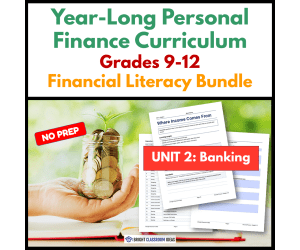
Yearlong Personal Finance Curriculum | Grades 9-12 | Unit 2
Finance, Life Studies, Money, Math, Back To School, Holidays, Holiday & Seasonal, Spring, Seasons, Grade 9, 10, 11, 12, Lesson Plans, Teacher Tools, Worksheets & Printables
🏦 Personal Finance Curriculum for Grades 9–12 | Unit 2 Banking + Complete Teacher Resources Teach real-world banking skills to high school students with a complete, teacher-ready personal finance curriculum focused on checking, savings, online banking, mobile payments, and financial systems. This high school personal finance curriculum gives students repeated opportunities to calculate, analyze, investigate, model, write, and defend practical banking decisions. Important: This version includes the complete teacher resource collection for all six units , while the student component included is Unit 2: Banking . The student book contains Weeks 7–12, while the teacher materials support the full 36-week Grades 9–12 course. 📦 What’s Included 👩🏫 Complete Teacher Resources 167-page Teacher Guide Teaching notes for all 36 weeks Minute-by-minute lesson delivery Three pacing options Four-tier differentiation Misconceptions and corrective moves Discussion prompts Standards alignment Answer and teaching notes Bonus 01: Complete Answer Key Answers for all 36 weeks Comprehension Financial math Data analysis Case studies Reviews Open-ended response guidance Bonus 02: Assessment Rubrics Four-point rubrics Projects Argument writing Journals Financial reasoning Activities and investigations Adaptable blank rubric Bonus 03: Unit Tests Six unit assessments Vocabulary Short answer Calculations Extended responses Complete answer key Bonus 04: Vocabulary Cards All 288 course terms Print-and-cut cards Student-friendly definitions Unit and week organization Unit 2 includes banking vocabulary such as real-time payment, payee, clearing, and stop payment . Bonus 05: Exit Tickets 72 total tickets Two per week Quick checks for understanding Useful for identifying reteaching needs Bonus 06: Parent Letters Welcome letter One letter for each unit Family-friendly course communication Designed so students do not need to disclose personal family finances Bonus 07: Progress Monitoring Forms Class mastery tracking Individual student records Standards monitoring Small-group planning Goal-setting and conference forms Bonus 08: Games & Simulations Six classroom games One connected to each unit Printable cards Student directions Debrief questions Adaptations for different class sizes Unit 2 banking activity: Follow the Money Bonus 09: Printable Posters 12 classroom posters Key financial concepts and formulas Clean black-and-white printing Bonus 10: Certificates Unit achievement awards Financial achievement awards Blank customizable certificate Bonus 11: Editable Lesson Plans Fillable PDF Objectives, standards, and vocabulary already organized Editable pacing, grouping, preparation, differentiation, and reflection fields 👩🎓 Student Resource Included Student Unit 2: Banking — 99 pages Students work through six weeks covering: Checking accounts Savings Online banking Payment systems Mobile payments Deposit insurance Banking system design Financial math Data analysis Case studies Spreadsheet modeling Argument writing Weekly review and extension 🗓️ How It Works in the Classroom The high school personal finance curriculum follows a consistent eleven-part weekly structure: Week opener Reading Comprehension Vocabulary in context Financial math Data analysis Case study Activity or investigation Spreadsheet skills Argument writing Review and extension That consistent structure lets students spend their energy on the financial reasoning , rather than learning a new worksheet format every week. The Teacher Guide provides pacing options for different schedules, while the weekly lessons include preparation notes, teaching moves, misconceptions, and classroom guidance. 🏦 Unit 2: Banking Week 7 — Designing a Personal Banking System Students examine account architecture and learn why separating money by purpose can make financial decisions easier. They design multi-account systems using: Bill accounts Spending accounts Sinking funds Savings Direct deposit splits Automated transfers Deliberate friction The activity has students create an account architecture diagram, calculate a deposit split, and test the system against a late deposit. Week 8 — Where Savings Should Actually Sit Students match savings vehicles to time horizon, access, yield, and risk . They explore: High-yield savings accounts Certificates of deposit CD ladders Money market accounts Treasury bills Early withdrawal penalties Laddering Students also build a CD ladder and compare the long-term value of different savings choices. The classroom investigation requires a sourced rate comparison, ladder design, and justified allocation . Week 9 — Payment Rails: How Money Actually Moves Students investigate what happens between sending a payment and the money arriving. They compare: ACH Wire transfers Cards Real-time payments Settlement Clearing Reversibility Stop payments The focus is not simply on memorizing payment types—it is on selecting an appropriate payment method based on speed, cost, and reversibility . Week 10 — Peer-to-Peer Apps and the Balance That Is Not Insured Students examine mobile and peer-to-peer payment systems, focusing on how convenience, fraud exposure, account protection, and insurance differ across financial tools. They are challenged to think beyond the displayed balance and ask what protection actually applies when something goes wrong. Week 11 — Deposit Insurance and What Happens When a Bank Fails Students investigate deposit insurance and evaluate whether balances are actually protected under different circumstances. The week connects banking choices to coverage limits, account ownership, concentration risk, and system design , helping students understand that "the money is in a bank" does not automatically answer every protection question. Week 12 — The Banking System Audit Students bring the unit together through the Banking System Audit . The essential question asks: Can you design and defend a complete banking arrangement for a real household? Students must: Design a complete banking system. Match the system to a household's goals and financial pattern. Quantify annual costs and benefits. Consider opportunity cost. Build redundancy into the system. Think about liquidity. Address trade-offs and limitations. Defend the recommendation against challenges about complexity and risk. The final activity produces a six-component banking system report with cost analysis and a panel defense , supported by a banking system cost model. 🎯 Standards & Learning Goals Students learn to: Design a personal banking system. Structure multiple accounts according to purpose. Use automation and direct deposit strategically. Compare savings vehicles. Match financial products to time horizons. Calculate interest and opportunity costs. Build and analyze CD ladders. Compare payment methods. Understand speed, cost, settlement, and reversibility. Evaluate mobile payment risks. Analyze deposit insurance and banking protection. Calculate the annual cost of a banking arrangement. Model financial systems in spreadsheets. Identify trade-offs and limitations. Defend financial recommendations using evidence and calculations. Unit 2 aligns with CEE Saving 5.4–5.8 , Jump$tart 9–12 Saving and Investing / Financial Decision Making standards , and applicable Common Core mathematics and literacy standards throughout the unit. ⭐ Why Teachers Love It ⭐ Real-world banking literacy: Students work with the systems they are likely to encounter as they become financially independent. ⭐ Beyond basic banking vocabulary: Students don't just define checking accounts and savings accounts—they design systems and defend why those systems make sense. ⭐ Strong financial math: Students calculate interest, savings allocations, penalties, opportunity costs, annual fees, and the financial impact of different banking arrangements. ⭐ Hands-on investigations: Students create banking system diagrams, investigate real savings products, compare payment methods, and conduct coverage audits. ⭐ Spreadsheet skills: Students build models using formulas rather than simply typing answers, then change assumptions to see how the model responds. ⭐ Built-in critical thinking: Students are repeatedly asked to identify the strongest objection, examine assumptions, and consider whether a theoretically better system would actually be maintained. ⭐ Complete teacher support: The Teacher Guide, answer key, assessments, vocabulary cards, exit tickets, parent letters, progress monitoring, games, posters, certificates, and editable lesson plans are all designed to work together. ⭐ Practical final project: The Banking System Audit gives students a meaningful end-of-unit task instead of another traditional worksheet or test. ✨ Build Banking Skills Students Can Actually Use Give students a high school personal finance curriculum that moves beyond "What is a checking account?" and into the harder questions: How should your accounts be structured? Where should your savings sit? Which payment method makes sense? What protection do you actually have? And does your financial system work in real life? Student Unit 2: Banking provides six weeks of structured student learning, while the extensive teacher resource collection gives you the planning, assessment, differentiation, and classroom-support tools needed to teach the broader 36-week course with confidence.
Author Bright Classroom Ideas Marketplace
Rating
Tags Finance, Financial Literacy, Money, Yearlong, Curriculum, Full Year

Back-to-School Icebreakers After Winter Break (for Elementary School)
Back To School, Holidays, Holiday & Seasonal, New Year's Day, January, Months, Winter, Seasons, Grade 1, 2, 3, 4, 5, Lesson Plans, Teacher Tools, Worksheets & Printables
E Back-to-School Icebreakers After Winter Break (Grades 1–5) Ease your students back into the classroom with these Back-to-School Icebreakers After Winter Break ! This 90-minute SEL lesson plan helps elementary students reconnect, reflect, and set new goals — all while having fun. It’s low-prep, engaging, and perfect for easing post-break transitions with confidence and positivity. What’s Included Complete 90-minute lesson plan (K–5 adaptable) Printable student worksheet (BINGO, Snowball Toss, Goal Setting, and Reflection) Teacher directions with timing and differentiation tips Standards alignment with the CASEL SEL framework Materials list + optional extensions Answer key and reflection guide for teacher use How It Works in the Classroom This lesson is designed for a whole-group community-building session after winter break. Activities include: ❄️ Winter Break BINGO – fun icebreaker to get students talking ☃️ Snowball Toss & Share – write, toss, and guess classmates’ memories 🎯 New Year, New Goals – reflect and set achievable goals 💬 Two Truths and a Wish – share creatively with peers 🕸️ Class Connection Web – visualize classroom unity and empathy Use it during the first day back, morning meeting, or SEL block. Standards & Learning Goals Aligned with the CASEL SEL competencies : Self-Awareness & Self-Management Social Awareness & Relationship Skills Responsible Decision-Making Students will reconnect, express emotions, and set personal and academic goals for the new semester. Why Teachers Love It ✅ Completely low-prep — just print and go! ✅ Builds community and supports emotional transitions ✅ Engages all learners (includes differentiation tips for K–5) ✅ Encourages writing, speaking, and reflection ✅ Ideal for SEL lessons, morning meetings, or substitute plans Bring the joy back after winter break with this ready-to-use icebreaker lesson that helps your classroom start the new semester strong! Revisit classroom routines after the break with this classroom bingo game .
Author Bright Classroom Ideas Marketplace
Rating
Tags Back-to-school, Icebreaker, Winter, Activities, Lesson, Lesson Plan, Elementary

Student Information Forms - Classroom Forms
Holiday & Seasonal, Holidays, Back To School, First Day of School, Resources for Teachers, Classroom Management, Not Grade Specific, Worksheets & Printables, Teacher Tools, Assessments, Templates, Lesson Plans
Keep your student details organized and easy to access with this Student Information Form in a clean, printable table format! This classroom form is designed to help teachers collect and manage essential student data right from the start of the school year. It’s a simple yet powerful tool for building strong communication with families and staying prepared throughout the year. Ways to Use: Fill in each student’s name, birthday, and parent contact info Add important notes under “Comments” (e.g., allergies, learning needs) Keep the forms in a binder for quick reference Use during conferences, emergencies, or when making calls home Update as needed throughout the school year Advantages: All key information in one easy-to-read table Saves time during busy days or meetings Helps you stay organized and ready for anything Great for substitutes or classroom support staff PDF format – just print and write (not editable or digital) This resource is perfect for back-to-school, open house, or anytime you need student info at your fingertips. Simple, useful, and classroom-ready! Pdf file includes 6 pages. Enjoy!
Author Ponder Palette Plazza
Rating
Tags Student Information, Classroom Forms, Back To School, Back To School Forms, Back To School Activities, Teacher Forms, Teacher Planner, Teacher Binder

Fall Writing Activities
ELA, Writing, Creative Writing, Holiday & Seasonal, Holidays, Back To School, First Day of School, Seasons, Fall, Kindergarten, Preschool, Grade 1, 2, 3, 4, 5, Worksheets & Printables, Worksheets, Writing Prompts, Teacher Tools, Assessments, Lesson Plans
These Fall Writing Activities are the perfect way to combine creativity and literacy practice during the autumn season. Each activity features a simple, engaging instruction for students to read, followed by a fun two part task: first, they draw their response , and then, they write a short paragraph describing it. The mix of drawing and writing encourages students to visualize their ideas before putting them into words, making it especially appealing for reluctant writers and younger learners. The prompts are fall themed, covering topics such as colorful leaves, pumpkins, cozy weather, favorite autumn foods, and seasonal traditions. This resource works well for elementary classrooms and can be used as part of morning work, journal writing, or seasonal literacy centers. It’s a low-prep way to promote self expression, build writing fluency, and bring seasonal joy into the classroom. Ways to Use: Morning work or bell ringers Seasonal literacy centers First week of fall icebreakers Journal entries Fast finisher activities Sub plans during fall Advantages: Combines art and writing for engagement Encourages creativity and self-expression Develops paragraph writing skills Fun seasonal themes students love Easy to prep and implement Suitable for multiple grade levels Enjoy!
Author Ponder Palette Plazza
Rating
Tags Writing, Creative Writing, Writing Prompts, Fall Writing Prompts, Fall Literacy, Fall Writing, Fall Writing Activities, Pumpkins, Fall Activities

Read and Draw - Back to School Activitiy
Holiday & Seasonal, Holidays, Back To School, First Day of School, Kindergarten, Preschool, Grade 1, 2, 3, 4, 5, Worksheets & Printables, Activities, Centers, Teacher Tools, Assessments, Lesson Plans
Start the school year with a fun and educational activity that strengthens early reading and comprehension skills! This Read and Draw, Back to School Activities resource is designed for kindergarten and first grade students who are learning to read simple sentences. Each page includes a short sentence featuring basic sight words and CVC word patterns , making it perfect for beginning readers. After reading the sentence, students get to draw a picture that matches what they’ve read. This creative step encourages students to think about meaning, supports comprehension, and builds confidence in reading. Ways to Use: Morning work to settle students at the start of the day Literacy centers or reading stations Independent seatwork during back to school weeks Homework practice for reading and drawing Quick informal assessment of reading understanding Advantages: Supports phonics and sight word recognition Strengthens reading comprehension through visual expression Builds confidence in early readers Encourages creativity and attention to detail Easy to prep, just print and go! This activity is a great way to combine literacy with drawing while helping students feel successful in their reading journey right from the start of the school year.
Author Ponder Palette Plazza
Rating
Tags Reading, Back To School, Back To School Activities, September Activities, Drawing, Sight Words, August Activities, Reading Centers
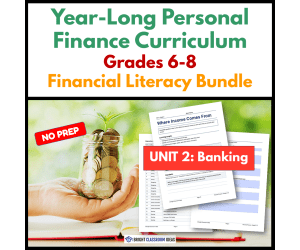
Year-Long Personal Finance Curriculum | Grades 6-8 | Unit 2
Back To School, Holidays, Holiday & Seasonal, Spring, Seasons, Finance, Life Studies, Money, Math, Grade 6, 7, 8, Lesson Plans, Teacher Tools, Worksheets & Printables
📘 Personal Finance Unit 2: Banking | Grades 6–8 Help middle school students understand what is really happening behind the banking tools they use every day. This Banking unit gives students practical experience with checking accounts, savings accounts, debit cards, mobile banking security, and choosing a financial institution. Designed as a 6-week financial literacy unit , students read, calculate, analyze data, complete realistic case studies, build spreadsheet models, write arguments, and finish with a full Banking Analysis Report . Please note: This listing includes the Unit 2 student book only . The included teacher resources and bonus materials support the complete six-unit, 30-week Personal Finance curriculum . 📦 What’s Included Student Unit 2: Banking — 86 Pages The student resource includes six complete weekly lessons covering Weeks 7–12. Each week follows the same eleven-part structure: Week opener with essential question and learning targets Original reading passage Comprehension and analysis Vocabulary in context 10 financial math problems Data graph and analysis Realistic case study Hands-on activity or simulation Spreadsheet modeling task Argument writing Weekly review and extension activities Six Weeks of Banking & Financial Literacy Instruction Week 7 — Checking Accounts: How a Checking Account Actually Works Students explore what happens between a card swipe and the money leaving an account. They learn to: Distinguish ledger balance from available balance Understand holds and settlement Analyze overdraft fees Reconcile an account register with a bank statement Compare checking account fee structures Identify discrepancies and potential fraud The hands-on Reconciliation Challenge produces a reconciled register, classified discrepancy list, and dispute note. Students also build a check register and reconciliation spreadsheet. Week 8 — Savings Accounts: Comparing Savings Accounts on the Numbers Students investigate how savings account choices affect financial outcomes. They practice: Distinguishing interest rate from APY Understanding compounding frequency Comparing savings products quantitatively Evaluating yield versus access Comparing high-yield savings accounts, CDs, and money market accounts Considering inflation and purchasing power Students complete a Savings Product Comparison and create a justified two-product allocation. The spreadsheet model includes APY calculations, compound growth, and fee-versus-interest comparisons. The data analysis page has students examine ten-year growth of $5,000 at different savings rates, making the long-term impact of account selection visually clear. Week 9 — Debit Cards: Debit Cards, Fraud, and Who Bears the Loss Students examine debit card transactions, fraud, liability, and the difference between authorization and settlement. Topics include: Debit card fraud Transaction liability EMV chips Tokenization Fraud reporting Statement monitoring The financial impact of unauthorized transactions The Fraud Response Simulation has students determine liability, calculate costs, prepare a dispute report, and design an account alert. The spreadsheet activity creates a transaction monitoring log. Week 10 — Mobile Banking: Security, Authentication, and Social Engineering Students investigate why many account compromises begin by targeting people rather than banking technology. They learn about: Multi-factor authentication Phishing Social engineering SIM swaps Passkeys Encryption Credential stuffing Account alerts Students identify realistic social engineering techniques and design a stronger account security configuration. Week 11 — Choosing a Bank: Evaluating Institutions on Total Cost Students learn that the cheapest-looking bank is not necessarily the cheapest choice. They compare: Banks Credit unions Neobanks Branch networks ATM networks Fee schedules Relationship pricing Switching costs Total cost of ownership Students complete an Institution Selection Investigation , calculating total annual costs, including forgone interest, testing what happens when overdrafts increase, and making a written recommendation. Week 12 — Unit Project: The Banking Analysis Report Students bring the unit together by producing a defensible recommendation about where a fictional household should bank. The project focuses on: Quantitative comparison Usage assumptions Sensitivity analysis Criteria weighting Evidence-based recommendations Communicating financial information to a non-expert audience Students complete a five-section banking analysis report and participate in a panel defense. The five report sections are: Executive summary Cost comparison Sensitivity analysis Recommendation Limitations 🎯 How It Works in the Classroom This financial literacy curriculum is designed to give students repeated practice with real-world financial reasoning. Students don't simply memorize banking vocabulary. They calculate costs, interpret graphs, investigate realistic scenarios, build spreadsheet models, evaluate trade-offs, and defend recommendations. Activities include: Reconciliation Challenge Savings Product Comparison Fraud Response Simulation Security Configuration Audit Institution Selection Investigation Banking Analysis and Panel Defense The consistent weekly structure makes implementation easier. Students become familiar with the routine while the content becomes progressively more sophisticated. 📚 Additional Teacher Resources The teacher resources correspond to the complete six-unit Grades 6–8 personal finance curriculum , rather than only Unit 2. They can support this Unit 2 student book as part of the larger program and include: Teacher Guide: 36 weekly lessons across six units Complete teaching notes Misconceptions and corrective moves Minute-by-minute lesson delivery Four-tier differentiation guidance Discussion prompts Answer notes Answer Key Unit Tests Vocabulary Cards Exit Tickets Progress Monitoring Forms Assessment Rubrics Parent Letters Editable Lesson Plans Games & Simulations Printable Posters Award Certificates So while the student resource in this listing is specifically Unit 2: Banking , the companion teacher materials are designed for use across the full six-unit curriculum . The year-at-a-glance organization places Banking in Weeks 7–12. 🎯 Standards & Learning Goals Throughout this Banking unit , students learn to: Explain how checking accounts work. Distinguish ledger and available balances. Understand holds, settlement, and posting order. Reconcile account records. Analyze banking fees quantitatively. Compare savings products using APY and other criteria. Understand compound growth and inflation. Evaluate debit card fraud and liability. Identify common digital banking security risks. Evaluate authentication methods. Recognize social engineering and phishing techniques. Compare financial institutions using total cost. Account for fees, forgone interest, and usage patterns. Use sensitivity analysis to test assumptions. Make evidence-based financial recommendations. Communicate financial analysis clearly to a non-expert audience. Standards alignment includes CEE Saving standards, Jump$tart 6–8 Financial Decision Making and Saving & Investing standards, and Common Core mathematics and ELA standards , including CCSS.MATH.6.NS.C.5, CCSS.MATH.7.RP.A.3, CCSS.MATH.7.EE.B.3, and CCSS.ELA.W.7.1. ⭐ Why Teachers Love It ⭐ Real-world banking skills: Students explore situations they may encounter as account holders. ⭐ Financial math built in: Every week includes ten problems requiring students to show their work. ⭐ Beyond worksheets: Students reconcile accounts, compare products, investigate fraud, audit security practices, and defend recommendations. ⭐ Strong critical thinking: Students must consider assumptions, trade-offs, costs, limitations, and changing circumstances. ⭐ Digital literacy included: Mobile banking security, authentication, credential stuffing, phishing, and social engineering are treated as financial literacy skills. ⭐ Spreadsheet practice: Students learn to build models using formulas instead of simply typing answers. ⭐ Authentic decision-making: Students don't just identify the "best" bank. They determine which institution fits a specific usage pattern. ⭐ Built-in assessment: Comprehension, financial math, data analysis, case studies, writing, weekly reviews, and a culminating project provide multiple ways to assess learning. ⭐ Easy to pair with the full curriculum: The student book focuses specifically on Unit 2, while the companion teacher resources support the complete six-unit program. 💡 Give Students Banking Skills They Can Actually Use Financial literacy for middle school should help students understand the systems behind everyday financial decisions. This Banking unit takes students from understanding a checking account to comparing savings products, responding to fraud, securing mobile accounts, evaluating institutions, and ultimately defending a banking recommendation. By the end of Unit 2, students have practiced not only how banking works , but how to analyze costs, question assumptions, protect their accounts, and make evidence-based financial decisions .
Author Bright Classroom Ideas Marketplace
Rating
Tags Finance, Financial Literacy, Curriculum, Yearlong, Full Year, Money
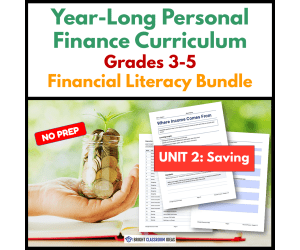
Year-Long Personal Finance Curriculum | Grades 3-5 | Unit 2
Back To School, Holidays, Holiday & Seasonal, Seasons, Finance, Life Studies, Money, Math, Grade 3, 4, 5, Lesson Plans, Teacher Tools, Worksheets & Printables
Personal Finance Curriculum | Unit 2: Saving | Grades 3–5 Help students build practical financial literacy skills for grades 3–5 with this engaging Unit 2 student resource focused on saving. Students explore savings accounts, interest, short-term goals, and long-term goals through reading, financial math, graphs, real-world scenarios, application activities, and writing. Please note: This listing includes the Unit 2 student book only . The included teacher resources and bonus materials support the complete six-unit, 30-week Personal Finance curriculum . 📦 What’s Included Student Resource — Unit 2: Saving 63-page student unit 5 weeks of instruction Week 6: Savings Accounts Week 7: Interest Week 8: Short-Term Goals Week 9: Long-Term Goals Week 10: Unit 2 Project Original weekly reading passages Comprehension questions Vocabulary practice Financial math Graph reading and analysis Realistic financial scenarios Application activities Evidence-based writing Weekly reviews and essential questions Each week follows the same instructional rhythm. Students read, practice vocabulary, solve financial math problems, analyze graphs, apply concepts to scenarios, complete an activity, and write about their learning. ⭐ Teacher Resources for the Full Curriculum The Teacher Guide supports all 30 weeks and all six units , rather than Unit 2 alone. It includes: 109-page Teacher Guide Week-by-week teaching notes 50–60 minute lesson pacing Misconceptions to watch for Four-level differentiation Standards alignment Assessment guidance Family engagement Materials lists 🎁 Bonus Resources for the Full 6-Unit Curriculum The accompanying bonus resources are designed to support the entire 30-week curriculum , including: Complete Answer Key for all 30 weeks Assessment Rubrics Six Unit Tests 180 Vocabulary Definition Cards 180 Word-Wall Cards 60 Exit Tickets Parent Letters and Family Glossary Progress Monitoring Forms Six Financial Literacy Games 12 Classroom Posters Award Certificates Editable Lesson Plans for all 30 weeks 🏫 How It Works in the Classroom Use the Unit 2 student resource for approximately five weeks of focused instruction on saving and financial goals. Unit 2 Topics Include: Savings Accounts Purpose and features of savings accounts Deposits and withdrawals Account balances Statements Deposit insurance Interest Interest Principal Interest rates Simple interest Compound interest APY Short-Term Savings Goals Specific savings goals Target amounts Deadlines Milestones Tracking progress Adjusting a savings plan Long-Term Savings Goals Planning for goals years away Regular contributions Time and growth Comparing savings strategies Adjusting plans when circumstances change Students also practice financial math throughout the unit. For example, Week 6 includes balance, deposit, withdrawal, and account-fee problems. Week 7 moves into simple and compound interest calculations. The graph activities add another layer of financial literacy. Students analyze savings balances over time and compare simple versus compound interest. 🎯 Standards & Learning Goals Students will: Explain the purpose and features of a savings account. Describe how deposits and withdrawals change an account balance. Explain what deposit insurance protects. Explain what interest is and why banks pay it. Calculate simple interest. Describe how compound interest differs from simple interest. Create specific, measurable short-term savings goals. Calculate the amount needed to reach a savings goal. Adjust savings plans when circumstances change. Build understanding of saving for goals that extend years into the future. Unit 2 includes alignment with CEE Saving 5.1–5.4, Jump$tart 3–5 Saving and Investing 1–4, and relevant Common Core math standards across the unit. 💛 Why Teachers Love It ⭐ Low-prep instruction: The student pages provide a clear weekly learning path. ⭐ More than worksheets: Students read, calculate, analyze, discuss, apply, and write. ⭐ Real-world connections: Saving concepts are presented through realistic financial situations. ⭐ Financial math is built in: Students work with balances, deposits, withdrawals, interest, savings goals, and long-term growth. ⭐ Strong visual learning: Students interpret real graphs connected directly to the week's financial concepts. ⭐ Practical application: Activities include an Account Register , Compound Interest Lab , and savings-goal planning activities. ⭐ Easy assessment: The larger curriculum includes answer keys, exit tickets, rubrics, tests, and progress-monitoring tools. ⭐ Teacher support extends across the full curriculum: The Teacher Guide and bonus resources are ready to support Units 1–6, even though this student listing provides Unit 2: Saving . ✨ Build Strong Saving Habits Through Financial Literacy Give students an age-appropriate introduction to saving, savings accounts, interest, compound growth, and financial goal-setting with a structured Unit 2 that connects financial concepts to math and real-life decisions. This resource is especially useful for teachers introducing a larger 30-week personal finance curriculum or teaching Unit 2 as a standalone financial literacy unit.
Author Bright Classroom Ideas Marketplace
Rating
Tags Yearlong, Finance, Curriculum, Financial Literacy, Full Year, Money

Short Vowel Word Family Craft - CVC Phonics Pizza Activity
ELA, Language Development, Phonics, ESL, Holiday & Seasonal, Holidays, Back To School, Months, September, August, Kindergarten, Preschool, Grade 1, 2, 3, Worksheets & Printables, Worksheets, Activities, Centers, Crafts, Teacher Tools, Assessments, Lesson Plans, Classroom Decor, Coloring Pages
Make phonics practice fun and hands-on with this Short Vowel Word Family Craft ! Designed to help students identify and sort short vowel CVC (consonant-vowel-consonant) words, this engaging activity turns phonics into a creative craft project. Students will cut and color pizzas labeled with the vowels A, E, I, O, U . Then, they will write CVC words on pepperoni pieces and glue them onto the correct pizza based on the short vowel sound. This interactive resource supports word recognition, vowel sound identification, and spelling skills while also allowing students to enjoy some coloring and cutting fun. Ways to Use: Literacy centers and phonics stations Small group reading instruction Homework or take-home literacy projects Early finisher activity Classroom phonics craft display Advantages: Reinforces short vowel sounds and word families Encourages fine motor skill development Supports independent word writing and sorting Makes learning visual and interactive Easy prep and fun for both classroom and home use This craft is a perfect blend of literacy learning and creativity, making CVC word practice enjoyable and memorable for early learners. Pdf file includes 18 pages. Enjoy!
Author Ponder Palette Plazza
Rating
Tags Phonics, Cvc, Cvc Craft, Phonics Crafts, Short Vowels, Back To School, Back To School Activities, Literacy Centers, September Activities
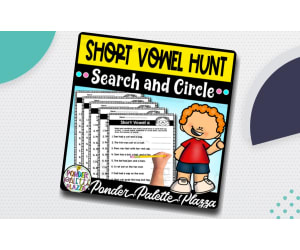
Short Vowel Hunt - Search and Circle ( a,e,i,o,u)
ELA, Language Development, ESL, Phonics, Spelling, Holiday & Seasonal, Holidays, Back To School, First Day of School, Kindergarten, Preschool, Grade 1, 2, 3, Activities, Centers, Teacher Tools, Assessments, Lesson Plans
The Short Vowel Hunt – Search and Circle Activity (a, e, i, o, u) is an engaging and interactive way to help students identify short vowel sounds within the context of complete sentences. In this activity, students read each sentence carefully, hunt for words that contain a short vowel sound, circle or underline them, and then count and record how many they found. It’s a great tool for strengthening phonemic awareness, reading fluency, and word recognition. This activity is perfect for Kindergarten, 1st Grade, and ESL learners who are building a strong foundation in phonics. It can be used for independent practice, in literacy centers, or for small group instruction. Ways to Use: Literacy centers or morning work Small group phonics lessons Homework or take-home practice Early finisher activity Assessment tool for vowel sound recognition Advantages: Reinforces short vowel identification in context Strengthens phonemic awareness and decoding skills Encourages careful reading and word analysis Interactive and student-friendly format Supports visual, auditory, and kinesthetic learners Pdf file includes 5 pages. Enjoy!
Author Ponder Palette Plazza
Rating
Tags Cvc, Cvc Short, Short Sound, Cvc Activities, Back To School, Back To School Activities, Phonics, Phonics Activities, Short Vowel, Literacy
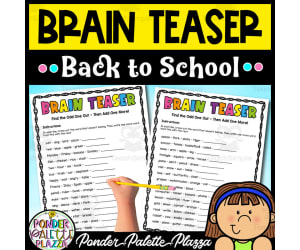
Brain Teaser - Find and Match Activity
ELA, Language Development, ESL, Vocabulary, Holiday & Seasonal, Holidays, Back To School, First Day of School, Kindergarten, Preschool, Grade 1, 2, 3, 4, 5, Worksheets & Printables, Worksheets, Word Searches, Activities, Centers, Teacher Tools, Assessments, Lesson Plans, Games
Brain Teaser, Find and Match Activity is a fun and engaging way to get students thinking critically about words and how they relate to each other. In each line, students look at a group of four words, cross out the one that doesn’t belong, and then come up with a new word that fits with the remaining three. It’s a simple concept, but it really gets their brains working! How You Can Use It: As a quick warm up at the beginning of class For early finishers who need a meaningful challenge During literacy centers or small group work As a fun homework or take home activity Perfect for brain breaks or transition times Why Teachers Love It: Builds vocabulary and word association skills Encourages creative thinking and reasoning No prep needed, just print and go! Works well with a wide range of ages and abilities Sparks great discussions in class or with partners This activity is a great way to mix learning with fun. It’s light, smart, and students really enjoy the challenge of finding that “odd one out” and coming up with the perfect word to complete the set.
Author Ponder Palette Plazza
Rating
Tags Brain Teaser, First Day Of School, First Day Of School Activities, Back To School, Back To School Activities, Ice Breaker, Games, Early Finishers

Syllable Sort - Back to School Activities
ELA, Language Development, ESL, Holiday & Seasonal, Holidays, Back To School, First Day of School, Months, August, September, Kindergarten, Preschool, Grade 1, 2, 3, Activities, Centers, Teacher Tools, Lesson Plans, Assessments
Start the school year with a fun and engaging Syllable Sort – Back to School Activity! This hands-on resource is designed to help young learners strengthen their phonological awareness by sorting words into columns based on the number of syllables. Students will say each word out loud, count the syllables, and place it in the correct column, building early literacy skills in an interactive and meaningful way. With a back-to-school theme, the words feature familiar classroom-related items like “pencil,” “notebook,” “crayon,” and more. This makes the activity both relevant and enjoyable for students in Pre-K, Kindergarten, and 1st Grade. The activity pages are simple to use, requiring no prep, just print and go! Ways to Use: Literacy centers or phonics stations Whole group mini-lessons or small group instruction Independent practice or morning work Homework or take-home activity Early finisher task Intervention or review sessions Advantages: Develops phonological awareness and syllable counting Reinforces school-related vocabulary Encourages active participation and oral language use Supports reading readiness and listening skills Engaging format with cut, sort, and glue tasks Easy to prep and use in any classroom setting Pdf file includes 2 pages. Enjoy!
Author Ponder Palette Plazza
Rating
Tags Back To School, Back To School Activities, Syllable, Syllable Sort, Syllables, First Day Of School Activities, First Week Of School Activities, Back To School Literacy

Long and Short Vowels Activity
ELA, Language Development, ESL, Phonics, Spelling, Holiday & Seasonal, Holidays, Back To School, End Of Year, Kindergarten, Preschool, Grade 1, 2, 3, Activities, Centers, Teacher Tools, Assessments, Lesson Plans
The Long and Short Vowels Activity is a simple, engaging, and effective way for students to practice identifying vowel sounds and using them in context. In this two-part activity, students first read words in a table and color them, green for short vowels and orange for long vowels. Then, they complete sentences by filling in the blanks with the correct word from the list. It’s a great blend of phonics, reading comprehension, and decision-making. This resource is ideal for 1st and 2nd graders, as well as ESL students, who are learning to distinguish between long and short vowel sounds. The color-coding makes the activity visual and fun, while the sentence work encourages careful reading and word choice. Ways to Use: Literacy centers Small group instruction Independent practice or early finisher work Morning work or homework Informal phonics check Advantages: Reinforces long and short vowel sound recognition Combines visual learning with sentence reading Encourages vocabulary development and comprehension Low-prep and easy to use, just print and go Suitable for a range of learning levels Pdf file includes 4 pages. Enjoy!
Author Ponder Palette Plazza
Rating
Tags Long And Short Vowels, Vowels, Long Vowels, Short Vowels, Back To School, Back To School Activities, Phonics, Phonics Worksheets, Literacy

Letter E Puzzles - Letter E Beginning Sound
ELA, Language Development, ESL, Phonics, Holiday & Seasonal, Holidays, Back To School, Months, September, October, Kindergarten, Preschool, Grade 1, 2, 3, 4, 5, Worksheets & Printables, Activities, Centers, Games, Teacher Tools, Assessments, Lesson Plans
Let your little learners have fun while getting to know the letter E! This Letter E Puzzle activity is great for preschool, pre-K, and kindergarten kids who are learning their letters and beginning sounds. Each puzzle has two parts, one shows the uppercase and lowercase letter “E,” and the other has a picture and word that starts with E, like “egg.” Kids match the two pieces, helping them make the connection between the letter and its sound. It’s simple, hands-on, and kids love it! This activity is perfect for centers, morning work, early finishers, or just a quiet moment of learning. No prep needed, just print, cut, and you’re ready to go. You can use it for: Letter of the week practice Literacy centers One-on-one or small group work Extra phonics practice Why teachers love it: It helps kids learn letters and beginning sounds It keeps kids engaged and active It supports early reading and fine motor skills It’s easy to use and ready when you are A simple and fun way to explore the letter E! Enjoy!
Author Ponder Palette Plazza
Rating
Tags Letter E, Letter Puzzles, Alphabet, Alphabet Puzzles, Phonics, Back To School, Back To School Activities, September Activities, Beginning Sounds
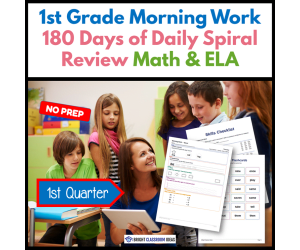
1st Grade Morning Work | 180 Days Review | Math & ELA | 1st Quarter
Back To School, Holidays, Holiday & Seasonal, August, Months, September, Math, ELA, Grade 1, Lesson Plans, Teacher Tools, Centers, Activities, Worksheets & Printables
First Grade Morning Work | Teacher Resources + 1st Quarter Student Pages Make your first grade morning routine simple, consistent, and purposeful with 180 days of daily spiral review . This resource includes ALL teacher resources for the full 180 days , while the included student pages cover Quarter 1: Days 1–45 . What’s Included ⭐ FULL-YEAR TEACHER RESOURCES You get the complete teacher toolkit for all 180 days / 36 weeks : Teacher Guide for launching and managing the routine Full 36-week Pacing Guide Skills Checklist for tracking student progress Fully Editable Morning Work Schedule PDF version of the schedule Complete Answer Key for Days 1–180 Differentiation ideas and assessment suggestions Printing and organization tips 📚 STUDENT PAGES INCLUDED: 1ST QUARTER The student portion included in this pack contains Days 1–45 . Each day includes two pages of spiral review : Page A – Literacy Phonics Sight words Handwriting Grammar Sentence writing Vocabulary Reading challenge Writing prompt Page B – Math, Calendar & Think Place value Addition Subtraction Telling time Shapes Math challenge Calendar Weather SEL check-in Fun fact Joke Growth mindset Brain teaser Would You Rather Important: This product includes the full set of teacher resources for all 180 days , but the student practice pages included here are Days 1–45 only . How It Works in the Classroom Use these first grade morning work pages as a daily bell ringer or morning routine. The routine is designed for approximately 10–15 minutes . Students work through literacy first, followed by math and thinking activities. The included student pages can also be used for: Morning work Bell ringers Homework Early finisher work Sub plans Small-group warm-ups Spiral review The teacher resources help you plan and manage the entire 180-day sequence , even though this pack provides only the first-quarter student pages. Standards & Learning Goals This first grade morning work resource supports common first grade expectations across ELA and math. Students practice: Phonics and phonological awareness High-frequency words Handwriting Grammar and language Sentence and writing skills Vocabulary Reading Place value Addition and subtraction Numbers to 120 Telling time Shapes and equal shares The pacing guide maps skills across 36 weeks , with skills spiraling and increasing in difficulty throughout the year. Why Teachers Love It ✨ Plan the whole year with one teacher toolkit. The Teacher Guide, pacing guide, skills checklist, editable schedule, and complete 180-day answer key are all included. ✨ Start with a manageable first-quarter student set. Students receive Days 1–45, giving you a ready-to-use first-quarter routine without overwhelming your students. ✨ Save valuable prep time. The daily routine is already organized across literacy, math, writing, and engaging thinking activities. ✨ Build independence. The consistent format helps students learn what to expect each morning. ✨ Track student progress. The Skills Checklist lets you mark skills as introduced, practiced, or mastered. ✨ Differentiate with ease. The Teacher Guide includes suggestions for students needing support, on-level learners, students needing a challenge, and English learners. Looking for first grade morning work that gives you the teacher tools for the entire year while keeping the included student pages focused on the first quarter ? This pack gives you the structure, planning tools, progress tracking, and answer key you need to launch a successful daily morning routine. Get your first-quarter student pages and full-year teacher resources today!
Author Bright Classroom Ideas Marketplace
Rating
Tags Morning Work, Back To School, Math, Ela

The Backpack Surprise - Reading Comprehension
ELA, Language Development, Reading, Reading Comprehension, Holiday & Seasonal, Holidays, Back To School, First Day of School, Months, August, Kindergarten, Preschool, Grade 1, 2, Worksheets & Printables, Teacher Tools, Assessments, Lesson Plans, Activities
The Backpack Surprise is a fun and easy to read story that young students will enjoy. It tells the tale of a child who finds something unexpected in their backpack on the first day of school. The short passage is written with simple words and clear sentences, making it just right for beginning readers. How You Can Use It: Read it together as a class to build fluency and talk about the story. Use it in small groups to support students who need extra practice. Assign it as independent work or send it home for extra reading. Use it as a quick check to see how well students understand what they read. Kick off a back to school activity with a fun and friendly reading task. Why Teachers Love It: It keeps students interested with a story they can relate to. The five questions after the passage help students think about what they read. It’s great for building vocabulary and sparking conversations. The short length fits easily into busy schedules. It works well in reading centers or for substitute teachers. This resource is a great way to help students enjoy reading while practicing important skills. Enjoy!
Author Ponder Palette Plazza
Rating
Tags Reading, Reading Comprehension, Back To School, Back To School Reading, Back To School Activities, First Day Of School Activities, Back To School Writing

Long and Short Vowel Sound - Color by Code
ELA, Language Development, ESL, Phonics, Spelling, Holiday & Seasonal, Holidays, Back To School, First Day of School, Kindergarten, Preschool, Grade 1, 2, 3, Activities, Centers, Teacher Tools, Assessments, Lesson Plans, Worksheets & Printables, Worksheets, Coloring Pages
The Long and Short Vowel Sound – Color by Code activity is a fun, hands-on way for students to practice identifying vowel sounds while building phonics and word recognition skills. Students look at each picture, say the word aloud, decide whether it has a short or long vowel sound, and then use the color code to color the picture accordingly. This activity combines visual learning with phonemic awareness in an engaging and interactive format. Designed for Kindergarten, 1st Grade, and early ESL learners, this resource supports the development of listening, sorting, and categorizing skills. It's perfect for reinforcing vowel sound recognition in a low-pressure, creative setting. Ways to Use: Literacy or phonics centers Independent practice or early finisher task Homework or take-home review Morning work activity Sub plans or quiet time task Advantages: Reinforces the difference between long and short vowel sounds Encourages phonemic awareness through visual and verbal cues Supports fine motor skills through coloring Fun and calming way to review key phonics skills Easy to prep and perfect for repeated use Pdf file includes 5 pages. Enjoy!
Author Ponder Palette Plazza
Rating
Tags Long Vowel, Short Vowel, Vowels, Phonics, Phonics Activities, Back To School, Back To School Activities, Color By Code, Literacy, Phonics Worksheets

Telling Time Practice Worksheets
Holiday & Seasonal, Holidays, Seasons, Fall, Spring, Summer, Winter, Back To School, Math, Time, Kindergarten, Preschool, Grade 1, 2, 3, 4, 5, Worksheets & Printables, Teacher Tools, Assessments, Lesson Plans
Make teaching time-telling simple, fun, and stress-free with these Telling Time Practice Worksheets ! Designed for elementary students, this resource offers a variety of engaging activities to help kids confidently read and write time on both analog and digital clocks. With clear visuals and plenty of step-by-step practice, these worksheets make it easy to build a strong foundation in time-telling while also strengthening math and problem-solving skills. How to Use: Daily math practice or warm-up work Homework for extra practice at home Math centers and independent activities Small group instruction or one-on-one tutoring Sub plans and test prep Quick skill review and assessment Why You’ll Love It: Builds confidence with analog and digital clocks Offers activities for different skill levels Encourages independent learning with simple directions Provides real-world practice to develop life skills Saves planning time with ready-to-print worksheets Perfect for classrooms, homeschool, and after-school programs This resource is great for introducing new skills, practicing elapsed time, or reviewing concepts all year long. With multiple activities to keep students engaged, your learners will master time-telling with confidence and ease. Enjoy!
Author Ponder Palette Plazza
Rating
Tags Time, Timing, Time Telling, Back To School, Back To School Math, Fall Math, Spring Math, Fall Time Telling, Winter Math, Back To School Activities
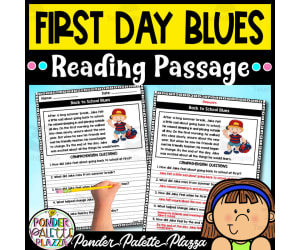
Back to School Blues - Reading Comprehension
Holiday & Seasonal, Holidays, Back To School, First Day of School, ELA, Reading, Reading Comprehension, Months, August, September, Grade 3, 4, 5, Worksheets & Printables, Worksheets, Teacher Tools, Assessments, Lesson Plans, Activities
Starting a new school year can be exciting, but it can also bring a few nerves. Back to School Blues is a reading comprehension activity made for grades 3-5 that taps into those feelings students often have during the first week. The passage follows a relatable back to school experience and helps kids think about emotions, challenges, and the positives that come with starting fresh. Ways you can use it: Read together as a class and talk through the main ideas. Independent work for reading and comprehension practice. Small group reading to build fluency and encourage discussion. Homework for extra practice at home. Morning warm up to start the day with a thoughtful activity. Why it’s useful: Students relate to the theme, so they’re more engaged in reading. Builds reading comprehension, vocabulary, and critical thinking skills. Great conversation starter about emotions and coping with change. Works with a range of reading levels in grades 3-5. No prep needed, just print and use. It’s a simple, meaningful way to work on literacy skills while also helping students feel seen and understood as they head into a new school year. Enjoy!
Author Ponder Palette Plazza
Rating
Tags Reading, Reading Comprehension, Back To School, Back To School Reading, Back To School Activities, First Week Of School Activities, Reading Centers
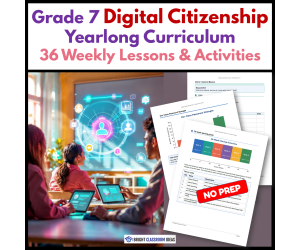
Grade 7 Digital Citizenship Yearlong Curriculum | 36 Weekly Lessons
Technology, Science, Back To School, Holidays, Holiday & Seasonal, August, Months, September, Fall, Seasons, Grade 7, Lesson Plans, Teacher Tools, Worksheets & Printables
Grade 7 Digital Citizenship Curriculum | Yearlong Digital Citizenship Lessons, AI Literacy, Media Literacy, Online Safety, Worksheets, Slides & Assessments Help your students become thoughtful, informed, and responsible digital citizens with this comprehensive Grade 7 Digital Citizenship Curriculum ! This complete 36-week digital citizenship program prepares middle school students to understand how algorithms shape their online experiences, recognize misinformation, evaluate AI-generated content, protect their digital privacy, identify scams, and make ethical decisions in today's connected world. With ready-to-teach lessons, engaging investigations, projects, assessments, interactive slides, and teacher resources, you'll have everything you need for an entire year of meaningful digital citizenship instruction. What's Included This complete yearlong curriculum includes everything needed to teach one engaging lesson each week: ⭐ 36 complete weekly digital citizenship lessons ⭐ Comprehensive teacher lesson plans with scripted instruction ⭐ Student workbook with 420 student pages ⭐ Weekly student reflection journal ⭐ 320 presentation slides with built-in teacher notes ⭐ 220 printable no-prep worksheets ⭐ 36 weekly exit tickets ⭐ 24 standards-aligned quizzes , including unit reviews and a cumulative year-end assessment ⭐ 12 inquiry-based investigations and collaborative classroom projects with student-friendly rubrics ⭐ Complete answer keys ⭐ Teacher Planning & Assessment Pack with unit overviews, standards alignment, planning grids, vocabulary references, class record sheets, skills progression, and intervention tools ⭐ Teacher Toolkit & Data Guide featuring assessment strategies, case study support, evidence-based learning routines, differentiation ideas, family communication resources, substitute plans, and yearlong planning ⭐ Graphs, data displays, and class charts that strengthen students' analytical thinking and evidence evaluation skills How It Works in the Classroom Every lesson follows the same structured format, making planning simple while encouraging students to think critically, collaborate, and apply their learning to authentic digital situations. Each weekly lesson includes: Bell ringer activity Teacher mini lesson Interactive presentation slides Student reading passage Guided notes Hands-on practice activities Real-world case study Evidence exhibit with data analysis Partner discussions Independent application task Weekly reflection journal Exit ticket Optional family connection Differentiation ideas Complete answer keys Perfect for: Middle school classrooms Technology and computer science classes Digital literacy courses Library and media centers Advisory and homeroom lessons STEM programs Homeschool instruction Print or digital classrooms 1:1 device and blended learning environments Standards & Learning Goals Students develop advanced digital citizenship, AI literacy, and media literacy skills through six engaging units: Unit 1 – How Algorithms Shape What You See Understanding algorithms, inputs, rules, and outputs Ranking systems and recommendation engines Feedback loops and personalization Algorithm audits How digital platforms influence what users see Unit 2 – How Thinking Goes Wrong Confirmation bias Motivated reasoning Availability bias Anchoring Echo chambers Belief audits and evidence-based thinking Unit 3 – Digital Footprints & the Data Economy Active, passive, and metadata Data collection and inference Data brokers Targeted advertising Micro-segmentation Privacy and digital footprints Unit 4 – Scams & Online Manipulation Scam psychology Persuasion techniques Marketplace, job, and investment scams Deepfakes and voice cloning Scam recovery and reporting Scam detection investigations Unit 5 – AI Bias & Media Analysis AI bias and training data Evaluating AI-generated content Prompt design and testing Image verification News analysis Identifying misinformation and manipulated media Unit 6 – Digital Rights & Responsibilities Consumer rights online Creator rights and copyright Accessibility and inclusive technology Digital responsibilities Ethical online participation Responsible decision-making in connected communities Why Teachers Love It ❤️ Complete yearlong curriculum with minimal prep ❤️ Addresses today's most important digital citizenship topics, including algorithms, AI literacy, misinformation, online privacy, scams, and media literacy ❤️ Ready-to-use lessons, slides, worksheets, assessments, and answer keys ❤️ Authentic case studies and evidence-based investigations promote meaningful discussion and critical thinking ❤️ Interactive projects encourage students to analyze, question, investigate, and defend their reasoning ❤️ Reflection journals help students build self-awareness and make thoughtful digital decisions ❤️ Built-in formative and summative assessments simplify progress monitoring throughout the year ❤️ Teacher planning tools make differentiation, intervention, and classroom organization easy ❤️ Flexible for classroom teachers, technology educators, media specialists, digital literacy teachers, and homeschool families ❤️ Encourages students to become informed digital citizens who can confidently evaluate information, use AI responsibly, and participate ethically in online communities. Equip Students for the Digital World They Live In Today's students need more than basic internet safety—they need the skills to understand algorithms, evaluate AI-generated content, recognize bias, identify scams, protect their digital privacy, analyze online information, and make informed, ethical decisions. This Grade 7 Digital Citizenship Curriculum provides a complete, engaging, and easy-to-teach program that builds those essential lifelong skills while saving teachers valuable planning time. Whether you're teaching technology, digital literacy, computer science, media studies, or advisory, this comprehensive curriculum gives you everything you need to confidently teach digital citizenship throughout the entire school year.
Author Bright Classroom Ideas Marketplace
Rating
Tags Digital, Citizenship, Technology, Yearlong, Curriculum, Full Year, Media Literacy
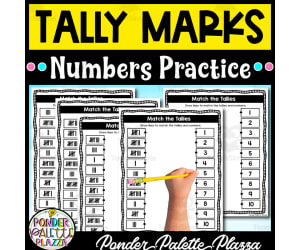
Tally Marks - Numbers Practice
Holiday & Seasonal, Holidays, Back To School, Math, Early Math, Basic Operations, Counting, Numbers, Kindergarten, Preschool, Grade 1, 2, 3, 4, 5, Worksheets & Printables, Worksheets, Activities, Centers, Teacher Tools, Assessments, Lesson Plans
Make learning numbers fun and interactive with this simple matching activity! This worksheet helps young learners connect tally marks with the numbers 1 to 10 in a visual and hands on way. Students will draw lines from each group of tally marks to the correct number. It’s a great way to reinforce early math skills while also practicing fine motor control. How to Use: Use it as a morning warm up or quick math review Add it to your math centers or small group stations Assign it for independent practice or homework Great for substitute days or fast finishers Why Teachers Love It: No prep, just print and go Easy for students to follow Helps children see number patterns through tally marks Perfect for Pre K, Kindergarten, and early 1st grade Encourages counting and visual recognition This is a great addition to your early math resources. Whether you're introducing tally marks or giving extra practice, this activity supports essential skills in a fun and meaningful way! Enjoy!
Author Ponder Palette Plazza
Rating
Tags Tally Marks, Numbers, Math Worksheets, First Grade Math, Back To School, Back To School Math, Math Centers, September Activities, Math Activities

Weekly Teacher Schedule - Lesson Plans Template
Holiday & Seasonal, ELA, Holidays, Back To School, First Day of School, Resources for Teachers, Classroom Management, Writing, Not Grade Specific, Worksheets & Printables, Teacher Tools, Charts, Templates, Lesson Plans, Graphic Organizers
Make your week smoother and more organized with this Weekly Teacher Schedule! It’s a simple, teacher-friendly planner designed to help you stay on top of lessons, meetings, and everything in between. Whether you're planning for one subject or juggling multiple classes, this layout keeps your week clear and manageable. How You Can Use It: Plan out your lessons for each day Keep track of meetings, duties, or prep time Jot down homework, activities, or notes Use it digitally or print it for your binder Keep everything you need in one spot Why You’ll Love It: Clean and simple layout that’s easy to follow Helps you stay prepared and save time Reduces stress from last-minute planning Works great for any grade level or subject Reusable and perfect for the whole year Each page gives you a full view of your week, Monday through Friday. It’s just what you need to feel more in control and less overwhelmed. A great tool for keeping things running smoothly in your classroom all year long! Pdf file includes 12 pages. Enjoy!
Author Ponder Palette Plazza
Rating
Tags Teacher Schedule, Class Planner, Teacher Planner, Back To School, Back To School Planner, Back To School Activities, Classroom Forms, Planner