



3,971 products added recently
Page 2 - Spring Lesson Plans
Embrace the energy of spring with lesson plans that bring new life into your teaching. Explore growth, nature, and renewal through interactive activities across subjects. Implement these resources to invigorate your classroom and engage students with the season's themes.

 Show filters


Telling Time Worksheets
Holiday & Seasonal, Holidays, Seasons, Fall, Spring, Summer, Winter, Back To School, Math, Time, Kindergarten, Preschool, Grade 1, 2, 3, 4, 5, Worksheets & Printables, Worksheets, Teacher Tools, Assessments, Lesson Plans
Help your students master one of the most essential life skills with these Telling Time Worksheets ! Designed for elementary learners, this resource offers a variety of engaging activities to practice reading both analog and digital clocks, making it easier for students to confidently tell time in everyday situations. hese worksheets are simple to use, visually clear, and perfect for reinforcing time-telling concepts in the classroom or at home. Whether you’re introducing time for the first time or reviewing concepts, this set provides plenty of opportunities for hands-on learning and practice. Ways to Use: Daily math centers or morning work Homework assignments for extra practice Small group instruction or one-on-one support Test preparation or skill review Substitute teacher plans Advantages: Builds confidence in reading both analog and digital clocks Strengthens math and problem-solving skills Clear visuals and simple instructions make activities easy to follow Encourages independent learning and self-checking Saves time for teachers with ready-to-print pages Versatile for classroom, homeschool, or tutoring use This resource is an excellent addition to your math curriculum and provides meaningful, real-world practice for students learning to tell time. Pdf file includes 20 pages. Enjoy!
Author Ponder Palette Plazza
Rating
Tags Telling Time, Time, Back To School Activities, Time Activities, Math Worksheets, Fall Math, Spring Math, Winter Math, Back To School Math
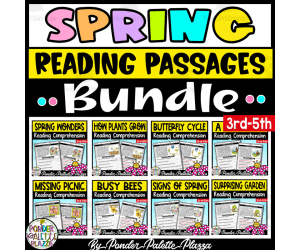
Spring Reading Comprehension Passages + Answers | 3rd-5th
ELA, Language Development, Reading, Reading Comprehension, Holiday & Seasonal, Holidays, Months, Seasons, Spring, Grade 3, 4, 5, Worksheets & Printables, Teacher Tools, Assessments, Lesson Plans, Literacy Readers, Centers, Activities
Say hello to the Spring Reading Comprehension Bundle + Answers , your springtime classroom lifesaver! Designed for 3rd–5th graders who are dreaming about recess but still need to sharpen those reading skills, this bundle brings the perfect mix of learning and laughter. Ways to use this bundle: Morning work that quietly gets brains moving while you sip that (hopefully hot) coffee. Homework that students might actually enjoy, and parents will thank you for. Small group activities where reading skills grow and giggles happen. Emergency sub plans for those days when life throws a surprise at you (looking at you, spring allergies). Advantages: Covers a wide range of spring topics, from gardens to bees to mysterious missing picnics, keeping reading fresh and interesting. Strengthens important comprehension skills like finding the main idea, sequencing events, and drawing conclusions. Includes answer keys for fast, no-drama grading (because you have enough drama already). No prep needed! Just print, pass out, and watch the magic happen. Helps channel all that “spring energy” into focused, meaningful work without endless reminders to “stay on task.” Pdf file includes 20 worksheets. Enjoy!
Author Ponder Palette Plazza
Rating
Tags Reading, Reading Comprehension, Reading Centers, Ela, Spring Reading, Spring Reading Comprehension, Literacy, Spring Literacy, Spring Reading Passages
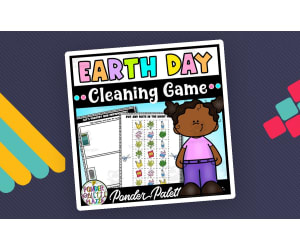
Earth Day Cleaning Game: Help the Environment!
Creative Arts, Holiday & Seasonal, ELA, Holidays, Earth Day, Seasons, Spring, Science, Earth and Environmental Sciences, Environmental Science, Kindergarten, Grade 1, 2, 3, 4, 5, Activities, Centers, Classroom Decor, Bulletin Boards, Worksheets & Printables, Teacher Tools, Assessments, Lesson Plans, Games, Crafts
Earth Day Cleaning Game: Help the Environment! is here to turn your classroom into a team of tiny eco-warriors, minus the mud and actual bugs. This fun, no-prep activity invites students to clean up a swamp (on paper, thankfully) by cutting and pasting pictures of trash and nature where they belong. Spoiler: the fish do not want soda cans as roommates. With a swampy scene and a collection of items to sort, your students will practice fine motor skills, visual discrimination, and environmental awarenes, while you sip your coffee in peace. Win-win. Ways to Use It: 🌎 Earth Day centers or themed week 🌎 Science + craft combo time 🌎 Early finisher or sub plan magic 🌎 Calm post-recess reset (aka, the quiet miracle) Why It Works: ✔️ Reinforces environmental responsibility ✔️ Cut, paste, and sort = sneaky skills practice ✔️ Requires zero glitter (you're welcome) ✔️ Gets kids talking about clean habitats in a hands-on way Pdf file includes 2 pages.
Author Ponder Palette Plazza
Rating
Tags Earth Day, Earth Day Activities, Earth Day Craft, Environment, Cut And Paste, Spring, Nature, Environment Activities, Science, Envirnmental Science

I WONDER - What Sort Of Festival Is Songkran | Animated Video Lesson
Holidays, Holiday & Seasonal, April, Months, Spring, Seasons, Grade 4, 5, 6, 7, 8, 9, 10, Lesson Plans, Teacher Tools
Video Introduction An amazing video designed for the students to learn more about Religions, holidays and festivals in different countries. I WONDER - What Sort Of Festival Is Songkran | Animated Video Lesson World religions and festivals is really a great topic to read about. What do you know about festivals in every country? Do you know in which part of the world this celebration happens? Have you ever read about religious holidays and festivals? If yes, can you tell us more about them? What is your favourite holiday? Can you name other holidays and festivals that you celebrate in your country? If you are going on a trip to another county that celebrates a national holiday, where it will be? Which country? What you are going to see there? What do people do to celebrate that day? Can you name all the national holidays that your country celebrates? I WONDER - What Sort Of Festival Is Songkran | Animated Video Lesson The video is perfect for encouraging the researching skills for the students, while learning more about this fantastic holiday/festival or religion. I WONDER - What Sort Of Festival Is Songkran | Animated Video Lesson This friendly designed video is suitable for students at school, homeschooling, and as a group activity. Format Available in MP4 format.
Author Educational Voice
Rating
Tags What Sort Of Festival Is Songkran, What Sort Of Festival Is Songkran Video, Songkran, Songkran Facts, Songkran Video, Songkran Facts For Kids, Songkran Video For Kids, Festival, Festivals

Year-Long Personal Finance Curriculum | Grades 6-8 | Unit 3
Back To School, Holidays, Holiday & Seasonal, Spring, Seasons, Finance, Life Studies, Money, Math, Grade 6, 7, 8, Lesson Plans, Teacher Tools, Worksheets & Printables
📘 Personal Finance Unit 3: Income | Grades 6–8 Help middle school students understand the real-world financial story behind income, careers, paychecks, and taxes . This Income unit moves beyond vocabulary, giving students opportunities to calculate, analyze, investigate, model, and make evidence-based financial decisions. Designed as a 6-week financial literacy unit , students explore career pathways, pay stubs, gross versus net income, taxes, tax filing, and the financial realities of comparing career offers. Please note: This listing includes the Unit 3 student book only . The included teacher resources and bonus materials support the complete six-unit, 30-week Personal Finance curriculum . 📦 What’s Included Student Unit 3: Income — 87 Pages The student resource includes six complete weekly lessons covering Weeks 13–18. Every week follows the same eleven-part structure: Week opener with essential question and learning targets Original reading passage Comprehension and analysis Vocabulary in context 10 financial math problems Data graph and analysis Realistic case study Hands-on activity or simulation Spreadsheet modeling task Argument writing Weekly review and extension activities Six Weeks of Income & Financial Literacy Instruction Week 13 — Careers: Career Pathways and the Return on Education Students learn to look beyond starting salary when evaluating career paths. They explore: Return on investment Payback period Opportunity cost Lifetime earnings Apprenticeships Credentials Labor markets Career growth over time Students complete a Career ROI Investigation , comparing three real careers and building a twenty-year earnings model. They also identify crossover points and consider non-financial factors that can affect a career decision. The spreadsheet activity reinforces the idea that financial models should use formulas rather than typed values. Students can change an assumption and see dependent calculations update. Week 14 — Paychecks: Reading a Pay Stub Line by Line Students learn how to actually read and check a paycheck. They practice: Understanding pay periods Comparing biweekly and semi-monthly pay Calculating hourly and salary income Calculating overtime Understanding commission Identifying pre-tax and post-tax deductions Understanding withholding Reading year-to-date totals Detecting payroll errors The Payroll Audit case study has students investigate a pay stub and determine whether the gross pay, FICA, net pay, and year-to-date figures are correct. Week 15 — Gross vs. Net Income: The Gap Between Earned and Received Students investigate why a salary offer is not the same as take-home pay. They learn about: Gross income Net income Taxable income Marginal tax rates Effective tax rates Standard deductions Tax brackets Take-home pay Students calculate net pay across different deduction scenarios and practice building a budget from net rather than gross income . The Gross to Net Modeling activity and spreadsheet calculator give students hands-on practice converting income into a realistic monthly picture. Week 16 — Taxes: What Taxes Fund and How They Are Structured Students explore how taxes work and how different taxes affect households. Topics include: Progressive taxes Regressive taxes Proportional taxes Sales taxes Property taxes Payroll taxes Public goods Tax incidence Students classify different taxes, examine government spending categories, and analyze who actually bears the economic burden of a tax. The Tax Incidence Investigation has students create a burden table, classify tax effects, and analyze distributional differences. Week 17 — Tax Filing: Forms, Filing, and Getting It Right Students learn what happens when income taxes are filed. They identify the purpose of: W-4 W-2 1099 Form 1040 Tax deductions Tax credits Refunds Filing status Students also determine whether withholding results in a refund or a balance due. The Return Simulation helps students understand how the pieces fit together instead of treating tax forms as disconnected paperwork. Students also compare the value of deductions and credits using actual calculations. Week 18 — Unit 3 Project: The Career and Income Analysis Students bring the entire unit together with a culminating career and income analysis. They learn to: Model gross salary through net monthly income Compare two employment offers Consider benefits and employer contributions Calculate total compensation Consider cost of living Identify break-even points State assumptions Make an evidence-based career recommendation The project asks students to look at the whole financial picture , rather than comparing salaries alone. 🎯 How It Works in the Classroom This financial literacy curriculum gives students repeated practice applying financial concepts to realistic decisions. Students don't simply memorize definitions. They calculate pay, investigate errors, analyze tax structures, build spreadsheet models, compare career paths, and defend recommendations. Activities include: Career ROI Investigation Payroll Audit Gross to Net Modeling Tax Incidence Investigation Return Simulation Career and Income Analysis / Offer Comparison Model The consistent weekly format makes the resource predictable for students and easier to implement for teachers. 📚 Additional Teacher Resources Important: The student resource in this listing is Unit 3: Income only . The companion teacher resources correspond to the complete six-unit Grades 6–8 curriculum , not just Unit 3. The full program includes Units 1–6: Financial Goals, Banking, Income, Credit, Investing, and Entrepreneurship. The teacher resources include: Teacher Guide with pacing, standards, weekly teaching notes, and differentiation Answer Key for all 36 weeks Assessment Rubrics Unit Tests Vocabulary Cards Exit Tickets Parent Letters Progress Monitoring Games & Simulations Printable Posters Certificates Editable Lesson Plans For Unit 3 specifically, the teacher materials provide week-by-week guidance for all six Income lessons, including lesson objectives, standards, vocabulary, misconceptions, activities, spreadsheet tasks, and pacing support. So teachers purchasing this listing receive the Unit 3 student book , while the companion teacher resources are designed to support the full six-unit curriculum . 🎯 Standards & Learning Goals Throughout this Income unit , students learn to: Compare career pathways using training costs and lifetime earnings. Calculate return on investment and payback periods. Understand opportunity cost. Evaluate career decisions using financial and non-financial factors. Read and analyze pay stubs. Calculate hourly, salary, overtime, and commission income. Understand pre-tax and post-tax deductions. Check year-to-date payroll information. Detect potential payroll errors. Distinguish gross income from net income. Explain marginal and effective tax rates. Build budgets using take-home pay. Classify taxes as progressive, proportional, or regressive. Analyze tax incidence and distributional effects. Explain how tax revenue supports public spending. Identify the purposes of common tax forms. Distinguish tax deductions from tax credits. Determine whether withholding produces a refund or balance due. Compare employment offers using total compensation. Consider benefits, employer matches, and cost of living. Present an evidence-based career recommendation. Standards alignment includes CEE Earning Income 4.1–4.5, Jump$tart 6–8 Employment and Income 1–5, CCSS.MATH.7.RP.A.3, CCSS.MATH.7.EE.B.3, CCSS.ELA.RI.7.3, CCSS.ELA.RI.7.9, and CCSS.ELA.W.7.1 . ⭐ Why Teachers Love It ⭐ Real-world financial literacy: Students explore income decisions they will eventually face as workers and taxpayers. ⭐ Financial math built in: Every week includes ten problems requiring students to show their work. ⭐ Authentic decision-making: Students investigate career ROI, audit paychecks, analyze taxes, and compare employment offers. ⭐ Spreadsheet practice: Students build models that use formulas and changing assumptions. ⭐ Strong critical thinking: Students analyze evidence, identify assumptions, evaluate trade-offs, and defend conclusions. ⭐ Career readiness: Students learn why starting salary alone does not tell the whole story. ⭐ Tax literacy: Students build practical understanding of withholding, tax brackets, deductions, credits, refunds, and common tax forms. ⭐ Built-in assessment: Reading, vocabulary, financial math, data analysis, case studies, writing, reviews, and a culminating project provide multiple assessment opportunities. ⭐ Consistent structure: Students know what to expect each week while the financial concepts become increasingly complex. ⭐ Part of a complete curriculum: The Unit 3 student resource can stand as its own six-week income unit while the companion teacher materials support the complete six-unit program. 💡 Help Students Understand the Real Value of a Paycheck Financial literacy for middle school should prepare students to understand more than a salary number. This Income unit helps students connect careers, paychecks, taxes, and take-home income. Students finish by comparing real financial factors and making a supported career recommendation. Instead of simply asking, “How much does this job pay?” , students learn to ask better questions: What will it cost to get there? What will I actually take home? What does the tax system do? And which offer makes the most financial sense?
Author Bright Classroom Ideas Marketplace
Rating
Tags Finance, Financial Literacy, Money, Yearlong, Curriculum, Full Year

Easter Read and Draw - No Prep Activities
Creative Arts, ELA, Holiday & Seasonal, Holidays, Seasons, Spring, Months, Easter, Reading, Kindergarten, Grade 1, 2, Worksheets & Printables, Worksheets, Coloring Pages, Teacher Tools, Lesson Plans, Centers, Activities, Crafts
Looking for an egg-stra fun way to sneak reading comprehension into your spring lessons? This Read and Draw – Easter No-Prep Activity is just the treat (no chocolate required). Perfect for K–2 learners, this resource invites students to read a simple sentence and draw a matching picture, because nothing says “I understood this sentence” like a masterpiece of a bunny riding a skateboard. Each page is festive, easy to follow, and totally independent, meaning you can sip your coffee while they actually work . No prep. No glue. No glitter. Just print and go! Ways to Use It: 🐣 Morning work to start the day with a smile 🐣 Literacy centers that don’t require your supervision 🐣 Early finisher activities that won’t cause chaos 🐣 Take-home fun for extra practice over spring break Why Teachers Love It: ✔️ Builds reading comprehension and visual expression ✔️ Supports sentence structure and creativity ✔️ Great for ELLs and emerging readers ✔️ Keeps little hands and big imaginations busy PDF file includes 4 pages. Enjoy!
Author Ponder Palette Plazza
Rating
Tags Reading, Drawing, Easter, Easter Drawing, Easter Activities, Easter Crafts, Easter No Prep, Spring Reading, Spring Drawing, Spring Activities
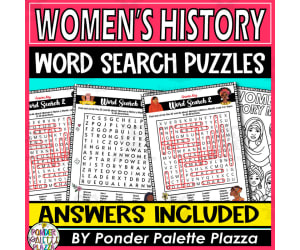
Women's History Month Word Seach Puzzles - Women's Day
Holiday & Seasonal, Women's History, Holidays, Seasons, Spring, March, Months, ELA, Vocabulary, Language Development, Grade 2, 3, 4, 5, Worksheets & Printables, Worksheets, Coloring Pages, Word Searches, Activities, Teacher Tools, Assessments, Lesson Plans
Make Women’s History Month and International Women’s Day fun, meaningful, and stress free with these Women’s History Month Word Search Activities designed especially for 3rd, 4th, and 5th grade students . This no prep resource is perfect for keeping students engaged while they review important vocabulary about inspiring women, equality, leadership, and the achievements of women throughout history. It’s a simple, ready to use activity that works well for busy days and meaningful March celebrations. Students will build spelling, reading, and vocabulary skills as they search for kid friendly Women’s History Month words . The puzzles encourage focus, problem solving, and quiet learning time while still feeling fun, educational, and seasonal. ⭐ This Resource Is Perfect For: Women’s History Month classroom activities International Women’s Day lessons 3rd to 5th grade social studies lessons Emergency sub plans Early finishers Independent or quiet work Morning work or centers 📦 What’s Included: 2 Women’s History Month word search puzzles 1 Women’s History Month coloring activity Complete answer keys 💡 Why Teachers Love It: No prep, just print and go Kid friendly vocabulary for upper elementary students Keeps students engaged and on task Great for sub plans and busy schedules Supports history and social studies learning Easy to use for centers, homework, or whole class activities
Author Ponder Palette Plazza
Rating
Tags Women's Day, Women's Day Word Seach, Women's History Month, Women's History Month Activities, Women's History Activities, March Activities, Spring Activities

All About My Teacher Activity
ELA, Language Development, ESL, Holiday & Seasonal, Holidays, Teacher Appreciation Day, End Of Year, Seasons, Summer, Spring, Kindergarten, Preschool, Grade 1, 2, 3, 4, 5, Worksheets & Printables, Writing Prompts, Activities, Centers, Crafts, Classroom Decor, Bulletin Boards, Teacher Tools, Assessments, Lesson Plans
Celebrate the end of the school year with a heartwarming activity that will make teachers smile (and maybe tear up just a little). The All About My Teacher printable invites students to complete fun, thoughtful prompts about their teacher and draw two special pictures: one of their teacher and one of their favorite memory from the school year. Whether your students want to honor the teacher who introduced them to fractions or simply had the best read-aloud voice ever, this activity is a meaningful keepsake and a sweet classroom wrap-up. Ways to Use: End-of-year reflection writing Part of a classroom memory book A handmade teacher gift Morning work or center activity Bulletin board or hallway display Advantages: Encourages student reflection and gratitude Strengthens writing and drawing skills Supports social-emotional learning Easy to prep, just print and go! Fun for all elementary grades A memorable keepsake for teachers Pdf file includes 1 page. Let your students say “thank you” in the most adorable way possible, with words, pictures, and a whole lot of heart. Bonus: no glitter required!
Author Ponder Palette Plazza
Rating
Tags All About My Teacher, Teacher Appreciation Day, End Of Year Activities, Summer Activities, Spring Activities

Watching Fireworks Write a Story Activity - Memorial Day
ELA, Writing, Creative Writing, Holiday & Seasonal, Holidays, Memorial Day, Months, May, Seasons, Spring, Kindergarten, Preschool, Grade 1, 2, Worksheets & Printables, Writing Prompts, Activities, Centers, Teacher Tools, Assessments, Lesson Plans
The Watching Fireworks Write a Story – Memorial Day Activities is a fun and engaging writing activity designed for kindergarten through 2nd grade students. It shows a bright, cheerful cartoon of kids watching fireworks in the night sky. Using five key words, students are asked to write a short story about what they see happening in the picture. This activity is a great way to help young learners practice using new vocabulary and putting their thoughts into sentences. It also gives them a chance to think about how people celebrate Memorial Day in a fun and meaningful way. Kids will enjoy using their imagination while learning about an important holiday. How You Can Use It: Use it during writing time or as a warm-up activity Add it to a literacy center or station Use it as an independent writing task Send it home for extra practice or holiday homework Pair it with a class talk about Memorial Day celebrations Why Teachers Love It: Builds writing and vocabulary skills Sparks creativity and storytelling Makes holiday learning fun and age-appropriate Easy to use with different skill levels Encourages kids to make real-world connections through writing Pdf file includes 2 pages. Enjoy!
Author Ponder Palette Plazza
Rating
Tags Memorial Day, Writing Centers, Writing Prompts, Written Expression, Us History, Sentence Structure, Storytelling, Write A Story, Memorial Day Activities
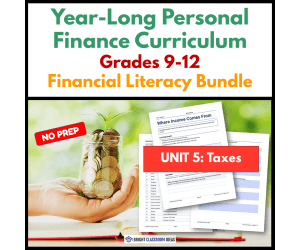
Yearlong Personal Finance Curriculum | Grades 9-12 | Unit 5
Back To School, Holidays, Holiday & Seasonal, Spring, Seasons, Finance, Life Studies, Money, Math, Grade 9, 10, 11, 12, Lesson Plans, Teacher Tools, Worksheets & Printables
💰 P ersonal Finance Curriculum for Grades 9–12 | Unit 5 Taxes Teach taxes with a practical, high school personal finance curriculum that takes students from their first paycheck to completing and defending a tax return. Unit 5: Taxes gives students repeated practice with paychecks, payroll taxes, income taxes, W-4 withholding, tax returns, financial calculations, spreadsheets, and realistic tax scenarios. This six-week taxes unit is designed to make tax concepts less intimidating by turning them into calculations, investigations, simulations, data analysis, writing tasks, and a culminating complete-return project. Important: This version includes the complete teacher resource collection for all six units , while the student component included is Unit 5 . The student book contains Weeks 7–12, while the teacher materials support the full 36-week Grades 9–12 course. 📦 What’s Included 👩🎓 Unit 5: Taxes Student Book A 102-page student resource covering Weeks 25–30. Every week follows the same consistent 11-part structure : Week opener Original reading passage Comprehension and analysis Vocabulary in context Financial math Data graph analysis Realistic case study Hands-on activity or simulation Spreadsheet modeling Argument writing Weekly review Students aren't simply memorizing tax vocabulary. They calculate, analyze, investigate, model, write, and make financial decisions. 🧾 What Students Learn in Unit 5 Week 25 — Paychecks: Pay Structures, Overtime, and Classification Students begin with a question that immediately connects to real life: What determines how much appears on a paycheck before any tax is taken? Students learn to: Calculate gross pay. Compare hourly, salaried, tipped, and commission structures. Apply overtime rules. Calculate the regular rate. Understand how bonuses can affect overtime calculations. Distinguish exempt and non-exempt employees. Examine employee versus independent-contractor classification. Understand tip credits and tipped wages. Identify potential misclassification. 🔎 Hands-On Activity: Pay Calculation Audit Students receive different pay records and: Calculate the correct regular rate. Calculate gross pay. Compare their results with the stated pay. Identify errors. Quantify the errors. The deliverable is five audited pay records with corrected calculations and quantified errors. 📊 Spreadsheet Model: Gross Pay Calculator Students build a model using: Regular hours Overtime hours Base rate Bonus Regular rate Overtime premium Gross pay They also test whether changing one input correctly updates dependent cells. 💵 Week 26 — Payroll Taxes: FICA, the Wage Base, and Self-Employment Tax Students investigate what payroll taxes actually fund and who ultimately bears the cost. They learn about: FICA Social Security Medicare The wage base Employer share Self-employment tax Additional Medicare tax Tax incidence Regressive taxation Above-the-line deductions Students calculate Social Security and Medicare taxes while examining how the wage base changes the effective tax rate at higher earnings. They also calculate self-employment tax and its deduction. 📈 Payroll Tax Investigation Students analyze six earnings profiles spanning below, at, and above the wage base. They: Calculate employee and employer payroll taxes. Calculate effective rates. Repeat calculations for self-employed workers. Graph effective rates. Describe the pattern they observe. 📊 Spreadsheet Model: Payroll Tax Model Students build a model that includes: Earnings Social Security taxable earnings Social Security tax Medicare tax Employee total Employer total Effective rate Self-employment calculations 📊 Week 27 — Income Taxes: From Gross Income to Tax Owed Students learn the five-step sequence behind the income-tax calculation: Gross income Adjustments to reach adjusted gross income Deductions to reach taxable income Tax calculated by bracket Credits subtracted from tax owed Students explore: Gross income Adjusted gross income Taxable income Standard deductions Itemized deductions Tax brackets Tax credits Refundable credits Filing status A major focus is correcting the common misconception that moving into a higher tax bracket means all income is taxed at the higher rate. Students also compare the impact of a deduction versus a credit using actual calculations. 🧪 Hands-On Activity: Tax Calculation Sequence Lab Students work through the tax calculation in order, reinforcing the idea that skipping or combining steps can produce an incorrect result. 📊 Spreadsheet Modeling Students turn the tax sequence into a repeatable calculation model, helping them see how adjustments, deductions, brackets, and credits interact. 📝 Week 28 — W-4 Basics: Withholding and Tuning What Comes Out Students learn how the Form W-4 affects paycheck withholding and why a large refund and a large balance due can both indicate poorly tuned withholding. They explore: Withholding Form W-4 Multiple jobs Extra withholding Underwithholding penalties Safe harbors Estimated tax Year-to-date withholding Students examine the four W-4 steps and investigate the common problem that occurs when someone has multiple jobs. 📌 Case Study: The Two-Job April Students analyze a realistic two-job situation and determine: Total income. Taxable income. Balance due. Why both employers could withhold correctly while the combined withholding remains insufficient. How much additional withholding is needed. Which W-4 step addresses the problem. 🔧 Hands-On Activity: Withholding Tuning Lab Students receive three taxpayer profiles and calculate adjustments designed to bring withholding close to the target while checking safe-harbor thresholds. Deliverable: Three withholding adjustments with safe-harbor verification. 📊 Spreadsheet Model: Withholding Tuning Model Students model: Pay periods Gross pay Current withholding Year-to-date withholding Target year-to-date withholding The remaining gap Extra withholding needed They also build safe-harbor checks. 📄 Week 29 — Tax Returns: Filing a Return and What Happens Next Students move from calculating taxes to understanding the actual filing process. They learn about: Form 1040 Tax schedules E-filing Extensions Amended returns Audits Substantiation Record keeping Statutes of limitations Students see how a return is constructed from source documents and how additional income types create complexity. They also examine why an extension provides additional time to file, but not additional time to pay. 🧾 Hands-On Activity: Return Preparation Simulation Students prepare a simplified return with supporting schedules and create a records-retention checklist. Deliverable: A completed simplified return, schedules, and records-retention checklist. 📊 Spreadsheet Model: Return Preparation Worksheet Students: Record the source document supporting each figure. Track substantiation. Calculate retention dates. Flag lines requiring additional schedules. 🏆 Week 30 — Unit Project: The Complete Return Simulation The unit culminates with a complete tax return simulation . Students receive a packet containing: Two W-2s A 1099 for freelance work A 1099-INT for interest A student loan interest statement Business-expense receipts A partially completed return containing four planted errors Students must: Prepare the correct return. Find the errors. Recommend a withholding change for the following year. They must follow the tax calculation sequence rather than skipping ahead. 🔍 Error Analysis Students identify four types of errors: Incorrect transcription from a source document. Incorrect application of a rule. Omitted information. Unsupported claims without documentation. They also evaluate materiality , recognizing that not every error has the same financial significance. 🧮 Self-Employment Tax Challenge Students must correctly work through the three-step self-employment calculation: Determine net business income. Apply the self-employment tax calculation. Deduct half of the resulting tax above the line. This gives students a final opportunity to apply concepts from earlier weeks. 📊 Spreadsheet Model: Return Reconciliation Model Students create a reconciliation system in which: Every reported figure has a source-document reference. Non-zero differences are flagged. Unsupported figures are identified. The return can be checked against the underlying documentation. Final deliverable: A completed return, reconciliation, classified error report, and withholding recommendation. 🎯 Standards & Learning Goals Across Unit 5, students develop the ability to: Calculate gross pay across multiple pay structures. Apply overtime calculations. Understand employee and contractor classification. Calculate Social Security and Medicare taxes. Analyze the wage-base effect. Calculate self-employment tax. Trace income from gross income through taxable income. Compare standard and itemized deductions. Distinguish refundable and non-refundable credits. Understand marginal tax brackets. Analyze W-4 withholding. Handle multiple-job withholding situations. Calculate withholding adjustments. Understand safe-harbor concepts. Navigate the basic structure of Form 1040. Understand schedules and supporting documents. Prepare a simplified tax return. Analyze tax-return errors. Evaluate documentation and substantiation. Calculate refunds and balances due. Make evidence-based withholding recommendations. Standards Alignment The six-week unit aligns with: CEE Earning Income 4.1–4.5 Jump$tart 9–12 Employment and Income 1–5 CCSS.MATH.HSA.CED.A.1 CCSS.MATH.HSA.SSE.A.1 CCSS.MATH.HSA.CED.A.2 CCSS.MATH.HSA.REI.B.3 CCSS.ELA.RI.11-12.4 ⭐ Why Teachers Love It ⭐ Makes taxes practical: Students work with the kinds of documents and decisions they'll encounter as working adults. ⭐ Financial math is built in: Every week includes ten financial math problems with dedicated working space. ⭐ Students learn by doing: Pay audits, payroll-tax investigations, withholding adjustments, return preparation, and the final return simulation keep students actively engaged. ⭐ Builds spreadsheet skills: Students don't just plug numbers into a calculator. They build models that respond when assumptions change. ⭐ Addresses common misconceptions: The unit tackles confusing concepts such as tax brackets, refunds, employer payroll taxes, multiple-job withholding, extensions, and self-employment tax. ⭐ Uses realistic scenarios: Students investigate situations involving tipped workers, contractors, freelancers, two-job households, filing decisions, and tax-return errors. ⭐ Strong critical-thinking component: Students must explain calculations, evaluate evidence, identify errors, and defend positions through argument writing. ⭐ Creates a natural progression: Students move from paycheck → payroll tax → income tax → withholding → filing → complete return . ⭐ Culminates in an authentic project: The final simulation requires students to combine nearly everything they learned throughout the unit. ✨ Give Students Tax Skills They Can Actually Use Give your students a high school personal finance taxes unit that goes far beyond defining "income tax." Unit 5: Taxes takes students through the entire tax journey—from understanding how pay is calculated to examining payroll taxes, calculating income tax, tuning W-4 withholding, preparing a return, checking supporting documentation, and making a recommendation for the year ahead. By the end of the unit, students have practiced calculating, analyzing, modeling, auditing, preparing, and defending real-world tax decisions. It's a practical fit for high school personal finance, financial literacy, economics, career readiness, advisory, life-skills, and independent personal finance courses.
Author Bright Classroom Ideas Marketplace
Rating
Tags Finance, Financial Literacy, Money, Yearlong, Curriculum, Full Year

Spring Letter Practice
ELA, Language Development, ESL, Phonics, Vocabulary, Holiday & Seasonal, Holidays, Seasons, Spring, Spelling, Kindergarten, Preschool, Grade 1, 2, 3, 4, Activities, Centers, Teacher Tools, Assessments, Lesson Plans
Spring Letter Practice is a fun and simple way to help students build their spelling and phonics skills while keeping things light and engaging. In this activity, students complete words by filling in the missing letter, kind of like a word puzzle, but without the frustration of losing a piece under their desk. Whether they’re deciding if a word needs an "e" or an "i," or just trying to avoid turning "sun" into "sin" (yikes!), this activity gives them a chance to practice letters in a way that actually sticks. Ways to Use It: Morning Work or Centers : A quick, no-prep activity to get brains warmed up for the day. Small Group Practice : Work together to sound out words and reinforce tricky letters. Independent Learning : Great for students to practice at their own pace. Spring-Themed Literacy Stations : Because everything is more fun when it matches the season! Why You’ll Love It: Reinforces Phonics & Spelling : Helps kids recognize patterns and tricky letter sounds. Builds Confidence : There’s nothing like the little victory of completing a word correctly! Engaging & Hands-On : Keeps students thinking and problem-solving. Super Easy for Teachers : Just print and you’re ready to go. Pdf file includes 6 pages.
Author Ponder Palette Plazza
Rating
Tags Letter, Letters, Esl, Phonics, Vocabulary, Spring, Spring Activities, Spring Worksheets
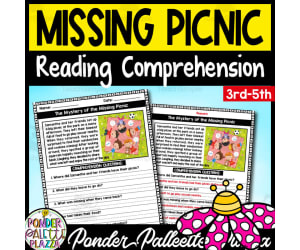
Missing Picnic - Reading Comprehension + Answers
ELA, Language Development, Reading, Reading Comprehension, Holiday & Seasonal, Holidays, Months, Seasons, Spring, Summer, Grade 3, 4, 5, Worksheets & Printables, Teacher Tools, Assessments, Lesson Plans, Activities, Centers
Ready for some reading with a side of mystery (and a little bit of sandwich theft)? 🥪🔍 The Mystery of the Missing Picnic - Reading Comprehension + Answers is the perfect no-prep activity for 3rd–5th graders who love a good whodunit, and teachers who love activities that don't require ten cups of coffee to prep. In this lighthearted story, students follow clues, suspects, and a suspicious trail of cookie crumbs to solve the mystery of a vanished picnic. After the giggles, students tackle comprehension questions that dig into details, predictions, and inferences, all the good stuff that makes reading skills stronger without them even realizing it. Ways to Use: Morning warm-up to kickstart their detective brains Literacy centers that don’t feel like pulling teeth Sub plans when you need a stress-free day Early finisher fun that’s still educational Advantages: Builds close reading and critical thinking skills Encourages engagement with fun, relatable content Easy to print and go, perfect for busy days Includes an answer key (because you deserve a break too) Pdf file includes 2 pages. Enjoy!
Author Ponder Palette Plazza
Rating
Tags Reading, Reading Comprehension, Reading Centers, Spring, Spring Reading, Spring Reading Centers, Spring Craft, Spring Activities, Spring Reading Comprehension
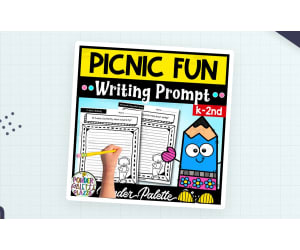
Springtime Picnic Fun - Writing Prompt
Creative Arts, Graphic Arts, ELA, Writing, Creative Writing, Holiday & Seasonal, Holidays, Months, Seasons, Spring, Kindergarten, Grade 1, 2, Worksheets & Printables, Worksheets, Writing Prompts, Coloring Pages, Teacher Tools, Lesson Plans
Ah, springtime picnics, when ants crash the party, the wind flips your sandwich, and everything somehow tastes better on a blanket. Springtime Picnic Fun is a cheerful and imaginative spring writing prompt where students dream up their perfect picnic day. This low-prep activity comes with two parts : a writing section and a drawing section, perfect for mixing creative writing with artistic flair. In the writing portion , students plan their ultimate spring picnic: What would they eat? Who would they invite? Would there be flying kites or surprise squirrel guests? The possibilities are as endless as the potato salad. In the drawing section , students bring their picnic vision to life, complete with food, friends, sunshine, or the occasional cartoon raccoon sneaking a snack. Ways to Use It: Spring-themed writing centers End-of-week creative activity Morning warm-up or fast finisher task Colorful classroom or hallway displays Why You’ll Love It: Sparks creativity and seasonal joy Easy to use, just print and pass out Combines writing and drawing for a well-rounded activity Great for a wide range of elementary grades Because nothing says spring like sandwiches, sunshine, and slightly too many napkins. PDF file includes 2 pages.
Author Ponder Palette Plazza
Rating
Tags Writing, Writing Prompts, Writing Activities, ELA, Writing Centers, Spring Writing, Spring Writing Prompts, Spring Writing Activities, Spring Coloring
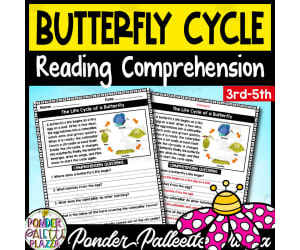
The Life Cycle of a Butterfly - Reading Comprehension + Answers
ELA, Language Development, Reading, Reading Comprehension, Holiday & Seasonal, Holidays, Seasons, Spring, Science, Basic Science, Grade 3, 4, 5, Worksheets & Printables, Teacher Tools, Assessments, Lesson Plans, Activities, Centers
Get ready to watch your students transform their reading skills just like a butterfly! 🦋 The Life Cycle of a Butterfly - Reading Comprehension + Answers is a no-prep, grab-and-go resource perfect for 3rd–5th graders who love a good metamorphosis story (and who doesn’t?). Students will read an engaging, age-appropriate passage that walks them through the magical journey from egg to caterpillar to chrysalis to full-blown butterfly, nature’s ultimate glow-up. The comprehension questions that follow aren’t just “blah” check-the-box items. They’ll actually make students think , predicting, inferring, and recalling with ease (and maybe even a little excitement). Plus, the included answer key means you get to spend less time grading and more time pretending to be a butterfly yourself. Ways to Use: Morning work (because coffee needs backup) Literacy centers Homework with minimal whining Sub plans that actually get done Advantages: Sharpens reading comprehension skills Boosts vocabulary naturally Connects science and ELA in one swoop Fun, easy, and no prep for you, just print and let the magic happen! Pdf file includes 2 pages. Enjoy!
Author Ponder Palette Plazza
Rating
Tags Reading, Reading Comprehension, Butterfly, Science, Science Reading, Spring, Spring Reading, Spring Reading Comprehension, The Life Cycle
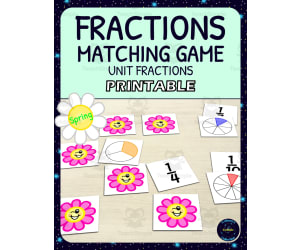
Spring Unit Fractions Matching Game Activity - Printable
Holiday & Seasonal, Seasons, Spring, Math, Fractions, Grade 1, 2, 3, 4, Lesson Plans, Teacher Tools
Spring Unit Fractions Matching Game Activity This is a wonderful teaching resource that revitalizes your classroom during the spring season. This downloadable and printable activity , designated for students from grade 1 through grade 4, exhibits versatility catering to diverse classrooms. Focal Point The game centers on Math, precisely unit fractions, providing a vibrant and interactive learning route for fractions. This math memory matching game also brings in an element of Spring theme thereby making the learning exercise excitable. Preparation Process The application involves printing out five distinct versions of fraction representation cards which include circles, squares, symbols or any combinations- adjusted as per learners' unique needs. We suggest laminating these cards post-printing for durability and kid-friendly handling. Furthermore there are black and white versions that suit varied printer capabilities. Versatility Distinguishing factor of this activity resides in its adaptability; educators can regulate difficulty levels by modifying card quantities thus catering to each learner’s level. Possible venues: In small groups where cooperative learning exists or, In individual play fostering independent work skills or even, In home-based exercises that strengthens parent-learner tie-ups at home. Equipped with five sets –fraction circles’, fraction squares’ including symbolic representations’ – you carry several options: - Print two identical sets promoting straightforward recognition exercises; - Utilize differing versions at the same time for challenging alternatives. Enjoyable and educational outdoor activities can also be conducted with this spring unit fractions matching game activity , thus making learning a delightful and seasonal event!
Author Colleen's Cosmic Collection
Tags Fractions, Unit Fractions, Math Game, Matching Game, Spring

Easter Wordsearch Puzzles + Answers
ELA, Language Development, ESL, Spelling, Vocabulary, Holiday & Seasonal, Holidays, Seasons, Spring, Easter, Grade 1, 2, 3, 4, 5, Activities, Centers, Crafts, Games, Teacher Tools, Assessments, Lesson Plans, Worksheets & Printables, Worksheets, Word Searches
Looking for a way to channel that post-candy Easter energy into something productive? Say hello to these Easter Word Search Puzzles + Answers , the quiet-time activity disguised as holiday fun. With festive vocabulary like “bunny,” “basket,” and “chocolate” (the holy trinity of Easter, obviously), these puzzles keep students engaged, focused, and happily occupied while you sip that lukewarm coffee. Perfect for elementary learners (and let’s be honest, teachers who love a peaceful five minutes), each word search comes with a cheerful Easter theme and an answer key, because we’re not about to play hide-and-seek with “marshmallow” ourselves. Ways to Use It: 🐣 Morning work with a sprinkle of holiday cheer 🐣 Early finisher activity that doesn’t involve more noise 🐣 Literacy centers with minimal prep 🐣 Sub plans for the week before break 🐣 At-home fun that feels like a treat, not homework Why Teachers Love It: ✔️ Boosts vocabulary and spelling in a sneaky way ✔️ Promotes visual scanning and attention to detail ✔️ Requires zero prep, just print! ✔️ Fun for solo or small group work ✔️ Instant festive vibes for your classroom Hop into stress-free learning with these egg-cellent puzzles, they’re crackin’ good fun! PDF File includes 2 pages.
Author Ponder Palette Plazza
Rating
Tags Wordsearch, Spring Wordsearch, Spring Activities, ELA, Easter Wordsearch, Easter Activities, Easter Vocabulary, Vocabulary, Spring Vocabulary

How Many - Spring Math Activity
Math, Calculus, Early Math, Basic Operations, Counting, Numbers, Holiday & Seasonal, Seasons, Spring, Kindergarten, Preschool, Grade 1, 2, 3, 4, Activities, Centers, Teacher Tools, Assessments, Lesson Plans
How Many – Spring Math is the perfect way to sneak some fun into your classroom this spring. Who says math has to be all work and no play? This resource is designed to help students practice math while having a blast with a spring-themed twist. Forget the usual boring exercises and watch your students engage in math problems that actually make them smile (or at least not groan). Ways to Use It: Classroom Activities : Use it for quick warm-ups or group activities that make math feel less like a chore and more like a game. Spring Homework : Send your students home with some light-hearted math problems, but don’t tell them they’re actually learning (let them enjoy the illusion). Math Stations : Set up stations where each one has a different spring-themed challenge. It’s like a math scavenger hunt, but no one gets muddy. Games : Turn math problems into a friendly competition. Who doesn’t love a little race to the finish, especially if it’s about solving equations? Advantages: Engaging : It’s fun! Students will actually enjoy math because of the springtime themes like flowers, nature, and outdoor fun. Variety : It covers all kinds of math, addition, subtraction, geometry, there’s something for every skill level. Seasonal Motivation : When spring hits and focus is slipping, this keeps kids interested and motivated. Low Effort for Teachers : No complicated prep required. Just print and go. Pdf file includes 6 pages.
Author Ponder Palette Plazza
Tags Counting, How Many, Numbers, Spring, Spring Math, Spring How Many, Spring Activities, Math, Math Activities, Math Worksheets
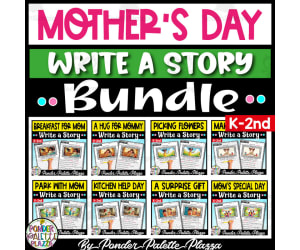
Mother's Day Write a Story Activity - BUNDLE with Solution
ELA, Language Development, Writing, Creative Writing, Holiday & Seasonal, Holidays, Mother's Day, Seasons, Spring, Summer, Kindergarten, Preschool, Grade 1, 2, Worksheets & Printables, Writing Prompts, Activities, Centers, Teacher Tools, Assessments, Lesson Plans
Get your students' creativity blooming just in time for Mother’s Day with this Write-a-Story Activity Bundle ! With 20 unique pages, each featuring a heartwarming (or giggle-worthy) illustration and five must-use vocabulary words, your young writers will craft fun, thoughtful stories that are sure to make any mom smile. Whether their mom is a superhero, a pancake-flipping pro, or the queen of hugs, these prompts help kids tell their stories in style! Perfect for K–2nd grade, this resource builds writing confidence while celebrating moms, grandmas, aunts, or any special caregiver. ✏️ Ways to Use: Independent writing time Literacy centers Small group story sharing Mother’s Day bulletin board display Create a class “Mom Book” as a gift 🌟 Advantages: Builds vocabulary and storytelling skills Encourages creative expression and sentence formation Visual support makes writing easier and more engaging Great for early writers and ELL students No prep, just print and go! Pdf file includes 20 pages. Enjoy!
Author Ponder Palette Plazza
Rating
Tags Mothers Day, Mothers Day Writing, Mothers Day Writing Prompts, Literacy, Writing, Write A Story, Writing Centers, Writing Prompts, End Of Year Activities
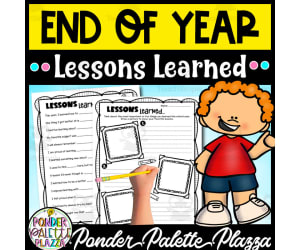
Lessons I Learned - End of Year Activities
Creative Arts, ELA, Language Development, Holiday & Seasonal, Holidays, End Of Year, Seasons, Summer, Spring, Kindergarten, Preschool, Grade 1, 2, 3, 4, 5, Worksheets & Printables, Writing Prompts, Activities, Centers, Teacher Tools, Classroom Decor, Assessments, Lesson Plans
Lessons I’ll Remember is a simple and meaningful activity that gives students the chance to think about their favorite lessons from the school year. Whether it was a fun science experiment, a great book they read, or a special project they worked on, this resource lets them reflect and draw a picture of what stood out the most. It’s a great way to slow down and celebrate how much they’ve learned. It also helps students end the year thinking about the moments that made learning fun, interesting, and memorable. How You Can Use It: As a quiet activity during the last days of school As part of a classroom memory book or keepsake During writing or art time For a classroom display of favorite lessons To spark group discussions about learning highlights Why Teachers Love It: Helps students reflect on their learning in a positive way Encourages creativity through drawing Supports meaningful conversations and sharing Easy to prep, just print and go Brings joy and a sense of accomplishment to the end of the year Pdf file includes 2 pages. Enjoy!
Author Ponder Palette Plazza
Rating
Tags End Of Year, End Of Year Activities, Summer Activities, Spring Activities, Literacy, Last Week Of School, Last Day Of School, Writing Centers, Summer

If Animals Could Talk on Earth Day - Writing Prompt
Creative Arts, Graphic Arts, Holiday & Seasonal, Holidays, Earth Day, Seasons, Spring, Writing, ELA, Creative Writing, Kindergarten, Preschool, Grade 1, 2, 3, 4, 5, Worksheets & Printables, Writing Prompts, Assessments, Teacher Tools, Lesson Plans
Imagine if animals could talk, what would they say about how we treat the Earth? (Spoiler: The turtles probably have opinions about plastic straws.) If Animals Could Talk on Earth Day is a two-part writing and drawing prompt that gives students the chance to speak up for our furry, feathery, and finned friends through storytelling and creativity. In the writing portion, students pick an animal and write from its perspective. Maybe a polar bear wants to talk about melting ice caps, or a forest squirrel is annoyed about all the litter. Students get to think critically, write creatively, and have fun imagining their animal’s unique voice. In the drawing section, they bring their Earth-loving creature to life, sunglasses, protest signs, or capes are all welcome. Ways to Use It: Earth Day writing center Creative writing warm-up Science + ELA cross-curricular activity Earth Day bulletin board Why Teachers Love It: Encourages empathy and environmental awareness Boosts writing and artistic skills No prep, just print and go Works for a wide range of elementary grade levels A hilarious (and heartfelt) way to connect kids with nature Because sometimes the best way to learn is to hear it straight from the (talking) horse’s mouth. 🐢🗣️🌍 Pdf file includes pages.
Author Ponder Palette Plazza
Rating
Tags Earth Day, Earth Day Writing, Earth Day Writing Prompts, Writing Prompts, Spring, Earth Day Activities, Earth Day Coloring, Writing Activities

If I Were a Chef - Writing Prompt
ELA, Writing, Creative Writing, Language Development, Holiday & Seasonal, Seasons, Spring, Holidays, Summer, Labor Day, Kindergarten, Preschool, Grade 1, 2, Worksheets & Printables, Writing Prompts, Worksheets, Teacher Tools, Assessments, Lesson Plans, Classroom Decor, Bulletin Boards, Activities, Centers
Get ready for a recipe full of creativity and a pinch of giggles! This If I Were a Chef writing and drawing activity is cooked up especially for K–2 students who love food, fun, and a good story. Whether they’re dreaming of flipping pancakes, baking cookies as big as their heads, or opening a five-star pizza palace, this prompt lets them imagine life as a master chef. Students will write about what kind of food they’d cook, who they’d cook for, and maybe even invent a dish (spaghetti tacos, anyone?). After writing, they’ll illustrate their delicious idea, expect colorful drawings of kitchens, food trucks, or even castles made of cupcakes. Ways to Use: Great for a fun writing center, early finisher activity, or Food Week. Use during Career Day or when teaching about community helpers. Pair with a cooking or food-themed read-aloud for cross-curricular fun. Advantages: Builds imagination while sneaking in writing skills (sneaky, we know). Helps students express ideas through both words and art. Encourages vocabulary and sentence building in a relatable, yummy context. Zero prep, just print and go (no oven mitts required). Pdf file includes 2 pages. Enjoy!
Author Ponder Palette Plazza
Rating
Tags Writing, Writing Prompt, Writing Prompts, Career, Careers, Spring Writing, Literacy, Writing Centers, Labor Day, Labor Day Writing

The Caterpillar’s Journey -Reading Comprehension + Answers - K-2nd
ELA, Language Development, Reading, Reading Comprehension, Holiday & Seasonal, Holidays, Months, Seasons, Spring, Kindergarten, Grade 1, 2, Activities, Centers, Teacher Tools, Assessments, Lesson Plans
Ready to turn your students into butterfly experts without actually releasing insects in your classroom? The Caterpillar’s Journey is the perfect spring reading comprehension activity that brings the magical transformation of a caterpillar to life, no bug nets required. This engaging passage walks students through the stages of metamorphosis in a fun, informative way that keeps them learning and entertained. It’s science and reading all rolled into one adorable, wriggly package. Ways to Use: Spring Reading Lesson: A great seasonal fit for any reading block or literacy center. Science Tie-In: Perfect for introducing or reviewing the life cycle of a butterfly. Small Groups or Independent Work: Works great for a variety of classroom setups. Emergency Sub Plans: Clear directions and included answer key make it sub-friendly. Advantages: No Prep Required: Just print, pass out, and pretend you planned it all a week in advance. Built-In Answer Key: Save your energy for more important things, like coffee. Student-Friendly: Engaging content that’s just the right mix of fun and educational. Seasonal and Relevant: Fits perfectly with spring themes and science units. Pdf file includes 2 pages.
Author Ponder Palette Plazza
Rating
Tags Reading, Reading Comprehension, Reading Centers, Reading Activities, Spring Reading, Spring Activities, Spring Reading Passages, ELA, Reading Worksheets

I WONDER - Why Do People Clean During Songkran | Animated Video Lesson
Holidays, Holiday & Seasonal, April, Months, Spring, Seasons, Grade 4, 5, 6, 7, 8, 9, 10, Lesson Plans, Teacher Tools
Video Introduction An amazing video designed for the students to learn more about Religions, holidays and festivals in different countries. I WONDER - Why Do People Clean During Songkran | Animated Video Lesson World religions and festivals is really a great topic to read about. What do you know about festivals in every country? Do you know in which part of the world this celebration happens? Have you ever read about religious holidays and festivals? If yes, can you tell us more about them? What is your favourite holiday? Can you name other holidays and festivals that you celebrate in your country? If you are going on a trip to another county that celebrates a national holiday, where it will be? Which country? What you are going to see there? What do people do to celebrate that day? Can you name all the national holidays that your country celebrates? I WONDER - Why Do People Clean During Songkran | Animated Video Lesson The video is perfect for encouraging the researching skills for the students, while learning more about this fantastic holiday/festival or religion. I WONDER - Why Do People Clean During Songkran | Animated Video Lesson This friendly designed video is suitable for students at school, homeschooling, and as a group activity. Format Available in MP4 format.
Author Educational Voice
Rating
Tags Why Do People Clean During Songkran, Why Do People Clean During Songkran Video, Songkran, Songkran Video, Songkran Facts, Songkran Facts For Kids, Songkran Video For Kids, People Clean During Songkran
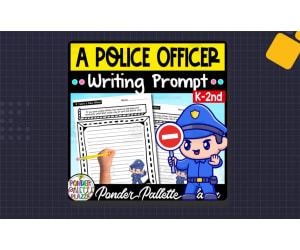
If I Were a Police Officer - Writing Prompt
ELA, Language Development, Writing, Creative Writing, Holiday & Seasonal, Holidays, Seasons, Spring, Summer, Labor Day, Kindergarten, Preschool, Grade 1, 2, Worksheets & Printables, Writing Prompts, Worksheets, Teacher Tools, Assessments, Lesson Plans, Activities, Centers, Classroom Decor, Bulletin Boards
Get ready for flashing lights, sirens, and a whole lot of imagination! The If I Were a Police Officer writing and drawing activity invites K–2 students to put on their pretend badges and imagine a day in the life of a community helper with some serious superhero vibes. Students will write about what kind of police officer they’d be, traffic cop, detective, bicycle patrol, or maybe even K9 handler (because who doesn’t want a police puppy?). They’ll describe how they’d help others, keep the community safe, and what tools they’d use on the job. Then comes the artistic twist: they’ll draw themselves in action! Expect sunglasses, tall hats, and maybe a few flying donuts. Ways to Use: Pair with a community helpers unit or a classroom visitor from local law enforcement. Great for writing centers, morning work, or fast-finishers. Use during Career Week for a creative twist on job exploration. Makes an excellent hallway or bulletin board display! Advantages: Encourages creative thinking and real-world connections. Builds confidence in early writing and sentence construction. Strengthens fine motor skills through drawing. Zero prep, just print and let the creativity roll! Pdf file includes 2 pages. Enjoy!
Author Ponder Palette Plazza
Rating
Tags Writing, Writing Prompt, Writing Prompts, Career, Careers, Career Writing, Spring, Spring Writing, Labor Day, Labor Day Writing