



3,896 products added recently
Page 130 - Lesson Plan Templates
Simplify your preparation with lesson plan templates designed to help you organize objectives, activities, and assessments. These templates provide a structured framework to ensure comprehensive coverage of material. Incorporate them to save time and enhance the effectiveness of your teaching.

 Show filters


I WONDER - Is Marble A Type Of Metamorphic Rock | Animated Video
Geography, Social Studies, Earth Sciences, Earth and Environmental Sciences, Science, Grade 3, 4, 5, 6, 7, 8, 9, Lesson Plans, Teacher Tools
Video Introduction An amazing video designed for the students to learn more about famous places in different countries. I WONDER - Is Marble A Type Of Metamorphic Rock | Animated Video Lesson What do you know about this place? Do you know in which part of the world it is? Have you ever visited this place? If yes, can you tell us more about your adventure, and what do you like the most about this place? Do you like reading about Geography? What is your favorite country in the whole world? If you are going on a trip where it will be? Which country? What you are going to see there? Does this country has a famous place to visit? I WONDER - Is Marble A Type Of Metamorphic Rock | Animated Video Lesson The activity is perfect for encouraging the researching skills for the students, while learning more about this fantastic place. I WONDER - Is Marble A Type Of Metamorphic Rock | Animated Video Lesson This friendly designed video is suitable for students at school, homeschooling, and as a group activity. Format Available in MP4 format.
Author Educational Voice
Tags Is Marble A Type Of Metamorphic Rock, Is Marble A Type Of Metamorphic Rock Video, Marble, Marble Facts, Marble Facts For Kids, Marble Video, Marble Video For Kids, Types Of Metamorphic Rocks

Emergency Lesson Plans - Grades 3-4: Instant activities to use for any teaching emergency!
, Grade 3, 4, Lesson Plans, Teacher Tools
Emergency Lesson Plans - Grades 3-4: Your Teaching Solution Imagine facing a teaching emergency like feeling under the weather or having a tiny slot to fill before a school assembly. With Emergency Lesson Plans - Grades 3-4, you can pull out ready-to-use and educationally based cross-curricular activities without breaking a sweat. This collection is carefully curated for Grade 3 and Grade 4 students,, entailing eight detailed units with 24 reproducible exercises. The topics range vastly: Animal training Bike riding or spiders The phenomena of left-handedness Herculean mythology Ice cream discussions, etc. All of these are included while adhering to National Standards. A Time-efficient Resource for Comprehensive Learning Evidence-based content in the lessons will make sure every minute in your class contributes to comprehensive learning. Plus, these activities require minimal prep time on your part. The product includes: A single PDF file with well-aligned and ready-to-print material across its entire length of 48 pages. p\Only requiring quick adjustments for homework assignments or full classroom usage. Ranging from small group discussions to whole-group studies. Diverse Applications Beyond The Regular Classroom Setting! The resources can mold themselves into diverse applications such as subbing plans during unexpected absences, morning starter discussions or end-of-day thoughts. This flexible design makes Emergency Lesson Plans - Grades 3-4 valuable to parents choosing homeschooling for structured guidance on broad-topic lessons. Value Add-on for Your Teaching Resources Arsenal With Emergency Lesson Plans - Grades 3-4 at your disposal, you will providing stimulating studies and firming up their understanding of different subjects. All while operating under options optimized for various casual moments within regular learning environments. No gaps remain unfilled, nor are moments wasted!
Author Classroom Complete Press
Tags Emergency Lesson Plans, Instant Activities, Sub Tub, Sub Binder, Teaching Resources

Wrangell St. Elias National Park Geography Unit
Social Studies, Geography, Grade 6, 7, 8, 9, Teacher Tools, Lesson Plans
Wrangell St. Elias National Park Geography Unit This is a National Park Geography Unitthat will provide students with resources from the beginning to end of a unit. This unit will leave students feeling more knowledgeable about this landmark and equipped to tackle any and all comprehensive activities related tothis National Park. This unit is great for middle school students. What You Get: You will receive a zip file that includes: 1. A Presentation 2. Preview Sheets as PDF and JPEG files 3. Worksheets 4. Booklet 5. Poster and Booklet Instructions 6. Presentation Items How to Use the Wrangell St. Elias National Park Geography Unit: This is a comprehensive unit of study that will have many components to make learning come to life: * Reading sheets provide information on the park’s history, geography, wildlife, and climate. * QR codes are included on each sheet to link students to relevant videos about the park. * Reading materials are provided in an extended 2-sheet set or a modified and condensed 1-sheet format. * A crossword with answer key is provided for the park as an additional activity . * The sheet set for the park also comes with both large and small image sets for students to use when completing their projects. * The file also has a complete PowerPoint presentation to help guide teachers and students through the materials. * Title cards and other materials are included to help students create a presentation or booklet about their park. I hope you enjoy!! Take A Look At My Best Sellers: Natural Disasters Complete Unit Joshua Tree National Park Geography Unit Japanese-American Interment Mini Unit Navajo Code Talkers Mini Unit Everglades National Park Geography Unit Big Bend National Park Geography Unit You Can Find More Resources at My Store Front Here: Mr. Gray History
Author Mr Gray History
Tags Wrangell St. Elias National Park, National Park Services, Geography Unit, Climate, Wildlife, Vocabulary Practice

Data Analysis & Probability: Bar Graphs - PC Software
Math, Graphing, Kindergarten, Preschool, Grade 1, 2, Teacher Tools, Lesson Plans
Data Analysis & Probability: Bar Graphs - PC Software As an educator, finding effective and engaging teaching resources is essential for helping our students thrive. The Data Analysis & Probability: Bar Graphs - PC Software is a comprehensive tool tailored towards enhancing understanding of Bar Graphs as part of Data Analysis and Probability. Easily applicable across multiple learning scenarios, the software can be utilized in both large group settings for core lessons or small groups to bolster collaborative learning. Homeschooling parents will also find the platform highly beneficial. Packed with curriculum-aligned content, educators get a wide variety of materials in its digital inventory; Lesson plans Real-world word problems Timed drill activities. The software comes complete with pre-lesson assessments designed to gauge students' knowledge before embarking on a new topic. This provides valuable insights which can enhance personalized tutoring approaches. Likewise, at the end of each chapter, a SMART Response assessment ensures comprehension tracking on every student's progress is made easy. This solution champions diversity by offering both English and Spanish voice over options alongside text support – ensuring everyone's needs are fully catered for even in multi-language settings. The inclusion of mathematical tools elevates interactive practices essential for enhancing understanding while memory match games spark creativity during learning sessions. To make it more exciting, board game and spinner game elements are also incorporated into the system giving teachers distinct ways to diversify math lessons hence boosting engagement levels among learners. Within single zip files easily extractable on PCs across various grades (Preschool through Grade 2), educators have access to lesson plans covering key subsect subjects like graphing under math topics. With these available resources at teacher’s fingertips coding becomes less daunting thus promoting effective delivery of knowledge transfer within their respective educational contexts without leaving some learners behind. Exploring graph data has never been so detailed yet straightforward – thanks to this inclusive-, learner-centered approach-inspired teaching resource that aims at cultivating solid math foundation for learners right from their early schooling stages.
Author Classroom Complete Press
Tags Math Lesson Plan, Bar Graphs, Graphing Activity, Data, Probability
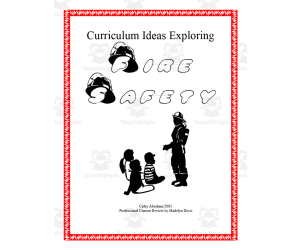
Fire Safety Curriculum Pack
Creative Arts, Art, Social Studies, ELA, Kindergarten, Lesson Plans, Teacher Tools
If your students are studying fire safety or are about to begin a firefighters unit, I have just the resource to provide you with everything you need and more! This is a Fire Safety Curriculum Pack complete with an abundance of printable resources and engaging activities for students to complete. This curriculum was designed for your preschool students. The curriculum goal is to raise the awareness for children about ways in which they can stay safe and empower them in the event of a fire or emergency. The vocabulary that students will focus on is fire, extinguisher, fire alarm, emergency, exit/escape, combustible, flame retardant, prevention, Dalmatian, and safe/safety. This curriculum will come with colors of the week (red, yellow, and orange) and a letter of the week (F). This curriculum pack includes: --Sensory Table Ideas --Art Activities --Cooking Experience --Community Time --Math Activities --Home/School Connection Ideas --Science Table Enrichments --Science Concepts/Activities --Prop Box Ideas/Dramatic Play Enrichments --Movement and Motor --Playground/Walk Activities --Transition/Waiting Ideas --Block Area Enrichments --Flannel Board --Teacher Made Enrichment Ideas --Field Trip Ideas --Supplemental Learning Ideas/Activities At the start of this pack, you will receive a list of supplies needed for activities and projects. The worksheets, activities, and tasks included in this pack are intended to be completed in a variety of formats – whole group, small group, and independent work. I hope you enjoy!
Author Learning Foundations
Tags Fire Safety, Firefighters, Emergencies, Preschool Curriculum, Color Of The Week, Letter Of The Week, Sensory Table Ideas, Learning Goals, Nutrition
I WONDER - When Was Stephen Hawking Diagnosed with ALS
Biographies, Social Studies, Inventors, Basic Science, Science, Grade 4, 5, 6, 7, 8, 9, 10, Lesson Plans, Teacher Tools
Video Introduction An amazing video designed for the students to learn more about famous people in different countries. I WONDER - When Was Stephen Hawking Diagnosed with ALS | Animated Video Lesson What do you know about Stephen Hawking? Can you tell us five five facts about him? Was Stephen Hawking always good at school? Was Stephen Hawkins adventurous? Was Stephen Hawkins a good teacher? What did Stephen Hawking discover? When was Stephen Hawking diagnosed with ALS? What do you know about black holes? And what did Stephen Hawkins discovered about them? I WONDER - When Was Stephen Hawking Diagnosed with ALS | Animated Video Lesson The video is perfect for encouraging the researching skills for the students, while learning more about this fantastic place. I WONDER - When Was Stephen Hawking Diagnosed with ALS | Animated Video Lesson This friendly designed video is suitable for students at school, homeschooling, and as a group activity. Format Available in MP4 format.
Author Educational Voice
Rating
Tags When Was Stephen Hawking Diagnosed With ALS, Stephen Hawking, Stephen Hawking Facts, Stephen Hawking Facts For Kids, Stephen Hawking Video, Stephen Hawking Video For Kids, ALS, ALS Facts

Algebra: Equations - Solving for a Variable - Practice the Skill 1 - FLASH-MAC
Math, Algebra, Common Core, Grade 3, 4, 5, Teacher Tools, Lesson Plans
Algebra: Equations - Solving for a Variable - Practice the Skill 1 (FLASH-MAC) This exceptional resource offers curriculum -based content, targetting specifically Algebra's concept of Solving Equations for a Variable. The skill is taught through engaging and timed drill activities designed to hone application skills. Modality: Perfect fit for whole-group lessons Lends well to smaller tutorial groups or individualized teaching, once mastery progresses Doubles as homework assignments accompanied by parental guidance Pedagogical Strategy: All problems set around determining 'x' value in different equations. This regular practice while teaching Algebra sets new knowledge in the context of already acquired foundational knowledge. Tech-Integration: Inbuilt with digital math tools that aid independent and group learning landscapes whilst bridging the gap between abstract concepts and concrete implementation. User Accessibility & Multi-Lingual Support: This product stands apart with its inclusivity – English default voiceover text for content retention supported by Spanish voice over aiding ELL classrooms thereby ensuring no learner is left behind because of possible language barricades. Alignment With Educational Standards: Rigorously synchronized with Common Core State Standards – STEM initiatives alongside NCTM guidelines allowing streamlined curriculum coverage without hassle. Suitability : Designed primarily targeting Grade 3-5 maths curricula—though quite possible its benefit aggressively spans wider academic ranges—the interactive capabilities of this FLASH-MAC package indisputably champion it as a multifaceted, well-rounded teaching resource for Algebra: Equations - Solving for a Variable practice.
Author Classroom Complete Press
Tags Software (Mac)

I WONDER - How Does Food Waste Affect The Carbon Footprint
Environmental Science, Earth and Environmental Sciences, Science, Grade 6, 7, 8, 9, 10, 11, 12, Lesson Plans, Teacher Tools
Video Introduction An amazing video designed for the students to learn more about STEM. I WONDER - How Does Food Waste Affect The Carbon Footprint | Animated Video Lesson Do you like STEM subjects? what is your favorite one? Have you ever tried to plant a seed? If yes, tell us more about it. Or have you ever tried to invent something? If yes, tell us more about it. And how do you think it will help us? Have you ever seen a microorganism under a microscope? What was it? And how it looked like? Mathematics is a marvelous subject. Let' sharpen our brains and solve some equations. Do you like timetable tricks? What is your favorite one? Do you know how to code? Have you ever created an app or a game before? If yes, how was it like? I WONDER - How Does Food Waste Affect The Carbon Footprint | Animated Video Lesson The video is perfect for encouraging the researching skills for the students, while learning more about this fantastic topic. I WONDER - How Does Food Waste Affect The Carbon Footprint | Animated Video Lesson This friendly designed video is suitable for students at school, homeschooling, and as a group activity. Format Available in MP4 format.
Author Educational Voice
Tags How Does Food Waste Affect The Carbon Footprint, How Does Food Waste Affect The Carbon Footprint Video, Food Waste, Food Waste Facts, Food Waste Video For Kids, Carbon Footprint, Carbon Footprint Video For Kids
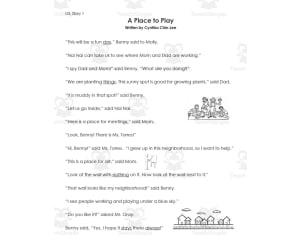
1st Grade Unit 3 Reading Street Stories Set
ELA, Reading, Grade 1, Lesson Plans, Teacher Tools
This resource is a 1st Grade Unit 3 Reading Street Stories Set. The 6 stories are included - 2-3 pages long per story - for each week. All you have to do is print and go. High-frequency words are included at the bottom. You can print these and place them in students' homework folders.
Author Sarah Sorensen
Tags Literacy Center, Reading Worksheet, Short Stories, Reading Street, Homework, Reading Street.com, Third Grade Reading Street Resources, Reading Street Grade 3
I WONDER - Where Is Lake Baikal | Animated Video Lesson
Geography, Social Studies, Grade 3, 4, 5, 6, 7, 8, 9, Lesson Plans, Teacher Tools
Video Introduction An amazing video designed for the students to learn more about famous places in different countries. I WONDER - Where Is Lake Baikal | Animated Video Lesson Do you like geography?! Let's discover this amazing place and know more about its unique stories. Have you ever visited a unique place or a different country than yours? If yes, tell us about it! If no, tell us what kind of places you would like to visit in the future? Every country has it's own story tell us the story about your country: Where it is located? And when it has been established? I WONDER - Where Is Lake Baikal | Animated Video Lesson The activity is perfect for encouraging the researching skills for the students, while learning more about this fantastic place. I WONDER - Where Is Lake Baikal | Animated Video Lesson This friendly designed video is suitable for students at school, homeschooling, and as a group activity. Format Available in MP4 format.
Author Educational Voice
Rating
Tags Where Is Lake Baikal, Lake Baikal, Lake Baikal Video, Lake Baikal Facts, Lake Baikal Video For Kids, Lake Baikal Facts For Kids, Lake, Lakes, Lake Video, Lake Facts

I WONDER - Were Ancient Celtic Women Able To Own Property
History: Ancient, History, Social Studies, History: Europe, History: British, Grade 3, 4, 5, 6, 7, 8, 9, Lesson Plans, Teacher Tools
Video Introduction An amazing video designed for the students to learn more about history. I WONDER - Were Ancient Celtic Women Able To Own Property | Animated Video Lesson Do you like history? Which topic do you really enjoy about history? Have you ever read an interesting fact about the Vikings? If yes, can you mention them? What do you like most about the Victorian era? Can you name all the Tudors? Have you ever wondered how people used to live in ancient Japan and ancient China? Do you know any interesting facts about ancient Egyptians and the Pharaohs? Have you ever visited South America? What do you know about Incas and Aztecs? Celtic culture was really one of a kind, can you name any of the places that Celts used to live in? Imagine yourself living during the ancient Roman empire, how your life will look like? Ancient Greece was an amazing place to live in. What do you know about ancient Greek life? I WONDER - Were Ancient Celtic Women Able To Own Property | Animated Video Lesson The video is perfect for encouraging the researching skills for the students, while learning more about history. I WONDER - Were Ancient Celtic Women Able To Own Property | Animated Video Lesson This friendly designed video is suitable for students at school, homeschooling, and as a group activity. Format Available in MP4 format.
Author Educational Voice
Tags Were Ancient Celtic Women Able To Own Property, Were Ancient Celtic Women Able To Own Property Video, Celtic Women, Celtic Women Facts, Celtic Women Video, Celtic Women Facts For Kids, Celtic Women Video For Kids

Identify Expository Writing Goals- Choose Goals, Steps, & Then Reflect
ELA, Writing, Grade 6, 7, 8, Teacher Tools, Lesson Plans
The editable 19-page, differentiated, editable lesson, Identifying Expository Writing Goals- Choose Your Goals and Steps, Then Reflect, helps students become better writers because it makes goal-setting accessible for your students. Because they are given choice in their goal selection, they will be more invested in their writing. The low-prep, standards-based, comprehensive lesson plan guides teachers and students through the process of selecting goals and action steps, followed by a pre-writing and post-writing reflection. The lesson plan is very interactive with opportunities for students to discuss. Your ELL, RSP, GATE, and General Ed students will gain confidence and be positively challenged in their writing because they have their goals as guideposts. Here's how it works: Students choose one goal from each of 6 categories- Introduction, Thesis Statement, Body Paragraphs, Evidence and Analysis, Conclusion, Organization, and Structure. Each category has two Foundational Goals (goals needed to achieve proficiency) and two Extended Goals (goals for more advanced writers). Students get to decide whether the goal they choose is Foundational or Extended based on where their skill level is. After they choose their goal for each category, they then choose one step to take to make progress on their goal. In total, they have identified six goals and steps, but that is probably too many for them to focus on in one essay. So they decide on the two or three most important goals and steps they want to focus on for their essay. The lesson includes the following: a hyperlinked Table of Contents About this Resource- a guide that orients you to everything you need to prepare for your class, including links to the 4 student handouts standards- aligned, detailed lesson plan An essential question: How can setting and reflecting on specific writing goals improve my expository essay writing skills? 6 guiding questions: Why is it important to set specific goals for my writing? How can I identify my strengths and areas for improvement in expository essay writing? What strategies can I use to achieve my writing goals? How does reflecting on my progress help me become a better writer? How can feedback from peers and teachers help me refine my writing goals and strategies? How can setting writing goals make my expository essay more engaging and effective? Objectives and learning targets The following student worksheets: Expository Essay- Choose Your Goals Expository Essay- What Steps Will You Take to Achieve Your Goal? Expository Essay- Goals and Steps- Putting Them Together Expository Essay-Goals and Writing Reflection
Author Intentional Teaching and Learning
Tags Goal-setting, Writing Goals, Expository Writing Goals, Expository Writing, Middle School, 6th-8th Grades, Action Steps, Reflection, Esssay Writing

I WONDER - How Does Refraction Cause Optical Illusions
Science, Physics, Human Body, Life Sciences, Biology, Grade 6, 7, 8, 9, 10, 11, 12, Lesson Plans, Teacher Tools
Video Introduction An amazing video designed for the students to learn more about STEM. I WONDER - How Does Refraction Cause Optical Illusions | Animated Video Lesson Do you like STEM subjects? what is your favorite one? Have you ever tried to plant a seed? If yes, tell us more about it. Or have you ever tried to invent something? If yes, tell us more about it. And how do you think it will help us? Have you ever seen a microorganism under a microscope? What was it? And how it looked like? Mathematics is a marvelous subject. Let' sharpen our brains and solve some equations. Do you like timetable tricks? What is your favorite one? Do you know how to code? Have you ever created an app or a game before? If yes, how was it like? I WONDER - How Does Refraction Cause Optical Illusions | Animated Video Lesson The video is perfect for encouraging the researching skills for the students, while learning more about this fantastic topic. I WONDER - How Does Refraction Cause Optical Illusions | Animated Video Lesson This friendly designed video is suitable for students at school, homeschooling, and as a group activity. Format Available in MP4 format.
Author Educational Voice
Tags How Does Refraction Cause Optical Illusions, How Does Refraction Cause Optical Illusions Video, Refraction, Refraction Facts, Refraction Facts For Kids, Refraction Video, Optical Illusions, Optical Illusions Video

I WONDER - What Kind Of Entertainment Happened At The Colosseum
History: Europe, History, Social Studies, History: Ancient, Geography, Grade 4, 5, 6, 7, 8, 9, 10, Lesson Plans, Teacher Tools
Video Introduction An amazing video designed for the students to learn more about history. I WONDER - What Kind Of Entertainment Happened At The Colosseum | Animated Video Lesson Do you like history? Which topic do you really enjoy about history? Have you ever read an interesting fact about the Vikings? If yes, can you mention them? What do you like most about the Victorian era? Can you name all the Tudors? Have you ever wondered how people used to live in ancient Japan and ancient China? Do you know any interesting facts about ancient Egyptians and the Pharaohs? Have you ever visited South America? What do you know about Incas and Aztecs? Celtic culture was really one of a kind, can you name any of the places that Celts used to live in? Imagine yourself living during the ancient Roman empire, how your life will look like? Ancient Greece was an amazing place to live in. What do you know about ancient Greek life? I WONDER - What Kind Of Entertainment Happened At The Colosseum | Animated Video Lesson The video is perfect for encouraging the researching skills for the students, while learning more about history. I WONDER - What Kind Of Entertainment Happened At The Colosseum | Animated Video Lesson This friendly designed video is suitable for students at school, homeschooling, and as a group activity. Format Available in MP4 format.
Author Educational Voice
Tags What Kind Of Entertainment Happened At The Colosseum, What Kind Of Entertainment Happened At The Colosseum Video, The Colosseum, The Colosseum Facts, The Colosseum Video, The Colosseum Video For Kids

The Boat Trip Short Story | Pre-Intermediate Lesson Plan
ELA, Reading, Grade 10, 11, 12, Teacher Tools, Lesson Plans
The Boat Trip Short Story | Pre-Intermediate Lesson Plan This pre-intermediate English lesson plan helps students improve their reading comprehension and grammar skills. Educators can use this resource to teach the short story "The Boat Trip" to upper elementary or middle school students. The lesson plan includes the full text of the story along with pre-reading questions, vocabulary exercises, and post-reading discussion prompts. It incorporates elements like prediction, summarizing, and making inferences to build critical thinking. Teachers may utilize this resource for whole-group instruction, small reading groups, or as an independent reading assignment. With multiple ways to implement this short story lesson, it engages students meaningfully. The accompanying answer key also makes it easy for teachers to assess student progress. Providing rich literary content, this resource helps cultivate stronger readers. Includes an answer key Makes it easier than ever for educators to evaluate student responses accurately Eases manual workload on teachers when assessing responses delivered using traditional or conventional methods. The package consists of three PDFs with four ready-to-print pages along with one digital access file. With its emphasis on boat trips and gruesome discoveries, it injects a dose of fun into everyday schooling while imparting valuable educational content. In terms of implementation, there's room for flexibility depending on class size or individual learner preferences: whole group setting inclusion, where all learners navigate through collectively; small-sized subsection utilization, allowing more intimate discussion amongst peers; traditional homework assignments that encourage independence in learning.
Author TEAM TEFL
Tags Boats, Short Story, Language Arts, Reading Passage, Comprehension
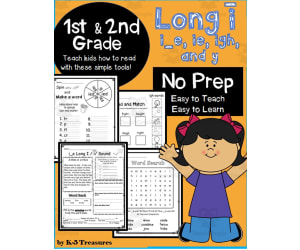
Phonics for 1st and 2nd Grade: Help Students Learn Long I Words: I_E, IE, IGH, and Y
ELA, Grammar, Language Development, Phonics, Grade 1, 2, Worksheets & Printables, Worksheets, Teacher Tools, Lesson Plans
This unit focuses only on the Long I sounds. Learning how to read can be the most challenging activity for students and for a teacher. Understanding that the combination of letters can make the same vowel sound requires lots of repetitive practice of reading and writing these words with these sounds. There are other phonics units that I sell that focuses on the Long A sound with a combination of different letters, the Long E sound with a combination of different letters, the Long O sound with a combination of different letters , and the Long U sound with a combination of different letters . Reading can be made easier with these phonic helps that repeatedly encourage students to practice these Long I sounds. Activities include reading comprehension and identifying the Long I in their reading, writing their answers to questions regarding the paragraph, identifying additional Long I words in sentences using a word bank, matching words with pictures, spinning a paperclip activity where students will write the word with the Long I sound, and lastly a fun wordsearch with variations of Long I words. These activities are for each long vowel words that are focused on the Long I sounds so there are plenty of opportunities for students to practice their comprehension reading skills and phonic sounds. Students will practice the following Long I Word sounds: I_E, IE, IGH, and Y Teachers can use this resource in whole group, individually with students, students can practice with each other in centers, or these worksheets can be assigned as homework. Worksheets are also differentiated for each Long I sounds for all young learners which makes it perfect for all 1st - 2nd graders. A total of 28 pages full of reading and phonic activities. Along with reading and writing, there are matching, cutting, and pasting activities. Word searches and spin and make a word activity are also a part of this packet which make learning to read these phonic sounds entertaining for young learners. For a list of other phonics and grammar activities, click on the following links: CVC Word Families for Beginning Readers: Stamp it, Make it, Trace it, and Write it CVC Words | Short Vowel Phonics | Word Families for K- 2nd Grade Phonics for 1st and 2nd Grade: Help Students Learn Long A Words: AY, AI, A_E, EIGH, EY, and EA Phonics for 1st and 2nd Grade: Help Students Learn Long E Words: EE, EA, E_E, and Y Phonics for 1st and 2nd Grade: Help Students Learn Long I Words: I_E, IE, IGH, and Y Phonics for 1st and 2nd Grade: Help Students Learn Long O Words: O_E, OA, OW, OE, and OUGH Phonics for 1st and 2nd Grade: Help Students Learn Long U Words: U_E, EW, OO, UE, UI and OU Phonics / Digraphs for 1st and 2nd Grade: Beginning, Middle, and Ending Sounds Phonics / Digraphs for 1st -2nd: Ending Sounds: CK, NG, SH, TH, and NK Phonics / Digraphs for 1st and 2nd Grade: Beginning Sounds: SH, TH, WH and PH Phonics: R-Controlled Words for 1st and 2nd Grade and Early Readers
Author K-5 Treasures
Tags Phonics, Vowel Sounds, Long Vowel Sounds, Reading, Grammar, 1st Grade, 2nd Grade, Long I Sounds, First Grade Phonics, Second Grade Phonics

How to Write An Essay: What Is a Narrative Essay? - FLASH-PC
ELA, Writing, Common Core, Grade 5, 6, 7, 8, Teacher Tools, Lesson Plans
The How to Write An Essay: What Is a Narrative Essay? - FLASH-PC Teaching Resource This invaluable tool forms part of the larger How to Write an Essay series and specifically aims at enhancing understanding and crafting of narrative essays amongst grade 5 through 8 students. Software Components Curriculum -based reading passages: Promote learning immersion and context for thematic points. 'Before you read' questions: Facilitate proactive comprehension check. 'After you read' questions: Monitor student's understanding of the material post reading. Printable Materials: Allow flexibility in group or individual facilitation, adapting according to teaching style or situation. Suitable for whole group lessons, small-group activities or homework assignments. Vocabulary Flash Cards An integral component dedicated towards enriching vocabulary thereby boosting writing competency. They serve as interactive tools to hone word recognition along with contextual usage. Inclusion of Graphic Organizers Aiding in structuring ideas cohesively into an essay thus making it significantly less daunting task for learners at this grade level. The Common Core State Standards Alignment This tool not only robustly aligns with common core state standards but also primarily focuses on components related to Language Arts and more importantly Writing subsubject – where language mastery truly makes a difference. Delivered through PC software format it merges seamlessly with modern digital trends maximizing technology's potential within an educational scenario. Fostering Essential Skills For Future Success In essence,the "How To Write An Essay: What Is A Narrative Essay? - FLASH-PC" resource employs versatile pedagogical strategies enabling more impactful instruction by providing a comprehensive understanding of narrative essays and guiding students to create their own. It shapes skilled writers, thereby paving the way for academic success transitioning into secondary education and beyond!
Author Classroom Complete Press
Tags Software (PC)

Health | 3rd Grade Unit 7: Enviromental Consumer Health
P.E. & Health, Life Studies, Physical Education, Health, Life Skills, Special Resources, Social Emotional Learning (SEL), Social Skills, Grade 3, Teacher Tools, Lesson Plans, Worksheets & Printables, Worksheets
This 3rd Grade Health Unit focuses on Enviromental Consumer Health and is essential to help students with their health and wellness. There are seven units in all taught in 3rd grade that focus on health. These units include: Unit 1 that focuses on Personal Health and Wellness Unit 2 that focuses on Growth and Development Unit 3 teaches students about Nutrition and Physical Activity and how to eat right and stay active Unit 4 that helps students with Substance Use and Abuse and how to avoid bad substances Unit 5 that will teach students about Injury/ Violence Prevention Control and Safety Unit 6 that covers what happened during Covid and how to protect themselves while learning about Prevention/Control of Disease Unit 7 discusses our environment and how to help save our planet with Environmental Consumer Health These units can be taught out of order. They are only numbered for your convenience. At the end of each unit, there is an assessment to test students’ understanding. Through using this 3rd Grade Health Unit 7: Environmental Consumer Health, students will explore and learn to identify daily healthy habits. Included in this 3rd Grade Health Unit are the following: Students will learn about different types of pollution in the air, land, and sea and how the pollution affects community health. In this unit, students will read about how to keep the community in which they live in clean and the importance of being apart of a clean community. We've all heard of the terms: reuse, reduce, and recycle. Students will be able to understand the importance of these terms and how to recycle objects. There is a question about if kids today are healthier or less healthy and students will need to explain their reasoning. Many communities have a farmer's market with fresh fruits and vegetables. Students will discuss their thoughts on if this is beneficial for a community and how it can affect the environment and our health. Lastly, there is an assessment to check for understanding. This unit meets Common Core Standards. It is 11 pages of fun engaging activities! There are seven units that cover all the health requirements for 3rd grade. Go to K-5 Treasures to check out the other 3rd Grade Health Units to help students complete the entire Health Standards for the year!
Author K-5 Treasures
Rating
Tags Health Unit, Personal Health, Healthy Goals, Unhealthy Choices, Health Activities, Physical Goals, Health Goals, Health And Wellness, 3rd Grade Health, Third Grade Health

I WONDER - What Do The Olympic Rings Mean | Animated Video Lesson
Sports, P.E. & Health, Grade 2, 3, 4, 5, 6, 7, 8, Lesson Plans, Teacher Tools
Video Introduction An amazing video designed for the students to learn more about sports in different countries. I WONDER - What Do The Olympic Rings Mean | Animated Video Lesson What is your favorite sport? Tell us more about it. Who is your favorite athlete? Or what is your favorite team? Do you know who invented basketball? When basketball has been invented? Can you tell us where is the first time it has been played? Have you ever played soccer or football? If yes, tell us what was your position: A goal keeper, midfield player, or a defender? Do you like watching golf? If yes who is your favorite player? Can you name the differences between tennis and ping pong? Have you ever played volleyball on the beach? When it has been officially recognized by the Olympics? Do you like watching Formula 1 races? If yes, who is your favorite team or driver? Have you ever tried to play handball? If yes tell us more. Do you like watching people skiing or surfing? I WONDER - What Do The Olympic Rings Mean | Animated Video Lesson The video is perfect for encouraging the researching skills for the students, while learning more about this sport. I WONDER - What Do The Olympic Rings Mean | Animated Video Lesson This friendly designed video is suitable for students at school, homeschooling, and as a group activity. Format Available in MP4 format.
Author Educational Voice
Rating
Tags What Do The Olympic Rings Mean, What Do The Olympic Rings Mean Video, The Olympic Rings, The Olympic Rings Facts, The Olympic Rings Video, The Olympic Ringsvideo For Kids, The Olympic Rings Facts For Kids

MAPLE SYRUP Gr. 2-4
ELA, Reading, Grade 2, 3, Teacher Tools, Lesson Plans
Maple Syrup Gr. 2-4 Learning Resource The Maple Syrup Gr. 2-4 learning resource invites educators and their students on a journey towards understanding the magic of maple syrup, an iconic sign of spring in Canada. This product revolves around one natural sugar factory—the maple tree—and its significant role both in nature and our households. Custom-made for bright young learners: This teaching resource is tailored for bright learners in grades 2 to grade 4, primarily under the subject of Language Arts with a special emphasis on Reading. As an educator, this PDF file will become your go-to guide when discussing not only Canada's traditional maple production but also enhancing specific linguistic and creative skills. A plethora of engaging activities: The activities included are designed to resonate with children's natural curiosity about the world around them. They include: Brainstorming tasks Prompt students to cultivate problem-solving skills, equipping them with foundational tools for future challenging scenarios. Word Development exercises Broaden their vocabulary capabilities contributing substantially to their language art knowledge. Research tasks Youthful learners develop investigative skills at an early age—an invaluable ability assisting in making informed decisions and achieving academic success. Art-based projects Fuel emotional expression and cognitive development through artistic engagement. ,/li> A path towards mastery in Language Skills: The teaching resource uses critical skill-building activities from reading comprehension pieces to written assignments; each activity is interest-oriented—making education enjoyable yet meaningful. Your 'How To' Use Guide! Whether you use this product as a full-class activity or divide it into small group assignments—or even use it for individual homework—it's been crafted for flexibility based on your classroom management style! More Than Just Lesson Plans: The Maple Syrup Gr. 2-4 resource acts as more than just lesson plans; it encapsulates dynamic learning practices instilling lifelong abilities while promoting academic joy! Embrace this unique blend of culture-infused pedagogy inviting every youngster into a spectacular world brimming with sweet discoveries!
Author Classroom Complete Press
Tags PDF

Data Analysis & Probability: Pictographs - Practice the Skill 1 - MAC Software
Math, Graphing, Common Core, Kindergarten, Preschool, Grade 1, 2, Teacher Tools, Lesson Plans
Data Analysis & Probability: Pictographs - Practice the Skill 1 The ultimate teaching tool for introducing young students to data analysis and probability is finally here. Entitled "Data Analysis & Probability: Pictographs - Practice the Skill 1", this educational resource is perfect for preschool through grade two students. This isn't just about teaching – it’s about engaging, interacting, and ultimately, learning in a valuable way. At its heart, this versatile tool features timed drill activities that boost understanding of pictographs crucial to data analysis and probability. Interactive elements invite the children to answer questions derived from the given pictograph. Also included are key math tools to enhance their exploration as they wade through these fascinating concepts. An important feature of this resource is its dual language feature; accompanied by easy-to-understand English voice overs and text as well as Spanish options. This accommodates an increasingly diverse collection of student bodies, making learning inclusive for all. Aligned with Common Core State Standards Fulfills STEM initiatives In compliance with NCTM guidelines This ensures that your students are being taught within recognized standards. Teachers can leverage this tool in numerous ways including whole group instruction or smaller study groups for differentiated learning experiences; even as additional homework assignment supplementing classroom lessons. Note that although 'Data Analysis & Probability: Pictographs - Practice the Skill 1' comes optimised for Mac systems via a single zip file download, providing quick installation into your digital lesson plan suite. In Conclusion... "Data Analysis & Probability: Pictographs - Practice the Skill 1" simplifies complex mathematical subjects like Graphing making them less daunting for students. Teachers find it flexible enough to cater to any type of instructional requirement in multilingual classrooms. Truly, this interactive and comprehensive software empowers every maths class!
Author Classroom Complete Press
Tags Digital Math, Digital Graphs, Pictographs, Math Skills, Data

Black Death | Reading Comprehension Deck | Interactive Lesson
Social Studies, History, History: Europe, Grade 7, 8, 9, 10, Teacher Tools, Lesson Plans
This reading comprehension deck is the perfect accessory to your Social Studies instruction! This digital slideshow presents Black Death. Within this slideshow, you will receive: -Video Lesson -Reading Passage w/ Audio -Close Reading -Quick Write The informational texts included in this resource alongside the informal assessments will keep your students engaged from beginning to end.
Author Teach Me This
Tags Europe Plague, Black Death, World History, Social Studies, Comprehension

Misinformation Literacy & News Verification Worksheets
Science, Technology, Computer Science, Engineering, Resources for Teachers, Classroom Management, STEM, Special Resources, Social Emotional Learning (SEL), Social Skills, Grade 6, 7, 8, 9, 10, 11, 12, Worksheets & Printables, Writing Prompts, Worksheets, Word Searches, Workbooks, Teacher Tools, Lesson Plans, Assessments, Presentations, Diagrams
This curriculum provides a complete and easy-to-use, 38-page Information Literacy and News Validation Curriculum written specifically for the students in Middle School. It includes both Theory Chapters with real-world Case Studies (ex. “The Giant Blue Scorpion”, “Riverton Water Crisis”) to support development of the proprietary C.L.E.A.R. Protocol (Cross-check, Locate, Evaluate, Analyze, Read beyond the Headline), 10 interactive Student Worksheets, Answer Keys with Answer Key Samples and all pedagogical tools needed to utilize each resource (i.e. Information Disorder Spectrum, Cognitive Bias Feedback Loop, Lateral Reading Protocol). It is the best curriculum to teach how to identify Fake News,how to differentiate between Disinformation, Misinformation and Malinformation; how to identify ways to manipulate Emotionally; Visual Forensics; Statistical Literacy; building Echo Chambers; the creation of Synthetic media (Deepfakes); and Digital Citizenship. It contains Teacher Implementation Notes, Assessment Protocols and Printable Resources making it ideal for use with students in Grade levels 6-8 within Language Arts, Social Studies or Digital Citizenship classes, for use at home, or in After School Programs. Why Do Parents & Schools Like It? Develops 21st-century skills for protecting students from online scams, viral hoaxes, and manipulation through social media; however, these critical thinking skills are often missing from many of today's school curriculums. Lowers teacher's prep time by providing worksheets/answer keys / visual aids / assessment tools to meet digital citizenship/media literacy standards already established. Provides students with practical examples of how to understand and use abstract concepts (confirmation bias, lateral reading, false context) through relatable case studies & hands-on activities that middle schoolers often find enjoyable. Encourages responsible use of the Internet by teaching students proper online behavior, developing civic responsibility, and facilitating better dialogue about the news as well as social media between parents and children. Cost-effective, high-quality digital resource that can be used in a traditional classroom, cooperative homeschooling, or a remote-learning setting with one print that can be reused over and over again! The target audience for this PDF will be students in the sixth through eighth-grade range (Grades 6-8 / Middle School). The introduction, case studies, and worksheets all have content that references "middle school peer groups," "Sixth through Eighth Grades," and age-appropriate examples (such as school rumors, playground fears, TikTok fears) throughout the PDFs. This PDF is not appropriate for elementary school students (too advanced) or for high school students (too basic). Copyright/Use Guidelines : Copyrighted by Syed Hammad Rizvi. This resource is for a single classroom or personal use only. No modifications or redistribution, for resale, to be made to the resource. For example, uploading to the internet where it will be publicly available for downloading is not allowed. If you wish to share with colleagues, please obtain additional licenses from Teachsimple. Thank you for honoring these guidelines. Syed Hammad Rizvi was happy to provide this product.
Author Creative Book Store
Rating
Tags MediaLiteracy, MisinformationLiteracy, FakeNewsDetection, NewsVerification, DigitalCitizenship, CriticalThinkingSkills, MiddleSchoolCurriculum, Grades68, 6thGradeResources, 7thGradeResources
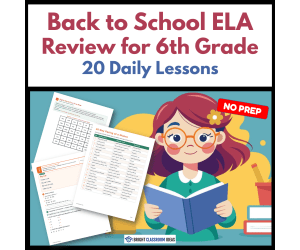
Back to School ELA Review for 6th Grade | 20 Daily Lessons
ELA, Grade 6, Assessments, Teacher Tools, Lesson Plans, Worksheets & Printables
Start the school year with a rigorous yet manageable 6th grade back to school ELA review designed to revisit essential Grade 5 reading, grammar, vocabulary, word study, and writing skills. With 20 daily lessons plus 16 print-and-play literacy games , this resource helps sixth graders refresh key skills, build confidence, and transition into middle school ELA routines. Each lesson follows a predictable four-part rhythm— Read & Think, Language & Grammar, Word Work, and Write About It —with a full lesson designed for approximately 15–25 minutes . Skills spiral across the 20 days, moving from focused review into more complex analysis, evidence, argument, editing, vocabulary, and reflection. What’s Included This 6th grade ELA review includes: ✅ 20 daily ELA review lessons ✅ 40 pages of daily student lessons ✅ Short fiction and nonfiction passages ✅ Reading comprehension questions ✅ Central idea and summary practice ✅ Theme and character development ✅ Inference and text evidence practice ✅ Claim and evidence activities ✅ Evaluating evidence practice ✅ Grammar and language review ✅ Vocabulary and word study ✅ Greek and Latin roots ✅ Advanced prefixes and suffixes ✅ Academic vocabulary ✅ Daily writing prompts ✅ 16 print-and-play literacy games and activities ✅ Partner and small-group activities ✅ Literacy center options ✅ Complete answer key for all 20 days ✅ Teacher Guide ✅ 20-day pacing overview ✅ Four-week planning guide ✅ Differentiation suggestions ✅ Game preparation directions ✅ Game-to-skill quick-reference map ✅ Class progress record sheet ✅ Family letter ✅ Student reflection ✅ Reading Star Award The 68-page Student Workbook contains 20 daily lessons plus 16 print-and-play games for centers, partners, small groups, and independent practice. The separate Answer Key provides complete responses for all 20 daily lessons, organized by section for faster checking, with reasonable student wording accepted for open writing and reflection tasks. How It Works in the Classroom Use this 6th grade back to school ELA review for morning work, bell ringers, whole-group warm-ups, independent practice, literacy centers, small groups, intervention, homework, early finishers, or beginning-of-year formative assessment. Each daily lesson follows the same student-friendly structure: 📖 Read & Think — Students read a short fiction, nonfiction, or persuasive passage and answer four comprehension questions, including inference and text-evidence items ✏️ Language & Grammar — Students revisit a focused Grade 5 language skill 🔤 Word Work — Students practice Greek and Latin roots, advanced affixes, context clues, connotation and denotation, figurative language, analogies, shades of meaning, and academic vocabulary 📝 Write About It — Students complete a short writing task connected to the day’s passage and thinking The Teacher Guide recommends previewing the genre, asking students to identify evidence behind their answers, modeling the first grammar item, and then releasing students to work independently or with a partner. The 20-Day Pacing at a Glance chart on page 6 of the Teacher Guide visually maps the full progression across reading, language, and word work. Students move from central idea and summary, theme development, character development, tone and mood, and plot and conflict into inference and evidence, cause and effect, compare and contrast, author’s purpose and perspective, point of view, text structure, claim and evidence, evaluating evidence, citing evidence, drawing conclusions, comparing across texts, mixed review, and final reflection. For a four-week routine, teachers can assign workbook lessons Monday through Thursday and use Friday for a game, literacy center rotation, or catch-up. The suggested planning guide pairs each week with targeted games based on the skills being reviewed. Standards & Learning Goals This Grade 5 skills review for 6th grade revisits key learning across five major ELA strands: 📚 Reading Comprehension — central idea and summary, theme development, character development, tone and mood, plot and conflict, inference and evidence, cause and effect, compare and contrast, author’s purpose and perspective, point of view, text structure, claim and evidence, evaluating evidence, citing evidence, drawing conclusions, making inferences, comparing across texts, and mixed reading review ✏️ Grammar & Language — independent and dependent clauses, simple/compound/complex sentences, pronoun case, active and passive voice, subject-verb agreement, phrases and clauses, commas and semicolons, colons and lists, punctuating titles and dialogue, apostrophes and possessives, parallel structure, misplaced modifiers, capitalization, consistent tense and voice, transitions, comprehensive editing, commonly confused words, concise language, and mixed grammar review 🔤 Word Study — Greek and Latin roots, roots and affixes, advanced prefixes, suffixes, affix meanings, and root review 💬 Vocabulary — context clues, connotation and denotation, homographs, homophones, figurative language, idioms, analogies, shades of meaning, academic vocabulary, word relationships, and mixed vocabulary review 📝 Writing — summary writing, argument writing, claim and evidence, character analysis, mood and setting description, cause-and-effect explanation, compare-and-contrast writing, persuasive writing, problem-solution writing, text-based responses, concise language, inference-based writing, narrative continuation, and reflection The daily workbook intentionally pairs skills across strands. For example, Day 1 combines central idea and summary with independent and dependent clauses plus roots and affixes ; Day 8 combines compare and contrast with colons and lists plus homophones ; Day 12 combines claim and evidence with misplaced modifiers and connotation ; and Day 18 combines comparing across texts with concise language and root review . Why Teachers Love It ✨ Build a consistent first-month routine. The same four-part structure repeats across all 20 days, helping students know what to expect while building independence. ✨ Review multiple ELA strands in one resource. Reading comprehension, grammar, vocabulary, word study, and writing are integrated into manageable daily practice. ✨ Get 20 days of ready-to-use review. The pacing is already mapped, and the visual chart on page 6 of the Teacher Guide shows exactly how reading, language, and word-work skills spiral across the month. ✨ Strengthen middle school reading readiness. Students practice central idea, theme development, tone and mood, inference, evidence, author’s perspective, point of view, text structure, argument, evaluating evidence, citing evidence, drawing conclusions, and comparing across texts. ✨ Revisit rigorous Grade 5 grammar skills. Practice includes clauses, sentence structure, pronoun case, active and passive voice, subject-verb agreement, semicolons, colons, parallel structure, modifiers, dialogue punctuation, apostrophes, transitions, concise language, and comprehensive editing. ✨ Build stronger vocabulary and morphology skills. Students work with Greek and Latin roots, advanced prefixes and suffixes, context clues, connotation and denotation, homographs, homophones, idioms, figurative language, analogies, shades of meaning, and academic vocabulary. ✨ Include meaningful writing every day. Students summarize, argue, compare, explain, cite details, describe mood, evaluate claims, continue narratives, write inference-based scenes, and reflect on growth. ✨ Add hands-on practice with 16 literacy games and activities , including: Clause Sort Root Word Match Synonym Match Roll-a-Root Word Academic Vocabulary BINGO Multisyllable Roll & Read Prefix Sort Antonym Match Reading Road Race Central Idea Baskets Claim or Evidence Sort Sentence Building Tiles Fix-It Cards Sequence Cards Homophone Match Figurative Language Sort The Game → Skill Quick Map on page 9 of the Teacher Guide pairs each activity with its target skill, including independent and dependent clauses, Greek and Latin roots, academic vocabulary, reading fluency, advanced prefixes, central idea and details, claim versus evidence, compound-complex sentences, editing, text structure, commonly confused words, and figurative language. ✨ Prep once and reuse throughout the year. The Teacher Guide recommends printing game pages on cardstock, laminating boards and cards, cutting pieces apart, and storing each game in a labeled bag for repeated use. ✨ Differentiate without creating entirely separate lessons. The Teacher Guide includes support ideas for below-level students, on-level learners, above-level students, and multilingual learners. ✨ Use daily work as low-stakes formative assessment. The Class Record Sheet on page 10 of the Teacher Guide provides Week 1 through Week 4 tracking columns plus a notes section, making it easier to identify skills that may need reteaching. ✨ Save time checking student work. The included Answer Key covers all 20 days and organizes responses by day and section for quick reference. ✨ Support home-school communication. A ready-to-send family letter explains the daily ELA review routine and offers simple ideas for supporting reading and language practice at home. Give students a confident, structured start to sixth grade with this 6th grade back to school ELA review . Download it for 20 days of Grade 5 skills review, daily reading and writing practice, focused grammar and vocabulary work, plus 16 print-and-play literacy games that extend learning into centers, partner work, small groups, bell ringers, and early-finisher routines. Perfect for teachers searching for 6th grade morning work , sixth grade bell ringers, Grade 5 skills review, beginning-of-year ELA activities, middle school ELA review, sixth grade literacy centers, reading comprehension practice, grammar review, academic vocabulary, Greek and Latin roots, claim and evidence practice, first month of school activities, formative assessment, or a complete back-to-school literacy review.
Author Bright Classroom Ideas Marketplace
Rating
Tags Back To School, Assessment, Daily, Ela, Lesson, Reading, Writing, Grammar