



3,950 products added recently
Page 38 - 2nd Grade Lesson Plans
Enhance your second-grade classroom with lesson plans that build on foundational skills and introduce new concepts. These activities promote critical thinking and creativity across subjects. Implement these plans to keep your students motivated and progressing confidently.

 Show filters

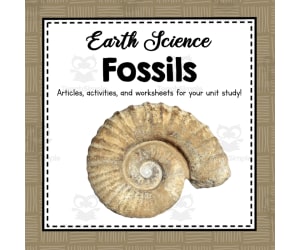
All About Fossils | Earth Science Unit
Science, Earth and Environmental Sciences, Earth Sciences, Grade 1, 2, 3, 4, Lesson Plans, Teacher Tools
All About Fossils | Earth Science Unit This comprehensive teaching resource adds depth and dimension to your earth science curriculum by delving into the fascinating world of fossils and their contribution to our understanding of earth's history. Main Topics: Different types of fossilization, Knowledge derived from fossils about our planet's past, The essential role of paleontologists, Specific ancient creatures that once roamed the earth. A highlight is a hands-on geochronological timeline activity , offering a unique learning experience. This pack has been designed with flexibility in mind - it can serve whole-group instructions or smaller focus groups. Also, it’s suitable for both homework and class-activities with resources adaptable for digital classrooms. Pack Contents: A sample lesson plan schedule Suggested projects & activities along with video links (QR codes and URLs) Vocabulary & spelling words related to fossils - featuring 21 vocabulary word strips, Educative Posters: Covering aspects like where fossils are found or different fossilization processes such as Amber & Carbonization. Articles provided at two reading levels along with cut-and-glue projects like My Fossil Collection and The Fossil Record. Creative Engagement: dinosaur colored page engagement pieces added in the end, writing templates cater perfectly for early writing grades encouraging exploration around scientific disciplines right from initial stages. This unit is recommended for teaching Grade 1 through Grade 4.
Author Simply Schoolgirl
Tags Fossils, Earth Science, Paleontology, Geochronology, Fossilization, All About Fossils
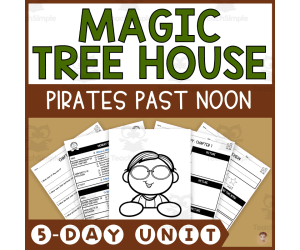
Pirates Past Noon (Magic Tree House #4 Lesson Plan, Videos, Activities)
ELA, Reading, Grade 1, 2, 3, Lesson Plans, Teacher Tools
A 5-day NO PREP novel study of Pirates Past Noon (Magic Tree House #4). This comprehensive book companion includes a lesson plan, chapter comprehension questions, vocabulary practice, and many other activities. Perfect for first grade, second grade, and third grade classrooms, homeschool families, and cooperatives. You can easily customize lessons based on student age, reading and comprehension level, interests, and learning style! Additionally, all worksheets can be completed in an interactive notebook or simply discussed aloud if you desire to reduce the number of pages you print. THIS RESOURCE COVERS: Art (drawing, coloring, arts & crafts) Comprehension English language arts Geography Grammar History Reading Research Social studies Spelling Writing
Author Heather Huhman
Tags Pirates Past Noon, Magic Tree House, Book Companion, Novel Study, Pirates, Magic Tree House Book 4, Magic Tree House Videos, Magictreehouse Videos

Animal Science Unit | All About Bees | Learning about Animals
Science, Life Sciences, Animals, Kindergarten, Preschool, Grade 1, 2, Teacher Tools, Lesson Plans
Animal Science Unit: All About Bees provides educators with an engaging animal science curriculum to help students in grades PreK-2 learn about the unique world of bees. This comprehensive resource includes vivid photos, differentiated reading materials, crafts , worksheets, and writing activities tailored to various ability levels. Students will study bee anatomy, life cycles, habitats, adaptations, behaviors, and more through diverse project ideas, while developing science, literacy, and art skills. Implementation flexibility allows components to be used for whole class, small group, or individual instruction. With abundant teacher support resources and multi-sensory student materials, this unit aims to foster curiosity and appreciation for nature's pollinators.
Author Simply Schoolgirl
Tags Insects, Insect, Zoology, Entomology, Pollinators, Pollinator, Honey Bee, Bumble Bee, Bee Crafts, Bee Lesson

Measurement: Area & Volume - Learn the Skill - MAC Software
Math, Measurements, Common Core, Kindergarten, Preschool, Grade 1, 2, Teacher Tools, Lesson Plans
Measurement: Area & Volume - Learn the Skill - MAC Software Enhance your teaching strategies with this unique Constructivist Learning-inspired software for Mac systems. Custom designed to teach preschool through grade 2 students about area and volume measurements, it presents an engaging, intuitive experience that aids understanding of complex abstraction. This teaching tool is built on the recognition that students learn deeply when they can relate learning to real-world situations. The software presents such daily scenarios for kids. As students progress in each section of this chapter mini series, they work on skill-based word problems, applying their knowledge of measurement. Dual-Language Support & Accessibility A prime feature of this resource is its accessibility. With its standard English text and voice over, along with a Spanish text option, it breaks down language barriers in mathematical education and cultivates a more inclusive learning environment. Educational Standards Compliance Crafted following Common Core State Standards (CCSS) Aids STEM initiatives agenda Succinctly aligns with National Council Of Teachers Of Mathematics (NCTM) standards This ensures curriculum-compliant education whether you're using it as class time instruction or providing individual assignments. Digital Format Benefits The Mac software comes in one simple zip file leading to easy storage and quick access when needed - befitting both traditional public school settings or modern homeschool environments alike. Included Interactive Tools: The package also includes interactive tools that make measurements comprehensible – enhancing curiosity alongside comprehension! In Conclusion: Harness the power of technological advancement towards education with Measurement: Area & Volume - Learn the Skill – MAC software. It anchors mathematics learning in real-life problem-solving tasks equipping students for their future beyond academics.
Author Classroom Complete Press
Tags Math Lesson Plan, Digital Math, Digital Measurement, Area, Volume
Measurement: Area & Volume - Practice the Skill 3 - MAC Software
Math, Measurements, Common Core, Kindergarten, Preschool, Grade 1, 2, Teacher Tools, Lesson Plans
Measurement: Area & Volume – Practice the Skill 3 - MAC Software This tailored tool aids educators in teaching and sharpening students understanding of measuring area and volume, crucial components of modern mathematics curriculum. Key Features: Specially designed as a chapter mini, this software offers curriculum-congruent content with an emphasis on Practice the Skill timed drill activities for enhanced learning benefits. Incorporating this educational resource into classroom activity promises to engage students in practical tasks where theyll convert provided volume measurements using various formulas. This real-life application approach honours NCTM guidelines while offering an essential bridge between theory and practice. User-friendly Math Tools: Variety adds spice to learning. Whether book time is allocated for whole groups or assisting small-sized clusters during tuition hours, these intuitive math tools can flex according to need in order to intensify every students grasp of measurement concepts. Dual Language offering: An innovative feature of this software lies within its dual language offerings - English and Spanish voice-over options accompany legible text. It caters both English and Spanish learners ensuring inclusivity for all classmates. Fundamental Alignment with Education Standards: Fundamentally aligned with Common Core State Standards and STEM initiatives Negotiates rigorous competency expectations alongside engaging manipulatives Specifically targets preschool-grade students up till grade 2 pupils. This coherent alignment makes it perfect for lesson planning within Math classrooms especially under subtopics like Measurements. Hassle-free Download: Ooffered compactly coded within one zip file compatible with MAC interfaces; without affecting operational speed or overall system efficiency. Overall, introducing computational intelligence without the categorial jargon makes education impactful significantly contributing towards molding capable future citizens who not just memorize but understand mathematical concepts. Embarking on this functionality enriched journey with the Measurement: Area & Volume - Practice the Skill 3 - MAC Software widens educational perspectives while maintaining enthusiasm.
Author Classroom Complete Press
Tags Math Lesson Plan, Digital Math, Digital Measurement, Are, Volume

A Bitter Pill to Swallow | Figurative Language Activity | Micro-Learning Deck
ELA, Reading, Reading Comprehension, Grade 2, 3, 4, 5, Teacher Tools, Lesson Plans
A Bitter Pill to Swallow | Figurative Language Activity teaches students about the figurative language term "a bitter pill to swallow" in an engaging way. Through a short video lesson, reading passage with audio, and comprehension activities, educators can use this resource to strengthen grade 2-5 students' understanding of figurative language. The resource guides students to comprehend the meaning of the idiom through close reading. Then, by applying their knowledge in a quick write activity , students get hands-on practice using this expression appropriately. This resource works well during whole group language arts instruction and makes a great small group activity to differentiate instruction. Students will enjoy learning about this colorful idiom!
Author Teach Me This
Tags Figurative Language, Reading Activity, Learning Deck, Comprehension Lesson, Reading Lesson

Plants and Animals
Science, Life Sciences, Nature & Plants, Grade 1, 2, 3, Teacher Tools, Lesson Plans
Plants and Animals: A Comprehensive Educational Resource Created by reputed science educator Ed Ortleb, the "Plants and Animals" resource aims at introducing grade 1 to grade 3 students to the fundamental principles of botany. This resource relies heavily on active learning, engaging learners through activities like: Coloring Cutting and pasting Sequencing Matching games Puzzles based on different plant and animal characteristics. This package has been designed in a way that it enables educators to deliver accurate information without any extensive preparatory efforts. Fairly articulated worksheets present coherent units of data for each topic so that young learners can comprehend as well as appreciate them. Flexibility in Use/Adaptability "Plants and Animals", primely designed for a group instruction setup, is enough adaptable to work efficiently even for small groups or can serve as take-home assignments if needed. Educator Guide Accompaniment To further facilitate its use for educators, an accompanying guide provides useful background information along with extension activities for students who wish to explore beyond. This ensures that learning doesn't just stop within individual units but also extends into broader lesson plans, nurturing curiosity about our natural world. Digital Format & Universal Access The material is offered as a digital PDF file download ensuring ease of access anytime required. This format helps alleviate any technical glitches and maximizes instructional capability. "Plants And Animals", thus serves not only as a crucial component of science education but also helps develop a growth mindset as it encourages active student participation in acquiring knowledge about the flora and fauna around us. It is an invaluable pedagogical tool designed with purpose, vigor, and keen educational expertise.
Author Classroom Complete Press
Tags PDF

Night Flyers: A Cross-Curricular Unit on Bats
Science, Life Sciences, Animals, Grade 1, 2, Teacher Tools, Lesson Plans
Night Flyers: A Cross-Curricular Unit on Bats A comprehensive teaching and learning resource primarily designed for Grade 1 and Grade 2 students. The unit employs interactive strategy to demystify misconceptions about bats — an enrichment tool packed with supplementary worksheets! Product Attributes: Worksheets are ready-to-print Cross-curricular approach to learning – bat-themed math problems, narrative writing etc. Leverages on different pedagogical approaches – group settings or individual engagement Magnifies depth-of-knowledge by complementing classroom lessons with homework assignments Activities can be administered as whole class or small group instructions for flexible teaching strategies This product extends itself beyond conventional boundaries encouraging application of knowledge across varying disciplines – a classic example is posing math problems in the theme of bats. The resource also urges learners to expand their imaginative space by prompting them to write their own sensational stories featuring these night flyers. About the Lessons : The setup enables efficient execution in both collective scenarios or smaller focused groups, broadening possibilities into engaging homework tasks that enhance depth-of-knowledge at home.The provided activities comprise seven pages in PDF format. Night Flyers: A Cross-Curricular Unit on Bats - Enhanced Learning Perks! Digs deep into scientific facts about bats specifying under zoological aspects while bridging educational spheres like creative writing or problem-solving within a mathematical framework—seamlessly weaving robust multi-disciplinary learning ingredient. Note:Makes learning fun using tantalizing truths about exciting night flyers! This subtly intriguing product promises quality engagement while lighting up young minds towards broader understanding perspectives bridging gaps amid various subjects under consideration.
Author Classroom Complete Press
Tags Science Activity, Math Printable, Bats, Reading Passage, Science Reading
Number & Operations: Counting & Ordering Objects - PC Software
Math, Numbers, Kindergarten, Preschool, Grade 1, 2, Teacher Tools, Lesson Plans
Number & Operations: Counting & Ordering Objects - PC Software This is a comprehensive tool designed for educators focusing on subjects like counting, ordering objects, and a broader scope of number operations. This resource is valuable for teachers at the preschool, kindergarten, G1, and G2 levels.. Real-World Application Methods & Lesson Plans: The teaching aid integrates practical methods and offers specially crafted lesson plans that make learners confident in numerical abilities. It further includes mathematical tools to supplement these lessons. Focused Learning Activities: The software incorporates memory match games and spinner games to keep students engaged while learning math concepts. Timed Drill activities: Integral for regular assessment of progress. SMART Response techniques:This helps show students areas needing improvement setting refocusing points for their efforts. Inclusive Language Support & Hands-on Tools: The software provides English voiceover and text as well as Spanish alternatives. Also available are physical printable resources when needed in the classroom or homework assignments. The whole package comes in an easy downloadable zip file compatible with PCs - enabling more time focus on enhancing math curriculum objectives. Note: This resource can be effectively deployed in any size of educational context—whether it be large scale classes or individualized instruction sessions at home leading to insightful learning experiences. e
Author Classroom Complete Press
Tags Counting, Ordering Objects, Grouping, Math Lesson, Operations Lesson

I WONDER - How Do Zebras Defend Themselves | Animated Video Lesson
STEM, Biology, Life Sciences, Science, Animals, Grade 1, 2, 3, 4, 5, 6, 7, 8, Lesson Plans, Teacher Tools
Video Introduction Animal kingdoms are full of fascinating wonders to learn. This video is designed for the students to learn more about animals in different countries. I WONDER - How Do Zebras Defend Themselves | Animated Video Lesson Do you like animals? what is your favorite one? Do you own a pet? If yes, tell us more about it, like what its name? And what do you like most about it? What are the animal kingdoms? Can you write down the characteristics of each animal class like mammals, birds, reptiles, amphibian, fish and mollusks. Do you know that some animals can sing, can you name any of them? What is the largest and the smallest mammal in the world? What is the largest and the smallest bird in the world? What is the largest and the smallest fish in the world? I WONDER - How Do Zebras Defend Themselves | Animated Video Lesson The video is perfect for encouraging the researching skills for the students, while learning more about these fantastic animals. I WONDER - How Do Zebras Defend Themselves | Animated Video Lesson This friendly designed video is suitable for students at school, homeschooling, and as a group activity. Format Available in MP4 format.
Author Educational Voice
Tags How Do Zebras Defend Themselves, How Do Zebras Defend Themselves Video, Zebras Defend Themselves, Zebras, Zebra, Zebras Facts, Zebras Facts For Kids, Zebras Video, Zebras Video For Kids
Geometry: Shapes - Practice the Skill 1 - PC Software
Math, Geometry, Common Core, Kindergarten, Preschool, Grade 1, 2, Teacher Tools, Lesson Plans
Geometry: Shapes - Practice the Skill 1 - PC Software Geometry: Shapes - Practice The Skill 1-PC Software serves as an impressive teaching resource designed to help learners understand Geometry shapes. It targets preschoolers to second-grade students, showcasing subjects like Math and particularly Geometry. The software emphasizes curriculum -oriented lessons, facilitating learning through timed drill activities. In a game-like interface, students can promptly identify different 2-D shapes posing as a fun-learning solution for students. Add-on Tools Enhance Learning Experience Integral add-on math tools are included in this resource allowing students to connect with geometrical shapes effectively. Interactive exploration of geometric attributes makes learning lively and dish out fun! Bilingual Advantage and Standard Compliance This software integrates bilingual capacity with Spanish voiceovers and text alongside English making it inclusive for dual-language learners too. Aligned diligently with NCTM standards, STEM initiatives, and Common Core State Standards ensures high academic quality; thus accepted universally across educational platforms. Flooring Versatility – Easy Digital Packaging for Varied Instructional Approaches This educational tool is offered as .zip file ideally suited for PCs supporting flexible teaching models like whole group instruction through interactive board displays; small group workstations or solitary exploration via homework assignments. Note: The hallmark of this software lies in its unique capability transforming conventional geometry teachings into captivating experiences endorsing effective comprehension among young learners prompting them towards becoming proficient budding mathematicians!
Author Classroom Complete Press
Tags Math Lesson, Digital Math Lesson, Geometry Lesson, Math Practice, Shapes Activity

Number & Operations: Grouping Objects & Number Lines - Learn the Skill - FLASH-PC
Math, Numbers, Common Core, Grade 1, 2, Teacher Tools, Lesson Plans
Number & Operations: Grouping Objects & Number Lines - Learn the Skill - FLASH-PC FLASH-PC provides an educational resource aimed at teaching the basic math skills of grouping objects and working with number lines. This product is mainly intended for Grade 1 and Grade 2 students, promoting understanding of numerical operations in a real-life setting. The software contains a mini-course offering customized, curriculum -based lessons to match educational standards. It can be integrated into various learning environments, ideal for whole-group instruction, small group work during math rotations or as a reinforcement activity at home. Key Feature:The software features 'learn the skill' word problems which are interactive in nature enabling students for practical application pairing with theoretical knowledge thus improving comprehension and retention. This inclusive education product is available in both English and Spanish text with corresponding voice-over options thus catering to linguistically diverse classrooms while aiding second language learners bridge mathematical concepts with their language development process. Beyond Numbers and Operations: Educational Standards:This resource supports Common Core State Standards lending relevance to your teaching content; it's lesson structure also promotes STEM initiatives complying with NCTM guidelines. A Perfect Learning Companion: Tutors looking for effective ways to teach complex mathematical aspects such as numbers, operations particularly related to grouping objects, or number lines will find FLASH-PC's "Learn The Skill" highly beneficial. It pairs explicit instructional models aptly combined with engaging problem-solving opportunities allowing young leaners harness their understanding over these important mathematical abilities.
Author Classroom Complete Press
Tags Software (PC)

Batteries Reading Comprehension Passage - Cored Ed Encyclopedia
ELA, Language Development, Reading Comprehension, Reading, Social Studies, Writing, History, Pre-Reading, Physics, Science, Grade 2, 3, 4, 5, Worksheets & Printables, Worksheets, Teacher Tools, Centers, Activities, Writing Prompts, Assessments, Quizzes and Tests, Quizzes, Lesson Plans
This batteries reading comprehension with lesson plan includes: Visualization (on the front cover) Start your lesson by taking a minute to think and share something about the topic. Read the script aloud (slowly), perhaps prepare some music or sound effects. Student close their eyes and let their imaginations wander. Students open their eyes, read the question aloud and give them a few minutes to complete. Ask a few students to share or keep answers until the end to compare with what they learn in the passage. COMPANION VIDEO NOW AVAILABLE (EMBEDDED AFTER PREVIEW PICTURES IN PRODUCT DESCRIPTION) Quick pause—thousands of Cored Education products are included with your TeachSimple membership. Download links and encyclopedia index available here. Pre-Reading Trivia Students will write down one thing they already know about the subject and then read five more facts and discuss. These facts are fun, and the students will enjoy learning about the subject before reading more. Give 1 minute for students to write what they already know (no pressure—best guess is fine). Read the five facts together. After each fact, do ask a student for their opinion, was it surprising? Set a purpose by asking students to highlight/underline one fact they want to learn more about during the reading. Reading Passage The text is a high-interest reading passage with set paragraphs, roughly three to four paragraphs long. It contains a variety of themes about the topic, anywhere from history to technology. The passage is between 250 and 350 words in length. First, ask students to look at the headings and see what they’ll learn about today. What do they know about the topic/heading? First read options: Teacher read-aloud (best for support). Partner reading (paragraph by paragraph). While reading, students underline important details, and vocabulary words they think may come up in the questions section. Mixed Questions The first question page contains four multiple-choice questions, each with a choice of four answers, and three written response questions that require a sentence or two from the student. Students complete the mcqs first independently, then review quickly as a class. For the 3 written responses, try to get students giving the answer with some form of evidence: “I think ___ because the text says ___.” If students get stuck, send them back to check the passage. Vocabulary Questions Practice seven key words from the text in this section across two activities. First section is scrambled words where students will unscramble three words given a clue for each. The second section is a word to meaning matching activity. Before starting, have some students read out words they underlined in the passage. Ask students to say the word and read aloud the sentence(s) around each word. Ask students to do scrambled words and the matching exercise in pairs then go through answers as a class. For the scrambled spelling task, get four pairs to come up to the board and write the words for extra practice with the other student reading out the clue. For the matching task, prompt students to give full sentences: “I matched ___ with ___ because ___.” Creative Writing In this question, the student will be required to write a five to eight sentence paragraph on a question related to the topic. Before starting, ask students write down 3 key ideas they are going to include in their piece. Ask students for ideas to share around the class to help those struggling. Pro writing expectations: 5–8 sentences At least 2 facts or details from the passage At least 2 vocabulary words from the previous page Students read their paragraphs while classmates listen for facts and vocabulary words. Extension Activities This page is optional for fast finishers or to take home. There are several activities, each one requiring a different skill. Do some, do none, do all, completely optional - but you will feel reassured knowing every possibility is planned for. Includes summary writting question and additional facts. Answer Key There are answers for the multiple-choice questions, written response questions have sample answers, vocabulary answers and if there is a summary question then a sample summary will be provided as well. Lesson Plan Included Customized lesson plan for this lesson is included. Lesson Snapshot Title: Batteries Genre: Nonfiction (informational passage) Subject: Science (Physical Science / Electricity) Primary Topic: How batteries store energy and changed over time Estimated Guided Reading Level (A–Z): T What This Lesson Teaches Best Explains what a battery does and how it powers devices when connected in a circuit (electrons moving through a wire to light a bulb or spin a motor). Introduces key electricity ideas in context (plus/minus ends guiding the “flow” the right way; current moving for a while). Gives a clear mini-history of batteries, from 1800’s “voltaic pile” to later “wet cells,” “dry cells,” and rechargeable batteries. Connects science to real-world uses, from small watch batteries to lithium-ion packs and room-size battery banks for the power grid. Highlights responsible use: batteries don’t last forever, so careful charging and recycling can help protect people and the planet. Learning Goals Identify what the passage says is stored inside a battery and what makes electricity move in a circuit. Explain, using the text, how electrons help a flashlight make a bright beam. Describe what Alessandro Volta built in 1800 and what materials were stacked. Compare “wet cells” and “dry cells” using details from the passage about carrying and spilling. Explain what makes a rechargeable battery different, based on how the passage describes “pushing” chemical changes backward. Describe how batteries are used today, including small devices and large battery banks on the power grid. Key Vocabulary From the Text electrons — tiny particles that can move through a wire. circuit — a path electricity travels through to do work. current — electricity moving steadily in a path. rechargeable — able to be filled up again with electricity. recycling — using materials again instead of throwing them away. FULL CATALOG OF DOWNLOAD LINKS AND ENCYCLOPEDIA INDEX HERE
Author Cored Education
Rating
Tags Vocabulary, Reading Comprehension, Reading Passages, Lesson Plans, Ela Lesson Plans, Reading Comprehension Lesson Plans, Pre-reading, History, Science Lesson Plans, Physics

I WONDER - Is Sticking Out Your Tongue Always Rude | Animated Video
STEM, Human Body, Life Sciences, Science, Biology, Grade 1, 2, 3, 4, 5, 6, 7, 8, Lesson Plans, Teacher Tools
Video Overview The human body is full of fascinating wonders to learn. This video is created to help the students recognize the anatomy and the job of the human body. I WONDER - Is Sticking Out Your Tongue Always Rude | Animated Video Lesson Every part and organ in our human body is vital so let's see how important they are. Have you ever imagined how we look like if we didn't have a skeleton? Did you know that because we have our amazing muscles we can stand! Do you know how many teeth do we have? Have you ever wondered about the food journey inside our body? Can you name all the glands in our body? Why do we have skin? Our nervous system is really good at sending signals. Can you tell us more about it? Are you really good at Mathematics, painting, or any other thing? You should really thank your brain about it! The famous five senses are really doing a great work? Can you explain how every sense works? I WONDER - Is Sticking Out Your Tongue Always Rude | Animated Video Lesson The video is perfect for encouraging the researching skills for the students, while learning more about our fantastic human body. I WONDER - Is Sticking Out Your Tongue Always Rude | Animated Video Lesson This friendly designed video is suitable for students at school, homeschooling, and as a group activity. Format Available in MP4 format.
Author Educational Voice
Tags Is Sticking Out Your Tongue Always Rude, Is Sticking Out Your Tongue Always Rude Video, Tongue, Tongue Facts, Tongue Facts For Kids, Tongue Video, Tongue Video For Kids, Culture, Culture Facts

Animal Science Unit | All About Frogs | Learning about Animals | Frog
Science, Life Sciences, Animals, Kindergarten, Preschool, Grade 1, 2, Teacher Tools, Lesson Plans
Animal Science Unit for Frogs helps elementary students investigate these fun amphibians through reading, writing, crafting, and more! The diverse educational materials spark curiosity about frogs through engaging nonfiction texts, vivid images, interactive worksheets, and hands-on games. Teachers can utilize the discussion topics and activity ideas to facilitate impactful learning. Differentiated printables, articles, and templates ensure accessibility for a wide range of learners from pre-K to 2nd grade. This comprehensive unit sparks wonder about the life cycle, habitats, anatomy, behaviors, and adaptations of delightful frogs! Both whole-class and small-group sessions will thrive thanks to the variety of high-quality materials. From articulated paper crafts to habitat guessing games, this unit's wealth of science resources helps students become mini frog experts!
Author Simply Schoolgirl
Tags Zoology, Amphibian, Amphibians, Tadpoles, Wetland Animals, Frog Crafts, Frog Lesson Plans, Frog Printables, Frog Life Cycle, Frog Projects

Measurement: Measuring Time - Learn the Skill - PC Software
Math, Time, Common Core, Kindergarten, Preschool, Grade 1, 2, Teacher Tools, Lesson Plans
Measurement: Measuring Time - Learn the Skill - PC Software This educational software aims to assist teachers in instructing young learners about time measurement. It provides relatable, real-world word problems and useful strategies to simplify learning how time is measured. Teaching Aids That Sync With Curriculum Standards Designed to make math tangible for students Incorporates early concepts of measurement aligned with educational benchmarks such as Common Core State Standards National Council of Teachers of Mathematics (NCTM) guidelines STEM initiatives Linguistic Variety For Learning Competency Enhancement This tool also focuses on strengthening bilingual skills. It employs an inclusive approach by providing both English and Spanish voice overs and text, making it suitable for diverse classrooms. The Product Explained: The product comes as a simple zip file that can be conveniently installed on your system. It is equipped with user-friendly PC software that ensures trouble-free use. Potential Usage: Realizing its potential in various teaching environments, this software can be utilized for: * Whole-class sessions * Small group work * Individual homework assignments tailormade based on student progress levels or needs. In conclusion, our Measurement: Measuring Time - Learn the Skill - PC Software fosters math learning away from monotonous textbook theories by offering an interactive medium where children might explore mathematical concepts naturally.
Author Classroom Complete Press
Tags Math Lesson Plan, Digital Math, Measuring Time, Math Skills, Time Activities

Mental Health Literacy: Brain Responses & Getting Help
P.E. & Health, Health, Grade 2, Teacher Tools, Lesson Plans
This PDF will demonstrate an understanding of how a person's body and brain respond to challenging or uncomfortable situations and what they feel. It also will explain how understanding and being able to name their feelings can help in knowing when they might need to get help.
Author Chuck's Cornucopia
Tags Mental Health, Brain, Body, Wellness, Health
Summer Learning Packet Grade 2 to Grade 3 | Math & Reading Review
ELA, Math, Grade 2, Lesson Plans, Teacher Tools, Worksheets & Printables
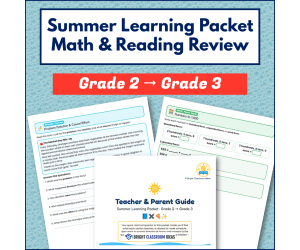
Summer Learning Packet Grade 2 to Grade 3 | Math & Reading Review Help your students maintain academic skills and prevent the summer slide with this comprehensive Summer Learning Packet for 2nd Grade to 3rd Grade ! Designed as a complete summer bridge resource, this no-prep workbook combines engaging reading and math practice with summer-themed activities that keep learners motivated while preparing them for third-grade success. With 70 pages of standards-based review, this packet provides the perfect balance of skill reinforcement and independent learning. What's Included ✔ 70-page Summer Learning Workbook ✔ Reading & Language Arts Activities: Fiction and nonfiction reading comprehension Characters, setting, plot, and sequencing Main idea and supporting details Compare and contrast Fact vs. opinion Predictions, inferencing, and summarizing Vocabulary development Context clues Synonyms and antonyms Multiple-meaning words Academic vocabulary Grammar and language skills Narrative, opinion, informational, and how-to writing ✔ Math Activities: Place value to 1,000 Comparing and ordering numbers Three-digit addition and subtraction Multiplication foundations Division foundations Fractions Measurement and elapsed time Money and making change Geometry and symmetry Area foundations Graphing and data analysis One-step and two-step word problems ✔ 6-Week Progress Tracker ✔ Summer Bonus Challenge Activities ✔ Certificate of Completion ✔ Teacher & Parent Guide ✔ Answer Key Included How It Works in the Classroom This 2nd Grade Summer Review Packet is ideal for: Summer take-home packets End-of-year review Summer school programs Independent practice Homeschool learning Tutoring sessions Intervention support Back-to-school review Students complete approximately 2–3 pages per day, making it easy to maintain learning momentum throughout the summer without overwhelming families. The included six-week pacing guide helps organize instruction and practice for consistent skill growth. Standards & Learning Goals Students will strengthen key end-of-second-grade skills while building readiness for third grade. Reading & Language Arts Reading comprehension Main idea and supporting details Fiction and nonfiction text analysis Vocabulary development Grammar and conventions Sentence structure Writing organization Editing and revising skills Math Place value and number sense Addition and subtraction fluency Three-digit operations Multiplication and division concepts Fraction foundations Measurement and time Money skills Geometry and area Graph interpretation Multi-step problem solving Aligned with widely used end-of-second-grade standards and designed to support a smooth transition into third grade. Why Teachers Love It ⭐ No prep required ⭐ Comprehensive reading and math review ⭐ Perfect summer bridge between 2nd and 3rd grade ⭐ Engaging summer theme throughout ⭐ Builds confidence before the new school year ⭐ Includes answer key for quick grading ⭐ Parent-friendly and easy to implement ⭐ Flexible six-week pacing guide included ⭐ Strong focus on multiplication and division readiness ⭐ Great for summer school, tutoring, intervention, and homeschool settings If you're searching for a complete Summer Learning Packet for 2nd Grade to 3rd Grade , this resource delivers meaningful academic review, engaging practice opportunities, and summer-themed fun in one easy-to-use workbook. Help students retain important skills, build confidence, and start third grade ready to succeed. Download today and make summer learning simple, effective, and enjoyable!
Author Bright Classroom Ideas Marketplace
Rating
Tags Summer, Review, Reading, Ela, Math, Worksheet

Let's Chat Conversation Cards | "Bored, Get Creative!"
Special Resources, Social Emotional Learning (SEL), Grade 2, 3, 4, 5, 6, Teacher Tools, Lesson Plans
Let's Chat Conversation Cards for "Bored, Get Creative!" is a social-emotional learning resource that helps students develop a growth mindset. The cards facilitate meaningful conversations to strengthen friendships and perspectives. This specific set focuses on boredom and sparking creativity. It is one of many Let's Chat products available alongside matching signage. Data shows the trauma-informed Respectful Ways program, which includes these materials, improves GPAs, attendance, and behavior when implemented in schools. Educators can use the cards for whole-class, small group, or individual activities to target students' social-emotional needs identified by the program's school climate survey. The program integrates with multi-tiered systems of support and involves custom training by experts. For more information on implementing Respectful Ways to nurture compassion and responsibility contact Pam@RespectfulWays.com.
Author Respectful Ways
Tags SEL Lesson Plan, Conversation Cards, Spanish, Respectful Ways, Be Creative, SEL, Social Emotional Learning, Character Education, Let's Chat, Perseverance
Guided Reading Level L - All About Cows (with Lesson Plan)
ELA, Resources for Teachers, Reading Comprehension, Reading, Science, Language Development, Life Sciences, Animals, Pre-Reading, Vocabulary, Grade 2, 3, 4, Worksheets & Printables, Worksheets, Teacher Tools, Centers, Activities, Literacy Readers, Quizzes, Quizzes and Tests, Assessments, Lesson Plans
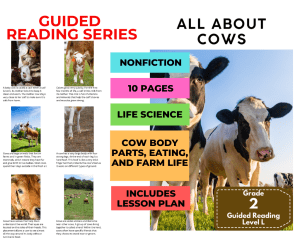
This Guided Reading Book - All About Cows (Level L) with lesson plan includes: Guided Reading Color Label (front cover x1) This is a quick way to match the book’s demands to what students can generally handle.. The overall goal is to use the level/color to pick books for several smaller groups. To qualify for a certain level, a student is expected to read a book from that level with about 90–94% accuracy. If a student is consistently accurate and understands, move up a level. If the student is struggling at that level, drop down and add more support. Each student will improve at completely different rates, but it is generally one of the best ways to check progress across the class. DOWNLOAD THE CATALOG TO VIEW ALL GUIDED READING BOOKS AVAILABLE (SORTED LEVELS A-Z) Pre-Reading Question (x1) Teacher asks the prompt aloud, can be while showing the cover or first page. Students share what they already know, or make educated guesses from the cover. Prompt them to use the target vocabulary. Write some of their responses on the board to look back at during the reading. Vocabulary Words (x5) Introduce the five words, best doing it one at a time. Start by saying it, while students repeat and then see if anyone knows what it means before reading further. Read through the meaning and try to briefly connect each word to a picture or gesture so it’s meaningful. Ask students to flip through the book pages and point to where they see each of the vocabulary words. While reading the book pause upon coming across one of the vocab words or read the sentence twice to make sure students understand the word has appeared. Optional: Ask students to raise hands whenever they see/hear one of the new words. Guided Reading Pages (x10) Check the book snapshot (below) for: primary topic - do you need to prep extra reading or intro materials on this? what is taught best - decide on 1-2 bullets to focus on, use the prompt or words provided here for best results. learning goals - what you are checking for students to be able to do after the session, elicit answers using prompts or words provided. key vocabulary (see section above). questions overview - so you know what is coming up and if you need to prep extra materials to assist understanding. Run the lesson You may have already looked at a few of the pages together, but you can show them some of the pictures again first to set meaning. Depending on how much time you have and how familiar your students are with guided reading class, you may want to read the book aloud first with the group first. Students whisper or partner read, while you listen in. If time, do it as a group, one student reading a page each. Use the guided page’s prompts to coach: “Check the picture / does it make sense?” “Point under the words / try the first sound” “Reread the sentence smoothly”. Try to focus more on one student per session (rotating every time), so you can work out if they are ready to move up or need to move down a level. Comprehension Questions (back cover x3) This is your way to check that students didn’t just say the words, but actually understood the text. First, let students answer by pointing to the page/picture and saying a short sentence. After any answer, follow with: “Show me where you found that in the text.” In bigger groups, have partners answer first (10–20 seconds), then call on 2–3 students to share. Differentiation tips: Emerging speakers/struggling readers: oral + pointing On-level: oral in a full sentence Higher: one written sentence or draw + label Book Snapshot Title: All About Cows Genre: Nonfiction (informational) Subject: Life Science + Reading (Informational Text) Primary Topic: Cow body parts, eating, and farm life Estimated Guided Reading Level (A–Z): L What This Book Teaches Best Explains what cows are (large farm animals; mammals that have fur and give birth to live babies). Teaches how cow body parts help them (strong legs, hard hooves that protect feet; eyes placed on the sides for wide view). Describes what cows eat and how they eat plants (herbivores; tongue wraps around grass; plants like grass, hay, clover). Introduces a key digestion process (food goes to a large stomach; cows bring food back up to chew again—“chewing cud”). Builds understanding of cow family and social life (calf care; calves drink milk with vitamins and minerals; cows live in herds and have “friends”). Learning Goals Students will describe what the book says cows are and where they live. Students will explain how a cow’s hoof helps protect its feet while it walks. Students will identify what cows eat and describe how a cow uses its tongue to pull in grass. Students will explain what “chewing cud” means using the book’s description of digestion. Students will describe how calves are cared for and what the text says about calf milk. Students will describe how cows live together in a herd and how they rest. Key Vocabulary From the Text mammals — animals with fur that give birth to live babies. hoof — hard covering that protects a cow’s foot. herbivores — animals that eat only plants. digesting — breaking down food inside the body. herd — a group of cows living together. Discussion Prompts Pre-reading question: What do you already know about cows living on farms? Comprehension questions: How does the book describe a cow’s hoof and what it does? Comprehension questions: What happens to grass after a cow swallows it, and what is “chewing cud”? Comprehension questions: Why can a cow see almost all the way around its body without turning its head? Printing Tips 1. Best Printing Method (Recommended) “Booklet” Printing (Best if Available) If your printer or PDF viewer supports Booklet Printing , use this. Settings to use: Print mode: Booklet Paper size: Letter or A4 (either works) Orientation: Landscape Print on both sides: Yes Flip on: Short edge Scaling: Fit to printable area Booklet subset: First test: Front sides only Then: Back sides only This will automatically: Pair pages correctly Put the cover on the outside Align everything for folding After printing, fold in half and staple along the spine . 2. If “Booklet” Printing Is NOT Available You can still print this correctly with manual duplex printing . Step-by-step: Open the PDF. Choose Print . Set: Orientation: Landscape Pages per sheet: 1 Print on both sides: Yes Flip on: Short edge Print all pages . Because each PDF page already contains two facing book pages, the result will still fold cleanly into a book. Thousands of Cored Education products are included with your TeachSimple membership. Download links and encyclopedia index available here.
Author Cored Education
Rating
Tags Reading Comprehension, Reading Passages, Reading, Guided Reading, Guided Reading Lesson Plan, Guided Reading Activity, Pre-reading, Science Lesson Plans, Life Science, Animals

I WONDER - What Is A Question Mark | Animated Video Lesson
Creative Writing, Writing, ELA, Formal Writing, Grade 2, 3, 4, 5, 6, 7, 8, Lesson Plans, Teacher Tools
Video Introduction An amazing video designed for the students to learn more about languages. I WONDER - What Is A Question Mark | Animated Video Lesson Do you enjoy learning English? Which topic do you like the most Grammar, writing, reading, spelling, comprehension, vocabulary or phonics? Have you ever tried to learn any other language? If yes, tell us more about it? How many languages are spoken in the world? What do you think the most interesting one? Can you say Hello in Spanish, French or even Japanese? You can give it a try! Can you name the countries that speaks Portuguese? How many countries speaks Dutch? What is the less spoken language in the whole world? Would you like to learn a new language someday? If yes, which language will you choose? I WONDER - What Is A Question Mark | Animated Video Lesson The video is perfect for encouraging the researching skills for the students, while learning more about world languages. I WONDER - What Is A Question Mark | Animated Video Lesson This friendly designed video is suitable for students at school, homeschooling, and as a group activity. Format Available in MP4 format.
Author Educational Voice
Rating
Tags What Is A Question Mark, What Is A Question Mark Video, Question Mark, Question Mark Facts, Question Mark Video, Question Mark Video For Kids, Question Mark Facts For Kids, Question Marks

Four Square: Writing in the Content Areas for Grades 1-4:
ELA, Writing, Grade 1, 2, 3, 4, Teacher Tools, Lesson Plans
When you give a writing assignment do your students respond with, I have nothing to write about? Obviously, there are plenty of topics available. What your students need isn't topics, but the skill of organizing and clarifying their thoughts around a topic and developing that content into sentences and then paragraphs. You'll find all the help you and your students need about writing and learning across the curriculum in this book.
Author Classroom Complete Press
Tags PDF
Data Analysis & Probability: Pictographs - Learn the Skill - FLASH-PC
Math, Statistics, Common Core, Grade 1, 2, Teacher Tools, Lesson Plans
Data Analysis & Probability: Pictographs - Learn the Skill This teaching software is tailor-made for Grade 1 and Grade 2 students, serving as an endorsement into the nuances of data analysis and probability through pictographs. It embodies a multi-faceted approach to learning, transforming often seen as hard facts into engaging, easy-to-digest knowledge. A Comprehensive Learning Module The learning module focuses primarily on tackling real-world word problems so that pupils can observe clear applications of their newly acquired skills. The content not just adheres to Common Core State Standards, but also aligns with STEM initiatives and abides by National Council of Teachers of Mathematics (NCTM) guidelines. Educators can trust that this resource supports curriculum priorities while offering a fun, interactive modality for math instruction. Dual Voice-Over Option: Inclusivity at its Best! An interesting feature about this tool is its dual voice-over option. Those who are English language learners or those in bilingual schooling environments could glean benefits from its Spanish voice-over feature. The accompanying text also appears in Spanish – an inclusive function that stretches the software's reach to meet different learners' needs. Invaluable Teaching Tools Included: This product contains valuable math tools aimed at fostering comprehension and retention amongst learners — central tenets to any successful educational resource. Suggested Uses: Whole Group Instruction: Introducing maths interactively during class time make it more appealing. Small Groups:This could work well where students can collaborate together on solving problems via discussion and teamwork. Homework:The resource could be assigned as homework where individual practice reinforces classroom learning. In Conclusion: In essence, the Data Analysis & Probability: Pictographs - Learn-the-Skill digital lesson plan offers an effective tool for educators who are keen to provide modern approaches to mathematics education while keeping afoot with curriculum standards. An excellent selection for any educator on the lookout for reliable resources with modern teaching techniques grounded in proven pedagogical theory.
Author Classroom Complete Press
Tags Software (PC)
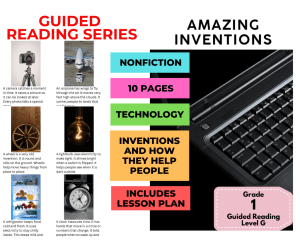
Guided Reading Level G - Amazing Inventions (with Lesson Plan)
ELA, Resources for Teachers, Reading Comprehension, Reading, Science, Engineering, Technology, Language Development, Pre-Reading, Vocabulary, Grade 1, 2, 3, Worksheets & Printables, Worksheets, Teacher Tools, Centers, Activities, Literacy Readers, Quizzes, Quizzes and Tests, Assessments, Lesson Plans
This Guided Reading Book - Amazing Inventions (Level G) with lesson plan includes: Guided Reading Color Label (front cover x1) This is a quick way to match the book’s demands to what students can generally handle.. The overall goal is to use the level/color to pick books for several smaller groups. To qualify for a certain level, a student is expected to read a book from that level with about 90–94% accuracy. If a student is consistently accurate and understands, move up a level. If the student is struggling at that level, drop down and add more support. Each student will improve at completely different rates, but it is generally one of the best ways to check progress across the class. DOWNLOAD THE CATALOG TO VIEW ALL GUIDED READING BOOKS AVAILABLE (SORTED LEVELS A-Z) Pre-Reading Question (x1) Teacher asks the prompt aloud, can be while showing the cover or first page. Students share what they already know, or make educated guesses from the cover. Prompt them to use the target vocabulary. Write some of their responses on the board to look back at during the reading. Vocabulary Words (x5) Introduce the five words, best doing it one at a time. Start by saying it, while students repeat and then see if anyone knows what it means before reading further. Read through the meaning and try to briefly connect each word to a picture or gesture so it’s meaningful. Ask students to flip through the book pages and point to where they see each of the vocabulary words. While reading the book pause upon coming across one of the vocab words or read the sentence twice to make sure students understand the word has appeared. Optional: Ask students to raise hands whenever they see/hear one of the new words. Guided Reading Pages (x10) Check the book snapshot (below) for: primary topic - do you need to prep extra reading or intro materials on this? what is taught best - decide on 1-2 bullets to focus on, use the prompt or words provided here for best results. learning goals - what you are checking for students to be able to do after the session, elicit answers using prompts or words provided. key vocabulary (see section above). questions overview - so you know what is coming up and if you need to prep extra materials to assist understanding. Run the lesson You may have already looked at a few of the pages together, but you can show them some of the pictures again first to set meaning. Depending on how much time you have and how familiar your students are with guided reading class, you may want to read the book aloud first with the group first. Students whisper or partner read, while you listen in. If time, do it as a group, one student reading a page each. Use the guided page’s prompts to coach: “Check the picture / does it make sense?” “Point under the words / try the first sound” “Reread the sentence smoothly”. Try to focus more on one student per session (rotating every time), so you can work out if they are ready to move up or need to move down a level. Comprehension Questions (back cover x3) This is your way to check that students didn’t just say the words, but actually understood the text. First, let students answer by pointing to the page/picture and saying a short sentence. After any answer, follow with: “Show me where you found that in the text.” In bigger groups, have partners answer first (10–20 seconds), then call on 2–3 students to share. Differentiation tips: Emerging speakers/struggling readers: oral + pointing On-level: oral in a full sentence Higher: one written sentence or draw + label Book Snapshot Title: Amazing Inventions Genre: Nonfiction (informational text) Subject: Science/Technology + Reading (Informational Text) Primary Topic: Inventions and how they help people Estimated Guided Reading Level (A–Z): G What This Book Teaches Best Introduces common inventions (wheel, lightbulb, telephone, computer, camera, airplane, refrigerator, clock, robot) and what each one does. Explains how inventions help people in everyday life (moving heavy things, seeing in the dark, connecting over distances, doing work quickly, keeping food cold, telling time, doing chores). Builds understanding of technology as something that changes, with “new things… invented every day to help people.” Supports describing key details from short informational passages paired with clear photos. Learning Goals Identify several inventions named in the book and tell what each helps people do. Describe how a wheel helps move heavy things from place to place. Explain how a lightbulb helps people see when it is dark outside. Tell how a telephone connects people who are far apart. Describe one way computers help people work quickly and what they can do. Explain what the book says about technology changing and new inventions helping people. Key Vocabulary From the Text invention — something made for the first time to help people. electricity — power that runs lights and machines. distances — how far apart places are. refrigerator — a machine that keeps food cold. sensors — parts that help a machine notice what is around it. Discussion Prompts Pre-reading question: What inventions do you use, and how do they help you? Comprehension questions: How do wheels help move heavy things from place to place? Comprehension questions: What does a lightbulb help people do when it is dark outside? Comprehension questions: What does the book say about new technology and how it helps people? Printing Tips 1. Best Printing Method (Recommended) “Booklet” Printing (Best if Available) If your printer or PDF viewer supports Booklet Printing , use this. Settings to use: Print mode: Booklet Paper size: Letter or A4 (either works) Orientation: Landscape Print on both sides: Yes Flip on: Short edge Scaling: Fit to printable area Booklet subset: First test: Front sides only Then: Back sides only This will automatically: Pair pages correctly Put the cover on the outside Align everything for folding After printing, fold in half and staple along the spine . 2. If “Booklet” Printing Is NOT Available You can still print this correctly with manual duplex printing . Step-by-step: Open the PDF. Choose Print . Set: Orientation: Landscape Pages per sheet: 1 Print on both sides: Yes Flip on: Short edge Print all pages . Because each PDF page already contains two facing book pages, the result will still fold cleanly into a book. Thousands of Cored Education products are included with your TeachSimple membership. Download links and encyclopedia index available here.
Author Cored Education
Rating
Tags Reading Comprehension, Reading Passages, Reading, Guided Reading, Guided Reading Lesson Plan, Guided Reading Activity, Pre-reading, Science Lesson Plans, Technology, Engineering