



3,911 products added recently
Page 188 - 8th Grade Lesson Plans
Equip your eighth graders with the knowledge and skills needed for high school success using these lesson plans. Focused on advanced concepts and independent learning, these resources help students take ownership of their education. Implement them to ensure your students are ready for the next step.

 Show filters


Letters from Galileo's Daughter | Reading Comprehension Deck | Interactive Lesson
Social Studies, History, History: Ancient, Grade 6, 7, 8, Teacher Tools, Lesson Plans
Letters from Galileo's Daughter Reading Comprehension Lesson Plan Transport students back in time with this interactive reading lesson on Letters from Galileo's Daughter. Through a video lecture, reading passage with audio, close reading questions, and a quick write activity, learners dive deep into history, analyzing correspondence between Galileo and his eldest daughter. Educators can implement this resource in various ways - as a whole group lesson, small group activity, or even an independent homework assignment. This social studies resource keeps middle school students engaged across multiple modalities while improving reading comprehension and writing skills. Targeted for grades 6-8, it seamlessly integrates into units on ancient history or the Renaissance time period. Provide an immersive textual experience with this standards-aligned lesson.
Author Teach Me This
Tags Social Studies Lesson, Ancient History, Reading, Comprehension, Interactive Lesson
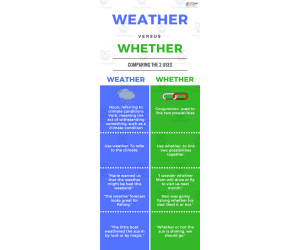
Weather vs. Whether | Pre-Intermediate Lesson Plan
ELA, Language Development, ESL, Grade 6, 7, 8, 9, 10, 11, 12, Teacher Tools, Lesson Plans
This is a pre-intermediate lesson plan worksheet set for Weather vs. Whether. Students will learn more about these and then complete the exercises to follow, which will assess their comprehension and implement grammar skills. An Enriching Language Arts Resource Beyond being a regular lesson plan, this resource takes kids on a rewarding interactive journey in Language Arts. The worksheets serve as practical arenas where students can test out their learning about 'Weather' and 'Whether', while evaluating their own understanding or working collaboratively. Suitable for educators conducting group activities or individual sessions or homeschooling parents wanting reliable resources for at-home lessons – it has been designed to fluently adapt to varied learning environments. Inculcating the competency of correctly using ‘It’s’ vs ‘Its’. Fostering enhanced overall grammar skills which uplift their competency in Language Arts. Digital Compatibility & Reflective Feedback A noteworthy feature is its integration with Google Apps that injects digital vibrance into traditional classroom practices. Additionally, keeping the importance of feedback in mind during learning progressions - an answer key provision allows immediate reflection. A solution crafted by teachers themselves - The It's vs Its | Beginner Lesson Plan correlates seamlessly within any curriculum focusing on developing strong foundational knowledge in Language Art amongst learners.
Author TEAM TEFL
Tags Weather, ESL Lesson, Language Arts, Writing Sentences, Conjunctions, Intermediate Weather
Sea Turtles | Interactive Science Lesson | Micro-Learning Deck
Science, Life Sciences, Animals, Grade 6, 7, 8, 9, Teacher Tools, Lesson Plans
This micro-learning deck is the perfect accessory to your Science instruction! This digital slideshow presents Sea Turtles. Within this slideshow, you will receive: -Video Lesson -Reading Passage w/ Audio -Close Reading -Quick Write The informational texts included in this resource alongside the informal assessments will keep your students engaged from beginning to end.
Author Teach Me This
Tags Sea Turtles, Turtle Habitat, Comprehension, Vocabulary, Digital Science

Wishy-Washy | Figurative Language Activity | Micro-Learning Deck
ELA, Reading, Reading Comprehension, Grade 5, 6, 7, 8, Teacher Tools, Lesson Plans
Wishy-Washy Figurative Language Activity Micro-Learning Deck The Wishy-Washy Figurative Language Activity Micro-Learning Deck is a comprehensive tool effective at enhancing language comprehension capabilities in students, especially those in Grade 5 to Grade 8. This resource brings the abstract world of figurative language into sharp focus through an engaging mix of components such as: Video lessons, Reading passages, and Dynamically crafted PowerPoint slides. Incorporating close reading and a captivating audio passage component, this approach transcends rote memorization methods. Students grasp the meaning of figurative language by interacting directly with a fun concept known as 'Wishy-Washy'. An added benefit within these lesson plans is an exercise that encourages students to apply their newly acquired knowledge instantly. Not only does this program enhance comprehension but it reciprocally improves student writing skills. Mainly consisting of Microsoft PowerPoint files: This package affords practicality as one of its highlights. Teachers can simply incorporate its ready-to-display slides without needing extensive preparation time. Educators have flexibility to adapt these resources according to learning needs, suitable for diverse settings such as group study sessions or individual learning tasks given out for homework assignments. Innovatively Improve Language Comprehension Skills A refreshingly innovative approach towards improving language arts comprehension skills awaits teachers who choose. The Wishy-Washy | Figurative Language Activity | Micro-Learning Deck is ready for you!
Author Teach Me This
Tags Figurative Language, Language Comprehension, Close Reading, Interactive Learning, Writing Skills

Abstract Form Lesson + Activity
Creative Arts, Art, Art History, Grade 6, 7, 8, 9, Lesson Plans, Teacher Tools
This is an Abstract Form Lesson + Activity. It is an editable PowerPoint presentation, so you can tweak slides as you see fit. It will begin with a question for art students to ponder: What does “abstract” mean in the art world? After being given a definition of abstract art, this presentation will move into further exploration of abstraction across the century. The topics included here are: -Expressionism (Early 20th Century) -Cubism (from 1907 – 1908) -Orphism (1912 - 13) -Suprematism (1913) -Neo-plasticism (1919) -Automatism (1920) -Action painting (1940 – 1950s) -Colour Field Painting (1940 – 1950s) -Post painterly abstraction (1950s) -Hard edge painting (1960s) -Op art (1960s) After learning about each of these types of abstract art, students will be presented with their next question: What is a sculpture? The questions included in this presentation serve as a great segue way for open discussion and dialogue amongst your art students. These questions can be utilized as writing prompts. When the question is presented, have your students write down their answer on paper. If you want to increase engagement, have students swap their paper with a classmate and read each other’s answers. They can follow up with small group discussions, which can then turn to whole group discussions. Under the topic of sculptures, students will learn about: -19th Century Sculpture -The Beginning of Abstract Sculptures -Jean Arp Finally, students will be presented with their assignment: “You will be creating your own abstract sculpture in which your form will be inspired by Jean Arp but you will paint your sculpture by drawing inspiration from traditional Metis Dot Art. What is Dot Art?” Samples and step by step directions are included for students. A success criteria checklist and a rubric is also included.
Author Resource Garden
Tags Art Lesson, Art History, Sculptures, Crafts, Abstract Form, Rubrics, Abstract Art, Cubism, Small Group, Expressionism

Digital Portraits Lesson
Creative Arts, Art, Graphic Arts, Grade 6, 7, 8, Teacher Tools, Lesson Plans
This is a Digital Portraits Lesson for your middle school art students. This presentation will begin with 3 questions for students to ponder, discuss and answer: What do you know about digital art? How is it created? What is a vector image? How is that different from a Raster (Bitmap) image? Students will get a chance to learn about each of these art forms in further detail through descriptions, explanations, and visual examples (with credit to the artists that created them). With each artwork example slide, you can allow students to form groups and discuss what they see and how techniques were applied to these digital portraits. This is also a great opportunity for whole group discussion. Student’s assignment will be: “You will be creating a digital vector portrait of yourself. If digital art is entirely brand new to you, you will watch this tutorial (you have permission to speed it up) and create your own digital portrait using Google Drawing. If you are experienced with digital art, I challenge you to use Google Drawing (an incredibly simple platform in comparison to what you probably use) to create your vector portrait. Take a look at the tutorial above to get some ideas for strategies. However, if you choose to use your own digital platform to create your portrait, it must still be in the “vector art” style, and must have some additional creative elements like the few portrait examples towards the end in the previous slides. Once you’re finished, submit your work as a Google Drawing file/link in the Google Classroom and complete the attached reflection. Additionally, save the image from the app, and set it as your Profile Picture on Google.” A scoring rubric is included.
Author Resource Garden
Tags Digital Portaits, Art Vocabulary, Art Terminology, Middle School Art Lesson, Art Project, Vector Portrait, Self Portraits, Whole Group Discussion

Multiplying Binomials – FOIL Visual Math Lesson
Math, Algebra, Multiplication and Division, Division, Grade 8, 9, 10, 11, Lesson Plans, Teacher Tools
This lesson carefully walks students through a comprehensive and visual explanation of multiplication of two binomials using an area model before introducing the mnemonic FOIL. How many times have your students memorized FOIL, but had no idea why it works or what they even doing when using it? This lesson can address that gap. It uses clear visuals and colour-coding to make the information salient. (It can be printed black and white, and students shade the appropriate areas). It walks students through an area model without variables first before introducing variables and combining like terms. A sheet of practice problems of increasing levels of difficulty is included for students to reinforce what they have learned. ANSWER KEY INCLUDED You will be able to use the language, visuals, and methods from this lesson when teaching the reverse operation (factoring trinomials) at a later date. Grades to Use With: This lesson is designed for high school algebra classes (grades 8-11) or special education classes who are teaching some early algebra. It should help visual learners understand what is actually happening when two binomials are being multiplied and why the mnemonic FOIL works. Standards: CCSSHSA-APR.A.1 Understand that polynomials form a system analogous to the integers, namely, they are closed under the operations of addition, subtraction, and multiplication; add, subtract, and multiply polynomials. If you enjoy this high school math product, check out some others in my store! I especially love to incorporate financial literacy into math class and show how learning about percentages is so important for many everyday calculations! Inflation: High School Financial Literacy Lesson Systems of Equations: Real-World Algebra Problems Using Substitution Financial Literacy: Compound Interest Financial Literacy: Bank Statement and Credit Card Bill Practice Activity
Author Grace Under Pressure
Rating
Tags FOIL, Binomials, High School Math, Algebra, Visual Math, Multiplying Binomials, Distributive Property, Multiplication, Like Terms, Area Model, Foil In Math, What Is Foiling In Math, Foiling In Math, Foiling Worksheets
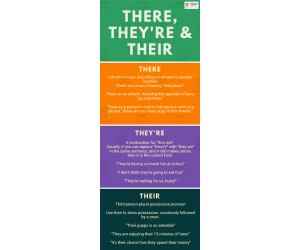
There, They're & Their Intermediate Lesson Plan
ELA, Grammar, Grade 5, 6, 7, 8, 9, 10, 11, 12, Teacher Tools, Lesson Plans
This is an intermediate lesson plan worksheet set for Modal Verbs: There, They're & Their. This ESL Lesson Plan provides essential grammar instruction for intermediate language learners on the commonly confused words "there", "their" and "they're." Students will learn the differences between these homophones and practice using them correctly through engaging exercises. This resource includes a fully structured lesson plan to teach the concepts, two printable student worksheets with activities to assess comprehension, and a digital copy for adaptable classroom use. The lesson gives clear explanations and examples that build students' understanding of there, their and they're. Recognizing homophones is an important foundation for spelling, reading, and writing as students advance their communication abilities. This resource helps cement proper usage of these homophones through focused practice. It can be implemented in whole-group grammar lessons or as small group/individual reinforcement. This resource can also be accessed through Google Apps. Answer key included.
Author TEAM TEFL
Tags Modal Verbs, Language Arts, Grammar Lesson, ESL Lesson, Vocabulary Words
Hedgehog | Interactive Science Lesson | Micro-Learning Deck
Science, Life Sciences, Animals, Grade 6, 7, 8, Teacher Tools, Lesson Plans
Hedgehog | Interactive Science Lesson | Micro-Learning Deck This science resource efficiently supplements a middle school classroom's zoology curriculum through an engaging slideshow on hedgehogs. Students analyze a video lesson, reading passage with audio, close reading activity , and quick write assignment to strengthen comprehension and writing skills. Educators can implement the self-paced activities in various settings like whole group instruction, small group work, or individual assignments. The informational texts and informal assessments keep learners focused while allowing them to progress at their own pace. This versatile resource saves teachers preparation time while aligning to grade 6-8 science standards on mammals.
Author Teach Me This
Tags Hedgehogs, Animal Habitats, Interactive Science, Raising Young, Informational Text

Lesson 1.4 - Variables
Science, Chemistry, Physics, Grade 6, 7, 8, 9, 10, 11, 12, Lesson Plans, Teacher Tools
Lesson 1.4 - Variables This comprehensive educational resource is tailored to help teachers educate young learners about the vital aspect of variables in scientific experiments. Designed with a focus on versatility, it can be used in different class settings such as whole group and small group discussions, or given as homework exercises. Overview The resource delves into independent variables, dependent variables and control variables. It provides understanding on how each variable type can be identified within the context of an experiment. Provided are two versions of notes sheets: one with blanks for direct student engagement and a completed version for absentee students or those needing additional support due to their unique learning conditions. Involvement Activities Mini-poster activity : Students envisage their own experiments while identifying different types of variables involved. The Sample Worksheet: Aids in guiding them through this hands-on exercise. The Practice Sheet:To further practice identification of diverse variable types. There are two versions available catering for diverse student needs – making learning inclusive. Presentation Materials PPT Notes:An engaging format easing class presentations plus objectives & starter questions strategically derived from the topic discussed. Note that greater value can be realized when this teaching aid is combined with lessons 1-5 plus binder divider test and quiz from unit one thus forming a more holistic approach towards understanding science fundamentals. All files come in .docx or .pptx formats which may require specific software like Microsoft Word or PowerPoint for use/editing. This tool caters mainly towards Grade 6-12 learners studying Science, specifically Chemistry and Physics subjects.
Author Integrated Chemistry and Physics
Tags Variables, Scientific Experiments, Independent Variables, Dependent Variables, Control Variables
Barack Obama | Reading Comprehension Deck | Interactive Lesson
Social Studies, Biographies, Grade 6, 7, 8, Teacher Tools, Lesson Plans
This reading comprehension deck is the perfect accessory to your Social Studies instruction! This digital slideshow presents Barack Obama. Within this slideshow, you will receive: -Video Lesson -Reading Passage w/ Audio -Close Reading -Quick Write The informational texts included in this resource alongside the informal assessments will keep your students engaged from beginning to end.
Author Teach Me This
Tags Biographies, Barack Obama, Social Studies, Interactive Lesson, Reading Comprehension
Southwest Native Americans | Reading Comprehension Deck | Interactive Lesson
Social Studies, First Peoples (Native), Grade 6, 7, 8, 9, Teacher Tools, Lesson Plans
Southwest Native Americans Reading Comprehension Transport students to the striking landscape of the Southwest region to learn about the lives and cultures of Native American tribes who have called these lands home for centuries. This interactive digital lesson guides learners through informational texts, images, maps, and video about the ingenuity and adaptability of the Navajo, Apache, Pueblo, and other peoples. Assessment activities spaced throughout the lesson allow students to demonstrate comprehension, think critically, and connect ideas to their own lives. Educators can implement this versatile resource in language arts or social studies classes for whole group instruction or independent work. The materials aim to spur students' curiosity about different ways of living and broaden cross-cultural understanding.
Author Teach Me This
Tags Native Americans, Southwest, Social Studies Lesson, Reading Comprehension, Close Reading

Flash Mob Choreography: "What Makes You Beautiful"
Creative Arts, Art, Dance, Grade 5, 6, 7, 8, Teacher Tools, Lesson Plans
This handbook is a supplement to my successful and popular “Flash Mob Dancing in Education” which introduces you to the basics of Flash Mob dancing. This handbook will teach you the specific choreography moves for “What Makes You Beautiful” by One Direction.
Author MUSICWORKS
Tags Flash Mob, Choreography, What Makes You Beautiful, Dancing
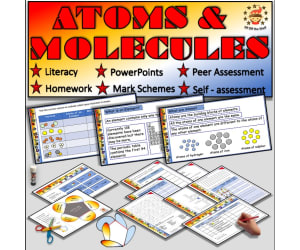
Chemistry - Atoms and Molecules Fully Resourced Lesson
Science, Chemistry, Grade 5, 6, 7, 8, 9, Lesson Plans, Teacher Tools
Introduce students to atoms, molecules, and the periodic table with this comprehensive bundle. Through an engaging animated PowerPoint, worksheets, anticipation guides, foldables, fact sheets, homeworks, self- assessments , and more, students will learn key concepts like how atoms combine to form molecules and compounds, the differences between elements and compounds, elemental symbols, and how to read the periodic table. Implementation ideas like literacy connections, student self-assessment, and differentiated homeworks allow for flexible use in whole group, small group, or individual settings. This resource from Elf Off The Shelf contains 13 components to help educators build engaging, standards-based chemistry lessons tailored to their students' needs and abilities.
Author Elf off the Shelf Resources
Tags Chemistry Lesson, Chemistry Powerpoint, Atoms Printable, Molecules Printable, Science Assessment

Why We Eat What We Eat Lesson
P.E. & Health, Health, Grade 6, 7, 8, 9, 10, 11, 12, Lesson Plans, Teacher Tools
The 'Why We Eat What We Eat Lesson' is an insightful teaching resource designed to educate students on the factors that influence their eating habits. This lesson targets pupils from grade 6, all the way through to grade 12 and provides a well-rounded understanding in Health under P.E. & Health subjects. Teachers will find this resource particularly useful due to its comprehensive coverage of various aspects tied to our food choices. The lesson begins with a thought-provoking query, What Influences Food Choices?, intriguing the students’ curiosity about personal food selection habits. Highlights 25 slides, each packed with informative content Tackling emotions associated with different foods in 'How Would You Feel?' segment Intriguing personal recounts of dietary experiences in 'What's Your Food Story?'. Eating Right and Feeling Well: This significant transition helps move from understanding personal nutritional preferences towards advocating for healthier food choices; meticulously structured keeping pedagogical theory at its core thereby ensuring educative engagement amongst pupils. A format includes an engaging activity further exploring what influences eating habits accompanied by a handout aiding efficient classroom interaction. This streamlined PowerPoint presentation shared via PDF can be easily used for whole group instruction or as a tool for small group discussion facilitating deep dive explorations within health education sphere. Alternatively, it can be given out as homework assignments nudging learners towards introspection into why they eat what they eat extending learning beyond classroom boundaries too! In conclusion,the 'Why We Eat What We Eat Lesson' is not just another teaching tool but rather an edifying journey waiting to unravel myriad influences shaping dietary inclinations amongst modern day young learners reinforcing healthier nutritional choices.
Author All About Food and Life Skills
Tags Food Choices, Nutrition, Influences, Habits, Health Education
Rate and Unit Rate Banner Activity
, Grade 6, 7, 8, Lesson Plans, Teacher Tools
This is aRate and Unit Rate Banner Activitythat will be fun for your middle school math students, while also making a great decoration for your math classroom.In this activity, your students will get to demonstrate their mastery over unit rates. You can choose any method to hang the banner but the method that works best for me is to hole punch both top corners and string ribbon or yarn through. My students like doing these after every new concept mastered. They get to color and get creative! It is always so nice for them to see how much they learned. There are 10 banners, printed 2 per page. You will print as many pages as you need for your entire classroom, so you’ll probably print each banner at least twice. You may even choose to have every student do multiple pages, so there are many banners to hang throughout the room. Students could complete these on their own or work with a partner to solve the problems. An answer key is included. I hope you enjoy! Take A Look at My Best Sellers: Pi Paper Chain Activity Systems of Equations Task Cards Japanese Culture Bell Ringers Famous Authors Poster Pack Valentine’s Day Shopping Activity The History of Mother’s Day Reading Packet You can find more resources at my storefront here: https://teachsimple.com/contributor/the-comprehensive-teacher
Author The Comprehensive Teacher
Tags Rate, Unit Rate, Math Activity, Math Banner, Word Problems, Math Decor, Classroom Decor, Partner Work
Armadillo Facts | Interactive Science Lesson | Micro-Learning Deck
Science, Life Sciences, Animals, Grade 5, 6, 7, 8, Teacher Tools, Lesson Plans
This micro-learning deck is the perfect accessory to your Science instruction! This digital slideshow presents Armadillo Facts. Within this slideshow, you will receive: -Video Lesson -Reading Passage w/ Audio -Close Reading -Quick Write The informational texts included in this resource alongside the informal assessments will keep your students engaged from beginning to end.
Author Teach Me This
Tags Armadillo Facts, Science Lesson, Digital Lesson, Reading Passage, Quick Write
Curriculum Map for 8th Grade
Common Core, Grade 8, Lesson Plans, Teacher Tools
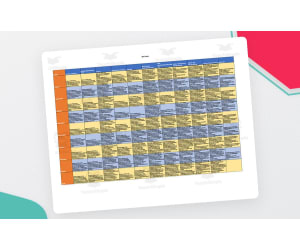
This is a Curriculum Map for 8th Grade. It covers all math, language arts, social studies and science standards for 8th grade. This is an Excel file that is fully editable for you to adjust to meet your needs.
Author DK's Creations
Tags Back To School, Curriculum Map, Standards, Common Core, 8th Grade Ela Common Core Curriculum Map

Theodore Roosevelt | Reading Comprehension Deck | Interactive Lesson
Social Studies, Biographies, Grade 7, 8, 9, 10, Teacher Tools, Lesson Plans
This reading comprehension deck is the perfect accessory to your Social Studies instruction! This digital slideshow presents Theodore Roosevelt. Within this slideshow, you will receive: -Video Lesson -Reading Passage w/ Audio -Close Reading -Quick Write The informational texts included in this resource alongside the informal assessments will keep your students engaged from beginning to end.
Author Teach Me This
Tags Presidents, U.S. History, Theodore Roosevelt, Social Studies Lesson, Interactive

WILDFIRES AND YOUR HEALTH Lesson Plan, Worksheets, Video & App BUNDLE
Science, Earth and Environmental Sciences, Environmental Science, Grade 8, 9, 10, Lesson Plans, Teacher Tools
The Wildfires and Your Health Lesson Plan, Worksheets, Video & App Bundle A comprehensive teaching resource designed to educate grade 8 to grade 10 students on the impacts of wildfire smoke on health. Drawing from subjects such as Science and Environmental Science, this unique package incorporates various delivery modes to cater for different learning styles. Reading materials, Videos, Apps and worksheets.[1] The lesson plan elaborately discusses potential questions about wildfires: Determining where wildfires commonly occur. Analyzing how wildfire smoke affects both your body overall as well as your lungs specifically. Giving practical insights on personal protection against wildfire smoke. Digital Versatility - Google Slides Hyperdoc & PDF formats! This bundle comes in two helpful formats depending on your needs - a digital PDF that can be filled out online, or a printable version so students can keep a physical copy. The Google Slides Hyperdoc further adds versatility with its fillable fields for easy online submission of work. Inclusive Digital Resources: Video & Articles To give multiple perspectives on the topic at hand, the package includes an engaging article and a roughly six-minute video – giving rich visual context to the text-based elements of the unit. For ease of use all resources are hyperlinked directly into their respective guide titles. Ease Of Use Across Learning Settings This adaptable bundle can be utilized across various settings -- it's perfect for classwork (either individually or in groups), homework assignments, or even substitute lessons when regular instruction isn't possible. What's Included And How To Access The bundle (3 PDFs)[2] is delivered zipped after purchase and takes a modest teaching time of approximately 30 minutes per session, making it manageable for any classroom schedule.
Author Dynamic Earth Learning
Tags Wildfires, Health Impacts, Smoke Effects, Protection Measures, Teaching Resource
Flash Mob Choreography: "Dynamite"
Creative Arts, Art, Dance, Grade 5, 6, 7, 8, Teacher Tools, Lesson Plans
This handbook is a supplement to my successful and popular “Flash Mob Dancing in Education” which introduces you to the basics of Flash Mob dancing. This handbook will teach you the specific choreography moves for “Dynamite” by Taio Cruz
Author MUSICWORKS
Tags Flash Mob, Choreography, Dynamite, Dancing, Easy Flash Mob Dance, Dynamite Multiplication
Sloth Facts | Interactive Science Lesson | Micro-Learning Deck
Science, Life Sciences, Animals, Grade 6, 7, 8, 9, Teacher Tools, Lesson Plans
Sloth Facts | Interactive Science Lesson | Micro-Learning Deck This interactive science micro-learning deck focuses on fascinating sloth facts. Educators can implement it in various ways - as a whole group lesson to spur discussion, individual assignments to build comprehension, or homework for further learning. The resource incorporates multiple components to fully engage middle school students. A video lesson first overviews key content on sloths' physiology and habitats. An accompanying reading passage with audio further expands on details like their slow movements and camouflage capabilities. Closed reading questions then allow learners to analyze the passage more critically. Finally, a creative quick write activity assesses student understanding while enabling them to apply the new zoological knowledge. Overall, this lesson plan seamlessly integrates video, reading, and writing for a rich learning experience anchored in science standards. Both public school teachers and homeschooling parents will appreciate how the micro-learning format with its variety of materials caters to diverse needs and learning styles.
Author Teach Me This
Tags Sloth Facts, Animal Habitats, Interactive, Science, Comprehension, Sloth Facts Texts
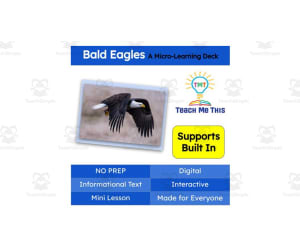
Bald Eagle | Interactive Science Lesson | Nature Collection | Micro-Learning Deck
Science, Life Sciences, Animals, Grade 6, 7, 8, 9, Teacher Tools, Lesson Plans
This micro-learning deck is the perfect accessory to your Science instruction! This digital slideshow presents Bald Eagle - Nature Collection Within this slideshow, you will receive: -Preview and Engager -Video Lesson -Reading Passage w/ Audio -Close Reading -Quick Write -Exit Ticket -Links for more learning The informational texts included in this resource alongside the informal assessments will keep your students engaged from beginning to end.
Author Teach Me This
Tags Interactive Science, Bald Eagle, Nature Collection, Learning Deck, Zoology

Johnny's Imaginary Friend Short Story | Pre-Intermediate Lesson Plan
ELA, Reading, Grade 3, 4, 5, 6, 7, 8, 9, 10, 11, 12, Teacher Tools, Lesson Plans
Johnny's Imaginary Friend is a pre-intermediate reading comprehension lesson focusing on the short story of the same name. Students read the narrative of a boy named Johnny and his imaginary friend. Through engaging with the text, learners strengthen their reading skills and grammar knowledge. Educators can implement this versatile resource in various settings. Use it for whole-group instruction to introduce a new topic. Or provide it for small groups or individual students to work on independently. Assign it as homework to give additional practice outside of class time. The lesson includes the original short story plus follow-up exercises assessing comprehension and applying grammar concepts recently studied. An answer key allows teachers to quickly check student work. This teaching material suits grade 4-5 students studying language arts. Access it easily by printing the PDF or using Google Apps. Includes an answer key Makes it easier than ever for educators to evaluate student responses accurately Eases manual workload on teachers when assessing responses delivered using traditional or conventional methods. The package consists of three PDFs with four ready-to-print pages along with one digital access file. With its emphasis on children's wild imaginations, it injects a dose of fun into everyday schooling while imparting valuable educational content. In terms of implementation, there's room for flexibility depending on class size or individual learner preferences: whole group setting inclusion, where all learners navigate through collectively; small-sized subsection utilization, allowing more intimate discussion amongst peers; traditional homework assignments that encourage independence in learning.
Author TEAM TEFL
Tags Reading Passage, Grammar Lesson, Language Arts, Short Story, Vocabulary, Imaginary Story