



3,963 products added recently
Page 173 - Elementary Lesson Plans
Support your elementary students with lesson plans that cover a broad range of subjects and skills. These resources are designed to promote cognitive, social, and emotional growth. Incorporate them into your teaching to provide a well-rounded education that meets the needs of all your students.

 Show filters

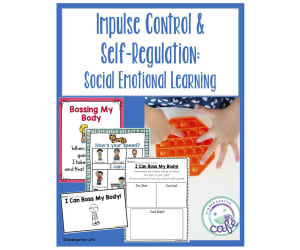
Social Emotional Learning Unit: Impulse Control & Self-Regulation Activities
Special Resources, Social Skills, Preschool, Grade 1, 2, Lesson Plans, Teacher Tools
The Social Emotional Learning Unit: Impulse Control & Self-Regulation Activities is a 16-page resource full of ideas, lessons and printables to teach students about impulse control and self-regulation. You will receive a handout that includes teaching points, read-alouds, videos and extra activities. There is a letter to caregivers to support these skills at home. After learning about strategies to self-regulate, students will get to write about what they've learned and practice their reading skills with the emergent reader.
Author Kindergarten Cafe
Tags Impulse Control Activity, Social Emotional Learning, Self-regulation Activities, Body Control, Social Skills

Morphology Matrix Builders
Science, Basic Science, Inventors, Theories, ELA, Reading, Reading Comprehension, Writing, Creative Writing, Handwriting, Homeschool Curriculum, Homeschool Templates, Grade 3, 4, 5, 6, 7, Worksheets & Printables, Worksheets, Workbooks, Word Searches, Teacher Tools, Lesson Plans, Quizzes and Tests, Quizzes, Tests, Assessments
Tired of vocabulary lists that are memorized on Thursday and forgotten by Monday? It's time to transform your students from passive memorizers into active "word architects"! Introducing Morphology Matrix Builders —a comprehensive, no-prep resource designed to revolutionize vocabulary instruction in your 3rd, 4th, or 5th-grade classroom. Based on the science of reading and structured literacy principles, this unit shifts the focus from rote learning to deep structural analysis of words. Students will learn that English isn't random; it's a fascinating system waiting to be decoded. By mastering a core set of Greek and Latin roots, prefixes, and suffixes, your students will gain the power to decipher thousands of unfamiliar academic words independently. Watch their confidence, reading comprehension, and test scores soar across all subject areas—from ELA to science and social studies! What's Inside This All-in-One Resource? Part 1: Comprehensive Teacher's Guide (11 Pages): A robust theoretical framework that explains the "why" behind morphological instruction. It covers free vs. bound morphemes, prefix functions (including chameleon prefixes), the power of Greek and Latin roots, derivational vs. inflectional suffixes, and key orthographic rules. This guide will empower you to teach with confidence and expertise. Part 2: Student Workbook (15 Pages): Ten engaging, ready-to-print worksheets that guide students from foundational concepts to complex synthesis. Activities include morphological matching, sentence synthesis, word deconstruction, and creative construction. Worksheets Cover: Prefixes, Suffixes, Greek Roots (bio, phon, graph, photo), Latin Roots (port, tract, spect, struct), Number Prefixes, Elemental Roots, Suffixes of Profession, and more! Includes a final Master Morphologist Assessment to evaluate student mastery. Part 3: Visuals & Teacher Resources (7 Pages): Everything you need to implement this unit seamlessly. Pedagogical Visuals: Three high-quality, printable/projectable anchor charts (Morphology Matrix, Structural Word Anatomy, Greek Root Word Web) to make abstract concepts concrete. Comprehensive Answer Key: Fast, easy grading for all 10 worksheets. 4-Day Pacing & Implementation Guide: A step-by-step, week-long plan ("Matrix Monday," "Word Web Wednesday," etc.) to integrate this unit perfectly into your literacy block. Stop teaching one word at a time. Hand your students the master key to the English language and watch them unlock a world of vocabulary! Keywords: Morphology, Greek and Latin Roots, Prefixes and Suffixes, Vocabulary Instruction, Word Study, ELA, English Language Arts, 3rd Grade, 4th Grade, 5th Grade, Upper Elementary, Reading Comprehension, Structured Literacy, Science of Reading, Orton-Gillingham Aligned, Word Building, Etymology, Printable Worksheets, Digital Download, No Prep, Homeschool. Why Parents/Schools Love It: Goes Beyond Rote Memorization: It teaches students a transferable system for decoding words, fostering true understanding and critical thinking instead of just memorizing for a test. Exponential Vocabulary Growth: By learning one root liketract, students don't just learn one word; they unlock the meaning ofattract,distract,extract,tractor,retract, and dozens more. Boosts Reading Comprehension: When students can break down complex, multi-syllabic words in science and history texts, their overall comprehension and academic performance across all subjects improve dramatically. Comprehensive & "Done-For-You": This isn't just a pack of worksheets. It's a complete instructional unit with a teacher's guide, student activities, visual aids, an answer key, and a pacing guide, saving educators valuable prep time. Builds Academic Independence: It empowers students to become confident "word detectives," equipping them with the skills to tackle challenging new vocabulary without relying on a teacher or a dictionary for every word. Target Student Classes : Based on the explicit text on pages 1, 3, 27, and 33, and the complexity of the concepts, should target: Upper Elementary School: 3rd Grade, 4th Grade, and 5th Grade. The resource is also perfect for Middle School intervention groups who need foundational vocabulary skills, as well as Homeschool parents teaching these grade levels. Copyright/Terms of Use: This Book was copyrighted by Syed Hammad Rizvi. This resource is for personal and single classroom use only. You may not alter, redistribute, or sell any part of this resource. In other words, you may not put it on the Internet where it could be publicly found and downloaded. If you want to share this resource with colleagues, please purchase additional licenses from Teachsimple. Thank you for respecting these terms of use. This product is happily brought to you by Syed Hammad Rizvi
Author Creative Book Store
Rating
Tags Morphology, Vocabulary, WordStudy, ELA, EnglishLanguageArts, Literacy, Reading, Teaching, Teacher, GreekAndLatinRoots

I WONDER - Where Are The Great Lakes | Animated Video Lesson
Geography, Social Studies, Grade 1, 2, 3, 4, 5, 6, 7, 8, Lesson Plans, Teacher Tools
Video Introduction An amazing video designed for the students to learn more about famous places in different countries. I WONDER - Where Are The Great Lakes | Animated Video Lesson What do you know about this place? Do you know in which part of the world it is? Have you ever visited this place? If yes, can you tell us more about your adventure, and what do you like the most about this place? Do you like reading about Geography? What is your favorite country in the whole world? If you are going on a trip where it will be? Which country? What you are going to see there? Does this country has a famous place to visit? I WONDER - Where Are The Great Lakes | Animated Video Lesson The activity is perfect for encouraging the researching skills for the students, while learning more about this fantastic place. I WONDER - Where Are The Great Lakes | Animated Video Lesson This friendly designed video is suitable for students at school, homeschooling, and as a group activity. Format Available in MP4 format.
Author Educational Voice
Tags Where Are The Great Lakes, Where Are The Great Lakes Video, The Great Lakes, The Great Lakes Video, The Great Lakes Facts, The Great Lakes Facts For Kids, The Great Lakes Video For Kids, Lakes

Careers Now and Then | Measure Area with Masons Day 4 | Ancient China
Social Studies, History, History: Asian, Grade 2, 3, 4, 5, Teacher Tools, Lesson Plans
Careers Now and Then | Measure Area with Masons Day 4 | Ancient China Providing a comprehensive guide to exploring an interesting aspect of Asian history in the classroom, this teaching resource reignites curiosity among students from second through fifth grade. Discover how skilled mason workers have historically contributed within their communities. Interdisciplinary Learning The material includes a set of thoughtful lesson plans that wrap interdisciplinary learning into one engaging platform. Each lesson smoothly integrates elements from different subjects including social studies and math, enhancing fact fluency and encouraging inductive reasoning among learners. This skillful blend puts a spotlight on historical Asian culture while simultaneously developing numeracy skills. Detailed Checklists An added benefit is the provided detailed checklists which come handy for teachers pacing lesson delivery or self-guided learners seeking structured study approaches. The theme focuses on timelines featuring ancient China's masonry work. Day 4: Real-World Learning An exciting phase begins as children delve deeper into real-world scenarios about mason workers' jobs then and now. Brickwork done by these experts are highlighted further with measurements incorporated into the lessons – appealing for young minds! Ease of Use & Wide Applicability A total of 10 readily printable pages in PDF file format for easy use across different devices without losing quality when printed or viewed digitally. This multi-faceted guide can be used across various settings like whole group discussions, small study groups or individual homework assignments–offering wide-ranging utility. Ideal aid not just for public school educators, but also homeschoolers who can bring social studies to life at home!
Author Anyone Can Learn
Tags Teaching Resource, Asian History, Interdisciplinary Learning, Social Studies, Math
I WONDER - Does The Skull Grow | Animated Video Lesson
Human Body, Life Sciences, Science, Biology, STEM, Grade 4, 5, 6, 7, 8, 9, Lesson Plans, Teacher Tools
Video Overview The human body is full of fascinating wonders to learn. This video is created to help the students recognize the anatomy and the job of the human body. I WONDER - Does The Skull Grow | Animated Video Lesson Every part and organ in our human body is vital so let's see how important they are. Have you ever imagined how we look like if we didn't have a skeleton? Did you know that because we have our amazing muscles we can stand! Do you know how many teeth do we have? Have you ever wondered about the food journey inside our body? Can you name all the glands in our body? Why do we have skin? Our nervous system is really good at sending signals. Can you tell us more about it? Are you really good at Mathematics, painting, or any other thing? You should really thank your brain about it! The famous five senses are really doing a great work? Can you explain how every sense works? I WONDER - Does The Skull Grow | Animated Video Lesson The video is perfect for encouraging the researching skills for the students, while learning more about our fantastic human body. I WONDER - Does The Skull Grow | Animated Video Lesson This friendly designed video is suitable for students at school, homeschooling, and as a group activity. Format Available in MP4 format.
Author Educational Voice
Tags Does The Skull Grow, Does The Skull Grow Video, The Skull, The Skull Facts, The Skull Facts For Kids, The Skull Video, The Skull Video For Kids, Skeleton, The Skeleton Facts For Kids, Skeletal System

I WONDER - Was The Stegosaurus A Herbivore | Animated Video Lesson
History: Ancient, History, Social Studies, History: World, Animals, Life Sciences, Science, Grade 4, 5, 6, 7, 8, 9, 10, Lesson Plans, Teacher Tools
Video Introduction An amazing video designed for the students to learn more about dinosaurs in different countries. I WONDER - Was The Stegosaurus A Herbivore | Animated Video Lesson Do you like dinosaurs? what is your favorite one? Do you own a pet? If yes, tell us more about it, like what its name? And what do you like most about it? Do you think that your pet has been evolved from a dinosaur? Can you write down the characteristics of your favourite dinosaur like it's shape, their rivals, where did it use to live and what was their favourite food? What is the largest and the smallest dinosaur that ever found? Why is the T-rex is so famous? Have you ever read any interesting facts about it? Can you name any of the carnivores or herbivores dinosaurs? I WONDER - Was The Stegosaurus A Herbivore | Animated Video Lesson The video is perfect for encouraging the researching skills for the students, while learning more about dinosaurs. I WONDER - Was The Stegosaurus A Herbivore | Animated Video Lesson This friendly designed video is suitable for students at school, homeschooling, and as a group activity. Format Available in MP4 format.
Author Educational Voice
Rating
Tags Was The Stegosaurus A Herbivore, Was The Stegosaurus A Herbivore Video, Stegosaurus, Stegosaurus Facts, Stegosaurus Video, Stegosaurus Video For Kids, Stegosaurus Facts For Kids, Herbivore

I WONDER - How Do Humans Speak | Animated Video Lesson
Human Body, Life Sciences, Science, Biology, STEM, Grade 1, 2, 3, 4, 5, 6, 7, 8, Lesson Plans, Teacher Tools
Video Overview The human body is full of fascinating wonders to learn. This video is created to help the students recognize the anatomy and the job of the human body. I WONDER - How Do Humans Speak | Animated Video Lesson Every part and organ in our human body is vital so let's see how important they are. Have you ever imagined how we look like if we didn't have a skeleton? Did you know that because we have our amazing muscles we can stand! Do you know how many teeth do we have? Have you ever wondered about the food journey inside our body? Can you name all the glands in our body? Why do we have skin? Our nervous system is really good at sending signals. Can you tell us more about it? Are you really good at Mathematics, painting, or any other thing? You should really thank your brain about it! The famous five senses are really doing a great work? Can you explain how every sense works? I WONDER - How Do Humans Speak | Animated Video Lesson The video is perfect for encouraging the researching skills for the students, while learning more about our fantastic human body. I WONDER - How Do Humans Speak | Animated Video Lesson This friendly designed video is suitable for students at school, homeschooling, and as a group activity. Format Available in MP4 format.
Author Educational Voice
Tags How Do Humans Speak, How Do Humans Speak Video, Speak, Speaking, Speaking Facts, Speaking Facts For Kids, Speaking Video, Speaking Video For Kids, Human Body, Human Body Facts For Kids

Passport Series: Western Europe
Social Studies, Geography, Grade 5, 6, 7, 8, 9, Teacher Tools, Lesson Plans
Passport Series: Western Europe Passport Series: Western Europe is an enlightening teaching resource, designed to spark curiosity and broaden the minds of grade five to nine students. It covers a vast domain exploring language, food, culture, history, and geography across more than 50 countries. In-Depth Studies With Inclusive Activities The product boasts eight comprehensive books intended for in-depth studies about each country's unique attributes. The approach isn't just factual but includes activities: Experimental recipes: Taste buds are stimulated with delicious dishes from various regions. Educational games: Engaging games provide an interactive layer to enrich learning experiences. Versatile Delivery & Adaptability The Passport Series: Western Europe comes in a ready-to-print 189-page PDF file for accessible delivery of lesson plans according to teacher preferences. It supports various instructional arrangements – whole-group discussion or assignments for smaller groups or homework. Promoting Continuous Learning The series fosters continuous learning by suggesting ideas for extension activities. These opportunities cultivate valuable research skills among young learners beyond the classroom walls. Vivid Storytelling & Cross- Curriculum Opportunities Vivid illustrations and photographs enable student immersion within diverse societies while fostering global citizenship. The reproducible pages provide opportunities to connect lessons with other subjects aligning general education goals - making it a cornerstone tool not only for geography ages but also social studies instructors. In Conclusion... "Passport Series: Western Europe is more than just your average teaching tool; it transforms your classroom into a platform where every learner can metamorphose into an informed globetrotter ready to navigate our shared global village confidently. Consider this resource as a true investment in advancing the scope of education delivered to budding minds."
Author Classroom Complete Press
Tags Social Studies, Geography, Metric Conversions, Culture, Religion Reading Passage

I WONDER - What Were Ancient Greek Clothes Made From | Animated Video
History: Ancient, History, Social Studies, History: African, Grade 4, 5, 6, 7, 8, 9, 10, Lesson Plans, Teacher Tools
Video Introduction An amazing video designed for the students to learn more about history. I WONDER - What Were Ancient Greek Clothes Made From | Animated Video Lesson Do you like history? Which topic do you really enjoy about history? Have you ever read an interesting fact about the Vikings? If yes, can you mention them? What do you like most about the Victorian era? Can you name all the Tudors? Have you ever wondered how people used to live in ancient Japan and ancient China? Do you know any interesting facts about ancient Egyptians and the Pharaohs? Have you ever visited South America? What do you know about Incas and Aztecs? Celtic culture was really one of a kind, can you name any of the places that Celts used to live in? Imagine yourself living during the ancient Roman empire, how your life will look like? Ancient Greece was an amazing place to live in. What do you know about ancient Greek life? I WONDER - What Were Ancient Greek Clothes Made From | Animated Video Lesson The video is perfect for encouraging the researching skills for the students, while learning more about history. I WONDER - What Were Ancient Greek Clothes Made From | Animated Video Lesson This friendly designed video is suitable for students at school, homeschooling, and as a group activity. Format Available in MP4 format.
Author Educational Voice
Tags What Were Ancient Greek Clothes Made From, What Were Ancient Greek Clothes Made From Video, Ancient Greek Clothes, Ancient Greek Clothes Video, Ancient Greek Clothes Facts, Ancient Greek Clothes Facts For Kids

I WONDER - Why Do We Yawn | Animated Video Lesson
Biology, Life Sciences, Science, Human Body, Grade 2, 3, 4, 5, 6, 7, 8, Lesson Plans, Teacher Tools
Video Overview The human body is full of fascinating wonders to learn. This video is created to help the students recognize the anatomy and the job of the human body. I WONDER - Why Do We Yawn | Animated Video Lesson Every part and organ in our human body is vital so let's see how important they are. Have you ever imagined how we look like if we didn't have a skeleton? Did you know that because we have our amazing muscles we can stand! Do you know how many teeth do we have? Have you ever wondered about the food journey inside our body? Can you name all the glands in our body? Why do we have skin? Our nervous system is really good at sending signals. Can you tell us more about it? Are you really good at Mathematics, painting, or any other thing? You should really thank your brain about it! The famous five senses are really doing a great work? Can you explain how every sense works? I WONDER - Why Do We Yawn | Animated Video Lesson The video is perfect for encouraging the researching skills for the students, while learning more about our fantastic human body. I WONDER - Why Do We Yawn | Animated Video Lesson This friendly designed video is suitable for students at school, homeschooling, and as a group activity. Format Available in MP4 format.
Author Educational Voice
Tags Why Do We Yawn, Why Do We Yawn Video, Yawn, Yawn Facts, Yawn Facts For Kids, Yawn Video, Yawn Video For Kids, Human Body, Human Body Facts, Human Body Facts For Kids

I WONDER - Why Do Walruses Have Tusks | Animated Video Lesson
STEM, Biology, Life Sciences, Science, Animals, Grade 1, 2, 3, 4, 5, 6, 7, 8, Lesson Plans, Teacher Tools
Video Introduction Animal kingdoms are full of fascinating wonders to learn. This video is designed for the students to learn more about animals in different countries. I WONDER - Why Do Walruses Have Tusks | Animated Video Lesson Do you like animals? what is your favorite one? Do you own a pet? If yes, tell us more about it, like what its name? And what do you like most about it? What are the animal kingdoms? Can you write down the characteristics of each animal class like mammals, birds, reptiles, amphibian, fish and mollusks. Do you know that some animals can sing, can you name any of them? What is the largest and the smallest mammal in the world? What is the largest and the smallest bird in the world? What is the largest and the smallest fish in the world? I WONDER - Why Do Walruses Have Tusks | Animated Video Lesson The video is perfect for encouraging the researching skills for the students, while learning more about these fantastic animals. I WONDER - Why Do Walruses Have Tusks | Animated Video Lesson This friendly designed video is suitable for students at school, homeschooling, and as a group activity. Format Available in MP4 format.
Author Educational Voice
Tags Why Do Walruses Have Tusks, Why Do Walruses Have Tusks Video, Walruses Tusks, Walruses Tusks Facts, Walruses Tusks Facts For Kids, Walruses Tusks Video, Walruses Tusks Video For Kids, Walrus
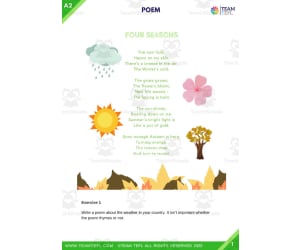
Four Seasons Poem | Pre-Intermediate Lesson Plan
ELA, Literature, Poetry, Grade 3, 4, 5, 6, 7, 8, 9, 10, 11, 12, Teacher Tools, Lesson Plans
This is a pre intermediate lesson plan worksheet set for Four Seasons Poem. Students will read the poem and then complete the exercises to follow, which will assess their comprehension and implement grammar skills. An Enriching Language Arts Resource Beyond being a regular lesson plan, this resource takes kids on a rewarding interactive journey in Language Arts. The worksheets serve as practical arenas where students can test out their learning about the four seasons in a short poem, while evaluating their own understanding or working collaboratively. Suitable for educators conducting group activities or individual sessions or homeschooling parents wanting reliable resources for at-home lessons – it has been designed to fluently adapt to varied learning environments. Digital Compatibility & Reflective Feedback A noteworthy feature is its integration with Google Apps that injects digital vibrance into traditional classroom practices. Additionally, keeping the importance of feedback in mind during learning progressions - with a writing exercise for your students to create their own poem. A solution crafted by teachers themselves - The Four Seasons poem lesson plan worksheet correlates seamlessly within any curriculum focusing on developing strong foundational knowledge in Language Art amongst early learners.There are 2 ready made pages that you can print and share with your students.
Author TEAM TEFL
Tags Four Seasons, Environment, Poems, Poetry Lesson, Writing, Lesson Plan On Seasons For Preschool, Four Seasons Poem, Teaching The Seasons, Poem About 4 Seasons, Seasons Poem

Animals of Australia | Australia Unit Study | Geography Bundles
Social Studies, Geography, Grade 3, 4, 5, 6, 7, Lesson Plans, Teacher Tools
The Animals of Australia | Continent of Australia Unit Study | Geography Bundles This is an engaging and informative teaching resource designed predominantly for the Grade 3 - 7 Social Studies course. This product focuses primarily on geography and provides detailed knowledge about fascinating Australian animals. Animal Cards The resource package comes with captivating Australian animal cards featuring twelve uniquely native species: Koala Kangaroo Wombat Dingo Crocodile Platypus etc. Each card is dual-sided: Front: Features a realistic photograph with fundamental information about that particular animal. Back: Reveals unique and interesting facts through a mini-article format which can make geography or biology lessons more exciting for students. Auxiliary Tools Included in the Package A printable student booklet with coloring spaces and areas to jot down key information about each animal, which enhances learning in a fun manner. Tiny photo cut-outs of twelve animals – A great accessory during group activities while teaching geographic locations. An Animal Report template that fosters independent study and report writing to enhance critical thinking skills. An additional matching worksheet that fortifies comprehension through practical learning exercises, as well as separate coloring pages to promote interactive education. All elements are digitally packaged into one zip file as ready-to-print PDFs along supportive preview images for educators' convenience before printouts. Integrating this resource into daily lessons will transform your classroom lectures into lively interactions. This tool is not only engaging for students but also imparts vital knowledge regarding living organisms in various geographical regions, such as Australia.
Author Simply Schoolgirl
Tags Animals, Australia, Geography, Educational Resource, Teaching

World Electoral Processes Gr. 5-8
Social Studies, Government, Grade 5, 6, 7, 8, Teacher Tools, Lesson Plans
World Electoral Processes Gr. 5-8 This is an all-encompassing teaching resource that thoroughly enlightens students on a myriad of electoral processes seen globally. This educational tool delves into the specifics of presidential, parliamentary, and dictatorship governments thus equipping learners with a multifaceted view of diverse political systems. Educators have the freedom to teleport their classrooms backwards temporally to explore voting's evolution from its infancy stages to modern practices with this resource. A fascinating journey through the exploration of democracy and its effectiveness in echoing populace views awaits students. Main Features: A thorough analysis of power distribution between presidents and legislatures in presidential systems. Detailed examination on why laws garner easier passageway under parliamentary regimes compared to presidential ones. A deep dive into dictatorships' history, highlighting why most dictators usually ascend from military ranks, plus how dictatorships roles have morphed over centuries. In-depth discussion regarding suffrage intricacies looking especially at citizen voting requirements— a crucial pillar in worldwide democratic societies. Interactive Activities: "Role-Playing Tasks": These fun activities such as role-playing tasks that see students mimicking parliament members by showcasing 90-second statements relevant to concerning issues will give learners greater empathy for politicians' challenges. "Classroom Elections": An entertaining element involves arranging classroom elections where students democratically decide their class running policy! The design accomplish adherence to both State Standards & Bloom's Taxonomy guidelines ascertains content quality is high-grade education material specifically calibrated for enhancing comprehension techniques effectively checked for efficacy consistently. The additional amusement elements like contextually subject matter based writing tasks, social studies themed crosswords, and subject-centric word searches make learning not only recreational but solidify knowledge simultaneously! Delivery: The resource is delivered effortlessly via PDF format so that printing or digital sharing of it is utterly unhassling. All these resources are explicitly tailored for social studies targeted specifically towards government-related subjects with a primary focus on Grades 5-8. Conclusion In totality, the World Electoral Processes Gr. 5-8 toolkit forms an interactive and intriguing tool for educators imparting wisdom to middle school grades. An extensive guide to understanding varied systems of government makes it particularly handy for both homeschooling scenarios in addition to public schools alike.
Author Classroom Complete Press
Tags PDF

I WONDER - Why Purple Was Such An Important Colour To The Romans
History: Europe, History, Social Studies, History: Ancient, Grade 1, 2, 3, 4, 5, 6, 7, 8, Lesson Plans, Teacher Tools
Video Introduction An amazing video designed for the students to learn more about history. I WONDER - Why Purple Was Such An Important Colour To The Romans | Animated Video Lesson Do you like history? Which topic do you really enjoy about history? Have you ever read an interesting fact about the Vikings? If yes, can you mention them? What do you like most about the Victorian era? Can you name all the Tudors? Have you ever wondered how people used to live in ancient Japan and ancient China? Do you know any interesting facts about ancient Egyptians and the Pharaohs? Have you ever visited South America? What do you know about Incas and Aztecs? Celtic culture was really one of a kind, can you name any of the places that Celts used to live in? Imagine yourself living during the ancient Roman empire, how your life will look like? Ancient Greece was an amazing place to live in. What do you know about ancient Greek life? I WONDER - Why Purple Was Such An Important Colour To The Romans | Animated Video Lesson The video is perfect for encouraging the researching skills for the students, while learning more about history. I WONDER - Why Purple Was Such An Important Colour To The Romans | Animated Video Lesson This friendly designed video is suitable for students at school, homeschooling, and as a group activity. Format Available in MP4 format.
Author Educational Voice
Tags Why Purple Was Such An Important Colour To The Romans, Why Purple Was Such An Important Colour To The Romans Video, The Romans, Facts About The Romans, Ancient Romans, Romans, Ancient Romans Video

SIXSPELL (JUNIOR) Gr. 4-6
ELA, Language Development, Spelling, Grade 4, 5, Teacher Tools, Lesson Plans
SIXSPELL (JUNIOR) Gr. 4-6 A comprehensive spelling program meticulously developed for students in Grade 4-6. A innovative fusion of pedagogical expertise and digital technology. User-Friendly Teaching Tools This product comprises 58 informative PDF pages. Each page represents an intricate understanding of modern educational research trends and time-tested practices. A Nuanced Approach to Education The main aspect separating Sixspell Junior from many typical resources is its adaptation to the student's world. It aligns words relevant to their interests, integrating learning outcomes— a nuanced approach toward language arts education! Fosters Integration Across Learning Areas Eases integration across subject areas without repeating word usage in different lessons or disciplines. Saves instructional time and promotes efficient education delivery - a tremendous value for educators planning curricula. Basis laid on sound-symbol relationships, holding relevance if students can read the prescribed words independently - personalized learning for each student's unique needs. Possibilities are Endless! No matter if you use it as part of your whole classroom instruction or in smaller focus groups, our solution adapts easily within your style. Effective even as homework assignments under some scenarios! Redefine traditional teaching methods with SIXSPELL (JUNIOR) Gr. 4-6 within your curriculum today! Encourage enthusiasm and proficiency among young learners through this intuitive design coupled with comprehensive content!
Author Classroom Complete Press
Tags Language Arts, Spelling Program, Spelling Words, Alphabetical Order, Spelling Activities

I WONDER - What Is An Eclipse | Animated Video
Space, Earth and Environmental Sciences, Science, Grade 4, 5, 6, 7, 8, 9, 10, Lesson Plans, Teacher Tools
Video Introduction An amazing video designed for the students to learn more about space facts. I WONDER - What Is An Eclipse | Animated Video Lesson Do you like reading about space? If yes, what is your favorite topic? What do you know about our solar system? What is the smallest planet in our solar system? What is the biggest planet in our solar system? What is the hottest planet in our solar system? And what is the coldest one? Do you think there are aliens? If yes, what do you think they look like? What do they eat and how they speak to each other? Where do they live? What is a galaxy? And what is a milky way? Have you recently saw a shooting star? If yes, tell us more about it, like when did it happen and where? What is a blackhole? Can a blackhole gets bigger by time? Do you like counting the stars? What do you think a star is made of? I WONDER - What Is An Eclipse | Animated Video Lesson The video is perfect for encouraging the researching skills for the students, while learning more about the fantastic space. I WONDER - What Is An Eclipse | Animated Video Lesson This friendly designed video is suitable for students at school, homeschooling, and as a group activity. Format Available in MP4 format.
Author Educational Voice
Tags What Is An Eclipse, What Is An Eclipse Video, Eclipse, Eclipses, Eclipses Fact, Eclipses Facts For Kids, Eclipse Video, Eclipse Video For Kids, Eclipses Facts, Eclipse Facts For Kids
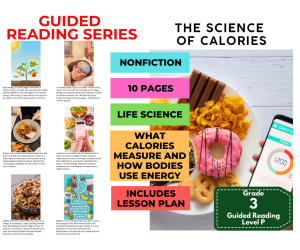
The Science of Calories: Guided Reading Level P with Lesson Plan
ELA, Resources for Teachers, Reading Comprehension, Reading, Science, Life Sciences, Health, P.E. & Health, Physics, Language Development, Grade 2, 3, 4, Worksheets & Printables, Worksheets, Teacher Tools, Centers, Activities, Literacy Readers, Quizzes, Quizzes and Tests, Assessments, Lesson Plans
This The Science of Calories (level p) guided reading book with lesson plan includes: Guided Reading Color Label (front cover x1) This is a quick way to match the book’s demands to what students can generally handle.. The overall goal is to use the level/color to pick books for several smaller groups. To qualify for a certain level, a student is expected to read a book from that level with about 90–94% accuracy. If a student is consistently accurate and understands, move up a level. If the student is struggling at that level, drop down and add more support. Each student will improve at completely different rates, but it is generally one of the best ways to check progress across the class. DOWNLOAD THE CATALOG TO VIEW ALL GUIDED READING BOOKS AVAILABLE (SORTED LEVELS A-Z) Pre-Reading Question (x1) Teacher asks the prompt aloud, can be while showing the cover or first page. Students share what they already know, or make educated guesses from the cover. Prompt them to use the target vocabulary. Write some of their responses on the board to look back at during the reading. Vocabulary Words (x5) Introduce the five words, best doing it one at a time. Start by saying it, while students repeat and then see if anyone knows what it means before reading further. Read through the meaning and try to briefly connect each word to a picture or gesture so it’s meaningful. Ask students to flip through the book pages and point to where they see each of the vocabulary words. While reading the book pause upon coming across one of the vocab words or read the sentence twice to make sure students understand the word has appeared. Optional: Ask students to raise hands whenever they see/hear one of the new words. Guided Reading Pages (x10) Check the book snapshot (below) for: primary topic - do you need to prep extra reading or intro materials on this? what is taught best - decide on 1-2 bullets to focus on, use the prompt or words provided here for best results. learning goals - what you are checking for students to be able to do after the session, elicit answers using prompts or words provided. key vocabulary (see section above). questions overview - so you know what is coming up and if you need to prep extra materials to assist understanding. Run the lesson You may have already looked at a few of the pages together, but you can show them some of the pictures again first to set meaning. Depending on how much time you have and how familiar your students are with guided reading class, you may want to read the book aloud first with the group first. Students whisper or partner read, while you listen in. If time, do it as a group, one student reading a page each. Use the guided page’s prompts to coach: “Check the picture / does it make sense?” “Point under the words / try the first sound” “Reread the sentence smoothly”. Try to focus more on one student per session (rotating every time), so you can work out if they are ready to move up or need to move down a level. Comprehension Questions (back cover x3) This is your way to check that students didn’t just say the words, but actually understood the text. First, let students answer by pointing to the page/picture and saying a short sentence. After any answer, follow with: “Show me where you found that in the text.” In bigger groups, have partners answer first (10–20 seconds), then call on 2–3 students to share. Differentiation tips: Emerging speakers/struggling readers: oral + pointing On-level: oral in a full sentence Higher: one written sentence or draw + label Book Snapshot Title: The Science of Calories Genre: Nonfiction (informational science text) Subject: Science (Nutrition/Human Body) Primary Topic: What calories measure and how bodies use energy Estimated Guided Reading Level (A–Z): P What This Book Teaches Best Defines energy as what living things need to survive and function, and connects energy to everyday examples like cars and lamps. Explains that a calorie measures energy in food (not weight or size) and describes it as a scientific unit of measurement. Shows how most energy starts with the sun , and how plants use photosynthesis to turn light into chemical energy stored in plant parts. Describes how the human body uses energy all the time (even during rest or sleep) to power the heart, lungs, and brain. Explains how food energy is released through digestion , how activity increases energy demand, and how extra calories may be stored as body fat. Learning Goals Explain what energy is and why living things need it. Describe what a calorie measures according to the text. Explain how plants get energy from the sun and where that energy is stored in a plant. Describe how digestion helps the body unlock energy from food. Describe how physical activity changes the body’s need for calories. Explain what happens when more calories are consumed than the body needs for daily activities. Key Vocabulary From the Text measurement — finding out how much of something there is. photosynthesis — plants use sunlight to make chemical energy. digestion — the process that unlocks energy in food. intestines — long tubes that help finish breaking down food. converted — changed from one form into another. Discussion Prompts Pre-reading question: What do you think calories tell us about the food we eat? Comprehension questions: What does the book say a calorie measures? Comprehension questions: How does the book explain that plants capture and store energy from the sun? Comprehension questions: What does the book say happens when a person consumes more calories than needed for daily activities? Printing Tips 1. Best Printing Method (Recommended) “Booklet” Printing (Best if Available) If your printer or PDF viewer supports Booklet Printing , use this. Settings to use: Print mode: Booklet Paper size: Letter or A4 (either works) Orientation: Landscape Print on both sides: Yes Flip on: Short edge Scaling: Fit to printable area Booklet subset: First test: Front sides only Then: Back sides only This will automatically: Pair pages correctly Put the cover on the outside Align everything for folding After printing, fold in half and staple along the spine . 2. If “Booklet” Printing Is NOT Available You can still print this correctly with manual duplex printing . Step-by-step: Open the PDF. Choose Print . Set: Orientation: Landscape Pages per sheet: 1 Print on both sides: Yes Flip on: Short edge Print all pages . Because each PDF page already contains two facing book pages, the result will still fold cleanly into a book. Thousands of Cored Education products are included with your TeachSimple membership. Download links and encyclopedia index available here.
Author Cored Education
Rating
Tags Reading Comprehension, Reading Passages, Reading, Guided Reading, Guided Reading Lesson Plan, Guided Reading Activity, Pre-reading, Science Lesson Plans, Life Science, Health
I WONDER - How do I Calculate Percentage | Animated Video Lesson
STEM, Percentages, Math, Grade 5, 6, 7, 8, 9, 10, Lesson Plans, Teacher Tools
Video Introduction An amazing video designed for the students to learn more about STEM. I WONDER - How do I Calculate Percentage | Animated Video Lesson Do you like STEM subjects? what is your favorite one? Have you ever tried to plant a seed? If yes, tell us more about it. Or have you ever tried to invent something? If yes, tell us more about it. And how do you think it will help us? Have you ever seen a microorganism under a microscope? What was it? And how it looked like? Mathematics is a marvelous subject. Let' sharpen our brains and solve some equations. Do you like timetable tricks? What is your favorite one? Do you know how to code? Have you ever created an app or a game before? If yes, how was it like? I WONDER - How do I Calculate Percentage | Animated Video Lesson The video is perfect for encouraging the researching skills for the students, while learning more about this fantastic topic. I WONDER - How do I Calculate Percentage | Animated Video Lesson This friendly designed video is suitable for students at school, homeschooling, and as a group activity. Format Available in MP4 format.
Author Educational Voice
Tags How Do I Calculate Percentage, How Do I Calculate Percentage Video, Percentage, Percentage Facts, Percentage Facts For Kids, Percentage Video, Percentage Video For Kids, Math, Math Video
I WONDER - Do Rabbits Vomit | Animated Video Lesson
STEM, Biology, Life Sciences, Science, Animals, Grade 1, 2, 3, 4, 5, 6, 7, 8, Lesson Plans, Teacher Tools
Video Introduction Animal kingdoms are full of fascinating wonders to learn. This video is designed for the students to learn more about animals in different countries. I WONDER - Do Rabbits Vomit | Animated Video Lesson Do you like animals? what is your favorite one? Do you own a pet? If yes, tell us more about it, like what its name? And what do you like most about it? What are the animal kingdoms? Can you write down the characteristics of each animal class like mammals, birds, reptiles, amphibian, fish and mollusks. Do you know that some animals can sing, can you name any of them? What is the largest and the smallest mammal in the world? What is the largest and the smallest bird in the world? What is the largest and the smallest fish in the world? I WONDER - Do Rabbits Vomit | Animated Video Lesson The video is perfect for encouraging the researching skills for the students, while learning more about these fantastic animals. I WONDER - Do Rabbits Vomit | Animated Video Lesson This friendly designed video is suitable for students at school, homeschooling, and as a group activity. Format Available in MP4 format.
Author Educational Voice
Tags Do Rabbits Vomit, Do Rabbits Vomit Video, Rabbits, Rabbits Facts, Rabbits Facts For Kids, Rabbits Video, Rabbits Video For Kids, Rabbit, Rabbit Facts, Rabbit Facts For Kids

I WONDER - Who Built The City Of Petra | Animated Video Lesson
Geography, Social Studies, History: Ancient, History, History: Asian, Grade 4, 5, 6, 7, 8, 9, 10, Lesson Plans, Teacher Tools
Video Introduction An amazing video designed for the students to learn more about famous places in different countries. I WONDER - Who Built The City Of Petra | Animated Video Lesson What do you know about this place? Do you know in which part of the world it is? Have you ever visited this place? If yes, can you tell us more about your adventure, and what do you like the most about this place? Do you like reading about Geography? What is your favorite country in the whole world? If you are going on a trip where it will be? Which country? What you are going to see there? Does this country has a famous place to visit? I WONDER - Who Built The City Of Petra | Animated Video Lesson The activity is perfect for encouraging the researching skills for the students, while learning more about this fantastic place. I WONDER - Who Built The City Of Petra | Animated Video Lesson This friendly designed video is suitable for students at school, homeschooling, and as a group activity. Format Available in MP4 format.
Author Educational Voice
Rating
Tags Who Built The City Of Petra, Who Built The City Of Petra Video, Who Built The City Of Petra Facts, The City Of Petra, The City Of Petra Video, The City Of Petra Facts, The City Of Petra Video For Kids
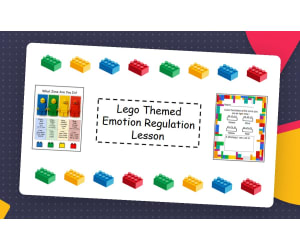
Lego-Themed Emotion Regulation Lesson
Special Resources, Social Emotional Learning (SEL), Kindergarten, Grade 1, 2, 3, Teacher Tools, Lesson Plans
In this Lego themed lesson, students will learn about the different zones made up of feelings and energy levels. There are directions for lesson one and two. The first lesson is to teach about the zones and to use a Lego themed poster to help explain them. There is a link to a cute song using Lego characters and teaching about the zones. There are instructions on what students will do next to build a robot, tower or person made up of the color zone(s) they are feeling. For example, if the student is feeling happy and tired, the structure would be made up of green and blue bricks. It is important to buy either Legos or a generic brand of toy bricks for this lesson. After the students create their structures, they can share with a partner, group or class. In the 2nd part of the lesson, students will discuss different types of strategies for how to move from the red, yellow or blue zones and get back to the green zone. They will then build a structure that represents a calm down strategy for them to use when they are in the other zones besides green and need to be focused to learn. For example students can build a cup to represent getting a drink of water. Then students will reflect on their learning by filling out a worksheet. This is a fun, engaging, and hands-on lesson to teach about emotion regulation. It is suitable for kindergarten, first, second and third grades. Each student can bring home the poster to share with their families. Then families can reinforce these concepts at home with their children. For more SEL lessons, activities, and presentations, please feel free to visit my SEL store here: https://teachsimple.com/contributor/jennifer-moyer-taylor For other SEL lessons that are Lego themed, check out these: https://teachsimple.com/product/sel-lego-people-emoji-feelings-chart-coloring-page-and-i-spy-activity https://teachsimple.com/product/lego-themed-following-instructions-sel-lesson
Author Jennifer Moyer Taylor
Rating
Tags Legos, Sel, Social Emotional Learning, Self-regulation, Emotion Regulation, Self-managemet, School Counseling, Counseling, Zones, Regulation
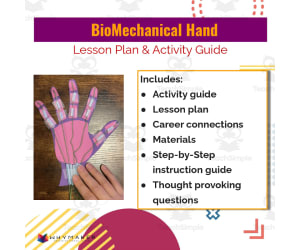
BioMechanical Hand Lesson Plan & Activity Guide
Science, Technology, Computer Science, Grade 1, 2, 3, 4, 5, 6, 7, Lesson Plans, Teacher Tools
Everything you need to run a successful and fun lesson! Students will design a robotic hand that is similar to a human hand.
Author WhyMaker
Tags Computer Science - Technology, Instructional Technology, Engineering, Biomechanical Hand
The Frog Life Cycle Unit Bundle | Journal & Emergent Reader
Science, Life Sciences, Animals, Preschool, Grade 1, Lesson Plans, Teacher Tools
This download is a bundle of resources for the frog life cycles. Resources included are: -Emergent Reader -Journal
Author Kindergarten Cafe
Tags Frog Life Cycle, Cut And Paste, Science Bundle, Creative Writing, Frog Activity