



3,928 products added recently
Page 81 - Elementary Lesson Plans
Support your elementary students with lesson plans that cover a broad range of subjects and skills. These resources are designed to promote cognitive, social, and emotional growth. Incorporate them into your teaching to provide a well-rounded education that meets the needs of all your students.

 Show filters

I WONDER - What Are The Different Parts Of Bones | Animated Video
Human Body, Life Sciences, Science, Biology, STEM, Grade 2, 3, 4, 5, 6, 7, 8, Lesson Plans, Teacher Tools
Video Overview The human body is full of fascinating wonders to learn. This video is created to help the students recognize the anatomy and the job of the human body. I WONDER - What Are The Different Parts Of Bones | Animated Video Lesson Every part and organ in our human body is vital so let's see how important they are. Have you ever imagined how we look like if we didn't have a skeleton? Did you know that because we have our amazing muscles we can stand! Do you know how many teeth do we have? Have you ever wondered about the food journey inside our body? Can you name all the glands in our body? Why do we have skin? Our nervous system is really good at sending signals. Can you tell us more about it? Are you really good at Mathematics, painting, or any other thing? You should really thank your brain about it! The famous five senses are really doing a great work? Can you explain how every sense works? I WONDER - What Are The Different Parts Of Bones | Animated Video Lesson The video is perfect for encouraging the researching skills for the students, while learning more about our fantastic human body. I WONDER - What Are The Different Parts Of Bones | Animated Video Lesson This friendly designed video is suitable for students at school, homeschooling, and as a group activity. Format Available in MP4 format.
Author Educational Voice
Tags What Are The Different Parts Of Bones, What Are The Different Parts Of Bones Video, Different Parts Of Bones, Different Parts Of Bones Facts, Different Parts Of Bones Facts For Kids, Different Parts Of Bones Video
Number & Operations: Percentages with Fractions - Practice the Skill 2 - PC Software
Math, Percentages, Common Core, Grade 3, 4, 5, Teacher Tools, Lesson Plans
Number & Operations: Percentages with Fractions - Practice the Skill 2 - PC Software This educational resource is expertly created to bolster understanding of percentages and fractions within number operations. Primarily targeting Grade 3-5 students, this software is a staple for any forward-thinking educator. Core Features Tailored Curriculum Content: This involves timed drill activities that prompt students to find equivalent fractions for supplied percentages. Linguistic Inclusivity: While having English as a default medium for voice over and text, Spanish counterparts are not forgotten– making this tool useful across diverse linguistic classrooms. Versatile Implementation: The software seamlessly aligns with Common Core State Standards and adheres to the guidelines stipulated by NCTM standards thus promoting learners' comprehensive understanding of mathematics pertaining to percentages and fractions. Note: The product comes ready-to-use immediately upon purchase as a zipped file containing the PC software. Simply unzip on your computer system and proceed with enriching experience it offers! Incorporating Number & Operations: Percentages with Fractions – Practice the Skill II- PC Software into your teaching regime will not only enhance mathematical proficiency but also foster multilingual skills amongst learners. An essential tool indeed!
Author Classroom Complete Press
Tags Percentages Lesson Plan, Fractions Lesson Plan, Math Skills, Operations, Math Printables
I WONDER - How Big Is China | Animated Video Lesson
Geography, Social Studies, Grade 2, 3, 4, 5, 6, 7, 8, Lesson Plans, Teacher Tools
Video Introduction An amazing video designed for the students to learn more about famous places in different countries. I WONDER - How Big Is China | Animated Video Lesson What do you know about this place? Do you know in which part of the world it is? Have you ever visited this place? If yes, can you tell us more about your adventure, and what do you like the most about this place? Do you like reading about Geography? What is your favorite country in the whole world? If you are going on a trip where it will be? Which country? What you are going to see there? Does this country has a famous place to visit? I WONDER - How Big Is China | Animated Video Lesson The activity is perfect for encouraging the researching skills for the students, while learning more about this fantastic place. I WONDER - How Big Is China | Animated Video Lesson This friendly designed video is suitable for students at school, homeschooling, and as a group activity. Format Available in MP4 format.
Author Educational Voice
Tags How Big Is China, How Big Is China Video, China, China Facts, China Facts For Kids, China Video, China Video For Kids, Asia, Asian Country, Asian Countries
I WONDER - How Do Lions Hunt | Animated Video Lesson
STEM, Biology, Life Sciences, Science, Animals, Grade 1, 2, 3, 4, 5, 6, 7, 8, Lesson Plans, Teacher Tools
Video Introduction Animal kingdoms are full of fascinating wonders to learn. This video is designed for the students to learn more about animals in different countries. I WONDER - How Do Lions Hunt | Animated Video Lesson Do you like animals? what is your favorite one? Do you own a pet? If yes, tell us more about it, like what its name? And what do you like most about it? What are the animal kingdoms? Can you write down the characteristics of each animal class like mammals, birds, reptiles, amphibian, fish and mollusks. Do you know that some animals can sing, can you name any of them? What is the largest and the smallest mammal in the world? What is the largest and the smallest bird in the world? What is the largest and the smallest fish in the world? I WONDER - How Do Lions Hunt | Animated Video Lesson The video is perfect for encouraging the researching skills for the students, while learning more about these fantastic animals. I WONDER - How Do Lions Hunt | Animated Video Lesson This friendly designed video is suitable for students at school, homeschooling, and as a group activity. Format Available in MP4 format.
Author Educational Voice
Tags How Do Lions Hunt, How Do Lions Hunt Video, Lions, Lion, Lions Facts, Lions Facts For Kids, Lions Video, Lions Video For Kids, How Do Lions Hunt Facts, How Do Lions Hunt Facts For Kids

I WONDER - What Activities Can You Do At The Grand Canyon
Geography, Social Studies, Grade 3, 4, 5, 6, 7, 8, 9, Lesson Plans, Teacher Tools
Video Introduction An amazing video designed for the students to learn more about famous places in different countries. I WONDER - What Activities Can You Do At The Grand Canyon | Animated Video Lesson What do you know about this place? Do you know in which part of the world it is? Have you ever visited this place? If yes, can you tell us more about your adventure, and what do you like the most about this place? Do you like reading about Geography? What is your favorite country in the whole world? If you are going on a trip where it will be? Which country? What you are going to see there? Does this country has a famous place to visit? I WONDER - What Activities Can You Do At The Grand Canyon | Animated Video Lesson The activity is perfect for encouraging the researching skills for the students, while learning more about this fantastic place. I WONDER - What Activities Can You Do At The Grand Canyon | Animated Video Lesson This friendly designed video is suitable for students at school, homeschooling, and as a group activity. Format Available in MP4 format.
Author Educational Voice
Tags What Activities Can You Do At The Grand Canyon, What Activities Can You Do At The Grand Canyon Video, The Grand Canyon, The Grand Canyon Facts, The Grand Canyon Facts For Kids, The Grand Canyon Video
I WONDER - What Is The Difference Between Square And Cube
Shapes, Early Math, Math, Geometry, Grade 1, 2, 3, 4, 5, 6, 7, 8, Lesson Plans, Teacher Tools
Video Introduction An amazing video designed for the students to learn more about STEM. I WONDER - What Is The Difference Between Square And Cube | Animated Video Lesson Shapes are all around us. What are your favourite ones? And can you give us some real life examples? Can you name the difference between the 2D shapes and 3D shapes? Have you ever tried to calculate the surface area of the square? If yes can you write the equation down? What is the perimeter of the rectangle? And can you tell the difference between radius and diameter of a circle? Can you mention what is the difference between the right angle and the acute angle? Have you ever heard about the obtuse angle? I WONDER - What Is The Difference Between Square And Cube | Animated Video Lesson The video is perfect for encouraging the researching skills for the students, while learning more about this fantastic topic. I WONDER - What Is The Difference Between Square And Cube | Animated Video Lesson This friendly designed video is suitable for students at school, homeschooling, and as a group activity. Format Available in MP4 format.
Author Educational Voice
Rating
Tags What Is The Difference Between Square And Cube, Square, Square Facts, Square Video, Square Facts For Kids, Square Video For Kids, Cube, Cube Facts, Cube Video, 2d And 3d Shapes
Vocabulary Building Through Environmental Themes
Science, Basic Science, Inventors, Theories, Earth and Environmental Sciences, Earth Sciences, Environmental Science, Geology, Space, STEM, Homeschool Curriculum, Homeschool Templates, Grade 3, 4, 5, 6, 7, Teacher Tools, Assessments, Lesson Plans, Quizzes and Tests, Quizzes, Tests, Worksheets & Printables, Workbooks, Worksheets, Word Searches
Are you tired of boring vocabulary lists? Do students forget the words by Monday? Try transforming how you teach Science and ELA with this comprehensive, research-based resource to help your students develop and retain a rich vocabulary through the study of environmental science! This is not just another short, single-use worksheet. The Eco-Lexicon Framework has been designed to help you and your student move beyond rote memorization, to create a deep conceptual understanding of vocabulary. The complete 45-page resource provides educators with a theoretical framework and 10 modules that will provide engaging, no-prep student worksheets, seamlessly integrating Science, Reading and Critical Thinking. What can I find in this much-needed resource? A Professional Teacher's Guide (11 Pages): This is a comprehensive guide to the "Eco-Lexicon Framework" which thoroughly goes through the science of cognitive processes and their connection to Vygotsky (schema theory, dual-coding theory, and ZPD). A great professional development experience that will increase your teaching skills! 10 Thematic Student Workbooks (20 pages): Each workbook consists of a small set of worksheets focusing on a theme within the environment. Worksheets include a variety of activities that promote multiple forms of engagement (e.g., filling in an answer at the top of the water, completing the word, etc.) Visually Appealing Teacher Resource Materials (6 pages): The visual scaffolding teacher resource materials are projectable representations of morphological maps (eco/biological root words), semantic gradations, and conceptual matrices that support dual-coding theory and provide anchor points for student learning. Step-By-Step Implementation Guide: A straightforward, easy, step-by-step method for teaching the vocabulary in each module, along with an answer key. The themes of the worksheets are: Forests as eco-systems (Earth's lungs) The ocean as a space for conservation (Under the Surface) Waste and recycling (Cycle of Renewal) Renewable energy (Powering the Future) Biodiversity and symbiotic relationships (The Web of Life) Fresh water systems (Rivers, Lakes, and Aquifers) Climate and Weather (Blanket Above) Sustainable Agriculture (Growing with Care) Urban Ecology (Nature in our Cities) Conservation Actions (Guardians of our Planet) The ideal resource for science classes, ELA instruction, integrated curriculum, substitute teacher plans, and homeschooling will allow students to develop their understanding of scientific terms in meaningful ways that can be used to help them A) learn about their world, B) discuss it with others, and C) advocate on behalf of their planet. Some key terms related to the worksheets are: Science vocabulary words; Environmental science; Ecoliteracy; STEM education; Integrated ELA; Cross curricular education; Grades 3-6 (upper elementary and middle school); Vocabulary worksheet activities; No prep; Printable; Digital resource; Google Classroom compatible; Teacher's Guide; Earth Day; Conservation; Ecosystems; Climate Change; Recycling. Reasons why Parents/School's Love It: Builds Deep, Sustainable Knowledge: Goes beyond memorization. The unique research-based design helps students learn to use vocabulary in a real-world context so that they can build and utilize the complex language of science. Cross-curricular Compatibility: Combines the essential skills in ELA (vocabulary, reading comprehension, writing) with the essential concepts from STEM (environmental sciences) saving teachers the time of planning and reinforcing student learning across the curriculum. Completely Developmentally-Appropriate for Grades 3-6: This resource has been carefully constructed to support students as they grow by providing enough information for teachers to modify their instructional approach depending on the age (3rd/4th vs. 5th/6th graders) of students using the resource for learning, and thus justify its purchase as a long-term resource. Builds Real-World Ecoliteracy: Provides the precise language needed for students to understand and discuss current global environmental issues, allowing exposure to the limited vocabulary needed to become aware, articulate, and social advocates for their planet. Comprehensive & Teacher-Friendly: It's a complete package – a professional textbook, no-prep students' worksheets, and visual aids – giving teachers a new way to teach and support immediate implementation of improved methodology. Target Audience : Informed by an extensive investigation into content, difficulty, and express text found in the PDF: Target Upper Elementary and early Middle School educators, specifically for Grades 3 through 6 again. Highlighted here is this express statement in the PDF: The introduction (Page 1) names "upper elementary years (Grades 3 through 6)". The content is scaffolded professionally. Developmental Scaffolding provides a clear rationale for this age range. It articulates the approach for Grades 3 and 4 (concrete, observable concepts like habitats and recycling) and grades 5 and 6 (abstract systems like climate change and biodiversity). Copyright/Terms of Use: Copyright by Syed Hammad Rizvi. This resource is for personal and single classroom use only. There is to be no altering, redistributing, or, in any other manner, selling part of this resource. In other words, do not put it up on the Internet for public access and download. If you want to share this resource with colleagues, you need to purchase additional licenses from Teachsimple. Thank you for your respect for these terms of use. This product is brought to you with joy by Syed Hammad Rizvi.
Author Creative Book Store
Rating
Tags Sciencevocabulary, Environmentalscience, Ecoliteracy, Crosscurricular, Stemeducation, Elaintegration, Scienceworksheets, Vocabularybuilding, Upperelementaryscience, Middleschoolscience

I WONDER - Is The Skin Made Of Layers | Animated Video Lesson
Biology, Life Sciences, Science, Human Body, Grade 4, 5, 6, 7, 8, 9, 10, Lesson Plans, Teacher Tools
Video Overview The human body is full of fascinating wonders to learn. This video is created to help the students recognize the anatomy and the job of the human body. I WONDER - Is The Skin Made Of Layers | Animated Video Lesson Every part and organ in our human body is vital so let's see how important they are. Have you ever imagined how we look like if we didn't have a skeleton? Did you know that because we have our amazing muscles we can stand! Do you know how many teeth do we have? Have you ever wondered about the food journey inside our body? Can you name all the glands in our body? Why do we have skin? Our nervous system is really good at sending signals. Can you tell us more about it? Are you really good at Mathematics, painting, or any other thing? You should really thank your brain about it! The famous five senses are really doing a great work? Can you explain how every sense works? I WONDER - Is The Skin Made Of Layers | Animated Video Lesson The video is perfect for encouraging the researching skills for the students, while learning more about our fantastic human body. I WONDER - Is The Skin Made Of Layers | Animated Video Lesson This friendly designed video is suitable for students at school, homeschooling, and as a group activity. Format Available in MP4 format.
Author Educational Voice
Tags Is The Skin Made Of Layers, Is The Skin Made Of Layers Video, Skin Layers, Skin Layers Facts, Skin Layers Facts For Kids, Skin Layers Video, Skin Layers Video For Kids, Skin, Skin Facts, Skin Facts For Kids
I WONDER - Did Jane Goodall Go To University | Animated Video Lesson
Biographies, Social Studies, Grade 4, 5, 6, 7, 8, 9, 10, Lesson Plans, Teacher Tools
Video Introduction An amazing video designed for the students to learn more about famous people in different countries. I WONDER - Did Jane Goodall Go To University | Animated Video Lesson Do you know this person? How much do you know about him/her? Who is your idol? Why did you choose this person? Tell us more about him/her? Who is your favorite athlete? Or what is your favorite team? Have you recently heard a story about a famous person? Who was this person? Can you tell us more about him/her. Who is your favorite president, king, or queen? Why you chose that person? In your country, who are the most famous people? What did they do? Can you tell us more about them. What is your favorite invention? Who invented it? Who is your favorite artist? What is the most famous thing he/she have done? What is the most enjoyable you have read before? Who wrote it? I WONDER - Did Jane Goodall Go To University | Animated Video Lesson The video is perfect for encouraging the researching skills for the students, while learning more about this fantastic place. I WONDER - Did Jane Goodall Go To University | Animated Video Lesson This friendly designed video is suitable for students at school, homeschooling, and as a group activity. Format Available in MP4 format.
Author Educational Voice
Rating
Tags Did Jane Goodall Go To University, Did Jane Goodall Go To University Video, Jane Goodall, Jane Goodall Video, Jane Goodall Facts, Jane Goodall Facts For Kids, Jane Goodall Video For Kids, Jane Goodall Life
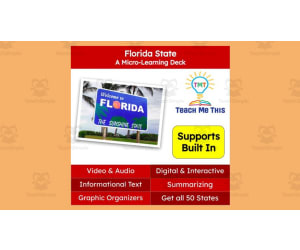
Florida: A Micro-Learning Deck | Digital Geography Lesson
Social Studies, Geography, Grade 4, 5, 6, 7, Teacher Tools, Lesson Plans
The Florida: A Micro-Learning Deck | Digital Geography Lesson resource is a 14-slide download that exposes your students to learning activities for the state of Florida. This digital mini-lesson includes: -Video and Audio -Informational Text - Graphic Organizers -Digital & Interactive components -Summarizing Students will enjoy interacting with this lesson and each of the activities!
Author Teach Me This
Tags Florida Learning Deck, Mini Lesson, Digital Geography, Geography Lesson, Interactive Activities
Geometry: Shapes - Practice the Skill 3 - MAC Software
Math, Geometry, Common Core, Kindergarten, Preschool, Grade 1, 2, Teacher Tools, Lesson Plans
Geometry: Shapes - Practice the Skill 3 - MAC Software A teaching resource designed for educators: Be it public school teachers or homeschoolers, this software takes learning a notch higher, making it more engaging and effective. Main Features An easy-to-use interface with practical timed drill activities focusing on the shapes of Geometry. Promotes active learning by encouraging students to match solid figures with their corresponding plane shapes. Incorporates inclusivity catering not only to English-speaking learners but also Spanish-speaking ones. Comes equipped with voice-overs and text options in both languages. Alignment & Standards: The tool promises perfect alignment with curriculum standards that involve: Meeting Common Core State Standards Promoting STEM initiatives Ease of Use & Versatility: This software works seamlessly on all MAC platforms providing teachers an accessible tool during classroom instructions. An ideal enabler for educatory sessions regardless of whether they are whole group sessions or small setups enhancing learner engagement. Also serves as an ideal homework assignment where self- assessment is promoted given its ability to run tests independently pushing learners towards self-taught skills.. Grade Appropriateness: Mainly focused on Preschool through Grade 2 level however diverse enough for wider grade focus due the differentiated practice activities included within. Simplicity easy-to-use highly innovative instructional methodology incorporated making it an ideal tool to encourage generous student participation and boost academic outcomes.
Author Classroom Complete Press
Tags Math Lesson Plan, Geometry Lesson Plan, Shapes Activity, Shapes Worksheet, Digital Math
Waste: The Global View: The Costs of Waste Gr. 5-8
Science, Earth and Environmental Sciences, Environmental Science, Grade 5, 6, 7, 8, Teacher Tools, Lesson Plans
Waste: The Global View: The Costs of Waste Gr. 5-8 A comprehensive and engaging teaching resource perfect for educators interested in environmental science, specifically waste management. With the growing concern for sustainability and managing the planet's resources responsibly, this material exposes learners from Grades 5-8 to a global perspective on necessary waste management practices. The Costs of Waste Hurricane Katrina The Indian Ocean tsunami The issue of space debris This chapter showcases different types of wastes from various situations such as natural disasters, oil spills, agriculture & mining. Equipping them with crucial knowledge about agricultural pesticides & nuclear plant radioactive wastes empowers students to be more informed custodians. Educational Resources Included: An array of student activities designed for before and after reading periods such as crossword puzzles and word searches make lessons interactive while also reinforcing key terms discussed within the content. A final quiz that helps teachers assess student understanding effectively within curriculum standards supported by an answer key provided for seamless feedback. Tie everything together with beautiful color mini posters that encapsulate takeaway points visually enabling more effective retention in a fun way! Impart students with information that indeed impacts global lives!
Author Classroom Complete Press
Tags PDF
I WONDER - What Is An Ecosystem | Animated Video Lesson
Environmental Science, Earth and Environmental Sciences, Science, Grade 3, 4, 5, 6, 7, 8, 9, Lesson Plans, Teacher Tools
Video Introduction An amazing video designed for the students to learn more about STEM. I WONDER - What Is An Ecosystem | Animated Video Lesson Do you like STEM subjects? what is your favorite one? Have you ever tried to plant a seed? If yes, tell us more about it. Or have you ever tried to invent something? If yes, tell us more about it. And how do you think it will help us? Have you ever seen a microorganism under a microscope? What was it? And how it looked like? Mathematics is a marvelous subject. Let' sharpen our brains and solve some equations. Do you like timetable tricks? What is your favorite one? Do you know how to code? Have you ever created an app or a game before? If yes, how was it like? I WONDER - What Is An Ecosystem | Animated Video Lesson The video is perfect for encouraging the researching skills for the students, while learning more about this fantastic topic. I WONDER - What Is An Ecosystem | Animated Video Lesson This friendly designed video is suitable for students at school, homeschooling, and as a group activity. Format Available in MP4 format.
Author Educational Voice
Tags What Is An Ecosystem, What Is An Ecosystem Video, Ecosystem, Ecosystems, Ecosystem Facts, Ecosystem Facts For Kids, Ecosystem Video, Ecosystem Video For Kids, Ecosystems Facts
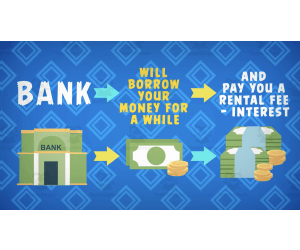
All About Bank Accounts | Animated Math Video Lesson
, Grade 3, 4, 5, Lesson Plans, Teacher Tools
All About Bank Accounts | Animated Math Video Lesson Immersive learning takes center stage in the 'All About Bank Accounts | Animated Math Video Lesson'. Designed to make math exciting and practical, this teaching resource conveys essential understanding about bank accounts, as students are navigated through the process of managing money and solving associated problems. With animation included, the video stimulates curiosity while aiding in material retention. This product is suitable for Grades 3, 4, and 5. With its specific math focus tailored to these levels, educators can effortlessly integrate this tool into their curriculum as a valuable addition to their resources. It underscores financial literacy - an increasingly crucial skill-set in today's rapidly progressing world. The engaging eight-minute video lesson serves multiple purposes: An introduction tool for learners about banking A review tool that utilizes animation ensuring that complex terms are broken down into digestible parts Moreover, the flexibility of this product enables various implementation methods according to educator preferences or student needs. Your lesson can be transformed into an entertaining experience with whole group sessions or rejuvenate one-on-one tutoring with lively illustrations to showcase banking processes visually. Homeschoolers could leverage it for independent study sessions while public school teachers might find it beneficial for breaking up standard lecture-style teaching during class. Note: The 'All About Bank Accounts | Animated Math Video Lesson' comes as 1 MP4 file and is easy-to-use with standard video playback capabilities on most devices including projectors or computers used within classrooms or homeschooled settings. Conclusion: By incorporating innovative teaching resources like animated videos we take strides towards enhancing education frameworks forging stronger connections between young minds and knowledge acquisition — especially true when demystifying complex subjects such as mathematics!
Author Educational Voice
Tags Bank Accounts, Math, Financial Literacy, Animated Video, Money Management
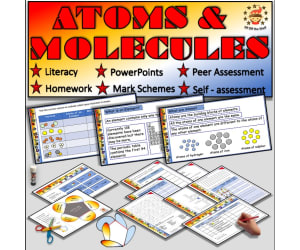
Chemistry - Atoms and Molecules Fully Resourced Lesson
Science, Chemistry, Grade 5, 6, 7, 8, 9, Lesson Plans, Teacher Tools
Introduce students to atoms, molecules, and the periodic table with this comprehensive bundle. Through an engaging animated PowerPoint, worksheets, anticipation guides, foldables, fact sheets, homeworks, self- assessments , and more, students will learn key concepts like how atoms combine to form molecules and compounds, the differences between elements and compounds, elemental symbols, and how to read the periodic table. Implementation ideas like literacy connections, student self-assessment, and differentiated homeworks allow for flexible use in whole group, small group, or individual settings. This resource from Elf Off The Shelf contains 13 components to help educators build engaging, standards-based chemistry lessons tailored to their students' needs and abilities.
Author Elf off the Shelf Resources
Tags Chemistry Lesson, Chemistry Powerpoint, Atoms Printable, Molecules Printable, Science Assessment
I WONDER - How Big Is The Planet Mercury | Animated Video Lesson
Space, Earth and Environmental Sciences, Science, Grade 4, 5, 6, 7, 8, 9, 10, Lesson Plans, Teacher Tools
Video Introduction An amazing video designed for the students to learn more about space facts. I WONDER - How Big Is The Planet Mercury | Animated Video Lesson Do you like reading about space? If yes, what is your favorite topic? What do you know about our solar system? What is the smallest planet in our solar system? What is the biggest planet in our solar system? What is the hottest planet in our solar system? And what is the coldest one? Do you think there are aliens? If yes, what do you think they look like? What do they eat and how they speak to each other? Where do they live? What is a galaxy? And what is a milky way? Have you recently saw a shooting star? If yes, tell us more about it, like when did it happen and where? What is a blackhole? Can a blackhole gets bigger by time? Do you like counting the stars? What do you think a star is made of? I WONDER - How Big Is The Planet Mercury | Animated Video Lesson The video is perfect for encouraging the researching skills for the students, while learning more about the fantastic space. I WONDER - How Big Is The Planet Mercury | Animated Video Lesson This friendly designed video is suitable for students at school, homeschooling, and as a group activity. Format Available in MP4 format.
Author Educational Voice
Tags How Big Is The Planet Mercury, How Big Is The Planet Mercury Video, Planet Mercury, Planet Mercury Facts, Planet Mercury Facts For Kids, Planet Mercury Video, Planet Mercury Video For Kids

I WONDER - Why Is Germany Famous For Its Forests | Animated Video
Geography, Social Studies, Grade 3, 4, 5, 6, 7, 8, 9, Lesson Plans, Teacher Tools
Video Introduction An amazing video designed for the students to learn more about famous places in different countries. I WONDER - Why Is Germany Famous For Its Forests | Animated Video Lesson What do you know about this place? Do you know in which part of the world it is? Have you ever visited this place? If yes, can you tell us more about your adventure, and what do you like the most about this place? Do you like reading about Geography? What is your favorite country in the whole world? If you are going on a trip where it will be? Which country? What you are going to see there? Does this country has a famous place to visit? I WONDER - Why Is Germany Famous For Its Forests | Animated Video Lesson The activity is perfect for encouraging the researching skills for the students, while learning more about this fantastic place. I WONDER - Why Is Germany Famous For Its Forests | Animated Video Lesson This friendly designed video is suitable for students at school, homeschooling, and as a group activity. Format Available in MP4 format.
Author Educational Voice
Tags Why Is Germany Famous For Its Forests, Why Is Germany Famous For Its Forests Video, Germany, Germany Facts, Germany Facts For Kids, Germany Video, Germany Video For Kids, Forests In Germany
Literary Devices: Theme - FLASH-MAC
ELA, Literature, Grade 5, 6, 7, 8, Teacher Tools, Lesson Plans
Literary Devices: Theme - FLASH-MAC This resource precisely targets the understanding of the theme in Literary Devices for students from Grade 5 to 8. It efficiently covers the topic through curriculum -based content contributing a thorough insight into the subject matter. Engaging Reading Passages The product includes reading passages that are carefully selected and professionally crafted, presenting different stories and expressions where themes are subtly woven into the narrative. Interactive Questions "Before you Read": List of questions acting as points of reflection before diving into a reading passage. "After you Read": Covers comprehension testing and encourages thoughtful discussion following each reading assignment. Printable Resources & Vocabulary Flash Cards Graphic Organizers Contains tasks designed specifically for student engagement that offer captivating ways of exploring literary themes while solidifying their understanding.
Author Classroom Complete Press
Tags Software (Mac)
I WONDER - How Do You Escape Quicksand | Animated Video Lesson
Geography, Social Studies, Environmental Science, Earth and Environmental Sciences, Science, Earth Sciences, Grade 4, 5, 6, 7, 8, 9, 10, Lesson Plans, Teacher Tools
Video Introduction An amazing video designed for the students to learn more about natural disasters in different countries. I WONDER - How Do You Escape Quicksand | Animated Video Lesson What do you know about this natural disaster? Do you know in which part of the world this could happen? Have you ever read about the safety misusers that we could have to protect ourselves from this natural disaster? If yes, can you tell us more about them? Can you name other natural disasters? If yes, tell us more about where they are likely to happen? And how frequently? Do you like reading about Geography? What is your favorite country in the whole world? If you are going on a trip where it will be? Which country? What you are going to see there? Does this country has a famous place to visit? Do you like reading about Geology? If yes, what is your favourite topic? I WONDER - How Do You Escape Quicksand | Animated Video Lesson The video is perfect for encouraging the researching skills for the students, while learning more about this fantastic phenomenon. I WONDER - How Do You Escape Quicksand | Animated Video Lesson This friendly designed video is suitable for students at school, homeschooling, and as a group activity. Format Available in MP4 format.
Author Educational Voice
Tags How Do You Escape Quicksand, How Do You Escape Quicksand Video, Quicksand, Quicksand Facts, Quicksand Facts For Kids, Quicksand Video, Quicksand Video For Kids, Escape Quicksand
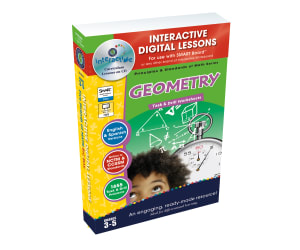
Geometry - Digital Lesson Plan Gr. 3-5 - FLASH-MAC
Math, Geometry, Grade 3, 4, Teacher Tools, Lesson Plans
The Geometry - Digital Lesson Plan Gr. 3-5 - FLASH-MAC This is a meticulously designed Maths resource specifically tailored for students in grades 3 to 5. It features over 230 individual activities distributed across more than 80 interactive screen pages, creating a compelling and immersive learning atmosphere. NCTM & State-Curriculums Aligned: In alignment with the standards set by both the National Council of Teachers of Mathematics (NCTM) and various state curriculums' Math Strand of Geometry, this program presents mathematical information at an engaging pace that encourages active participation from students, primarily focusing on Geometry. Digital Lesson Plan Structure: The digital lesson plan emphasizes task and drill activities, ensuring a balanced theoretical and practical learning approach. Initially, students are eased into several mathematical concepts using pre- assessment exercises which gradually transition into comprehensive units featuring word problems grounded in real-life scenarios. This robust tool comes equipped with approximately 150 drill problems, effectively converting abstract geometric ideas into concrete concepts that students can easily understand and visualize. Multilingual & Multi-system Measurement Tools: The package also supports Text-to-Speech options in both English and Spanish languages, along with math tools representing both imperial and metric systems; enhancing its global outreach adaptability across varied student communities. Beyond Primary Teaching Aids: In addition to primary teaching aids the package includes printable worksheets as well as interactive lessons engineered for engaging learning experiences outside traditional classroom boundaries. To further increase engagement levels amongst its users it offers memory match games along with entertaining board games and spinner game options to indirectly familiarize them with various geometric concepts. Assessment Quizzes: The conclusion of every chapter is followed by an assessment quiz, intended to test students' comprehension abilities and review their understanding levels of the previously taught chapter content. This steady monitoring process ensures a consistent track of progress throughout this comprehensive digital geometry program, specifically designed for Grades 3 to 5.
Author Classroom Complete Press
Tags Software (Mac)
Data Analysis & Probability: Pictographs - Learn the Skill - FLASH-MAC
Math, Statistics, Common Core, Grade 1, 2, Teacher Tools, Lesson Plans
Data Analysis & Probability: Pictographs - Learn the Skill - FLASH-MAC FLASH-MAC is an advanced digital educational resource created specifically for Grade 1 and Grade 2 math instructors. This software's primary objective is to heighten students' comprehension and interpretation of Pictographs, a fundamental element of Data Analysis and Probability. The resource, structured as a "mini-chapter", provides curriculum-based content through appealing real-world word problems that not only captivate students but also enhance their conceptual understanding. To make learning more relatable for young learners, these problems include scenarios from everyday life. Included Math Tools Engaging teaching resources that assist in demonstrating certain concepts. Captivating visuals that help create compelling lessons. Aids in giving thorough insight into data visualization effectively tying mathematical knowledge to practical usage. Bilingual Feature: One of the most notable features is the bilingual voice overs—available both in English and Spanish— making it extremely flexible for various learning settings such as traditional classrooms, homeschooling or small group sessions with multilingual learners. The topics within this resource are closely aligned with both Common Core State Standards (CCSS) as well as NCTM standards making it an acceptable educational tool. The inclusion of STEM initiatives adds relevance by aligning with current education trends. Note: This program is available as a Software (Mac) file type which makes it easily compatible for educators using Mac systems. Possible Uses: Educators can employ this interactive tool during class time to enhance learning experience. This software can further be assigned as homework complementing classroom lessons at home—an efficient strategy to maintain constant academic development. In conclusion, the Data Analysis & Probability: Pictographs - Learn the Skill – FLASH MAC provides educators with a potent tool guiding their students towards an in-depth understanding of data analysis and probability interpretation via Pictographs.
Author Classroom Complete Press
Tags Software (Mac)

Yogurt Reading Comprehension Passage - Cored Ed Encyclopedia
ELA, Language Development, Reading Comprehension, Reading, Life Sciences, Science, Physics, Social Studies, History, Technology, Grade 2, 3, 4, 5, Worksheets & Printables, Worksheets, Teacher Tools, Centers, Activities, Writing Prompts, Assessments, Quizzes and Tests, Quizzes, Lesson Plans
This yogurt reading comprehension with lesson plan includes: Visualization (on the front cover) Start your lesson by taking a minute to think and share something about the topic. Read the script aloud (slowly), perhaps prepare some music or sound effects. Student close their eyes and let their imaginations wander. Students open their eyes, read the question aloud and give them a few minutes to complete. Ask a few students to share or keep answers until the end to compare with what they learn in the passage. Quick pause—thousands of Cored Education products are included with your TeachSimple membership. Download links and encyclopedia index available here. Pre-Reading Trivia Students will write down one thing they already know about the subject and then read five more facts and discuss. These facts are fun, and the students will enjoy learning about the subject before reading more. Give 1 minute for students to write what they already know (no pressure—best guess is fine). Read the five facts together. After each fact, do ask a student for their opinion, was it surprising? Set a purpose by asking students to highlight/underline one fact they want to learn more about during the reading. Reading Passage The text is a high-interest reading passage with set paragraphs, roughly three to four paragraphs long. It contains a variety of themes about the topic, anywhere from history to technology. The passage is between 250 and 350 words in length. First, ask students to look at the headings and see what they’ll learn about today. What do they know about the topic/heading? First read options: Teacher read-aloud (best for support). Partner reading (paragraph by paragraph). While reading, students underline important details, and vocabulary words they think may come up in the questions section. Mixed Questions The first question page contains four multiple-choice questions, each with a choice of four answers, and three written response questions that require a sentence or two from the student. Students complete the mcqs first independently, then review quickly as a class. For the 3 written responses, try to get students giving the answer with some form of evidence: “I think ___ because the text says ___.” If students get stuck, send them back to check the passage. Vocabulary Questions Practice seven key words from the text in this section across two activities. First section is scrambled words where students will unscramble three words given a clue for each. The second section is a word to meaning matching activity. Before starting, have some students read out words they underlined in the passage. Ask students to say the word and read aloud the sentence(s) around each word. Ask students to do scrambled words and the matching exercise in pairs then go through answers as a class. For the scrambled spelling task, get four pairs to come up to the board and write the words for extra practice with the other student reading out the clue. For the matching task, prompt students to give full sentences: “I matched ___ with ___ because ___.” Creative Writing In this question, the student will be required to write a five to eight sentence paragraph on a question related to the topic. Before starting, ask students write down 3 key ideas they are going to include in their piece. Ask students for ideas to share around the class to help those struggling. Pro writing expectations: 5–8 sentences At least 2 facts or details from the passage At least 2 vocabulary words from the previous page Students read their paragraphs while classmates listen for facts and vocabulary words. Extension Activities This page is optional for fast finishers or to take home. There are several activities, each one requiring a different skill. Do some, do none, do all, completely optional - but you will feel reassured knowing every possibility is planned for. Includes summary writting question. Answer Key There are answers for the multiple-choice questions, written response questions have sample answers, vocabulary answers and if there is a summary question then a sample summary will be provided as well. Lesson Plan Included Customized lesson plan for this lesson is included. Lesson Snapshot Title: Yogurt Genre: Nonfiction (informational text) Subject: Science (food science/microbiology) & Informational Reading Primary Topic: How yogurt forms, bacteria “helpers,” and history Estimated Guided Reading Level (A–Z): R What This Lesson Teaches Best Explains that warm milk can change during travel , becoming thicker and a little sour, and people learned this new food could last longer than fresh milk. Teaches the science of yogurt-making: tiny bacteria eat sugar in milk and make lactic acid , which helps milk proteins clump so yogurt turns thick and creamy. Shows why warmth matters : keeping milk warm for several hours gives the tiny workers time to do their job. Builds a brief history of how yogurt was studied and spread, including a 1905 observation by Stamen Grigorov and later interest from Ilya Metchnikov that helped it become better known in Europe. Connects history to modern life by describing how Isaac Carasso began selling yogurt in Barcelona and how yogurt comes in many styles today, including fruit-mixed cups and thick strained kinds. Learning Goals Students will describe how yogurt may have been discovered when milk changed during a journey. Students will explain how bacteria help milk turn thick and creamy, using details from the passage. Students will identify why keeping milk warm is important for making yogurt, according to the text. Students will describe what the passage says happened in 1905 that helped people understand yogurt better. Students will sequence key events about yogurt over time (long ago, 1905, 1919) using information from the text. Students will describe a simple home method for making yogurt that is stated in the passage. Key Vocabulary From the Text bacteria — tiny helpers you cannot see without a microscope. lactic acid — an acid bacteria make that changes milk. proteins — milk parts that clump together as yogurt thickens. microscope — a tool used to see tiny living things. cultures — live helpers added to start yogurt thickening. FULL CATALOG OF DOWNLOAD LINKS AND ENCYCLOPEDIA INDEX HERE
Author Cored Education
Rating
Tags Vocabulary, Reading Comprehension, Reading Passages, Lesson Plans, Ela Lesson Plans, Reading Comprehension Lesson Plans, Pre-reading, Life Science, Science Lesson Plans, History
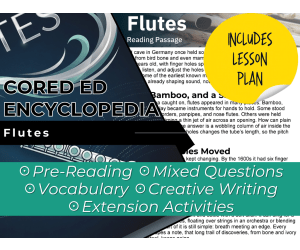
Flutes Reading Comprehension Passage - Cored Ed Encyclopedia
ELA, Reading Comprehension, Reading, Science, Technology, Social Studies, History, Music, Creative Arts, Physics, Grade 2, 3, 4, 5, Worksheets & Printables, Worksheets, Teacher Tools, Centers, Activities, Writing Prompts, Assessments, Quizzes and Tests, Quizzes, Lesson Plans
This flutes reading comprehension with lesson plan includes: Visualization (on the front cover) Start your lesson by taking a minute to think and share something about the topic. Read the script aloud (slowly), perhaps prepare some music or sound effects. Student close their eyes and let their imaginations wander. Students open their eyes, read the question aloud and give them a few minutes to complete. Ask a few students to share or keep answers until the end to compare with what they learn in the passage. Quick pause—thousands of Cored Education products are included with your TeachSimple membership. Download links and encyclopedia index available here. Pre-Reading Trivia Students will write down one thing they already know about the subject and then read five more facts and discuss. These facts are fun, and the students will enjoy learning about the subject before reading more. Give 1 minute for students to write what they already know (no pressure—best guess is fine). Read the five facts together. After each fact, do ask a student for their opinion, was it surprising? Set a purpose by asking students to highlight/underline one fact they want to learn more about during the reading. Reading Passage The text is a high-interest reading passage with set paragraphs, roughly three to four paragraphs long. It contains a variety of themes about the topic, anywhere from history to technology. The passage is between 250 and 350 words in length. First, ask students to look at the headings and see what they’ll learn about today. What do they know about the topic/heading? First read options: Teacher read-aloud (best for support). Partner reading (paragraph by paragraph). While reading, students underline important details, and vocabulary words they think may come up in the questions section. Mixed Questions The first question page contains four multiple-choice questions, each with a choice of four answers, and three written response questions that require a sentence or two from the student. Students complete the mcqs first independently, then review quickly as a class. For the 3 written responses, try to get students giving the answer with some form of evidence: “I think ___ because the text says ___.” If students get stuck, send them back to check the passage. Vocabulary Questions Practice seven key words from the text in this section across two activities. First section is scrambled words where students will unscramble three words given a clue for each. The second section is a word to meaning matching activity. Before starting, have some students read out words they underlined in the passage. Ask students to say the word and read aloud the sentence(s) around each word. Ask students to do scrambled words and the matching exercise in pairs then go through answers as a class. For the scrambled spelling task, get four pairs to come up to the board and write the words for extra practice with the other student reading out the clue. For the matching task, prompt students to give full sentences: “I matched ___ with ___ because ___.” Creative Writing In this question, the student will be required to write a five to eight sentence paragraph on a question related to the topic. Before starting, ask students write down 3 key ideas they are going to include in their piece. Ask students for ideas to share around the class to help those struggling. Pro writing expectations: 5–8 sentences At least 2 facts or details from the passage At least 2 vocabulary words from the previous page Students read their paragraphs while classmates listen for facts and vocabulary words. Extension Activities This page is optional for fast finishers or to take home. There are several activities, each one requiring a different skill. Do some, do none, do all, completely optional - but you will feel reassured knowing every possibility is planned for. Includes summary writting question and additional facts. Answer Key There are answers for the multiple-choice questions, written response questions have sample answers, vocabulary answers and if there is a summary question then a sample summary will be provided as well. Lesson Plan Included Customized lesson plan for this lesson is included. Lesson Snapshot Title: Flutes Genre: Nonfiction (Informational Text) Subject: Music / Science (Sound) / Reading (Informational Text) Primary Topic: How flutes make sound and changed over time Estimated Guided Reading Level (A–Z): Q What This Lesson Teaches Best How very early flutes were made (carved from bird bone and mammoth ivory ) and why these finds matter as early musical instruments. How flutes make a clear note: a thin jet of air across an opening creates a wobbling column of air inside the tube. Cause and effect in instruments: covering or uncovering holes changes the tube’s length, so the pitch goes up or down. How design evolved in Europe, including added holes and keys and Theobald Boehm’s 1800s redesign with tone holes and ring keys . Key features of a modern concert flute (often metal, about 26 inches long, three sections, padded keys, range of a little more than three octaves ). Learning Goals Students will describe what materials some ancient flutes were carved from and how old they were said to be. Students will explain how a flute makes a clear note using the idea of a “column of air” in a tube. Students will explain how covering or uncovering holes changes pitch by changing the tube’s length. Students will summarize how the sideways flute changed over time in Europe, including added holes and keys. Students will identify changes Theobald Boehm made to flute design and how ring keys helped players. Students will describe at least two details of today’s concert flute mentioned in the passage. Key Vocabulary From the Text mammoth — an ancient animal related to today’s elephants. ivory — hard material used for carving. column — a long “tube” shape of air inside. pitch — how high or low a note sounds. octaves — sets of notes higher or lower. FULL CATALOG OF DOWNLOAD LINKS AND ENCYCLOPEDIA INDEX HERE
Author Cored Education
Rating
Tags Vocabulary, Reading Comprehension, Reading Passages, Lesson Plans, Ela Lesson Plans, Reading Comprehension Lesson Plans, Pre-reading, History, Music, Music Lesson Plans
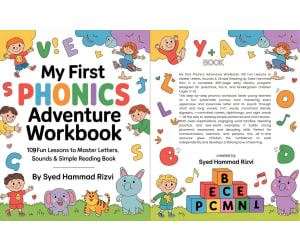
My First Phonics Adventure Workbook 109 Fun Lessons to Master Letters
ELA, Language Development, Literature, Reading, Writing, Phonics, Children’s Literature, Reading Comprehension, Strategies, Creative Writing, Kindergarten, Preschool, Grade 1, 2, 3, 4, 5, Projects, Activities, Teacher Tools, Assessments, Lesson Plans, Presentations, Workbooks, Worksheets & Printables, Literacy Readers, Graphic Organizers
Discover the ultimate preschool and kindergarten phonics workbook called the "My First Phonics Adventure Workbook: 109 fun lessons helping children to master letters, sounds and beginning reading!" This 369-page resource for early literacy education presents a sequentially organized curriculum of phonics skills (i.e., identification of uppercase/lowercase letters; pronunciation of short and long vowel sounds; recognition of CVC words; consonant blend sounds; recognition of diagraph sounds (e.g., "sh," "ch," "th," "wh"); pronunciation of r-controlled vowel sounds; recognition and pronunciation of diphthongs; identification of double consonant letters; recognition and use of sight words; simple sentence/story reading). Written in an easy-to-read and engaging style with many examples of the different types of words for blending activities and everyday application of reading skills, this learn to read workbook provides children with a strong phonemic awareness base and confidence in decoding words when reading. It is great for homeschoolers, teachers, or parents who want to use a comprehensive first-time reader program starting with A-Z letters, and ending with reading comprehension of a whole story; no prior knowledge required; ages 3-6. Improve child reading fluency from an all-inclusive phonics adventure that will support your preschool, Pre-K, or kindergarten child's growth towards success as a reader. Start today by downloading and becoming part of your child's journey toward unlocking the beauty of reading! Why Parents/Teachers Love: Systematic and Comprehensive Coverage — 109 accumulation chapters lead children from single letters to fluent reading of stories — no holes, no additional books needed. Creates True Confidence — Simple explanations with rules of word families and blending activities allow children to independently decode words they have not seen before, providing less frustration to children. Parent and Teacher Friendly — Ready-to-use lessons with examples; works well as a homeschooling, center, or daily practice resource. Proven Early Literacy Base — Phonics standard based and result driven methods that predict long-term success of reading. Affordable and All-in-One Resource – One download replaces more than one costly workbook and offers high quality profession instruction. Target Audience: This workbook is designed for children ages 3–7 in preschool (Pre-K) or early grade 1. Pre-k – Ideal for teaching children to recognize the letters of the alphabet, the sounds they make, and the beginning of their ability to read (Chapters 1-33). Kindergarten – This workbook provides a variety of activities that correlate to the core objectives found in the K-12 English language arts curriculum such as: recognizing and reading short/long vowel sounds, identifying consonant blends/digraphs, and writing simple sentences (Chapters 34-102). Early Grade 1 – This workbook can be used to reinforce and build on skills associated with r-controlled vowels, diphthongs, sight words, and text comprehension (Chapters 103-109). This workbook’s skills are foundational and will assist children who are developing as readers; however, the skills may be too easy for students in 2nd grade and above. Copyright Notice / Terms and Conditions: This Book is owned by Syed Hammad Rizvi. The Book is intended for personal use and only in one classroom. It may not be modified or sold by you, nor may it be distributed over the internet for others to download. If you would like to share the Book with your coworkers, please purchase more licenses for the Book on Teachsimple. Thank you for respecting these terms of use. Syed Hammad Rizvi is pleased to provide you with this product.
Author Creative Book Store
Rating
Tags Phonics, PhonicsFun, PhonicsForKids, PhonicsActivities, EarlyLiteracy, EarlyReading, LearnToRead, ReadingSkills, Literacy, ScienceOfReading