



3,928 products added recently
Page 82 - Elementary Lesson Plans
Support your elementary students with lesson plans that cover a broad range of subjects and skills. These resources are designed to promote cognitive, social, and emotional growth. Incorporate them into your teaching to provide a well-rounded education that meets the needs of all your students.

 Show filters

Figurative Language Gr. 4-6
Creative Arts, Art, Music, Grade 4, 5, Teacher Tools, Lesson Plans
Figurative Language Gr. 4-6 This highly useful teaching resource, titled 'Figurative Language Gr. 4-6,' is designed to enhance student's writing skills by equipping them with a range of figurative language techniques such as metaphors, similes, alliteration and personification. The materials are tailored for students from grade 4 through 6. The resource provides teachers and students with: Multiple reading passages In-depth activities Meticulous student reviews An answer key All these aspects make it a perfect companion for classroom instruction in public schools or homeschooling setups. Key Concepts Explained: 1. Metaphors : These are explained as expressions where one thing is related to another. 2. Alliteration : Simplified by focusing on its facet of involving repetition of sounds at the beginning of words. 3.Personification : Alluded by showcasing how objects or notions can acquire human characteristics. 4.Simile : Illuminated through examples showcasing comparison between two unrelated elements using keywords like 'like,' 'as,' or 'than.' In addition to being a reference guide, this product also contains exercises that aim at reinforcing understanding. Versatility in Teaching Scenarios - A Standout Feature: The intuitive design accommodates different teaching scenarios – whole group session OR small study group sessions as per the class size requirement OR even parts could be assigned as homework for further practice and reinforcement). Beyond English Literature Classes: This resource is invaluable even outside English literature classes. Art & Music subject teachers can find valuable insights within music sub-subjects where lyrics often imbibe rich figurative expressions. Accessibility: The teaching resource is packaged into an easily accessible PDF format ensuring easy downloading and sharing for uninterrupted learning process. Conclusion : In all, the Figurative Language Gr. 4-6 provides a robust platform for teachers to equip their students with key elements of figurative language, giving them an edge in expressing themselves creatively and clearly in writing and during reading sessions.
Author Classroom Complete Press
Tags PDF

A Student's Guide to Writing a Persuasive Essay
ELA, Writing, Formal Writing, Homeschool Templates, Grade 4, 5, 6, Graphic Organizers, Teacher Tools, Lesson Plans, Templates
Opinion Writing Unit | Step-by-Step Persuasive Essay Guide | Writing Workshop | Grades 3-6 Help your students become confident writers with this step-by-step Opinion Writing Unit. This is all on Google Slides to help students in upper elementary learn the process for typing a multi-paragrpah persuasive essay. Perfect for grades 3-6 . This resource walks students through every stage of the writing process, starting with brainstorming and ending with publishing! What’s Included: Step-by-step writing guide to guide students through opinion writing Graphic organizers and brainstorming Mini-lessons on thesis statements, supporting reasons, and conclusions Example essays and writing samples Checklists and rubrics for self-assessment and teacher grading Editable Google slides to fit your teaching style Why Teachers Love This Unit: Step-by-step writing approach makes opinion writing manageable Supports key writing standards Versatile use! Use this for whole-class instruction, small groups, or individual support Perfect For: Grades 3, 4, 5, and 6 Writing workshops or language arts centers Preparing students for ELA state testing This Opinion Writing Unit gives you everything to confidently teach persuasive writing. Download today and make persuasive writing a highlight of your ELA curriculum! Enjoy! Stephanie | The Language of Learning
Author The Language of Learning
Rating
Tags Opinion Writing, Creative Writing, Student Guide, Persuasive Essay, Graphic Organizers

45' Lesson on Memorial Day - Worksheet & Activities | Grade 1
History, Social Studies, Grade 1, Lesson Plans, Teacher Tools, Worksheets & Printables
45' Lesson on Memorial Day - Worksheet & Activities | Grade 1 Make Memorial Day meaningful and age-appropriate with these Grade 1 Memorial Day Activities ! This engaging, no-prep resource helps young learners understand heroes, symbols, and respect through hands-on activities, writing, and discussion. What’s Included ✅ Memorial Day student worksheet packet with engaging, hands-on activities ✅ Activities include: Coloring (American flag) Tracing words (FLAG, HERO) Word search & matching Counting, sorting, and circling Drawing and writing prompts Thank-you card activity ✅ Complete Answer Key : Quick grading format Clear guidance for open-ended responses Matches each activity one-to-one ✅ Detailed 45-minute Lesson Plan : Step-by-step teaching guide Vocabulary, objectives, and materials Discussion questions and sensitivity notes Differentiation strategies for all learners How It Works in the Classroom This Grade 1 Memorial Day activity pack is simple and flexible: Use as a complete 45-minute lesson with built-in structure and pacing Assign worksheets during independent practice, centers, or morning work Spread activities across multiple days for thematic learning Pair with a read-aloud or class discussion about heroes and gratitude Use the included moment of silence activity to build respectful classroom routines Standards & Learning Goals Aligned to Grade 1 Social Studies and ELA skills Students will: Understand the meaning of Memorial Day in simple terms Identify national symbols (flag, stars, soldiers) Build vocabulary: hero, brave, honor, flag Practice early literacy skills (tracing, word recognition, writing) Develop fine motor skills through coloring and drawing Show respect and gratitude through discussion and reflection Why Teachers Love It ⭐ Perfect for introducing Memorial Day in a developmentally appropriate way ⭐ Combines social studies + ELA + hands-on activities ⭐ Includes a done-for-you lesson plan (no prep needed!) ⭐ Easy to use for centers, whole group, or sub plans ⭐ Supports all learners with differentiation and visual activities ⭐ Makes grading simple with a clear, quick-answer key ⭐ Encourages meaningful conversations about heroes, kindness, and gratitude Download these Grade 1 Memorial Day activities today to create a meaningful, engaging, and easy-to-teach lesson your students will remember!
Author Bright Classroom Ideas Marketplace
Rating
Tags Memorial Day, Lesson, Plan, Worksheet

I WONDER - What Is Wave Energy | Animated Video Lesson
Environmental Science, Earth and Environmental Sciences, Science, Earth Sciences, Grade 3, 4, 5, 6, 7, 8, 9, Lesson Plans, Teacher Tools
Video Introduction An amazing video designed for the students to learn more about STEM. I WONDER - What Is Wave Energy | Animated Video Lesson Do you like STEM subjects? what is your favorite one? Have you ever tried to plant a seed? If yes, tell us more about it. Or have you ever tried to invent something? If yes, tell us more about it. And how do you think it will help us? Have you ever seen a microorganism under a microscope? What was it? And how it looked like? Mathematics is a marvelous subject. Let' sharpen our brains and solve some equations. Do you like timetable tricks? What is your favorite one? Do you know how to code? Have you ever created an app or a game before? If yes, how was it like? I WONDER - What Is Wave Energy | Animated Video Lesson The video is perfect for encouraging the researching skills for the students, while learning more about this fantastic topic. I WONDER - What Is Wave Energy | Animated Video Lesson This friendly designed video is suitable for students at school, homeschooling, and as a group activity. Format Available in MP4 format.
Author Educational Voice
Tags What Is Wave Energy, What Is Wave Energy Video, Wave Energy, Wave Energy Facts, Wave Energy Facts For Kids, Wave Energy Video, Wave Energy Video For Kids, Energy, Energy Facts For Kids
I WONDER - Why Did Castles Have Towers | Animated Video
History: African, History, Social Studies, History: Ancient, History: British, History: Asian, History: Europe, History: World, Grade 6, 7, 8, 9, 10, 11, 12, Lesson Plans, Teacher Tools
Video Introduction An amazing video designed for the students to learn more about history. I WONDER - Why Did Castles Have Towers | Animated Video Lesson Do you like history? Which topic do you really enjoy about history? Have you ever read an interesting fact about the Vikings? If yes, can you mention them? What do you like most about the Victorian era? Can you name all the Tudors? Have you ever wondered how people used to live in ancient Japan and ancient China? Do you know any interesting facts about ancient Egyptians and the Pharaohs? Have you ever visited South America? What do you know about Incas and Aztecs? Celtic culture was really one of a kind, can you name any of the places that Celts used to live in? Imagine yourself living during the ancient Roman empire, how your life will look like? Ancient Greece was an amazing place to live in. What do you know about ancient Greek life? I WONDER - Why Did Castles Have Towers | Animated Video Lesson The video is perfect for encouraging the researching skills for the students, while learning more about history. I WONDER - Why Did Castles Have Towers | Animated Video Lesson This friendly designed video is suitable for students at school, homeschooling, and as a group activity. Format Available in MP4 format.
Author Educational Voice
Tags Why Did Castles Have Towers, Why Did Castles Have Towers Video, Castles Towers, Castles Towers Facts, Castles Towers Video, Castles Towers Facts For Kids, Castles Towers Video For Kids, Castles
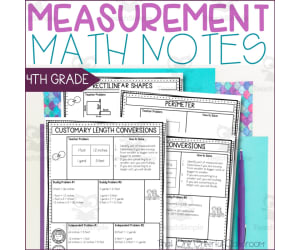
4th Grade Measurement Conversions, Area and Perimeter Math Notes
Math, Measurements, Common Core, Grade 4, Teacher Tools, Lesson Plans
4th Grade Measurement Conversions, Area and Perimeter Math Notes This educational resource is of immense value to teachers aiming to simplify complex mathematical concepts for 4th Grade students. It covers a broad spectrum of topics including: Measurement conversions Area calculations Perimeter computations Rectilinear area analyses. The highlight of this resource is its adaptability - it can be used for full-class lessons, small group activities or as homework. Educational Approach The process begins with the students observing educators for comprehension. This is followed by paired collaboration on problem-solving exercises. The cycle concludes with independent tasks allowing students to demonstrate their learning solo. Familiar sections include: [Customary Length Conversions Math Notes],[Mixed Measurement Math Notes], and[Metric Measurement Conversions Math Notes] - each covering crucial elements needed to master the respective subjects at grade level. Versatile Learning Options: = Fully Filled-In: Pre-filled notes ideal for students requiring lesson notes beforehand, Fill In The Blanks: Promoting direct participation from students along the instruction flow, Completely Blank: Encouraging in-depth student outputs during demonstration using writing tools. The convenience offered by these ready-to-print math notes ensures prepared lessons without any hassle. This material aligns robustly with Common Core Standards ( (CCSS): 4.MD .1 & 4.MD .3) . It ensures students are adequately equipped to compete at a national level within the prescribed educational framework. The 4th Grade Measurement Conversions, Area and Perimeter Math Notes is a game-changer for educators keen on building lifelong learners through engaging and effective math lessons.
Author That One Cheerful Classroom
Tags Measurement Conversions, Area Calculations, Perimeter Computations, Rectilinear Area Analysis, Math Notes
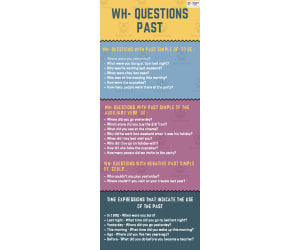
Wh- Questions In The Past Intermediate Lesson Plan
ELA, Grammar, Grade 5, 6, 7, 8, 9, 10, 11, 12, Teacher Tools, Lesson Plans
This is an intermediate lesson plan worksheet set for Wh- Questions. Enhance your students English knowledge with this comprehensive lesson plan that will teach them how to form question in the past. What were you doing? Where did you eat? Why did he become a doctor? Questions like these and many more with a guide to helps students answer the questions in the correct tense too. Students will learn more about these and then complete the exercises to follow, which will assess their comprehension and implement grammar skills. This ESL ELA TEFL lesson plan now includes new flash cards and exercises as well as a warmer, conversation questions, main use, construction, rules, examples, open questions, closed questions, activity, writing drill and extra study. The TEFL resource is available in PDF with 7 ready to print pages and one digital access file. A part of it is on Google Apps. The answer key is also included for reference.
Author TEAM TEFL
Tags Wh Questions, Asking Questions, Grammar Lesson, ESL Lesson, Language Arts
Egypt's Abu Simbel Temples: Moving a Treasure: Ready-To-Use Activities for Substitute Teachers
ELA, Reading, Grade 4, 5, Teacher Tools, Lesson Plans
Egypt's Abu Simbel Temples: Moving a Treasure A comprehensive teaching resource tailored to fourth and fifth-grade students. Enhance your language arts lesson plans with this set of ready-to-use activities. Fascinating Reading Material This educational packet immerses students into the history of Ramses' temple at Abu Simbel. Improve their reading skills by learning about the architectural wonder and its massive relocation project that saved it from submerging under Lake Nasser. Cross-curricular Worksheets Challenge comprehension skills Encourage critical thinking Facilitate knowledge retention Versatile and Accessible Format Egypt's Abu Simbel Temples: Moving a Treasure comes in an easily downloadable, 7-page PDF file. Use it wherever you prepare your lesson plan, be it at home or on campus. Fits In Anywhere In Your Study Plan (Whole Group Instruction / Small Group Discussions / Homework Assignments) Note: Beyond language arts, this packet seamlessly integrates contents related to subjects like history or geography. Innovative Ideas Exclusively For Teachers' Utilization: A dedicated section extending usability by providing inspiration for various classroom implementations. Conclusion: This is an educational tool that combines historical literacy with computational thinking skills while reducing planning time significantly—Egypt's Abu Simbel Temples: Moving a Treasure could be your go-to solution!
Author Classroom Complete Press
Tags Egypt, Substitute Plans, History Lesson, History Project, Homonyms
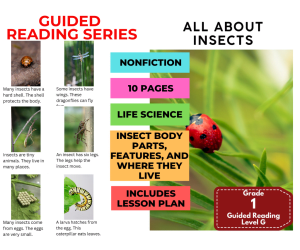
All About Insects: Guided Reading Level G with Lesson Plan
ELA, Resources for Teachers, Reading Comprehension, Reading, Science, Language Development, Vocabulary, Pre-Reading, Insects, Life Sciences, Kindergarten, Grade 1, 2, Worksheets & Printables, Worksheets, Teacher Tools, Centers, Activities, Literacy Readers, Quizzes, Quizzes and Tests, Assessments, Lesson Plans
This All About Insects (level g) guided reading book with lesson plan includes: Guided Reading Color Label (front cover x1) This is a quick way to match the book’s demands to what students can generally handle.. The overall goal is to use the level/color to pick books for several smaller groups. To qualify for a certain level, a student is expected to read a book from that level with about 90–94% accuracy. If a student is consistently accurate and understands, move up a level. If the student is struggling at that level, drop down and add more support. Each student will improve at completely different rates, but it is generally one of the best ways to check progress across the class. DOWNLOAD THE CATALOG TO VIEW ALL GUIDED READING BOOKS AVAILABLE (SORTED LEVELS A-Z) Pre-Reading Question (x1) Teacher asks the prompt aloud, can be while showing the cover or first page. Students share what they already know, or make educated guesses from the cover. Prompt them to use the target vocabulary. Write some of their responses on the board to look back at during the reading. Vocabulary Words (x5) Introduce the five words, best doing it one at a time. Start by saying it, while students repeat and then see if anyone knows what it means before reading further. Read through the meaning and try to briefly connect each word to a picture or gesture so it’s meaningful. Ask students to flip through the book pages and point to where they see each of the vocabulary words. While reading the book pause upon coming across one of the vocab words or read the sentence twice to make sure students understand the word has appeared. Optional: Ask students to raise hands whenever they see/hear one of the new words. Guided Reading Pages (x10) Check the book snapshot (below) for: primary topic - do you need to prep extra reading or intro materials on this? what is taught best - decide on 1-2 bullets to focus on, use the prompt or words provided here for best results. learning goals - what you are checking for students to be able to do after the session, elicit answers using prompts or words provided. key vocabulary (see section above). questions overview - so you know what is coming up and if you need to prep extra materials to assist understanding. Run the lesson You may have already looked at a few of the pages together, but you can show them some of the pictures again first to set meaning. Depending on how much time you have and how familiar your students are with guided reading class, you may want to read the book aloud first with the group first. Students whisper or partner read, while you listen in. If time, do it as a group, one student reading a page each. Use the guided page’s prompts to coach: “Check the picture / does it make sense?” “Point under the words / try the first sound” “Reread the sentence smoothly”. Try to focus more on one student per session (rotating every time), so you can work out if they are ready to move up or need to move down a level. Comprehension Questions (back cover x3) This is your way to check that students didn’t just say the words, but actually understood the text. First, let students answer by pointing to the page/picture and saying a short sentence. After any answer, follow with: “Show me where you found that in the text.” In bigger groups, have partners answer first (10–20 seconds), then call on 2–3 students to share. Differentiation tips: Emerging speakers/struggling readers: oral + pointing On-level: oral in a full sentence Higher: one written sentence or draw + label Book Snapshot Title: All About Insects Genre: Nonfiction (informational) Subject: Science (Life Science) Primary Topic: Insect body parts, features, and where they live Estimated Guided Reading Level (A–Z): G What This Book Teaches Best Explains what insects are by stating they are tiny animals that live in many places . Teaches basic insect anatomy: insects have six legs and three body parts (head, thorax, abdomen). Connects structures to functions: legs help the insect move and antennae are used to smell things . Describes common insect features: some have a hard shell that protects the body , and some have wings (dragonflies can fly fast ). Introduces early life stages: many insects come from eggs , and a larva hatches from an egg. Learning Goals Students will describe insects as tiny animals that live in many places. Students will identify that an insect has six legs that help it move. Students will name the three body parts of an insect: head, thorax, and abdomen. Students will explain that most insects have two antennae used to smell things. Students will describe details from the text about insect features (shells, wings) and how insects begin life (eggs, larva). Key Vocabulary From the Text thorax — the middle part of an insect’s body. abdomen — the back part of an insect’s body. antennae — body parts insects use to smell things. larva — a young insect that hatches from an egg. dragonflies — insects that can fly fast. Discussion Prompts Pre-reading question: Where have you seen insects living before? Comprehension questions: What does the book say insects are? Comprehension questions: How many legs does an insect have? Comprehension questions: Where does the book tell you to look to find an insect? Printing Tips 1. Best Printing Method (Recommended) “Booklet” Printing (Best if Available) If your printer or PDF viewer supports Booklet Printing , use this. Settings to use: Print mode: Booklet Paper size: Letter or A4 (either works) Orientation: Landscape Print on both sides: Yes Flip on: Short edge Scaling: Fit to printable area Booklet subset: First test: Front sides only Then: Back sides only This will automatically: Pair pages correctly Put the cover on the outside Align everything for folding After printing, fold in half and staple along the spine . 2. If “Booklet” Printing Is NOT Available You can still print this correctly with manual duplex printing . Step-by-step: Open the PDF. Choose Print . Set: Orientation: Landscape Pages per sheet: 1 Print on both sides: Yes Flip on: Short edge Print all pages . Because each PDF page already contains two facing book pages, the result will still fold cleanly into a book. Thousands of Cored Education products are included with your TeachSimple membership. Download links and encyclopedia index available here.
Author Cored Education
Rating
Tags Reading Comprehension, Reading Passages, Reading, Guided Reading, Guided Reading Lesson Plan, Guided Reading Activity, Pre-reading, Science Lesson Plans, Life Science, Insects
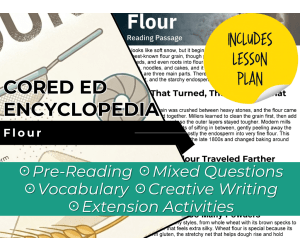
Flour Reading Comprehension Passage - Cored Ed Encyclopedia
ELA, Reading Comprehension, Reading, Science, Technology, Language Development, Social Studies, History, Pre-Reading, Life Sciences, Grade 2, 3, 4, 5, Worksheets & Printables, Worksheets, Teacher Tools, Centers, Activities, Writing Prompts, Assessments, Quizzes and Tests, Quizzes, Lesson Plans
This flour reading comprehension with lesson plan includes: Visualization (on the front cover) Start your lesson by taking a minute to think and share something about the topic. Read the script aloud (slowly), perhaps prepare some music or sound effects. Student close their eyes and let their imaginations wander. Students open their eyes, read the question aloud and give them a few minutes to complete. Ask a few students to share or keep answers until the end to compare with what they learn in the passage. Quick pause—thousands of Cored Education products are included with your TeachSimple membership. Download links and encyclopedia index available here. Pre-Reading Trivia Students will write down one thing they already know about the subject and then read five more facts and discuss. These facts are fun, and the students will enjoy learning about the subject before reading more. Give 1 minute for students to write what they already know (no pressure—best guess is fine). Read the five facts together. After each fact, do ask a student for their opinion, was it surprising? Set a purpose by asking students to highlight/underline one fact they want to learn more about during the reading. Reading Passage The text is a high-interest reading passage with set paragraphs, roughly three to four paragraphs long. It contains a variety of themes about the topic, anywhere from history to technology. The passage is between 250 and 350 words in length. First, ask students to look at the headings and see what they’ll learn about today. What do they know about the topic/heading? First read options: Teacher read-aloud (best for support). Partner reading (paragraph by paragraph). While reading, students underline important details, and vocabulary words they think may come up in the questions section. Mixed Questions The first question page contains four multiple-choice questions, each with a choice of four answers, and three written response questions that require a sentence or two from the student. Students complete the mcqs first independently, then review quickly as a class. For the 3 written responses, try to get students giving the answer with some form of evidence: “I think ___ because the text says ___.” If students get stuck, send them back to check the passage. Vocabulary Questions Practice seven key words from the text in this section across two activities. First section is scrambled words where students will unscramble three words given a clue for each. The second section is a word to meaning matching activity. Before starting, have some students read out words they underlined in the passage. Ask students to say the word and read aloud the sentence(s) around each word. Ask students to do scrambled words and the matching exercise in pairs then go through answers as a class. For the scrambled spelling task, get four pairs to come up to the board and write the words for extra practice with the other student reading out the clue. For the matching task, prompt students to give full sentences: “I matched ___ with ___ because ___.” Creative Writing In this question, the student will be required to write a five to eight sentence paragraph on a question related to the topic. Before starting, ask students write down 3 key ideas they are going to include in their piece. Ask students for ideas to share around the class to help those struggling. Pro writing expectations: 5–8 sentences At least 2 facts or details from the passage At least 2 vocabulary words from the previous page Students read their paragraphs while classmates listen for facts and vocabulary words. Extension Activities This page is optional for fast finishers or to take home. There are several activities, each one requiring a different skill. Do some, do none, do all, completely optional - but you will feel reassured knowing every possibility is planned for. Includes summary writting question and additional facts. Answer Key There are answers for the multiple-choice questions, written response questions have sample answers, vocabulary answers and if there is a summary question then a sample summary will be provided as well. Lesson Plan Included Customized lesson plan for this lesson is included. Lesson Snapshot Title: Flour Genre: Nonfiction (Informational Text) Subject: Science (Food Science) / Reading (Informational Text) Primary Topic: How flour is made from seeds and grains Estimated Guided Reading Level (A–Z): P What This Lesson Teaches Best Explains what flour is made from: flour begins as a seed , and people grind grains (and other plants) into powder used for many foods. Teaches the three main parts inside a grain seed — bran , germ , and endosperm —and what each part is like. Describes how milling changed over time, from heavy stones to steel rollers and lots of sifting to make very fine flour. Builds understanding of why white flour became popular (it kept longer) and what “enriched” flour means in this text. Connects ingredient science to baking by explaining how wheat proteins can form gluten , helping dough rise and hold bubbles of air. Learning Goals Students will explain how flour begins as a seed and becomes powder through grinding. Students will identify the three main parts of a grain seed: bran, germ, and endosperm. Students will describe how modern mills use rollers and sifting to make fine flour. Students will explain why white flour kept longer, based on what the text says about oils. Students will describe what “enriched” flour means in the passage and why it mattered. Students will explain how gluten helps dough rise and hold bubbles of air. Key Vocabulary From the Text bran — the outer part of a grain seed. germ — the tiny part that could sprout. endosperm — the starchy part that feeds the seed. enriched — flour with certain vitamins and iron added back. gluten — stretchy net that helps dough rise and hold air. FULL CATALOG OF DOWNLOAD LINKS AND ENCYCLOPEDIA INDEX HERE
Author Cored Education
Rating
Tags Vocabulary, Reading Comprehension, Reading Passages, Lesson Plans, Ela Lesson Plans, Reading Comprehension Lesson Plans, Pre-reading, Science Lesson Plans, History, Technology
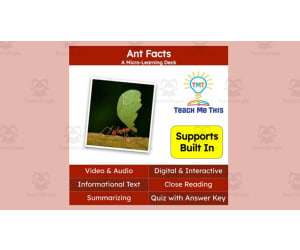
Ants | Interactive Science Lesson | Micro-Learning Deck
Science, Life Sciences, Insects, Grade 4, 5, 6, 7, Teacher Tools, Lesson Plans
Engage your science students with this informative lesson on ants. Through a short video, reading passage with audio support, close reading activity, and quick write prompt, learners will develop an understanding of ant biology and behavior. Implement as a whole class science lesson, center work, or at-home assignment for grades 4-7. The multimedia format appeals to visual, auditory, and kinetic learning styles. Students will learn details of ant anatomy, social structure, and role in seed dispersal and soil health. Assessment opportunities allow teachers to check comprehension on topics like external ant anatomy, ant colonies, jobs within the colony, and symbiosis. This concise yet comprehensive resource can supplement any life sciences curriculum in a blended or remote setting.
Author Teach Me This
Tags Ants Lesson, Summarizing, Interactive Science, Vocabulary, Comprehension

Animal Science Unit | All About Dolphins | Learning about Animals
Science, Life Sciences, Animals, Kindergarten, Preschool, Grade 1, 2, Lesson Plans, Teacher Tools
Animal Science Unit | All About Dolphins Dive into learning all about dolphins with this engaging animal science unit! Educators will discover a treasure trove of dolphin-themed activities, including real photos, nonfiction reading passages, arts and crafts , worksheets, and writing projects for customizing lessons. Differentiation ensures relevance for students preK-2nd grade. Highlights include dolphin life cycle and habitat posters, fact cards, vocabulary words, a map showing native areas, comprehension questions, and memory games reviewing physical traits and behaviors. Young marine biologists will be fascinated investigating these intelligent and playful mammals. Implementation ideas for whole group, small group, or independent work provide flexibility. Engage students' natural curiosity about the animal world with this thorough and thoughtfully-designed dolphin unit.
Author Simply Schoolgirl
Tags Zoology, Marine Mammal, Marine Mammals, Ocean Animals, Dolphin Crafts, Dolphin Lesson Plans, Dolphin Worksheets, Dolphin Book, Dolphin Printables
I WONDER - Who Was the God Mars | Animated Video Lesson
History: Ancient, History, Social Studies, History: Europe, Grade 4, 5, 6, 7, 8, 9, 10, Lesson Plans, Teacher Tools
Video Introduction An amazing video designed for the students to learn more about history. I WONDER - Who Was the God Mars | Animated Video Lesson Do you like history? Which topic do you really enjoy about history? Have you ever read an interesting fact about the Vikings? If yes, can you mention them? What do you like most about the Victorian era? Can you name all the Tudors? Have you ever wondered how people used to live in ancient Japan and ancient China? Do you know any interesting facts about ancient Egyptians and the Pharaohs? Have you ever visited South America? What do you know about Incas and Aztecs? Celtic culture was really one of a kind, can you name any of the places that Celts used to live in? Imagine yourself living during the ancient Roman empire, how your life will look like? Ancient Greece was an amazing place to live in. What do you know about ancient Greek life? I WONDER - Who Was the God Mars | Animated Video Lesson The video is perfect for encouraging the researching skills for the students, while learning more about history. I WONDER - Who Was the God Mars | Animated Video Lesson This friendly designed video is suitable for students at school, homeschooling, and as a group activity. Format Available in MP4 format.
Author Educational Voice
Tags Who Was The God Mars, Who Was The God Mars Video, God Mars, God Mars Facts, God Mars Facts For Kids, God Mars Video, God Mars Video For Kids, Mars, God, Gods

Conservation: Fresh Water Resources: Where Is Fresh Water? Gr. 5-8
Science, Earth and Environmental Sciences, Environmental Science, Grade 5, 6, 7, 8, Teacher Tools, Lesson Plans
Conservation: Fresh Water Resources: Where Is Fresh Water? Gr. 5-8 is a comprehensive teaching resource targeting students from grade 5 to grade 8. The goal is to enlighten them about the importance of fresh water, an essential part of our daily life. This invaluable resource upon which human survival depends needs to be conserved, and it's vital for students to understand this. A unique feature of this lesson plan is that it's not just designed for typical classroom scenarios but it can also be used in small groups or even as homework assignments, offering flexibility in line with pedagogical needs. About the Lesson Plan This lesson plan explores not just what and where fresh water is, but goes deeper into how climate change affects its purity and quantity. With a focus on global scientific perspectives surrounding conservation efforts for fresh water resources, it aims at making young learners aware of the urgent need to protect this critical natural resource. Pedagogical Approach The information presented employs accessible language so complex terminology easy-to-understand. In conformity with Bloom's Taxonomy guidelines , the course offers cognitive learning objectives across different levels. To aid comprehension assessment and retention among students, each module has embedded questions. To nurture interactive learning experiences there are various hands-on activities included. Preparation for evaluations include mock tests replicating actual examination scenarios. Colorful mini posters summarizing crucial concepts aid with easy revisions before exams. The Bigger Picture Lying at its core subject being environment science indirectly fostering responsible citizens equipped knowledge enrich class discussions share ideas well-informed perspectives, the program unfolds multitude perceptive horizons. This helps students effortlessly achieving state standards by lighting up their huge learning potential!
Author Classroom Complete Press
Tags PDF

I WONDER - Why Should Farmers Be Careful With Water Usage
Earth Sciences, Earth and Environmental Sciences, Science, Environmental Science, STEM, Grade 4, 5, 6, 7, 8, 9, 10, Lesson Plans, Teacher Tools
Video Introduction An amazing video designed for the students to learn more about STEM. I WONDER - Why Should Farmers Be Careful With Water Usage | Animated Video Lesson Do you like STEM subjects? what is your favorite one? Have you ever tried to plant a seed? If yes, tell us more about it. Or have you ever tried to invent something? If yes, tell us more about it. And how do you think it will help us? Have you ever seen a microorganism under a microscope? What was it? And how it looked like? Mathematics is a marvelous subject. Let' sharpen our brains and solve some equations. Do you like timetable tricks? What is your favorite one? Do you know how to code? Have you ever created an app or a game before? If yes, how was it like? I WONDER - Why Should Farmers Be Careful With Water Usage | Animated Video Lesson The video is perfect for encouraging the researching skills for the students, while learning more about this fantastic topic. I WONDER - Why Should Farmers Be Careful With Water Usage | Animated Video Lesson This friendly designed video is suitable for students at school, homeschooling, and as a group activity. Format Available in MP4 format.
Author Educational Voice
Tags Why Should Farmers Be Careful With Water Usage, Why Should Farmers Be Careful With Water Usage Video, Farmers, Farmers Facts, Farmers Facts For Kids, Farmers Video, Farmers Video For Kids

I WONDER - Why Do Zebras Have Stripes | Animated Video Lesson
STEM, Animals, Life Sciences, Science, Biology, Grade 1, 2, 3, 4, 5, 6, 7, 8, Lesson Plans, Teacher Tools
Video Introduction Animal kingdoms are full of fascinating wonders to learn. This video is designed for the students to learn more about animals in different countries. I WONDER - Why Do Zebras Have Stripes | Animated Video Lesson Do you like animals? what is your favorite one? Do you own a pet? If yes, tell us more about it, like what its name? And what do you like most about it? What are the animal kingdoms? Can you write down the characteristics of each animal class like mammals, birds, reptiles, amphibian, fish and mollusks. Do you know that some animals can sing, can you name any of them? What is the largest and the smallest mammal in the world? What is the largest and the smallest bird in the world? What is the largest and the smallest fish in the world? I WONDER - Why Do Zebras Have Stripes | Animated Video Lesson The video is perfect for encouraging the researching skills for the students, while learning more about these fantastic animals. I WONDER - Why Do Zebras Have Stripes | Animated Video Lesson This friendly designed video is suitable for students at school, homeschooling, and as a group activity. Format Available in MP4 format.
Author Educational Voice
Tags Why Do Zebras Have Stripes, Why Do Zebras Have Stripesvideo, Zebras Stripes, Zebras' Stripes, Zebras' Stripes Facts, Zebras' Stripes Facts For Kids, Zebras' Stripes Video, Zebras' Stripes Video For Kids

Waste: At the Source: Toxic Waste Gr. 5-8
Science, Earth and Environmental Sciences, Environmental Science, Grade 5, 6, 7, 8, Teacher Tools, Lesson Plans
Waste: At the Source: Toxic Waste Gr. 5-8 This crucial teaching resource dives into an in-depth exploration of waste production and its environmental impact. The key focus is creating awareness about different types of waste, including: Pre-consumer waste: involves raw materials and natural resources Post-consumer waste: related to consumable products and durable goods among other things Educators handling Grades 5 through 8 Environmental Science curriculum must ensure students understand the source, production, handling and implications of toxic wastes. This aligns perfectly with State Standards , reinforcing objectives set out by Blooms Taxonomy. This resource lays an excellent foundation for whole group instruction or small group discussions. It's also beneficial as homework assignments due to its comprehensive nature. Complex concepts like landfills operation or toxic waste management are explained in simplified language for better student comprehension. Included Activities: Abridged Reading Passages: Simplify complex facts into easily readable content. Diverse Student Activities: Promote interaction while cementing lessons learnt from reading passages Color Mini Posters: Offer visual representation of discussion points Crossword Puzzles & Word Searches : Foster cognitive skill development amongst students while making learning fun Comprehension Quizzes: Serve as class participation exercises or exam prep tools. The material is delivered digitally in a PDF file format for convenience, making it perfect for future reference or extended use beyond classroom hours. "Waste: At the Source: Toxic Waste Gr. 5-8" simplifies yet deep dives into environmental science topics, enhancing student awareness on pollution related issues and empowering them towards eco-consciousness.
Author Classroom Complete Press
Tags PDF

I WONDER - What Is A Bronchiole | Animated Video Lesson
Human Body, Life Sciences, Science, Biology, STEM, Grade 6, 7, 8, 9, 10, 11, 12, Lesson Plans, Teacher Tools
Video Overview The human body is full of fascinating wonders to learn. This video is created to help the students recognize the anatomy and the job of the human body. I WONDER - What Is A Bronchiole | Animated Video Lesson Every part and organ in our human body is vital so let's see how important they are. Have you ever imagined how we look like if we didn't have a skeleton? Did you know that because we have our amazing muscles we can stand! Do you know how many teeth do we have? Have you ever wondered about the food journey inside our body? Can you name all the glands in our body? Why do we have skin? Our nervous system is really good at sending signals. Can you tell us more about it? Are you really good at Mathematics, painting, or any other thing? You should really thank your brain about it! The famous five senses are really doing a great work? Can you explain how every sense works? I WONDER - What Is A Bronchiole | Animated Video Lesson The video is perfect for encouraging the researching skills for the students, while learning more about our fantastic human body. I WONDER - What Is A Bronchiole | Animated Video Lesson This friendly designed video is suitable for students at school, homeschooling, and as a group activity. Format Available in MP4 format.
Author Educational Voice
Tags What Is A Bronchiole, What Is A Bronchiole Video, Bronchiole, Bronchiole Facts, Bronchiole Facts For Kids, Bronchiole Video, Bronchiole Video For Kids, Human Body, Human Body Facts
Number & Operations: Percentages with Fractions - Practice the Skill 2 - MAC Software
Math, Percentages, Common Core, Grade 3, 4, 5, Teacher Tools, Lesson Plans
Introduction to Number & Operations: Percentages with Fractions - Practice the Skill 2 - Mac Software A comprehensive educational tool, the Number & Operations: Percentages with Fractions - Practice the Skill 2 software targets enhancing understanding of percentages linked with fractions. Designed for educators across public schools and homeschooling initiatives, it is suitable for students at grade levels 3-5. Features The primary mode of learning revolves around a 'chapter mini' that contains curriculum -oriented content through practice skill activities developed in a timed drill format. This multifaceted approach not only provides entertainment but also effectively challenges learners by having them decipher fraction equivalents for given percentages. The software comes equipped with various math tools to amplify mathematical comprehension further. A standout feature of this Mac software lies in its multilingual support as it includes not only an English voice over and text but extends towards Spanish voice over and text as well; catering towards diversified classrooms with varying linguistic preferences. Pedagogical Goals and Alignments The pedagogical goals transcend standard didactical boundaries by aligning accordingly with Common Core State Standards and STEM initiatives. Furthermore, it adheres to guidelines penned down by NCTM (National Council Of Teachers Of Mathematics). Versatility in Teaching Styles The resource can be executed effectively across various teaching styles such as whole group discussions or small group collaborations. However adding flexibility for teachers, this tool can be efficiently utilized as a homework assignment too. That said, upon purchase you will receive one zip file containing MAC software which needs proper installation on device(s). Conclusion In sum, this teaching medium bridges the gap between students' understanding levels when it comes to percentages incorporated within fractions under math operations.
Author Classroom Complete Press
Tags Math Lesson Plan, Fractions Lesson, Percentages Activity, Digital Percentages, Math Skills

I WONDER - How Is Sandstone Made | Animated Video Lesson
Geography, Social Studies, Earth Sciences, Earth and Environmental Sciences, Science, Grade 4, 5, 6, 7, 8, 9, 10, Lesson Plans, Teacher Tools
Video Introduction An amazing video designed for the students to learn more about famous places in different countries. I WONDER - How Is Sandstone Made | Animated Video Lesson What do you know about this place? Do you know in which part of the world it is? Have you ever visited this place? If yes, can you tell us more about your adventure, and what do you like the most about this place? Do you like reading about Geography? What is your favorite country in the whole world? If you are going on a trip where it will be? Which country? What you are going to see there? Does this country has a famous place to visit? I WONDER - How Is Sandstone Made | Animated Video Lesson The activity is perfect for encouraging the researching skills for the students, while learning more about this fantastic place. I WONDER - How Is Sandstone Made | Animated Video Lesson This friendly designed video is suitable for students at school, homeschooling, and as a group activity. Format Available in MP4 format.
Author Educational Voice
Tags How Is Sandstone Made, How Is Sandstone Made Video, Sandstone, Sandstone Facts, Sandstone Facts For Kids, Sandstone Video, Sandstone Video For Kids, Geography, Earth, Earth Video For Kids

I WONDER - How Can We Reduce Air Pollution | Animated Video Lesson
Environmental Science, Earth and Environmental Sciences, Science, Grade 2, 3, 4, 5, 6, 7, 8, Lesson Plans, Teacher Tools
Video Introduction An amazing video designed for the students to learn more about STEM. I WONDER - How Can We Reduce Air Pollution | Animated Video Lesson Do you like STEM subjects? what is your favorite one? Have you ever tried to plant a seed? If yes, tell us more about it. Or have you ever tried to invent something? If yes, tell us more about it. And how do you think it will help us? Have you ever seen a microorganism under a microscope? What was it? And how it looked like? Mathematics is a marvelous subject. Let' sharpen our brains and solve some equations. Do you like timetable tricks? What is your favorite one? Do you know how to code? Have you ever created an app or a game before? If yes, how was it like? I WONDER - How Can We Reduce Air Pollution | Animated Video Lesson The video is perfect for encouraging the researching skills for the students, while learning more about this fantastic topic. I WONDER - How Can We Reduce Air Pollution | Animated Video Lesson This friendly designed video is suitable for students at school, homeschooling, and as a group activity. Format Available in MP4 format.
Author Educational Voice
Tags How Can We Reduce Air Pollution, How Can We Reduce Air Pollution Video, Reduce Air Pollution, Reduce Air Pollution Tips, Reduce Air Pollution Tips For Kids, Reduce Air Pollution Video, Reduce Air Pollution Video For Kids
Mapping Skills with Google Earth: How to Read a Map
Social Studies, Geography, Common Core, Grade 1, 2, Teacher Tools, Lesson Plans
Mapping Skills with Google Earth: How to Read a Map Mapping Skills with Google Earth: How to Read a Map is an innovative educational tool for first and second graders. This resource offers a captivating insight into basic map reading, engaging young learners in the fascinating world of geography. It combines practical lessons with interactive technology, introducing students to fundamental map concepts such as symbols, legends, and compass roses. In their learning journey, students begin by mapping their immediate surroundings like the classroom or the route they take to school. This hands-on exercise boosts involvement while reinforcing key concepts through real-life applications. Students then progress to explore global geographical features including North America's Great Lakes along with seven continents and four oceans. The product integrates seamlessly with Google Earth™ enhancing visual learning while keeping studies dynamic. Learners can link theoretical knowledge from explanatory passages about various map characteristics with actual use cases viewed on Google Earth™. Mapping Skills with Google Earth: How to Read a Map also includes entertaining educational tools such as crossword puzzles, word searches and comprehension quizzes that simultaneously reinforce learnt topics and introduce new ones in an interesting way. Teaching strategies using this remarkable tool can be diverse - ranging from whole class instruction directed by teachers or small group exploration led by students; even individual homework assignments are made simple and effective due to the easy-to-understand content within this resource file. This curriculum aligns perfectly with Common Core State Standards while referencing Bloom's Taxonomy - educators can be confident that lessons taught using Mapping Skills With Google Earth: How To Read A Map, meet approved academic criteria ensuring optimal instructional time utility at primary grades 1 or grade 2 level specially focused on social studies – specifically geography subtopics. The resource, downloadable as a PDF file, proves to be both simple to access and highly convenient for educators globally.
Author Classroom Complete Press
Tags PDF
I WONDER - Are Humans Part Of The Food Web | Animated Video Lesson
Earth Sciences, Earth and Environmental Sciences, Science, Environmental Science, Animals, Life Sciences, Biology, Nature & Plants, Insects, Human Body, Grade 6, 7, 8, 9, 10, 11, 12, Lesson Plans, Teacher Tools
Video Introduction An amazing video designed for the students to learn more about STEM. I WONDER - Are Humans Part Of The Food Web | Animated Video Lesson Do you like STEM subjects? what is your favorite one? Have you ever tried to plant a seed? If yes, tell us more about it. Or have you ever tried to invent something? If yes, tell us more about it. And how do you think it will help us? Have you ever seen a microorganism under a microscope? What was it? And how it looked like? Mathematics is a marvelous subject. Let' sharpen our brains and solve some equations. Do you like timetable tricks? What is your favorite one? Do you know how to code? Have you ever created an app or a game before? If yes, how was it like? I WONDER - Are Humans Part Of The Food Web | Animated Video Lesson The video is perfect for encouraging the researching skills for the students, while learning more about this fantastic topic. I WONDER - Are Humans Part Of The Food Web | Animated Video Lesson This friendly designed video is suitable for students at school, homeschooling, and as a group activity. Format Available in MP4 format.
Author Educational Voice
Tags Are Humans Part Of The Food Web, Are Humans Part Of The Food Web Video, Food Web, Food Web Facts, Food Web Facts For Kids, Food Web Video, Food Web Video For Kids, Humans

Critical Thinking: Keys to Anticipating Consequences - FLASH-MAC
ELA, Strategies, Grade 5, 6, 7, 8, Teacher Tools, Lesson Plans
Critical Thinking: Keys to Anticipating Consequences - FLASH-MAC Designed for grade 5 through to grade 8 learners, Critical Thinking: Keys to Anticipating Consequences - FLASH-MAC is an engaging teaching resource developed for the enhancement of students' critical thinking skills. This software tool is inclusive, catering not just to public school teachers but also a perfect fit for homeschooling environments. The primary focus of this digital resource is on the important life skill of anticipating consequences, following curriculum -aligned content. The content delivery system consists of: Engaging reading passages: These curated reading materials are sure to keep young minds stimulated and interested in learning. Thought-invoking questions: Placed before and after each passage, these questions provide a comprehensive model for effective understanding and cognitive retention. Vocabulary flashcards: General vocabulary words related to the topic discussed in each passage are provided on flashcard enabling students expand their linguistic ability alongside their critical thinking skills. Graphic Organizers: These specially designed diagrams allow students conceptualize relationships within the text promoting analytical thinking further development. The software incorporates interactive activities suited for both whole group participation as well as small group or paired student work. Notably, these activities serve as excellent homework providing opportunities for self-study beyond classroom instruction. All contents come conveniently packed in a single zip file compatible with MAC systems, ensuring easy access and seamless digital integration into any conventional or home-based learning set-up. In concluded remark, Integrating Critical Thinking: Keys to Anticipating Consequences - FLASH-MAC into instructional practice presents an opportunity equip learners with significant life skills that are not only academically beneficial but also play a pivotal role in their personal growth.
Author Classroom Complete Press
Tags Critical Thinking, Language Arts, Reading, Comprehension, Reading Strategies