



3,934 products added recently
Page 11 - Science Lesson Plan Template
Enhance your science instruction with a flexible lesson plan template designed for educators. This tool helps you structure objectives, materials, procedures, and assessments efficiently. Use it to create organized and impactful science lessons that cater to your students' needs.

 Show filters


I WONDER - How Do Nocturnal Animals Use Their Sense Of Smell
STEM, Animals, Life Sciences, Science, Biology, Grade 1, 2, 3, 4, 5, 6, 7, 8, Lesson Plans, Teacher Tools
Video Introduction Animal kingdoms are full of fascinating wonders to learn. This video is designed for the students to learn more about animals in different countries. I WONDER - How Do Nocturnal Animals Use Their Sense Of Smell | Animated Video Lesson Do you like animals? what is your favorite one? Do you own a pet? If yes, tell us more about it, like what its name? And what do you like most about it? What are the animal kingdoms? Can you write down the characteristics of each animal class like mammals, birds, reptiles, amphibian, fish and mollusks. Do you know that some animals can sing, can you name any of them? What is the largest and the smallest mammal in the world? What is the largest and the smallest bird in the world? What is the largest and the smallest fish in the world? I WONDER - How Do Nocturnal Animals Use Their Sense Of Smell | Animated Video Lesson The video is perfect for encouraging the researching skills for the students, while learning more about these fantastic animals. I WONDER - How Do Nocturnal Animals Use Their Sense Of Smell | Animated Video Lesson This friendly designed video is suitable for students at school, homeschooling, and as a group activity. Format Available in MP4 format.
Author Educational Voice
Tags How Do Nocturnal Animals Use Their Sense Of Smell, How Do Nocturnal Animals Use Their Sense Of Smell Video, Nocturnal Animals Sense Of Smell, Nocturnal Animals Sense Of Smell Facts, Nocturnal Animals Sense Of Smell Video
Cells, Skeletal & Muscular Systems: Cell Structures & Functions Gr. 5-8
Science, Life Sciences, Human Body, Grade 5, 6, 7, 8, Teacher Tools, Lesson Plans
Cells, Skeletal & Muscular Systems: Cell Structures & Functions Gr. 5-8 A prime teaching resource meticulously designed for grades 5 to 8 giving a detailed understanding about the human body and its intricate workings. It vividly illustrates how cells, bones, and muscles form a highly interconnected network responsible for our day-to-day functions. Highlights: Designed as per grade-level standards and advanced teaching methodologies including Bloom's Taxonomy and STEM initiatives. Begins with basics of cell structures and functions serving as a stepping stone towards more complex topics such as tissue formation, organ configuration, etc. In-depth study of major bodily systems including respiratory, nervous among others with special attention on skeletal and muscular systems that aid movement or action in daily life. Pedagogical Approach: It includes reading passages paired up with activities both pre-read (engagement) and post-read (evaluation). Hands-on practical activities are woven into the guidebook ensuring tangible connection between theoretical study vs real-world applications. The structure of this resource is ideal for: \ Whole group instruction sessions in school settings \ Homeschooling groups that prefer intuitive experiences making learning enjoyable while grasping complexities at ease \ Add-on Features:\ The product pack comes along with color mini posters included as visually stimulating resources fostering better retention rates among learners. All these materials are available in downloadable PDF format ensuring easy access anywhere anytime. In Summary,\ This comprehensive teaching resource promises to drive home deep-seated understanding around human body's wondrous functioning - striking an optimal balance between necessary scientific rigor imparted all the while fostering natural curiosity within learners.
Author Classroom Complete Press
Tags PDF
Coding Logic & Algorithm Design (No-Code) Practice Sheets
Science, Technology, Computer Science, Engineering, STEM, Special Resources, Life Skills, Research, Resources for Teachers, Classroom Management, Grade 3, 4, 5, 6, 7, 8, 9, Worksheets & Printables, Workbooks, Worksheets, Word Searches, Teacher Tools, Assessments, Lesson Plans, Quizzes and Tests, Quizzes, Tests
By teaching the logic of code, you'll be able to unlock the true power of programming!!! This comprehensive curriculum has been created specifically for students in grades four through seven and will provide them with a strong foundation in Computational Thinking using a completely screen-free method—all without writing a single line of code. Are you interested in teaching Computer Science fundamentals but unable to cross the barrier of Syntax and software? Introducing Computer Science’s Fundamentals with an „Unplugged Coding” unit is the perfect solution. Students will learn to think about problems and create solutions like Engineers, Problem Solvers, and Innovators through real-world examples and well-designed worksheets. Instead of just providing another set of puzzles, this four-week, ready to go, complete unit will teach your students to convert abstract concepts into concrete skills. Once students have mastered this Architecture of Thought, they will be ready for any programming languages they may encounter in the future. THIS RESOURCE CONTAINS 40 PAGES OF MATERIAL, INCLUDING: 1) A comprehensive guide & theoretical framework that will help teachers (or older students) get a basic understanding of each of the four pillars of computer science: 1) Sequencing and Precision (anatomy of an algorithm) 2) Conditionals and Branching (logic at the crossroads) 3) Loops and Iteration (how to use repetition effectively) 4) Debugging and Optimization (the art of fixing things) 2) A fun, hands-on workbook that contains 10 different worksheets, each based on using the theoretical concepts in real-world situations. | Worksheet #1 = The Architecture of Sequence (Deep-Sea Drone Mission) Worksheet #2 = Conditional Pathways (Mars Rover Logic) Worksheet #3 = The Power of Iteration (Automated Greenhouse) Worksheet #4 = Variables and State (Retro Arcade Game) Worksheet #5 = Boolean Logic Gates (High-Tech Security Vault) Worksheet #6 = Function Design (Drone Light Show) Worksheet #7 = Debugging and Logical Errors (Theme Parks Ride) Worksheet #8 = Pattern Recognition and Abstraction (Alien Puzzle Box) Worksheet #9 = Algorithm Optimization (Robotic Postal Service) Worksheet #10 = System Design (Intelligent Vending Machine) Teacher Resources and Visuals: Everything You Need to Implement This Unit With Confidence - 3 High-Resolution Visual Anchor Charts to Display in the Classroom (Algorithm Design Process, Control Structures, Debugging Protocol). - Detailed Teacher Implementation Guide: pedagogical philosophy, 4-week pacing/deployment strategy, and differentiation tips. - "Logic E.D.G.E." Evaluation Rubric: One-of-a-Kind Methodology Assessment Tool As An Assessment Tool For Methodologies Not Only Right or Wrong Answers. - Comprehensive Answer Key: Easily Check Student Work. This resource is ideal for middle school computer science, STEM or STEAM electives, coding clubs, homeschool co-ops and/or gifted & talented upper elementary programs. Student empowerment = Master Problem Solvers! Download today to build the foundation for a lifetime of logical thinkers! Keywords: Unplugged Coding, Coding Without a Computer, Computational Thinking, Algorithm Design, Logic Puzzles, STEM, STEAM, Middle School Computer Science, Hour of Code, Screen-Free Activities, 4th Grade, Fifth Grade, Sixth Grade, Seventh Grade, Homeschool, Digital Resource Reasons Why Educators/Parents Appreciate The Program: Develops Real Skills at the Fundamental Level: It does not only have educational value as a game, but allows learners to see the logic of computer programming - students begin to see how computers function in the digital world. Completely Hand-Emphasis On Learning: In this modern world where we have become over-reliant on technology, the unplugged curriculum offers an hands-on means to integrate computer science into the lives of children while promoting critical thinking skills as well as reducing screen times. Everything Needed for Teachers to Implement Unit: All of the components required for teacher/educator to successfully implement the 28-day unit are included - Teacher’s Guide - Worksheets - Visuals - Answer Key with all included One-Time Prep for Teacher, however is Minimal. Fun, Imagination Driven Learning Through Unplugging: This unit assists educators in the "math" of coding and programming by allowing them to eliminate the frustration of syntax errors and develop understanding without the use of device and apparatus. Interesting but simple scenarios (Example - Program a Mars rover) keep students engaged and excited about learning. Development of Resilience and Problem Solving: The incredible focus and emphasis on NEAT Debugging Concepts, allow students to experience and understand that errors are both normal and will continue to happen during the learning journey while building analytic skills and resiliency. Intended Audience for Student: According to the PDF's recommendations and its degree of complexity, the target audiences are: Primary Target: Grades 4 through 7 (Aged 9 through 13) Secondary Target: 3rd grade: Gifted and Talented Program 8th grade: Introduction or remedial courses Families that are home-schooled with a structured STEM curriculum After-school coding clubs that would like an introduction to the fundamentals. Copyright/Terms of Use This book has been published by Syed Hammad Rizvi and is intended for personal use only. Any alteration, redistribution or sale of this resource is strictly prohibited. For example, you cannot place this resource on the internet in any way that someone might find it and download it. If you would like to share this resource with others you work with, please go to Teachsimple and purchase the appropriate number of licenses. Thank you for your consideration of these terms of use. This product is proudly produced by Syed Hammad Rizvi
Author Creative Book Store
Rating
Tags STEM, Coding, ComputerScience, EdTech, Education, CriticalThinking, ProblemSolving, TeachersOfInstagram, TechForKids, Coding Worksheets
I WONDER - What Is Plasma | Animated Video Lesson
Science, STEM, Grade 6, 7, 8, 9, 10, 11, 12, Lesson Plans, Teacher Tools
Video Introduction An amazing video designed for the students to learn more about STEM. I WONDER - What Is Plasma | Animated Video Lesson Do you like STEM subjects? what is your favorite one? Have you ever tried to plant a seed? If yes, tell us more about it. Or have you ever tried to invent something? If yes, tell us more about it. And how do you think it will help us? Have you ever seen a microorganism under a microscope? What was it? And how it looked like? Mathematics is a marvelous subject. Let' sharpen our brains and solve some equations. Do you like timetable tricks? What is your favorite one? Do you know how to code? Have you ever created an app or a game before? If yes, how was it like? I WONDER - What Is Plasma | Animated Video Lesson The video is perfect for encouraging the researching skills for the students, while learning more about this fantastic topic. I WONDER - What Is Plasma | Animated Video Lesson This friendly designed video is suitable for students at school, homeschooling, and as a group activity. Format Available in MP4 format.
Author Educational Voice
Tags What Is Plasma, What Is Plasma Video, Plasma, Plasma Facts, Plasma Facts For Kids, Plasma Facts Video, Plasma Video, Plasma Video For Kids, Science, Science Video

Ocean Animals Deep-sea Community PowerPoint and Study Guide
Science, Life Sciences, Biology, Grade 4, 5, 6, 7, 8, Teacher Tools, Presentations, Activities, Assessments, Lesson Plans, Worksheets & Printables, Worksheets
NatureGlo's Deep-sea Communities PowerPoint and Study Guide with Internet Activities is a cutting edge mini unit. Bring your learners on a unique deep-sea exploration looking at hydrothermal vents, black smokers, fauna that live in and around the vents, intriguing illustrations of deep-sea vents, and more! This resource has been used in the classroom and homeschool setting since 2015. Learners are invited to create unique projects from the given Internet Activity resources. Explore some of the most bizarre yet amazing deep-sea creatures! What's Inside: One Quick Start Guide One Twenty-seven slide animated PowerPoint One fifteen page Teacher study guide with answer key One eleven page student study guide without answer key Link to internet activities with lesson enhancing web resources, videos, and project ideas What's Inside of the PowerPoint Answer to the question, "What are Deep-sea Communities" Deep-sea community adaptations Oceanic Zones illustration History of the deep-sea community discovery Deep-sea temperatures Deep-sea community food sources What's in the Study Guide? 10 review questions 1 journal entry 1 quiz Answer key (found in teacher's guide) What's in the Internet Activities? Web resources giving additional scholarly information about deep-sea communities Project and activity ideas so that learners can deep-dive into deep-sea topics they're most interested in exploring Lesson enhancing videos about hydrothermal vents and the fauna found around them
Author NatureGlo's eScience
Tags Ocean Animals, Sea Animals, Deep-sea Animals, Ocean Life, Marine Biology, Ocean Science, Marine Science, Deep-sea Communities

Senses, Nervous & Respiratory Systems - Digital Lesson Plan Gr. 5-8 | MAC Software
Science, Life Sciences, Human Body, Grade 3, 4, 5, 6, 7, 8, Teacher Tools, Lesson Plans
Senses, Nervous & Respiratory Systems - Digital Lesson Plan Gr. 5-8 | MAC Software This comprehensive teaching resource is designed to enlighten students about the wonders of the human body. Suitable for grade 3 to 8 learners, it's ideal for use in classrooms or home-schooling environments. Main features include: 80 screen-page digital lesson plan that paints a detailed picture of the nervous system's key components and their functions, offering insights on how this crucial network operates within our bodies. A thorough analysis of the five sense organs: sight, hearing, smell, taste and touch. Discover new understanding on how humans interact with their environment using these senses. A comprehensive overview of respiratory system—the intricacies behind every breath we take will be explored and explained. The curriculum consists of: Ready-made screens furnished with reading passages Built-in 'before' and 'after you read' activities designed to foster critical thinking skills based on Bloom's Taxonomy Multi-mode lessons adaptable for whole-class participation or small-group projects alongside independent learning at home To make learning fun and engaging while enhancing comprehension retention, "Test Prep" components are included in each topic. Includes memory match games Engaging crosswords Word searches highlighting key points This software also comes equipped with supplementary video & audio content directly embedded within sections—perfect for visual-auditory learners! Available as a zip file compatible only with Mac systems, it provides a visual voyage through the fascinating world of Senses, Nervous & Respiratory Systems!
Author Classroom Complete Press
Tags Digital Lesson Plan, Anatomy Lesson Plan, Body Systems, Science Lesson, Science Reading Passage
Motion: Acceleration Gr. 5-8
Science, Physics, Grade 5, 6, 7, 8, Teacher Tools, Lesson Plans
Motion: Acceleration Gr. 5-8 Motion: Acceleration Gr. 5-8 is a meticulously created teaching resource, designed specifically for educators assigned the crucial task of introducing and demonstrating the concept of motion to students within grades 5 through 8. This resource makes understanding fundamentals such as linear, accelerating, rotating and oscillating motions more accessible and fascinating. Real-life examples: This teaching tool includes real-life examples that students can connect with; from everyday incidents to awe-inspiring events within our solar system. Ease-of-use: The resource provides a comprehensive plan for instruction on this topic, easing planning stress for educators. It features engaging reading passages enhanced with colorful miniature posters presenting fundamental concepts distinctly every time paired along with comprehensive queries maintaining student interest throughout. Hands-on activities: These make classes lively and interactive while reinforcing learned principles. Vocabulary enrichment: The teaching tool incorporates numerous motion-related vocabulary words suitable even for struggling readers meeting inclusive education standards thereby enriching scientific lexicon effectively. Fun-filled learning sources: Crossword puzzles; word search games accompanied by meticulous analytical exercises such as comprehension quizzes facilitate creative thinking while assessing preparedness respectively. To cater to various pedagogical requirements, it offers flexibility wherein it can be implemented during whole-group lessons or small group sessions or given out as homework assignments bolstering classroom instruction seamlessly A staple in any physics-teaching arsenal! All content aligns with State Standards apart from being framed under Bloom's Taxonomy guidelines along with STEM initiatives fostering levelled pedagogical approaches. Note:This product comes in a handy PDF format making it an indispensable support strut for teaching motion concepts to eagerly learning students.
Author Classroom Complete Press
Tags PDF
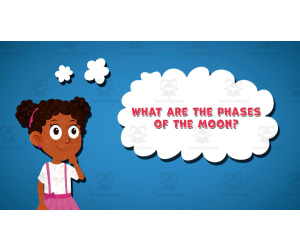
I WONDER - What Are The Phases Of The Moon | Animated Video Lesson
Space, Earth and Environmental Sciences, Science, Grade 5, 6, 7, 8, 9, 10, 11, Lesson Plans, Teacher Tools
Video Introduction An amazing video designed for the students to learn more about space facts. I WONDER - What Are The Phases Of The Moon | Animated Video Lesson Do you like reading about space? If yes, what is your favorite topic? What do you know about our solar system? What is the smallest planet in our solar system? What is the biggest planet in our solar system? What is the hottest planet in our solar system? And what is the coldest one? Do you think there are aliens? If yes, what do you think they look like? What do they eat and how they speak to each other? Where do they live? What is a galaxy? And what is a milky way? Have you recently saw a shooting star? If yes, tell us more about it, like when did it happen and where? What is a blackhole? Can a blackhole gets bigger by time? Do you like counting the stars? What do you think a star is made of? I WONDER - What Are The Phases Of The Moon | Animated Video Lesson The video is perfect for encouraging the researching skills for the students, while learning more about the fantastic space. I WONDER - What Are The Phases Of The Moon | Animated Video Lesson This friendly designed video is suitable for students at school, homeschooling, and as a group activity. Format Available in MP4 format.
Author Educational Voice
Tags What Are The Phases Of The Moon, What Are The Phases Of The Moon Video, The Moon Phases, The Moon Phases Facts, The Moon Phases Facts For Kids, The Moon Phases Video, The Moon Phases Video For Kids

I WONDER - What Is The Largest Mammal | Animated Video Lesson
STEM, Animals, Life Sciences, Science, Biology, Grade 1, 2, 3, 4, 5, 6, 7, 8, Lesson Plans, Teacher Tools
Video Introduction Animal kingdoms are full of fascinating wonders to learn. This video is designed for the students to learn more about animals in different countries. I WONDER - What Is The Largest Mammal | Animated Video Lesson Do you like animals? what is your favorite one? Do you own a pet? If yes, tell us more about it, like what its name? And what do you like most about it? What are the animal kingdoms? Can you write down the characteristics of each animal class like mammals, birds, reptiles, amphibian, fish and mollusks. Do you know that some animals can sing, can you name any of them? What is the largest and the smallest mammal in the world? What is the largest and the smallest bird in the world? What is the largest and the smallest fish in the world? I WONDER - What Is The Largest Mammal | Animated Video Lesson The video is perfect for encouraging the researching skills for the students, while learning more about these fantastic animals. I WONDER - What Is The Largest Mammal | Animated Video Lesson This friendly designed video is suitable for students at school, homeschooling, and as a group activity. Format Available in MP4 format.
Author Educational Voice
Tags What Is The Largest Mammal, What Is The Largest Mammal Video, Largest Mammal, Largest Mammal Facts, Largest Mammal Facts For Kids, Largest Mammal Video, Largest Mammal Video For Kids

I WONDER - Why Are White Blood Cells So Important | Animated Video
Human Body, Life Sciences, Science, Biology, STEM, Grade 6, 7, 8, 9, 10, 11, 12, Lesson Plans, Teacher Tools
Video Overview The human body is full of fascinating wonders to learn. This video is created to help the students recognize the anatomy and the job of the human body. I WONDER - Why Are White Blood Cells So Important | Animated Video Lesson Every part and organ in our human body is vital so let's see how important they are. Have you ever imagined how we look like if we didn't have a skeleton? Did you know that because we have our amazing muscles we can stand! Do you know how many teeth do we have? Have you ever wondered about the food journey inside our body? Can you name all the glands in our body? Why do we have skin? Our nervous system is really good at sending signals. Can you tell us more about it? Are you really good at Mathematics, painting, or any other thing? You should really thank your brain about it! The famous five senses are really doing a great work? Can you explain how every sense works? I WONDER - Why Are White Blood Cells So Important | Animated Video Lesson The video is perfect for encouraging the researching skills for the students, while learning more about our fantastic human body. I WONDER - Why Are White Blood Cells So Important | Animated Video Lesson This friendly designed video is suitable for students at school, homeschooling, and as a group activity. Format Available in MP4 format.
Author Educational Voice
Tags Why Are White Blood Cells So Important, Why Are White Blood Cells So Important Facts, White Blood Cells, White Blood Cells Facts, White Blood Cells Facts For Kids, White Blood Cells Video, White Blood Cells Video For Kids

I WONDER - Can Mollusks Be Eaten | Animated Video Lesson
STEM, Animals, Life Sciences, Science, Biology, Grade 1, 2, 3, 4, 5, 6, 7, 8, Lesson Plans, Teacher Tools
Video Introduction Animal kingdoms are full of fascinating wonders to learn. This video is designed for the students to learn more about animals in different countries. I WONDER - Can Mollusks Be Eaten | Animated Video Lesson Do you like animals? what is your favorite one? Do you own a pet? If yes, tell us more about it, like what its name? And what do you like most about it? What are the animal kingdoms? Can you write down the characteristics of each animal class like mammals, birds, reptiles, amphibian, fish and mollusks. Do you know that some animals can sing, can you name any of them? What is the largest and the smallest mammal in the world? What is the largest and the smallest bird in the world? What is the largest and the smallest fish in the world? I WONDER - Can Mollusks Be Eaten | Animated Video Lesson The video is perfect for encouraging the researching skills for the students, while learning more about these fantastic animals. I WONDER - Can Mollusks Be Eaten | Animated Video Lesson This friendly designed video is suitable for students at school, homeschooling, and as a group activity. Format Available in MP4 format.
Author Educational Voice
Tags Can Mollusks Be Eaten, Can Mollusks Be Eaten Video, Mollusks, Mollusk, Mollusks Facts, Mollusks Facts Or Kids, Mollusks Video, Mollusks Video For Kids, Mollusk Facts, Mollusk Video
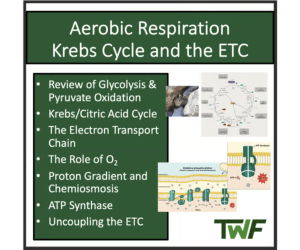
Krebs Cycle and the ETC - Aerobic Cellular Respiration- Biology lesson
Science, Life Sciences, Biology, Grade 11, 12, Teacher Tools, Lesson Plans
Krebs Cycle and the ETC - Aerobic Cellular Respiration - High School Biology lesson Your lesson covers everything from the Krebs cycle to the ETC. In order, the lesson teaches a review of Glycolysis and pyruvate oxidation, the Krebs/Citric Acid Cycle, the Electron Transport Chain, the role of O2, proton gradient and chemiosmosis, ATP Synthase, and uncoupling the ETC. Your lesson includes the teacher and student version of the presentation, four embedded videos, an auto-graded exit ticket, and a student lesson handout so the students can record the notes on a more condensed medium. This lesson is designed to be your go-to resource, whether you're in a traditional classroom or a virtual one. With both a teacher version and a student version, it seamlessly fits into your lesson plans, making learning engaging and adaptable. Assessment made easy We've included an auto-graded Exit Ticket and a quiz with an answer key because I know you don't have an excess of time. I know you don't, because I don't and I know I'll do whatever I can to reduce my grading time. Whether you use PowerPoint or Google Slides, prefer Word or Google Docs, this lesson has you covered. This lesson comes in both Office and Google formats for your convenience. The student version of the presentation has strategically placed blanks for them to fill in as you're teaching. It keeps them active and engaged, encourages discussion, and leaves more time for those "aha" moments.
Author Teach With Fergy
Tags Senior Biology, Biology Lesson, Aerobic Respiration, ETC, Krebs Cycle, Citric Acid Cycle, Pyruvate Oxidation, Proton Gradient, Chemiosmosis

I WONDER - How Long Does It Take For Plastic To Decompose
Environmental Science, Earth and Environmental Sciences, Science, Grade 6, 7, 8, 9, 10, 11, 12, Lesson Plans, Teacher Tools
Video Introduction An amazing video designed for the students to learn more about STEM. I WONDER - How Long Does It Take For Plastic To Decompose | Animated Video Lesson Do you like STEM subjects? what is your favorite one? Have you ever tried to plant a seed? If yes, tell us more about it. Or have you ever tried to invent something? If yes, tell us more about it. And how do you think it will help us? Have you ever seen a microorganism under a microscope? What was it? And how it looked like? Mathematics is a marvelous subject. Let' sharpen our brains and solve some equations. Do you like timetable tricks? What is your favorite one? Do you know how to code? Have you ever created an app or a game before? If yes, how was it like? I WONDER - How Long Does It Take For Plastic To Decompose | Animated Video Lesson The video is perfect for encouraging the researching skills for the students, while learning more about this fantastic topic. I WONDER - How Long Does It Take For Plastic To Decompose | Animated Video Lesson This friendly designed video is suitable for students at school, homeschooling, and as a group activity. Format Available in MP4 format.
Author Educational Voice
Tags How Long Does It Take For Plastic To Decompose, How Long Does It Take For Plastic To Decompose Video, Plastic Decomposition, Plastic Decomposition Facts, Plastic Decomposition Video, Plastic Decomposition Facts For Kids
Quit Copying Me! Mimicry in Nature: A Cross-Curricular Unit
Science, Life Sciences, Animals, Grade 5, 6, Teacher Tools, Lesson Plans
Quit Copying Me! Mimicry in Nature: A Cross-Curricular Unit This highly engaging teaching resource, designed specifically for 5th and 6th-grade educators, sheds light on the fascinating science of zoology. It especially focuses on how animals utilize incredible mimicry techniques and camouflage to trick other animals. An Informative Nonfiction Article The unit revolves around a factual nonfiction article that unveils the intricate details about these fascinating survival tactics. This content is perfect for whole group learning, projected onto a screen or printed out for smaller groups or individual study. Worksheets that Enhance Learning The package includes well-structured worksheets that not only reinforce subject knowledge but also enhance problem-solving skills. These can be assimilated into classroom exercises or given as homework assignments, providing the necessary flexibility for different instructional settings. Addition Activity Ideas To maintain student engagement throughout the study period, the unit has supplementary activities laid out. These serve to further enrich classroom discussions and forge a strong connection between new concepts learned about animal behaviour with previously studied topics in zoology. A Versatile Educational Resource "Quit Copying Me! Mimicry in Nature: A Cross-Curricular Unit", is ideal whether you are a public school teacher looking for innovative lesson plans or a homeschooler creating an immersive educational experience. It embodies theory aided by practical exercises creating an excellent approach to teach scientific concepts from various perspectives. Moreover, being an accessible seven-page PDF makes it exceptionally user-friendly regardless of your education environment. In Conclusion... This resource isn't limited to delivering lessons; it's designed to foster a learning atmosphere where learning naturally evolves out of the curiosity and intrigue sparked by nature's brilliant mimicry and camouflage. Embrace this unit into your curriculum plan and witness the transformation in your students' understanding of zoology.
Author Classroom Complete Press
Tags Science Lesson, Informational Text, Reading Passage, Graphic Organizer, Comprehension Questions

8th Grade Science Diagnostic Assessment & Review System
Science, Grade 8, Assessments, Teacher Tools, Lesson Plans, Worksheets & Printables
Start the year with a clear picture of student readiness using this 8th grade beginning of year science assessment and targeted skills system. With a 50-question diagnostic worth 114 points , scoring and analysis tools, instructional grouping support, 11 targeted follow-up practice pages , scientific reading passages, CER tasks, and complete explained answer keys, this resource helps teachers move from assessment results to focused instruction. Designed as a complete Assess → Analyze → Group → Review → Reteach system, this Grade 8 science resource emphasizes the reasoning demands students need as they prepare for high school science. Students analyze multi-step problems, real-world scenarios, data tables, experimental setups, scientific models, graphs, reading passages, and Claim-Evidence-Reasoning tasks across Life Science, Physical Science, Earth & Space Science, and Scientific Practices & Reading . What’s Included This 8th grade science assessment and review system includes: ✅ 50-question beginning-of-year science diagnostic ✅ 114 total assessment points ✅ Life Science questions ✅ Physical Science questions ✅ Earth & Space Science questions ✅ Scientific Practices & Reading questions ✅ Multiple-choice questions ✅ Short-answer questions ✅ Diagram and model interpretation ✅ Data tables ✅ Graph reading ✅ Multi-step reasoning tasks ✅ Scientific scenarios ✅ Vocabulary-in-context questions ✅ Claim-Evidence-Reasoning (CER) tasks ✅ 2 short scientific reading passages ✅ Evidence-based reading questions ✅ Pedigree interpretation ✅ Natural selection and adaptation analysis ✅ Finch selection data ✅ Cladogram interpretation ✅ Predator-prey data ✅ Periodic table patterns ✅ Chemical equation reasoning ✅ Conservation of mass data ✅ Velocity-time graph analysis ✅ Wave anatomy ✅ Transverse and longitudinal wave comparison ✅ Electromagnetic spectrum interpretation ✅ Seafloor-spreading model ✅ Spreading-rate calculation ✅ Star life-cycle model ✅ Atmospheric CO₂ graph analysis ✅ Experimental design and reliability ✅ Mean and outlier analysis ✅ Two-series graph interpretation ✅ Answer recording sheet ✅ Quick-reference answer key ✅ Skill-by-skill scoring chart ✅ Strand analysis tool ✅ Secure, Developing, and Needs Support performance bands ✅ Individual Student Performance Profile ✅ Whole-class data tracker ✅ Suggested instructional groups ✅ 11 targeted follow-up science practice pages ✅ “Key Concept” refresher on every follow-up page ✅ “Extension” task for students who are Secure ✅ All-new follow-up practice with no repeated assessment questions ✅ Reading-for-evidence follow-up practice ✅ CER writing follow-up practice ✅ Complete answer keys ✅ Suggested short-answer responses ✅ Suggested reading-response answers ✅ Completed visual and diagram answers ✅ Sample CER responses ✅ Short “why” explanation for every assessment item ✅ Partial-credit guidance Part 1 contains 50 rigorous mixed-format questions worth 114 total points . The Teacher Guide recommends two 45-minute sessions and explains that the diagnostic emphasizes multi-step reasoning, evidence-based conclusions, data tables, experimental setups, model interpretation, and reading scientific text for evidence. Part 2 turns student responses into actionable data with an answer recording sheet, quick-reference key, skill-by-skill scoring chart, strand analysis, performance bands, individual student profiles, a whole-class data tracker, and suggested instructional groups. Part 3 includes 11 ready-to-assign targeted follow-up pages with all-new practice. Every page includes a concise Key Concept refresher and an Extension task, and the set includes dedicated pages for Reading Science for Evidence and CER Writing . Part 4 provides correct answers for all 50 questions, explanations of why answers are correct, suggested responses for short-answer and reading tasks, completed diagrams, sample CER responses, and partial-credit guidance. How It Works in the Classroom Use this 8th grade beginning of year science assessment during the first weeks of school to identify what students retained from prior science learning, how well they reason through multi-step problems, and where instruction should begin. The resource follows a practical five-step system: 🔎 Assess — Students complete the 50-item mixed-format science diagnostic 📊 Analyze — Score by skill and strand to identify patterns and gaps 👥 Group — Form targeted instructional groups based on shared needs 📝 Review — Assign focused follow-up practice by strand or skill 🎯 Reteach — Use complete explanations, worked visuals, and model CER responses to support next steps The Assess → Reteach System chart on page 2 of Part 1 directly connects each stage to the matching component of the four-part resource. The same page summarizes the 50 questions, 114 points, broad format range, four reporting areas, two scientific reading passages, and suggested administration time. Use this resource for: ⭐ Beginning-of-year science assessment ⭐ 8th grade science diagnostic ⭐ Middle school science pre-assessment ⭐ Back-to-school science review ⭐ High school science readiness ⭐ Science readiness check ⭐ Formative assessment ⭐ Small-group planning ⭐ Science intervention ⭐ Targeted reteaching ⭐ Data-driven instruction ⭐ Skill-based grouping ⭐ Independent follow-up practice ⭐ Science stations ⭐ CER practice ⭐ Reading in science ⭐ Text-evidence practice ⭐ Graph and data interpretation ⭐ Multi-step science reasoning The Scoring at a Glance chart on page 2 of Part 2 breaks the assessment into four strand totals: Life Science /31, Physical Science /40, Earth & Space Science /24, and Scientific Practices /19 , for 114 total points . It also defines three performance bands: Secure (80%–100%) , Developing (50%–79%) , and Needs Support (below 50%) . The Student Performance Profile on page 15 of Part 2 gives teachers a one-page strand snapshot with space for strengths, focus areas, assigned Part 3 practice pages, and group placement. The Class Data Tracker on page 16 provides a whole-class view so teachers can scan columns for class-wide gaps and rows for individual grouping needs. Standards & Learning Goals This eighth grade science diagnostic assessment reviews foundational science concepts and advanced scientific reasoning across four major areas: 🌱 Life Science — levels of biological organization, homeostasis, interacting body systems, pedigrees, mutations, natural selection, evolution, adaptations, selection pressure, inheritance, cladograms, common ancestry, predator-prey relationships, biodiversity, ecosystem resilience, and evolution CER reasoning ⚛️ Physical Science — periodic table patterns, atomic number, protons, groups and periods, valence electrons, periodic trends, balancing chemical equations, conservation of mass, open and closed systems, exothermic and endothermic reactions, velocity-time graphs, Newton’s second law, kinetic energy, potential and kinetic energy transformations, wave anatomy, transverse and longitudinal waves, wavelength and frequency, electromagnetic spectrum, and wave-energy transfer 🌎 Earth & Space Science — seafloor spreading, magnetic stripes, evidence for plate tectonics, mantle convection, spreading-rate calculations, star life cycles, gravity and orbits, light-years, tides, atmospheric CO₂ trends, and Earth-and-space CER reasoning 🔬 Scientific Practices & Reading — reliable experimental design, repeated trials, control groups, identifying experimental flaws, graph analysis, comparing data series, calculating means, identifying outliers, reading scientific texts for evidence, connecting evidence to science concepts, drawing evidence-based conclusions, and reading-based CER Students demonstrate understanding through varied science tasks rather than one question type. The diagnostic includes a pedigree , finch beak-depth data , cladogram , natural-selection sequence , predator-prey table , periodic table model , Group 1 reactivity data , open-versus-sealed reaction mass data , velocity-time graph , wave anatomy model , wave-type comparison , electromagnetic spectrum , seafloor-spreading diagram , seafloor age data , Sun-like star life cycle , atmospheric CO₂ graph , bacteria-growth comparison graph , and repeated-trial data analysis. The Skill-by-Skill Scoring Chart on pages 11–13 of Part 2 helps teachers pinpoint specific gaps instead of relying only on one overall score. Skills include homeostasis, pedigrees, mutations, natural selection, selection data, cladograms, adaptation, biodiversity, periodic patterns, valence electrons, balancing equations, conservation of mass, exothermic and endothermic reactions, motion graphs, Newton’s second law, kinetic energy, wave anatomy, wave types, electromagnetic spectrum, seafloor spreading, tectonic evidence, spreading rates, star life cycles, gravity and orbits, experimental reliability, identifying flaws, mean and outlier analysis, reading for evidence, and reading-based CER. A particularly valuable feature is the integration of science literacy . Part 1 includes two short scientific texts with evidence-based questions. Students read “Why Antibiotics Can Stop Working” to connect mutation, survival, reproduction, and antibiotic resistance to natural selection, and “Healing the Ozone Layer” to analyze evidence connected to CFC reduction and ozone recovery. Why Teachers Love It ✨ Move beyond a single test score. Results can be analyzed by strand and individual skill, helping teachers see exactly where students are secure and where review is needed. ✨ Prepare students for high school science reasoning. The Teacher Guide explicitly emphasizes multi-step problems, evidence-based conclusions, data tables, experimental setups, model interpretation, and scientific reading—the kinds of demands students increasingly encounter in advanced science coursework. ✨ Turn assessment data into an instructional plan. The scoring tools connect results to performance bands, student profiles, instructional groups, and targeted follow-up practice instead of leaving teachers with a stack of completed tests. ✨ Measure both science knowledge and reasoning. Students do more than recall vocabulary. They interpret models, calculate rates, compare data, explain mechanisms, evaluate evidence, analyze graphs, and justify conclusions. ✨ Integrate science and reading skills. Two short scientific passages ask students to cite evidence, connect text details to science concepts, interpret measured changes, and construct evidence-based responses. ✨ Use relevant scientific topics for reading practice. Students analyze antibiotic resistance and ozone-layer recovery, connecting real scientific evidence to natural selection, environmental change, and evidence-based reasoning. ✨ Strengthen evolution and natural selection understanding. Students work with finch data, beetle camouflage, selection pressure, adaptation, inheritance, cladograms, mutations, and CER reasoning. ✨ Build readiness for chemistry concepts. Students interpret periodic table patterns, atomic numbers, valence electrons, reactivity trends, balanced equations, conservation of mass, and exothermic versus endothermic reactions. ✨ Strengthen physics reasoning. Students analyze velocity-time graphs, apply F = m × a , reason about kinetic energy, explain potential-to-kinetic energy transformations, interpret wave features, compare transverse and longitudinal waves, and analyze the electromagnetic spectrum. ✨ Connect Earth science models to quantitative reasoning. Students interpret seafloor spreading, use age-and-distance data to calculate a spreading rate, analyze magnetic-stripe evidence, and connect mantle convection to plate movement. ✨ Support data-driven small groups. Part 2 includes suggested instructional groups that help teachers sort students by shared gaps and connect them to matching Part 3 practice. ✨ Differentiate with clear performance bands. Use Secure, Developing, and Needs Support ranges to guide enrichment, targeted practice, or foundational small-group reteaching. ✨ Assign only the review students need. The 11 targeted follow-up pages include: Cells & Genetics Review Evolution & Adaptation Review Ecosystems Review Atoms & Reactions Review Forces, Energy & Motion Review Waves Review Plate Tectonics & Earth Systems Review Space Science Review Experimental Design & Data Review Reading Science for Evidence Review CER Writing Review The Practice Page Menu on page 2 of Part 3 directly matches common student difficulties to specific follow-up pages, making targeted assignment faster. ✨ Refresh key concepts before practice. Every targeted page includes a concise Key Concept section. For example, the Atoms & Reactions page reviews atomic number, groups, periods, conservation of mass, and exothermic versus endothermic reactions before students begin fresh practice. ✨ Extend learning for students who are already secure. Every follow-up page includes an Extension task that pushes students into explanation, application, prediction, argument, or investigation design. ✨ Use fresh follow-up practice instead of repeating the diagnostic. Part 3 explicitly provides all-new practice so students can demonstrate understanding with new examples and situations. ✨ Teach students how to read science for evidence. The dedicated Reading Science for Evidence Review page includes a new passage about a warming mountain lake and changing trout and bass populations. Students identify evidence, explain biological relationships using the text, connect the passage to life science, and generate a testable follow-up question. ✨ Build stronger Claim-Evidence-Reasoning responses. CER appears throughout the diagnostic and receives its own targeted follow-up page. At Grade 8, students are expected to connect specific evidence to a named scientific principle rather than simply restating the data. ✨ Make grading more manageable. Part 4 provides correct answers, short explanations of why, suggested responses for open-ended and reading items, completed diagrams, sample CER responses, and partial-credit guidance. ✨ Use completed diagrams for faster checking. The Completed Diagrams Quick View on page 2 of Part 4 points teachers to fully worked versions of the pedigree, cladogram, natural-selection model, periodic table, wave anatomy, wave types, electromagnetic spectrum, seafloor spreading, and star life cycle. ✨ Score open-ended work more consistently. Part 4 explains that multi-part items can receive point-by-point partial credit and that CER and reading items should be evaluated for a reasonable claim, specific text or data evidence, and reasoning that links them. ✨ Keep the instructional loop connected. Assessment, analysis, grouping, targeted review, science literacy practice, reteaching, and answer support are designed as one coordinated system rather than disconnected activities. Start the year knowing what students understand, how well they reason through complex science tasks, and what they need next with this 8th grade beginning of year science assessment . Download this complete middle school science diagnostic and targeted review system to assess readiness, analyze results by strand and skill, create focused instructional groups, assign specific follow-up practice, strengthen science reading and CER writing, and support reteaching with complete explained answer keys. Perfect for teachers searching for an 8th grade science diagnostic assessment , beginning-of-year science review, middle school science pre-assessment, back-to-school science assessment, eighth grade science review, high school science readiness, Life Science review, Physical Science review, Earth and Space Science review, Scientific Practices assessment, genetics, pedigrees, natural selection, evolution, cladograms, ecosystems, periodic table, chemical reactions, conservation of mass, Newton’s laws, forces and motion, energy transformations, waves, electromagnetic spectrum, plate tectonics, seafloor spreading, star life cycles, experimental design, graph analysis, reading science for evidence, CER practice, science intervention, small-group science planning, data-driven instruction, or targeted science reteaching.
Author Bright Classroom Ideas Marketplace
Rating
Tags Science, Assessment, Worksheet, Back To School, Review
Global Warming CAUSES: Greenhouse Gases: Synthetic Gases - FLASH-MAC
Science, Earth and Environmental Sciences, Environmental Science, Common Core, Grade 5, 6, 7, 8, Teacher Tools, Lesson Plans
The Global Warming CAUSES: Greenhouse Gases: Synthetic Gases - FLASH-MAC This is an educational tool that enriches the understanding of synthetic greenhouse gases, a principal contributor to global warming. Designed for educators teaching grades 5 through 8 science, particularly environmental science. Critical Features: Curriculum -based content that incorporates reading passages. Before-and-after-reading questions challenge student comprehension of the material read. Potential ways to integrate this interactive tool range from whole group instruction in class, small study groups during cooperative learning sessions, or as homework exercises. Included Printables and Digital Media: Included with this educational tool are printables enhancing hands-on learning experience of synthetic greenhouse gases. Utilizing vocabulary flashcards supports scientific language acquisition vital in bridging knowledge gaps while reinforcing learned concepts. Also incorporated are video and audio clips making lessons dynamic and appealing! Pedagogical Alignment: Echoing Bloom’s Taxonomy principles, integrated activities stimulate higher-order thinking among students by requiring them to apply learned concepts—ensuring effective content assimilation. Fitted For Age Appropriateness: The Global Warming CAUSES: Greenhouse Gases: Synthetic Gases FLASH-MAC is designed at the'7th-to-8th grade reading level.' National Standards Compliance: It reflects Common Core State Standards ensuring quality education meeting nationally accepted benchmarks. Enlighten your students using The Global Warming CAUSES: Greenhouse Gases: Synthetic Gases FLASH-MAC, and witness them probe into the critical scientific foundations associated with global warming. Empower your learners to become earth-conscious!
Author Classroom Complete Press
Tags Software (Mac)
I WONDER - How Fast Can Snakes Move | Animated Video Lesson
Biology, Life Sciences, Science, Animals, STEM, Grade 1, 2, 3, 4, 5, 6, 7, 8, Lesson Plans, Teacher Tools
Video Introduction Animal kingdoms are full of fascinating wonders to learn. This video is designed for the students to learn more about animals in different countries. I WONDER - How Fast Can Snakes Move | Animated Video Lesson Do you like animals? what is your favorite one? Do you own a pet? If yes, tell us more about it, like what its name? And what do you like most about it? What are the animal kingdoms? Can you write down the characteristics of each animal class like mammals, birds, reptiles, amphibian, fish and mollusks. Do you know that some animals can sing, can you name any of them? What is the largest and the smallest mammal in the world? What is the largest and the smallest bird in the world? What is the largest and the smallest fish in the world? I WONDER - How Fast Can Snakes Move | Animated Video Lesson The video is perfect for encouraging the researching skills for the students, while learning more about these fantastic animals. I WONDER - How Fast Can Snakes Move | Animated Video Lesson This friendly designed video is suitable for students at school, homeschooling, and as a group activity. Format Available in MP4 format.
Author Educational Voice
Tags How Fast Can Snakes Move, How Fast Can Snakes Move Video, Snakes, Snake, Snakes Facts, Snakes Facts For Kids, Snakes Video, Snakes Video For Kids, Snake Facts, Snake Facts For Kids

Force: Gravity - FLASH-PC
Science, Physics, Common Core, Grade 5, 6, 7, 8, Teacher Tools, Lesson Plans
The Force: Gravity - FLASH-PC An educational resource tailored for students in grades 5 to 8, aiding a comprehensive understanding of force and gravity. Its curriculum -based content strictly conforms to the Common Core State Standards. This stand-alone digital lesson plan is structured around Bloom's Taxonomy, philosophically fostering advanced thinking levels within education. A Rich Pool of Resources: Incorporates diverse interactive materials such as reading passages aimed at reinforcing students' understanding of gravity as a force. 'Before you read' and 'after you read' questions are included to enhance retention. Has printable materials and vocabulary flashcards which can be used efficiently for revision or quick assessments in both traditional classrooms or homeschooling setups. The additional audio-visual content ensures all forms of learning styles - auditory, visual, kinesthetic are included. Note: Compatible with PC software platforms only. Versatility: The package can be employed during group teaching sessions or utilized effectively in smaller discussion groups thus widening its applicability across classroom scenarios. Can also be utilized as independent homework thereby promoting self-learning amongst pupils beyond school boundaries! In Summary... The Force: Gravity - FLASH-PC serves substantially in simplifying complex science subjects like Physics while equipping educators with differentiated instructing techniques readily upholding their varied teaching difficulties! An essential educational tool that seeks to instill an acute sense of scientific principles amongst young scholars!</i
Author Classroom Complete Press
Tags Software (PC)

Reducing Your Own Carbon Footprint: Your Slice Of The Shared Footprint Gr. 5-8
Science, Earth and Environmental Sciences, Environmental Science, Grade 5, 6, 7, 8, Teacher Tools, Lesson Plans
Reducing Your Own Carbon Footprint: Your Slice Of The Shared Footprint Gr. 5-8 This is a custom-designed teaching resource aimed at creating awareness among students about global climate change and its underlying causes. Targeted primarily towards Grade 5 to 8 educators specializing in Science, particularly Environmental Science, it provides versatile implementation options - usable for group lectures, small group discussions, and homework assignments. About the Material The teaching material comes as an exhaustive PDF file with 29 ready-to-print pages dissecting how individual actions contribute to the overall carbon footprint. It ranges from an intricate study of the greenhouse effect to understanding energy consumption in our kitchens. An intimate illustration of farm-to-table procedures helps identify carbon contributions at each stage. Engaging activities like travel footprint calculations guide students towards minimizing their personal impact on global climate change. A deep dive into post-consumption responsibility encourages thinking beyond mere waste disposal leading up to more responsible behaviors. Broader consideration on how individual carbon footprints contribute collectively within community settings is initiated too. Educational Value This valuable material promotes constructive brainstorming sessions for creating eco-friendly rules potentially assimilable into societal contracts. Bonus features include Bloom's Taxonomy and STEAM inputs which emphasizes academic rigor while ensuring retention among students. Additional Tools Data visualization via graphic organizers along with practical tools such as a carbon footprint calculator boost learning outcomes profoundly. To support evaluation, crossword puzzles combined with comprehension quizzes boasting word-search facilities are provided along with answer keys maximizing utility for instructors looking for contemporary ways of enlightening young brains about our environmental future." Bottom Line In conclusion, this fully loaded resource not only makes learning about the environment simple but converts it into an engaging trip where every student becomes part of the solution. It upholds its essence as an educational tool triggering behavioral change while making sure appropriate educational standards are met.
Author Classroom Complete Press
Tags Carbon Footprint, Environment, Science Workbook, Hands-on Activity

I WONDER - Why Are Bats Important | Animated Video Lesson
STEM, Animals, Life Sciences, Science, Biology, Grade 1, 2, 3, 4, 5, 6, 7, 8, Lesson Plans, Teacher Tools
Video Introduction Animal kingdoms are full of fascinating wonders to learn. This video is designed for the students to learn more about animals in different countries. I WONDER - Why Are Bats Important | Animated Video Lesson Do you like animals? what is your favorite one? Do you own a pet? If yes, tell us more about it, like what its name? And what do you like most about it? What are the animal kingdoms? Can you write down the characteristics of each animal class like mammals, birds, reptiles, amphibian, fish and mollusks. Do you know that some animals can sing, can you name any of them? What is the largest and the smallest mammal in the world? What is the largest and the smallest bird in the world? What is the largest and the smallest fish in the world? I WONDER - Why Are Bats Important | Animated Video Lesson The video is perfect for encouraging the researching skills for the students, while learning more about these fantastic animals. I WONDER - Why Are Bats Important | Animated Video Lesson This friendly designed video is suitable for students at school, homeschooling, and as a group activity. Format Available in MP4 format.
Author Educational Voice
Tags Why Are Bats Important, Why Are Bats Important Video, Bats, Bat, Bats Facts, Bats Facts For Kids, Bats Video, Bats Video For Kids, Bat Facts, Bat Facts For Kids
I WONDER - Who Was Thomas Edison | Animated Video Lesson
Biographies, Social Studies, Inventors, Basic Science, Science, Grade 4, 5, 6, 7, 8, 9, 10, Lesson Plans, Teacher Tools
Video Introduction An amazing video designed for the students to learn more about famous people in different countries. I WONDER - Who Was Thomas Edison | Animated Video Lesson Do you know this person? How much do you know about him/her? Who is your idol? Why did you choose this person? Tell us more about him/her? Who is your favorite athlete? Or what is your favorite team? Have you recently heard a story about a famous person? Who was this person? Can you tell us more about him/her. Who is your favorite president, king, or queen? Why you chose that person? In your country, who are the most famous people? What did they do? Can you tell us more about them. What is your favorite invention? Who invented it? Who is your favorite artist? What is the most famous thing he/she have done? What is the most enjoyable you have read before? Who wrote it? I WONDER - Who Was Thomas Edison | Animated Video Lesson The video is perfect for encouraging the researching skills for the students, while learning more about this fantastic place. I WONDER - Who Was Thomas Edison | Animated Video Lesson This friendly designed video is suitable for students at school, homeschooling, and as a group activity. Format Available in MP4 format.
Author Educational Voice
Rating
Tags Who Was Thomas Edison, Who Was Thomas Edison Video, Thomas Edison, Thomas Edison Video, Thomas Edison Facts, Thomas Edison Video For Kids, Thomas Edison Facts For Kids, Thomas Edison Inventions

I WONDER - How Big Is The Southern Elephant Seal | Animated Video
STEM, Biology, Life Sciences, Science, Animals, Grade 1, 2, 3, 4, 5, 6, 7, 8, Lesson Plans, Teacher Tools
Video Introduction Animal kingdoms are full of fascinating wonders to learn. This video is designed for the students to learn more about animals in different countries. I WONDER - How Big Is The Southern Elephant Seal | Animated Video Lesson Do you like animals? what is your favorite one? Do you own a pet? If yes, tell us more about it, like what its name? And what do you like most about it? What are the animal kingdoms? Can you write down the characteristics of each animal class like mammals, birds, reptiles, amphibian, fish and mollusks. Do you know that some animals can sing, can you name any of them? What is the largest and the smallest mammal in the world? What is the largest and the smallest bird in the world? What is the largest and the smallest fish in the world? I WONDER - How Big Is The Southern Elephant Seal | Animated Video Lesson The video is perfect for encouraging the researching skills for the students, while learning more about these fantastic animals. I WONDER - How Big Is The Southern Elephant Seal | Animated Video Lesson This friendly designed video is suitable for students at school, homeschooling, and as a group activity. Format Available in MP4 format.
Author Educational Voice
Tags How Big Is The Southern Elephant Seal, How Big Is The Southern Elephant Seal Video, Southern Elephant Seal, Southern Elephant Seal Facts, Southern Elephant Seal Facts For Kids, Southern Elephant Seal Video

All About The Ears | Human Body Video Lesson
Science, Life Sciences, Human Body, Not Grade Specific, Lesson Plans, Teacher Tools
This human body video lesson is all about the ears. Students will love this engaging and interactive video. This video serves as a great introduction or review video for your learners. This is a 12-minute video lesson.
Author Educational Voice
Tags Ears, Human Body, Science, Science Video, Video Lesson
I WONDER - How Are Mars And The Earth Different | Animated Video
Space, Earth and Environmental Sciences, Science, Grade 3, 4, 5, 6, 7, 8, 9, Lesson Plans, Teacher Tools
Video Introduction An amazing video designed for the students to learn more about space facts. I WONDER - How Are Mars And The Earth Different | Animated Video Lesson Have you ever thought about travelling to space?! Join us with this amazing video about planets in our solar system. Do you think we can live on planet Mars some day? How amazing is space! Let's discover some amazing facts about Earth and Mars! Do you know that we have two kinds of planets in our solar system? Can you name the planets based upon their core type? I WONDER - How Are Mars And The Earth Different | Animated Video Lesson The video is perfect for encouraging the researching skills for the students, while learning more about the fantastic space. I WONDER - How Are Mars And The Earth Different | Animated Video Lesson This friendly designed video is suitable for students at school, homeschooling, and as a group activity. Format Available in MP4 format.
Author Educational Voice
Rating
Tags How Are Mars And The Earth Different, Mars, Mars Facts, Mars Facts For Kids, Mars Video, Mars Video For Kids, Earth, Earth Facts, Earth Facts For Kids, Earth Video