



3,942 products added recently
Page 6 - Space Lesson Plans
Ignite your students' imagination with lesson plans that delve into astronomy and space exploration. Covering topics from the solar system to deep space phenomena, these resources include engaging activities and multimedia elements. Use them to inspire awe and curiosity about the cosmos.

 Show filters

I WONDER - What Is A Solar Flare | Animated Video Lesson
Space, Earth and Environmental Sciences, Science, Grade 6, 7, 8, 9, 10, 11, 12, Lesson Plans, Teacher Tools
Video Introduction An amazing video designed for the students to learn more about space facts. I WONDER - What Is A Solar Flare | Animated Video Lesson Do you like reading about space? If yes, what is your favorite topic? What do you know about our solar system? What is the smallest planet in our solar system? What is the biggest planet in our solar system? What is the hottest planet in our solar system? And what is the coldest one? Do you think there are aliens? If yes, what do you think they look like? What do they eat and how they speak to each other? Where do they live? What is a galaxy? And what is a milky way? Have you recently saw a shooting star? If yes, tell us more about it, like when did it happen and where? What is a blackhole? Can a blackhole gets bigger by time? Do you like counting the stars? What do you think a star is made of? I WONDER - What Is A Solar Flare | Animated Video Lesson The video is perfect for encouraging the researching skills for the students, while learning more about the fantastic space. I WONDER - What Is A Solar Flare | Animated Video Lesson This friendly designed video is suitable for students at school, homeschooling, and as a group activity. Format Available in MP4 format.
Author Educational Voice
Tags What Is A Solar Flare, What Is A Solar Flare Video, Solar Flare, Solar Flares, Solar Flares Facts, Solar Flares Facts For Kids, Solar Flare Facts For Kids, Solar Flare Video, Solar Flare Video For Kids

Space Camp Curriculum Pack
Creative Arts, Art, ELA, Math, Addition and Subtraction, Addition, Language Development, Vocabulary, Science, Earth and Environmental Sciences, Space, Kindergarten, Lesson Plans, Teacher Tools
If your students are studying outer space or are about to begin a planets unit, I have just the resource to provide you with everything you need and more! This is a Space Camp Curriculum Pack complete with an abundance of printable resources and engaging activities for students to complete. This curriculum was designed for your preschool students. The curriculum goal is to introduce, and expand upon, any prior knowledge on concepts related to outer space, and instill a sense of greater things. The vocabulary that students will focus on is planets, universe, astronomer, rocket, atmosphere, gravity, outer space, milkyway, astronaut, galaxy, orbit, rotate, NASA, spaceship, aliens, and constellation. This curriculum will come with a letter of the week (M), shapes of the week (crescent and star) and colors of the week (blue and silver). This curriculum pack includes: --Sensory Table Ideas --Art Activities --Cooking Experience --Community Time --Math Activities --Home/School Connection Ideas --Science Table Enrichments --Science Concepts/Activities --Prop Box Ideas/Dramatic Play Enrichments --Movement and Motor --Playground/Walk Activities --Transition/Waiting Ideas --Block Area Enrichments --Flannel Board --Teacher Made Enrichment Ideas --Field Trip Ideas --Supplemental Learning Ideas/Activities At the start of this pack, you will receive a list of supplies needed for activities and projects. The worksheets, activities, and tasks included in this pack are intended to be completed in a variety of formats – whole group, small group, and independent work. I hope you enjoy! You can find more resources at my storefront here: https://teachsimple.com/contributor/learning-foundations Here are other similar resources for you to enjoy: https://teachsimple.com/product/dental-health-curriculum-pack https://teachsimple.com/product/earth-day-curriculum-pack https://teachsimple.com/product/discovering-dinosaurs-curriculum-pack https://teachsimple.com/product/lazy-crazy-days-of-summer-curriculum-pack https://teachsimple.com/product/chinese-new-year-curriculum-pack https://teachsimple.com/product/animals-in-winter-curriculum-pack
Author Learning Foundations
Tags Outer Space, Space Camp, Astronomy, Counting, Sequencing, Gravity Experiments, Dramatic Play, Motor Skills, Transition Ideas, Space Walk
I WONDER - What Are The Different Parts Of A Comet | Animated Video
Space, Earth and Environmental Sciences, Science, STEM, Grade 4, 5, 6, 7, 8, 9, 10, Lesson Plans, Teacher Tools
Video Introduction An amazing video designed for the students to learn more about space facts. I WONDER - What Are The Different Parts Of A Comet | Animated Video Lesson Do you like reading about space? If yes, what is your favorite topic? What do you know about our solar system? What is the smallest planet in our solar system? What is the biggest planet in our solar system? What is the hottest planet in our solar system? And what is the coldest one? Do you think there are aliens? If yes, what do you think they look like? What do they eat and how they speak to each other? Where do they live? What is a galaxy? And what is a milky way? Have you recently saw a shooting star? If yes, tell us more about it, like when did it happen and where? What is a blackhole? Can a blackhole gets bigger by time? Do you like counting the stars? What do you think a star is made of? I WONDER - What Are The Different Parts Of A Comet | Animated Video Lesson The video is perfect for encouraging the researching skills for the students, while learning more about the fantastic space. I WONDER - What Are The Different Parts Of A Comet | Animated Video Lesson This friendly designed video is suitable for students at school, homeschooling, and as a group activity. Format Available in MP4 format.
Author Educational Voice
Tags What Are The Different Parts Of A Comet, What Are The Different Parts Of A Comet Video, Different Parts Of A Comet, Different Parts Of A Comet Video, Comet, Comets, Comets Facts, Space

Space Travel & Technology: Mission to Mars Gr. 5-8
Science, Earth and Environmental Sciences, Space, Grade 5, 6, 7, 8, Teacher Tools, Lesson Plans
Space Travel & Technology: Mission to Mars for Grades 5-8 A top-notch teaching resource targeted towards both public school teachers and homeschool educators. This source brings the fascination of space exploration right into your classroom or home, intending to ignite the spark of scientific curiosity in young scholars. Key Features: An exciting chapter "Mission to Mars" that offers a view into the experiences of an International Space Station (ISS) crew member gearing up for a voyage to Mars. Educational content suitable not just for advanced learners but also beneficial for students who require remedial support. The language employed throughout the text is simple yet effective in maintaining complexity of scientific theories. Beyond merely being reading material, this package provides a plethora of engaging student projects, prep materials, and colourful mini posters that not only solidify understanding but also encourage active participation The learning materials present within this package align with State Standards enhancing curriculum coverage alongside promoting Bloom's Taxonomy and STEM inspired critical thinking abilities. Note: This package is delivered as easily manageable PDF files containing one product file thus ensuring seamless organization within classroom or at home setup In conclusion, mastering these resources allows students to explore not just outer space; it also amplifies their understanding about mankind’s role in it – stirring innovation and paving ways for them as contributors towards future exploration and unraveling cosmic mysteries.
Author Classroom Complete Press
Tags PDF

I WONDER - What Is A Meteor | Animated Video Lesson
Space, Earth and Environmental Sciences, Science, Grade 4, 5, 6, 7, 8, 9, 10, Lesson Plans, Teacher Tools
Video Introduction An amazing video designed for the students to learn more about space facts. I WONDER - What Is A Meteor | Animated Video Lesson Do you like reading about space? If yes, what is your favorite topic? What do you know about our solar system? What is the smallest planet in our solar system? What is the biggest planet in our solar system? What is the hottest planet in our solar system? And what is the coldest one? Do you think there are aliens? If yes, what do you think they look like? What do they eat and how they speak to each other? Where do they live? What is a galaxy? And what is a milky way? Have you recently saw a shooting star? If yes, tell us more about it, like when did it happen and where? What is a blackhole? Can a blackhole gets bigger by time? Do you like counting the stars? What do you think a star is made of? I WONDER - What Is A Meteor | Animated Video Lesson The video is perfect for encouraging the researching skills for the students, while learning more about the fantastic space. I WONDER - What Is A Meteor | Animated Video Lesson This friendly designed video is suitable for students at school, homeschooling, and as a group activity. Format Available in MP4 format.
Author Educational Voice
Tags What Is A Meteor , What Is A Meteor Video, Meteor, Meteor Facts, Meteor Facts For Kids, Meteor Video, Meteors, Meteors Video For Kids, Space, Space Video

Solstice and Equinox | Interactive Science Lesson | Micro-Learning Deck
Science, Earth and Environmental Sciences, Space, Grade 6, 7, 8, 9, Teacher Tools, Lesson Plans
Solstice and Equinox | Engaging Science Resource This informative science resource teaches students about solstices and equinoxes. The digital slide deck can be used in whole group, small group, or individual settings to foster student understanding of these astronomical concepts. Students will watch an explanatory video detailing solstices and equinoxes. An accompanying reading passage that students can follow along with using the provided audio further cements comprehension. A close reading activity and quick write prompt allow educators to assess learning in multiple formats. Overall, the varied activities, assessments, and flexible implementation options in this resource promote engaged learning about solstices and equinoxes. Students will gain core science knowledge and astronomy vocabulary in an interactive way. Any middle or high school science teacher aiming to bolster student comprehension of solstices and equinoxes will find this resource impactful.
Author Teach Me This
Tags Solstice, Equinox, Interactive, Science, Digital Lesson

I WONDER - What Can You Hear Out In The Universe | Animated Video
Space, Earth and Environmental Sciences, Science, Grade 4, 5, 6, 7, 8, 9, 10, Lesson Plans, Teacher Tools
Video Introduction An amazing video designed for the students to learn more about space facts. I WONDER - What Can You Hear Out In The Universe | Animated Video Lesson Do you like reading about space? If yes, what is your favorite topic? What do you know about our solar system? What is the smallest planet in our solar system? What is the biggest planet in our solar system? What is the hottest planet in our solar system? And what is the coldest one? Do you think there are aliens? If yes, what do you think they look like? What do they eat and how they speak to each other? Where do they live? What is a galaxy? And what is a milky way? Have you recently saw a shooting star? If yes, tell us more about it, like when did it happen and where? What is a blackhole? Can a blackhole gets bigger by time? Do you like counting the stars? What do you think a star is made of? I WONDER - What Can You Hear Out In The Universe | Animated Video Lesson The video is perfect for encouraging the researching skills for the students, while learning more about the fantastic space. I WONDER - What Can You Hear Out In The Universe | Animated Video Lesson This friendly designed video is suitable for students at school, homeschooling, and as a group activity. Format Available in MP4 format.
Author Educational Voice
Tags What Can You Hear Out In The Universe, What Can You Hear Out In The Universe Video, The Universe, The Universe Facts, The Universe Facts For Kids, The Universe Video, The Universe Video For Kids
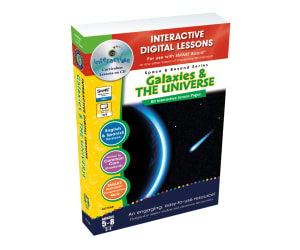
Galaxies & The Universe - Digital Lesson Plan Gr. 5-8 - FLASH-MAC
Science, Earth and Environmental Sciences, Space, Grade 5, 6, 7, 8, Teacher Tools, Lesson Plans
Galaxies & The Universe - A Digital Lesson Plan for Grades 5-8 (FLASH-MAC) The lesson facilitates an in-depth exploration of the universe, from the tiniest particles that make up matter to the mammoth star systems. This journey starts with our home turf: The Milky Way Galaxy, then propels your students into intriguing celestial entities such as Black Holes and their gravity fields. Beyond these, students will probe deep into Nebulae, learning about their compositions and roles within space. Intriguing subjects such as Pulsars and real-world applications concerning the Speed of Light are also explored. To cap off, an investigative study into Quasars – some of the furthest objects in our universe will be undertaken. Detailed Lesson Plan Interactions The plan harbors 80 screen-pages blending reading passages coupled with pre and post-reading activities to create a dynamic learning experience. A memory match game is embedded for reinforcing learned content plus tests materials are made available to help students consolidate knowledge. To keep things vibrant yet educational there are crossword puzzles and word searches. The package includes dedicated printables ensuring convenience never sacrifices quality teaching resources. Considering differentiated learners' needs there exists text-to-speech features both in English & Spanish – guaranteeing no learner falls behind due to language barriers or auditory preferences. Note:Including comprehension quizzes allows educators to gauge how well students grasp concepts after each lesson segment. Versatile Usage For Groups And Individual Students This detailed resource can function as a whole-group activity tool but also proves adaptable for small groups working on specific aspects like 'Black Holes' or 'Pulsars'. Alternately, it can be utilized for individual homework assignments. Be assured that the curriculum is aligned with state standards and articulates Bloom's Taxonomy . So let your student experience the profound wonder of Astronomy as an enriching journey with this digital lesson plan for Grades 5-8.
Author Classroom Complete Press
Tags Software (Mac)

Solar System - Digital Lesson Plan Gr. 5-8 - FLASH-PC
Science, Earth and Environmental Sciences, Space, Grade 5, 6, 7, 8, Teacher Tools, Lesson Plans
The Solar System Digital Lesson Plan Gr.5-8 – FLASH-PC This is a comprehensive teaching resource designed to inspire and educate students in Grades 5 through 6 about the fascinating aspects of our solar system. This interactive digital lesson plan, carried on a flash PC drive, orchestrates an 80 screen-page journey through the vastness of space while making the topic intriguing and accessible for young learners. Topics Covered Inner and Outer Planets Moon Stars Constellations Asteroids, Meteors and Comets. The language adopted is simple yet informative, facilitating comprehension without compromising essential scientific data delivery. Concepts such as planetary orbits asteroid belts lunar cycle phases of the moon and shooting stars are systematically explored ensuring holistic understanding for students. Educators can employ this resource in several ways - whole group instruction small group work or as homework - enriching learning experiences for individual learners or groups alike. Along with before-and-after-you-read reading passages; engaging interactive activities are included that boost student participation. Interactive Feature Set In addition to test prep activities memory match games crosswords word searches printables supportive videos—all contribute towards creating more engaging lively interesting even challenging learning environment catering diverse learning styles ensuring better retention. What sets this product apart further is its flexibility - it supports both English Spanish Text-to-Speech features boosting its utility in bilingual classrooms or ESL settings Finally, educators can gauge pupil comprehension using a concluding Comprehension Quiz enhancing clarity feedback consequent instruction planning. Compliant with State Standards via Bloom's Taxonomy-based learning objectives this ready-to-use kit adds tremendous value not just in direct learning outcomes, but in curriculum planning by teachers. In conclusion: Learn the solar system in a new way with the Solar System Digital Lesson Plan Gr.5-8 – FLASH–PC due to its digital format, comprehensive coverage, interactive features and material set. It efficiently integrates teaching and learning making it particularly useful for delivering science curricula especially astronomy.
Author Classroom Complete Press
Tags Software (PC)
Planets Lesson
Science, Technology, Earth and Environmental Sciences, Space, Grade 4, 5, 6, 7, Teacher Tools, Lesson Plans
This is a Planets Lesson that computer students or science students will enjoy. This lesson is ideal for upper elementary and middle school students in 4th – 8th grade. High school students would also learn from this lesson. The objective of the lesson: Students will research the distance of the planets to the Sun and table the data using a spreadsheet program (Google Docs, Excel, etc). The focus or transfer of the lesson is that the planets are far away from the Sun, but, how far away? How close are they to each other? This lesson will comply with Computer Technology Standard #8. The first page will have the instruction and the guided practice. The instruction will teach students what a spreadsheet is and why its useful. Students will learn about the different uses of a spreadsheet. A check for understanding is included. This is a great engagement opportunity for students. In order to respond to the check for understanding, students can do a quick write or a brief turn and talk. The second page will be the printable that students need to complete their guided practice. I hope you enjoy! Take A Look at My Best Sellers: ”Classes Re-Zoomed” eBook “10 Tips to Become a National Board Certified Teacher” eBook 15 Computer Tips eBook Visiting London eBook Spanish: Middle School Parents eBook “Growing Modern Obesity” eBook You can find more resources at my storefront here: https://teachsimple.com/contributor/paul-rallion
Author Paul Rallion
Tags Planets Lesson Plan, Science Lesson Plan, Computer Lesson Plan, Astronomy, Distance Of The Planets, Bar Graph, Spreadsheets, Check For Understanding

Lesson Plan on Solar Eclipse
Space, Earth and Environmental Sciences, Science, Grade 3, 4, 5, Lesson Plans, Teacher Tools, Worksheets & Printables
Students in Grades 3 through 5 may learn about the amazing science underlying a solar eclipse with this entertaining and instructive worksheet. This downloadable resource, which is in line with classroom discussions and visual learning, introduces crucial words like umbra, penumbra, and antumbra while reinforcing fundamental ideas like the Sun, Moon, and Earth's alignment. A range of interactive exercises are included in the worksheet to improve understanding and critical thinking. Students will label diagrams, identify several eclipse types, match terminology to definitions, highlight safe viewing techniques, and fill in the spaces using what they have learned from the lesson. To make the eclipse experience more realistic in the classroom, a hands-on model exercise of commonplace items is also recommended. An answer key is included to support independent or guided learning. Ideal for use after watching the educational Dr. Binocs video on solar eclipses, this worksheet serves as both a fun follow-up and an effective assessment tool. Whether used in class or for homework, it helps young learners grasp this amazing celestial event in an age-appropriate and exciting way.
Author Bright Classroom Ideas Marketplace
Rating
Tags Solar, Eclipse, Lesson, Plan, Grade 3, Grade 4, Grade 5, Astronomy, Science, Worksheet
I WONDER - Are There Different Types of Galaxies | Animated Video
Space, Earth and Environmental Sciences, Science, Grade 1, 2, 3, 4, 5, 6, 7, 8, Lesson Plans, Teacher Tools
Video Introduction An amazing video designed for the students to learn more about space facts. I WONDER - Are There Different Types of Galaxies | Animated Video Lesson Do you like reading about space? If yes, what is your favorite topic? What do you know about our solar system? What is the smallest planet in our solar system? What is the biggest planet in our solar system? What is the hottest planet in our solar system? And what is the coldest one? Do you think there are aliens? If yes, what do you think they look like? What do they eat and how they speak to each other? Where do they live? What is a galaxy? And what is a milky way? Have you recently saw a shooting star? If yes, tell us more about it, like when did it happen and where? What is a blackhole? Can a blackhole gets bigger by time? Do you like counting the stars? What do you think a star is made of? I WONDER - Are There Different Types of Galaxies | Animated Video Lesson The video is perfect for encouraging the researching skills for the students, while learning more about the fantastic space. I WONDER - Are There Different Types of Galaxies | Animated Video Lesson This friendly designed video is suitable for students at school, homeschooling, and as a group activity. Format Available in MP4 format.
Author Educational Voice
Tags Are There Different Types Of Galaxies, Are There Different Types Of Galaxies Video, Different Types Of Galaxies, Types Of Galaxies, Galaxies, Galaxy, Galaxies Facts, Galaxies Facts For Kids, Galaxies Video
I WONDER - How Big Is The Moon | Animated Video Lesson
Space, Earth and Environmental Sciences, Science, Grade 5, 6, 7, 8, 9, 10, Lesson Plans, Teacher Tools
Video Introduction An amazing video designed for the students to learn more about space facts. I WONDER - How Big Is The Moon | Animated Video Lesson Do you like reading about space? If yes, what is your favorite topic? What do you know about our solar system? What is the smallest planet in our solar system? What is the biggest planet in our solar system? What is the hottest planet in our solar system? And what is the coldest one? Do you think there are aliens? If yes, what do you think they look like? What do they eat and how they speak to each other? Where do they live? What is a galaxy? And what is a milky way? Have you recently saw a shooting star? If yes, tell us more about it, like when did it happen and where? What is a blackhole? Can a blackhole gets bigger by time? Do you like counting the stars? What do you think a star is made of? I WONDER - How Big Is The Moon | Animated Video Lesson The video is perfect for encouraging the researching skills for the students, while learning more about the fantastic space. I WONDER - How Big Is The Moon | Animated Video Lesson This friendly designed video is suitable for students at school, homeschooling, and as a group activity. Format Available in MP4 format.
Author Educational Voice
Tags How Big Is The Moon, How Big Is The Moon Video, The Moon, The Moon Facts, The Moon Facts For Kids, The Moon Video, The Moon Video For Kids, Moon, Moon Facts, Moon Video

I WONDER - How Did Pluto Get So Many Moons | Animated Video Lesson
Space, Earth and Environmental Sciences, Science, Grade 4, 5, 6, 7, 8, 9, 10, Lesson Plans, Teacher Tools
Video Introduction An amazing video designed for the students to learn more about space facts. I WONDER - How Did Pluto Get So Many Moons | Animated Video Lesson Do you like reading about space? If yes, what is your favorite topic? What do you know about our solar system? What is the smallest planet in our solar system? What is the biggest planet in our solar system? What is the hottest planet in our solar system? And what is the coldest one? Do you think there are aliens? If yes, what do you think they look like? What do they eat and how they speak to each other? Where do they live? What is a galaxy? And what is a milky way? Have you recently saw a shooting star? If yes, tell us more about it, like when did it happen and where? What is a blackhole? Can a blackhole gets bigger by time? Do you like counting the stars? What do you think a star is made of? I WONDER - How Did Pluto Get So Many Moons | Animated Video Lesson The video is perfect for encouraging the researching skills for the students, while learning more about the fantastic space. I WONDER - How Did Pluto Get So Many Moons | Animated Video Lesson This friendly designed video is suitable for students at school, homeschooling, and as a group activity. Format Available in MP4 format.
Author Educational Voice
Tags How Did Pluto Get So Many Moons, How Did Pluto Get So Many Moons Video, Pluto's Moons, Pluto's Moons Facts, Pluto's Moons Facts For Kids, Pluto's Moons Video, Pluto's Moons Video For Kids, Pluto
I WONDER - Are There Storms In Space | Animated Video Lesson
Space, Earth and Environmental Sciences, Science, Grade 6, 7, 8, 9, 10, 11, 12, Lesson Plans, Teacher Tools
Video Introduction An amazing video designed for the students to learn more about space facts. I WONDER - Are There Storms In Space | Animated Video Lesson Do you like reading about space? If yes, what is your favorite topic? What do you know about our solar system? What is the smallest planet in our solar system? What is the biggest planet in our solar system? What is the hottest planet in our solar system? And what is the coldest one? Do you think there are aliens? If yes, what do you think they look like? What do they eat and how they speak to each other? Where do they live? What is a galaxy? And what is a milky way? Have you recently saw a shooting star? If yes, tell us more about it, like when did it happen and where? What is a blackhole? Can a blackhole gets bigger by time? Do you like counting the stars? What do you think a star is made of? I WONDER - Are There Storms In Space | Animated Video Lesson The video is perfect for encouraging the researching skills for the students, while learning more about the fantastic space. I WONDER - Are There Storms In Space | Animated Video Lesson This friendly designed video is suitable for students at school, homeschooling, and as a group activity. Format Available in MP4 format.
Author Educational Voice
Tags Are There Storms In Space, Are There Storms In Space Video, Space Storms, Space Storms Facts, Space Storms Facts For Kids, Space Storms Video, Space Storms Video For Kids, Space Storm

The Solar System: Introduction to the Solar System
Science, Earth and Environmental Sciences, Space, Common Core, Grade 5, 6, 7, 8, Teacher Tools, Lesson Plans
The Solar System: Introduction to the Solar System - A Teaching Resource Ignite an interest in astronomy among your students with a concise yet comprehensive guide that takes young explorers on a captivating journey through our celestial neighborhood - the Solar System. An Accessible Introduction to Space Exploration This module simplifies complex scientific theories and concepts into accessible language, perfect for students in grades five through eight. Covering topics from planetary orbits to lunar cycles, it sparks curiosity about space exploration. The inner and outer planets Differences between asteroid belts and meteor showers Lunar cycles and phases of the moon Educative Hands-on Activities For Students This resource also offers various hands-on activities designed to further intrigue about our universe's remarkable wonders. Catering effectively to different learning styles within the classroom, these activities ensure optimal student engagement. They can be implemented for whole-class instruction or smaller group work, extending also as engaging homework assignments. A Useful Additional Tool for Teachers & Remedial Students alike! Bullet-pointed Benefits: Easier relaying of complex concepts via simpler language Inclusion of color mini posters along with various assessment tools such as crosswords puzzles & word search games Emphasis on conceptual understanding without being overwhelming Exemplifying Common Core State Standards Supporting Bloom’s Taxonomy methodology & STEM initiatives advancement. Note: Although specifically beneficial for remedial students; this teaching resource proves just as effective & fun while educating mainstream student population," The Solar System: An Introduction to the Solar System" is truly a tool for all. Engage your class with exciting exploration of celestial bodies with The Solar System: An Introduction to The Solar System.
Author Classroom Complete Press
Tags PDF

I WONDER - Can A Spaceship Land On Jupiter | Animated Video Lesson
Space, Earth and Environmental Sciences, Science, Grade 6, 7, 8, 9, 10, 11, 12, Lesson Plans, Teacher Tools
Video Introduction An amazing video designed for the students to learn more about space facts. I WONDER - Can A Spaceship Land On Jupiter | Animated Video Lesson Do you like reading about space? If yes, what is your favorite topic? What do you know about our solar system? What is the smallest planet in our solar system? What is the biggest planet in our solar system? What is the hottest planet in our solar system? And what is the coldest one? Do you think there are aliens? If yes, what do you think they look like? What do they eat and how they speak to each other? Where do they live? What is a galaxy? And what is a milky way? Have you recently saw a shooting star? If yes, tell us more about it, like when did it happen and where? What is a blackhole? Can a blackhole gets bigger by time? Do you like counting the stars? What do you think a star is made of? I WONDER - Can A Spaceship Land On Jupiter | Animated Video Lesson The video is perfect for encouraging the researching skills for the students, while learning more about the fantastic space. I WONDER - Can A Spaceship Land On Jupiter | Animated Video Lesson This friendly designed video is suitable for students at school, homeschooling, and as a group activity. Format Available in MP4 format.
Author Educational Voice
Tags Can A Spaceship Land On Jupiter, Can A Spaceship Land On Jupiter Video, Spaceship, Spaceships, Spaceships Facts, Spaceship Facts For Kids, Spaceship Video, Jupiter, Jupiter Video
I WONDER - What Size Are Sun Spots | Animated Video Lesson
Space, Earth and Environmental Sciences, Science, Grade 6, 7, 8, 9, 10, 11, 12, Lesson Plans, Teacher Tools
Video Introduction An amazing video designed for the students to learn more about space facts. I WONDER - What Size Are Sun Spots | Animated Video Lesson Do you like reading about space? If yes, what is your favorite topic? What do you know about our solar system? What is the smallest planet in our solar system? What is the biggest planet in our solar system? What is the hottest planet in our solar system? And what is the coldest one? Do you think there are aliens? If yes, what do you think they look like? What do they eat and how they speak to each other? Where do they live? What is a galaxy? And what is a milky way? Have you recently saw a shooting star? If yes, tell us more about it, like when did it happen and where? What is a blackhole? Can a blackhole gets bigger by time? Do you like counting the stars? What do you think a star is made of? I WONDER - What Size Are Sun Spots | Animated Video Lesson The video is perfect for encouraging the researching skills for the students, while learning more about the fantastic space. I WONDER - What Size Are Sun Spots | Animated Video Lesson This friendly designed video is suitable for students at school, homeschooling, and as a group activity. Format Available in MP4 format.
Author Educational Voice
Tags What Size Are Sun Spots, What Size Are Sun Spots Video, Sun Spots, Sun Spot, Sun Spots Facts, Sun Spots Facts For Kids, Sun Spots Video, Sun Spots Video For Kids, Space, Space Video

Solar System: The Inner Planets - FLASH-PC
Science, Earth and Environmental Sciences, Space, Common Core, Grade 5, 6, 7, 8, Teacher Tools, Lesson Plans
Solar System: The Inner Planets - FLASH-PC An invaluable resource tailored to facilitate a deeper understanding of the inner planets in our awe-inspiring solar system. This high-quality teaching aid is targeted at fifth through eighth graders and it fits snugly within the expansive subject of science, focussing in particular on astronomy. Key Features: A strong amalgamation of varied learning elements such as printable material, vocabulary flash cards , and enlightening reading passages. Helpful "before you read" and "after you read" questions that enhance comprehension and encourage detailed analysis. Inclusion of up-to-date aspects like video content and interactive activities suitable for visual, auditory, or tactile learners. These can be utilized for large class instruction or smaller group discussions. They also serve homeschooling parents well when they need comprehensive lesson plans. The Content: The information presented is not simply interesting but painstakingly put together in consistency with the Common Core State Standards (CCSS). With clever design guided by Bloom's Taxonomy; this ensures pedagogically effectiveness by aligning goals towards the application of knowledge opposed to mere rote-learning. Ease-of-accessibility: This stands out due to its availability in just one product file that serves as software which is mainly compatible with PC-based systems–thus making it trouble-free for educators constantly on-the-move. Conclusion: No matter if you're a seasoned public school teacher seeking enriching science materials or a homeschooling parent looking for curriculums –the Solar System: The Inner Planets - FLASH-PC draws students into captivating concepts of astronomy in an educational and interactive manner.
Author Classroom Complete Press
Tags Software (PC)
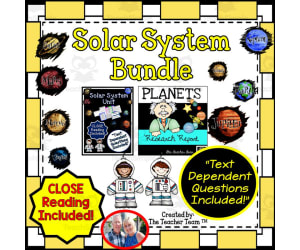
Planets and Solar System Unit
Science, Earth and Environmental Sciences, Space, Grade 3, 4, 5, 6, Lesson Plans, Teacher Tools
Engage your students with this fun and comprehensive, 96 page Planets and Solar System Unit. It contains a wide variety of resources needed to teach a rigorous unit on the Solar System. It includes CLOSE Reading nonfiction passages to help teach your students about the Solar System (not familiar with CLOSE reading? It’s okay, we have instructions and anchor charts to help you incorporate it into your teaching). There are text dependent questions aligned with each passage, a set of vocabulary cards with definitions to accompany the passages, and much, much more. A variety of other graphic organizers and activities are included as well. We do encourage you to supplement with any other books, videos, and websites that you already use; they will blend nicely with our CLOSE reading passages. You can use this unit in its entirety, or “pick and choose” the components to meet the needs of your students.
Author The Teacher Team
Tags Solar System, Planets, Science, Unit, Astronomy
I WONDER - What Makes Neptune Special | Animated Video Lesson
Space, Earth and Environmental Sciences, Science, Grade 6, 7, 8, 9, 10, 11, 12, Lesson Plans, Teacher Tools
Video Introduction An amazing video designed for the students to learn more about space facts. I WONDER - What Makes Neptune Special | Animated Video Lesson Do you like reading about space? If yes, what is your favorite topic? What do you know about our solar system? What is the smallest planet in our solar system? What is the biggest planet in our solar system? What is the hottest planet in our solar system? And what is the coldest one? Do you think there are aliens? If yes, what do you think they look like? What do they eat and how they speak to each other? Where do they live? What is a galaxy? And what is a milky way? Have you recently saw a shooting star? If yes, tell us more about it, like when did it happen and where? What is a blackhole? Can a blackhole gets bigger by time? Do you like counting the stars? What do you think a star is made of? I WONDER - What Makes Neptune Special | Animated Video Lesson The video is perfect for encouraging the researching skills for the students, while learning more about the fantastic space. I WONDER - What Makes Neptune Special | Animated Video Lesson This friendly designed video is suitable for students at school, homeschooling, and as a group activity. Format Available in MP4 format.
Author Educational Voice
Tags What Makes Neptune Special, What Makes Neptune Special Video, Neptune Special, Neptune Special Facts, Neptune Special Facts For Kids, Neptune Special Video, Neptune Special Video For Kids, Neptune

Ocean Plastic Pollution – Data Analysis & Advocacy Sheets
Science, Earth and Environmental Sciences, Earth Sciences, Environmental Science, Geology, Space, Life Sciences, Nature & Plants, STEM, Human Body, Grade 6, 7, 8, 9, 10, 11, 12, Worksheets & Printables, Workbooks, Worksheets, Word Searches, Teacher Tools, Assessments, Lesson Plans, Quizzes and Tests, Quizzes, Tests
This 55-page comprehensive, interdisciplinary curriculum will allow you to turn your classroom into an environmental action lab focused on ocean plastic pollution. Designed to bridge cutting-edge marine science with civic advocacy, it provides students with opportunities to move beyond passive learning and into actual environmental action based on evidence. The curriculum consists of three phases that take students through a complete educational process. In Phase 1, Theoretical Framework gives students all of the background knowledge necessary for them as citizens to become advocates for change through evidence-based advocacy strategies (i.e., the Coriolis Effect; chemical properties of polymers; biodegradability; accumulation and magnification of toxins in food webs; marine ecosystems) designed using science and basic tenets of physics & chemistry that are used in designing marine policies. In Phase 2, Application Phase, students have the opportunity to apply what they have learned through 10 worksheets that require analytical thinking skills (i.e., interpreting data sets; calculating numbers; ecological reasoning; evaluating corporations' environmental claims) in the creation of project proposals, respectively, regarding greenwashing, greenhouse gas emission reductions. In Phase 3, Instructional Materials, teacher support is provided (i.e., graphic organizers; rubric; answer keys with rational explanations; pacing guide; differentiation strategies, etc.) for successful implementation of the curriculum across disciplines. Students will have the opportunity to analyze real-world examples of ocean plastic pollution facts, including: the Great Pacific Garbage Patch, Henderson Island, Midway Atoll; develop a quantitative analysis of the rate of time it takes for PVC plastic to decompose; create maps showing the locations of the locations of plastic and non-plastic debris along ocean currents; analyze data related to the successful clean up of beaches and oceans and use such information in forming international legislation that seeks to eliminate as much plastic pollution as possible through public awareness campaigns such as "I Love My Ocean" public service announcements etc. Students compose policy memos formally addressed to elected representatives. The materials will help students build skills and competencies in the areas of data literacy, systems thinking, scientific writing, persuasive communication and authentic political agency through a pressing global issue — marine plastic pollution. Topics Covered: Environmental Science, Earth Science, Marine Biology, Chemistry (Polymer Science), Economics, Civics/Government, ELA (Persuasive Writing, Research), Mathematics (Data Analysis, Percent Calculations, Unit Conversions). You will get: Theoretical Resource: Four Chapters (Pgs. 1 - 10); Structured Worksheets for Students (10 Worksheets with 100+ Questions) (Pgs. 11 - 22); Three High Contrast Pedagogical Visual Diagrams (Lifecycle Flowchart, Bar Chart, Advocacy Framework); Complete Comprehensive Answer Keys for Each Question with Model Response; Graded Rubric (100 Point) for Final Policy Memo Project; Flexible Pacing Guide (20 days of Instruction in a 4 week period); Strategies for Differentiation for 3 Learner Profiles; Cross Curricular Activity Connection (Science, ELA, Math, C.S.S., Art); Teacher's Resource List (documentaries, interactive tools, essential readings); Final Note to Educators with Pedagogy Philosophy. Keywords: ocean plastic pollution, microplastics worksheet, marine debris, environmental science curriculum, ocean gyres lesson, bioaccumulation, biomagnification, greenwashing, single use plastics, Extended Producer Responsibility, policy memo project, STEM environmental education, data analysis science, middle school science, high school environmental science, science resources, civic advocacy project, ocean conservation, sustainability education, plastic pollution unit. PARENTS/TEACHERS ENJOY THIS CURRICULUM VERSION: Interdisciplinary - Covers Several Subjects with One Resource. This PDF Combines Science, Math Writing (ELA), Economics, Social Studies, & Civics into a Single Resource - Teachers Save Time By Not Having to Create Multiple Lesson Plans. Provides Cross-Curricular Value - Administrators/Parents Can Easily See Cross-Curricular Value of Lesson. Teaches Real-World Skills, Not Just Testing. Students Learn to Analyze Data Sets, Recognize Corporate Greenwashing, Develop Legislation &Write Policy Memos to Real See Elected Officials Using Many of the Same Skills That Will Benefit Them as They Enter College/Career &Participate In A Democratic Society. Ready for Implementation- Complete Answer Keys with Detailed Model Responses; Grading Rubric (100 Points), Pacing Guide (4 weeks); Differentiation Strategies for 3 Different Learner Profiles; Cross-Curricular Connections for This Curriculum Make Implementation Possible Immediately After Prep Work is Finished. Addresses An Urgent, Student-Motivating Issue. Ocean plastic pollution is one of the most obvious environmental crises our kids face; this curriculum connects with the concern they currently have & creates meaningful, engaging learning through rigorous science & civic engagement vs passive acknowledgment of a problem. Sufficiently Rigor for Advanced Students While Use Infrastructure to Support Struggling Learners - There Are Strategies for Supporting Struggling Readers, Advanced Learners Please Readers, English Language Learners Located In The Resource. TARGET STUDENT GRADE LEVELS : This PDF is appropriate for the following grade levels based on an in-depth study of various types of complexity factors: vocabulary (CPV), level of math (CPSM), level of writing (CPW), and level of conceptual depth (CPD). Primary Target Grades 7-10 Core Worksheets for Grades 7-8: Worksheets are intended for core subject teachers scaffolding; fill-in-the-blank and short answer sections of worksheets allow for guided reading. Independent Engagement for Grades 9-10: Students will have the ability to fully engage in all theoretical materials, perform calculations, write policy memorandums, and create advocacy campaigns. Secondary Target Grades 11-12 (AP Environmental Science/AP Language) Advanced students in all areas of study will benefit from the economic analysis, sections on international law, critique of greenwashing, and sections on writing policy briefs at college preparatory level. Also Appropriate for: Gifted/Advanced Programs (grades 6 and up) Environmental Clubs/Extracurricular Programs (all ages) College Level Environmental Science 101 (Community College Level) Adult Education/Homeschool (Middle School & High School Level) Copyright/Usage Terms : Despite being created by Syed Hammad Rizvi, this book belongs solely to him, and it may not be modified or sold without his consent. You are allowed to make copies for your use; however, you may not post or upload copies on-line or anywhere else that they would be available to the general public. If you wish to share this book with other educators, you can purchase additional copies of the same license from Teachsimple. By following these rules, you uphold the terms of use. This product has been lovingly produced with the help of Syed Hammad Rizvi
Author Creative Book Store
Rating
Tags OceanPlasticPollution, PlasticPollution, Microplastics, MarineDebris, EnvironmentalScience, MiddleSchoolScience, HighSchoolScience, ScienceTeacher, DigitalDownload, HomeschoolScience
I WONDER - What Is Jupiter Made Of | Animated Video Lesson
Space, Earth and Environmental Sciences, Science, Grade 6, 7, 8, 9, 10, 11, 12, Lesson Plans, Teacher Tools
Video Introduction An amazing video designed for the students to learn more about space facts. I WONDER - What Is Jupiter Made Of | Animated Video Lesson Do you like reading about space? If yes, what is your favorite topic? What do you know about our solar system? What is the smallest planet in our solar system? What is the biggest planet in our solar system? What is the hottest planet in our solar system? And what is the coldest one? Do you think there are aliens? If yes, what do you think they look like? What do they eat and how they speak to each other? Where do they live? What is a galaxy? And what is a milky way? Have you recently saw a shooting star? If yes, tell us more about it, like when did it happen and where? What is a blackhole? Can a blackhole gets bigger by time? Do you like counting the stars? What do you think a star is made of? I WONDER - What Is Jupiter Made Of | Animated Video Lesson The video is perfect for encouraging the researching skills for the students, while learning more about the fantastic space. I WONDER - What Is Jupiter Made Of | Animated Video Lesson This friendly designed video is suitable for students at school, homeschooling, and as a group activity. Format Available in MP4 format.
Author Educational Voice
Tags What Is Jupiter Made Of, What Is Jupiter Made Of Video, Jupiter, Jupiter Facts, Jupiter Facts For Kids, Jupiter Video, Jupiter Video For Kids, Planet, Planets, Planets Video

Solar System: The Moon - FLASH-PC
Science, Earth and Environmental Sciences, Space, Common Core, Grade 5, 6, 7, 8, Teacher Tools, Lesson Plans
Solar System: The Moon - FLASH-PC Solar System: The Moon - FLASH-PC is a teaching resource designed to make solar system education accessible for students, focussing specifically on 'The Moon'. Crafted to teach Grades 5 to 8, it adheres strictly with the standards set down by Common Core State Standards (CCSS). Interactive Activities and Strategies The resource combines learning with technology through: Interactive activities: Enhances retention for digital-native students. Diverse Educational strategies: It offers readings as well as questions to foster understanding. Pictorial Learning Assistance: Picture cards expand vocabulary related to 'The Moon' aiding visual learners. A Multifaceted Approach towards Learning In addition to the above, this package includes: Auditory pieces:An excellent aid for auditory learners or those with different learning styles. Videos as well: These engage different senses simultaneously ensuring maximum absorption of content. Bloom’s Taxonomy and CCSS Compliant This program emphasizes Bloom’s Taxonomy within its lessons, assuring the nurturing of progressive capacities from knowledge acquisition through evaluation. In line with mandates by Common Core State Standards (CCSS), Solar System: The Moon - FLASH-PC strictly conforms while emphasizing this approach in its lessons. Easily Accessible Teaching Material This software product file designed specifically for PC-use can be easily accessed and deployed based on individual teaching strategies or student requirements. ‘FLASH’ lives up its name giving immediate access upon download. Tagged under Astronomy, this resource combines space exploration with core academic curriculum . Solar System: The Moon – FLASH-PC makes understanding 'The Moon' an engaging and educational experience for students.
Author Classroom Complete Press
Tags Software (PC)