



3,930 products added recently
Page 3 - Special Education Lesson Plans
Design effective instruction for students with special education needs using these lesson plans. They offer strategies and accommodations to meet diverse learning requirements. Implement these resources to ensure all students have access to meaningful and engaging education.

 Show filters

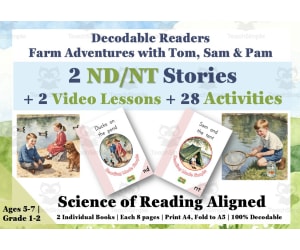
ND/NT: 2 Decodable Reading Books + 2 Video Lessons + 28 Worksheets SOR
Special Resources, ELA, Special Education Needs (SEN), Language Development, Pre-Reading, Phonics, Spelling, Kindergarten, Preschool, Homeschool Curriculum, Grade 1, 2, Literacy Readers, Teacher Tools, Lesson Plans, Presentations
2 ND/NT Blends Decodable Readers, 2 Video Lessons & 28 Supporting Worksheets to Develop Reading Fluency! Complete Teaching Pack | Part of Advanced Phonics Reading Programme Master ND/NT with 2 decodable readers, 2 optional video lessons, and 28 differentiated practice worksheets! This extensive teaching pack features farm stories that children will love, along with targeted phonics activities that reinforce learning. This is part of the Reading Made Simple programme of systematic phonics instruction that can help your struggling readers succeed. Designed and tested on real children of all abilities, from none to severe, every step of the way. These books presume that a child can already decode words with a CK ending, OO (moon/look), EE, SH, CH, What's Included 2 systematic/levelled decodable readers focusing on ND/NT words 2 carefully taught optional video lessons - no distracting music - these are serious lessons and can be used by home educators and teachers alike - to give extra support to struggling readers Word lists for pre-reading practice at the beginning of each book 28 Differentiated worksheets for phonics reinforcement: Word sorting activities Sound isolation exercises Reading comprehension exercises Sentence writing practice Phonics pattern recognition tasks 100% decodable text with carefully controlled vocabulary Science of reading-aligned instruction Beloved characters: Tom, Sam, Pam, Gran, and the farm animals Beautiful watercolour illustrations Print-and-go format for easy classroom use Why Teachers Love This Complete Pack Real stories PLUS targeted practice! These aren't just decodable readers—you get everything you need to teach ND/NT systematically. The differentiated worksheets provide multiple opportunities for students to apply their learning, while the engaging farm stories provide ample practice of decoding, word recognition and reading comprehension. They help you to target a child's precise needs to ensure progress. The optional video lessons give even nervous parents the help they need to teach! Designed With Carefully Controlled vocabulary: The ND/NT sound is introduced systematically across the stories, with previously taught words revisited throughout. Worksheets reinforce the same vocabulary, providing an opportunity for mastery. Perfect For Explicit phonics instruction following the science of reading principles All students who are ready to learn ND/NT and have already learned CK, OO, EE, SH, CH Children who need a slower pace, or not Small group intervention or whole class instruction Literacy centres and independent practice Homework assignments that reinforce classroom learning Structured literacy programmes Ages 5-7 or Grade 1-2 Skills Addressed Decoding ND/NT in isolation and context Reading fluency with controlled decodable text Phonics, pattern recognition and application Phonemic awareness through targeted activities Reading comprehension with engaging stories Writing practice using the taught phonics pattern Sight word introduction and practice How to Use This Complete Pack Introduce the sound ND/NT comprehensively Use worksheets for guided practice and skill reinforcement Practice word lists before reading stories Have students read the decodable stories, pointing to each word Return to the worksheets for independent practice or assessment Reread the stories to build fluency This complete pack provides everything you need to teach ND/NT effectively—no additional materials required!
Author Lilibette's Resources
Rating
Tags Fluency, Struggling Readers, Dyslexia, Special Needs, Phonics, Decodable Reading Books, Reading Fluency, Consonant Digraphs, Learn To Read, ND NT
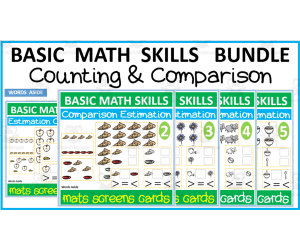
Basic Math Skills | Counting Estimation Comparison BUNDLE
Special Resources, Special Education Needs (SEN), Math, Early Math, Addition and Subtraction, Addition, Numbers, Place Value, Preschool, Grade 1, Teacher Tools, Lesson Plans, Worksheets & Printables, Flashcards, Activities, Games
Basic Math Skills | Counting Estimation Comparison BUNDLE . This is a comprehensive and resourceful teaching aid designed to instill foundational math skills in kindergarten and grade 1 students . It is an essential tool for educators in varied environments, including public schools and homeschooling . Package Contents : The BUNDLE consists of five PDF files featuring 120 pages of vibrant, picture - based materials . Covered concepts include quantity counting, estimations, and comparisons . The resources emphasize visual representation of quantities for easier understanding . Inclusive are pages where equal or unequal amounts are arranged either linearly or randomly . Certain sheets feature objects appearing up to 20 times for learners to cut out, point, count and paste - reinforcing manual learning techniques . All materials come both as colored illustrations as well as blackline versions catered to different printing preferences or learner needs . The resource can be used either as larger A4 size work mats / screen view slides or smaller task cards / flash cards - proving effective during group instruction sessions or individualized tutoring . The range of visuals from apples & worms to elephants & coconuts provides fun reinforcement while maintaining student’s interest in counting skills . Furthermore these sustainable resources can be laminated post - printing thus ensuring their longevity while enhancing tactile engagement among young learners . In addition to basic numeracy, the Basic Math Skills | Counting Estimation Comparison BUNDLE, lays the groundwork for number comprehension & place value ! It provides teachers with reliable support while forming the strong numeric foundations crucial at this important educational stage . 5 pdf files . 120 color and b & w pages with mats / screens / task cards / flash cards to work on counting, estimation and comparison basic math skills .
Author WORDS ASIDE
Tags Math Skills, Counting, Estimation, Comparison, Hands-on Learning, Pictorial Math, Math Manipulatives, Centers, Screen, Words Aside
Impulse Control "Stop-and-Think" Scenarios
Special Resources, Life Skills, Social Emotional Learning (SEL), Social Skills, Special Education Needs (SEN), Speech Therapy, STEM, Resources for Teachers, Classroom Management, Community Building, Kindergarten, Homeschool Curriculum, Homeschool Templates, Grade 1, 2, 3, 4, Worksheets & Printables, Workbooks, Worksheets, Word Searches, Teacher Tools, Lesson Plans, Quizzes and Tests, Quizzes, Tests, Assessments
Are you having difficulty keeping your class from being disrupted by impulsive behaviors, such as yelling out of turn, grabbing objects off the desk, etc? Transform your classroom into an orderly, peaceful environment using this cutting edge, neuroscience-based curriculum for teaching impulse control skills! This is not a behavior chart. It is a complete, turn-key curriculum designed to provide K-3 students with a reason for their actions and give students the skill set necessary to “Stop and Think.” This curriculum is based upon cause and effect mapping. This curriculum also creates a visual, non-judgmental framework for developing and reinforcing lifelong self-control and executive functioning skills without relying upon punishment. The impulse control curriculum is a perfect teaching tool for general and special education teachers and school counselors because it directly addresses the neurodevelopmental needs of young children. Young students will finally develop a clear understanding of how to connect the impulse for an immediate action with the consequences of that action at a future time. Packages Include 46 Pages of Content That Covers: Phase 1: Educator’s Guide to the Impulsive Brain: A Simple, Easy-to-Follow Guide About the Neurobiology of the K-3 Brain So You Can Implement this Strategy in Your Classroom with Confidence. Phase 2: Student Workbook with 10 Scenarios: Homework Sheets That Help You With Everyday Classroom Challenges. Primarily Used For Teachers To Give Out, Also For Students To Complete On Their Own. Examples Include: Calling Out (The Interruption Ripple) Grabbing & Boundary Violations (The Space Invader) Hallway Safety (The Transition Tornado) Task Avoidance and Frustration (The Frustration Flash) Cutting in Line, Misusing Supplies, Indoor Voice and many other examples. Phase 3: Teacher Visuals and Resources: Conceptual Diagrams: Simple Visual Aids To Help Explain The ‘Stop and Think’ Cycle And The Domino Effect of Actions. Comprehensive Answer Key: Each Worksheet Has A Detailed Answer Key Including A Teacher Rationale And Guidance Prompts To Deepen Student Learning. Implementation Guide: A Step By Step Plan On How To Introduce, Practice, And Reinforce These Concepts In Your Classroom. Ideal for: Elementary School (K-3) Teachers Social Emotional Learning( (SEL) Programs Small group and .Individual Counseling/Interventions Students exhibiting attention challenges and difficulties with impulse control Classroom Behavior Management Support Support students in developing self-awareness and the ability to self-regulate through this easy-to-follow and complete program! Download now and create a more compassionate, calm, and productive classroom! Search Terms: Impulse control, self-regulation, social emotional learning (SEL), classroom behavior management, behavior Intervention, executive functioning, Cause and Effect, Stop and Think, K-3, Kindergarten, 1st grade, 2nd grade, 3rd grade, ADHD Support, Emotional regulation, print documents, behavior mapping, visuals to support learning. Reasons Why Parents and Schools Appreciate This System: The focus of this system is on skill building through the development of empathy & social awareness, rather than punishment. When discipline is replaced with proactive skill building, it empowers your child. This system is backed by neuroscientific research on how children develop. Many traditional methods do not function well because they do not work with how the brain develops, so this system is based on good science. Through the principle of the "ripple effect", children will develop a better understanding of how their behaviour affects not only themselves but also family & friends. This is not just a worksheet. This system includes the teacher's guide, activities for students, visual aids and an answer key, so you can spend more time teaching & less time preparing. The system will validate the feelings and impulses of a child ("Your body was telling you to grab") and provide the child with tangible tools to make a better choice, allowing him/her to become an active architect of his/her own success. Intended Audience: The target audience is educators and support personnel who work with children in grades K-3, as well as parents who want to support their child at home. The way that children in this age group typically learn and behave, make it difficult for them to develop effective self-regulation skills, therefore parents and professionals need additional support in teaching these skills. The explicit text indicates a K-3 focus (ages 5-9) and the type of behavioral problems addressed in this resource; behaviors classified as K-3 students in the general education classroom include: * K-3 General Education (all K-3 classes) * K-3 Special Education teachers who assist students with ADHD, ASD and/or other executive functioning deficits * School-based counselors, social workers and school psychologists providing small group and individual intervention * Behavior interventionists and BCBAs * Proactive parents wanting to implement strategies at home to help their child gain self-regulation skills Copyright and Terms of Use: The author, Syed Hammad Rizvi, has copyrighted this resource for your sole enjoyment in the classroom and at home. You may not copy, modify or distribute this resource in any way, including on the Internet, where it can be found and downloaded for free by anyone. If you would like to share this resource with your colleagues (and they would like their own copy), you can purchase additional licenses from Teachsimple! We greatly appreciate it when you follow the Terms of Use stated here. Sincerely, Syed Hammad Rizvi
Author Creative Book Store
Rating
Tags ImpulseControl, SelfRegulation, EmotionalRegulation, BehaviorManagement, ClassroomManagement, SocialEmotionalLearning, SEL, ExecutiveFunctioning, StopAndThink, CauseAndEffect

WH- QUESTION CARDS | WHY | LANGUAGE AND REASONING
Special Resources, ELA, Social Emotional Learning (SEL), Special Education Needs (SEN), Social Skills, Speech Therapy, Language Development, Pre-Reading, ESL, Grammar, Vocabulary, Writing, Kindergarten, Preschool, Grade 1, Teacher Tools, Lesson Plans, Worksheets & Printables, Flashcards, Activities
30 PAGES OF "WHY / BECAUSE" CARDS ( 12cm x 12cm ) . EACH PAGE HAS A PAIR OF COLOR PHOTOS ( total of 60 ) WITH ORANGE AND YELLOW FRAME, ACCORDINGLY . FOR REASONING, LANGUAGE AND COMMUNICATION SKILLS DEVELOPING PRACTICE. The 30 picture pairs are: # laugh - clown # cry - hurt hand # be tired - running # be cold - snow # sweat - sun # eat - hungry # hold umbrella - rain # wear sunscreen - beach # sleep - sleepy / tired # be scared - thunder # do homework - teacher # take pills - be sick # shout - football foul # fall down - slip on banana # apply salve - bee sting # give present - birthday # brush teeth - food # hang clothes - laundry # towel dry - take bath # pay - bill # take temperature - feel feverish # take picture - sightseeing # water - dry soil # change tire - nail # wash car - muddy car # visit dentist - toothache # sew button - single button # mop - wine spill # vacuum - dirty stairs # chop fruits - baby food * No written words included. You can use for: - vocabulary teaching ( according to what we see in the picture or think about it ) - conversation prompts ( inspired by the pictures ) - reasoning ( you can also create "fun and irrational scenarios" ) - narrating ( creating social scenarios ) - writing, as visual prompts ( either sentences or small / longer texts ) - fun ! ! ! This can function as a "go to" material for your speech and language, ocuppational and sped therapy sessions or your classroom teaching . Great for no print screen viewing, as well . 30 - page PDF of cards for language reasoning .
Author WORDS ASIDE
Tags Wh-questions, Language, Reasoning, Critical Thinking, Cause And Effect, Cards, Writing, Visual Prompts, Communication, Words Aside
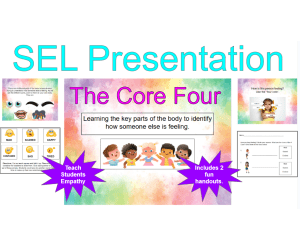
SEL Presentation-The Core Four
Special Resources, Social Emotional Learning (SEL), Social Skills, Special Education Needs (SEN), Life Skills, Kindergarten, Preschool, Grade 1, 2, Worksheets & Printables, Worksheets, Teacher Tools, Lesson Plans, Presentations
In this SEL presentation, students will learn about the "core four" as a way to figure out how someone else is feeling. This is the building block of empathy and understanding how someone is feeling. This product has a 12 slide Google Slides Presentation with the last 4 slides as handouts and activities for the lesson plan. Students will understand that the core four is looking at the key 4 body parts; the eyes, eyebrows, mouth and hands. They will analyze 4 pictures of real people and guess how they are feeling based on the core four. After they analyze the real children, they will play a game of charades with partners or in groups. There are 6 different emotions to act out-each have an emoji as well as the feeling word. No reading is required. Then there are 2 extension SEL worksheets. One is identifying what people are feeling in a picture, they will circle the feeling word and write down which part of the core four helped them figure it out. The next handout is a fun Find the 9 Differences in an emoji picture. The answer is on the following slide. This lesson is good for pre-k, kindergarten, first and second grades. If you are interested in more SEL products, please feel free to visit my SEL store here: https://teachsimple.com/contributor/jennifer-moyer-taylor For more products teaching students about feelings, emotions and SEL skills, check out these products: https://teachsimple.com/product/guess-the-emotion-sel-game (This is a fun lesson kind of like the game Cranium where students get to use play dough, writing, charades or talking to give clues about what feeling card they get.) https://teachsimple.com/product/betsy-the-top-banana-boom-cards-a-story-about-cliques-plus-task-cards-on-excluding-and-including-others-with-audio-plus-extension-activity (This is a combination Boom Cards activity as well as a fruit salad activity to discuss inclusivity with others.) https://teachsimple.com/product/sel-flashcards-for-social-emotional-learning-with-sel-coloring-pages (social emotional flashcards showcasing 16 different feelings. They are black and white as well as in color so students could color them in themselves. You can play memory, go Fish and other games with these flashcards.)
Author Jennifer Moyer Taylor
Tags SEL Presentation, Feelings, Emotions, Sel, Social Emotional Learning, School Counseling, Sen, Special Education Needs, Social Skills
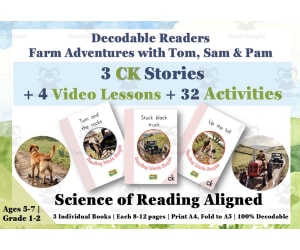
CK: 3 Decodable Reading Books, Supporting Activities + 4 Video Lessons
Special Resources, ELA, Special Education Needs (SEN), Language Development, Pre-Reading, Phonics, Spelling, Kindergarten, Preschool, Grade 1, 2, Literacy Readers, Teacher Tools, Lesson Plans, Presentations
CK Decodable Readers & Worksheets: Farm Adventures Complete Teaching Pack | Part of Advanced Phonics Reading Programme Master CK with 3 decodable readers AND 32 differentiated practice worksheets, AND 4 video lessons suitable for all abilities! Perfect for quick intervention or structured phonics teaching, this complete pack provides everything you need to teach CK effectively—no additional materials required! What's Included 3 systematic/levelled decodable readers focusing on CK Word lists for pre-reading practice at the beginning of each book Differentiated worksheets for phonics reinforcement: Word sorting activities Sound isolation exercises Reading comprehension exercises Sentence writing practice Phonics pattern recognition tasks 100% decodable text with carefully controlled vocabulary Science of reading-aligned instruction Beloved characters: Tom, Sam, Pam, Gran, and the farm animals Beautiful watercolour illustrations Print-and-go format for easy classroom use Why Teachers Love This Complete Pack Real stories PLUS targeted practice! These aren't just decodable readers—you get everything you need to teach CK systematically. The worksheets provide multiple opportunities for students to apply their learning, while the engaging farm stories provide ample practice of decoding, word recognition and reading comprehension. Multiple worksheets help you to give targeted support to all children: choose the worksheets that are right for each child. Designed With Carefully Controlled vocabulary: The CK sound is introduced systematically across the stories, with previously learned words revisited throughout. Worksheets reinforce the same vocabulary, providing an opportunity for mastery. Perfect For Explicit phonics instruction following the science of reading principles All students who are ready to learn CK Children who need a slower pace, or not Small group intervention or whole class instruction Literacy centres and independent practice Homework assignments that reinforce classroom learning Structured literacy programmes Ages 5-7 or Grade 1-2 Skills Addressed Decoding CK in isolation and context Reading fluency with controlled decodable text Phonics, pattern recognition and application Phonemic awareness through targeted activities Reading comprehension with engaging stories Writing practice using the taught phonics pattern Sight word introduction and practice How to Use This Complete Pack Introduce the sound CK comprehensively Use worksheets for guided practice and skill reinforcement Practice word lists before reading stories Have students read the decodable stories, pointing to each word Return to the worksheets for independent practice or assessment Reread the stories to build fluency
Author Lilibette's Resources
Rating
Tags Learn To Read Programme, Fluency, Struggling Readers, Dyslexia, Special Needs, Phonics, Decodable Reading Books, Reading Fluency, Short Vowel E, Homeschool Curriculum
Emotional Regulation & Self-Care Planners for Teens
Special Resources, Social Emotional Learning (SEL), Life Skills, Social Skills, Special Education Needs (SEN), Speech Therapy, Life Studies, Coaching, Career, Leadership, Grade 9, 10, 11, 12, Teacher Tools, Assessments, Lesson Plans, Quizzes and Tests, Quizzes, Tests, Worksheets & Printables, Worksheets, Word Searches, Workbooks
The Emotional Regulation & Self-Care Planner for Teens (39 pages), which is available digitally as a curriculum and a planner, is laid out in three phases. The first phase (core content & theory) consists of four chapters dealing with the neurobiology of adolescent emotions, the cognitive restructuring process as well as working with the inner critic; somatic regulation (resilience of the nervous system); strategic self-care (boundary architecture). Also included are real-life case studies of teenagers (amygdala hijack, perfectionism spiral, freeze response/burnout cycle); The second phase consists of a student workbook that includes ten interactive worksheets (re: affective granularity/metacognition cognitive distortion; interoceptive/somatic map; navigating the Window of Tolerance boundary architecture; digital ecosystem audit; executive function/anticipatory anxiety; and interpersonal rupture & repair); The third phase consists of visuals & teacher resources (classroom visuals, answer keys, assessment rubrics, teacher implementation guide). The three visuals contain high-fidelity representations of the Window of Tolerance diagram; cognitive-behavioral triad; multidimensional self-care matrix). The teacher resources contain answer keys for each module and rubrics for use in assessing student work. The resource addresses self-care from three frameworks, cognitive-behavioral therapy (CBT), dialectical behavior therapy (DBT), and polyvagal theory and defines self-care as "radical stewardship of oneself". It provides teenagers with practical tools for emotional regulation, managing stress, setting digital boundaries, and developing resilience. The resource was designed to be print-ready and tested in classrooms, and includes fillable blank forms and reflection items. What Parents/Schools Appreciate: Based on research and ready to use in class – Integrating CBT, DBT and Polyvagal Theory, the program includes worksheets for students as well as the teacher's key that connects with social emotional learning (SEL) standards, thereby saving weeks of lesson planning. Directly targeted to teens and highly engaging – The material is presented via case studies from students, real-world issues they face with the digital age and through visual diagrams that connect to these emotional learning experiences for grades 9-12. Trauma-informed and provides safety – The material provides the students with options, breaks the stigma on emotional learning and clearly explains the reporting protocols for educators, making it a resource they can use for success in diverse classrooms. Comprehensive and multi-functional – It can be used for whole class lesson plans, small group counseling, advisory periods or as a self-help resource for individual students, one product meets several needs. Immediate learning and long term benefit – Students develop ongoing skills in emotional granularity, boundary setting, and regulating their nervous system while parents and schools experience decreased levels of anxiety and increased levels of focus. Intended Students: Students in Grades 9-12 only. All the examples, case studies, language, and content are created specifically for high school students (ages 14-18) who are dealing with academic pressures, social media, peer group dynamics, forming their identity, and normal neurodevelopmental changes in the developing teenage brain. This material is inappropriate for middle school students (too mature) or college students (too teen-focused). Copyright Notice and Terms of Use: This Book is the exclusive property of Syed Hammad Rizvi and may not be used for anything other than personal or one-on-one classroom usage. You cannot make any changes, distribute, or sell all or any portion of this Book in any form without written permission from Syed Hammad Rizvi. This means that you cannot publish this Book on the Internet for public access. If you would like to give this Book to your colleagues, please contact Teachsimple for more licenses. Thank you for understanding our terms of use. We hope you enjoy this product from Syed Hammad Rizvi.
Author Creative Book Store
Rating
Tags EmotionalRegulationForTeens, SelfCarePlannerForTeens, TeenEmotionalRegulation, SELcurriculum, TeenMentalHealth, HighSchoolSEL, CBTForTeens, DBTForTeens, TeenSelfCare, EmotionalRegulationWorkbook

Cognitive Restructuring for Test Anxiety
Life Skills, Special Resources, Social Emotional Learning (SEL), Social Skills, Special Education Needs (SEN), Speech Therapy, STEM, Resources for Teachers, Classroom Management, Community Building, Grade 6, 7, 8, 9, 10, 11, 12, Worksheets & Printables, Workbooks, Worksheets, Word Searches, Teacher Tools, Assessments, Lesson Plans, Quizzes and Tests, Quizzes, Tests
Do your pupils suffer from anxiety before exams, worry about their academic ability and feel they are going to fail? Have you seen brilliant students, who should do well on national exams such as the SATs, Advanced Placement finals or chapter tests, perform poorly due to the pressure of the exam? The source of the issues described above isn’t because the student is not knowledgeable; rather, it is due to a lack of mental control. The extensive Cognitive Restructuring Guide & Workbook (28 pages) is the premier resource for educators, school counsellors, psychotherapists and tutors. This evidence-based resource incorporates the principles of Cognitive Behavioural Therapy (CBT), but goes much deeper than merely telling students to ‘relax’ before an exam by providing them with the skills they need to eliminate test anxiety by looking at the root causes. Your students will learn to become scientists of their own minds and to change their catastrophic thoughts into calm and rational confidence. WHAT IS INCLUDED IN THIS 28-PAGE RESOURCE: PART 1: The Educator’s Foundational Guide (10 Pages) A comprehensive understanding of test anxiety through the psychology behind test anxiety and also the "The Anatomy of Academic Panic" model. Foundational understandings and explanations of the following CBT concepts: Tripartite Model of Anxiety; Catastrophizing; Cognitive Distortions (All-or-Nothing, Fortune Telling, etc.); and Cognitive Defusion. In-depth and relatable case studies that provide real-life context to the theory so that you can explain to your students in a relatable manner. PART 2: The Student Workbook (10 Actionable Worksheets) A step-by-step process through which a student can begin to actively restructure their anxious thoughts. Each worksheet is intended to build on the previous worksheet to create long-lasting & profound changes. Worksheet 1: The Anatomy of an Anxious Thought Worksheet 2: Spotting the Catastrophe Worksheet 3: The Empirical Evidence Board Worksheet 4: The ''And Then What?'' Protocol (Decatastrophizing) Worksheet 5: The Double Standard Technique Worksheet 6: Moving from What If to Even If Worksheet 7: Somatic Awareness and Cognitive Links Worksheet 8: Looking at Your Past Successes Worksheet 9: The Productive vs Unproductive Worry: Action vs Anxiety Worksheet 10: The "Cognitive Blueprint for Pre-Exam Thoughts" PART 3: Teaching Resources/Visuals and Answer Key (8 Pages) Pedagogy based visuals: There are three high-quality Anchor Charts/Visual Aids (The Cognitive Triangle; The Five-Step Restructuring Sequence; Taxonomy of Distortions) which can be used as classroom displays or given out as individually provided handouts. Answer key: This answer key provides a description of how an answer should be provided to each question and includes the "Exemplar Look-Fors" that you will need to evaluate a student's understanding of the material. THESE ARE IDEAL FOR: Counselors who work with small groups or use one-on-one session Teachers in High School and Middle School (specifically those who teach AP/IB/class with high testing requirements) Those involved in delivering Social-Emotional Learning (SEL) curriculum Individuals who provide Executive Function (EF) coaching/tutoring services Therapists who work with adolescents Parents who want to provide structure to help their anxious teen Finally, every student should have every resource available to them to not only pass their tests and exams, but also overcome anxiety and other challenges that hold them back from success. Download this incredible resource today! Test Anxiety, Cognitive Behavioral Therapy (CBT), Worksheets, High School, Middle School, SEL, Social Emotional Learning, School Counselor, Study Skills, AP Exams, SAT Preparation, Final Exams, Growth Mindset, Executive Functioning, Printable/Digital Resource, Anxiety, Catastrophizing. Why Parents / Schools Appreciate It : Evidence-Based & Effective - Backed by the proven Cognitive Behavioral Therapy, this is not just fluffy advice. This systematic and scientific approach to anxiety relief provides result-driven actions for those who take part in the program. Provides Actionable, Skills for a Lifetime – Students become contributors to their own mental health and have the tools to be active participants in their recovery. Not only do they learn how to regain control, but they develop useable critical thinking and emotional regulation tools that they will continue to benefit from throughout their lives. Comprehensive & Turnkey – The all-inclusive packet saves educators and counselors valuable time in preparation. It includes the theoretical background behind the theory, student worksheets, visual aids, and a detailed answer key that explains the 'why' behind each activity. Creates True Resilience & Confidence – By teaching students to identify, challenge and change the way they think, this program helps them create true self-worth and building resiliency as they come to understand that failure is not an option, but an opportunity to develop a growth mindset. Perfect for Organizations and Individuals – The versatility in the program can be used for individual or group counseling, as a whole class SEL lesson, or independently by the students themselves. Targeting the Target Audience: After analyzing the content, structure, language, and examples used in the PDF (AP History & SAT & Algebra.) List the following target audiences: Primary Student Audience: 8th to 12th Grade Students. This explicit reference provides information for students between grades eight through twelve. This information can be utilized to assist those students, especially high-achieving students (eighth to twelfth grader), who are experiencing stress/pressure/stress associated with taking standardized tests/AP exams/college applications. In addition, there are also many eighth graders that are beginning to experience anxiety regarding final exams and/or high school placement tests that could benefit from this resource. Primary Professional Audience: School Counselors and Psychologists: This is the primary audience. School-based counselors/psychologists will primarily be utilizing this resource for individual and/or small-group counseling sessions focused on academic anxiety. High School Teachers: Will especially benefit from utilizing this resource when they are providing instruction to students enrolled in high school AP/IB/honors-level courses where student performance will be evaluated based on standardized tests. Tutors & Executive Functioning Coaches: These professionals will work with students who are experiencing difficulties related to academic performance. They will also utilize this resource as a foundational element of their toolkits. Therapists: Private practitioners providing services to adolescents will primarily be focused on utilizing this resource to support adolescents struggling with anxiety/depression/distress charged by the pressures of academic performance. Copyright Information and Terms of Service: This Book has been copyrighted by the Author Syed Hammad Rizvi. This resource is for private and personal use and not intended for use by multiple persons in group settings. There is no permission to make changes to, copy, print, distribute or sell any portion of this resource. That is, you cannot upload it to the internet in a public format (e.g., through a website or file-sharing service). If you would like to share this resource with your colleagues, please buy additional licenses through Teachsimple. Thank you for your understanding and compliance with the terms of service. Syed Hammad Rizvi is proud to offer this resource to you through Teachsimple.
Author Creative Book Store
Rating
Tags SchoolCounselor, HighSchoolCounselor, MiddleSchoolCounselor, SchoolCounseling, CounselorResources, TeachersOfInstagram, HighSchoolTeacher, MiddleSchoolTeacher, TeacherResources, Educator
Mindfulness for Exam Stress – Focused Attention Worksheets
Life Skills, Special Resources, Social Emotional Learning (SEL), Social Skills, Special Education Needs (SEN), Speech Therapy, STEM, Resources for Teachers, Classroom Management, Community Building, Grade 6, 7, 8, 9, 10, 11, 12, Worksheets & Printables, Workbooks, Worksheets, Word Searches, Teacher Tools, Assessments, Lesson Plans, Presentations, Quizzes and Tests, Tests
A complete 40-page workbook to promote the use of mindfulness and learn how to manage exam stress using neuroscience-based methods. This workbook includes clear theoretical concepts (e.g., "Amygdala Hijacking", "Working Memory Bottleneck", "Default Mode Network versus Task Positive Network") paired with a total of 10 student worksheets, 3 visually appealing colored models for use throughout the course, an answer key that shows all answers for the worksheets and a teacher guide to implementation. In addition to theory, there are practical tools to help the student manage their stress level and perform well on assessments. Practical tools include: Cognitive Defusion (to eliminate the "failure script" you tell yourself), using Somatic Mapping and micro-interventions (e.g., Physiological Sigh, 5-4-3-2-1 Grounding, Box Breathing), using the POP (Pause, Observe, Proceed) method to eliminate "blanks" on assessments, utilizing pre-test mental rehearsal and post-test decompression exercises. This workbook is perfect for use in the classroom, individual counseling sessions, study skills programs, or home schooling. It is available for immediate digital download, and can be printed from your computer or used in your digital course materials with no preparation needed. These strategies have been researched and proven to effectively lower levels of test anxiety and provide access to your working memory when under pressure to perform. Reasons Parents and Schools Love this Product: Science-based methods that help students calm themselves when they take exams through teaching them how to control their brains instead of just telling them to calm themselves down. No preparation required on the part of teachers with regard to having materials like worksheets, visuals, answer keys, and an implementation guide to use immediately in their classrooms or with students who need support. Helps develop true resilience by teaching students ways to cope with anxiety over a lifetime rather than relying on temporary motivation techniques. All micro-interventions available through this product can be done without being seen or heard, therefore making it more conducive to use during exam time. Very easy for both parents and counselors to understand how to use the micro-interventions in a way that they will get maximum benefit from doing so; great for SEL programs, study skills classes, or using at home. Intended Readers : The target audience for this resource is students who belong to the ages of 12-16 (Grades 7-10). The research case studies were conducted with 7th grade (ADHD/test anxiety), 8th grade, 9th grade and 10th grade (AP Biology) students. The resource sections of the Teacher Implementation Guide focus on the students themselves as they relate to their neurodevelopmental stage (middle and early high school). This resource is perfect for middle school (Grades 7-8) and early high school (Grades 9-10) students, who are preparing for any number of major exams, standardized exams and high stakes assessments (i.e., any subject). Not intended for elementary students (too difficult) or late high school/college students (the language and examples were written specifically for the adolescent population). Copyright / Terms of Use : This book is copyrighted to Syed Hammad Rizvi. It should only be used by you or as a single classroom reference resource. You cannot edit, share, or sell anything contained in this book, so please do not upload it to the internet and make it available for download to anyone else. If you would like to share this book with co-workers, please purchase another copy of this book through Teachsimple and respect the above terms of use. Thanks for using and supporting this product from Syed Hammad Rizvi!
Author Creative Book Store
Rating
Tags Mindfulness, TestAnxiety, ExamStress, StressRelief, AnxietyRelief, MentalHealth, SelfCare, SEL, SocialEmotionalLearning, MindfulnessForStudents

Multiplication Pictorial Math Manipulatives
Special Resources, Special Education Needs (SEN), Math, Addition and Subtraction, Addition, Multiplication and Division, Division, Grade 2, 3, 4, Teacher Tools, Lesson Plans, Worksheets & Printables, Flashcards, Activities, Worksheets
A bundle of three ( 3 ) math materials with A4 mats and cards for teaching repeated addition and multiplication concepts . With 70 pages of visual explanations each of "how things work" to get the math facts, you can combine this resource with manipulatives ( cubes, coins, bricks... ) to cover all dimensions of math teaching . Use as presentation posters in your classroom or for remote sessions on screen . Laminate and reuse with markers in your centers . Choose between color or black and white versions . Offer them as math coloring pages . * Custom make the FACTS CARDS included . With each book you get : 1 . Mats with images / math cubes / number symbols combined as repeated addition . 2 . Mats with images / math cubes / number symbols combined as multiplication equations . 3 . Mats with images / math cubes . 4 . Black and white version of no3 . 5 . Various versions of facts cards ( dot to dot, tracable, cut and paste ) . - x 2 book is BANANA themed . - x 3 book is BROCCOLI themed . - x 4 book is PIZZA themed . These resources have proven to be very effective for "standard" classroom teaching and also for sped sessions and home schooling educational contexts . The crystal clear visual presentations become self proven explanations of how repeated addition equals multiplication and can function alone or as an addition to other materials . 3 books with visual presentations / explanations of multiplication concept in x 2, x 3 and x 4, with images, math cubes and numbers . 210 pages of mats and cards in both color and b / w versions . For more pdf materials on numeracy, basic math and pictorial / manipulative approach to learning, you can click WORDS ASIDE .
Author WORDS ASIDE
Tags Facts And Factors, Repeated Addition, Multiplication, Mats, Boards, Cards, Math Cubes, Math Centers, Slides, Words Aside

Cyberbullying Upstander Protocols
Social Studies, Sociology, Special Resources, Life Skills, Social Emotional Learning (SEL), Social Skills, Special Education Needs (SEN), Speech Therapy, STEM, Psychology, Grade 5, 6, 7, 8, 9, 10, 11, Worksheets & Printables, Workbooks, Worksheets, Word Searches, Teacher Tools, Lesson Plans, Quizzes and Tests, Quizzes, Tests, Assessments
Give Your Students The Tools To Be Upstanders Against Cyberbullying: The Comprehensive Upstander Protocol & Digital Citizenship Course Do You Find Yourself Repeatedly Telling Your Students To "Just Be Nice" Online, But Online Bullying Keeps Happening? Do Your Students Freeze Up When They See Someone Being Mean On A Group Chat, A Commenting Section, Or A Game Because They Don’t Know What To Do? Instead Of Continuing To Give Vague Directions, It’s Time To Give Them A Tactical Playbook That Will Help Them Stop Harassment In Their Everyday Digital Interactions. This Encompassing Cyberbullying Upstander Protocol Will Provide A Complete Ready-To-Use Curriculum For Middle And Early High School Students. It Will Transition Passive By-Standers To Confident & Active "Up-Standers" By Giving Them Scripts, Psychological Awareness, And Action Plans That Will Enable Them To Stop Online Harassment In A Safe And Efficient Manner While They’re Experiencing It. This Resource Is Grounded In Sociology, Adolescent Psychology, And Uses The A.I.S.R. (Assess, Intervene, Support, Report) Framework To Provide Students With Concrete Next Steps In Navigating The Complex Digital Landscapes Of TikTok, Discord, Instagram, Etc. – This entire package is 42 pages which can be broken down as follows: Part 1: The Core Protocol Guide (10 pages) will provide you with the psychology behind the digital bystander, de-escalation techniques, and 4 vetted action plans complete with scripts to memorize. Part 2: The Student Workbook (13 pages) includes worksheets that will help students analyze the scenario, assess threats, create a script, collect evidence, and write their own personal Upstander Action Plan. Part 3: Teacher Materials & Visual Aids (19 pages) • Teaching Visual Aids: High-quality diagrams that can be projected in classrooms or used in the classroom to assist students in visualizing their learning experiences (IE: The Intervention Quadrant, The S.T.E.P. Flowchart & The Threat Escalation Pyramid), • Teacher Instructions on How To Implement The Curriculum: Outline of the curriculum with pacing, creating psychological safety for students, and how to overcome the "snitch" stigma. • Formative Assessment Rubric for Grading Students' Action Plan: Provides teachers with an easy and reliable method for grading students based on the action plan's tactical viability and empathy. • Comprehensive Answer Key: Gives teachers the master answers to all worksheets. This package is far more than just another anti-bullying lesson; it is a life-skill tool kit for responsible and resilient digital citizenship. Give your students the ability not only to be aware of the digital world but to actively contribute to making it a better and safer place. Ideal For: Health Classes, Advisory Periods, SEL Blocks, Digital Citizenship Units and School Counselors Why Schools/Parents Love It: More than Just "Be Kind": This curriculum includes specific, action-oriented scripts and protocols to create clear expectations of "what to say and do" instead of vague statements. Student-Driven Empowerment: This program teaches de-escalation and assessment skills for students to intervene in a way that reduces risk to themselves and effectively supports the victim (or target). Relevant & Timely: The curriculum uses real-life examples from platforms like TikTok, Discord and Snapchat to make today's teenagers more likely to relate to and engage with the content. Comprehensive & Easy Prep for Teachers: This one-stop shop includes a teacher guide, student workbooks, visual aids, and a complete answer key to help save teachers' time on lesson prep. Builds Critical Life Skills: Provides students with digital citizenship, social-emotional intelligence, and critical thinking skills they can use throughout their lives. Designed for the following content categories (what your target audience will be primarily using these social media apps for), please refer to: 1. Target Audience - Based on age, developmental level, language, type of social media app (TikTok, Discord, Snapchat), then use those to define who your target audience will be. Primary Audience - 7-9 Grades - Ages 12-15 - This is clearly stated as TARGETED in the content and aligns perfectly with their social & developmental stage. Secondary Audience - 6th Graders - This can be introduced as a unit; 10th Graders – It can be used as a reinforcer or review. 2. Target Audience - Edu/FV Curriculum - School Counselors, Health Teachers, Tech/Digital Citizenship Teachers and any Homeroom/Advisory Teacher who curates SEL Curriculum have the responsibility for providing accurate information through their respective content areas. In the event of a dispute over this book, please remember to investigate copyright/laws. This book may not be used as a source of content in your own work. You will not redistribute or modify this book (in any way, shape or form) without the express written permission from Syed Hammad Rizvi - please contact him via his website should you need help with obtaining proper permissions. You can purchase additional licenses if you wish to share this book with your colleagues via Teachsimple. Thank you for adhering to these terms of use. This book is created with love by Syed Hammad Rizvi.
Author Creative Book Store
Rating
Tags Antibullying, Cyberbullying, Digitalcitizenship, SocialEmotional Learning, Socialemotionallearning, Teachersofinstagram, Teacherlife, Schoolcounselor, Onlinesafety, Bullyingprevention

Multiplication Facts Posters and Flashcards BUNDLE
Special Resources, Special Education Needs (SEN), Math, Addition and Subtraction, Addition, Multiplication and Division, Division, Place Value, Grade 2, 3, 4, Teacher Tools, Lesson Plans, Worksheets & Printables, Flashcards, Activities
Multiplication 1 - 10 x 1 - 12 CARDS / MATS / POSTERS to use with your students, display during teaching or on the wall as decor or visual prompts . * Big size versions to work with snap cubes, bricks and other manipulatives on. * Smaller size versions to create task cards and books . Six ( 6 ) books included in this BUNDLE : 1 . Big cards / SPACE THEMED . 2 . Big cards / HALLOWEEN THEMED . 3 . Big cards / With MATH CUBES . 4 . Big cards plain . 5 . Smaller cards / OCEAN THEMED . Smaller cards plain . Each book contains THREE VERSIONS / SETS OF ALL THE FACTS : FACT NUMBER WITH EMBEDDED FACTOR ( x times to make up the fact ) . FACT NUMBER WITH THE FACTOR ( x times to make up the fact ) IN A ROW AT THE BOTTOM OF THE MAT . FACT NUMBER WITH THE RELEVANT FIRST PART OF EQUATION . Facts of each factor 1 - 10 have a mutual distinct color ( when colored ) for sorting and prompting / cueing reasons . Each version / set of facts carries ( when themed ) a different and unique backround space / halloween / ocean themed . Useful in your centers . Try as a flip through laminated book . Great as pictorial reference / explanation for operations and word problems, for repeated addition, multiplication and division . Print and laminate to reuse or display them on your screen ( wall screen or tablet ) . Create task cards . Make classroom books of group reference . A4 size helps for group presentation and activities 1696 pdf pages with big and smaller cards of facts and factors in 3 display versions . For more pdf materials on numeracy, basic math and pictorial / manipulative approach to learning, you can click WORDS ASIDE .
Author WORDS ASIDE
Tags Facts And Factors, Math Center, Math Station, Repeated Addition, Classroom Decoration, Decor, Halloween, Task Cards, Manipulatives, Words Aside

Working Memory & Sequential Recall Exercises
Life Skills, Special Resources, Social Emotional Learning (SEL), Social Skills, Special Education Needs (SEN), STEM, Resources for Teachers, Classroom Management, Community Building, Life Studies, Homeschool Curriculum, Grade 2, 3, 4, 5, 6, 7, Worksheets & Printables, Workbooks, Worksheets, Word Searches, Teacher Tools, Lesson Plans, Quizzes and Tests, Quizzes, Tests, Presentations
The Evidence-Based Working Memory & Sequential Recall Curriculum Will Help Unlock Your Students' Ultimate Learning Potential! As an Educator, Clinician, or Special Education Teacher do you have students struggling to complete multi-step directions, reading comprehension or complex math problems? Do you see them grasp a concept at one moment, and then lose it the next? More than likely, the root cause of this lack of learning is not due to the student not putting forth effort, but rather, it's simply a bottleneck in their working memory. This comprehensive 41-page digital curriculum is much more than a set of worksheets - it's an evidence-based intervention program specifically developed using the science of neuroplasticity and within Alan Baddeley's highly regarded cognitive theory to target, strengthen and developed the most important part of the cognitive engine of learning, which is working memory and sequential recall - so that teachers are able to go beyond rote memorization while at the same time, enabling the student to create robust, long-lasting executive function skills. Designed to meet the needs of 2nd, 3rd, and 4th grade Student as well as for support of older students who are in RTI/MTSS or Special Education, this curriculum is going to help support students bridging the gap from seeing the information to actually processing the information. HOW TO USE THIS 41-PAGE DOCUMENT This is a comprehensive 3-step program that is ready for you to implement right away: Step 1 - Core Content and Theory (A Guide for Educators) — An in-depth look at the cognitive science behind the exercises. Through clear definitions and supporting case studies, you’ll be able to accurately explain Phonological Loop, Visuospatial Sketchpad, Central Executive, and Episodic Buffer to yourself and to others so that you, as an educator, can become an expert in understanding what each of these components does. Step 2 - Student Workbook — Ten progressive, fun worksheets for students to accomplish as if they were on “missions” (i.e., Zoo Keeper’s Roster, Detective’s Missing Clue, Architect’s Blueprint, etc.). These worksheets each target unique aspects of working memory by having students perform: - Forward/Backward Sequential Recall - Procedural Recall/Recognizing Steps - Semantic Clustering/Categorizing - Dual-Task Process/Inhibiting Distractors - Pattern Recognition/Chronological Sequencing Visual Aid and Teacher Resources (Part 3): The essential support for successful teaching. Cognitive Architecture Visuals; Diagrams to support cognitive processing and visual representation of working memory. Teacher Implementation Guide; Framework for cognitive dose control of Load with 7-10 minute intervals. Differentiation; Explicitly designed order of operations enabling the use of scaffolding in strategies used for increasing to gifted levels. Comprehensive Answer Key; A tool for quick and effective evaluation of student achievement. You will be able to change your responses of, "I forgot," to, "I've got this!" once you have utilized your resources from above. Key Words: Working Memory, Executive Functions, Sequential Memory, Special Education, Speech Language Pathologist/ Speech Therapy, Response To Intervention, Multi-Tiered System Of Supports, Cognitive Skills, Following Multi-Step Directions, Reading Comprehension, Math Word Problems, Learning Disabilities, ADHD Support, 2nd Grade, 3rd Grade, 4th Grade, Digital Resource, Paper Forms, Cognitive Load. The reasons parents/schools value it: Targets Root Causes: This program helps children build the underlying cognitive skills themselves rather than just treating their symptoms (e.g., bad grades, lost assignments). These skills (working memory) allow students to do all of their academic work. Based on Scientific Evidence & No Prep Required: The exercises included in this program are not simple "busy work." They form part of a well-structured curriculum based on scientific principles of cognition. They are provided to the teacher in easy-to-print/implement formats, thus allowing the teachers to save preparation time. Differentiation Built-In: The teacher's guide includes specific strategies for the teacher to assist struggling learners and to challenge gifted learners, thus allowing all children to make significant (meaningful) progress. Increased Independence in Class: Students completing the exercises will demonstrate increased ability to follow multi-step instructions, complete complex tasks, and work independently with minimal redirection. Improved Achievement Across All Academic Areas: Students who have a strong working memory can better comprehend what they have read (because they can track characters and plot), can solve math problems more accurately (because they can hold the numbers and steps they are holding), and can write more clearly and accurately because they have better organization. Target Audience Analysis: On the basis of the content, the nature of the language, and the explicit references within the PDF: The primary audience are second to fourth graders (approximately ages 7-10). The document explicitly states this developmental window as its focus. Secondary audience: The resource is just as appropriate for older students (5th grade and up) with identified learning disabilities, ADHD, or who are in a support program through Special Education, Resource Rooms, Speech Therapy, RTI, or MTSS. These basic foundational skills are often the major barriers to learners. Primary audience: for professionals, and not the kids. Of course, other groups are: General Education Teachers (Grades 2-4) Special Education Teachers School Psychologists Speech-Language Pathologists (SLPs) Educational Diagnosticians Homeschooling Parents who are familiar with brain development. Copyright /Terms of Use: Copyrighted by Syed Hammad Rizvi. This resource is for individual use and classroom only. No part of this resource may be modified, sold, or shared in any other manner, including posting it on the Internet where anyone might download it. If you wish to provide this resource to other teachers, you must purchase additional licenses through Teachsimple. Thank you for your cooperation in this matter and for following the terms of use. This resource is proudly provided to you by Syed Hammad Rizvi.
Author Creative Book Store
Rating
Tags WorkingMemory, ExecutiveFunction, ExecutiveFunctioning, ExecutiveFunctionSkills, CognitiveSkills, BrainTraining, Neurodiversity, SequentialRecall, SequencingSkills, FollowingDirections

Unplugged Algorithms & Coding Logic
Resources for Teachers, Classroom Management, Community Building, STEM, Technology, Science, Computer Science, Engineering, Special Resources, Special Education Needs (SEN), Homeschool Curriculum, Homeschool Templates, Grade 2, 3, 4, 5, 6, Worksheets & Printables, Workbooks, Worksheets, Word Searches, Teacher Tools, Lesson Plans, Quizzes and Tests, Quizzes, Tests, Assessments
Ditch the screens and ignite critical thinking! Are you looking for a way to teach foundational coding skills without increasing screen time? This comprehensive 41-page curriculum, Unplugged Algorithms & Coding Logic: Zero Screen Time Edition , is your all-in-one solution for bringing computational thinking to life in your elementary classroom or homeschool setting. Based on the powerful pedagogy of embodied cognition , this unit transforms abstract concepts into tangible, kinesthetic activities. Students won't just learn about coding; they will become the computer! By physically walking through mazes, performing "Code Dances," and debugging physical sequences, they will build a deep, intuitive understanding of the logic that powers all technology. What's Inside This 41-Page Power-Packed Unit? Phase 1: Core Content & Theory Guide: A robust guide for educators explaining the "why" behind the method. It covers the core pillars of computational thinking: Algorithms & Sequencing: The basic "recipe" for all code. Iteration (Loops): The power of repeating actions efficiently. Conditional Logic ("If/Then"): The fundamentals of decision-making in code. Systematic Debugging: Turning errors into powerful learning opportunities. Phase 2: The Student Workbook (10 Worksheets): A progressive series of 10 engaging worksheets that translate theory into practice. Students will solve puzzles, navigate paper mazes, and identify patterns in a fun, game-like format. Includes a final "Master Programmer" comprehensive challenge! Phase 3: Visuals & Teacher Resources: Everything you need to teach with confidence! Classroom Visuals: Clear, printable flowcharts and diagrams for looping and conditional logic. Comprehensive Answer Key: Detailed solutions and logical explanations for every problem. Teacher Implementation Guide: Expert advice on differentiating for grade levels (2nd-5th), managing kinesthetic activities, and unique methods for assessing student mastery without traditional tests. This isn't just a set of worksheets; it's a transformative approach to teaching 21st-century skills. Perfect for the Hour of Code, STEM centers, a full computer science unit, or for any educator wanting to build resilient, logical, and creative problem-solvers. Keywords for SEO: Unplugged coding, coding without a computer, computational thinking, STEM, STEAM, hour of code, elementary coding, 2nd grade, 3rd grade, 4th grade, 5th grade, algorithms, loops, if/then logic, debugging, kinesthetic learning, embodied cognition, screen-free activities, homeschool curriculum, computer science fundamentals, problem-solving, logic puzzles. Why Parents/Schools Love It: Promotes Screen-Free Learning: Addresses the widespread concern over excessive screen time by teaching vital tech skills in a completely offline, hands-on way. Kinesthetic & Engaging for All Learners: By using physical movement ("Human Robot" protocol) and tactile puzzles, it captures the attention of all students, especially active learners who struggle with passive instruction. Builds Real Foundational Skills: This is not just fluff. It teaches the core logic (sequencing, loops, conditionals, debugging) that forms the backbone of all programming languages, setting students up for future success. Fosters a "Growth Mindset" toward Errors: The entire unit, especially the debugging module, frames mistakes as puzzles to be solved, not failures. The motto "The Bug is a Teacher, Not a Failure" (page 33) is a powerful tool for building resilience. Comprehensive & Teacher-Friendly: It's a "print and go" resource. With a teacher's guide, student worksheets, visual aids, and a full answer key, it saves educators valuable prep time. Target Student Grade Levels : Based on the content, language, and the explicit "Modulating Rigor" guide on page 40, target: Primary Target: 2nd Grade through 5th Grade The resource is brilliantly designed for differentiation across this range: For 2nd - 3rd Graders: The activities on sequential logic, basic loops ("Code Dances"), and relative direction are perfectly suited. The focus is on concrete, physical actions. For 4th - 5th Graders: The curriculum challenges them with more complex concepts like nested loops (Worksheet 9), compound conditional logic ("Else If"), and writing more precise, efficient algorithms. Copyright/Terms of Use: This Book was copyrighted by Syed Hammad Rizvi. This resource is for personal and single classroom use only. You may not alter, redistribute, or sell any part of this resource. In other words, you may not put it on the Internet where it could be publicly found and downloaded. If you want to share this resource with colleagues, please purchase additional licenses from Teachsimple. Thank you for respecting these terms of use. This product is happily brought to you by Syed Hammad Rizvi
Author Creative Book Store
Rating
Tags UnpluggedCoding, ComputationalThinking, STEM, STEAM, CodingForKids, HourOfCode, ComputerScience, KidsWhoCode, LearnToCode, STEMEducation

Kindness & Gratitude Daily Reflection Journals
Special Resources, Life Skills, Social Emotional Learning (SEL), Social Skills, Special Education Needs (SEN), Speech Therapy, STEM, Resources for Teachers, Classroom Management, Community Building, Kindergarten, Grade 1, 2, 3, 4, 5, Worksheets & Printables, Workbooks, Worksheets, Word Searches, Teacher Tools, Lesson Plans, Presentations, Quizzes and Tests, Quizzes, Tests
With the Kindness and Gratitude Daily Reflection Journals (e.g K-5), you have the ability to turn your classroom or home into a center of kindness and emotional intelligence. This wonderful curriculum is a complete forty-three page pdf that contains research-based information from the fields of child development, affective neuroscience, and Somatic-Cognitive Integration Methodology as well as ten student worksheets that are ready for live implementation, and teacher implementation resources. This resource is designed specifically for classrooms with student populations from Kindergarten to 5th grade and is built on the facilitation of social skills through three developmental tiers: K-1: Sensory and Affective Identification (visual prompts/drawing) 2-3: Relational Reciprocation and Theory of Mind 4-5: Complex Systems (Ripple Effect) Thinking, and Intrinsic Altruism Through this curriculum, students will become "Kindness Detectives", engage in an Action-Reflection Cycle, create a map of gratitude through various ecosystems, develop their resilience using silver-lining prompts, and implement acts of altruism through a "Kindness Architect" blueprint. In addition, the curriculum includes theory around neuroplasticity, case studies of real-world use that show 42% drop in conflicts in the morning and 60% increase of student feeling "seen and valued", structural schematics (SVG format), differentiation strategies for reluctant learners, and a complete Teacher Implementation Guide. The Kindness Journals are perfect to use in morning meeting times, social/emotional learning blocks, restorative justice, homeschooling, or guidance/counseling sessions. This zero-preparation curriculum is available as a digital download, and you can easily print the material or assign the material digitally. The Kindness Journals can help increase emotional granularity, empathy, and an overall positive class culture within your classroom, while also providing a resource that supports SEL competencies as developed by CASEL. The reason teachers and parents are happy using this program: Results are measurable! Real-life classroom studies show that using the academic curriculum has decreased morning conflict by 42% and has helped 60% of the children who take part be recognized and appreciated. Both parents and teachers see these changes immediately! There is little preparation time needed to use the academic program. There are 10 ready-to-use worksheets and a teacher's guide with supportive materials for you to be able to use this program right now without spending any time preparing. The academic curriculum has been designed to have the ability to grow as the child grows, from drawing pictures in Kindergarten and First Grade to developing a sense of right and wrong in Fourth and Fifth grade. This ensures that each child in the room is able to be challenged and feel successful through the entire academic experience. The academic program uses what's called mirror neurons, neuroplasticity, and body language to ensure children will exhibit kindness as a daily behavior rather than as a rule. The academic program teaches children to look internally for their own feelings and authentic emotions as opposed to focusing on external rewards or expectations (performative kindness). The result of this process helps to create a child with a higher level of empathy and emotional resilience. Who this is for : This document has been created specifically for K-5 students (ages 5-11). It's not right for Pre-K (the material is too advanced) or Middle School./ For grades K-5, the three-level scaffolding aligns directly with elementary learner neuro-developmental stages., making this resource a match for the following categories of K-5 educators: -General education elementary classrooms (Grades K-5) -Families who homeschool their children -School Counselors / Social-Emotional Learning (SEL) Coordinators -Special education / inclusive classrooms (differentiated activities provided) . -After school program or character education clubs . Copyright / Terms of Use: This book is copyrighted by Syed Hammad Rizvi. This product can only be used for personal use and/or by individual classes. You may not modify, redistribute, or sell any portion of this product. You also cannot place it online where it can be found and downloaded by anyone else. To share this product with other teachers, please purchase additional copies from Teachsimple. Your cooperation in following these rules is greatly appreciated. This product is brought to you by Syed Hammad Rizvi in a state of happy non-ownership.
Author Creative Book Store
Rating
Tags KindnessJournal, GratitudeJournal, SELActivities, DailyReflectionJournal, KindnessAndGratitude, GratitudeForKids, ElementarySEL, K5SEL, SocialEmotionalLearning, ElementaryTeacher

The 'Sick Day' Savior: K-5 Emergency Sub Plans Bundle
Science, Special Resources, Social Emotional Learning (SEL), Life Skills, Social Skills, Special Education Needs (SEN), Basic Science, Life Studies, Career, Leadership, Kindergarten, Preschool, Grade 1, 2, 3, 4, 5, Teacher Tools, Anchor Charts, Assessments, Charts, Diagrams, Graphic Organizers, Lesson Plans, Literacy Readers, Outlines, Presentations
Find out what is considered the ultimate "Sick Day" Savior – K-5 Emergency Sub Plans Bundle Professional Edition – your one-stop-shop for No Prep Substitute Teacher Lesson Plans specifically created for Elementary Teachers and School Administrators. This 49-page PDF bundle is designed to alleviate the pressure of unplanned teacher absences with its ready-to-deploy, standards-based independent work packets for English Language Arts, Mathematics, Science, Social Studies, and Integrated Studies for Kindergarten through 5th Grade students. This bundle includes detailed overviews, quick-start deployment instructions, substitute teacher welcome packets, grade-level activities (phonics and tracing for Kindergarten, analysis and decimals for 5th Grade), differentiated math drills, early finisher activities such as word searches and logic puzzles, behavior management tools, complete answer keys, and editable instruction templates – all designed for a seamless classroom deployment. Reusable for multiple years, this bundle is perfect for teachers looking for peace of mind – protect your students' learning journey against unplanned sick days with this essential emergency sub plans bundle for Elementary Teachers and School Administrators. Why Parents/Schools Love It: Peace of Mind During Absences: The absence of "lost days" is ensured with ready-to-use and independent activities that will keep students productively engaged and allow teachers to concentrate on recovery without worrying about classroom disruptions. Standards-Aligned and Versatile: The material covers basic subjects like ELA, math, science, and social studies with age-appropriate and differentiated content that is aligned with elementary school curricula and meets the needs of diverse learners from pre-readers to advanced students. Easy Implementation for Subs: The material is equipped with instructions and behavior tools and provides answer keys, enabling substitute teachers to easily maintain classroom routines and high expectations without prior knowledge of classroom operations. Reusable and Cost-Effective: The digital/print-optimized material is reusable and saves administrative hassles and money on last-minute planning. Promotes Student Growth: The material develops students' fine motor skills, critical thinking skills, and independence through fun extensions like puzzles and color-by-code, and provides stability and structure for young students. Target Classes/Students : After a thorough analysis of the PDF, which has different sections for different grades with appropriate material for each grade, such as tracing and pattern activities for pre-readers in Kindergarten, CVC words and single-digit math for Grade 1, reading comprehension and double-digit math for Grade 2, grammar and multiplication for Grade 3, writing and fractions for Grade 4, and scientific analysis with decimals for Grade 5, it can be deduced that the target classes would be from Kindergarten to 5th grade. This would include elementary school classes and would be appropriate for the different developmental phases from literacy and numerical basics for 5-6-year-olds to more critical thinking and multi-step problems for 10-11-year-olds. Copyright/Terms of Use: This Book was copyrighted by Syed Hammad Rizvi. This resource is only for personal and single classroom use. You are not allowed to change, redistribute, and/or sell this resource. In other words, you are not allowed to put this resource on the Internet where it can be publicly found and/or downloaded. If you want to share this resource with your fellow teachers, please buy additional licenses from Teachsimple. Thank you very much for respecting these terms of use. This product is happily brought to you by Syed Hammad Rizvi
Author Creative Book Store
Rating
Tags EmergencySubPlans, K5LessonPlans, SubstituteTeacherResources, NoPrepSubPlans, ElementaryEducation, TeacherSickDay, SubPlansBundle, StandardsAlignedActivities, KindergartenWorksheets, FirstGradeActivities

Neuro-Nudge Morning Micro-Quest System: Guided Personalized Challenges
Life Studies, Coaching, Montessori, Special Resources, Life Skills, Social Emotional Learning (SEL), Social Skills, Special Education Needs (SEN), Speech Therapy, STEM, Infant, Kindergarten, Preschool, Homeschool Curriculum, Homeschool Templates, Teacher Tools, Assessments, Graphic Organizers, Diagrams, Lesson Plans, Outlines, Presentations, Quizzes and Tests, Quizzes, Tests
Unleash the power of your special education classroom with the Neuro-Nudge Morning Micro-Quest System: Adapted Morning Work Binder for Special Needs Students (PreK-4th Grade Edition). This all-encompassing 39-page eBook is a paradigm-shifting tool for educators, parents, and homeschooling families wanting to provide research-supported, neuroscience-driven morning activities for various learning needs. Based on the principles of cognitive science, behavioral psychology, and Universal Design for Learning (UDL), this tool converts generic morning work activities into engaging, predictable “micro-quests” to facilitate independence, transition smoothness, and academic preparedness for children with Autism Spectrum Disorder (ASD), developmental disorders, intellectual disabilities, differences in sensory processing, and more. Key points include: Neuro-Nudge Framework: The use of subtle design principles such as attentional cues, chunking, and sensory integration, all of which are grounded in neuroscience principles. Guided Personalization: Templates for leading edge generative technologies such as Chat GPT, Google Bard, to help personalize content based upon IEP objectives, student information, and preferences so learning activities adapt based upon progress. Practical Implementation: How-to manual or guidelines for implementing effective binders, data-based adaptation techniques, and using AI responsibly. Student Workbook Section: Practice sheets for morning routines, feelings check-ins, awareness of weather, fine motor skill development, early literacy skills, numeracy skills This PDF is perfect for special education teachers, occupational therapists, or parents who have special needs children. It allows you to create interactive, error-free learning opportunities that foster self-efficacy and minimize resistant behavior. Download today and interact with laminable pages, which are ideal for special education classes or home schooling. Keywords: special needs adapted morning work binder, special needs morning routine activities PreK-4th, special education resources PreK-4th, special education tools, adapted Neuro-Nudge special education curriculum, special needs worksheets. Why Parents/Schools Love It: Encourages Independence and Predictability: The binder organization helps alleviate morning transition anxieties while encouraging self-efficacy skills through a series of manageable tasks that promote predictability and independence from adult assistance. Neuroscience-Based Engagement: The presence of “neuro-nudges” such as tactile, visual, and immediate reinforcements within the program ensures the students are encouraged and engaged, improving attention and sensory integration. AI-Driven Customization: Easy-to-carry-out AI tasks facilitate the creation of customized modifications tailored to the personal goals and performance data of each special education child, ensuring the relevancy of activities despite the saving of time. Proven Results with Real-World Examples: The use of case studies illustrates the positive outcomes that have been achieved, such as a decrease in instances of problem behavior, such as transitioning stress, of 65% and an increase in task accuracy. Comprehensive and Versatile Resources: Offers theory, worksheets, pictures, and implementation tutorials, ensuring that it is a one-stop solution for very busy teachers or parents who are looking for morning work that is distraction-free. Target Students/Classes : Based on the comprehensive analysis of the PDF document that includes its theoretical background, case studies, examples of micro-quests, AI personalization techniques, student workbook assignments, and teachers’ resources, the system is tailored for students from grades PreK to 4th in the special education class. It is geared towards children with varying learning differences, such as: Autistic Spectrum Disorder (ASD) Developmental delays: Global developmental delay Intellectual disabilities Learning disabilities Specific Learning Disabilities Communication Disorders (Expressive/Receptive Language Del Sensory processing differences: Over- or under-responsivity -Executive function tasks, such as task initiation, self-regulation, Motor skill variances (Fine/gross motor skill delays) The content is aligned with Pre-K to 4th grade curricula, programs outlined on IEP goals, and developmentally appropriate benchmarks. While it is designed for special education self-contained settings, general education settings, resource rooms, homeschooling programs, or therapy sessions, it caters to academic (reading, writing) skills and functional skills like self-help skills and personal routines. Copyright/Terms of Use : This Book is copyrighted by Syed Hammad Rizvi. This material is for individual, non-commercial class room use only. It is not legal for you to reproduce, distribute, or sell any portion of this material. In short, you may not place it on the Internet for anyone to download. If you are interested in sharing this resource with other educators, please purchase additional licenses on Teachsimple. I appreciate your respect for these conditions of use. This product is happily brought to you by Syed Hammad Rizvi
Author Creative Book Store
Rating
Tags AdaptedMorningWorkBinder, SpecialNeedsEducation, NeuroNudgeSystem, MorningMicroQuests, PreK4thGradeSpecialEd, AutismSpectrumDisorderResources, DevelopmentalDelaysActivities, SensoryProcessingDifferences, IEPGoalsAligned, AIGuidedPersonalization

Using "Flower Power" At Recess-A problem-solving strategy!
Special Resources, Social Emotional Learning (SEL), Special Education Needs (SEN), Social Skills, Preschool, Grade 1, 2, Teacher Tools, Lesson Plans
Overview 'Using Flower Power At Recess: A Problem-Solving Strategy' is a critical teaching resource designed to foster respect, safety, and responsibility among students during recess. It targets educators and homeschoolers teaching grades kindergarten through second with a special focus on Social Emotional Learning ( SEL ). Main Features An interactive 12-slide Google Slides Presentation forms the core of the product. The slides methodically reveal pictures prompting consequent classroom discussion opportunities. This resource is conceptualized for both whole group learning as well as small group activities. The use of illustrations ensures participation inclusivity across varied reading levels. "Flower Power" The children get introduced to the concept of "Flower Power", an inventive approach to problem-solving. An analysis of the problem at hand equated with studying a flower's aspects– its roots denote size (big or small), leaves symbolize individual feelings about it (depicted as upside-down hearts). The petals represent potential solution strategies based on problem size. Activity Time! On conclusion of exploring Flower Power, they transition into an activity segment involving: A sorting task ensuring reinforcement for understanding respectfulness, safety, responsibility in one's behavioral choices. A deliberation segment discussing potential Flower Power solutions that could arise from non-compliant behavior situations. This experiential exercise enhances critical thinking abilities. Taking it Home... An extension take-home handout promotes family discussions around related SEL topics. This tool serves to integrate the Flower Power Strategy at home as well as school environments such as classrooms, lunch areas etc., ensuring the promotion of constructive social interactions across varied settings.
Author Jennifer Moyer Taylor
Tags Flower Power, Recess, Problem-solving, Social Skills, Behavior
Dyslexia-Friendly Visual Phonics Decoding
Classroom Management, Resources for Teachers, Community Building, Life Skills, Special Resources, Social Emotional Learning (SEL), Social Skills, Special Education Needs (SEN), Speech Therapy, Science, Kindergarten, Preschool, Grade 1, 2, 3, 4, 5, Worksheets & Printables, Workbooks, Worksheets, Word Searches, Teacher Tools, Lesson Plans, Quizzes and Tests, Quizzes, Tests, Assessments
If your students have difficulty with b/d reversals, visual crowding, or reading anxiety, phonics worksheets often do not work for kids who are neurodivergent because they create a cognitive overload situation. The Visual Phonics Decoding Program is a complete no-frills paradigm shift in reading interventions. Using the proprietary Visuo-Phonological Anchor Model (VPAM), this program creates a connection between auditory processing and the visual-spatial pathways, enabling students (first, second and third graders) to develop automaticity when decoding. The Visual Phonics Decoding packet also follows the principles of the Science of Reading and the cognitive principle of Orthographic Mapping and removes unnecessary visual distractions and replaces them with structured visual anchors. What’s Being Offered In Our 25 Page Complete PDF? Educator Theory and Implementation Manual: A deep dive into the Neurological Structure of Dyslexic Reading, Double-Deficit Hypothesis, and Orthographic Mapping with practical application chapters. Actual Case Studies with Practical Application: Profiles to show how to use these methods with Early Elementary School-Aged Children. Intervention Worksheet Series: Intervention worksheets have been developed utilizing Typographic Grounding, Chromatic Categorization and Spatial Bounding principles. Medial Short Vowels (CVC orthography), Consonant Digraphs (sh, ch, th, wh, ck), Initial Consonant Blends. Teacher Reference Materials/Visual Aids: Contains Visual Aids for Cognitive Orthographic Mapping Protocol and the anatomy of a Dyslexic Friendly Worksheet. Complete Answer Keys and Formative Assessment Protocols. Great For Special Education (SPED) Tier II and Tier III Reading Intervention, Home Schooling & Orton Gillingham Compatible Teaching Methods. Help struggling readers to stop guessing and to have the confidence to code words correctly using decoding! Reasons that Parents/Schools Appreciate It: Elimination of Visual Clutter: Heavy bottom, sans serif fonts, and greater spacing are used strategically to help identify and prevent visual representation of b, d, p, q from being represented as flipping or floating through space. Working Memory Limitations are Bypassed: Students are able to visually lock into a vowel team or digraph without being overwhelmed by using the use of Chromatic Anchor System and bounding boxes. No Fluff & No Distractions: All worksheets were specifically created to conserve as much of a dyslexic child's cognitive energy as possible. Therefore, no clip art, decorative art, or unnecessary instructions are contained to help conserve any cognitive energy from teaching a child to read. Creates Teacher and Parent Power: Also, all worksheets have a clear and complete "Educator Rationales" so parents and teachers can better understand the rationale and methodology for teaching their children. Gives Children the opportunity to Create True Orthographic Mapping: Children are prevented from memorizing and guessing from the visual image or picture, therefore, they are developing the skills to accurately map sounds to letters, which is the basis for long-term efficiency when it comes to reading. Target Audiences: Identify your target audience based on the curriculum's own Tiered Decoding Progression Model (pg. 22) and Introduction (pg. 1). Target Specifically: Grade Levels: 1st, 2nd, and 3rd. Audience: Students with a diagnosis of Dyslexia, students exhibiting signs of reading anxiety, children who are guessing at reading, children struggling with traditional written Phonics, as well as neurodivergent children from all backgrounds. Skills: Students needing support with CVC (consonant-vowel-consonant) words, students needing support with consonant digraphs (sh, ch, th) and students needing support with initial consonant blends. Buyers: Special Education Teachers, Reading Interventionists, Parents Home Schooling, General Education/Primary School Teachers. Terms of Use/Copyright: This Book is the copyright property of Syed Hammad Rizvi. You may only use this resource personally and within a single classroom. You are prohibited from altering, selling, or otherwise distributing any part of this resource. You may not post the entire resource or any part of it on the Internet for access or for download by the general public. If you would like to share this resource with your fellow teachers, you must purchase additional licenses through Teachsimple. Thank you for your support of these terms of use. Syed Hammad Rizvi would like to thank you for using this product.
Author Creative Book Store
Rating
Tags ScienceOfReading, SoR, StructuredLiteracy, OrthographicMapping, Phonics, PhonicsInstruction, PhonemicAwareness, Decoding, ReadingFluency, LiteracyMatters

Future-Ready Navigator: Guided Career & Skill Pathway Planner
Special Resources, Life Skills, Social Emotional Learning (SEL), Social Skills, Special Education Needs (SEN), Speech Therapy, STEM, Life Studies, Career, Coaching, Homeschool Curriculum, Grade 5, 9, 10, 11, 12, Projects, Activities, Teacher Tools, Assessments, Lesson Plans, Presentations, Outlines, Worksheets & Printables, Parts of and Anatomy of, Workbooks
The Future Ready Navigator has been designed to develop the careers of High School Students (Grades 9-12) as they transition into the workplace. This comprehensive GIANAWORK workbook includes a combination of both theoretical concepts of career guidance as well as interactive worksheets that help with the development of an individualized, resilient career path, through research that incorporates both technological and job market trends. Together, these pieces of information will help ensure that high school students and all lifelong learners have access to career planning tools to build a strong foundation for a successful transition into the ever-changing job market. The workbook consists of 27 pages containing various types of content, such as the Adaptive Trajectory Framework (ATF), which provides information on how to identify your true abilities, assess your current skill set, and develop a dynamic plan to achieve your goals. It will also teach you how to create effective AI prompts that can be used for identifying trends and researching jobs and developing future skills. The workbook includes several real-world case studies, guidelines around the ethical use of AI, and a number of educator resources, such as SVG diagrams (flowcharts, mind maps, Venn diagrams) to use as reference tools. This printable career planning workbook will also prepare users for jobs that will be created as a result of the technological disruption reforming our world, for those looking to move to the gig economy, to develop premium future skills, such as critical thinking, emotional intelligence, and digital literacy. There are many uses for this career planning workbook, including use by students taking classes, and as a resource for teachers providing career development coaching to their students. It can also be used as another way for people who want to develop professionally to use this career development workbook to develop the skills needed for the job market. Download now to create engaging, relevant education-ready for counselors, parents, or any educators looking for high school career counseling resources, or workers developing skill sets with integration of the AI process, or resources/strategies that encourage lifelong learning. Keywords: AI-based career planning tools, High School Career Counseling, Future Skills Workbook, Career Development for Teens, Educational PDF Printable, & Student Self Assessment Worksheets. Parents and schools appreciate it for a variety of reasons: It Prepares Students for Real-World Success: It incorporates both self-discovery activities and AI-based insights to help teenagers identify new career opportunities and align them with their own values and strengths as well as the demands of the market (e.g., Precision Agriculture Technician, AI Ethics Advisor), which is especially important in an economy disrupted by technology. Interactive and Engaging Tools: Printable worksheets that guide students through prompt engineering, skill-gap analyses, and career exploration are not only engaging and educational, but there are also high-quality SVG graphics (flowcharts, mind maps, Venn diagrams) to help students understand complex concepts easily and enjoyably in both traditional classroom and home school environments. Responsible Use of AI with Practical Tips: Helps students learn how to use AI responsibly and how to address issues related to bias, data privacy, and the interaction between people and AIs, and provides specific ways for students to upskill through certification programs, internship opportunities, and side projects, allowing them to take the initiative to continue learning throughout their lives. Versatility for Various Learners: Available for students in grades 9-12+ and includes case studies of real-life transitions (e.g., from Clinical Research to Bioethics), making it great for individualized educational plans, group settings, or for parents who want to do educational activities with their children, complete with teacher answer keys for each unit. Fostering Future Skills: By focusing on "future skills," such as critical thinking, adaptability, and digital fluency, and using data from reputable sources (e.g., World Economic Forum) to assist parents and schools in preparing their students to thrive in a gig-work world and during periods of rapid technological advancement. Student/Target Class: The target audience of this 27-page PDF analysis is specified as grades 9-12+. This content consists of theoretical content of AI-enhanced career planning, student worksheets for self-reflection and prompt creation, real-life examples of how high school-aged learners and adult learners are changing careers through AI as well as resources for teachers (with images) about these items. It was determined that the primary target audience for the content and example case studies of students and adults was high school students ages 14-18 in grades 9-12. Case studies utilized for reference were from students in their 10th and 11th grade year, included high school scenarios such as expected academic performance (i.e., transcripts) to identify which extra curricular activities students would participate in, such as: extracurricular activities (e.g., debate club, robotics); and student worksheets will have students reflect on their interests (e.g., interest in space exploration or environmental projects) and what path they would pursue through a community college or university. This resource is perfect for career education classes, guidance counseling sessions, or homeschooling activities related to getting ready for the job market after high school and the impact on their jobs in an unstable economy. The secondary audience of the content and the example case studies was all post-high school students ages 12+ including: young adults transitioning to a 4-year college, first-year college freshmen, and working adults looking to upskill/re-skill. Additionally; case studies of older adults (past PhD graduates and adults in their late 20s seeking to transition from administrative positions to logistics in the bio-tech industry) demonstrate that the resource promotes lifelong learning, investigation, and adapting to shifting technologies (e.g., AI and quantum computing).Some target classes could be the introductory college career development course; vocational training program; and adult learning/education workshops about Artificial Intelligence Ethics and skill bridging. With an emphasis on marketing to high school career preparation classes, but also demonstrate the versatility of the program to appeal to transitional learners in larger markets. Copyright / Terms of Use : Copyrighted by Syed Hammad Rizvi This resource is intended for your own personal use and/or one classroom use only. You are not permitted to modify, redistribute or sell any part of this resource, nor may you place this resource on the internet publicly for download. (In other words, you may not post this resource publicly on the internet where it may be available to download). If you are interested in sharing this resource with your colleagues, please purchase an additional license for each colleague on Teachsimple. Thank you for following our terms of use! This product is provided courtesy of Syed Hammad Rizvi
Author Creative Book Store
Rating
Tags AICareerPlanner, FutureReadyNavigator, AIGuidedCareer, SkillPathwayPlanner, HighSchoolCareerGuidance, TeenCareerDevelopment, FutureSkillsWorkbook, CareerPlanningPDF, AIinEducation, StudentSelfAssessment

Core Semantics Mats + Cards: Salty Snacks Pack
Special Resources, ELA, Special Education Needs (SEN), Speech Therapy, Language Development, Pre-Reading, ESL, Vocabulary, Kindergarten, Preschool, Grade 1, 2, Teacher Tools, Lesson Plans, Worksheets & Printables, Flashcards, Activities, Games
Core Semantics Mats + Cards: Salty Snacks Pack This 13-page pack focuses on building vocabulary related to salty snacks. It includes full-color and black-and-white images of various snacks that can be used as writing prompts or conversation starters. Teachers can utilize these cards for individual, small group, or whole class activities to practice language skills. The cards work well for matching activities, memory games, and giving instructions. They can help students develop language comprehension, expression, speech, communication, and more. The images provide visual guidance to strengthen vocabulary and writing skills in a student's native language or as part of ESL curriculum . Teachers can print the cards to create homework boards for parents to use with their children. The series contains semantic category materials on toys, household items, animals, community locations, weather, senses, and more that can be combined for categorization and reasoning tasks. This versatile resource allows teachers to build critical language and cognitive skills in a variety of engaging ways.
Author WORDS ASIDE
Tags Snacks, Language Development, Speech Therapy, Literacy Station, Semantics Posters, Flachcards, Centers, Match To Sample, Occupational Therapy, Words Aside

Adaptive Executive Functioning Mastery: A K-Adult Scaffolding Frame
ELA, Resources for Teachers, Classroom Management, Community Building, Social Emotional Learning (SEL), Special Resources, Life Skills, Social Skills, Special Education Needs (SEN), Speech Therapy, Grade 1, 2, 3, 4, 5, 10, 11, Worksheets & Printables, Worksheets, Workbooks, Teacher Tools, Assessments, Diagrams, Lesson Plans, Presentations, Outlines, Literacy Readers
The Adaptive Executive Functioning Mastery: A K-Adult Scaffolding Framework contains everything needed for educators to implement effective executive functioning (working memory, inhibitory control, cognitive flexibility, task initiation, time blindness, metacognition, etc.) in all levels of education from kindergarten through adult. The workbook comprises: • In-depth theory chapters on cognitive load, dynamic scaffolding, and the function of the prefrontal cortex. • 10 fillable student worksheets with real life case studies. • Teacher/facilitator implementation guide with teacher supports such as fading protocols. • Printable visuals (Neuro-Developmental Continuum; Adaptive Scaffolding Matrix; Emotional Regulation Loop). • Answer Key for assessments. An essential part of this workbook is that it will help to reduce environmental friction and support the autonomous development of exobrains that fade into an internal mastery. It is suitable for use in special education, general education, homeschooling, college support programs, and/or in the coaching of adults. This digital download is immediately available via PDF format as well as in a format that may be accessed using Notion. No preparation required. Why Parents and Schools Are Fans : Evidence-based but usable immediately: Break down the latest neuroscience (prefrontal cortex, cognitive load theory, Vygotsky ZPD) into zero-prep, easy-to-use worksheets and visuals for teachers to use on Monday. Neuro-affirmative and compassionate: Replace "laziness" and "try harder" with practical scaffolding that respects how the brain is wired so that the number of meltdowns, anxiety, and learned helplessness decreases. Built-in fading and autonomy: The Bridge-and-Fade Protocol has 4 phases with clearly defined transitional points will reduce dependence on the scaffolding of adults for each student to develop independence and report the skill as internalized. Saves time in planning: Diagnostic answer keys, visual resources, and Notion/PDF hybrid options will save teachers hours of planning for busy IEPs, 504s, and RTI meetings. Versatile across the lifespan: One purchase will allow the entire school to utilize the tools (PreK-12 and adult transitions) or a family will be able to use the tools with their child from kindergarten through college and into their career. Target Audiences and Student Classifications : This Framework has been purposely created for life cycle growth from beginning of time with K-Adult. This Framework identifies all target audiences as follows: Early Childhood/Primary (ages 4-9): Pre-K-3 Special ed., and needs-based learning support. Elementary to Middle Schools (Ages 6-13): 4-8 Special Needs, RtI 2nd/3rd Tier (Academic Interventions) Classrooms, ADHD/Autism support classrooms. High Schools (Ages 14-18): 9-12 Intervention Support Classrooms, Study Skills classrooms, Transition to College programs. Adults & College Students (ages 19+) - Univesity Disability Services, Adult ADHD Coaches, Workplace Executive Skill Training, Homeschool High School/College Preparation. Cross-setting Users: Special Needs and General Education Teachers working with Neurodivergent Students, School Guidance Counselors, Occupational/Physical Therapists, Parents of Neurodivergent Students, Corporate Neurodiversity Trainers/Service Providers. Copyright / Terms of Use: Syed Hammad Rizvi holds copyrights to this book. This resource is for personal use only and may only be used in one classroom at a time. You may not modify, redistribute or sell any part of this resource. In other words, you cannot upload this resource to the Internet for others to find and download publicly. If you would like to share this resource with other educators, you must purchase additional licenses through Teachsimple. Thank you for being respectful of these terms of use. Syed Hammad Rizvi is excited to offer this product.
Author Creative Book Store
Rating
Tags ExecutiveFunctioning, ADHDResources, Neurodivergent, SpecialEducation, ExecutiveFunction, ADHDWorksheets, TeacherResources, IEPTools, 504Plan, Neurodiversity
Time Blindness & Backward Schedule Mapping
STEM, Special Resources, Social Skills, Special Education Needs (SEN), Social Emotional Learning (SEL), Life Skills, Science, Technology, Computer Science, Engineering, Grade 6, 7, 8, 9, 10, 11, 12, Worksheets & Printables, Workbooks, Worksheets, Word Searches, Teacher Tools, Lesson Plans, Presentations, Quizzes and Tests, Quizzes, Tests
Does your student/child frequently struggle with procrastination, missing due dates and managing their time? Does it seem that one instant they are sharp/intelligent and then the next it appears they cannot initiate a simple task? These behaviours are not caused by a lack of desire, defiance, or a personality issue. They are often a product of Time Blindness, a legitimate neurological issue in which the brain has difficulty perceiving time passing, especially for adolescents and students with ADHD, autism and other executive function issues. Time Blindness & Backward Schedule Mapping: A Cognitive Intervention Guide is a complete evidence-based, 40-page curriculum designed to give students the expertise required to dominate their time, alleviate anxiety, and recover their academic self-confidence. This product is more than a planner; it is a system that redefines the student’s perception of time. Through the revolutionary technique of Backward Schedule Mapping (BSM), Time Blindness provides a means of making time a definable, visually perceptible, and manageable resource rather than an abstract and anxiety-producing adversarial force. The resource is a comprehensive toolkit that spans three phases made for school personnel, family members, and people who coach children on improving executive functions. PHASE 1: CORE PARTS AND THEORIES OF INDEPENDENTLY FUNCTIONING FOR YOUR STUDENT OR CHILD. The neuroscience of "time blindness" - why does this happen to adolescents? Explains how adolescent brains are wired, how dopamine impacts the brain, and why regular planning does not work for this age group (or any). The anatomy of backward schedule mapping - explains what backward schedule mapping is and goes through the 4-phase process, including anchor points, sub-task deconstruction, and the "Pessimism Multiplier." How to use backward mapping in real-life examples or case studies (i.e., 7th-grade terrarium project, 9th-grade morning routine, and 10th-grade perfectionist's study schedule). PHASE 2: FILLABLE WORKBOOK FOR THE STUDENT (10 Physical Worksheets to Use with Your Student or Child). Students will go from the theory of backward mapping to the practical application of backward mapping by completing worksheets for each of the following: Time Perception Audit; Calibration of Estimations; Deconstructing Deadlines; Identifying "Time Thieves"; Engineering Buffer Zones; and Backward Mapping for Daily Routines, Extracurricular Activities, and Long-Term Projects. Finally, students will take what was learned in each of the previous worksheets and will develop a plan for contingency planning and how to self-advocate when things do not go as planned in their lives. Section 3: Resources and Change Agents for Teachers Visual Frameworks for Teachers: 3 powerful visuals to utilize as cognitive anchorage for: The Temporal Distortion Cycle, Backward Schedule Mapping Protocol, and Temporal Horizon Discrepancy Comprehensive Answer Key: Detailed answers and pedagogical insights to aid in instruction and locate specific areas of difficulty for a student Teacher Implementation Guide: Step-by-step guide with facilitation scripts, differentiation strategies for students who may feel overloaded and practical tools for success (e.g. Sticky Note Timelines) Define: Who Is This For? - Middle & High School Students (Grades 6-10+) - Students With ADHD, Autism, and/or Executive Function Challenges - Chronic Procrastinators & Perfectionists - Special Education Teachers, School Counselors, and Psychologists - Coaches, Tutors, and Parents Who Homeschool Their Own Child, and any Parent Who Wants to Empower Their Child With Lifelong Skills End the cycle of late-night panic and academic shame - Transform Your Students From Passive Spectators to Active Creators of Their Own Success by Downloading This Entire Product and Building a New Way to Achieve Successful Outcomes Today! Search Terms: Executive Functioning Skills, Time Management Resources for Teens, ADHD Strategies, Study Skills, Backward Planning, Procrastination, Middle School, High School, Special Education, Neurodivergent, Student Workbooks, Teacher Guides, Social-Emotional Learning (SEL), Time Blindness. What Makes Parents & Schools Like It: Promotes Empathy - Decreases Conflict: "Laziness" is redefined by the lens of brain-based neuroscience (due to "Time Blindness") which provides educators and parents a fresh and compassionate perspective while alleviating the amount of friction they may have with students. Practical Application - Concrete Tools - This is not a theoretical-based item, but rather provides students with a step-by-step and hands-on plan they could implement immediately using the 10 worksheets included in the student workbook, for both academic and personal tasks. Authentic Independence - Rather than managing schedules, the curriculum will teach students how to use metacognitive skills to manage their own time - a critical life skill necessary for high school, college and adulthood! Cognitive Science Based - Through the use of brain-based neuroscience and psychology concepts (i.e., temporal discounting, planning fallacy), the curriculum has an established track record and the strategies provided are designed to work as how your adolescent brain functions. Simple to Implement - With a complete answer key, visual supports, and a comprehensive Teacher Implementation Guide (including differentiation strategies/implementation scripts), educators will have the tools they need to successfully implement the curriculum with confidence and effectiveness. Audience Target Analysis: From my short description above on the Audience of this document, as well as from the content itself, your primary target audience is as follows: Students in Grade 6 through Grade 10. Contained within this graphic is the window of time where the academic scaffolding has been removed and executive functions begin to be called on by students. The examples and case studies provided can easily be related to both the age group of the target audience and in this age group with respect to specific challenges (long term projects, morning routines and balancing academics and sports). Also among your target audience will be everyone who helps work with students in this grade level including: • Special Education Teachers & Intervention Specialists • School Counselors/Therapists/Psychologists • Executive Functioning Coaches and Tutors • General Education Teachers (English, History, Science - anyone assigning assignments/projects which require multiple steps). • Parents (especially those who are homeschooling children, or parents of children diagnosed with ADHD or Autism). Copyright/Terms of Use: Copyright of this book is Syed Hammad Rizvi. This work is for personal use and for use in individual classrooms only. You may not make changes, resell or redistribute this work. To put it simply, you may not post it online for anyone else to find and download. If you would like to share this work with your coworkers, please purchase additional licenses through Teachsimple. Thank you for adhering to these terms. Syed Hammad Rizvi brings you this product with joy!
Author Creative Book Store
Rating
Tags TimeManagement, ExecutiveFunction, Procrastination, StudySkills, ADHD, Neurodivergent, SpecialEducation, Education, Learning, StudentSuccess
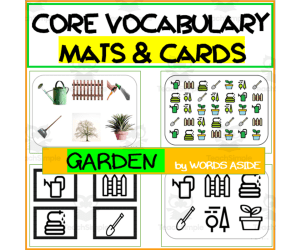
Core Semantics Mats + Cards: Garden Pack
Special Resources, ELA, Special Education Needs (SEN), Speech Therapy, Language Development, Pre-Reading, ESL, Vocabulary, Kindergarten, Preschool, Grade 1, Teacher Tools, Lesson Plans, Worksheets & Printables, Flashcards, Activities
Core Semantics Mats + Cards: Garden Pack This educational resource builds language skills using images of common garden items. With 13 pages of colored and black-and-white flashcards , it promotes vocabulary building, cognitive development, and communication. Use the cards for open-ended writing prompts, conversation starters, group activities, match-to-sample games, and more. These materials are suitable for a range of needs, including special education, speech therapy, ESL, and early reading skills. Print or display the cards for whole-class, small-group, or individual practice. Send task cards home for parents to reinforce lessons. Laminate pages to create durable materials. This pack helps develop comprehension, expression, speech, following instructions, memory, and other abilities. It can be combined with other titles in the series to build reasoning, categorization, and logic skills.
Author WORDS ASIDE
Tags Occupational Therapy, Speech And Language Therapy, Sped, Vocabulary, Semantics, Cards, Communication, Match To Sample, Conversation, Minibook