



3,970 products added recently
Page 153 - Popular Lesson Plans
Explore a curated selection of popular lesson plans that have proven successful in classrooms. Covering various subjects and topics, these resources provide innovative ideas and activities. Use them to refresh your curriculum and engage your students with tried-and-true methods.

 Show filters

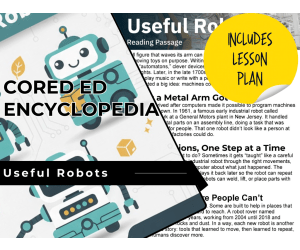
Useful Robots Reading Comprehension Passage - Cored Ed Encyclopedia
ELA, Language Development, Reading Comprehension, Reading, Pre-Reading, History, Social Studies, Technology, Science, Earth and Environmental Sciences, Grade 2, 3, 4, 5, Worksheets & Printables, Worksheets, Teacher Tools, Centers, Activities, Writing Prompts, Assessments, Quizzes and Tests, Quizzes, Lesson Plans
This useful robots reading comprehension with lesson plan includes: Visualization (on the front cover) Start your lesson by taking a minute to think and share something about the topic. Read the script aloud (slowly), perhaps prepare some music or sound effects. Student close their eyes and let their imaginations wander. Students open their eyes, read the question aloud and give them a few minutes to complete. Ask a few students to share or keep answers until the end to compare with what they learn in the passage. Quick pause—thousands of Cored Education products are included with your TeachSimple membership. Download links and encyclopedia index available here. Pre-Reading Trivia Students will write down one thing they already know about the subject and then read five more facts and discuss. These facts are fun, and the students will enjoy learning about the subject before reading more. Give 1 minute for students to write what they already know (no pressure—best guess is fine). Read the five facts together. After each fact, do ask a student for their opinion, was it surprising? Set a purpose by asking students to highlight/underline one fact they want to learn more about during the reading. Reading Passage The text is a high-interest reading passage with set paragraphs, roughly three to four paragraphs long. It contains a variety of themes about the topic, anywhere from history to technology. The passage is between 250 and 350 words in length. First, ask students to look at the headings and see what they’ll learn about today. What do they know about the topic/heading? First read options: Teacher read-aloud (best for support). Partner reading (paragraph by paragraph). While reading, students underline important details, and vocabulary words they think may come up in the questions section. Mixed Questions The first question page contains four multiple-choice questions, each with a choice of four answers, and three written response questions that require a sentence or two from the student. Students complete the mcqs first independently, then review quickly as a class. For the 3 written responses, try to get students giving the answer with some form of evidence: “I think ___ because the text says ___.” If students get stuck, send them back to check the passage. Vocabulary Questions Practice seven key words from the text in this section across two activities. First section is scrambled words where students will unscramble three words given a clue for each. The second section is a word to meaning matching activity. Before starting, have some students read out words they underlined in the passage. Ask students to say the word and read aloud the sentence(s) around each word. Ask students to do scrambled words and the matching exercise in pairs then go through answers as a class. For the scrambled spelling task, get four pairs to come up to the board and write the words for extra practice with the other student reading out the clue. For the matching task, prompt students to give full sentences: “I matched ___ with ___ because ___.” Creative Writing In this question, the student will be required to write a five to eight sentence paragraph on a question related to the topic. Before starting, ask students write down 3 key ideas they are going to include in their piece. Ask students for ideas to share around the class to help those struggling. Pro writing expectations: 5–8 sentences At least 2 facts or details from the passage At least 2 vocabulary words from the previous page Students read their paragraphs while classmates listen for facts and vocabulary words. Extension Activities This page is optional for fast finishers or to take home. There are several activities, each one requiring a different skill. Do some, do none, do all, completely optional - but you will feel reassured knowing every possibility is planned for. Includes summary writting question. Answer Key There are answers for the multiple-choice questions, written response questions have sample answers, vocabulary answers and if there is a summary question then a sample summary will be provided as well. Lesson Plan Included Customized lesson plan for this lesson is included. Lesson Snapshot Title: Useful Robots Genre: Nonfiction (Informational passage) Subject: Science & Technology (Engineering/Robotics) Primary Topic: How robots developed and help people Estimated Guided Reading Level (A–Z): P Support pages included: Pre-reading trivia, mixed questions, vocabulary activities, creative writing prompt, extension activities, and an answer key. QA notes on support pages: Support content generally matches the passage; however, the support pages use “automaton” (singular) while the passage uses “automata” (plural), and an extension prompt suggests “hills,” which is not stated in the passage (the passage names rocks and dust). What This Lesson Teaches Best Robots have a history: Explains that long ago people created “automata” that moved using steam, air, water, or falling weights. Modern robots and factory work: Describes an early industrial robot, Unimate, working in 1961 at a General Motors plant handling hot metal parts that were tough and dangerous for people. How robots learn repeatable motions: Shows how a person can guide a robot’s movements while sensors send signals to a computer that stores a pattern to repeat the job. Robots go where people can’t: Highlights the rover Opportunity exploring Mars for years (2004–2018) and sending back clues from rocks and dust. Big idea across time: Connects early moving devices to today’s robots as tools that learned to move, repeat, and help humans discover more. Learning Goals Students will explain what “automata” were and what powered them. Students will describe why Unimate’s factory job mattered for people. Students will identify how a robot can be “taught” motions and then repeat them. Students will summarize how robots can help in places that are risky, far away, or hard to reach. Students will use details from the text to tell what Opportunity did on Mars and what it sent back. Key Vocabulary From the Text automata — moving devices from long ago; not thinking machines. program — give a machine instructions to do a job. industrial — related to factories and making things. sensors — parts that notice and send signals to a computer. rover — a robot vehicle that travels to explore places. FULL CATALOG OF DOWNLOAD LINKS AND ENCYCLOPEDIA INDEX HERE
Author Cored Education
Rating
Tags Vocabulary, Reading Comprehension, Reading Passages, Lesson Plans, Ela Lesson Plans, Reading Comprehension Lesson Plans, Pre-reading, Science Lesson Plans, Technology, History
Get a Grip | Figurative Language Activity | Micro-Learning Deck
ELA, Reading, Reading Comprehension, Grade 4, 5, 6, 7, Teacher Tools, Lesson Plans
Get a Grip | Figurative Language Activity for Upper Elementary Students This informative PowerPoint resource allows upper elementary students to explore figurative language concepts in an engaging way. Specifically, students will comprehend the term "get a grip" as a figurative language technique. Through close reading of a passage with accompanying audio, students strengthen figurative language skills. Educators can implement this resource in various settings such as whole group instruction, small reading groups, or as a homework supplement. The deck includes: a video lesson explaining "get a grip"; a reading passage with audio for modeling fluent reading; reading comprehension questions; and a quick write activity to assess understanding. This concise learning activity is designed to boost students' comprehension and appreciation of figurative language.
Author Teach Me This
Tags Get A Grip, Figurative, Language, Reading, Comprehension
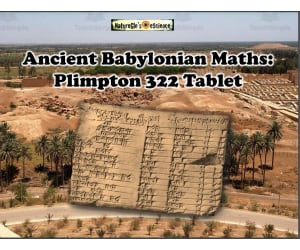
Math: Mesopotamia Thematic Unit
Social Studies, Science, Earth and Environmental Sciences, Math, Geometry, History, History: Ancient, Grade 9, 10, 11, 12, Lesson Plans, Teacher Tools
Math: Mesopotamia Thematic Unit is a great resource for students to explore early Babylonian mathematics!
Author NatureGlo's eScience
Tags Math Thematic Unit, Mesopotamia, Ancient History, Pythagorean Triplets

Executive Branch of the Government: History Speaks . . .
Social Studies, History, History: USA, Grade 4, 5, 6, 7, 8, Teacher Tools, Lesson Plans
Description of the Teaching resource The teaching resource in question is the 'Executive Branch of the Government: History Speaks . . .' This comprehensive tool aims to serve as a convenient, reliable aid for educators striving to teach students about the Executive Branch's history, powers, and duties. This insightful guide provides an understanding of how this part of the government came into existence and vital details regarding its functions. The main purpose behind using this learning material is enabling students to understand how their government operates. Target Audience This product caters especially well to social studies teachers focused on US History at grades 4 to 8 levels. Its main content revolves around pertinent questions concerning the President's powers and duties, along with information about how our nation's Executive Branch originated and what it entails. It illustrates in-depth answers that are engaging yet succinct enough for young learners to absorb effortlessly. Unique Feature & Use cases A unique feature of 'Executive Branch of the Government: History Speaks...' is that it contains interesting activities designed not only for informative purposes but also work as interactive sessions where students can actively participate in their learning journey by connecting facts with real-world scenarios. This versatile teaching resource can be implemented in diverse settings based on class needs: Teachers may use it as material during whole group discussions or small group activities . Educators could assign certain aspects as homework assignments designed to reinforce ideas previously explored in class. Note: The product file comes delivered conveniently via a user-friendly PDF format ensuring compatibility across various devices without compromising its quality. The noteworthy aspect here : A single file consists all pertinent lessons plans about executive branch which makes much simpler & hence saving plenitude time of educator planning lessons from scratch. In Conclusion Educators who teach US history-specially those dealing with topics related to the executive branch - One can hardly find more comprehensive tool than "Executive Branch if Government ;History Speaks..." tailored specially keeping targeted grades (Grade 4-8) which goes beyond answering rudimentary queries plunging into depths of subject matter. It is optimized for educators demanding rigorous yet engaging material for their learners.
Author Classroom Complete Press
Tags PDF

May Day Unit
Creative Arts, Art, Music, Kindergarten, Preschool, Lesson Plans, Teacher Tools
May Day Unit A comprehensive teaching resource designed particularly for educators in preschool and kindergarten settings, including public school teachers and homeschoolers. This unit can immediately be implemented into your current curriculum and is aligned to target Art & Music concepts. Overview of May Day Unit The basis of this May Day Unit revolves around recognizing and celebrating the unique cultural event that takes place on May 1st – known worldwide as May Day! An international day honoring workers' rights, it’s also associated with Singing, Dancing, Storytelling, and wreath-making activities. The unit comes complete with a variety of exciting ideas to mark this spring festival that your students will absolutely enjoy. A Fun-filled Exploration in Art & Music This exploration aims at stimulating creativity among young learners. It includes engaging educational activities crafted specifically for Preschoolers and Kindergarteners. The practical component of these activities provides students various opportunities to create music or art projects related to the celebrated theme. Fully Accessible: The entire content is delivered in an easily accessible PDF file format which means you can incorporate these exercises into your lessons wherever you are! Fits In-person or Remote Lessons: Whether you're conducting classes in-person or remotely during online learning sessions - all you need is access to any device that supports PDF files like a laptop, desktop computer or tablet. Note: Introducing cultural awareness at an early age might lead students towards gaining respect for diversity later down the road. Educators! Get Started on Efficient Planning Today: With help from this resourceful unit on May Day celebration ideas, educators will have an efficient planning start point - making it not just educative but also time-saving! Inject fun into learning about traditions worldwide while targeting important educational facets such as Art & Music education along with social studies aspects such as global traditions through our practical yet creative May Day Unit! .
Author Learning Foundations
Tags May Day, Art & Music, Cultural Awareness, Global Traditions, Early Education

Embracing Cultural Diversity: Japan: A Cross-Curricular Lesson Plan
Social Studies, Geography, Grade 5, 6, Teacher Tools, Lesson Plans
Embracing Cultural Diversity: Japan: A Cross-Curricular Lesson Plan "Embracing Cultural Diversity: Japan" is a unique educational tool aimed at promoting cultural appreciation and understanding among young learners. This resource strives to eliminate the segregation of cultures by arming students with knowledge and insights into different cultures, starting with an in-depth look at the fascinating Japanese culture. A Comprehensive Guide on Japanese Culture The lesson plan provides an engaging informational text offering profound insights into Japanese history and traditions. This comprehensive guide is perfect for educators etching to introduce their students to global cultures through a captivating journey into Japan's rich history and unique customs. Making Learning Interactive & Fun The plan includes several extension ideas intended to make learning interactive while achieving curriculum objectives across various disciplines. The hands-on activities incorporated are informative yet enjoyable stimulating creativity among learners. The cross-curricular activities help enhance comprehension skills, reinforce understanding about Japanese culture, encourage active engagement, and promote thorough knowledge retention. This downloadable PDF file aligns well with teachers' methodology whether it be whole group instruction or small group sessions; equally effective if assigned as homework activity enhancing independent learning skills among pupils. Ideal for Social Studies Classes Focusing on Geography Subtopics Crafted primarily for 5th & 6th-grade Social Studies classes studying Geography subtopics, this lesson plan offers more than just geographical lessons. It imparts life-long values of respect & appreciation towards diverse cultures thereby shaping today's learners into responsible global citizens of tomorrow.
Author Classroom Complete Press
Tags PDF

Animal Science Unit | All About Sea Lions | Learning about Animals
Science, Life Sciences, Animals, Kindergarten, Preschool, Grade 1, 2, Lesson Plans, Teacher Tools
Animal Science Unit - All About Sea Lions Dive into learning about sea lions with this expansive collection of over 60 ocean animal resources for educators. Created for preK-2nd grade students, this science unit includes real photos, nonfiction reading passages, arts and crafts , worksheets, and diverse writing activities tailored for various ability levels. Use the extensive teacher materials like discussion questions and a sea lion video list to guide engaging whole or small group learning. Students can complete projects like articulated paper sea lions or sea lion masks for hands-on fun. Challenge them with the included sea lion photo guessing game. From life cycles to habitats, anatomy to adaptations, this thoughtfully designed unit helps build an in-depth understanding of these marine mammals.
Author Simply Schoolgirl
Tags Zoology, Marine Mammals, Marine Mammal, Ocean Predators, Sea Lion Worksheets, Sea Lion Activities, Sea Lion Lessons, Sea Lion Crafts, Learning About Sea Lions

THE R.C.M.P. Gr. 3-6
Social Studies, History, History: Canada, Grade 3, 4, Teacher Tools, Lesson Plans
The R.C.M.P. Gr. 3-6: An Exceptional Teaching Resource An immersive learning experience designed for the esteemed Royal Canadian Mounted Police (R.C.M.P.) aimed at engaging Grade 3 and Grade 4 students effectively. What it Entails: An in-depth study of the R.C.M.P., its history, training methods, duties, and notable facets such as Musical Ride. Exploration of the bond between this force and their canine partners, their unique uniforms and crime detection mechanisms—focus on fingerprinting. This all-inclusive teaching resource extends a total of 37 ready-to-print pages, packed with useful information and worksheets adaptable across various teaching styles. The Product Benefits: Suitable for whole-class guidance or small-group activities; Promotes active participation by helping students curate questions before a local R.C.M.P officer visit—arranged by teachers; Apart from classroom use, even as homework assignments or project-oriented activities,this package aids independent research skills while deepening understanding about Canada's cultural identity via the journey of R.C.M.P.. Housing Under History: Canada Sub-category within Social Studies Lessons: In particular to these lessons—the resource outlines multifold interpretation to link historical facts with their relevant societal context—a vital feature within any social studies framework. Its simplicity in terms of file type—PDF grants accessibility across digital platforms without capitulating quality rendering it user-friendly even for tech-novice teachers. The essence lies in more than being just another educational tool; it’s about crafting young thinkers to appreciate history that is inherently tied with our present & future. In Summary - A jubilant learning journey awaits students rather than just another curriculum topic!
Author Classroom Complete Press
Tags Canada, History, Worksheets, Story Writing, Social Studies
I WONDER - What Is The Stomach | Animated Video Lesson
Human Body, Life Sciences, Science, Biology, STEM, Grade 1, 2, 3, 4, 5, 6, 7, 8, Lesson Plans, Teacher Tools
Video Overview The human body is full of fascinating wonders to learn. This video is created to help the students recognize the anatomy and the job of the human body. I WONDER - What Is The Stomach | Animated Video Lesson Every part and organ in our human body is vital so let's see how important they are. Have you ever imagined how we look like if we didn't have a skeleton? Did you know that because we have our amazing muscles we can stand! Do you know how many teeth do we have? Have you ever wondered about the food journey inside our body? Can you name all the glands in our body? Why do we have skin? Our nervous system is really good at sending signals. Can you tell us more about it? Are you really good at Mathematics, painting, or any other thing? You should really thank your brain about it! The famous five senses are really doing a great work? Can you explain how every sense works? I WONDER - What Is The Stomach | Animated Video Lesson The video is perfect for encouraging the researching skills for the students, while learning more about our fantastic human body. I WONDER - What Is The Stomach | Animated Video Lesson This friendly designed video is suitable for students at school, homeschooling, and as a group activity. Format Available in MP4 format.
Author Educational Voice
Tags What Is The Stomach, What Is The Stomach Video, Stomach, Stomach Facts, Stomach Facts For Kids, Stomach Video, Stomach Video For Kids, Digestive System, Digestive System Facts For Kids
I WONDER - How Many Races Are There In A Formula One Season
Sports, P.E. & Health, Grade 4, 5, 6, 7, 8, 9, 10, Lesson Plans, Teacher Tools
Video Introduction An amazing video designed for the students to learn more about sports in different countries. I WONDER - How Many Races Are There In A Formula One Season | Animated Video Lesson What is your favorite sport? Tell us more about it. Who is your favorite athlete? Or what is your favorite team? Do you know who invented basketball? When basketball has been invented? Can you tell us where is the first time it has been played? Have you ever played soccer or football? If yes, tell us what was your position: A goal keeper, midfield player, or a defender? Do you like watching golf? If yes who is your favorite player? Can you name the differences between tennis and ping pong? Have you ever played volleyball on the beach? When it has been officially recognized by the Olympics? Do you like watching Formula 1 races? If yes, who is your favorite team or driver? Have you ever tried to play handball? If yes tell us more. Do you like watching people skiing or surfing? I WONDER - How Many Races Are There In A Formula One Season | Animated Video Lesson The video is perfect for encouraging the researching skills for the students, while learning more about this sport. I WONDER - How Many Races Are There In A Formula One Season | Animated Video Lesson This friendly designed video is suitable for students at school, homeschooling, and as a group activity. Format Available in MP4 format.
Author Educational Voice
Rating
Tags How Many Races Are There In A Formula One Season, How Many Races Are There In A Formula One Season Video, Formula One, Formula One Video, Formula One Facts, Formula One Video For Kids, Formula One Facts For Kids
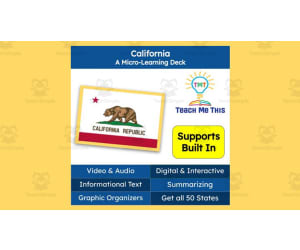
California: A Micro-Learning Deck | Digital Geography Lesson
Social Studies, Geography, Grade 4, 5, 6, 7, Teacher Tools, Lesson Plans
The California: A Micro-Learning Deck | Digital Geography Lesson resource is a 14-slide download that exposes your students to learning activities for the state of California This digital mini-lesson includes: -Video and Audio -Informational Text - Graphic Organizers -Digital & Interactive components -Summarizing Students will enjoy interacting with this lesson and each of the activities!
Author Teach Me This
Tags California Learning Deck, Mini Lesson, Geography Lesson, Interactive Slides, Digital Lesson

I WONDER - Why Is Plastic Bad For Marine Life | Animated Video Lesson
Earth Sciences, Earth and Environmental Sciences, Science, Environmental Science, Grade 3, 4, 5, 6, 7, 8, 9, Lesson Plans, Teacher Tools
Video Introduction An amazing video designed for the students to learn more about STEM. I WONDER - Why Is Plastic Bad For Marine Life | Animated Video Lesson Our environment is so precious, can you name different ways to help our environment to be clean? Have you ever recycled a material? If yes, tell us what was the material was it paper, plastic, glass or aluminum? How did you recycled it? What are the types of clean energy? How do hydro power works? Where can we find wind turbines? What is climate change? And what we can do to stop it? What are the different types of ecosystems? I WONDER - Why Is Plastic Bad For Marine Life | Animated Video Lesson The video is perfect for encouraging the researching skills for the students, while learning more about this fantastic topic. I WONDER - Why Is Plastic Bad For Marine Life | Animated Video Lesson This friendly designed video is suitable for students at school, homeschooling, and as a group activity. Format Available in MP4 format.
Author Educational Voice
Rating
Tags Why Is Plastic Bad For Marine Life, Plastic, Plastics, Plastic Facts, Plastic Facts For Kids, Plastic Video, Plastic Video For Kids, Environment, Environment Facts, Marine Life
Reading Comprehension: Main Idea
ELA, Reading, Reading Comprehension, Common Core, Grade 5, 6, 7, 8, Teacher Tools, Lesson Plans
Reading Comprehension: Main Idea - An Essential Teaching Resource Reading Comprehension: Main Idea is an essential teaching resource designed to enhance the reading and comprehension skills of students in grades 5 through to 8. Reading, a fundamental communication tool, is vital for success both within and beyond school. Focusing on "Main Idea" This resource specifically zooms in on "Main Idea," a key chapter slice from the full "Reading Comprehension" lesson plan. The ability to understand main ideas within texts enables students to grasp overall themes or concepts, thereby enriching their comprehension ability. An Effective and Structured Learning Tool The instructional material adopts Bloom's Taxonomy of Learning objectives, emphasizing its educational appropriateness. It emphasizes key reading acquisition elements such as: Understanding inference Leveraging context clues. The structure suits various implementation strategies—it can be used for whole group instruction or small group work. Considering each student’s learning style, it can also serve as individual assignments or extra homework tasks. A Compact Yet Informative Resource This teaching tool is compact yet informative and comes across 24 print-ready pages in PDF format. This convenience serves teachers working with diverse classroom environments well. Language Arts teachers will appreciate that this resource aligns closely with Common Core State Standards; thereby assuring curriculum-compliant lessons while instilling confidence that they are equipped with effective materials for stimulating their students' comprehension abilities.</p
Author Classroom Complete Press
Tags Reading, Comprehension, Word Search, Main Idea, Literacy

Mexican Government: Kinds of Governments Gr. 5-8
Social Studies, Government, Grade 5, 6, 7, 8, Teacher Tools, Lesson Plans
Mexican Government: Kinds of Governments Gr. 5-8 Teaching Resource This instructional resource is designed for teachers interested in imparting comprehensive knowledge about Mexico's political structure and history to their students. It’s suitable for grades 5 through 8 and fits effortlessly into any social studies curriculum. Mexico’s History and Constitution: This resource covers topics such as Mexico's rich liberty-driven history and the design of its Constitution which prevents a power imbalance. Students can learn how the right to education for all citizens is guaranteed with details provided from Article 3 of this constitution. The Mexican Presidency: There is also focus on the duties that come with being a President in Mexico, promoting discussions or essays about civic duty and responsibility in your class. The Executive Branch Departments: Covers Health & Environment which are routine topics under usual governmental studies. Explores Tourism & Agriculture departments - less commonly covered areas helping widen student perspectives significantly. About Political Parties In United Mexican States: This teaching aid provides insight into different political parties within United Mexican States along with varied ideologies empowering students to better understand contrasts between politics across borders. Educational Activities Included: An Overview Of The Resource Activities Included That Follows Bloom’s Taxonomy Methodology Are: Potential brainstorm session where they can discuss ideal qualities required from a leader inside diverse socio-political environs Crossword Puzzles t Comprehension Quizzes etc., enhancing both understandability & engagement levels using active learning approaches Versatility To Meet Student Needs: Limited not just for whole-group lessons, this resource can be used as a support in smaller study groups or for individual homework assignments. It’s compatible to individual student needs catering holistic development. Convenient Ready-To-Print Format: This teaching tool comes neatly packed in an easy-to-print 24-page format, making it proficient guide on the Mexican government for your classroom.
Author Classroom Complete Press
Tags Social Studies, Government, Mexicsn, Crossword Puzzles, Comprehension Quiz
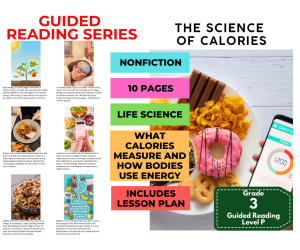
The Science of Calories: Guided Reading Level P with Lesson Plan
ELA, Resources for Teachers, Reading Comprehension, Reading, Science, Life Sciences, Health, P.E. & Health, Physics, Language Development, Grade 2, 3, 4, Worksheets & Printables, Worksheets, Teacher Tools, Centers, Activities, Literacy Readers, Quizzes, Quizzes and Tests, Assessments, Lesson Plans
This The Science of Calories (level p) guided reading book with lesson plan includes: Guided Reading Color Label (front cover x1) This is a quick way to match the book’s demands to what students can generally handle.. The overall goal is to use the level/color to pick books for several smaller groups. To qualify for a certain level, a student is expected to read a book from that level with about 90–94% accuracy. If a student is consistently accurate and understands, move up a level. If the student is struggling at that level, drop down and add more support. Each student will improve at completely different rates, but it is generally one of the best ways to check progress across the class. DOWNLOAD THE CATALOG TO VIEW ALL GUIDED READING BOOKS AVAILABLE (SORTED LEVELS A-Z) Pre-Reading Question (x1) Teacher asks the prompt aloud, can be while showing the cover or first page. Students share what they already know, or make educated guesses from the cover. Prompt them to use the target vocabulary. Write some of their responses on the board to look back at during the reading. Vocabulary Words (x5) Introduce the five words, best doing it one at a time. Start by saying it, while students repeat and then see if anyone knows what it means before reading further. Read through the meaning and try to briefly connect each word to a picture or gesture so it’s meaningful. Ask students to flip through the book pages and point to where they see each of the vocabulary words. While reading the book pause upon coming across one of the vocab words or read the sentence twice to make sure students understand the word has appeared. Optional: Ask students to raise hands whenever they see/hear one of the new words. Guided Reading Pages (x10) Check the book snapshot (below) for: primary topic - do you need to prep extra reading or intro materials on this? what is taught best - decide on 1-2 bullets to focus on, use the prompt or words provided here for best results. learning goals - what you are checking for students to be able to do after the session, elicit answers using prompts or words provided. key vocabulary (see section above). questions overview - so you know what is coming up and if you need to prep extra materials to assist understanding. Run the lesson You may have already looked at a few of the pages together, but you can show them some of the pictures again first to set meaning. Depending on how much time you have and how familiar your students are with guided reading class, you may want to read the book aloud first with the group first. Students whisper or partner read, while you listen in. If time, do it as a group, one student reading a page each. Use the guided page’s prompts to coach: “Check the picture / does it make sense?” “Point under the words / try the first sound” “Reread the sentence smoothly”. Try to focus more on one student per session (rotating every time), so you can work out if they are ready to move up or need to move down a level. Comprehension Questions (back cover x3) This is your way to check that students didn’t just say the words, but actually understood the text. First, let students answer by pointing to the page/picture and saying a short sentence. After any answer, follow with: “Show me where you found that in the text.” In bigger groups, have partners answer first (10–20 seconds), then call on 2–3 students to share. Differentiation tips: Emerging speakers/struggling readers: oral + pointing On-level: oral in a full sentence Higher: one written sentence or draw + label Book Snapshot Title: The Science of Calories Genre: Nonfiction (informational science text) Subject: Science (Nutrition/Human Body) Primary Topic: What calories measure and how bodies use energy Estimated Guided Reading Level (A–Z): P What This Book Teaches Best Defines energy as what living things need to survive and function, and connects energy to everyday examples like cars and lamps. Explains that a calorie measures energy in food (not weight or size) and describes it as a scientific unit of measurement. Shows how most energy starts with the sun , and how plants use photosynthesis to turn light into chemical energy stored in plant parts. Describes how the human body uses energy all the time (even during rest or sleep) to power the heart, lungs, and brain. Explains how food energy is released through digestion , how activity increases energy demand, and how extra calories may be stored as body fat. Learning Goals Explain what energy is and why living things need it. Describe what a calorie measures according to the text. Explain how plants get energy from the sun and where that energy is stored in a plant. Describe how digestion helps the body unlock energy from food. Describe how physical activity changes the body’s need for calories. Explain what happens when more calories are consumed than the body needs for daily activities. Key Vocabulary From the Text measurement — finding out how much of something there is. photosynthesis — plants use sunlight to make chemical energy. digestion — the process that unlocks energy in food. intestines — long tubes that help finish breaking down food. converted — changed from one form into another. Discussion Prompts Pre-reading question: What do you think calories tell us about the food we eat? Comprehension questions: What does the book say a calorie measures? Comprehension questions: How does the book explain that plants capture and store energy from the sun? Comprehension questions: What does the book say happens when a person consumes more calories than needed for daily activities? Printing Tips 1. Best Printing Method (Recommended) “Booklet” Printing (Best if Available) If your printer or PDF viewer supports Booklet Printing , use this. Settings to use: Print mode: Booklet Paper size: Letter or A4 (either works) Orientation: Landscape Print on both sides: Yes Flip on: Short edge Scaling: Fit to printable area Booklet subset: First test: Front sides only Then: Back sides only This will automatically: Pair pages correctly Put the cover on the outside Align everything for folding After printing, fold in half and staple along the spine . 2. If “Booklet” Printing Is NOT Available You can still print this correctly with manual duplex printing . Step-by-step: Open the PDF. Choose Print . Set: Orientation: Landscape Pages per sheet: 1 Print on both sides: Yes Flip on: Short edge Print all pages . Because each PDF page already contains two facing book pages, the result will still fold cleanly into a book. Thousands of Cored Education products are included with your TeachSimple membership. Download links and encyclopedia index available here.
Author Cored Education
Rating
Tags Reading Comprehension, Reading Passages, Reading, Guided Reading, Guided Reading Lesson Plan, Guided Reading Activity, Pre-reading, Science Lesson Plans, Life Science, Health

Fantasy-Themed Math Escape Room Lesson 3
Math, Multiplication and Division, Division, Multiplication, Grade 4, 5, 6, Lesson Plans, Teacher Tools
Learning Objectives: This fantasy-themed escape room series tells the story of a knight locating four legendary dragons and taking a scale from each of these dragons. It focuses on multiplication and division skills that increase in difficulty with each part. The use of both math skills and critical thinking skills must be applied to win the game. Your mission to collect the four legendary dragon scales takes you to the Trickster—a dragon that lives near Walden Lake. He will try to trick you into leaving without his scale. Will you be able to pass his challenges and earn one of his scales? This is part 3 of a 4-part series. OUTLINE: Introduction (5 minutes) Activity #1: Carnival Game (10 minutes) Activity #2: Ball Toss (10 minutes) Activity #3: Bubbles (15 minutes) Activity #4: Frames (15 minutes) Extra Time Activity: I Want a Bearded Dragon Conclusion/Review (5 minutes) PREVIEW: You make your way by horse to Walden Lake. Near the lake is a carnival style tent set up by the water. (SHARE: Slide #2) You tie your horse’s reins to a nearby tree and peek inside the tent. Carnival music blares loudly as you enter. There is a sign in the middle of the tent that reads: Pass the four challenges to earn a scale. If you can... You turn your attention to what must be the first challenge. It looks like a carnival game. There are some darts and balloons attached to a wall. But this doesn’t quite look like an ordinary balloon pop game. You reach for a dart to pop the first balloon, but a voice says, “not until you speak the correct numbers.” (SHARE: Slide #3)
Author Bundle LLC
Tags Math, Games, Escape Room, Multiplication, Division
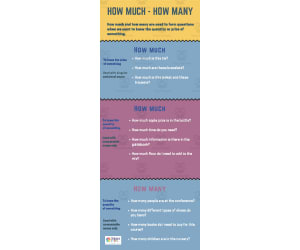
How Much? How Many? | Beginner Lesson Plan
ELA, Language Development, ESL, Grade 2, 3, 4, 5, 8, 9, 10, 11, 12, Teacher Tools, Lesson Plans
How much How many ESL and EFL lesson plan for A1 beginner English students with countable and uncountable nouns. This TEFL resource is ready to go and comprises a range of teaching materials, such as flashcards, activities, conversation topics, and writing drills. Created to raise language proficiency for early English students, the lesson dives into the present continuous in a variety of situations. Describing the difference between using how much with uncountable nouns and how many with countable nouns, it empowers ESL students with the knowledge and confidence to use the how much and how many accurately in every day conversation and writing. With the inclusion of activities, exercises, and real-life examples, this lesson plan strengthens language concepts and establishes a solid foundation in the basics of English grammar. This lesson plan includes: Cover page Flash cards A warm-up activity Main use Construction details Rules, along with any exceptions Illustrative examples Two closed exercises One open exercise Revision exercise Writing exercises Chatterbox, a recurring feature in our course books encouraging conversation Activity , such as a game, quiz, puzzle, etc., to conclude the class The lesson plan is available in PDF with 25 ready to print pages and one digital access file. A part of it is on Google Apps. The answer key is also included for reference.
Author TEAM TEFL
Tags Reading Passage, ESL Lesson, Money, Nouns, Expressions

Dingoes at Dinnertime (Magic Tree House #20 Lesson Plan, Videos, Activities)
Social Studies, ELA, Geography, Reading, Reading Comprehension, Grammar, Literature, Language Development, Vocabulary, Spelling, Writing, Science, Life Sciences, Animals, Grade 1, 2, 3, Lesson Plans, Teacher Tools
Magic Tree House #20: Dingoes at Dinnertime Novel Study Transport students to the Australian Outback with this comprehensive 5-day novel study for Dingoes at Dinnertime, part of the beloved Magic Tree House series. Through reading, writing, geography, and art activities, second and third graders will strengthen literacy skills while learning about dingoes, Aboriginal culture, and the landscape of the Land Down Under. The customizable resource includes a lesson plan outlining instructional strategies like whole class, small group, paired, and individual work. Interactive and hands-on components engage visual, auditory, and kinesthetic learners. Assessment includes chapter questions, vocabulary practice, and language arts exercises focused on grammar, spelling, and different forms of writing. Extend learning even further with supplementary videos. This all-in-one novel study builds content knowledge and reading comprehension in an engaging way.
Author Heather Huhman
Tags Dingoes At Dinnertime, Magic Tree House, Book Companion, Novel Study, Australia, Dingoes, Kangaroos, Koalas

I WONDER - Are Acid-base Reactions Dangerous | Animated Video Lesson
Chemistry, Science, Grade 6, 7, 8, 9, 10, 11, 12, Lesson Plans, Teacher Tools
Video Introduction An amazing video designed for the students to learn more about STEM. I WONDER - Are Acid-base Reactions Dangerous | Animated Video Lesson Do you like STEM subjects? what is your favorite one? Have you ever tried to plant a seed? If yes, tell us more about it. Or have you ever tried to invent something? If yes, tell us more about it. And how do you think it will help us? Have you ever seen a microorganism under a microscope? What was it? And how it looked like? Mathematics is a marvelous subject. Let' sharpen our brains and solve some equations. Do you like timetable tricks? What is your favorite one? Do you know how to code? Have you ever created an app or a game before? If yes, how was it like? I WONDER - Are Acid-base Reactions Dangerous | Animated Video Lesson The video is perfect for encouraging the researching skills for the students, while learning more about this fantastic topic. I WONDER - Are Acid-base Reactions Dangerous | Animated Video Lesson This friendly designed video is suitable for students at school, homeschooling, and as a group activity. Format Available in MP4 format.
Author Educational Voice
Tags Are Acid-base Reactions Dangerous, Are Acid-base Reactions Dangerous Video, Acid-base Reactions, Acid-base Reaction, Acid-base Reactions Facts, Acid-base Reactions Facts For Kids, Acid-base Reactions Video
Global Warming REDUCTION: The Masdar Initiative - FLASH-PC
Science, Earth and Environmental Sciences, Environmental Science, Common Core, Grade 5, 6, 7, 8, Teacher Tools, Lesson Plans
The Global Warming REDUCTION: The Masdar Initiative - FLASH-PC This is an exceptional education tool for primarily Grades 5 through 8 teachers and homeschoolers. Centered on environmental science, it enhances learner's understanding of the Masdar Initiative for Global Warming Reduction. Key Features: A unique blend of technology and content including software compatible with PCs enables interactive activities to bring learning to life. Offers a graduated learning experience based on Bloom's Taxonomy from knowledge recollection through synthesis and evaluation. Includes reading passages specifically designed to educate on the Masdar initiative, paired with 'before you read' and 'after you read' comprehension questions. Vocabulary flash cards included to aid mastery over crucial terminologies. Multimedia Benefits: Tool includes video and audio facilities enhancing visual understanding while catering to a variety of learning styles within your student group at large. Flexible Uses Include: Whole group instruction , An individual homework assignment, Small focus groups, or The resource can be tailored around your specific pedagogical requirements maintaining engagement amongst students along varied levels of proficiency ensuring every learner benefits effectively from each session. Adhering closely to Common Core State Standards, using this tool assures alignment with recognized academic benchmarks equipping learners adequately towards mastering grade-level expectations successfully. In conclusion,"Delve deeper into the realm of environmental science and evoke in your students a sense of responsibility towards reducing global warming."</p
Author Classroom Complete Press
Tags Software (PC)

To rain on Someone's Parade | Figurative Language Activity | Micro-Learning Deck
ELA, Reading, Reading Comprehension, Grade 4, 5, 6, 7, Teacher Tools, Lesson Plans
Explore Figurative Language: To Rain on Someone's Parade This resource guides students to better comprehend the figurative language term "to rain on someone's parade" through close reading. Utilizing a short video lesson explaining the concept and a reading passage with audio recording, learners will strengthen literacy skills. The deck integrates a comprehension quick write so educators can assess understanding. This versatile material suits whole class instruction, small groups, or independent work for 4th-7th grade language arts. Implement as a complete lesson or individual activity concentrating on comprehension. The engaging micro-learning format stretches critical thinking abilities through focused engagement with a singular language device. Providing passage audio caters to diverse learners, including ESL students and those needing reading support. This comprehensive resource developed by experienced teachers assists literacy growth through concentrated knowledge building.
Author Teach Me This
Tags Comprehension, Lesson, Digital Reading, Figurative, Language

Taking Time for Teamwork: Contraptions that Span a Distance:
, Grade 4, 5, 6, 7, 8, 9, 10, 11, 12, Teacher Tools, Lesson Plans
Taking Time for Teamwork: Contraptions that Span a Distance Taking Time for Teamwork: Contraptions that Span a Distance is an educational resource designed to promote teamwork and critical thinking. This interactive tool presents engaging activities that challenge students to construct various distance-spanning contraptions. The 13-page PDF includes: Detailed instructions Required materials lists Testing guidelines Scoring goals Annotated teacher's notes The highlight of this resource is its ability to blend team building into the learning process. It helps stimulate creative thought and foster active participation among students. Versatility across grades 4-12 This tool can be utilized in different ways according to grade level, making it suitable for both upper elementary and high school classrooms. Additionally, it can also be implemented in homeschool settings. Enhancing communication skills and complex thinking The lessons within this resource encourage effective interactions between learners - a critical factor in developing advanced cognitive skills necessary in tackling more complex ideas or tasks later on their educational journey. Variety of implementation methods aligns with various teaching setups: All-class participation; This encourages whole class engagement creating an environment ideal for collective brainstorming sessions. Smaller group discussions: A more focused strategy providing individual attention , nurturing granular idea exchanges , fostering understanding unseen during broader engagements ;+ Solo homework assignments Weaving the concepts with personal creativity provides deeper insights brewing further intellectual curiosity . Implementing any (or all) of these methods, depending on the specific needs and structure of the class makes Taking Time for Teamwork a vital addition to any teacher’s instructional arsenal. Optimization of resourceful participation and learning While tangible peripherals like markers or print-outs may be necessary, this package transforms each lessons into an exciting cooperative endeavor. Creativity shines while problem-solving skills hone. Overall, it turns learning from routine tasks into exhilarating group challenges, thereby enriching educational experience. In summary the focus shifts from competition to teamwork transforming education into an engaging process based on collective growth and understanding –just always intended to be .
Author Classroom Complete Press
Tags Team Building, Math Challenge, Math Games, Thinking Skills, Printables

Conservation: Ocean Water Resources: What Is Salt Water? Gr. 5-8
Science, Earth and Environmental Sciences, Environmental Science, Grade 5, 6, 7, 8, Teacher Tools, Lesson Plans
The Conservation: Ocean Water Resources: What Is Salt Water? Gr. 5-8 A comprehensive teaching resource stirring the interest of grades five through eight students in environmental science—particularly ocean conservation. With a focus on sea-life and water as the ecosystem's major player, this product provides a vibrant, hands-on learning experience that appeals to visual learners. The unit not only emphasizes theoretical retention but also fosters critical thinking by assigning an innovative board game designing task. This task aims to outline climate change’s impact on oceans - an issue of current global relevance, making the lesson stimulating and pertinent. The package covers aspects such as: The water cycle Influence over seawater concentration Evidence how climate change affects ocean currents Fallouts of these effects on traditional trades like farming and fishing etc. This invaluable lesson enlightens our future generations about day-to-day scientific phenomena they may encounter but rarely ponder upon. Moreover, it broaches crucial topics about human practices' environmental implications—making reference to actual incidents involving ecological concerns provoked by human activities. Nub of the Product: Intriguing questions provoking thought around environmental issues induced due to human interventions. Inclusion of practical experiments allowing children a first-hand experience with Earth's largest bio-reserve while subtly instilling STEAM principles in their learning journey. This digital pack is complete with 30 printable worksheets suitable for various teaching formats—whole class discussions, small group exercises or individual homework assignments—catering flexibly to teachers' needs. The unit is peppered with supporting tools like crossword puzzles & word searches, intended to supplement learning through play while reinforcing the newly acquired knowledge. Most importantly, it goes beyond imparting information. It encourages young minds by furnishing them with effective strategies that they can adopt personally towards protecting our oceans; consequently nurturing individual responsibility at an early stage. "The Conservation: Ocean Water Resources: What Is Salt Water? Gr. 5-8" is a harmonious amalgamation of oceanography and trending environmental issues that not only promises an engaging study environment, but also assists educators in their efforts.
Author Classroom Complete Press
Tags Environmental Science, Conservation, Salt Water, Ocean Water, Comprehension
Conservation: Ocean Water Resources: Climate Change and Salt Water Gr. 5-8
Science, Earth and Environmental Sciences, Environmental Science, Grade 5, 6, 7, 8, Teacher Tools, Lesson Plans
Conservation: Ocean Water Resources: Climate Change and Salt Water Gr. 5-8 This all-encompassing educational resource enhances students’ understanding of vital environmental concepts like the effect of climate change on our planet’s oceans and salt water resources. Targeted at grades 5 to 8, this material is ideally suited for science educators in public schools or homeschooling environments. Oceans' Importance: Makes up around 97% of Earth's total water content. Covers roughly 71% surface area. Houses between 50% and 80% all life forms on Earth. The teaching module includes real-world environmental scenarios designed to encourage young learners to explore issues impacting these critical oceanic and salt water resources. Creative Tasks & Classroom Instruction: In addition to discussions showcasing the cyclic dominance of saltwater, educators are provided with unique tasks such as creating board games illustrating climate changes' impact on large bodies of water - perfect for stimulating student creativity and engaging learning experiences. Beyond Traditional Classroom Settings: This resource extends beyond traditional whole-group instruction, effectively accommodating small group settings or individual homework assignments for personal exploration through case studies - offering direct implications tied with ocean health problems. Empowering Young Conservationists: Fosters awareness-raising activities typically found in lesson plans – including crossword puzzles, word searches, and comprehension quizzes. Incentivizes aspiring conservationists with practical tips on safeguarding our oceans from further human-caused devastation; actionable solutions towards environmental preservation help students feel more empowered citizens from an early age. Comprehensively Structured Module: This 30-page PDF module, in alignment with Bloom's Taxonomy and STEAM (Science, Technology, Engineering, Art & Maths) objectives. It includes easily printable hands-on exercises along with graphic organizers and an answer key too. Conclusion: Ultimately, the factual presentation of oceanic realities within this resource not only elevates environmental comprehension to a much higher level but spurs even greater interest among students to genuinely care for our world’s invaluable water ecosystems.
Author Classroom Complete Press
Tags Climate Change, Salt Water, Ocean Water, Science Lesson, Crossword Puzzle