



3,992 products added recently
Page 272 - Popular Lesson Plans
Explore a curated selection of popular lesson plans that have proven successful in classrooms. Covering various subjects and topics, these resources provide innovative ideas and activities. Use them to refresh your curriculum and engage your students with tried-and-true methods.

 Show filters


The Solar System: The Moon
Science, Earth and Environmental Sciences, Space, Common Core, Grade 5, 6, 7, 8, Teacher Tools, Lesson Plans
The Solar System: The Moon The Solar System: The Moon is an educational resource designed to spark interest in young astronomers and enhance their knowledge about our solar cosmos. It effectively covers a wide range of topics – from the traits of Inner and Outer Planets to intriguing aspects of Stars, Constellations, Asteroids, Meteors, and Comets. Moon Chapter Slice This resource includes a specific chapter slice on "The Moon", which explores significant concepts such as planetary orbits, the asteroid belt, lunar cycle & phases of the moon as well as shooting stars. With its simplified language and easy-to-grasp vocabulary aimed at students in grades five to eight, this unit simplifies complex astronomical concepts making them readily accessible for both novices and budding astronomers. Using This Resource In Class Ideal for teaching fifth- to eighth-grade students who require remediation in sciences or those having difficulty comprehending advanced terms. Can be used effectively for whole-class instruction due to its simplified content. Suitable as assignment module for small-groups or self-paced independent learning. Distinguishing Features Incorporation of various reading passages that reinforce information assimilation. Inclusion of comprehension questions scattered throughout testing retention. Numerous hands-on activities demonstrating practical concepts enhancing knowledge retention. Presentation aids like color mini posters for visually responsive learners. Rubric supplements provide clear guidelines regarding expectations from each activity facilitating easy assessment. Crossword puzzles within relevant themes along with Word Search exercises have been included providing extra value through entertainment-education synergy. A comprehension quiz for gauging student progress An Answer Key ensures seamless grading experience. Standards and Formats This instructive resource aligns with Common Core State Standards (CCSS), Bloom's Taxonomy education framework, and STEM initiatives. It is available in PDF format; a flexible file type compatible with both digital devices and printable mediums allowing teachers to opt for either computer-based learning or traditional classroom-style instruction. The Solar System: The Moon is a comprehensive science resource crafting astronomical education to be accessible, fun, and deeply engaging!
Author Classroom Complete Press
Tags PDF

Nonfiction headings and subheadings lesson rainforest
ELA, Literature, Grade 1, 2, 3, Teacher Tools, Lesson Plans
Nonfiction Headings and Subheadings Lesson - Rainforest Dive into the rainforest with this interactive nonfiction text features lesson for grades 1-3 focused on headings and subheadings. Through class discussions and engaging activities, students will develop a concrete understanding of these key nonfiction concepts. Animated slides guide students to read passages, identify main ideas and details, and classify information using headings and subheadings. Extension ideas allow implementation during whole group, small group, or independent work. This resource includes lesson slides to facilitate instruction, accompanying student slides to project for interactive learning, and answer keys. With multiple ways to differentiate, this versatile resource helps build young readers’ nonfiction comprehension. Students will apply reading, creative thinking, problem solving and more as they explore nonfiction in this jungle-themed unit.
Author Ezee 101
Tags Nonfiction, Text Features, Headings, Subheadings, Powerpoint, Google Slides

I WONDER - Why Is Digital Literacy Important | Animated Video Lesson
Computer Science, Technology, Science, Grade 3, 4, 5, 6, 7, 8, 9, Lesson Plans, Teacher Tools
Video Introduction An amazing video designed for the students to learn more about STEM. I WONDER - Why Is Digital Literacy Important | Animated Video Lesson What do you think the future of communication will look like? Do you think we will have an AI friend someday? Have you ever read about quantum computing? If yes, tell us what is it and why it is considered to be the future of computing? Are you interested in learning a coding language? If yes, tell us what is the language you are interested in? And what can this language create: games, apps, or websites? Image if you can create a game, or an app, or even a website. Tell us what you will create and how is it going to serve humanity? I WONDER - Why Is Digital Literacy Important | Animated Video Lesson The video is perfect for encouraging the researching skills for the students, while learning more about this fantastic topic. I WONDER - Why Is Digital Literacy Important | Animated Video Lesson This friendly designed video is suitable for students at school, homeschooling, and as a group activity. Format Available in MP4 format.
Author Educational Voice
Rating
Tags Why Is Digital Literacy Important, Digital Literacy, Digital Literacy Facts, Digital Literacy Video, Digital Literacy Video For Kids, Digital Literacy Facts For Kids, The Importance Of Digital Literacy, The Importance Of Digital Literacy For Kids

Crash Course Film Production: Episodes 11-15
Life Studies, Career, Grade 9, 10, 11, 12, Teacher Tools, Lesson Plans
Crash Course Film Production: Episodes 11-15 A polished, in-depth teaching resource tailored for Grade 9 to Grade 12 students. This immersive learning tool comprises five insightful episodes focused on 'Special Effects', 'To Film School or Not to Film School?', 'Television Production', 'The Editor', and finally, the concept of 'Marketing'. Making the complex world of film production accessible and simplified, this educational resource will foster a deeper understanding of various facets across student groups. Linking Episodes Linking each episodic discussion is simple as precise episode links are already included. Along with this, students stand to benefit from an episode guide formulated to assist them in comprehending and encapsulating key concepts. Guides & Convenience The convenience factor is amplified through provisions for guides with timestamps and without. Tailored For Teachers The product also caters to teachers’ needs by supplying comprehensive answer keys that save time while grading assignments or conducting revision sessions. Lifeskill Lessons & Relatability: This presents an excellent opportunity for executing life studies lessons focused on career development amidst public schools and homeschooling configurations alike. Its universal applicability means it can easily slot into whole group instruction or be effective in small group settings too. Included In The Pack: A single PDF file enriched with 20 print-ready pages teeming with invaluable information presented interestingly enough that it engages young minds whilst promoting self-guided learning at their comfort - perfect for homework assignments! Plunge into the exciting realm of film production using this beneficial teaching aid; illuminate budding young minds about potential career paths while providing them access to enriching knowledge beyond textbooks! This teaching resource holds immense value not only in terms of delivering academic content but also imparting real-world skills essential for success in life far beyond school corridors.
Author Karen Maxson
Tags Film Production, Special Effects, Film School, Television Production, Editing

I WONDER - How Big Is Mumbai | Animated Video Lesson
Geography, Social Studies, Grade 3, 4, 5, 6, 7, 8, 9, Lesson Plans, Teacher Tools
Video Introduction An amazing video designed for the students to learn more about famous places in different countries. I WONDER - How Big Is Mumbai | Animated Video Lesson What do you know about this place? Do you know in which part of the world it is? Have you ever visited this place? If yes, can you tell us more about your adventure, and what do you like the most about this place? Do you like reading about Geography? What is your favorite country in the whole world? If you are going on a trip where it will be? Which country? What you are going to see there? Does this country has a famous place to visit? I WONDER - How Big Is Mumbai | Animated Video Lesson The activity is perfect for encouraging the researching skills for the students, while learning more about this fantastic place. I WONDER - How Big Is Mumbai | Animated Video Lesson This friendly designed video is suitable for students at school, homeschooling, and as a group activity. Format Available in MP4 format.
Author Educational Voice
Tags How Big Is Mumbai, How Big Is Mumbai Video, Mumbai, Mumbai Facts, Mumbai Facts For Kids, Mumbai Video, Mumbai Video For Kids, India, India Facts, India Video

Body ESL Lesson Plan For Kids and Early Learners
ELA, Language Development, ESL, Not Grade Specific, Teacher Tools, Lesson Plans
Kids ESL lesson plan about the Body. In this unit we learn how to discuss and describe different body parts and their functions. Your beginner and early level students will love this creative and fun resource. This lesson plan is no.10 of the TEAM TEFL First 25 ESL Lesson Plans For Kids. This lesson plan is available in PDF. The PDF is separated into two parts - teachers notes and worksheets. Your students only require a copy of the worksheets. The teachers notes include the answers. This lesson plan is suitable for ESL students from 3 to 14 years and should take around 1 hour.
Author TEAM TEFL
Tags Esl, Esl Kids, Esl Lesson Plans, Tefl Kids, Body Vocabulary, Parts Of The Body Lesson Plan, Body Parts Esl, Esl Lesson Plans For Kids, Body Parts Lesson Plan, Parts Of The Body Efl

I WONDER - What Is A Fraction | Animated Video
STEM, Fractions, Math, Grade 3, 4, 5, 6, 7, 8, 9, Lesson Plans, Teacher Tools
Video Introduction An amazing video designed for the students to learn more about STEM. I WONDER - What Is A Fraction | Animated Video Lesson Do you like STEM subjects? what is your favorite one? Have you ever tried to plant a seed? If yes, tell us more about it. Or have you ever tried to invent something? If yes, tell us more about it. And how do you think it will help us? Have you ever seen a microorganism under a microscope? What was it? And how it looked like? Mathematics is a marvelous subject. Let' sharpen our brains and solve some equations. Do you like timetable tricks? What is your favorite one? Do you know how to code? Have you ever created an app or a game before? If yes, how was it like? I WONDER - What Is A Fraction | Animated Video Lesson The video is perfect for encouraging the researching skills for the students, while learning more about this fantastic topic. I WONDER - What Is A Fraction | Animated Video Lesson This friendly designed video is suitable for students at school, homeschooling, and as a group activity. Format Available in MP4 format.
Author Educational Voice
Tags What Is A Fraction, What Is A Fraction Video, Fraction, Fraction Facts, Fraction Facts For Kids, Fraction Video, Fraction Video For Kids, Math, Math Video, Math Video For Kids
Number & Operations: Fractions - Addition & Subtraction - Learn the Skill - FLASH-PC
Math, Fractions, Common Core, Grade 3, 4, 5, Teacher Tools, Lesson Plans
Number & Operations: Fractions - Addition & Subtraction - Learn the Skill - FLASH-PC A top-notch educational resource targeting the enhancement of understanding addition and subtraction of fractions in mathematics. Tailor-made for grade 3 to grade 5 students, this tool strengthens foundational knowledge that ensures better educational elevation. The resource is precisely crafted with an emphasis on 'learn the skill' real-world problems. These mathematical challenges under the theme of Number and Operations provide practical application opportunities. Versatility That Advocates Collaborative Learning Ideal for whole-group instruction: Fosters a collaborative problem-solving environment while showcasing ideas and insights. Suitable for small-group settings: Allows individual learning pace, personalized attention or targeted reinforcement. Potential Homework material: Reinforces concepts learnt during class time. Inclusivity Embodied in Teaching Resource Format The product stands out with its accession to bilingual households or diverse classrooms. This is thanks to English text with voiceover content coupled with a Spanish voiceover as well as text options! Alligned With Standard Educational Guidelines: This teaching resource has been anxiously developed conforming to Common Core State Standards (CCSS) highlighting number & operations – fractions domains relevant for grades 3-5 along with STEM initiatives too! Thus, nurturing critical thinking skills nailing strictly by National Council of Teachers of Mathematics (NCTM) guidelines. Floating Formats Available For Adaptable Learning Environment: ' Lesson Plans ': Suited for structured classroom instructions. 'Software (PC)': adjacent to technology integration in pedagogy, thus enhancing student engagement and efficacy levels. Come on board with the Number & Operations: Fractions - Addition & Subtraction - Learn the Skill - FLASH-PC. A fusion of curriculum, comprehension, and convenience!
Author Classroom Complete Press
Tags Software (PC)

I WONDER - Where Did The Emperor Sit In The Colosseum | Animated Video
Geography, Social Studies, History: Ancient, History, History: Europe, Grade 4, 5, 6, 7, 8, 9, 10, Lesson Plans, Teacher Tools
Video Introduction An amazing video designed for the students to learn more about history. I WONDER - Where Did The Emperor Sit In The Colosseum | Animated Video Lesson Do you like history? Which topic do you really enjoy about history? Have you ever read an interesting fact about the Vikings? If yes, can you mention them? What do you like most about the Victorian era? Can you name all the Tudors? Have you ever wondered how people used to live in ancient Japan and ancient China? Do you know any interesting facts about ancient Egyptians and the Pharaohs? Have you ever visited South America? What do you know about Incas and Aztecs? Celtic culture was really one of a kind, can you name any of the places that Celts used to live in? Imagine yourself living during the ancient Roman empire, how your life will look like? Ancient Greece was an amazing place to live in. What do you know about ancient Greek life? I WONDER - Where Did The Emperor Sit In The Colosseum | Animated Video Lesson The video is perfect for encouraging the researching skills for the students, while learning more about history. I WONDER - Where Did The Emperor Sit In The Colosseum | Animated Video Lesson This friendly designed video is suitable for students at school, homeschooling, and as a group activity. Format Available in MP4 format.
Author Educational Voice
Tags Where Did The Emperor Sit In The Colosseum, Where Did The Emperor Sit In The Colosseum Video, The Colosseum, The Colosseum Facts, The Colosseum Video, The Emperor, The Emperor Video

Circulatory,Digestive & Reproductive Systems: The Excretory System - Skin,Liver and Lungs - FLASH-PC
Science, Life Sciences, Human Body, Common Core, Grade 5, 6, 7, 8, Teacher Tools, Lesson Plans
The Circulatory, Digestive & Reproductive Systems: The Excretory System - Skin, Liver and Lungs - FLASH-PC An educational resource engineered to help students understand the workings of the circulatory, digestive and reproductive systems focusing particularly on the excretory system including skin, liver and lungs components. This resource is created mainly for learners from grade 5 to grade 8 with a focus on science topics related to the human body. Digital Content: Sporting reading passages presenting detailed curriculum -based content in one software boasting a simple user interface. Notable features include pre-reading elements (Before you Read) for setting a foundation and post-reading elements (After you Read) for knowledge enhancement. Customized Learning Styles: Videos & Audio content Interactive activities suitable for both classroom or home settings Inclusion of printable content as per requirement Vocabulary flash cards paired with related visuals aiding topic understanding Tailored Teaching Approach: Apt not only for group instructions in classrooms but also beneficial for homeschooling where structured material equals formal academic training. Could be tailored easily to suit small groups enabling concentrated learning sessions. National Alignment & Accessibility: Meticulously aligned towards meeting Common Core State Standards ideal even according Wise’s Taxonomy catering well towards promoting critical thinking abilities among young learners. Compact zip file package contains everything ensuring an easy download process leading towards seamless computer software access.
Author Classroom Complete Press
Tags Reproductive Systems, Science Assessment, Human Body, Excretory System, Science Quiz
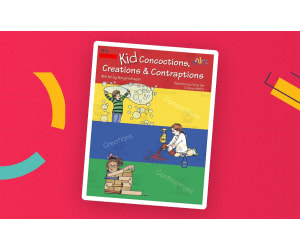
Kid Concoctions, Creations & Contraptions
Creative Arts, Art, Preschool, Grade 1, 2, 3, Activities, Crafts, Teacher Tools, Lesson Plans
Kid Concoctions, Creations & Contraptions: An immersive learning resource Kid Concoctions, Creations & Contraptions is a comprehensive and versatile teaching resource that can be integrated in diverse classroom settings or homeschooling curriculum. It is designed to promote scientific inquiry, artistic exploration, mathematics and creativity, aiming at fostering young learners' inherent curiosity and creativity. About the Collection: This activity set brings together 224 pages of engaging activities targeting students from kindergarten through grade 3. The activities span various subjects with a special focus on Art & Music as well as crafts which are instrumental in boosting practical skills like problem-solving competence and motor skill development. Tailor-Made Implementation: The nature of the content allows for broad-based adoption whether it’s whole group instruction, small group projects or individual homework assignments based on student-specific needs. Each section features clear instructions handholding both teachers and students through every activity . Extension Activities: The book also offers an array of extension activities that shore up the primary learning objectives while motivating student-led discovery. Inbuilt mechanism facilitates assessment thus enabling educators to monitor each student's progress effectively. This resource ensures balanced flexibility so educators can align it as per their unique teaching methods making it suitable for personalized education All Rounded Learning Journey Learners will traverse multiple areas from scientific experiments to craft creation cumulating into an enriching knowledge quest that keeps fueling their inventive spirit. Whether its active lessons about physics via crafts or problem-solving maths puzzles this educational treasure caters towards all learning styles. Embarking on the Learning Adventure: With Kid Concoctions, Creations & Contraptions, get ready to ignite your students' imagination and spark their creative spirit today!
Author Classroom Complete Press
Tags Crafts, Kid Crafts, Creations, Frozen Bubbles, Homemade Candle Creation
I WONDER - Did Ancient Celtic Women Take Part In Religious Ceremonies
History: Europe, History, Social Studies, History: British, History: Ancient, Grade 4, 5, 6, 7, 8, 9, 10, Lesson Plans, Teacher Tools
Video Introduction An amazing video designed for the students to learn more about history. I WONDER - Did Ancient Celtic Women Take Part In Religious Ceremonies | Animated Video Lesson Do you like history? Which topic do you really enjoy about history? Have you ever read an interesting fact about the Vikings? If yes, can you mention them? What do you like most about the Victorian era? Can you name all the Tudors? Have you ever wondered how people used to live in ancient Japan and ancient China? Do you know any interesting facts about ancient Egyptians and the Pharaohs? Have you ever visited South America? What do you know about Incas and Aztecs? Celtic culture was really one of a kind, can you name any of the places that Celts used to live in? Imagine yourself living during the ancient Roman empire, how your life will look like? Ancient Greece was an amazing place to live in. What do you know about ancient Greek life? I WONDER - Did Ancient Celtic Women Take Part In Religious Ceremonies | Animated Video Lesson The video is perfect for encouraging the researching skills for the students, while learning more about history. I WONDER - Did Ancient Celtic Women Take Part In Religious Ceremonies | Animated Video Lesson This friendly designed video is suitable for students at school, homeschooling, and as a group activity. Format Available in MP4 format.
Author Educational Voice
Tags Did Ancient Celtic Women Take Part In Religious Ceremonies, Did Ancient Celtic Women Take Part In Religious Ceremonies Video, Celtic Women, Celtic Women Video, Celtic Women Facts, Celtic Women Video For Kids

I WONDER - What Is A Virus | Animated Video Lesson
Human Body, Life Sciences, Science, Biology, STEM, Grade 3, 4, 5, 6, 7, 8, 9, Lesson Plans, Teacher Tools
Video Overview The human body is full of fascinating wonders to learn. This video is created to help the students recognize the anatomy and the job of the human body. I WONDER - What Is A Virus | Animated Video Lesson Every part and organ in our human body is vital so let's see how important they are. Have you ever imagined how we look like if we didn't have a skeleton? Did you know that because we have our amazing muscles we can stand! Do you know how many teeth do we have? Have you ever wondered about the food journey inside our body? Can you name all the glands in our body? Why do we have skin? Our nervous system is really good at sending signals. Can you tell us more about it? Are you really good at Mathematics, painting, or any other thing? You should really thank your brain about it! The famous five senses are really doing a great work? Can you explain how every sense works? I WONDER - What Is A Virus | Animated Video Lesson The video is perfect for encouraging the researching skills for the students, while learning more about our fantastic human body. I WONDER - What Is A Virus | Animated Video Lesson This friendly designed video is suitable for students at school, homeschooling, and as a group activity. Format Available in MP4 format.
Author Educational Voice
Tags What Is A Virus, What Is A Virus Video, Virus, Virus Facts, Virus Facts For Kids, Virus Video, Virus Video For Kids, Immune System, Immune System Video, Immune System Video For Kids
I WONDER - Are The Seasons The Same All Around The World
Earth Sciences, Earth and Environmental Sciences, Science, Grade 3, 4, 5, 6, 7, 8, 9, Lesson Plans, Teacher Tools
Video Introduction An amazing video designed for the students to learn more about famous phenomena in different countries. I WONDER - Are The Seasons The Same All Around The World | Animated Video Lesson Weather phenomena can affect our lives, crops and even animals! Can you name any of the weather phenomena that happened in your country? Do you know when hailstorms happen? And what is the most country who has lots of hailstorms happening per year? Do you think the all countries have four seasons? If no, can you name any? Why do some animals sleep at winter? Can you name any of these animals? I WONDER - Are The Seasons The Same All Around The World | Animated Video Lesson The video is perfect for encouraging the researching skills for the students, while learning more about this fantastic phenomenon. I WONDER - Are The Seasons The Same All Around The World | Animated Video Lesson The video is perfect for encouraging the researching skills for the students, while learning more about this fantastic phenomenon. Format Available in a PDF format.
Author Educational Voice
Rating
Tags Are The Seasons The Same All Around The World, Seasons, Seasons Facts, Seasons Facts For Kids, Seasons Video, Seasons Video For Kids, Winter, Spring, Summer, Autumn

The Sun | Interactive Science Lesson | Micro-Learning Deck
Science, Earth and Environmental Sciences, Space, Grade 6, 7, 8, 9, Teacher Tools, Lesson Plans
This micro-learning deck is the perfect accessory to your Science instruction! This digital slideshow presents The Sun, A Real Star. Within this slideshow, you will receive: -Video Lesson -Reading Passage w/ Audio -Close Reading -Quick Write The informational texts included in this resource alongside the informal assessments will keep your students engaged from beginning to end.
Author Teach Me This
Tags The Sun, Interactive, Science, Astronomy, Reading Passage

Identify Expository Writing Goals- Choose Goals, Steps, & Then Reflect
ELA, Writing, Grade 6, 7, 8, Teacher Tools, Lesson Plans
The editable 19-page, differentiated, editable lesson, Identifying Expository Writing Goals- Choose Your Goals and Steps, Then Reflect, helps students become better writers because it makes goal-setting accessible for your students. Because they are given choice in their goal selection, they will be more invested in their writing. The low-prep, standards-based, comprehensive lesson plan guides teachers and students through the process of selecting goals and action steps, followed by a pre-writing and post-writing reflection. The lesson plan is very interactive with opportunities for students to discuss. Your ELL, RSP, GATE, and General Ed students will gain confidence and be positively challenged in their writing because they have their goals as guideposts. Here's how it works: Students choose one goal from each of 6 categories- Introduction, Thesis Statement, Body Paragraphs, Evidence and Analysis, Conclusion, Organization, and Structure. Each category has two Foundational Goals (goals needed to achieve proficiency) and two Extended Goals (goals for more advanced writers). Students get to decide whether the goal they choose is Foundational or Extended based on where their skill level is. After they choose their goal for each category, they then choose one step to take to make progress on their goal. In total, they have identified six goals and steps, but that is probably too many for them to focus on in one essay. So they decide on the two or three most important goals and steps they want to focus on for their essay. The lesson includes the following: a hyperlinked Table of Contents About this Resource- a guide that orients you to everything you need to prepare for your class, including links to the 4 student handouts standards- aligned, detailed lesson plan An essential question: How can setting and reflecting on specific writing goals improve my expository essay writing skills? 6 guiding questions: Why is it important to set specific goals for my writing? How can I identify my strengths and areas for improvement in expository essay writing? What strategies can I use to achieve my writing goals? How does reflecting on my progress help me become a better writer? How can feedback from peers and teachers help me refine my writing goals and strategies? How can setting writing goals make my expository essay more engaging and effective? Objectives and learning targets The following student worksheets: Expository Essay- Choose Your Goals Expository Essay- What Steps Will You Take to Achieve Your Goal? Expository Essay- Goals and Steps- Putting Them Together Expository Essay-Goals and Writing Reflection
Author Intentional Teaching and Learning
Tags Goal-setting, Writing Goals, Expository Writing Goals, Expository Writing, Middle School, 6th-8th Grades, Action Steps, Reflection, Esssay Writing

Guided Reading Level M - The Sport of Fencing (with Lesson Plan)
ELA, Resources for Teachers, Reading Comprehension, Reading, Science, Engineering, Technology, Sports, P.E. & Health, Physical Education, Grade 2, 3, 4, Worksheets & Printables, Worksheets, Teacher Tools, Centers, Activities, Literacy Readers, Quizzes, Quizzes and Tests, Assessments, Lesson Plans
This Guided Reading Book - The Sport of Fencing (Level M) with lesson plan includes: Guided Reading Color Label (front cover x1) This is a quick way to match the book’s demands to what students can generally handle.. The overall goal is to use the level/color to pick books for several smaller groups. To qualify for a certain level, a student is expected to read a book from that level with about 90–94% accuracy. If a student is consistently accurate and understands, move up a level. If the student is struggling at that level, drop down and add more support. Each student will improve at completely different rates, but it is generally one of the best ways to check progress across the class. DOWNLOAD THE CATALOG TO VIEW ALL GUIDED READING BOOKS AVAILABLE (SORTED LEVELS A-Z) Pre-Reading Question (x1) Teacher asks the prompt aloud, can be while showing the cover or first page. Students share what they already know, or make educated guesses from the cover. Prompt them to use the target vocabulary. Write some of their responses on the board to look back at during the reading. Vocabulary Words (x5) Introduce the five words, best doing it one at a time. Start by saying it, while students repeat and then see if anyone knows what it means before reading further. Read through the meaning and try to briefly connect each word to a picture or gesture so it’s meaningful. Ask students to flip through the book pages and point to where they see each of the vocabulary words. While reading the book pause upon coming across one of the vocab words or read the sentence twice to make sure students understand the word has appeared. Optional: Ask students to raise hands whenever they see/hear one of the new words. Guided Reading Pages (x10) Check the book snapshot (below) for: primary topic - do you need to prep extra reading or intro materials on this? what is taught best - decide on 1-2 bullets to focus on, use the prompt or words provided here for best results. learning goals - what you are checking for students to be able to do after the session, elicit answers using prompts or words provided. key vocabulary (see section above). questions overview - so you know what is coming up and if you need to prep extra materials to assist understanding. Run the lesson You may have already looked at a few of the pages together, but you can show them some of the pictures again first to set meaning. Depending on how much time you have and how familiar your students are with guided reading class, you may want to read the book aloud first with the group first. Students whisper or partner read, while you listen in. If time, do it as a group, one student reading a page each. Use the guided page’s prompts to coach: “Check the picture / does it make sense?” “Point under the words / try the first sound” “Reread the sentence smoothly”. Try to focus more on one student per session (rotating every time), so you can work out if they are ready to move up or need to move down a level. Comprehension Questions (back cover x3) This is your way to check that students didn’t just say the words, but actually understood the text. First, let students answer by pointing to the page/picture and saying a short sentence. After any answer, follow with: “Show me where you found that in the text.” In bigger groups, have partners answer first (10–20 seconds), then call on 2–3 students to share. Differentiation tips: Emerging speakers/struggling readers: oral + pointing On-level: oral in a full sentence Higher: one written sentence or draw + label Book Snapshot Title: The Sport of Fencing Genre: Nonfiction (informational) Subject: Physical Education / Reading (Informational Text) Primary Topic: Fencing gear, swords, and how matches work Estimated Guided Reading Level (A–Z): M What This Book Teaches Best Basic overview of fencing as a sport, including where it takes place (a long, narrow mat called a “strip”). Safety equipment and how it protects fencers (mask, jacket, glove, cuff). Differences among the three fencing swords and how points are scored with each (foil, épée, sabre). Key fencing moves and positions used in a match (“En Garde” stance, lunge). How modern fencing tracks points and how respect is shown before and after matches. Learning Goals Students will describe what fencing looks like and where it takes place using details from the text. Students will explain how fencing safety gear protects a fencer during a match. Students will compare foil, épée, and sabre by describing how targets and scoring work. Students will identify and describe the “En Garde” stance and why it helps movement. Students will explain how a lunge helps a fencer reach an opponent to score a point. Students will describe how fencing shows respect before and after a match. Key Vocabulary From the Text strip — the long, narrow mat where fencers move. foil — a light, flexible sword used in fencing. épée — the heaviest fencing sword with the whole body as target. sabre — a fast sword that can score with tip or edge. lunge — a move stepping forward to reach an opponent. Discussion Prompts Pre-reading question: What safety gear do you think someone would need to fence safely? Comprehension questions: Why do fencers wear a fencing mask? In a foil match, what part of the opponent is the target for scoring points? What do fencers do before and after a match to show respect? Printing Tips 1. Best Printing Method (Recommended) “Booklet” Printing (Best if Available) If your printer or PDF viewer supports Booklet Printing , use this. Settings to use: Print mode: Booklet Paper size: Letter or A4 (either works) Orientation: Landscape Print on both sides: Yes Flip on: Short edge Scaling: Fit to printable area Booklet subset: First test: Front sides only Then: Back sides only This will automatically: Pair pages correctly Put the cover on the outside Align everything for folding After printing, fold in half and staple along the spine . 2. If “Booklet” Printing Is NOT Available You can still print this correctly with manual duplex printing . Step-by-step: Open the PDF. Choose Print . Set: Orientation: Landscape Pages per sheet: 1 Print on both sides: Yes Flip on: Short edge Print all pages . Because each PDF page already contains two facing book pages, the result will still fold cleanly into a book. Thousands of Cored Education products are included with your TeachSimple membership. Download links and encyclopedia index available here.
Author Cored Education
Rating
Tags Reading Comprehension, Reading Passages, Reading, Guided Reading, Guided Reading Lesson Plan, Guided Reading Activity, Pre-reading, Health Lesson Plans, P.e., Sports
Animals: Classification & Adaptation Gr. 4-6
Science, Life Sciences, Animals, Grade 4, 5, Teacher Tools, Lesson Plans
Animals: Classification & Adaptation Gr. 4-6 A comprehensive teaching resource designed to spark students' interest in the animal kingdom. It is tailored for grades 4-6, aligning seamlessly with science curriculum objectives. Zoology and Interdisciplinary Exploration: The resource kicks off with an enlightening journey through twenty-six key scientific terms that frame our understanding of animals. With this foundation laid, students then venture towards uncovering fundamental aspects of the core vertebrate families - fish, amphibians, reptiles, birds and mammals. Animal Adaptations: Learners submerge themselves into engrossing studies on animal adaptations - investigating how creatures develop distinctive traits to survive in their specific habitats. Striking examples underpin these lessons and impress upon students the nuanced intricacy of nature's blueprint. Independent Projects: In the unit's finale, scholars apply their newly-acquired knowledge by initiating self-guided projects where they author reports on a chosen animal species - an exercise that enhances research capabilities as well as critical thinking skills all while solidifying central scientific theories discussed in class. Engaging Activities: Comprises engaging tasks fashioned to cement learned concepts and lexicons like crosswords puzzles and word searches; merging fun into education without sacrificing intellectual rigour. Multisensory Learning Tools: Incorporates coloring book pages which add on another layer of engagement encompassing multiple senses making each session immersive be it implemented across whole group instructions or tailored for small groups or homework assignments – versatility being its selling point. Inclusive Pedagogical Approach: Uses an inclusive pedagogical strategy providing answer keys for constant reinforcement. It's a beneficial tool for public school educators seeking to enhance their curriculum or homeschooling parents searching for a structured science educational instrument. Note: The product comes in a PDF format, making it easily accessible across an array of digital devices.
Author Classroom Complete Press
Tags PDF

I WONDER - Do Fish Have Eyelids | Animated Video Lesson
STEM, Biology, Life Sciences, Science, Animals, Grade 1, 2, 3, 4, 5, 6, 7, 8, Lesson Plans, Teacher Tools
Video Introduction Animal kingdoms are full of fascinating wonders to learn. This video is designed for the students to learn more about animals in different countries. I WONDER - Do Fish Have Eyelids | Animated Video Lesson Do you like animals? what is your favorite one? Do you own a pet? If yes, tell us more about it, like what its name? And what do you like most about it? What are the animal kingdoms? Can you write down the characteristics of each animal class like mammals, birds, reptiles, amphibian, fish and mollusks. Do you know that some animals can sing, can you name any of them? What is the largest and the smallest mammal in the world? What is the largest and the smallest bird in the world? What is the largest and the smallest fish in the world? I WONDER - Do Fish Have Eyelids | Animated Video Lesson The video is perfect for encouraging the researching skills for the students, while learning more about these fantastic animals. I WONDER - Do Fish Have Eyelids | Animated Video Lesson This friendly designed video is suitable for students at school, homeschooling, and as a group activity. Format Available in MP4 format.
Author Educational Voice
Tags Do Fish Have Eyelids, Do Fish Have Eyelids Video, Fish Eyelids, Fish Eyelids Facts, Fish Eyelids Facts For Kids, Fish Eyelids Video, Fish Eyelids Video For Kids, Fish, Fish Facts, Fish Video
Independent Living: Community Resources Gr. 9-12+
Special Resources, Life Skills, Grade 9, 10, 11, 12, Teacher Tools, Lesson Plans
Independent Living: Community Resources Gr. 9-12+ An exceptional teaching resource for public school educators as well as homeschooling facilitators, delivered as part of the comprehensive "Practical Life Skills - Independent Living" lesson plan. Primarily designed for learners in grades 9 to 12. Objectives To provide students with vital independent living skills. To compare the relative financial requirements of renting versus buying a home. To familiarize students with costs associated with living alone. Transportation and Emergency Preparedness The resource also guidance on how to navigate bus routes and emergency preparedness, guiding students towards developing an efficient fire escape plan. Community Resources & Sustainable Living: The module introduces learners to sustainable practices showing how energy conservation can lead to significant savings. Injury Help: It focuses on essential community resources indicating who should be contacted after an injury. Main features: Crossword puzzles for fun learning Word searches stimulating cognitive abilities A comprehension quiz tailored according every State Standard guidelines paralleling Bloom's Taxonomy principles This program is ideal for large groups, small collaborative groups or even assigned as solo homework tasks. The product file is conveniently compiled into a single PDF file. The goal? A teacher's guide nurturing well-rounded adults,. Independent Living: Community Resources Gr. 9-12+ leads the pack in this practical education pursuit.
Author Classroom Complete Press
Tags PDF
Poetry Unit
ELA, Literature, Poetry, Grade 3, 4, 5, Lesson Plans, Teacher Tools
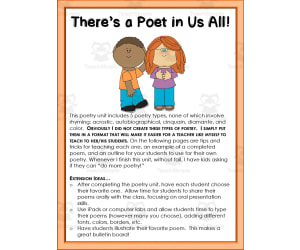
Have you ever told your class you were going to embark on a poetry unit only to be met with groans and sentiments like, "I haaate poetry!" Me too. A lot of kids think of poetry as tedious rhyming, which can be overwhelming to young learners. This packet will open your students' eyes to some different kinds of poetry; poetry that does not rhyme, but is still poetic in its own way. This poetry unit includes 5 poetry types, none of which involve rhyming: - Acrostic - Autobiographical - Cinquain - Diamante - Color I did not create these types of poetry. I simply put them in a format that will make it easier for a teacher like me to teach to her/his students. On the following pages are tips and tricks for teaching each one. You will also find an example of a completed poem for each type of poetry, and an outline for your students to use for their own poetry. Whenever I finish this unit, without fail, I have kids asking if they can “do more poetry!” EXTENSION IDEAS… o After completing the poetry unit, have each student choose their favorite one. Allow time for students to share their poems orally with the class, focusing on oral presentation skills. o Use iPads or computer labs and allow students time to type their poems (however many you choose), adding different fonts, colors, borders, etc. They are always excited to have them printed out so they can show them off! o Have students illustrate their favorite poem. This makes a great bulletin board! I hope you enjoy! You can find more resources at my storefront here: https://teachsimple.com/contributor/at-the-core Here are other similar resources for you to enjoy: https://teachsimple.com/product/leprechaun-lous-mathematical-adventure https://teachsimple.com/product/decomposing-areas-reversed-worksheet https://teachsimple.com/product/narrative-writing-workshop https://teachsimple.com/product/heat-and-light-investigation https://teachsimple.com/product/animal-report-packet https://teachsimple.com/product/brain-burners-word-problems-packet
Author At the Core
Tags Poetry Unit, Reading, At The Core, Literature Circles, Poem Illustrations, Acrostic Poems, Autobiographical Poem, Cinquain Poem, Diamante Poem

I WONDER - Who Was Florence Nightingale | Animated Video Lesson
Biographies, Social Studies, Grade 4, 5, 6, 7, 8, 9, 10, Lesson Plans, Teacher Tools
Video Introduction An amazing video designed for the students to learn more about famous people in different countries. I WONDER - Who Was Florence Nightingale | Animated Video Lesson Do you know this person? How much do you know about him/her? Who is your idol? Why did you choose this person? Tell us more about him/her? Who is your favorite athlete? Or what is your favorite team? Have you recently heard a story about a famous person? Who was this person? Can you tell us more about him/her. Who is your favorite president, king, or queen? Why you chose that person? In your country, who are the most famous people? What did they do? Can you tell us more about them. What is your favorite invention? Who invented it? Who is your favorite artist? What is the most famous thing he/she have done? What is the most enjoyable you have read before? Who wrote it? I WONDER - Who Was Florence Nightingale | Animated Video Lesson The video is perfect for encouraging the researching skills for the students, while learning more about this fantastic place. I WONDER - Who Was Florence Nightingale | Animated Video Lesson This friendly designed video is suitable for students at school, homeschooling, and as a group activity. Format Available in MP4 format.
Author Educational Voice
Rating
Tags Who Was Florence Nightingale, Who Was Florence Nightingale Video, Florence Nightingale, Florence Nightingale Facts, Florence Nightingale Video, Florence Nightingale Video For Kids, Florence Nightingale Facts For Kids

I WONDER - What Features Does A Victorian House Have | Animated Video
Geography, Social Studies, Grade 3, 4, 5, 6, 7, 8, 9, Lesson Plans, Teacher Tools
Video Introduction An amazing video designed for the students to learn more about famous places in different countries. I WONDER - What Features Does A Victorian House Have | Animated Video Lesson What do you know about this place? Do you know in which part of the world it is? Have you ever visited this place? If yes, can you tell us more about your adventure, and what do you like the most about this place? Do you like reading about Geography? What is your favorite country in the whole world? If you are going on a trip where it will be? Which country? What you are going to see there? Does this country has a famous place to visit? I WONDER - What Features Does A Victorian House Have | Animated Video Lesson The activity is perfect for encouraging the researching skills for the students, while learning more about this fantastic place. I WONDER - What Features Does A Victorian House Have | Animated Video Lesson This friendly designed video is suitable for students at school, homeschooling, and as a group activity. Format Available in MP4 format.
Author Educational Voice
Tags What Features Does A Victorian House Have, What Features Does A Victorian House Have Video, Victorian House, Victorian House Facts, Victorian House Facts For Kids, Victorian House Video, Victorian House Video For Kids

Unit Fractions Activity - Bingo Game - Fraction Symbols - Boards 11-15
Math, Fractions, Grade 2, 3, 4, Lesson Plans, Teacher Tools
Unit Fractions Bingo engages students in identifying and matching unit fractions represented as fraction circles, squares, strips, and symbols. This math game includes 5 colorful bingo boards to print and laminate. Also included are calling cards to display and 4 sets of playing pieces students can use to cover called squares. To play, shuffle the calling cards. Draw one and call out the fraction. Students search their boards for a match to cover. The first to cover 3 squares in a row wins! Use this versatile game for whole group instruction, small group math stations, or at-home practice. With multiple calling card formats, durable game materials, and endless game variation possibilities, Unit Fractions Bingo makes learning fractions fun! Check out more fraction games and math resources from this trusted teacher-author in the TeachSimple Marketplace.
Author Colleen's Cosmic Collection
Tags Unit Fractions, Math Games, Fraction Games, Fraction Activities, Common Fractions, Math Activities, Unit Fraction Games, Math Bingo, Fractions Bingo, Cccfbus