



3,951 products added recently
Page 51 - Popular Lesson Plans
Explore a curated selection of popular lesson plans that have proven successful in classrooms. Covering various subjects and topics, these resources provide innovative ideas and activities. Use them to refresh your curriculum and engage your students with tried-and-true methods.

 Show filters

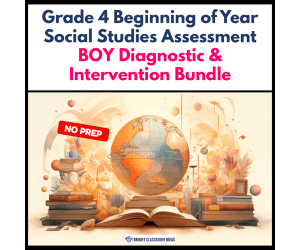
Grade 4 Beginning of Year Social Studies Assessment Diagnostic
Social Studies, Grade 4, Assessments, Teacher Tools, Lesson Plans, Worksheets & Printables
Start the year with confidence using this 4th Grade Beginning of Year Social Studies Assessment and complete targeted intervention system! This comprehensive Grade 4 Social Studies Diagnostic goes far beyond a simple pretest by helping you assess student understanding, identify skill gaps, create flexible small groups, assign targeted practice, provide enrichment, and monitor growth—all with one easy-to-use, no-prep resource. Designed as a complete Assess → Identify → Group → Practice → Reassess system, this resource includes a 44-question diagnostic assessment , skill analysis tools, 26 targeted follow-up practice pages , enrichment activities, and complete answer keys so you can immediately turn assessment data into effective instruction. What's Included This 4th Grade Beginning of Year Social Studies Assessment Bundle includes: ✅ Teacher Guide & Implementation Overview ✅ 44-question Beginning-of-Year Social Studies Diagnostic ✅ Printable Student Answer Sheet ✅ Skill Analysis & Grouping Tools ✅ Item-to-Skill Mapping Guide ✅ Class Skill Grid ✅ Individual Student Profiles ✅ Grouping Planner ✅ Reassessment Tracker ✅ 26 Targeted Follow-Up Practice Worksheets ✅ Extension Activities ✅ Choice Board for enrichment ✅ Complete Answer Key ✅ Scoring Guide ✅ Claim-Evidence-Reasoning (CER) Rubric ✅ Printable PDF format ✅ No-prep, print-and-go resource Students are assessed across five major social studies strands : 🌎 Map & Spatial Skills Map reading & keys Cardinal & intermediate directions Latitude & longitude Scale & distance Physical vs. political maps Regions 📜 Time & Chronology Timeline reading Chronological order BCE & CE Centuries & decades Migration & movement 📰 Sources & Historical Reasoning Primary vs. secondary sources Fact vs. opinion Cause & effect Compare & contrast Point of view Bias & source reliability 🏛 Civics & Economics Three branches of government Rights & responsibilities Citizenship Scarcity & choice Supply & demand 📊 Data & Argument Reading charts & tables Population data Evidence-based inference Claim-Evidence-Reasoning (CER) The Teacher Guide explains that the complete bundle contains approximately 93 printable pages across seven coordinated resources , all using the same skill codes so every component works together seamlessly. How It Works in the Classroom This 4th Grade Social Studies Beginning of Year Assessment follows a simple five-step instructional cycle that transforms assessment data into meaningful instruction. Step 1 — Assess Students complete the 44-question diagnostic using the separate Student Answer Sheet. Step 2 — Identify Skill Gaps Score assessments with the Answer Key and record results using the Class Skill Grid. Step 3 — Group Students Use the Grouping Planner to build flexible intervention groups based on shared skill needs. Step 4 — Assign Targeted Practice Assign only the follow-up practice pages that match each student's assessment results. Step 5 — Reassess Monitor student growth using the Reassessment Tracker and regroup as needed. The Teacher Guide recommends administering the assessment during the first week of school in approximately 50 minutes , or dividing it into five shorter sessions by skill area. Questions may be read aloud because the assessment is designed to measure social studies knowledge—not reading speed. Perfect for: Beginning of Year Assessment Social Studies Pretest Back to School Activities Diagnostic Assessment RTI MTSS Intervention Small Groups Progress Monitoring Data Meetings Flexible Grouping Review Before State Testing Standards & Learning Goals This 4th Grade Social Studies Diagnostic Assessment reviews the foundational knowledge students should demonstrate at the beginning of fourth grade. Students demonstrate understanding of: Map & Spatial Skills Reading maps Map keys & legends Cardinal directions Intermediate directions Latitude Longitude Scale Measuring distance Physical maps Political maps Regions Time & Chronology Timeline reading Chronological order BCE & CE Centuries Decades Migration Historical movement Sources & Historical Reasoning Primary sources Secondary sources Fact vs. opinion Cause & effect Compare & contrast Point of view Bias Source reliability Civics & Economics Legislative branch Executive branch Judicial branch Rights Responsibilities Citizenship Scarcity Supply & demand Economic choices Data & Argument Reading charts Reading tables Population data Evidence-based conclusions CER writing Students demonstrate understanding through a variety of engaging formats including: Multiple-choice questions Political maps Physical maps Coordinate maps Timelines Historical scenarios Tables Population graphs Written Claim-Evidence-Reasoning response The diagnostic measures 26 beginning-of-year skills across five content areas, and every assessment item is linked directly to a matching practice page through the Skill Analysis Tools. Why Teachers Love It ✨ More than a beginning-of-year test—it is a complete instructional system. ✨ Saves 10+ hours of planning by combining assessment, data analysis, intervention, enrichment, and reassessment into one coordinated resource. ✨ Every assessment question aligns directly to one specific social studies skill. ✨ Easily identify exactly what students know and where additional instruction is needed. ✨ Create flexible intervention groups using built-in planning tools. ✨ Includes 26 targeted follow-up practice worksheets , each beginning with a student-friendly "Remember" mini lesson followed by fresh practice questions that do not repeat the assessment. ✨ Differentiate instruction with ease. Students who need additional support receive targeted reteaching while students demonstrating mastery complete engaging enrichment challenges and a choice board. ✨ Extension Activities encourage higher-level thinking through projects such as: Designing an original region Creating BCE & CE timelines Identifying primary and secondary sources Exploring the three branches of government Running a supply-and-demand market challenge Using latitude and longitude to locate places Reading graphs and defending claims with evidence These enrichment activities emphasize creativity, reasoning, and authentic application rather than repetitive practice. ✨ Skill Analysis Tools simplify instructional planning. Teachers receive: Item-to-Skill Map Class Skill Grid Student Profiles Grouping Planner Reassessment Tracker Every diagnostic question is connected directly to a matching follow-up worksheet, making it easy to assign only the practice each student needs. ✨ Includes complete scoring guidance. The Answer Key provides: Correct answers Skill codes Answer explanations Skill mastery bands CER scoring rubric Teachers can quickly determine whether students are Approaching , On Track , or Strong in each skill area and immediately plan targeted instruction. ✨ Supports meaningful data-driven instruction while remaining easy to administer and simple to score. Start your school year with meaningful assessment data and a clear instructional plan using this 4th Grade Beginning of Year Social Studies Assessment . Whether you're looking for a 4th Grade Social Studies Diagnostic , Beginning of Year Pretest , Back to School Assessment , RTI Intervention Resource , Social Studies Skill Review , Progress Monitoring Tool , Small Group Instruction Resource , or a complete assessment-to-intervention system, this bundle gives you everything you need to assess, analyze, group, reteach, enrich, and monitor student growth throughout the year.
Author Bright Classroom Ideas Marketplace
Rating
Tags Social Studies, Back To School, Diagnostic, Assessment
I WONDER - What Are Vertebrae | Animated Video Lesson
Human Body, Life Sciences, Science, Biology, STEM, Grade 3, 4, 5, 6, 7, 8, 9, Lesson Plans, Teacher Tools
Video Overview The human body is full of fascinating wonders to learn. This video is created to help the students recognize the anatomy and the job of the human body. I WONDER - What Are Vertebrae | Animated Video Lesson Every part and organ in our human body is vital so let's see how important they are. Have you ever imagined how we look like if we didn't have a skeleton? Did you know that because we have our amazing muscles we can stand! Do you know how many teeth do we have? Have you ever wondered about the food journey inside our body? Can you name all the glands in our body? Why do we have skin? Our nervous system is really good at sending signals. Can you tell us more about it? Are you really good at Mathematics, painting, or any other thing? You should really thank your brain about it! The famous five senses are really doing a great work? Can you explain how every sense works? I WONDER - What Are Vertebrae | Animated Video Lesson The video is perfect for encouraging the researching skills for the students, while learning more about our fantastic human body. I WONDER - What Are Vertebrae | Animated Video Lesson This friendly designed video is suitable for students at school, homeschooling, and as a group activity. Format Available in MP4 format.
Author Educational Voice
Tags What Are Vertebrae, What Are Vertebrae Video, Vertebrae, Vertebrae Facts, Vertebrae Facts For Kids, Vertebrae Video, Vertebrae Video For Kids, Skeleton, Skeleton Facts, Skeleton Facts For Kids

Data Analysis & Probability: Circle Graphs - Learn the Skill - MAC Software
Math, Graphing, Common Core, Kindergarten, Preschool, Grade 1, 2, Teacher Tools, Lesson Plans
Data Analysis & Probability: Circle Graphs - Learn the Skill - MAC Software This educational software focuses on a key aspect of data analysis and probability—circle graphs. Designed with preschool, kindergarten, and grades 1 and 2 students in mind, it makes understanding these types of graphs simple through real-life word problems. The resource not only speeds up students' understanding of circle graphs but also includes English and Spanish voiceovers for broad accessibility. Moreover, in-built math tools provide efficiency in navigating these educational problems. Standards: The content aligns with both the Common Core State Standards and NCTM standards. STEM Initiatives: The lessons strongly support STEM initiatives integrating technology into mathematics learning processes. Versatility: The resource complements various teaching styles, whole group activities or small group work for personalized attention. It can be used beyond classroom settings as well—it works effectively when assigned as homework too. This tool comes supplied as a zip file designed specifically for Mac systems to maximize ease-of-use—you can access it instantly regardless of an internet connection enhancing effectiveness during active teaching periods. Educational Benefit Incorporating Data Analysis & Probability: Circle Graphs - Learn the Skill into your curriculum provides engaged learning experiences along with essential mathematical skills that are crucial to academic progress— all thanks to a thorough yet brief chapter mini expertly crafted for easy integration irrespective if you're implementing traditional public school instruction methods or home schooling agendas tailored to your needs.
Author Classroom Complete Press
Tags Math Lesson, Graphing Lesson, Data, Probability, Digital Math

Pirates: Peg Legs, Pistols & Parrots Gr. 1-2
ELA, Reading, Grade 1, 2, Teacher Tools, Lesson Plans
Pirates: Peg Legs, Pistols & Parrots Gr. 1-2 A vibrant educational resource designed to engage Grade 1 and Grade 2 students with pirate-themed activities, delivering language arts skills in a captivating manner. For Teachers: The detailed lesson plans provide a ready-to-use structure for presenting lessons. Included elements are reproducible, easy-to-duplicate student booklet and parent pages ensuring learning continuity at both school and home. Teaching Formats: The unit features exercises ripe for various teaching formats such as: Whole group sessions Small group discussions Homework assignments! Linguistic Exercises: Rhyming challenges engage linguistic creativity among pupils resulting in enhanced language fluency. Vocabulary expansion exercises with the aid of individual word cards provided within the pack. Synonyms and compound words exercises effective for independent work or partner play. Honing Writing Skills Through Alphabetical Order Listing Techniques : An exciting section of this comprehensive package is its pirate fact cards which fuel curiosity making learning an enjoyable experience. The units also include Pirate Trivia Games that beautifully merges academics with fun making Pirates: Peg Legs, Pistols & Parrots Gr. 1-2 a valuable asset for modern classrooms shaping tomorrow's literate leaders. To summarise- This PDF resourced academic unit strikes the perfect balance between language lessons while providing pupils with exciting adventures. A comprehensive, easy-to-use educational tool that enhances the classroom experience through interactive learning.
Author Classroom Complete Press
Tags PDF
I WONDER - Can Frost Damage Plants | Animated Video Lesson
Earth Sciences, Earth and Environmental Sciences, Science, Nature & Plants, Life Sciences, Grade 4, 5, 6, 7, 8, 9, 10, Lesson Plans, Teacher Tools
Video Introduction An amazing video designed for the students to learn more about famous phenomena in different countries. I WONDER - Can Frost Damage Plants | Animated Video Lesson What do you know about this phenomenon? Where it happens? When it happens? What are the safety measures that we should take to be safe during this phenomenon? Are there any other places in the world that experienced this phenomenon? If yes, tell us more about them. Why do you think it happens? Do you like reading about Geography? What is your favorite country in the whole world? I WONDER - Can Frost Damage Plants | Animated Video Lesson The video is perfect for encouraging the researching skills for the students, while learning more about this fantastic phenomenon. I WONDER - Can Frost Damage Plants | Animated Video Lesson The video is perfect for encouraging the researching skills for the students, while learning more about this fantastic phenomenon. Format Available in a PDF format.
Author Educational Voice
Rating
Tags Can Frost Damage Plants, Can Frost Damage Plants Video, Frost, Frost Facts, Frost Video, Frost Video For Kids, Frost Facts For Kids, Frosting, Plants, Plants Video

I WONDER - How Did Rome Get Its Name | Animated Video
History: Ancient, History, Social Studies, History: Europe, Grade 4, 5, 6, 7, 8, 9, 10, Lesson Plans, Teacher Tools
Video Introduction An amazing video designed for the students to learn more about history. I WONDER - How Did Rome Get Its Name | Animated Video Lesson Let's use our time machine and trave though time till we get to the ancient world where life began! Have you ever thought about how did ancient Greeks, Romans, Egyptians and even the Viking and Celts use to shower? And how did these amazing civilizations build iconic buildings and invented things that we still use till today like toothpaste? Do you know who was the first king and queen in the world? Which countries they ruled? Who is the most fascinating person lived on Earth? Tell us more about him/her. I WONDER - How Did Rome Get Its Name | Animated Video Lesson The video is perfect for encouraging the researching skills for the students, while learning more about history. I WONDER - How Did Rome Get Its Name | Animated Video Lesson This friendly designed video is suitable for students at school, homeschooling, and as a group activity. Format Available in MP4 format.
Author Educational Voice
Rating
Tags How Did Rome Get Its Name, Rome, Facts About Rome, Facts About Ancient Rome, Ancient Rome, Ancient Rome Facts, Ancient Rome Video, Ancient Rome Video For Kids, Ancient Rome Facts For Kids
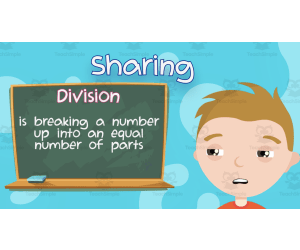
All About Division | Animated Math Video Lesson
Math, Multiplication and Division, Multiplication, Grade 3, 4, 5, Lesson Plans, Teacher Tools
All About Division | Animated Math Video Lesson Get ready for an exciting exploration into the mathematical world of division with this animated video lesson. An engaging teaching tool, empowering students with fundamental math concepts in a playful yet logical manner. Our 9-minute educational voyage actively involves learners in: Grasping critical mathematical terms. Dividing large numbers. Applying lessons across different contexts and scenarios. Catering to Grade 3 to Grade 5 learners, the resource can be applied effortlessly across diverse settings: In school during regular class hours, for both whole groups or small crews. After school as a supplementary material. At home as a meaningful assignment reinforcing understanding. The video not only serves as an introduction to instil curiosity among recent learners about division but also acts as a review aid, allowing older students to reinforce their knowledge base - providing value inside classrooms and beyond! .
Author Educational Voice
Tags Division, Math Video, Animated Lesson, Interactive Learning, Mathematical Terminology

I WONDER - How Does Soil Erosion Affects Soil | Animated Video Lesson
Environmental Science, Earth and Environmental Sciences, Science, Earth Sciences, Grade 3, 4, 5, 6, 7, 8, 9, Lesson Plans, Teacher Tools
Video Introduction An amazing video designed for the students to learn more about STEM. I WONDER - How Does Soil Erosion Affects Soil | Animated Video Lesson Our environment is so precious, can you name different ways to help our environment to be clean? Have you ever recycled a material? If yes, tell us what was the material was it paper, plastic, glass or aluminum? How did you recycled it? What are the types of clean energy? How do hydro power works? Where can we find wind turbines? What is climate change? And what we can do to stop it? What are the different types of ecosystems? I WONDER - How Does Soil Erosion Affects Soil | Animated Video Lesson The video is perfect for encouraging the researching skills for the students, while learning more about this fantastic topic. I WONDER - How Does Soil Erosion Affects Soil | Animated Video Lesson This friendly designed video is suitable for students at school, homeschooling, and as a group activity. Format Available in MP4 format.
Author Educational Voice
Rating
Tags How Does Soil Erosion Affects Soil, Soil Erosion, Soil Erosion Facts, Soil Erosion Video, Soil Erosion Video For Kids, Soil Erosion Facts For Kids, Soil, Soil Facts, Soil Facts For Kids, Soil Video

Ocean Animal Research Writing Project on the SHELLFISH for K-2nd Grade
Life Studies, ELA, Writing, Creative Writing, Reading, Science, Life Sciences, Animals, Research, Preschool, Grade 1, 2, Lesson Plans, Teacher Tools, Coloring Pages, Worksheets, Worksheets & Printables, Writing Prompts
Animal Research Writing Project on Shellfish for K-2nd Grade. Students will learn about shellfish through reading, writing, coloring, and drawing activities in this 19-page packet. After examining photos of real shellfish, students will read factual information presented in a color-coded key for easy comprehension. Next, they will color their own shellfish drawings and create habitat scenes. Two differentiated writing organizers help students take notes and sort information. The writing portion includes leveled writing pages so students of all abilities can succeed composing paragraphs on shellfish. A self-checking writing page assists developing writers. This engaging project promotes creativity, reading, writing, and science skills. Use it for whole-group, small-group, independent, or homework assignments. Click the author links above for other animal research units spanning land and sea creatures. Here are even more informational resources on report writing for OCEAN ANIMALS. Click on the links below: Animal Research Writing Project on WHALES for K-2nd Grade Animal Research Writing Project on the OCTOPUS for K-2nd Grade Animal Research Writing Project on SEA TURTLES for K-2nd Grade Animal Research Writing Project on ORCAS for K-2nd Grade Animal Research Writing Project on the SHELLFISH for K-2nd Grade Animal Research Writing Project on DOLPHINS for K-2nd Grade Animal Research Writing Project on SEALS for K-2nd Grade Want to teach your students all about Zoo Animals? Check out all these interesting facts about these favorite zoo animals. With the same great photos, facts, habitat drawings, and more. It is a great way to help students to get interested in writing. For Zoo Animal reports, click on the following links below: Animal Research Writing Project on TIGERS for K-2nd Grade Animal Research Writing Project on MONKEYS for K-2nd Grade Animal Research Writing Project on PANDAS for K-2nd Grade Animal Research Writing Project on HIPPOS for K-2nd Grade Animal Research Writing Project on ELEPHANTS for K-2nd Grade Animal Research Writing Project on GIRAFFES for K-2nd Grade
Author K-5 Treasures
Tags Informational Writing, Writing Report, 1st Grade Writing, 2nd Grade Writing, Ocean Animals, Ocean Animal Research, Shellfish, Report On Shellfish, Report On Lobsters, Report On Crabs

I WONDER - How Does The Spine Help Us Move | Animated Video Lesson
Human Body, Life Sciences, Science, Biology, STEM, Grade 3, 4, 5, 6, 7, 8, 9, Lesson Plans, Teacher Tools
Video Overview The human body is full of fascinating wonders to learn. This video is created to help the students recognize the anatomy and the job of the human body. I WONDER - How Does The Spine Help Us Move | Animated Video Lesson Every part and organ in our human body is vital so let's see how important they are. Have you ever imagined how we look like if we didn't have a skeleton? Did you know that because we have our amazing muscles we can stand! Do you know how many teeth do we have? Have you ever wondered about the food journey inside our body? Can you name all the glands in our body? Why do we have skin? Our nervous system is really good at sending signals. Can you tell us more about it? Are you really good at Mathematics, painting, or any other thing? You should really thank your brain about it! The famous five senses are really doing a great work? Can you explain how every sense works? I WONDER - How Does The Spine Help Us Move | Animated Video Lesson The video is perfect for encouraging the researching skills for the students, while learning more about our fantastic human body. I WONDER - How Does The Spine Help Us Move | Animated Video Lesson This friendly designed video is suitable for students at school, homeschooling, and as a group activity. Format Available in MP4 format.
Author Educational Voice
Tags How Does The Spine Help Us Move, How Does The Spine Help Us Move Video, The Spine, The Spine Facts, The Spine Facts For Kids, The Spine Video, The Spine Video For Kids, Skeleton, Skeleton Facts

Let's Chat Conversation Cards | "I Have The Power To Heal"
Special Resources, Social Emotional Learning (SEL), Kindergarten, Preschool, Grade 1, 2, 3, Teacher Tools, Lesson Plans
Let's Chat Conversation Cards: "I Have The Power To Heal" The Let’s Chat Conversation Cards are a fantastic tool to foster positive mindsets in students. They are part of a broader program that encourages compassion, perseverance, respect, responsibility and achievement. The cards facilitate meaningful conversations where students can gain new perspectives and strengthen bonds. This specific set focuses on the theme "I Have The Power To Heal." It includes 57 conversation starter cards to spark dialogue. Usage ideas: whole class discussions, small group activities, pair shares, individual journaling prompts. Implement during morning meetings, advisory periods, counseling sessions or language arts. Cards are just one component of the comprehensive Respectful Ways curriculum which aligns with PBIS and MTSS frameworks. According to data shared by Meridian Middle School, students utilizing Respectful Ways showed a 12% increase in GPAs, a 37% boost in attendance and 93% fewer referrals. The program's trauma-informed model assesses school climate needs then delivers targeted SEL intervention through blended learning. Custom on-site workshops are also available. To learn more, contact Pam@RespectfulWays.com or 404-955-8882.
Author Respectful Ways
Tags Conversation Cards, Spanish, Respectful Ways, Power To Heal, Grief, Perseverance, Social Emotional Learning, SEL, Trauma-informed, Let's Chat

I WONDER - What Makes The Megalosaurus's Name Unique | Animated Video
Animals, Life Sciences, Science, History: Ancient, History, Social Studies, History: World, Grade 4, 5, 6, 7, 8, 9, 10, Lesson Plans, Teacher Tools
Video Introduction An amazing video designed for the students to learn more about dinosaurs in different countries. I WONDER - What Makes The Megalosaurus's Name Unique | Animated Video Lesson Do you like dinosaurs? what is your favorite one? Do you own a pet? If yes, tell us more about it, like what its name? And what do you like most about it? Do you think that your pet has been evolved from a dinosaur? Can you write down the characteristics of your favourite dinosaur like it's shape, their rivals, where did it use to live and what was their favourite food? What is the largest and the smallest dinosaur that ever found? Why is the T-rex is so famous? Have you ever read any interesting facts about it? Can you name any of the carnivores or herbivores dinosaurs? I WONDER - What Makes The Megalosaurus's Name Unique | Animated Video Lesson The video is perfect for encouraging the researching skills for the students, while learning more about dinosaurs. I WONDER - What Makes The Megalosaurus's Name Unique | Animated Video Lesson This friendly designed video is suitable for students at school, homeschooling, and as a group activity. Format Available in MP4 format.
Author Educational Voice
Rating
Tags What Makes The Megalosaurus's Name Unique, What Makes The Megalosaurus's Name Unique Video, Megalosaurus's Name, Megalosaurus's Name Facts, Megalosaurus's Name Video, Megalosaurus's Name Video For Kids

I WONDER - How Does The Brain Control Breathing | Animated Video
Human Body, Life Sciences, Science, Biology, STEM, Grade 3, 4, 5, 6, 7, 8, 9, Lesson Plans, Teacher Tools
Video Overview The human body is full of fascinating wonders to learn. This video is created to help the students recognize the anatomy and the job of the human body. I WONDER - How Does The Brain Control Breathing | Animated Video Lesson Every part and organ in our human body is vital so let's see how important they are. Have you ever imagined how we look like if we didn't have a skeleton? Did you know that because we have our amazing muscles we can stand! Do you know how many teeth do we have? Have you ever wondered about the food journey inside our body? Can you name all the glands in our body? Why do we have skin? Our nervous system is really good at sending signals. Can you tell us more about it? Are you really good at Mathematics, painting, or any other thing? You should really thank your brain about it! The famous five senses are really doing a great work? Can you explain how every sense works? I WONDER - How Does The Brain Control Breathing | Animated Video Lesson The video is perfect for encouraging the researching skills for the students, while learning more about our fantastic human body. I WONDER - How Does The Brain Control Breathing | Animated Video Lesson This friendly designed video is suitable for students at school, homeschooling, and as a group activity. Format Available in MP4 format.
Author Educational Voice
Tags How Does The Brain Control Breathing, How Does The Brain Control Breathing Video, Breathing, Breathing Facts, Breathing Facts For Kids, Breathing Video, Breathing Video For Kids, Brain, Brain Facts
Cells: Plant and Animal Cells
Science, Life Sciences, Biology, Grade 5, 6, 7, 8, Teacher Tools, Lesson Plans
Cells: Plant and Animal Cells Educational Resource Cells: Plant and Animal Cells is a comprehensive educational resource ideal for grade 5 through 8 science educators. This resource simplifies the intricacies of cell biology, focusing on cells as life's fundamental building blocks. The product zeroes in on plant and animal cells, with its language going easy on students within said grades, enabling them understand complex concepts like cellular structures and their respective roles. A distinctive feature of this resource breaks down understanding human cell reproduction—a generally challenging topic for young learners. Diversity in Learning Engineered with academic diversity in mind, Cells: Plant and Animal Cells, includes reading passages specifically tailored with simple vocabulary fit for remedial students ensuring all students within varying comprehension levels are catered to. This product boasts rich applications—impressive not only for classroom discussions but also for smaller group discourses or independent study projects. Presents educators an opportunity to implement various teaching strategies including peer-to-peer learning fostering greater classroom engagement. The mini-posters provided enrich visual learning effectively nurturing an interactive environment favorable across diverse learner types present in typical classrooms. Educational Standards Alignment The module seamlessly aligns with the Common Core Standards complying with national curriculum requirements preferred by public educators while simultaneously incorporating Bloom's Taxonomy elements to foster higher-order thinking skills among learners—all desired by home schoolers aiming at high-standard education at home. Its content is coherent with current STEM initiatives nudging your teaching objectives towards nurturing future leaders in Science, Technology, Engineering Mathematics endeavors. The module comes as a single PDF file guaranteeing quick downloads alongside seamless integration into existing lesson plans —furthermore streamlining lesson planning processes irrespective of whether you are an experienced educator or a new homeschooling parent in search of resources that will provide comprehensive yet digestible coverage of plant and animal cells.
Author Classroom Complete Press
Tags PDF

Keeping Clean: A Cross-Curricular Unit
Life Studies, Special Resources, Life Skills, Preschool, Kindergarten, Teacher Tools, Lesson Plans
Keeping Clean: A Cross-Curricular Unit This comprehensive unit is an engaging teaching resource designed for kindergarten and preschool students to help understand the importance of cleanliness in daily life. Young learners are introduced to concepts about germs, why we need cleanliness, and methods needed for effective hygiene practices. About the Unit The unit is straightforward and easily understandable. It contains a nonfiction article explaining the significance of cleaning oneself after getting dirty which offers insightful knowledge about how staying clean aids against germ-related issues. Inclusive Learning Activities The resource package includes six ready-to-print pages that offer enjoyable activities like: Hands-on exercises educating children about items assisting in cleanliness Identifying objects that can potentially make them susceptible to germs. The exercises not only educate but also foster active participation among little learners for enriching their learning experience. Digital Convenience All resources are handily provided in a PDF file type. It's easy for any teacher or homeschooling parent to use without worry or hassle — share with students individually at home or integrate into small group settings within classrooms as per your preference or need. Incorporating into Lesson Plans: The Importance Of Life Skills Curriculum "Keeping Clean: A Cross-Curricular Unit" When incorporated into lesson plans as part of Life Skills curriculum , this unit offers practical knowledge by combining reading comprehension with interactive activities tailored specifically for younger minds. Integrating such invaluable addition boosts teaching strategies by making your pupils understand necessity of hygiene while fostering better habits they would carry forward beyond school years. Now, whether you're seeking an effective way to introduce essential hygienic practices or hunting for interactive materials that reinforce current lessons on cleanliness; this cross-curricular unit is an ideal tool amongst your educational resources. It enhances your overall learning environment catering towards the holistic development of young children.
Author Classroom Complete Press
Tags Keeping Clean, Cross-curricular Unit, Lesson Plan, Nonfiction Article, Worksheets

Lamb to the Slaughter: Full Lesson Plan w/ PowerPoints & Graphic Organizers
ELA, Reading, Grade 8, 9, 10, 11, Lesson Plans, Teacher Tools
Lamb to the Slaughter English Lesson Bundle This Lamb to the Slaughter teaching resource provides a full reading comprehension lesson plan for the short story by Roald Dahl. Educators receive a complete lesson plan, handouts, answer keys, graphic organizers , and PowerPoint presentations to teach the text. Teachers can facilitate whole-class learning with the PowerPoints analyzing characterization, plot, theme, imagery, and more literary elements. They can also assign the vivid imagery and suspenseful plot graphic organizers for small group discussion or independent practice. With multiple file types offered, this versatile bundle equips teachers to comprehensively teach Lamb to the Slaughter using diverse instructional approaches for grades 8-11.
Author Quality Teaching Products
Tags Reading Lesson, Fiction Text, Graphic Organizers, Reading Bookmark, Imagery, Lamb To The Slaughter Full Text, Imagery In Lamb To The Slaughter, Figurative Language In Lamb To The Slaughter, Lamb To The Slaughter Worksheets Answers
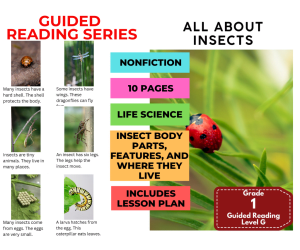
All About Insects: Guided Reading Level G with Lesson Plan
ELA, Resources for Teachers, Reading Comprehension, Reading, Science, Language Development, Vocabulary, Pre-Reading, Insects, Life Sciences, Kindergarten, Grade 1, 2, Worksheets & Printables, Worksheets, Teacher Tools, Centers, Activities, Literacy Readers, Quizzes, Quizzes and Tests, Assessments, Lesson Plans
This All About Insects (level g) guided reading book with lesson plan includes: Guided Reading Color Label (front cover x1) This is a quick way to match the book’s demands to what students can generally handle.. The overall goal is to use the level/color to pick books for several smaller groups. To qualify for a certain level, a student is expected to read a book from that level with about 90–94% accuracy. If a student is consistently accurate and understands, move up a level. If the student is struggling at that level, drop down and add more support. Each student will improve at completely different rates, but it is generally one of the best ways to check progress across the class. DOWNLOAD THE CATALOG TO VIEW ALL GUIDED READING BOOKS AVAILABLE (SORTED LEVELS A-Z) Pre-Reading Question (x1) Teacher asks the prompt aloud, can be while showing the cover or first page. Students share what they already know, or make educated guesses from the cover. Prompt them to use the target vocabulary. Write some of their responses on the board to look back at during the reading. Vocabulary Words (x5) Introduce the five words, best doing it one at a time. Start by saying it, while students repeat and then see if anyone knows what it means before reading further. Read through the meaning and try to briefly connect each word to a picture or gesture so it’s meaningful. Ask students to flip through the book pages and point to where they see each of the vocabulary words. While reading the book pause upon coming across one of the vocab words or read the sentence twice to make sure students understand the word has appeared. Optional: Ask students to raise hands whenever they see/hear one of the new words. Guided Reading Pages (x10) Check the book snapshot (below) for: primary topic - do you need to prep extra reading or intro materials on this? what is taught best - decide on 1-2 bullets to focus on, use the prompt or words provided here for best results. learning goals - what you are checking for students to be able to do after the session, elicit answers using prompts or words provided. key vocabulary (see section above). questions overview - so you know what is coming up and if you need to prep extra materials to assist understanding. Run the lesson You may have already looked at a few of the pages together, but you can show them some of the pictures again first to set meaning. Depending on how much time you have and how familiar your students are with guided reading class, you may want to read the book aloud first with the group first. Students whisper or partner read, while you listen in. If time, do it as a group, one student reading a page each. Use the guided page’s prompts to coach: “Check the picture / does it make sense?” “Point under the words / try the first sound” “Reread the sentence smoothly”. Try to focus more on one student per session (rotating every time), so you can work out if they are ready to move up or need to move down a level. Comprehension Questions (back cover x3) This is your way to check that students didn’t just say the words, but actually understood the text. First, let students answer by pointing to the page/picture and saying a short sentence. After any answer, follow with: “Show me where you found that in the text.” In bigger groups, have partners answer first (10–20 seconds), then call on 2–3 students to share. Differentiation tips: Emerging speakers/struggling readers: oral + pointing On-level: oral in a full sentence Higher: one written sentence or draw + label Book Snapshot Title: All About Insects Genre: Nonfiction (informational) Subject: Science (Life Science) Primary Topic: Insect body parts, features, and where they live Estimated Guided Reading Level (A–Z): G What This Book Teaches Best Explains what insects are by stating they are tiny animals that live in many places . Teaches basic insect anatomy: insects have six legs and three body parts (head, thorax, abdomen). Connects structures to functions: legs help the insect move and antennae are used to smell things . Describes common insect features: some have a hard shell that protects the body , and some have wings (dragonflies can fly fast ). Introduces early life stages: many insects come from eggs , and a larva hatches from an egg. Learning Goals Students will describe insects as tiny animals that live in many places. Students will identify that an insect has six legs that help it move. Students will name the three body parts of an insect: head, thorax, and abdomen. Students will explain that most insects have two antennae used to smell things. Students will describe details from the text about insect features (shells, wings) and how insects begin life (eggs, larva). Key Vocabulary From the Text thorax — the middle part of an insect’s body. abdomen — the back part of an insect’s body. antennae — body parts insects use to smell things. larva — a young insect that hatches from an egg. dragonflies — insects that can fly fast. Discussion Prompts Pre-reading question: Where have you seen insects living before? Comprehension questions: What does the book say insects are? Comprehension questions: How many legs does an insect have? Comprehension questions: Where does the book tell you to look to find an insect? Printing Tips 1. Best Printing Method (Recommended) “Booklet” Printing (Best if Available) If your printer or PDF viewer supports Booklet Printing , use this. Settings to use: Print mode: Booklet Paper size: Letter or A4 (either works) Orientation: Landscape Print on both sides: Yes Flip on: Short edge Scaling: Fit to printable area Booklet subset: First test: Front sides only Then: Back sides only This will automatically: Pair pages correctly Put the cover on the outside Align everything for folding After printing, fold in half and staple along the spine . 2. If “Booklet” Printing Is NOT Available You can still print this correctly with manual duplex printing . Step-by-step: Open the PDF. Choose Print . Set: Orientation: Landscape Pages per sheet: 1 Print on both sides: Yes Flip on: Short edge Print all pages . Because each PDF page already contains two facing book pages, the result will still fold cleanly into a book. Thousands of Cored Education products are included with your TeachSimple membership. Download links and encyclopedia index available here.
Author Cored Education
Rating
Tags Reading Comprehension, Reading Passages, Reading, Guided Reading, Guided Reading Lesson Plan, Guided Reading Activity, Pre-reading, Science Lesson Plans, Life Science, Insects

I WONDER - What Job Do Arteries Do | Animated Video Lesson
Human Body, Life Sciences, Science, Biology, STEM, Grade 4, 5, 6, 7, 8, 9, 10, Lesson Plans, Teacher Tools
Video Overview The human body is full of fascinating wonders to learn. This video is created to help the students recognize the anatomy and the job of the human body. I WONDER - What Job Do Arteries Do | Animated Video Lesson Every part and organ in our human body is vital so let's see how important they are. Have you ever imagined how we look like if we didn't have a skeleton? Did you know that because we have our amazing muscles we can stand! Do you know how many teeth do we have? Have you ever wondered about the food journey inside our body? Can you name all the glands in our body? Why do we have skin? Our nervous system is really good at sending signals. Can you tell us more about it? Are you really good at Mathematics, painting, or any other thing? You should really thank your brain about it! The famous five senses are really doing a great work? Can you explain how every sense works? I WONDER - What Job Do Arteries Do | Animated Video Lesson The video is perfect for encouraging the researching skills for the students, while learning more about our fantastic human body. I WONDER - What Job Do Arteries Do | Animated Video Lesson This friendly designed video is suitable for students at school, homeschooling, and as a group activity. Format Available in MP4 format.
Author Educational Voice
Tags What Job Do Arteries Do, What Job Do Arteries Do Video, Arteries, Arteries Facts, Arteries Facts For Kids, Arteries Video, Arteries Video For Kids, Artery, Blood, Blood Facts
I WONDER - How Long Does It Take To Make Compos | Animated Video
Earth Sciences, Earth and Environmental Sciences, Science, Environmental Science, STEM, Grade 5, 6, 7, 8, 9, 10, 11, Lesson Plans, Teacher Tools
Video Introduction An amazing video designed for the students to learn more about STEM. I WONDER - How Long Does It Take To Make Compos | Animated Video Lesson Do you like STEM subjects? what is your favorite one? Have you ever tried to plant a seed? If yes, tell us more about it. Or have you ever tried to invent something? If yes, tell us more about it. And how do you think it will help us? Have you ever seen a microorganism under a microscope? What was it? And how it looked like? Mathematics is a marvelous subject. Let' sharpen our brains and solve some equations. Do you like timetable tricks? What is your favorite one? Do you know how to code? Have you ever created an app or a game before? If yes, how was it like? I WONDER - How Long Does It Take To Make Compos | Animated Video Lesson The video is perfect for encouraging the researching skills for the students, while learning more about this fantastic topic. I WONDER - How Long Does It Take To Make Compos | Animated Video Lesson This friendly designed video is suitable for students at school, homeschooling, and as a group activity. Format Available in MP4 format.
Author Educational Voice
Tags How Long Does It Take To Make Compos, How Long Does It Take To Make Compos Video, Making Compos, Making Compos Video, Making Compos Facts, Making Compos Facts For Kids, Making Compos Video For Kids
I WONDER - How Big Are Asteroids | Animated Video Lesson
Space, Earth and Environmental Sciences, Science, Grade 2, 3, 4, 5, 6, 7, 8, Lesson Plans, Teacher Tools
Video Introduction An amazing video designed for the students to learn more about space facts. I WONDER - How Big Are Asteroids | Animated Video Lesson Have you ever thought about travelling to space?! Join us with this amazing video about asteroids. Do you think an asteroid could be a planet some day? How amazing is space! Let's discover some amazing facts about planets and asteroids! Do you know that we have two kinds of planets in our solar system? Can you name the planets based upon their core type? I WONDER - How Big Are Asteroids | Animated Video Lesson The video is perfect for encouraging the researching skills for the students, while learning more about the fantastic space. I WONDER - How Big Are Asteroids | Animated Video Lesson This friendly designed video is suitable for students at school, homeschooling, and as a group activity. Format Available in MP4 format.
Author Educational Voice
Rating
Tags How Big Are Asteroids, Asteroids, Asteroids Facts, Asteroids Video, Asteroids Video For Kids, Space, Space Facts, Space Video, Space Facts For Kids, Space Video For Kids
Crocodiles and Alligators Mini Unit
Science, Life Sciences, Animals, Grade 6, 7, 8, 9, Lesson Plans, Teacher Tools
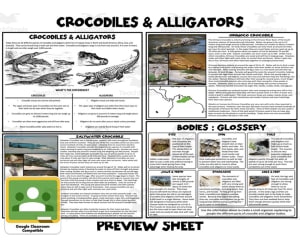
Crocodiles and Alligators Mini Unit This is a Crocodiles and Alligators Mini Unit that will provide students with resources from the beginning to end of a unit. This unit will leave students feeling more knowledgeable about this animal species and equipped to tackle any and all comprehensive activities related to crocodiles and alligators. This unit is great for middle school students. What You Get: You will receive a zip file that includes: 1. Eight zip folders with materials for each type of animal. Material folders will consist of booklets, posters, presentation and reading passage. 2. Preview Sheets as PDF and JPEG files 3. A Zip Folder with Extra Resources 4. A Zip Folder with Google Classroom Versions How to Use the Crocodiles and Alligators Mini Unit: This is a comprehensive unit of study that will have many components to make learning come to life. The glossary is an essential component that will provide students with the basic vocabulary they’ll need to understand and grasp the major topics included in the unit. The first lesson shows students the differences between crocodiles and alligators as well as their evolution over the past 220 million years. Students can also learn about the functions of different parts of alligator and crocodile bodies. Reading and information sheets are provided for eight different crocodile species around the world. Booklet pages are provided for all eight species in blank and modified versions. The sheets are also provided in a poster format as an alternate activity . All materials are also provided in a format for uploading to your google classroom or other sites. I hope you enjoy!! Take A Look At My Best Sellers: The History of Piracy The History of Space Exploration – Complete Unit Navajo Code Talkers Mini Unit Women in World War Two – Complete Unit The Forbidden City Mini Unit Natural Disasters – Complete Unit You Can Find More Resources At My Store Front Here: Mr. Gray History
Author Mr Gray History
Tags Crocodiles Lesson, Alligators Lesson, Animals Unit, Animal Unit Of Study, Animal Booklet, Animal Posters, Google Classroom, Reading Comprehension

Measurement: Measuring Weight - Practice the Skill 2 - FLASH-MAC
Math, Measurements, Common Core, Grade 1, 2, Teacher Tools, Lesson Plans
Measurement: Measuring Weight - Practice the Skill 2 - FLASH-MAC An ingenious teaching resource conceived explicitly for Grade 1 and Grade 2 educators. This tool is perfect for traditional public school settings or homeschooling environments, aiming to make learning about measurements more engaging. Achievement through timed drill activities : The product integrates highly-structured timed drill activities designed to teach and offer ample practice opportunities on units of measure. The goal is for students to identify the correct weight measurement unit for specific objects shown in practical, real-life images which contributes towards making learning more relatable and relevant. Incorporation of effective math tools: In this software-based teaching resource, handy math tools are seamlessly included. Their purpose is not only to enhance understanding but also aid in developing basic numeracy skills among young learners. Linguistic diversity support : Beside default English voice over and text it encompassed Spanish translations . Offering robust linguistic variety support. Certified Standard Compliance: This product remains loyal to Common Core State Standards (CCSS) and STEM initiatives. Additionally, it meets standards set by NCTM (National Council Teachers Mathematics). Making this an indispensable tool in complying with widely accepted academic standards. Versatility Highlight: The 'Measurement: Measuring Weight - Practice the Skill 2' module proves its versatility by suiting various modes of teaching – large-scale classroom instruction, small group workstations or individual usage as homework assignments at home. It's adaptive enough to suit all pedagogical situations where measurement lessons are deemed relevant.
Author Classroom Complete Press
Tags Software (Mac)
I WONDER - What Are The Different Parts Of The Colon | Animated Video
Human Body, Life Sciences, Science, Biology, STEM, Grade 3, 4, 5, 6, 7, 8, 9, Lesson Plans, Teacher Tools
Video Overview The human body is full of fascinating wonders to learn. This video is created to help the students recognize the anatomy and the job of the human body. I WONDER - What Are The Different Parts Of The Colon | Animated Video Lesson Every part and organ in our human body is vital so let's see how important they are. Have you ever imagined how we look like if we didn't have a skeleton? Did you know that because we have our amazing muscles we can stand! Do you know how many teeth do we have? Have you ever wondered about the food journey inside our body? Can you name all the glands in our body? Why do we have skin? Our nervous system is really good at sending signals. Can you tell us more about it? Are you really good at Mathematics, painting, or any other thing? You should really thank your brain about it! The famous five senses are really doing a great work? Can you explain how every sense works? I WONDER - What Are The Different Parts Of The Colon | Animated Video Lesson The video is perfect for encouraging the researching skills for the students, while learning more about our fantastic human body. I WONDER - What Are The Different Parts Of The Colon | Animated Video Lesson This friendly designed video is suitable for students at school, homeschooling, and as a group activity. Format Available in MP4 format.
Author Educational Voice
Tags What Are The Different Parts Of The Colon, What Are The Different Parts Of The Colon Video, Different Parts Of The Colon, Different Parts Of The Colon Facts, Different Parts Of The Colon Facts For Kids, Different Parts Of The Colon Video
I WONDER - Where Do Spices Come From | Animated Video Lesson
Nature & Plants, Life Sciences, Science, Geography, Social Studies, Grade 4, 5, 6, 7, 8, 9, 10, Lesson Plans, Teacher Tools
Video Introduction An amazing video designed for the students to learn more about famous places in different countries. I WONDER - Where Do Spices Come From | Animated Video Lesson What do you know about this place? Do you know in which part of the world it is? Have you ever visited this place? If yes, can you tell us more about your adventure, and what do you like the most about this place? Do you like reading about Geography? What is your favorite country in the whole world? If you are going on a trip where it will be? Which country? What you are going to see there? Does this country has a famous place to visit? I WONDER - Where Do Spices Come From | Animated Video Lesson The activity is perfect for encouraging the researching skills for the students, while learning more about this fantastic place. I WONDER - Where Do Spices Come From | Animated Video Lesson This friendly designed video is suitable for students at school, homeschooling, and as a group activity. Format Available in MP4 format.
Author Educational Voice
Tags Where Do Spices Come From, Where Do Spices Come From Video, Spices, Spices Facts, Spices Facts For Kids, Spices Video, Spices Video For Kids, India, India Facts, India Video