



3,953 products added recently
Page 82 - Popular Lesson Plans
Explore a curated selection of popular lesson plans that have proven successful in classrooms. Covering various subjects and topics, these resources provide innovative ideas and activities. Use them to refresh your curriculum and engage your students with tried-and-true methods.

 Show filters

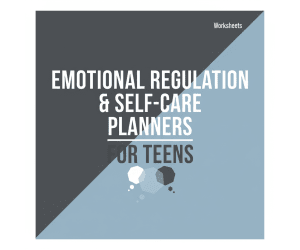
Emotional Regulation & Self-Care Planners for Teens
Special Resources, Social Emotional Learning (SEL), Life Skills, Social Skills, Special Education Needs (SEN), Speech Therapy, Life Studies, Coaching, Career, Leadership, Grade 9, 10, 11, 12, Teacher Tools, Assessments, Lesson Plans, Quizzes and Tests, Quizzes, Tests, Worksheets & Printables, Worksheets, Word Searches, Workbooks
The Emotional Regulation & Self-Care Planner for Teens (39 pages), which is available digitally as a curriculum and a planner, is laid out in three phases. The first phase (core content & theory) consists of four chapters dealing with the neurobiology of adolescent emotions, the cognitive restructuring process as well as working with the inner critic; somatic regulation (resilience of the nervous system); strategic self-care (boundary architecture). Also included are real-life case studies of teenagers (amygdala hijack, perfectionism spiral, freeze response/burnout cycle); The second phase consists of a student workbook that includes ten interactive worksheets (re: affective granularity/metacognition cognitive distortion; interoceptive/somatic map; navigating the Window of Tolerance boundary architecture; digital ecosystem audit; executive function/anticipatory anxiety; and interpersonal rupture & repair); The third phase consists of visuals & teacher resources (classroom visuals, answer keys, assessment rubrics, teacher implementation guide). The three visuals contain high-fidelity representations of the Window of Tolerance diagram; cognitive-behavioral triad; multidimensional self-care matrix). The teacher resources contain answer keys for each module and rubrics for use in assessing student work. The resource addresses self-care from three frameworks, cognitive-behavioral therapy (CBT), dialectical behavior therapy (DBT), and polyvagal theory and defines self-care as "radical stewardship of oneself". It provides teenagers with practical tools for emotional regulation, managing stress, setting digital boundaries, and developing resilience. The resource was designed to be print-ready and tested in classrooms, and includes fillable blank forms and reflection items. What Parents/Schools Appreciate: Based on research and ready to use in class – Integrating CBT, DBT and Polyvagal Theory, the program includes worksheets for students as well as the teacher's key that connects with social emotional learning (SEL) standards, thereby saving weeks of lesson planning. Directly targeted to teens and highly engaging – The material is presented via case studies from students, real-world issues they face with the digital age and through visual diagrams that connect to these emotional learning experiences for grades 9-12. Trauma-informed and provides safety – The material provides the students with options, breaks the stigma on emotional learning and clearly explains the reporting protocols for educators, making it a resource they can use for success in diverse classrooms. Comprehensive and multi-functional – It can be used for whole class lesson plans, small group counseling, advisory periods or as a self-help resource for individual students, one product meets several needs. Immediate learning and long term benefit – Students develop ongoing skills in emotional granularity, boundary setting, and regulating their nervous system while parents and schools experience decreased levels of anxiety and increased levels of focus. Intended Students: Students in Grades 9-12 only. All the examples, case studies, language, and content are created specifically for high school students (ages 14-18) who are dealing with academic pressures, social media, peer group dynamics, forming their identity, and normal neurodevelopmental changes in the developing teenage brain. This material is inappropriate for middle school students (too mature) or college students (too teen-focused). Copyright Notice and Terms of Use: This Book is the exclusive property of Syed Hammad Rizvi and may not be used for anything other than personal or one-on-one classroom usage. You cannot make any changes, distribute, or sell all or any portion of this Book in any form without written permission from Syed Hammad Rizvi. This means that you cannot publish this Book on the Internet for public access. If you would like to give this Book to your colleagues, please contact Teachsimple for more licenses. Thank you for understanding our terms of use. We hope you enjoy this product from Syed Hammad Rizvi.
Author Creative Book Store
Rating
Tags EmotionalRegulationForTeens, SelfCarePlannerForTeens, TeenEmotionalRegulation, SELcurriculum, TeenMentalHealth, HighSchoolSEL, CBTForTeens, DBTForTeens, TeenSelfCare, EmotionalRegulationWorkbook
I WONDER - What Is A Circle | Animated Video Lesson
STEM, Geometry, Math, Kindergarten, Preschool, Grade 1, 2, 3, 4, 5, Lesson Plans, Teacher Tools
Video Introduction An amazing video designed for the students to learn more about STEM. I WONDER - What Is A Circle | Animated Video Lesson Do you like STEM subjects? what is your favorite one? Have you ever tried to plant a seed? If yes, tell us more about it. Or have you ever tried to invent something? If yes, tell us more about it. And how do you think it will help us? Have you ever seen a microorganism under a microscope? What was it? And how it looked like? Mathematics is a marvelous subject. Let' sharpen our brains and solve some equations. Do you like timetable tricks? What is your favorite one? Do you know how to code? Have you ever created an app or a game before? If yes, how was it like? I WONDER - What Is A Circle | Animated Video Lesson The video is perfect for encouraging the researching skills for the students, while learning more about this fantastic topic. I WONDER - What Is A Circle | Animated Video Lesson This friendly designed video is suitable for students at school, homeschooling, and as a group activity. Format Available in MP4 format.
Author Educational Voice
Tags What Is A Circle, What Is A Circle Video, Circle, Circle Facts, Circle Facts For Kids, Circle Video, Circle Video For Kids, Shapes, Shapes Video For Kids, Shapes Video
I WONDER - Where Do Zebras Live | Animated Video Lesson
STEM, Biology, Life Sciences, Science, Animals, Grade 1, 2, 3, 4, 5, 6, 7, 8, Lesson Plans, Teacher Tools
Video Introduction Animal kingdoms are full of fascinating wonders to learn. This video is designed for the students to learn more about animals in different countries. I WONDER - Where Do Zebras Live | Animated Video Lesson Do you like animals? what is your favorite one? Do you own a pet? If yes, tell us more about it, like what its name? And what do you like most about it? What are the animal kingdoms? Can you write down the characteristics of each animal class like mammals, birds, reptiles, amphibian, fish and mollusks. Do you know that some animals can sing, can you name any of them? What is the largest and the smallest mammal in the world? What is the largest and the smallest bird in the world? What is the largest and the smallest fish in the world? I WONDER - Where Do Zebras Live | Animated Video Lesson The video is perfect for encouraging the researching skills for the students, while learning more about these fantastic animals. I WONDER - Where Do Zebras Live | Animated Video Lesson This friendly designed video is suitable for students at school, homeschooling, and as a group activity. Format Available in MP4 format.
Author Educational Voice
Tags Where Do Zebras Live, Where Do Zebras Live Video, Zebras, Zebra, Zebras Facts, Zebras Facts For Kids, Zebras Video, Zebras Video For Kids, Zebra Facts, Zebra Video
I WONDER - Who Was Alfred The Great | Animated Video Lesson
History: Ancient, History, Social Studies, History: British, History: Europe, Grade 3, 4, 5, 6, 7, 8, 9, Lesson Plans, Teacher Tools
Video Introduction An amazing video designed for the students to learn more about history. I WONDER - Who Was Alfred The Great | Animated Video Lesson Do you like history? Which topic do you really enjoy about history? Have you ever read an interesting fact about the Vikings? If yes, can you mention them? What do you like most about the Victorian era? Can you name all the Tudors? Have you ever wondered how people used to live in ancient Japan and ancient China? Do you know any interesting facts about ancient Egyptians and the Pharaohs? Have you ever visited South America? What do you know about Incas and Aztecs? Celtic culture was really one of a kind, can you name any of the places that Celts used to live in? Imagine yourself living during the ancient Roman empire, how your life will look like? Ancient Greece was an amazing place to live in. What do you know about ancient Greek life? I WONDER - Who Was Alfred The Great | Animated Video Lesson The video is perfect for encouraging the researching skills for the students, while learning more about history. I WONDER - Who Was Alfred The Great | Animated Video Lesson This friendly designed video is suitable for students at school, homeschooling, and as a group activity. Format Available in MP4 format.
Author Educational Voice
Tags Who Was Alfred The Great, Who Was Alfred The Great Video, Alfred The Great, Alfred The Great Facts, Alfred The Great Facts For Kids, Alfred The Great Video, Alfred The Great Video For Kids, History
The Outcasts of Poker Flat: Full Lesson Plan w/ PowerPoints & Graphic Organizers
ELA, Literature, Grade 9, 10, 11, 12, Lesson Plans, Teacher Tools
This resource will give you everything you need to complete a full, comprehensive reading lesson plan for The Outcasts of Poker Flat text by Bret Harte. Files are offered as PDFs and Word documents. Included: -The Outcasts of Poker Lesson Plan -The Outcasts of Poker Worksheet -The Outcasts of Poker Answer Key Graphic Organizers: Author’s Purpose Characterization Chart Figurative Language Chart Historical Analysis Chart Imagery Chart Peer Evaluation Sheet Plot Diagram Read for Detail Setting Style Chart Symbol Chart Symbolism Chart Theme Diagram Tone and Mood Diagram Universal Plot Diagram Venn Diagram PowerPoints: Characterization Imagery, Voice, and Persona Irony and Ambiguity Narrator and Voice Plot Structure Symbolism and Allegory Theme - How to Interpret Theme Thank You Bonus Stuff!
Author Quality Teaching Products
Tags Reading Lesson Plan, Reading Powerpoint, Literature, Short Story, Graphic Organizers, The Outcast Of Pokerflat

I WONDER - What Type Of Water Are Polar Ice Caps Made From
Geography, Social Studies, Grade 4, 5, 6, 7, 8, 9, 10, Lesson Plans, Teacher Tools
Video Introduction An amazing video designed for the students to learn more about famous places in different countries. I WONDER - What Type Of Water Are Polar Ice Caps Made From | Animated Video Lesson What do you know about this place? Do you know in which part of the world it is? Have you ever visited this place? If yes, can you tell us more about your adventure, and what do you like the most about this place? Do you like reading about Geography? What is your favorite country in the whole world? If you are going on a trip where it will be? Which country? What you are going to see there? Does this country has a famous place to visit? I WONDER - What Type Of Water Are Polar Ice Caps Made From | Animated Video Lesson The activity is perfect for encouraging the researching skills for the students, while learning more about this fantastic place. I WONDER - What Type Of Water Are Polar Ice Caps Made From | Animated Video Lesson This friendly designed video is suitable for students at school, homeschooling, and as a group activity. Format Available in MP4 format.
Author Educational Voice
Tags What Type Of Water Are Polar Ice Caps Made From, What Type Of Water Are Polar Ice Caps Made From Video, Polar Ice Caps, Polar Ice Caps Video, Polar Ice Caps Facts, Polar Ice Caps Video For Kids, Polar Ice Caps Facts For Kids

Ancient Civilizations: Mesopotamia Unit Study
Social Studies, History, History: Ancient, Grade 3, 4, 5, 6, Lesson Plans, Teacher Tools
Immerse students in Mesopotamian history and culture with this expansive cross-curricular teaching kit. Through vivid visuals, interactive activities and multi-sensory projects, core knowledge comes alive on topics like cuneiform, Code of Hammurabi, city-states, innovations and daily living. Begin by introducing key figures, places and artifacts using illustrated posters and word banks. Then, extend comprehension through mapping tasks, timelines and coloring pages. Discover critical innovations in writing, agriculture and infrastructure by reading leveled articles. Watch recommended documentary clips and recreate cultural elements like ziggurats, carved reliefs and steered carts. Assess retention with a Jeopardy-style review game covering everything from barley cultivation to the legendary Epic of Gilgamesh. This comprehensive package contains teacher guides aligning materials to social studies standards, plus adaptations for learners of all abilities. Weave modules into existing ancient civilization units or facilitate an entire stand-alone Mesopotamia study. Writing prompts allow students to connect learnings to their own lives across narrative, informative and persuasive genres. Through varied activities tapping visual, auditory and kinesthetic pathways, your classroom unearths the remarkable history buried between the Tigris and Euphrates. Rediscover the "cradle of civilization" where so much of human enterprise began! Check out other resources from my store: Simply Schoolgirl! I can be contacted for questions and concerns at simplyschoolgirl1@gmail.com
Author Simply Schoolgirl
Tags Ancient Civilizations, Social Studies Project, Mesopotamia, History Poster, Artifacts, Asia, Middle East, Cuneiform, Ziggurat, Mesopotamian, Mesopotamia Poster Project, Ancient Civilizations In Mesopotamia, Education Of Mesopotamia, Ancient Civilizations Of Mesopotamia, Ancient Civilizations Mesopotamia, Teaching Ancient Civilizations, The Code Of Hammurabi Is A Product Of This Civilization.

I WONDER - Where Are Microorganisms Found | Animated Video Lesson
Biology, Life Sciences, Science, Grade 4, 5, 6, 7, 8, 9, 10, Lesson Plans, Teacher Tools
Video Introduction An amazing activity designed for the students to learn more about STEM. I WONDER - Where Are Microorganisms Found | Animated Video Lesson Do you like STEM subjects? what is your favorite one? Have you ever tried to plant a seed? If yes, tell us more about it. Or have you ever tried to invent something? If yes, tell us more about it. And how do you think it will help us? Have you ever seen a microorganism under a microscope? What was it? And how it looked like? Mathematics is a marvelous subject. Let' sharpen our brains and solve some equations. Do you like timetable tricks? What is your favorite one? Do you know how to code? Have you ever created an app or a game before? If yes, how was it like? I WONDER - Where Are Microorganisms Found | Animated Video Lesson The video is perfect for encouraging the researching skills for the students, while learning more about this fantastic topic. I WONDER - Where Are Microorganisms Found | Animated Video Lesson This friendly designed video is suitable for students at school, homeschooling, and as a group activity. Format Available in MP4 format.
Author Educational Voice
Tags Where Are Microorganisms Found, Where Are Microorganisms Found Video, Microorganisms, Microorganism, Microorganisms Facts, Microorganisms Facts For Kids, Microorganisms Video, Microorganisms Video For Kids

The Monkey’s Paw: Full Lesson Plan w/ PowerPoints & Graphic Organizers
ELA, Literature, Grade 7, 8, 9, 10, Lesson Plans, Teacher Tools
This resource will give you everything you need to complete a full, comprehensive reading lesson plan for The Monkey’s Paw text by W.W. Jacobs. Files are offered as PDFs and Word documents. Included: -The Monkey’s Paw Lesson Plan -The Monkey’s Paw Worksheet -The Monkey’s Paw Answer Key Graphic Organizers: Author’s Purpose Characterization Chart Figurative Language Chart Historical Analysis Chart Imagery Chart Peer Evaluation Sheet Plot Diagram Read for Detail Setting Style Chart Symbol Chart Symbolism Chart Theme Diagram Tone and Mood Diagram Universal Plot Diagram Venn Diagram PowerPoints: Characterization Imagery, Voice, and Persona Irony and Ambiguity Narrator and Voice Plot Structure Symbolism and Allegory Theme - How to Interpret Theme Thank You Bonus Stuff!
Author Quality Teaching Products
Tags The Monkey's Paw Text, Reading Lesson Plan, Short Story, Fiction Text, Graphic Organizers, Monkey's Paw Answer Key, What Is The Author's Purpose In The Monkey's Paw, The Monkey's Paw Activities

I WONDER - Why Are Hamsters Lazy | Animated Video Lesson
STEM, Biology, Life Sciences, Science, Animals, Grade 1, 2, 3, 4, 5, 6, 7, 8, Lesson Plans, Teacher Tools
Video Introduction Animal kingdoms are full of fascinating wonders to learn. This video is designed for the students to learn more about animals in different countries. I WONDER - Why Are Hamsters Lazy | Animated Video Lesson Do you like animals? what is your favorite one? Do you own a pet? If yes, tell us more about it, like what its name? And what do you like most about it? What are the animal kingdoms? Can you write down the characteristics of each animal class like mammals, birds, reptiles, amphibian, fish and mollusks. Do you know that some animals can sing, can you name any of them? What is the largest and the smallest mammal in the world? What is the largest and the smallest bird in the world? What is the largest and the smallest fish in the world? I WONDER - Why Are Hamsters Lazy | Animated Video Lesson The video is perfect for encouraging the researching skills for the students, while learning more about these fantastic animals. I WONDER - Why Are Hamsters Lazy | Animated Video Lesson This friendly designed video is suitable for students at school, homeschooling, and as a group activity. Format Available in MP4 format.
Author Educational Voice
Tags Why Are Hamsters Lazy, Why Are Hamsters Lazy Video, Hamsters, Hamster, Hamsters Facts, Hamsters Facts For Kids, Hamsters Video, Hamsters Video For Kids, Hamster Facts, Hamster Facts For Kids

Algebra: Patterns - Practice the Skill 1 - FLASH-MAC
Math, Algebra, Common Core, Grade 3, 4, 5, Teacher Tools, Lesson Plans
FLASH-MAC: A Versatile Math Learning Tool Algebra: Patterns - Practice the Skill 1 - FLASH-MAC is a comprehensive educational software tailored for students in Grade 3, Grade 4, and Grade 5. It primarily focuses on enhancing understanding of Algebraic patterns. Features: The software integrates timed drill activities as well as various math tools, encouraging students to complete patterns. This stimulates their problem-solving abilities while honing their algebra skills. The flexibility of this product allows educators to use it either for whole group classroom teaching, small study groups or even as individual self-study materials or homework assignments according to student learning needs and pace. A unique feature that sets this product apart is its inclusivity for users from different ethnic backgrounds with English voice over and text as default but also offers Spanish voiceover along with text option . Educational Standards: This product aligns seamlessly with the Common Core State Standards and STEM initiatives. It has been crafted adhering to NCTM (National Council Of Teachers Of Mathematics), thus ensuring that it upholds key benchmarks in delivering high-quality math education suitable for any school curriculum specifically focusing on Algebra. Ease of Use: All essential files which encapsulate the entire lesson plan are available upon download, eliminating additional preparation work by educators. This allows teachers to focus solely on improving student comprehension rather than administrative tasks which could hinder teaching roles otherwise.</p
Author Classroom Complete Press
Tags Software (Mac)
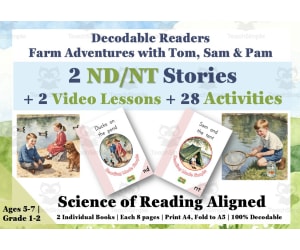
ND/NT: 2 Decodable Reading Books + 2 Video Lessons + 28 Worksheets SOR
Special Resources, ELA, Special Education Needs (SEN), Language Development, Pre-Reading, Phonics, Spelling, Kindergarten, Preschool, Homeschool Curriculum, Grade 1, 2, Literacy Readers, Teacher Tools, Lesson Plans, Presentations
2 ND/NT Blends Decodable Readers, 2 Video Lessons & 28 Supporting Worksheets to Develop Reading Fluency! Complete Teaching Pack | Part of Advanced Phonics Reading Programme Master ND/NT with 2 decodable readers, 2 optional video lessons, and 28 differentiated practice worksheets! This extensive teaching pack features farm stories that children will love, along with targeted phonics activities that reinforce learning. This is part of the Reading Made Simple programme of systematic phonics instruction that can help your struggling readers succeed. Designed and tested on real children of all abilities, from none to severe, every step of the way. These books presume that a child can already decode words with a CK ending, OO (moon/look), EE, SH, CH, What's Included 2 systematic/levelled decodable readers focusing on ND/NT words 2 carefully taught optional video lessons - no distracting music - these are serious lessons and can be used by home educators and teachers alike - to give extra support to struggling readers Word lists for pre-reading practice at the beginning of each book 28 Differentiated worksheets for phonics reinforcement: Word sorting activities Sound isolation exercises Reading comprehension exercises Sentence writing practice Phonics pattern recognition tasks 100% decodable text with carefully controlled vocabulary Science of reading-aligned instruction Beloved characters: Tom, Sam, Pam, Gran, and the farm animals Beautiful watercolour illustrations Print-and-go format for easy classroom use Why Teachers Love This Complete Pack Real stories PLUS targeted practice! These aren't just decodable readers—you get everything you need to teach ND/NT systematically. The differentiated worksheets provide multiple opportunities for students to apply their learning, while the engaging farm stories provide ample practice of decoding, word recognition and reading comprehension. They help you to target a child's precise needs to ensure progress. The optional video lessons give even nervous parents the help they need to teach! Designed With Carefully Controlled vocabulary: The ND/NT sound is introduced systematically across the stories, with previously taught words revisited throughout. Worksheets reinforce the same vocabulary, providing an opportunity for mastery. Perfect For Explicit phonics instruction following the science of reading principles All students who are ready to learn ND/NT and have already learned CK, OO, EE, SH, CH Children who need a slower pace, or not Small group intervention or whole class instruction Literacy centres and independent practice Homework assignments that reinforce classroom learning Structured literacy programmes Ages 5-7 or Grade 1-2 Skills Addressed Decoding ND/NT in isolation and context Reading fluency with controlled decodable text Phonics, pattern recognition and application Phonemic awareness through targeted activities Reading comprehension with engaging stories Writing practice using the taught phonics pattern Sight word introduction and practice How to Use This Complete Pack Introduce the sound ND/NT comprehensively Use worksheets for guided practice and skill reinforcement Practice word lists before reading stories Have students read the decodable stories, pointing to each word Return to the worksheets for independent practice or assessment Reread the stories to build fluency This complete pack provides everything you need to teach ND/NT effectively—no additional materials required!
Author Lilibette's Resources
Rating
Tags Fluency, Struggling Readers, Dyslexia, Special Needs, Phonics, Decodable Reading Books, Reading Fluency, Consonant Digraphs, Learn To Read, ND NT

Data Analysis & Probability: Bar Graphs - PC Software
Math, Graphing, Kindergarten, Preschool, Grade 1, 2, Teacher Tools, Lesson Plans
Data Analysis & Probability: Bar Graphs - PC Software As an educator, finding effective and engaging teaching resources is essential for helping our students thrive. The Data Analysis & Probability: Bar Graphs - PC Software is a comprehensive tool tailored towards enhancing understanding of Bar Graphs as part of Data Analysis and Probability. Easily applicable across multiple learning scenarios, the software can be utilized in both large group settings for core lessons or small groups to bolster collaborative learning. Homeschooling parents will also find the platform highly beneficial. Packed with curriculum-aligned content, educators get a wide variety of materials in its digital inventory; Lesson plans Real-world word problems Timed drill activities. The software comes complete with pre-lesson assessments designed to gauge students' knowledge before embarking on a new topic. This provides valuable insights which can enhance personalized tutoring approaches. Likewise, at the end of each chapter, a SMART Response assessment ensures comprehension tracking on every student's progress is made easy. This solution champions diversity by offering both English and Spanish voice over options alongside text support – ensuring everyone's needs are fully catered for even in multi-language settings. The inclusion of mathematical tools elevates interactive practices essential for enhancing understanding while memory match games spark creativity during learning sessions. To make it more exciting, board game and spinner game elements are also incorporated into the system giving teachers distinct ways to diversify math lessons hence boosting engagement levels among learners. Within single zip files easily extractable on PCs across various grades (Preschool through Grade 2), educators have access to lesson plans covering key subsect subjects like graphing under math topics. With these available resources at teacher’s fingertips coding becomes less daunting thus promoting effective delivery of knowledge transfer within their respective educational contexts without leaving some learners behind. Exploring graph data has never been so detailed yet straightforward – thanks to this inclusive-, learner-centered approach-inspired teaching resource that aims at cultivating solid math foundation for learners right from their early schooling stages.
Author Classroom Complete Press
Tags Math Lesson Plan, Bar Graphs, Graphing Activity, Data, Probability
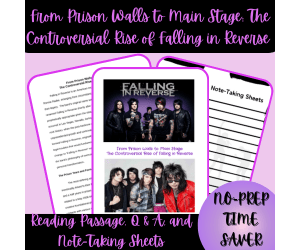
High School Falling in Reverse Reading Passage and Q & A
ELA, Reading, Writing, Music, Creative Arts, Resources for Teachers, Research, History, Social Studies, High School, Homeschool Resources, Teacher Tools, Assessments, Lesson Plans, Quizzes and Tests, Worksheets & Printables, Writing Prompts
As a homeschool mom to a high schooler, I know how challenging it can be to find engaging reading materials that actually capture our teens' attention while developing their critical thinking skills. This comprehensive resource about Falling in Reverse Reading Passage, Q & A, and Note-Taking Sheets offers the perfect blend of contemporary relevance and academic rigor that high school students crave. The fascinating story of lead vocalist Ronnie Radke's journey from incarceration to musical success provides a compelling foundation for deep literary analysis and meaningful classroom discussions. Your students/homeschoolers will be genuinely interested in this real-world narrative while unknowingly strengthening essential reading comprehension and analytical writing skills. INCLUDED IN THIS RESOURCE: Comprehensive reading passage about Falling in Reverse's controversial journey from formation to mainstream success 20 sophisticated critical analysis questions Complete answer key with detailed sample responses 10 note-taking sheets TOPICS COVERED: Symbolic analysis and metaphorical interpretation in contemporary music narratives Critical examination of redemption themes and second chances in popular culture Analysis of author bias, tone, and rhetorical techniques in biographical writing Ethical debates about separating artistic merit from personal accountability and moral complexity As someone who's been homeschooling my 9th grader and creating resources for years, I have learned that the magic happens when we stop fighting against our teens' interests and start working with them instead. My own daughter rolled her eyes at traditional literature analysis until we started exploring stories like this one – suddenly she was asking thoughtful questions and writing paragraphs I actually wanted to read! This Falling in Reverse Reading Passage, Q & A, and Note-Taking Sheets resource represents my philosophy that we do not have to choose between rigorous academics and genuine engagement. When my daughter can analyze complex themes in a story about a band she is actually heard of, she is developing the exact same critical thinking skills she will need for college – she is just enjoying the process instead of enduring it. If you are tired of the daily battle over "boring" assignments and ready to watch your teenager light up during English class, this is the kind of resource that changes everything. If you and your students/homeschoolers enjoyed this resource, please leave a review. Thank you for your support! Tina - Big Easy Homeschooling Mom
Author Homeschool with Big Easy Homeschooling Mom
Rating
Tags High School Music Reading Passage, Homeschool English Curriculum, Contemporary Nonfiction, Redemption Literature, Teen Literature, Music Culture Education, Literary Analysis, Falling In Reverse Reading Comprehension Activities For High School, Critical Analysis Questions About Contemporary Music Culture, Analytical Writing Practice With Band Biographies For Teenagers

Walkie-Talkies Reading Comprehension Passage - Cored Ed Encyclopedia
ELA, Language Development, Reading Comprehension, Reading, Pre-Reading, Science, Social Studies, History, Technology, Physics, Grade 2, 3, 4, 5, Worksheets & Printables, Worksheets, Teacher Tools, Centers, Activities, Writing Prompts, Assessments, Quizzes and Tests, Quizzes, Lesson Plans
This walkie-talkies reading comprehension with lesson plan includes: Visualization (on the front cover) Start your lesson by taking a minute to think and share something about the topic. Read the script aloud (slowly), perhaps prepare some music or sound effects. Student close their eyes and let their imaginations wander. Students open their eyes, read the question aloud and give them a few minutes to complete. Ask a few students to share or keep answers until the end to compare with what they learn in the passage. Quick pause—thousands of Cored Education products are included with your TeachSimple membership. Download links and encyclopedia index available here. Pre-Reading Trivia Students will write down one thing they already know about the subject and then read five more facts and discuss. These facts are fun, and the students will enjoy learning about the subject before reading more. Give 1 minute for students to write what they already know (no pressure—best guess is fine). Read the five facts together. After each fact, do ask a student for their opinion, was it surprising? Set a purpose by asking students to highlight/underline one fact they want to learn more about during the reading. Reading Passage The text is a high-interest reading passage with set paragraphs, roughly three to four paragraphs long. It contains a variety of themes about the topic, anywhere from history to technology. The passage is between 250 and 350 words in length. First, ask students to look at the headings and see what they’ll learn about today. What do they know about the topic/heading? First read options: Teacher read-aloud (best for support). Partner reading (paragraph by paragraph). While reading, students underline important details, and vocabulary words they think may come up in the questions section. Mixed Questions The first question page contains four multiple-choice questions, each with a choice of four answers, and three written response questions that require a sentence or two from the student. Students complete the mcqs first independently, then review quickly as a class. For the 3 written responses, try to get students giving the answer with some form of evidence: “I think ___ because the text says ___.” If students get stuck, send them back to check the passage. Vocabulary Questions Practice seven key words from the text in this section across two activities. First section is scrambled words where students will unscramble three words given a clue for each. The second section is a word to meaning matching activity. Before starting, have some students read out words they underlined in the passage. Ask students to say the word and read aloud the sentence(s) around each word. Ask students to do scrambled words and the matching exercise in pairs then go through answers as a class. For the scrambled spelling task, get four pairs to come up to the board and write the words for extra practice with the other student reading out the clue. For the matching task, prompt students to give full sentences: “I matched ___ with ___ because ___.” Creative Writing In this question, the student will be required to write a five to eight sentence paragraph on a question related to the topic. Before starting, ask students write down 3 key ideas they are going to include in their piece. Ask students for ideas to share around the class to help those struggling. Pro writing expectations: 5–8 sentences At least 2 facts or details from the passage At least 2 vocabulary words from the previous page Students read their paragraphs while classmates listen for facts and vocabulary words. Extension Activities This page is optional for fast finishers or to take home. There are several activities, each one requiring a different skill. Do some, do none, do all, completely optional - but you will feel reassured knowing every possibility is planned for. Includes summary writting question. Answer Key There are answers for the multiple-choice questions, written response questions have sample answers, vocabulary answers and if there is a summary question then a sample summary will be provided as well. Lesson Plan Included Customized lesson plan for this lesson is included. Lesson Snapshot Title: Walkie-Talkies Genre: Nonfiction (informational text) Subject: Science & Technology (Informational Reading) Primary Topic: How walkie-talkies work, history, and clear communication Estimated Guided Reading Level (A–Z): P What This Lesson Teaches Best Explains how a walkie-talkie works as a handheld two-way radio that switches from listening to sending when the talk button is pressed. Builds understanding of shared communication rules , including that only one radio can transmit at a time and messages stay “short and clear.” Introduces a simple history of portable radios , from early military use (including a “packset” and the Motorola SCR-300) to later helpers on job sites. Highlights how word choice matters when people share the air, connecting clear/kind words to teamwork and getting things done. Uses comparisons and descriptive language (e.g., “scratchy,” “like a distant whisper,” “lighter than a deck of cards”) to help readers picture sound and size. Learning Goals Students will describe what a walkie-talkie is and what it can do (send and receive messages). Students will explain what happens when the talk button is pressed and why the radio listens most of the time. Students will identify at least two ways early walkie-talkies differed from many walkie-talkies today. Students will describe why teams keep messages short and clear when using walkie-talkies. Students will use evidence from the text to explain what “over” means in walkie-talkie talk. Key Vocabulary From the Text antenna — the part that sticks up to help signals travel. channel — a shared path where people hear the same messages. portable — easy to carry from place to place. transmit — send a message through the air. rugged — strong and built to last. FULL CATALOG OF DOWNLOAD LINKS AND ENCYCLOPEDIA INDEX HERE
Author Cored Education
Rating
Tags Vocabulary, Reading Comprehension, Reading Passages, Lesson Plans, Ela Lesson Plans, Reading Comprehension Lesson Plans, Pre-reading, Science Lesson Plans, History Lesson Plans, Technology
I WONDER - Are There Any Famous Geysers | Animated Video Lesson
Geography, Social Studies, Earth Sciences, Earth and Environmental Sciences, Science, Environmental Science, Grade 4, 5, 6, 7, 8, 9, 10, Lesson Plans, Teacher Tools
Video Introduction An amazing video designed for the students to learn more about natural disasters in different countries. I WONDER - Are There Any Famous Geysers | Animated Video Lesson What do you know about this natural disaster? Do you know in which part of the world this could happen? Have you ever read about the safety misusers that we could have to protect ourselves from this natural disaster? If yes, can you tell us more about them? Can you name other natural disasters? If yes, tell us more about where they are likely to happen? And how frequently? Do you like reading about Geography? What is your favorite country in the whole world? If you are going on a trip where it will be? Which country? What you are going to see there? Does this country has a famous place to visit? Do you like reading about Geology? If yes, what is your favourite topic? I WONDER - Are There Any Famous Geysers | Animated Video Lesson The video is perfect for encouraging the researching skills for the students, while learning more about this fantastic phenomenon. I WONDER - Are There Any Famous Geysers | Animated Video Lesson This friendly designed video is suitable for students at school, homeschooling, and as a group activity. Format Available in MP4 format.
Author Educational Voice
Tags Are There Any Famous Geysers, Are There Any Famous Geysers Video, Famous Geysers, Famous Geysers Video, Famous Geysers Facts, Famous Geysers Facts For Kids, Famous Geysers Video For Kids
I WONDER - What Is The Most Famous Meteor Crater | Animated Video
Space, Earth and Environmental Sciences, Science, Grade 6, 7, 8, 9, 10, 11, 12, Lesson Plans, Teacher Tools
Video Introduction An amazing video designed for the students to learn more about space facts. I WONDER - What Is The Most Famous Meteor Crater | Animated Video Lesson Do you like reading about space? If yes, what is your favorite topic? What do you know about our solar system? What is the smallest planet in our solar system? What is the biggest planet in our solar system? What is the hottest planet in our solar system? And what is the coldest one? Do you think there are aliens? If yes, what do you think they look like? What do they eat and how they speak to each other? Where do they live? What is a galaxy? And what is a milky way? Have you recently saw a shooting star? If yes, tell us more about it, like when did it happen and where? What is a blackhole? Can a blackhole gets bigger by time? Do you like counting the stars? What do you think a star is made of? I WONDER - What Is The Most Famous Meteor Crater | Animated Video Lesson The video is perfect for encouraging the researching skills for the students, while learning more about the fantastic space. I WONDER - What Is The Most Famous Meteor Crater | Animated Video Lesson This friendly designed video is suitable for students at school, homeschooling, and as a group activity. Format Available in MP4 format.
Author Educational Voice
Tags What Is The Most Famous Meteor Crater, What Is The Most Famous Meteor Crater Video, Meteor Crater, Meteor Crater Facts, Meteor Crater Facts For Kids, Meteor Crater Video, Meteor Crater Video For Kids

Algebra: Ordering & Grouping - Practice the Skill 3 - FLASH-MAC
Math, Algebra, Common Core, Grade 1, 2, Teacher Tools, Lesson Plans
Algebra: Ordering & Grouping - Practice the Skill 3 - FLASH-MAC This teaching aid simplifies complex algebra topics for young learners. It's specifically designed to facilitate a deeper understanding of ordering and grouping in algebra. The resource provides a series of timed drill activities that: Keep learners actively engaged Foster vital skill sets reinforcement through active learning methodology Included math tools supplement each activity , enhancing hands-on learning and conceptual understanding. It is not just focused on problem presentations but also fuels critical thinking abilities, promotes problem-solving skills and fosters an appreciation for pattern identification — crucial elements for mastering algebra at this level. Multilingual Capability – A tool for Diverse Classrooms: This resource comes equipped with both English and Spanish voice over along with corresponding text translations making it suitable for diverse classrooms where multilingual teaching mode might be a necessity. Nationally Recognized Educational Standards: The content aligns well within Common Core State Standards framework as well as STEM initiatives. Moreover, it conforms to guidelines prescribed by NCTM assuring you quality educational experience. Versatility: The material maybe implemented across various instructional setups such as large group lecturing or smaller focus groups depending on individual teacher needs. Serves effectively as supplementary homework material aiding revision outside classroom boundaries. User Friendly Packaging: This product comes neatly packaged within one software file suitable for Mac systems thus ensuring easy storage,and seamless integration into your current operation system. Test out "Algebra: Ordering & Grouping - Practice the Skill 3- FLASH-MAC" to invigorate interest towards Algebra among Grade 1 and Grade 2 learners and reward them with an enriching educational experience.
Author Classroom Complete Press
Tags Software (Mac)

Kindergarten Health: Unit 4
P.E. & Health, Life Studies, Health, Physical Education, Special Resources, Life Skills, Social Emotional Learning (SEL), Social Skills, Kindergarten, Teacher Tools, Lesson Plans, Worksheets & Printables, Worksheets
For Kindergarten Health there are seven standards that need to be taught to achieve healthy habits! Unit 1 Personal Health Unit 2 Growth and Development Unit 3 Nutrition and Physical Activity Unit 4 Substance Use and Abuse Unit 5 Injury/ Violence Prevention Control and Safety Unit 6 Prevention/Control of Disease Unit 7 Environmental Consumer Health These units can be taught out of order. They are only numbered for your convenience. Through using this Kindergarten Health: Unit 4, students will explore and learn to identify daily healthy habits. Included in this unit : * Students will identify what is safe or unsafe in a household, which includes medications, cleaning supplies, and household appliances. * Students will cut, sort, and paste these harmful or safe substances into categories. * Understanding who can and who cannot give you medications is another thing that students will learn. * Teachers will help students to role play situations that may be unsafe and how to handle these situations and learn how to say no. Students will identify safe and unsafe substances in a household and learn who can give them medication. Furthermore, there are activities to help kids learn how to just say no in difficult situations. There are a total of 9 pages included in this unit for Kindergarten Health. There are seven units that cover all the health requirements for Kindergarten. Here are the links to other health units: Kindergarten Health: Unit 1 Personal Health Kindergarten Health: Unit 2 Growth and Development Kindergarten Health: Unit 3 Nutrition and Physical Activity Kindergarten Health: Unit 4 Substance Use and Abuse Kindergarten Health: Unit 5 Injury / Violence Prevention Control and Safety Kindergarten Health: Unit 6 Prevention / Control of Disease Kindergarten Health: Unit 7 Enviromental Consumer Health You can also teach your students about keeping yourself safe by studying about the Coronavirus, where and when it started and facts that plagued our world with this virus. Kindergarten Health: Covid 19 / Coronavirus Facts This unit meets Common Core Standards.
Author K-5 Treasures
Tags Health, Health Worksheets, Kindergarten Health, Kids Health, Health Units, Healthy Habits, Healthy Eating, Elementary Health, Healthy Food, Kinder Health
Senses,Nervous & Respiratory Systems: The Nervous System - Spinal Cord and Nerves - FLASH-PC
Science, Life Sciences, Human Body, Common Core, Grade 5, 6, 7, 8, Teacher Tools, Lesson Plans
The Senses, Nervous & Respiratory Systems: The Nervous System - Spinal Cord and Nerves - FLASH-PC This resource is an invaluable tool designed for educators. It provides comprehensive, curriculum -based content focusing on the senses, nervous system and respiratory system. This teaching aid is aimed at students from Grade 5 to Grade 8. Reading Passages: These special offerings deepen the understanding of complex topics such as human physiology. In-built ‘Before You Read’ questions set students up for success in absorbing information. Common Core State Standards: This resource aligns seamlessly with these recognized learning standards ensuring its quality and compatibility with different curricula. 'After You Read' section: Closes each lesson thoughtfully by checking understanding and consolidating key learnings. It facilitates deeper comprehension among learners rather than just surface-level learning. Vocabulary Flashcards: Adds interactivity to the instructional mix Ideal for engaging individual or group learners within classroom setting or homework assignments Interactive Activities: Promotes active participation enhancing knowledge retention rates among early adolescent learners. All these resources are wrapped into one all-inclusive zip file PC software package – easy-to-download and navigate regardless of where instruction takes place: traditional classrooms or home-school setups alike. In brief, this resource assists educators passionate about molding scientifically literate members of society with a robust understanding spanning from sensory mechanisms to functions of our nervous and respiratory systems./em Begin shaping scientifically informed citizens today with Senses, Nervous & Respiratory Systems: The Nervous System - Spinal Cord and Nerves - FLASH-PC teaching resource.
Author Classroom Complete Press
Tags Science Quiz, Human Bodyy, Nervous System, Flash Cards, Interactive Activities

The Landlady Case Study
ELA, Literature, Grade 7, 8, 9, 10, Teacher Tools, Lesson Plans
The Landlady Case Study - A Teaching Resource Engage students in literary analysis and character development with The Landlady Case Study teaching resource. Designed to inspire learners from grade 7 through grade 10, this comprehensive tool offers educators a new way approach to teaching Roald Dahl's classic, "The Landlady". 5-Day Lesson Plan Motivate students to become detectives and trace the possible destiny of Billy Weaver, an engaging character from Dahl's narrative. Foster critical thinking and active engagement by undertaking close reading exercises. Language Arts & Literature Focus This digital and printable student work packet includes varied activities that are perfect for different learning scenarios. The task package contains: A missing person’s report exercise: to spark creativity. Vocabulary activity : for building linguistic competence. Analytical questions: To energize careful examination of Dahl's storytelling techniques. Note: The above tasks aid in making complex analytical tasks manageable, so as not to overwhelm learners. Promote Logical thinking This study case comes packed with features like crime scene summary and witness questions that draw directly from evidence within the text itself. This method prepares your learners not just on comprehension but on literary analyses that they would come across in their academic journey. In addition, helping teachers gain important insights into their wards' progression is a rubric accompanied by detailed lesson plans providing clear directions at every stage. To round out this fantastic academic offering is an optional assignment where learners are given the opportunity to display their understanding. Tasked with selecting and investigating one of three pre-explored class topics, students are pushed well beyond the theoretical. They are asked to develop a digital presentation, encouraging creativity while refining brevity - a skill highly sought after in the contemporary digital market. With The Landlady Case Study teaching resource, educators have in hand an immersive tool for guiding students on a thought-provoking journey through classic literature whilst building robust literacy skills and critical understanding.
Author Fairways and Chalkboards
Tags Literary Analysis, Character Development, Roald Dahl, Close Reading, Critical Thinking

12 Election Terms for Middle & High School- Vocabulary Strategies
Social Studies, Government, Grade 7, 8, 9, Teacher Tools, Lesson Plans
The 17-page resource, 12 Essential Election Terms for Middle and High School-Vocabulary Strategies provides students with opportunities to explore essential vocabulary so that they can begin to build their knowledge as they delve more deeply into the election. The resource includes an inventive road signs metaphor to help students identify their level of familiarity with various election terms. It establishes a knowledge base from which they can dive into nuanced meanings of these words. The unique K.I.M Vocabulary strategy is used to explore different aspects of each word, including word families, roots, etc., further strengthening students’ understanding. The resource includes the following: About this Resource: a handy guide to orient teachers to the Essential Question, Guiding questions, standards, objectives, and learning targets, list of resources, preparation and time frame, and includes a link to a force copy for the Google Doc which makes the resource editable. Understanding Essential Election Vocabulary (Road Signs to Understanding Vocabulary) K.I.M. Vocabulary for Essential Election Terms and Key K.I.M. Vocabulary for Essential Election Terms Key Essential Election Vocabulary Quiz and Key The 12 words are: ballot, candidate, democracy, election, government, political parties, politics, propaganda, proposition, representative democracy, and vote. Once students have a clear understanding of the terms, teachers can assess their understanding through the quiz . The quiz includes 2 parts: a matching the definition with the word and answering questions about the words that will allow them to show their understanding. The Essential Question: "How do key election terms shape our understanding of democratic processes, and what strategies can we employ to navigate and utilize them effectively?" and the 3 Guiding Questions: "How do citizens engage with the democratic process through terms like "ballot," "candidate," and "vote," and what role do these terms play in ensuring representative governance?" "What strategies can individuals employ to critically evaluate the influence of "propaganda" and "political parties" in elections, and how do these terms impact the formation of informed civic choices?" "In what ways do concepts like "representative democracy" and "citizen" shape our understanding of government structures and the responsibilities of individuals within a democratic society?" encourages students to critically think about both the meaning and the impact of these words, not just on themselves, but also on our election cycle and our electoral system. Every four years, citizens of our nation get to choose our next president. Middle School and High School students are at the age where they begin to think of themselves as members of this country. Many of them witness their relatives voting, but many do not, either because their relatives are not citizens or because their relatives are disengaged from the electoral process. It is our duty as Social Studies teachers to engage our students in the electoral process so that they understand how our electoral system works and so that they see the value in participating in our democracy through voting.
Author Intentional Teaching and Learning
Tags Election Terms, Democracy, Civic Duty, Government, Election, Discussion, Reflection, Civics, U.S. History, Vocabulary Strategies
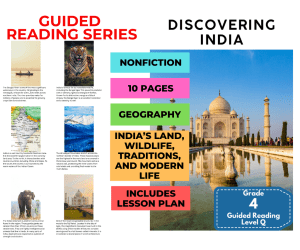
Discovering India: Guided Reading Level Q with Lesson Plan
ELA, Resources for Teachers, Reading Comprehension, Reading, Science, Geography, Social Studies, Technology, History, Life Sciences, Grade 3, 4, 5, Worksheets & Printables, Worksheets, Teacher Tools, Centers, Activities, Literacy Readers, Quizzes, Quizzes and Tests, Assessments, Lesson Plans
This Discovering India (level q) guided reading book with lesson plan includes: Guided Reading Color Label (front cover x1) This is a quick way to match the book’s demands to what students can generally handle.. The overall goal is to use the level/color to pick books for several smaller groups. To qualify for a certain level, a student is expected to read a book from that level with about 90–94% accuracy. If a student is consistently accurate and understands, move up a level. If the student is struggling at that level, drop down and add more support. Each student will improve at completely different rates, but it is generally one of the best ways to check progress across the class. DOWNLOAD THE CATALOG TO VIEW ALL GUIDED READING BOOKS AVAILABLE (SORTED LEVELS A-Z) Pre-Reading Question (x1) Teacher asks the prompt aloud, can be while showing the cover or first page. Students share what they already know, or make educated guesses from the cover. Prompt them to use the target vocabulary. Write some of their responses on the board to look back at during the reading. Vocabulary Words (x5) Introduce the five words, best doing it one at a time. Start by saying it, while students repeat and then see if anyone knows what it means before reading further. Read through the meaning and try to briefly connect each word to a picture or gesture so it’s meaningful. Ask students to flip through the book pages and point to where they see each of the vocabulary words. While reading the book pause upon coming across one of the vocab words or read the sentence twice to make sure students understand the word has appeared. Optional: Ask students to raise hands whenever they see/hear one of the new words. Guided Reading Pages (x10) Check the book snapshot (below) for: primary topic - do you need to prep extra reading or intro materials on this? what is taught best - decide on 1-2 bullets to focus on, use the prompt or words provided here for best results. learning goals - what you are checking for students to be able to do after the session, elicit answers using prompts or words provided. key vocabulary (see section above). questions overview - so you know what is coming up and if you need to prep extra materials to assist understanding. Run the lesson You may have already looked at a few of the pages together, but you can show them some of the pictures again first to set meaning. Depending on how much time you have and how familiar your students are with guided reading class, you may want to read the book aloud first with the group first. Students whisper or partner read, while you listen in. If time, do it as a group, one student reading a page each. Use the guided page’s prompts to coach: “Check the picture / does it make sense?” “Point under the words / try the first sound” “Reread the sentence smoothly”. Try to focus more on one student per session (rotating every time), so you can work out if they are ready to move up or need to move down a level. Comprehension Questions (back cover x3) This is your way to check that students didn’t just say the words, but actually understood the text. First, let students answer by pointing to the page/picture and saying a short sentence. After any answer, follow with: “Show me where you found that in the text.” In bigger groups, have partners answer first (10–20 seconds), then call on 2–3 students to share. Differentiation tips: Emerging speakers/struggling readers: oral + pointing On-level: oral in a full sentence Higher: one written sentence or draw + label Book Snapshot Title: Discovering India Genre: Nonfiction Subject: Social Studies (Geography/Culture) Primary Topic: India’s land, wildlife, traditions, and modern life Estimated Guided Reading Level (A–Z): Q What This Book Teaches Best Key geography facts about India’s location in Southern Asia, nearby borders, and surrounding waters. How landforms shape life in India, including the Himalayan Mountains and the Ganges River. Notable wildlife of India through examples like the Bengal tiger and the Indian elephant. Cultural traditions and everyday life, including spices used in meals and the celebration of Diwali. Modern India today, including transportation (auto-rickshaws) and major cities connected to technology and innovation. Learning Goals Students will describe where India is located and name details about its borders and southern waters. Students will explain how the Himalayan Mountains are described as protecting the inner plains. Students will explain why the Ganges River is important to people and farming in northern India. Students will describe key traits of the Bengal tiger and the Indian elephant using details from the text. Students will identify facts about the Taj Mahal, including where it is and features described in the book. Students will describe examples of Indian culture and modern life mentioned in the text (foods/spices, Diwali, transportation, cities). Key Vocabulary From the Text vast — very large in size. significant — very important. distinctive — easy to notice because it looks different. minarets — tall towers on a monument. diyas — small clay lamps used during Diwali. Discussion Prompts Pre-reading question: What are you hoping to learn about India as you read? Comprehension questions: What warm waters does the text say surround India to the south? Comprehension questions: According to the text, why is the Ganges River essential? Comprehension questions: What does the text say diyas symbolize during Diwali? Printing Tips 1. Best Printing Method (Recommended) “Booklet” Printing (Best if Available) If your printer or PDF viewer supports Booklet Printing , use this. Settings to use: Print mode: Booklet Paper size: Letter or A4 (either works) Orientation: Landscape Print on both sides: Yes Flip on: Short edge Scaling: Fit to printable area Booklet subset: First test: Front sides only Then: Back sides only This will automatically: Pair pages correctly Put the cover on the outside Align everything for folding After printing, fold in half and staple along the spine . 2. If “Booklet” Printing Is NOT Available You can still print this correctly with manual duplex printing . Step-by-step: Open the PDF. Choose Print . Set: Orientation: Landscape Pages per sheet: 1 Print on both sides: Yes Flip on: Short edge Print all pages . Because each PDF page already contains two facing book pages, the result will still fold cleanly into a book. Thousands of Cored Education products are included with your TeachSimple membership. Download links and encyclopedia index available here.
Author Cored Education
Rating
Tags Reading Comprehension, Reading Passages, Reading, Guided Reading, Guided Reading Lesson Plan, Guided Reading Activity, Pre-reading, Social Studies, Geography, History

I WONDER - What Is An Adobe House | Animated Video Lesson
Geography, Social Studies, Grade 1, 2, 3, 4, 5, 6, 7, 8, Lesson Plans, Teacher Tools
Video Introduction An amazing video designed for the students to learn more about famous places in different countries. I WONDER - What Is An Adobe House | Animated Video Lesson What do you know about this place? Do you know in which part of the world it is? Have you ever visited this place? If yes, can you tell us more about your adventure, and what do you like the most about this place? Do you like reading about Geography? What is your favorite country in the whole world? If you are going on a trip where it will be? Which country? What you are going to see there? Does this country has a famous place to visit? I WONDER - What Is An Adobe House | Animated Video Lesson The activity is perfect for encouraging the researching skills for the students, while learning more about this fantastic place. I WONDER - What Is An Adobe House | Animated Video Lesson This friendly designed video is suitable for students at school, homeschooling, and as a group activity. Format Available in MP4 format.
Author Educational Voice
Tags What Is An Adobe House, What Is An Adobe House Video, Adobe House, Adobe House Facts, Adobe House Facts For Kids, Adobe House Video, Adobe House Video For Kids, House, Houses