



3,931 products added recently
Page 4 - Holiday and Seasonal Quizzes
Holiday and Seasonal Quizzes add a festive element to assessments, making them more enjoyable for students. These quizzes feature questions related to holidays like Christmas, Halloween, and Spring festivals, blending curriculum content with seasonal themes. They can cover topics such as historical origins, cultural practices, or subject-specific questions presented in a holiday context. Using these quizzes keeps students motivated and interested in learning, especially during times when attention spans might wane due to holiday excitement.

 Show filters

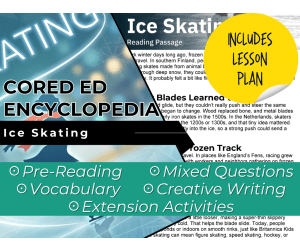
Ice Skating Reading Comprehension Passage - Cored Ed Encyclopedia
ELA, Reading Comprehension, Reading, Language Development, History, Social Studies, Science, Physics, Sports, P.E. & Health, Grade 2, 3, 4, 5, Worksheets & Printables, Worksheets, Teacher Tools, Centers, Activities, Writing Prompts, Assessments, Quizzes and Tests, Quizzes, Lesson Plans
This Ice Skating reading comprehension with lesson plan includes: Visualization (on the front cover) Start your lesson by taking a minute to think and share something about the topic. Read the script aloud (slowly), perhaps prepare some music or sound effects. Student close their eyes and let their imaginations wander. Students open their eyes, read the question aloud and give them a few minutes to complete. Ask a few students to share or keep answers until the end to compare with what they learn in the passage. Quick pause—thousands of Cored Education products are included with your TeachSimple membership. Download links and encyclopedia index available here. Pre-Reading Trivia Students will write down one thing they already know about the subject and then read five more facts and discuss. These facts are fun, and the students will enjoy learning about the subject before reading more. Give 1 minute for students to write what they already know (no pressure—best guess is fine). Read the five facts together. After each fact, do ask a student for their opinion, was it surprising? Set a purpose by asking students to highlight/underline one fact they want to learn more about during the reading. Reading Passage The text is a high-interest reading passage with set paragraphs, roughly three to four paragraphs long. It contains a variety of themes about the topic, anywhere from history to technology. The passage is between 250 and 350 words in length. First, ask students to look at the headings and see what they’ll learn about today. What do they know about the topic/heading? First read options: Teacher read-aloud (best for support). Partner reading (paragraph by paragraph). While reading, students underline important details, and vocabulary words they think may come up in the questions section. Mixed Questions The first question page contains four multiple-choice questions, each with a choice of four answers, and three written response questions that require a sentence or two from the student. Students complete the mcqs first independently, then review quickly as a class. For the 3 written responses, try to get students giving the answer with some form of evidence: “I think ___ because the text says ___.” If students get stuck, send them back to check the passage. Vocabulary Questions Practice seven key words from the text in this section across two activities. First section is scrambled words where students will unscramble three words given a clue for each. The second section is a word to meaning matching activity. Before starting, have some students read out words they underlined in the passage. Ask students to say the word and read aloud the sentence(s) around each word. Ask students to do scrambled words and the matching exercise in pairs then go through answers as a class. For the scrambled spelling task, get four pairs to come up to the board and write the words for extra practice with the other student reading out the clue. For the matching task, prompt students to give full sentences: “I matched ___ with ___ because ___.” Creative Writing In this question, the student will be required to write a five to eight sentence paragraph on a question related to the topic. Before starting, ask students write down 3 key ideas they are going to include in their piece. Ask students for ideas to share around the class to help those struggling. Pro writing expectations: 5–8 sentences At least 2 facts or details from the passage At least 2 vocabulary words from the previous page Students read their paragraphs while classmates listen for facts and vocabulary words. Extension Activities This page is optional for fast finishers or to take home. There are several activities, each one requiring a different skill. Do some, do none, do all, completely optional - but you will feel reassured knowing every possibility is planned for. Includes summary writting question and additional facts. Answer Key There are answers for the multiple-choice questions, written response questions have sample answers, vocabulary answers and if there is a summary question then a sample summary will be provided as well. Lesson Plan Included Customized lesson plan for this lesson is included. Lesson Snapshot Title: Ice Skating Genre: Nonfiction (informational text) Subject: Reading (Informational Text) / Science Primary Topic: How ice skating began and why blades glide Estimated Guided Reading Level (A–Z): R What This Lesson Teaches Best Explains how ice skating was first used for winter travel long ago (frozen lakes and rivers as “the easiest way to travel”). Describes how skates changed over time (from animal bones to wood to metal blades) and why sharpened edges mattered for control. Shows how skating shifted from travel to organized sport, including races, rules, championships, and the Olympic stage. Introduces a simple science idea for why skates glide: a super-thin slippery surface layer where ice molecules are a little looser. Uses text features (section headings) to chunk information and support comprehension. Learning Goals Identify the main idea and key details about how ice skating began and changed over time. Describe the difference between early bone skates and later skates with sharpened metal edges. Explain how sharpened edges helped skaters push, steer, and move with control. Explain, using the text, why a skate blade can slide well on ice. Describe how skating became an organized sport with rules, championships, and worldwide attention. Key Vocabulary From the Text blades — thin metal parts of skates that touch the ice. edges — sharpened sides that help a skate grip ice. molecules — tiny pieces that make up ice. championships — contests to find winners in a sport. standards — agreed rules that keep things consistent. FULL CATALOG OF DOWNLOAD LINKS AND ENCYCLOPEDIA INDEX HERE
Author Cored Education
Rating
Tags Vocabulary, Reading Comprehension, Reading Passages, Lesson Plans, Ela Lesson Plans, Reading Comprehension Lesson Plans, Pre-reading, History, P.e. Lesson Plans, Sports

Digital Citizenship & Cybersecurity Threat Simulation Pack
Science, Technology, Computer Science, Engineering, Research, Resources for Teachers, Classroom Management, Community Building, Special Resources, Social Emotional Learning (SEL), Homeschool Curriculum, Homeschool Templates, Grade 9, 10, 11, 12, Worksheets & Printables, Writing Prompts, Worksheets, Word Searches, Teacher Tools, Assessments, Lesson Plans, Quizzes and Tests, Quizzes, Tests
Develop your students’ practical skills in digital security via this complete Digital Citizenship and Cybersecurity Curriculum. This second-to-none Cybersecurity Threat Simulation Pack allows teachers to provide their students with a hands-on learning experience that far exceeds simple “strong password” teachings. Students learn about the psychology of social engineering, spear phishing, cryptography (encryption, decryption, hashing, and the avalanche effect), vulnerability to packet sniffer and evil twin man-in-the-middle attacks, OSINT and metadata risks, the permanence of their digital footprint, ransomware mitigation, synthetic media (deepfakes), and managing credential stuffing attacks. Includes: 4 detailed theory chapters including real-world examples (Operation Phantom Credentials, Midnight Hash Collision, Café Doppelgänger Breach, Overexposed Athlete) 10 high engagement student worksheets including: Social Engineering Autopsy, OSINT Investigation, Cryptographic Frameworks, Ransomware Playbook, Ethics of Hacktivism, Synthetic Media Verification, etc. 7 Knowledge Verification and Assessment Nodes (3 underscored blanks) Complete teacher materials and instructional aids including concept maps (Cybersecurity Threat Taxonomy), etc. Ideal for use as 1-1 or in project-based learning models. Available immediately as PDF downloads. No prep needed! Great for high school digital citizenship; cybersecurity electives; computer science; information technology; and media literacy classes. Keywords: digital citizenship curriculum for high schools, cybersecurity student worksheets, cybersecurity simulation, social engineering lesson plan, OSINT activities, how to teach ransomware, password security curriculum, digital footprint lesson, deepfake verification lessons, ethical hacking for high schools, TpT cybersecurity bundle. Why Schools and Parents Appreciate It: Transforms passive “internet safety” policies into active, high-risk simulation scenarios, which students retain long after the event. No prep, print-ready worksheets and answer blanks supplied equal instant classroom student engagement and assessment. All modern threats are covered (phishing, ransomware, deepfakes, open-source intel [OSINT], and credential stuffing), so that students know how to properly identify real-world attacks. Developing ethical digital citizens and teaching college and career readiness (a few universities are requiring all students become aware of cybersecurity). Saves teachers resources by providing over 40 pages of teacher materials (including an entire curriculum with teacher visuals and answer keys). Intended Audience/Classroom Setting: This resource has been developed specifically for children aged 14-18 years old (i.e., students in grades 9 to 12). The case studies involve high school seniors who are applying for scholarships/financial aid, student-athletes involved in high school football, track coaches (in their respective teams), school district divisions (i.e., regional) and students heading to universities. Given the complexity of the lesson topics (asymmetrical encryption; SHA-256 avalanche effect; MITM/evil twin attacks; OSINT metadata exploitation; ransomware IR playbooks; deep fake epistemological security), it is not suitable for children in grades 6-8 due to their maturity level (14-18) but is ideal for the following: Grades 9-12 Digital Citizenship/Digital Literacy Cybersecurity / Information Security Electives Computer science / ICT classes Media literacy/journalism (synthetic media/OSINT sections) CTE (Career and Technical Education) Cybersecurity Pathways Copyright / Terms of Use: Syed Hammad Rizvi has placed copyright on this book. This resource can be used for private (personal / classroom) use only. You may not change, copy, or sell any portion of this resource. Additionally, you will not put this on the internet for free public access (so users have to pay to download). Please purchase additional licenses through Teachsimple to share this with coworkers. Thank you for complying with these terms of use. This product has been produced with much joy by Syed Hammad Rizvi.
Author Creative Book Store
Rating
Tags DigitalCitizenship, CybersecurityCurriculum, CyberSecurityHighSchool, DigitalCitizenshipCurriculum, CybersecurityForStudents, HighSchoolCybersecurity, DigitalLiteracyCurriculum, CyberThreatSimulation, SocialEngineeringLesson, SpearPhishingWorksheet

Deepfake & Misinformation Detection
Science, Technology, Computer Science, Engineering, STEM, Resources for Teachers, Research, Classroom Management, Community Building, ELA, Homeschool Curriculum, Grade 7, 8, 9, 10, 11, 12, Worksheets & Printables, Workbooks, Worksheets, Word Searches, Writing Prompts, Teacher Tools, Lesson Plans, Quizzes and Tests, Quizzes, Tests
Deepfake & Misinformation Detection: A Complete High School Unit for Media Literacy & Critical Thinking Prepare your students for the complexities of the digital world with this comprehensive, no-prep curriculum unit on Deepfake and Misinformation Detection. In an age where AI-generated content can blur the lines between reality and fiction, this resource is not just relevant—it's essential. Designed for high school students (Grades 9-12), this 36-page unit transforms learners from passive media consumers into sharp, forensic analysts. Using the powerful "Detect, Deconstruct, Defend" methodology, students will gain the critical thinking skills necessary to navigate the modern information ecosystem, making it a perfect fit for Social Studies, Civics, ELA, Journalism, Psychology, and Media Literacy classes. What's Included in This Rigorous Unit? Part 1: In-Depth Instructional Text (10 pages): A detailed guide covering the core concepts, including the "anatomy of synthetic media," the psychology of viral misinformation, forensic detection techniques (visual and auditory), and the societal impact, such as the "Liar's Dividend." Each chapter includes a "Theory Assessment" comprehension check. Part 2: Student Workbook (11 pages): Ten challenging, high-level worksheets that go beyond simple recall. Students will analyze complex scenarios related to: Electoral Interference & Democratic Integrity Financial Markets & Fabricated Panics The Psychology of Belief & Cognitive Biases Geopolitical Tensions & Synthetic Escalation Voice Cloning, Metadata Forensics, and more! Part 3: Teacher Resources (15 pages): Everything you need to implement this lesson seamlessly! Visual Aids: High-resolution diagrams and flowcharts perfect for handouts or presentations, illustrating the Disinformation Ecosystem, Forensic Analysis Protocol, and the Amplification Cycle. Teacher Implementation Guide: A complete guide with pedagogical philosophy, pacing strategies, discussion prompts, and best practices for navigating sensitive topics in the classroom. Comprehensive Answer Key: A full answer key for all comprehension checks and student workbook exercises, including detailed explanations for scenario-based questions. Empower your students with the 21st-century skills they desperately need. This turnkey resource will challenge them to think critically, analyze evidence, and become responsible, informed digital citizens. Keywords: Media Literacy, Deepfake, Misinformation, Disinformation, AI, Critical Thinking, Digital Citizenship, High School, Social Studies, ELA, Civics, Journalism, Fake News, Source Verification, SIFT, No-Prep, Print-and-Go, Google Classroom, Digital Resource, Worksheets. Why Parents/Schools Love It: Prepares Students for the Real World: This curriculum directly addresses one of the most significant challenges of the 21st century, equipping students with practical, lifelong skills to navigate a world filled with AI and misinformation. Fosters Elite Critical Thinking: It goes beyond memorization, teaching a sophisticated forensic framework ("Detect, Deconstruct, Defend") that students can apply to any media they encounter, strengthening their analytical and reasoning abilities. Comprehensive & No-Prep: This is a complete, turnkey unit. It saves teachers dozens of hours of research and preparation with its ready-to-use instructional texts, worksheets, visual aids, and a full answer key. Highly Engaging & Relevant Content: The use of thrilling, real-world scenarios—from electoral crises and financial panics to geopolitical espionage—makes the content incredibly engaging and relevant to teenagers' lives. Target Audience: Which Classes/Students to Target Based on the advanced vocabulary (e.g., epistemology, specular highlights, cognitive dissonance), the complexity of the topics, and the explicit mention in the teacher resources, target: Primary Target: High School Students (Grades 10, 11, 12) . While the guide says Grades 8-12, the content is most appropriate for older, more mature high school students. Advanced/Honors Classes: This curriculum is perfect for AP (Advanced Placement) , IB (International Baccalaureate) , or Honors level courses due to its rigor and analytical depth. Specific Subject Areas: Social Studies / Civics / Government: Essential for units on elections, political polarization, modern warfare, and the role of media in democracy. Media Literacy / Digital Citizenship: This is a cornerstone resource for any such course. English Language Arts (ELA): Excellent for units on argumentation, rhetoric, non-fiction analysis, and understanding modern forms of text. Journalism: A must-have for teaching ethics, source verification, and the challenges facing modern news. Psychology: Perfect for exploring cognitive biases, confirmation bias, groupthink, and the psychology of belief. Economics: The sections on fabricated financial panics and market manipulation are directly relevant. Computer Science / Technology Ethics: Fits perfectly into discussions on the societal impact of artificial intelligence. Copyright/Terms of Use: This Book was copyrighted by Syed Hammad Rizvi. This resource is for personal and single classroom use only. You may not alter, redistribute, or sell any part of this resource. In other words, you may not put it on the Internet where it could be publicly found and downloaded. If you want to share this resource with colleagues, please purchase additional licenses from Teachsimple. Thank you for respecting these terms of use. This product is happily brought to you by Syed Hammad Rizvi
Author Creative Book Store
Rating
Tags MediaLiteracy, Deepfake, Misinformation, Disinformation, FakeNews, AIinEducation, ArtificialIntelligence, DigitalLiteracy, AIEthics, DigitalDeception

Whales Reading Comprehension Passage - Cored Ed Encyclopedia
ELA, Language Development, Reading Comprehension, Reading, Pre-Reading, Science, Animals, Life Sciences, Vocabulary, Writing, Grade 2, 3, 4, 5, Worksheets & Printables, Worksheets, Teacher Tools, Centers, Activities, Writing Prompts, Assessments, Quizzes and Tests, Quizzes, Lesson Plans
This whales reading comprehension with lesson plan includes: Visualization (on the front cover) Start your lesson by taking a minute to think and share something about the topic. Read the script aloud (slowly), perhaps prepare some music or sound effects. Student close their eyes and let their imaginations wander. Students open their eyes, read the question aloud and give them a few minutes to complete. Ask a few students to share or keep answers until the end to compare with what they learn in the passage. Quick pause—thousands of Cored Education products are included with your TeachSimple membership. Download links and encyclopedia index available here. Pre-Reading Trivia Students will write down one thing they already know about the subject and then read five more facts and discuss. These facts are fun, and the students will enjoy learning about the subject before reading more. Give 1 minute for students to write what they already know (no pressure—best guess is fine). Read the five facts together. After each fact, do ask a student for their opinion, was it surprising? Set a purpose by asking students to highlight/underline one fact they want to learn more about during the reading. Reading Passage The text is a high-interest reading passage with set paragraphs, roughly three to four paragraphs long. It contains a variety of themes about the topic, anywhere from history to technology. The passage is between 250 and 350 words in length. First, ask students to look at the headings and see what they’ll learn about today. What do they know about the topic/heading? First read options: Teacher read-aloud (best for support). Partner reading (paragraph by paragraph). While reading, students underline important details, and vocabulary words they think may come up in the questions section. Mixed Questions The first question page contains four multiple-choice questions, each with a choice of four answers, and three written response questions that require a sentence or two from the student. Students complete the mcqs first independently, then review quickly as a class. For the 3 written responses, try to get students giving the answer with some form of evidence: “I think ___ because the text says ___.” If students get stuck, send them back to check the passage. Vocabulary Questions Practice seven key words from the text in this section across two activities. First section is scrambled words where students will unscramble three words given a clue for each. The second section is a word to meaning matching activity. Before starting, have some students read out words they underlined in the passage. Ask students to say the word and read aloud the sentence(s) around each word. Ask students to do scrambled words and the matching exercise in pairs then go through answers as a class. For the scrambled spelling task, get four pairs to come up to the board and write the words for extra practice with the other student reading out the clue. For the matching task, prompt students to give full sentences: “I matched ___ with ___ because ___.” Creative Writing In this question, the student will be required to write a five to eight sentence paragraph on a question related to the topic. Before starting, ask students write down 3 key ideas they are going to include in their piece. Ask students for ideas to share around the class to help those struggling. Pro writing expectations: 5–8 sentences At least 2 facts or details from the passage At least 2 vocabulary words from the previous page Students read their paragraphs while classmates listen for facts and vocabulary words. Extension Activities This page is optional for fast finishers or to take home. There are several activities, each one requiring a different skill. Do some, do none, do all, completely optional - but you will feel reassured knowing every possibility is planned for. Includes summary writting question. Answer Key There are answers for the multiple-choice questions, written response questions have sample answers, vocabulary answers and if there is a summary question then a sample summary will be provided as well. Lesson Plan Included Customized lesson plan for this lesson is included. Lesson Snapshot Title: Whales Genre: Nonfiction (informational text) Subject: Life Science / Informational Reading Primary Topic: Whales as mammals, feeding types, fossils, human impacts Estimated Guided Reading Level (A–Z): Q What This Lesson Teaches Best Whales are mammals that breathe air with lungs through blowholes , so they must surface as part of everyday life. Whales can have two different feeding tools : baleen plates that strain food like krill, or sharp teeth used to grab fish or squid. Fossils provide evidence that early whale relatives were land mammals and changed over millions of years to live in the ocean. Human activity affects whales today (fishing gear tangles, ships strike, and loud noise can fill the water where whales communicate), and scientists use tracking tools to help protect them. Learning Goals Students will explain why whales rise to the surface using details about breathing and blowholes. Students will compare how baleen whales and toothed whales get food, using evidence from the text. Students will describe what fossils show about where whales came from long ago. Students will identify one modern problem that can make whale communication harder, based on the passage. Students will describe at least one way scientists track whales to protect them, using details from the text. Key Vocabulary From the Text blowholes — nostrils on top of a whale’s head. baleen — mouth plates that strain tiny food from water. krill — tiny sea creatures baleen whales hold onto. streamlined — shaped to move smoothly through water. fossils — old remains in rock that give clues. FULL CATALOG OF DOWNLOAD LINKS AND ENCYCLOPEDIA INDEX HERE
Author Cored Education
Rating
Tags Vocabulary, Reading Comprehension, Reading Passages, Lesson Plans, Ela Lesson Plans, Reading Comprehension Lesson Plans, Pre-reading, Science Lesson Plans, Life Science, Animals
Task Initiation & Micro-Step Breakdown
Life Studies, Career, Leadership, Physical Education, P.E. & Health, Mental Health, Mindfulness, Resources for Teachers, Science, Classroom Management, Grade 6, 7, 8, 9, 10, 11, 12, Teacher Tools, Worksheets & Printables, Workbooks, Worksheets, Word Searches, Assessments, Lesson Plans, Quizzes and Tests, Quizzes, Tests
Are your students or kids stuck with a blank page due to a large assignment? Do they know how to do the assignment but can’t figure out the best way to jump into it? This is not because of laziness—this is an example of a breakdown in Task Initiation, which is one of the key executive functions of the brain. Support your students to move from being passive and procrastinating to becoming active creators of their success with our comprehensive neuroscience-based curriculum. This 42-page instructional manual and workbook supports creating a step-by-step strategy to overcome your student's brain's resistance to getting started with completing tasks. By applying the principles of cognitive offloading and granular sequencing, this manual and workbook will provide you with the ultimate guide to how to accomplish your goals. This resource is designed for teachers, parents, school counselors, and executive function coaches to support helping to create lifelong habits, build confidence in school, and decrease the anxiety and stress associated with homework. Contents of this 42-page document. The Neuroscience Guide (Part 1) (The “Why”) The neuroscience of procrastination. Easy-to-understand explanations for the science of procrastination (brain science) include energy, limbic friction, activation energy, time blindness, etc. Real-life examples of the science from students and short quizzes to test knowledge and understanding. The Student Workbook (Part 2) (The “How”) 10 in-depth printed worksheets provide a complete scaffolded framework for developing executive function. Actionable Steps: Deconstruct larger projects into small tasks, identify and eliminate friction, create a five-minute launchpad, master micro steps, create an executive execution ladder, eliminate distractions, and create empathy for your future self. Capstone Project: A master blueprint for a major project using taught strategies. Part Three: Visual & Teacher/Parent Resources (The “Tools”) Three Strong Visual Supports: Printables and classroom appropriate anchor charts will give students' cognitive relief through visual representation of how to use their brain there are three charts to choose from (The Anatomy of Task Paralysis, The Micro-Step Bridge, The Task Activation Loop). Complete Answer Key: An answer key for all ten student worksheets so that teachers can provide students with a comprehensive answer key. Teacher Implementation Guide: A detailed scripted guide on how to introduce these concepts and protocols such as the “Body Double” technique. Differentiation for Neurodivergent Learners: A separate section for specific, powerful strategies for students with ADHD, ASD, and Dyslexia. Not only is this a study skills printable, but it is a powerful cognitive resource that helps students understand themselves so that they may use the resources available to them to work more efficiently with their brain, rather than against it. Keywords: Executive Functioning, Study Skills, Procrastination, Task Initiation, ADHD Support, Neurodiversity, SEL, Middle School, High School, Printable Workbook, Digital Download, Homework Help, Time Management, Metacognition, Growth Mindset, Resources for Teachers, Resources for School Counselors, Parent Guide. What Makes It Busy and Maternal/School Parent-Friendly : Based on Neuroscience (not-created based off "Shame"): It regards procrastination as a normal neurological event, not an individual's defect nor character flaw. This removes guilt associated with procrastination by providing students with a "hacker" mindset to achieve the best outcome for their situation based on the wiring of their brains. Has Actionable, Step-By-Step Tools: Instead of vague and subjective statements like “just break it down,” this curriculum focuses on rigorous, rigorous sequencing (providing valuable resource worksheets/checklists) and concrete ways that a student can apply the information immediately. Targets Neurodivergent Learners: The section on differentiation for ADHD, ASD and Dyslexia students is a must-have addition to any inclusive classroom and will meet needs of all parents with children needing specific support; therefore, it is an extremely "valuable" and "highly-valuable" resource. Develops Lifelong Skills (beyond a one-time project): In addition to a single project, skills presented include metacognition, self-regulation, and planning—all important life-skills needed to continue and succeed throughout high school, college and after. The primary target audience is middle school students (6th-8th grade). The multiple case studies included (6th, 8th grade), the reorganization of the prefrontal cortex and task characteristics align directly with this group. The second target audience is upper elementary (4th-5th Grade) and high school (9th-12th Grade). As stated in the "Visuals & Teacher Keys" section: "(Grade 4-8)". The concepts provided are foundational and lend themselves readily to alteration, both upwards and downwards. High school students with executive functioning issues, especially those diagnosed with ADHD, would see tremendous benefit from this resource. Copyright Notice: This book was copyrighted by Syed Hammad Rizvi. This resource is available for personal use in a single-classroom setting only and cannot be changed (modifications), No part of this book can be shared, sold, or posted on the Internet to be found or downloaded by the public. Please note that if you wish to share this resource with others (teachers), you must buy additional licenses (a fee) from Teachsimple. Thank you for your cooperation in following these terms of usage. This product has been brought to you with pride by Syed Hammad Rizvi.
Author Creative Book Store
Rating
Tags Procrastination, Motivation, StudySkills, TimeManagement, Organization, Neuroscience, ADHD, GrowthMindset, ExecutiveFunctioning, TaskInitiation

Homologous Series of Alcohols – Word Search Activity (Differentiated)
Life Sciences, Science, STEM, Basic Science, Physics, Chemistry, Biology, Earth and Environmental Sciences, Environmental Science, Grade 6, 7, 8, 9, 10, 11, Worksheets, Worksheets & Printables, Quizzes, Quizzes and Tests, Teacher Tools, Activities, Games, Task Cards, Crosswords Puzzles, Word Searches
Homologous Series of Alcohols – Word Search Activity (Differentiated) A flexible review task for organic chemistry lessons (Grades 8–11) 🧪🔍 Alkanols Alcanoles This set of word search puzzles offers a quiet but focused way for students to review the homologous series of alcohols in organic chemistry. Instead of asking for definitions or formulae, students engage with key terms through active searching – which can be a surprisingly effective way to reinforce terminology. The material includes 10 word search puzzles , each in two variants (A/B), with five levels of difficulty . These levels are marked with stars (1 to 5), so you can easily differentiate within your classroom. Puzzles vary by grid size and by the direction in which words are hidden – from simple (only forward) to more challenging (also backward and diagonal). The content covers terminology related to the alcohol functional group and homologous series, making it a suitable supplement to introductory or review units in organic chemistry. What’s included: 10 unique puzzles × 2 variants (A and B) 5 differentiation levels based on grid size and word direction Answer keys for all puzzles Color and black-and-white versions for easy printing Chemistry-themed clipart to add visual appeal Ideas for classroom use: I’ve used these word searches both as a quiet review tool and as a warm-up or cool-down at the beginning or end of a lesson. The A/B version is especially useful for classroom management – students working side by side aren’t tempted to copy but still complete equivalent tasks. Students often appreciate the variety, especially when switching between more structured exercises and creative, self-paced activities. Whether as an individual task, a group competition, or a calming option during busy weeks – this resource supports technical vocabulary in a format that feels low-pressure and accessible. A simple and effective addition to your chemistry toolkit. Have fun exploring the world of science with your students! Warmly, Lernfitness Did You Know? I teach with a certified therapy dog, and together we focus on creating a positive and inspiring learning environment.
Author Lernfitness
Rating
Tags Science, STEM, Chemistry, Homologous Series, Alcohols, Word Search Activity, Differentiated, Organic Chemistry, Alkanols, Alcanoles
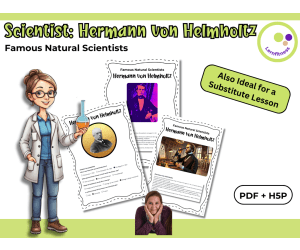
Hermann von Helmholtz – Fact Sheet, Quiz & Interactive PDF (incl. H5P)
Life Sciences, Science, STEM, History, Social Studies, Biographies, Inventors, Basic Science, Physics, Human Body, Grade 6, 7, 8, 9, Worksheets, Worksheets & Printables, Quizzes, Quizzes and Tests, Teacher Tools, Projects, Activities
Hermann von Helmholtz - Fact Sheet, Quiz & Interactive Version (PDF & H5P) Hermann von Helmholtz – Sensory Physiology Made Understandable Fact Sheet, Quiz & Interactive Exercises (PDF + H5P) This material introduces students in grades 7–10 to the life and research of Hermann von Helmholtz – one of the key figures behind our scientific understanding of vision, hearing, and nerve conduction. Even if students already know a bit about how our senses work, most are surprised to learn how long ago these topics were explored in depth – and by whom. Helmholtz’s work at the intersection of biology, physics, and medicine still shapes modern neuroscience today. To make this complex content more accessible, I put together a compact set of resources you can easily use in a 45-minute lesson. It includes a short text, a fact sheet, quiz questions (with answers), and a few creative tasks to get students thinking and interacting. You’ll find both color and black-and-white versions – great for printing or digital use. There’s also an H5P version for those who prefer an interactive format. What’s included: A short, student-friendly text on Hermann von Helmholtz and his key discoveries A fact sheet activity to help students organize the main ideas Quiz questions (with solutions) to check understanding An open-ended task where students come up with their own questions and exchange them with a partner Ready-to-print or use digitally (PDF + H5P) Answer key included for quick correction I’ve used this in biology class as part of a unit on the nervous system, but it also fits well in lessons on sensory organs, neuroscience, or even the history of science. The material works for independent work, partner activities, or as a simple introduction to one of the most influential scientists of the 19th century. No extra prep needed – just pick the version that suits your classroom best. 🚀 Download now and bring the legacy of Hermann von Helmholtz into your biology lessons today! 📍 Best wishes, Heike from Lernfitness Did You Know? I teach with a certified therapy dog, and together we create a positive and inspiring learning environment. 🐶✨
Author Lernfitness
Tags Science, Biology, Famous Scientists Lesson, H5P, Interactive Science Exercises, STEM, History, Scientists, Hermann Von Helmholtz, Physiology
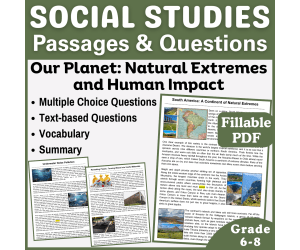
Reading Passages: Our Planet and Human Impact (Fillable PDF)
ELA, Reading, Reading Comprehension, Strategies, Resources for Teachers, Social Studies, Geography, Grade 6, 7, 8, 9, Writing Prompts, Worksheets & Printables, Centers, Activities, Teacher Tools, Assessments, Quizzes and Tests, Quizzes, Tests
Social Studies Reading Comprehension Passages and Questions: Our Planet: Natural Extremes and Human Impact (Fillable PDF) This resource introduces a collection of Social Studies reading comprehension passages with questions about Our Planet: Natural Extremes and Human Impact. The passages are carefully designed to bridge the gap between social studies and literacy through strengthening reading comprehension and sparking knowledge curiosity in middle school students. Each passage blends English Language Arts skills with accurate social studies content . Ideal for interdisciplinary learning in ELA and Social Studies. Suitable for Grade 9 review, too! These worksheets are designed as fillable PDFs , which means students can type their answers directly into the document on any computer or tablet . Each page includes highlighted text fields that show them exactly where to type! What Is Included in this Collection? There are three informational passages (with full answer keys): Remaking Plastic: Turning Waste into Useful Materials Underwater Noise Pollution South America: A Continent of Natural Extremes For Each Passage, students will have multiple tasks to complete as follow: 5 multiple-choice questions targeting main idea, key details, inference, vocabulary in context, and use of evidence 5 vocabulary matching items with clear, student-friendly definitions 5 text-based questions that require citing specific lines or facts 1 summary prompt that asks students to condense central ideas accurately Available Formats for this Resource PDF Word Docs Google Docs FULL CATALOG OF DOWNLOADING LINKS HERE For more Social Studies Reading Passages, check the following Links: Ancient Civilizations PDF Fillable PDF Word Docs Google Docs Early Empires and Trade Networks PDF Fillable PDF Word Docs Google Docs The Founding of the United States PDF Fillable PDF Word Docs Google Docs Language, Culture, and Meaning PDF Fillable PDF Word Docs Google Docs Psychology and Society PDF Fillable PDF Word Docs Google Docs Global Festivals and Traditions PDF Fillable PDF Word Docs Google Docs Extreme Environments and People PDF Fillable PDF Word Docs Google Docs Food, Culture, and Preservation PDF Fillable PDF Word Docs Google Docs Global Food Customs PDF Fillable PDF Word Docs Google Docs Media, Communication, and Popular Culture PDF Fillable PDF Word Docs Google Docs Human Impact on the Environment PDF Fillable PDF Word Docs Google Docs Civic Action and Social Change PDF Fillable PDF Word Docs Google Docs Fashion, Society, and Power PDF Fillable PDF Word Docs Google Docs People, Places, and Unusual Histories PDF Fillable PDF Word Docs Google Docs How to Use These PDFs Click on the highlighted area to start typing your answer. Move to the next question by clicking in the next highlighted box. When you are finished, close the document and select SAVE so your answers stay recorded. If you want to keep a blank copy for later, choose Save As and give your completed version a new name. Product Details Length: 15 pages total Grades: 6–8, also suitable for Grade 9 review Use cases: close reading, stations, homework, intervention, test prep, and sub plans Why Teachers Choose This Set Authentic social studies content paired with rigorous literacy practice Consistent task structure across all passages for easier planning and smoother student routines Clear, age-appropriate writing that builds confidence without oversimplifying Use this set to reinforce ELA skills in social studies, to add literacy to your lessons, and to support independent work. The passages strengthen main idea, evidence use, vocabulary in context, inference, cause and effect, and summary writing. With ready-to-use assessments and complete answer keys, you can provide focused practice that is simple to run and fast to review.
Author Middle & High School - CORED Education
Rating
Tags Middle School, Reading Comprehension, Reading Strategies, ELA, Centers, Reading Passage, Assessments, Vocabulary, Social Studies, Geography
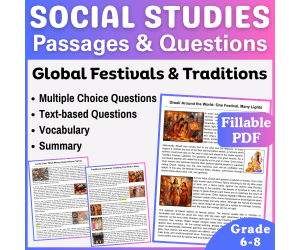
Social Studies Passages Global Festivals and Traditions (Fillable PDF)
ELA, Reading, Reading Comprehension, Strategies, Resources for Teachers, Social Studies, Psychology, Sociology, Grade 6, 7, 8, 9, Writing Prompts, Worksheets & Printables, Centers, Activities, Teacher Tools, Assessments, Quizzes and Tests, Quizzes, Tests
Social Studies Reading Comprehension Passages: Global Festivals and Traditions (Fillable PDF) This resource introduces a collection of Social Studies reading comprehension passages about Global Festivals and Traditions. The passages are carefully designed to bridge the gap between social studies and literacy through strengthening reading comprehension and sparking knowledge curiosity in middle school students. Each passage blends English Language Arts skills with accurate social studies content. Ideal for interdisciplinary learning in ELA and Social Studies. Suitable for Grade 9 review, too! These worksheets are designed as fillable PDFs , which means students can type their answers directly into the document on any computer or tablet . Each page includes highlighted text fields that show them exactly where to type! What Is Included in this Collection? There are three informational passages (with full answer keys): Diwali Around the World: One Festival, Many Lights Traditional Costumes: Clothing That Tells a Story Lucky Cash: What Money Superstitions Tell Us For Each Passage, students will have multiple tasks to complete as follow: 5 multiple-choice questions targeting main idea, key details, inference, vocabulary in context, and use of evidence 5 vocabulary matching items with clear, student-friendly definitions 5 text-based questions that require citing specific lines or facts 1 summary prompt that asks students to condense central ideas accurately Available Formats for this Resource PDF Word Docs Google Docs FULL CATALOG OF DOWNLOADING LINKS HERE For more Social Studies Reading Passages, check the following Links: Ancient Civilizations PDF Fillable PDF Word Docs Google Docs Early Empires and Trade Networks PDF Fillable PDF Word Docs Google Docs The Founding of the United States PDF Fillable PDF Word Docs Google Docs Language, Culture, and Meaning PDF Fillable PDF Word Docs Google Docs Psychology and Society PDF Fillable PDF Word Docs Google Docs Global Festivals and Traditions PDF Fillable PDF Word Docs Google Docs Extreme Environments and People PDF Fillable PDF Word Docs Google Docs Food, Culture, and Preservation PDF Fillable PDF Word Docs Google Docs Global Food Customs PDF Fillable PDF Word Docs Google Docs Media, Communication, and Popular Culture PDF Fillable PDF Word Docs Google Docs Human Impact on the Environment PDF Fillable PDF Word Docs Google Docs Civic Action and Social Change PDF Fillable PDF Word Docs Google Docs Fashion, Society, and Power PDF Fillable PDF Word Docs Google Docs People, Places, and Unusual Histories PDF Fillable PDF Word Docs Google Docs How to Use These PDFs Click on the highlighted area to start typing your answer. Move to the next question by clicking in the next highlighted box. When you are finished, close the document and select SAVE so your answers stay recorded. If you want to keep a blank copy for later, choose Save As and give your completed version a new name. Product Details Length: 14 pages total Grades: 6–8, also suitable for Grade 9 review Use cases: close reading, stations, homework, intervention, test prep, and sub plans Why Teachers Choose This Set Authentic social studies content paired with rigorous literacy practice Consistent task structure across all passages for easier planning and smoother student routines Clear, age-appropriate writing that builds confidence without oversimplifying Use this set to reinforce ELA skills in social studies, to add literacy to your lessons, and to support independent work. The passages strengthen main idea, evidence use, vocabulary in context, inference, cause and effect, and summary writing. With ready-to-use assessments and complete answer keys, you can provide focused practice that is simple to run and fast to review.
Author Middle & High School - CORED Education
Rating
Tags Middle School, Reading Comprehension, Reading Strategies, ELA, Centers, Reading Passage, Assessments, Vocabulary, Social Studies, Global Festivals And Traditions
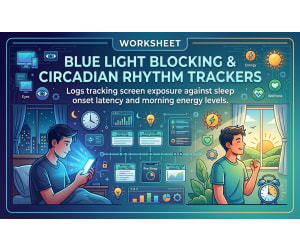
Blue Light Blocking & Circadian Rhythm Trackers
Science, Physics, Chemistry, STEM, Resources for Teachers, Classroom Management, Community Building, Earth and Environmental Sciences, Research, P.E. & Health, Homeschool Curriculum, Homeschool Templates, Grade 8, 9, 10, 11, 12, Worksheets & Printables, Workbooks, Worksheets, Word Searches, Teacher Tools, Lesson Plans, Quizzes and Tests, Quizzes, Tests, Assessments
Are your students tired? Do they struggle with morning fatigue, yet stay glued to their screens late into the night? It's the paradox of modern adolescence. This comprehensive, project-based learning (PBL) module transforms their struggle into a powerful scientific investigation. Turn Students into Scientists with This Hands-On Health Project! Instead of just telling students that "screens are bad for sleep," this resource empowers them to prove it to themselves. "The Screen Time & Sleep Experiment" is a rigorous, 4-week unit that guides students through an N-of-1 trial—a personal experiment where they are both the researcher and the subject! Students will learn the deep neurobiology behind sleep (melatonin, suprachiasmatic nucleus, ipRGCs) and then apply it by tracking their own data. They will use detailed logs to correlate evening screen time with critical metrics like Sleep Onset Latency (SOL) and Morning Energy Levels . This isn't just a worksheet; it's a journey of self-discovery that builds critical life skills. What's Included in This 36-Page Turnkey Resource? Part 1: The Empirical Approach to Sleep Hygiene (11 Pages): A detailed, student-facing guide explaining the science of circadian rhythms, melatonin suppression, photic vs. cognitive arousal, and intervention strategies. Part 2: Student Workbook (16 Pages): Features 10 detailed worksheets that guide students through every phase of their experiment—from establishing a baseline to tracking interventions (software filters, blue-light glasses), analyzing data, and creating a sustainable personal sleep protocol. Part 3: Visuals & Teacher Resources (9 Pages): Everything you need to facilitate the project with confidence. This section includes: High-resolution conceptual diagrams (flowcharts, scatter plots). A comprehensive, fill-in-the-blank Answer Key. A detailed Teacher Implementation Guide with a 4-week pacing plan, advice on navigating subjective data, and strategies for ensuring student privacy. Why This Project is a Game-Changer for Your Classroom: Relevant & Engaging: Tackles a real-world issue that directly impacts every student's daily life, health, and academic performance. Promotes Scientific Literacy: Students practice the scientific method, collect and analyze quantitative data, identify confounding variables, and distinguish correlation from causation. Cross-Curricular: Perfect for Health, Biology, AP Psychology, Human Anatomy & Physiology, and even Statistics classes. Builds Digital Citizenship & SEL: Encourages self-regulation, mindfulness about technology use, and empowers students to take control of their own well-being. Give your students the "aha!" moment they need to understand the invisible mechanics of their own biology. Equip them with the knowledge and skills to navigate the digital age in a healthy, productive way. Download this print-and-go resource today! Keywords: Sleep Hygiene, Screen Time, Blue Light, Circadian Rhythm, Health, High School, Biology, AP Psychology, Project-Based Learning (PBL), Data Tracking, Scientific Method, Melatonin, Digital Citizenship, Health and Wellness, Student Experiment, Lab Report. Why Parents/Schools Love It: Turns a Problem into a Project: It addresses the universal struggle over teen screen time not with lectures, but with an empowering, student-led scientific investigation. Fosters Self-Responsibility: By using their own data, students see the direct consequences of their habits, leading to intrinsic motivation for change that is far more effective than parental nagging. Teaches Critical 21st-Century Skills: This goes beyond biology; it teaches data literacy, critical thinking, self-regulation, and how to create a healthy work-life-tech balance. It’s a Complete, Turnkey Solution: The resource is a comprehensive package with a student guide, workbook, and a full teacher implementation guide, making it easy for any educator to run a high-quality, impactful project. Target Audience: Student Classes : Based on the explicit mention of "Grade 11 Health students" and the academic rigor of the content, target: Primary Target: High School Health and Wellness Classes (Grades 10-12) . This is a perfect fit. Secondary Targets: Biology / AP Biology: Excellent for units on the human endocrine system, nervous system, or homeostasis. AP Psychology: Perfect for units on sleep, consciousness, and sensation. Human Anatomy & Physiology: Fits into studies of the nervous and endocrine systems. Statistics: The data collection and analysis component makes it a fantastic real-world project. Copyright/Terms of Use: This Book was copyrighted by Syed Hammad Rizvi. This resource is for personal and single classroom use only. You may not alter, redistribute, or sell any part of this resource. In other words, you may not put it on the Internet where it could be publicly found and downloaded. If you want to share this resource with colleagues, please purchase additional licenses from Teachsimple. Thank you for respecting these terms of use. This product is happily brought to you by Syed Hammad Rizvi
Author Creative Book Store
Rating
Tags ScreenTime, SleepHygiene, ProjectBasedLearning, PBL, HighSchoolHealth, HighSchoolBiology, Health Education, ScienceTeacher, DigitalCitizenship, StudentWellness
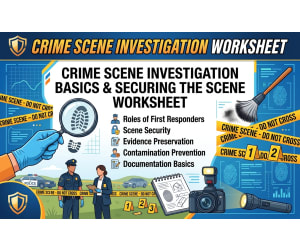
Crime Scene Investigation Basics & Securing the Scene
Science, Physics, Chemistry, Resources for Teachers, Classroom Management, Community Building, Law, Social Studies, Psychology, Sociology, Grade 6, 7, 8, 9, 10, 11, 12, Teacher Tools, Lesson Plans, Quizzes and Tests, Quizzes, Tests, Worksheets & Printables, Workbooks, Worksheets, Word Searches, Assessments
Transform your classroom into a crime scene and your students into forensic detectives! Are you looking for a high-interest, no-prep resource to introduce the fascinating world of forensic science? This comprehensive digital unit, "Crime Scene Investigation Basics & Securing the Scene," is the ultimate, all-in-one package designed to captivate middle and high school students and build critical thinking skills. This isn't just a set of worksheets; it's a complete educational journey. The resource is professionally designed and divided into three powerful phases: a detailed student reading guide, a robust student workbook with 10 activities, and a complete teacher resource pack with visuals, answer keys, and an implementation guide. What's Inside This 47-Page Unit? Part 1: The Investigator's Guide: A detailed, engaging 11-page guide that serves as the core text. It covers foundational concepts with real and fictional case studies. Topics include: Locard's Exchange Principle ("Every contact leaves a trace") The Vital Roles of First Responders (Life over evidence) The "Golden Hour" of Evidence The Three-Tier Perimeter System (Hot, Warm, and Cold Zones) Evidence Preservation & Contamination Prevention (PPE, Cross-Contamination) The Chain of Custody The Documentation Triad: Note-taking, Photography, and Sketching Part 2: The Student Workbook: Ten unique worksheets that build on the guide, moving from basic knowledge to complex application and synthesis. Activities include: Fill-in-the-blanks, true/false, and matching Scenario analysis and critical thinking prompts A final Capstone Challenge that requires students to apply everything they've learned to a complex, multi-layered crime scene scenario. Part 3: Teacher's Toolkit: Everything you need to teach this unit effectively and save valuable prep time! Instructional Visuals: Clean, professional diagrams (Flowchart, Concentric Zones, Documentation Triad) perfect for presentations or handouts. Comprehensive Answer Key: Detailed answers for all 10 worksheets, including model answers for open-ended questions. Teacher Implementation Guide: A 5-day suggested lesson plan, strategies for correcting common misconceptions, a hands-on lab activity ("The Contamination Walk"), and tips for differentiated instruction. This resource is perfect for your Forensic Science, Criminal Justice, Law & Public Safety, Biology, or general science classes. Bring the thrill of CSI to your classroom and watch your students' engagement and analytical skills soar! Keywords for Tags: Forensic Science, forensics, forensic science curriculum, CSI, Crime Scene Investigation, Criminal Justice, Evidence Collection, Locard's Principle, No-Prep, Digital Resource, Printable, first day of school activities, Worksheets, Activity, Lesson Plan, Unit Plan, High School Science, Middle School Science, CTE, Law Enforcement. Why Parents/Schools Love It: Builds Real-World Critical Thinking: Moves beyond simple memorization, challenging students to analyze complex scenarios, evaluate evidence, and make logical decisions—skills essential for any career path. Irresistibly Engaging Content: Taps into the popularity of crime shows and mysteries, making learning about scientific principles and protocols exciting and relevant for students who might otherwise be disengaged. Comprehensive & Time-Saving for Teachers: This is a complete, "print-and-go" or "post-and-go" unit. The detailed guides, worksheets, and answer keys save teachers hours of prep time. Promotes STEM and Career Exploration: Directly introduces students to the real-world application of science and the protocols used in law enforcement and forensic careers, sparking interest in valuable STEM fields. Adaptable for Diverse Learners: The included Teacher Implementation Guide provides clear strategies for differentiation, ensuring that analytical, kinesthetic, and language-focused learners can all access and excel with the material. Target Student Audience : Based on the vocabulary, concepts, and the critical thinking required in the worksheets, target the following: Primary Target: High School Students (Grades 9-12) Forensic Science Electives: This is a perfect introductory unit. Criminal Justice / Law & Public Safety (CTE) Classes: It directly aligns with the foundational principles of their curriculum. Biology or Chemistry Classes: An excellent high-interest application unit for scientific methodology, observation, and contamination control. Secondary Target: Advanced Middle School Students (Grades 7-8) Gifted and Talented Programs: The complexity is suitable for advanced learners. Science Electives or Enrichment Clubs: A fantastic and engaging topic for an after-school program or a special unit in a general science class. Copyright/Terms of Use: This Book was copyrighted by Syed Hammad Rizvi. This resource is for personal and single classroom use only. You may not alter, redistribute, or sell any part of this resource. In other words, you may not put it on the Internet where it could be publicly found and downloaded. If you want to share this resource with colleagues, please purchase additional licenses from Teachsimple. Thank you for respecting these terms of use. This product is happily brought to you by Syed Hammad Rizvi
Author Creative Book Store
Rating
Tags Forensicscience, Crimesceneinvestigation, Csi, Forensics, Criminalistics, Locardsprinciple, Evidencecollection, Chainofcustody, Forensicfiles, Criminaljustice
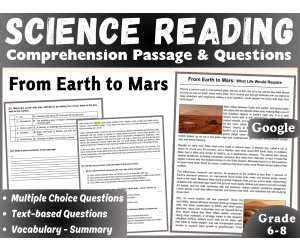
Earth Science Reading Comprehension Passage: From Earth to Mars (Docs)
Science, ELA, Reading, Reading Comprehension, Strategies, Resources for Teachers, Earth and Environmental Sciences, Space, Grade 6, 7, 8, 9, Writing Prompts, Worksheets & Printables, Centers, Activities, Teacher Tools, Assessments, Quizzes and Tests, Quizzes, Tests
Science Reading Comprehension Passages and Questions: From Earth to Mars (Docs) This very engaging earth science reading passage about Mars is designed to bridge the gap between science and literacy through strengthening reading comprehension and sparking scientific curiosity in middle school students. The passage blends English Language Arts skills with accurate science content that supports NGSS classroom practice. Ideal for interdisciplinary learning in ELA and Science. Suitable for Grade 9 review, too! Student Tasks for The Passage: 5 multiple-choice questions targeting main idea, key details, inference, vocabulary in context, and use of evidence 5 vocabulary matching items with clear, student-friendly definitions 5 text-based questions that require citing specific lines or facts 1 summary prompt that asks students to condense central ideas accurately Full answer key for every section Available Formats for this Resource PDF Fillable PDF Word Docs FULL CATALOG OF DOWNLOADING LINKS HERE Product Details Length: 5 pages total Grades: 6–8, also suitable for Grade 9 review Use cases: close reading, stations, homework, intervention, test prep, and sub plans Standards support: reinforces informational-text skills and supports NGSS-style sense making through observation, modeling, and clear use of claim, evidence, and reasoning Why Teachers Choose This Set Authentic science content paired with rigorous literacy practice Consistent task structure across all passages for easier planning and smoother student routines Clear, age-appropriate writing that builds confidence without oversimplifying Other Science Reading Collections you May find in the store: 1. Astronomy & Space Science 2. Volcanoes, Rocks, & Mountains 3. Rock Cycle, Soil, & Sinkholes 4. Mars, Glaciers, & Antarctica 5. Water Cycle, Acid Rain, & Wastewater 6. Insects, Animals, & Ecosystems 7. Bioluminescence & Insects 8. Animal Skin, Cats, & T. Rex 9. Human Body and Senses 10. Health & Applied Bioscience 11. Waves, Light, & Imaging 12. Electricity & Energy 13. Motion & Materials 14. Chemistry and Materials Science Use this set to reinforce ELA skills in science, to add literacy to your lessons, and to support independent work. The passages strengthen main idea, evidence use, vocabulary in context, inference, cause and effect, and summary writing. With ready-to-use assessments and complete answer keys, you can provide focused practice that is simple to run and fast to review.
Author Middle & High School - CORED Education
Rating
Tags Middle School, Reading Comprehension, Reading Strategies, ELA, Centers, Reading Passage, Assessments, Vocabulary, Environmental Science, Space
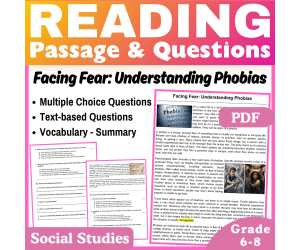
Understanding Phobias: Social Studies Reading Passage (PDF)
ELA, Reading, Reading Comprehension, Strategies, Resources for Teachers, Social Studies, Psychology, Grade 6, 7, 8, 9, Writing Prompts, Worksheets & Printables, Centers, Activities, Teacher Tools, Assessments, Quizzes and Tests, Quizzes, Tests
Understanding Phobias: Social Studies Reading Comprehension Passage (PDF) This resource introduces a unique Social Studies reading comprehension passage with questions about Facing fears and Understanding Phobias. The passage is carefully designed to bridge the gap between social studies and literacy through strengthening reading comprehension and sparking knowledge curiosity in middle school students. Each passage blends English Language Arts skills with accurate social studies content . Ideal for interdisciplinary learning in ELA and Social Studies. Suitable for Grade 9 review, too! Student Tasks throughout the passage: 5 multiple-choice questions targeting the following skills: main idea, key details, inference, vocabulary in context, and use of evidence 5 vocabulary matching items with clear, student-friendly definitions 5 text-based questions that require citing specific lines or facts 1 summary prompt that asks students to condense central ideas accurately Full answer key for every section Available Formats for this Resource: Fillable PDF Word Docs Google Docs FULL CATALOG OF DOWNLOADING LINKS HERE Social Studies Reading Comprehension Collection Links: 1. Ancient Civilizations PDF Fillable PDF Word Docs Google Docs 2. Early Empires and Trade Networks PDF Fillable PDF Word Docs Google Docs 3. The Founding of the United States PDF Fillable PDF Word Docs Google Docs 4. Language, Culture, and Meaning PDF Fillable PDF Word Docs Google Docs 5. Psychology and Society PDF Fillable PDF Word Docs Google Docs 6. Global Festivals and Traditions PDF Fillable PDF Word Docs Google Docs 7. Extreme Environments and People PDF Fillable PDF Word Docs Google Docs 8. Food, Culture, and Preservation PDF Fillable PDF Word Docs Google Docs 9. Global Food Customs PDF Fillable PDF Word Docs Google Docs 10. Media, Communication, and Popular Culture PDF Fillable PDF Word Docs Google Docs 11. Human Impact on the Environment PDF Fillable PDF Word Docs Google Docs 12. Civic Action and Social Change PDF Fillable PDF Word Docs Google Docs 13. Fashion, Society, and Power PDF Fillable PDF Word Docs Google Docs 14. People, Places, and Unusual Histories PDF Fillable PDF Word Docs Google Docs Product Details: Length: 5 pages Grades: 6–8, also suitable for Grade 9 review Use cases: close reading, stations, homework, intervention, test prep, and sub plans Why Teachers Choose This Passage: Authentic social studies content paired with rigorous literacy practice Consistent task structure for easier planning and smoother student routines Clear, age-appropriate writing that builds confidence without oversimplifying Use this passage to reinforce ELA skills in social studies, to add literacy to your lessons, and to support independent work. The passage strengthens main idea, evidence use, vocabulary in context, inference, cause and effect, and summary writing. With ready-to-use assessments and complete answer keys, you can provide focused practice that is simple to run and fast to review.
Author Middle & High School - CORED Education
Rating
Tags Middle School, Reading Comprehension, Reading Strategies, ELA, Centers, Reading Passage, Assessments, Vocabulary, Social Studies, Pschology
Coding Logic & Algorithm Design (No-Code) Practice Sheets
Science, Technology, Computer Science, Engineering, STEM, Special Resources, Life Skills, Research, Resources for Teachers, Classroom Management, Grade 3, 4, 5, 6, 7, 8, 9, Worksheets & Printables, Workbooks, Worksheets, Word Searches, Teacher Tools, Assessments, Lesson Plans, Quizzes and Tests, Quizzes, Tests
By teaching the logic of code, you'll be able to unlock the true power of programming!!! This comprehensive curriculum has been created specifically for students in grades four through seven and will provide them with a strong foundation in Computational Thinking using a completely screen-free method—all without writing a single line of code. Are you interested in teaching Computer Science fundamentals but unable to cross the barrier of Syntax and software? Introducing Computer Science’s Fundamentals with an „Unplugged Coding” unit is the perfect solution. Students will learn to think about problems and create solutions like Engineers, Problem Solvers, and Innovators through real-world examples and well-designed worksheets. Instead of just providing another set of puzzles, this four-week, ready to go, complete unit will teach your students to convert abstract concepts into concrete skills. Once students have mastered this Architecture of Thought, they will be ready for any programming languages they may encounter in the future. THIS RESOURCE CONTAINS 40 PAGES OF MATERIAL, INCLUDING: 1) A comprehensive guide & theoretical framework that will help teachers (or older students) get a basic understanding of each of the four pillars of computer science: 1) Sequencing and Precision (anatomy of an algorithm) 2) Conditionals and Branching (logic at the crossroads) 3) Loops and Iteration (how to use repetition effectively) 4) Debugging and Optimization (the art of fixing things) 2) A fun, hands-on workbook that contains 10 different worksheets, each based on using the theoretical concepts in real-world situations. | Worksheet #1 = The Architecture of Sequence (Deep-Sea Drone Mission) Worksheet #2 = Conditional Pathways (Mars Rover Logic) Worksheet #3 = The Power of Iteration (Automated Greenhouse) Worksheet #4 = Variables and State (Retro Arcade Game) Worksheet #5 = Boolean Logic Gates (High-Tech Security Vault) Worksheet #6 = Function Design (Drone Light Show) Worksheet #7 = Debugging and Logical Errors (Theme Parks Ride) Worksheet #8 = Pattern Recognition and Abstraction (Alien Puzzle Box) Worksheet #9 = Algorithm Optimization (Robotic Postal Service) Worksheet #10 = System Design (Intelligent Vending Machine) Teacher Resources and Visuals: Everything You Need to Implement This Unit With Confidence - 3 High-Resolution Visual Anchor Charts to Display in the Classroom (Algorithm Design Process, Control Structures, Debugging Protocol). - Detailed Teacher Implementation Guide: pedagogical philosophy, 4-week pacing/deployment strategy, and differentiation tips. - "Logic E.D.G.E." Evaluation Rubric: One-of-a-Kind Methodology Assessment Tool As An Assessment Tool For Methodologies Not Only Right or Wrong Answers. - Comprehensive Answer Key: Easily Check Student Work. This resource is ideal for middle school computer science, STEM or STEAM electives, coding clubs, homeschool co-ops and/or gifted & talented upper elementary programs. Student empowerment = Master Problem Solvers! Download today to build the foundation for a lifetime of logical thinkers! Keywords: Unplugged Coding, Coding Without a Computer, Computational Thinking, Algorithm Design, Logic Puzzles, STEM, STEAM, Middle School Computer Science, Hour of Code, Screen-Free Activities, 4th Grade, Fifth Grade, Sixth Grade, Seventh Grade, Homeschool, Digital Resource Reasons Why Educators/Parents Appreciate The Program: Develops Real Skills at the Fundamental Level: It does not only have educational value as a game, but allows learners to see the logic of computer programming - students begin to see how computers function in the digital world. Completely Hand-Emphasis On Learning: In this modern world where we have become over-reliant on technology, the unplugged curriculum offers an hands-on means to integrate computer science into the lives of children while promoting critical thinking skills as well as reducing screen times. Everything Needed for Teachers to Implement Unit: All of the components required for teacher/educator to successfully implement the 28-day unit are included - Teacher’s Guide - Worksheets - Visuals - Answer Key with all included One-Time Prep for Teacher, however is Minimal. Fun, Imagination Driven Learning Through Unplugging: This unit assists educators in the "math" of coding and programming by allowing them to eliminate the frustration of syntax errors and develop understanding without the use of device and apparatus. Interesting but simple scenarios (Example - Program a Mars rover) keep students engaged and excited about learning. Development of Resilience and Problem Solving: The incredible focus and emphasis on NEAT Debugging Concepts, allow students to experience and understand that errors are both normal and will continue to happen during the learning journey while building analytic skills and resiliency. Intended Audience for Student: According to the PDF's recommendations and its degree of complexity, the target audiences are: Primary Target: Grades 4 through 7 (Aged 9 through 13) Secondary Target: 3rd grade: Gifted and Talented Program 8th grade: Introduction or remedial courses Families that are home-schooled with a structured STEM curriculum After-school coding clubs that would like an introduction to the fundamentals. Copyright/Terms of Use This book has been published by Syed Hammad Rizvi and is intended for personal use only. Any alteration, redistribution or sale of this resource is strictly prohibited. For example, you cannot place this resource on the internet in any way that someone might find it and download it. If you would like to share this resource with others you work with, please go to Teachsimple and purchase the appropriate number of licenses. Thank you for your consideration of these terms of use. This product is proudly produced by Syed Hammad Rizvi
Author Creative Book Store
Rating
Tags STEM, Coding, ComputerScience, EdTech, Education, CriticalThinking, ProblemSolving, TeachersOfInstagram, TechForKids, Coding Worksheets

Internet Reading Comprehension Passage - Cored Ed Encyclopedia
ELA, Language Development, Resources for Teachers, Reading Comprehension, Reading, Pre-Reading, Writing, Science, Technology, Strategies, Grade 2, 3, 4, 5, Worksheets & Printables, Worksheets, Teacher Tools, Centers, Activities, Writing Prompts, Assessments, Tests, Quizzes and Tests, Quizzes
This Internet reading comprehension contains the following: Pre-Reading Trivia Students will write down one thing they already know about the subject and then read five more facts and discuss. These facts are fun, and the students will enjoy learning about the subject before reading more. Reading Passage The text is a high-interest reading passage with set paragraphs, roughly three to four paragraphs long. It contains a variety of themes about the topic, anywhere from history to technology. The passage is between 250 and 350 words in length. Mixed Questions The first question page contains four multiple-choice questions, each with a choice of four answers, and three written response questions that require a sentence or two from the student. Vocabulary Questions Practice seven key words from the text in this section across two activities. First section is scrambled words where students will unscramble three words given a clue for each. The second section is a word to meaning matching activity. Creative Writing In this question, the student will be required to write a five to eight sentence paragraph on a question related to the topic. Extension Activities This page is optional for fast finishers or to take home. There are several activities, each one requiring a different skill. Do some, do none, do all, completely optional - but you will feel reassured knowing every possibility is planned for. Answer Key There are answers for the multiple-choice questions, written response questions have sample answers, vocabulary answers and if there is a summary question then a sample summary will be provided as well. FULL CATALOG OF DOWNLOAD LINKS AND ENCYCLOPEDIA INDEX HERE Lesson Snapshot Title: Internet Genre: Nonfiction (informational text) Subject: Reading (Informational Text) / Technology Primary Topic: How the Internet works and how it began Estimated Guided Reading Level (A–Z): Q What This Lesson Teaches Best Defines the Internet as a worldwide system of connected computer networks that use shared rules (TCP/IP) to communicate. Explains how messages travel by being split into small chunks called packets that can take different routes and arrive out of order. Describes what routers do: forward packets between networks by choosing paths toward the right destination. Builds background knowledge about early Internet history (ARPANET, the 1969 “lo” message, and the 1983 switch to TCP/IP). Clarifies the difference between the Internet and the World Wide Web, introducing hypertext and using a browser to view linked pages. Learning Goals Students can explain what the Internet is using details from the passage. Students can describe how a message is broken into packets and why packets can arrive out of order. Students can identify what a router does when packets travel between networks. Students can summarize key early-history facts about ARPANET, including the 1969 message and the 1983 switch to TCP/IP. Students can describe one difference between the Internet and the World Wide Web based on the passage. Key Vocabulary From the Text TCP/IP — shared rules networks use to communicate. packets — small chunks of a message that travel separately. routers — devices that forward packets between networks. ARPANET — an early packet-switched network before today’s Internet. hypertext — linked pages you view with a browser. Cored Ed Encyclopedia Overview The Cored Ed Encyclopedia is a weekly series of lessons that you can pick up and use right away. These short readings fit into whatever time you have available. Each one includes a warm-up, a reading, and a set of questions, but it’s flexible — you can do just the reading, the full lesson, or skip the writing section if you need to. Each lesson focuses on a single topic so students don’t get lost. The writing is clear but never childish, making it perfect for grades two through five. Topics range from animals and science to history, inventions, and everyday things. No matter the level of the student, everyone should take away at least one new idea or fact from each lesson. The materials are easy to print, easy to explain, and require no setup. They work well for whole-class teaching, partner work, or independent study.
Author Cored Education
Rating
Tags Vocabulary, Spelling, Reading Comprehension, Reading Passages, Reading, Creative Writing, Reading Strategies, Writing Prompts, Internet, Technology
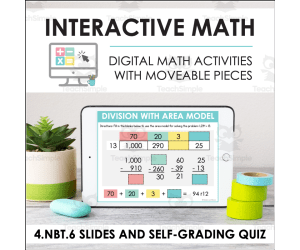
Digital Math for 4.NBT.6 - Multi-Digit Arithmetic (Slides + Self-Grading Quiz)
Math, Multiplication and Division, Multiplication, Grade 4, Quizzes, Quizzes and Tests, Teacher Tools
Interactive Math Slides provide review, practice, and enrichment in an engaging and meaningful way. These interactive slides are fully digital, providing you with a paperless, no-prep resource! The mathematical concepts are represented visually as students will drag, drop, and sort images. A self-grading Google Forms quiz is also included as a follow-up that will provide you with valuable data. This is perfect for assigning in your virtual classroom! This resource includes slides for the 4.NBT.6 standard in bothPowerPointand Google Slides formats. The Google Slides version is easy to assign on Google Classroom, and there are instructions included that will help you assign either the entire file or select slides at a time. There is also aGoogle Forms quizthat self-grades and assesses students on the standard.
Author Markers and Minions
Tags Division Problems, Quotients, Area Model, Long Division, Arrays
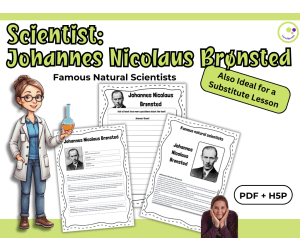
Johannes Nicolaus Brønsted – Scientist Profile and Reading Tasks
Life Sciences, Science, STEM, Social Studies, Biographies, Inventors, Basic Science, Physics, Chemistry, Technology, Grade 6, 7, 8, 9, 10, 11, Worksheets, Worksheets & Printables, Quizzes, Quizzes and Tests, Teacher Tools, Projects, Activities
Johannes Nicolaus Brønsted – Scientist Profile and Reading Tasks Comprehension Activities A structured classroom resource for teaching about acids, bases, and scientific history ⚗️📘 (PDF + H5P) ⚗️📘 A printable and digital resource for grades 7–10 science and cross-curricular teaching 🧪🧠 This material introduces students to Johannes Nicolaus Brønsted, a Danish chemist known for developing the Brønsted–Lowry acid-base theory. His work provides an essential foundation for modern chemistry and is especially helpful when students begin learning about pH, protons, and the role of acids and bases in chemical reactions. The resource is designed to be easy to use – both in traditional lessons and in situations where little prep time is available, such as substitute teaching or self-paced work. It includes a short, accessible reading passage, a student profile sheet, and comprehension tasks that guide students through the key points. What’s included: Informational text about Brønsted’s life and work Printable profile worksheet to summarize the text Quiz questions with answer key Two optional extension tasks: – Students create their own questions based on the reading – Partner exchange: students answer each other’s questions File formats: – PDF for easy printing or digital distribution – Editable DOCX (text only) – H5P version for digital platforms (no images) In the classroom: This activity can be used to complement a chemistry unit on acids and bases, as an introduction to scientific models, or simply as a way to bring real historical context into science lessons. The material is clear and accessible, even for students who may be new to the topic. The H5P version supports digital learning and allows students to complete the quiz interactively, making it great for homework or blended settings. The resource is flexible enough to work in group settings or independently. Minimal prep. Meaningful content. A great way to connect theory with the people who helped shape it. Have fun exploring the world of science with your students! Warmly, Lernfitness Did You Know? I teach with a certified therapy dog, and together we focus on creating a positive and inspiring learning environment.
Author Lernfitness
Rating
Tags Science, Famous Scientists Lesson, H5P, Interactive Science Exercises, STEM, Scientists, Chemistry, Johannes Nicolaus Brønsted, Acid-base Theory, Acids And Bases
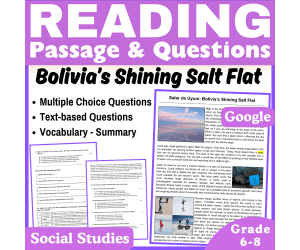
Social Studies Reading Passage: Salar de Uyuni in Bolivia (Docs)
ELA, Reading, Reading Comprehension, Strategies, Resources for Teachers, Social Studies, Geography, Grade 6, 7, 8, 9, Writing Prompts, Worksheets & Printables, Centers, Activities, Teacher Tools, Assessments, Quizzes and Tests, Quizzes, Tests
Bolivia’s Salt Flat: Salar de Uyuni : Social Studies Reading Comprehension Passage (Docs) This resource introduces a unique Social Studies reading comprehension passage with questions about The World's Largest Salt Flat: Bolivia’s Salar de Uyuni. The passage is carefully designed to bridge the gap between social studies and literacy through strengthening reading comprehension and sparking knowledge curiosity in middle school students. Each passage blends English Language Arts skills with accurate social studies content . Ideal for interdisciplinary learning in ELA and Social Studies. Suitable for Grade 9 review, too! Student Tasks throughout the passage: 5 multiple-choice questions targeting the following skills: main idea, key details, inference, vocabulary in context, and use of evidence 5 vocabulary matching items with clear, student-friendly definitions 5 text-based questions that require citing specific lines or facts 1 summary prompt that asks students to condense central ideas accurately Full answer key for every section Available Formats for this Resource: PDF Fillable PDF Word Docs FULL CATALOG OF DOWNLOADING LINKS HERE Social Studies Reading Comprehension Collection Links: 1. Ancient Civilizations PDF Fillable PDF Word Docs Google Docs 2. Early Empires and Trade Networks PDF Fillable PDF Word Docs Google Docs 3. The Founding of the United States PDF Fillable PDF Word Docs Google Docs 4. Language, Culture, and Meaning PDF Fillable PDF Word Docs Google Docs 5. Psychology and Society PDF Fillable PDF Word Docs Google Docs 6. Global Festivals and Traditions PDF Fillable PDF Word Docs Google Docs 7. Extreme Environments and People PDF Fillable PDF Word Docs Google Docs 8. Food, Culture, and Preservation PDF Fillable PDF Word Docs Google Docs 9. Global Food Customs PDF Fillable PDF Word Docs Google Docs 10. Media, Communication, and Popular Culture PDF Fillable PDF Word Docs Google Docs 11. Human Impact on the Environment PDF Fillable PDF Word Docs Google Docs 12. Civic Action and Social Change PDF Fillable PDF Word Docs Google Docs 13. Fashion, Society, and Power PDF Fillable PDF Word Docs Google Docs 14. People, Places, and Unusual Histories PDF Fillable PDF Word Docs Google Docs Product Details: Length: 5 pages Grades: 6–8, also suitable for Grade 9 review Use cases: close reading, stations, homework, intervention, test prep, and sub plans Why Teachers Choose This Passage: Authentic social studies content paired with rigorous literacy practice Consistent task structure for easier planning and smoother student routines Clear, age-appropriate writing that builds confidence without oversimplifying Use this passage to reinforce ELA skills in social studies, to add literacy to your lessons, and to support independent work. The passage strengthens main idea, evidence use, vocabulary in context, inference, cause and effect, and summary writing. With ready-to-use assessments and complete answer keys, you can provide focused practice that is simple to run and fast to review.
Author Middle & High School - CORED Education
Rating
Tags Middle School, Reading Comprehension, Reading Strategies, ELA, Centers, Reading Passage, Assessments, Vocabulary, Social Studies, Geography
Reading Comprehension Passages Fiction Set 1 - Animals (Slides)
ELA, Reading, Language Development, Spelling, Common Core, Children’s Literature, Literature, ESL, Vocabulary, Writing, Grade 4, 5, Teacher Tools, Presentations, Tests, Quizzes and Tests, Assessments, Activities, Quizzes
Reading Comprehension Passages Fiction Set 1 Overview No prep reading comprehension lessons, with enjoyable stories and topics. Each lesson has a blend of post-reading activities. Mixed questions to check overall understanding. Vocabulary activities, plus a writing section. Lessons also contain a bonus extension exercise at the end. Some you may like, some you may not, either way they are there if you wish to use them. Full answer keys are provided. Passages Include 1.Donny's Glasses: Donny is being chased by a monster. Or so he thinks! 2.Hare & Bear: Hare & Bear have a cup of tea together in the warmth. 3.Maggie's Turtle: Maggie is desperate to win the fishing competition. 4.New Pup: Hugh finds out a new puppy isn't as fun as he hoped. 5.Naughty Cat: Lizzie can't find any of her stuff. Read this story to find outwhere it is. 6.Ella's Baseball Bat: Ella's dad is scared of bats, and now there is one in the house! 7.Ola the Rabbit: Read about Darla's newest pet in this lesson. 8.Ethan and the Puppies: Ethan gets ready for the puppies to arrive. 9.Endangered Animals: Sam learns all about endangered animals in this passage. 10.Chinese New Year: Jessie and Sally talk about the upcoming Chinese New Year. Slides Version This is the Slides editable and fillable version. This download is available in GOOGLE Docs, GOOGLE Forms, GOOGLE Slides. PDF, PPT, WORD. Browse the Complete Cored Catalog — 2,000+ Resources Included Reading Passages Each reading passage has been written specifically for students in Grades 4–5, using vocabulary and language that match their age and ability level. The collection covers a wide range of engaging topics, supported by colorful visuals that help bring the content to life. Every lesson is designed to build knowledge while keeping students interested and motivated to read. These resources are also designed with flexibility in mind. Unlike traditional textbooks that can quickly become outdated, lessons can be updated over time to reflect changes in technology, discoveries, and the world around us. Mixed Questions Every lesson includes a variety of questions that help students think more deeply about what they have read. The question section combines reading comprehension, vocabulary, and math skills, while also regularly reinforcing important reading strategies such as cause and effect, summarizing, compare and contrast, and drawing conclusions. Most lessons include a mix of multiple-choice and written-response questions, giving students opportunities to explain their thinking as well as select answers. Complete answer keys and sample responses are provided at the end of each lesson for quick and easy reference. Spelling & Vocabulary Each passage introduces students to useful words and phrases appropriate for Grades 4–5. To help build confidence and word knowledge, every lesson includes a spelling or vocabulary activity. Rather than repeating the same task throughout the collection, activities vary from lesson to lesson to keep practice fresh and engaging. Activities may include spelling challenges, sentence matching, decoding activities, mixed-up text exercises, and other vocabulary-building tasks connected directly to the reading. Writing Prompts Each lesson includes a writing activity that extends the ideas, themes, or topics explored in the passage. Students are encouraged to write in a variety of formats, with prompts providing helpful guidance and ideas to get them started. Writing tasks vary throughout the collection and may include creative writing, research activities, personal responses, poetry, opinion writing, and other engaging assignments. Full Answer Keys Complete answer keys and sample responses are included with every lesson, making planning and marking quicker and easier. Reading comprehension answers include evidence and support from the text, while math-based questions show the relevant working where appropriate. The answer keys are designed primarily for teachers but can also be shared with students when needed. Just for Fun Each lesson finishes with an optional extension activity called Just for Fun . These bonus activities provide an enjoyable way to extend learning beyond the main lesson and often encourage creativity, discussion, or independent thinking. They are completely optional, giving you the flexibility to use the activities that best suit your students and classroom needs. For similar downloads and other frees, do check out Cored Group on TeachSimple.
Author Cored Education
Rating
Tags Elementary, Reading, Comprehension, Vocabulary, Answers, Ccss, Common Core, Spelling, Writing, Passages
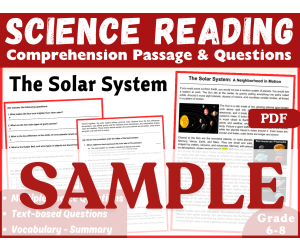
Science Reading Comprehension Passage. The Solar System. SAMPLE
Science, ELA, Reading, Reading Comprehension, Strategies, Resources for Teachers, Space, Earth and Environmental Sciences, Grade 6, 7, 8, 9, Writing Prompts, Worksheets & Printables, Centers, Activities, Teacher Tools, Assessments, Quizzes and Tests, Quizzes, Tests
This is a free passage sample from the complete resource. The full version includes everything needed for a complete reading comprehension activity: the passage, multiple-choice questions, short-answer questions, vocabulary matching, a summary-writing task, and a detailed answer key. Download the complete passage resource by clicking on the following links: PDF Fillable PDF Word Docs Google Docs Science Reading Comprehension Passages and Questions: The Solar System (PDF) This very engaging science reading passage about The Solar System is designed to bridge the gap between science and literacy through strengthening reading comprehension and sparking scientific curiosity in middle school students. The passage blends English Language Arts skills with accurate science content that supports NGSS classroom practice. Ideal for interdisciplinary learning in ELA and Science. Suitable for Grade 9 review, too! Student Tasks for The Passage: 5 multiple-choice questions targeting main idea, key details, inference, vocabulary in context, and use of evidence 5 vocabulary matching items with clear, student-friendly definitions 5 text-based questions that require citing specific lines or facts 1 summary prompt that asks students to condense central ideas accurately Full answer key for every section FULL CATALOG OF DOWNLOADING LINKS HERE Product Details Length: 5 pages total Grades: 6–8, also suitable for Grade 9 review Use cases: close reading, stations, homework, intervention, test prep, and sub plans Standards support: reinforces informational-text skills and supports NGSS-style sense making through observation, modeling, and clear use of claim, evidence, and reasoning Why Teachers Choose This Set Authentic science content paired with rigorous literacy practice Consistent task structure across all passages for easier planning and smoother student routines Clear, age-appropriate writing that builds confidence without oversimplifying Other Science Reading Collections you May find in the store: 1. Astronomy & Space Science 2. Volcanoes, Rocks, & Mountains 3. Rock Cycle, Soil, & Sinkholes 4. Mars, Glaciers, & Antarctica 5. Water Cycle, Acid Rain, & Wastewater 6. Insects, Animals, & Ecosystems 7. Bioluminescence & Insects 8. Animal Skin, Cats, & T. Rex 9. Human Body and Senses 10. Health & Applied Bioscience 11. Waves, Light, & Imaging 12. Electricity & Energy 13. Motion & Materials 14. Chemistry and Materials Science Use this set to reinforce ELA skills in science, to add literacy to your lessons, and to support independent work. The passages strengthen main idea, evidence use, vocabulary in context, inference, cause and effect, and summary writing. With ready-to-use assessments and complete answer keys, you can provide focused practice that is simple to run and fast to review.
Author Middle & High School - CORED Education
Rating
Tags Middle School, Reading Comprehension, Reading Strategies, ELA, Centers, Reading Passage, Assessments, Vocabulary, Environmental Science, The Solar System

Social Studies Reading Comprehension Passages: Food and Culture (Word)
ELA, Reading, Reading Comprehension, Strategies, Resources for Teachers, Social Studies, Sociology, Grade 6, 7, 8, 9, Writing Prompts, Worksheets & Printables, Centers, Activities, Teacher Tools, Assessments, Quizzes and Tests, Quizzes, Tests
Social Studies Reading Comprehension Passages and Questions: Food and Culture (Word) This resource introduces a collection of Social Studies reading comprehension passages with questions about Food, Culture, and Preservation. The passages are carefully designed to bridge the gap between social studies and literacy through strengthening reading comprehension and sparking knowledge curiosity in middle school students. Each passage blends English Language Arts skills with accurate social studies content . Ideal for interdisciplinary learning in ELA and Social Studies. Suitable for Grade 9 review, too! What Is Included in this Collection? There are three informational passages (with full answer keys): Homemade Cottage Cheese: Food, Family, and Local Trade Salty Traditions: How Salami and Kimchi Stay Safe to Eat From Grasslands to Grill: The Foods of South America For Each Passage, students will have multiple tasks to complete as follow: 5 multiple-choice questions targeting main idea, key details, inference, vocabulary in context, and use of evidence 5 vocabulary matching items with clear, student-friendly definitions 5 text-based questions that require citing specific lines or facts 1 summary prompt that asks students to condense central ideas accurately Available Formats for this Resource PDF Fillable PDF Google Docs FULL CATALOG OF DOWNLOADING LINKS HERE For more Social Studies Reading Passages, check the following Links: Ancient Civilizations PDF Fillable PDF Word Docs Google Docs Early Empires and Trade Networks PDF Fillable PDF Word Docs Google Docs The Founding of the United States PDF Fillable PDF Word Docs Google Docs Language, Culture, and Meaning PDF Fillable PDF Word Docs Google Docs Psychology and Society PDF Fillable PDF Word Docs Google Docs Global Festivals and Traditions PDF Fillable PDF Word Docs Google Docs Extreme Environments and People PDF Fillable PDF Word Docs Google Docs Food, Culture, and Preservation PDF Fillable PDF Word Docs Google Docs Global Food Customs PDF Fillable PDF Word Docs Google Docs Media, Communication, and Popular Culture PDF Fillable PDF Word Docs Google Docs Human Impact on the Environment PDF Fillable PDF Word Docs Google Docs Civic Action and Social Change PDF Fillable PDF Word Docs Google Docs Fashion, Society, and Power PDF Fillable PDF Word Docs Google Docs People, Places, and Unusual Histories PDF Fillable PDF Word Docs Google Docs Product Details Length: 14 pages total Grades: 6–8, also suitable for Grade 9 review Use cases: close reading, stations, homework, intervention, test prep, and sub plans Why Teachers Choose This Set Authentic social studies content paired with rigorous literacy practice Consistent task structure across all passages for easier planning and smoother student routines Clear, age-appropriate writing that builds confidence without oversimplifying Use this set to reinforce ELA skills in social studies, to add literacy to your lessons, and to support independent work. The passages strengthen main idea, evidence use, vocabulary in context, inference, cause and effect, and summary writing. With ready-to-use assessments and complete answer keys, you can provide focused practice that is simple to run and fast to review.
Author Middle & High School - CORED Education
Rating
Tags Middle School, Reading Comprehension, Reading Strategies, ELA, Centers, Reading Passage, Assessments, Vocabulary, Social Studies, Food And Culture

Science Reading Comprehension Passage: How Sound Travels (Docs)
Science, ELA, Reading, Reading Comprehension, Strategies, Resources for Teachers, Physics, Grade 6, 7, 8, 9, Writing Prompts, Worksheets & Printables, Centers, Activities, Teacher Tools, Assessments, Quizzes and Tests, Quizzes, Tests
Physical Science Reading Comprehension Passage and Questions: How Sound Travels (Docs) This very engaging Physical science reading passage is about how sound travels . More specifically, it explains that sound begins with vibrations , moves as a longitudinal wave through a medium such as air, liquid, or solid, and then reaches the ear. It also explains how the eardrum, ossicles, cochlea, auditory nerve, and brain work together so we can recognize pitch and loudness. The passage also corrects the misconception that sound travels fastest in air by explaining that sound often travels faster in solids because their particles are packed closer together. This passage is designed to bridge the gap between science and literacy through strengthening reading comprehension and sparking scientific curiosity in middle school students. The passage blends English Language Arts skills with accurate science content that supports NGSS classroom practice. Ideal for interdisciplinary learning in ELA and Science. Suitable for Grade 9 review, too! These worksheets are designed as fillable PDFs , which means students can type their answers directly into the document on any computer or tablet . Each page includes highlighted text fields that show them exactly where to type! Student Tasks for The Passage: 5 multiple-choice questions targeting main idea, key details, inference, vocabulary in context, and use of evidence 5 vocabulary matching items with clear, student-friendly definitions 5 text-based questions that require citing specific lines or facts 1 summary prompt that asks students to condense central ideas accurately Full answer key for every section Available Formats for this Resource PDF Fillable PDF Word Docs FULL CATALOG OF DOWNLOADING LINKS HERE Product Details Length: 5 pages total Grades: 6–8, also suitable for Grade 9 review Use cases: close reading, stations, homework, intervention, test prep, and sub plans Standards support: reinforces informational-text skills and supports NGSS-style sense making through observation, modeling, and clear use of claim, evidence, and reasoning Why Teachers Choose This Set Authentic science content paired with rigorous literacy practice Consistent task structure across all passages for easier planning and smoother student routines Clear, age-appropriate writing that builds confidence without oversimplifying Other Science Reading Collections you May find in the store: 1. Astronomy & Space Science 2. Volcanoes, Rocks, & Mountains 3. Rock Cycle, Soil, & Sinkholes 4. Mars, Glaciers, & Antarctica 5. Water Cycle, Acid Rain, & Wastewater 6. Insects, Animals, & Ecosystems 7. Bioluminescence & Insects 8. Animal Skin, Cats, & T. Rex 9. Human Body and Senses 10. Health & Applied Bioscience 11. Waves, Light, & Imaging 12. Electricity & Energy 13. Motion & Materials 14. Chemistry and Materials Science Use this set to reinforce ELA skills in science, to add literacy to your lessons, and to support independent work. The passages strengthen main idea, evidence use, vocabulary in context, inference, cause and effect, and summary writing. With ready-to-use assessments and complete answer keys, you can provide focused practice that is simple to run and fast to review.
Author Middle & High School - CORED Education
Rating
Tags Middle School, Reading Comprehension, Reading Strategies, ELA, Centers, Reading Passage, Assessments, Vocabulary, Physical Science, Physics
Guided Reading Level K - Street Safety Signs (with Lesson Plan)
ELA, Resources for Teachers, Reading Comprehension, Reading, Pre-Reading, Language Development, Health, P.E. & Health, Social Emotional Learning (SEL), Special Resources, Grade 1, 2, 3, Worksheets & Printables, Worksheets, Teacher Tools, Centers, Activities, Literacy Readers, Quizzes, Quizzes and Tests, Assessments
This Guided Reading Book - Street Safety Signs (Level K) with lesson plan includes: Guided Reading Color Label (front cover x1) This is a quick way to match the book’s demands to what students can generally handle.. The overall goal is to use the level/color to pick books for several smaller groups. To qualify for a certain level, a student is expected to read a book from that level with about 90–94% accuracy. If a student is consistently accurate and understands, move up a level. If the student is struggling at that level, drop down and add more support. Each student will improve at completely different rates, but it is generally one of the best ways to check progress across the class. DOWNLOAD THE CATALOG TO VIEW ALL GUIDED READING BOOKS AVAILABLE (SORTED LEVELS A-Z) Pre-Reading Question (x1) Teacher asks the prompt aloud, can be while showing the cover or first page. Students share what they already know, or make educated guesses from the cover. Prompt them to use the target vocabulary. Write some of their responses on the board to look back at during the reading. Vocabulary Words (x5) Introduce the five words, best doing it one at a time. Start by saying it, while students repeat and then see if anyone knows what it means before reading further. Read through the meaning and try to briefly connect each word to a picture or gesture so it’s meaningful. Ask students to flip through the book pages and point to where they see each of the vocabulary words. While reading the book pause upon coming across one of the vocab words or read the sentence twice to make sure students understand the word has appeared. Optional: Ask students to raise hands whenever they see/hear one of the new words. Guided Reading Pages (x10) Check the book snapshot (below) for: primary topic - do you need to prep extra reading or intro materials on this? what is taught best - decide on 1-2 bullets to focus on, use the prompt or words provided here for best results. learning goals - what you are checking for students to be able to do after the session, elicit answers using prompts or words provided. key vocabulary (see section above). questions overview - so you know what is coming up and if you need to prep extra materials to assist understanding. Run the lesson You may have already looked at a few of the pages together, but you can show them some of the pictures again first to set meaning. Depending on how much time you have and how familiar your students are with guided reading class, you may want to read the book aloud first with the group first. Students whisper or partner read, while you listen in. If time, do it as a group, one student reading a page each. Use the guided page’s prompts to coach: “Check the picture / does it make sense?” “Point under the words / try the first sound” “Reread the sentence smoothly”. Try to focus more on one student per session (rotating every time), so you can work out if they are ready to move up or need to move down a level. Comprehension Questions (back cover x3) This is your way to check that students didn’t just say the words, but actually understood the text. First, let students answer by pointing to the page/picture and saying a short sentence. After any answer, follow with: “Show me where you found that in the text.” In bigger groups, have partners answer first (10–20 seconds), then call on 2–3 students to share. Differentiation tips: Emerging speakers/struggling readers: oral + pointing On-level: oral in a full sentence Higher: one written sentence or draw + label Book Snapshot Title: Street Safety Signs Genre: Nonfiction (informational) Subject: Health & Safety / Reading (Informational Text) Primary Topic: Street signs, colors, and safety messages Estimated Guided Reading Level (A–Z): K What This Book Teaches Best How street signs help people stay safe: Street signs are “helpful tools” that tell people how to stay safe on the road. Using shapes and colors to understand meaning: Each sign has a special shape and color that sends a message. Key safety actions for walkers and drivers: The stop sign means come to a full halt and look both ways before moving again. Recognizing common road signals: The book explains warning signs, traffic lights, yield signs, speed limit signs, school signs, do not enter signs, and bike lane signs. Street-sign knowledge as a life skill: Paying attention to signs helps people “navigate the world safely.” Learning Goals Students will explain how street signs help people stay safe on roads. Students will identify what different sign colors and shapes communicate in this text. Students will describe what a stop sign tells people to do and why looking both ways matters. Students will explain what traffic light colors mean (red, green, yellow) based on the text. Students will connect specific signs (yield, speed limit, school, do not enter, bike lane) to their safety messages. Key Vocabulary From the Text octagon — a shape with eight sides. pedestrians — people who are walking. intersection — where two roads meet or cross. fluorescent — very bright and easy to see. navigate — find your way and move safely place to place. Discussion Prompts Pre-reading question: What street signs or signals have you seen that help people stay safe? Comprehension questions: What does the stop sign mean, and what should you do before moving again? What do yellow diamond-shaped warning signs tell drivers to watch for? Why do speed limit signs help keep neighborhoods and people safe? Printing Tips 1. Best Printing Method (Recommended) “Booklet” Printing (Best if Available) If your printer or PDF viewer supports Booklet Printing , use this. Settings to use: Print mode: Booklet Paper size: Letter or A4 (either works) Orientation: Landscape Print on both sides: Yes Flip on: Short edge Scaling: Fit to printable area Booklet subset: First test: Front sides only Then: Back sides only This will automatically: Pair pages correctly Put the cover on the outside Align everything for folding After printing, fold in half and staple along the spine . 2. If “Booklet” Printing Is NOT Available You can still print this correctly with manual duplex printing . Step-by-step: Open the PDF. Choose Print . Set: Orientation: Landscape Pages per sheet: 1 Print on both sides: Yes Flip on: Short edge Print all pages . Because each PDF page already contains two facing book pages, the result will still fold cleanly into a book. Thousands of Cored Education products are included with your TeachSimple membership. Download links and encyclopedia index available here.
Author Cored Education
Rating
Tags Reading Comprehension, Reading Passages, Reading, Guided Reading, Guided Reading Lesson Plan, Guided Reading Activity, Pre-reading, Vocabulary, Street Signs, Health

Side Hustle Profit & Loss Basics
Math, Money, Multiplication and Division, Statistics, Order Of Operations, Fractions, Measurements, Time, Number Lines, Addition and Subtraction, Grade 6, 7, 8, 9, 10, 11, 12, Worksheets & Printables, Workbooks, Worksheets, Word Searches, Teacher Tools, Assessments, Lesson Plans, Quizzes and Tests, Quizzes, Tests
Transform your students' understanding of math with this engaging, real-world project on the mathematics of e-commerce! "Side Hustle Profit & Loss Basics" is a comprehensive, no-prep curriculum designed to teach teens the essential financial literacy skills needed to run a profitable online business. Gone are the days of abstract math problems. This resource bridges the gap between classroom learning and practical entrepreneurship, using relatable examples like flipping vintage sneakers ("Sneakerhead Sam") and selling handmade goods ("Jewelry Jenna"). Students will move from being passive digital consumers to analytical business operators. This project-based learning package is perfect for Math, Business, Career and Technical Education (CTE), Financial Literacy, and Homeschool settings. It systematically deconstructs the anatomy of an online sale, from calculating the cost of goods sold (COGS) to navigating complex platform fees and understanding the devastating impact of shipping miscalculations. What's Included in this 45-Page Resource: Part 1: In-Depth Lesson Guide (13 pages): A detailed teacher/student guide explaining core concepts like Revenue vs. Profit, COGS, Platform & Payment Fees (Etsy, eBay, Shopify), Logistics, Dimensional Weight, Net Profit, and ROI. Part 2: Student Workbook (18 pages): Features 10 scaffolded worksheets with over 100 questions, applying the concepts through real-world scenarios and fill-in-the-blank exercises. Worksheet 10: The Ultimate P&L Capstone Project: A final project where students synthesize all learned skills to construct a complete Profit & Loss statement for a hypothetical sneaker-flipping business. Part 3: Comprehensive Answer Key (6 pages): A full answer key for all 10 student worksheets, including the final capstone project. Part 4: Teacher-Led Visual Aids (8 pages): Includes high-quality flowcharts and diagrams perfect for classroom projection (The E-Commerce Profit Equation, Fee Matrix, Shipping Cost Matrix) and a master teacher answer key with deep-dive rationales and common student error alerts. Equip your students with the critical math and business skills they need to succeed in the modern digital economy. This isn't just a math lesson; it's a blueprint for their future financial success. Why Parents/Schools Love It: Connects Math to the Real World: It makes abstract concepts like percentages and formulas tangible by applying them to something teens are passionate about: making money online. Teaches Essential Financial Literacy: It goes beyond basic math to teach critical life skills like budgeting, cost analysis, and understanding profitability—skills not always covered in traditional curricula. Fosters an Entrepreneurial Mindset: This resource empowers students to think like producers, not just consumers, by teaching them to identify costs, manage risks, and create value. Comprehensive & No-Prep: It's a complete, ready-to-use package. The detailed lessons, student worksheets, visual aids, and in-depth answer keys save teachers and parents valuable preparation time. Target Student Audience : Based on the content and mathematical complexity, target: Primary Audience: 7th to 10th Grade students. This is the sweet spot mentioned in the PDF, and the level of math (percentages, formulas, multi-step arithmetic) is perfectly aligned with this curriculum. Secondary Audience: Advanced 6th Graders in a gifted or enrichment program. 11th and 12th Grade students in introductory Business, Economics, or Career/Life Skills classes as a practical, foundational unit. Homeschool Co-ops looking for practical, project-based learning modules for middle and high school students. Copyright/Terms of Use: This Book was copyrighted by Syed Hammad Rizvi. This resource is for personal and single classroom use only. You may not alter, redistribute, or sell any part of this resource. In other words, you may not put it on the Internet where it could be publicly found and downloaded. If you want to share this resource with colleagues, please purchase additional licenses from Teachsimple. Thank you for respecting these terms of use. This product is happily brought to you by Syed Hammad Rizvi
Author Creative Book Store
Rating
Tags Financialliteracy, Businessmath, Realworldmath, Projectbasedlearning, Entrepreneurship, Sidehustle, Ecommerce, Ppliedmath, Financialeducation, Profitandloss