Measurement & money
Grade 4 Math Volume 1
Complete guided practice items (fill in answers, model/draw solutions, solve word problems) for each topic, then answer a multiple-choice/short-answer quiz on that topic.




Classroom resources
Browse by lesson focus
Choose the topic or kind of practice you need.
Showing 313–336 of 435 resources

 Show filters
 Complete guided practice items (fill in answers, model/draw solutions, solve word problems) for each topic, then answer a multiple-choice/short-answer quiz on that topic.
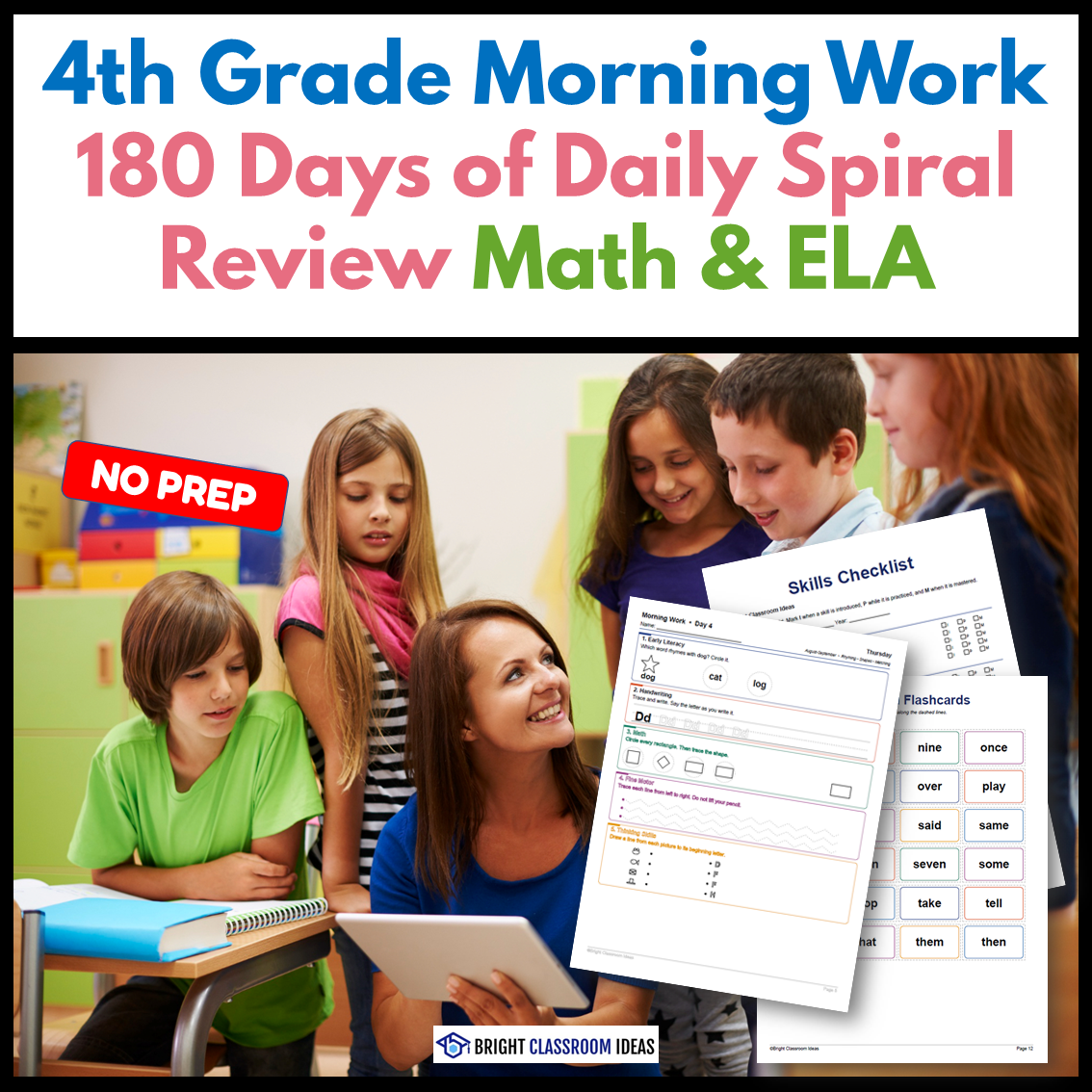
Each day, complete a two-page set: Page A (Language Arts) includes a grammar question, a vocabulary question, a reading task (full passage with two questions on Mondays/Wednesdays, shorter reading-skill item other days), a writing task, vocabulary word of the day, writing prompt, reading challenge, SEL check-in, joke, brain teaser,…
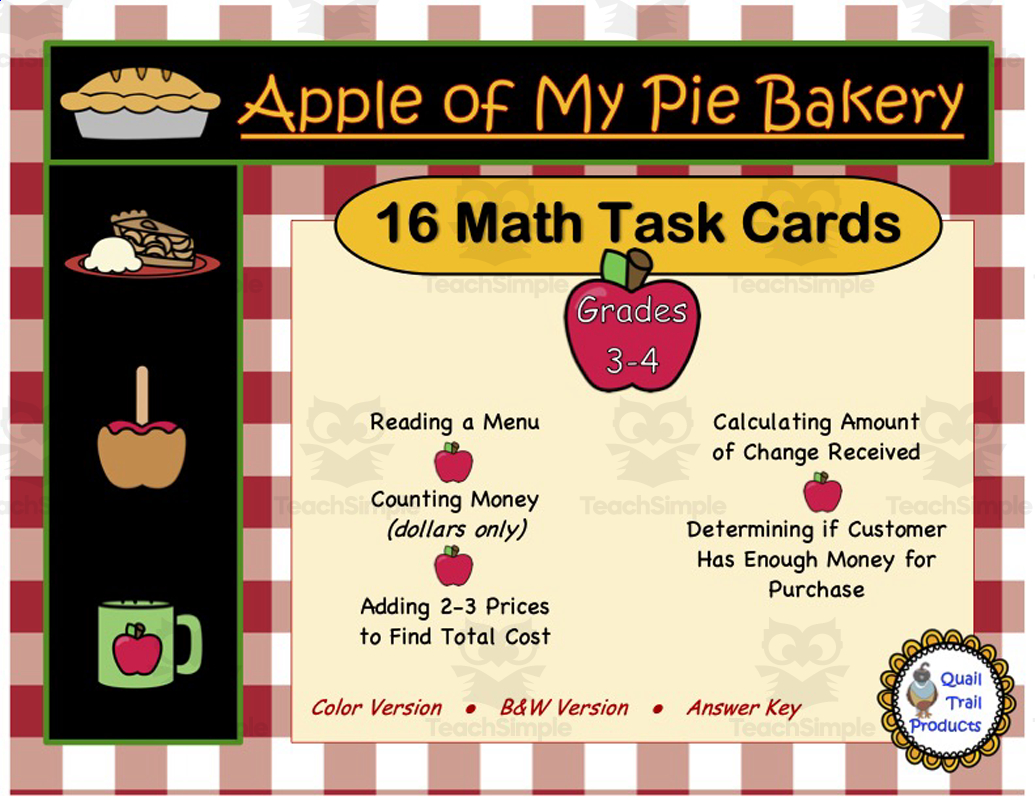
Read a themed bakery menu with priced items (cakes, muffins, pies, cider, candied apples, etc.) and solve word problems: totaling multiple item prices, determining change from bills of various denominations, and (per catalog) determining whether a customer has enough money for a purchase.
Solve multiple-choice, short-response, and extended-response math problems, including writing and evaluating algebraic expressions from word problems (e.g. cost of notebooks and pens), percent problems, and ratio reasoning; show work for short/extended response items.
Work through modeled examples then practice pages (using comparison symbols, number-line placement, real-world word problems like race times or splitting a sandwich) for each topic, finishing each topic with a one-page quiz.
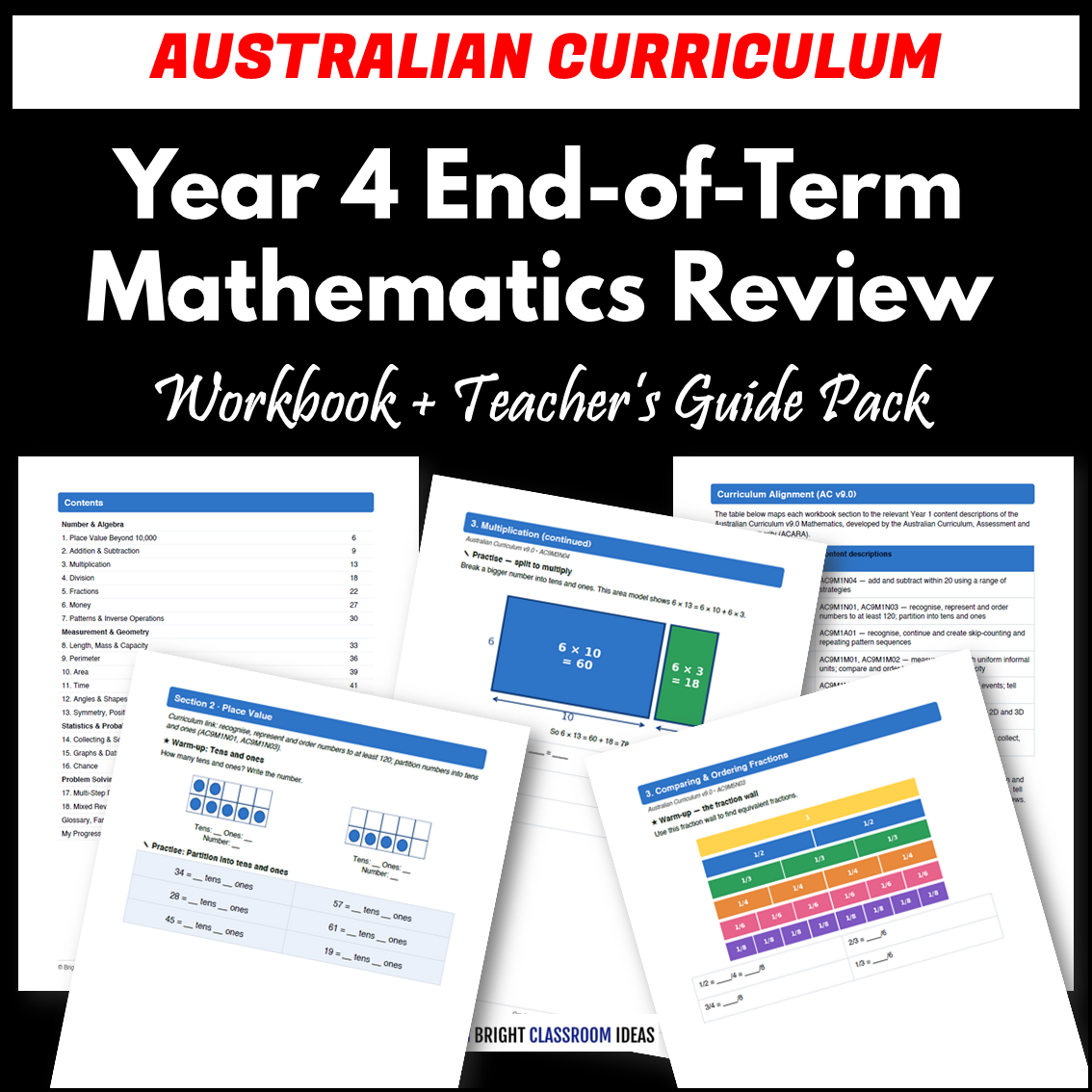
Complete practice items (calculations, word problems, self-check tick boxes) across the workbook's numbered sections
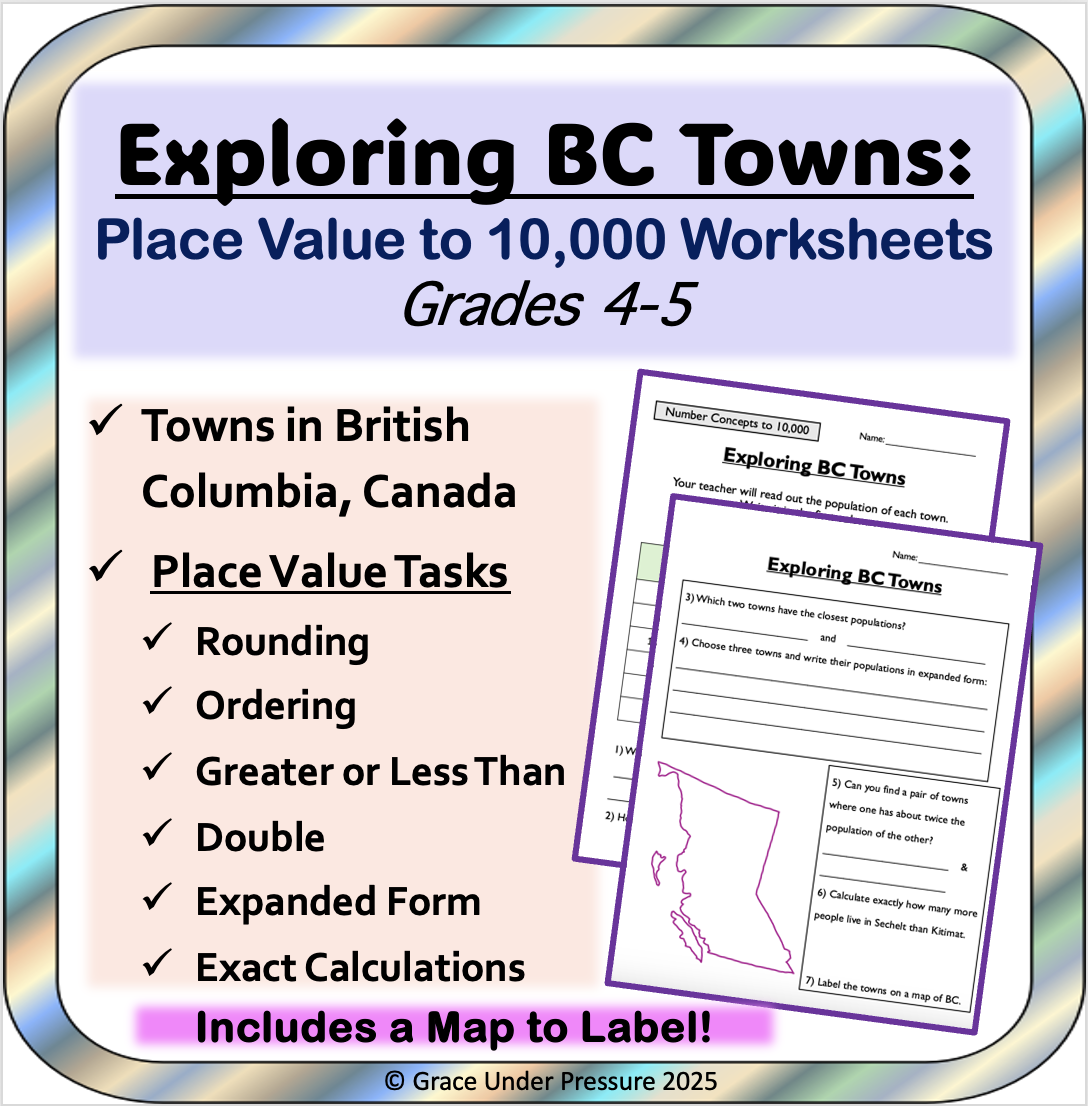
Listen to the teacher read aloud the population of each of six towns and record it in a table; round each population to the nearest hundred; order the towns from smallest to largest population; determine which towns have more than 5,000 people; identify the two closest populations; write three populations in expanded form; find a pair…
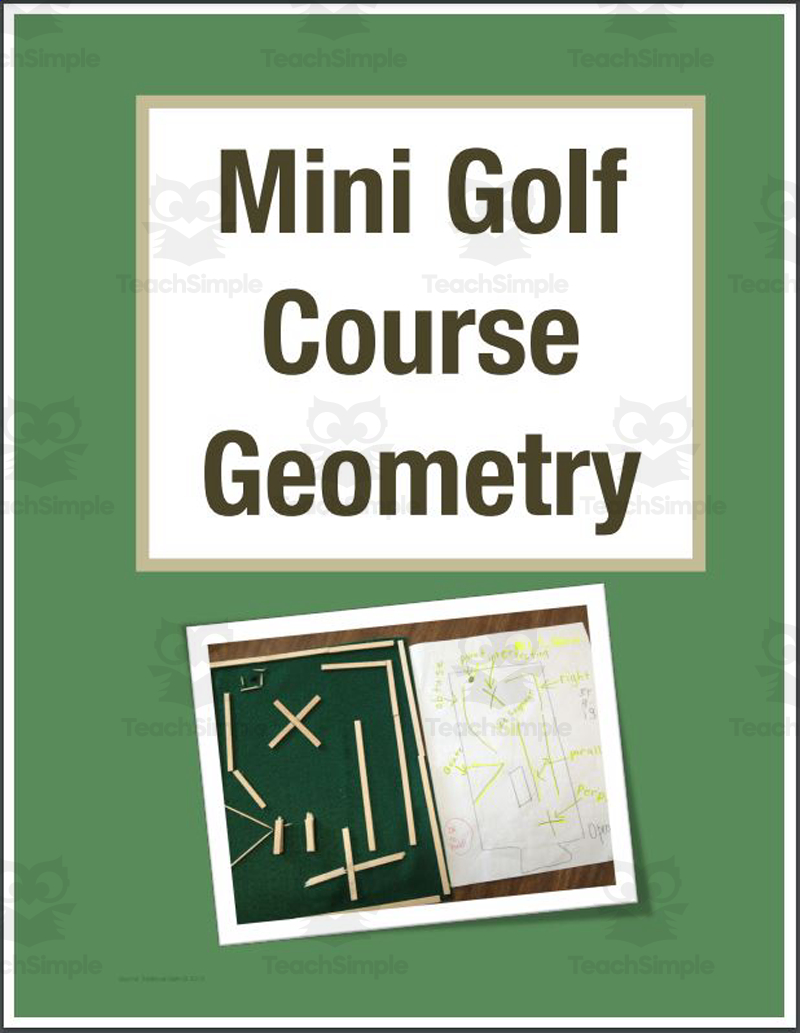
Over roughly 1-2 weeks (about 20 minutes/day), students identify real-world examples of geometric terms, fill in a vocabulary/symbol/example chart, design mini-golf course holes on paper incorporating specific geometric elements, calculate money and material measurements for supplies, and construct a physical model of their course using…
Complete guided practice items (fill in answers, model/draw solutions, solve word problems) for each topic, then answer a multiple-choice/short-answer quiz on that topic.
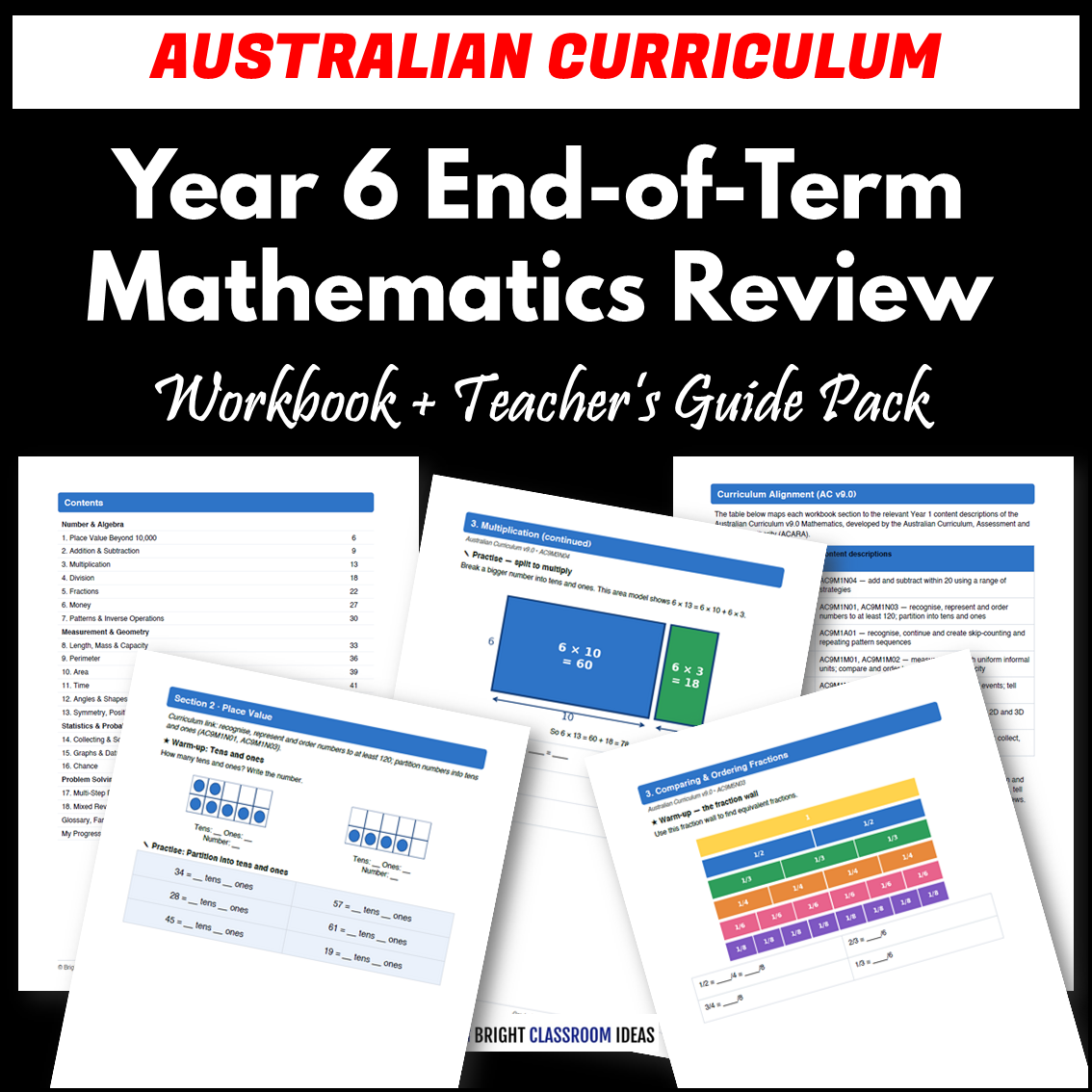
Complete practice items (calculations, word problems, self-check tick boxes) across the workbook's numbered sections
Complete individual numbered math activities (e.g. 'Going Digital', 'Birthday Blitz', 'Weight Watchers', 'Pizza Percentages') that apply arithmetic, measurement, and data skills to real-life scenarios per activity instructions.
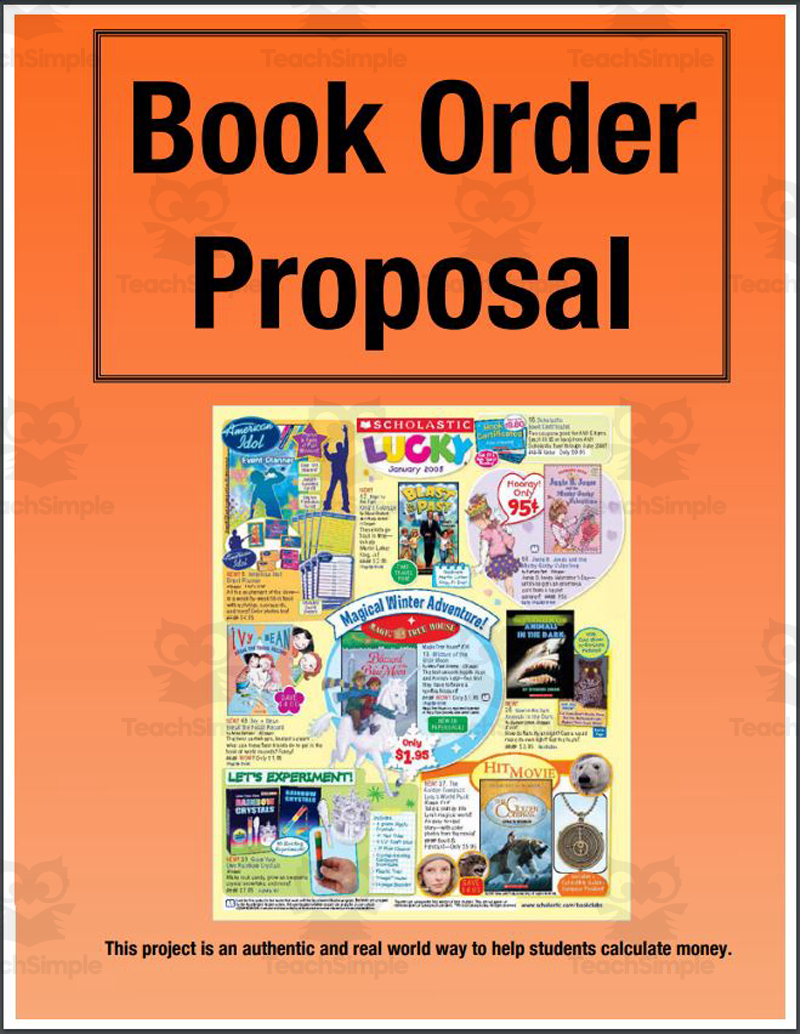
Practice adding decimal money amounts, then use a book order form and a proposal form to select and justify books to purchase for the classroom library within a set budget; students set personal learning goals and self-assess understanding during the project.

Complete guided practice items (fill in answers, model/draw solutions, solve word problems) for each topic, then answer a multiple-choice/short-answer quiz on that topic.
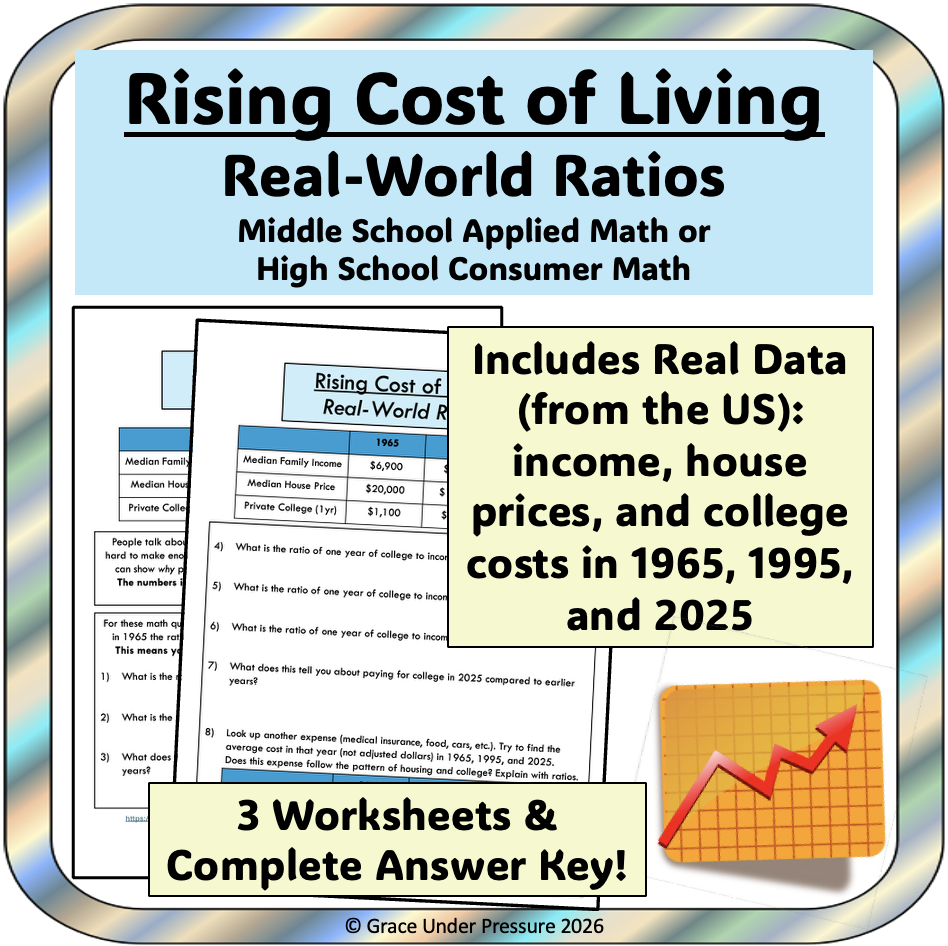
Analyze a data table of historical US income/housing/college-cost figures, write and simplify ratios comparing the values across years, research and calculate ratios for an additional cost category, discuss findings, and create a meme illustrating a real-world proportional relationship.
Compare listed cars (with price, odometer, description), choose one to 'purchase,' calculate simple interest and running balance for a car loan, and complete a car loan application based on the chosen car.
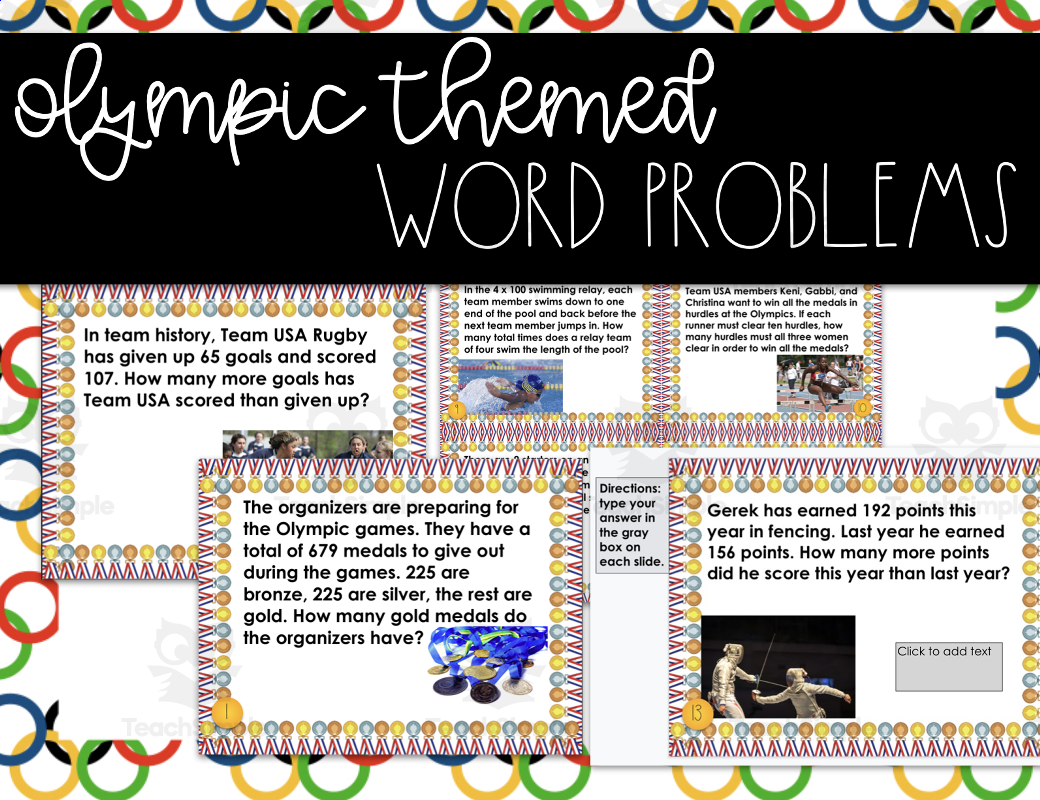
Solve 16 addition/subtraction word problems and 12 multiplication/division word problems themed around Olympic sports and events (e.g. medal counts, athlete scores, distances, team rosters), recording answers on a provided numbered answer sheet; problems include both single-step and multi-step reasoning, and some ask for estimation…
Work through modeled examples then practice pages (shading models, simplifying, word problems like dividing a salary or fabric amounts) for each topic, finishing each topic with a one-page quiz.
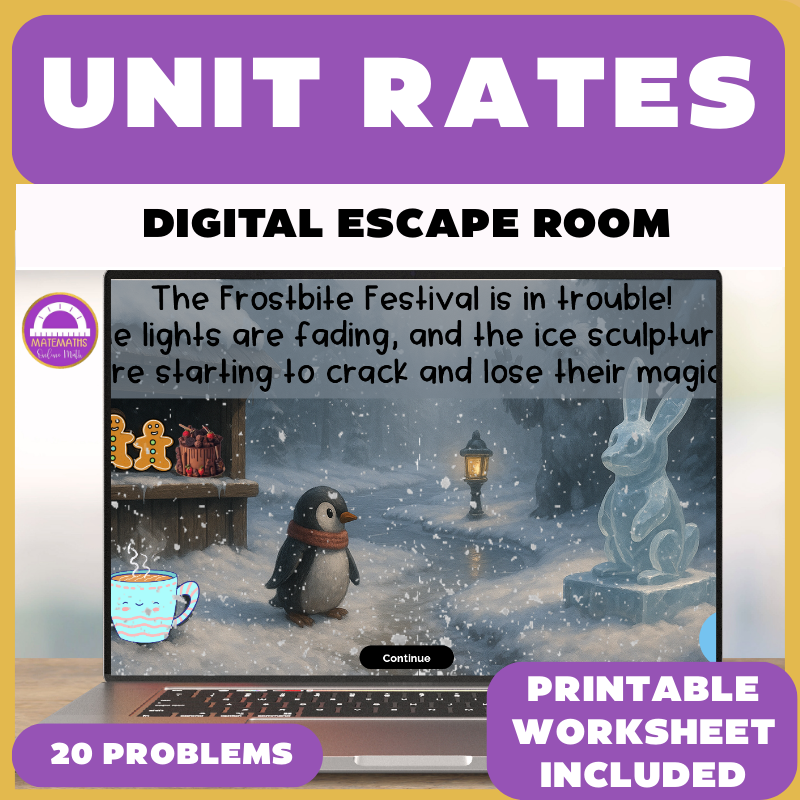
Solve 20 unit-rate word problems (dividing a total quantity by a number of groups to find a per-unit rate) by typing numeric or fraction answers into a digital escape room to unlock four winter-themed scenes, or by completing the equivalent printable worksheet.
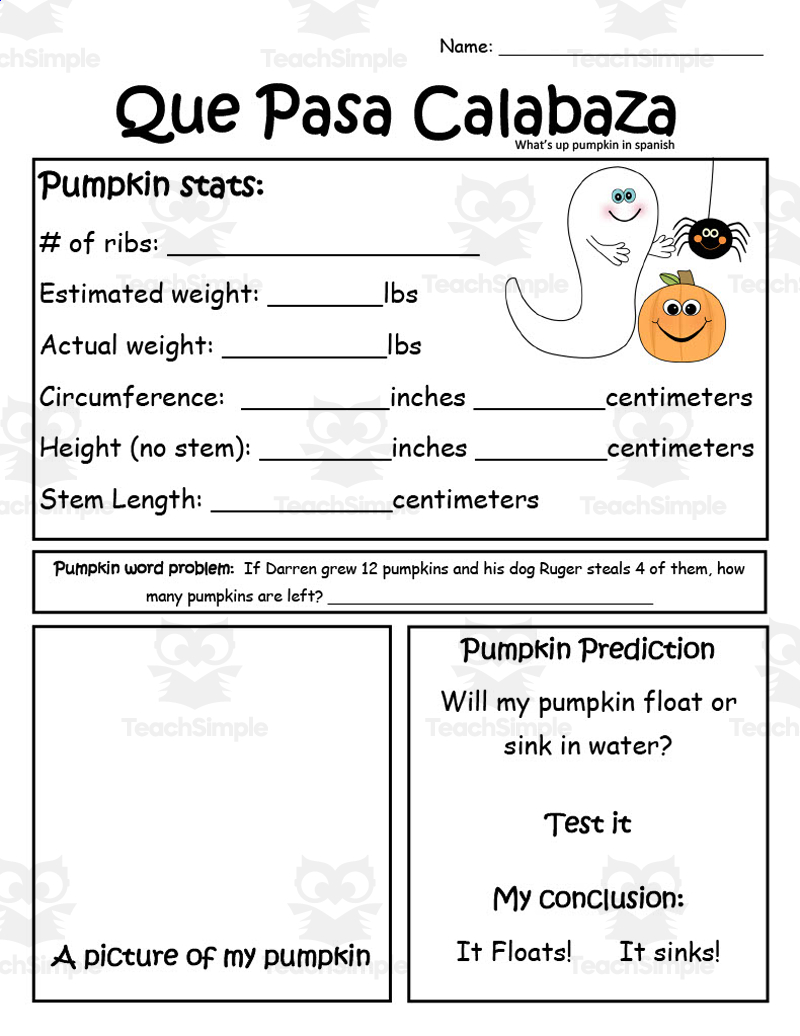
Record pumpkin stats (rib count, estimated vs. actual weight, circumference, height, stem length in inches and centimeters), solve a subtraction word problem about pumpkins, draw their pumpkin, predict whether it will float or sink, test the prediction, and record the conclusion.
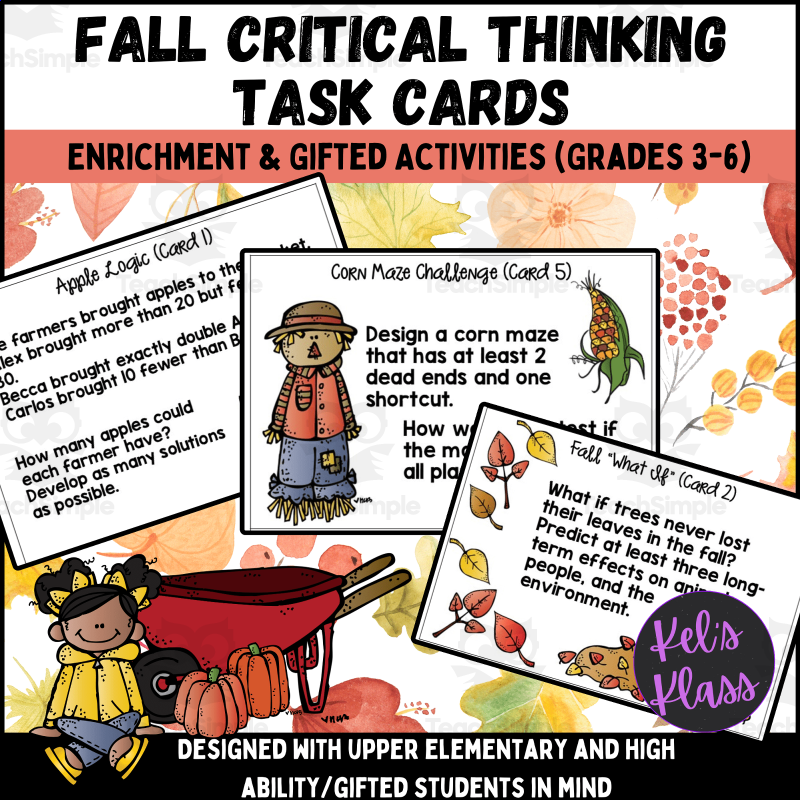
Read an open-ended or multi-step problem on each card (e.g., logic puzzle, math word problem, prediction, persuasive prompt) and solve or respond in writing, showing reasoning; an answer key is provided for cards with defined answers.
Complete guided practice items (fill in answers, model/draw solutions, solve word problems) for each topic, then answer a multiple-choice/short-answer quiz on that topic.
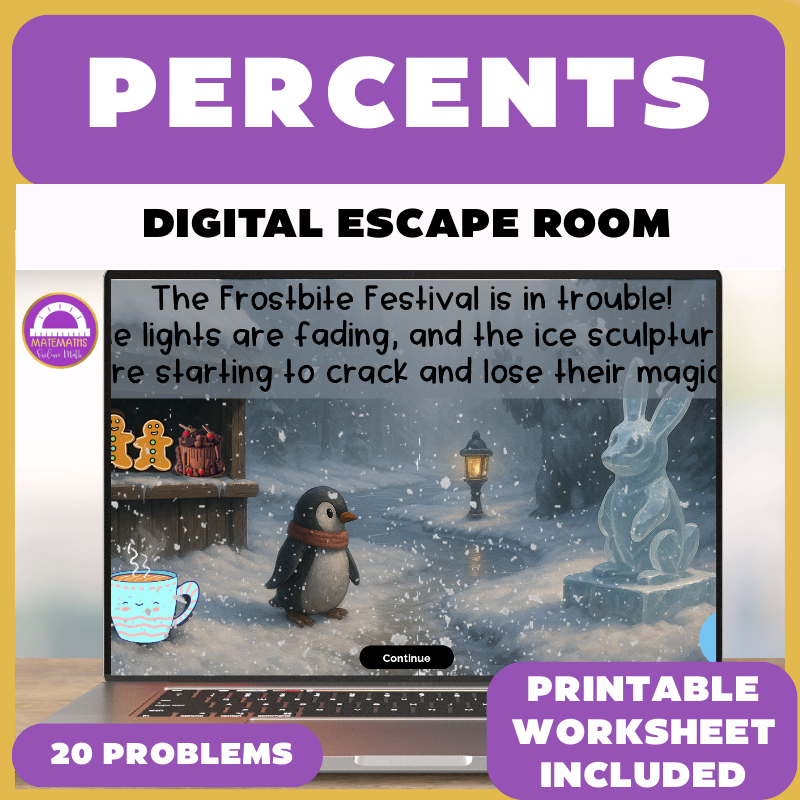
Open a teacher-shared link and solve 20 winter-themed percent word problems by typing numeric/fraction answers into a digital escape room to progress through 4 themed scenarios; optionally solve the same problems on a printable worksheet or task cards.

Students read fall-themed scenario prompts and draw lines connecting them to the correct clock face/time, and solve related elapsed-time word problems.
Students solve arithmetic drills (addition, subtraction, multiplication facts, division facts and remainders, mixed operations), word/story problems requiring one or more operations arranged easiest-to-hardest, number-writing/place-value exercises, sequences, brain teasers, puzzles, and perception puzzlers.